Top 10 de Harvard Law School Forum on Corporate Governance au 6 juin 2019


Voici le compte rendu hebdomadaire du forum de la Harvard Law School sur la gouvernance corporative au 6 juin 2019.

Comme à l’habitude, j’ai relevé les dix principaux billets.

Bonne lecture !


Résultats de recherche d'images pour « top dix »


  1. The Never-Ending Quest for Shareholder Rights: Special Meetings and Written Consent
  2. Rulemaking Petition on Non-GAAP Financials in Proxy Statements
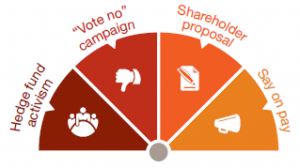
  3. Legal Tools for the Active or Activist Shareholders
  4. Strategic Trading as a Response to Short Sellers
  5. Designing Pay Plans in the New 162(m) World
  6. The Business Case for ESG
  7. The New DOJ Compliance Guidelines and the Board’s Caremark Duties
  8. Institutional Trading around M&A Announcements
  9. Sustainability Accounting Standards and SEC Filings
  10. Statement on Final Rules Governing Investment Advice

Top 10 de Harvard Law School Forum on Corporate Governance au 30 mai 2019


Voici le compte rendu hebdomadaire du forum de la Harvard Law School sur la gouvernance corporative au 30 mai 2019.

Comme à l’habitude, j’ai relevé les dix principaux billets.

Bonne lecture !


Résultats de recherche d'images pour « top ten »


  1. UK Shareholder Activism and Battles for Corporate Control
  2. The Corporate Form for Social Good
  3. President Trump’s Executive Order and Shareholder Engagement on Climate Change
  4. Management Duty to Set the Right “Tone at the Top”
  5. Compliance, Compensation and Corporate Wrongdoing
  6. A Fresh Look at Exclusive Forum Provisions
  7. Corporate Law and the Myth of Efficient Market Control
  8. Corporate Purpose: Stakeholders and Long-Term Growth
  9. SEC Roundtable on Short-Termism and Periodic Reporting System
  10. A Quarter Century of Exchange-Traded Fun!

Top 10 de Harvard Law School Forum on Corporate Governance au 23 mai 2019


Voici le compte rendu hebdomadaire du forum de la Harvard Law School sur la gouvernance corporative au 23 mai 2019.

Comme à l’habitude, j’ai relevé les dix principaux billets.

Bonne lecture !


Résultats de recherche d'images pour « top 10 »


  1. Educating Investors Through Leading Questions
  2. Reasons for “Male and Pale” Boards
  3. Are Share Buybacks a Symptom of Managerial Short-Termism?
  4. Evaluating Corporate Compliance—DOJ Guidelines for Prosecutors
  5. Unleashing the Power of Diversity Through Inclusive Leadership
  6. Global Divestment Study
  7. Share Buybacks Under Fire
  8. SEC Guidance on Auditor Independence
  9. SEC Staff Roundtable on Short-Term/Long-Term Management of Public Companies, Our Periodic Reporting System and Regulatory Requirements
  10. Seven Venial Sins of Executive Compensation

Top 10 de Harvard Law School Forum on Corporate Governance au 25 avril 2019


Voici le compte rendu hebdomadaire du forum de la Harvard Law School sur la gouvernance corporative au 25 avril 2019.

Comme à l’habitude, j’ai relevé les dix principaux billets.

Bonne lecture !


Résultats de recherche d'images pour « top ten »


  1. The Long-term Habits of a Highly Effective Corporate Board
  2. Nuveen 2019 Proxy Season Preview
  3. On Proxy Advisors and Important Issues for Investors in 2019
  4. Lazard’s 1Q 2019 Activism Review
  5. Three Dilemmas for Creating a Long-Term Board
  6. Disclosure Simplification Round Two: a Deep Dive into SEC’s New Amendments
  7. Governing Law and Forum Selection Clauses
  8. Five Ways to Enhance Board Oversight of Culture
  9. Claims Based on Warranty and Indemnity Liability (W&I) Policies
  10. Providing Retail Investors a Voice in the Proxy Process

Top 10 de Harvard Law School Forum on Corporate Governance au 18 avril 2019


Voici le compte rendu hebdomadaire du forum de la Harvard Law School sur la gouvernance corporative au 18 avril 2019.

Comme à l’habitude, j’ai relevé les dix principaux billets.

Bonne lecture !


Résultats de recherche d'images pour « top ten »


Résultats de recherche d'images pour « Top 10 en gouvernance Harvard Law School »


  1. Noteworthy Developments in 2018 Affecting Executive Pay
  2. 2018 Year-End Activism Update
  3. The Life Cycle of Corporate Venture Capital
  4. 2019 Proxy Season Preview
  5. The Purposive Transformation of Company Law
  6. 2019 U.S. Executive Compensation Trends
  7. Recent Developments in Human Capital Management Disclosure
  8. What’s the Problem with Dual Class Stock? A Brief Response to Professors Bebchuk and Kastiel
  9. Communicating Culture Consistently: Evidence from Banks
  10. 2019 Say on Pay & Proxy Results


Top 10 de Harvard Law School Forum on Corporate Governance au 21 mars 2019


Voici le compte rendu hebdomadaire du forum de la Harvard Law School sur la gouvernance corporative au 21 mars 2019.

Comme à l’habitude, j’ai relevé les dix principaux billets.

Bonne lecture !


Résultats de recherche d'images pour « top ten »


Résultats de recherche d'images pour « Top 10 en gouvernance Harvard Law School »


  1. Do Firms Respond to Gender Pay Gap Transparency?
  2. A Reminder About Corporate Crisis Communications
  3. Is it Time for Corporate Political Spending Disclosure?
  4. Where’s the Greenium?
  5. The Short-Termism Thesis: Dogma vs. Reality
  6. S&P 1500 Pay-for-Performance Update: Strong Financials, Negative Shareholder Returns
  7. The Unicorn IPO Report
  8. 2018 Year-End Securities Litigation Update
  9. Incentive Pay and Systemic Risk
  10. ESG Rating and Momentum

Top 10 de Harvard Law School Forum on Corporate Governance au 15 mars 2019


Voici le compte rendu hebdomadaire du forum de la Harvard Law School sur la gouvernance corporative au 15 mars 2019.

Comme à l’habitude, j’ai relevé les dix principaux billets.

Bonne lecture !


Résultats de recherche d'images pour « Dix premiers »


Résultats de recherche d'images pour « Top 10 en gouvernance Harvard Law School »


  1. As California Goes, So Goes the Nation? The Impact of Board Gender Quotas on Firm Performance and the Director Labor Market
  2. The Labor Market for Directors and Externalities in Corporate Governance: Evidence from the International Labor Market
  3. Equity Market Structure 2019: Looking Back & Moving Forward
  4. The Strategies of Anticompetitive Common Ownership
  5. Technology and the Boardroom: A CIO’s Guide to Engaging the Board
  6. Everything Old is New Again—Reconsidering the Social Purpose of the Corporation
  7. Behavioral Foundations of Corporate Culture
  8. Rule 14a-8 Exceptions and Executive Compensation
  9. SEC Enforcement Against Self-Reporting Token Issuer
  10. 2019 Lobbying Disclosure Resolutions

L’âge des administrateurs de sociétés représente-t-il un facteur déterminant dans leur efficacité comme membres indépendants de conseils d’administration ? En reprise


Voici une question que beaucoup de personnes expertes avec les notions de bonne gouvernance se posent : « L’âge des administrateurs de sociétés représente-t-il un facteur déterminant dans leur efficacité comme membres indépendants de conseils d’administration ? »

En d’autres termes, les administrateurs indépendants (AI) de 65 ans et plus sont-ils plus avisés, ou sont-ils carrément trop âgés ?

L’étude menée par Ronald Masulis* de l’Université de New South Wales Australian School of Business et de ses collègues est très originale dans sa conception et elle montre que malgré toutes les réformes réglementaires des dernières années, l’âge des administrateurs indépendants est plus élevé au lieu d’être plus bas, comme on le souhaitait.

L’étude montre que pendant la période allant de 1998 à 2014, l’âge médian des administrateurs indépendants (AI) des grandes entreprises américaines est passé de 60 à 64 ans. De plus, le pourcentage de firmes ayant une majorité de AI de plus de 65 ans est passé de 26 % à 50 % !

L’étude montre que le choix d’administrateurs indépendants de plus de 65 ans se fait au détriment d’une nouvelle classe de jeunes administrateurs dynamiques et compétents. Cela a pour effet de réduire le bassin des nouveaux administrateurs requis pour des postes d’administrateurs de la relève, ainsi que pour les besoins criants d’une plus grande diversité.

In our new study Directors: Older and Wiser, or Too Old to Govern?, we investigate this boardroom aging phenomenon and examine how it affects board effectiveness in terms of firm decision making and shareholder value creation. On the one hand, older independent directors can be valuable resources to firms given their wealth of business experience and professional connections accumulated over the course of their long careers. Moreover, since they are most likely to have retired from their full-time jobs, they should have more time available to devote to their board responsibilities. On the other hand, older independent directors can face declining energy, physical strength, and mental acumen, which can undermine their monitoring and advisory functions. They can also have less incentive to build and maintain their reputation in the director labor market, given their dwindling future directorship opportunities and shorter expected board tenure as they approach normal retirement age.

Dans la foulée des mouvements activistes, plusieurs entreprises semblent faire le choix d’AI plus âgés. Cependant, l’analyse coût/bénéfice de l’efficacité des AI plus âgés montre que leurs rendements est possiblement surfait et que la tendance à éliminer ou à retarder l’âge limite de retraite doit faire l’objet d’une bonne réflexion !

Si le sujet vous intéresse, je vous invite à lire l’article original. Vos commentaires sont les bienvenus.

Bonne lecture !


Directors: Older and Wiser, or Too Old to Govern?


Résultats de recherche d'images pour « age of board member »


The past two decades have witnessed dramatic changes to the boards of directors of U.S. public corporations. Several recent governance reforms (the 2002 Sarbanes-Oxley Act, the revised 2003 NYSE/Nasdaq listing rules, and the 2010 Dodd-Frank Act) combined with a rise in shareholder activism have enhanced director qualifications and independence and made boards more accountable. These regulatory changes have significantly increased the responsibilities and liabilities of outside directors. Many firms have also placed limits on how many boards a director can sit on. This changing environment has reduced the ability and incentives of active senior corporate executives to serve on outside boards. Faced with this reduced supply of qualified independent directors and the increased demand for them, firms are increasingly relying on older director candidates. As a result, in recent years the boards of U.S. public corporations have become notably older in age. For example, over the period of 1998 to 2014, the median age of independent directors at large U.S. firms rose from 60 to 64, and the percentage of firms with a majority of independent directors age 65 or above nearly doubled from 26% to 50%.

In our new study Directors: Older and Wiser, or Too Old to Govern?, we investigate this boardroom aging phenomenon and examine how it affects board effectiveness in terms of firm decision making and shareholder value creation. On the one hand, older independent directors can be valuable resources to firms given their wealth of business experience and professional connections accumulated over the course of their long careers. Moreover, since they are most likely to have retired from their full-time jobs, they should have more time available to devote to their board responsibilities. On the other hand, older independent directors can face declining energy, physical strength, and mental acumen, which can undermine their monitoring and advisory functions. They can also have less incentive to build and maintain their reputation in the director labor market, given their dwindling future directorship opportunities and shorter expected board tenure as they approach normal retirement age.

We analyze a sample of S&P 1500 firms over the 1998-2014 period and define an independent director as an “older independent director” (OID) if he or she is at least 65 years old. We begin by evaluating individual director performance by comparing board meeting attendance records and major board committee responsibilities of older versus younger directors. Controlling for a battery of director and firm characteristics as well as director, year, and industry fixed effects, we find that OIDs exhibit poorer board attendance records and are less likely to serve as the chair or a member of an important board committee. These results suggest that OIDs either are less able or have weaker incentives to fulfill their board duties.

We next examine major corporate policies and find a large body of evidence consistently pointing to monitoring deficiencies of OIDs. To measure the extent of boardroom aging, we construct a variable, OID %, as the fraction of all independent directors who are categorized as OIDs. As the percentage of OIDs on corporate boards rises, excess CEO compensation increases. This relationship is mainly driven by the cash component of CEO compensation. A greater OID presence on corporate boards is also associated with firms having lower financial reporting quality, poorer acquisition profitability measured by announcement returns, less generous payout polices, and lower CEO turnover-to-performance sensitivity. Moreover, we find that firm performance, measured either by a firm’s return on assets or its Tobin’s Q, is significantly lower when firms have a greater fraction of OIDs on their boards. These results collectively support the conclusion that OIDs suffer from monitoring deficiencies that impair the board’s effectiveness in providing management oversight.

We employ a number of approaches to address the endogeneity issue. First, we include firm-fixed effects wherever applicable to control for unobservable time-invariant firm-specific factors that may correlate with both the presence of OIDs and the firm outcome variables that we study. Second, we employ an instrumental variable regression approach where we instrument for the presence of OIDs on a firm’s board with a measure capturing the local supply of older director candidates in the firm’s headquarters state. We find that all of our firm-level results continue to hold under a two-stage IV regression framework. Third, we exploit a regulatory shock to firms’ board composition. The NYSE and Nasdaq issued new listing standards in 2003 following the passage of the Sarbanes-Oxley Act (SOX), which required listed firms to have a majority of independent directors on the board. We show that firms non-compliant with the new rule experienced a significantly larger increase in the percentage of OIDs over the 2000-2005 period compared to compliant firms. A major reason for this difference is that noncompliant firms needed to hire more OIDs to comply with the new listing standards. Using a firm’s noncompliance status as an instrument for the change in the board’s OID percentage, we find that firm performance deteriorates as noncompliant firms increase OIDs on their boards. We also conduct two event studies, one on OID appointment announcements and the other on the announcements of firm policy changes that increase the mandatory retirement age of outside directors. We find that shareholders react negatively to both announcements.

In our final set of analysis, we explore cross-sectional variations in the relation between OIDs and firm performance and policies. We find that the negative relation between OIDs and firm performance is more pronounced when OIDs hold multiple outside board seats. This evidence suggests that “busyness” exacerbates the monitoring deficiency of OIDs. We also find that for firms with high advisory needs, the relation between OIDs and firm performance is no longer significantly negative and in some cases, becomes positive. These results are consistent with OIDs using their experience and resources to provide valuable counsel to senior managers in need of board advice. Also consistent with OIDs performing a valuable advisory function, our analysis of acquirer returns shows that the negative relation between OIDs and acquirer returns is limited to OIDs who have neither prior acquisition experience, nor experience in the target industry. For OIDs with either type of experience, their marginal effect on acquirer returns is non-negative, and sometimes significantly positive.

Our research is the first investigation of the pervasive and growing phenomenon of boardroom aging at large U.S. corporations and its impact on board effectiveness and firm performance. As the debate over director age limits continues in the news media and among activist shareholders and regulators, our findings on the costs and benefits associated with OIDs can provide important and timely policy guidance. For companies considering lifting or waiving mandatory director retirement age requirements, so as to lower the burden of recruiting and retaining experienced independent directors, our evidence should give them pause. Similarly, while recent corporate governance reforms and the rise in shareholder activism have made boards, and especially independent directors, more accountable for managerial decisions and firm performance, they may also have created the unintended consequence of shrinking the supply of potential independent directors who are younger active executives. This result has led firms to tap deeper into the pool of older director candidates, which our analysis shows can undermine the very objectives that corporate governance reforms seek to accomplish.

The complete paper is available for download here.

___________________________________________________________________________________

*Ronald Masulis is Scientia Professor of Finance at University of New South Wales Australian School of Business; Cong Wang is Professor of Finance at The Chinese University of Hong Kong, Shenzhen and the associate director of Shenzhen Finance Institute; Fei Xie is Associate Professor of Finance at the University of Delaware; and Shuran Zhang is Associate Professor of Finance at Jinan University. This post is based on their recent paper.

Top 10 de Harvard Law School Forum on Corporate Governance au 7 mars 2019


Voici le compte rendu hebdomadaire du forum de la Harvard Law School sur la gouvernance corporative au 7 mars 2019.

Comme à l’habitude, j’ai relevé les dix principaux billets.

Bonne lecture !


Résultats de recherche d'images pour « top ten »


Résultats de recherche d'images pour « Top 10 en gouvernance Harvard Law School »


  1. The Director-Shareholder Engagement Guidebook
  2. Reconsidering Stockholder Primacy in an Era of Corporate Purpose
  3. Peer Group Choice and Chief Executive Officer Compensation
  4. An Early Look at 2019 US Shareholder Proposals
  5. Driving the Conversation: Long-Term Roadmaps for Long-Term Success
  6. The End of “Corporate” Governance: Hello “Platform” Governance
  7. Remarks Before the Council of Institutional Investors
  8. SEC Enforcement for Internal Control Failures
  9. Long-Term Bias
  10. Top 10 Sustainability Developments in 2018

Les actions multivotantes sont populaires aux États-Unis. Les entreprises canadiennes devraient-elles emboîter le pas ?


Je vous recommande la lecture de cet article d’Yvan Allaire*, président exécutif du conseil d’administration de l’IGOPP, paru dans le Financial Post le 6 mars 2019.

Comme je l’indiquais dans un précédent billet, Les avantages d’une structure de capital composée d’actions multivotantes, celles-ci « n’ont pas la cote au Canada ! Bien que certains arguments en faveur de l’exclusion de ce type de structure de capital soient, de prime abord, assez convaincants, il existe plusieurs autres considérations qui doivent être prises en compte avant de les interdire et de les fustiger ».

Cependant, comme l’auteur le mentionne dans son article, cette structure de capital est de plus en plus populaire dans le cas d’entreprises entrepreneuriales américaines.

Il y a de nombreux avantages de se prévaloir de la formule d’actions multivotantes. Selon Allaire, les entreprises canadiennes, plus particulièrement les entreprises québécoises, devraient en profiter pour se joindre au mouvement.

J’ai reproduit, ci-dessous, l’article publié dans le Financial Post. Quelle est votre opinion sur ce sujet controversé ?

Bonne lecture ! Vos commentaires sont les bienvenus.


Dual-class shares are hot in the U.S. again. Canada should join in


Image associée
Some 69 dual-class companies are now listed on the Toronto Stock Exchange, down from 100 in 2005. Peter J. Thompson/National Post 

American fund managers are freaking out about the popularity of multiple voting shares among entrepreneurs going for an initial public offering (IPO). In recent years, some 20 per cent of American IPOs (and up to a third among tech entrepreneurs) have adopted a dual-class structure. Fund managers are working overtime to squelch this trend.

In Canada, this form of capital structure has been the subject of unrelenting attacks by some fund managers, proxy-advisory firms and, to a surprising degree, by academics. Some 69 dual-class companies are now listed on the Toronto Stock Exchange, down from 100 in 2005. Since 2005, only 23 Canadian companies went public with dual-class shares and 16 have since converted to a single-class.

A dual class of shares provides some measure of protection from unwanted takeovers as well as from the bullying that has become a feature of current financial markets. (The benefits of homegrown champions, controlled by citizens of the country and headquartered in that country need no elaboration. Not even the U.S. tolerates a free-for-all takeover regime, but Canada does!)

These 69 dual-class companies have provided 19 of Canada’s industrial champions as well as 12 of the 50 largest Canadian employers. The 54 companies (out of the 69 that were listed on the TSX 10 years ago) provided investors with a mean annual compounded return of 8.98 per cent (median 9.62 per cent) as compared to 5.06 per cent for the S&P/TSX Index and 6.0 per cent for the TSX 60 index (as per calculations by the Institute for Governance of Private and Public Organizations).

As for the quality of their governance, by the standards set by The Globe and Mail for its annual governance scoring of TSX-listed companies, the average governance score of companies without a dual-class of shares is 66.15 while the score of companies with multiple voting shares, once the penalty (up to 10 points) imposed on dual-class companies is removed, is 60.1, a barely significant difference.


*Cet article a été et rédigé par Yvan Allaire, Ph. D. (MIT), MSRC, président exécutif du conseil d’administration de l’IGOPP.

Top 15 de Harvard Law School Forum on Corporate Governance au 28 février 2019


Voici le compte rendu hebdomadaire du forum de la Harvard Law School sur la gouvernance corporative au 28 février 2019.

Cette fois-ci, j’ai relevé les quinze principaux billets.

Bonne lecture !


Résultats de recherche d'images pour « top 15 »

Résultats de recherche d'images pour « Top 10 en gouvernance Harvard Law School »


  1. Go-Shops Revisited
  2. A Capitalist’s Solution to the Problem of Excessive Buybacks
  3. CEO Pay Mix Changes Following Say on Pay Failures
  4. Corporate Governance in Emerging Markets
  5. D.C. Speaks Up: A Push for Board Diversity from the SEC and Congress
  6. Common Ownership in America: 1980-2017
  7. The Board and ESG
  8. Purpose, Culture and Long-Term Value—Not Just a Headline
  9. Successor CEOs
  10. 2019 Proxy Season Preview
  11. 2019 Institutional Investor Survey
  12. Non-Answers During Conference Calls
  13. Trends in Shareholder Activism
  14. Synthesizing the Messages from BlackRock, State Street, and T. Rowe Price
  15. Frequently Overlooked Disclosure Items in Annual Proxy Statements

Top 10 de Harvard Law School Forum on Corporate Governance au 21 février 2019


Voici le compte rendu hebdomadaire du forum de la Harvard Law School sur la gouvernance corporative au 21 février 2019.

Comme à l’habitude, j’ai relevé les dix principaux billets.

Bonne lecture !


Résultats de recherche d'images pour « top 10 »


Résultats de recherche d'images pour « Top 10 en gouvernance Harvard Law School »


  1. Books and Records Access for Terminated Directors
  2. Board Diversity by U.S. Region
  3. Practical Lessons in Boardroom Leadership
  4. The Method of Production of Long-Term Plans
  5. Text Messages and Personal Emails in Corporate Litigation
  6. Investing in the Environment
  7. Communicating with the Investment Community in the Digital Age
  8. Bank Boards: What Has Changed Since the Financial Crisis?
  9. Investor Engagement and Activist Shareholder Strategies
  10. Social Responsibility and Enlightened Shareholder Primacy: Views from the Courtroom and Boardroom

Top 10 de Harvard Law School Forum on Corporate Governance au 14 février 2019


Voici le compte rendu hebdomadaire du forum de la Harvard Law School sur la gouvernance corporative au 14 février 2019.

Comme à l’habitude, j’ai relevé les dix principaux billets.

Bonne lecture !


Résultats de recherche d'images pour « top ten »


Résultats de recherche d'images pour « Top 10 en gouvernance Harvard Law School »


  1. Public Markets for the Long Term: How Successful Listed Companies Thrive
  2. Industry as Peer Group Criterion
  3. US Corporate Governance: Turning Up the Heat
  4. Preventing the Destruction of Shareholder Value in M&A Transactions
  5. It’s Time to Adopt the New Paradigm
  6. Corporate Sustainability: A Strategy?
  7. The Road Ahead for Shareholder Activism
  8. Is There a First-Drafter Advantage in M&A?
  9. A Touch of Class: Investors Can Take or Leave Classified Boards
  10. Capitalism at an Inflection Point


Top 10 de Harvard Law School Forum on Corporate Governance au 7 février 2019


Voici le compte rendu hebdomadaire du forum de la Harvard Law School sur la gouvernance corporative au 7 février 2019.

Comme à l’habitude, j’ai relevé les dix principaux billets.

Bonne lecture !


Résultats de recherche d'images pour « top ten »


Résultats de recherche d'images pour « Top 10 en gouvernance Harvard Law School »


  1. The Latest on Proxy Access
  2. Spotlight on Boards
  3. Pay Ratio Disclosure at the S&P 500
  4. CEO Pay Trends Around the Globe
  5. State Street and Corporate Culture Engagement
  6. Executive Compensation, Corporate Governance, and Say on Pay
  7. Missing Pieces Report: The 2018 Board Diversity Census of Women and Minorities on Fortune 500 Boards
  8. In Corporations We Trust: Ongoing Deregulation and Government Protections
  9. S&P 500 CEO Compensation Increase Trends
  10. The Long View: The Role of Shareholder Proposals in Shaping U.S. Corporate Governance (2000-2018)

Dix erreurs que les conseils peuvent éviter sur les droits de l’homme


Voici un article publié par MAZAR* sur les erreurs les plus fréquentes que commettent les conseils eu égard aux risques associés aux droits de la personne.

Selon les auteurs, la plus grande erreur est de ne pas reconnaître la gravité des risques, mais ce n’est pas le seul danger !

L’article a été publié en anglais. J’ai utilisé le traducteur de Chrome pour produire le texte français ci-dessous. La qualité de la traduction est très bonne et cela facilitera la vie des francophones !

Voici dix erreurs que les conseils peuvent éviter.

Bonne lecture !

Dix erreurs que les conseils peuvent éviter sur les droits de l’homme


Résultats de recherche d'images pour « conditions de travail abusives »


  1. Identifier et comprendre les risques

Les conseils échouent souvent à identifier et à comprendre les risques graves pour les droits de la personne, tels que les conditions de travail abusives liées aux salaires, aux contrats, à la sécurité, à la santé et au recours au travail des enfants, au travail forcé et à la traite des personnes. Ces pratiques abusives peuvent entraîner des dommages juridiques, financiers et de réputation.

  1. Soyez prêt

Attendre que quelque chose se passe mal avant de s’attaquer aux responsabilités en matière de droits de l’homme sur le lieu de travail et dans les chaînes d’approvisionnement est une voie sûre pour les gros problèmes. Il est essentiel d’établir un plan clair sur la manière de relever les défis et de fournir suffisamment de ressources pour le faire.

  1. Chercher de l’aide par le haut

Essayer de mettre en place de bonnes normes en matière de droits de l’homme dans la culture et la prise de décision de l’entreprise dans toutes les opérations et dans tous les lieux géographiques sans obtenir le soutien des plus grands directeurs échouera.

  1. Réaliser des audits réguliers

Ne présumez pas que les droits de la personne sont respectés dans vos chaînes d’approvisionnement, chez vous ou à l’étranger. Les conseils doivent veiller à ce que des audits et des revues des chaînes soient régulièrement effectués afin de garantir le respect des bonnes pratiques en matière de droits de l’homme. L’exposition tragique des conditions épouvantables des travailleurs de l’industrie textile au Bangladesh et dans d’autres pays a trop souvent fait les gros titres ces dernières années.

  1. Obtenez un expert à bord

Évitez toute attitude arrogante en matière de droits de l’homme et nommez au conseil une personne possédant une solide expertise, notamment en ce qui concerne le respect des exigences réglementaires nationales et internationales, ou formez un membre du conseil à diriger.

  1. Établir des canaux appropriés

Le fait de ne pas mettre en place les canaux adéquats pour permettre aux personnes internes ou externes à l’entreprise de faire part de leurs préoccupations concernant les droits de l’homme et leurs conséquences pour atteindre le conseil d’administration et la haute direction est une erreur courante.

  1. S’attaquer aux fautes professionnelles

Ne soyez pas tenté de nier ou de cacher toute malversation révélée, mais résolvez-le et apportez le changement de manière efficace grâce aux meilleures pratiques.

  1. Assurer l’engagement des parties prenantes

Il faut éviter un faible engagement avec les parties prenantes, car il est important de communiquer clairement sur la manière dont le conseil d’administration traite ses problèmes de droits de l’homme, en particulier si des problèmes se sont posés. Les actionnaires, en particulier, se posent davantage de questions sur les processus de gestion des risques liés aux droits de l’homme et sur la manière dont l’entreprise relève les défis et mesure les progrès.

  1. Ne prenez pas de raccourcis

Il est préférable de ne pas prendre de raccourcis pour remplir les exigences en matière de rapports réglementaires, telles que donner une réponse rapide ou répéter le contenu du rapport de l’année dernière. Les Principes directeurs des Nations Unies indiquent clairement comment rendre compte des questions relatives aux droits de l’homme dans un rapport annuel ou un rapport sur le développement durable.

  1. Évitez la complaisance

Devenir complaisant face au bilan de votre entreprise en matière de droits de l’homme n’est pas une option. De nouveaux systèmes tels que la Workforce Disclosure Initiative dirigée par des investisseurs, qui appelle à davantage de transparence sur la manière dont les entreprises gèrent leurs employés et les employés de la chaîne d’approvisionnement, se développent et mettent les entreprises à la loupe.


*Cet article a été produit par Board Agenda en collaboration avec Mazars, un partenaire de Board Agenda.

Vague de déréglementation des sociétés américaines sous l’administration Trump | Est-ce judicieux ?


Aujourd’hui, un article publié par Mark Lebovitch et Jacob Spaid de la firme Bernstein Litowitz Berger & Grossmann, paru dans HLS Forum, a attiré mon attention.

En effet, l’article décrit les gestes posés par l’administration Trump qui sont susceptibles d’avoir un impact significatif sur les marchés financiers en réduisant la transparence et la reddition de compte des grandes entreprises publiques soumises à la réglementation de la SEC.

Les auteurs brossent un portrait plutôt sombre des attaques portées à la SEC par l’administration en place.

« Several administration priorities are endangering financial markets by reducing corporate accountability and transparency.

Nearly two years into the Trump presidency, extensive deregulation is raising risks for investors. Several of the administration’s priorities are endangering financial markets by reducing corporate accountability and transparency. SEC enforcement actions under the Administration continue to lag previous years. The Trump administration has also instructed the SEC to study reducing companies’ reporting obligations to investors, including by abandoning a hallmark of corporate disclosure: the quarterly earnings report. Meanwhile, President Trump and Congress have passed new legislation loosening regulations on the same banks that played a central role in the Great Recession. It is important for institutional investors to stay abreast of these emerging developments as they contemplate the risk of their investments amid stark changes in the regulatory landscape ».

L’article s’intitule « In Corporations We Trust : Ongoing Deregulation and Government Protections ». Les auteurs mettent en lumière les actions menées par les autorités réglementaires américaines pour réaffirmer les prérogatives des entreprises.

La SEC fait-elle fausse route en amoindrissant la réglementation des entreprises ? Quel est votre point de vue ?


In Corporations We Trust: Ongoing Deregulation and Government Protections


Résultats de recherche d'images pour « SEC »


The number of SEC actions against public companies is plummeting


The number of SEC actions enforcing the federal securities laws is now lower than in previous administrations. In 2016, before President Trump took office, the SEC filed 868 enforcement actions and recovered $4.08 billion in settlements. These figures declined to 754 enforcement actions and $3.78 billion in settlements in 2017. Enforcement actions against public companies in particular dropped by a third, from 92 actions in 2016 to just 62 in 2017. The first half of 2018 witnessed an even more precipitous decline in SEC enforcement actions. Compared to the same six-month period in 2017, enforcement actions against public companies have dropped by 66 percent, from 45 such actions to just 15. More importantly, recoveries against public companies over the same time period were down a stunning 93.5 percent.

The most recently released data confirms the SEC’s retreat from enforcement. On November 2, 2018, the SEC released its fiscal year 2018 Annual Report: Division of Enforcement, which shows that the SEC’s enforcement efforts and results during the first 20 months under the Trump administration pale in comparison to those of the same period under the Obama administration, with the SEC (1) charging far fewer high-profile defendants, including less than half as many banks and approximately 40 percent fewer public companies; (2) shifting its focus from complex, market-manipulation cases involving large numbers of investors, to simpler, less time-intensive cases involving fewer investors, such as actions against investment advisors accused of lying and stealing; (3) recovering nearly $1 billion less; and (4) returning approximately 62 percent less to investors ($1.7 billion compared to $5 billion).

The enforcement numbers with regard to public companies are consistent with Chairman Jay Clayton’s stated intention to change the SEC’s focus away from enforcement actions against large companies that commit fraud. During his first speech as SEC Chairman, Clayton expressly rejected the enforcement philosophy of former SEC Chair Mary Jo White, who had pushed the SEC to be “aggressive and creative” in pursuing penalties against all wrongdoers to ensure that the SEC would “have a presence everywhere and be perceived to be everywhere.” Clayton stated that “the SEC cannot be everywhere” and that “increased disclosure and other burdens” on public companies “are, in two words, not good.” Rather than utilizing SEC enforcement powers to protect investors and deter fraud, Clayton’s priority is to provide information to investors so they can protect themselves. As Clayton explained, his “short but important message” for investors is that “the best way to protect yourself is to check out who you are dealing with, and the SEC wants to make that easier.” This comment comes dangerously close to “caveat emptor.”

A recent appointee to the SEC under President Trump, Commissioner Hester M. Peirce, is also an advocate for limiting enforcement. Peirce views civil penalties against corporations not as an effective regulatory tool, but rather as an “area of concern” that justifies her vetoing enforcement actions. Commissioner Peirce has also publicly admitted (perhaps touted) that the current SEC is not inclined to bring any cases that involve novel issues that might “push the bounds of authority,” such as those involving “overly broad interpretations of ‘security’ or extraterritorial impositions of the law.” Far from focusing on the interests of investors whose capital literally keeps our markets at the forefront of the global economy, Peirce has expressed concern for the “psychological toll” that an SEC investigation can take on suspected perpetrators of fraud.

Given the SEC’s stark departure from its previous stance in favor of pursuing enforcement actions to protect investors, investors should take extra measures to stay informed about the companies in which they are invested. Investors should also demand increased transparency in corporate reporting, and evaluate their rights in the face of suspected fraud.


President Trump directs the SEC to consider eliminating quarterly reporting requirements


For generations, investors in the US stock markets have relied on quarterly reports to apprise them of companies’ financial condition, recent developments, and business prospects. Such quarterly reports have been required by the SEC since 1970, and are now widely considered part of the bedrock of corporate transparency to investors. Even before 1970, more than half of the companies listed on the New York Stock Exchange voluntarily issued quarterly reports.

Consistent with a focus on protecting companies, some of whom may well violate SEC rules and regulations, at the expense of the investing public, in August 2018, President Trump instructed the SEC to study whether eliminating quarterly reporting requirements will “allow greater flexibility and save money” and “make business (jobs) even better.” President Trump stated that he based his instruction on advice from “some of the world’s top business leaders,” but provided no evidence of that assertion.

While eliminating quarterly reporting would certainly “allow greater flexibility” for corporations doing the reporting, investors would suffer from the resulting lack of transparency. Unsurprisingly, some of the world’s most prominent financial leaders, including Warren Buffett and Jamie Dimon, have criticized the suggested elimination of quarterly reporting. Buffett and Dimon have explained that such reporting is necessary for corporate transparency and “an essential aspect of US public markets.” This makes sense for numerous reasons, including that without quarterly reports, significant corporate events that took place in between reporting periods could go unreported. Notably, Buffett and Dimon acknowledge that quarterly earnings guidance can over-emphasize short-term profits at the expense of long-term focus and growth. Yet they still favor the transparency and accountability offered by quarterly reporting over a world in which companies can effectively “go dark” for extended periods of time.

It is unclear how quickly the SEC may move to review President Trump’s suggested elimination of quarterly reporting. In October 2018, SEC Chairman Clayton explained that quarterly reporting will remain in effect. But days later, the SEC announced that it may, in fact, draft a notice for public feedback on the proposed change.

Meanwhile, Congress is moving forward with legislation that could lead to the elimination of quarterly reporting. In July 2018, the House of Representatives passed the JOBS and Investor Confidence Act of 2018 (aka “JOBS Act 3.0”). If enacted into law, the Act would require that the SEC provide to Congress a cost-benefit analysis of quarterly reporting requirements, as well as recommendations of ways to decrease corporate reporting costs. The harm to investors from decreased reporting is not necessarily a focus of Congress’s request. The Senate is expected to consider the JOBS 3.0 in the near term.

Congress and regulators weaken banking regulations


The Dodd-Frank Wall Street Reform and Consumer Protection Act (Dodd-Frank) is the landmark legislation passed in response to the high-risk, predatory and fraudulent banking practices that led to the Great Recession, and which has as a primary focus on increasing regulation of the financial services industry. President Trump, however, has referred to Dodd-Frank as a “disaster” that has prevented many “friends of [his], with nice businesses” from borrowing money. President Trump made promises on the campaign trail that he would “kill” Dodd-Frank and repeated the same vow early in his presidency, stating that he would “do a big number on” Dodd-Frank.

Making good on his promises, on May 24, 2018, President Trump signed into law Senator Mike Crapo’s Economic Growth, Regulatory Relief and Consumer Protection Act (the Crapo Bill). The Crapo Bill removes many mandatory oversight measures put in place to ensure that banks engage in transparent and safe lending, investing, and leverage activities, striking a significant blow to Dodd-Frank protections and placing investors’ assets at risk. As Senator Elizabeth Warren stated, despite the Crapo Bill being sold as one that will relieve “small” banks from “big” bank regulation, it puts “American consumers at greater risk.” The Crapo Bill rolled back certain regulations for banks with less than $250 billion in assets under management and rolled back additional regulations for banks with less than $10 billion in assets under management.

For example, the Crapo Bill raises from $50 to $250 billion the threshold at which a bank is considered a systemically important financial institution (SIFI)—the point at which the Federal Reserve’s heightened prudential standards become mandatory (e.g., mandatory stress tests that measure a bank’s ability to withstand a financial downturn). At the time Dodd-Frank was enacted, approximately 40 banks were considered SIFIs. Only 12 banks would now meet that standard. Moreover, proponents of the bill refer to the $250 billion threshold as an “arbitrary” benchmark to assess a bank’s systemic risk, arguing that over sight should be lessened even for banks with more than $250 billion. In short, the Crapo Bill essentially opens the door for the same type of high-risk, predatory and fraudulent banking practices that led to the financial crisis and threatens the stability and prominence of the United States’ financial markets.

A new direction at the Office of the Comptroller of the Currency (OCC) similarly invites banks to increase their leverage and thus threatens the stability of the financial system. OCC head Joseph Otting, a former CEO of OneWest Bank, recently instructed financial institutions that they should not feel bound by OCC leverage regulations, encouraging them to “do what you want as long as it does not impair safety and soundness. It’s not our position to challenge that.” Far from “challenging” the financial entities that the OCC is tasked with regulating, Otting instead has told bankers that they are the OCC’s “customers” and the Trump administration is “very banker-supportive.”


Institutional investors are the last line of defense


Congress and federal regulators have taken significant steps to change the regulatory landscape, and new efforts are underway to weaken well-established norms from SEC enforcement to quarterly reporting requirements. The core philosophy of those running the SEC and other critical regulators seems to abandon historic concern for investors in favor of a view that government should exist to protect and benefit corporations (whether or not they comply with the law). The institutional investor community should continue to speak out in favor of corporate transparency and help ensure the continued health and prominence of the United States’ financial


Top 10 de Harvard Law School Forum on Corporate Governance au 31 janvier 2019


Voici le compte rendu hebdomadaire du forum de la Harvard Law School sur la gouvernance corporative au 31 janvier 2019.

Comme à l’habitude, j’ai relevé les dix principaux billets.

Bonne lecture !


Résultats de recherche d'images pour « top ten »


Résultats de recherche d'images pour « Top 10 en gouvernance Harvard Law School »


  1. Should Corporations Step Into the Governmental Vacuum?
  2. Dealing with Activist Hedge Funds and Other Activist Investors
  3. Financial Reporting in 2019: What Management and the Audit Committee Need to Know (and Ask)
  4. 2018 Review of Shareholder Activism
  5. Family Firms and the Stock Market Performance of Acquisitions and Divestitures
  6. Corporations are People Too (And They Should Act Like It)
  7. Board Evaluation Disclosure
  8. The Long View: US Proxy Voting Trends on E&S Issues from 2000 to 2018
  9. Deregulating Wall Street
  10. BlackRock Investment Stewardship Engagement Priorities for 2019

Les avantages d’une structure de capital composée d’actions multivotantes


C’est avec ravissement que je vous recommande la lecture de cette onzième prise de position d’Yvan Allaire* au nom de l’IGOPP.

Au Canada, mais aussi dans plusieurs pays, les actions multivotantes n’ont pas la cote ! Bien que certains arguments en faveur de l’exclusion de ce type de structure de capital soient de prime abord assez convaincantes, il existe plusieurs autres considérations qui doivent être prises en compte avant de les interdire et de les fustiger.

Comme l’auteur le mentionne dans ses recommandations, l’analyse attentive de ce type d’action montre les nombreux avantages à se doter de cet instrument.

J’ai reproduit, ci-dessous, le sommaire exécutif du document ainsi que les recommandations. Pour plus de détails, je vous invite à lire le texte au complet.

Bonne lecture ! Vos commentaires sont les bienvenus. Ils orienteront les nouvelles exigences en matière de gouvernance.


Prise de position en faveur des actions multivotantes


Résultats de recherche d'images pour « action multivotantes »


Sommaire exécutif


En 2018, 69 sociétés ayant des actions à droit de vote supérieur (ADVS) étaient inscrites à la bourse de Toronto alors qu’elles étaient 100 en 2005. De 2005 à 2018, 38 n’avaient plus d’ADVS suite à des fusions, acquisitions, faillites et autres, 16 sociétés avaient converti leurs ADVS en actions à droit de vote unique et 23 nouvelles sociétés ayant des ADVS s’étaient inscrites à la bourse de Toronto
en émettant des ADVS.

Les arguments pour ou contre ce type de structure de capital-actions sont nombreux et, à certains égards, persuasifs. D’une part, certains fonds « proactifs » (notamment les fonds de couverture « activistes ») insistent auprès de conseils et des directions de sociétés publiques ciblées pour que soient prises des mesures et des décisions, qui selon eux feraient accroître le prix de l’action, quand ce n’est pas carrément de chercher à imposer la vente prématurée de l’entreprise au plus offrant. Évidemment, ce phénomène a renforcé la détermination des entrepreneurs à se protéger contre de telles pressions en adoptant lors de leur premier appel public à l’épargne des actions ayant différents droits de vote (davantage aux USA qu’au Canada).

D’autre part, les fonds indiciels et les fonds négociés en bourse (FNB ou ETF en anglais), désormais des investisseurs importants et en croissance, mais obligés de refléter soigneusement dans leurs placements la composition et la valeur des titres des indices boursiers, ne peuvent donc pas simplement manifester leurs insatisfactions en vendant leurs actions. Ils doivent exercer leur influence sur la direction d’une société par l’exercice de leur droit de vote (lequel est restreint dans les sociétés ayant des ADVS) et en exprimant haut et fort leur frustration et leurs désaccords. C’est sans surprise que ces fonds sont farouchement opposés aux actions à droit de vote supérieur, exhortant avec succès les fournisseurs d’indices (ex. : Dow-Jones, et autres) à exclure toutes nouvelles sociétés ayant des actions à droit de vote supérieur.

Ils font aussi campagne, avec moins de succès à ce jour, auprès de la Securities and Exchange Commission des États-Unis (SEC) afin qu’elle interdise cette structure de capital-actions. Leur dernier stratagème en date, promu par le Council of Institutional Investors (CII), serait d’imposer une clause crépusculaire temporelle obligatoire rentrant en vigueur 7 ans après un PAPE3. Bien entendu, ce terme pourrait être renouvelé par un vote majoritaire de  l’ensemble des actionnaires (quels que soient leurs droits de vote).

La question des « clauses crépusculaires » est ainsi devenue un enjeu névralgique. Certains investisseurs institutionnels, les agences de conseils en vote et autres gendarmes de la gouvernance ainsi qu’un certain nombre de chercheurs académiques proposent de restreindre, de contrôler et d’imposer un temps limite à la liberté relative que procurent aux entrepreneurs et aux entreprises familiales les actions à droits de vote supérieurs.

Au cours des dernières années, un vif débat s’est engagé, particulièrement aux États-Unis, entre les apôtres du dogme « une action, un vote » et les hérétiques qui estiment bénéfiques les actions ayant des droits de vote inégaux.


Recommandations


Les sociétés ayant des ADVS et les entreprises familiales comportent de grands avantages à la condition que soient bien protégés les porteurs d’actions ayant des droits de vote inférieurs.

La clause d’égalité de traitement (« coattail ») imposée depuis 1987 par la Bourse de Toronto, une caractéristique uniquement canadienne, doit être conservée pour les sociétés qui ont émis ou voudraient émettre des actions ayant différents droits de vote.

Comme l’IGOPP l’a fait en 2006, il recommande à nouveau en 2018 que le ratio des droits de vote des ADVS soit plafonné à 4:1, ce qui signifie qu’il est nécessaire de détenir 20 % de la valeur des capitaux propres de la société pour en détenir le contrôle absolu (50 % des votes et plus).

La bourse TSX de Toronto devrait plafonner le ratio des droits de vote des ADVS à 10:1.

Les actions sans droit de vote devraient être interdites ; en effet, il est impossible d’accorder le droit d’élire un tiers des membres du conseil à des actionnaires qui n’ont aucun droit de vote ; ou encore d’assurer un décompte distinct des votes sur les propositions des actionnaires et pour l’élection des membres du conseil à une classe d’actionnaires sans droit de vote !

Nous recommandons fortement un décompte distinct des voix pour chaque classe d’actions et de rendre les résultats publics, tant pour l’élection des membres du conseil d’administration que pour toute autre proposition soumise au vote des actionnaires.

Les actionnaires disposant de droits de vote inférieurs devraient avoir le droit d’élire un tiers des membres du conseil d’administration, dont les candidatures seraient proposées par le conseil. Jumelée au décompte distinct des voix pour chaque classe d’actions, cette mesure inciterait le conseil et les gestionnaires à sélectionner des candidats susceptibles de s’attirer les faveurs des actionnaires « minoritaires ». Évidemment, tous les membres du conseil d’administration ne doivent agir que dans l’intérêt de la société.

Pour les raisons citées précédemment et expliquées par la suite dans la position, l’IGOPP s’oppose résolument à l’imposition de clauses crépusculaires temporelles pour les sociétés ayant des ADVS. Nous sommes aussi contre les clauses crépusculaires déclenchées par un événement précis ainsi que par celles déclenchées en fonction de l’âge du fondateur, de l’entrepreneur ou de l’actionnaire de contrôle.

Toutefois, l’IGOPP recommande qu’à l’avenir une clause crépusculaire basée sur un seuil de propriété (dilution sunset) soit incluse lors du PAPE d’une société faisant usage d’ADVS.

Dans la suite logique de notre démonstration de la valeur économique et sociale des entreprises familiales, l’IGOPP est favorable à une grande latitude de transférabilité du contrôle aux membres de la famille du fondateur.

Également dans la suite de notre appui aux ADVS comme rempart contre les visées à court terme et l’influence indue de certains types de spéculateurs, nous recommandons que le contrôle de ces sociétés puisse aussi être transmis à une fiducie dirigée par une majorité de fiduciaires indépendants au bénéfice des héritiers du fondateur.

Lorsqu’un parent ou un descendant de l’actionnaire de contrôle est candidat pour le poste de PDG, les administrateurs indépendants, conseillés adéquatement, devraient discuter des mérites des divers candidats avec l’actionnaire de contrôle et faire rapport de la démarche adoptée par le conseil pour arrêter son choix à l’assemblée annuelle des actionnaires suivant l’entrée en fonction d’un nouveau chef de la direction.

L’IGOPP est favorable à l’adoption d’une forme d’ADVS comportant des droits de vote supérieurs que pour l’élection de la majorité (ou la totalité) des membres du conseil.

« L’examen approfondi des arguments et des controverses à propos d’actions multivotantes nous mène à la conclusion que les avantages de cette structure l’emportent haut la main sur ses inconvénients.

Non seulement de plus en plus d’études confortent leur performance économique, mais le fait de combiner la propriété familiale et les actions à droit de vote supérieur résulte en une plus grande longévité de l’entreprise, en une meilleure intégration dans les collectivités hôtes, à moins de vulnérabilité aux pressions des actionnaires de court terme et à moins de susceptibilité aux « modes » stratégiques et financières.

Cette précieuse forme de propriété doit être assortie de mesures assurant le respect et la protection des droits des actionnaires minoritaires. Nous avons formulé un certain nombre de recommandations à cette fin. Nous encourageons les sociétés ayant présentement des ADVS et les entrepreneurs qui souhaiteront demain inscrire une société en bourse et émettre des ADVS à adopter nos recommandations ».


*Ce document a été préparé et rédigé par Yvan Allaire, Ph. D. (MIT), MSRC, président exécutif du conseil d’administration de l’IGOPP.

Une revue de l’activisme actionnarial


Excellente revue de l’activisme actionnarial en 2018 par Jim Rossman, directeur de Shareholder Advisory de la firme Lazard. L’article a été publié sur le forum de la Harvard Law School aujourd’hui.

Vous trouverez ci-dessous les faits marquants de l’année. Je vous encourage à prendre connaissance des nombreuses illustrations infographiques dans la version complète.

Bonne lecture !

2018 Review of Shareholder Activism


 Résultats de recherche d'images pour « Shareholder Activism »

1. A New High-Water Mark for Global Activist Activity

  1. A record 226 companies were targeted in 2018, as compared to 188 companies in 2017
  2. $65.0bn of capital deployed in 2018, up from $62.4bn in 2017
  3. In spite of significant market volatility, Q4 2018 was the most active Q4 on record both by campaign volume and capital deployed
  4. Against the backdrop of a robust M&A market, 33% of 2018 activist campaigns were M&A related

2. Broadening Use of Activism as a Tactic

  1. A record 131 investors engaged in activism in 2018, reflecting the continued expansion of activism as a tactic
  2. 40 “first timers” launched activist campaigns in 2018, as compared to 23 “first timers” in 2017
  3. Nine of the top 10 activists (by current activist positions [1]) invested more than $1bn in 2018 (60 new campaigns in aggregate)
  4. Elliott continued to be the most prolific activist, with 22 new campaigns launched in 2018

3. Activism Is Reshaping Boardrooms

  1. 161 Board seats won in 2018, [2] up 56% from 2017 and 11% higher than the previous record of 145 seats in 2016
  2. Starboard led the way in 2018, winning 29 seats exclusively through negotiated settlements
  3. Activists continue to name accomplished candidates, with 27% of activist appointees having public company CEO/CFO experience
  4. However, only 18% of activist appointees in 2018 were female, as compared to 40% of new S&P 500 directors in 2018 [3]

4. Activism Has Global Reach

  1. Activist campaigns in Europe and APAC accounted for 23% and 12% of companies targeted, respectively
  2. 58 European campaigns and 30 APAC campaigns in 2018 were each record highs
  3. National champions, iconic family owned companies and regulated industries featured prominently among targeted companies

5. Traditional Active Managers Are the “New Vocalists”

  1. Traditional active managers are increasingly comfortable sharing their views on major activist campaigns in private interactions with
    management and more public forums
  2. Traditional managers like T. Rowe Price, Janus Henderson and GBL publicly voiced their opinions on major activist campaigns

6. Shareholder Dynamics Are Attracting Scrutiny

  1. BlackRock’s Larry Fink set the tone for the year, calling on companies to identify and follow through on their social purpose
  2. Stakeholder duties, employee Board representation and capital allocation / share buybacks became political issues
  3. Voting power of index funds remains a highly debated topic, and regulators have begun to explore the influence of proxy advisory firms and the proxy voting process itself

The complete publication, including Appendix, is available here.

Top 10 de Harvard Law School Forum on Corporate Governance au 24 janvier 2019


Voici le compte rendu hebdomadaire du forum de la Harvard Law School sur la gouvernance corporative au 24 janvier 2019.

Comme à l’habitude, j’ai relevé les dix principaux billets.

Bonne lecture !


Résultats de recherche d'images pour « top 10 »


Résultats de recherche d'images pour « Top 10 en gouvernance Harvard Law School »


  1. Incorporating Social Activism
  2. Public Hedge Funds
  3. 10 Tips for 10-Ks and Proxy Statement
  4. OCIE Examination Priorities for 2019
  5. Another Look at “Super Options”
  6. Corporate Governance Survey: 2018 Proxy Season
  7. Directors: Older and Wiser, or Too Old to Govern?
  8. Market Power and Inequality
  9. Purpose & Profit
  10. Global Antitakeover and Antiactivist Devices