Le point sur la gouvernance au Canada | Rapport de Davies Ward Phillips & Vineberg


Le rapport annuel de Davies est toujours très attendu car il brosse un tableau très complet de l’évolution de la gouvernance au Canada. De plus, c’est un document publié en français.

Je vous invite donc à en prendre connaissance en lisant le court résumé ci-dessous et, si vous voulez en savoir plus sur les thèmes abordés, vous pouvez télécharger le document sur le site de l’entreprise.

Cliquez sur le lien ci-dessous. Bonne lecture !

Le point sur la gouvernance au Canada | Rapport de Davies Ward Phillips & Vineberg

Rapport de Davies sur la gouvernance 2013

Depuis la diversité au sein des conseils jusqu’aux risques liés aux marchés émergents, en passant par l’activisme actionnarial, cette troisième édition du Rapport de Davies sur la gouvernance, notre compte rendu annuel, analyse l’actualité sur de nombreuses questions d’intérêt pour les conseils d’administration et les observateurs du paysage de la gouvernance au Canada.

Dans le premier chapitre, Administrateurs et conseils d’administration, nous faisons le point sur l’évolution de la composition des conseils d’administration au Canada, les appels à la diversité au sein de ces conseils et des équipes de direction ainsi que les idées proposées par les autorités de réglementation et les investisseurs à cet égard. Dans le chapitre intitulé Rémunération des membres de la haute direction et des administrateurs, nous faisons état de la popularité grandissante du vote consultatif sur la rémunération de la haute direction et proposons des mesures que peuvent prendre les conseils d’administration pour éviter d’être pris de court par le résultat d’un tel vote. Dans le chapitre intitulé Questions relatives au vote des actionnaires, nous nous intéressons aux nouveautés concernant la question de l’intégrité du vote des actionnaires au Canada, les initiatives de réglementation des agences de conseil en vote et la pratique du vote à la majorité parmi les émetteurs. Dans le chapitre intitulé Initiatives des actionnaires, nous mettons en lumière les tendances et les questions d’actualité comme l’« achat de votes », la rémunération offerte aux administrateurs par les dissidents et le « vote vide » ainsi que les règlements de préavis. Dans le chapitre intitulé Surveillance des risques : les activités sur les marchés émergents, nous examinons comment les émetteurs gèrent les risques associés à leurs activités sur les marchés émergents ainsi que les nouveautés importantes touchant la législation et la mise en application de la loi en matière de lutte contre la corruption. Enfin, dans le chapitre intitulé Régimes de droits : gouvernance et changement de contrôle, nous analysons les deux cadres de réglementation des régimes de droits en situation de prise de contrôle proposés cette année par les autorités canadiennes en valeurs mobilières.

Pour consulter le sommaire, cliquez ici. Pour lire le document complet, cliquez ici.

Les PDG d’OBNL doivent-ils (ou doivent-elles) être membres de leurs C.A. ?


Quels sont les pratiques exemplaires de gouvernance eu égard à l’appartenance des PDG (DG/CEO) aux conseils d’administration de leurs organisations, plus particulièrement des OBNL ?

C’est l’une des recherches les plus effectuées sur Google avec plus de cinq millions de références reliées à ce sujet… On note également des discussions très animées sur les groupes de discussion LinkedIn, tels que Non-Profit Management Professionals.

C’est un sujet très populaire et, comme vous vous en doutez, les avis diffèrent largement en fonction du (1) type d’organisation, (1) de son histoire, (3) de sa mission et (4) des obligations règlementaires.

Dans certaines organisations à but non lucratif, le ou la PDG siège au conseil d’administration mais, à mon avis, ce n’est pas le cas pour la plupart des associations de bénévoles, des fondations et des entreprises philanthropiques. Une recherche rapide montre que les PDG ne siègent pas sur des entreprises telles que la Croix Rouge canadienne, le Festival d’été de Québec, Centraide du grand Montréal, le Club Musical, l’OSQ, Musique de chambre à Sainte-Pétronille, l’Ordre des administrateurs agréés du Québec, pour n’en nommer que quelques-unes.

Généralement, si la législation ou la réglementation l’autorise, c’est au conseil d’administration de décider si le ou la PDG a le statut de membre du C.A., avec plein droit de vote, ou sans droit de vote. On observe que certaines législations américaines (la Californie, notamment) ne permettent pas aux PDG de voter à titre de membres du conseil. Au Québec, c’est le cas du CLD de Québec, par exemple.

Dans les sociétés d’état québécoises, les PDG sont nommé(e)s par le gouvernement sur recommandation du C.A.; les PDG siègent habituellement de plein droit sur les conseils d’administration. Dans le monde municipal, les DG ne sont pas membres des conseils municipaux, des MRC et des CRÉ.

Comme on le constate, un tour d’horizon rapide indique qu’il y a plusieurs possibilités : (1) le ou la PDG est membre à part entière du C.A., (2) le ou la PDG est membre du C.A., mais sans droit de vote, (3) le ou la PDG n’est pas membre du C.A. Dans presque tous les cas cependant, les PDG assistent aux réunions du conseil à titre de personnes ressource, même sans être membres du C.A.

Afin de bien départager les rôles complémentaires exercés par les membres du conseil et les membres de la direction et éviter les conflits qui pourraient naître dans certaines zones d’intérêt, notamment dans le domaine lié aux rémunérations, il m’apparaît être une bonne pratique de gouvernance de ne pas accorder un statut de membre du conseil d’administration à un ou une PDG.

Pour les organisations qui vivent avec une situation particulière, il serait souhaitable que le C.A., par l’intermédiaire du ou de la PCA, mette en œuvre une stratégie de changement (à plus ou moins long terme) pour revoir cet aspect de leur gouvernance.

L’article ci-dessous publié par Eugene Fram, Professeur émérite au Saunders College of Business du Rochester Institute of Technology, explique un peu la situation. Vos commentaires sont les bienvenus.

Voici un extrait de l’article :

Should a Nonprofit CEO Be a Voting Member of the Board of Directors ?

Here are the issues as I see them:

State Legislation: Most nonprofit charters are issued by states, and it appears that the vast majority of American nonprofits are governed by these regulations. California does not permit the CEO to be a voting member. Until a recent change, New York did allow the CEO to become a board member. The motivations behind the legislation center on preventing a CEO developing conflicts-of interest, especially as they relate to salary decisions. Also, there is a feeling among some nonprofit directors that the board must be the « boss. » This attitude can even go as far as one nonprofit board member’s comment: « We tell the CEO exactly what to do. »

Français : Sainte Prétonille, Île d'Orléans, p...
Français : Sainte Prétonille, Île d’Orléans, province de Québec, Canada (Photo credit: Wikipedia)

It appears that the restriction is considered a « best practice. » Some nonprofits move around it by naming the CEO an ex-official member of the board, a member without a vote. However, there is a « better practice, » available where permitted by legislation.

Developing An Even Better Practice in a Nonprofit

Start At The Top: Allow the CEO to hold the title of President/CEO and allow the senior volunteer to become board chair. This signals to staff and public that the board has full faith in the CEO as a professional manager. In addition, the change absolves the senior volunteer of potential financial liability, not unlike the volunteer who unwittingly received a $200,000 bill from the IRS because it appeared he had strong control of a bankrupt nonprofit’s finances and operations.

Ask The CEO: Make certain the CEO is willing and able to accept full responsibility for operations. Not all CEOs, designated as Executive Directors, want the increased responsibilities attached to such a title and to become a board member. These managers only feel comfortable with having the board micromanage operations and often openly discuss their reservations.

The CEO Becomes A Communications Nexus: Under the CEO’s guidance, board-staff contact takes place on task forces, strategic planning projects, at board orientations and at organization celebrations. It openly discourages the staff making « end runs » to board members, not a small problem in community-focused nonprofits

Brand Image: As a board director, the CEO can be more active in fund development. The board position and the title can easily help the CEO to build the organization’s public brand image through the clear public perceptions of the board’s choice to lead the organization. This provides leverage to make greater use of the board-CEO relationship required to develop funds. It can allow the CEO to be the spokesperson for the organization’s mission.

Peer Not Powerhouse: Probably descending from early religious nonprofits, its personnel may be seen by part of the public as not being « worldly. » They must be over-viewed by a group of laypersons that encounters the real world daily. The CEO, as a voting member and a team peer, takes on increasing importance to reducing these attitudes. As long as the CEO works successfully as a peer not a powerhouse, there should be substantial benefits to the organization.

Once Again! Should a Nonprofit CEO Be a Voting Member of the Board of Directors? (huffingtonpost.com)

Nonprofit Board Chair and CEO (nonprofitboardcrisis.typepad.com)

Le comité de gouvernance du C.A. | Élément clé d’une solide stratégie (jacquesgrisegouvernance.com)

Say On Pay : Comparaisons internationales et bonnes pratiques


Aujourd’hui, on fait le point sur le Say on Pay en France. Le numéro de décembre 2013 du Bulletin de l’IFA présente, à la une, un bon compte rendu du rapport de la Commission Internationale de l’IFA. Bonne lecture !

Say On Pay : Comparaisons internationales et bonnes pratiques

La Commission Internationale de l’IFA publie aujourd’hui le rapport de son groupe de travail sur « Say on Pay : Comparaisons internationales et bonnes pratiques » en versions française et anglaise, disponibles dès à présent sur le site de l’IFA.

La Commission Européenne a inscrit le SOP dans son « Action plan : European company law and corporate governance ». En France, le SOP, sous forme d’un vote annuel consultatif de l’Assemblée Générale sur les rémunérations versées aux dirigeants mandataires sociaux, a constitué l’une des principales innovations du nouveau code Afep-Medef publié en Juin 2013.

European Commission
European Commission (Photo credit: tiseb)

Au moment où les grandes entreprises françaises vont se doter d’un tel système, le rapport apporte une valeur ajoutée pratique avec :

• une vision synthétique et comparée des modalités opérationnelles de mise en application du Say On Pay dans une vingtaine de pays de cultures diverses et de maturités différentes sur ce sujet : cette comparaison internationale a été réalisée avec l’appui des réseaux d’Ecoda (The European Confederation of Directors Associations) et de la CCI Paris Ile-de-France (Chambre de commerce et d’industrie de région Paris Ile-de-France),

• une dizaine de bonnes pratiques identifiées comme permettant un fonctionnement efficient du SOP, à partir d’interviews, essentiellement auprès des membres du Club IFA des présidents de comités des rémunérations, complétées par des échanges avec quelques institutions de place, notamment l’Autorité des Marchés Financiers (AMF).

La gouvernance des entreprises françaises parmi les meilleures !


Je vous invite à prendre connaissance du texte de Jean-Christophe Vidal, directeur du développement à Sciences Po Executive Education, publié dans LesÉchos.fr, sur l’état de la situation de la gouvernance dans les entreprises françaises.

Sciences Po!
Sciences Po! (Photo credit: mulloy)

Le 10e rapport de l’AMF sur la gouvernance et la rémunération des dirigeants des sociétés cotées « dresse un panorama particulièrement intéressant de 60 sociétés françaises ».

Voici de larges extraits qui présentent les meilleures pratiques de gouvernance ainsi que les principales suggestions d’amélioration.

Bonne lecture ! Vos commentaires sont les bienvenus.

Gouvernance: quand les entreprises françaises se rapprochent des meilleures

Comme en 2012, l’AMF se plonge dans les pratiques en gouvernance de 60 entreprises françaises et met en valeur les bonnes pratiques adoptées ainsi que certains axes d’amélioration. Ces entreprises prennent toutes comme référence le code Afep-Medef, dans sa version de 2010. Les codes de gouvernance en France ont fortement évolué depuis 1995 et la publication du premier rapport Viénot. Mais une caractéristique subsiste : rapprocher les pratiques des conseils d’administration et de surveillance français des américains et des anglais qui constituent l’état de l’art de la gouvernance depuis la publication en 1992 du rapport Cadbury au Royaume-Uni.

Plusieurs bonnes pratiques montrent un rapprochement avec ce qui se fait de mieux à l’étranger en matière de gouvernance, notamment dans les pays anglo-saxons qui restent le modèle dans ce domaines :

  1. la formalisation du « comply or explain » : 22 des 60 sociétés indiquent les recommandations du code Afep-Medef qui ne sont pas retenues par l’entreprise et les raisons correspondantes ;
  2. la rémunération des dirigeants mandataires sociaux : la quasi-totalité des entreprises de l’échantillon présentent des informations sur les rémunérations conformes aux principes du code Afep-Medef ;
  3. la diversification des membres des conseils avec une féminisation (25% de l’échantillon, 26,2% pour le CAC40) et une internationalisation (25% des administrateurs des entreprises publiant leurs nationalités) accrues ;
  4. l’indépendance des administrateurs : 55% des administrateurs de l’échantillon (61% du CAC 40) sont identifiés comme indépendants ;
  5. la présence d’un administrateur référent dans près de 20% des conseils de ces entreprises.

Quelques spécificités françaises fortes sont relevées par l’AMF :

  1. une structure moniste à conseil d’administration pour 80% de ces entreprises, 75% d’entre elles ayant un PDG, le président du conseil étant également directeur général ;
  2. un nombre élevé (48%) de dirigeants mandataires sociaux détenant un seul mandat, ce qui va de pair avec une diversification croissante de la composition des conseils.

Les principaux points d’amélioration relevés par l’AMF constituent autant de défis pour les conseils, au sens positif du terme car ils permettent une amélioration en continu des pratiques sans pour autant freiner le fonctionnement des conseils :

1) le formalisme des critères d’indépendance des administrateurs :

Nombre d’administrateurs considérés indépendants siègent depuis plus de 12 ans au sein d’un même conseil. Si leur expérience apporte indéniablement au conseil, le regard extérieur attendu des administrateurs indépendants ne peut que s’atténuer après plusieurs années ; – les relations d’affaires qu’entretiennent certains administrateurs, notamment les banquiers d’affaires, avec les entreprises où ils siègent ne peuvent être systématiquement décrites et de ce simple fait devraient constituer un critère exclusif d’indépendance ; – le cumul par les dirigeants d’un mandat social et d’un contrat de travail : les dirigeants ayant un contrat de travail avec leur entreprise doivent abandonner ce contrat de travail lorsqu’ils prennent un mandat social, sauf si les fonctions remplies dans le contrat de travail sont très différentes de celles exercées dans le cadre du mandat social. Le maintien du contrat de travail nécessite dès lors une information précise auprès des investisseurs;

2) l’évaluation des administrateurs :

Beaucoup d’entreprises arguent de la nature collégiale du fonctionnement des conseils pour écarter une évaluation de la contribution individuelle de chaque administrateur aux travaux du conseil. Ce point fait fortement débat dans les conseils. La collégialité des décisions prises par les administrateurs crée un équilibre salutaire face aux décisions souvent prises de façon solitaire par les dirigeants. Pour l’AMF l’évaluation comprendrait des éléments objectifs comme la présence aux réunions du conseil et la participation à un ou plusieurs comités spécialisés, mais aussi une évaluation plus subjective de chaque administrateur par ses pairs, correspondant à la réalité de la collégialité du conseil;

3) les critères permettant d’évaluer la nature significative ou non des relations d’affaires entretenues entre l’administrateur et l’entreprise où il siège;

4) la notion de « cercle élargi de bénéficiaires des retraites à prestations définies » doit être précisée, tout comme plusieurs catégories de rémunérations et avantages dont les conditions d’information vis-à-vis des investisseurs ne sont pas précisées dans le code Afep-Medef

5) les moyens et les pouvoirs de l’administrateur référent tout comme les critères de son indépendance.

L’administrateur référent joue un rôle croissant dans les conseils: administrateur expérimenté, il siège souvent depuis de nombreuses années dans l’entreprise, d’où le caractère parfois très relatif de son indépendance. Mais son rôle auprès du président du conseil est fondamental, tant dans la préparation des ordres du jour des réunions qu’en cas de crise majeure.

Rapport complet 2013 de l’AMF sur le gouvernement d’entreprise et la rémunération des dirigeants

Réflexions capitales pour les Boards en 2014 — The Harvard Law School


Le document ci-dessous du The Harvard Law School Forum on Corporate Governance and Financial Regulation (HLS) publié par Martin Lipton, associé fondateur de Wachtell, Lipton, Rosen & Katz, expose plusieurs considérations à prendre en compte par les administrateurs en 2014.

Voici un extrait de cet article. Bonne lecture.

Some Thoughts for Boards of Directors in 2014

In many respects, the relentless drive to adopt corporate governance mandates seems to have reached a plateau: essentially all of the prescribed “best practices”—including say-on-pay, the dismantling of takeover defenses, majority voting in the election of directors and the declassification of board structures—have been codified in rules and regulations or voluntarily adopted by a majority of S&P 500 companies. Only 11 percent of S&P 500 companies have a classified board, 8 percent have a poison pill and 6 percent have not adopted a majority vote or plurality-vote-plus-resignation standard to elect directors. The activists’ “best practices” of yesterday have become the standard practices of today. While proxy advisors and other stakeholders in the corporate governance industry will undoubtedly continue to propose new mandates, we are currently in a period of relative stasis as compared to the sea change that began with the Sarbanes-Oxley Act and unfolded over the last decade.
English: Langdell Library Harvard Law School
English: Langdell Library Harvard Law School (Photo credit: Wikipedia)

In other respects, however, the corporate governance landscape continues to evolve in meaningful ways. We may be entering an era of more nuanced corporate governance debates, where the focus has shifted from check-the-box policies to more complex questions such as how to strike the right balance in recruiting directors with complementary skill sets and diverse perspectives, and how to tailor the board’s role in overseeing risk management to the specific needs of the company. Shareholder engagement has been an area of particular focus, as both companies and institutional investors have sought to engage in more regular dialogue on corporate governance matters. The evolving trend here is not only the frequency and depth of engagement, but also a more fundamental re-thinking of the nature of relationships with shareholders and the role that these relationships play in facilitating long-term value creation. Importantly, this trend is about more than just expanding shareholder influence in corporate governance matters; instead, there is an emphasis on the roles and responsibilities of both companies and shareholders in facilitating thoughtful conversations instead of reflexive, off-the-shelf mandates on corporate governance issues, and cultivating long-term relationships that have the potential to curb short-termist pressures in the market.

Conclusions:

In 2005, Martin Lipton wrote for a symposium commemorating the 25th anniversary of his article attacking financial market short-termism and supporting the legality of corporate management to take actions to defeat hostile takeovers. The conclusion to that piece is as relevant today as it was in 2005:

In the words of [famous educator and management consultant] Peter Drucker, “the Enterprise can be said to be the one innovation that created the Modern Economy—far more so than any other invention, whether material or conceptual.” The American enterprise is the systematic risk-taker and risk-sharer of our economy—the primary means through which wealth and prosperity are generated on a macroeconomic level. Central to this structure is a delicate interrelationship among the enterprise, the CEO (who manages it), the board of directors (which oversees its management) and shareholders and society at large (who benefit from it).

If special-interest shareholders and other “activists” [and the academics who support them] prevail in their latest battle—that is, if additional, more demanding governance and “shareholder empowerment” measures and personal liability for directors become integrated into the regulatory and common law landscape—we will have altered the structure of the enterprise and moved toward excising the board from its principal role. Not only will the board as an institution suffer from the curtailment of its ability to manage the corporation, but we will not be able to attract competent, responsible people to serve as directors of public companies. Moreover, faced with a punitive regime that could extend to any perceived failure of a director (whether or not intentional and whether or not egregious), the people who do serve on boards will focus on their self-protection, and will be hesitant to take risks that may benefit the corporation. As [then] Treasury Secretary John Snow . . . remarked, “some investments that should have been undertaken, that would have been good for society, good for investors, good for shareholders, and good for the economy’s growth, won’t be undertaken.” In short, director passivity will have triumphed over the entrepreneurialism that has always been at the heart of the business judgment rule. We must all brace ourselves for this next battle. And we must do all we can to ensure that the train does not fly off the tracks.

Some Thoughts for Boards of Directors in 2014 (blogs.law.harvard.edu)

What are the fundamental principles of corporate governance? (newstatesman.com)

2013 Annual Corporate Governance Review (blogs.law.harvard.edu)

Posting of Annual Corporate Governance Report in Company websites mandated by SEC (ocalundan.info)

Finding Value in Shareholder Activism (clsbluesky.law.columbia.edu)

Corporate governance in multicultural organization (leadershipbyvirtue.blogspot.com)

Carol Hansell: Corporate governance is a part of every major decision (jacquesgrisegouvernance.com)

Fact and Fiction in Corporate Law and Governance (blogs.law.harvard.edu)

Qu’est-ce qu’une « contestation » pour le contrôle d’une entreprise ?


On assiste à de plus en plus de « contestations » de la part d’actionnaires activistes pour l’obtention du contrôle des entreprises cotées.

Qu’est-ce qu’une campagne de contestation (proxy contest) ? Quelles formes ces contestations prennent-elles ? Quels raisons incitent certains actionnaires activistes à aller de l’avant avec leurs propositions de changement ? Que peuvent faire les conseils d’administration pour se préparer à une attaque éventuelle et pour se protéger efficacement ?

Le document, préparé conjointement par Corporate Board Member du NYSE et Kroll, un leader mondial dans le conseil en gouvernance, répond très bien à ces questions. Voici un court extrait d’un article où Bob Brenner, associé de  Kroll, répond aux questions. Bonne lecture.

Proxy Contests and Corporate Control 


In general, the term corporate contest refers to several different situations in which a shareholder(s) or other corporate entity tries to force a change of control in a company. The two most common situations where we get involved are proxy fights and takeover attempts.

Proxy fights generally arise in two types of situations. In the first, an existing shareholder(s) seeks board representation to change corporate behavior or governance because the shareholder is unhappy with the company’s performance and the unwillingness of the board of directors to alter course or change the status quo. Typically, such a contest begins after quiet, protracted negotiation between the board/management and a prominent shareholder, during which the shareholder expresses ideas for change or displeasure with policy or direction and is rebuffed.

P1010745The second type of proxy fight, which we describe as “opportunistic,” does not start with an existing investment or position. Instead, it is marked by a rapid accumulation of stock by a new shareholder. The shareholder, or group of shareholders, acquires the stock on the premise that the board and/or management is failing to maximize the company’s assets. If the new shareholder can pressure the company to change policy, management, or board composition, fine. If not, they are prepared to force the issue.

“Activist” investors have had great success in these types of corporate contests. Typically, they target companies that have seen a decrease in share price over time. The well-funded activist investor claims to be ready, able, and more than willing to roll up its sleeves and implement change.

Historically, outright unsolicited or hostile takeover bids have formed a large part of the corporate contest world. In the case of a takeover bid, one corporate entity offers to buy another, frequently a competitor or an entity with a good synergistic fit. In far fewer instances, an activist shareholder may desire to purchase the outstanding shares of an entity from existing shareholders in order to obtain control of that entity so that it may effectuate immediate change. These types of contests are rarely launched by activist funds as these efforts require large amounts of capital to be sunk into one investment, a tactic that hedge funds generally try to avoid. True hostile takeover bids have declined in recent years.

Proxy Contests on the Rise – Activists Emboldened by Success (levick.com)

Statistiques sur les « Proxy Contests » (jacquesgrisegouvernance.com)

Career Consequences of Proxy Contests (blogs.law.harvard.edu)

Investor hints at proxy fight with Bob Evans because of ‘board’s apathetic posture’ (bizjournals.com)

Board Members Versus Hedge Fund Activists (venitism.blogspot.com)

Boards Should Minimize the Role of Proxy Advisors (blogs.law.harvard.edu)

Le processus d’engagement du C.A. avec les actionnaires |Tendances globales


En tant qu’administrateurs de sociétés, nous sommes de plus en plus confrontés aux demandes de réunions spéciales avec les actionnaires. Que devons-nous faire ? Comment accueillir ces demandes ? Quelle position devons-nous adopter à cet égard ? Qui doit initier les démarches ? Quelles sont les expériences vécues par les organisations à ce sujet ?

L’article qui suit vous mettra à jour sur la nature du processus d’engagement du C.A. avec les actionnaires, sur les bénéfices potentiels à s’engager dans cette activité, sur les pratiques à l’échelle mondiale et sur les manières de faire.

Cet article a été publié par  James Kim et Jason D. Schloetzer dans la série Director Notes du Conference Board; vous trouverez, ci-dessous, un extrait d’un billet paru récemment sur le blogue du Harvard Law School Forum.

Je vous invite à lire cet article au complet car vous y découvrirez d’excellents arguments à aller de l’avant (tout en étant très vigilant) ainsi que plusieurs exemples d’entreprises qui se sont sérieusement engagées dans cette voie.

Global Trends in Board-Shareholder Engagement


There has been a rapid increase in shareholder requests for special meetings with the board. This report discusses the potential benefits and complexities of the board-shareholder engagement process, reviews global trends in engagement practices, provides insights into engagement activities at U.S. companies, and highlights developments in the use of technology to facilitate engagement. It also provides perspectives from institutional investors on the design of an effective engagement process.

The annual general meeting is the main channel of communication between a company’s board and its shareholders. Among other important meeting activities, shareholders have the opportunity to hear executives and directors discuss recent performance and outline the company’s long-term strategy.

Intel Board of Directors
Intel Board of Directors (Photo credit: IntelFreePress)

Since 2007, there has been an increase in shareholder requests for special meetings with the board. A recent study of board-shareholder engagement activities shows that 87 percent of security issuers, 70 percent of asset managers, and 62 percent of asset owners reported at least one engagement in the previous year. Moreover, the level of engagement is increasing rapidly, with 50 percent of issuers, 64 percent of asset managers, and 53 percent of asset owners reporting that they were engaging more. Only 6 percent of issuers and almost no investors reported a decrease in engagement. Shareholders, particularly institutional investors, believe that annual meetings are too infrequent and do not provide sufficient content to address their concerns.

The increase in engagement parallels a wave of shareholder activism that emerged in the mid-2000s. Proxy advisory firms, such as Institutional Shareholder Services (ISS), have helped to foster a new environment for board-shareholder engagement. U.S. Securities and Exchange Commission (SEC) Rule 14a-21(a), adopted in 2011 to implement provisions of the Dodd-Frank Wall Street Reform and Consumer Protection Act (Dodd-Frank Act), requires public companies to include a “say-on-pay” vote in their proxy statements at least once every three years. The advisory vote has provided shareholders more voice in executive compensation. Annual meetings are now preceded by an increased level of engagement activity as more shareholders express their desire to influence corporate policies.

More generally, there is a common view in the current governance environment that directors should respond to shareholder questions regarding executive compensation, corporate strategy, financial performance, campaign financing, environmental and social issues, and corporate governance matters. Not surprisingly, say on pay and the appointment of an independent board chairman remain the primary focus of board-shareholder engagement activity in 2013.

En terminant retenez cet autre extrait de l’article qui présente un résumé du processus d’engagement entre actionnaires et conseil d’administration :

« Several representatives of prominent institutional investors at the June conference shared their perspectives regarding an effective board-shareholder engagement process.

  1. Proactively reach out to your largest 15 to 20 institutional investors. Large institutional investors, particularly value investors with a longer-term investment horizon, are more likely to confront companies on specific issues than index/fund investors.
  2. Offer to schedule a 30-minute phone call with each institutional investor to discuss the company’s executive compensation plan as well as any corporate governance concerns.
  3. Be certain that at least the lead independent director and a knowledgeable person from the investor relations, human resources, and legal departments are on the call and have authority to answer shareholder questions. If your company has experienced poor say-on-pay votes in recent years, the compensation committee chairman should also participate. It is generally preferable that the CEO and the company’s compensation consultant do not participate, particularly when the main topic of discussion will be executive compensation.
  4. An effective agenda for a 30-minute call is as follows: devote the first five minutes to summarizing the overall business activities of the company (investor relations), five minutes to explaining how the performance measures included in executive compensation plans are linked to corporate strategy (human resources, compensation committee chairman, lead independent director), and five minutes summarizing outstanding shareholder proposals (general counsel). The remaining 15 minutes should be devoted to two-way discussion between the company and the shareholder.
  5. If the company has faced specific concerns about its compensation design in prior years, the compensation committee should make an effort to improve its Compensation Discussion and Analysis (CD&A) disclosure. A clearly written CD&A—particularly the Executive Summary—can reduce the need for separate meetings and one-on-one conversations about compensation. Directors should write the CD&A with its major shareholders in mind. The CFA Institute’s CD&A Template offers ideas for boards on how to organize the CD&A disclosure. The template is currently used by a number of companies, including Pfizer, American Express Company, General Electric, and Morningstar ».

Oracle’s executive pay deals under fire from investors (theguardian.com)

The (Advisory) Ties That Bind Executive Pay (blogs.law.harvard.edu)

Global Trends in Board-Shareholder Engagement (blogs.law.harvard.edu)

Sérieux rapprochement entre les actionnaires activistes et les actionnaires institutionnels (jacquesgrisegouvernance.com)

Oracle executive pay deal again rejected by shareholders (theguardian.com)

Proxy Contests on the Rise – Activists Emboldened by Success (levick.com)

Statistiques sur les « Proxy Contests » (jacquesgrisegouvernance.com)

Board Members Versus Hedge Fund Activists (venitism.blogspot.com)

Le comité de gouvernance du C.A. | Élément clé d’une solide stratégie


Voici un article du Huffington Post qui présente les principales fonctions d’un comité de gouvernance. Bonne lecture !

The Governance Committee: A Key Element of a Successful Strategy


Ben Bernanke (lower-right), Chairman of the Fe...

I am not a fan of having numerous standing board committees for arts organizations.  I appreciate the need for a finance committee, a separate audit committee (the same people who approve the budget at the beginning of the year should not be responsible for auditing financial performance at year end), an executive committee (that can operate when the entire board is in recess), etc.  But I prefer board members to spend time in the community, building support for the organization, rather than to sit in endless committee meetings.

But there is one committee that is crucial, and that is carelessly assembled all too often: the governance committee (sometimes called the nominating committee).

The governance committee has four central roles:

  1. Determining what the composition of the board should be in the coming years
  2. Evaluating the current board members to determine who is and who is not fulfilling their obligations to the organization
  3. Creating and implementing a strategy for acquiring the board members needed to ensure that all of the requirements outlined by the ‘ideal board’ are met
  4. Developing and implementing a succession plan for board leadership

Voir l’article www.huffingtonpost.com

Vous vous préparez à occuper un poste d’administrateur d’une entreprise ? (jacquesgrisegouvernance.com)

Nominations do not Require Approval (edwardbrainblog.wordpress.com)

Menaces à la gouvernance « traditionnelle » | Nouveaux moyens de défense !


Aujourd’hui, je vous propose la lecture d’un article exceptionnel écrit par DAVID GELLES du New York Times, sur les moyens de préparation et de défense des directions et des conseils d’administration face aux éventuelles attaques des investisseurs activistes.

Certaines entreprises, susceptibles d’être la cible de contestataires activistes très bien organisés, se sont adaptées en se préparant systématiquement aux attaques. Bien que les moyens de défenses traditionnels tels les « poison pills » et les « staggered boards » sont toujours utilisés pour contrer les attaques des activistes et les tentatives de « takeover », celles-ci sont de moins en moins efficaces devant les interventions accrues, et plus sophistiqués, des « Hedge Funds » et des autres groupes d’investisseurs activistes …   opportunistes (souvent non sans fondement).

From left, Faiza Saeed of Cravath, Swaine & Moore; James B. Lee Jr. of JPMorgan Chase;  Wilbur Ross of WL Ross & Company; and Joseph R. Perella of Perella Weinberg Partners.

À chaque action, sa réaction !  Nous assistons à des batailles rangées entre protagonistes très bien préparés et très bien équipés. Les activistes ne réussissent pas toujours mais ils sont menaçants. Les firmes spécialisées dans les conseils légaux et stratégiques aux entreprises vulnérables sont de plus en plus sollicitées …

L’article explique les nouvelles problématiques de gouvernance qui font rage dans le milieu des grandes entreprises cotées et expose les nouvelles approches utilisées par ces dernières pour conserver leur autonomie et s’acquitter de leurs responsabilités fiduciaires envers tous les actionnaires.

La plupart des grandes entreprises ont changé leur approche face aux activistes. On ne se referme plus sur soi, on étudie les risques, on identifie les vulnérabilités, on engage une discussion avec les grands actionnaires-investisseurs (actifs et passifs) ainsi qu’avec la masse des petits actionnaires.

Voici un court extrait de l’article. Je vous invite à le lire attentivement. Également, je vous invite à prendre connaissance de l’article partagé par Louise Champoux-Paillé : When Facing Activist Investors, Fight Has Gone 24/7!

Vous serez ainsi à jour, et avisés, sur les grands défis qui attendent les administrateurs de demain !

Boardrooms Rethink Tactics to Defang Activist Investors

Executives and board members used to fear hostile bids above all else. In response, they devised defense mechanisms like poison pills and staggered boards to thwart attacks.

Today, hostile deals are on the wane, but a new threat has emerged that has put boardrooms on edge: activist investors.

DEFENSE Chris Young, head of contested situations at Credit Suisse, assesses companies’ vulnerabilities to shareholder activism.

“Companies now view the threat of shareholder activism similarly to how they viewed the threat of hostile takeovers in the 1980s,” said Gregg Feinstein, head of mergers and acquisitions at Houlihan Lokey.

Until recently, many companies responded to activists by simply refusing to meet with them and hoping they would go away.

When Daniel S. Loeb of Third Point Management took a stake in Yahoo in 2011, the company was initially dismissive. In an early phone call between Mr. Loeb and Yahoo, the company’s chairman, Roy Bostock, reportedly hung up on him. But a year and a half later, Mr. Loeb had forced out Yahoo’s chief executive and was on the board.

After a string of such debacles, and with activism today more established and prolific than ever before, that approach has fallen out of favor.

“The bunker mentality that had been advised in some quarters is fading as an approach,” said James C. Woolery, deputy chairman at Cadwalader, Wickersham & Taft. “Today you need real substantive preparation and real engagement.”

Vous vous préparez à occuper un poste d’administrateur d’une entreprise ? (jacquesgrisegouvernance.com)

Boardrooms Rethink Tactics to Defang Activist Investors (dealbook.nytimes.com)

LIVE: Dan Loeb Is Giving A Rare Interview Right Now (businessinsider.com)

When Facing Activist Investors, Fight Has Gone 24/7 (dealbook.nytimes.com)

Sérieux rapprochement entre les actionnaires activistes et les actionnaires institutionnels (jacquesgrisegouvernance.com)

Booming shareholder activism puts big business at risk (cnbc.com)

When Facing Activist Investors, Fight Has Gone 24/7!

Le tsunami des fonds activistes


Il y a beaucoup de turbulence dans le monde de la gouvernance depuis cinq ans, et c’est dans le nombre de campagnes menées par des actionnaires-investisseurs activistes que l’on peut le mieux observer ce phénomène.

L’article de Sam Jones, publié hier dans le Financial Times, montre que les campagnes de contestation des stratégies des directions d’entreprises et des décisions des conseils d’administration ont plus que doublées au cours des trois dernières années. Les interventions des activistes ont eues, en général, beaucoup de succès (rendements de 53 % VS 24 % pour le S&P 500 cette année) et elles ciblent des organisations de plus en plus grandes, dans des secteurs de plus en plus diversifiés, à l’échelle mondiale (Apple, Sony).

Très souvent, les fonds activistes visent des entreprises qui ont accumulé d’importantes réserves financières, dans le but de les contraindre à retourner une partie des surplus aux actionnaires (notamment, sous la forme de dividendes).

Solidus au nom dégénéré de Justinien Ier
Solidus au nom dégénéré de Justinien Ier (Photo credit: Wikipedia)

Bill Ackman prévoit que le mouvement s’étendra rapidement à l’Europe. On comprend que les C.A. soient de plus en plus préoccupés, eux qui sont, à juste titre, les représentants et fiduciaires de l’ensemble des actionnaires.

Les « hedge funds » sont intéressés par des rendements rapides au profit des actionnaires (les grands investisseurs, évidemment) tandis que les administrateurs envisagent le long terme, la pérennité de l’organisation et l’intérêt de tous les actionnaires (du moins ce sont les rôles qui leurs sont dévolus !).

Que pensez-vous de ces derniers développements et de leurs incidences sur les meilleures pratiques de gouvernances ? Vos commentaires sont les bienvenus ! Voici un extrait de l’article.

Shareholder campaigns double in three years

Where activists had previously focused on banks and financial services groups  – criticising compensation and pushing for changes in corporate culture – now  their targets are larger and far more diversified.

The research, conducted by Activist Insight and commissioned by law firm  Linklaters, points to the growing engagement of institutional investors with  companies in the wake of the financial crisis and the resurgence of more  aggressive hedge-fund style corporate agitation.

  1. Sérieux rapprochement entre les actionnaires activistes et les actionnaires institutionnels (jacquesgrisegouvernance.com)
  2. Statistiques sur les « Proxy Contests » (jacquesgrisegouvernance.com)
  3. Boardrooms Rethink Tactics to Defang Activist Investors (dealbook.nytimes.com)
  4. Vous vous préparez à occuper un poste d’administrateur d’une entreprise ? (jacquesgrisegouvernance.com)

Les dix (10) plus importantes activités pour une gouvernance efficace


To ensure that your board is continually reviewing and enhancing its governance processes, this checklist will provide a good starting point.

Top Ten Steps to Improving Corporate Governance :

1.      Recognise that good governance is not just about compliance

Boards need to balance conformance (i.e. compliance with legislation, regulation and codes of practice) with performance aspects of the board’s work (i.e. improving the performance of the organisation through strategy formulation and policy making). As a part of this process, a board needs to elaborate its position and understanding of the major functions it performs as opposed to those performed by management. These specifics will vary from board to board. Knowing the role of the board and who does what in relation to governance goes a long way towards maintaining a good relationship between the board and management.

2.      Clarify the board’s role in strategy

It is generally accepted today that the board has a significant role to play in the formulation and adoption of the organisation’s strategic direction. The extent of the board’s contribution to strategy will range from approval at one end to development at the other. Each board must determine what role is appropriate for it to undertake and clarify this understanding with management.

3.      Monitor organisational performance

Monitoring organisational performance is an essential board function and ensuring legal compliance is a major aspect of the board’s monitoring role. It ensures that corporate decision making is consistent with the strategy of the organisation and with owners’ expectations. This is best done by identifying the organisation’s key performance drivers and establishing appropriate measures for determining success. As a board, the directors should establish an agreed format for the reports they monitor to ensure that all matters that should be reported are in fact reported.

4.      Understand that the board employs the CEO

In most cases, one of the major functions of the board is to appoint, review, work through, and replace (when necessary), the CEO. The board/CEO relationship is crucial to effective corporate governance because it is the link between the board’s role in determining the organisation’s strategic direction and management’s role in achieving corporate objectives.

5.      Recognise that the governance of risk is a board responsibility

Establishing a sound system of risk oversight and management and internal control is another fundamental role of the board. Effective risk management supports better decision making because it develops a deeper insight into the risk-reward trade-offs that all organisations face.

6.      Ensure the directors have the information they need

Better information means better decisions. Regular board papers will provide directors with information that the CEO or management team has decided they need. But directors do not all have the same informational requirements, since they differ in their knowledge, skills, and experience. Briefings, presentations, site visits, individual director development programs, and so on can all provide directors with additional information. Above all, directors need to be able to find answers to the questions they have, so an access to independent professional advice policy is recommended.

7.      Build and maintain an effective governance infrastructure

Since the board is ultimately responsible for all the actions and decisions of an organisation, it will need to have in place specific policies to guide organisational behaviour. To ensure that the line of responsibility between board and management is clearly delineated, it is particularly important for the board to develop policies in relation to delegations. Also, under this topic are processes and procedures. Poor internal processes and procedures can lead to inadequate access to information, poor communication and uninformed decision making, resulting in a high level of dissatisfaction among directors. Enhancements to board meeting processes, meeting agendas, board papers and the board’s committee structure can often make the difference between a mediocre board and a high performing board.

8.      Appoint a competent chairperson

Research has shown that board structure and formal governance regulations are less important in preventing governance breaches and corporate wrongdoing than the culture and trust created by the chairperson. As the “leader” of the board, the chairperson should demonstrate strong and acknowledged leadership ability, the ability to establish a sound relationship with the CEO, and have the capacity to conduct meetings and lead group decision-making processes.

9.      Build a skills-based board

What is important for a board is that it has a good understanding of what skills it has and those skills it requires. Where possible, a board should seek to ensure that its members represent an appropriate balance between directors with experience and knowledge of the organisation and directors with specialist expertise or fresh perspective. Directors should also be considered on the additional qualities they possess, their “behavioural competencies”, as these qualities will influence the relationships around the boardroom table, between the board and management, and between directors and key stakeholders.

10.     Evaluate board and director performance and pursue opportunities for improvement

Boards must be aware of their own strengths and weaknesses, if they are to govern effectively. Board effectiveness can only be gauged if the board regularly assesses its own performance and that of individual directors. Improvements to come from a board and director evaluation can include areas as diverse as board processes, director skills, competencies and motivation, or even boardroom relationships. It is critical that any agreed actions that come out of an evaluation are implemented and monitored. Boards should consider addressing weaknesses uncovered in board evaluations through director development programs and enhancing their governance processes.

See on www.effectivegovernance.com.au

La rémunération des grands patrons français augmente pour la troisième année consécutive


Étonnant en temps de crise… En moyenne, la rémunération totale des dirigeants des 120 plus grandes entreprises françaises a augmenté de 6,3% en 2012, selon l’étude annuelle du cabinet Proxinves publiée hier. C’est la troisième année consécutive que leurs revenus augmentent !

Jacques Grisé, Ph.D., F.Adm.A.‘s insight:

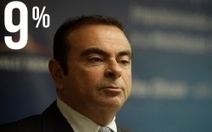
« En outre, l’étude pointe du doigt le manque de lien entre la rémunération et la performance économique et financière à long terme du groupe : de fait, seule 9% de la rémunération totale des présidents exécutifs du SBF 120 repose sur des conditions de performance mesurées sur un horizon minimum de trois années pleines (contre 11% en 2011) ».

www.economiematin.fr

Le comité des ressources humaines par Louis J. Duhamel | Vidéo du CAS


Le CAS est heureux de vous dévoiler sa deuxième série de capsules d’experts, formée d’entrevues vidéos.

Pendant trois minutes, un expert du Collège partage une réflexion et se prononce sur un sujet d’actualité lié à la gouvernance. Cette semaine Louis J. Duhamel, associé, stratégie corporative chez Deloitte, présente le rôle du comité des ressources humaines.

Bon visionnement !

Collège des administrateurs de sociétés

Le comité des ressources humaines par Louis J. Duhamel | Vidéo du CAS

Le comité des ressources humaines, par Louis J. Duhamel

Comment composer avec l’asymétrie de l’information entre le C.A et le management ?


Le document ci-dessous présente la problématique, bien réelle, de l’asymétrie de l’information entre les membres du conseil (le Board) et la direction de l’entreprise (le management). Il y a un gap naturel entre ce qui est communiqué par le management et ce qui est requis par le Board pour bien faire son travail. Ce dernier a besoin d’une information de qualité, c’est-à-dire une information complète (quoique synthétique), représentative de la réalité, la plus objective possible et, à jour.

Le rapport, préparé par la NACD (représentant le point de vue des administrateurs) et la firme comptable McGladrey (représentant le point de vue du management), présente un excellent compte rendu des problématiques soulevées par le manque de communication entre les administrateurs et la direction et propose plusieurs pratiques susceptibles de combler le gap d’information.

On y présente les résultats des « conversations » issus de quatre panels composés d’administrateurs et de membres de la haute direction. Le compte rendu fait ressortir les principaux problèmes de communication dans les domaines suivants  : (1) La stratégie et le risque, (2) la rémunération des hauts dirigeants, (3) la planification de la succession du PCD, et (4) l’évaluation du Conseil.

Je crois que les personnes intéressées par cette question, c’est-à-dire les administrateurs de sociétés et les membres des directions d’entreprises, devraient prendre connaissance de ce document afin d’être mieux renseignés sur les moyens à prendre pour pallier l’asymétrie de l’information.

Bridging Effectiveness Gaps : A Candid Look at Board Practices

Voici un court extrait du document. Bonne lecture.

« Effective board oversight demands information that is as current and relevant as possible. There are, however, natural gaps between what management communicates and what the board needs to know. The information flow between management and the board may not always be perfect, and board committees may have similar troubles bringing the full board « up to speed » on certain issues. The purpose of this report is to address these issues, which we call the « effectiveness gap. »…

Plus
Plus (Photo credit: Wikipedia)

The goal of this report is to offer some tips and strategies to improve communications between the full board, C-suite, and committees. In particular, we focus on four areas of concern: strategy and risk, executive compensation, CEO succession planning, and board evaluations. These four areas are traditionally of high importance to board members yet have also presented challenges.

To help bridge the gaps in effectiveness, it was necessary to speak directly with individuals from both management and the board. While the National Association of Corporate Directors (NACD) is able to assess the director perspective, we needed the C-suite perspective as well. We partnered with McGladrey to host four small gatherings of executives and directors in an effort to find ways of improving communications and relationships. The conversations that occurred during these gatherings provided the material for this document ».

Un argumentaire en faveur du choix d’administrateurs externes au C.A.* (jacquesgrisegouvernance.com)

Rémunérations des administrateurs et pratiques de gouvernance | Survey du Conference Board 2013* (jacquesgrisegouvernance.com)

Le « risque réputationnel » : Une priorité des Boards* (jacquesgrisegouvernance.com)

Faut-il limiter le nombre de mandats des administrateurs ?*


Voici un article publié par JOANN S. LUBLIN paru dans The Wall Street Journal qui montre l’évolution remarquable de la gouvernance des sociétés au cours des quarante dernières années. Vous verrez qu’il y a une tendance lourde à limiter le nombre de mandats des administrateurs de sociétés, mais que ce changement ne se fait pas sans heurt.

Plusieurs pensent que, malgré certains avantages évidents à avoir des administrateurs séniors sur les C.A., cette situation est un frein à la diversité et au renouvellement des générations au sein des conseils d’administration. C’est un article qui discute de ces problématiques avec nuance et avec des statistiques à l’appui.

Je souligne certains extraits pertinents de cet article. Bonne lecture. Faites-moi part de nos commentaires sur ce sujet assez controversé.

The 40-Year Club: America’s Longest-Serving Directors

[D]

Board colleagues say long-serving members often provide useful context about a company, its industry and its past. But activist investors contend the growing ranks of long-serving board members occupy spots that otherwise might go to younger and fresher talent. « Over-tenured directors also frustrate the goal of race and gender diversity, » adds Brandon Rees, acting head of the AFL-CIO’s Office of Investment.

Staying Power

Twenty-eight outside directors have at least 40 years’ tenure on a U.S. public company board.

Voir l’article pour identifier les noms

While 40-year directors are rare, companies appear increasingly reluctant to shake up their boardrooms. Among Russell 3000 companies, 6,457 independent directors—nearly 34% of the total—have served a decade or longer, GMI found. That’s up from 3,216 or about 18% in 2008.

Companies in Standard & Poor’s 500 stock index elected the smallest number of new directors last year in 10 years, according to a study by recruiters Spencer Stuart.

Some activist investors believe long-tenured board members can become too cozy with management.

The Council of Institutional Investors, a governance advocate, may soon urge shareholders and boards to look more skeptically at the independence of long-serving directors, says Ann Yerger, its executive director.

« Board members may not be able to fully exercise independent judgment after several years of service, » she adds. The council represents 125 pension funds with more than $3 trillion of assets.

Certain less-tenured directors favor term limits to hasten turnover. But just 17 major corporations impose such limits, Spencer Stuart’s study showed. A 12-year term makes sense because « board members become very stale after a while, » says Fred Hassan, a Time Warner Inc. TWX +0.55%director since 2009 and former Schering-Plough Corp. MRK -0.21%chief executive. He hopes to propose that limit for new board members of the media giant.

Not surprisingly, long-serving board members frequently oppose such rules. Instead, they support replacing poor performers through periodic evaluations of individual members. Richard T. Fisher, a Leggett director since 1972, says he and David S. Haffner, the firm’s CEO, sold the idea to its board last year.

Men seen as impediments to shaking up boardrooms (business.financialpost.com)

HP Board Expands Amid Turnaround Push (cio-today.com)

After 41 years, Soriano steps down from Harrison board (kitsapsun.com)

______________________________________________

*Je suis en congé jusqu’à la fin septembre. Durant cette période, j’ai décidé de rééditer les billets considérés comme étant les plus pertinents par les lecteurs de mon blogue (depuis le début des activités le 19 juillet 2011).

Rémunérations des administrateurs et pratiques de gouvernance | Survey du Conference Board 2013*


Voici le condensé d’un rapport sur les rémunérations des administrateurs de sociétés et sur les pratiques de gouvernance (aux É.U.), publié conjointement par le Conference Board, le NASDAQ OMX et le NYSE Euronext. Ce résumé a été transmis par Matteo Tonello du Conference Board et publié sur le blogue du Harvard Law School Forum on Corporate Governance and Financial Regulation.

This is « a benchmarking study with more than 150 corporate governance data points searchable by company size (measurable by revenue and asset value) and 20 industrial sectors. The report is based on a survey of public companies registered with the U.S. Securities and Exchange Commission. The Harvard Law School Forum on Corporate Governance and Financial Regulation, Stanford University’s Rock Center for Corporate Governance, the National Investor Relations Institute (NIRI), the Shareholder Forum and Compliance Week also endorsed the survey by distributing it to their members and readers ».

The 2013 Director Compensation and Board Practices Report

Voici un extrait des points se rapportant à la rémunération des administrateurs. Pour de plus amples informations, je vous invite à lire l’article du HB Law School Forum ou à communiquer avec M. Tonello du Conference Board pour le rapport intégral de 2013.

Seal of the U.S. Securities and Exchange Commi...

Seal of the U.S. Securities and Exchange Commission. (Photo credit: Wikipedia)

  1. Directors are best compensated in the energy industry, but company size can make a huge difference. Computer services companies are the most generous with full value share awards, but equity-based compensation is widely used across industries and irrespective of company size.

  2. Stock options are not as favored as they used to be, except by the smallest companies increasing skepticism on the effectiveness of stock options and stock appreciation rights as long-term incentives has led to their decline, especially in the last few years.

  3. Additional cash retainer for board chairmen is seldom offered by larger companies, which are more likely to reward lead directors.

  4. A corporate program financing the matching of personal charitable contributions is the most common among the director perquisites reported by companies.

  5. While many nonexecutive directors have C-suite experience, former or current CFOs are less represented than expected in the board of financial services companies.

Engagement accru des investisseurs institutionnels avec les C.A. et les directions en 2012 (jacquesgrisegouvernance.com)

Board of Directors: Key Agenda for 2013 (shilpithapar.com)

Corporate Governance, Rule 10C-1, and the SEC: Conclusion (Part 9) (theracetothebottom.org)

Que font les « bons » administrateurs pour faciliter le succès des organisations ? (jacquesgrisegouvernance.com)

______________________________________________

*Je suis en congé jusqu’à la fin septembre. Durant cette période, j’ai décidé de rééditer les billets considérés comme étant les plus pertinents par les lecteurs de mon blogue (depuis le début des activités le 19 juillet 2011).

Quels sont les grands enjeux de gouvernance ? | Six thèmes chauds !*


En rappel, vous trouverez, ci-joint, une excellente publication de la NACD (National Association of Corporate Directors) qui présente les grands défis et les enjeux qui attendent les administrateurs de sociétés au cours des prochaines années.

Ce document est un recueil de textes publiés par les partenaires de la NACD : Heidrick & Struggles International, Inc., KPMG’s Audit Committee Institute, Marsh & McLennan Companies, NASDAQ OMX, Pearl Meyer & Partners et Weil, Gotshal & Manges LLP.

Vous y trouverez un ensemble d’articles très pertinents sur les sujets de l’heure en gouvernance. J’ai déjà publié un billet sur ce sujet le 23 juin 2013, en référence à cette publication.

Chaque année, la NACD se livre à cet exercice et publie un document très prisé !

Voici comment les firmes expertes se sont répartis les thèmes les plus « hot » en gouvernance. Bonne lecture.

Boardroom, Tremont Grand
Boardroom, Tremont Grand (Photo credit: Joel Abroad)

(1) What to Do When an Activist Investor Comes Calling par Heidrick & Struggle

(2) KPMG’s Audit Committee Priorities for 2013 par KPMG’s Audit Committee Institute

(3) Board Risk Checkup—Are You Ready for the Challenges Ahead ? par Marsh & McLennan Companies

(4) Boardroom Discussions par NASDAQ OMX

(5) Paying Executives for Driving Long-Term Success par Pearl Meyer & Partners

(6) What Boards Should Focus on in 2013 par Weil, Gotshal and Manges, LLP

NACD Insights and Analysis – Governance Challenges: 2013 and Beyond

Today, directors are operating in a new environment. Shareholders, regulators, and stakeholders have greater influence on the boardroom than ever before. In addition, risks and crisis situations are occurring with greater frequency and amplitude. Directors have a responsibility to ensure their companies are prepared for these challenges—present and future.This compendium provides insights and practical guidance from the nation’s leading boardroom experts—the National Association of Corporate Directors’ (NACD’s) strategic content partners—each recognized as a thought leader in their respective fields of corporate governance.

Article relié :

NACD BoardVision: Private Equity’s Influence on Executive Compensation (bulletproofblog.com)

______________________________________________

*Je suis en congé jusqu’à la fin septembre. Durant cette période, j’ai décidé de rééditer les billets considérés comme étant les plus pertinents par les lecteurs de mon blogue (depuis le début des activités le 19 juillet 2011).

L’impact de la gouvernance sur les rémunérations des dirigeants


Vous trouverez, ci-dessous, une présentation Power Point que Richard Leblanc a livrée à la conférence annuelle de la Canadian Society of Corporate Secretaries, le 21 août 2013 à Halifax, NS.

Governance of Executive Compensation and Pay for performance

Cette présentation aborde tous les points chauds dans le domaine de la rémunération des hauts dirigeants. Richard a eu la générosité de mettre cette présentation en ligne via le groupe de discussion Boards & Advisors. Il s’agit d’une mine d’information pour toute personne intéressée par l’influence de la gouvernance sur les rémunérations des dirigeants.

President Barack Obama and Treasury Secretary ...
President Barack Obama and Treasury Secretary Timothy Geithner announce new limits on executive compensation. (Photo credit: Wikipedia)

Si vous êtes intéressés par certains aspects plus spécifiques de ces questions, je suis assuré qu’il se fera un plaisir de vous donner de plus amples informations. Voici un résumé des 10 thèmes abordés dans cette présentation. Bonne lecture.

1. Red flags and best practices;

2. Shareholder engagement and activism;

3. Changes to executive compensation;

4. Compensation of oversight functions (Canada, FSB);

5. Internal pay equity (coming in August);

6. Independent director compensation: Case;

7. Incorporating LT NF metrics into compensation: Case;

8. CEO / Board succession planning: Case;

9. Risk adjusted compensation;

10. Regulation of Proxy Advisors.

Un consultant de McKinsey responsable des rémunérations excessives des PCD (CEO) ! (jacquesgrisegouvernance.com)

How the fat cats first learned to get even fatter (standard.co.uk)

Some notes on executive compensation (yourbrainonecon.wordpress.com)

Pay (Not) For Performance – How Shareholders Loose and Executives Win (thecandidliberal.com)

Executive Compensation and the Impotency of Say on Pay (theracetothebottom.org)

Published / Preprint: Duration of Executive Compensation (moneyscience.com)

Companies Will Soon Publish The Ratio Of CEO Pay To Worker Pay (thinkprogress.org)

Un consultant de McKinsey responsable des rémunérations excessives des PCD (CEO) !


C’est le constat que fait Max Nisen dans Business Insider le 14 août 2013.

Je vous invite à lire l’article ci-dessous.

How One Employee And One Consulting Firm May Be Singlehandedly Responsible For The Staggering Gap Between CEO And Worker Pay

McKinsey is the world’s largest and most profitable management consulting firm,  as well one of the most difficult places to get hired. Over its 87-year existence it’s had a  massive impact on the U.S. economy according to « The Firm, » a forthcoming book by Duff McDonald.

mckinsey & company

In a New York Observer column, pointed out by Mike Dang at The Billfold, McDonald argues that the massive modern-day  gap between executive and worker pay has its origin with the consulting  firm.

It’s a fascinating story that all started  with General Motors commissioning a study on executive pay from McKinsey  consultant Arch Patton. He found that from 1939 to 1950, hourly employee pay  more than doubled, but top management pay went up only 35%.

The study, published in the Harvard Business Review, became a  series and turned national attention toward executive compensation,  promoting the idea that higher pay and bonuses were the lever to attract and  retain top executives.

Patton became a superstar,  hired by managers who were not surprisingly interested in hearing they were  underpaid. McKinsey’s CEO apparently thought this type of consulting was beneath  the firm, but wasn’t about to turn down the money.

« For several years, Mr. Patton personally  accounted for almost 10 percent of the firm’s billings, » McDonald writes. « At the end of the war, only 18 percent of  companies in the country had bonus plans. By 1960, about 60 percent of them  did. »

In 1961 came the books « Men, Money  and Motivation: Executive Compensation as an Instrument of  Leadership » and « What Is an  Executive Worth?« 

One McKinsey consultant told McDonald that Patton wrote « the same article  [26] times for the Harvard Business Review. »

Because of its popularity  and McKinsey’s influence, the idea became an entrenched philosophy, as did the  concept that as a company grows, so should CEO pay.

While Patton’s  compensation philosophy started with rigorous analysis of performance, soon it  took on a life of its own, with executive pay spiraling higher and higher, while  worker pay was left to languish.

Here’s where we are today, according to a  report by The State Of Working America,  a project of the Economic Policy Institute:

The AFL-CIO puts the number even higher, saying that the average Fortune 500  CEO makes 354 times the average wage of their employees. Some executives make 1,000 times more.

Of course, McKinsey and  Patton weren’t the only factor. Bull markets and economic expansion help push  pay upwards and encourage investors to look the other way — and once it moves  up, pay is slow to move back down. Meanwhile, slack labor markets and  weak growth prospects help to explain stagnant wages.

Regardless, McKinsey and Patton may have been a major driver in the  gap between CEO and employee wages exploding by a factor of 10 since the middle of the  century.

Read more:  http://www.businessinsider.com/mckinsey-and-the-ceo-pay-gap-2013-8#ixzz2c3CFCgwB

Is McKinsey to Blame for Skyrocketing CEO Pay? (ritholtz.com)

Jobs multiplier – The making of a boardroom hero | The Times (morethanaframework.wordpress.com)

« Abolissez les bonis versés aux hauts dirigeants » | Henry Mintzberg


Il y a 9 jours, j’ai lancé une discussion dans le groupe Boards & Advisors de LinkedIn sur la problématique liée au versement de bonis aux hauts dirigeants des sociétés cotées. J’avais alors proposé la lecture d’un article d’Henry Mintzberg* paru le 30 novembre 2009 et publié dans le Wall Street Journal le 12 novembre 2012 : No More Executive Bonuses !

Ce partage a donné lieu à une discussion extrordinairement musclée dans le groupe de discussion Boards & Advisors de LinkedIn que je vous invite à consulter afin de saisir toute la gamme des arguments invoqués, soit pour justifier l’utilisation des bonis, soit pour proposer de nouvelles variables à tenir en ligne de compte, soit, carrément, pour vilipender les tenants de cette approche trop souvent abusive. On peut dire que l’article de Mintzberg a, encore une fois, suscité de vives réactions.

Dans son article, Mintzberg critique sévèrement l’utilisation de cette façon de rémunérer la direction des entreprises et recommande l’abolition, pure et simple, des primes au rendement et des autres bonis versés aux hauts dirigeants. Cet article me semble toujours d’actualité.

L’auteur donne cinq raisons qui guident le comportement des hauts dirigeants lorsque le système de rémunération comporte des bonis. Il suggère que le système est basé sur de fausses hypothèses, notamment :

(1) A company’s health is represented by its financial measures alone—even better, by just the price of its stock;

(2) Performance measures, whether short or long term, represent the true strength of the company;

(3) The CEO, with a few other senior executives, is primarily responsible for the company’s performance.

Je vous invite à lire l’article de Mintzberg, ci-dessous, puis à consulter le lien vous menant au fil de discussion mentionné plus haut.

Ce billet a une grande valeur pédagogique; n’hésitez pas à faire connaître votre point de vue. Bonne lecture.

Let’s end corporate bonuses, says Henry Mintzberg, a professor at the Desautels Faculty of Management at McGill University. Executive bonuses, especially stock and option grants, are a form of legal corruption that has been bringing down the global … The problem isn’t that they are poorly designed. The problem is that they exist.

No More Executive Bonuses !

… These days, it seems, there is no shortage of recommendations for fixing the way bonuses are paid to executives at big public companies. Well, I have my own recommendation: Scrap the whole thing. Don’t pay any bonuses. Nothing.

This may sound extreme. But when you look at the way the compensation game is played—and the assumptions that are made by those who want to reform it—you can come to no other conclusion. The system simply can’t be fixed. Executive bonuses—especially in the form of stock and option grants—represent the most prominent form of legal corruption that has been undermining our large corporations and bringing down the global economy. Get rid of them and we will all be better off for it.

Mintzberg Speaking
Mintzberg Speaking (Photo credit: Daphne Depasse)

The failings of the current system—and the executives who live by it—are painfully obvious. Although these executives like to think of themselves as leaders, when it comes to their pay practices, many of them haven’t been demonstrating leadership at all. Instead they’ve been acting like gamblers—except that the games they play are hopelessly rigged in their favor.

First, they play with other people’s money—the stockholders’, not to mention the livelihoods of their employees and the sustainability of their institutions.

Second, they collect not when they win so much as when it appears that they are winning—because their company’s stock price has gone up and their bonuses have kicked in. In such a game, you make sure to have your best cards on the table, while you keep the rest hidden in your hand.

Third, they also collect when they lose—it’s called a « golden parachute. » Some gamblers.

Fourth, some even collect just for drawing cards—for example, receiving a special bonus when they have signed a merger, before anyone can know if it will work out. Most mergers don’t.

And fifth, on top of all this, there are chief executives who collect merely for not leaving the table. This little trick is called a « retention bonus »—being paid for staying in the game!  …

___________________________________________________________________

*Henry Mintzberg est le Cleghorn Professor of Management Studies à la Desautels Faculty of Management de McGill University, Montréal.

Autres articles d’intérêt :

Mintzberg in the WSJ: Get Rid of Executive Bonuses (bobsutton.typepad.com)

L’ancienneté du PCD (CEO) nuit-elle à la performance ? (jacquesgrisegouvernance.com)