L’évolution de la formation en gouvernance en Russie | Real Business


Alexander Filatov* explique comment la formation en gouvernance offerte en GB a aidé le monde des entreprises russes.

Director training improves governance procedures, boosting Russia’s global trading status


« A couple of days ago at a Kazakh friend’s celebration of his newborn son, I found out that he and his two friends – top managers at Russian companies – had enrolled in an IoD Chartered director training course in Moscow.

A few years ago, when I was CEO of the Russian Independent Directors Association, we imported this programme from the UK – a move supported by the late Neville Bain, the former IoD Chairman, who was a real enthusiast and great supporter of expanding the training and expertise into Russian and Kazakhstan markets.  Since then, hundreds of senior delegates from Russian and Kazakh companies have undertaken such courses.

The training has a very important component that other professional courses do not have, and that is governance, which includes resolving any directorial conflicts of interest and identifying fiduciary duties.

After launching the course into the Russian market, my colleagues and I created the Russian director professional qualification standard. We also started the process of director certification based on OECD corporate governance and IoD Chartered Director principles.

The UK Chartered Director course supports improved professional standards and will help raise the quality of the boardroom work in Russia and Kazakhstan – vital if our economy is to take advantage of the rapidily globalizing market for capital, products and labour.  What’s more, opportunities are now opening up within our economy that could provide a greater foothold for professional, trained, independent directors ».

Voir realbusiness.co.uk

________________________________

* Alexander Filatov is IoD C. Director of Russian Home Mortgage Lending Company and former MICEX Stock Exchange Advisory Board Member.

Vous vous préparez à occuper un poste d’administrateur d’une entreprise ?


Voici un article du Blogue Learn, Unlearn, Relearn, animé par CS Shilpi Thapar, sur comment se préparer à occuper un poste d’administrateurs de sociétés. Quelles questions se poser avant la nomination …, et après avoir obtenu le poste convoité. C’est un « checklist » très utile.

Voici un extrait. Bonne lecture.

So you are preparing to become Company Director ?

In today’s corporate world, role of companies have become complex and to achieve a sustainable growth is becoming huge challenge for the companies. So, companies need efficient people with different perspectives to constitute board to achieve their long term goals. Every company should be headed by an effective board which is collectively responsible for the long-term success of the company.

BODWhen you decide to move into governance and board role, you need to prepare well. Joining the Board is not an easy task. It requires a significant amount of work and preparation before accepting the invitation to join a board as director. It is a prestigious position and takes your career to next level but it is equally demanding and carries lot of accountability, responsibility and risk of spoiling yours and company reputation if something goes wrong. So be very selective in choosing your board seat as risk is higher now a days.

So here is some food for thought if you are planning to become a board director:

Voir l’article pour les nombreuses suggestions.

Les administrateurs d’OBNL et leur implication dans les activités de financement !


Voici un excellent article de publié sur son blogue le 7 novembre 2013. Ce billet très intéressant s’adresse aux dirigeants qui souhaiteraient voir les membres de leurs conseils d’administration s’investir davantage dans les diverses activités de levée de fonds des OBNL.

L’auteur identifie clairement certaines réticences des membres de C.A. d’OBNL à contribuer aux campagnes de levées de fonds, alors que l’une des raisons pour lesquelles ils ont été choisis comme administrateurs est justement leur potentiel à aider l’organisation à rencontrer ses objectifs financiers !

Dans cet article, l’auteur présente une progression dans les activités confiées aux membres de C.A. Selon moi, la stratégie proposée est très habile et elle devrait être adoptée par les présidents de C.A. et les PDG d’organisations à but non lucratif.

Bonne lecture. Vos commentaires sont appréciés; ils contribuent à la richesse du débat.

A Plan to Engage Your Nonprofit Board in Fundraising

Probably the most frequent problem Executive Directors and Development Directors face is a board that, for whatever reason, does not help with fundraising. This complaint is always number 1 or 2 when I ask leaders about their most serious board problems. The other problem is directors who just show up for meetings, most of the time unprepared, and do little else all year long. They just don’t engage and step up to their other duties. For now, let’s just stick with the fundraising problem, which actually is solvable…

… There are many ways a director, even a reluctant one, can help raise funds for the agency. Think of these ideas as steps of a ladder, allowing a director to start with a few simple and nonthreatening actions that can eventually lead to full speed ahead fund raising!

For instance, a new or reluctant director can:

Fundraising
Fundraising (Photo credit: HowardLake)
  1. Write and sign thank you cards to donors during the year
  2. Write and sign cards often sent out at year end, during the holiday season or year end campaign
  3. Place calls to donors and thank them for donations recently received
  4. Attend a privately-hosted reception where major donors and would be donors are personally thanked or introduced to the agency
  5. Arrange to have their social club, golf club, etc host a special reception
  6. Accompany the executive director or development director on personal visits to thank donors or special agency strategic partners
  7. Accompany the executive director or development director on personal visits to ask for donations
  8. Host an in-home reception for his/her friends to hear about the agency from one of its leaders
  9. Etc

I think if you can start out a director slowly in a nonthreatening scenario, you may be able to walk them up the ladder and into a major factor in fund and friend raising.

Les besoins d’une saine gouvernance sont universels !


Voici un court article publié par Monish Chatrath sur le site de moneycontrol.com qui présente une perspective équilibrée des pratiques de gouvernance à l’échelle internationale. C’est un texte qui décrit clairement les besoins d’une saine gouvernance et qui montre comment celle-ci peut s’appliquer dans des contextes culturels différents.

La nécessité d’une bonne gouvernance est universelle et sa réalisation est étroitement liée à la compétitivité des organisations. J’ai choisi de vous livrer de larges extraits de cet article. Bonne lecture.

Good governance is characterised by a firm commitment and adoption of ethical practices by an organisation across its entire value chain, in all of its dealings with a wide group of stakeholders, encompassing employees, customers, vendors, regulators and shareholders (including minority shareholders). To achieve this, certain checks and practices need to be whole-heartedly embraced. Trust and integrity play an essential role in economic life and for the sake of future prosperity, boards and management need to ensure that these attributes are adequately recognised.

The need for good corporate governance

The subject of corporate governance leapt to limelight from relative obscurity after a string of collapses of high profile companies at the start of this century, when events at a Houston-based energy giant and at a global telecom behemoth in Mississippi, shocked the business world with both the scale and age of their unethical and illegal operations. Worse, they seemed to indicate only the tip of a dangerous iceberg. While corporate practices in the USA came under the scanner, it appeared that the problem was far more widespread.

Relatively similar issues at a large and reputed food group in Europe, at a multinational newspaper group in Canada and at an Indian technology major, revealed significant and deep-rooted problems, which inexplicably creep in at times and places where they are least expected. Subsequently, the need for the identification and adoption of good tenets for governance have been reinforced from time to time and efforts to this end have gathered further momentum with every new disclosure of a corporate scandal.

The board has a key role in setting the ethical tone of a company. High ethical standards are in the long term interests of the company as a means to make it credible and trustworthy, not only in day-to-day operations but also with respect to longer term commitments. While codes of conduct and whistle blower policies are important, what is more important is the manner in which they are communicated and practiced. In this context, it is vital for board members and senior management to lead by example. Similarly, the concept of having independent directors is sound in theory, but more important is the process underlying the selection of independent directors. The selection process itself need to be rigorous, transparent, objective and aligned with the organisation’s needs.

Although, having tight financial controls is essential for market confidence, cultural and operational risks can just as effectively damage a business if left unchecked. This is where we get to see many divergent views across the globe; the Sarbanes-Oxley Act of 2002 (SOX) in USA insists on management and auditor assertion on the financial control environment, whereas the combined code of corporate governance in the UK (the UK Code) maintains a focus on the wider control environment, but without the requirement for positive assertion. The French have introduced the Loi de Sécurité Financière (LSF) which moves towards directors acknowledging their responsibility for having maintained a strong control environment. Ireland and Germany, among others, also have similar frameworks. In India, listed companies are required to comply with the revised corporate governance requirements under Clause 49, which envisages mandatory risk assessments, certification of financial controls by Chief Executive officers (CEOs) and Chief Financial officers (CFOs) and a larger role for independent directors.

To sum up, a fair and effective corporate governance framework must evolve in the light of changing circumstances of business over time and the framework of the company should be tailored accordingly to deal with those circumstances.  A poorly conceived governance system on the other hand, can wreak havoc on an economy by misallocating resources or failing to check opportunistic behaviour. The question that often arises is whether corporate governance operates the same way in every economy. It may be argued that cross-national patterns of corporate governance are either converging or will converge on either the Anglo-Saxon shareholder-centered model found in the USA and the UK, or a hybrid between the shareholder and stakeholder models typically found in Japan and Germany. The fact remains that, irrespective of the model adopted, the corporate governance and competitive strategy of organizations are inextricably interrelated.

L’évolution de la « Hawkamah » (Gouvernance en arabe) dans les pays en développement (jacquesgrisegouvernance.com)

Changement important dans la relation auditeur externe/interne | Financial Reporting Council (FRC) (jacquesgrisegouvernance.com)

Communications entre le C.A et les actionnaires | Prise de position de Richard Leblanc (jacquesgrisegouvernance.com)

Les aspects éthiques de la gouvernance d’entreprise | Un rapport qui prend en compte la réalité européenne (jacquesgrisegouvernance.com)

Les dix (10) plus importantes activités pour une gouvernance efficace


To ensure that your board is continually reviewing and enhancing its governance processes, this checklist will provide a good starting point.

Top Ten Steps to Improving Corporate Governance :

1.      Recognise that good governance is not just about compliance

Boards need to balance conformance (i.e. compliance with legislation, regulation and codes of practice) with performance aspects of the board’s work (i.e. improving the performance of the organisation through strategy formulation and policy making). As a part of this process, a board needs to elaborate its position and understanding of the major functions it performs as opposed to those performed by management. These specifics will vary from board to board. Knowing the role of the board and who does what in relation to governance goes a long way towards maintaining a good relationship between the board and management.

2.      Clarify the board’s role in strategy

It is generally accepted today that the board has a significant role to play in the formulation and adoption of the organisation’s strategic direction. The extent of the board’s contribution to strategy will range from approval at one end to development at the other. Each board must determine what role is appropriate for it to undertake and clarify this understanding with management.

3.      Monitor organisational performance

Monitoring organisational performance is an essential board function and ensuring legal compliance is a major aspect of the board’s monitoring role. It ensures that corporate decision making is consistent with the strategy of the organisation and with owners’ expectations. This is best done by identifying the organisation’s key performance drivers and establishing appropriate measures for determining success. As a board, the directors should establish an agreed format for the reports they monitor to ensure that all matters that should be reported are in fact reported.

4.      Understand that the board employs the CEO

In most cases, one of the major functions of the board is to appoint, review, work through, and replace (when necessary), the CEO. The board/CEO relationship is crucial to effective corporate governance because it is the link between the board’s role in determining the organisation’s strategic direction and management’s role in achieving corporate objectives.

5.      Recognise that the governance of risk is a board responsibility

Establishing a sound system of risk oversight and management and internal control is another fundamental role of the board. Effective risk management supports better decision making because it develops a deeper insight into the risk-reward trade-offs that all organisations face.

6.      Ensure the directors have the information they need

Better information means better decisions. Regular board papers will provide directors with information that the CEO or management team has decided they need. But directors do not all have the same informational requirements, since they differ in their knowledge, skills, and experience. Briefings, presentations, site visits, individual director development programs, and so on can all provide directors with additional information. Above all, directors need to be able to find answers to the questions they have, so an access to independent professional advice policy is recommended.

7.      Build and maintain an effective governance infrastructure

Since the board is ultimately responsible for all the actions and decisions of an organisation, it will need to have in place specific policies to guide organisational behaviour. To ensure that the line of responsibility between board and management is clearly delineated, it is particularly important for the board to develop policies in relation to delegations. Also, under this topic are processes and procedures. Poor internal processes and procedures can lead to inadequate access to information, poor communication and uninformed decision making, resulting in a high level of dissatisfaction among directors. Enhancements to board meeting processes, meeting agendas, board papers and the board’s committee structure can often make the difference between a mediocre board and a high performing board.

8.      Appoint a competent chairperson

Research has shown that board structure and formal governance regulations are less important in preventing governance breaches and corporate wrongdoing than the culture and trust created by the chairperson. As the “leader” of the board, the chairperson should demonstrate strong and acknowledged leadership ability, the ability to establish a sound relationship with the CEO, and have the capacity to conduct meetings and lead group decision-making processes.

9.      Build a skills-based board

What is important for a board is that it has a good understanding of what skills it has and those skills it requires. Where possible, a board should seek to ensure that its members represent an appropriate balance between directors with experience and knowledge of the organisation and directors with specialist expertise or fresh perspective. Directors should also be considered on the additional qualities they possess, their “behavioural competencies”, as these qualities will influence the relationships around the boardroom table, between the board and management, and between directors and key stakeholders.

10.     Evaluate board and director performance and pursue opportunities for improvement

Boards must be aware of their own strengths and weaknesses, if they are to govern effectively. Board effectiveness can only be gauged if the board regularly assesses its own performance and that of individual directors. Improvements to come from a board and director evaluation can include areas as diverse as board processes, director skills, competencies and motivation, or even boardroom relationships. It is critical that any agreed actions that come out of an evaluation are implemented and monitored. Boards should consider addressing weaknesses uncovered in board evaluations through director development programs and enhancing their governance processes.

See on www.effectivegovernance.com.au

La rémunération des grands patrons français augmente pour la troisième année consécutive


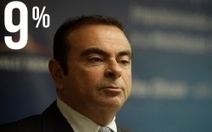
Étonnant en temps de crise… En moyenne, la rémunération totale des dirigeants des 120 plus grandes entreprises françaises a augmenté de 6,3% en 2012, selon l’étude annuelle du cabinet Proxinves publiée hier. C’est la troisième année consécutive que leurs revenus augmentent !

Jacques Grisé, Ph.D., F.Adm.A.‘s insight:

« En outre, l’étude pointe du doigt le manque de lien entre la rémunération et la performance économique et financière à long terme du groupe : de fait, seule 9% de la rémunération totale des présidents exécutifs du SBF 120 repose sur des conditions de performance mesurées sur un horizon minimum de trois années pleines (contre 11% en 2011) ».

www.economiematin.fr

Votez pour mon blogue en gouvernance | MADE IN BLOG AWARDS


Voici les blogues présentement en nomination dans la catégorie Business/marketing/médias sociaux 

Logo
Lecteurs, votez pour votre blogue préféré.

Cliquez ICI pour voter

Gouvernance | Jacques Grisé
Par Jacques Grisé, Ph.D, F.Adm.A.
Ce blogue fait l’inventaire des documents les plus pertinents et récents en gouvernance des entreprises. La sélection des billets, « posts », est le résultat d’une veille assidue des articles de revues, des blogues et sites web dans le domaine de la gouvernance, des publications scientifiques et professionnelles, des études et autres rapports portant sur la gouvernance des sociétés, au Canada et dans d’autres pays, notamment aux États-Unis, au Royaume-Uni, en France, en Europe, et en Australie.
Blog Image
Chaque jour, je fais un choix parmi l’ensemble des publications récentes et pertinentes et je commente brièvement la publication. L’objectif de ce blogue est d’être la référence en matière de documentation en gouvernance dans le monde francophone, en fournissant aux lecteurs une mine de renseignements récents (les billets quotidiens) ainsi qu’un outil de recherche simple et facile à utiliser pour répertorier les publications en fonction des catégories les plus pertinentes.

Mener ou suivre : Questions à l’intention des conseils d’administration d’OBNL | Deloitte


Deloitte a publié ce premier numéro de Questions particulières pour les conseils d’administration d’organismes à but non lucratif (OBNL) afin d’analyser de plus près quelques-uns des principaux problèmes ou défis auxquels les administrateurs et leur organisation ont à faire face.

Voici une introduction au document en question. Cette publication, à l’intention des administrateurs d’OBNL, est complémentaire au document Il est temps de tirer parti de la nouvelle réalité du marché | Deloitte, partagé sur ce blogue  le 29 octobre. Bonne lecture.

Mener ou suivre : Questions à l’intention des conseils d’administration d’OBNL

Les organismes à but non lucratif (OBNL) jouent un rôle important dans notre société, fournissant un large éventail de services dans divers secteurs d’activité. Même s’ils doivent faire face à des défis identiques ou semblables à ceux des organismes à but lucratif, les organismes à but non lucratif doivent résoudre des questions qui leur sont propres. Il arrive parfois qu’ils soient en concurrence directe avec des organismes à but lucratif, notamment au moment de recruter les meilleurs éléments ayant les capacités et l’expertise requises pour leur permettre de réaliser leur mission, aspect dont nous traitons dans la présente publication.

Deloitte logo.
Deloitte logo. (Photo credit: Wikipedia)

Les autres sujets abordés dans la présente publication comprennent notamment les changements apportés à l’environnement réglementaire des organismes à but non lucratif découlant d’une nouvelle loi fédérale, à savoir la Loi canadienne sur les organisations à but non lucratif, de la Loi sur la protection des renseignements personnels et les documents électroniques et des mesures législatives canadiennes contre les pourriels. Certains organismes à but non lucratif pourraient devoir revoir leur stratégie à la lumière de ces nouvelles règles, tandis que d’autres pourraient décider de le faire afin de tirer avantage des nouvelles technologies, dont les réseaux sociaux, afin de communiquer de manière plus efficace avec les parties prenantes et accroître le soutien de la collectivité.

La présente publication analyse ces questions et d’autres défis importants auxquels les organismes à but non lucratif et leurs administrateurs devront vraisemblablement faire face durant l’année à venir, tels qu’ils ont été définis par des professionnels de Deloitte qui travaillent auprès d’organismes à but non lucratif et qui sont souvent eux-mêmes administrateurs d’organismes à but non lucratif; des organismes ont recommandé leurs propres pratiques exemplaires qui, avec leur autorisation, ont été incluses dans cette publication.

Chaque article renferme des questions que les administrateurs pourraient poser pour explorer davantage ces enjeux avec leur propre conseil d’administration et les membres de la direction. En outre, les articles sont accompagnés d’outils et de ressources que les administrateurs peuvent utiliser pour obtenir une compréhension plus approfondie des questions abordées et améliorer l’efficacité du conseil dans le traitement de ces questions…

… Les conseils qui dirigent plutôt que d’être dirigés seront ceux qui auront adapté avec succès leurs stratégies en vue de transformer ces défis en occasions et qui tireront parti des exigences en matière de conformité pour mettre en œuvre des concepts novateurs.

Comment motiver certains de vos administrateurs d’OBNL ? (jacquesgrisegouvernance.com)

Un argumentaire en faveur du choix d’administrateurs externes au C.A.* (jacquesgrisegouvernance.com)

Le conseil d’administration et la transition numérique | Institut Français des Administrateurs (IFA)


Le conseil d’administration et la transition numérique

Qui dit informatique ne dit plus nécessairement DSI (Direction des Systèmes d’Information)… Historiquement très intégrée, la technologie informatique repose de plus en plus sur des organisations complexes, des acteurs nouveaux, et des prestations extérieures plus nombreuses. Le terme « numérique » (et son anglicisme « digital ») devient le mot clé dans l’entreprise : il irrigue désormais l’ensemble de la chaine de valeur de l’entreprise, et va même au-delà. Les métiers Ventes, Marketing, Ressources Humaines, Innovation industrielle s’approprient progressivement les technologies de l’information.

Les usages de la sphère privée pénètrent la sphère professionnelle et inversement. Les lignes bougent et poussent l’entreprise à s’ouvrir, à être plus agile et flexible et à interagir avec toutes ses parties prenantes. Cette transformation apportée par l’univers numérique est porteuse d’opportunités qu’il ne faut pas manquer, et de risques nouveaux qu’il faut appréhender et maîtriser. Et c’est résolument un nouveau défi pour les DSI et leurs équipes, mais aussi pour l’entreprise dans son ensemble, y compris pour son conseil d’administration, que de se saisir de ces opportunités dans une perspective de création de valeur !

Afin de mieux appréhender les opportunités et les risques associés au numérique, l’IFA et le CIGREF se sont associés pour produire ce présent guide, destiné aux administrateurs d’entreprise pour leur permettre d’ouvrir le dialogue avec les DG sur la question du numérique, tant dans les Entreprises de Taille Intermédiaire (ETI) que dans les grandes.

Le présent guide a pour ambition de présenter aux administrateurs les enjeux du numérique (partie 1), les acteurs (partie 2), les nouveaux risques (partie 3), et le cadre réglementaire de cette transformation numérique.

See on www.ifa-asso.com

Le cas d’un nouveau président du conseil d’administration (PCA) d’une société d’État


Voici un cas qui intéressera sûrement tous les membres de conseils d’administration de sociétés d’État. Même si le cas en gouvernance origine du site australien de Julie Garland McLellan, je crois que celui-ci s’applique très bien à la situation des sociétés d’État québécoises.

Voici donc un cas original tiré d’une situation vécue dans une entreprise d’État. Comment un président du conseil (PCA – Chairman) et son conseil peuvent-ils arriver à gérer une situation critique créée par ses prédécesseurs, une situation qui a le potentiel de nuire à l’organisation et de discréditer le conseil et le gouvernement.

Qu’en pensez-vous ? Que feriez-vous à la place de Brian pour faire évoluer le conseil ?

Ce cas a été analysé par trois experts de la gouvernance (Voir les avis des experts dans le texte ci-dessous). Quelle analyse vous semble la plus appropriée dans notre contexte ?

Le cas du nouveau président du conseil d’administration (PCA) d’une société d’État

Brian is chairman of a government owned company. Succession has been ‘actively managed’ with directors rotating on and off the board. This has given access to new skills including marketing and modern media but has resulted in a board with relatively little corporate history. Brian is the longest serving member and has only been on the board for five years.

Walmart Chairman of the Board Discusses Making...
Walmart Chairman of the Board Discusses Making a Difference (Photo credit: Walmart Corporate)

Six years ago the company terminated the employment of the then CFO due to allegations of improper accounting which had resulted in revalued assets and a large profit being declared in the prior year triggering  payment of bonuses to the then CFO and CEO.
The former CEO left shortly after receiving the bonus. The replacement CEO decided to investigate the accounting treatment. The investigation was conducted by the outsourced internal audit firm and concluded that the accounting treatment did not meet guidelines or even generally accepted accounting standards. The statutory auditors agreed. The asset revaluations were subsequently reversed which led to a large loss, no dividends or tax equivalent payments that year, and great embarrassment.

The former CFO was terminated and the matter referred to the police as a possible fraud. A new CFO was appointed. She is a pleasant and efficient person whom the board like and respect. She is considered a potential successor to the current CEO. The police decided not to pursue the fraud allegations as they believed these lacked sufficient evidence. The former CFO is suing for wrongful dismissal, the lawyers believe he may win, and the current CFO is worried because the union is calling for the former CFO to be reinstated.

The board is looking to Brian, who also chairs the remuneration committee, for guidance on what to do. The current CEO has offered his resignation but nobody wants to accept it. How can Brian help the board to move forward ?

Six raisons qui militent en faveur du choix d’administrateurs externes au C.A. (jacquesgrisegouvernance.com)

Les conséquences liées aux agissements court-termistes des fonds activistes


Aujourd’hui, je présente plusieurs points de vue se rapportant aux effets négatifs, à long terme, des agissements des investisseurs activistes. Depuis un an, j’ai fait plusieurs interventions sur ce thème dans le but de mieux informer les partisans de la « bonne gouvernance » de la situation qui prévaut dans ce domaine. Vous trouverez, ci-dessous, un billet que j’ai publié le 28 septembre 2013 et qui fait l’inventaire de ces publications.

L’effet à long terme des fonds d’investissement activistes

Mon objectif n’est pas de susciter la controverse à ce sujet parmi les administrateurs de sociétés; je suis néanmoins très sensible aux voix, de plus en plus nombreuses, qui s’élèvent et qui concluent aux effets pervers des fonds activistes. J’espère donc qu’avec toutes les informations « scientifiques » et de nature « pratique », les lecteurs de ce blogue pourront se forger une opinion éclairée.

À cet égard, j’ai demandé à Yvan Allaire, président exécutif du conseil de l’IGOPP, de vous exposer succinctement sa position sur cette épineuse question*.

Un important et acrimonieux débat fait rage présentement aux États-Unis sur un sujet d’une grande importance pour la situation canadienne. D’une part, un groupe d’universitaires, dont le leader est le professeur Bebchuk de la faculté de droit de Harvard, soutient, études empiriques à l’appui, qu’il est faux d’imputer des mobiles de profitabilité à court terme aux «fonds activistes», que ceux-ci contribuent à une amélioration sensible et durable de la performance des entreprises ciblées, qu’en aucune façon leurs prescriptions et agissements ne suscitent-ils des comportements de maximisation de la valeur du titre à court terme, mais dont les effets à long terme seraient nocifs pour l’entreprise.

English: This statue is also known as "St...
English: This statue is also known as « Statue of Three Lies » Lie # 1 : This is not John Harvard’s face; no picture or statue of John Harvard survived. Lie # 2 : John Harvard was not founder of Harvard University; it was founded two years prior to being renamed Harvard in 1638. Lie # 3 : The inscription says that Harvard was founded in 1638; in fact, it was founded two years earlier. (Photo credit: Wikipedia)

Évidemment, cette thèse est contestée et réfutée par un groupe réunissant des avocats, des universitaires, des juristes et surtout des dirigeants d’entreprise. Le célèbre avocat Martin Lipton, initiateur de la défense dite «poison pill» en est le porte-parole le plus véhément et assidu.

Vous trouverez au lien suivant un texte de Lipton qui réunit un nombre d’études aux conclusions divergentes de celles de Bebchuk ainsi que des témoignages de personnes ayant une longue expérience pratique de ces phénomènes.

Empiricism and Experience; Activism and Short-Termism; the Real World of Business

Le sujet est important pour le Canada, car tant pour le Groupe de travail sur la protection des entreprises québécoises que dans le cadre des consultations des commissions des valeurs mobilières sur l’à-propos de donner plus de pouvoir aux conseils en situation de tentative «hostile» de prise de contrôle, les opposants à toute intervention ou changement s’abreuvent abondamment à la fontaine de Bebchuk et al.

Yvan Allaire
Président exécutif du conseil

___________________________________________________

* Pour ceux qui veulent pousser davantage leurs réflexions sur les enjeux se rapportant aux conséquences néfastes des interventions des actionnaires activistes et « hedge funds », il me fera plaisir de vous faire parvenir les documents suivants :

(1) Hedge funds as “Activist Shareholders”: Passing Phenomenon or Grave-Diggers of Public Corporations ? Allaire et Firsirotu, 2007 .

(2) Activist Hedge Funds are good for you ! Allaire, 2013.

(3) Comment contrer la nature insidieuse du capitalisme financier ?