Compte rendu hebdomadaire de la Harvard Law School Forum on Corporate Governance | 27 janvier 2017


Voici le compte rendu hebdomadaire du forum de la Harvard Law School sur la gouvernance corporative au 27 janvier 2017.

J’ai relevé les principaux billets.

Bonne lecture !


harvard_forum_corpgovernance_small


  1. Why Do Managers Fight Shareholder Proposals? Evidence from No-Action Letter Décisions
  2. Bridging the Data Gap through Shareholder Engagement
  3. Top 10 Topics for Directors in 2017
  4. Mutual Funds As Venture Capitalists? Evidence from Unicorns
  5. Broadening the Boardroom
  6. 2016 Year in Review: Securities Litigation and Regulation
  7. Bebchuk Leads SSRN’s 2016 Citation Rankings
  8. Do Director Elections Matter?
  9. White Collar and Regulatory Enforcement: What to Expect in 2017
  10. Financial Regulatory Reform in the Trump Administration
  11. Dealing with Activist Hedge Funds and Other Activist Investors


Départ du PDG de CPR | 100 millions $ pour mettre son expertise à contribution dans l’opération des chemins de fer aux É.U. !


Ce matin, je partage avec vous un autre excellent article d’Yvan Allaire* et de François Dauphin publié dans le Financial Post le 24 janvier.

Les auteurs reviennent sur le parcours unique de l’ex-président du CN et du CP dans le domaine de la gestion des entreprises de chemins de fer.

Il ressort de ce portrait que le PDG possède une expérience sans pareil, liée à des processus de gestion inimitables.

C’est tellement le cas que M. Harrison a décidé de quitter un emploi très rémunérateur à CP pour accepter l’offre de 118 millions $ d’un Hedge Fund.

On compte sur sa solide expertise pour réorganiser et optimiser les opérations d’une autre entreprise dans le même domaine.

Cet article fait suite à un précédent billet qui portait sur le succès d’une démarche d’activisme (A “Successful” Case of Activism at the Canadian Pacific Railway: Lessons in Corporate Governance)

Cette situation montre clairement que les fonds activistes sont continuellement à la recherche de talents uniques et qu’ils sont prêts à miser des fortunes pour bénéficier de l’expertise incontestable d’un PDG.

Et vous, quelles leçons en retirez-vous ?

Bonne lecture !


Someone just hired Hunter Harrison for $100 million — and there’s an excellent reason why

In an unexpected turn of events, Canadian Pacific Railway announced the early departure of its CEO, Hunter Harrison, a few minutes before a conference call planned for analysts on Jan. 18. Instead of retiring as planned, Harrison leaves CP at age 72 for a new challenge, running another railway company (almost certainly CSX) on behalf of Mantle Ridge LP, a newly established hedge fund run by Paul Hilal. In his prior role at Pershing Square Capital, Hilal was instrumental in backing its investment in CP and installing Harrison’s management team.
sans-titre-hunter-harrison
CSX: Hunter Harrison Wants to Run His Fourth Railroad
Harrison thus forfeited all benefits and perquisites that he was entitled to receive from CP, including his pension, and he has agreed to surrender for cancellation almost all of his vested and unvested equity awards. Evidently the hedge fund will make him whole for the loss of this package, valued at approximately $118 million.

What makes Hunter Harrison so valuable? In the enchanted world of finance, there are of course no limits to what someone gets paid as long as it is a fraction of what the payer will gain. Still, one would think that a hedge fund manager looking for someone capable of turning around a poorly performing U.S. company would have an abundance of candidates to choose from. After all, the operating tricks that Harrison has come up with to make railroads more efficient have been described in minute detail in books he’s written. Dozens of seasoned railroad executives have worked with him and for him over the years. They must have learned quite a bit about Harrison’s recipe.

The answer to the $118-million question appears to reside in the fact that the successful transformation of these railroads (CN and CP) was the result, yes, of operational improvements, but more so of a fundamental cultural change. Harrison is a formidable change agent, a transformational leader in the truest meaning of that tired expression.

He claims to have invented a principle called “precision railroading,” which he implemented at three major railroads: Illinois Central, CN, and CP, the last with spectacular results, bringing the operating ratio (operating costs as a percentage of revenue, with a lower ratio being better) to 58.6 per cent for fiscal year 2016, down from 81.3 per cent in 2011, the last full year before Harrison’s took over.

Precision railroading, if it was easily learned from a book and replicated, would have been applied with success long ago at every North American railroad. Yet Harrison still seems to bring something that can make a difference over and above the techniques he developed and implemented. That something seems to be his skill at changing the culture of the railroad, a most difficult skill to imitate.

As a lifetime railroader himself, his decisions and actions display a deep understanding of the daily reality of the operators. He spends time meeting with the workers on the field and communicates profusely about the importance of asset optimization and the control of costs. At CP, he took many symbolic actions to instill in the whole organization the need to think and act like a railroader. For example, he relocated the corporate glass-towered headquarters to a rail yard, a move that was meant partly to cut costs but mostly to keep the employees’ focus on freight operations, and remind them daily of what the business is all about.

Managing a strategic turnaround is not an easy task. The softer, cultural element of it is often neglected, overlooked, and difficult to implement. That is where Harrison excels and why a hedge fund manager is prepared to pay big bucks to get that talent working for him.

But is money really the sole motivation for Harrison to start over at another railroad company at 72? In fact, at this stage of his career, he has more to lose reputation-wise if he fails than anything he can really earn in monetary terms.

The Memphis, Tenn. native, whose career began over five decades ago as an 18-year-old carman-oiler, may be driven by the determination to prove that the theory he has developed is replicable, no matter where. And determined to push his legacy to a new level — that of a railroad industry legend.

__________________________________

*Yvan Allaire est professeur émérite de stratégie à l’Université du Québec à Montréal (UQAM) et président exécutif de l’Institut de la gouvernance des organisations privées et publiques (IGOPP), François Dauphin est directeur de la recherche à l’IGOPP et chargé d’enseignement à l’UQAM.

Dix thèmes majeurs pour les administrateurs de sociétés en 2017


Aujourd’hui, je partage avec vous la liste des dix thèmes majeurs en gouvernance que les auteurs Kerry E. Berchem* et Rick L. Burdick* ont identifiés pour l’année 2017.

Vous êtes assurément au fait de la plupart de ces dimensions, mais il faut noter l’importance accrue à porter aux questions stratégiques, aux changements politiques, aux relations avec les actionnaires, à la cybersécurité, aux nouvelles réglementations de la SEC, à la composition du CA, à l’établissement de la rémunération et aux répercussions possibles des changements climatiques.

sans-titre-gump

Afin de mieux connaître l’ampleur de ces priorités de gouvernance pour les administrateurs de sociétés, je vous invite à lire l’ensemble du rapport publié par Akin Gump.

Bonne lecture !

Dix thèmes majeurs pour les administrateurs de sociétés en 2017


top-10


1. Corporate strategy: Oversee the development of the corporate strategy in an increasingly uncertain and volatile world economy with new and more complex risks

Directors will need to continue to focus on strategic planning, especially in light of significant anticipated changes in U.S. government policies, continued international upheaval, the need for productive shareholder relations, potential changes in interest rates, uncertainty in commodity prices and cybersecurity risks, among other factors.

2. Political changes: Monitor the impact of major political changes, including the U.S. presidential and congressional elections and Brexit

Many uncertainties remain about how the incoming Trump administration will govern, but President-elect Trump has stated that he will pursue vast changes in diverse regulatory sectors, including international trade, health care, energy and the environment. These changes are likely to reshape the legal landscape in which companies conduct their business, both in the United States and abroad.

With respect to Brexit, although it is clear that the United Kingdom will, very probably, leave the European Union, there is no certainty as to when exactly this will happen or what the U.K.’s future relationship, if any, with the EU will be. Once the negotiations begin, boards will need to be quick to assess the likely shape of any deal between the U.K. and the EU and to consider how to adjust their business model to mitigate the threats and take advantage of the opportunities that may present themselves.

3. Shareholder relations: Foster shareholder relations and assess company vulnerabilities to prepare for activist involvement

The current environment demands that directors of public companies remain mindful of shareholder relations and company vulnerabilities by proactively engaging with shareholders, addressing shareholder concerns and performing a self-diagnostic analysis. Directors need to understand their company’s vulnerabilities, such as a de-staggered board or the lack of access to a poison pill, and be mindful of them in any engagement or negotiation process.

4. Cybersecurity: Understand and oversee cybersecurity risks to prepare for increasingly sophisticated and frequent attacks

As cybercriminals raise the stakes with escalating ransomware attacks and hacking of the Internet of Things, companies will need to be even more diligent in their defenses and employee training. In addition, cybersecurity regulation will likely increase in 2017. The New York State Department of Financial Services has enacted a robust cybersecurity regulation, with heightened encryption, log retention and certification requirements, and other regulators have issued significant guidance. Multinational companies will continue implementation of the EU General Data Protection Regulation requirements, which will be effective in May 2018. EU-U.S. Privacy Shield will face a significant legal challenge, particularly in light of concerns regarding President-elect Trump’s protection of privacy. Trump has stated that the government needs to be “very, very tough on cyber and cyberwarfare” and has indicated that he will form a “cyber review team” to evaluate cyber defenses and vulnerabilities.

5. SEC scrutiny: Monitor the SEC’s increased scrutiny and more frequent enforcement actions, including whistleblower developments, guidance on non-GAAP measures and tougher positions on insider trading

2016 saw the Securities and Exchange Commission (SEC) award tens of millions of dollars to whistleblowers and bring first-of-a-kind cases applying new rules flowing from the protections now afforded to whistleblowers of potential violations of the federal securities laws. The SEC was also active in its review of internal accounting controls and their ability to combat cyber intrusions and other modern-day threats to corporate infrastructure. The SEC similarly continued its comprehensive effort to police insider trading schemes and other market abuses, and increased its scrutiny of non-GAAP (generally accepted accounting principles) financial measure disclosures. 2017 is expected to bring the appointment of three new commissioners, including a new chairperson to replace outgoing chair Mary Jo White, which will retilt the scales at the commissioner level to a 3-2 majority of Republican appointees. 2017 may also bring significant changes to rules promulgated previously under Dodd-Frank.

6. CFIUS: Account for CFIUS risks in transactions involving non-U.S. investments in businesses with a U.S. presence

Over the past year, the interagency Committee on Foreign Investment in the United States (CFIUS) has been particularly active in reviewing—and, at times, intervening in—non-U.S. investments in U.S. businesses to address national security concerns. CFIUS has the authority to impose mitigation measures on a transaction before it can proceed, and may also recommend that the President block a pending transaction or order divestiture of a U.S. business in a completed transaction. Companies that have not sufficiently accounted for CFIUS risks may face significant hurdles in successfully closing a deal. With the incoming Trump administration, there is also the potential for an expanded role for CFIUS, particularly in light of campaign statements opposing certain foreign investments.

7. Board composition: Evaluate and refresh board composition to help achieve the company’s goals, increase diversity and manage turnover

In order to promote fresh, dynamic and engaged perspectives in the boardroom and help the company achieve its goals, a board should undertake focused reassessments of its underlying composition and skills, including a review and analysis of board tenure, continuity and diversity in terms of upbringing, educational background, career expertise, gender, age, race and political affiliation.

8. Executive compensation: Determine appropriate executive compensation against the background of an increased focus on CEO pay ratios

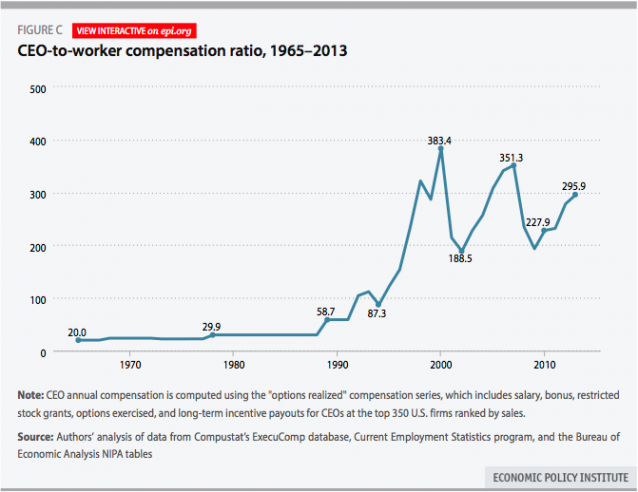
Executive compensation will continue to be a hot topic for directors in 2017, especially given that public companies will soon have to start complying with the CEO pay ratio disclosure rules. Recent developments suggest that such disclosure might not be as burdensome or harmful to relations with employees and the public as was initially feared.
The SEC’s final rules allow for greater flexibility and ease in making this calculation, and a survey of companies that have already estimated their ratios indicates that the ratio might not be as high, on average, as previously reported.

9. Antitrust scrutiny: Monitor the increased scrutiny of the antitrust authorities and the implications on various proposed combinations

Despite the promise of synergies and the potential to transform a company’s future, antitrust regulators have become increasingly hostile toward strategic transactions, with the Department of Justice and Federal Trade Commission suing to block 12 transactions since 2015. Although directors should brace for a longer antitrust review, to help navigate the regulatory climate, work upfront can dramatically improve prospects for success. Company directors should develop appropriate deal rationales and, with the benefit of upfront work, allocate antitrust risk in the merger agreement. Merger and acquisition activity may also benefit from the Trump administration, taking, at least for certain industries, a less-aggressive antitrust enforcement stance.

10. Environmental disasters and contagious diseases: Monitor the impact of increasingly volatile weather events and contagious disease outbreaks on risk management processes, employee needs and logistics planning

While the causes of climate change remain a political sticking point, it cannot be debated that volatile weather events, environmental damage and a rise in the diseases that tend to follow, are having increasingly adverse impacts on businesses and markets. Businesses will need to account for, or transfer the risk of, the increasing likelihood of these impacts. The SEC recently announced investigations into climate-risk disclosures within the oil and gas sector to ensure that they adequately allow investors to account for these effects on the bottom line. The growing number of shareholder resolutions and suits addressing climate change confirm that investors want this information, regardless of the position of the next administration.

The complete publication is available here.


*Kerry E. Berchem is partner and head of the corporate practice, and Rick L. Burdick is partner and chair of the Global Energy & Transactions group, at Akin Gump Strauss Hauer & Feld LLP.

Compte rendu hebdomadaire de la Harvard Law School Forum on Corporate Governance | 19 janvier 2017


Voici le compte rendu hebdomadaire du forum de la Harvard Law School sur la gouvernance corporative au 19 janvier 2017.

J’ai relevé les principaux billets.

Bonne lecture !


harvard_forum_corpgovernance_small


  1. Playing It Safe? Managerial Preferences, Risk, and Agency Conflicts
  2. Shareholder Challenges Pay Practice at Apple, Inc.
  3. Corporate Donations and Shareholder Value
  4. Delaware Supreme Court Rules on Director Independence
  5. Proxy Access Reaches the Tipping Point
  6. Acquisition Financing: the Year Behind and the Year Ahead
  7. Say on Pay Laws, Executive Compensation, CEO Pay Slice, and Firm Value around the World
  8. The Importance of the Business Judgment Rule
  9. 2016 Year-End FCPA Update
  10. Delaware Court of Chancery Dismissal of Complaint Based on Post-Closing Disclosure Claims

Compte rendu hebdomadaire de la Harvard Law School Forum on Corporate Governance | 12 janvier 2017


Voici le compte rendu hebdomadaire du forum de la Harvard Law School sur la gouvernance corporative au 12 janvier 2017.

J’ai relevé les principaux billets.

Bonne lecture !


harvard_forum_corpgovernance_small


  1. Global and Regional Trends in Corporate Governance for 2017
  2. Compensation Season 2017
  3. Sustainability Practices: 2016 Edition
  4. The Ivory Tower on Corporate Governance
  5. Constitutionality of SEC’s Administrative Law Judges Headed to Supreme Court?
  6. Moving Beyond Shareholder Primacy: Can Mammoth Corporations Like ExxonMobil Benefit Everyone?
  7. Mergers and Acquisitions—A Brief Look Back and a View Forward
  8. Top 250 Report on Long-Term Incentive Grant Practices for Executives
  9. Corporate Governance: The New Paradigm
  10. A Strategic Cyber-Roadmap for the Board
  11. 2016 Year-End Activism Update
  12. Short-Termism and Shareholder Payouts: Getting Corporate Capital Flows Right

Compte rendu hebdomadaire de la Harvard Law School Forum on Corporate Governance | 5 janvier 2017


Voici le compte rendu hebdomadaire du forum de la Harvard Law School sur la gouvernance corporative au 5 janvier 2017.

Bonne lecture !


harvard_forum_corpgovernance_small


  1. Are Directors Really Irrelevant to Capital Structure Choice?
  2. 2017 Board Priorities Report
  3. The Life (and Death?) of Corporate Waste
  4. Progress in Understanding Proxy Access and the Shareholder Proposal Process
  5. Rethinking Compensation Philosophies: Top 5 Questions for Boards
  6. Controlling Stockholder M&A Does Not Automatically Trigger Entire Fairness Review
  7. Are Shareholder Votes Rigged?
  8. Jury Verdict in “Spread Bet” Insider Trading Case: A Reminder of U.S. Long-Arm Regulatory Risk
  9. REIT M&A, Governance and Activism—Themes for 2017
  10.  Activism, Strategic Trading, and Liquidity
  11. The Delaware General Corporation Law, Simplified
  12. Gender Parity on Boards Around the World

Compte rendu hebdomadaire de la Harvard Law School Forum on Corporate Governance


Voici le compte rendu hebdomadaire du forum de la Harvard Law School sur la gouvernance corporative au 29 décembre 2016.

Bonne lecture !


harvard_forum_corpgovernance_small

  1. A “Successful” Case of Activism at the Canadian Pacific Railway: Lessons in Corporate Governance, posted by Yvan Allaire and François Dauphin, IGOPP and UQAM, on Friday, December 23, 2016
  2. U.K. Proposed Enhancements to Corporate Governance: Will the New U.S. Administration Follow?, posted by Cydney S. Posner, Cooley LLP, on Friday, December 23, 2016
  3. Delaware Supreme Court Ruling in Zynga: Reasonable Doubt of Director Independence , posted by Thomson Reuters Practical Law, Corporate & Securities Service, on Saturday, December 24, 2016
  4. Do CEO Bonus Plans Serve a Purpose?, posted by Wayne R. Guay and John D. Kepler, University of Pennsylvania, on Monday, December 26, 2016
  5. 2016 Corporate Governance Annual Summary, posted by Michael McCauley, Florida State Board of Administration, on Monday, December 26, 2016
  6. Areas of Focus for Global Audit Regulators, posted by Steven B. Harris, Public Company Accounting Oversight Board, on Tuesday, December 27, 2016
  7. Rethinking US Financial Regulation in Light of the 2016 Election, posted by Reena Agrawal Sahni, Shearman & Sterling LLP, on Tuesday, December 27, 2016
  8. 2016 Spencer Stuart Board Index, posted by Spencer Stuart, on Wednesday, December 28, 2016
  9. Results of the 2016 Proxy Season in Silicon Valley, posted by David A. Bell, Fenwick & West LLP, on Wednesday, December 28, 2016
  10. Female Directors, Board Committees and Firm Performance, posted by Colin Green and Swarnodeep Homroy, Lancaster University, on Thursday, December 29, 2016
  11. Executive Compensation: Analysis of Recent Incentive Financial Goals, posted by John R. Sinkular and Julia Kennedy, Pay Governance LLC, on Thursday, December 29, 2016

Le Spencer Stuart Board Index | 2016


Voici le rapport annuel toujours très attendu de Spencer Stuart*.

Ce document présente un compte rendu très détaillé de l’état de la gouvernance dans les grandes sociétés publiques américaines (S&P 500).

On y découvre les résultats des changements dans le domaine de la gouvernance aux É.U. en 2016, ainsi que certaines tendances pour 2017.

Les thèmes abordés sont les suivants :

La composition des Boards

L’indépendance du président du CA

Les mandats des administrateurs et les limites aux nombres de mandats

L’âge de la retraite des administrateurs

L’évaluation des Boards

La nature des relations du Boards et de la direction avec les actionnaires

L’amélioration de la performance des Boards

Diverses informations, notamment :

Only 19% of new independent directors are active CEOs, chairs, presidents and chief operating officers, compared with 24% in 2011, 29% in 2006 and 49% in 1998, the first year we looked at this data for S&P 500 companies.

Active executives with financial backgrounds (CFOs, other financial executives, as well as investors and bankers) represent 15% of new independent directors this year, an increase from 12% last year. Another 10% of new directors are retired finance and public accounting executives.

spencer-stuart-us-board-index-2016_cover

On average, S&P 500 directors have 2.1 outside corporate board affiliations, although most directors aren’t restricted from serving on more.

The number of boards with no female directors dropped to the lowest level we have seen; six S&P 500 boards (1%) have no women, a noteworthy decline from 2006, when 52 boards (11%) included no female members. Women now constitute 21% of all S&P 500 directors.

Among the boards of the 200 largest S&P companies, the total number of minority directors has held steady at 15% since 2011. 88% of the top 200 companies have at least one minority director, the same as 10 years ago.

Only 43% of S&P 500 CEOs serve on one or more outside corporate boards in addition to their own board, the same as in 2015. In 2006, 55% of CEOs served on at least one outside board.

Boards met an average of 8.4 times for regularly scheduled and special meetings, up from 8.1 last year and 8.2 five years ago. The median number of meetings rose from 7.0 last year to 8.0.

The average annual total compensation for S&P 500 directors, excluding the chairman’s compensation, is $280,389.

Over time, the compensation mix for directors has evolved, with more stock grants and fewer stock options. Today, stock grants represent 54% of total director compensation, versus 48% five years ago, while stock options represent 6% of compensation today, down from 10% five years ago. Cash accounts for 38% of director compensation, versus 39% in 2011.

95% of the independent chairmen of S&P 500 boards receive an additional fee, averaging $165,112. Nearly two-thirds of lead and presiding directors, 65%, receive additional compensation. The average premium paid to lead and presiding directors is $33,354.

2016 Spencer Stuart Board Index


Investor attention to board performance and governance continues to escalate, and, increasingly, it’s large institutional investors—so-called “passive” investors—who are making known their expectations in areas such as board composition, disclosure and shareholder engagement. Long-term investors have shifted their posture to taking positions on good governance, and are increasingly demonstrating common ground with activists on governance topics.

Board composition is a particular area of focus, as traditional institutional investors have become more explicit in demanding that boards demonstrate that they are being thoughtful about who is sitting around the board table and that directors are contributing. They are looking more closely at disclosures related to board refreshment, board performance and assessment practices, in some cases establishing voting policies on governance.

Boards are taking notice. Directors want to ensure that their boards contribute at the highest level, aligning with shareholder interests and expectations. In response, boards are enhancing their disclosures on board composition and leadership, reviewing governance practices and establishing protocols for engaging with investors. Here are some of the trends we are seeing in the key areas of investor concern.

Board composition

The composition of the board—who the directors are, the skills and expertise they bring, and how they interact—is critical for long-term value creation, and an area of governance where investors increasingly expect greater transparency. Shareholders are looking for a well-explained rationale for why the group of people sitting around the board table are the right ones based on the strategic priorities of the business. They want to know that the board has the processes in place to review and evolve board composition in light of emerging needs, and that the board regularly evaluates the contributions and tenure of current board members and the relevance of their experience.

Acknowledging investor interest in their composition, more boards are reviewing how to best communicate their thinking about the types of expertise needed in the board—and how individual directors provide that expertise. More than one-third of the 96 corporate secretaries responding to our annual governance survey, conducted each year as part of the research for the Spencer Stuart Board Index, said their board has changed the way it reports director bios/qualifications; among those that have not yet made changes, 15% expect the board to change how they present director qualifications in the future.

What’s happening to board composition in practice after all of the talk about increasing board turnover? In 2016, we actually saw a small decline in the number of new independent directors elected to S&P 500 boards. S&P 500 boards included in our index elected 345 new independent directors during the 2016 proxy year—averaging 0.72 new directors per board. Last year, S&P 500 boards added a total of 376 new directors (0.78 new directors per board).

Nearly one-third (32%) of the new independent directors on S&P 500 boards are serving on their first outside corporate board. Women account for 32% of new directors, the highest rate of female representation since we began tracking this data for the S&P 500. This year’s class of new directors, however, includes fewer minority directors (defined as African-American, Hispanic/Latino and Asian); 15% of the 345 new independent directors are minorities, a decrease from 18% in 2015.

With the rise of shareholder activism, we’ve also seen an increase in investors and investment managers on boards. This year, 12% of new independent directors are investors, compared with 4% in 2011 and 6% in 2006.

Independent board leadership

Boards continue to feel pressure from some shareholders to separate the chair and CEO roles and name an independent chairman. And, indeed, 27% of S&P 500 boards, versus 21% in 2011, have an independent chair. An independent chair is defined as an independent director or a former executive who has met applicable NYSE or NASDAQ rules for independence over time. This actually represents a small decline from 29% last year. Meanwhile, naming a lead director remains the most common form of independent board leadership: 87% of S&P 500 boards report having a lead or presiding director, nearly all of whom (98%) are identified by name in the proxy.

In our governance survey, 12% of respondents said their board has recently separated the roles of chairman and CEO, while 33% said their board has discussed whether to split the roles within the next five years. Among boards that expect to or have recently separated the chair and CEO roles, 72% cite a CEO transition as the reason, while 20% believe the chair/CEO split represents the best governance.

In response to investor interest in board leadership structure—and sometimes demands for an independent chairman—more boards are discussing their leadership structure in their proxies, for example, explaining the rationale for maintaining a combined chair/CEO role and delineating the responsibilities of the lead director. Among the lead director responsibilities boards highlight: approving the agenda for board meetings, calling meetings and executive sessions of independent directors, presiding over executive sessions, providing board feedback to the CEO following executive sessions, leading the performance evaluation of the CEO and the board assessment, and meeting with major shareholders or other external parties, when necessary. Some proxies include a letter to shareholders from the lead independent director.

Tenure and term limits

Director tenure continues to be a hot topic for some shareholders. While some rating agencies and investors have questioned the independence of directors with “excessive” tenure, there are no specific regulations or listing standards in the U.S. that speak to director independence based on tenure. And, in fact, most companies do not have governance rules limiting tenure; only 19 S&P 500 boards (4%) set an explicit term limit for non-executive directors, a modest increase from 2015 when 13 boards (3%) had director term limits.

Just 3% of survey respondents said their boards are considering establishing director term limits, but many boards are disclosing more in their proxies about director tenure. Specifically, boards are describing their efforts to ensure a balance between short-tenured and long-tenured directors. And several companies have included a short summary of the board’s average tenure accompanied by a pie chart breaking down the tenure of directors on the board (e.g., directors with less than five years tenure, between five and 10 years, and more than 10 years tenure on the board).

Among S&P 500 boards overall, the average board tenure is 8.3 years, a slight decrease from 8.7 five years ago. The median tenure has declined as well in that time, from 8.4 to 8.0. The majority of boards, 63%, have an average tenure between six and 10 years, but 19% of boards have an average tenure of 11 or more years.

We also looked this year at the tenure of individual directors: 35% of independent directors have served on their boards for five years or less, 28% have served for six to 10 years, and 22% for 11 to 15 years. Fifteen percent of independent directors have served on their boards for 16 years or more.

Mandatory retirement

In the absence of term or tenure limits, most S&P 500 boards rely on mandatory retirement ages to promote turnover. About three-quarters (73%) of S&P 500 boards report having a mandatory retirement age for directors. Eleven percent report that they do not have a mandatory retirement age, and 16% do not discuss mandatory retirement in their proxies.

Retirement ages have crept up in recent years, as boards have raised them to allow experienced directors to serve longer. Thirty-nine percent of boards have mandatory retirement ages of 75 or older, compared with 20% in 2011 and just 9% in 2006. Four boards have a retirement age of 80. The most common mandatory retirement age is 72, set by 45% of S&P 500 boards.

As retirement ages have increased, so has the average age of independent directors. The average age of S&P 500 independent directors is 63 today, two years older than a decade ago. In that same period, the median age rose from 61 to 64. Meanwhile, the number of older boards has increased; 37% of S&P 500 boards have an average age of 64 or older, compared with 19% a decade ago, and 15 of today’s boards (3%) have an average age of 70 or greater, versus four (1%) a decade ago.

Board evaluations

Another topic on which large institutional investors have become more vocal is board performance evaluations. Shareholders are seeking greater transparency about how boards address their own performance and the suitability of individual directors—and whether they are using assessments as a catalyst for refreshing the board as new needs arise.

We have seen a growing trend in support of individual director assessments as part of the board effectiveness assessment—not to grade directors, but to provide constructive feedback that can improve performance. Yet the pace of adoption of individual director assessments has been measured. Today, roughly one-third (32%) of S&P 500 boards evaluate the full board, committees and individual directors annually, an increase from 29% in 2011.

In our survey of corporate secretaries, respondents said evaluations are most often conducted by a director, typically the chairman, lead director or a committee chair. A wide range of internal and external parties are also tapped to conduct board assessments, including in-house and external legal counsel, the corporate secretary and board consulting firms. Thirty-five percent use director self-assessments, and 15% include peer reviews. According to proxies, a small number of boards, but more than in the past, disclose that they used an outside consultant to facilitate all or a portion of the evaluation process.

Shareholder engagement

In light of investors’ growing desire for direct engagement with directors, more boards have established frameworks for shareholders to raise questions and engage in meaningful, two-way discussions with the board. In addition to improving disclosures about board composition, assessment and other key governance areas, some boards include in their proxies a summary of their shareholder outreach efforts. For example, they detail the number of investors the board met with, the issues discussed and how the company and board responded. A few boards facilitate direct access to the board by providing contact information for individual directors, including the lead director and audit committee chair.

Going further, many boards now proactively reach out to their company’s largest shareholders. In our survey, 83% of respondents said management or the board contacted the company’s large institutional investors or largest shareholders, an increase from 70% the year prior. The most common topic about which companies engaged with shareholders was proxy access (52%), an increase from 33% in 2015. Other topics included “say on pay” (51%), CEO compensation (40%), director tenure (30%), board refreshment (27%), shareholder engagement approach (27%) and chairman independence (24%). Survey respondents also wrote in more than a dozen additional topics, including majority/cumulative voting, disclosure enhancements, environmental issues and gender pay equity.

Enhancing board performance

The topic of board refreshment can be a highly charged one for boards. But having the right skills around the table is critical for the board’s ability to provide the appropriate guidance and oversight of management. Furthermore, the capabilities and perspectives that a board needs evolve over time as the business context changes. Boards can ensure that they have the right perspectives around the table and are well-equipped to address the issues that drive shareholder value—which, after all, is what investors are looking for—by doing the following:

Viewing director recruitment in terms of ongoing board succession planning, not one-off replacements. Boards should periodically review the skills and expertise on the board to identify gaps in skills or expertise based on changes in strategy or the business context.

Proactively communicating the skill sets and expertise in the boardroom—and the roadmap for future succession. Publishing the board’s skill matrix and sharing the board’s thinking about the types of expertise that are needed on the board—and how individual directors provide that expertise—signals to investors that the board is thoughtful about board succession.

Setting expectations for appropriate tenure both at the aggregate and individual levels. By setting term expectations when new directors join, boards can combat the perceived stigma attached to leaving a board before the mandatory retirement age. Ideally, boards will create an environment where directors are willing to acknowledge when the board would benefit from bringing on different expertise.

Thinking like an activist and identifying vulnerabilities in board renewal and performance. Proactive boards conduct board evaluations annually to identify weaknesses in expertise or performance. They periodically engage third parties to manage the process and are disciplined about identifying and holding themselves accountable for action items stemming from the assessment.

Establishing a framework for engaging with investors. This starts with proactive and useful disclosure, which demonstrates that the board has thought about its composition, performance and other specific issues. In addition, it is valuable to have a protocol in place enumerating responsibilities related to shareholder engagement.


*Note: The Spencer Stuart Board Index (SSBI) is based on our analysis of the most recent proxy reports from the S&P 500, plus an extensive supplemental survey. The complete publication draws on the latest proxy statements from 482 companies filed between May 15, 2015, and May 15, 2016, and responses from 96 companies to our governance survey conducted in the second quarter of 2016. Survey respondents are typically corporate secretaries, general counsel or chief governance officers. Proxy and survey data have been supplemented with information compiled in Spencer Stuart’s proprietary database.

The complete publication, including footnotes, is available here.

Quelle est la rémunération globale des administrateurs canadiens ?


Quelle est la rémunération globale des administrateurs canadiens ?

C’est une question que beaucoup de personnes me posent, et qui n’est pas évidente à répondre !

L’article ci-dessous, publié par Martin Mittelstaedt, chercheur et ex-rédacteur au Globe and Mail, apporte un éclairage très intéressant sur la question de la rémunération des administrateurs canadiens.

Les études sur le sujet sont rares et donnent des résultats différents compte tenu de la taille, de la nature privée ou publique des entreprises, du secteur d’activité, des différentes composantes de la rémunération globale, etc.

De manière générale, il semble que les rémunérations des administrateurs canadiens et américains soient similaires et que les postes d’administrateurs des entreprises publiques commandent une rémunération globale d’environ quatre fois la rémunération offerte par les entreprises privées.

Une étude montre que la base médiane de la rémunération des administrateurs de sociétés privées au Canada est de 25 000 $, avec un jeton de présence de 1 500 $ et quatre réunions annuelles. Le nombre d’administrateurs est de six, incluant trois administrateurs indépendants et une femme ! La somme de la rémunération globale s’établirait à environ 31 000 $ US. Mais on parle ici de grandes entreprises privées…

Le montant de la rémunération dépend aussi beaucoup des plans de distribution d’actions, des privilèges, des bonis, etc.

Évidemment, pour toute entreprise publique, il est facile de connaître la rémunération détaillée des administrateurs et des cinq hauts dirigeants puisque ces renseignements se retrouvent dans les circulaires aux actionnaires.

Je vous encourage à lire cet article. Vous en saurez plus long sur les raisons qui font que les informations sont difficiles à obtenir dans le secteur privé.

Bonne lecture !

How much is a director worth ?


8b6d334e22ce959209f0988e0a56ca9c

Determining director compensation at private companies is more of an art than a science, with a wide range of practices and no one-size-fits-all formula.

Unlike publicly traded companies, where detailed information about director remuneration is as close as the nearest proxy circular, compensation at private boards is like “a black box,” according to Steve Chan, principal at Hugessen Consulting, who says retainers, meeting fees and share-based awards “are all over the map.”

Not much is known about private director compensation “for good reason,” observes David Anderson, president of Anderson Governance Group. “There is not a lot of data out there.”

PRIVATELY UNDERPAID?

Private company directorships can be prized assignments because they don’t involve the heavy compliance and regulatory burdens that occupy increasing amounts of time at public company boards.

But what private boards should be paid is difficult to determine, when there is little research to guide individual directors or companies. Some of the available data suggest private directors are being underpaid, at least relative to their public counterparts. But this information does not include the fact that the work may be different and much of the compensation at public boards may not ultimately pay off because it is linked to share price performance.

It is difficult to benchmark best practices with so little hard data, making it unsurprising that how best to set private company directors’ compensation is the most frequently asked question made by members to the ICD.

One of the few ongoing attempts to analyze compensation indicates remuneration is far higher at public boards, about four times higher in fact, although the amounts are skewed by the heavy use of stock-linked awards at publicly traded companies.

The private company survey, by Lodestone Global, was based on a questionnaire posed to members of the Young Presidents’ Organization, an international group of corporate présidents and CEOs, including many from Canada.

The Lodestone survey looked at medium-sized family or closely held firms, companies that are more established than early-stage startups, but smaller than large global corporations.

“The survey is not casually designed. The data is pretty rigorous and it’s global,” says Bernard Tenenbaum, managing partner at Princeton, N.J.-based Lodestone.

Tenenbaum says he started investigating private company board compensation because of the paucity of data on the subject. No one seemed to know what was going on. “People kept asking me, ‘Well how much should we pay directors?’ I’d say: ‘I don’t know. How much do you pay them now?’ And I started surveying.”

The firm’s most recent survey, based on 2014 data, had responses from more than 250 private companies, including 19 from Canada. The median revenue at the Canadian companies was $100-million, with the median number of employees at 325.

According to Tenenbaum, the median Canadian retainer was $25,000, with a $1,500 meeting fee and four meetings annually. The median number of directors was six, with three independent and one woman. The total of fees and retainers came to $31,000 (all dollar figures U.S.)

Interestingly, the overall U.S. compensation figure matched the Canadian one, but with a different composition. The median U.S. retainer was lower at $21,000, but the meeting fee was higher at $2,500. Including a few other miscellaneous items, like teleconference fees, U.S. compensation was $33,000, compared to $32,250 in Canada, a closeness that Tenenbaum termed “a kissing distance.”

The Lodestone figures give an indication of director compensation, although it is worth cautioning that the sample size is small, the figures are based on the median or middle-ranked firm, and there was a wide variety in size among the companies, given that they included a few smaller tech and industrial firms.

To benchmark private company director compensation, it is worthwhile to look at what comparable publicly traded companies are paying. One useful comparator is the smaller companies embedded in the BDO 600 survey of director compensation at medium-sized public companies. It has access to highly accurate data based on shareholder proxy circulars.

BDO’s 2014 survey found that among firms with revenue between $25-million and $325-million, cash compensation through retainer and committee fees averaged $54,000, while directors typically received another $65,000 in stock awards and options for a total of $119,000.

There is a small amount of information available in Canada on private board compensation, but the amount of data isn’t large enough to make generalized statements on remuneration and involves larger companies.

For example, in its director compensation, Canadian Tire Corp. breaks out amounts paid to the company’s non-publicly traded banking subsidiary, Canadian Tire Bank. In 2014, three directors on both boards were paid about $55,000 each for retainers and meeting fees for serving at the bank. Similarly, Loblaw Companies Ltd. paid $58,000 to a director who also served on President’s Choice Bank, a privately-held subsidiary.

The amounts are relatively low for blue-chip Canadian companies, but both banks are far smaller than their parent companies, with Canadian Tire Bank at $5.6-billion in assets and PC Bank at $3.3-billion.

Hugessen’s Chan says that in his experience, the larger, family-run private companies that have global operations compensate directors at roughly the same amounts as similarly sized public firms.

“Among the larger public companies versus the private companies, they’re comparable,” Chan says.

PUBLICLY EXPOSED

Tenenbaum says that based on his research and the figures from BDO, directors are being paid about $20,000 annually for taking on the added hassle of serving on a public company. He discounted the value of the stock-based compensation because it is conditional on share-price performance.

“There is a premium that you pay a director for taking the risk” of public company exposure, Tenenbaum says.

Directors also need to take into account some of the non-monetary factors of the board experience. Given that so much time on a public board is spent on compliance with regulatory requirements, being freed of this responsibility has value.

“When you’re on a private board, you don’t need to worry about all of the compliance that you have to worry about on a public company board,” says Larry Macdonald, who has served on both types of boards in the oil and gas sector. “You can spend more time on the issues which are probably more important to the company on a private board than you can on public board.”

Macdonald currently chairs publicly-traded Vermilion Energy Inc., but has also served on several private and volunteer boards.

One consequence of the difference in focus is that private boards can often have fewer members because directors can be more focused on company business needs, rather than on compliance requirements. Decision making can also be quicker and easier.

Macdonald says a public board may need eight to 10 people to handle the volume of work, compared to only five or six on a similar private company. As an example of the efficiency of a private board, a company that has a particularly good year and wants to pay employees a bonus can easily decide to do so.

At a public company, however, making this payment wouldn’t be as straightforward. Directors would have to compile a detailed explanation of why they wanted to pay the bonus and include it in shareholder circulars.

While some companies are downgrading the importance of meeting fees, Macdonald thinks they are necessary, with a range of $1,000 to $1,500 being sufficient. “There should be a permeeting fee. You want your directors to show up in person, if at all possible, and if you’re not going to give them a permeeting fee they’re going to be phoning it in or not showing up, so you’ve got to keep everybody interested,” he says.

EQUITY COMPENSATION

He would set the retainer with an eye to any equity compensation. “If there is a pretty good option plan, I would think that $10,000 a year would be adequate, but if the option plan is weaker, you have to up the annual fee,” Macdonald says.

The amount of equity reserved for directors in private companies is a disputed topic. Tenenbaum says equity compensation at private companies, in his experience, is rare. But Chan says a figure often used is to allocate 10 percent of the equity for directors and executives.

If the director is “pounding the pavement with the CEO, a big chunk ofthe [equity] pool might go to directors,” Chan says.

The amount of equity reserved for executives and the board could be as high as 20 percent to 30 percent in the early life of a technology company, but lower than 10 percent in a capital intensive business. “It all depends on size. You’re not going to give 10 percent away of a $1-billion company,” he says.

Macdonald considers the 10 percent of stock reserved for management and directors a good ball park figure. The bulk of the stock typically goes to management, with one or two percent earmarked for directors, he says.

RICHER REWARDS

Public boards are typically egalitarian, with all directors receiving the same base compensation. Private boards, however, can and do pay differing amounts, depending on the specialized skills companies are trying to assemble among their directors. Macdonald says a private oil company looking to pick up older fields, which may have environmental issues, might award extra compensation to attract a director with recognized skills in health, safety and environment.

To be sure, compensation is only one factor in attracting directors to a board. Tenenbaum says academic research has found that the reasons directors cite to join boards are led by the quality of top management, the opportunity to learn and to be challenged. Personal prestige, compensation and stock ownership are far down the list.

These factors may explain why many people want to serve on private boards. “The qualitative experience of private company directors is quite different from public company directors,” says Anderson.

“They avoid a lot of the perceived risk of public company boards and they get the benefit of doing what, as business people, they really like doing, which is thinking about the business and applying their knowledge and experience to business problems.”


This article originally appeared in the Director Journal, a publication of the Institute of Corporate Directors (ICD). Permission has been granted by the ICD to use this article for non-commercial purposes including research, educational materials and online resources. Other uses, such as selling or licensing copies, are prohibited.


Deux livres phares sur la gouvernance d’entreprise


On me demande souvent de proposer un livre qui fait le tour de la question eu égard à ce qui est connu comme statistiquement valide sur les relations entre la gouvernance et le succès des organisations (i.e. la performance financière !)

Le volume publié par David F. Larcker et Brian Tayan, professeurs au Graduate School de l’Université Stanford, en est à sa deuxième édition et il donne l’heure juste sur l’efficacité des principes de gouvernance.

Je vous recommande donc vivement ce volume.

Également, je profite de l’occasion pour vous indiquer que je viens de recevoir la dernière version  des Principes de gouvernance d’entreprise du G20 et de l’OCDE en français et j’ai suggéré au Collège des administrateurs de sociétés (CAS) d’inclure cette publication dans la section Nouveauté du site du CAS.

Il s’agit d’une publication très attendue dans le monde de la gouvernance. La documentation des organismes internationaux est toujours d’abord publiée en anglais. Ce document en français de l’OCDE sur les principes de gouvernance est la bienvenue !

Voici une brève présentation du volume de Larcker. Bonne lecture !

This is the most comprehensive and up-to-date reference for implementing and sustaining superior corporate governance. Stanford corporate governance experts David Larcker and Bryan Tayan carefully synthesize current academic and professional research, summarizing what is known and unknown, and where the evidence remains inconclusive.

Corporate Governance Matters, Second Edition reviews the field’s newest research on issues including compensation, CEO labor markets, board structure, succession, risk, international governance, reporting, audit, institutional and activist investors, governance ratings, and much more. Larcker and Tayan offer models and frameworks demonstrating how the components of governance fit together, with updated examples and scenarios illustrating key points. Throughout, their balanced approach is focused strictly on two goals: to “get the story straight,” and to provide useful tools for making better, more informed decisions.

Book cover: Corporate Governance Matters, 2nd edition

This edition presents new or expanded coverage of key issues ranging from risk management and shareholder activism to alternative corporate governance structures. It also adds new examples, scenarios, and classroom elements, making this text even more useful in academic settings. For all directors, business leaders, public policymakers, investors, stakeholders, and MBA faculty and students concerned with effective corporate governance.

Selected Editorial Reviews

An outstanding work of unique breadth and depth providing practical advice supported by detailed research.
Alan Crain, Jr., Senior Vice President and General Counsel, Baker Hughes
Extensively researched, with highly relevant insights, this book serves as an ideal and practical reference for corporate executives and students of business administration.
Narayana N.R. Murthy, Infosys Technologies
Corporate Governance Matters is a comprehensive, objective, and insightful analysis of academic and professional research on corporate governance.
Professor Katherine Schipper, Duke University, and former member of the Financial Accounting Standards Board

Dix thèmes majeurs pour les administrateurs en 2016 | Harvard Law School Forum on Corporate Governance


Vous trouverez, ci-dessous, les dix thèmes les plus importants pour les administrateurs de sociétés selon Kerry E. Berchem, associé du groupe de pratiques corporatives à la firme Akin Gump Strauss Hauer & Feld LLP. Cet article est paru aujourd’hui sur le blogue le Harvard Law School Forum on Corporate Governance.

Bien qu’il y ait peu de changements dans l’ensemble des priorités cette année, on peut quand même noter :

(1) l’accent crucial accordé au long terme ;

(2) Une bonne gestion des relations avec les actionnaires dans la foulée du nombre croissant d’activités menées par les activistes ;

(3) Une supervision accrue des activités liées à la cybersécurité…

Pour plus de détails sur chaque thème, je vous propose la lecture synthèse de l’article ci-dessous.

Bonne lecture !


Ten Topics for Directors in 2016 |   Harvard Law School Forum on Corporate Governance


U.S. public companies face a host of challenges as they enter 2016. Here is our annual list of hot topics for the boardroom in the coming year:

  1. Oversee the development of long-term corporate strategy in an increasingly interdependent and volatile world economy
  2. Cultivate shareholder relations and assess company vulnerabilities as activist investors target more companies with increasing success
  3. Oversee cybersecurity as the landscape becomes more developed and cyber risk tops director concerns
  4. Oversee risk management, including the identification and assessment of new and emerging risks
  5. Assess the impact of social media on the company’s business plans
  6. Stay abreast of Delaware law developments and other trends in M&A
  7. Review and refresh board composition and ensure appropriate succession
  8. Monitor developments that could impact the audit committee’s already heavy workload
  9. Set appropriate executive compensation as CEO pay ratios and income inequality continue to make headlines
  10. Prepare for and monitor developments in proxy access

Strategic Planning Considerations

Strategic planning continues to be a high priority for directors and one to which they want to devote more time. Figuring out where the company wants to—and where it should want to—go and how to get there is not getting any easier, particularly as companies find themselves buffeted by macroeconomic and geopolitical events over which they have no control.

axes

In addition to economic and geopolitical uncertainty, a few other challenges and considerations for boards to keep in mind as they strategize for 2016 and beyond include:

finding ways to drive top-line growth

focusing on long-term goals and enhancing long-term shareholder value in the face of mounting pressures to deliver short-term results

the effect of low oil and gas prices

figuring out whether and when to deploy growing cash stockpiles

assessing the opportunities and risks of climate change and resource scarcity

addressing corporate social responsibility.

Shareholder Activism

Shareholder activism and “suggestivism” continue to gain traction. With the success that activists have experienced throughout 2015, coupled with significant new money being allocated to activist funds, there is no question that activism will remain strong in 2016.

In the first half of 2015, more than 200 U.S. companies were publicly subjected to activist demands, and approximately two-thirds of these demands were successful, at least in part. [1] A much greater number of companies are actually targeted by activism, as activists report that less than a third of their campaigns actually become public knowledge. [2] Demands have continued, and will continue, to vary: from requests for board representation, the removal of officers and directors, launching a hostile bid, advocating specific business strategies and/or opining on the merit of M&A transactions. But one thing is clear: the demands are being heard. According to a recent survey of more than 350 mutual fund managers, half had been contacted by an activist in the past year, and 45 percent of those contacted decided to support the activist. [3]

With the threat of activism in the air, boards need to cultivate shareholder relations and assess company vulnerabilities. Directors—who are charged with overseeing the long-term goals of their companies—must also understand how activists may look at the company’s strategy and short-term results. They must understand what tactics and tools activists have available to them. They need to know and understand what defenses the company has in place and whether to adopt other protective measures for the benefit of the overall organization and stakeholders.

Cybersecurity

Nearly 90 percent of CEOs worry that cyber threats could adversely impact growth prospects. [4] Yet in a recent survey, nearly 80 percent of the more than 1,000 information technology leaders surveyed had not briefed their board of directors on cybersecurity in the last 12 months. [5] The cybersecurity landscape has become more developed and as such, companies and their directors will likely face stricter scrutiny of their protection against cyber risk. Cyber risk—and the ultimate fall out of a data breach—should be of paramount concern to directors.

One of the biggest concerns facing boards is how to provide effective oversight of cybersecurity. The following are questions that boards should be asking:

Governance. Has the board established a cybersecurity review > committee and determined clear lines of reporting and > responsibility for cyber issues? Does the board have directors with the necessary expertise to understand cybersecurity and related issues?

Critical asset review. Has the company identified what its highest cyber risks assets are (e.g., intellectual property, personal information and trade secrets)? Are sufficient resources allocated to protect these assets?

Threat assessment. What is the daily/weekly/monthly threat report for the company? What are the current gaps and how are they being resolved?

Incident response preparedness. Does the company have an incident response plan and has it been tested in the past six months? Has the company established contracts via outside counsel with forensic investigators in the event of a breach to facilitate quick response and privilege protection?

Employee training. What training is provided to employees to help them identify common risk areas for cyber threat?

Third-party management. What are the company’s practices with respect to third parties? What are the procedures for issuing credentials? Are access rights limited and backdoors to key data entry points restricted? Has the company conducted cyber due diligence for any acquired companies? Do the third-party contracts contain proper data breach notification, audit rights, indemnification and other provisions?

Insurance. Does the company have specific cyber insurance and does it have sufficient limits and coverage?

Risk disclosure. Has the company updated its cyber risk disclosures in SEC filings or other investor disclosures to reflect key incidents and specific risks?

The SEC and other government agencies have made clear that it is their expectation that boards actively manage cyber risk at an enterprise level. Given the complexity of the cybersecurity inquiry, boards should seriously consider conducting an annual third-party risk assessment to review current practices and risks.

Risk Management

Risk management goes hand in hand with strategic planning—it is impossible to make informed decisions about a company’s strategic direction without a comprehensive understanding of the risks involved. An increasingly interconnected world continues to spawn newer and more complex risks that challenge even the best-managed companies. How boards respond to these risks is critical, particularly with the increased scrutiny being placed on boards by regulators, shareholders and the media. In a recent survey, directors and general counsel identified IT/cybersecurity as their number one worry, and they also expressed increasing concern about corporate reputation and crisis preparedness. [6]

Given the wide spectrum of risks that most companies face, it is critical that boards evaluate the manner in which they oversee risk management. Most companies delegate primary oversight responsibility for risk management to the audit committee. Of course, audit committees are already burdened with a host of other responsibilities that have increased substantially over the years. According to Spencer Stuart’s 2015 Board Index, 12 percent of boards now have a stand-alone risk committee, up from 9 percent last year. Even if primary oversight for monitoring risk management is delegated to one or more committees, the entire board needs to remain engaged in the risk management process and be informed of material risks that can affect the company’s strategic plans. Also, if primary oversight responsibility for particular risks is assigned to different committees, collaboration among the committees is essential to ensure a complete and consistent approach to risk management oversight.

Social Media

Companies that ignore the significant influence that social media has on existing and potential customers, employees and investors, do so at their own peril. Ubiquitous connectivity has profound implications for businesses. In addition to understanding and encouraging changes in customer relationships via social media, directors need to understand and weigh the risks created by social media. According to a recent survey, 91 percent of directors and 79 percent of general counsel surveyed acknowledged that they do not have a thorough understanding of the social media risks that their companies face. [7]

As part of its oversight duties, the board of directors must ensure that management is thoughtfully addressing the strategic opportunities and challenges posed by the explosive growth of social media by probing management’s knowledge, plans and budget decisions regarding these developments. Given new technology and new social media forums that continue to arise, this is a topic that must be revisited regularly.

M&A Developments

M&A activity has been robust in 2015 and is on track for another record year. According to Thomson Reuters, global M&A activity exceeded $3.2 trillion with almost 32,000 deals during the first three quarters of 2015, representing a 32 percent increase in deal value and a 2 percent increase in deal volume compared to the same period last year. The record deal value mainly results from the increase in mega-deals over $10 billion, which represented 36 percent of the announced deal value. While there are some signs of a slowdown in certain regions based on deal volume in recent quarters, global M&A is expected to carry on its strong pace in the beginning of 2016.

Directors must prepare for possible M&A activity in the future by keeping abreast of developments in Delaware case law and other trends in M&A. The Delaware courts churned out several noteworthy decisions in 2015 regarding M&A transactions that should be of interest to directors, including decisions on the court’s standard of review of board actions, exculpation provisions, appraisal cases and disclosure-only settlements.

Board Composition and Succession Planning

Boards have to look at their composition and make an honest assessment of whether they collectively have the necessary experience and expertise to oversee the new opportunities and challenges facing their companies. Finding the right mix of people to serve on a company’s board of directors, however, is not necessarily an easy task, and not everyone will agree with what is “right.” According to Spencer Stuart’s 2015 Board Index, board composition and refreshment and director tenure were among the top issues that shareholders raised with boards. Because any perceived weakness in a director’s qualification could open the door for activist shareholders, boards should endeavor to have an optimal mix of experience, skills and diversity. In light of the importance placed on board composition, it is critical that boards have a long-term board succession plan in place. Boards that are proactive with their succession planning are able to find better candidates and respond faster and more effectively when an activist approaches or an unforeseen vacancy occurs.

Audit Committees

Averaging 8.8 meetings a year, audit continues to be the most time-consuming committee. [8] Audit committees are burdened not only with overseeing a company’s risks, but also a host of other responsibilities that have increased substantially over the years. Prioritizing an audit committee’s already heavy workload and keeping directors apprised of relevant developments, including enhanced audit committee disclosures, accounting changes and enhanced SEC scrutiny will be important as companies prepare for 2016.

Executive Compensation

Perennially in the spotlight, executive compensation will continue to be a hot topic for directors in 2016. But this year, due to the SEC’s active rulemaking in 2015, directors will have more to fret about than just say-on-pay. Roughly five years after the Dodd-Frank Wall Street Reform and Consumer Protection Act was enacted, the SEC finally adopted the much anticipated CEO pay ratio disclosure rules, which have already begun stirring the debate on income inequality and exorbitant CEO pay. The SEC also made headway on other Dodd-Frank regulations, including proposed rules on pay-for-performance, clawbacks and hedging disclosures. Directors need to start planning how they will comply with these rules as they craft executive compensation for 2016.

Proxy Access

2015 was a turning point for shareholder proposals seeking to implement proxy access, which gives certain shareholders the ability to nominate directors and include those nominees in a company’s proxy materials. During the 2015 proxy season, the number of shareholder proposals relating to proxy access, as well as the overall shareholder support for such proposals, increased significantly. Indeed, approximately 110 companies received proposals requesting the board to amend the company’s bylaws to allow for proxy access, and of those proposals that went to a vote, the average support was close to 54 percent of votes cast in favor, with 52 proposals receiving majority support. [9] New York City Comptroller Scott Springer and his 2015 Boardroom Accountability Project were a driving force, submitting 75 proxy access proposals at companies targeted for perceived excessive executive compensation, climate change issues and lack of board diversity. Shareholder campaigns for proxy access are expected to continue in 2016. Accordingly, it is paramount that boards prepare for and monitor developments in proxy access, including, understanding the provisions that are emerging as typical, as well as the role of institutional investors and proxy advisory firms.

The complete publication is available here.

Endnotes:

[1] Activist Insight, “2015: The First Half in Numbers,” Activism Monthly (July 2015).
(go back)

[2] Activist Insight, “Activist Investing—An Annual Review of Trends in Shareholder Activism,” p. 8. (2015).
(go back)

[3] David Benoit and Kirsten Grind, “Activist Investors’ Secret Ally: Big Mutual Funds,” The Wall Street Journal (August 9, 2015).
(go back)

[4] PwC’s 18th Annual Global CEO Survey 2015.
(go back)

[5] Ponemon Institute’s 2015 Global Megatrends in Cybersecurity (February 2015).
(go back)

[6] Kimberley S. Crowe, “Law in the Boardroom 2015,” Corporate Board Member Magazine (2nd Quarter 2015). See also, Protiviti, “Executive Perspectives on Top Risks for 2015.”
(go back)

[7] Kimberley S. Crowe, supra.
(go back)

[8] 2015 Spencer Stuart Board Index, at p. 26.
(go back)

[9] Georgeson, 2015 Annual Corporate Governance Review, at p. 5.
(go back)

Malaise au conseil | Les effets pervers de l’obligation de divulgation des rémunérations de la haute direction (en rappel)


Aujourd’hui, je cède la parole à Mme Nicolle Forget*, certainement l’une des administratrices de sociétés les plus chevronnées au Québec (sinon au Canada), qui nous présente sa vision de la gouvernance « réglementée » ainsi que celle du rôle des administrateurs dans ce processus.

L’allocution qui suit a été prononcée dans le cadre du Colloque sur la gouvernance organisée par la Chaire de recherche en gouvernance de sociétés le 6 juin 2014. Je pensais tout d’abord faire un résumé de son texte, mais, après une lecture attentive, j’en ai conclu que celui-ci exposait une problématique de fond et constituait une prise de position fondamentale en gouvernance. Il me semblait essentiel de vous faire partager son article au complet.

Nous avons souvent abordé les conséquences non anticipées de la réglementation, principalement celles découlant des exigences de divulgation en matière de rémunération. Cependant, dans son allocution, l’auteure apporte un éclairage nouveau, inédit et audacieux sur l’exercice de la gouvernance dans les sociétés publiques.

Elle présente une solide argumentation et expose clairement certains malaises vécus par les administrateurs eu égard à la lourdeur des mécanismes réglementaires de gouvernance. Les questionnements présentés en conclusion de l’article sont, en grande partie, fondés sur sa longue expérience comme membre de nombreux conseils d’administration.

Comment réagissez-vous aux constats que fait Mme Forget ? Les autorités réglementaires vont-elles trop loin dans la prescription des obligations de divulgation ? Pouvons-nous éviter les effets pervers de certaines dispositions sans pour autant nuire au processus de divulgation d’informations importantes pour les actionnaires et les parties prenantes.

Vos commentaires sont les bienvenus. Je vous souhaite une bonne lecture.


MALAISE AU CONSEIL | Les effets pervers de l’obligation de divulgation en matière de rémunération

 par

Nicolle Forget*


Merci aux organisateurs de ce colloque de me donner l’occasion de partager avec vous quelques constatations et interrogations qui m’habitent depuis quatre ou cinq ans concernant diverses obligations imposées aux entreprises à capital ouvert (inscrites en Bourse). Je souligne d’entrée de jeu que la présentation qui suit n’engage que moi.

Depuis l’avènement de quelques grands scandales financiers, ici et ailleurs, on en a mis beaucoup sur le dos des administrateurs de sociétés. On voudrait qu’un administrateur soit un expert en semblable matière.  Il ne l’est pas.  Il arrive avec son bagage, c’est pourquoi on l’a choisi.  On lui prépare un programme de formation pour lui permettre de comprendre l’entreprise au conseil de laquelle il a accepté de siéger, mais il n’en saura jamais autant que la somme des savoirs de l’entreprise.  C’est utopique de s’attendre au contraire.  Même un administrateur qui ne ferait que cela, siéger au conseil de cette entreprise, ne le pourrait pas.

nicolle-forget

Des questions reviennent constamment dans l’actualité : où étaient les administrateurs ? N’ont-ils rien vu venir ou rien vu tout court?  Ont-ils rempli leur devoir fiduciaire?  Tout juste si on ne conclut pas qu’ils sont tous des incompétents.  Les administrateurs étaient là.  Ils savaient ce que l’on a bien voulu leur faire savoir. (ex. Saccage de la Baie-James. Les administrateurs de la SEBJ, convoqués en Commission parlementaire à Québec, au printemps 1983,  ont appris, par un avocat venu y témoigner, l’existence d’un avis juridique qu’il avait préparé à la demande de la direction.  La SEBJ poursuivait alors les responsables du saccage et un très long procès était sur le point de commencer.  Avoir eu connaissance de son contenu, au moment où il a été livré au PDG, aurait eu un impact sur nos décisions.  J’étais alors membre du conseil d’administration).

Posons tout de suite que la meilleure gouvernance qui soit n’empêchera jamais des dirigeants qui veulent cacher au conseil certains actes d’y parvenir — surtout si ces actes sont frauduleux. Même avec de belles politiques et de beaux codes d’éthique, plusieurs directions d’entreprise trouvent encore qu’un conseil d’administration n’est rien d’autre qu’un mal nécessaire.  Les administrateurs sont parfois perçus comme s’ingérant dans les affaires de la direction ou dans les décisions qu’elle prend. Aussi, ces dirigeants ont-ils tendance à placer les conseils devant des faits accomplis ou des dossiers tellement bien ficelés qu’il est difficile d’y trouver une fissure par laquelle entrevoir une faille dans l’argumentation au soutien de la décision à prendre. Pourtant, et nous le verrons plus loin, en vertu de la loi, le conseil « exerce tous les pouvoirs nécessaires pour gérer les activités et les affaires internes de la société ou en surveiller l’exécution ».

Les conseils d’administration, comme les entreprises et leurs dirigeants, sont soumis à quantité de législations, réglementations, annexes à celles-ci, avis, lignes directrices et autres exigences émanant d’autorités multiples — et davantage les entreprises œuvrent dans un secteur d’activités qui dépasse les frontières d’une province ou d’un pays. Et, selon ce que l’on entend, il faudrait que l’administrateur ait toujours tout vu, tout su…

Malaise!

En 2007, Yvan Allaire écrivait que « … la gouvernance par les conseils d’administration est devenue pointilleuse et moins complaisante, mais également plus tatillonne, coûteuse et litigieuse ; les dirigeants se plaignent de la bureaucratisation de leur entreprise, du temps consacré pour satisfaire aux nouvelles exigences » 1. Denis Desautels, lui, signalait que « Certains prétendent que le souci de la conformité aux lois et aux règlements l’emporte sur les discussions stratégiques et sur la création de valeur.  Et d’autres, que l’adoption ou l’endossement des nouvelles normes n’est pas toujours sincère et, qu’au fond, la culture de l’entreprise n’a pas réellement changé » 2.

Pour mémoire, voyons quelques obligations (de base) d’un administrateur de sociétés.

Au Québec, la Loi sur les sociétés par actions (L.r.Q., c. S-31.1) prévoit que les affaires de la société sont administrées par un conseil d’administration qui « exerce tous les pouvoirs nécessaires pour gérer les activités et les affaires internes de la société ou en surveiller l’exécution » (art. 112) et que, « Sauf dans la mesure prévue par la loi, l’exercice de ces pouvoirs ne nécessite pas l’approbation des actionnaires et ceux-ci peuvent être délégués à un administrateur, à un dirigeant ou à un ou plusieurs comités du conseil. »

De façon générale, les administrateurs de sociétés sont soumis aux obligations auxquelles est assujetti tout administrateur d’une personne morale en vertu du Code civil. « En conséquence, les administrateurs sont notamment tenus envers la société, dans l’exercice de leurs fonctions, d’agir avec prudence et diligence de même qu’avec honnêteté et loyauté dans son intérêt » (art. 119). L’intérêt de la société, pas l’intérêt de l’actionnaire.  La loi fédérale présente des concepts semblables.  (La Cour Suprême du Canada a d’ailleurs rappelé dans l’affaire BCE qu’il n’existe pas au Canada de principe selon lequel les intérêts d’une partie — les actionnaires, par exemple — doivent avoir priorité sur ceux des autres parties.)

Si la société fait appel publiquement à l’épargne, elle devient un émetteur assujetti. Alors s’ajoutent les règles de la Bourse concernant les exigences d’inscription initiale ainsi que celles concernant le maintien de l’inscription. S’ajoutent aussi les obligations édictées dans la Loi sur les valeurs mobilières (L.R.Q., c. V-1.1), de même que les règlements qui en découlent, et dont l’Autorité des marchés financiers (AMF) est chargée de l’application. L’émetteur assujetti est tenu aux obligations d’information continue. Si vous êtes un administrateur ou un haut dirigeant d’un tel émetteur ou même d’une filiale d’un tel émetteur, vous êtes un initié avec des obligations particulières.

L’article 73 de cette Loi stipule que tel émetteur « … fournit, conformément aux conditions et modalités déterminées par règlement, l’information périodique au sujet de son activité et de ses affaires internes, dont ses pratiques en matière de gouvernance, l’information occasionnelle au sujet d’un changement important et toute autre information prévue par règlement. ». «L’émetteur assujetti doit organiser ses affaires conformément aux règles établies par règlement en matière de gouvernance». (art.73.1)

La mission de l’Autorité, (entendre ici AMF) telle qu’énoncée à l’article 276.1 de la Loi sur les valeurs mobilières se décline comme suit :

  1. Favoriser le bon fonctionnement du marché des valeurs mobilières ;
  2. Assurer la protection des épargnants contre les pratiques déloyales, abusives et frauduleuses ;
  3. Régir l’information des porteurs de valeurs mobilières et du public sur les personnes qui font publiquement appel à l’épargne et sur les valeurs émises par celles-ci ;
  4. Encadrer l’activité des professionnels des valeurs mobilières et des organismes chargés d’assurer le fonctionnement d’un marché des valeurs mobilières.

Dans sa loi constituante, l’Autorité a une mission plus élaborée qui reprend sensiblement les mêmes thèmes, mais en appuyant davantage sur la protection des consommateurs de produits et utilisateurs de services financiers. (art.4, L.R.Q., c. A-33.2)

Aux termes de la législation en vigueur, « L’Autorité exerce la discrétion qui lui est conférée en fonction de l’intérêt public» (art.316, L.R.Q., c. V-1.1) et un règlement pris en vertu de la présente loi confère un pouvoir discrétionnaire à l’Autorité » (art.334).  En outre, toujours selon cette Loi, « Les instructions générales sont réputées constituer des règlements dans la mesure où elles portent sur un sujet pour lequel la loi nouvelle prévoit une habilitation réglementaire et qu’elles sont compatibles avec cette loi et les règlements pris pour son application. »

Je vous fais grâce du Règlement sur les valeurs mobilières (Décret 660-83 ; 115 G.O.2, 1511) ; quant à l’Annexe (51-102A5), portant sur la Circulaire de sollicitation de procuration par la direction, et celle (51-102A6) portant spécifiquement sur la Déclaration de la rémunération de la haute direction, j’y reviendrai plus loin.

Ceci pour une société qui ne fait affaire qu’au Québec, et à l’exclusion de toutes les autres législations et les nombreux règlements portant sur un secteur d’activité en particulier. Pensons juste aux activités qui peuvent affecter l’environnement, même de loin.  Alors, si une société fait affaire ailleurs au Canada et aux É.-U. ou sur plusieurs continents — ajoutez des obligations, des modes différents de divulgation de l’information — et cela peut vous donner une petite idée de « l’industrie » qu’est devenue la gouvernance d’entreprise avec l’obligation de livrer l’information en continu et sous une forme de plus en plus détaillée.  Et les administrateurs devraient tout savoir, avoir tout vu…

Les très nombreuses informations que nous publions rencontrent-elles l’objectif à l’origine de ces exigences ? Carol Liao soutient que « les autorités réglementaires sont par définition orientées vers l’actionnaire ce qui aurait mené à une augmentation des droits de ces derniers, bien au-delà de ce que les lois canadiennes (sur les sociétés) envisageaient. »  On a vu plus haut que la Loi sur les sociétés par actions édicte que « les administrateurs sont notamment tenus envers la société dans l’exercice de leurs fonctions, d’agir avec prudence et diligence de même qu’avec honnêteté et loyauté dans son intérêt ».  Se pourrait-il que « ce qui est dans l’intérêt supérieur des actionnaires ne coïncide pas avec une meilleure gouvernance ? (doesn’t align with better governance – that’s where the practice falls down »3.)

J’aime à croire que l’origine de l’obligation qui est faite aux entreprises de dire qui elles sont, ce qu’elles font, comment elles le font, et avec qui elles le font, est la protection du petit investisseur — vous et moi qui plaçons nos économies en prévision de nos vieux jours — comme disaient les anciens.

À moins d’y être obligé par son travail, qui comprend le contenu des circulaires de sollicitation de procuration par la direction, émises à l’intention des actionnaires ? Les Notices annuelles ? D’abord, qui les lit?  Chaque fois que l’occasion m’en est donnée, je pose la question  – et partout le même commentaire :  si je n’avais pas les lire je ne les lirais pas. La quantité de papier rebute en partant ; la complexité des informations à publier en la forme prescrite est difficile à comprendre pour un non-expert, alors imaginez pour un petit investisseur.  Si même  il s’aventure à lire le document.

Donc, si tant est que les circulaires et les notices ne soient pratiquement lues que par ceux qui n’ont pas le choix de le faire, il serait peut-être temps de se demander à quoi, ou plutôt, à qui elles servent ? Et à quels coûts pour l’entreprise. A-t-on une idée de combien d’experts s’affairent avec le personnel de l’entreprise à préparer ces documents sans compter les réunions des comités d’Audit, de Ressources humaines, de Gouvernance et du conseil qui se pencheront sur diverses versions des mêmes documents ?

Encore une fois, pour quoi ? Pour qui ?

Pourquoi pas aux activistes de toutes origines ?

La dernière crise financière (2008/2009) semble avoir été l’accélérateur de l’activisme de groupes, autour des actionnaires, de même que l’arrivée d’experts de toutes sortes en gouvernance d’entreprise. Une industrie venait de naître!  Le Rapport sur la gouvernance 2013, de Davies Ward Phillips & Vineberg, s.e. n.c. r. l., soutient qu’il s’agit d’une tendance alimentée surtout « par le nombre accru d’occasions d’activisme découlant de certaines  tendances actuelles de la législation et des pratiques à vouloir que plus de questions soient soumises à l’approbation des actionnaires » 4.

Mais, l’a-t-on oublié ? Les administrateurs ont un devoir de fiduciaire envers la société, pas juste envers les actionnaires.  Ils doivent assurer la pérennité de l’entreprise et pas juste afficher un rendement à court terme qui entraîne des effets pervers sur la gestion des ressources humaines et ne tient pas suffisamment compte d’une saine gestion des risques.  Question :  est-ce que la mesure de l’efficacité consiste en une reddition de compte trimestrielle ? Est-ce que cette reddition de compte, toute formatée, n’est pas en train de remplacer la responsabilité et l’engagement personnel des hauts dirigeants ? La pression  mise sur les conseils d’administration, par certains activistes (d’ailleurs pas toujours actionnaires de l’entreprise !), et de leurs conseillers divers, pour discuter avec le président du conseil et le président du comité de ressources humaines est perçue comme une tentative de la part de ces activistes d’imposer leur programme — au détriment des autres actionnaires et de l’intérêt même de l’émetteur.  Et comme certains fournisseurs de ces activistes (agences de conseils en vote) produisent des analyses pour leur clientèle en vue d’une recommandation de vote lors d’une assemblée annuelle — cette démarche peut être interprétée comme une pression à la limite de l’intimidation.

Venons-en aux obligations de divulgation portant sur la rémunération des membres de la haute direction visés.

Les prêteurs, les actionnaires, ont le droit de connaître — à terme — les obligations de l’entreprise, y compris celles envers ses hauts dirigeants. Remarquez, ils ont aussi le droit de savoir s’il y a exagération ou abus. Mais, ont-ils besoin, entre autres, de connaître dans le détail les objectifs personnels fixés à Monsieur X ou à Madame Y?; pour quel % cela compte-t-il dans la rémunération incitative à court terme?; à quel % tels objectifs ont-ils été rencontrés?; pourquoi l’ont-ils été à ce %?.  Peut-on sérieusement croire qu’une entreprise va publier que telle ou telle personne n’est pas à la hauteur, 12 à 15 mois après les faits?.  Ou bien cette personne a rencontré les objectifs fixés de façon satisfaisante ou bien elle n’est plus là.  Denis Desautels avance, dans le texte cité plus haut, qu’il « n’est pas sage d’appuyer les régimes de rémunération sur des formules trop quantitatives ou mathématiques et d’allouer une trop grande portion de la rémunération globale à la partie variable ou à risque de la rémunération ».  Pourtant, les pressions ne cessent d’augmenter pour que cela soit le cas (Pay for Performance) et que ce soit basé sur des mesures objectives et connues comme le cours de l’action ou le résultat par action… le tout par rapport au groupe de référence.  Performance devient le nouveau leitmotiv.  S’est-on jamais demandé ce que cette divulgation pouvait avoir comme effet d’« emballement » sur la rémunération des hauts dirigeants?  Et les politiques de rémunération doivent continuellement s’ajuster.

Le Règlement 51-102, à son Annexe A6 (Déclaration de la rémunération de la haute direction) prescrit non seulement le contenu, mais aussi la forme que doit prendre cette déclaration :

L’ensemble de la rémunération payée, payable, attribuée, octroyée, donnée ou fournie de quelque autre façon, directement ou indirectement, par la société ou une de ses filiales à chaque membre de la haute direction visé et chaque administrateur, à quelque titre que ce soit, notamment l’ensemble de la rémunération en vertu d’un plan ou non, les paiements directs ou indirects, la rétribution, les attributions d’ordre financier ou monétaire, les récompenses, les avantages, les cadeaux ou avantages indirects qui lui sont payés, payables, attribués, octroyés, donnés ou fournis de quelque autre façon pour les services rendus et à rendre, directement ou indirectement, à la société ou à une de ses filiales. (art. 1.3 par, 1 a).

L’émetteur assujetti doit, en outre, produire une analyse de la rémunération, laquelle doit :

1) Décrire et expliquer tous les éléments significatifs composant la rémunération attribuée, payée, payable aux membres de la haute direction visés, ou gagnée par ceux-ci, au cours du dernier exercice, notamment les suivants :

  1. a) les objectifs de tout programme de rémunération ou de toute stratégie en la matière ;
  2. b) ce que le programme de rémunération vise à récompenser ;
  3. c) chaque élément de la rémunération ;
  4. d) les motifs de paiement de chaque élément ;
  5. e) la façon dont le montant de chaque élément est fixé, en indiquant la formule, le cas échéant ;
  6. f) la façon dont chaque élément de la rémunération et les décisions de la société sur chacun cadrent avec les objectifs généraux en matière de rémunération et leur incidence sur les décisions concernant les autres éléments.

2) Le cas échéant, expliquer les actions posées, les politiques établies ou les décisions prises après la clôture du dernier exercice qui pourraient influencer la compréhension qu’aurait une personne raisonnable de la rémunération versée à un membre de la haute direction visé au cours du dernier exercice.

3) Le cas échéant, indiquer clairement la référence d’étalonnage établie et expliquer les éléments qui la composent, notamment les sociétés incluses dans le groupe de référence et les critères de sélection.

4) Le cas échéant, indiquer les objectifs de performance ou les conditions similaires qui sont fondés sur des mesures objectives et connues, comme le cours de l’action de la société ou le résultat par action. Il est possible de décrire les objectifs de performance ou les conditions similaires qui sont subjectifs sans indiquer de mesure précise.

Si les objectifs de performance ou les conditions similaires publiés ne sont pas des mesures financières conformes aux PCGR, en expliquer la méthode de calcul à partir des états financiers de la société.

Et le tout dans un langage clair, concis et « présenté de façon à permettre à une personne raisonnable, faisant des efforts raisonnables de comprendre (…)

  1. a) la façon dont sont prises les décisions concernant la rémunération des membres de la haute direction visés et des administrateurs ;
  2. b) le lien précis entre la rémunération des membres de la haute direction visés et des administrateurs et la gestion et la gouvernance de la société (par. 10). »

L’Instruction générale relative au règlement 51-102 sur les obligations d’information continue définit, en son article 1.5, ce qu’il faut entendre par langage simple.  C’est en quatorze points ; je vous en fais grâce.  Je rappelle ici qu’une instruction générale est réputée constituer un règlement.

Trop, c’est comme pas assez. C’est aussi ce que  pourrait se dire la personne raisonnable après avoir fait des efforts raisonnables pour comprendre tout cela. Cette personne pour laquelle l’entreprise publie toutes les informations réclamées par le législateur/autorité réglementaire poussé par l’industrie de la gouvernance qui, elle, bénéficie de la complexification des règles.

L’émetteur est placé devant ces obligations auxquelles il veut bien se conformer, mais pas au point de livrer des éléments importants de ses stratégies de développement au premier lecteur venu. Ce qui pourrait même être contre l’intérêt des actionnaires, et finalement ne bénéficier qu’à la concurrence.  Ce qui fait que l’on en est rendu à se demander comment éviter de divulguer « les secrets de familles », si je puis dire, sans indisposer les autorités réglementaires — surtout si on doit aller au marché dans les mois qui suivent.

Malaise!

Si mon souvenir est bon, les pressions sont venues de groupes divers (investisseurs institutionnels, gestionnaires de fonds et autres) qui jugeaient les rémunérations des hauts dirigeants extravagantes et non méritées. Pour eux, les administrateurs étaient responsables de cet état de fait. Alors, on a légiféré, réglementé, permis le Say on Pay et diverses propositions d’actionnaires.  La rémunération a-t-elle baissé ? Non. Les parachutes ont-ils disparu?  Non.  Chacun se compare à l’autre et ne voit pas pourquoi il ne serait pas rémunéré comme son vis-à-vis de l’entreprise Z.  Et les PDG de se négocier un contrat blindé — pourquoi pas?  Ils sont assis sur un siège éjectable.

Ne pourrait-on pas se demander maintenant si partie ou toutes ces exigences ne produisent pas davantage d’effets pervers que de bénéfices ? (Dans le plan d’affaires 2013-2016 des ACVM. Les deux dernières priorités sont :  réglementation des marchés ; et efficacité des mesures d’application de la loi).

Ne pourrait-on pas aussi se demander si exiger une durée minimale de détention de l’actionnariat pour obtenir le droit de vote à une assemblée générale ne serait pas souhaitable ?

Si publier les résultats deux fois l’an, au lieu de quatre, ne donnerait pas un peu d’oxygène aux entreprises — un début de délivrance de la tyrannie du rendement à court terme ? Et, quant à y être, pourquoi continuer de publier l’information telle qu’exigée, si elle n’est pas lue ?

Et puis, à quoi servent les administrateurs si les actionnaires peuvent s’immiscer dans la gestion d’une entreprise et imposer leurs volontés en tout temps ?

Et à quel actionnaire permettre quoi ? Un Hedge Fund qui achète et vend des millions d’actions par minute ? Un fond mutuel qui garde des actions quelques années ?  Un retraité qui conserve ses actions depuis 20 ans ?

D’ici à ce que l’on ait réfléchi à tout cela, ne peut-on pas marquer le pas ?


  1. 1. Allaire, Yvan, Pourquoi cette vague de privatisation d’entreprises cotées en Bourse, La Presse, mars 2007.
  2. 2. Desautels, Denis, OC, FCA, Les défis les plus difficiles des administrateurs de sociétés, Collège des administrateurs de sociétés, Conférence annuelle, 11 mars 2009.
  3. 3. Carol Liao, A Canadian Model of Corporate Governance, Where do shareholders really stand? Director Journal, January/February 2014, p. 37
  4. 4. p. 55.

*Nicolle Forget siège au conseil d’administration du Groupe Jean Coutu (PJC) Inc., de Valener Inc. et de ses filiales et du Collège des administrateurs de sociétés. Elle a, entre autres, fait partie d’un comité d’éthique de la recherche et des nouvelles technologies et de comités d’éthique clinique, de même que du Groupe de travail sur l’éthique, la probité et l’intégrité des administrateurs publics et a présidé le Groupe de travail sur les difficultés d’accès au financement pour les femmes entrepreneuses.

Madame Forget a été chargée de cours à l’École des Hautes Études commerciales et elle est l’auteure de cas en gestion de même que de quelques ouvrages biographiques. Madame Forget a d’abord fait du journalisme à Joliette avant de se consacrer à la gestion d’organismes de recherche et de formation durant les années 1970. Elle a aussi été membre (juge administratif) de tribunaux administratif et quasi judiciaire durant les années 1980 et 1990.

Madame Forget est diplômée de l’UQÀM (brevet d’enseignement spécialisé en administration), des HEC (baccalauréat en sciences commerciales) et de l’Université de Montréal (licence en droit et DESS en bioéthique). Elle fût membre du Barreau du Québec jusqu’en 2011.

Madame Forget a siégé à de nombreux conseils d’administration dont : Fédération des femmes du Québec, Conseil économique du Canada, SEBJ, Hydro-Québec, Hydro-Québec International, Gaz Métro Inc., Agence québécoise de valorisation industrielle de la recherche, Fonds de solidarité des travailleurs du Québec, Université de Montréal, École polytechnique, Innotermodal. Elle a, de plus, présidé les conseils de Accesum Inc., Nouveler Inc., Accès 51, Ballet Eddy Toussaint, Festival d’été de Lanaudière et Association des consommateurs du Québec.


Points saillants eu égard aux rémunérations des hauts dirigeants en 2016 | The Conference Board


Quels ont été les développements eu égard aux rémunérations de la haute direction des sociétés publiques américaines en 2016 ?

C’est le sujet de l’article publié par Matteo Tonello, directeur exécutif du Conference Board.

Chaque année, l’organisation publie un état de la situation de la rémunération des grands patrons des sociétés américaines.

L’étude, rendue publique récemment, vient de paraître dans le Harvard Law School Forum ; on y présente les changements majeurs dans les politiques de rémunération et l’on y dresse un portrait complet des pratiques de rémunération supervisées par les conseils d’administration.

C’est un compte rendu incontournable pour tous les membres de comités des ressources humaines.

Bonne lecture !


CEO and Executive Compensation Practices: 2016 Edition


The report has been designed to reflect the changing landscape of executive compensation and its disclosure. In addition to benchmarks on individual elements of compensation packages and the evolving features of short-term and long-term incentive plans (STIs and LTIs), the report provides details on shareholder advisory votes on executive compensation (say-on-pay) and outlines the major practices on board oversight of compensation design.

future-leaders-400x219carousel

Compensation data is examined and segmented by business industry and company size (measured in terms of annual revenue). For the purpose of the industry analysis, the report aggregates companies within 10 industry groups, using the applicable Global Industry Classification Standard (GICS) codes. In addition, to highlight differences between small and large companies, findings in the Russell 3000 Index are compared with those from the S&P 500 Index. The S&P 500, or subset of the S&P 500, is also used to further investigate certain compensation practices, such as changes in pension value, perquisites, and incentive plans. Figures and illustrations used throughout the report refer to the Russell 3000 analysis unless otherwise specified.


Key Findings from the study


Several highest paid CEOs have made the top-25 list for years; shareholder return is rarely the performance goal driving their compensation.

In the last few years, companies have been responding to public scrutiny over pay-for-performance and made significant adjustments to their compensation policies—curbing base salaries and annual bonuses, introducing retention requirements on equity awards, and shifting from single metric to blended-metric incentive plans. And yet The Conference Board found that pay and performance alignment, at least where performance is measured in terms of total shareholder return (TSR), continues to elude some industries’ chief executives; their top-level compensation is due to performance metrics other than TSR. For example, at asset management public company GAMCO, Mario Gabelli receives fees related to the total assets that his investment company manages, not only the returns generated by those invested assets. At media companies Viacom and CBS, the performance targets of choice are operating income and free cash flow, both for annual and long-term incentives; moreover, the compensation required to retain a CEO is inevitably distorted by the generous compensation offered by those companies to the artists and other media talent needed to appeal to wide audiences. Therefore, at least for these individuals, an analysis of TSR performance is only going to tell some of the story.

CEOs of smaller companies benefited from the highest total pay growth in 2015, but the compensation gap between them and their colleagues in the S&P 500 remains wide.

Excluding the effects of pensions, the increase in median total compensation for CEOs in the S&P 500 was 2.9 percent, contributing to a six-year rise (from 2010) of 22.25 percent. The equivalent figures for the Russell 3000 were 4.2 percent and 54.7 percent respectively. In fact, in the smallest company bracket by revenue, under US$100 million, the increase in median total pay was 37 percent, just between 2014 and 2015 levels. In contrast, the CEOs of the largest companies (US$50 billion and over) received a rise in median pay of 10.8 percent, while smaller organizations saw their median compensation shrink even when excluding the effects of pensions.

Smaller increases in total CEO compensation documented for some industries (including energy, utilities, and telecommunication services) reflect the lackluster performance caused by the slump in commodity prices, new regulatory restraints, and market saturation.

According to the business sector analysis, and again excluding the effect of pension change, CEOs in telecommunications, utilities, industrials, and energy saw median total compensation fall. For energy firm CEOS, the decrease was as large as 17.7 percent. In contrast, CEOs of companies in the consumer discretionary (such as entertainment and travel), consumer staples, and health care sectors all experienced double digit increases, with the highest going to consumer staples CEOs at 28 percent. On the other hand, no industry reported a negative six-year change, with health care CEOs experiencing median growth in total compensation between 2010 and 2015 of 94 percent, from US$1,817,000 to US$3,525,000.

As companies continue to strive to achieve pay-for-performance, a rise in the value of stock awards drives the bulk of total CEO compensation increases.

Stock awards have taken up the slack of virtually every other component of pay. S&P 500 CEOs receive 47 percent of their total pay in the form of stock awards, up from a third in 2010, while in the Russell 3000 it has risen from less than a quarter of total pay to more than a third. More specifically, in 2015 the value of stock awards grew by over 23 percent at the median for CEOs in the Russell 3000, and by 13.7 percent for CEOs in the S&P 500. Over the last six years, the growth in the value of median stock awards for the Russell 3000 has been impressive at 291.4 percent (and as high as 358.3 percent for small companies with asset values between US$500 and US$999 million). In the first quarter of 2015, when decisions about most stock awards are made, awarded stocks in both the S&P 500 and the Russell 3000 were higher than at the beginning of 2014. It remains to be seen whether the volatility that these equity indices registered in 2015 will curb the rise of stock award value in 2016.

With an inflation rate of less than one percent for both 2014 and 2015, market pressure and the looming application of the new SEC pay ratio rules explain the moderate rises in CEO base salary.

Compared to 2015, base salary rose four and 4.7 percent for CEOs in the S&P 500 and the Russell 3000, respectively. Double-digit total compensation increases for CEOs of consumer staples companies were not caused by any increase in base salary, since median salary fell by two percent in that industry. The base salary of energy CEOs showed no increase at all at the median. But for most others, base salary rose by between two percent (utilities and materials) and 6.8 percent (information technology (IT)). Similar disparities can be found when companies are broken down by revenue and asset size. CEOs at the largest companies saw either no increase in median salary or, in the case of companies with annual revenue between US$25 and US$49.9 billion, a decline in median salary by 8 percent. In contrast, CEOs of companies with annual revenue of less than US$100 million reported median salary increase of 9.4 percent, compared to a 7.5 percent increase for companies with asset values of US$500 million or less.

Stock options have been losing importance as a compensation incentive in large companies, where scrutiny on share value manipulation and other unintended behavioral effects has been felt the most.

However, when smaller organizations are analyzed, the move away from stock options is not as significant as is commonly claimed. Options as a percent of total CEO pay fell from around 18 percent to 15 percent in the S&P 500. In contrast, CEOs in the Russell 3000 have been steadily receiving around 15 percent of their pay in stock options in each of the last six years, with little or no change in the percentage.

Pension value changes and the increase in non-qualified deferred compensation (NQDC) have fallen back to normal levels following the absorption of the major actuarial valuation adjustments that occurred in 2014.

In the S&P 500, for example, the amount went from less than three percent of pay in 2013 to almost eight percent in 2014, before halving to four percent in 2015. Given the lack of involvement of boards and compensation committees in such volatility, it is hardly surprising that most surveys are careful to give figures that both exclude and include this element of pay. Across industries and company size groups, the change in pension value and NQDC was negative, both between 2014 and 2015 and over the entire six-year period.

The gain in strength of the US dollar has slowed the operational performance of many multinational companies, causing a sharp year-on-year decrease in the median annual bonuses granted to CEOs in both the Russell 3000 and the S&P 500.

In fact, in the S&P 500, median 2015 bonuses are lower than they were six years ago (when they stood close to US$2 million), though similar in level to the median bonus awarded in 2012 and 2011 (around US$1,850,000). As with other compensation elements, median bonuses for CEOs of the smallest companies reverse the general trend. Median bonuses for CEOs of companies with annual revenue of less than US$100 million increased by three percent; for companies with asset values of less than US$500 million, this increase was seven percent. In contrast, CEOs of companies with an asset value of more than US$100 billion saw median bonus value fall by almost a fifth.

In 2015, for the first time in years, the annual growth in percentage points of total NEO compensation exceeded that of CEOs—a sign that companies may be concerned about talent retention at the top in a tightening job market.

While growth of compensation for NEOs exceeded that of CEOs between 2014 and 2015, growth for NEO compensation in the long-term lags that of CEOs. NEO pay rose between 2010–2015 (32 percent and 15.8 percent in the Russell 3000 and S&P 500 respectively), but CEO pay rose more over this period (55 percent and 22 percent for each index). The latest year of slower pay growth may also reflect concerns that differentials are widening too far between CEOs and NEOs. In 2015, median total compensation for NEOs (other than the CEO) was US$1,439,000 in the Russell 3000 and US$3,563,000 in the S&P 500.

The increasing attention paid by investors and other stakeholders to sustainability and long-termism is prompting companies to add non-financial targets to their incentive plans, which seldom still rely on a single metric of performance.

The number of performance measures included in an incentive plan has steadily increased over the past five years, expanding to a series of qualitative aspects of firm performance—ranging from customer satisfaction to the implementation of safety standards and from employee turnover rates to environmental impact measures. When non-financial measures are included in the target count, more than a quarter of firms use more than six performance metrics in their STI plans. Excluding them brings that proportion down to one percent. Without non-financial measures, a third of companies have between two and three metrics for their annual plans. The volume of companies using only a single metric continues to shrink quite rapidly; in STIs, it is down from 16 percent to 14 percent from 2014 to 2015, up from almost a third of the examined 2010 sample. For LTIs, companies using a single metric dropped from 41 percent in 2010 to 19 percent in 2015.

Say-on-pay analysis confirms a significant turnover in failed votes, with several companies losing the confidence of their shareholders this year after winning the vote by a wide margin in 2014.

In the Russell 3000, only 27 of the executive compensation plans put to a say-on-pay vote in the first half of 2016 failed to receive the support of a majority of shareholders. This compares with 52 and 51 percent of companies with failed votes during the same period in 2015 and 2014, respectively. Two companies that reported failed votes in 2016 had also missed a majority support level in 2015: Masimo Corp and Tutor Perini Corporation. (There were eight of these cases in 2015.) Tutor Perini Corporation is the only company in the Russell 3000 that has failed all six years of say-on-pay advisory votes. Nabors Industries Ltd. had four consecutive failed votes as of 2014, received 65.3 percent of for votes at its 2015 annual general meeting (AGM), and then failed the advisory vote again in 2016 (with a mere 36 percent of votes cast in favor of the compensation plan proposed by management).

Étude sur les éléments à prendre en ligne de compte par les comités de rémunération eu égard à la compensation globale des PDG de sociétés publiques aux É.U.


Ce matin, je partage avec vous les conclusions d’une enquête effectuée par Ira Kay et Blaine Martin, pour le compte de la SEC, et parue dans la revue Pay Governance.

Quelle part de l’accroissement de l’inégalité des revenus aux États-Unis a été occasionnée par les rémunérations « excessives » des CEO ? Cette inégalité est-elle attribuable à une défaillance de la gouvernance des sociétés ?

Le mandat répond à certaines questions de la SEC, notamment :

Question 1 : Is the recent increase in US income inequality caused primarily by the increase in the number of public company executives in the top .1% of earners?

Question 2 : Alternatively, is the recent increase in US income inequality caused primarily by the increase in the aggregate pay levels of public company executives in the top 1% and .1% of earners?Résultats de recherche d'images pour « CEO compensation »

Question 3 : Is CEO pay aligned with the performance of their employer?

Question 4 : Have corporate governance failures caused excessive executive compensation levels at public companies, thus exacerbating the inequality issue?

Question 5 : Are shareholders dissatisfied with the US executive pay model?

Cet article apporte des réponses qui surprendront probablement les spécialistes de la gouvernance. Les auteurs tirent des conclusions très utiles pour les comités de rémunérations à l’occasion de l’évaluation de la paie de leurs CEO. « The conclusion of our research is that relatively high executive compensation at public companies, allegedly enabled by compliant boards, is not the primary explanation for rising income inequality in the US».

Voici quelques considérations à l’intention des comités de rémunération :

Ensure that competitive executive compensation opportunity levels are monitored annually against the median of an appropriately-sized peer group. This will provide a robust context for the CEO pay ratio.

Ensure that executive compensation program design provides appropriate pay-for-performance linkage, including setting challenging performance goals and providing the majority of compensation in long-term equity.

Apply best-practice compensation policies including robust stock ownership guidelines, clawback provisions, and prohibitions on hedging and pledging company shares to further link executive income and wealth to the performance of the company.

Maintain strong corporate governance practices including nominating directors using an independent Nominating Committee, using independent compensation consultants and legal counsel, and holding executive sessions at each Compensation Committee meeting.

Ensure that all employees are competitively and appropriately paid relative to the profitability, fairness and economics of the company.

Consider whether the Compensation Committee should review supplemental analyses related to the CEO pay ratio and broad-based pay practices (e.g., comparison of executive versus broad-based pay increases, review of number of employees covered under benefit programs, and review of pay ratio and median employee data to peers).

Consider how the Company will address and explain the disclosure of the ratio of CEO to median employee pay in the 2018 proxy. Since supporters of the CEO pay ratio believe that this disclosure will reduce “excessive” CEO pay caused by weak governance, companies may need to be explicit in responding to this theory. The data and analysis presented here could help in this regard.


The SEC’s Madated CEO Pay Ratio in the Context of Income Inequality : Perspectives for Compensation Committees


Key Takeaways

While the income inequality controversy started as a sociological and public Policy debate, Compensation Committees should have a strong understanding of the Relationship between public company executive compensation and income inequality.

The impending disclosure of the ratio of CEO to median employee pay in 2018 proxy statements, as required Under Dodd–‐Frank, will dramatically bring such discussions into the Compensation Committee in the near future. Supporters of the CEO pay ratio believe that this disclosure will reduce “excessive” CEO pay and lower the pay multiple.

Many “overpaid” executives subject to weak boards and poor corporate governance for being the primary cause of US income inequality. This is not accurate. While corporate executives are paid well, public company executives represent a smaller portion of the highest .1% in more recent times than they did in the mid–‐1990s.

Additionally, for the top .1%, growth in public company executive compensation actually lags the growth in private company executive pay and finance Professional pay over the same 13–‐year time period. 

Pay Governance’s analyses of realizable pay for performance indicate that pay–‐for–‐performance is operating among US companies.

Improvements in corporate governance practices combined with similar executive pay levels and designs for private company executives suggest that high levels of public company CEO pay are not the result of corporate governance failure.

Further, widespread investor support for say–‐on–‐pay votes in the past six years indicate broad investor support of the current executive compensation regime.

We make strong arguments that the CEO pay ratio for a particular company will be indicative of market–‐driven industry, size and performance factors, rather than a failure of corporate governance.

As Compensation Committees consider the context of inequality issues and executive compensation decisions, Committees should focus on robust corporate governance practices, independent advice, and the company’s strategy for addressing the disclosure of the ratio of CEO to median employee pay in 2018.


The complete publication, including footnotes, is available here.

Quelle est la rémunération globale des administrateurs canadiens ?


Quelle est la rémunération globale des administrateurs canadiens ?

C’est une question que beaucoup de personnes me posent, et qui n’est pas évidente à répondre !

L’article ci-dessous, publié par Martin Mittelstaedt, chercheur et ex-rédacteur au Globe and Mail, apporte un éclairage très intéressant sur la question de la rémunération des administrateurs canadiens.

Les études sur le sujet sont rares et donnent des résultats différents compte tenu de la taille, de la nature privée ou publique des entreprises, du secteur d’activité, des différentes composantes de la rémunération globale, etc.

De manière générale, il semble que les rémunérations des administrateurs canadiens et américains soient similaires et que les postes d’administrateurs des entreprises publiques commandent une rémunération globale d’environ quatre fois la rémunération offerte par les entreprises privées.

Une étude montre que la base médiane de la rémunération des administrateurs de sociétés privées au Canada est de 25 000 $, avec un jeton de présence de 1 500 $ et quatre réunions annuelles. Le nombre d’administrateurs est de six, incluant trois administrateurs indépendants et une femme ! La somme de la rémunération globale s’établirait à environ 31 000 $ US. Mais on parle ici de grandes entreprises privées…

Le montant de la rémunération dépend aussi beaucoup des plans de distribution d’actions, des privilèges, des bonis, etc.

Évidemment, pour toute entreprise publique, il est facile de connaître la rémunération détaillée des administrateurs et des cinq hauts dirigeants puisque ces renseignements se retrouvent dans les circulaires aux actionnaires.

Je vous encourage à lire cet article. Vous en saurez plus long sur les raisons qui font que les informations sont difficiles à obtenir dans le secteur privé.

Bonne lecture !

How much is a director worth ?


8b6d334e22ce959209f0988e0a56ca9c

Determining director compensation at private companies is more of an art than a science, with a wide range of practices and no one-size-fits-all formula.

Unlike publicly traded companies, where detailed information about director remuneration is as close as the nearest proxy circular, compensation at private boards is like “a black box,” according to Steve Chan, principal at Hugessen Consulting, who says retainers, meeting fees and share-based awards “are all over the map.”

Not much is known about private director compensation “for good reason,” observes David Anderson, president of Anderson Governance Group. “There is not a lot of data out there.”

PRIVATELY UNDERPAID?

Private company directorships can be prized assignments because they don’t involve the heavy compliance and regulatory burdens that occupy increasing amounts of time at public company boards.

But what private boards should be paid is difficult to determine, when there is little research to guide individual directors or companies. Some of the available data suggest private directors are being underpaid, at least relative to their public counterparts. But this information does not include the fact that the work may be different and much of the compensation at public boards may not ultimately pay off because it is linked to share price performance.

It is difficult to benchmark best practices with so little hard data, making it unsurprising that how best to set private company directors’ compensation is the most frequently asked question made by members to the ICD.

One of the few ongoing attempts to analyze compensation indicates remuneration is far higher at public boards, about four times higher in fact, although the amounts are skewed by the heavy use of stock-linked awards at publicly traded companies.

The private company survey, by Lodestone Global, was based on a questionnaire posed to members of the Young Presidents’ Organization, an international group of corporate présidents and CEOs, including many from Canada.

The Lodestone survey looked at medium-sized family or closely held firms, companies that are more established than early-stage startups, but smaller than large global corporations.

“The survey is not casually designed. The data is pretty rigorous and it’s global,” says Bernard Tenenbaum, managing partner at Princeton, N.J.-based Lodestone.

Tenenbaum says he started investigating private company board compensation because of the paucity of data on the subject. No one seemed to know what was going on. “People kept asking me, ‘Well how much should we pay directors?’ I’d say: ‘I don’t know. How much do you pay them now?’ And I started surveying.”

The firm’s most recent survey, based on 2014 data, had responses from more than 250 private companies, including 19 from Canada. The median revenue at the Canadian companies was $100-million, with the median number of employees at 325.

According to Tenenbaum, the median Canadian retainer was $25,000, with a $1,500 meeting fee and four meetings annually. The median number of directors was six, with three independent and one woman. The total of fees and retainers came to $31,000 (all dollar figures U.S.)

Interestingly, the overall U.S. compensation figure matched the Canadian one, but with a different composition. The median U.S. retainer was lower at $21,000, but the meeting fee was higher at $2,500. Including a few other miscellaneous items, like teleconference fees, U.S. compensation was $33,000, compared to $32,250 in Canada, a closeness that Tenenbaum termed “a kissing distance.”

The Lodestone figures give an indication of director compensation, although it is worth cautioning that the sample size is small, the figures are based on the median or middle-ranked firm, and there was a wide variety in size among the companies, given that they included a few smaller tech and industrial firms.

To benchmark private company director compensation, it is worthwhile to look at what comparable publicly traded companies are paying. One useful comparator is the smaller companies embedded in the BDO 600 survey of director compensation at medium-sized public companies. It has access to highly accurate data based on shareholder proxy circulars.

BDO’s 2014 survey found that among firms with revenue between $25-million and $325-million, cash compensation through retainer and committee fees averaged $54,000, while directors typically received another $65,000 in stock awards and options for a total of $119,000.

There is a small amount of information available in Canada on private board compensation, but the amount of data isn’t large enough to make generalized statements on remuneration and involves larger companies.

For example, in its director compensation, Canadian Tire Corp. breaks out amounts paid to the company’s non-publicly traded banking subsidiary, Canadian Tire Bank. In 2014, three directors on both boards were paid about $55,000 each for retainers and meeting fees for serving at the bank. Similarly, Loblaw Companies Ltd. paid $58,000 to a director who also served on President’s Choice Bank, a privately-held subsidiary.

The amounts are relatively low for blue-chip Canadian companies, but both banks are far smaller than their parent companies, with Canadian Tire Bank at $5.6-billion in assets and PC Bank at $3.3-billion.

Hugessen’s Chan says that in his experience, the larger, family-run private companies that have global operations compensate directors at roughly the same amounts as similarly sized public firms.

“Among the larger public companies versus the private companies, they’re comparable,” Chan says.

PUBLICLY EXPOSED

Tenenbaum says that based on his research and the figures from BDO, directors are being paid about $20,000 annually for taking on the added hassle of serving on a public company. He discounted the value of the stock-based compensation because it is conditional on share-price performance.

“There is a premium that you pay a director for taking the risk” of public company exposure, Tenenbaum says.

Directors also need to take into account some of the non-monetary factors of the board experience. Given that so much time on a public board is spent on compliance with regulatory requirements, being freed of this responsibility has value.

“When you’re on a private board, you don’t need to worry about all of the compliance that you have to worry about on a public company board,” says Larry Macdonald, who has served on both types of boards in the oil and gas sector. “You can spend more time on the issues which are probably more important to the company on a private board than you can on public board.”

Macdonald currently chairs publicly-traded Vermilion Energy Inc., but has also served on several private and volunteer boards.

One consequence of the difference in focus is that private boards can often have fewer members because directors can be more focused on company business needs, rather than on compliance requirements. Decision making can also be quicker and easier.

Macdonald says a public board may need eight to 10 people to handle the volume of work, compared to only five or six on a similar private company. As an example of the efficiency of a private board, a company that has a particularly good year and wants to pay employees a bonus can easily decide to do so.

At a public company, however, making this payment wouldn’t be as straightforward. Directors would have to compile a detailed explanation of why they wanted to pay the bonus and include it in shareholder circulars.

While some companies are downgrading the importance of meeting fees, Macdonald thinks they are necessary, with a range of $1,000 to $1,500 being sufficient. “There should be a permeeting fee. You want your directors to show up in person, if at all possible, and if you’re not going to give them a permeeting fee they’re going to be phoning it in or not showing up, so you’ve got to keep everybody interested,” he says.

EQUITY COMPENSATION

He would set the retainer with an eye to any equity compensation. “If there is a pretty good option plan, I would think that $10,000 a year would be adequate, but if the option plan is weaker, you have to up the annual fee,” Macdonald says.

The amount of equity reserved for directors in private companies is a disputed topic. Tenenbaum says equity compensation at private companies, in his experience, is rare. But Chan says a figure often used is to allocate 10 percent of the equity for directors and executives.

If the director is “pounding the pavement with the CEO, a big chunk ofthe [equity] pool might go to directors,” Chan says.

The amount of equity reserved for executives and the board could be as high as 20 percent to 30 percent in the early life of a technology company, but lower than 10 percent in a capital intensive business. “It all depends on size. You’re not going to give 10 percent away of a $1-billion company,” he says.

Macdonald considers the 10 percent of stock reserved for management and directors a good ball park figure. The bulk of the stock typically goes to management, with one or two percent earmarked for directors, he says.

RICHER REWARDS

Public boards are typically egalitarian, with all directors receiving the same base compensation. Private boards, however, can and do pay differing amounts, depending on the specialized skills companies are trying to assemble among their directors. Macdonald says a private oil company looking to pick up older fields, which may have environmental issues, might award extra compensation to attract a director with recognized skills in health, safety and environment.

To be sure, compensation is only one factor in attracting directors to a board. Tenenbaum says academic research has found that the reasons directors cite to join boards are led by the quality of top management, the opportunity to learn and to be challenged. Personal prestige, compensation and stock ownership are far down the list.

These factors may explain why many people want to serve on private boards. “The qualitative experience of private company directors is quite different from public company directors,” says Anderson.

“They avoid a lot of the perceived risk of public company boards and they get the benefit of doing what, as business people, they really like doing, which is thinking about the business and applying their knowledge and experience to business problems.”


This article originally appeared in the Director Journal, a publication of the Institute of Corporate Directors (ICD). Permission has been granted by the ICD to use this article for non-commercial purposes including research, educational materials and online resources. Other uses, such as selling or licensing copies, are prohibited.


Livres phares sur la gouvernance d’entreprise


On me demande souvent de proposer un livre qui fait le tour de la question eu égard à ce qui est connu comme statistiquement valide sur les relations entre la gouvernance et le succès des organisations (i.e. la performance financière !)

Voici un article de James McRitchie, publié dans Corporate governance, qui commente succinctement le dernier volume de Richard Leblanc.

Comme je l’ai déjà mentionné dans un autre billet, le livre de Richard Leblanc est certainement l’un des plus importants ouvrages (sinon le plus important) portant sur la gouvernance du conseil d’administration.

Une révision du volume de Richard Leblanc | Handbook of Board Governance

The Handbook of Board Governance


Mentionnons également que le volume publié par David F. Larcker et Brian Tayan, professeurs au Graduate School de l’Université Stanford, en est à sa deuxième édition et il donne l’heure juste sur l’efficacité des principes de gouvernance. Voici une brève présentation du volume de Larcker.

Corporate Governance Matters: A Closer Look at Organizational Choices and Their Consequences (2nd edition)

Je vous recommande donc vivement de vous procurer ces volumes.

Enfin, je profite de l’occasion pour vous indiquer que je viens de recevoir la dernière version  des Principes de gouvernance d’entreprise du G20 et de l’OCDE en français et j’ai suggéré au Collège des administrateurs de sociétés (CAS) d’inclure cette publication dans la section Nouveauté du site du CAS.

Il s’agit d’une publication très attendue dans le monde de la gouvernance. La documentation des organismes internationaux est toujours d’abord publiée en anglais. Ce document en français de l’OCDE sur les principes de gouvernance est la bienvenue !

Bonne lecture !

Dix thèmes majeurs pour les administrateurs en 2016 | Harvard Law School Forum on Corporate Governance


Vous trouverez, ci-dessous, les dix thèmes les plus importants pour les administrateurs de sociétés selon Kerry E. Berchem, associé du groupe de pratiques corporatives à la firme Akin Gump Strauss Hauer & Feld LLP. Cet article est paru aujourd’hui sur le blogue le Harvard Law School Forum on Corporate Governance.

Bien qu’il y ait peu de changements dans l’ensemble des priorités cette année, on peut quand même noter :

(1) l’accent crucial accordé au long terme ;

(2) Une bonne gestion des relations avec les actionnaires dans la foulée du nombre croissant d’activités menées par les activistes ;

(3) Une supervision accrue des activités liées à la cybersécurité…

Pour plus de détails sur chaque thème, je vous propose la lecture synthèse de l’article ci-dessous.

Bonne lecture !


Ten Topics for Directors in 2016 |   Harvard Law School Forum on Corporate Governance


U.S. public companies face a host of challenges as they enter 2016. Here is our annual list of hot topics for the boardroom in the coming year:

  1. Oversee the development of long-term corporate strategy in an increasingly interdependent and volatile world economy
  2. Cultivate shareholder relations and assess company vulnerabilities as activist investors target more companies with increasing success
  3. Oversee cybersecurity as the landscape becomes more developed and cyber risk tops director concerns
  4. Oversee risk management, including the identification and assessment of new and emerging risks
  5. Assess the impact of social media on the company’s business plans
  6. Stay abreast of Delaware law developments and other trends in M&A
  7. Review and refresh board composition and ensure appropriate succession
  8. Monitor developments that could impact the audit committee’s already heavy workload
  9. Set appropriate executive compensation as CEO pay ratios and income inequality continue to make headlines
  10. Prepare for and monitor developments in proxy access

Strategic Planning Considerations

Strategic planning continues to be a high priority for directors and one to which they want to devote more time. Figuring out where the company wants to—and where it should want to—go and how to get there is not getting any easier, particularly as companies find themselves buffeted by macroeconomic and geopolitical events over which they have no control.

axes

In addition to economic and geopolitical uncertainty, a few other challenges and considerations for boards to keep in mind as they strategize for 2016 and beyond include:

finding ways to drive top-line growth

focusing on long-term goals and enhancing long-term shareholder value in the face of mounting pressures to deliver short-term results

the effect of low oil and gas prices

figuring out whether and when to deploy growing cash stockpiles

assessing the opportunities and risks of climate change and resource scarcity

addressing corporate social responsibility.

Shareholder Activism

Shareholder activism and “suggestivism” continue to gain traction. With the success that activists have experienced throughout 2015, coupled with significant new money being allocated to activist funds, there is no question that activism will remain strong in 2016.

In the first half of 2015, more than 200 U.S. companies were publicly subjected to activist demands, and approximately two-thirds of these demands were successful, at least in part. [1] A much greater number of companies are actually targeted by activism, as activists report that less than a third of their campaigns actually become public knowledge. [2] Demands have continued, and will continue, to vary: from requests for board representation, the removal of officers and directors, launching a hostile bid, advocating specific business strategies and/or opining on the merit of M&A transactions. But one thing is clear: the demands are being heard. According to a recent survey of more than 350 mutual fund managers, half had been contacted by an activist in the past year, and 45 percent of those contacted decided to support the activist. [3]

With the threat of activism in the air, boards need to cultivate shareholder relations and assess company vulnerabilities. Directors—who are charged with overseeing the long-term goals of their companies—must also understand how activists may look at the company’s strategy and short-term results. They must understand what tactics and tools activists have available to them. They need to know and understand what defenses the company has in place and whether to adopt other protective measures for the benefit of the overall organization and stakeholders.

Cybersecurity

Nearly 90 percent of CEOs worry that cyber threats could adversely impact growth prospects. [4] Yet in a recent survey, nearly 80 percent of the more than 1,000 information technology leaders surveyed had not briefed their board of directors on cybersecurity in the last 12 months. [5] The cybersecurity landscape has become more developed and as such, companies and their directors will likely face stricter scrutiny of their protection against cyber risk. Cyber risk—and the ultimate fall out of a data breach—should be of paramount concern to directors.

One of the biggest concerns facing boards is how to provide effective oversight of cybersecurity. The following are questions that boards should be asking:

Governance. Has the board established a cybersecurity review > committee and determined clear lines of reporting and > responsibility for cyber issues? Does the board have directors with the necessary expertise to understand cybersecurity and related issues?

Critical asset review. Has the company identified what its highest cyber risks assets are (e.g., intellectual property, personal information and trade secrets)? Are sufficient resources allocated to protect these assets?

Threat assessment. What is the daily/weekly/monthly threat report for the company? What are the current gaps and how are they being resolved?

Incident response preparedness. Does the company have an incident response plan and has it been tested in the past six months? Has the company established contracts via outside counsel with forensic investigators in the event of a breach to facilitate quick response and privilege protection?

Employee training. What training is provided to employees to help them identify common risk areas for cyber threat?

Third-party management. What are the company’s practices with respect to third parties? What are the procedures for issuing credentials? Are access rights limited and backdoors to key data entry points restricted? Has the company conducted cyber due diligence for any acquired companies? Do the third-party contracts contain proper data breach notification, audit rights, indemnification and other provisions?

Insurance. Does the company have specific cyber insurance and does it have sufficient limits and coverage?

Risk disclosure. Has the company updated its cyber risk disclosures in SEC filings or other investor disclosures to reflect key incidents and specific risks?

The SEC and other government agencies have made clear that it is their expectation that boards actively manage cyber risk at an enterprise level. Given the complexity of the cybersecurity inquiry, boards should seriously consider conducting an annual third-party risk assessment to review current practices and risks.

Risk Management

Risk management goes hand in hand with strategic planning—it is impossible to make informed decisions about a company’s strategic direction without a comprehensive understanding of the risks involved. An increasingly interconnected world continues to spawn newer and more complex risks that challenge even the best-managed companies. How boards respond to these risks is critical, particularly with the increased scrutiny being placed on boards by regulators, shareholders and the media. In a recent survey, directors and general counsel identified IT/cybersecurity as their number one worry, and they also expressed increasing concern about corporate reputation and crisis preparedness. [6]

Given the wide spectrum of risks that most companies face, it is critical that boards evaluate the manner in which they oversee risk management. Most companies delegate primary oversight responsibility for risk management to the audit committee. Of course, audit committees are already burdened with a host of other responsibilities that have increased substantially over the years. According to Spencer Stuart’s 2015 Board Index, 12 percent of boards now have a stand-alone risk committee, up from 9 percent last year. Even if primary oversight for monitoring risk management is delegated to one or more committees, the entire board needs to remain engaged in the risk management process and be informed of material risks that can affect the company’s strategic plans. Also, if primary oversight responsibility for particular risks is assigned to different committees, collaboration among the committees is essential to ensure a complete and consistent approach to risk management oversight.

Social Media

Companies that ignore the significant influence that social media has on existing and potential customers, employees and investors, do so at their own peril. Ubiquitous connectivity has profound implications for businesses. In addition to understanding and encouraging changes in customer relationships via social media, directors need to understand and weigh the risks created by social media. According to a recent survey, 91 percent of directors and 79 percent of general counsel surveyed acknowledged that they do not have a thorough understanding of the social media risks that their companies face. [7]

As part of its oversight duties, the board of directors must ensure that management is thoughtfully addressing the strategic opportunities and challenges posed by the explosive growth of social media by probing management’s knowledge, plans and budget decisions regarding these developments. Given new technology and new social media forums that continue to arise, this is a topic that must be revisited regularly.

M&A Developments

M&A activity has been robust in 2015 and is on track for another record year. According to Thomson Reuters, global M&A activity exceeded $3.2 trillion with almost 32,000 deals during the first three quarters of 2015, representing a 32 percent increase in deal value and a 2 percent increase in deal volume compared to the same period last year. The record deal value mainly results from the increase in mega-deals over $10 billion, which represented 36 percent of the announced deal value. While there are some signs of a slowdown in certain regions based on deal volume in recent quarters, global M&A is expected to carry on its strong pace in the beginning of 2016.

Directors must prepare for possible M&A activity in the future by keeping abreast of developments in Delaware case law and other trends in M&A. The Delaware courts churned out several noteworthy decisions in 2015 regarding M&A transactions that should be of interest to directors, including decisions on the court’s standard of review of board actions, exculpation provisions, appraisal cases and disclosure-only settlements.

Board Composition and Succession Planning

Boards have to look at their composition and make an honest assessment of whether they collectively have the necessary experience and expertise to oversee the new opportunities and challenges facing their companies. Finding the right mix of people to serve on a company’s board of directors, however, is not necessarily an easy task, and not everyone will agree with what is “right.” According to Spencer Stuart’s 2015 Board Index, board composition and refreshment and director tenure were among the top issues that shareholders raised with boards. Because any perceived weakness in a director’s qualification could open the door for activist shareholders, boards should endeavor to have an optimal mix of experience, skills and diversity. In light of the importance placed on board composition, it is critical that boards have a long-term board succession plan in place. Boards that are proactive with their succession planning are able to find better candidates and respond faster and more effectively when an activist approaches or an unforeseen vacancy occurs.

Audit Committees

Averaging 8.8 meetings a year, audit continues to be the most time-consuming committee. [8] Audit committees are burdened not only with overseeing a company’s risks, but also a host of other responsibilities that have increased substantially over the years. Prioritizing an audit committee’s already heavy workload and keeping directors apprised of relevant developments, including enhanced audit committee disclosures, accounting changes and enhanced SEC scrutiny will be important as companies prepare for 2016.

Executive Compensation

Perennially in the spotlight, executive compensation will continue to be a hot topic for directors in 2016. But this year, due to the SEC’s active rulemaking in 2015, directors will have more to fret about than just say-on-pay. Roughly five years after the Dodd-Frank Wall Street Reform and Consumer Protection Act was enacted, the SEC finally adopted the much anticipated CEO pay ratio disclosure rules, which have already begun stirring the debate on income inequality and exorbitant CEO pay. The SEC also made headway on other Dodd-Frank regulations, including proposed rules on pay-for-performance, clawbacks and hedging disclosures. Directors need to start planning how they will comply with these rules as they craft executive compensation for 2016.

Proxy Access

2015 was a turning point for shareholder proposals seeking to implement proxy access, which gives certain shareholders the ability to nominate directors and include those nominees in a company’s proxy materials. During the 2015 proxy season, the number of shareholder proposals relating to proxy access, as well as the overall shareholder support for such proposals, increased significantly. Indeed, approximately 110 companies received proposals requesting the board to amend the company’s bylaws to allow for proxy access, and of those proposals that went to a vote, the average support was close to 54 percent of votes cast in favor, with 52 proposals receiving majority support. [9] New York City Comptroller Scott Springer and his 2015 Boardroom Accountability Project were a driving force, submitting 75 proxy access proposals at companies targeted for perceived excessive executive compensation, climate change issues and lack of board diversity. Shareholder campaigns for proxy access are expected to continue in 2016. Accordingly, it is paramount that boards prepare for and monitor developments in proxy access, including, understanding the provisions that are emerging as typical, as well as the role of institutional investors and proxy advisory firms.

The complete publication is available here.

Endnotes:

[1] Activist Insight, “2015: The First Half in Numbers,” Activism Monthly (July 2015).
(go back)

[2] Activist Insight, “Activist Investing—An Annual Review of Trends in Shareholder Activism,” p. 8. (2015).
(go back)

[3] David Benoit and Kirsten Grind, “Activist Investors’ Secret Ally: Big Mutual Funds,” The Wall Street Journal (August 9, 2015).
(go back)

[4] PwC’s 18th Annual Global CEO Survey 2015.
(go back)

[5] Ponemon Institute’s 2015 Global Megatrends in Cybersecurity (February 2015).
(go back)

[6] Kimberley S. Crowe, “Law in the Boardroom 2015,” Corporate Board Member Magazine (2nd Quarter 2015). See also, Protiviti, “Executive Perspectives on Top Risks for 2015.”
(go back)

[7] Kimberley S. Crowe, supra.
(go back)

[8] 2015 Spencer Stuart Board Index, at p. 26.
(go back)

[9] Georgeson, 2015 Annual Corporate Governance Review, at p. 5.
(go back)

Séparation des fonctions de président du conseil et de chef de la direction : un retour sur un grand classique !


Voici le deuxième billet présenté par le professeur Ivan Tchotourian de la Faculté de droit de l’Université Laval, élaboré dans le cadre de son cours de maîtrise Gouvernance de l’entreprise.

Dans le cadre d’un programme de recherche, il a été proposé aux étudiants non seulement de mener des travaux sur des sujets qui font l’actualité en gouvernance de l’entreprise, mais encore d’utiliser un format original permettant la diffusion des résultats. Le présent billet expose le résultat des recherches menées par Nadia Abida, Arnaud Grospeillet, Thomas Medjir et Nathalie Robitaille.

Ce travail revient sur les arguments échangés concernant la dissociation des fonctions de président du conseil d’administration et de chef de la direction. Ce billet alimente la discussion en faisant une actualité comparative des normes et des éléments juridiques, et en présentant les dernières statistiques en ce domaine.

Le papier initial des étudiants a été retravaillé par Nadia Abida afin qu’il correspondre au style du blogue . Bonne lecture ! Vos commentaires et vos points de vue sont les bienvenus.

« Je vous en souhaite bonne lecture et suis certain que vous prendrez autant de plaisir à le lire que j’ai pu en prendre à le corriger. Merci encore à Jacques de permettre la diffusion de ce travail et d’offrir ainsi la chance à des étudiants de contribuer aux riches discussions dont la gouvernance d’entreprise est l’objet ».  (Ivan Tchotourian)


Séparation des fonctions de président du conseil et de chef de la direction : retour sur un grand classique


Nadia Abida, Arnaud Grospeillet, Thomas Medjir, Nathalie Robitaille

Anciens étudiants du cours DRT-6056 Gouvernance de l’entreprise


La séparation entre les fonctions de président du conseil d’administration (CA) et du chef de la direction est l’un des facteurs incontournables de l’indépendance des administrateurs. Cette dernière est un indicateur de pratique de bonne gouvernance d’entreprise. Cependant, et malgré l’importance avérée de la séparation des deux fonctions, nombre d’entreprises continuent à en pratiquer le cumul. Les arguments foisonnent de part et d’autre, et ne s’accordent pas sur la nécessité de cette séparation.

P1120057

Un retour sur une proposition d’actionnaires de la banque JP Morgan démontre la nécessité de ne pas laisser ce sujet sans réflexions. Cette proposition en faveur d’une séparation des fonctions a été émise à la suite d’une divulgation par la société d’une perte s’élevant à 2 milliards de dollars… perte essuyée sous la responsabilité de son PDG actuel [1].

Ce n’est un secret pour personne que cette société a un passif lourd avec des pertes colossales engendrées par des comportements critiquables sur lesquels la justice a apporté un éclairage. Les conséquences de cette gestion auraient-elles été identiques si une séparation des pouvoirs avait était mise en place entre une personne agissant et une personne surveillant ?


Silence du droit et positions ambiguës


Les textes législatifs (lois ou règlements) canadiens, américains ou européens apportent peu de pistes de solution à ce débat. La plupart se montrent en effet silencieux en ce domaine faisant preuve d’une retenue étonnamment rare lorsque la gouvernance d’entreprise est débattue. Dans ses lignes directrices [2], l’OCDE – ainsi que la Coalition canadienne pour une saine gestion des Entreprises dans ses principes de gouvernance d’entreprise [3] – atteste pourtant de l’importance du cloisonnement entre les deux fonctions.

De ce cloisonnement résulte l’indépendance et l’objectivité nécessaires aux décisions prises par le conseil d’administration. Au Canada, le comité Saucier dans son rapport de 2001 et le rapport du Milstein center [4] ont mis en exergue l’importance d’une telle séparation. En comparaison, la France s’est montrée plus discrète et il n’a pas été question de trancher dans son Code de gouvernement d’entreprise des sociétés cotées (même dans sa version amendée de 2013) [5] : ce dernier ne privilégie ainsi ni la séparation ni le cumul des deux fonctions [6].


Quelques chiffres révélateurs


Les études contemporaines démontrent une nette tendance en faveur de la séparation des deux rôles. Le Canadian Spencer Stuart Board Index [7] estime qu’une majorité de 85 % des 100 plus grandes entreprises canadiennes cotées en bourse ont opté pour la dissociation entre les deux fonctions. Dans le même sens, le rapport Clarkson affiche que 84 % des entreprises inscrites à la bourse de Toronto ont procédé à ladite séparation [8]. Subsistent cependant encore de nos jours des entreprises canadiennes qui  permettent le cumul. L’entreprise Air Transat A.T. Inc en est la parfaite illustration : M. Jean-Marc Eustache est à la fois président du conseil et chef de la direction. A contrario, le fond de solidarité de la Fédération des travailleurs du Québec vient récemment de procéder à la séparation des deux fonctions. Aux États-Unis en 2013, 45 % des entreprises de l’indice S&P500 (au total 221 entreprises) dissocient les rôles de PDG et de président du conseil. Toutefois, les choses ne sont pas aussi simples qu’elles y paraissent : 27 % des entreprises de cet indice ont recombiné ces deux rôles [9]. Évoquons à ce titre le cas de Target Corp dont les actionnaires ont refusé la dissociation des deux fonctions [10].


Il faut séparer les fonctions !


Pendant longtemps, il a été d’usage au sein des grandes sociétés par actions, que le poste de président du conseil soit de l’apanage du chef de la direction. Selon les partisans du non cumul, fusionner ces deux fonctions revient néanmoins à réunir dans une seule main un trop grand pouvoir et des prérogatives totalement antagonistes, voir même contradictoires. En ce sens, Yvan Allaire [11] souligne qu’il est malsain pour le chef de la direction de présider aussi le conseil d’administration. Rappelons que le CA nomme, destitue, rémunère et procède à l’évaluation du chef de la direction. La séparation des deux fonctions trouve pleinement son sens ici puisqu’elle crée une contre mesure du pouvoir : le président du CA est chargé du contrôle permanent de la gestion, et le directeur général est en situation de subordination par rapport au CA.

Sous ce contrôle, le directeur général ne peut être que plus diligent et prudent dans l’exercice de ses fonctions, puisqu’il doit en rendre compte au CA. Des idées et décisions confrontées et débattues sont de loin plus constructives que des décisions prises de manière unilatérale. N’y a-t-il pas plus d’esprit dans deux têtes que dans une comme le dit le proverbe ? De plus, les partisans du non cumul avancent d’autres arguments. Il en va ainsi de la rémunération de la direction. Le cumul des deux fonctions irait de pair avec la rémunération conséquente. Celui qui endosse les deux fonctions est enclin à prendre des risques qui peuvent mettre en péril les intérêts financiers de la société pour obtenir une performance et un rendement qui justifieraient une forte rémunération. Par ailleurs, le cumul peut entrainer une négligence des deux rôles au profit de l’un ou de l’autre. Aussi, le choix du non cumul s’impose lorsque l’implication de la majorité ou encore, de la totalité des actionnaires ou membres dans la gestion quotidienne de la société, est faible. Cette séparation permet en effet aux actionnaires ou aux membres d’exercer une surveillance adéquate de la direction et de la gestion quotidienne de ladite société [12].


Attention à la séparation !


Nonobstant les arguments cités plus haut, la séparation des deux fonctions ne représente pas nécessairement une meilleure gestion du conseil d’administration. Les partisans du cumul clament que non seulement l’endossement des deux fonctions par une seule personne unifie les ordres et réduit les couts de l’information, mais que c’est aussi un mécanisme d’incitation pour les nouveaux chefs en cas de transition. Cela se traduit par la facilité de remplacer une seule personne qui détient les deux pouvoirs, à la place de remplacer deux personnes. Par ailleurs, la séparation limiterait l’innovation et diluerait le pouvoir d’un leadership effectif [13] en augmentant la rivalité entre les deux responsables pouvant même aller jusqu’à semer la confusion.


Coûts et flexibilité du choix


En dépit de la critique classique du cumul des fonctions, les deux types de structures sont potentiellement sources de bénéfices et de coûts, bénéfices et coûts que les entreprises vont peser dans leur choix de structure. Les coûts de la théorie de l’agence impliquent des arrangements institutionnels lorsqu’il y a séparation entre les fonctions de président et de chef de la direction [14]. Ces coûts sont occasionnés par exemple par la surveillance du CA sur le chef de la direction. Il devient plus cher de séparer les deux fonctions que de les unifier.

Cependant, une antithèse présentée par Andrea Ovans [15] soutient qu’au contraire il est plus cher d’unifier les deux fonctions que de les séparer. Comment ? Simplement à travers la rémunération (salaire de base, primes, incitations, avantages, stock-options, et les prestations de retraite). L’imperméabilité entre les deux fonctions qui apparaît comme « la » solution en matière de bonne gouvernance pourrait ne pas l’être pour toutes les entreprises.

Si le cumul des fonctions et les autres mécanismes de surveillance fonctionnement bien, pourquoi faudrait-il prévoir un changement ? De surcroit, le « one size fits all » n’est pas applicable en la matière. Devrait-on prévoir les mêmes règles en termes de séparation pour les grandes et petites entreprises ? Rien n’est moins sûr… Le cumul des fonctions apparaît plus adapté aux entreprises de petite taille : ceci est dû à la fluidité de communication entre les deux responsables et à la faiblesse de la quantité d’informations à traiter [16].


[1] Investors seek to split JP Morgan CEO, Chairman http://www.wfaa.com/news/business/192146051.html, <en ligne>, date de consultation : 12 Juillet 2014.

[2] http://www.oecd.org/fr/gouvernementdentreprise/ae/gouvernancedesentreprisespubliques/34803478.pdf, <en ligne>, date de consultation : 12 juillet 2014. Dans le même sens, voir l’instruction générale 85-201 et le rapport Cadbury en 1992.

[3] CCGG : Principes de gouvernance d’entreprise pour la mise en place de conseils d’administration performants, http://www.ccgg.ca/site/ccgg/assets/pdf/Principes_de_gouvernance.pdf, <en ligne>, date de consultation : 12 juillet 2014

[4] « Split CEO/Chair Roles: The Geteway to Good Governance? », http://www.rotman.utoronto.ca/FacultyAndResearch/ResearchCentres/ClarksonCentreforBoardEffectiveness/CCBEpublications/SplitCEO.aspx, <en ligne>, date de consultation : 18 juillet 2014.

[5] Code de gouvernement d’entreprise des sociétés cotées (révisé en juin 2013), http://www.medef.com/fileadmin/www.medef.fr/documents/AFEP-MEDEF/Code_de_gouvernement_d_entreprise_des_societes_cotees_juin_2013_FR.pdf, <en ligne>, date de consultation : 15 juillet 2014.

[6] L’Union européenne ne s’est pas prononcée sur la séparation des deux fonctions. Voir à ce propos Richard Leblanc.

[7] Canadian Spencer Stuart Board Index 2013, https://www.spencerstuart.com/~/media/Canadian-Board-Index-2013_27Jan2014.pdf, <en ligne>, date de consultation : 12 Juillet 2014 ; p. 19.

[8] Public Submissions on Governance Issues, http://www.powercorporation.com/en/governance/public-submissions-governance-issues/may-12-2014-canada-business-corporations-act/#_ftn12, <en ligne>, date de consultation : 18 juillet 2014.

[9] Spencer Stuart Board Index 2013 (US), https://www.spencerstuart.com/~/media/PDF%20Files/Research%20and%20Insight%20PDFs/SSBI13%20revised%2023DEC2013.pdf, <en ligne>, date de consultation : 25 juillet 2014.

[10] Target shareholders narrowly reject splitting CEO, Chairman posts, http://www.bizjournals.com/twincities/news/2014/06/13/target-shareholders-narrowly-reject-splitting-ceo.html, <en ligne>, date de consultation : 18 juillet 2014.

[11] Yvan Allaire, « Un « bon » président du CA ? », http://droit-des-affaires.blogspot.ca/2007/11/un-bon-prsident-du-ca.html, <en ligne>, date de consultation : 23 juillet 2014.

[12] À ce propos, voir André Laurin, « La fonction de président de conseil d’administration », http://www.lavery.ca/upload/pdf/fr/DS_080203f.pdf, <en ligne>, date de consultation : 21 juillet 2014, p. 2.

[13] Aiyesha Dey, Ellen Engel and Xiaohui Gloria Liu, « CEO and Board Chair Roles: to Split or not to Split? », December 16, 2009, http://papers.ssrn.com/sol3/papers.cfm?abstract_id=1412827, <en ligne>, date de consultation : 22 juillet 2014.

[14] Idem.

[15] Voir Coûts élevés associés à la combinaison des rôles du président du conseil et du président de la société : https://jacquesgrisegouvernance.com/2014/06/29/couts-eleves-associes-a-la-combinaison-des-roles-du-president-du-conseil-et-du-president-de-la-societe/, <en ligne>, date de consultation : 21 juillet 2014.

[16] Aiyesha Dey, « What JPMorgan Shareholders Should Know About Splitting the CEO and Chair Roles », Research, http://blogs.hbr.org/2013/05/research-what-jpmorgan-shareho/, <en ligne>, date de consultation : 21 juillet 2014.

Comment bien se comporter lorsque l’on siège à un conseil d’administration ? | En reprise


À chaque semaine, j’ai l’intention de donner la parole à Johanne Bouchard* qui agira à titre d’auteure invitée sur mon blogue en gouvernance.

Son troisième billet se retrouve dans le e-Book 1 publié sur son site. Sous l’entête « What I write about », blogs in French, l’on retrouve tous les articles en français.

L’auteure a une solide expérience d’interventions de consultation auprès de conseils d’administration de sociétés américaines et d’accompagnements auprès de hauts dirigeants de sociétés publiques. Dans ce billet, elle aborde ce que, selon elle, doivent être les qualités des bons administrateurs.

Quels conseils, simples et concrets, une personne qui connaît bien la nature des conseils d’administration, peut-elle prodiguer aux administrateurs eu égard aux qualités et aux comportements à adopter dans leurs rôles de fiduciaires ?

Bonne lecture ! Vos commentaires sont les bienvenus.

Siéger à un conseil d’administration : comment exceller ?

par

Johanne Bouchard

Siéger à un conseil d'administration : comment exceller?

En 2014, Bryan Stolle, un des contributeurs de la revue Forbes, également investisseur au Mohr Davidow Ventures, a examiné le sujet dans un billet de son blogue. Il a écrit : « L’excellence d’un conseil d’administration est le résultat de l’excellence de chacun de ses membres ». Il poursuit en soulignant ce qu’il considère en être les principaux attributs. Je suis d’accord avec lui mais j’aimerais ajouter ce qui, selon moi, fait la grandeur et la qualité exceptionnelle d’un membre de conseil d’administration.

Intention

D’abord et avant tout, être un excellent membre de conseil d’administration commence avec « l’intention » d’en être un, avec l’intention d’être bienveillant, et pas uniquement avec l’intention de faire partie d’un conseil d’administration. Malheureusement, trop de membres ne sont pas vraiment résolus et déterminés dans leur volonté de devenir membres d’un conseil.

La raison de se joindre à un conseil doit être authentique, avec un désir profond de bien servir l’entité. Être clair sur les raisons qui vous poussent à vous joindre au conseil est absolument essentiel, et cela aide à poser les jalons de votre réussite comme administrateur. En adhérant à un conseil d’administration, votre devoir, ainsi que celui de vos collègues administrateurs, est de créer une valeur ajoutée pour les actionnaires.

Attentes

Ensuite, vous devez comprendre ce que l’on attend de vous et du rôle que vous serez appelé à jouer au sein du conseil d’administration. Trop de membres d’un conseil ne comprennent pas leur rôle et saisissent mal les attentes liées à leur charge. Souvent, le président du conseil et le chef de la direction ne communiquent pas suffisamment clairement leurs attentes concernant leur rôle.

Ne tenez rien pour acquis concernant le temps que vous devrez consacrer à cette fonction et ce qu’on attendra de votre collaboration. Est-ce qu’on s’attend à ce que vous soyez présent à toutes les réunions, que vous siégiez à un comité ou que vous participiez aux conférences téléphoniques entre les réunions normalement prévues ? Votre réseau suffit-il, à ce stade-ci de la croissance de l’entreprise, pour répondre au recrutement de nouveaux talents et pour créer des partenariats ? Est-ce que votre expérience de l’industrie est adéquate; comment serez-vous un joueur-clé lors des discussions ? Y aura-t-il un programme d’accueil et d’intégration des nouveaux administrateurs pour faciliter votre intégration au sein du conseil. De plus, comment prévoyez-vous atteindre un niveau suffisant de connaissance des stratégies commerciales de l’entreprise? Soyez clairs en ce qui concerne les attentes.

Exécution

Vous devez honorer les engagements associés à votre responsabilité de membre du conseil d’administration. Cela signifie :

Être préparé : se présenter à une réunion du conseil d’administration sans avoir lu l’ordre du jour au préalable ainsi que les documents qui l’accompagnent est inacceptable. Cela peut paraître évident, mais vous seriez surpris du nombre de membres de conseils coupables d’un tel manque de préparation. De même, le chef de la direction, soucieux d’une gestion efficace du temps, a la responsabilité de s’assurer que le matériel soit adéquatement préparé et distribué à l’avance à tous les administrateurs.

Respecter le calendrier : soyez à l’heure et assistez à toutes les réunions du conseil d’administration.

Participation

Écoutez, questionnez et ne prenez la parole qu’au moment approprié. Ne cherchez pas à provoquer la controverse uniquement dans le but de vous faire valoir, en émettant un point de vue qui n’est ni opportun, ni pertinent. N’intervenez pas inutilement, sauf si vous avez une meilleure solution ou des choix alternatifs à proposer.

Bonnes manières

Il est important de faire preuve de tact, même lorsque vous essayez d’être directs. Évitez les manœuvres d’intimidation; le dénigrement et le harcèlement n’ont pas leur place au sein d’une entreprise, encore moins dans une salle du conseil. Soyez respectueux, en particulier pendant la présentation du comité de direction. Placez votre cellulaire en mode discrétion. La pratique de bonnes manières, notamment les comportements respectueux, vous permettront de gagner le respect des autres.

Faites valoir vos compétences

Vos compétences sont uniques. Cherchez à les présenter de manière à ce que le conseil d’administration puisse en apprécier les particularités. En mettant pleinement à profit vos compétences et en participant activement aux réunions, vous renforcerez la composition du conseil et vous participerez également à la réussite de l’entreprise en créant une valeur ajoutée pour les actionnaires.

Ne soyez pas timide

Compte tenu de la nature stratégique de cette fonction, vous devez avoir le courage de faire connaître votre point de vue. Un bon membre de conseil d’administration ne doit pas craindre d’inciter les autres membres à se tenir debout lorsque qu’il est conscient des intérêts en cause, ni d’être celui qui saura clairement faire preuve de discernement. Un bon membre de conseil d’administration doit être prêt à accomplir les tâches les plus délicates, y compris celles qui consistent à changer la direction de l’entreprise et le chef de la direction, quand c’est nécessaire, et avant qu’il ne soit trop tard.

Évitez les réclamations monétaires non justifiées

Soyez conscients des émoluments d’administrateur qu’on vous paie. N’abusez pas des privilèges. Les conséquences sont beaucoup trop grandes pour vous, pour la culture de l’entreprise et pour la réputation du conseil. Si vous voulez que je sois plus précise, je fais référence aux déclarations de certaines dépenses que vous devriez payer vous-même. Sachez que quelqu’un du service de la comptabilité examine vos comptes de dépenses, et que cela pourrait facilement ternir votre réputation si vous soumettiez des dépenses inacceptables.

Faites preuve de maturité

Vous vous joignez à un conseil qui agit au plus haut niveau des entreprises (privée, publique ou à but non lucratif), dont les actions et les interventions ont une grande incidence sur les collectivités en général. Gardez confidentiel ce qui est partagé lors des réunions du conseil, et ne soyez pas la source d’une fuite.

Maintenez une bonne conduite

Le privilège de siéger au sein d’un conseil d’administration vous expose à une grande visibilité. Soyez conscients de votre comportement lors des réunions du conseil d’administration et à l’extérieur de la salle de réunion; évitez de révéler certains de vos comportements inopportuns.

Confiance et intégrité

Faites ce que vous avez promis de faire. Engagez-vous à respecter ce que vous promettez. Tenez votre parole et soyez toujours à votre meilleur et fier d’être un membre respectable du conseil d’administration.

Valeurs

Un bon membre de conseil d’administration possède des valeurs qu’il ne craint pas de révéler. Il est confiant que ses agissements reflètent ses valeurs.

Un bon membre de conseil est un joueur actif et, comme Stolle l’a si bien noté, de bons administrateurs constituent l’assise d’un bon conseil d’administration. Ce conseil d’administration abordera sans hésiter les enjeux délicats, tels que la rémunération du chef de la direction et la planification de la relève – des éléments qui sont trop souvent négligés.

Un bon membre du conseil d’administration devrait se soucier d’être un modèle et une source d’inspiration en exerçant sa fonction, que ce soit à titre d’administrateur indépendant, de président, de vice-président, de président du conseil, d’administrateur principal, de président d’un comité – quel que soit son rôle – il devrait avoir la maturité et la sagesse nécessaires pour se retirer d’un conseil d’administration avec grâce, quand vient le temps opportun de le faire.

Enfin, prenez soin de ne pas être un membre dysfonctionnel, ralentissant les progrès du conseil d’administration. Bien qu’étant un administrateur indépendant, chacun a le même devoir qu’un joueur d’équipe.

Je vous invite à aspirer à être un bon membre de conseil d’administration et à respecter vos engagements. Siéger à un trop grand nombre de conseils ne fera pas de vous un meilleur membre.

Je conduis des évaluations du rendement des conseils d’administration, et, je vous avoue, en toute sincérité, que de nombreux administrateurs me font remarquer que certains de leurs collègues semblent se disperser et qu’ils ne sont pas les administrateurs auxquels on est en droit de s’attendre. Vous ne pouvez pas vous permettre de trop « étirer l’élastique » si vous voulez pleinement honorer vos engagements. Rappelez-vous que c’est acceptable de dire « non » à certaines demandes, d’être sélectif quant à ce que vous souhaitez faire, mais il est vital de bien accomplir votre charge dans le rôle que vous tenez.

______________________________

*Johanne Bouchard est maintenant consultante auprès de conseils d’administration, de chefs de la direction et de comités de direction. Johanne a développé une expertise au niveau de la dynamique et la de composition d’un conseil d’administration. Après l’obtention de son diplôme d’ingénieure en informatique, sa carrière l’a menée à œuvrer dans tous les domaines du secteur de la technologie, du marketing et de la stratégie à l’échelle mondiale.

Pour en connaître plus sur le site de Johanne Bouchard

La gouvernance en chiffres | EY


Voici un document appréciable et remarquable qui illustre les principales données sur la gouvernance des sociétés américaines en les présentant sous forme chiffrée. Cet article est paru dans Harvard Law School forum par Ann Yerger, directrice générale du « Center for Board Matters » d’Ernst & Young.

L’auteur a compilé les données de plus de 3 000 sociétés publiques aux États-Unis, en les présentant selon les 5 indices les plus importants : S&P 500, S&P MidCap 400, S&P SmallCap 600, S&P 1500 et Russell 3000.

On se pose souvent des questions sur le profil de la gouvernance, notamment sur la composition des CA ; l’étude répond bien à ces interrogations et est facile à comprendre.

La présentation sous forme de tableaux et d’infographies est très explicite.

Bonne lecture !

Corp-Gov

Board Composition

Board composition* S&P 500 S&P MidCap 400  S&P SmallCap 600  S&P 1500 Russell 3000
Age 62 years 63 years 62 years 62 years 61 years
Gender diversity 2 (21%) 2 (16%) 1 (14%) 2 (17%) 1 (14%)
Independence 85% 82% 81% 83% 79%
Tenure 9 years 9 years 9 years 9 years 8 years
* Numbers based on all directorships in each index; gender diversity data represents average number of women directors on a board (and the percentage this represents)

Board Meetings and Size

Board meetings and size S&P 500 S&P MidCap 400  S&P SmallCap 600  S&P 1500 Russell 3000
Board meetings 8 7 8 8 8
Board size 10.8 9.3 8.3 9.4 8.8

Board Leadership Structure

Board leadership structure* S&P 500 S&P MidCap 400  S&P SmallCap 600  S&P 1500 Russell 3000
Separate chair/CEO 47% 57% 61% 55% 56%
Independent chair 28% 37% 42% 36% 36%
Independent lead director 54% 51% 41% 48% 40%
* Percentage based on portion of index; data through 31 Dec 2015

Board Elections

Board elections* S&P 500 S&P MidCap 400  S&P SmallCap 600  S&P 1500 Russell 3000
Annual elections 91% 62% 55% 69% 60%
Majority voting in director elections 88% 60% 38% 62% 44%
* Percentage based on portion of index; data through 31 Dec 2015

Board and Executive Compensation

Board and executive compensation S&P 500 S&P MidCap 400  S&P SmallCap 600  S&P 1500 Russell 3000
Independent directors $291,987 $310,238 $171,120 $248,625 $226,053
CEO 3-yr average pay $12.4 million $6.2 million $3.3 million $7.1 million $5.6 million
NEO 3-yr average pay $4.7 million $2.2 million $1.2 million $2.6 million $2.1 million
Average pay ratio: CEO / NEO 2.6 times 2.8 times 2.8 times 2.7 times 2.7 times
* Numbers based on all directorships and executive positions in each index

Russell 3000 Opposition in Votes in Director Elections

Russell 3000: Opposition votes in director elections Full year 2015 Year to date 2016
Total elections 17,808 15,529
Average opposition votes received (support) 4.0% (96.0%) 4.1% (95.9%)
Russell 3000: Opposition votes received by board nominees Full year 2015 Year to date 2016
Directors with less than 80% support (% of nominees) 4.0% 4.0%
Number of directors 709 615
Directors with less than 50% support (% of nominees) 0.3% 0.3%
Number of directors 56 46

Say-on-Pay Proposals

Russell 3000: Say-on-Pay proposals voted Full year 2015 Year to date 2016
Total proposals voted 2,194 1,850
Proposals with less than 70% support (% of proposals) 8.0% 6.7%
Number of proposals 175 124
Proposals with less than 50% support (% of proposals) 2.6% 1.5%
Number of proposals 56 27
Say-on-Pay proposals vote support Full year 2015 Year to date 2016
S&P 500 92.0% 91.5%
S&P 1500 91.6% 91.8%
Russell 3000 91.3% 91.5%

Shareholder Proposals

Shareholder proposal categories Number voted Portion of voted proposals
Environmental/social 199 39%
Board-focused 163 32%
Compensation 56 11%
Anti-takeover/strategic 86 17%
Routine/other 7 1%
All 511 100%


Top shareholder proposals by vote support* Average support
Eliminate Classified Board 74.7%
Adopt Majority Vote to Elect Directors 68.5%
Eliminate Supermajority Vote 61.0%
Adopt/Amend Proxy Access 51.8%
Allow Shareholders to Call Special Meeting 41.9%
Allow Shareholders to Act by Written Consent 39.7%
Increase/Report on Board Diversity 35.4%
Address Corporate EEO/Diversity 32.5%
Appoint Independent Board Chair 29.2%
Review/Report on Climate Related Risks 28.6%
* Based on topics where at least 5 shareholder proposals went to a vote


Top shareholder proposals by number voted* Number voted
Adopt/Amend Proxy Access 76
Appoint Independent Board Chair 47
Review/Report on Lobbying Activities 40
Review/Report on Political Spending 29
Address Human Rights 23
Adopt Majority Vote to Elect Directors 22
Limit Post-Employment Executive Pay 21
Report on Sustainability 20
Allow Shareholders to Call Special Meeting 18
Review/Report on Climate Related Risks 18
* Based on topics where at least 5 shareholder proposals went to a vote

Trends in Audit Committee Disclosures

The data below was current as of August 2015 and appears in Audit committee reporting to shareholders in 2015.


ey

Shareholder Engagement Trends

The data below was current as of June 2016 and appears in Four takeaways from proxy season 2016 (discussed on the Forum here).

S&P 500 companies disclosing engaging with investors*

ey-sandp-500-companies-disclosing-engaging-with-investors-June-2016

*Percentages for 2016 based on 436 proxy statements for S&P 500 companies available as of June 10, 2016.

__________________________________

*Ann Yerger is an executive director at the EY Center for Board Matters at Ernst & Young LLP.