Plusieurs personnes me demandent s’il existe une formation en gouvernance des TI à l’intention de membres de conseils d’administration et des hauts dirigeants.
Bon nombre d’administrateurs se sentent démunis et mal à l’aise lorsque vient le temps de discuter des dossiers de TI au conseil d’administration et de prendre des décisions importantes et stratégiques pour l’entreprise.
Cette formation d’une journée en gouvernance des TI vous donnera des assises solides pour comprendre et bien jouer votre rôle, et ce même si vous n’êtes pas un spécialiste en la matière.
Paule-Anne Morin, ASC, consultante, administratrice de sociétés et formatrice a conçu une formation spécialisée de haut niveau pour combler ce grand besoin.
Thèmes abordés lors de la journée
Gouvernance des TI : pourquoi faut-il s’y intéresser ?
Tremplin stratégique dans la performance des organisations : des outils concrets
Enjeux numériques et gestion de risques
Outils de mesure et de performance TI
CA et gouvernance des TI : rôle, structure et conditions de succès
Profil des participants
– Membres de conseils d’administration
– Hauts dirigeants
– Gestionnaires
– Investisseurs
Prochaines sessions de formation
23 octobre 2018 — Québec
De 8 h à 18 h
Édifice Price
65, rue Sainte-Anne
11e étage Québec (Québec) G1R 3X5
28 mars 2019 — Montréal
De 8 h à 18 h
Centre de conférence Le 1000
Niveau Mezzanine
1000, rue De La Gauchetière Ouest
Montréal (Québec) H3B 4W5
Consultez la page Gouvernance des TI sur le site du CAS pour obtenir tous les détails.
Reconnaissance professionnelle
Cette formation, d’une durée de 7,5 heures, est reconnue aux fins des règlements ou des politiques de formation continue obligatoire du Collège et des ordres et organismes professionnels suivants : Barreau du Québec, Ordre des ADMA du Québec, Ordre des CPA du Québec, Ordre des CRHA et Association des MBA du Québec.
Depuis quelques années, on ne cesse de relater les faits d’armes de Elon Musk lequel gère ses entreprises de manières plutôt controversées, ou à tout le moins contraires aux principes de saine gouvernance.Dans cet article de Kevin Reed, publié sur le site de Board Agenda le 17 septembre 2018, on porte un jugement assez sévère sur le comportement autoritaire de Musk qui continue de bafouer les règles les plus élémentaires de gouvernance.
Les investisseurs qui croient dans le génie de cet entrepreneur sont en droit de s’attendre à ce que le fondateur mette en place des systèmes de gouvernance qui respectent les parties prenantes, dont les investisseurs.
Ces comportements de dominance sont tributaires du conseil d’administration où le fondateur joue le rôle de « Chairman, Product architect and CEO », comme s’il était le propriétaire de tout le capital de l’entreprise.
On peut comprendre la confiance que les investisseurs mettent en Musk, mais jusqu’à quel point doivent-ils ignorer certaines règles fondamentales de gouvernance d’entreprise ?
On connaît plusieurs entreprises qui sont dominées complètement par leur fondateur-entrepreneur. Ces comportements « dysfonctionnels » ne sont pas toujours signe de mauvaise performance à court terme. Mais, à long terme, sans de solides principes de gouvernance, ces entreprises rencontrent généralement des problèmes de croissance.
Selon l’auteur Kevin Reed,
Elon Musk, Tesla’s “chairman, product architect and CEO”, has recently the displayed classic traits of a dominant, idiosyncratic and controversial boss which, according to one commentator, is a sure sign of weak governance.
Voici un aperçu de l’argumentaire présenté dans l’article.
There has been a long history of dominant, sometimes idiosyncratic and often irascible CEOs.
They will court controversy—which can be directly related to the business’s strategy and operations, or linked to “non-corporate” behaviour or actions.
Names such as Mike Ashley, Lord Sugar and even “shareholder-return-friendly” Sir Martin Sorrell have shown how outspoken and autocratic leaders will find their approach strongly questioned or criticised.
Names such as Mike Ashley, Lord Sugar and even “shareholder-return-friendly” Sir Martin Sorrell have shown how outspoken and autocratic leaders will find their approach strongly questioned or criticised—usually during tough times, despite previous spells of success.
However, recent proclamations on social and traditional media by Tesla’s Elon Musk could well be viewed as beyond the pale.
Whether offering a mini-submarine to rescue children stuck in a Thai cave, to making lewd accusations about another rescuer, through to proclaiming on Twitter that he is considering taking Tesla private, it puts into question whether such behaviour damages shareholder value.
“The tale of Elon Musk is a sadly familiar story of a founder who through vision, drive, ambition and talent grows a company to fantastic levels, but who then seems unable to accept challenge and healthy criticism and feels unable to operate in an appropriate governance environment,” explains Iain Wright, director of corporate and regional engagement at the Institute of Chartered Accountants in England and Wales (ICAEW).
Crashing companies onto rocks
Wright believes that we have seen “time and time again” dominant founders and chiefs “crash those companies onto the rocks” through “weak corporate governance”.
An important part of reining in such dominance is through the board and, namely, the chairman. They need to be able to support someone with the vision and entrepreneurial spirit of someone like Musk, but also challenge them on behalf of the company and its stakeholders to “curb some of his erratic behaviour”.
“The board is subservient to the founder and chief executive rather than the other way round.”
He adds: “Good corporate governance would put in place a board who would challenge this, led by a chair who has the authority, experience and gravitas to stand up to Musk and tell him to have a holiday and get some sleep.”
And so, what of Tesla’s chairman? Well, that’s Elon Musk, whose full title is “chairman, product architect and CEO”. Attempts to separate the roles and appoint a chairman have been rebuffed by the board in the past, stating that it has a lead independent director in place.
This director is Antonio Gracias, a private equity investor who has reportedly shared many years associated with Musk.
“The board is subservient to the founder and chief executive rather than the other way round,” suggests Wright. “Musk is both chairman and CEO of Tesla, a situation relatively common in the States but quite properly frowned upon as inappropriate corporate governance in the UK.”
Separating the role is for the “long-term benefit of the company”, adds Wright. “This proposal should come back on the table soon.”
Vous trouverez, ci-dessous, un article de Roger L. Martin, ex-doyen de la Rotman School of Management de l’Université de Toronto, paru dans Harvard Business Review le 20 août 2018, qui remet en question la valeur des interventions des fonds activistes au cours des dernières années.
L’auteur pourfend les prétendus bénéfices des campagnes orchestrées par les fonds activistes en s’appuyant notamment sur une étude d’Allaire qui procure des données statistiques probantes sur les rendements des fonds activistes.
Ainsi, l’étude publiée par Allaire montre que les fonds d’investissement activistes réalisent des rendements moyens de 12,4 %, comparés à 13,5 % pour le S&P 500. Le rendement était de 13,9 % pour des firmes de tailles similaires dans les mêmes secteurs industriels.
Je vous invite à prendre connaissance d’une présentation PPT du professeur Allaire qui présente des résultats empiriques très convaincants : Hedge Fund Activism : Some empirical evidence.
Le résultat qui importe, et qui est très payant, pour les investisseurs activistes est la réalisation de la vente de l’entreprise ciblée afin de toucher la prime de contrôle qui est de l’ordre de 30 %.
The reason investors keep giving their money to these hedge funds is simple. There is gold for activist hedge funds if they can accomplish one thing. If they can get their target sold, the compound annual TSR jumps from a lackluster 12,4 % to a stupendous 94,3 %. That is why they so frequently agitate for the sale of their victim.
Bonne lecture. Vos commentaires sont les bienvenus.
Activist hedge funds have become capital market and financial media darlings. The Economist famously called them“capitalism’s unlikely heroes” in a cover story, and the FT published an article saying we “should welcome” them.
But they are utterly reviled by CEOs. And at best, their performance is ambiguous.
The most comprehensive study of activist hedge fund performance that I have read is by Yvan Allaire at the Institute for Governance of Private and Public Organizations in Montreal, which studies hedge fund campaigns against U.S. companies for an eight-year period (2005–2013).
Total shareholder return is what the activist hedge funds claim to enhance. But for the universe of U.S. activist hedge fund investments Allaire studied, the mean compound annual TSR for the activists was 12.4% while for the S&P500 it was 13.5% and for a random sample of firms of similar size in like industries, it was 13.9%. That is to say, if you decided to invest money in a random sample of activist hedge funds, you would have earned 12.4% before paying the hedge fund 2% per year plus 20% of that 12.4% upside. If instead you would have invested in a Vanguard S&P500 index fund, you would have kept all but a tiny fraction of 13.5%.
Since the returns that they produce underwhelm, why do activist hedge funds exist? Why do investors keep giving them money? It is an important question because the Allaire data shows the truly sad and unfortunate outcomes for the companies after the hedge funds ride off into the sunset, after a median holding period of only 423 unpleasant days. Over this span, employee headcount gets reduced by an average of 12%, while R&D gets cut by more than half, and returns don’t change.
The reason investors keep giving their money to these hedge funds is simple. There is gold for activist hedge funds if they can accomplish one thing. If they can get their target sold, the compound annual TSR jumps from a lackluster 12.4% to a stupendous 94.3%. That is why they so frequently agitate for the sale of their victim.
But why is this such a lucrative avenue? It is because of the control premium. When a S&P500-sized company gets sold, the average premium over the prevailing stock price that is paid for the right to take over that company is in excess of 30%. This is ironic, of course, because studies show the majority of acquisitionsdon’t earn the cost of capital for the buyer. It is a case of the triumph of hope over reality – which is not unusual. It is not dissimilar to what happens in the National Football League where the trade price for a future draft pick is typically higher than the trade price for an accomplished successful player. That is because the acquiring team dreams that the player it will pick in the draft will be more awesome than that player is likely to turn out to be. But hope springs eternal!
The activist hedge funds have their eyes focused laser-like on the control premium — which for the S&P 500, which has a market capitalization of $23 trillion, is conservatively a $7 trillion pie assuming a 30% control premium. To get a piece of that scrumptious pie, all they need to do is pressure their victim to put itself up for sale and they will have “created shareholder value.” Of course, on average, they will have destroyed shareholder value for the acquiring firm, but they couldn’t care less. They are long gone by that time; off to the next victim.
And they have lots of friends to help them access the control premium pie. Investment bankers want to help them do the deal whether it is a good deal or not and that $7 trillion pie for hedge funds translates into a multibillion dollar annual slice for investment bankers. And for the M&A lawyers that need to opine on the deal. And the accounting firms that need to audit the deal. And for the proxy voting firms that collect the votes for and against the deal. And the consultants who get hired to do post-merger integration. And the financial press that gets to write stories about an exciting deal.
It is an entire ecosystem that sees the $7 trillion pie and wants a piece of it. It doesn’t matter a whit whether a hedge-fund inspired change of control is a good thing for customers, employees or the combined shareholders involved (selling plus acquiring). It is too lucrative a pie to pass up.
What will stop this lunacy? When shareholders come to their senses and realize that when an activist hedge fund has pressured a company intensively enough to put it up for sale, they are simply feeding the hedge fund beast and the vast majority of the time it will be at their own expense. When activist hedge funds’ access to the $7 trillion pie is shut off, they will have to rely on their ability to actually make their victims perform better. And their track record on that front is mediocre at best.
Quels sont les principes fondamentaux de la bonne gouvernance ? Voilà un sujet bien d’actualité, une question fréquemment posée, qui appelle, trop souvent, des réponses complexes et peu utiles pour ceux qui siègent à des conseils d’administration.
L’article de Jo Iwasaki, paru sur le site du NewStateman, a l’avantage de résumer très succinctement les cinq (5) grands principes qui doivent animer et inspirer les administrateurs de sociétés.
Les principes évoqués dans l’article sont simples et directs ; ils peuvent même paraître simplistes, mais, à mon avis, ils devraient servir de puissants guides de référence à tous les administrateurs de sociétés.
Les cinq principes retenus dans l’article sont les suivants :
(1) Un solide engagement du conseil (leadership) ;
(2) Une grande capacité d’action liée au mix de compétences, expertises et savoir-être ;
(3) Une reddition de compte efficace envers les parties prenantes ;
(4) Un objectif de création de valeur et une distribution équitable entre les principaux artisans de la réussite ;
(5) De solides valeurs d’intégrité et de transparence susceptibles de faire l’objet d’un examen minutieux de la part des parties prenantes.
« What board members need to remind themselves is that they are collectively responsible for the long-term success of their company. This may sound obvious but it is not always recognised ».
Our suggestion is to get back to the fundamental principles of good governance which board members should bear in mind in carrying out their responsibilities. If there are just a few, simple and short principles, board members can easily refer to them when making decisions without losing focus. Such a process should be open and dynamic.
An effective board should head each company. The Board should steer the company to meet its business purpose in both the short and long term.
Capability
The Board should have an appropriate mix of skills, experience and independence to enable its members to discharge their duties and responsibilities effectively.
Accountability
The Board should communicate to the company’s shareholders and other stakeholders, at regular intervals, a fair, balanced and understandable assessment of how the company is achieving its business purpose and meeting its other responsibilities.
Sustainability
The Board should guide the business to create value and allocate it fairly and sustainably to reinvestment and distributions to stakeholders, including shareholders, directors, employees and customers.
Integrity
The Board should lead the company to conduct its business in a fair and transparent manner that can withstand scrutiny by stakeholders.
We kept them short, with purpose, but we also kept them aspirational. None of them should be a surprise – they might be just like you have on your board. Well, why not share and exchange our ideas – the more we debate, the better we remember the principles which guide our own behaviour.
De son côté, l’Ordre des administrateurs agréés du Québec (OAAQ) a retenu six (6) valeurs fondamentales qui devraient guider les membres dans l’accomplissement de leurs tâches de professionnels.
Il est utile de les rappeler dans ce billet :
Transparence
La transparence laisse paraître la réalité tout entière, sans qu’elle soit altérée ou biaisée. Il n’existe d’autre principe plus vertueux que la transparence de l’acte administratif par l’administrateur qui exerce un pouvoir au nom de son détenteur ; celui qui est investi d’un pouvoir doit rendre compte de ses actes à son auteur.
Essentiellement, l’administrateur doit rendre compte de sa gestion au mandant ou autre personne ou groupe désigné, par exemple, à un conseil d’administration, à un comité de surveillance ou à un vérificateur. L’administrateur doit également agir de façon transparente envers les tiers ou les préposés pouvant être affectés par ses actes dans la mesure où le mandant le permet et qu’il n’en subit aucun préjudice.
Continuité
La continuité est ce qui permet à l’administration de poursuivre ses activités sans interruption. Elle implique l’obligation du mandataire de passer les pouvoirs aux personnes et aux intervenants désignés pour qu’ils puissent remplir leurs obligations adéquatement.
La continuité englobe aussi une perspective temporelle. L’administrateur doit choisir des avenues et des solutions qui favorisent la survie ou la croissance à long terme de la société qu’il gère. En lien avec la saine gestion, l’atteinte des objectifs à court terme ne doit pas menacer la viabilité d’une organisation à plus long terme.
Efficience
L’efficience allie efficacité, c’est-à-dire, l’atteinte de résultats et l’optimisation des ressources dans la pose d’actes administratifs. L’administrateur efficient vise le rendement optimal de la société à sa charge et maximise l’utilisation des ressources à sa disposition, dans le respect de l’environnement et de la qualité de vie.
Conscient de l’accès limité aux ressources, l’administrateur met tout en œuvre pour les utiliser avec diligence, parcimonie et doigté dans le but d’atteindre les résultats anticipés. L’absence d’une utilisation judicieuse des ressources constitue une négligence, une faute qui porte préjudice aux commettants.
Équilibre
L’équilibre découle de la juste proportion entre force et idées opposées, d’où résulte l’harmonie contributrice de la saine gestion des sociétés. L’équilibre se traduit chez l’administrateur par l’utilisation dynamique de moyens, de contraintes et de limites imposées par l’environnement en constante évolution.
Pour atteindre l’équilibre, l’administrateur dirigeant doit mettre en place des mécanismes permettant de répartir et balancer l’exercice du pouvoir. Cette pratique ne vise pas la dilution du pouvoir, mais bien une répartition adéquate entre des fonctions nécessitant des compétences et des habiletés différentes.
Équité
L’équité réfère à ce qui est foncièrement juste. Plusieurs applications en lien avec l’équité sont enchâssées dans la Charte canadienne des droits et libertés de la Loi canadienne sur les droits de la personne et dans la Charte québécoise des droits et libertés de la personne. L’administrateur doit faire en sorte de gérer en respect des lois afin de prévenir l’exercice abusif ou arbitraire du pouvoir.
Abnégation
L’abnégation fait référence à une personne qui renonce à tout avantage ou intérêt personnel autres que ceux qui lui sont accordés par contrat ou établis dans le cadre de ses fonctions d’administrateur.
Une bonne relation entre le Président du comité d’Audit et le Vice-président Finance (CFO) est absolument essentielle pour une gestion financière éclairée, fidèle et intègre.
Les auteurs sont liés au Centre for Board Effectiveness de Deloitte. Dans cette publication, parue dans le Wall Street Journal, ils énoncent les sept attentes que les comités d’audit ont envers les chefs des finances.
Cet article sera certainement très utile aux membres de conseils, notamment aux membres des comtés d’audit ainsi qu’à la direction financière de l’entreprise.
Bonne lecture ! Vos commentaires sont les bienvenus.
The evolution of the CFO’s role is effecting a shift in the audit committee’s expectations for the working relationship between the two. By considering their response to seven commonly held expectations audit committees have of CFOs, CFOs can begin to lay the groundwork for a more effective working relationship with their organization’s audit committee.
Typically, CFOs play four key roles within their organizations, but the amount of time CFOs allocate to each role is changing rapidly. “For CFOs high integrity of work, accuracy, and timely financial reporting are table stakes, but increasingly they are being expected to be Strategists and Catalysts in their organization,” says Ajit Kambil, global research director for Deloitte’s CFO Program. “In fact, our research indicates that CFOs are spending about 60% to 70% of their time in those roles, and that shift is both reflecting and driving higher expectations from the CEO as well as the board.”
As in any relationship, a degree of trust between CFOs and audit committee chairs serves as a foundation to an effective communication on critical issues. “In high-functioning relationships between CFOs and audit committee chairs, trust and dialogue are critical. Challenges can occur if a CFO comes to an audit committee meeting unprepared or presents a surprising conclusion to the audit committee without having sought the audit committee chair’s opinion, leaving the audit committee chair without the ability to influence that conclusion,” says Henry Phillips, vice chairman and national managing partner, Center for Board Effectiveness, Deloitte & Touche LLP.
Common Expectations Audit Committee Have of CFOs
Following are seven key expectations audit committees have of CFOs for both new and established CFOs to bear in mind.
(1) No Surprises:
Audit committees do not welcome any surprises. Or, if surprises occur, the audit committee will want to be apprised of the issue very quickly. Surprises may be inevitable, but the audit committee expects CFOs to take precautions against known issues and to manage the avoidable ones and to inform them very early on when something unexpected occurs. In order to do this well, it is important for the CFO and the audit committee chair — perhaps some of the other board members — to set a regular cadence of meetings, so that they have a relationship and a context within which to work together when challenging issues arise. Don’t leave these meetings to chance. “If the audit committee chair or committee members are hearing about something of significance for the first time in a meeting, that’s problematic. Rather, the CFO should be apprising the audit committee chair as much in advance of a committee meeting as possible and talk through the issues so the audit committee chair is not surprised in the meeting,” says Phillips.
(2) Strong partnering with the CEO and other leaders:
Audit committees want to see the CFO as an effective partner with the CEO, as well as with their peer executives. “The audit committee is carefully observing the CFO and how he or she interacts across the C-suite. At the same time, the audit committee also wants the CFO to be objective and to provide to the board independent perspectives on financial and business issues and not be a ‘yes’ person,” says Deb DeHaas, vice chair and national managing partner, Center for Board Effectiveness at Deloitte. A key for the CFO is to proactively manage CEO and peer relations — especially if there are challenging issues that may be brought up to the board. In that case, the CFO should be prepared to take a clear position on what the board needs to hear from management.
(3) Confidence in finance organization talent:
Audit committees want visibility into the finance organization to ensure that it has the appropriate skills and experience. They also are looking to ensure that the finance organization will be stable over time, that there will be solid succession plans in place and that talent is being developed to create the strongest possible finance organization. CFOs might consider approaching these goals in several ways. One way is to provide key finance team members an opportunity to brief the audit committee on a special topic, for example, a significant accounting policy, a special analysis or another topic that’s on the board agenda. “While I encourage CFOs to give their team members an opportunity to present to the committee, it’s critical to make sure they’re well prepared and ready to address questions,” Phillips notes.
‘An outside-in view from audit committee members can bring significant value to the CFO — and to the organization.’
(4) Command of key accounting, finance and business issues:
Audit committees want CFOs to have a strong command of the key accounting issues that might be facing the organization, and given that many CFOs are not CPAs, such command is even more critical for the CFO to demonstrate. Toward that end, steps the CFO can take might include scheduling deep dives with management, the independent auditor, the chief accounting officer and others to receive briefings in order to better understand the organization’s critical issues from an accounting perspective, as well as to get trained up on those issues. In addition, CFOs should demonstrate a deep understanding of the business issues that the organization is confronting. There again, CFOs can leverage both internal and external resources to help them master these issues. Industry briefings are also important, particularly for CFOs who are new to an industry.
(5) Insightful forecasting and earnings guidance:
Forecasts and earnings guidance will likely not always be precise. However, audit committees expect CFOs to not only deliver reliable forecasts, but also to articulate the underlying drivers of the company’s future performance, as well as how those drivers might impact outcomes. When CFOs lack a thorough understanding of critical assumptions and drivers, they can begin to lose support of key audit committee members. For that reason, it is important that CFOs have an experienced FP&A group to support them. In addition,audit committees and boards want to deeply understand the guidance that is being put forward, the ranges, and confidence levels. As audit committee members read earnings releases and other information in the public domain, they tend to focus on whether the information merely meets the letter of the law in terms of disclosures, or does it tell investors what they need to know to make informed decisions. This is where an outside-in view from audit committee members can bring significant value to the CFO — and to the organization. Moreover, audit committees are increasingly interested in the broader macroeconomic issues that can impact the organization, such as interest rates, oil prices, and geographic instability.
(6) Effective risk management:
CFOs are increasingly held accountable for risk management, even when there is a chief risk officer. Further, audit committees want CFOs to provide leadership not only on traditional financial accounting and compliance risk matters, but also on some of the enterprise operational macro-risk issues — and to show how that might impact the financial statement. It is important for CFOs to set the tone at the top for compliance and ethics, oversee the control environment and ensure that from a compensation perspective, the appropriate incentives and structures are in place to mitigate risk. A key to the CFO’s effectiveness at this level is to find time to have strategic risk conversations at the highest level of management, as well as with the board.
(7) Clear and concise stakeholder communications:
Audit committees want CFOs to be very effective on how they communicate with key stakeholders, which extend beyond the board and the audit committees. They want CFOs to be able to articulate the story behind the numbers and provide insights and future trends around the business, and to effectively communicate to the Street. CFOs can expect board members to listen to earnings calls and to observe how they interact with the CEOs, demonstrate mastery of the company’s financial and business issues, and communicate those to the Street. Moreover, a CFO who is very capable from an accounting and finance perspective should exercise the communication skills that are necessary to be effective with different stakeholders.
“Communication is the cornerstone for a strong CFO-audit committee chair relationship,” notes DeHaas. “Although the CFO might be doing other things very well, if there is not effective communication and a trusting relationship with the audit committee, the CFO will likely not be as effective.”
C’est avec enthousiasme que je vous recommande la lecture de cette dixième prise de position d’Yvan Allaire* au nom de l’IGOPP.
L’indépendance des administrateurs est une condition importante, mais d’autres considérations doivent nécessairement être prises en compte, notamment la légitimité et la crédibilité du conseil d’administration.
Comme l’auteur le mentionne, il faut parfois faire des arbitrages afin de se doter d’un conseil d’administration efficace.
J’ai reproduit, ci-dessous, le sommaire exécutif du document. Pour plus de détails sur ce document de 40 pages, je vous invite à lire le texte au complet.
Bonne lecture ! Vos commentaires sont les bienvenus. Ils orienteront les nouvelles exigences en matière de gouvernance.
L’indépendance de la plupart des membres de conseils d’administration est maintenant un fait accompli. Bien qu’ayant contribué à un certain assainissement de la gouvernance des sociétés, force est de constater que cette sacro-sainte indépendance, dont certains ont fait la pierre angulaire, voire, la pierre philosophale de la «bonne» gouvernance, n’a pas donné tous les résultats escomptés.
Déjà en 2008, au moment de publier une première prise de position sur le thème de l’indépendance, l’IGOPP argumentait que ce qui faisait défaut à trop de conseils, ce n’était pas leur indépendance mais la légitimité et la crédibilité de leurs membres. Le fait qu’un administrateur n’ait pas d’intérêts personnels contraires aux intérêts de la société, son indépendance, devait être vu comme une condition nécessaire mais non suffisante au statut d’administrateur légitime.
Les évènements depuis lors, en particulier la crise financière de 2008, ont donné raison à cette prise de position et ont suscité de nouveaux enjeux de légitimité, comme la diversité des conseils, la représentation au conseil de parties prenantes autres que les actionnaires, le droit, contingent à la durée de détention des actions, de mettre en nomination des candidats pour le conseil, les limites d’âge et de durée des mandats comme administrateur.
Quant à la crédibilité d’un conseil, l’IGOPP proposait en 2008 que celle-ci devait s’appuyer sur «une expérience et une expertise pertinentes aux enjeux et aux défis avec lesquels l’organisation doit composer» ainsi que sur une connaissance fine «du modèle d’affaires de l’entreprise, de ses moteurs de création de valeurs économique et sociale» (Allaire, 2008). Pour l’IGOPP, la crédibilité du conseil suppose également l’intégrité et la confiance réciproque entre les membres du conseil et la direction. Donc, celle-ci devenait si importante qu’il serait acceptable, voire nécessaire, de suspendre l’exigence d’indépendance pour certains membres si c’était le prix à payer pour relever la crédibilité du conseil.
Depuis 2008
Profondément perturbés par la crise financière, les sociétés, les agences de règlementation et tous les observateurs de la gouvernance durent admettre que l’indépendance des membres du conseil et leur expérience de gestion dans des secteurs d’activités sans similarité avec l’entreprise à gouverner étaient nettement insuffisants. Ceux-ci devaient également posséder des compétences et une expérience à la mesure des enjeux et défis précis de la société qu’ils sont appelés à gouverner.
Graduellement, pour la sélection des membres de conseil, on s’est préoccupé de leur expérience et connaissance spécifiques au type d’organisation qu’ils sont appelés à gouverner ainsi que de leur intégrité et leur fiabilité. Ainsi, l’évolution du monde de la gouvernance depuis 2008 a conforté la position de l’IGOPP et lui a donné un caractère prescient.
Toutefois, certains ont constaté que cette crédibilité pouvait être parfois difficile à concilier avec l’indépendance. En effet, si la crédibilité d’un candidat provient d’une longue expérience à œuvrer dans l’industrie à laquelle appartient la société-cible, il est bien possible que pour cette raison cette personne ne satisfasse pas à tous les desiderata d’une indépendance immaculée.
La prise de position de 2018 de l’IGOPP offre des précisions et des solutions aux nouveaux enjeux apparus depuis 2008.
Ainsi, l’IGOPP propose un net changement dans les démarches d’évaluation des conseils, dans les critères de sélection des nouveaux membres ainsi que pour l’établissement du profil de compétences recherchées.
La démarche d’évaluation du conseil
L’évaluation du conseil constitue le premier pilier d’une nécessaire réforme de la gouvernance. Cette évaluation doit répondre aux questions suivantes : le conseil est-il légitime par la façon dont les membres ont été mis en nomination? Par qui furent-ils élus ou nommés?
L‘IGOPP estime qu’une recherche de légitimité relevée et élargie pour un conseil deviendra un enjeu à plus ou moins brève échéance. Même dans le contexte juridique actuel, il est possible de s’interroger sur la qualité des démarches de mise en nomination et d’élection ainsi que du sens à donner aux variations dans le support électif reçu par les différents membres d’un conseil.
Puis, le conseil est-il crédible? L’IGOPP propose une évaluation des connaissances et de l’expérience spécifiques au type d’industries dans lequel œuvre la société que le conseil est appelé à gouverner. Il est important que la plupart des membres du conseil (tous?) possèdent des connaissances économique et financière pertinentes à ce secteur d’activités.
Un conseil d’administration n’est crédible que dans la mesure où une grande partie de ses membres peuvent soutenir un échange avec la direction sur ces aspects de performance et sur les multiples facteurs qui exercent une influence dynamique sur cette performance. Ce type de questionnement suppose, de la part du conseil, une fine et systémique compréhension du modèle d’affaires de la société.
Les critères de sélection de nouveaux membres:
Le président du conseil et le comité de gouvernance doivent s’équiper d’une grille de sélection à la mesure des enjeux actuels. Ainsi, plus de la moitié des membres doivent être indépendants et le conseil doit se préoccuper de la diversité de sa composition. Idéalement, le conseil devrait rechercher des nouveaux membres qui sont indépendants, ajoutent à la diversité du conseil et sont crédibles selon le sens donné à ce terme dans ce texte.
Toutefois, il pourra arriver qu’un conseil doive faire des arbitrages, des compromis entre ces trois qualités souhaitables pour un nouveau membre du conseil.
Si une personne par ailleurs dotée de qualités attrayantes pour le conseil ne possédait pas une expérience qui en fasse un membre crédible dès son arrivée, il faut s’assurer préalablement que celle-ci dispose du temps nécessaire, possède la formation et la rigueur intellectuelle essentielles pour acquérir en un temps raisonnable, un bon niveau de crédibilité; il est essentiel qu’un programme fait sur mesure soit mis en place pour relever rapidement la crédibilité de ce nouveau membre du conseil
Le profil d’expertise recherché:
Cette prise de position propose que le profil établi pour la recherche de nouveaux candidats pour le conseil débute par l’identification de secteurs d’activités proches de celui dans lequel œuvre la société en termes de cycle d’investissement, d’horizon temporel de gestion, de technologie, de marchés desservis (industriels, consommateurs, international), de facteurs de succès et de stratégie (leadership de coûts, différenciation/segmentation, envergure de produits).
Des dirigeants ayant une expérience de tels secteurs apprivoiseront plus rapidement les aspects essentiels d’une société œuvrant dans un secteur s’en rapprochant. Cette façon de procéder permet de concilier «indépendance» et «crédibilité».
Puis, si l’éventail des expertises au conseil indique une carence, disons, en termes de «finance», la recherche ne doit pas se limiter à identifier une personne qui fut une chef de la direction financière, mais bien une personne dont l’expérience en finance fut acquise dans le type de secteurs d’activités identifiés plus tôt. La gestion financière, des ressources humaines, des risques ou de la technologie d’information sont sans commune mesure selon que l’entreprise en est une de commerce au détail ou une minière ou une banque ou une entreprise du secteur aéronautique.
Conclusion
Notre prise de position de 2008 conserve toute sa pertinence. En fait les évènements survenus depuis 2008 appuient et confortent nos propositions d’alors. Si, à l’époque, nous étions une voix dans le désert, notre propos est maintenant sur la place publique, appuyé par des études empiriques et repris par tous ceux qui ont un peu réfléchi aux dilemmes de la gouvernance contemporaine.
Cette révision de notre prise de position de 2008 y ajoute des clarifications, aborde des enjeux devenus inévitables et veut rappeler à tous les conseils d’administration que:
«Si c’est par sa légitimité qu’un conseil acquiert le droit et l’autorité d’imposer ses volontés à la direction, c’est par sa crédibilité qu’un conseil devient créateur de valeur pour toutes les parties prenantes d’une organisation.» (Allaire, 2008).
*Ce document a été préparé et rédigé par Yvan Allaire, Ph. D. (MIT), MSRC, président exécutif, IGOPP
Aujourd’hui, je vous présente le point de vue de l’association Investor Stewardship Group (the “ISG”) Governance Principles, eu égard aux principes de gouvernance que celle-ci entend promouvoir.
Je reproduis ici les principaux éléments de l’article publié par Anne Meyer* et paru sur le forum du Harvard Law School, notamment les six principes qui gouvernent leur conduite.
1 — Les CA sont redevables envers les actionnaires ;
2 — Les actionnaires doivent avoir des droits de vote qui sont proportionnels à leurs intérêts économiques ;
3 — Les CA doivent être à l’écoute des actionnaires et être proactifs dans la compréhension de leurs perspectives ;
4 — Les CA doivent avoir une solide structure de leadership indépendante ;
5 — Les CA doivent adopter des structures de gouvernance qui mènent à des pratiques efficaces ;
6 — Les CA doivent adopter des structures de rémunération des dirigeants qui sont alignées sur la stratégie à long terme de l’entreprise.
Bonne lecture ! Vos commentaires sont les bienvenus.
In this post, we provide an overview of the Investor Stewardship Group (the “ISG”) Governance Principles and steps for public companies to consider when evaluating how the principles may be incorporated into their own disclosure and engagement priorities. The ISG’s website, including a link to the ISG Governance Principles, is available here. In January 2017, the Investor Stewardship Group (the “ISG”), a collective of large U.S.-based and international institutional investors and asset managers, announced the launch of its Framework for U.S. Stewardship and Governance (the “Framework”). The measure is an unprecedented attempt to establish a set of elementary corporate governance principles for U.S. listed companies (the “ISG Governance Principles”) as well as parallel stewardship principles for U.S. institutional investors. The Framework’s effective date was January 1, 2018, in order to provide U.S. listed companies with time to adjust to the corporate governance principles prior to the 2018 proxy season.
As the 2018 proxy season gets into full swing, there is evidence that ISG members will be utilizing the Framework as a tool for evaluating the governance regimes at their portfolio companies, informing their engagement priorities, and potentially factoring compliance with the ISG Governance Principles into selected voting policies and decisions. In December, the ISG issued a press release “encouraging companies to articulate how their governance structures and practices align with the ISG’s Corporate Governance Principles and where and why they differ in approach”, leaving it to companies to determine how and where to disclose such alignment. And at least one large investor, State Street Global Advisors, has specifically highlighted that it will screen portfolio companies for compliance with the principles.
As a result, companies and their boards should continue to benchmark and understand how their specific governance practices relate to ISG Governance Principles and remain cognizant of this new regime as they prepare for engagement with investors and draft public disclosures.
Background
The ISG’s global reach and financial influence is significant; currently consisting of 50 investors representing over $22 trillion invested in the U.S. equity markets. The ISG’s signatories includes some of the largest and most influential institutional investors, including BlackRock, CalSTRS, State Street Global Advisors, TIAA Investments, T. Rowe Price, ValueAct Capital and Vanguard, among others. The Framework’s stewardship principles emphasize that these institutional investors have a vested interest and responsibility for the long-term economic success of their portfolio companies.
The ISG’s roll-out of the Framework characterized it as a “sustained initiative” and emphasized an evolutionary view of the ability of U.S. companies and investors to work together under the Framework.
Corporate governance practices at U.S. listed companies have historically been informed by multiple regulatory and rules-based regimes. Rules and regulations of the Securities and Exchange Commission, stock exchange listing requirements, state corporate codes, case law and federal legislation adopted in the wake of past financial market crises, have been the primary dictating standards. More recently, shareholders and other stakeholders have played a larger role in influencing corporate governance norms at U.S. listed companies through engagement and various forms of shareholder activism. In contrast, the ISG Governance Principles are based substantially on U.K., Continental European and other non-U.S. frameworks that establish principles-based corporate governance standards and tend to rely on “comply-or-explain” accountability. [1] Advocates for this type of principles-based approach stress the flexibility that it gives for companies to adopt a tailored response to important tenets such as boardroom transparency, as opposed to responding more narrowly to prescriptive rules. As institutional investors continue to focus more attention on environmental and social matters, including related governance concerns, the Framework’s principles-based approach will be a tool, for both institutions and companies, to promote mutually agreeable objectives, particularly given the lack of rulemaking or legislation mandating more specific disclosure on trending topics such as board diversity and environmental concerns.
The ISG Governance Principles
The six ISG Governance Principles are broad principles that will not look new to those who have been following key issues in corporate governance over the past several years. Indeed, they were designed to reflect the common corporate governance principles that are already embedded in member institutions’ proxy voting and engagement guidelines. The principles emphasize the importance of boardroom effectiveness and oversight, alignment of executive compensation with long-term financial results, and board accountability demonstrated in part through the adoption of governance best practices, including a one-share one-vote capital structure and independent board leadership.
Principle 1: Boards are accountable to shareholders
This principle encompasses the annual election of directors, majority voting, proxy access and more robust disclosure surrounding board practices and corporate governance. Companies are also asked to explain how any anti-takeover measures are in the best long-term interest of the company.
Interestingly, BlackRock’s CEO Larry Fink recently published a letter to the CEOs at the world’s largest public companies in which he argued explicitly that boards are accountable to other stakeholders, such as employees and customers, in addition to shareholders.
Principle 2: Shareholders should be entitled to voting rights in proportion to their economic interest
This principle sets a base line of one-share one-vote and encourages companies with existing multi-class share structures to review and consider phasing out control shares.
In 2017, this issue became national news when Snap Inc. filed for an IPO of non-voting shares. Many large investors were vehemently opposed and at the urging of the Council for Institutional Investors and other investor advocates, the stock index provider FTSE Russell refused to include these shares in its indices.
Principle 3: Boards should be responsive to shareholders and be proactive in order to understand their perspectives
Under this principle, companies are expected to implement shareholder proposals that receive “significant” support or explain why they have not done so. Independent directors are encouraged to participate in engagement on matters that are meaningful to investors, and directors may be held accountable with “against” votes in instances where investors do not feel that their concerns have been adequately addressed.
Principle 4: Boards should have a strong, independent leadership structure
There are two common independent leadership structures at U.S. companies—an independent chairperson and an independent lead director (where the role of Chairman and CEO are combined)—and the principles acknowledge that signatory investors have differing opinions on whether they provide adequate independent oversight.
The overarching position under the principles is that the role of the independent board leader should be “clearly defined and sufficiently robust to ensure effective and constructive leadership.”
Principle 5: Boards should adopt structures and practices that enhance their effectiveness
This principle encompasses an array of board structure and effectiveness issues, including: strong board composition and board diversity; board and committee responsibilities; director attentiveness, preparedness and time commitments; and board refreshment.
Board diversity, in particular gender diversity, has emerged as a high priority for most of the largest institutional investors. There has also been a focus on screening for long-tenured directors and directors that are over-boarded or have poor attendance records as a proxy for identifying directors that may not be adequately engaged or independent.
Principle 6: Boards should develop management incentive structures that are aligned with the long-term strategy of the company
This principle emphasizes that the board, in particular the compensation committee, is responsible for ensuring that drivers and performance goals that underpin the company’s long-term strategy are adequately reflected in a company’s management incentive structure.
Steps to Consider
As noted, the ISG Governance Principles are intended to provide a framework of broad, high-level principles. The individual investors that comprise the ISG have their own voting guidelines and engagement priorities that are tailored to their own investment philosophy and strategy. Even on current hot button issues, such as board diversity, investors have differing views and companies should consider the practices they adopt depending upon their specific facts and circumstances. There are, however, general steps that we recommend companies take to address the growing influence of the Framework.
These include:
Understand how the company’s corporate governance structure and practices relate to the six ISG Governance Principles.
Review the company’s public disclosure regarding corporate governance structure and practices; consider enhancements to be responsive to the ISG’s request that companies disclose how their governance aligns or differs from the ISG Governance Principles.
As with other corporate governance benchmarking exercises, companies should be particularly cognizant of how and why their practices may differ from the ISG Governance Principles and whether these differences are adequately explained in public disclosures. As investors screen their portfolio companies’ governance practices, they will often consider valid explanations, but in the absence of effective disclosure the company may be unnecessarily penalized.
Management and the board should be informed and prepared to respond to questions about the company’s alignment with the ISG Governance Principles during shareholder engagements. Companies can also consider proactively addressing the issue in written materials or prepared remarks during investor presentations.
In preparing for shareholder engagements with ISG signatories, understand how and if they are explicitly incorporating the ISG Governance Principles into engagement and voting priorities and continue to screen their individual voting and engagement policies.
Companies should determine whether, and how, they wish to address and incorporate the ISG Governance Principles based upon their own specific governance profile, disclosure regime and approach to shareholder engagement.
Endnotes
1 See in particular the UK Investor Stewardship Code, on which the US ISG Principles are largely based. The UK Code “sets out a number of areas of good practice to which … institutional investors should aspire.” Available here.
*Anne Meyer is Senior Managing Director, Don Cassidy is Executive Vice President, and Rajeev Kumar is Senior Managing Director at Georgeson LLC. This post is based their recent Georgeson publication. Related research from the Program on Corporate Governance includes The Agency Problems of Institutional Investors by Lucian Bebchuk, Alma Cohen, and Scott Hirst.
Aujourd’hui, je partage avec vous un article publié dans le magazine suisse Le Temps.ch qui présente les résultats d’une recherche sur la bonne gouvernance des caisses de retraite en lien avec les recommandations des fonds de placement tels que BlackRock.
L’auteur, Emmanuel Garessus, montre que même si le lien entre la performance des sociétés et la bonne gouvernance semble bien établi, les caisses de retraite faisant l’objet de la recherche ont des indices de gouvernance assez dissemblables. L’étude montre que les caisses ayant des indices de gouvernance faibles ont des rendements plus modestes en comparaison avec les indices de référence retenus.
Également, il ressort de cette étude que c’était surtout la prédominance de la gestion des risques qui était associée à la performance des caisses de retraite.
Comme le dit Christian Ehmann, spécialisé dans la sélection de fonds de placement auprès de Safra Sarasin, « la gouvernance n’est pas une cause de surperformance, mais il existe un lien direct entre les deux ».
Encore une fois, il appert que BlackRock défend les petits épargnants-investisseurs en proposant des normes de gouvernance uniformisées s’appliquant au monde des entreprises cotées en bourses.
J’ai reproduit l’article en français ci-dessous afin que vous puissiez bien saisir l’objet de l’étude et ses conclusions.
Bonne lecture ! Vos commentaires sont les bienvenus.
Le principe de gouvernance selon lequel une action donne droit à une voix en assemblée générale est bafoué par de très nombreuses sociétés, surtout technologiques, au premier rang desquelles on trouve Facebook, Snap, Dropbox et Google. BlackRock, le plus grand groupe de fonds de placement du monde, demande aux autorités d’intervenir et de présenter des standards minimaux, indique le Financial Times.
Le groupe dont Philipp Hildebrand est vice-président préfère un appel à l’Etat plutôt que de laisser les fournisseurs d’indices (MSCI, Dow Jones, etc.) modifier la composition des indices en y intégrant divers critères d’exclusion. Barbara Novick, vice-présidente de BlackRock, a envoyé une lettre à Baer Pettit, président de MSCI, afin de l’informer de son désir de mettre de l’ordre dans les structures de capital des sociétés cotées.
Mark Zuckerberg détient 60% des droits de vote
De nombreuses sociétés ont deux catégories d’actions donnant droit à un nombre distinct de droits de vote. Les titres Facebook de la classe B ont par exemple dix fois plus de droits de vote que ceux de la classe A. Mark Zuckerberg, grâce à ses actions de classe B (dont il détient 75% du total), est assuré d’avoir 60% des droits de vote du groupe. A la suite du dernier scandale lié à Cambridge Analytica, le fondateur du réseau social ne court donc aucun risque d’être mis à la porte, explique Business Insider. L’intervention de BlackRock n’empêche pas l’un de ses fonds (Global Allocation Fund) d’avoir probablement accumulé des titres Facebook après sa correction de mars, selon Reuters, pour l’intégrer dans ses dix principales positions.
Cette structure du capital répartie en plusieurs catégories d’actions permet à un groupe d’actionnaires, généralement les fondateurs, de contrôler la société avec un minimum d’actions. Les titres ayant moins ou pas de droit de vote augmentent de valeur si la société se développe bien, mais leurs détenteurs ont moins de poids en assemblée générale. Les sociétés qui disposent d’une double catégorie de titres la justifient par le besoin de se soustraire aux réactions à court terme du marché boursier et de rester ainsi concentrés sur les objectifs à long terme. Ce sont souvent des sociétés technologiques.
Facebook respecte très imparfaitement les principes de bonne conduite en matière de gouvernance. Mark Zuckerberg, 33 ans, est en effet à la fois président du conseil d’administration et président de la direction générale. Ce n’est pas optimal puisque, en tant que président, il se contrôle lui-même. Sa rémunération est également inhabituelle. Sur les 8,9 millions de dollars de rémunération, 83% sont liés à ses frais de sécurité et le reste presque entièrement à l’utilisation d’un avion privé (son salaire est de 1 dollar et son bonus nul).
Quand BlackRock défend le petit épargnant
Le site de prévoyance IPE indique que le fonds de pension suédois AP7, l’un des plus grands actionnaires du réseau social, est parvenu l’an dernier à empêcher l’émission d’une troisième catégorie de titres Facebook. Cette dernière classe d’actions n’aurait offert aucun droit de vote. Une telle décision, si elle avait été menée à bien, aurait coûté 10 milliards de dollars à AP7. Finalement Facebook a renoncé.
BlackRock prend la défense du petit investisseur. Il est leader de la gestion indicielle et des ETF et ses produits restent investis à long terme dans tous les titres composant un indice. Il préfère influer sur la gouvernance par ses prises de position que de vendre le titre. Le plus grand groupe de fonds de placement du monde demande aux autorités de réglementation d’établir des standards de gouvernance en collaboration avec les sociétés de bourse plutôt que de s’en remettre aux fournisseurs d’indices comme MSCI.
La création de plusieurs classes d’actions peut être justifiée par des start-up en forte croissance dont les fondateurs ne veulent pas diluer leur pouvoir. BlackRock reconnaît ce besoin spécifique aux start-up en forte croissance, mais le gérant estime que «ce n’est acceptable que durant une phase transitoire. Ce n’est pas une situation durable.»
Le géant des fonds de placement aimerait que les producteurs d’indices soutiennent sa démarche et créent des «indices alternatifs» afin d’accroître la transparence et de réduire l’exposition aux sociétés avec plusieurs catégories de titres. L’initiative de BlackRock est également appuyée par George Dallas, responsable auprès du puissant International Corporate Governance Network (ICGN).
La gouvernance des «bonnes caisses de pension»
La recherche économique a largement démontré l’impact positif d’une bonne gouvernance sur la performance d’une entreprise. Mais presque tout reste à faire en matière de fonds de placement et de caisses de pension.
«La gouvernance n’est pas une cause de surperformance, mais il existe un lien direct entre les deux. Les caisses de pension qui appartiennent au meilleur quart en termes de bonne gouvernance présentent une surperformance de 1% par année par rapport au moins bon quart», explique Christian Ehmann, spécialisé dans la sélection de fonds de placement auprès de Safra Sarasin, lors d’une présentation organisée par la CFA Society Switzerland, à Zurich.
Ce dernier est avec le professeur Manuel Ammann coauteur d’une étude sur la gouvernance et la performance au sein des caisses de pension suisses (Is Governance Related to Investment Performance and Asset Allocation?, Université de Saint-Gall, 2016). «Le travail sur cette étude m’a amené à porter une attention particulière à la gouvernance des fonds de placement dans mon travail quotidien», déclare Christian Ehmann. Son regard porte notamment sur la structure de l’équipe de gestion, son organisation et son système de gestion des risques. «Je m’intéresse par exemple à la politique de l’équipe de gérants en cas de catastrophe», indique-t-il.
Claire surperformance
L’étude réalisée sur 139 caisses de pension suisses, représentant 43% des actifs gérés, consiste à noter objectivement la qualité de la gouvernance et à définir le lien avec la performance de gestion. L’analyse détaille les questions de gouvernance en fonction de six catégories, de la gestion du risque à la transparence des informations en passant par le système d’incitations, l’objectif et la stratégie d’investissement ainsi que les processus de placement. Sur un maximum de 60 points, la moyenne a été de 21 (plus bas de 10 et plus haut de 50). La dispersion est donc très forte entre les caisses de pension. Certaines institutions de prévoyance ne disposent par exemple d’aucun système de gestion du risque.
Les auteurs ont mesuré la performance sur trois ans (2010 à 2012), le rendement relatif par rapport à l’indice de référence et l’écart de rendement par rapport au rendement sans risque (ratio de Sharpe). Toutes ces mesures confirment le lien positif entre la gouvernance et la performance (gain de 2,7 points de base par point de gouvernance). Les moteurs de surperformance proviennent clairement de la gestion du risque et du critère portant sur les objectifs et la stratégie d’investissement. Les auteurs constatent aussi que même les meilleurs, en termes de gouvernance, sous-performent leur indice de référence.
La deuxième étape de la recherche portait sur l’existence ou non d’une relation entre le degré de gouvernance et l’allocation des actifs. Ce lien n’a pas pu être établi.
Nous avons souvent publié des billets qui abordent diverses conséquences liées à l’émission d’actions à votes multiples. L’article intitulé, « ACTIONS MULTIVOTANTES : LE MODÈLE DE BOMBARDIER SOULÈVE DES VAGUES », publié dans La Presse le 21 juillet 2015 avait d’ailleurs fait couler beaucoup d’encre.
Ces émissions d’actions sont-elles fondées, justifiées, légitimes et équitables dans le contexte de la gouvernance des sociétés cotées en bourse ? Voici ce que pense Yvan Allaire, président del’Institut sur la gouvernance d’organisations privées et publiques, dans un article paru dans Les Affaires le 9 mai 2016 : Pourquoi le Canada a besoin des actions multivotantes ?
Vous trouverez, ci-dessous, un article publié par David J. Berger de la firme Wilson Sonsini Goodrich & Rosati, et par Laurie Simon Hodrick de la Stanford Law School, paru sur le site du Harvard Law School Forum on CorporateGovernance, qui fait le point sur cette épineuse question.
Les études montrent que ces types d’arrangements ne sont pas immanquablement dommageables pour les actionnaires, comme nous laissent croire plusieurs groupes d’intérêt tels que le Conseil des investisseurs institutionnels et la firme de conseil Institutional Shareholder Services (« ISS »). Plusieurs militent en faveur d’une durée limitée pour de telles émissions d’actions.
Les récentes émissions d’actions à classes multiples des entreprises de haute technologie ne nous permettent pas, à ce stade-ci, de statuer sur les avantages à long terme pour les actionnaires.
Les auteurs concluent qu’il est trop hâtif pour se prononcer définitivement sur la question, et pour réglementer cette structure de capital.
Clarion calls for regulating dual-class stock have become a common occurrence. For example, the Council of Institutional Investors (“CII”) has called upon the NYSE and Nasdaq to adopt a rule requiring all companies going public with dual-class shares to include a so-called “sunset provision” in their charter, which would convert the company to a single class of stock after a set period of years. CII has also urged index providers to discourage the inclusion of firms with dual-class structures (and both the S&P Dow Jones and FTSE Russell indices have already done so). Many individual CII members, along with some of the world’s largest mutual funds and other investors, have joined together in the “Framework for U.S. Stewardship and Governance” to take a strong stance against dual class structures.
Proxy advisory services have also announced their opposition to dual-class companies. For example, Institutional Shareholder Services (“ISS”) has announced a plan to recommend against directors at companies with differential voting rights if there are no “reasonable sunset” provisions. Even the SEC’s Investor Advisory Committee has raised its own concerns about dual-class stock companies, calling on the SEC to “devote more resources” to “identify risks” arising out of governance disputes from dual-class structures. [1]
Yet what is the empirical evidence supporting these calls for regulation of dual-class companies? Dual-class companies have existed for nearly a century, going back to the Dodge Brothers’ IPO in 1925 and Ford’s IPO in 1956. Historically, technology companies did not adopt a dual-class capital structure. Rather, until Google’s (now Alphabet) 2004 IPO, most dual-class companies were family businesses, media companies seeking to ensure their publications could maintain journalistic editorial independence, or other companies led by a strong group of insiders. These companies often adopted their dual-class structures to avoid the pressures of having to focus primarily on short-term variations in stock price.
Many of these older dual-class companies were the focus of a seminal 2010 paper that found that dual class firms tend to be more levered and to underperform their single class counterparts, with increased insider cash flow rights increasing firm value and increased insider voting rights reducing firm value. [2]
Since 2010, there have been an increasing number of technology companies going public with dual-class (or multi-class) share structures. Anecdotal evidence is mixed, but the early empirical evidence on the performance of these newer dual-class companies as a group is quite interesting. In particular, though many of these companies have not been public for very long, the limited available data suggests that these newer dual-class companies might even be out-performing single-class structured companies.
For example, MSCI, one of the largest global index providers, recently released a study showing that companies with “unequal voting stocks in aggregate outperformed the market over the period from November 2007 to August 2017.” [3] The study further concluded that excluding these companies “from market indexes would have reduced the indexes’ total returns by approximately 30 basis points per year over [the] sample period.” The differential was even greater in North America, where stocks with unequal voting rights outperformed stocks with the more traditional one-share/one-vote structure by 4.5% annually.
Recent academic research corroborates the outperformance of the newly public companies with dual-class stock. For example, one study concludes that dual-class companies, avoiding short-term market pressures, have more growth opportunities and obtain higher market valuations than matched single-class firms [4] Even with respect to perpetual dual-class stock companies, research shows that these companies, when controlled by a founding family, “significantly and economically” outperform nonfamily firms. [5] Another study maintains that it might be more efficient to give more voting power to shareholders who are better informed, thereby allowing them more influence, and correspondingly less voting power to those who are less informed, including passive index funds. Passive investors would pay a discounted price in exchange for waiving their voting rights. [6]
We have begun our own preliminary research on these issues, with considerations including corporate control, liquidity, capital allocation, “next generation” issues, and using stock as currency for acquisitions and to reward employees. While still in its initial stage, our analysis also raises fundamental questions about how much value shareholders perceive in having voting stock versus non-voting stock in these relatively new to market technology companies. For example, consider Classes A and C of Alphabet, issued through a stock dividend four years ago, which are different only in specific ways, most notably that A has one vote per share and C has none. [7] Atypically, for each of the last three trading days in February, Alphabet’s non-voting class C share, GOOG, had a higher closing market price than its voting class A share, GOOGL. [8] More broadly, since GOOG was introduced on April 3, 2014, the correlation between the two classes’ stock prices is 99.9%, and they have similar stock price standard deviations, betas, trading volume, and short interest. [9]
We believe that it is too early to make a definitive determination from an economic standpoint as to whether having dual-class stock is better or worse for investors in the current market environment, especially for younger companies. Any consideration to limit dual-class stock, including adoption of mandatory sunset provisions, must be based on analysis not anecdotes. It should also recognize the changing nature of public markets, including the following:
The dominance of shareholder primacy has led boards of single-class companies to feel short-term pressure from shareholders. As no less an authority than Delaware Chief Justice Strine has frequently recognized, boards respond to those who elect them. In today’s world, for most public companies that is a handful of institutional investors, as by 2016 institutional investors owned 70% of all public shares, while just three money managers held the largest stock position in 88% of the companies in the S&P 500. [10] While many of these institutions emphasize that they are long-term holders, directors of companies with high institutional investor ownership continue to feel the pressure to take actions to achieve short-term stock increases. For example, a recent survey of over 1000 directors and C-level executives by McKinsey and the Canadian Pension Plan Investment Board (“CPPIB”) found that nearly 80% of these executives felt “especially pressured” to demonstrate strong financial results in two years or less. [11]
The changing nature of the public and private capital markets. The increased use by technology companies of dual-class capital structures when entering the public markets must be viewed within the changing nature of both the public and private markets for technology companies. According to the Wall Street Journal, more money was raised in private markets than in public markets in 2017, while the number of public companies continues to decline—the number of public companies has fallen by about half since 1996. [12] SEC Commissioner Clayton (among others) has spoken repeatedly about the problems arising out of the decline in the number of public companies. Limiting the ability of public companies to have different capital structures will certainly impact the decision by some companies about whether or not to go public.
Dual-class stock and alternative capital structures across the world. Regulators considering how to respond to the growth of dual-class stock should consider the growing acceptance of dual-class stock in markets globally. For example, in recent months both Hong Kong and Singapore have opened their markets to dual-class listings. Many European markets already have rules allowing for dual-class companies or other similar structures that allow companies to focus on longer-term principles as well as non-shareholder constituencies. Even in the U.S., newer markets, such as the Long-Term Stock Exchange, are working to list companies with alternative capital structures, so that companies can focus on building a business, in apparent recognition that surrendering to the current dominance of shareholder primacy may not be the best governance structure for all companies.
For these reasons, we believe that the current effort to mandate some form of one-share one-vote for all public companies in the U.S. is premature. The limited empirical evidence on the technology and emerging growth companies that are the target of these regulations is insufficient to support the adoption of new regulations, as the evidence that is available indicates that the most recent group of dual-class companies may have performed as well, if not better, than those with a single class of stock.
2 Paul Gompers, Joy Ishii, and Andrew Metrick, “Extreme Governance: An Analysis of Dual-Class Shares in the United States,” Review of Financial Studies 23, 1051-1087 (2010). See also Ronald Masulis, Cong Wang, and Fei Xie, “Agency Problems at Dual-Class Companies” Journal of Finance64, 1697-1727 (2009).(go back)
3 Dmitris Melas, “Putting the Spotlight on Spotify: Why have Stocks with Unequal Voting Right Outperformed?” MSCI Research, April 3, 2018. The study’s findings are robust to controlling for common factors including country, sector, and style factor exposures.(go back)
4 Bradford Jordan, Soohyung Kim, Nad Mark Liu, “Growth Opportunities, Short-Term Market Pressure, and Dual-Class Share Structure,” Journal of Corporate Finance 41, 304-328 (2016).(go back)
5 See Ronald Anderson, Ezgi Ottolenghi, and David Reeb, “The Dual Class Premium: A Family Affair,” August 2017.(go back)
6 Dorothy Shapiro Lund, “Nonvoting Shares and Efficient Corporate Governance,” Stanford Law Review 71 (forthcoming 2019).(go back)
7 There are also class B shares with 10 votes per share, 92.7% of which are owned by executives Eric Schmidt, Sergey Brin, and Larry Page as of December 31, 2017, representing 56.7% of the total voting power (source: Alphabet 10K).(go back)
8 GOOG also closed higher than GOOGL on March 14, March 16, and March 20, 2018. This is not the first such finding: In 1994, Comcast’s nonvoting shares often sold for more than its voting shares. See Paul Schultz and Sophie Shive, “Mispricing of Dual-Class Shares: Profit Opportunities, Arbitrage, and Trading,” Journal of Financial Economics 98, 524-549 (2010).(go back)
9 For the past four years, GOOG and GOOGL have standard deviations (betas) of 176.6 (1.24) and 177.8 (1.23), respectively. GOOGL is slightly more liquid than GOOG, as GOOGL daily share volume averages 2.3 million shares, while GOOG averages 1.97 million shares. GOOGL and GOOG have short interest of 3.4 million and 3.6 million shares, respectively.(go back)
10 See The Hon. Kara M. Stein, Commissioner, Securities and Exchange Commission, The Markets in 2017: What’s at Stake, February 24, 2017.(go back)
11 See Dominic Barton and Mark Wiseman, Investing for the Long-Term, Harvard Business Review, 2014.(go back)
12 Jean Eaglesham and Coulter Jones, “The Fuel Powering Corporate America: $2.4 Trillion in Private Fundraising,” Wall Street Journal, April 3, 2018.(go back)
______________________________
*David J. Berger is a partner at Wilson Sonsini Goodrich & Rosati; and Laurie Simon Hodrick is Visiting Professor of Law and Rock Center for Corporate Governance Fellow at Stanford Law School, Visiting Fellow at the Hoover Institution, and A. Barton Hepburn Professor Emerita of Economics in the Faculty of Business at Columbia Business School. Related research from the Program on Corporate Governance includes The Untenable Case for Perpetual Dual-Class Stock (discussed on the Forum here) and The Perils of Small-Minority Controllers (discussed on the Forum here), both by Lucian Bebchuk and Kobi Kastiel.
L’une des questions prédominantes — et souvent controversées — dans l’évaluation des principes de saine gouvernance concerne l’indépendance des administrateurs.
L’Institut sur la gouvernance (IGOPP) propose une approche nouvelle et originale sur la question de l’indépendance des membres des conseils d’administration.
Dans un document « L’indépendance des conseils : un enjeu de légitimité », l’IGOPP propose que toute organisation dotée d’un conseil d’administration cherche à constituer un conseil qui soit à la fois légitime et crédible.
L’enjeu n’est pas tellement l’indépendance des conseils mais bien leur légitimité et leur crédibilité. La qualité d’indépendance ne prend son sens que si elle contribue à rehausser la légitimité d’un conseil.
C’est par sa légitimité qu’un conseil acquiert le droit et l’autorité de s’imposer à la direction d’une organisation. Les conseils d’organisations publiques ou privées, sans actionnaire ou sans actionnaire actif détenant plus de 10 % du capital-actions ordinaire, devraient être composés d’une majorité nette d’administrateurs indépendants. De plus, tous leurs comités statutaires devraient être composés exclusivement de membres indépendants.
L’article ci-dessous, écrit à la suite d’une table ronde réunissant plusieurs spécialistes de la gouvernance européenne, aborde trois sujets incontournables, en tentant de tirer des enseignements pour le futur :
(1) l’indépendance des administrateurs et la pertinence du concept
(2) les divers aspects de la rémunération et les obligations fiduciaires
(3) l’identification des actionnaires et les questions de procuration des votes
Dans ce billet, nous vous proposons les questionnements reliés à l’indépendance des administrateurs.
L’indépendance est-elle une bonne idée ?
Quels sont les problèmes liés à l’indépendance ?
Quels sont les résultats de recherche qui montrent que l’indépendance améliore la qualité de la gouvernance ?
Comment composer avec l’influence des gestionnaires et des conflits d’intérêts ?
L’article publié par Christian Strenger*est paru sur le site de Harvard Law School Forum on Corporate Govervance.
Alors, selon vous, pourquoi l’indépendance des administrateurs est-elle un gage de bonne gouvernance ?
Bonne lecture ! Vos commentaires sont les bienvenus.
L’indépendance des administrateurs : panacée ou boîte de Pandore?
Board Independence: the Quality Question and dealing with Insider Issues
Background
A reliable formula for board effectiveness has been elusive, but the importance of effective boards warrants ongoing reflection and research by both academics and practitioners.
In spite of the diversity of governance models around the world, the concept of independence plays a prominent role in most, if not all, codes of governance globally as an intrinsic component of good board structure. For example, independence features, to varying degrees of emphasis, in the governance frameworks of the US, UK, Germany and Japan. It is also reflected in global frameworks, such as the ICGN Global Governance Principles or the OECD Corporate Governance Principles.
But what does independence mean in a corporate governance context, and does it deliver what we want it to? This session seeks to challenge how we think about independence and addresses several fundamental questions relating to boards and corporate governance:
Is board independence essential to quality in corporate governance—or is independence simply a placebo that doesn’t do anything but makes us feel better?
What do we expect board independence to achieve in practical terms?
Are independent directors really in a position to monitor and control corporate insiders?
These are questions that have relevance for company managers and directors, but also for investors, regulators and stakeholders.
Role of boards
A company’s board of directors is at the core of its corporate governance. Boards play a range of advisory and control functions. This includes strategic direction and risk/control oversight, along with the monitoring and reward of executive management.
At a more overarching level, agency theory suggests that one of the key roles of the board is to serve as an agent protecting the interests of shareholders vis-à-vis company management or controlling owners. This reflects a duty of care to support the company’s long-term success and sustainable value creation and to ensure the alignment of interests between management, controlling owners, minority investors—taking into account stakeholder interests as well.
Why is independence a good idea?
Shareholders and other stakeholders expect boards to have the ability and authority to think and act independently from company executives or controlling owners. The board may be unable to serve effectively in its agency role if its directors’ judgements are not free of conflicts or any other external influence other than promoting the long-term success of the firm.
What are the problems related to independence?
It is important to recognise that independence has to be looked at in the context of how it affects board processes, decisions and overall governance. Yet spite of the inherent virtues of independence, its realisation in practice is not an easy fix; nor does it intrinsically enhance board effectiveness. A director must be able to contribute something other than independence alone, whether that is in the form of sector knowledge, commercial experience, international experience, technical skills or other areas that support the board’s oversight of company management.
Moreover, independence is ultimately a state of mind, not a product of definitions. There are many different sets of criteria that seek to define independence for individual directors. While these sorts of criteria can be useful, they can also be crude, misleading or incomplete.
The Lehman Brothers board in 2008, the year of its demise, was an example of a nominally independent board. But was this board able to operate independently of a strong Chair/CEO? Was there enough financial sector expertise amongst this group of independent directors to provide a rigorous challenge? (See Annex 1 in the complete publication).
Does independence ensure quality? What is the evidence?
Independence may be real, but it can be hard, if not impossible, to measure in a meaningful way. It is much easier to measure structural features of boards than it is to measure the quality of board processes. But sometimes what is easily measurable is not worth measuring. So while it is possible (and very common) to calculate simple ratios, such as independent directors/total directors a common gauge of board independence, they may not tell us much. Indeed, the evidence of empirical studies using simplistic/conventional measures of independence has been inconclusive (See Annex 2).
Many board attributes, including independence, which are regarded as “best practice” lack clear empirical grounding, at least in an econometric context. So, in many features of our corporate governance codes we are dealing in effect with opinions more than facts.
How to deal with insider influence and vested interests?
Insider influences can vary depending on the nature of the company. For widely-held companies, the vested interests of executive management often take the form of high pay for limited performance. In controlled companies vested interests may be the controlling owners themselves in terms of entrenchment and self-dealing.
Are independent directors really equipped to challenge these insiders? Or is that possibly asking for a bit too much? The empirical evidence cited above suggests that independent directors may not have a meaningful impact on board governance. But the evidence does suggest in the area of audit committees that independence is important. This makes logical sense, but it also suggests that for an independent director to provide meaningful oversight, independence must be combined with other important attributes, including sectoral knowledge and financial expertise. Independence as a determinant of board effectiveness therefore may be a necessary, but not a sufficient, condition.
Conclusion
We need to recognise that independence may be overrated, or at least not always live up to its billing. At least as it is conventionally defined, independence has not proven to be a panacea or silver bullet to ensure good corporate governance. At the same time, however, the concept of board independence is important and worth preserving, if nothing else as an aspirational ideal.
Discussion Results
Independent directors seem to be an intuitive solution for the agency problem stemming from the separation of ownership and control, but also for limiting the power of controlling shareholders in a corporation.
The starting point of the discussion was: Why do we need independence in the first place? As investors and other stakeholders want to see their interests served and protected by the board, the absence of potential conflicts of interest between non-executive directors and managers or undue influence from a major shareholder are the answers. Disclosure of meaningful ties of the non-executive directors to the management or controlling shareholders is important. The discussion also emphasized that reasonable diversity can be a contributing factor for board independence, and that truly independent board members can play a key role in avoiding too much convergence in decision making, as well as in focusing on the well-being of the company itself, and not any separate vested interests. While the discussion highlighted many benefits of board independence, it also pointed to potential costs: board independence may come with costs relating to problems in information flows, access to information and processing. Thus, it is important to complement board independence with proper board procedures and processes.
A key point of the discussion was the definition of independence itself. Besides the obligatory disclosure of relevant ties of a non-executive board member to management or controlling shareholders, regulators tried to formalize criteria to define independent board members. Academic literature also strives to evaluate how predefined criteria affect company decisions. However, results of these efforts are mixed and can hardly achieve “true” independence. The description of certain characteristics could introduce independence on paper, but may not reflect correctly the individual case of a board member. A predefined strict categorization would in practice suffer from a “ticking the box” approach. Independence from a controlling shareholder is equally hard to define as thresholds for shareholdings may not reflect the individual circumstances. The discussion also highlighted that strict definitions of independence might also require companies to replace experienced board members with new independent board members. That could lead to a temporary loss of experience and industry expertise.
Ways for the Future:
The realistic description of board independence needs a detailed assessment of the individual and a disclosure of ties of a non-executive board member to the management or controlling shareholders. Furthermore, disclosure of the selection process of the nomination committee should bring important insights for investors and the stakeholders.
The discussion further emphasized that formal characteristics alone could be misleading to determine the independence of a board member, focusing on “independence in mind” as an important aspect. As this factor is difficult to gauge or measure, investors may have to communicate with the chair in individual cases.
A sensible and company specific skillset of personnel management, industry knowledge and experience must be represented in the board as a priority, as formal independence alone is not a sufficient prerequisite for the selection process. The discussion emphasized that extensive information is key to allow proper evaluation of true independence. This should be complemented by sufficient access to the chair for communication with investors. The latest German code revision emphasizes that chairs make themselves available to investors for such supervisory board related issues.
Ways for the Future:
Full disclosure of important ties between individual board members with management and controlling shareholders should be obligatory. To properly evaluate the board member proposals, the disclosure of the skillsets of board members and the selection process would bring further important insights for investors. An idea proposed to support the process was the development of a “board skills matrix” for individual boards.
The discussion highlighted the key role of the nomination committee in the identificatio n and evaluation of independent directors. It was therefore suggested that the chair of the nomination committee should make himself available to investors. This point was controversially discussed due to possible loss of a “One Voice” communication strategy, so that communication should be confined to the chair of the supervisory board.
Another important point of the discussion was the regular evaluation of non-executive board members, as this may bring improvements for independent guidance and decision making of the full board. It could also identify areas of strength and weaknesses for an improved performance of both boards. A key prerequisite for a successful evaluation is the independence of the conducting leader.
The discussants raised the issue of the differences emerging from national governance environments, such as different shareholder structures and cultural differences. While the Anglo American approach to independence appears to work in the UK, this differs from continental European countries such as Germany and France.
Ways for the Future:
A solution to cross-country differences is the development of “local optima” that reflect the special circumstances in each country, rather from pursuing a “one fits all” approach.
Conclusion
The participants concluded that board independence remains a central issue in the corporate governance debate. The discussion identified definition issues as critical. It was also highlighted that full disclosure of the individual independence is important. Formal independence alone does not ensure board or director effectiveness. It must be accompanied with skills, knowledge and experience to obtain satisfactory board work results. Disclosure on the individual board members’ selection process and independence characteristics should be made available to investors and the other stakeholders.
*Christian Strengeris Academic Director at the Center for Corporate Governance at HHL Leipzig Graduate School of Management. This post is based on a publication by Mr. Strenger and Jörg Rochell, President and Managing Director at ESMT Berlin, for a symposium held in Berlin on November 9, 2017, sponsored by ESMT Berlin and the Center for Corporate Governance at HHL Leipzig Graduate School of Management.
Quels sont les principes fondamentaux de la bonne gouvernance ? Voilà un sujet bien d’actualité, une question fréquemment posée, qui appelle, trop souvent, des réponses complexes et peu utiles pour ceux qui siègent à des conseils d’administration.
Je partage avec vous un billet qui a été publié il y a plusieurs années et qui, en 2018, est encore consulté par des milliers de lecteurs de mon blogue.
L’article de Jo Iwasaki, paru sur le site du NewStateman, a l’avantage de résumer très succinctement les cinq (5) grands principes qui doivent animer et inspirer les administrateurs de sociétés.
Bonne lecture !
Les principes évoqués dans l’article sont simples et directs ; ils peuvent même paraître simplistes, mais, à mon avis, ils devraient servir de puissants guides de référence à tous les administrateurs de sociétés.
Les cinq principes retenus dans l’article sont les suivants :
Un solide engagement du conseil (leadership) ;
Une grande capacité d’action liée au mix de compétences, expertises et savoir-être ;
Une reddition de compte efficace envers les parties prenantes ;
Un objectif de création de valeur et une distribution équitable entre les principaux artisans de la réussite ;
De solides valeurs d’intégrité et de transparence susceptibles de faire l’objet d’un examen minutieux de la part des parties prenantes.
« What board members need to remind themselves is that they are collectively responsible for the long-term success of their company. This may sound obvious but it is not always recognised ».
« Our suggestion is to get back to the fundamental principles of good governance which board members should bear in mind in carrying out their responsibilities. If there are just a few, simple and short principles, board members can easily refer to them when making decisions without losing focus. Such a process should be open and dynamic.
In ICAEW’s recent paper (The Institute of Chartered Accountants in England and Wales) What are the overarching principles of corporate governance?, we proposed five such principles of corporate governance.
Leadership
An effective board should head each company. The Board should steer the company to meet its business purpose in both the short and long term.
Capability
The Board should have an appropriate mix of skills, experience and independence to enable its members to discharge their duties and responsibilities effectively.
Accountability
The Board should communicate to the company’s shareholders and other stakeholders, at regular intervals, a fair, balanced and understandable assessment of how the company is achieving its business purpose and meeting its other responsibilities.
Sustainability
The Board should guide the business to create value and allocate it fairly and sustainably to reinvestment and distributions to stakeholders, including shareholders, directors, employees and customers.
Integrity
The Board should lead the company to conduct its business in a fair and transparent manner that can withstand scrutiny by stakeholders.
We kept them short, with purpose, but we also kept them aspirational. None of them should be a surprise – they might be just like you have on your board. Well, why not share and exchange our ideas – the more we debate, the better we remember the principles which guide our own behaviour ».
La transparence laisse paraître la réalité tout entière, sans qu’elle soit altérée ou biaisée. Il n’existe d’autre principe plus vertueux que la transparence de l’acte administratif par l’administrateur qui exerce un pouvoir au nom de son détenteur ; celui qui est investi d’un pouvoir doit rendre compte de ses actes à son auteur.
Essentiellement, l’administrateur doit rendre compte de sa gestion au mandant ou autre personne ou groupe désigné, par exemple, à un conseil d’administration, à un comité de surveillance ou à un vérificateur. L’administrateur doit également agir de façon transparente envers les tiers ou les préposés pouvant être affectés par ses actes dans la mesure où le mandant le permet et qu’il n’en subit aucun préjudice.
La continuité
La continuité est ce qui permet à l’administration de poursuivre ses activités sans interruption. Elle implique l’obligation du mandataire de passer les pouvoirs aux personnes et aux intervenants désignés pour qu’ils puissent remplir leurs obligations adéquatement.
La continuité englobe aussi une perspective temporelle. L’administrateur doit choisir des avenues et des solutions qui favorisent la survie ou la croissance à long terme de la société qu’il gère. En ce qui concerne la saine gestion, l’atteinte des objectifs à court terme ne doit pas menacer la viabilité d’une organisation à plus long terme.
L’efficience
L’efficience allie efficacité, c’est-à-dire, l’atteinte de résultats et l’optimisation des ressources dans la pose d’actes administratifs. L’administrateur efficient vise le rendement optimal de la société dont il a la charge et maximise l’utilisation des ressources à sa disposition, dans le respect de l’environnement et de la qualité de vie.
Conscient de l’accès limité aux ressources, l’administrateur met tout en œuvre pour les utiliser avec diligence, parcimonie et doigté dans le but d’atteindre les résultats anticipés. L’absence d’une utilisation judicieuse des ressources constitue une négligence, une faute qui porte préjudice aux commettants.
L’équilibre
L’équilibre découle de la juste proportion entre force et idées opposées, d’où résulte l’harmonie contributrice de la saine gestion des sociétés. L’équilibre se traduit chez l’administrateur par l’utilisation dynamique de moyens, de contraintes et de limites imposées par l’environnement en constante évolution.
Pour atteindre l’équilibre, l’administrateur dirigeant doit mettre en place des mécanismes permettant de répartir et balancer l’exercice du pouvoir. Cette pratique ne vise pas la dilution du pouvoir, mais bien une répartition adéquate entre des fonctions nécessitant des compétences et des habiletés différentes.
L’équité
L’équité réfère à ce qui est foncièrement juste. Plusieurs applications relatives à l’équité sont enchâssées dans la Charte canadienne des droits et libertés de la Loi canadienne sur les droits de la personne et dans la Charte québécoise des droits et libertés de la personne. L’administrateur doit faire en sorte de gérer en respect des lois afin de prévenir l’exercice abusif ou arbitraire du pouvoir.
L’abnégation
L’abnégation fait référence à une personne qui renonce à tout avantage ou intérêt personnel autres que ceux qui lui sont accordés par contrat ou établis dans le cadre de ses fonctions d’administrateur.
Les investisseurs institutionnels (II) cherchent constamment à améliorer leur portefeuille d’entreprises dans une perspective à long terme.
Ainsi, les II sont à la recherche de moyens pour communiquer efficacement avec les sociétés dans lesquelles elles investissent.
L’étude menée par Steve W. Klemash, leader du EY Center for Board Matters, auprès de 60 grands investisseurs institutionnels américains tous azimuts, a tenté de déterminer les cinq plus importantes priorités à accorder aux choix des entreprises sous gestion.
Voici donc les cinq grands thèmes qui intéressent les investisseurs institutionnels dans la sélection des entreprises :
(1) La composition du conseil d’administration, avec un œil sur l’amélioration de la diversité ;
(2) Un niveau d’expertise des administrateurs qui est en lien avec les objectifs d’affaires de l’entreprise ;
(3) Une attention accrue accordée aux risques de nature climatique ou environnemental ;
(4) Une attention marquée accordée à la gestion des talents
(5) Une rémunération qui est très bien alignée sur la performance et la stratégie.
Je vous propose un résumé des principaux résultats de travaux de recherche de EY. Pour plus de détails, je vous invite à consulter l’article ci-dessous.
Les cinq grandes priorités des investisseurs institutionnels en 2018
1. La composition du conseil d’administration, avec un œil sur l’amélioration de la diversité
2. Un niveau d’expertise des administrateurs qui est en lien avec les objectifs d’affaires de l’entreprise
3. Une attention accrue accordée aux risques de nature climatique ou environnemental
4. Une attention marquée accordée à la gestion des talents
5. Une rémunération qui est très bien alignée sur la performance et la stratégie
Investor priorities as seen through the shareholder proposal lens
For a broader perspective of investor priorities, a review of the top shareholder proposal topics of 2017, based on average support, shows that around half focus on environment and social topics. While the average support for many of these proposal topics appear low, this understates impact. Environmental and social proposals typically see withdrawal rates of around one-third, primarily due to company-investor successes in reaching agreement. Depending on the company situation and specific proposal being voted, some proposals may receive strong support of votes cast by a company’s broader base of investors.
Conclusion
Institutional investors are increasingly asking companies about how they are navigating changing business environments, technological disruption and environmental challenges to achieve long-term, sustained growth. By addressing these same topics in their interactions with and disclosures to investors, boards and executives have an opportunity to highlight to investors how the company is positioned to navigate business transformations over the short- and long-term. This opportunity, in turn, enables companies to attract the kind of investors that support the approach taken by the board and management. Like strong board composition, enhanced disclosure and investor engagement efforts can serve as competitive advantages.
Questions for the board to consider
– Are there opportunities to strengthen disclosures around the board’s composition and director qualifications and how these support company strategy?
– Do the board and its committees have appropriate access to deep, timely expertise and open communication channels with management as needed for effective oversight?
– Do the board and management understand how key investors generally view the company’s disclosures and strategic initiatives regarding environmental and social matters?
– How does the board define and articulate its oversight responsibilities with regard to talent? And does the board believe that the company has an adequate plan for talent management considering recent employee and employment-related developments and the company’s competitive position?
– To what extent have the board and management offered to dialogue with the governance specialists at their key investor organizations, whether active or passive, and including the largest and smallest, vocal shareholder proponents?
____________________________________________
*Steve W. Klemash* is EY Americas Leader at the EY Center for Board Matters. This post is based on an EY publication by Mr. Klemash.
Ma veille en gouvernance m’amène à vous proposer la lecture d’un article publié par Demi Derem* et Elizabeth Maiellano sur les défis posés par un ensemble de directives récemment approuvées par le Parlement européen et qui traitent du droit des actionnaires : « Shareholder Rights Directive (SRD) ».
La Commission Européenne (CE) veut que les entreprises cotées aient une meilleure connaissance de leurs investisseurs et qu’elles soient en mesure d’interagir d’une manière claire et transparente avec eux. Voici un extrait qui montre l’ampleur des nouvelles directives.
The SRD also grants shareholders the right to vote on companies’ remuneration policies, which may increase the policy analysis and assessment required by the buy-side. Similarly, the SRD requires that any material transaction (as defined by national regulators) between a listed company and a related third party must be announced and approved by the shareholders and the board.
Depending on national requirements, the announcement may also need to be accompanied by a report about the impact of the transaction from an independent third party, the board or a committee of independent directors.
La lecture de cet article montre que les entreprises ont peu de temps pour se conformer aux directives. Les auteurs explorent les impacts de l’adoption de ces règles sur les principaux intéressés, notamment sur les investisseurs institutionnels et les firmes d’intermédiation.
All parties in the shareholder communication chain need to prepare for the enhanced requirements of the new Shareholder Rights Directive—and try to influence its local implementation to encourage a harmonised approach.
The new Shareholder Rights Directive (SRD), adopted by the European Council and approved by the European Parliament this spring, is a laudable initiative intended to encourage shareholder engagement in listed companies in Europe and improve the transparency of related processes— including proxy voting. The European Commission (EC) wants to see proof that companies understand their investors and communicate with them in a clear and transparent manner.
The new SRD updates its 2007 predecessor and introduces some new requirements related to remunerating directors, identifying shareholders, facilitating the exercise of shareholder rights, transmitting information and providing transparency for institutional investors, asset managers and proxy advisors. The majority of the SRD is required to be translated into national law by European member states by June 2019 (although some elements will not come into force until September 2020).
Given the complexities introduced by the new SRD, firms across the shareholder communication chain need to begin preparing now if they are to meet its requirements by 2019. These are expected to entail significant and potentially costly changes relating to process reforms and transparency requirements, impacting issuers, asset managers, custodians, central securities depositories (CSDs), and a range of other intermediaries and service providers.
The two-year member-state transposition process will involve adaptation of the SRD’s requirements to reflect domestic market structures and local legal processes. We encourage all affected firms to engage with the EC and national regulators, and share their views on how the SRD should be implemented. This is vital for achieving outcomes that are equitable and commensurate with the corporate governance benefits of the SRD. If national regulators opt for significantly different interpretations of the SRD, this would be challenging for industry participants.
For example, one global custodian has expressed concern about the risk of national divergence requiring compliance efforts to be tailored to each regulator’s interpretation, thereby increasing the complexity and cost of SRD implementation for firms operating in more than one market.
Another securities services firm believes that discrepancies in implementation dates in different jurisdictions will be problematic for global firms.
Institutional investor impact
Institutional investors and asset managers are likely to be affected by the SRD in a number of ways. For example, both will have to be more transparent about their engagement with investee companies and how they integrate shareholder engagement into their investment strategy. Under the SRD this information must be reported annually and made available on buy-side firms’ websites. These firms must also disclose annually their voting behaviour and explain significant votes and their use of proxy advisor services. The SRD introduces these requirements on a comply-or-explain basis.
The SRD also grants shareholders the right to vote on companies’ remuneration policies, which may increase the policy analysis and assessment required by the buy-side. Similarly, the SRD requires that any material transaction (as defined by national regulators) between a listed company and a related third party must be announced and approved by the shareholders and the board. Depending on national requirements, the announcement may also need to be accompanied by a report about the impact of the transaction from an independent third party, the board or a committee of independent directors.
These new requirements will result in the production of more data and more reporting before a vote, potentially creating a significant burden on asset managers and investors as they try to manage this information flow. This burden is likely to be particularly noticeable with related party transactions.
Intermediary implications
Intermediary firms will need to keep a close watch on national requirements for the adoption of specific identification standards and data items for shareholder transparency requirements. For instance, markets could set different minimum levels of holdings that must be disclosed.
In addition, the SRD refers to providing data in a standardised format but does not specify the standards, so these may be provided by the EC. However, if the disclosure of certain data items would breach some countries’ data privacy laws, national regulators would have to alter the local requirements.
Another change introduced by the SRD is that intermediaries will have to store shareholder information for at least 12 months after they become aware that someone has ceased to be a shareholder. Data storage and retention requirements are therefore likely to increase.
A particular concern for intermediaries is that the SRD requires them to transmit general meeting agenda and voting information “without delay”. National regulators could interpret this as a requirement for real-time or near-real-time reporting. If this means that vote information has to be transmitted immediately, intermediaries will need to introduce intraday processing support. Meanwhile, the need to use a standardised format could result in amendments to current SWIFT message formats, with associated costs. It is also likely that the volume of voting instructions and amendments will increase after implementation of the SRD.
One custodian has expressed concern about the lack of regulatory clarity on whether post-meeting announcements will also have to be transmitted immediately. The EC and national regulators will need to confirm the level of information that must be passed on to shareholders. Some intermediaries may face operational headaches if their current processes can support the transmission of voting information but not of other data items in the same standardised and immediate manner.
Intermediaries could face the brunt of the costs of SRD implementation, particularly because European member states can prohibit intermediaries from charging fees for the cost of changes related to disclosure. If regulators decide to mandate this, intermediaries will have to absorb all compliance costs rather than passing a percentage on to clients.
If regulators are more lenient, intermediaries may be able to pass on certain costs, but the SRD specifies that these must be proven to be proportionate to the cost of offering the service. Intermediaries could therefore have to pay for the full cost of transparency requirements in some jurisdictions, while providing an audit trail of operational costs (and facing questions about any inefficiencies) in others.
The bundling of proxy costs into custody fees may also need re-evaluating, because intermediaries will need to disclose their fees in relation to proxy services. The SRD stresses the need for “non-discriminatory and proportionate” fees and jurisdictions will also have the power to prohibit fees for proxy services. If some do prohibit fees, firms’ business models will need to be revised.
Widespread impact
Issuers and registrars will also be affected by the SRD in relation to the standardisation of meeting announcements and the provision of vote confirmation. And proxy service providers will be impacted, although global firms that already comply with some jurisdictions’ voluntary requirements in transparency and reporting will feel less short-term impact. They could face both opportunities and challenges—with the potential to deliver new services to help intermediaries to support requirements such as vote confirmation, but needing to invest to do so.
The SRD’s transposition period presents market participants with an opportunity to review the impact on their operations, engage with regulators and assess their readiness. It is something that the industry should embrace and collaborate on to get right.
___________________________________________
*Demi Derem is general manager for Investor Communication Solutions, International, at Broadridge, and Elizabeth Maiellano is vice president for product management, Investor Communication Solutions, International, at Broadridge. This article has been prepared in collaboration with Broadridge, a supporter of Board Agenda.
Aujourd’hui, je fais une première expérience de publication d’un billet en gouvernance parue sur le site du Harvard Law School Forum on Corporate Governance, le 6 février 2018.
En effet, j’édite la traduction en français d’un article publié par Abe M. Friedman*, CEO de la firme CamberView. Cette publication constitue, à mon avis, un moment décisif dans la conception de la gouvernance telle que vue par un investisseur avisé.
Comme plusieurs lecteurs sont particulièrement intéressés par les contenus en français, j’ai utilisé l’outil de traduction de Google pour faire ressortir les implications de la lettre annuelle aux PDG de Larry Fink, PDG de BlackRock.
Vous comprendrez que la traduction est perfectible, mais je crois qu’elle est compréhensible avec un minimum d’édition.
Je vous invite également à lire la dernière mise à jour des recommandations de BlackRock en vue des votes aux assemblées annuelles : Updated BlackRock Proxy Voting Guidelines
Bonne lecture !
Le mardi 16 janvier, Larry Fink, PDG de BlackRock, a publié sa lettre annuelle aux PDG décrivant une vision audacieuse liant la prospérité des entreprises à leur capacité à fournir de solides performances financières tout en contribuant positivement à la société. Intitulée « A Sense of Purpose », cette lettre souligne l’approche de plus en plus active de BlackRock en matière d’engagement actionnarial ; elle constitue son opinion selon laquelle les conseils d’administration jouent un rôle central dans la direction stratégique à long terme des sociétés ainsi que dans la prise en compte des facteurs de risque environnementaux, sociaux, de gouvernance (ESG) et de création de valeur à long terme.
La lettre est un autre signal d’un changement fondamental dans la pensée des gestionnaires d’actifs traditionnels sur des sujets que certains ont toujours considérés comme non économiques. Alors que la pression monte sur les grands gestionnaires d’actifs sur la façon dont ils « supervisent » les « portefeuilles » de leurs entreprises, ces questions sociales et environnementales sont de plus en plus considérées comme essentielles à la création de valeur et à la durabilité à long terme. La position d’avant-garde sur la responsabilité d’entreprise prise dans la lettre est un indicateur de la manière dont les attentes changeantes des propriétaires d’actifs sont intégrées dans le comportement des gestionnaires d’actifs. Pour les entreprises, ce changement a créé un nouvel ensemble d’attentes, et le potentiel d’un examen plus approfondi de la part des investisseurs qui pourraient continuer à croître dans les années à venir.
Thèmes clés — ESG, engagement des actionnaires, administrateurs et activisme
La lettre de cette année réitère un certain nombre de thèmes tirés des communications des années précédentes et explique comment BlackRock s’attend à ce que les sociétés améliorent la valeur à long terme pour les actionnaires.
ESG et importance de la diversité du conseil d’administration dans la création de valeur à long terme
La lettre de Fink souligne la conviction de BlackRock que la gestion des questions ESG est essentielle à une croissance durable. De l’avis de BlackRock, exercer la surveillance de ces défis ainsi que d’autres défis émergents à la création de valeur à long terme relève de la compétence du conseil, qui, selon M. Fink, devrait inclure une diversité de genres, d’ethnies, d’expériences et de façons de penser. Les entreprises devraient s’attendre à ce que BlackRock (et, avec le temps, d’autres grands investisseurs institutionnels) investisse plus de temps pour comprendre la gestion des risques des entreprises liée à leur impact plus large sur les communautés, la société et l’environnement. Cela signifie probablement un soutien croissant aux propositions d’actionnaires sur ces sujets et une pression accrue sur les conseils pour qu’ils démontrent qu’ils s’adressent sérieusement à ces questions.
Engagement des actionnaires
Citant le besoin d’être des « agents actifs et engagés pour le compte des clients investis avec BlackRock », la lettre appelle à un nouveau modèle d’engagement des actionnaires qui comprend des communications pendant toute l’année sur les moyens d’améliorer la valeur à long terme. Alors que M. Fink note que BlackRock a engagé des ressources importantes pour améliorer ses propres efforts d’intendance des investissements au cours des dernières années, il écrit que « la croissance de l’indexation exige que nous prenions maintenant cette fonction à un nouveau niveau. » BlackRock a l’intention de doubler la taille de ses équipes de supervision.
Le rôle du conseil dans la communication et la supervision de la stratégie d’entreprise pour la croissance à long terme
Revenant sur un thème commun des communications précédentes, la lettre de cette année souligne l’importance du conseil pour aider les entreprises à définir un cadre stratégique pour la création de valeur à long terme. Bien que le nombre moyen d’heures consacrées par les membres du conseil à leur rôle ait augmenté au cours des dernières années, M. Fink continue d’élever la barre, soulignant que les administrateurs, dont les compétences et l’expérience proviennent uniquement de réunions sporadiques, ne remplissent pas leur devoir envers les actionnaires. La lettre de cette année contient une liste de questions que les sociétés (c.-à-d. les conseils d’administration et la direction) devraient poser pour s’assurer qu’elles sont en mesure de maintenir leur rendement à long terme. Ces questions comprennent explicitement l’impact sociétal des entreprises et les importants changements structurels (tels que les conditions économiques, l’automation et les changements climatiques) qui influencent le potentiel de croissance.
S’engager sur l’activisme
Fink écrit qu’une « raison centrale de la montée de l’activisme — et des luttes intempestives par procuration — est que les entreprises n’ont pas été assez explicites sur leurs stratégies à long terme. » Il souligne, à titre d’exemple, la réforme fiscale récemment adoptée et son potentiel d’augmentation des flux de trésorerie après impôt, comme un moyen pour les activistes de cibler les entreprises qui ne communiquent pas efficacement leur stratégie à long terme. M. Fink encourage les entreprises à s’engager avec les investisseurs et autres parties prenantes au début du processus lorsque ceux-ci offrent « des idées précieuses — plus souvent que certains détracteurs ne le suggèrent », une observation cohérente avec le soutien sélectif de BlackRock aux activistes dans les luttes par procuration.
Recommandations aux émetteurs
Cette lettre représente une évolution significative de l’opinion publique de BlackRock sur la responsabilité des entreprises et des conseils d’administration de gérer activement les impacts sociétaux de leurs activités au bénéfice de toutes les parties prenantes. M. Fink affirme que l’objectif des propriétaires d’actifs est non seulement d’améliorer leurs rendements d’investissement, mais aussi de voir le secteur privé relever les défis sociaux qui assureront la « prospérité et la sécurité » de leurs concitoyens.
BlackRock n’est pas le seul à faire ce changement philosophique. Les derniers mois ont fourni des exemples de la façon dont cette nouvelle dynamique façonne les décisions de vote et d’investissement. L’été dernier, des résolutions sur la divulgation des risques climatiques ont été adoptées pour la première fois dans de grandes entreprises énergétiques. En novembre, State Street Global Advisors a révélé qu’elle avait voté contre les administrateurs de 400 entreprises qui, selon elle, n’avaient pas fait d’efforts pour accroître la diversité au sein du conseil. Plus tôt ce mois-ci, JANA Partners et CalSTRS se sont associés pour mener une campagne d’activisme sur la question de savoir si Apple permet aux parents de protéger leurs enfants en utilisant la technologie et JANA a également créé un fonds pour cibler d’autres entreprises.
Afin de répondre aux questions soulevées dans la lettre de M. Fink, les sociétés ouvertes devraient envisager :
Construire une pratique de l’engagement continu tout au long de l’année sur la gouvernance et la durabilité avec leurs meilleurs investisseurs afin de rester en contrôle de l’activisme et d’être au-devant des investisseurs face à un défi.
Expliquer le processus du conseil dans le développement de la stratégie à long terme, dans le rôle de supervision de l’entreprise ainsi que dans les discussions avec les investisseurs.
Présenter les investisseurs à une variété de membres de l’équipe de direction et, à l’occasion, à un ou plusieurs membres du conseil d’administration pour établir des relations et faire confiance, au fil du temps, à tous les dirigeants de l’entreprise.
Décrire comment les administrateurs cultivent la connaissance de l’entreprise en dehors des réunions formelles du conseil d’administration, afin de remplir leur mandat de protection des intérêts à long terme des investisseurs.
Qu’est-ce qu’un administrateur très occupé en termes d’appartenance à plusieurs CA ? Quand un administrateur est-il trop occupé ?
À ce sujet, les études montrent que les avis des actionnaires sont partagés entre (1) un administrateur possédant une solide expérience sur la base de l’appartenance à plusieurs CA et (2) un administrateur trop accaparé par le fardeau qu’exige la contribution à plusieurs conseils.
Les administrateurs de sociétés publiques consacrent, en moyenne, 248 heures par année à leur travail, comparativement à 191 heures en 2005. Il s’agit d’une augmentation de 30 %. C’est 5 heures par semaine !
L’article de Wayne R. Guay, professeur de comptabilité à l’Université Wharton, explore la problématique sous tous ses angles.
« These results suggest that effective advising, as compared to effective monitoring, may rely more on director ability, whereby the latter may suffer more from director time constraints ».
The job of a corporate director has become increasingly time consuming. The Wall Street Journal recently reported that the director of a public firm spends an average of 248 hours a year on each board, up from 191 hours in 2005. In light of this growing time demand, corporate directors face increasing investor scrutiny regarding the number of boards on which a given director sits. Prior research has examined the firm-level performance implications of corporate boards that have a large proportion of “busy” directors. However, there are several difficulties in these studies. In particular, firm-level analysis masks important heterogeneity in the time constraints and the expertise benefits of busy directors. For example, sitting on three boards might be excessive for a director with a full-time job, but it might be reasonable, or even optimal, for an individual who is retired. Also, certain firms (e.g., less experienced firms) may benefit more from the expertise and advising of a busy director. Furthermore, there may be omitted firm-level characteristics that are driving both director busyness and firm performance, which suggests that an observed positive (negative) association between director busyness and good (poor) firm performance does not necessarily imply that busy directors are beneficial (detrimental) to shareholders.
In our paper, Busy Directors and Shareholder Satisfaction, we move away from firm-level tests of the performance of busy boards, and instead examine the relations between individual busy directors, their heterogeneous characteristics, and shareholder satisfaction. To measure shareholder satisfaction, we use shareholder voting outcomes in annual director elections. Our approach has several distinctive features that allow us to overcome the difficulties of prior studies. First, shareholder voting is measured at the director-level which allows us to incorporate individual director characteristics into our analysis. Second, we use “within-firm-year” and “within-director-year” research designs. The within-firm-year design uses variation in shareholder voting for directors at a given firm within a given year. This allows us to fully account for the confounding effects of firm characteristics that may be present in prior analyses. The within-director-year design uses variation in firm characteristics among the boards on which a director sits in a given year. This approach allows us to identify differences in shareholder satisfaction across different types of firms for the same director in a given year, and thus can help isolate the heterogeneity in the effect of busyness as a function of firm characteristics.
On average, shareholders perceive that the costs of busy directors exceed their benefits. The percentage of “For” votes that a busy director receives is, on average, about one percentage point lower than that of a non-busy director. This is 28% of the standard deviation of within-board shareholder voting across firms. Importantly, this drop in shareholder satisfaction for busy directors holds when controlling for various observable director characteristics, such as age, tenure, gender, retirement status and committee membership, and all observable and unobservable firm characteristics through the within-firm-year design. This distinguishes our finding from firm-level analysis of busy boards which do not fully control for individual director characteristics and unobservable firm characteristics. The result also holds when controlling for the influence of proxy advisory firm recommendations, indicating that shareholders appear to penalize busyness over and beyond ISS policy recommendations. Moreover, the effect of director busyness on shareholder satisfaction is stronger in the second half of our sample period, which is consistent with common perceptions that time demands for directors have increased in recent years.
We next examine the heterogeneity among individual busy directors and whether “busyness” is more or less acceptable to shareholders for certain types of directors. Clearly, one of the primary concerns with a busy director is the time constraints that multiple directorships can impose on the individual’s ability to diligently monitor and advise management. Across an array of proxies for director time constraints, we find strong evidence that busy directors with greater (lesser) external time demands receive lower (higher) shareholder satisfaction. Specifically, we find that busy directors who are retired from full-time employment receive greater shareholder satisfaction, while busy directors who are executives at another firm receive lower satisfaction. Busy directors also receive lower shareholder satisfaction when a greater proportion of their boards have the same fiscal-year-end (FYE) month. Boards with the same FYE month are likely to be busy at similar times during the year, which increases the time constraints of directors serving on those boards. Finally, directors receive lower satisfaction when they serve on a greater number of external board committees (e.g., audit, compensation, nominating).
Our final set of tests, using the within-director-year design, examines how the expertise benefit of busy directors varies as a function of a firm’s advising and monitoring needs. Adams et al. (2010) suggest that busy directors are of a “higher quality” than non-busy directors, which presumably comes from some combination of their greater skill, experience or wider network of contacts. These traits can improve the ability of a director to provide useful advice and/or monitor executive behavior (Coles et al., 2012). At the same time, busy directors may be “spread too thin” to effectively provide executives with detailed guidance or to engage in the due diligence necessary to effectively monitor management (Fich and Shivdasani, 2006). Consequently, the advising and monitoring effectiveness of busy directors is an empirical question, which may vary across firms depending on the demands for these roles from directors.
Using the within-director-year design, we are able to examine whether certain firms (e.g., less experienced firms) may benefit more from the expertise and advising of the same busy director. This design allows us to isolate the differences in shareholder satisfaction for busy directors that arise from firm advising and monitoring needs, rather than director characteristics. We find that shareholders are more supportive of busy directors at younger firms and firms with greater growth opportunities (firms predicted to demand more advising), and are less supportive at firms where CEOs hold less equity (firms predicted to demand more monitoring). These results suggest that effective advising, as compared to effective monitoring, may rely more on director ability, whereby the latter may suffer more from director time constraints.
Collectively, our results provide insight on the longstanding debate about busy directors’ performance and the tradeoffs between their potentially higher ability and tighter time constraints. Our results also suggest that shareholder voting is more nuanced than documented in prior studies (e.g., Cai et al., 2009). In particular, we find that shareholders are quite sophisticated with their director voting in that they appear to respond to director-specific variation in time constraints (e.g., number of additional boards, employment characteristics, overlapping fiscal-year ends for board responsibilities, committee responsibilities). Shareholders also seem to recognize that busy directors may be more beneficial when the firm has relatively high advising needs.














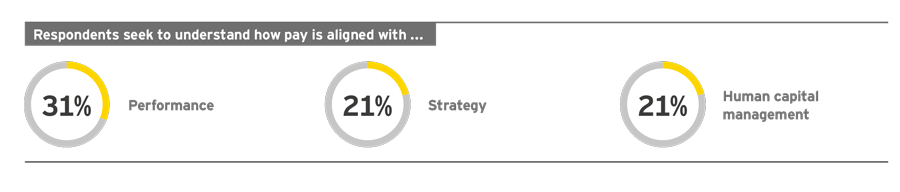
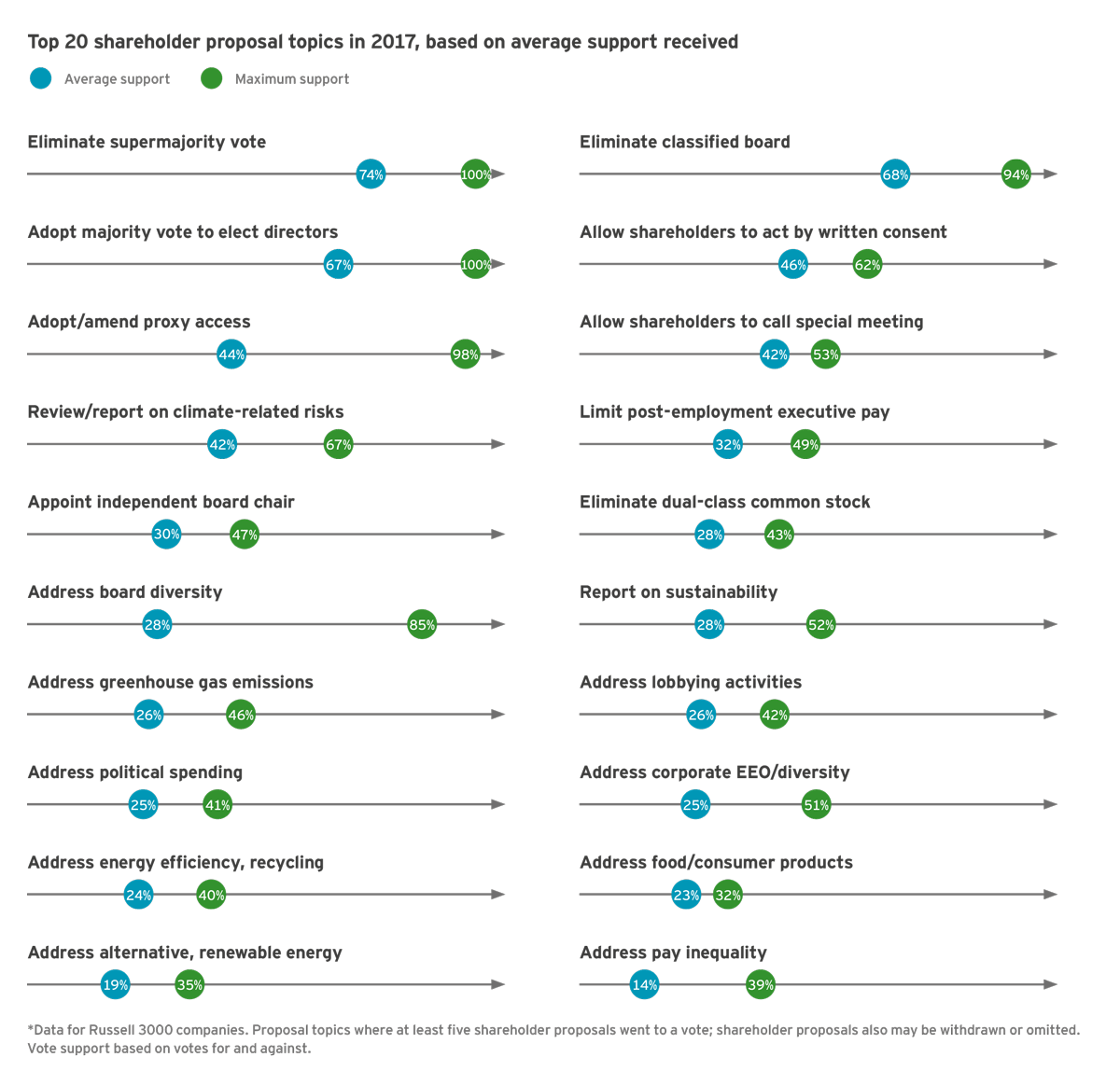



 Gouvernance | Jacques Grisé