Deux livres phares sur la gouvernance d’entreprise


On me demande souvent de proposer un livre qui fait le tour de la question eu égard à ce qui est connu comme statistiquement valide sur les relations entre la gouvernance et le succès des organisations (i.e. la performance financière !)

Le volume publié par David F. Larcker et Brian Tayan, professeurs au Graduate School de l’Université Stanford, en est à sa deuxième édition et il donne l’heure juste sur l’efficacité des principes de gouvernance.

Je vous recommande donc vivement ce volume.

Également, je profite de l’occasion pour vous indiquer que je viens de recevoir la dernière version  des Principes de gouvernance d’entreprise du G20 et de l’OCDE en français et j’ai suggéré au Collège des administrateurs de sociétés (CAS) d’inclure cette publication dans la section Nouveauté du site du CAS.

Il s’agit d’une publication très attendue dans le monde de la gouvernance. La documentation des organismes internationaux est toujours d’abord publiée en anglais. Ce document en français de l’OCDE sur les principes de gouvernance est la bienvenue !

Voici une brève présentation du volume de Larcker. Bonne lecture !

This is the most comprehensive and up-to-date reference for implementing and sustaining superior corporate governance. Stanford corporate governance experts David Larcker and Bryan Tayan carefully synthesize current academic and professional research, summarizing what is known and unknown, and where the evidence remains inconclusive.

Corporate Governance Matters, Second Edition reviews the field’s newest research on issues including compensation, CEO labor markets, board structure, succession, risk, international governance, reporting, audit, institutional and activist investors, governance ratings, and much more. Larcker and Tayan offer models and frameworks demonstrating how the components of governance fit together, with updated examples and scenarios illustrating key points. Throughout, their balanced approach is focused strictly on two goals: to “get the story straight,” and to provide useful tools for making better, more informed decisions.

Book cover: Corporate Governance Matters, 2nd edition

This edition presents new or expanded coverage of key issues ranging from risk management and shareholder activism to alternative corporate governance structures. It also adds new examples, scenarios, and classroom elements, making this text even more useful in academic settings. For all directors, business leaders, public policymakers, investors, stakeholders, and MBA faculty and students concerned with effective corporate governance.

Selected Editorial Reviews

An outstanding work of unique breadth and depth providing practical advice supported by detailed research.
Alan Crain, Jr., Senior Vice President and General Counsel, Baker Hughes
Extensively researched, with highly relevant insights, this book serves as an ideal and practical reference for corporate executives and students of business administration.
Narayana N.R. Murthy, Infosys Technologies
Corporate Governance Matters is a comprehensive, objective, and insightful analysis of academic and professional research on corporate governance.
Professor Katherine Schipper, Duke University, and former member of the Financial Accounting Standards Board

Vous siégez à un conseil d’administration | comment se comporter correctement ?


À chaque semaine je donne la parole à Johanne Bouchard* qui agit à titre d’auteure invitée sur mon blogue en gouvernance. Ce billet est une reprise de son article publié le 29 juin 2015.

L’auteure a une solide expérience d’interventions de consultation auprès de conseils d’administration de sociétés américaines et d’accompagnements auprès de hauts dirigeants de sociétés publiques. Dans ce billet, elle aborde ce que, selon elle, doivent être les qualités des bons administrateurs.

Quels conseils, simples et concrets, une personne qui connaît bien la nature des conseils d’administration, peut-elle prodiguer aux administrateurs eu égard aux qualités et aux comportements à adopter dans leurs rôles de fiduciaires ?

Bonne lecture ! Vos commentaires sont les bienvenus.

Siéger à un conseil d’administration : comment exceller ?

par

Johanne Bouchard

Conseil_d_administration_ws1013666341

En 2014, Bryan Stolle, un des contributeurs de la revue Forbes, également investisseur au Mohr Davidow Ventures, a examiné le sujet dans un billet de son blogue. Il a écrit : « L’excellence d’un conseil d’administration est le résultat de l’excellence de chacun de ses membres ». Il poursuit en soulignant ce qu’il considère en être les principaux attributs. Je suis d’accord avec lui mais j’aimerais ajouter ce qui, selon moi, fait la grandeur et la qualité exceptionnelle d’un membre de conseil d’administration.

Intention

D’abord et avant tout, être un excellent membre de conseil d’administration commence avec « l’intention » d’en être un, avec l’intention d’être bienveillant, et pas uniquement avec l’intention de faire partie d’un conseil d’administration. Malheureusement, trop de membres ne sont pas vraiment résolus et déterminés dans leur volonté de devenir membres d’un conseil.

La raison de se joindre à un conseil doit être authentique, avec un désir profond de bien servir l’entité. Être clair sur les raisons qui vous poussent à vous joindre au conseil est absolument essentiel, et cela aide à poser les jalons de votre réussite comme administrateur. En adhérant à un conseil d’administration, votre devoir, ainsi que celui de vos collègues administrateurs, est de créer une valeur ajoutée pour les actionnaires.

Attentes

Ensuite, vous devez comprendre ce que l’on attend de vous et du rôle que vous serez appelé à jouer au sein du conseil d’administration. Trop de membres d’un conseil ne comprennent pas leur rôle et saisissent mal les attentes liées à leur charge. Souvent, le président du conseil et le chef de la direction ne communiquent pas suffisamment clairement leurs attentes concernant leur rôle.

Ne tenez rien pour acquis concernant le temps que vous devrez consacrer à cette fonction et ce qu’on attendra de votre collaboration. Est-ce qu’on s’attend à ce que vous soyez présent à toutes les réunions, que vous siégiez à un comité ou que vous participiez aux conférences téléphoniques entre les réunions normalement prévues ? Votre réseau suffit-il, à ce stade-ci de la croissance de l’entreprise, pour répondre au recrutement de nouveaux talents et pour créer des partenariats ? Est-ce que votre expérience de l’industrie est adéquate; comment serez-vous un joueur-clé lors des discussions ? Y aura-t-il un programme d’accueil et d’intégration des nouveaux administrateurs pour faciliter votre intégration au sein du conseil. De plus, comment prévoyez-vous atteindre un niveau suffisant de connaissance des stratégies commerciales de l’entreprise? Soyez clairs en ce qui concerne les attentes.

Exécution

Vous devez honorer les engagements associés à votre responsabilité de membre du conseil d’administration. Cela signifie :

Être préparé : se présenter à une réunion du conseil d’administration sans avoir lu l’ordre du jour au préalable ainsi que les documents qui l’accompagnent est inacceptable. Cela peut paraître évident, mais vous seriez surpris du nombre de membres de conseils coupables d’un tel manque de préparation. De même, le chef de la direction, soucieux d’une gestion efficace du temps, a la responsabilité de s’assurer que le matériel soit adéquatement préparé et distribué à l’avance à tous les administrateurs.

Respecter le calendrier : soyez à l’heure et assistez à toutes les réunions du conseil d’administration.

Participation

Écoutez, questionnez et ne prenez la parole qu’au moment approprié. Ne cherchez pas à provoquer la controverse uniquement dans le but de vous faire valoir, en émettant un point de vue qui n’est ni opportun, ni pertinent. N’intervenez pas inutilement, sauf si vous avez une meilleure solution ou des choix alternatifs à proposer.

Bonnes manières

Il est important de faire preuve de tact, même lorsque vous essayez d’être directs. Évitez les manœuvres d’intimidation; le dénigrement et le harcèlement n’ont pas leur place au sein d’une entreprise, encore moins dans une salle du conseil. Soyez respectueux, en particulier pendant la présentation du comité de direction. Placez votre cellulaire en mode discrétion. La pratique de bonnes manières, notamment les comportements respectueux, vous permettront de gagner le respect des autres.

Faites valoir vos compétences

Vos compétences sont uniques. Cherchez à les présenter de manière à ce que le conseil d’administration puisse en apprécier les particularités. En mettant pleinement à profit vos compétences et en participant activement aux réunions, vous renforcerez la composition du conseil et vous participerez également à la réussite de l’entreprise en créant une valeur ajoutée pour les actionnaires.

Ne soyez pas timide

Compte tenu de la nature stratégique de cette fonction, vous devez avoir le courage de faire connaître votre point de vue. Un bon membre de conseil d’administration ne doit pas craindre d’inciter les autres membres à se tenir debout lorsque qu’il est conscient des intérêts en cause, ni d’être celui qui saura clairement faire preuve de discernement. Un bon membre de conseil d’administration doit être prêt à accomplir les tâches les plus délicates, y compris celles qui consistent à changer la direction de l’entreprise et le chef de la direction, quand c’est nécessaire, et avant qu’il ne soit trop tard.

Évitez les réclamations monétaires non justifiées

Soyez conscients des émoluments d’administrateur qu’on vous paie. N’abusez pas des privilèges. Les conséquences sont beaucoup trop grandes pour vous, pour la culture de l’entreprise et pour la réputation du conseil. Si vous voulez que je sois plus précise, je fais référence aux déclarations de certaines dépenses que vous devriez payer vous-même. Sachez que quelqu’un du service de la comptabilité examine vos comptes de dépenses, et que cela pourrait facilement ternir votre réputation si vous soumettiez des dépenses inacceptables.

Faites preuve de maturité

Vous vous joignez à un conseil qui agit au plus haut niveau des entreprises (privée, publique ou à but non lucratif), dont les actions et les interventions ont une grande incidence sur les collectivités en général. Gardez confidentiel ce qui est partagé lors des réunions du conseil, et ne soyez pas la source d’une fuite.

Maintenez une bonne conduite

Le privilège de siéger au sein d’un conseil d’administration vous expose à une grande visibilité. Soyez conscients de votre comportement lors des réunions du conseil d’administration et à l’extérieur de la salle de réunion; évitez de révéler certains de vos comportements inopportuns.

Confiance et intégrité

Faites ce que vous avez promis de faire. Engagez-vous à respecter ce que vous promettez. Tenez votre parole et soyez toujours à votre meilleur et fier d’être un membre respectable du conseil d’administration.

Valeurs

Un bon membre de conseil d’administration possède des valeurs qu’il ne craint pas de révéler. Il est confiant que ses agissements reflètent ses valeurs.

Un bon membre de conseil est un joueur actif et, comme Stolle l’a si bien noté, de bons administrateurs constituent l’assise d’un bon conseil d’administration. Ce conseil d’administration abordera sans hésiter les enjeux délicats, tels que la rémunération du chef de la direction et la planification de la relève – des éléments qui sont trop souvent négligés.

Un bon membre du conseil d’administration devrait se soucier d’être un modèle et une source d’inspiration en exerçant sa fonction, que ce soit à titre d’administrateur indépendant, de président, de vice-président, de président du conseil, d’administrateur principal, de président d’un comité – quel que soit son rôle – il devrait avoir la maturité et la sagesse nécessaires pour se retirer d’un conseil d’administration avec grâce, quand vient le temps opportun de le faire.

Enfin, prenez soin de ne pas être un membre dysfonctionnel, ralentissant les progrès du conseil d’administration. Bien qu’étant un administrateur indépendant, chacun a le même devoir qu’un joueur d’équipe.

Je vous invite à aspirer à être un bon membre de conseil d’administration et à respecter vos engagements. Siéger à un trop grand nombre de conseils ne fera pas de vous un meilleur membre.

Je conduis des évaluations du rendement des conseils d’administration, et, je vous avoue, en toute sincérité, que de nombreux administrateurs me font remarquer que certains de leurs collègues semblent se disperser et qu’ils ne sont pas les administrateurs auxquels on est en droit de s’attendre. Vous ne pouvez pas vous permettre de trop « étirer l’élastique » si vous voulez pleinement honorer vos engagements. Rappelez-vous que c’est acceptable de dire « non » à certaines demandes, d’être sélectif quant à ce que vous souhaitez faire, mais il est vital de bien accomplir votre charge dans le rôle que vous tenez.

______________________________

*Johanne Bouchard est maintenant consultante auprès de conseils d’administration, de chefs de la direction et de comités de direction. Johanne a développé une expertise au niveau de la dynamique et la de composition d’un conseil d’administration. Après l’obtention de son diplôme d’ingénieure en informatique, sa carrière l’a menée à œuvrer dans tous les domaines du secteur de la technologie, du marketing et de la stratégie à l’échelle mondiale.

Pour en connaître plus sur le site de Johanne Bouchard

Comment le CA peut-il exercer une veille de l’éthique ?


vient de publier un excellent article, sur son blogue, qui traite des façons pour un CA d’accroître son assurance que les valeurs éthiques sont respectées. J’avais également publié un billet le 12 août intitulé : Le CA est garant de l’intégrité de l’entreprise.

Ce billet est le résultat d’une conférence que l’auteur a prononcée en se basant sur son expérience dans le domaine de la gouvernance éthique, mais aussi en s’appuyant sur les propos d’Andrew Fastow, l’ex V-P finances de Enron ainsi que sur les aveux de Conrad Black et Arthur Porter.

L’auteur a beaucoup réfléchi sur les moyens à la disposition du conseil d’administration pour superviser le comportement éthique de l’organisation et il en est arrivé à proposer dix façons pour les CA d’exercer leurs responsabilités en cette matière.

1091551_enfin-un-code-dethique-des-juristes-dentreprise-europeens-122803-1

Je vous réfère à l’article afin d’obtenir plus de détails sur chacun des aspects ci-dessous :

  1. Posez les bonnes questions eu égard aux aspects éthiques;
  2. Ayez des lignes directes au CA afin de surveiller l’éthique, l’intégrité, la réputation et la culture;
  3. Utilisez les réunions privées, sans la présence du management, afin d’obtenir des informations et poser les questions brûlantes;
  4. Assurez-vous que le CA fait affaires avec un juriste indépendant de la direction;
  5. Donnez-vous une politique de lanceur d’alerte (whistle-blowing);
  6. Ajustez la rémunération afin de tenir compte de la conduite des dirigeants, en sus de la performance !
  7. Surveillez vos processus de contrôle interne;
  8. N’hésitez pas à parler pour dénoncer certaines pratiques peu, ou pas, éthiques;
  9. Recrutez des administrateurs vraiment indépendants;
  10. Donnez le ton en tant qu’administrateur de la société.

Je vous souhaite une bonne lecture; vos commentaires sont toujours les bienvenus.

How should a board oversee ethics ?

Management is fond of explaining unethical conduct away by saying it was a “rogue” employee. Boards are fond of explaining unethical conduct by saying “we missed it.” If boards and management teams are truly honest, they know they should not have missed it and that it was not a rogue employee. It was an employee operating within the culture that was accepted.

In all of my interviews of directors over the years, including during ethical failure, when I ask about directors’ greatest regret, the answer is consistently, “I should have spoken up when I had the chance.” Speaking up is incredibly important when it comes to tone at the top. If you are uncomfortable, “speak up” is the best advice I could give a director. Chances are, several of your colleagues are thinking the exact same thing.

Un livre phare sur la gouvernance de sociétés


On me demande souvent de proposer un livre qui fait le tour de la question eu égard à ce qui est connu comme statistiquement vrai sur les relations entre la gouvernance et le succès des organisations.

Le volume publié par David F. Larcker et Brian Tayan, professeurs au Graduate School de l’Université Stanford, en est à sa deuxième édition et il donne l’heure juste sur l’efficacité des principes de gouvernance.

Si vous aviez un livre sur la gouvernance à acheter, ce serait celui-ci.

Bonne lecture !

This is the most comprehensive and up-to-date reference for implementing and sustaining superior corporate governance. Stanford corporate governance experts David Larcker and Bryan Tayan carefully synthesize current academic and professional research, summarizing what is known and unknown, and where the evidence remains inconclusive.

Corporate Governance Matters, Second Edition reviews the field’s newest research on issues including compensation, CEO labor markets, board structure, succession, risk, international governance, reporting, audit, institutional and activist investors, governance ratings, and much more. Larcker and Tayan offer models and frameworks demonstrating how the components of governance fit together, with updated examples and scenarios illustrating key points. Throughout, their balanced approach is focused strictly on two goals: to “get the story straight,” and to provide useful tools for making better, more informed decisions.

Book cover: Corporate Governance Matters, 2nd edition

This edition presents new or expanded coverage of key issues ranging from risk management and shareholder activism to alternative corporate governance structures. It also adds new examples, scenarios, and classroom elements, making this text even more useful in academic settings. For all directors, business leaders, public policymakers, investors, stakeholders, and MBA faculty and students concerned with effective corporate governance.

Selected Editorial Reviews

An outstanding work of unique breadth and depth providing practical advice supported by detailed research.
Alan Crain, Jr., Senior Vice President and General Counsel, Baker Hughes
Extensively researched, with highly relevant insights, this book serves as an ideal and practical reference for corporate executives and students of business administration.
Narayana N.R. Murthy, Infosys Technologies
Corporate Governance Matters is a comprehensive, objective, and insightful analysis of academic and professional research on corporate governance.
Professor Katherine Schipper, Duke University, and former member of the Financial Accounting Standards Board

Vous siégez à un conseil d’administration | comment bien se comporter ?


À chaque semaine, j’ai l’intention de donner la parole à Johanne Bouchard* qui agira à titre d’auteure invitée sur mon blogue en gouvernance.

Son troisième billet se retrouve dans le e-Book 1 publié sur son site. Sous l’entête « What I write about », blogs in French, l’on retrouve tous les articles en français.

L’auteure a une solide expérience d’interventions de consultation auprès de conseils d’administration de sociétés américaines et d’accompagnements auprès de hauts dirigeants de sociétés publiques. Dans ce billet, elle aborde ce que, selon elle, doivent être les qualités des bons administrateurs.

Quels conseils, simples et concrets, une personne qui connaît bien la nature des conseils d’administration, peut-elle prodiguer aux administrateurs eu égard aux qualités et aux comportements à adopter dans leurs rôles de fiduciaires ?

Bonne lecture ! Vos commentaires sont les bienvenus.

Siéger à un conseil d’administration : comment exceller ?

par

Johanne Bouchard


Résultats de recherche d'images pour « johanne bouchard »


En 2014, Bryan Stolle, un des contributeurs de la revue Forbes, également investisseur au Mohr Davidow Ventures, a examiné le sujet dans un billet de son blogue. Il a écrit : « L’excellence d’un conseil d’administration est le résultat de l’excellence de chacun de ses membres ». Il poursuit en soulignant ce qu’il considère en être les principaux attributs. Je suis d’accord avec lui mais j’aimerais ajouter ce qui, selon moi, fait la grandeur et la qualité exceptionnelle d’un membre de conseil d’administration.

Intention

D’abord et avant tout, être un excellent membre de conseil d’administration commence avec « l’intention » d’en être un, avec l’intention d’être bienveillant, et pas uniquement avec l’intention de faire partie d’un conseil d’administration. Malheureusement, trop de membres ne sont pas vraiment résolus et déterminés dans leur volonté de devenir membres d’un conseil.

La raison de se joindre à un conseil doit être authentique, avec un désir profond de bien servir l’entité. Être clair sur les raisons qui vous poussent à vous joindre au conseil est absolument essentiel, et cela aide à poser les jalons de votre réussite comme administrateur. En adhérant à un conseil d’administration, votre devoir, ainsi que celui de vos collègues administrateurs, est de créer une valeur ajoutée pour les actionnaires.

Attentes

Ensuite, vous devez comprendre ce que l’on attend de vous et du rôle que vous serez appelé à jouer au sein du conseil d’administration. Trop de membres d’un conseil ne comprennent pas leur rôle et saisissent mal les attentes liées à leur charge. Souvent, le président du conseil et le chef de la direction ne communiquent pas suffisamment clairement leurs attentes concernant leur rôle.

Ne tenez rien pour acquis concernant le temps que vous devrez consacrer à cette fonction et ce qu’on attendra de votre collaboration. Est-ce qu’on s’attend à ce que vous soyez présent à toutes les réunions, que vous siégiez à un comité ou que vous participiez aux conférences téléphoniques entre les réunions normalement prévues ? Votre réseau suffit-il, à ce stade-ci de la croissance de l’entreprise, pour répondre au recrutement de nouveaux talents et pour créer des partenariats ? Est-ce que votre expérience de l’industrie est adéquate; comment serez-vous un joueur-clé lors des discussions ? Y aura-t-il un programme d’accueil et d’intégration des nouveaux administrateurs pour faciliter votre intégration au sein du conseil. De plus, comment prévoyez-vous atteindre un niveau suffisant de connaissance des stratégies commerciales de l’entreprise? Soyez clairs en ce qui concerne les attentes.

Exécution

Vous devez honorer les engagements associés à votre responsabilité de membre du conseil d’administration. Cela signifie :

Être préparé : se présenter à une réunion du conseil d’administration sans avoir lu l’ordre du jour au préalable ainsi que les documents qui l’accompagnent est inacceptable. Cela peut paraître évident, mais vous seriez surpris du nombre de membres de conseils coupables d’un tel manque de préparation. De même, le chef de la direction, soucieux d’une gestion efficace du temps, a la responsabilité de s’assurer que le matériel soit adéquatement préparé et distribué à l’avance à tous les administrateurs.

Respecter le calendrier : soyez à l’heure et assistez à toutes les réunions du conseil d’administration.

Participation

Écoutez, questionnez et ne prenez la parole qu’au moment approprié. Ne cherchez pas à provoquer la controverse uniquement dans le but de vous faire valoir, en émettant un point de vue qui n’est ni opportun, ni pertinent. N’intervenez pas inutilement, sauf si vous avez une meilleure solution ou des choix alternatifs à proposer.

Bonnes manières

Il est important de faire preuve de tact, même lorsque vous essayez d’être directs. Évitez les manœuvres d’intimidation; le dénigrement et le harcèlement n’ont pas leur place au sein d’une entreprise, encore moins dans une salle du conseil. Soyez respectueux, en particulier pendant la présentation du comité de direction. Placez votre cellulaire en mode discrétion. La pratique de bonnes manières, notamment les comportements respectueux, vous permettront de gagner le respect des autres.

Faites valoir vos compétences

Vos compétences sont uniques. Cherchez à les présenter de manière à ce que le conseil d’administration puisse en apprécier les particularités. En mettant pleinement à profit vos compétences et en participant activement aux réunions, vous renforcerez la composition du conseil et vous participerez également à la réussite de l’entreprise en créant une valeur ajoutée pour les actionnaires.

Ne soyez pas timide

Compte tenu de la nature stratégique de cette fonction, vous devez avoir le courage de faire connaître votre point de vue. Un bon membre de conseil d’administration ne doit pas craindre d’inciter les autres membres à se tenir debout lorsque qu’il est conscient des intérêts en cause, ni d’être celui qui saura clairement faire preuve de discernement. Un bon membre de conseil d’administration doit être prêt à accomplir les tâches les plus délicates, y compris celles qui consistent à changer la direction de l’entreprise et le chef de la direction, quand c’est nécessaire, et avant qu’il ne soit trop tard.

Évitez les réclamations monétaires non justifiées

Soyez conscients des émoluments d’administrateur qu’on vous paie. N’abusez pas des privilèges. Les conséquences sont beaucoup trop grandes pour vous, pour la culture de l’entreprise et pour la réputation du conseil. Si vous voulez que je sois plus précise, je fais référence aux déclarations de certaines dépenses que vous devriez payer vous-même. Sachez que quelqu’un du service de la comptabilité examine vos comptes de dépenses, et que cela pourrait facilement ternir votre réputation si vous soumettiez des dépenses inacceptables.

Faites preuve de maturité

Vous vous joignez à un conseil qui agit au plus haut niveau des entreprises (privée, publique ou à but non lucratif), dont les actions et les interventions ont une grande incidence sur les collectivités en général. Gardez confidentiel ce qui est partagé lors des réunions du conseil, et ne soyez pas la source d’une fuite.

Maintenez une bonne conduite

Le privilège de siéger au sein d’un conseil d’administration vous expose à une grande visibilité. Soyez conscients de votre comportement lors des réunions du conseil d’administration et à l’extérieur de la salle de réunion; évitez de révéler certains de vos comportements inopportuns.

Confiance et intégrité

Faites ce que vous avez promis de faire. Engagez-vous à respecter ce que vous promettez. Tenez votre parole et soyez toujours à votre meilleur et fier d’être un membre respectable du conseil d’administration.

Valeurs

Un bon membre de conseil d’administration possède des valeurs qu’il ne craint pas de révéler. Il est confiant que ses agissements reflètent ses valeurs.

Un bon membre de conseil est un joueur actif et, comme Stolle l’a si bien noté, de bons administrateurs constituent l’assise d’un bon conseil d’administration. Ce conseil d’administration abordera sans hésiter les enjeux délicats, tels que la rémunération du chef de la direction et la planification de la relève – des éléments qui sont trop souvent négligés.

Un bon membre du conseil d’administration devrait se soucier d’être un modèle et une source d’inspiration en exerçant sa fonction, que ce soit à titre d’administrateur indépendant, de président, de vice-président, de président du conseil, d’administrateur principal, de président d’un comité – quel que soit son rôle – il devrait avoir la maturité et la sagesse nécessaires pour se retirer d’un conseil d’administration avec grâce, quand vient le temps opportun de le faire.

Enfin, prenez soin de ne pas être un membre dysfonctionnel, ralentissant les progrès du conseil d’administration. Bien qu’étant un administrateur indépendant, chacun a le même devoir qu’un joueur d’équipe.

Je vous invite à aspirer à être un bon membre de conseil d’administration et à respecter vos engagements. Siéger à un trop grand nombre de conseils ne fera pas de vous un meilleur membre.

Je conduis des évaluations du rendement des conseils d’administration, et, je vous avoue, en toute sincérité, que de nombreux administrateurs me font remarquer que certains de leurs collègues semblent se disperser et qu’ils ne sont pas les administrateurs auxquels on est en droit de s’attendre. Vous ne pouvez pas vous permettre de trop « étirer l’élastique » si vous voulez pleinement honorer vos engagements. Rappelez-vous que c’est acceptable de dire « non » à certaines demandes, d’être sélectif quant à ce que vous souhaitez faire, mais il est vital de bien accomplir votre charge dans le rôle que vous tenez.

______________________________

*Johanne Bouchard est maintenant consultante auprès de conseils d’administration, de chefs de la direction et de comités de direction. Johanne a développé une expertise au niveau de la dynamique et la de composition d’un conseil d’administration. Après l’obtention de son diplôme d’ingénieure en informatique, sa carrière l’a menée à œuvrer dans tous les domaines du secteur de la technologie, du marketing et de la stratégie à l’échelle mondiale.

Pour en connaître plus sur le site de Johanne Bouchard

Un nouveau paradigme dans le monde des administrateurs de sociétés | La communication avec les actionnaires-investisseurs


Voici un article publié par F. William McNabb III , président de la firme d’investissement Vanguard, dans Harvard Law School Forum récemment.

Il s’agit d’une conférence présentée lors d’un événement réunissant un grand groupe d’administrateurs de sociétés et dans laquelle il explique un nouveau paradigme qui confronte les administrateurs : La communication des administrateurs avec les actionnaires.

L’article décrit très bien l’importance des conseils d’administration pour des firmes comme Vanguard car ceux-ci sont les représentants des meilleurs intérêts des actionnaires. Ainsi, pour l’auteur il est essentiel que les administrateurs de sociétés trouvent les moyens appropriés pour échanger avec leurs actionnaires sur les différentes orientations prises ou à prendre.

Il est vrai que les CA travaillent encore trop souvent en vase clos et que les investisseurs peuvent eux aussi avoir de bonnes idées en matière de gouvernance. Il est ainsi primordial que les conseils d’administration soient en très grande partie composés d’administrateurs indépendants de la direction et, évidemment, compétents, expérimentés et visionnaires.

L’auteur donne plusieurs exemples de formules utilisées par les grandes entreprises pour engager la conversation avec les actionnaires sur une base régulière. Les entreprises doivent donc avoir une stratégie proactive de communication avec les investisseurs afin d’éviter les mauvaises surprises !

Je vous conseille de lire ce compte rendu de M. McNabb III afin de mieux appréhender les changements à envisager dans la gouvernance des entreprises, de mieux comprendre le point de vue d’investisseurs majeurs, tels que Vanguard, et de prévenir les actions des investisseurs activistes et opportunistes.

Bonne lecture !

Getting to Know You: The Case for Significant Shareholder Engagement

I’ll begin my remarks with a premise. It’s a simple belief that I have. And that is: Corporate governance should not be a mystery. For corporate boards, the way large investors vote their shares should not be a mystery. And for investors, the way corporate boards govern their companies should not be a mystery. I believe we’re moving in a direction where there is less mystery on both sides, but each side still has some work to do in how it tells its respective stories.feature-investisseur

So let me start by telling you a little bit about Vanguard’s story and our perspective. I’ll start with an anecdote that I believe is illustrative of some of the headwinds that we all face in our efforts to improve governance: “We didn’t think you cared.” A couple of years ago, we engaged with a very large firm on the West Coast. We had some specific concerns about a proposal that was coming to a vote, and we told them so.

The proposal failed, and it was embarrassing for the firm. They responded by reaching out for feedback from all of their largest shareholders—or so they said. They didn’t call their largest independent shareholder—Vanguard—nor did they apparently take into account the very specific feedback we had already provided.

In conversations afterward with them (once we finally got to the board), they told us, essentially, “You guys run index funds. We didn’t think that you cared.”

Well, we do care. A lot! Interesting postscript: Now that this company knows we care, they’ve taken substantive action in response to input from us and others.

A word about Vanguard

Let me pause for a moment to give you some additional context for Vanguard’s point of view. Today we are the largest mutual fund firm in the world. We have $3.3 trillion in global assets under management. We have 159 funds in the U.S., and an additional 123 in markets outside the U.S. In the U.S., we have nearly $1.7 trillion in index equities and an additional $356B in actively managed equity funds.

What that all means is that Vanguard investors collectively own about 5% of every publicly traded company in the United States and about 1% of nearly every public company outside of the U.S.

And, remember, when it comes to our indexed offerings, we are permanent shareholders. To borrow a phrase from Warren Buffet: Our favorite holding period is forever. We’re going to hold your stock when you hit your quarterly earnings target. And we’ll hold it when you don’t. We’re going to hold your stock if we like you. And if we don’t. We’re going to hold your stock when everyone else is piling in. And when everyone else is running for the exits.

In other words, we’re big, we don’t make a lot of noise, and we’re focused on the long term.

That is precisely why we care so much about good governance. Vanguard funds hold companies in perpetuity. We want to see our investments grow over the long-term. We’re not interested in managing the companies that we invest in. But we do want to provide oversight and input to the board of directors. And we count on boards to oversee management.

That perspective informs our approach to corporate governance. So let me share, at the very highest level, our six principles on governance. These are some of the same ideas that the panelists discussed earlier this evening:

  1. Independent oversight and, more broadly, appropriate board composition. It is the single most important factor in good governance. If you think about it, we’re in a representative democracy. We empower a group of people to oversee our interests as shareholders, to hire and fire the CEO, and to have a say in strategy, risk oversight, compensation, and so forth. We as shareholders are not there, and that group of representatives needs to be our eyes and ears. Who they are, how they interact, and the skills they bring to the table are critical from a long-term value standpoint.
  2. Accountability. Management should be accountable to the board. The board should be accountable to shareholders.
  3. Shareholder voting rights that are consistent with economic interests. This means one share, one vote. No special share classes for added voting power.
  4. Annual director elections and minimal anti-takeover devices. We believe that shareholders benefit when the market for corporate control functions freely.
  5. Sensible compensation tied to performance. The majority of executive pay should be tied to long-term shareholder value.
  6. Engagement. I’d like to place my greatest emphasis on engagement tonight, because it serves as a touchstone for all of our other core principles.

At Vanguard, we’ve been on a journey toward increased engagement over the past decade or so. Our peers in the mutual fund industry have as well. Proxy voting is not poker. Our votes should not come as a surprise to companies and their boards.

Our outreach efforts began many years ago by simply posting our proxy voting guidelines on our website, then having ad hoc, issue-driven conversations with companies. A few years later, we began writing letters to companies from our CEO (my predecessor in the role, Jack Brennan, started this practice). We wanted them to know that we were a significant shareholder, and we wanted them to be aware of our guidelines.

As we’ve gone along, we’ve become more targeted in whom we mailed letters to and more prescriptive in our language.

In March, we sent out 500 letters to independent chairs and lead directors at companies across the U.S. In the letter, we talked about our six principles for corporate governance and the importance of engaging with shareholders. In just two months, we’ve received 164 responses, and they were almost all uniformly positive, thanking us for reaching out. Directors shared the various formats they use for engagement:

Sometimes the lead director is in charge of shareholder engagement.

Sometimes it’s a committee of directors.

Some companies have board members involved in “investor days” for their industry, where they’re hearing from shareholders.

And at other companies, the general counsel meets with different investor groups and reports back to the board.

What we’re always advocating for, essentially, is thoughtful engagement. It’s really “quality over quantity”: knowing your shareholder base, knowing what they care about, and knowing how often they want to engage with you.

Engagement is bilateral and comes in many forms.

Engagement is a two-way street. It’s not just about publishing proxy guidelines or investors voicing concerns. There are some great examples of boards being proactive and getting their messages out to investors. Two examples from recent years:

Microsoft, in a number of instances, has used videos from their directors to communicate the board’s perspective on issues. Whether it’s the lead independent director describing the board’s role in overseeing strategy or the chair of the audit committee describing the board’s perspective on risk management, these insights into the board’s thinking provide helpful context for investors. This is a great example of one form of “one-to-many” engagement that is simple, underutilized, and very much appreciated by us as investors.

Another example: When Dell announced its intention to go private, we met with the special committee of the Dell board that had to make the decision on shareholders’ behalf to sell at a specific price. We listened to their perspective, their decision-making process. and the things that they took into account. It put us in a better position to decide whether this was a good deal. The more opportunities we have to interact with directors in the normal course, the more we have an increased level of insight.

An example that was resolved only a few hours ago, of course: DuPont and Trian. It’s a cautionary tale of how no company is truly immune to activist investors. DuPont is well-known and highly regarded, and, most relevant to our discussion here, has been reaching out to investors and acting on their feedback for years. The board gets feedback early, and feedback influences strategy at the company. DuPont and Trian engaged with each other for two years beforehand. But a proxy struggle ensued nonetheless.

Practical engagement around board composition

Sometimes engagement can mean just being crystal clear about your expectations—and about how you think through certain issues. This applies to boards and to investors. For example:

Do you have a set of written guidelines that spell out the type of expertise or perspectives that you want in your board members (i.e., these are the types of things we’re looking for, and these are the people we believe embody them)? We’re seeing an increasing number of companies offering this kind of perspective, and it’s very helpful to investors.

Do you have a way to assess appropriate board tenure, both at the aggregate and individual level? Investors might have questions about why, for example, a particular board member has served for 30 years and whether he or she is sufficiently independent of management.

There’s a need to have a framework to raise important questions and have meaningful discussions between boards and investors to help facilitate a level of self-awareness for boards. A framework allows them to say, in essence: We realize that our board is comprised differently (or operates differently) than other firms in our business—and here’s why.

There may be a good reason for a board to be an outlier. There may not be. But let’s provide as much context as we can and invite the discussion. Because investors are going have these questions anyway. In the absence of additional context, they may draw their own conclusions.

Thinking like an activist

The outlier concept extends beyond board composition and gets into matters of business oversight and strategy. The best boards work to understand where their companies might be different or might be perceived as different.

Are those differences strengths or vulnerabilities? Some of this is a defensive mindset. Some of this is the continued evolution of the board’s role in strategy. In many companies, we’re seeing the board’s role move beyond the historical perspective of “review and concur” to becoming more engaged in setting the strategy.

So how does a board inform itself? If you want to, as a director, you can be fed a steady diet of management’s perspective on issues. And in many instances, if left to your own devices, that’s what you get. Management comes in, gives you a presentation, and tells you why this is the right strategy. If that’s all you’ve got, shame on you.

As an aside here: I’m continually sounding the warning about the danger of complacency to employees and leadership at Vanguard. The firm has been doing very well, particularly over the past several years, in terms of cash flow, performance, and large-scale initiatives that we’ve rolled out. It would be very easy for us to feel like we can take a breath, maybe relax a bit. Complacency is a temptation. But we can’t succumb to that temptation. A relentless pursuit of excellence on behalf of our clients continues to drive everything we do. As Andy Grove, former CEO of Intel, put it, “Success breeds complacency. Complacency breeds failure. Only the paranoid survive.” I’d suggest that this is how boards need to be thinking—functional paranoia. Are you getting enough different viewpoints?

Healthy and vibrant boards think like an activist in the very best sense. They ask:

Where should we be pushing harder or taking costs out? What are the management team’s blind spots?

What are the board’s blind spots?

And how do we correct that? Some boards bring in sell-side analysts that have a “sell” on the company to tell them what they’re missing.

If all the board is listening to is management’s perspective, they may be surprised when an activist shows up and says, “Hey, your cost structure is way out of line with your competitors.”

Glenn Booraem, who heads up Vanguard’s corporate governance team, was just telling me about a conversation he had last week with an activist. The activist’s premise was, “As long as there are unhappy shareholders, activists have a role.”

This particular activist has a theory about maximization mindset versus sufficiency mindset. An owner is going to have a maximization mindset: the owner wants to maximize the value of an investment over time. So as an owner, if you have significant money on the line, you might make different decisions than what this activist described as some boards’ sufficiency mindset. If a board has a sufficiency mindset, then a presentation by the management team seeking approval for a big initiative might be met with, “Yeah, that looks good. That looks reasonable. You’ve made a sufficient case to make this capital investment.”

But if you’re looking at the presentation with a maximization mindset—you’re spending your own money, in essence—you might say, “Can you do it for 5% less? 10% less? 15% less?”

This activist’s contention was that some boards aren’t pushing hard enough because they’re not in the owner’s seat and aren’t thinking as owners of the organization might think.

Changing nature of activist investors

The nature of activist investing has changed significantly since the 1980s. Today, we’re seeing a greater trend toward constructive activists rather than destructive activists. Activists are not inherently good or bad. They often raise legitimate questions.

When activists raise legitimate questions and tie their business cases to long-term shareholder value, that gets our attention. I can think of several cases where a board wasn’t asking the right questions and eventually lost touch with how the company was being run and being perceived by investors. If the first time we’re hearing from a company in our role as shareowners is when the company is under siege by activists, that’s not good. The company is inherently on the defensive at that point. And they’ve lost control of the narrative, at least to some degree. Generally speaking, activism most often happens when something is broken.

I’ll share two instances where Vanguard has sided with activist campaigns in recent years.

Canadian Pacific Railway: In 2012, activist Bill Ackman identified some vulnerabilities in Canadian Pacific Railway. We agreed—as did many other large investors—that the company had been poorly run and governed. Ackman brought in an experienced CEO and a number of directors they thought could make a difference. It’s been an activist success story by and large.

Commonwealth REIT. Another example of us supporting an activist: In 2014, Corvex and Related Companies waged a successful campaign to replace the entire board of Commonwealth REIT. This was a company with a track record of poor performance and poor governance, and they were ultimately held accountable. Commonwealth was using a third-party management firm, RMR, that was run by family members of Commonwealth leadership. RMR extracted value from the public company. They didn’t operate it well, but they were paid well nonetheless. We supported wiping the slate clean. In the case of Commonwealth, we were the largest shareholder. We were important to Corvex’s case, but at the end of the day, I don’t think they needed us. Eighty-one percent of Commonwealth shareholders voted to remove the company’s board.

A caveat

There is a caveat that I want to mention, and it has to do with backbone. We’re talking about how dangerous it is for companies to essentially write off any particular group of shareholders. Part of the board’s role is to listen. If someone’s going to buy up 5% of the company, you should at least listen.

That said, it doesn’t mean that the board should capitulate to things that aren’t in the company’s long-term interest. Boards must have a backbone. To be frank, board members cannot be more worried about their own seats than they are about the future of the company they oversee. Boards must take a principled stand to do the right thing for the long term and not acquiesce to short-term demands simply to make them go away.

Don’t be dissuaded by common concerns

We do hear concerns from boards who haven’t fully embraced more significant shareholder involvement. The most common are:

“Strong shareholder engagement will disintermediate management.” This is not what large shareholders want in an engagement program. Boards will often choose to include management for legal support and to talk about operational issues. And then there are those matters that are the exclusive province of the board, such as CEO compensation, which we believe are appropriate for discussion with the board alone.

“We’ll get tripped up on Reg FD issues.” Just to be clear, large shareholders are not looking for inside information on strategy or future expectations. What they’re looking for is the chance to provide the perspective of a long-term investor. Companies individually have to decide how to best manage that risk, but it shouldn’t be by shutting out the shareholders completely. Firms can train directors, include their legal counsel in shareholder conversations, and set clear boundaries for discussions.

“There is no time in our agenda.” Boards should talk about how much time to allot to engagement. I would say, of course, that time for engagement with significant shareholders should be on the board’s agenda. Investors are an important constituency whom boards represent.

“This would be too difficult to implement.” Leading companies already have substantive engagement programs in place. The Shareholder-Director Exchange Protocol is available online and offers guidance on setting up engagement programs.

If your company doesn’t have an engagement program already underway, start where you are. Start now. The landscape has shifted, and companies cannot afford to be insular. The engagement train has left the station, and the leading companies are on board.

Shareholder engagement establishes common ground

A big part of the engagement process is establishing common ground, getting to the things that the shareholder and the board both know to be true, and getting to the things that they’re both trying to accomplish. There should be an extraordinary degree of alignment between the interests of the shareowners and the board, because the board represents the shareowners.

One critical benefit of good relationships that I’ve seen is being able to provide background on some of the votes we’ve cast. As you know, shareowners have only two votes: for or against. But not every “for” vote is “absolutely for.” A good relationship allows us to fill in those shades of gray between “absolutely for” and “absolutely against.” We may vote “for” but have reservations at the margin. If we don’t share those reservations, then the company has no opportunity to consider addressing those issues and might be very surprised to find that our vote has changed the next time. Or if we vote against the company’s recommendation, a good relationship allows us to share why we voted that way and what the company would need to do to get our support.

If all we’re doing is simply voting, it doesn’t give the company the full picture. So the company is flying blind, in a way.

From Vanguard’s point of view, we’re in the relationship to maximize the value of the longest of long terms for our fund investors. We understand that things don’t always go up in a straight line. So if we have a good relationship with a company, they have a great opportunity to tell us their story. If there are performance problems, for example, either own those problems or tell us what you’re doing to fix them. For example, “We know we’ve got cost problems. We’ve got this initiative underway to trim $1 billion in costs for the next three years, and we think that’s going to address our problems.” Whatever the particular issue might be.

It’s worth noting that in the vast majority of cases, we’re happy to engage with management, too. Many times the questions or concerns we have are ones that we’re very comfortable relaying to management and getting management’s perspective on. In fact, many companies are including in their proxy statements more information about the engagement they’ve done with their investors. We’ve seen tables that show “what we heard” and the corresponding “what we did.” We think that’s a great trend.

So much of engagement gets back to the idea of self-awareness and knowing the places in which you’re an outlier. Unless you know where you stand, both from a competitive standpoint and with your investors, you’re a sitting duck.

Looking ahead: The future of engagement

I’ll close my remarks with a few thoughts addressed directly to board members of public companies: We count on you to oversee the companies that our clients invest in. It’s an important role. In the U.S. alone, Vanguard invests in some 3,800 publicly traded companies. We place a great deal of trust and confidence in you. And trust and confidence are built upon open communication. We want to continue to increase the levels of engagement we have with boards. We believe that directors—and investors—are moving in the right direction on that front.

As we look ahead, I believe we can do more.

  1. One idea: The Shareholder-Director Exchange that I mentioned. It provides a protocol and some tools and guidelines for institutional investors and directors to talk. It’s a wonderful idea, and it has great promise. There’s an open question on how best to measure the effectiveness of engagement on a wider scale. But from our perspective, every positive change that we can help to effect is a win for our investors.
  2. Another possible channel that I’m passionate about: The creation of standing Shareholder Relations Committees on public boards. It could be an incredibly effective way for boards to gather those outside perspectives I discussed earlier. Frankly, we’re surprised that more boards don’t solicit our views on general industry topics. For example, we have a very successful actively managed Health Care Fund—the world’s largest health care fund, by a wide margin, at more than $50 billion in assets. I would think that the directors of pharmaceutical firms or biotech firms would be interested in talking to our portfolio manager to hear her opinions and outlook for the industry. There is a great opportunity for dialogue between investor and director on that level as well.

You, as directors, have a great opportunity to tell us how your bring value to investors. We want to listen. When you post a video to the company’s website, we’ll watch it! When you give a good explanation of an issue in your proxy statement, we’re reading it very carefully. When you provide context, we’re taking it in.

We are listening to your perspective. We want you to be aware of ours. We are your permanent investors. We care very deeply about the role that you play for our clients. And we thank you for doing the job well.



*F. William McNabb III is Chairman and CEO of Vanguard. This post is based on Mr. McNabb’s recent keynote address at Lazard’s 2015 Director Event, “Shareholder Expectations: The New Paradigm for Directors.”

Relations entre la rémunération globale des dirigeants et l’activisme des actionnaires


Comment une organisation susceptible d’être la cible d’actionnaires activistes doit-elle envisager la question de la rémunération globale de la direction ? C’est le sujet de ce court article publié par Jeremy L. Goldstein* sur le site du Harvard Law School Forum, aujourd’hui.

L’auteur montre que lorsque les actionnaires jugent que les projets de rémunérations sont excessifs dans le cadre de la consultation « Say on Pay »,  le résultat de cette opération sert souvent de premier signal d’alarme à d’éventuelles attaques d’activistes.

L’article met en lumière (1) le type de programme de rémunération que les activistes aiment voir, (2) le niveau de protection des employés si l’entreprise devient la cible des fonds activistes et (3) la capacité d’appliquer le programme de rémunération si le plan des activistes est implanté.

C’est un sujet un peu pointu, réservé à des administrateurs préoccupés par le phénomène de l’activisme, et présenté par le porte-parole d’une firme d’avocats qui a sûrement un intérêt de consultation dans le domaine.

Néanmoins, je crois que cette courte lecture devrait vous sensibiliser aux aspects qui influencent les relations entre la rémunération des dirigeants et l’activisme des actionnaires.

Bonne lecture. Vos commentaires sont les bienvenus.

Shareholder Activism and Executive Compensation

In today’s environment in which all public companies—no matter their size, industry, or performance—are potential targets of shareholder activists, companies should review their compensation programs with an eye toward making sure that the programs take into account the potential effects of the current wave of shareholder activism. In this regard, we have provided below some considerations for public company directors and management teams.

“Say on Pay”: Early Warning Sign

Low levels of support for a company’s “say on pay” vote can serve as an early warning sign for both companies and activists that shareholders may have mixed feelings about management’s performance or a board’s oversight. An activist attack following a failed vote may be particularly inopportune for target companies because a failed vote can result in tension between managements and boards. Moreover, activists will not hesitate to use pay as a wedge issue, even if there is nothing wrong with a company’s pay program. sans-titre

Companies should get ahead of potential activists by (1) understanding how their pay programs diverge from standards of shareholders and proxy advisors, (2) developing a robust, year-round program of shareholder engagement by management and independent directors, and (3) considering appropriate changes to pay and governance structures if advisable. Companies that are the most aggressive at shareholder outreach and develop the best relationships with both the investment and the governance representatives of their major holders will be best able to address an activist attack if it occurs.

What Pay Programs Do Activists Like to See?

While we have seen several recent situations in which certain prominent activist firms have expressed a preference for programs that emphasize return on invested capital, economic profit and/or return on equity rather than earnings per share or revenue-related targets, there is not a general type of pay program favored by most activists. In fact, few activist “white papers” even address executive pay and those that do usually only cite negative reports by proxy advisory firms and make vague reference to pay for performance disconnects in an effort to use pay as a wedge issue. The best way for a company to withstand these criticisms is to make sure that its pay programs reward executives for achievement of stated strategic and operational goals and that such goals are consistent with the company’s attempt to achieve sustainable, long-term growth.

Are Your Employees Protected if an Activist Attacks?

All too often change of control protections in compensation plans do not trigger under circumstances in which an activist is most likely to take control of a company in the current environment. Amending compensation programs—particularly change of control and severance protections—in the midst of an activist situation can often be difficult if not, from time-to-time as a practical matter, nearly impossible. Companies should therefore review the change of control provisions of their compensation programs on a clear day to ensure that they fulfill their intended purpose. In this regard, we note that many change of control programs do not trigger if an activist takes control of the majority of a board by reason of the settlement of an actual or threatened proxy contest. This can be a critical problem, given the number of activists that have recently attempted to gain control of at least a majority of board seats and given that ISS is increasingly showing support for “control” slates.

Do Your Pay Programs Work if an Activist Agenda is Implemented?

Activists pushing for changes at public companies most frequently advocate in favor of returns of capital through extraordinary dividends and share buybacks; divestitures through sales, spin-offs or otherwise; and sales of the entire company. Companies should review their pay programs to ensure that they work properly if any of these events occur, regardless of whether the activist actually obtains seats on the board or control of the company.

Specifically, companies should take measures to ensure that (1) adjustment provisions of stock plans permit adjustments to awards in the event of both extraordinary dividends and divestitures, (2) all plans are clear as to whether an employee ceasing to be part of the affiliated group of companies in a divestiture will be treated as a terminated employee for purposes of the relevant plans, (3) performance goals still work after extraordinary dividends, the divestiture of a major business and, particularly if there are per share performance metrics, a share buyback, and (4) performance plans are designed in a manner to minimize the effect of such events and related adjustments on the deductibility of compensation under Section 162(m) of the Internal Revenue Code.

Finally, while it has become less fashionable in recent years to focus on change in control protections, companies should, in light of the robust activist and M&A environment, have their change of control programs reviewed on a clear day by advisors who are experienced with how these programs should work when an actual change of control is threatened or occurs.


*Jeremy L. Goldstein est le fondateur de la firme Jeremy L. Goldstein & Associates, LLC.


La divulgation des ratios, PCD (CEO)/ Moyenne des employés, aura-t-elle un effet sur le comportement des consommateurs ?


On se demande souvent comment faire pour réduire les rémunérations de plus en plus excessives des CEO, surtout en comparaison avec la moyenne de leurs salariés.

Gretchen Gavett, dans un article publié le 4 juin 2015 dans HBR, a peut-être découvert un bon moyen de sensibiliser les clients : utiliser l’argument du ratio CEO/ Moyenne des employés afin d’inciter les consommateurs à acheter chez le détaillant qui offre le meilleur « rendement ».

« It’s one thing to ask whether people are aware of the realities of these ratios, however. It’s quite another to predict whether their behavior will change based on that knowledge. If companies and countries were more transparent about salary, would it really have an effect on how people view the company — and, by extension, will it change whether they buy what it sells?
The answer, at least according to a new working paper, is “yes.” Consumers report being more likely to buy from companies with CEO-to-worker rations closer to what they deem fair ».

Voici donc un bref résumé de l’article de la revue HBR. Bien sûr, avant d’utiliser une telle stratégie, il faut une divulgation du ratio en question, ce qui n’est pas encore le cas !

Mais cette étude apporte de l’eau au moulin de ceux qui sont favorables à une telle divulgation.

Bonne lecture !

Is Your CEO’s High Salary Scaring Away Customers ?

Let’s say you’re in the market for some new towels. Nice towels, oversized and made with 100% Turkish cotton. They’re priced below your budget and in stock at a well-known retailer with both brick-and-mortar and online stores. So far, so good. But what if you were told that the retailer pays the average employee $22,400. Its CEO, $24 million. That’s a ratio of 1000 to 1. How do those towels sound now?

Currently, companies aren’t required to disclose their CEO-to-worker pay ratio (in the U.S. specifically, the provision of the Dodd-Frank Act calling for such disclosures has yet to be adopted by the SEC). At the same time, research is beginning to peel back the layers about what the general public knows about executive compensation — and all indications are that we’re woefully ignorant. For example, people drastically underestimate the compensation difference between average workers and Fortune 500 CEOs; globally, they say their ideal pay ratio for CEOs to unskilled workers is around 4.6 to 1. According to the AFL-CIO, the actual number is closer to 331 to 1 in the United States (most other developed countries have lower ratios than the U.S., but are still higher than the ideal).

Bhayva Mohan, a doctoral student at Harvard Business School, along with professors Michael Norton and Rohit Deshpande, set up several experiments to gauge consumers’ willingness to buy products when equipped with knowledge about the CEO-to-worker compensation ratio of the company selling them.

Which brings me back to the towels.

In the first three parts of the study, the researchers asked respondents (whose numbers ranged from more than 400 in the first experiment to between 100 and 160 in the second and third) about their willingness to buy a towel set under different conditions. Some were given a CEO-to-worker pay ratio of 1,000 to 1 (the estimated ratio at Walmart, given the information available, though respondents weren’t told this); others were given an ideal ratio of around 5 to 1 or a reality-based one of 60 to 1 (the estimated ratio at Costco); and in the third study, they were given options of comparing retailers with high and low ratios.

Across the board, people were more willing to buy from the company with the lower pay ratio, and more than 30% said they would pay more for the towels when given the option of two different companies with two different compensation ratios.

But the researchers knew that there could be a handful of ways a low ratio could backfire, too. For one, knowledge of the ratio along side of certain types of products could indicate a lower quality. It might also indicate the company is too warm and fuzzy, and thus seen as less competent. Finally, different political and economic beliefs among consumers could also change their willingness to buy.

So the researchers then tested against these assumptions, too. First, they found that the type of product didn’t much matter — the 151 people in this experiment were still more likely to buy from a company with a lower pay ratio.

W150601_GAVETT_CONSUMERSARE


Then, in a second test, they found that perceptions of warmth did not dissuade people from preferring the low-ratio retailer. Finally, in another test, which involved more than 250 respondents, they found that both Democrats and Independents responded positively to a low ratio. Republicans were indifferent. (The people who answered “other” did not provide additional information, and were about 4% of total respondents.)

W150601_GAVETT_DEMOCRATS


These tests led Mohan and her coauthors to conclude that an egalitarian compensation strategy “increases positive perceptions of most customers without harming perceptions of other customers.” In other words, your more politically conservative customers won’t run screaming if your CEO is paid a bit less.

In addition, they tested whether discounts might help consumers overlook high CEO-to-worker pay ratios. They don’t, until you slash the price of an item by 50%, according to a survey of more than 350 people.

W150601_GAVETT_WHATWOULDCONVINCE (1)


“We were surprised by how steep a price discount it took to make the products offered by high pay-ratio firm as appealing to consumers as the low pay-ratio firm,” Mohan told me over email.

So should companies be more strategic about making lower CEO-to-worker pay ratios public? Transparency can be a tricky thing. While showing the work that happens behind the scenes can sometimes pay off, like in the case of travel sites that visually indicate they’re trying to find you the best possible flight, disclosure can also backfire. “When websites reveal their processes only to suggest poor options (say, an unattractive date), consumers react more negatively,” write Mohan, Norton, and Deshpande.

Granted, these examples aren’t precisely aligned. But the authors conclude that their study suggests “that pay disclosure can have benefits,” and that companies with lower ratios compared to their competitors “may wish to begin to disclose this information voluntarily, as a means of garnering favorable consumer perceptions.” Mohan says the results “suggest that board executive compensation committees may wish to factor in the impact of CEO pay ratio on their customer behavior, particularly as the pay ratio disclosure law looms closer.”

….


*Gretchen Gavett is an associate editor at the Harvard Business Review. Follow her on Twitter @gretchenmarg.

D’accord avec les pratiques exemplaires de gouvernance | Mais pour les autres …


Vous aurez sûrement beaucoup de plaisir (et aussi de dépit…) à lire cet article publié par Steven Davidoff Solomon* paru dans la section Business du New York Times du 26 mai 2015.

Il s’agit d’une situation vraiment cocasse où la firme d’un investisseur connu (Gamco Investors) prêche la bonne parole de la saine gouvernance à qui veut l’entendre mais n’en a rien à foutre lorsqu’il s’agit de ses propres affaires. « Faites ce que je vous dis et non ce que je fais ».

M. Gabelli est un investisseur bien connu du monde des actionnaires activistes; il prône l’accroissement de la valeur des actions par l’amélioration de la gouvernance des entreprises ciblées.

Loin de moi l’idée de condamner l’ensemble de ses agissements, mais l’auteur de l’article conclue fermement qu’il ne pratique pas ce qu’il prêche.

Il travaille plutôt à son enrichissement personnel et à celui de sa famille. À mon humble avis, il y a encore trop de situations similaires, partout dans le monde.

La bonne gouvernance eu égard à l’entité, en tenant compte de l’ensemble des parties prenantes, n’est pas encore au rendez-vous !

L’actionnaire principal, et souvent majoritaire, ne doit-il pas se préoccuper des préceptes de la saine gouvernance ? Ou doit-il gérer exclusivement en fonction de ses intérêts personnels ?

J’aimerais vous entendre à ce propos, après avoir lu l’article de M. Steven Davidoff Solomon ci-dessous.

A Shareholder Advocate in Word, but Not in Practice

Mario J. Gabelli’s investment firm, Gamco Investors, is another shareholder warrior telling companies to create value through good corporate governance. Yet, what about Gamco’s own governance?

Mr. Gabelli, who is 72, is a well-known investor, and Gamco has $47.5 billion in assets under management, mostly a hodgepodge of mutual funds for the average investor. Mr. Gabelli is also an aggressive advocate for shareholder rights, the rare mutual fund manager who is willing to engage in a proxy contest.Axe1_collaboration

That would be acceptable, and perhaps even laudable, except that Gamco’s own corporate governance is on par with that of a Roman emperor, giving all the power to Mr. Gabelli, who wields it with impunity for his personal benefit.

Mr. Gabelli owns 72 percent of Gamco, but he has also arranged for Gamco to have a dual-class stock structure to ensure his control. The stock with higher voting rights is owned almost exclusively by GGCP, a private company that Mr. Gabelli controls, giving him 94 percent of the voting power.

It is power that Mr. Gabelli converts into personal profit.

In 2014, Gamco paid Mr. Gabelli $88.5 million in cash, a raise from 2013, when he made $85 million. That sum made Mr. Gabelli one of the highest paid chief executives in the country and eclipsed the compensation of the leader of any other publicly traded asset-management company. For example, Laurence D. Fink, the chief executive of BlackRock, the world’s largest asset manager, was paid $23.8 million.

Mr. Gabelli’s pay comes from a deal he reached with Gamco at the time of its initial public offering that pays him 10 percent of its pretax profits. Shareholders recently approved an amended agreement to provide some tax benefits to Mr. Gabelli who, of course, was kind enough to vote in favor, assuring its passage. Other shareholders also approved it, but because it was better than the old arrangement, who can blame them?

Mr. Gabelli has used his control to seemingly handpick Gamco’s board.

Directors include Mr. Gabelli’s daughter and one of his sons. Other independent directors have financial benefits they get from their Gamco affiliation. For instance, Robert S. Prather Jr. is the lead independent director and chairman of the compensation committee. He is considered independent despite the fact that Gamco has been nominating him for other boards in connection with their investments, earning him hundreds of thousands of dollars in fees.

A daughter of another independent director, Raymond C. Avansino Jr., is employed by Gamco, which paid her more than $600,000 last year. Mr. Avansino, who sits on the governance committee, is chief executive of a company that leases property to Gamco.

Family plays a big role at Gamco.

In addition to sitting on the board, Mr. Gabelli’s daughter runs his charitable foundation. The company employs his three sons, two of whom earned more than a million dollars when incentive compensation was included. Mr. Gabelli’s daughter-in-law and brother make six-figure salaries. Mr. Gabelli’s wife, who works in marketing, made more than $5 million last year.

There is more. Mr. Gabelli seems to have no compunction about other conflicted dealings with Gamco. The company’s disclosure to the Securities and Exchange Commission for related-party transaction goes on for five pages. Mr. Gabelli’s family owns Gamco’s headquarters and his private company owns the aircraft it uses to fly him around.

Mr. Gabelli has also had sharp elbows in dealing with his business partners. After the other founding partners of Gamco accused Mr. Gabelli of squeezing them out, he settled the litigation for about $100 million after a bitter battle.

Gamco declined to respond to requests for comment.

This would all be just another story of an entrenched chief executive who treats the company as his own playground were Gamco not an asset manager, which is a fiduciary to the ordinary people who give Gamco money to invest. Not only is it an asset manager, it is an active one, pressing companies to improve their corporate governance. In other words, Gamco appears to be a shareholder advocate for everyone but itself.

And so it may have been hypocritical when Mr. Gabelli recently posted on Twitter: “French corporate governance … takes turn to ‘ugly’ …. As companies given option to implement ‘loyalty share’ rule …. will Vivendi opt out.” Mr. Gabelli was noting a recent turn in France to give some shares more voting rights if they are held for a longer period. Mr. Gabelli may have a fair point in his criticism, but it is difficult to take from a man who freely uses his own elevated voting rights to control Gamco.

In a similar vein, in a recent proxy contest to put three directors on the board of Myers Industries, Gamco argued it was concerned about the company’s corporate governance practices because it had plurality voting to elect directors. At least Myers allowed its shareholders a real vote and the ability to appoint directors. Similarly, Mr. Gabelli wrote several years ago in urging Diebold to drop a poison pill that Gamco’s governance philosophy was “not for management” or “against management” but that the company was “committed to shareholder value creation.” Later, Gamco nominated Mr. Prather as a director at Diebold, where he made $209,000 last year. Did I mention before that Mr. Prather is Gamco’s lead independent director?

Perhaps most brazen are the “Gandhian” corporate governance principles that Gamco contends it lives by. On May 16, 1988, Mr. Gabelli issued a “Magna Carta of Shareholder Rights,” which says the company favors “one-share, one-vote; golden parachutes; and cash incentives” while it opposes “poison pills, supermajority voting and super-dilutive stock options.” Mr. Gabelli could very well be a Gamco target if he did not control the company.

Gamco’s stock price over the last five years has not only trailed BlackRock’s by 45 percent, it has also trailed the Standard & Poor’s 500-stock index by about 19 percent.

While Mr. Gabelli says he is for “shareholder value creation,” but he has done little of it at Gamco. During his time at the company, Mr. Gabelli has enriched himself and his family.

The next time Mr. Gabelli writes to a company about its corporate governance practices or appears on CNBC, the response should be something different than worship of an old-hand asset manager. Instead, it would be fair to hold Mr. Gabelli to a higher standard, namely the one he likes to preach to other companies, the same principles he espouses for others.

______________________________________

La loi Florange et l’activisme des actionnaires


Voici une belle occasion pour se demander si la voie choisie par la France est pertinente. Le billet a d’abord été publié dans le magazine Contact de l’Université Laval.

Bonne lecture !

La loi Florange et l’activisme des actionnaires

Par Ivan Tchotourian

L’activisme des investisseurs institutionnels fait l’actualité au Canada et en Europe, mais aussi –et surtout– aux États-Unis. Plusieurs grandes entreprises cotées en bourse ont en effet subi les attaques d’actionnaires dits activistes. Les Darden, DuPont, PepsiCo pour les États-Unis et Accor ou Péchiney, en France, en sont les exemples les plus éclairants.

Photo de Ivan Tchotourian
Ivan Tchotourian

Au Canada, plusieurs fonds spéculatifs ont fait la manchette pour leur activisme. Qu’il suffise de citer la décision de Pershing Square Capital Management de faire pression sur le Canadien Pacifique afin de faire élire sa liste de candidats au conseil d’administration ou la campagne menée par JANA Partners pour obtenir des modifications dans la composition du conseil de l’entreprise Agrium Inc.. Or, à cette même période, en 2014, la France adoptait une loi innovante dite «loi Florange»1. Après avoir consacré quelques lignes sur les actionnaires activistes et leurs objectifs parfois critiquables, je reviendrai sur cette réforme française qui vient de fêter sa 1re année d’existence ainsi que sur le signal qu’elle a envoyé.


Qui sont ces actionnaires activistes ?

En 2012, le fonds alternatif Pershing Square Capital Management a réussi à imposer ses candidats au conseil d'administration du transporteur ferroviaire Canadien Pacifique.
En 2012, le fonds alternatif Pershing Square Capital Management a réussi à imposer ses candidats au conseil d’administration du transporteur ferroviaire Canadien Pacifique.


Pendant longtemps, l’actionnariat des grandes entreprises a été considéré comme passif. L’image traditionnelle était celle d’un actionnaire apathique qui préfère voter avec ses pieds… en d’autres termes, vendre ses actions plutôt que de s’investir dans la gestion! Cette image se retrouve dans le fameux ouvrage de Berle et de Means publiés en 1932 The Modern Corporation and Private Property. Une telle apathie s’explique par la séparation entre propriété et contrôle qu’induit la dispersion du capital. Les propriétaires-actionnaires confient leurs fonds à des gestionnaires qui ne doivent que leur rendre des comptes.

Les choses ont cependant évolué à compter des années 90. Les actionnaires ont commencé à faire entendre leur voix –d’autant plus bruyamment que les investisseurs institutionnels et les activistes ont remplacé les actionnaires individuels dans la composition du capital des entreprises. Ces nouveaux actionnaires ont eu les moyens de se faire entendre. Par exemple, les sommes gérées par les fonds alternatifs (ou hedge funds) sont sans commune mesure avec ce qu’elles étaient autrefois, soit 200 G$ au niveau mondial en 20142. Avec de tels moyens, cet activisme prend une intensité particulière, comme en témoigne le nombre de plus en plus élevé de batailles menées lors d’assemblées d’actionnaires en Amérique du Nord: 27 en 2000 contre 320 en 20143.

Que font ces actionnaires activistes ?


L’activisme en soi n’est sans doute pas critiquable: il témoigne d’un comportement actif de l’actionnaire qui discipline les conseils d’administration, apporte un regard stratégique extérieur, oppose une démarche démocratique et contribue au bien-être de l’ensemble des actionnaires. Il constitue également un puissant incitatif à adopter de bonnes règles de gouvernance d’entreprise.

Derrière ce tableau positif, la réalité est plus nuancée, et cet activisme fait l’objet de vifs débats dès lors qu’il est l’œuvre de hedge funds. Du côté de ses défenseurs, certains auteurs américains tels Lucian Bebchuk de la Harvard Law School soulignent les effets positifs que ces activistes induisent dans la gouvernance d’entreprise. Une étude empirique récente menée par Bebchuk et al. conclut même à l’absence d’effets négatifs à long terme sur les entreprises touchées et leurs actionnaires.

Toutefois, l’activisme suscite la controverse lorsqu’il sous-tend que le versement de dividendes doit avoir préséance sur l’investissement. Le gouvernement d’entreprise fait alors face au «court-termisme». Ces activistes entrent ainsi dans le capital des entreprises, sans forcément en devenir le premier actionnaire, et n’hésitent pas à défendre des projets destinés à favoriser l’augmentation du cours en bourse (scission, fermetures d’entreprises, replacement des dirigeants…). Leur objectif principal est de faire pression pour modifier la stratégie des entreprises dans lesquelles ils investissent afin d’en tirer un profit à court terme. Ils forcent ainsi les décisions des directions, jugées inefficaces ou assoupies, de façon à vendre les actifs dès lors que de bonnes valorisations boursières leur permettent des profits significatifs. Les entreprises qui ignorent leurs demandes peuvent alors le payer cher!

L’avocat Martin Lipton a dénoncé à de multiples reprises ce type d’activisme. Récemment, il écrivait: «We hope that the growing recognition of the analytical and methodological defects in the so-called empirical evidence put forward to justify activist hedge fund attacks by Professor Bebchuk and his cohorts and the growing recognition, not just in the business community, but in academia as well, of the serious threat of activism and short-termism to employees, communities and the economy will result in further action by responsible institutional investors to deny support to activist hedge funds and will also result in legislative, regulatory and judicial actions to dampen their abuses and lessen substantially their impact».

C’est à cette dernière forme d’activisme (un activisme de très court terme– de quelques semaines à quelques mois– et de nature prédatrice) que la France a tenté d’apporter une réponse avec la loi Florange.

Que prévoit la loi Florange ?


La loi adoptée en 2014 prévoit une chose finalement très simple: la généralisation d’un droit de vote double au bout de 2 ans pour les actionnaires. L’article L. 225-123 du Code de commerce français a été réécrit comme suit: «Dans les sociétés dont les actions sont admises aux négociations sur un marché réglementé, les droits de vote double prévus au premier alinéa sont de droit, sauf clause contraire des statuts adoptée postérieurement à la promulgation de la loi n° 2014-384 du 29 mars 2014 visant à reconquérir l’économie réelle, pour toutes les actions entièrement libérées pour lesquelles il est justifié d’une inscription nominative depuis deux ans au nom du même actionnaire». La France a donc consacré une «inversion de logique». Seule solution pour contrer l’application de la «loi Florange»: faire voter en assemblée générale une résolution s’y opposant. Pour cela, la résolution doit être adoptée par la majorité des deux tiers.

La modification de l’article L. 225-113 a eu 2 objectifs:

1- Accroître l’influence des actionnaires «historiques», qui disposent ainsi d’un avantage structurel en termes d’information et de décision sur la gestion de la société, et renforcer la capacité de ces actionnaires à valider ou à remettre en cause les orientations de la direction.

2- Favoriser la présence d’actionnaires forts, dont l’engagement à long terme constitue une garantie de financement pérenne et d’une stratégie créatrice de valeur.

Contestée dans certains milieux, cette réforme législative a cherché à préserver et à conforter les actionnaires historiques et a osé définir un nouveau modèle de gouvernance d’entreprise.

Économie réelle ou financialisme


Des propositions de ce type ont déjà été faites au Canada4. Elles trouveront dans cette initiative législative française un argument sérieux en leur faveur pour qu’un signal fort soit envoyé à l’encontre du court-termisme –ce signal est sans doute le principal effet de la réforme française. Le pas est d’autant moins grand à franchir que, par exemple, la législation québécoise de droit des sociétés par actions permet déjà un aménagement statutaire concernant le droit de vote (article 179 LSAQ) et que le Canada ne pourra éviter l’activisme dans les années à venir.

Une question reste entière: ce type de réforme empêchera-t-il que se reproduisent les circonstances difficiles (aux plans tant économique que social) que la loi française a cherché à contrer: licenciements massifs, délocalisations, etc.? Seul l’avenir le dira.

Ainsi que l’a mentionné l’Institut des administrateurs de sociétés (IAS) en 2013, «avec la montée de l’activisme des actionnaires qui affecte la communauté des administrateurs à travers le Canada, il est devenu impératif pour les administrateurs de trouver des occasions d’alignement entre les approches de court et de long terme». Toutes les pistes doivent donc être explorées.


1 Loi no 2014-384 du 29 mars 2014 visant à reconquérir l’économie réelle, J.O.R.F. no 0077 du 1er avril 2014 p. 6227.

2 M. Lipton, S. A. Rosenblum and K. L. Cain, «Some Thoughts for Boards of Directors in 2015», Memorandum by Wachtell, Lipton, Rosen & Katz, December 1, 2014.

3 Y. Allaire, The case for and against activist hedge funds, IGOPP, 2014.

4 Y. Allaire, Droit de vote et citoyenneté dans l’entreprise ouverte: une proposition, IGOPP, 2006.

_________________________________________________

*Ivan Tchotourian est professeur à la Faculté de droit de l’Université Laval et codirecteur du Centre d’études en droit économique (CEDE). Détenteur d’un doctorat en droit privé de l’Université Nancy 2, il s’intéresse entre autres au droit des sociétés, à la gouvernance d’entreprise, à la responsabilité sociale des entreprises et à l’analyse économique du droit. Après ses études en Europe, Ivan Tchotourian a effectué un stage postdoctoral à l’Université de Montréal sur la responsabilité sociale des entreprises cotées en bourse, dans le cadre d’une bourse Lavoisier (EGIDE). Il compte à son actif plusieurs publications dont Vers une définition de l’affectio societatis lors de la constitution d’une société, publié aux éditions LGDJ en 2011. Pour accéder à mes autres billets : http://www.contact.ulaval.ca/tous-les-articles/?auteur=27

Pour en savoir plus sur le blogueur 

Quels facteurs contribuent aux rémunérations élevées des CEO ?


Voici un article intéressant publié par Gretchen Gavett dans le dernier numéro de Harvard Business Review (HBR) qui présente les grandes lignes d’une étude du professeur Greckhamer qui a tenté de déterminer les facteurs contribuant aux rémunérations élevées des PCD (CEO).

Les conclusions sont assez difficiles à apprécier car la disparité des rémunérations observées peut être attribuable à plusieurs facteurs, souvent interdépendants. Même si les résultats ne sont pas évidents, il ressort qu’une culture admirative des positions de pouvoir ainsi qu’une faible présence du mouvement syndical sont des facteurs favorables aux rémunérations élevées des dirigeants, et conduisent souvent à de fortes inégalités de revenus.

L’auteure de cet article a cru utile d’explorer les huit facteurs susceptibles d’influencer, dans un sens ou dans l’autre, la rémunération globale des dirigeants, surtout des CEO. Puis, elle a défini certaines combinaisons de ces facteurs qui sont propices à l’augmentation des salaires des dirigeants. Enfin, elle s’est penchée sur les combinaisons susceptibles de réduire les inégalités.

Même si les conclusions sont sujettes à beaucoup d’interprétations, il me semble important de bien distinguer les facteurs en causes.

Voici un extrait de cet article. Bonne lecture !

The Factors That Lead to High CEO Pay

No matter where you live, the difference between how much CEOs are paid and how much the average worker takes home is, well, big. Probably even bigger than most people think.
actualestimated


To better understand how he got these findings, it’s worth laying out the eight compensation-influencing factors used by Greckhamer in his analysis:

1) A country’s level of development. This is important for a variety of reasons he describes in-depth, though the basic point is that high development should result in less income inequality, with both CEOs and workers making more.

2) The development of equity markets. The more developed markets increase ownership “dispersion,” or the number of people who own shares in a company. Greater dispersion, writes Greckhamer, “implies reduced owner-control, which should increase CEOs’ power to allocate more compensation for themselves.”

3) The development of the banking sector. The more concentrated the sector is, the more that should “monitor and control firms and thus constrain CEO power and pay.”

4) Its dependence on foreign capital. When foreign investors have influence over a company’s stock, it can boost income inequality.

5) Its collective rights empowering labor. This is basically collective bargaining rights, which are “a vital determinant of worker compensation” according to Greckhamer, and can also potentially limit CEO pay.

6) The strength of its welfare institutions. Their job, of course, is to “intervene in social arrangements to partially equalize the distribution of economic welfare,” which generally means lowering CEO pay and increasing that of regular workers.

7) Employment market forces. In other words, the supply and demand for executives’ and workers’ skills.

8) Social order and authority relations. Greckhamer describes this as “power distance,” which basically means “the extent to which society accepts inequality and hierarchical authority.” A high power distance tends to lead to high CEO pay and low worker pay.

After running his analysis, he identified how all of these factors work together to shape how much CEOs and regular workers get paid.

The Combinations that Increase CEO Pay

In one scenario, for example, highly developed equity markets, a strong welfare state, and a high power distance – combined with a lack of foreign capital penetration and supported by a few complementary conditions – were key indicators.

Generally speaking, though, a lack of collective labor rights and a high power distance are two of the core and complementary factors most often present in countries with high CEO pay. “This suggests that a combination of high cultural acceptance of hierarchical power structures and a lack of institutions empowering labor are vital institutional conditions for highly compensated CEOs,” Greckhamer writes.

This is pretty obvious, but there’s also a surprise in the data, too. While a few predictors indicate that a shortage of candidates results in higher CEO pay (which would make sense when you think about how market conditions work), there are situations that contradict this. In some locations that are lucrative for top brass, there are plenty of available senior managers to choose from. Greckhamer posits that places with a competitive labor market that also accepts hierarchy and doesn’t have strong labor rights basically operates as “tournaments among an abundant cadre of senior managers and with relatively high prizes for the winners.”

The Combinations that Reduce Inequality 

One factor that doesn’t play much of a role on its own, surprisingly, is a country’s level of development, a finding that contradicts previous research. But that changes when you look more closely. A high level of development combined with a lack of hierarchies seems to increase worker pay. “High development was necessary, but not sufficient, for workers to achieve high compensation,” he told me. This may also be one of those cases where the absence of something is more felt than its presence: “A lack of development was also important for several paths to the absence of high worker pay,” such as the presence of foreign capital and less-developed equity markets.

Unsurprisingly (but importantly), locations with low CEO pay tend to have strong collective labor rights, a strong welfare state, and less power distance across the board.

There’s evidence, Greckhamer explained over email, that countries that both empower workers and culturally reject inequality constrain CEO pay. This, he says, showcases the vital importance of “political forces” – government policies or strong unions, for example – when it comes to executive pay.

Almost across the board, a strong welfare state and/or strong collective labor rights are a core condition for higher worker pay. And low worker pay is almost entirely moderated by a lack of a welfare state and/or a lack of collective labor rights.

“I believe that pay dispersion between CEOs and rank and file employees is a vital questions of our time, both from the point of organization theory and from the point of view of the general public,” Greckhamer says. And because organizations don’t exist in a vacuum outside a nation or culture, studying them within those contexts is essential.

At the same time, because so many different factors are intertwined, the relative lack of action to limit CEO pay makes a certain reluctant sense: Because it’s so seemingly complex, where do you even start?

In light of this, I asked whether his findings were “actionable.” He replied that it “depends to a large extent on whether organizations (or societies) consider a certain issue a ‘problem’ and wish to take ‘actions’ to ‘resolve’ them.” So, for example, these actions could include “a combination of achieving high development, strengthening institutions empowering labor, and cultural interventions aiming to counter any ingrained cultural values accepting inequality between those and the top and those at the bottom of organizations’ hierarchies.” But only if inequality is considered a problem worth acting on.

Les principes directeurs de la bonne gouvernance des sociétés | GNDI


Les questions qui me sont le plus souvent adressées dans le cadre de mes échanges avec les administrateurs de sociétés sont les suivantes :

(1) Qui fait quoi en gouvernance de sociétés au Canada et dans le monde francophone ?

(2) Avez-vous un guide simple et universel des bonnes pratiques de gouvernance, à l’échelle mondiale ?

Il existe plusieurs sources d’informations concernant les pratiques exemplaires en gouvernance. Au Québec et au plan national, le Collège des administrateurs de sociétés (CAS) s’est imposé comme la référence en matière de formation en gouvernance.

L’on peut retrouver sur le site du CAS une mine de renseignements au sujet de la gouvernance : des textes sur la gouvernance, des documents sur les meilleures pratiques, des références aux documents de l’ICCA sur les questions que les administrateurs devraient poser, un programme de certification universitaire complet et détaillé, des cours adaptés aux particularités de la gouvernance des OBNL, des PME, des services financiers, des présidents de CA, des capsules d’experts (vidéos) sur les principaux thèmes de la gouvernance, une boîte à outils, etc.

On peut également consulter le site de l’Institut sur la gouvernance (IGOPP) qui publie régulièrement des prises de positions sur les grands enjeux de la gouvernance.

On peut aussi trouver beaucoup d’informations pertinentes sur la gouvernance en consultant le centre de ressource de l’Institut des administrateurs de sociétés (IAS- ICD).

Notons enfin que les formations en gouvernance du Directors College et de l’Institut français des administrateurs (IFA), deux organisations qui travaillent en partenariat avec le CAS pour les questions de formation, sont particulièrement bien adaptées aux réalités nord-américaines et européennes.

Quant à la suggestion d’un guide universel des bonnes pratiques de gouvernance, je vous réfère à une récente publication du Global Network of Directors Institutes (GNDI), qui propose 13 principes qui devraient être universellement appliqués. Malheureusement, les principes sont publiés en anglais.

Je vous invite à prendre connaissances de cette liste en consultant le document ci-dessous.

Bonne lecture !

The guiding principles of good governance | GNDI


The Global Network of Director Institutes (GNDI), the international network of director institutes, has issued a new perspectives paper to guide boards in looking at governance beyond legislative mandates.

The Guiding Principles of Good Governance were developed by GNDI as part of its commitment to provide leadership on governance issues for directors of all organisations to achieve a positive impact.

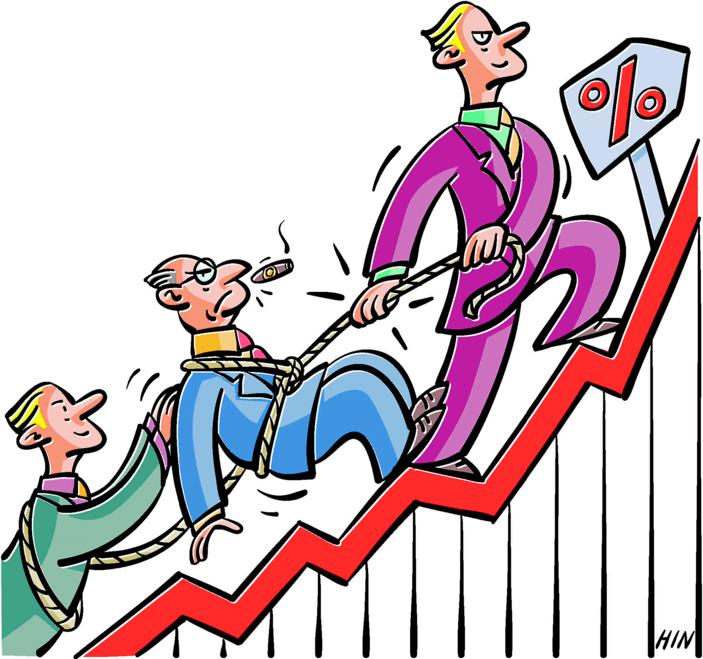
Aimed at providing a framework of rules and recommendations, the 13 principles laid out in the guideline cover a broad range of governance-related topics including disclosure of practices, independent leadership and relationship with management, among others.

(more…)

Rémunérations excessives des hauts dirigeants | Extraction ou création de valeur


Bonne lecture !

Vampire CEOs Continue To Suck Blood

As the economy continues to struggle in the seventh year of its supposed recovery after the Great Recession–despite unprecedented amounts of free government money from the Fed–CEO compensation continues to soar.

“The party goes on,” writes David Gelles in the New York Times, with a horrifying list of examples of corporate greed and value extraction. At the top of the list is a coven of four CEOs associated with John Malone at Discovery Communications who received some $350 million in 2014. Not bad for a year’s work, at a time when median compensation for workers has not increased significantly in decades.

Bloomberg calls it “gluttony.”Rémunérations excessives

Harvard Business Review calls it “the biggest financial bubble of them all.”

The New Yorker says, that the effect of reforms such as say-on-pay, aimed at containing excesses in C.E.O. salaries, has been “approximately zero. Executive compensation…is now higher than it’s ever been.”

Shareholder votes “have done little to curb lavish executive pay,” writes David Gelles. Greater public disclosure based on the view that somehow the companies would be ashamed and change their ways ”hasn’t worked.” He quotes Regina Olshan, head of the executive compensation practice at Skadden, Arps, Slate, Meagher & Flom: “I don’t think those folks are particularly ashamed. If they are getting paid, they feel they deserve those amounts. And if they are on the board, they feel like they are paying competitively to attract talent.”

“At root, the unstoppable rise of CEO pay,” says James Surowiecki in the New Yorker, “involves an ideological shift. Just about everyone involved now assumes that talent is rarer than ever, and that only outsize rewards can lure suitable candidates and insure stellar performance…CEO pay is likely to keep going in only one direction: up.”

La croissance des interventions activistes | Comment les organisations doivent-elles réagir ?


Voici un article de Mary Ann Cloyd, directrice du Center for Board Governance de PricewaterhouseCoopers, qui résume parfaitement la nature et la portée des interventions des actionnaires activistes aux États-Unis (et, par enchaînement au Canada).

Les administrateurs des sociétés sont de plus en plus préoccupés par les agissements des actionnaires activistes dont l’objectif ultime est l’amélioration de la situation financière des entreprises par la remise en question de sa gouvernance.

Lors d’un précédent billet, nous avons exploré les tenants et aboutissants du phénomène de l’activisme (Voir Explications du phénomène de l’activisme des actionnaires | PwC) en montrant qu’il y avait différents types d’activismes, en fonction de leur niveau d’engagement.

« Shareholder activism comes in different forms, ranging from say-on-pay votes, to shareholder proposals, to “vote no” campaigns (where some investors will urge other shareholders to withhold votes from one or more directors), to hedge fund activism. »

L’auteure présente ici une synthèse d’une enquête menée par PwC; elle met principalement l’accent sur trois aspects de la réponse à la « menace » :

(1) Pourquoi l’entreprise est-elle ciblée ?

(2) L’importance de la préparation continue

(3) Comment réagir lorsque les activistes interviennent ?

Bonne lecture !

Activism can build or progress. If a company is the target of a less aggressive form of activism one year, such as say-on-pay or shareholder proposals, and the activists’ issues are not resolved, it could lead to more aggressive activism in the following years. (For more background information, see a previous PwC publication, discussed on the Forum here.)

Hedge fund activists are increasing their holdings

pwc

Hedge fund activists may push a company to spin off underperforming or non-core parts of their businesses seek new executive management, operational efficiencies, or financial restructuring, engage in a proxy contest for full control of the board, or work to influence corporate strategy through one or two board seats. Some hedge fund activists target a company’s “capital allocation strategy” and push the company to change its acquisition strategy or return reserved cash to investors through stock buybacks or dividends. In order to drive these changes, activists are generally engaging with at least some of a company’s other major investors to get support for their proposals.

Directors have been taking notice of hedge funds and other activist shareholders, and they are talking about activism in the boardroom: Last year, 29% of directors said their board has interacted with an activist shareholder and held extensive board discussions about activism. [1] An additional 14% said they extensively discussed shareholder activism, though they hadn’t had any interactions with an activist. Given the state of activism, we anticipate the level of boardroom discussion on this topic will continue, or even grow, this year.

What might make your company a target?

About one in five S&P 500 companies was the target of a public activist campaign in 2014—and the number more than doubles when you consider the activity that never become public. [2] What are some common themes?

Companies where management appears to be either unable or unwilling to address issues that seem apparent to the market, investors, or analysts are ripe for activism. In addition, poor financial and stock performance, a weak pipeline of new products, a lack of innovation, the absence of a clear strategy, and turnover in leadership are also frequent red flags.

Hedge fund activists often focus on whether a company’s business line or sector is significantly underperforming in its market. They may target profitable companies with low market-to-book value, a well-regarded brand, and sound operating cash flows and return on assets. If a company’s cash reserves exceed historic norms and those of its peers, the company may be a target, particularly when it’s unclear why it has a large cash reserve. And board composition practices can also draw an activist’s attention—for example, if the company has a classified board or a long average director tenure and few new board members

An activist campaign can come at a very high cost. In addition to the out-of-pocket legal and advisory fees for a proxy battle, the management distraction, emotional impact, and potential business disruption can take a toll. Relationships with suppliers, customers, and even employees can also be damaged.

Preparation is key

Viewing a company through the eyes of an activist can help management and boards anticipate, prepare for, and respond to an activist campaign. A first step is to critically assess the company’s businesses as an activist would—looking for underperforming components. Some companies proactively examine their portfolios and capabilities to determine what fits both strategically and financially.

Companies that can articulate their strategy and demonstrate that it is grounded in a well-considered assessment of both their asset portfolios and their capabilities may be more likely to minimize the risk of becoming an activist’s target. Companies will want to tell a compelling story about their vision for success to shareholders.

Companies should also understand their shareholder base and have a tailored engagement plan in place.

Responding when an activist comes knocking

Companies and their boards will need to consider how to respond based on the facts and circumstances. Generally, an effective response plan will objectively consider the activist’s ideas to identify if there are areas around which to build consensus. Finding a way to work with an activist may avoid the potentially high costs of a proxy contest.

“One of the first areas of focus for boards and the management team is to engage. Sit down, have a discussion, hear out the activist, understand what’s on their mind, and then see if you can find common ground. We find engaging and listening is important,” Tim Ryan, PwC’s Vice Chairman and Markets, Strategy and Stakeholders Leader said in a recent interview with Wall Street Journal Live’s MoneyBeat.

It is important to recognize that the pressure from shareholder activists is not likely to go away any time soon, and companies of all sizes and in all industries need to be on alert. A well-articulated strategy, supported by a proactive assessment of the company’s existing portfolio, is critical. By telling a clear story and openly communicating with shareholders and investors, companies may minimize the risk of becoming a target of activists.

____________________________________

Endnotes:

[1] PwC, 2014 Annual Corporate Directors Survey, October 2014 (discussed on the Forum here).

[2] Brendan Sheehan, “Trends in Shareholder Activism,” Global Governance Advisors, October 2014.

Proposition de la SEC eu égard à la divulgation de la rémunération de la direction en rapport avec la performance organisationnelle


Les actionnaires doivent obtenir toute l’information pertinente pour leur permettre d’évaluer l’efficacité de leurs hauts dirigeants et leur permettre de voter en ayant accès aux meilleures informations possibles. C’est la raison pour laquelle la Securities and Exchange Commission (SEC) propose un amendement règlementaire relatif à la rémunération des hauts dirigeants, en rapport avec la performance.

Il est ainsi proposé que la SEC adopte un renforcement des règles de divulgation dans les circulaires de procuration en publiant une table qui révèle la rémunération de la haute direction en relation avec la performance financière de l’entreprise au cours des cinq dernières années.

La divulgation de ces données, sous une forme standardisée, facilitera les comparaisons avec d’autres entreprises cotées du même secteur d’activité.

Le résultat de cette consultation sera déterminante dans les décisions des autorités règlementaires canadiennes.

Le court article ci-dessous est basé sur les vues exprimées par *, commissaire de la  U.S. Securities and Exchange. J’ai enlevé les notes de bas de page afin d’alléger le billet mais vous pouvez retrouver l’intégralité de ses propos dans l’article Proposed Rule on Pay Versus Performance, publié dans le Harvard Law School of Corporate Governance.

Executive compensation and its relationship to the performance of a company has been an important issue since the first proxy rules were promulgated by the Commission nearly 80 years ago. The first tabular disclosure of executive compensation appeared in 1943, and over the years, the Commission has continued to update and overhaul the presentation and content of compensation disclosures.

CEO Pay – Humongous

Today [April 29, 2015], the Commission, as directed by Congress, takes another important step in modernizing our executive compensation rules by proposing amendments on pay versus performance. Section 953(a) of the Dodd-Frank Wall Street Reform and Consumer Protection Act directed the Commission to adopt rules requiring public companies to disclose in their proxy materials the relationship between executive compensation actually paid, and the financial performance of the company.

I believe that today’s proposal thoughtfully fulfills that mandate. The net result of the proposed rule should be enhanced pay versus performance disclosure in the proxy statement. It should make it easier for shareholders to locate, understand, and analyze executive compensation information before they have to vote.

The Commission’s current rules require that shareholders receive a proxy statement prior to a shareholder meeting. The proxy statement must disclose all the important facts about the issues on which shareholders may be asked to vote. Today’s proposed rule should provide shareholders, via the proxy statement, meaningful new information and metrics to aid in making informed decisions.

The Senate Report that accompanies Section 953(a) of the statute noted: “It has become apparent that a significant concern of shareholders is the relationship between executive pay and the company’s financial performance…The Committee believes that these disclosures will add to corporate responsibility as firms will have to more clearly disclose and explain executive pay.”

In order “to more clearly disclose and explain executive pay” in this context, the Commission is proposing to use a standardized, machine readable table. This table includes, in one location, easy to understand data regarding the last five years of a company’s financial performance. Financial performance data would be presented directly next to the data detailing the compensation of the company’s executive officers during the last five years.

This simple presentation should make it easier for shareholders to understand the relationship between executive pay and company performance. In addition to providing data on compensation “actually paid” to certain executive officers, the proposed table requires registered companies to include the Summary Compensation Table figures for certain executive officers. Including these numbers in the pay versus performance table is vitally important. It would allow shareholders to view a measure of pay that excludes changes in the value of equity grant awards. Providing two measures of compensation in the table may facilitate meaningful comparison, especially in situations where the “actually paid” figure may be misleading or not reflective of the true compensation package awarded to an executive in a given year.

Comparability is also an important part of the proposal. Requiring each registrant to complete this standardized table should promote comparability across all companies. Each registrant would be required to provide data responsive to the same questions, year after year, with clear direction on exactly what the table requires. This comparability also should promote robust data analysis going forward.

Along with providing data in the table, registrants would provide supplemental disclosure about the relationship between executive compensation and performance. The proposed rule appropriately recognizes that some flexibility may be needed to demonstrate this relationship. For example, registrants may describe the relationship in narrative form or by means of a graph or chart. Registrants would be allowed to describe this relationship in a way that is best suited to their particular circumstances. The combination of a standardized table and a more flexible disclosure following the table is a sensible way to ensure comparability and uniformity, while still providing companies with some appropriate flexibility in disclosure.

Finally, I have been a consistent advocate for data tagging of Commission forms, so I am very pleased to see that pay versus performance disclosure, as proposed, will be tagged in eXtensible Business Reporting Language, or XBRL. The proposed rule sets forth an approach toward incorporating machine readable data for communicating compensation and performance information. XBRL streamlines the collection and reporting of financial information. XBRL data tagging involves a process in which a company essentially marks certain parts of its financial disclosure with specific defined terms from a shared dictionary, referred to as a “taxonomy”. All registrants use the same shared taxonomy, which allows for comparability across companies.

In order to achieve comparability, we need structured data in formats like XBRL. Today’s proposal would represent the first piece of data in the proxy statement to be tagged and is hopefully a harbinger of things to come. We should be moving toward having the entire proxy statement tagged, and this is a great first step.

As the SEC Investor Advisory Committee noted in its recommendation advocating for more data tagging, “modern technology provides the SEC with the opportunity to unlock far greater value from the information that it collects and stores.” I personally believe that tagging the entire proxy statement would unlock great value for both the Commission and shareholders.

The current proposal is to have pay versus performance disclosure tagged in XBRL. It is my hope and expectation that this disclosure would be tagged in Inline XBRL once available, which would allow companies to file the required information and data tags in one document rather than repeated in separate exhibits. I understand that Inline XBRL is not yet available on the SEC’s Electronic Data Gathering Analysis and Retrieval (EDGAR) system, but soon will be. When that day comes, Inline XBRL should be used for pay versus performance and all other parts of the proxy statement.


*Kara M. Stein is a Commissioner at the U.S. Securities and Exchange Commission. This post is based on Commissioner Stein’s recent public statement, available here. The views expressed in the post are those of Commissioner Stein and do not necessarily reflect those of the Securities and Exchange Commission, the other Commissioners, or the Staff.

Related research from the Program on Corporate Governance about CEO pay includes Paying for Long-Term Performance (discussed on the Forum here) and the book Pay without Performance: The Unfulfilled Promise of Executive Compensation, both by Lucian Bebchuk and Jesse Fried.

Principes de gouvernance et règlementations en vigueur dans les pays membres de l’OCDE


Ce matin, je porte à votre attention un document-clé de l’Organisation de coopération et de développement économiques (OCDE) qui présente en détail toutes les informations concernant les pratiques de gouvernance dans les 34 pays de l’OCDE ainsi que dans un certain nombre d’autres pays influents : Argentine, Brésil, Hong Kong, Chine, Inde, Indonésie, Lituanie, Arabie Saoudite et Singapore.

Le document intitulé Corporate Governance Factbook est une ressource informationnelle indispensable pour mieux comprendre et comparer les codes de gouvernance et les règlementations relatives aux diverses juridictions. Il s’agit de la deuxième édition de cette publication; celle-ci alimente les révisions apportées annuellement aux Principes de Gouvernance de l’OCDE, principes de gouvernance universellement reconnus.

Le Canada a collaboré activement au partage des informations sur la gouvernance. Ainsi, le rapport présente une multitude de tableaux qui comparent la situation du Canada avec celle des autres pays retenus. C’est une mine d’information vraiment exceptionnelle.

Le document est en version anglaise pour le moment. Vous trouverez, ci-dessous, la référence au document ainsi que la table des matières :

Corporate Governance Factbook


Introduction

The Corporate Landscape

– The ownership structure of listed companies

The Corporate Governance Framework

– The regulatory framework for corporate governance
– Cross-border application of corporate governance requirements
– The main public regulators of corporate governance
– Stock exchangesCorporate Governance Factbook 250 pixels wide

The Rights of Shareholders and Key Ownership Functions

– Notification of general meetings and information provided to shareholders
– Shareholder rights to request a meeting and to place items on the agenda
– Shareholder voting
– Related party transactions
– Takeover bid rules
– The roles and responsibilities of institutional investors

The Corporate Board of Directors

– Basic board structure and independence
– Board-level committees
– Board nomination and election
– Board and key executive remuneration

Tendances claires eu égard à la rémunération des administrateurs de sociétés


En gouvernance, on fait très souvent référence aux mécanismes de rémunération de la direction des entreprises mais on s’interroge assez peu sur la rémunération des administrateurs. Également, il y a peu d’études sur le sujet.

L’article qui suit a été publié par Ira Kay* dans le Harvard Law School Forum on Corporate Governance. L’auteure confirme que les administrateurs de sociétés sont de plus en plus sollicités; ils sont donc appelés à investir de plus en plus de temps dans leurs fonctions et ils doivent assumer plus de risques.

La rémunération des administrateurs augmente d’environ 5 % par année et les paiements se font généralement sur une base de 50 % en argent et 50 % en actions à paiement différé.

Les tendances qui se dessinent sont claires. En voici un extrait :

Bonne lecture !

Trends in Board of Director Compensation

Summary and Key Findings

  1. In recent years, total pay has increased by, on average, less than 5% per yearP1040988
  2. Most companies make pay changes less frequently (e.g., every two or three years)
  3. Most large cap companies have eliminated regular meeting fees, in favor of higher annual cash/equity retainers
  4. Equity awards, which are most often RSUs or some other type of full-value award, typically represents 55% to 60% of total pay
  5. Near universal practice of having stock ownership and/or stock retention requirements, such as deferred stock units that are held until after board departure
  6. Some pay practices vary widely by industry and company size; for example smaller cap companies continue to provide meeting fees and may also grant stock options
  7. In the future, we expect annual director pay to increase, on average, by 3% to 5% and the weighting on equity awards to increase

Cash Compensation

The traditional directors’ compensation program included both an annual retainer and a separate fee provided for attending Board and Committee meetings. The presence of a meeting fee encouraged meeting attendance and automatically adjusts for workload as measured by the number of Board and Committee meetings. Meeting attendance is less of an issue today as companies disclose whether their directors attend at least 75% of meetings and proxy advisors scrutinize those directors who fail to meet the threshold. In recent years, most large companies and more mid-sized and small companies have simplified their approach to delivering cash compensation by eliminating the meeting fee element and instead providing a larger single cash retainer. The rationale for this change is to ease the administrative burden associated with paying a director a fee for each meeting attended and to communicate that meeting attendance is expected with less emphasis on actual time spent and more emphasis on the annual service provided to shareholders. We expect this shift to continue among smaller and mid-sized companies where the elimination of meeting fees is not yet a majority practice.

Equity and Cash Compensation Mix

Over time, as director compensation has increased, the trend has been to provide greater focus on equity compensation, which provides direct economic alignment to the shareholders who directors represent. Currently, it is common to have equity represent a slight majority of regular annual compensation – such as a pay mix of equity compensation 55% and cash compensation 45%. In analyzing broad market practices, we typically find directors’ total compensation allocated 40% to 50% to cash compensation and 50% to 60% to equity compensation. The emphasis on equity compensation is also directionally consistent with the typical pay mix for senior executives.

Equity Grant Design

In the early 2000s, stock options delivered most or all of director equity compensation, similar to the approach for compensating executives. The current trend has shifted to the use of full-value shares to deliver all (or at least most) of equity compensation. This shift in approach was driven by the change in accounting standards, negative views of stock options as a compensation vehicle for directors (and executives), and other factors. As a result, today, the most common market practice is to deliver equity compensation solely through full-value shares; a minority of companies (typically 25% or fewer, depending on the set of companies analyzed) continue to grant stock options.

Companies vary in the delivery of the full-value shares with the most common approaches including:

  1. Restricted stock/units, which have a restriction period that may range from six months to three years
  2. Deferred stock units, in which actual share are not delivered or sold until departing the Board
  3. Outright grants, which are immediately vested at grant

The use of performance‐based awards for directors is nearly non‐existent due to the desire to avoid any misperceptions between compensation and their duties and fiduciary responsibilities.

Board Leadership Compensation

Today independent directors are either led by a Non-Executive Chairman (at companies who have separated the leadership role) or a Lead Director (for companies who maintain a combined Chairman and CEO role or an Executive Chairman). At companies who have separated the Board Chairman and CEO roles, an independent Non-Executive Chairman is appointed to lead the independent directors. The responsibilities of this position vary by company as does the amount of additional compensation, which is provided through cash, equity or a combination thereof. At the low end of the spectrum, the Non-Executive Chairman’s extra retainer is positioned modestly above the extra retainer provided to the Audit Committee Chairman (or the Lead Director, which is discussed below) or at the high end of the spectrum, the additional retainer can be significantly higher, such as an additional $200,000 or more.

For those companies who have decided to continue with a single combined role, an independent director serving in the role of Lead Director (or Presiding Director) has emerged as a best practice to lead executive sessions of independent directors. When this role emerged in the mid-2000s, the Lead Director often received no additional compensation and frequently rotated among independent Committee Chairmen or was represented by the Governance Committee Chairman. More recently, for companies to maintain the combined role of Chairman and CEO, Lead Directors have become more prominent and are now typically appointed by the independent directors and are compensated with an additional retainer.

Board Committee Chairmen are typically provided an extra retainer to compensate for the additional work with management and outside advisors in preparing to lead committee meetings. Following the introduction of Sarbanes-Oxley, the extra retainer provided to the Chairman of the Audit Committee increased at a higher rate than other committee chairmen in recognition of the additional workload in terms of number of meetings and required preparation, heightened risk, and the financial expertise required of the position. Following the introduction of the enhanced proxy disclosure rules in 2006 and the Say on Pay advisory vote in 2010, extra retainers provided to the Chairman of the Compensation Committee increased to be positioned closer to (or just below) that of the Audit Committee Chairman.

Stock Ownership Guidelines and Requirements

There is near universal use of stock ownership guidelines or holding requirements for directors, which is consistent with the prevalence of requirements for senior executives. In order to align directors’ economic interests with the shareholders they represent, companies typically provide full-value equity awards and require minimum stock ownership specified as a multiple of the annual retainer or equity award value. At larger companies, the minimum stock ownership guideline is typically three to five times the annual retainer or equity award value with the expectation that this will be achieved within five years of joining the Board. Some companies also have stock holding requirements, which may be used in addition to stock ownership guidelines. For example, companies may require directors to retain net (after tax) shares upon lapse of restrictions until the minimum stock ownership guideline is achieved. Other companies may solely use stock holding requirements (such as grant equity compensation as deferred stock units) to ensure directors accumulate and retain meaningful levels of stock ownership through their tenure as a director.

Contemporary Best Practices

Over time director compensation levels and program design have evolved to address the changing regulatory environment and the enhanced role of the typical director, as described above. Director compensation arrangements have settled to a general design adopted by most companies:

– Annual cash retainer representing approximately 40% to 45% of the total program value

– Annual equity award most often delivered through full-value shares that vest after a specified time and representing approximately 55% to 60% of the total program value

– Extra cash retainers for Non-Executive Chairman, Lead Directors and Committee Chairmen

– Stock ownership guidelines representing three to five times the annual retainer, with stock holding requirements of new grants until the ownership guideline is achieved.

________________________________

*Ira Kay is a Managing Partner at Pay Governance LLC. This post is based on a Pay Governance memorandum by Steve Pakela and John Sinkular.

Colloque étudiant en gouvernance de sociétés


Les personnes  intéressées par les nouvelles recherches en gouvernance des entreprises sont invitées à assister au Colloque étudiant en gouvernance de société mardi 14 avril 2015

En partenariat avec la FSA et la Chaire en gouvernance des sociétés, le CÉDÉ organise un colloque étudiant. Les étudiants du cours de Gouvernance de l’entreprise DRT-6056 du professeur Ivan Tchotourian et du cours de Gouvernance des sociétés CTB-7000 du professeur Jean Bédard présenteront lors de cet événement le bilan de travaux de recherche réalisés durant la session d’hiver 2015.

Heure : 8 h 30 à 11 h 30
Lieu : Salon Hermès de la Faculté des sciences de l’administration

L’entrée est libre.


Explications du phénomène de l’activisme des actionnaires | PwC


Mary Ann Cloyd, responsable du Center for Board Governance de PricewaterhouseCoopers (PwC), vient de publier dans le forum du HLS un important document de référence sur le phénomène de l’activisme des actionnaires.

Son texte présente une excellente vulgarisation des activités conduites par les parties intéressées : Qui, Quoi, Quand et Comment ?

Je vous suggère de lire l’article au complet car il est très bien illustré par l’infographie. Vous trouverez ici un extrait de celui-ci.

Bonne lecture !

Shareholder Activism: Who, What, When, and How?

Who are today’s activists and what do they want?

Shareholder activism Spectrum

pwcsa1

“Activism” represents a range of activities by one or more of a publicly traded corporation’s shareholders that are intended to result in some change in the corporation. The activities fall along a spectrum based on the significance of the desired change and the assertiveness of the investors’ activities. On the more aggressive end of the spectrum is hedge fund activism that seeks a significant change to the company’s strategy, financial structure, management, or board. On the other end of the spectrum are one-on-one engagements between shareholders and companies triggered by Dodd-Frank’s “say on pay” advisory vote.

pwcsa2

The purpose of this post is to provide an overview of activism along this spectrum: who the activists are, what they want, when they are likely to approach a company, the tactics most likely to be used, how different types of activism along the spectrum cumulate, and ways that companies can both prepare for and respond to each type of activism.

Hedge fund activism

pwcsa3

At the most assertive end of the spectrum is hedge fund activism, when an investor, usually a hedge fund or other investor aligned with a hedge fund, seeks to effect a significant change in the company’s strategy.

Background

Some of these activists have been engaged in this type of activity for decades (e.g., Carl Icahn, Nelson Peltz). In the 1980s, these activists frequently sought the breakup of the company—hence their frequent characterization as “corporate raiders.” These activists generally used their own money to obtain a large block of the company’s shares and engage in a proxy contest for control of the board.

In the 1990s, new funds entered this market niche (e.g., Ralph Whitworth’s Relational Investors, Robert Monks’ LENS Fund, John Paulson’s Paulson & Co., and Andrew Shapiro’s Lawndale Capital). These new funds raised money from other investors and used minority board representation (i.e., one or two board seats, rather than a board majority) to influence corporate strategy. While a company breakup was still one of the potential changes sought by these activists, many also sought new executive management, operational efficiencies, or financial restructuring.

Today

During the past decade, the number of activist hedge funds across the globe has dramatically increased, with total assets under management now exceeding $100 billion. Since 2003 (and through May 2014), 275 new activist hedge funds were launched.

Forty-one percent of today’s activist hedge funds focus their activities on North America, and 32% have a focus that spans across global regions. The others focus on specific regions: Asia (15%), Europe (8%), and other regions of the world (4%).

Why?

The goals of today’s activist hedge funds are broad, including all of those historically sought, as well as changes that fall within the category of “capital allocation strategy” (e.g., return of large amounts of reserved cash to investors through stock buybacks or dividends, revisions to the company’s acquisition strategy).

How?

The tactics of these newest activists are also evolving. Many are spending time talking to the company in an effort to negotiate consensus around specific changes intended to unlock value, before pursuing a proxy contest or other more “public” (e.g., media campaign) activities. They may also spend pre-announcement time talking to some of the company’s other shareholders to gauge receptivity to their contemplated changes. Lastly, these activists (along with the companies responding to them) are grappling with the potential impact of high-frequency traders on the identity of the shareholder base that is eligible to vote on proxy matters.

Some contend that hedge fund activism improves a company’s stock price (at least in the short term), operational performance, and other measures of share value (including more disciplined capital investments). Others contend that, over the long term, hedge fund activism increases the company’s share price volatility as well as its leverage, without measurable improvements around cash management or R&D spending.

When is a company likely to be the target of activism?

Although each hedge fund activist’s process for identifying targets is proprietary, most share certain broad similarities:

  1. The company has a low market value relative to book value, but is profitable, generally has a well-regarded brand, and has sound operating cash flows and return on assets. Alternatively, the company’s cash reserves exceed both its own historic norms and those of its peers. This is a risk particularly when the market is unclear about the company’s rationale for the large reserve. For multi- business companies, activists are also alert for one or more of the company’s business lines or sectors that are significantly underperforming in its market.
  2. Institutional investors own the vast majority of the company’s outstanding voting stock.
  3. The company’s board composition does not meet all of today’s “best practice” expectations. For example, activists know that other investors may be more likely to support their efforts when the board is perceived as being “stale”—that is, the board has had few new directors over the past three to five years, and most of the existing directors have served for very long periods. Companies that have been repeatedly targeted by non-hedge fund activists are also attractive to some hedge funds who are alert to the cumulative impact of shareholder dissatisfaction.

A company is most likely to be a target of non-hedge fund activism based on a combination of the following factors:

pwcsat

How can a company effectively prepare for—and respond to—an activist campaign?

Prepare

We believe that companies that put themselves in the shoes of an activist will be most able to anticipate, prepare for, and respond to an activist campaign. In our view, there are four key steps that a company and its board should consider before an activist knocks on the door:

Critically evaluate all business lines and market regions. Some activists have reported that when they succeed in getting on a target’s board, one of the first things they notice is that the information the board has been receiving from management is often extremely voluminous and granular, and does not aggregate data in a way that highlights underperforming assets.

Companies (and boards) may want to reassess how the data they review is aggregated and presented. Are revenues and costs of each line of business (including R&D costs) and each market region clearly depicted, so that the P&L of each component of the business strategy can be critically assessed? This assessment should be undertaken in consideration of the possible impact on the company’s segment reporting, and in consultation with the company’s management and likely its independent auditor.

Monitor the company’s ownership and understand the activists. Companies routinely monitor their ownership base for significant shifts, but they may also want to ensure that they know whether activists (of any type) are current shareholders.

Understanding what these shareholders may seek (i.e., understanding their “playbook”) will help the company assess its risk of becoming a target.

Evaluate the “risk factors.” Knowing in advance how an activist might criticize a company allows a company and its board to consider whether to proactively address one or more of the risk factors, which in turn can strengthen its credibility with the company’s overall shareholder base. If multiple risk factors exist, the company can also reduce its risk by addressing just one or two of the higher risk factors.

Even if the company decides not to make any changes based on such an evaluation, going through the deliberative process will help enable company executives and directors to articulate why they believe staying the course is in the best long-term interests of the company and its investors.

Develop an engagement plan that is tailored to the company’s shareholders and the issues that the company faces. If a company identifies areas that may attract the attention of an activist, developing a plan to engage with its other shareholders around these topics can help prepare for—and in some cases may help to avoid—an activist campaign. This is true even if the company decides not to make any changes.

Activists typically expect to engage with both members of management and the board. Accordingly, the engagement plan should prepare for either circumstance.

Whether the company decides to make changes or not, explaining to the company’s most significant shareholders why decisions have been made will help these shareholders better understand how directors are fulfilling their oversight responsibilities, strengthening their confidence that directors are acting in investors’ best long-term interests.

These communications are often most effective when the company has a history of ongoing engagement with its shareholders. Sometimes, depending on the company’s shareholder profile, the company may opt to defer actual execution of this plan until some future event occurs (e.g., an activist in fact approaches the company, or files a Schedule 13d with the SEC, which effectively announces its intent to seek one or more board seats). Preparing the plan, however, enables the company to act quickly when circumstances warrant.

pwcsa13

Respond

In responding to an activist’s approach, consider the advice that large institutional investors have shared with us: good ideas can come from anyone. While there may be circumstances that call for more defensive responses to an activist’s campaign (e.g., litigation), in general, we believe the most effective response plans have three components:

Objectively consider the activist’s ideas. By the time an activist first approaches a company, the activist has usually already (a) developed specific proposals for unlocking value at the company, at least in the short term, and (b) discussed (and sometimes consequently revised) these ideas with a select few of the company’s shareholders. Even if these conversations have not occurred by the time the activist first approaches the company, they are likely to occur soon thereafter. The company’s institutional investors generally spend considerable time objectively evaluating the activist’s suggestion—and most investors expect that the company’s executive management and board will be similarly open- minded and deliberate.

Look for areas around which to build consensus. In 2013, 72 of the 90 US board seats won by activists were based on voluntary agreements with the company, rather than via a shareholder vote. This demonstrates that most targeted companies are finding ways to work with activists, avoiding the potentially high costs of proxy contests. Activists are also motivated to reach agreement if possible. If given the option, most activists would prefer to spend as little time as possible to achieve the changes they believe will enhance the value of their investment in the company. While they may continue to own company shares for extensive periods of time, being able to move their attention and energy to their next target helps to boost the returns to their own investors.

Actively engage with the company’s key shareholders to tell the company’s story. An activist will likely be engaging with fellow investors, so it’s important that key shareholders also hear from the company’s management and often the board. In the best case, the company already has established a level of credibility with those shareholders upon which new communications can build. If the company does not believe the activist’s proposed changes are in the best long-term interests of the company and its owners, investors will want to know why—and just as importantly, the process the company used to reach this conclusion. If the activist and company are able to reach an agreement, investors will want to hear that the executives and directors embrace the changes as good for the company. Company leaders that are able to demonstrate to investors that they were part of positive changes, rather than simply had changes thrust upon them, enhance investor confidence in their stewardship.

pwcsa14

Epilogue—life after activism

When the activism has concluded—the annual meeting is over, changes have been implemented, or the hedge fund has moved its attention to another target—the risk of additional activism doesn’t go away. Depending on how the company has responded to the activism, the significance of any changes, and the perception of the board’s independence and open-mindedness, the company may again be targeted. Incorporating the “Prepare” analysis into the company’s ongoing processes, conducting periodic self-assessments for risk factors, and engaging in a tailored and focused shareholder engagement program can enhance the company’s resiliency, strengthening its long-term relationship with investors.

Un guide des pratiques de gouvernance dans l’Union Européenne (EU)


Vous trouverez, ci-dessous, un guide complet des pratiques de gouvernance relatives aux entreprises de l’Union Européenne.

Il n’y a pas de version française de ce document à ce stade-ci. J’ai cependant demandé à ecoDa (European Confederation of Directors’ Associations) si un guide en français était en préparation. Toute personne intéressée par la gouvernance européenne trouvera ici un excellent outil d’information.

Bonne lecture !

This publication has been produced in collaboration with the European Confederation of Directors’ Associations (ecoDa) primarily aimed at ecoDa’s membership and for supporting IFC’s work in surrounding regions with countries aspiring to understand and follow rules, standards and practices applied in the EU countries but which may be of wider relevance and interest to practitioners, policy makers, development finance institutions, investors, board directors, business reporters, and others.

A Guide to Corporate Governance Practices in the European Union

The purpose of this publication is twofold: to describe the corporate governance framework within the European Union and to highlight good European governance practices. It focuses on the particular aspects of European governance practices that distinguish this region from other parts of the world.DSCN3217

In addition to providing a useful source of reference, this guide is designed to be relevant to anyone interested in the evolving debate about European corporate governance. It should be of particular interest to the following parties:

Policymakers and corporate governance specialists, to assist in the identification of good practices among the member states. Improvements in corporate governance practices in a country may attract foreign direct investment.

Directors of listed and unlisted companies, to inspire them to look again at their ways of working.

Directors of state-owned enterprises (SOEs), to assist in improving corporate governance practices prior to selling off state assets.

Bankers, to assist in the identification of good corporate governance practices to inform their lending and investing practices.

Staff within development financial institutions, to assist in the identification of good corporate

Proxy advisors and legal advisors, to assist in the identification of corporate governance compliance issues.

Investors, shareholders, stock brokers, and investment advisors, to assist in the identification of good practices in investor engagement and activism.

Senior company management, to assist in the identification of good relationship-management practices with boards of directors.

Journalists and academics within business schools, who are interested in good corporate governance practices.

Private sector and public sector stakeholders from the EU candidate and potential candidate countries in their preparation for eventual accession. Geographical areas of potential readership may include the following in particular:

The 18 Eurozone countries (listed in Appendix A);

The 28 EU member states (Appendix B);

The five EU candidate countries (Appendix C);

The three potential candidate countries

The 47 European Council Countries (Appendix E); and

Emerging markets and others seeking to increase trade or attract investment with European countries.