Deux théories de la gouvernance des sociétés


Résultats de recherche d'images pour « corporate governance model »

The activists’ claim of value creation is further clouded by indications that some of the value purportedly created for shareholders is actually value transferred from other parties or from the general public. Large-sample research on this question is limited, but one study suggests that the positive abnormal returns associated with the announcement of a hedge fund intervention are, in part, a transfer of wealth from workers to shareholders. The study found that workers’ hours decreased and their wages stagnated in the three years after an intervention. Other studies have found that some of the gains for shareholders come at the expense of bondholders. Still other academic work links aggressive pay-for-stock-performance arrangements to various misdeeds involving harm to consumers, damage to the environment, and irregularities in accounting and financial reporting.

We are not aware of any studies that examine the total impact of hedge fund interventions on all stakeholders or society at large. Still, it appears self-evident that shareholders’ gains are sometimes simply transfers from the public purse, such as when management improves earnings by shifting a company’s tax domicile to a lower-tax jurisdiction—a move often favored by activists, and one of Valeant’s proposals for Allergan. Similarly, budget cuts that eliminate exploratory research aimed at addressing some of society’s most vexing challenges may enhance current earnings but at a cost to society as well as to the company’s prospects for the future.

Hedge fund activism points to some of the risks inherent in giving too much power to unaccountable “owners.” As our analysis of agency theory’s premises suggests, the problem of moral hazard is real—and the consequences are serious. Yet practitioners continue to embrace the theory’s doctrines; regulators continue to embed them in policy; boards and managers are under increasing pressure to deliver short-term returns; and legal experts forecast that the trend toward greater shareholder empowerment will persist. To us, the prospect that public companies will be run even more strictly according to the agency-based model is alarming. Rigid adherence to the model by companies uniformly across the economy could easily result in even more pressure for current earnings, less investment in R&D and in people, fewer transformational strategies and innovative business models, and further wealth flowing to sophisticated investors at the expense of ordinary investors and everyone else.

To counter short-termism and activism, Bower and Paine embrace the corporation-centric/constituency theory of governance. They argue that the corporation and its board of directors have a fiduciary duty not just to its shareholders, but to its employees, customers, suppliers and to the community. This is the theory I argued in Takeover Bids in the Target’s Boardroom (1979) and regularly since in a long series of articles and memoranda. While Bower and Paine say:

The new model has yet to be fully developed, but its conceptual foundations can be outlined …[T]he company-centered model we envision tracks basic corporate law in holding that a corporation is an independent entity, that management’s authority comes from the corporation’s governing body and ultimately from the law, and that managers are fiduciaries (rather than agents) and are thus obliged to act in the best interests of the corporation and its shareholders (which is not the same as carrying out the wishes of even a majority of shareholders). This model recognizes the diversity of shareholders’ goals and the varied roles played by corporations in society. We believe that it aligns better than the agency-based model does with the realities of managing a corporation for success over time and is thus more consistent with corporations’ original purpose and unique potential as vehicles for projects involving large-scale, long-term investment.

In fact the corporation-centric theory—that the directors have a fiduciary duty to the corporation and all of its stakeholders—is reflected in a number of state corporation laws. Perhaps the most cogent example is the Pennsylvania Business Corporation Law which provides:

A director of a business corporation shall stand in a fiduciary relation to the corporation and shall perform his duties as a director, including his duties as a member of any committee of the board upon which he may serve, in good faith, in a manner he reasonably believes to be in the best interests of the corporation and with such care, including reasonable inquiry, skill and diligence, as a person of ordinary prudence would use under similar circumstances.

In discharging the duties of their respective positions, the board of directors, committees of the board and individual directors of a business corporation may, in considering the best interests of the corporation, consider to the extent they deem appropriate:

  1. The effects of any action upon any or all groups affected by such action, including shareholders, employees, suppliers, customers and creditors of the corporation, and upon communities in which offices or other establishments of the corporation are located.
  2. The short-term and long-term interests of the corporation, including benefits that may accrue to the corporation from its long-term plans and the possibility that these interests may be best served by the continued independence of the corporation.
  3. The resources, intent and conduct (past, stated and potential) of any person seeking to acquire control of the corporation.
  4. All other pertinent factors.

While wider adoption and strengthening of laws like the Pennsylvania statute would provide some more ability to boards of directors to temper short-termism and resist attacks by activist hedge funds, voting control of corporations will remain in the hands of the major institutional investors and asset managers. To achieve a truly meaningful change and effectively promote long-term investment, corporations and institutional investors and asset managers will need to endorse and adhere to The New Paradigm: A Roadmap for an Implicit Corporate Governance Partnership Between Corporations and Investors to Achieve Sustainable Long-Term Investment and Growth (2016) (discussed on the Forum here) promulgated by the World Economic Forum or A Synthesized Paradigm for Corporate Governance, Investor Stewardship, and Engagement (2017) (discussed on the Forum here) based on it and on The Principles of the Investor Stewardship Group (2017). The alternative would be legislation, something that both corporations and investors should assiduously avoid.

_________________________________

*Martin Lipton is a founding partner of Wachtell, Lipton, Rosen & Katz, specializing in mergers and acquisitions and matters affecting corporate policy and strategy. This post is based on a Wachtell Lipton publication by Mr. Lipton. Additional posts by Martin Lipton on short-termism and corporate governance are available here.

L’histoire récente des courants de pensée en gouvernance aux É.U.


Aujourd’hui, je ne peux passer sous silence la petite histoire de l’évolution de la pensée en gouvernance publiée par , professeur à la George Washington University Law School.

Ce court article a été publié sur le site du HLS Forum. Il décrit les grands courants de pensée et met l’accent sur les publications des bonzes universitaires américains.

Je suis assuré que cette brève chronologie des événements, à compter de 1976, vous donnera une vue d’ensemble utile de l’évolution de la discipline.

Bonne lecture !

The Ivory Tower on Corporate Governance


In 1976, [Directors & Boards]’s founding year, two influential academic works in corporate governance appeared: Berkeley law professor Melvin Eisenberg urged transforming the board from an advisory role to a monitoring model and mandating significant internal control systems, while University of Rochester economists Michael Jensen and William Meckling portrayed the firm as a nexus of contracts whose optimal design is for participants to choose.


These contrasting visions—obligatory uniformity versus free tailoring—have defined the field since, setting the boundaries of debate and helping participants think through positions. Into the early 1980s, the Eisenberg view dominated, with Columbia University law professor William Cary urging preemptive federal oversight of the field, traditionally handled by state law, and a generally pro-regulatory atmosphere imposing fiduciary mandates on independent directors and board committees.

But the nexus of contracts school soon ascended to greater influence, through the 1990s, after law professors such as Frank Easterbrook (now a judge) and Daniel Fischel, both of the University of Chicago, explored how the separation of ownership from control is a problem of agency costs, best addressed by contractual devices geared to maximizing shareholder value. Rather than federal mandates, states should experiment to offer a menu of tools for different corporations to tailor. Yale University law professor (also now judge) Ralph Winter theorized that competition among states for corporate charters constrained managers to promote shareholder interests.

While normative corporate governance scholarship has divided between the pro- and anti-regulatory camps of the 1970s and 1980s, the best academics learned from their intellectual opponents to refine stances and often forge consensus. For example, though assessments of the deal decade’s disruptive takeovers and comparative studies of non-U.S. practice found a place for non-shareholder constituents in corporate governance, a shareholder primacy norm nevertheless took root.

Even as both schools of thought contributed to the discourse, each had their heyday when current events cut in their favor. So the 1990s boom was a time of great enthusiasm for the economic approach, adding a productive trend of increasingly sophisticated empirical research, including on the value of state competition in corporate law. After the burst, however, and as widespread accounting fraud was revealed, scholars cited Eisenberg to diagnose failures to monitor and control—and prescribed cures found in the Sarbanes-Oxley Act (SOX). An industry-specific version of the dynamic transpired after the financial crisis, culminating in the Dodd-Frank Act.

In each case, scholarship was diverse, as pragmatic centrist resolution of pending challenges, exemplified by Columbia’s John Coffee, contended with cries on both normative sides of either too little or too much regulation (Yale’s Roberta Romano called SOX “quack governance”). Such episodes updated the Cary-Winter debate: full-scale federal preemption is probably dead but, as Harvard University law professor Mark Roe explained, less due to state competition than the threat to states of incremental federal incursion, a la SOX and Dodd-Frank.

Since 1976, scholars have helped shift power from managers to owners, especially institutional investors. Today, scholars such as Harvard Law professor Lucian Bebchuk urge continued expansion of shareholder power, while others, like UCLA law professor Stephen Bainbridge, observe and support a propensity toward director primacy instead. In the balance is the fate of shareholder activism, which though novel in some ways, at bottom raises issues debated for 40 years, particularly agency cost mitigation. Plus ça change, plus c’est la même chose.

Une saine tension entre le CA et la direction : Gage d’une bonne gouvernance | Billet revisité


Dans son édition d’avril 2016, le magazine Financier Worldwide présente une excellente analyse de la dynamique d’un conseil d’administration efficace. Pour l’auteur, il est important que le président du conseil soit habileté à exercer un niveau de saine tension entre les administrateurs et la direction de l’entreprise.

Il n’y a pas de place pour la complaisance au conseil. Les membres doivent comprendre que leur rôle est de veiller aux « intérêts supérieurs » de l’entreprise, notamment des propriétaires-actionnaires, mais aussi d’autres parties prenantes.

Le PDG de l’entreprise est recruté par le CA pour faire croître l’entreprise et exécuter une stratégie liée à son modèle d’affaires. Lui aussi doit travailler en fonction des intérêts des actionnaires… mais c’est la responsabilité fiduciaire du CA de s’en assurer en mettant en place les mécanismes de surveillance appropriés.

La théorie de l’agence stipule que le CA représente l’autorité souveraine de l’entreprise (puisqu’il possède la légitimité que lui confèrent les actionnaires). Le CA confie à un PDG (et à son équipe de gestion) le soin de réaliser les objectifs stratégiques retenus. Les deux parties — le Board et le Management — doivent bien comprendre leurs rôles respectifs, et trouver les bons moyens pour gérer la tension inhérente à l’exercice de la gouvernance et de la gestion.

Les administrateurs doivent s’efforcer d’apporter une valeur ajoutée à la gestion en conseillant la direction sur les meilleures orientations à adopter, et en instaurant un climat d’ouverture, de soutien et de transparence propice à la réalisation de performances élevées.

Il est important de noter que les actionnaires s’attendent à la loyauté des administrateurs ainsi qu’à leur indépendance d’esprit face à la direction. Les administrateurs sont élus par les actionnaires et sont donc imputables envers eux. C’est la raison pour laquelle le conseil d’administration doit absolument mettre en place un processus d’évaluation de ces membres et divulguer sa méthodologie.

Également, comme mentionné dans un billet daté du 5 juillet 2016 (la séparation des fonctions de président du conseil et de président de l’entreprise [CEO] est-elle généralement bénéfique ?), les autorités réglementaires, les firmes spécialisées en votation et les experts en gouvernance suggèrent que les rôles et les fonctions de président du conseil d’administration soient distincts des attributions des PDG (CEO).

En fait, on suppose que la séparation des fonctions, entre la présidence du conseil et la présidence de l’entreprise (CEO), est généralement bénéfique à l’exercice de la responsabilité de fiduciaire des administrateurs, c’est-à-dire que des pouvoirs distincts permettent d’éviter les conflits d’intérêts, tout en rassurant les actionnaires.

Cependant, cette pratique cède trop souvent sa place à la volonté bien arrêtée de plusieurs PDG d’exercer le pouvoir absolu, comme c’est encore le cas pour plusieurs entreprises américaines. Pour plus d’information sur ce sujet, je vous invite à consulter l’article suivant : Séparation des fonctions de PDG et de président du conseil d’administration | Signe de saine gouvernance !

Le Collège des administrateurs de sociétés (CAS) offre une formation spécialisée de deux jours sur le leadership à la présidence.


Banque des ASC
Gouvernance et leadership à la présidence | 4 et 5 mai 2017, à Montréal | 7 et 8 novembre 2017, à Québec


Vous trouverez, ci-dessous, l’article du Financier Worldwide qui illustre assez clairement les tensions existantes entre le CA et la direction, ainsi que les moyens proposés pour assurer la collaboration entre les deux parties.

J’ai souligné en gras les passages clés.

Bonne lecture ! Vos commentaires sont appréciés.


In this age of heightened risk, the need for effective governance has caused a dynamic shift in the role of the board of directors. Cyber security, rapid technological growth and a number of corporate scandals resulting from the financial crisis of 2008, all underscore the necessity of boards working constructively with management to ensure efficient oversight, rather than simply providing strategic direction. This is, perhaps, no more critical than in the middle market, where many companies often don’t have the resources larger organisations have to attract board members, but yet their size requires more structure and governance than smaller companies might need.

Following the best practices of high-performing boards can help lead to healthy tension between management and directors for improved results and better risk management. We all know conflict in the boardroom might sometimes be unavoidable, as the interests of directors and management don’t necessarily always align. Add various personalities and management styles to the mix, and discussions can sometimes get heated. It’s important to deal with situations when they occur in order to constructively manage potential differences of opinion to create a healthy tension that makes the entire organisation stronger.

Various conflict management styles can be employed to ensure that any potential boardroom tension within your organisation is healthy. If an issue seems minor to one person but vital to the rest of the group, accommodation can be an effective way to handle tension. If minor issues arise, it might be best to simply avoid those issues, whereas collaboration should be used with important matters. Arguably, this is the best solution for most situations and it allows the board to effectively address varying opinions. If consensus can’t be reached, however, it might become necessary for the chairman or the lead director to use authoritarian style to manage tension and make decisions. Compromise might be the best approach when the board is pressed for time and needs to take immediate action.

April 2016 Issue

The board chairperson can be integral to the resolution process, helping monitor and manage boardroom conflict. With this in mind, boards should elect chairs with the proven ability to manage all personality types. The chairperson might also be the one to initiate difficult conversations on topics requiring deeper scrutiny. That said, the chairperson cannot be the only enforcer; directors need to assist in conflict resolution to maintain a proper level of trust throughout the group. And the CEO should be proactive in raising difficult issues as well, and boards are typically most effective when the CEO is confident, takes the initiative in learning board best practices and works collaboratively.

Gone are the days of the charismatic, autocratic CEO. Many organisations have separated the role of CEO and chairperson, and have introduced vice chairs and lead directors to achieve a better balance of power. Another way to ensure a proper distribution of authority is for the board to pay attention to any red flags that might be raised by the CEO’s behaviour. For example, if a CEO feels they have all the answers, doesn’t respect the oversight of the board, or attempts to manage or marginalise the board, the chairperson and board members will likely need to be assertive, rather than simply following the CEO’s lead. Initially this might seem counterintuitive, however, in the long-run, this approach will likely create a healthier tension than if they simply ‘followed the leader’.

Everyone in the boardroom needs to understand their basic functions for an effective relationship -executives should manage, while the board oversees. In overseeing, the board’s major responsibilities include approving strategic plans and goals, selecting a CEO, determining a mission or purpose, identifying key risks, and providing oversight of the compliance of corporate policies and regulations. Clearly understanding the line between operations and strategy is also important.

Organisations with the highest performing boards are clear on the appropriate level of engagement for the companies they represent – and that varies from one organisation to the next. Determining how involved the board will be and what type of model the board will follow is key to effective governance and a good relationship with management. For example, an entity that is struggling financially might require a more engaged board to help put it back on track.

Many elements, such as tension, trust, diversity of thought, gender, culture and expertise can impact the delicate relationship between the board and management. Good communication is vital to healthy tension. Following best practices for interaction before, during and after board meetings can enhance conflict resolution and board success.

Before each board meeting, management should prepare themselves and board members by distributing materials and the board package in a timely manner. These materials should be reviewed by each member, with errors or concerns forwarded to the appropriate member of management, and areas of discussion highlighted for the chair. An agenda focused on strategic issues and prioritised by importance of matters can also increase productivity.

During the meeting, board members should treat one another with courtesy and respect, holding questions held until after presentations (or as the presenter directs). Board-level matters should be discussed and debated if necessary, and a consensus reached. Time spent on less strategic or pressing topics should be limited to ensure effective meetings. If appropriate, non-board-level matters might be handed to management for follow-up.

Open communication should also continue after board meetings. Sometimes topics discussed during board meetings take time to digest. When this happens, board members should connect with appropriate management team members to further discuss or clarify. There are also various board committee meetings that need to occur between board meetings. Board committees should be doing the ‘heavy lifting’ for the full board, making the larger group more efficient and effective. Other more informal interactions can further strengthen the relationship between directors and management.

Throughout the year, the board’s engagement with management can be broadened to include discussions with more key players. Gaining multiple perspectives by interacting with other areas of the organisation, such as general counsels, external and internal auditors, public relations and human resources, can help the board identify and address key risks. By participating in internal and external company events, board members get to know management and the company’s customers on a first-hand basis.

Of course, a strategy is necessary for the board as well, as regulatory requirements have increased, leading to greater pressure for high-quality performance. Effective boards maintain a plan for development and succession. They also implement CEO and board evaluation processes to ensure goals are being met and board members are performing optimally. In addition to the evaluation process, however, board members must hold themselves totally accountable for instilling trust in the boardroom.

Competition in today’s increasingly global and complex business environment is fierce, and calls for new approaches for success. Today’s boards need to build on established best practices and create good relationships with management to outperform competitors. The highest performing boards are clear on their functions, and understand the level of engagement appropriate for the companies they support. They are accountable and set the right tone, while being able to discern true goals and aspirations from trendiness. They are capable of understanding and dealing with the ‘big issues’ and are strategic in their planning and implementation of approaches that work for the companies they serve. With the ever-changing risk universe, the ability to work with the right amount of healthy tension is essential to effective governance.

_______________________________________

Hussain T. Hasan is on the Consulting Leadership team as well as a board member at RSM US LLP.

Résumé des activités en gouvernance des sociétés | 2016


Voici un article publié sur le site de la HLS par Michael McCauley* qui montre comment la Florida State Board of Administration (SBA) évalue la gouvernance des entreprises dans laquelle elle investit.

Il m’apparaît utile de comprendre le processus décisionnel des investisseurs institutionnels, si l’on veut connaître les variables de la gouvernance dont elles tiennent compte.

L’auteur explique la méthodologie utilisée par la SBA dans sa quête d’information sur les entreprises visées.

Bonne lecture et joyeux temps des fêtes !

2016 Corporate Governance Annual Summary


The Florida SBA’s annual corporate governance summary explains how the Board makes proxy voting decisions, describes the process and policies used to analyze corporate governance practices, and details significant market issues affecting global corporate governance practices at owned companies. The SBA acts as a strong advocate and fiduciary for Florida Retirement System (FRS) members and beneficiaries, retirees, and other non-pension clients to strengthen shareowner rights .and promote leading corporate governance practices at U.S. and international companies in which the SBA holds stock.

tyz7dm8

The SBA’s corporate governance activities are focused on enhancing share value and ensuring that public companies are accountable to their shareowners with independent boards of directors, transparent disclosures, accurate financial reporting, and ethical business practices designed to protect the SBA’s investments.

The SBA’s annual corporate governance summary is designed to provide transparency of investment management activities involving responsible investment practices, proxy voting conduct, and engagement with owned companies. The report broadly conforms to the main principles for external responsibilities endorsed by the International Corporate Governance Network’s (ICGN) Global Stewardship Principles, most recently updated in June 2016. The ICGN Global Stewardship Principles provide a framework to implement stewardship practices in fulfilling an investor’s fiduciary obligations to beneficiaries or clients.

In addition to comprehensive data and information on corporate engagement, proxy voting, and regulatory issues, the complete 2016 report includes four topical sections detailed below:

Governance Patterns in the U.S. Banking Sector—market events this year demonstrate how a company’s governance regime can interact with its reputation and value.

CFOs serving on Boards in the UK—why is the British market so conducive for executives, including the CFO, to serve on their own boards?

Rule 14a-8 Governing Shareowner Resolutions—is it time for a more efficient way to make shareowner proposals during annual meetings?

UK Compensation Revolt—along with votes targeted at individual board members, investor votes on executive compensation exhibited high levels of dissent at many UK companies.

Annual Voting Review

During the 2016 proxy season, the SBA cast votes at over 10,300 public companies, voting more than 97,000 individual ballot items. The SBA actively engages portfolio companies throughout the year, addressing corporate governance concerns and seeking opportunities to improve alignment with the interests of our beneficiaries. Highlights from the 2016 proxy season included the continued record adoption of proxy access by U.S. companies, record high votes of dissent on pay packages for executives in the United Kingdom, and strong improvements in the level of independence among Japanese boards of directors. While SBA voting principles and guidelines are not pre-disposed to agree or disagree with management recommendations, some management positions may not be in the best interest of all shareowners. On behalf of participants and beneficiaries, the SBA emphasizes the fiduciary responsibility to analyze and evaluate all management recommendations very closely.

Across all voting items, the SBA voted 76.5 percent “For,” 20.2 percent “Against,” 3.1 percent “Withheld,” and 0.2 percent “Abstained” or “Did Not Vote” (due to various local market regulations or liquidity restrictions placed on voted shares). Of all votes cast, 22.2 percent were “Against” the management-recommended-vote (up from 19.4 percent during the same period last year). Among all global proxy votes, the SBA cast at least one dissenting vote at 7,689 annual shareowner meetings, or 74.6 percent of all meetings.

Director Elections

In uncontested director elections among all companies in the United States that are part of the Russell 3000 stock index, over 16,000 nominees received 96.1 percent average support from investors. This year’s figure was within two tenths of one percent from 2015’s statistic. Only 46 director nominees, or less than 0.3 percent, failed to receive a majority level of support from investors. Only two directors at large-capitalization companies within the Standard & Poor’s (S&P) 500 stock index failed to receive a majority level of support. Board elections represent one of the most critical areas in voting because shareowners rely on the board to monitor management. The SBA supported 78.5 percent of individual nominees for boards of directors, voting against the remaining portion of directors due to concerns about candidate independence, qualifications, attendance, or overall board performance. The SBA’s policy is to withhold support from directors who fail to observe good corporate governance practices or demonstrate a disregard for the interests of investors.

Executive Compensation

During the 2016 proxy season, the SBA utilized compensation research from Equilar, Inc., Glass, Lewis & Co., and Institutional Shareholder Services to assist in evaluating the proxy voting decisions on executive compensation share plans and general say-on-pay ballot items. Across all global equity markets, the SBA voted to approve approximately 55 percent of all remuneration reports, whereas in the U.S. market all other investors provided an average support level of 91.5 percent with only 1.5 percent of all advisory votes failing to achieve a majority. ISS found that over half of all U.S. companies conducting annual pay votes have received investor support of at least 90 percent in each of the last five years since the Dodd-Frank Act instituted advisory say-on-pay shareowner votes.

Among all U.S. companies, the average level of investor support for equity plan proposals stayed about the same year over year at approximately 88 percent. However, the number of individual equity plans that failed to garner majority support rose by 50 percent, from 6 to 9 plans. Given the extremely low number of equity plans that fail each year, investor support for individual plans is almost universal. Less than one percent of equity plans failed during the last year, which also marked a five-year low for the number of compensation-related investor proposals with not a single proposal receiving majority support. Over the last fiscal year, the SBA supported 51.2 percent of all non-salary (equity) compensation items, 60.8 percent of executive incentive bonus plans, and 25.2 percent of management proposals to approve omnibus stock plans in which company executives would participate (and 19.3 percent support for the amendment of such plans). Omnibus stock plan ballot items typically include ratification of more than one equity plan beyond a company’s long-term incentive plan (LTIP).

Asset Owner/Asset Manager Peer Benchmarking

In May 2016, the SBA completed an international benchmarking survey on the costs of corporate governance activities at seventeen large public pension funds and global asset managers. The information helped SBA staff to assess the Investment Programs & Governance (IP&G) unit’s cost structure and service utilization across a large number of direct peers. When total research and voting services costs were calculated, SBA had the second lowest dollar-cost per proxy vote among public fund peers and asset managers. The SBA also ranked among the top three funds and well ahead of the fourteen remaining peers with respect to the proxy votes cast per full-time employee. The benchmarking showed that SBA’s corporate governance program uses similar services to peers, but does so at considerably lower cost and with greater efficacy. Our overall program costs and activity levels, particularly when standardized by assets under management, were very favorable compared to peers.

Active Ownership

The SBA actively engages portfolio companies throughout the year, addressing corporate governance concerns and seeking opportunities to improve alignment with the interests of our beneficiaries. During the 2016 fiscal year, SBA staff conducted engagements with over 100 companies owned within Florida Retirement System portfolios, including Compass Group PLC, Microsoft, Coca-Cola, Prudential, Bank of Yokohama, Chevron, Bank of America, ENI, Amgen, Ethan Allen, Oracle, The Goldman Sachs Group, JPMorgan, RTI Surgical, Boeing, Terna Group SpA, Regions Financial Corporation, Red Electrica, and Time Warner. As part of evaluating voting decisions for several proxy contests, SBA staff also met with a number of activist hedge funds, including Red Mountain Capital (proxy campaign at iRobot), Harvest Capital (proxy campaign at Green Dot), and SilverArrow Capital (proxy campaign at Rofin-Sinar Technologies).

Notable Votes

There were numerous significant votes during the 2016 global proxy season, including proxy contests at iRobot Corporation in May and Ashford Hospitality Prime in June, the Facebook share reclassification in June, and the Stada Arzneimitell AG meeting in August. The SBA makes informed and independent voting decisions at investee companies, applying due care, intelligence, and judgment. The SBA makes all proxy voting decisions independently, casting votes based on written, internally-developed corporate governance principles and proxy voting guidelines that cover all expected ballot issues. More detail on each of these votes and the related SBA analysis is contained in the ‘Highlighted Proxy Votes’ section of the 2016 Annual Summary.

The SBA prepares additional reports on corporate governance topics and significant market developments, covering a wide range of shareowner issues. Historical information can be found within the governance section of the SBA’s website. (www.sbafla.com)

The complete publication is available on the SBA’s website here and can also be viewed here using the Issuu e-reader tool.


*Michael McCauley is Senior Officer, Investment Programs & Governance, of the Florida State Board of Administration (the “SBA”). This post is based on an excerpt from the SBA’s 2016 Corporate Governance Report written by Mike McCauley, Jacob Williams, Tracy Stewart, Hugh Brown, and Logan Rand.

Dix stratégies pour se préparer à l’activisme accru des actionnaires


La scène de l’activisme actionnarial a drastiquement évolué au cours des vingt dernières années. Ainsi, la perception négative de l’implication des « hedge funds » dans la gouvernance des organisations a pris une tout autre couleur au fil des ans.

Les fonds institutionnels détiennent maintenant 63 % des actions des corporations publiques. Dans les années 1980, ceux-ci ne détenaient qu’environ 50 % du marché des actions.

L’engagement actif des fonds institutionnels avec d’autres groupes d’actionnaires activistes est maintenant un phénomène courant. Les entreprises doivent continuer à perfectionner leur préparation en vue d’un assaut éventuel des actionnaires activistes.

L’article de Merritt Moran* publié sur le site du Harvard Law School Forum on Corporate Governance, est d’un grand intérêt pour mieux comprendre les changements amenés par les actionnaires activistes, c’est-à-dire ceux qui s’opposent à certaines orientations stratégiques des conseils d’administration, ainsi qu’à la toute-puissance des équipes de direction des entreprises.

L’auteure présente dix activités que les entreprises doivent accomplir afin de décourager les activistes, les incitant ainsi à aller voir ailleurs !

Voici la liste des étapes à réaliser afin d’être mieux préparé à faire face à l’adversité :

  1. Préparez un plan d’action concret ;
  2. Établissez de bonnes relations avec les investisseurs institutionnels et avec les actionnaires ;
  3. La direction doit entretenir une constante communication avec le CA ;
  4. Mettez en place de solides pratiques de divulgations ;
  5. Informez et éduquez les parties prenantes ;
  6. Faites vos devoirs et analysez les menaces et les vulnérabilités susceptibles d’inviter les actionnaires activistes ;
  7. Communiquez avec les actionnaires activistes et tentez de comprendre les raisons de leurs intérêts pour le changement ;
  8. Comprenez bien tous les aspects juridiques relatifs à une cause ;
  9. Explorez les différentes options qui s’offrent à l’entreprise ciblée ;
  10. Apprenez à connaître le rôle des autorités réglementaires.


J’espère vous avoir sensibilisé à l’importance de la préparation stratégique face à d’éventuels actionnaires activistes.

Bonne lecture !


Ten Strategic Building Blocks for Shareholder Activism Preparedness


Shareholder activism is a powerful term. It conjures the image of a white knight, which is ironic because these investors were called “corporate raiders” in the 1980s. A corporate raider conjures a much different image. As much as that change in terminology may seem like semantics, it is critical to understanding how to deal with proxy fights or hostile takeovers. The way someone is described and the language used are crucial to how that person is perceived. The perception of these so-called shareholder activists has changed so dramatically that, even though most companies’ goals are still the same, the playbook for dealing with activists is different than the playbook for corporate raiders. As such, a corresponding increase in the number of activist encounters has made that playbook required reading for all public company officers and directors. In fact, there have been more than 200 campaigns at U.S. public companies with market capitalizations greater than $1 billion in the last 10 quarters alone. [1]

4858275_3_f7e0_ces-derniers-mois-le-fonds-d-investissement_eccbb6dc5ed4db8b354a34dc3b14c30fIt’s not just the terminology concerning activists that has changed, though. Technologies, trading markets and the relationships activists have with other players in public markets have changed as well. Yet, some things have not changed.

The 1980s had arbitrageurs that would often jump onto any opportunity to buy the stock of a potential target company and support the plans and proposals raiders had to “maximize shareholder value.” Inside information was a critical component of how arbs made money. Ivan Boesky is a classic example of this kind of trading activity—so much so that he spent two years in prison for insider trading, and is permanently barred from the securities business. Arbs have now been replaced by hedge funds, some of which comprise the 10,000 or so funds that are currently trying to generate alpha for their investors. While arbitrageurs typically worked inside investment banks, which were highly regulated institutions, hedge funds now are capable of operating independently and are often willing allies of the 60 to 80 full time “sophisticated” activist funds. [2] Information is just as critical today as it was in the 1980s.

Institutions now occupy a far greater percentage of total share ownership today, with institutions holding about 63% of shares outstanding of the U.S. corporate equity market. In the 1980s, institutional ownership never crossed 50% of shares outstanding. [3] Not only has this resulted in an associated increase of voting power for institutions by the same amount, but also a change in their behavior and posture toward the companies in which they invest, at least in some cases. Thirty years ago, the idea that a large institutional investor would publicly side with an activist (formerly known as a “corporate raider”) would be a rare event. Today, major institutions have frequently sided with shareholder activists, and in some cases privately issued a “Request for Activism”, or “RFA” for a portfolio company, as it has become known in the industry.

It seldom, if ever, becomes clear as to whether institutions are seeking change at a company or whether an activist fund identifies a target and then seeks institutional support for its agenda. What is clear is that in today’s form of shareholder activism, the activist no longer needs to have a large stake in the target in order to provoke and drive major changes.

For example, in 2013, ValueAct Capital held less than 1% of Microsoft’s outstanding shares. Yet, ValueAct President, G. Mason Morfit forced his way onto the board of one of the world’s largest corporations and purportedly helped force out longtime CEO Steve Ballmer. How could a relatively low-profile activist—at the time at least—affect such dramatic change? ValueAct had powerful allies, which held many more shares of Microsoft than the fund itself who were willing to flex their voting muscle, if necessary.

The challenge of shareholder activism is similar to, yet different from, that which companies faced in the 1980s. Although public markets have changed tremendously since the 1980s, market participants are still subject to the same kinds of incentives today as they were 30 years ago.

It has been said that even well performing companies, complete with a strong balance sheet, excellent management, a disciplined capital allocation record and operating performance above its peers are not immune. In our experience, this is true. When the amount of capital required to drive change, perhaps unhealthy change, is much less costly than it is to acquire a material equity position for an activist, management teams and boards of directors must navigate carefully.

Below are 10 building blocks that we believe will help position a company to better equip itself to handle the stresses and pressures from the universe of activist investors and hostile acquirers, which may encourage the activists to instead knock at the house next door.

Building Block 1: Be Prepared

Develop a written plan before the activist shows up. By the time a Schedule 13-D is filed, an activist already has the benefit of sufficient time to study a target company, develop a view of its weaknesses and build a narrative that can be used to put a management team and board of directors on the defensive. Therefore, a company’s plan must have balance and must contemplate areas that require attention and improvement. While some activists are akin to 1980s-style corporate raiders with irrational ideas designed only to bump up the stock over a very short period, there are also very sophisticated activists who are savvy and have developed constructive, helpful ideas. A company’s plan and response protocol need to be well thought through and in place before an activist appears. In some cases, the activist response plan can be built into a company’s strategic plan.

The plan needs inclusion and buy-in from the board of directors and senior management. Some subset of this group needs to be involved in developing the plan, not only substantively, but also in the tactical aspects of implementing the plan and communicating with shareholders, including activists, if and when an activist appears.

This preparatory building block extends beyond simply having a process in place to react to shareholder activism. It should complement the company’s business plan and include the charter and bylaws and consideration of traditional takeover defense strategies. It should provide for an advisory team, including lawyers, bankers, a public relations firm and a forensic accounting firm. We believe that the plan should go to a level of detail that includes which members of management and the board are authorized by the board to communicate with the activist and how those communications should occur.

Building Block 2: Promote Good Shareholder Relations with Institutions and Individual Shareholders

If the lesson of the first block was “put your own house in order,” then the second lesson is, “know your tenants, what they want, and how they prefer to live in your building.” This goes well beyond the typical investor relations function. This is where in-depth shareholder research comes into play. We recommend conducting a detailed perception study that can give boards and management teams a clear picture of what the current shareholder base wants, as well as how former and prospective shareholders’ perceptions of the company might differ from the way management and the board see the company itself.

In a takeover battle or proxy contest, facts are ammunition. Suppositions and assumptions of what management thinks shareholders want are dangerous. It is critical to understand how shareholders feel about the dividend policy and the capital allocation plans, for example. Understand how they view the executive compensation or the independence of the board. Do not assume. Ask candidly and revise periodically.

Building Block 3: Inform, Teach and Consult with the Board

Good governance is not something that can be achieved in a reactive sort of manner or when it becomes known that an activist is building a position. Without shareholder-friendly corporate governance practices, the odds of securing good shareholder relations in a contest for control drops significantly and creates the wrong optics.

There are governance issues that can cause institutional shareholders to act, or at least think, akin to activists. Recently, there have been various shareholder rebellions against excessive executive compensation packages—or say-on-pay votes. In fact, Norges, the world’s largest sovereign wealth fund, has launched a public campaign targeting what it views as excessive executive compensation. The fund’s chief executive told the Financial Times that, “We are looking at how to approach this issue in the public space.” He is speaking for an $870 billion dollar fund. The way those votes are cast can mean the difference between victory and defeat in a proxy contest.

Building Block 4: Maintain Transparent Disclosure Practices

While this building block relates to maintaining good shareholder relations, it also recognizes that activists are smart, well informed, motivated and relentless. If a company makes a mistake, and no company is perfect, the activist will likely find it. Companies have write-downs, impairments, restatements, restructurings, events of change or challenges that affect operating performance. While any one of these events may invite activist attention, once a contest for control begins, an activist will find and use every mistake the company ever made and highlight the material ones to the marketplace.

A company cannot afford surprises. One “whoops” event can be all it takes to turn the tide of a proxy vote or a hostile takeover. That is why it is critical to disclose the good and the bad news before the contest begins rather than during the takeover attempt. It may be painful at the time, but with a history of transparency, the marketplace will trust a company that tells them the activist is in it for its own personal benefit and that the proposal the activist is making will not maximize shareholder value, but will only increase the activist’s short-term profit for its investors. Developing that kind of trust and integrity over time can be a critical factor in any contest for corporate control, especially when research shows that the activist has not been transparent in its prior transactions or has misled investors prior to or after achieving its intended result.

When a company has established good corporate governance policies, has been open and transparent, has financial statements consistent with GAAP and effective internal control over financial reporting and knows its shareholder base cold, what is the next step in preparing for the challenge of an activist shareholder?

Building Block 5: Educate Third Parties

Prominent sell-side analysts and financial journalists can, and do, move markets. In a contest for corporate control, or even in a short slate proxy contest, they can be invaluable allies or intractable adversaries. As with the company’s shareholder base, one must know the key players, have established relationships and trust long before a dispute, and have the confidence that the facts are on the company’s side. But winning them over takes time and research, and is another area where an independent forensic accounting firm can be of assistance.

For example, when our client, Allergan, was fighting off a hostile bid from Valeant and Pershing Square, we identified that Valeant’s “double-digit” sales growth came from excluding discontinued products and those with declining sales from its calculation. This piece of information served as key fodder for journalists, who almost unanimously sided against Valeant for this and other reasons. Presentations, investor letters and analyst days can make the difference in creating a negative perception of the adversary and spreading a company’s message.

Building Block 6: Do Your Homework

Before an activist appears, a company needs to understand what vulnerabilities might attract an activist in the first place. This is where independent third parties can be crucial. Retained by a law firm to establish the privilege, they can do a vulnerability assessment of the company compared to its peers.

This is a different sort of assessment than what building block two entails, essentially asking shareholders to identify perceived weaknesses. Here, a company needs to look for the types of vulnerabilities that institutional shareholders might not see—but that an activist surely will. When these vulnerabilities such as accounting practices or obscure governance structures are not addressed, an activist will use them on the offensive. Even worse are the vulnerabilities that are not immediately apparent. In any activist engagement, it is best to minimize surprises as much as possible.

Building Block 7: Communicate With the Activist

Before deciding whether to communicate, know the other players.

This includes a deep dive into the activist’s history—what level of success has the activist had in the past? Have they targeted similar companies? What strategies have they used? How do they negotiate? How have other companies reacted and what successes or failures have they experienced?

If the activist commences a proxy contest or a consent solicitation, turn that intelligence apparatus on the slate of board nominees the activist is proposing. Find out about their vulnerabilities and paint the full picture of their business record. Do they know the industry? Are they responsible fiduciaries? What is their personal track record? These are important questions that investigators can help answer.

Armed with information about the activist and having consulted with management, the board has to decide whether to communicate with the activist, and if so, what the rules of the road are for doing so. What are the objectives and goals and what are the pros and cons of even starting that communication process? If a decision is made to start communications with the activist, make sure to pick the time to do so and not just respond to what the media hype might be promoting. Poison pills can provide breathing room to make these determinations.

Always keep in mind that communications can lead to discussions, which in turn can lead to negotiations, which may result in a deal.

Before reaching a settlement deal, a company must be sure to have completed the preceding due diligence. More companies seem to be choosing to appease activists by signing voting agreements and/or granting board seats. Although this will likely buy more time to deal with the activist in private, it may simply delay an undesirable outcome rather than circumvent the issue. Whether or not the company signs a voting agreement with the activist, management and the board of directors should know the activist’s track record and current activities with other companies in great detail as the initial step in considering whether to reach any accommodation with the activist.

Building Block 8: Understand the Role of Litigation

Most of the building blocks thus far have involved making a business case to the marketplace and supporting that case with candid communications. But in many activist campaigns—especially the really adversarial ones—there will come a time when the company needs to make its case to a court or a regulator or both.

As with other building blocks, litigation goes to one of the most valuable commodities in a contest for corporate control: TIME. In most situations, the more time the target has to maintain the campaign, the better. The company’s legal team needs to work with the forensic accountants to understand and identify issues that relate to the activist’s prior transactions and business activities, while ensuring that the company is not living in a glass house when it throws stones. Armed with the facts, lawyers will do the legal analysis to determine whether the activist has complied with or broken state, federal or international law or regulation. If there are causes of action, then one way to resolve them is to litigate.

Building Block 9: Factor in Contingencies and Options

Contingencies can include additional activists, M&A and small issues that can become big issues. This building block is about understanding the environment in which the company is operating.

For example, are there hedge funds targeting the same company in a “wolfpack”, as the industry has coldly nicknamed them? If two or more hedge funds are acting in concert to acquire, hold, vote or dispose of a company’s securities, they can be treated as a group triggering the requirement to file a Schedule 13-D as such. Under certain circumstances, the remedy the SEC has secured for violating Section 13(d) of the Williams Act is to sterilize the vote of the shares held by the group’s members. So, if there is evidence indicating that funds are working together which have not jointly filed a Schedule 13-D, the SEC may be able to help. Or better yet, think about building block eight and litigate.

In the case of a hostile acquisition, consider whether there is an activist already on the board of the potential acquirer? Has the activist been a board member in prior transactions? If so, what kind of fiduciary has that activist shown himself to be?

Another contingency is exploring “strategic alternatives.”

Building Block 10: Understand the Role of Regulators

Despite the passage of the Dodd-Frank Act, regulators today may be less inclined to intervene in these kinds of issues than they were 30 years ago.

When an activist is engaging in questionable or illegal practices, contacting regulators should be considered. But this requires being proactive.

The best way to approach the regulators is to present a complete package of evidence that is verified by independent third parties. Determine the facts, apply legal analysis to those facts and have conclusions that show violations of the law. Do not just show one side of the case; show both sides, the pros and the cons of a possible violation. Why? Because if the package is complete and has all the work that the regulator would want to do under the circumstances, two things will happen. First, the regulator will understand that there is an issue, a potential harm to shareholders and the public interest which the regulator is sworn to protect. Second, the regulator will save time when it presents the case for approval to act.

Using forensic accountants before and when an activist appears is one of the major factors that can assist companies today and also help the lawyers who are advising the target company. If other advisors are conflicted, the company needs a reputable, independent third party who can help the company ascertain facts on a timely basis to make informed decisions, and if the determination is made to oppose the activist, make the case to shareholders, to analysts, to media, to regulators and to the courts.

Each of these buildings blocks is important. While they have remained mostly the same since the 1980s, tactics, strategies and the marketplace have changed. Even though activists may appear to act the same way, each is different and each activist approach has its own differences from all the others.

Endnotes

1FactSet, SharkRepellent.(go back)

2FactSet, SharkRepellent.(go back)

3The Wall Street Journal, Federal Reserve and Goldman Sachs Global Investment Research.(go back)

_____________________________________________

*Merritt Moran is a Business Analyst at FTI Consulting. This post is based on an FTI publication by Ms. Moran, Jason Frankl, John Huber, and Steven Balet.

La tendance est à la tenue des assemblées annuelles des actionnaires en ligne


Les assemblées annuelles des actionnaires ont de plus en plus tendance à se tenir de manière virtuelle. Nous sommes d’avis, qu’à l’avenir, avec le développement des technologies de l’information, toutes les réunions se feront exclusivement en ligne.

Nous n’en sommes encore qu’au tout début de ce changement, mais il semble clair que les assemblées annuelles tenues sur place ou de manière hybride (virtuelle et sur place) céderont le pas aux rencontres en ligne.

L’article publié par Lisa A. Fontenot et Linda Dang associées de la firme Gibson, Dunn & Crutcher et paru sur le site du Harvard Law School Forum, fait le point sur les tenants et aboutissants de cette nouvelle approche à la conduite des réunions annuelles des actionnaires.

Parmi les avantages de l’utilisation de l’approche en ligne, mentionnons l’accroissement de la participation des actionnaires et la diminution des coûts pour l’ensemble des opérations.

Par contre, à ce stade-ci, plusieurs grandes organisations de défenses des actionnaires et plusieurs actionnaires activistes sont farouchement opposés à cette façon de procéder parce que la relation face à face avec les dirigeants et les administrateurs leur apparaît essentielle à la bonne gouvernance, mais surtout parce qu’elles croient que les entreprises auront tendance, et même intérêt, à gérer les questions des actionnaires à leur avantage.

Les auteures discutent en profondeur des bénéfices et des défis posés par cette problématique. Elles indiquent comment procéder pour mettre en place ces réunions virtuelles en s’appuyant sur les principes élaborés par un groupe de travail constitué d’un grand nombre de parties prenantes : « Best Practices Working Group for Online Shareholder Participation in Annual Meetings ».

Je vous souhaite une bonne lecture.

Annual Shareholder Meeting: Selected Considerations for a Virtual-Only Meeting


ag-2016-banner


In recent years, an increasing number of companies have opted to hold annual shareholder meetings exclusively online—i.e., a virtual meeting without a corresponding physical meeting—rather than a virtual meeting in tandem with a physical meeting (the so-called “hybrid” approach). While hybrid approaches are generally welcome or not opposed by investors and activist shareholders, some have criticized companies holding virtual-only annual meetings, asserting that virtual meetings limit the opportunity for shareholder participation in the meeting as well as engagement with management and the board. In spite of these criticisms, just as corporate use of the internet and social media to communicate with stakeholders is growing, virtual meetings are on the rise.

In 2001, Inforte Corporation was the first company to hold a virtual-only meeting, following Delaware’s 2000 amendment to its General Corporation Law permitting such meetings. Though virtual meetings are still very much a minority of total annual shareholder meetings, more and more companies have been holding virtual meetings over the last few years: 27 virtual meetings in 2012, 35 in 2013, 53 in 2014 and 90 in 2015. Broadridge Financial Solutions, an investor communications firm and a provider of a virtual meeting platform, reported 136 virtual meetings held in 2016 to date, with particular popularity with recently-publicly listed companies and technology companies. These include companies, large and small, such as Intel, HP Inc., Hewlett Packard Enterprise, Fitbit, Yelp, NVIDIA, Sprint, Lululemon, Graco, GoPro, Rambus, El Pollo Loco and Herman Miller.

Considerations for a Virtual Meeting

Benefits of Virtual Meetings

Virtual meetings present many potential advantages for companies and their shareholders. Advocates suggest that virtual meetings will increase shareholder participation as compared to physical-only meetings because of improved access—shareholders who cannot attend in person due to location or other reasons can attend virtually and do not have to incur the time and costs of travel to a physical meeting. As an example, one company had only three shareholders attend its last physical meeting in 2008, while 186 shareholders attended its virtual meeting in 2009. In addition, considering that thousands of annual shareholder meetings are held within a few weeks of each other, shareholders can participate in more virtual meetings than physical meetings.

Similarly, companies may find virtual meetings appealing in their potential to reach as many shareholders as possible. Companies can also choose among different approaches to handling shareholder questions, some of which allow companies to preview and prioritize important questions, eliminate duplicative items and prepare more substantive or complete responses. Moreover, for some companies, the use of technology for the conduct of a shareholder meeting may be consistent with promoting the technology business of the company or enable a company to project a tech-savvy image.

A benefit to both shareholders and companies is the reduced cost of the annual meeting—a virtual meeting avoids the time, effort and expense of organizing a physical meeting, including reserving a large venue and arranging for appropriate personnel and materials. With companies and investors becoming increasingly global, virtual meetings can trim travel time and costs for shareholders, avoid traffic and other logistical delays and be easier to schedule amidst competing time demands. A virtual meeting may also be less disruptive to the company’s daily routine, allowing management and other employees to return to their work more quickly. In the current atmosphere where physical safety is always a concern, it is relatively easy to maintain security and control for a virtual meeting as compared to a live one. Lastly, holding the annual meeting virtually can reduce environmental impact, because there would be less travel and fewer printed materials regardless of the number of participants.

Challenges Presented by Virtual Meetings

Despite the potential advantages, some perceived challenges raised by virtual meetings cause certain institutional investors, such as the California Public Employees’ Retirement System (CalPERS), the largest U.S. public pension fund, and shareholder groups, such as the Council of Institutional Investors (CII), to oppose virtual meetings. These investors assert that virtual meetings reduce the effectiveness of shareholder participation by eliminating shareholders’ ability to meet with directors and express their concerns face-to-face. There is also concern that companies will manipulate shareholder questions to reduce any negative impact or redirect focus, by filtering, grouping, rephrasing or even ignoring questions so that companies can manage questions and their responses to advance the company viewpoints. By selecting questions ahead of time, companies could choose not to answer hard questions that would be more difficult to avoid in person. In effect, virtual meetings could potentially allow companies to limit the influence of corporate governance activists.

Companies may fear that virtual meetings lack the personal connection with shareholders and communities that in-person meetings can convey. Virtual meetings may create more uncertainty in shareholder votes because shareholders can more easily attend virtual meetings than physical meetings and thus electronically vote or change votes at the last moment while attending a virtual meeting. Especially in contested elections, the certainty of proxies received in advance of physical meetings provides more comfort for companies about the projected outcome of votes. Shareholders who can attend a meeting virtually may be less inclined to vote by proxy in advance, making voting results less predictable and making it harder for companies to gauge whether their solicitation methods are effective or need to be adjusted. In proxy contests, parties could continue solicitation efforts via e-mail up to the time of the virtual meeting, though a company’s last-minute announcements or statements may similarly be more likely to affect votes. Some companies may avoid virtual meetings because of their reluctance to make their shareholder lists available online, as required by many states for virtual meetings. Moreover, without the personal touch present when face-to-face, virtual meetings may diminish companies’ ability to resolve hostile or otherwise challenging questions as effectively as in physical meetings. Finally, to the extent that a virtual meeting broadcasts shareholder questions on a real-time basis, it could be more difficult for companies to manage disruptive participants than in a physical meeting.

Some prominent activist shareholders also oppose virtual meetings. For the 2017 proxy season, John Chevedden has submitted shareholder proposals to various companies requesting that the companies’ board of directors adopt a governance policy to initiate or restore in-person annual meetings and publicize this policy to investors. Mr. Chevedden has argued that in-person meetings serve an important function by enabling shareholders to better judge management’s performance and plans. Similarly, James McRitchie has written on his website about the negative impact of holding virtual annual meetings and advocated for shareholder proposals requiring physical meetings.

Both CalPERS and CII believe that companies “should hold shareowner meetings by remote communication (so-called ‘virtual’ meetings) only as a supplement to traditional in-person shareowner meetings, not as a substitute” and that “a virtual option, if used, should facilitate the opportunity for remote attendees to participate in the meeting to the same degree as in-person attendees.”California State Teachers’ Retirement System (CalSTRS) has also expressed a preference for a hybrid meeting, though it acknowledged that “the technology is moving.” At this time, most other major institutional investors have not taken a public stance regarding virtual meetings.

Neither Institutional Shareholder Services (ISS) nor Glass Lewis have directly opposed virtual meetings in their guidelines, although ISS has indicated that it may make adverse recommendations where a company is using virtual-meeting technology to impede shareholder discussions or proposals.

Best practices for virtual meetings are continuing to evolve as more companies hold virtual meetings, so it may be difficult to predict investor response to specific practices.

Initial Considerations in Deciding Whether to Hold a Virtual Meeting

Governing Law and Documents

If a company desires to hold its meeting virtually, it first must confirm that the law of its state of incorporation permits virtual annual meetings and the requirements applicable to such meetings. Almost half of the U.S. states, including Delaware, permit virtual meetings. However, some of these 22 states include conditions that, practically speaking, mean that virtual meetings likely would not be used—for example, California permits virtual meetings but only with the consent of each shareholder participating remotely. Seventeen states and the District of Columbia do not permit virtual meetings but do permit hybrid meetings, and 11 states require a physical location for the shareholders’ meeting while permitting remote participation.

A Delaware corporation can hold its annual meeting virtually if it complies with certain statutory requirements. The company must “implement reasonable measures” to confirm that each person voting is a shareholder or proxyholder and to provide such persons with “a reasonable opportunity to participate in the meeting and to vote,” including the ability to read or hear the meeting proceedings on a substantially concurrent basis. The company must also maintain records of votes or other actions taken by the shareholder or proxyholder.

After confirming that virtual meetings are allowed under the state law applicable to the company, the company should make note of any statutory conditions, such as disclosure or shareholder consent requirements or objection rights. For example, as noted above, a company may also be required to make its shareholder list electronically available during the meeting. A company must also confirm that its governing documents permit virtual meetings; for example, a company’s bylaws often state where annual meetings are to be held and may need amendment to provide for virtual meetings. Notably, federal securities laws do not impose restrictions on how shareholder meetings are held. Similarly, while stock exchanges like the NYSE and NASDAQ require listed companies to hold shareholder meetings, they also do not prohibit nor impose restrictions on virtual meetings.

Factors Influencing the Decision to Hold a Virtual Meeting

A company should assess typical shareholder attendance at its annual meeting and the interest of senior management and directors in holding the annual meeting virtually who may have concerns about investor reaction to a virtual meeting announcement or who may want the company to demonstrate its embrace of current technology. A company should also compare the costs and logistical efforts necessary for a physical meeting against those needed for a virtual meeting, which will include fees for the virtual meeting platform and may still include travel expenses for certain directors and management team members. Other factors include whether any shareholder proposals are pending and the level of shareholder dissent, such as with respect to the company’s performance or governance. The company should evaluate the risk of triggering shareholder activism if it announces an intent to hold its annual meeting virtually. There may be reasons why a physical meeting may be preferable, such as where director elections are contested or a significant business transaction or controversial proposal will be put to a shareholder vote. To date, no virtual meetings involving proxy contests have been held.

Planning for a Virtual Meeting

In 2012, a group of “interested constituencies, comprised of retail and institutional investors, public company representatives, as well as proxy and legal service providers” published guidelines for virtual meetings. Chaired by a representative of CalSTRS and including members from the National Association of Corporate Directors, the Society for Corporate Governance (formerly known as the Society of Corporate Secretaries & Governance Professionals), AFL-CIO and NASDAQ and others, this “Best Practices Working Group for Online Shareholder Participation in Annual Meetings” set forth the following principles for online shareholder participation in annual meetings:

  1. Companies should “employ safeguards and mechanisms to protect [shareholder interests] and to ensure that companies are not using technology to avoid opportunities for dialogue that would otherwise be available at an in-person shareholder meeting.” Companies should adopt safeguards for shareholders’ online participation by adopting policies and procedures that offer a similar level of transparency and interaction as a physical meeting. The policies and procedures should also address validation of attendees (to confirm that they are shareholders and proxyholders) and enable online voting.
  2. Companies should “maximize the use of technology” to make the meeting accessible to all shareholders. Steps to be considered include offering telephone or videoconferencing access “so that shareholders can call in to ask questions during the meeting,” ensuring accessible technology “by utilizing a platform that accommodates most, if not all, shareholders,” “providing a technical support line for shareholders,” and “opening web lines and telephone lines in advance” for pre-meeting testing access.

If a company decides to hold its annual meeting virtually, it may wish to proactively discuss the proposed change with key shareholders and explain the rationale for it. The company must also determine how it would handle shareholder questions—for example, whether all questions would be posted and establishing what happens to questions received during the meeting that are not answered during the meeting.

A company has several options for hosting a virtual meeting (audio, video, telephone, web, etc.), and a company’s choice among those options will be guided by state legal requirements. Providers offer virtual meeting platforms on which companies can host their annual meetings and shareholders can attend and vote online. These commercial platforms can help companies comply with statutory requirements, such as Delaware’s requirement to maintain records of votes and other shareholder actions. If possible, the company should leverage technology to allow attendees with different levels of technological savvy or resources to attend.

Conclusion

Though some originally thought that only small companies would use virtual meetings because larger, more well-known companies would want to use the annual meeting as a public relations opportunity and to avoid backlash from shareholder groups, large companies have now started holding virtual meetings. In deciding whether to hold a virtual meeting, companies should weigh the relative advantages and disadvantages applicable to their situations, which may include potential negative sentiment from investors. With technological advances that enable the meetings to be more similar to physical meetings, the potential cost and time savings of virtual meetings may appeal to more companies.

The complete publication, including footnotes, is available here.

Une culture empreinte de corruption mène habituellement à de sérieux manquements organisationnels !


Si l’on pouvait identifier les variables qui contribuent à créer une culture d’entreprise corrompue, pourrait-on prévoir les comportements corporatifs fautifs ?

C’est essentiellement la question de recherche à laquelle Xiaoding Liu, professeur de finance à University of Oregon’s Lundquist College of Business, a tenté de répondre dans un article utilisant une méthodologie originale et une solide analyse.

L’auteur avance qu’une culture d’entreprise souffrant d’un certain degré de corruption, c’est-à-dire ayant une culture interne plus tolérante envers le manque d’éthique, est plus susceptible de mener à des manquements corporatifs significatifs eu égard aux malversations, aux conflits d’intérêts et aux comportements organisationnels  «opportunistes».

In particular, they ask whether a firm’s inherent tendency to behave opportunistically is deeply rooted in its corporate culture, commonly defined as the shared values and beliefs of a firm’s employees.

Cet article montre qu’il y a un lien significatif entre une culture interne basée sur de faibles valeurs éthiques et la probabilité d’inconduite de la direction.

De plus, l’article montre que les comportements des employés basés sur de faibles valeurs éthiques sont transmissibles à d’autres organisations et que ces conclusions s’appliquent tout autant à la direction.

C’est la raison pour laquelle les conseils d’administration doivent se préoccuper de la culture de l’entreprise, s’assurer d’avoir le pouls du climat interne et être vigilants eu égard aux manquements à l’éthique.

Il est également crucial de s’assurer d’avoir une équipe d’auditeurs internes indépendants et bien outillés qui se rapporte au comité d’audit de l’entreprise.

À la suite de ce compte rendu, vous aurez sûrement des questions d’ordre méthodologique. Si vous voulez en savoir davantage sur la démarche de l’auteur, je vous encourage fortement, même si c’est ardu, de lire l’article au complet.

Bonne lecture !

Corruption Culture and Corporate Misconduct


A key question in corporate governance is how to control problems arising from conflicts of interest between agents and principals. The existing literature has extensively investigated traditional ways of dealing with agency problems such as hostile takeovers, the board of directors, and institutional investors, and has found mixed evidence regarding their effectiveness. Acknowledging the difficulty in designing effective governance rules to curb corporate scandals and bank failures, regulators and academics have recently turned their attention inward to the firm’s employees. In particular, they ask whether a firm’s inherent tendency to behave opportunistically is deeply rooted in its corporate culture, commonly defined as the shared values and beliefs of a firm’s employees.

5424172

In my article, Corruption Culture and Corporate Misconduct, recently published in the Journal of Financial Economics, I investigate this question by studying the role of corporate culture in influencing corporate misconduct. To do so, I create a measure of corporate corruption culture, which captures a firm’s general attitude toward opportunistic behavior. Specifically, corporate corruption culture is calculated as the average corruption attitudes of insiders (i.e., officers and directors) of a company. To measure corruption attitudes of insiders, I use a recently developed methodology from the economics literature that is generally described as the epidemiological approach (Fernández, 2011). It is based on the key idea that when individuals emigrate from their native country to a new country, their cultural beliefs and values travel with them, but their external environment is left behind. Moreover, these immigrants not only bring their beliefs and values to the new country, they also pass down these beliefs to their descendants. Thus, relevant economic outcomes at the country of ancestry are used as proxies of culture for immigrants and their descendants. Applying this approach, I use corruption in the insiders’ country of ancestry to capture corruption attitudes for insiders in the U.S., where the country of ancestry is identified based on surnames using U.S. Census data.

Using a sample of over 8,000 U.S. companies, I test the main prediction that firms with high corruption culture, which tend to be more tolerant toward corrupt behavior, are more likely to engage in corporate misconduct. Consistent with this prediction, I find that corporate corruption culture has a significant positive effect on various types of corporate misconduct such as earnings management, accounting fraud, option backdating, and opportunistic insider trading. The effects are also economically significant: a one standard deviation increase in a firm’s corruption culture is associated with an increase in the likelihood of corporate misconduct by about 2% to 7%, which are comparable to the effects of other governance measures such as board independence.

I further show that my findings are robust to controlling for time-varying local and industry factors, and traditional measures of corporate governance including the board size, the percentage of insider directors, the presence of institutional investors, and the threat of hostile takeovers. Van den Steen (2010) proposes a model of corporate culture and predicts that the appointment of a new CEO will lead to turnover through both selection and self-sorting. Thus, although corporate culture tends to be persistent over time, it is likely to change in a significant way around new CEO appointments. Motivated by this prediction, I examine corporate misconduct 5 years before and after the appointment of a new CEO while controlling for firm fixed effects. I continue to find a significant positive relation between corruption culture and corporate misconduct, which further alleviates endogeneity concerns.

The theoretical literature has predictions regarding the mechanisms through which corporate culture would affect opportunistic behavior. The first channel predicts that corruption culture acts as a selection mechanism by attracting or selecting individuals with similar corruption attitudes to the firm, where these individuals act according to their internal norms that are then reflected in corporate outcomes (Schneider, 1987). Consistent with this channel, I find that individuals with high corruption attitudes are more likely to join firms with high corruption culture and an insider is more likely to leave the firm if his corruption attitudes are more distant from the corruption attitudes of the other insiders in the firm. The second channel predicts that corruption culture can operate beyond internal norms and have a direct effect on individual behavior through group norms (Hackman, 1992). To test this channel, I examine misconduct at the insider level and focus on the sample of insiders that have moved across firms. Holding the individual constant, results show that when the same individual joins a firm with high corruption culture, his likelihood of engaging in personal misconduct increases compared to when he was at a firm with low corruption culture, consistent with corruption culture working through group norms.

In summary, I show that a firm’s corruption culture is an important determinant of the firm’s likelihood of engaging in corporate misconduct. This finding echoes the growing focus on corporate culture by regulators in an effort to curb corporate wrongdoing. Moreover, I provide evidence on the inner workings of corruption culture, showing that it influences corporate misconduct by both acting as a selection mechanism and having a direct influence on individual behavior. To the best of my knowledge, this is the first paper to construct a novel measure of corporate culture based on the ancestry origins of company insiders. By doing so, I contribute to a growing finance literature examining the influence of corporate culture on corporate behavior, where the main challenge is measurement.

The full article is available for download here.

Deux livres phares sur la gouvernance d’entreprise


On me demande souvent de proposer un livre qui fait le tour de la question eu égard à ce qui est connu comme statistiquement valide sur les relations entre la gouvernance et le succès des organisations (i.e. la performance financière !)

Le volume publié par David F. Larcker et Brian Tayan, professeurs au Graduate School de l’Université Stanford, en est à sa deuxième édition et il donne l’heure juste sur l’efficacité des principes de gouvernance.

Je vous recommande donc vivement ce volume.

Également, je profite de l’occasion pour vous indiquer que je viens de recevoir la dernière version  des Principes de gouvernance d’entreprise du G20 et de l’OCDE en français et j’ai suggéré au Collège des administrateurs de sociétés (CAS) d’inclure cette publication dans la section Nouveauté du site du CAS.

Il s’agit d’une publication très attendue dans le monde de la gouvernance. La documentation des organismes internationaux est toujours d’abord publiée en anglais. Ce document en français de l’OCDE sur les principes de gouvernance est la bienvenue !

Voici une brève présentation du volume de Larcker. Bonne lecture !

This is the most comprehensive and up-to-date reference for implementing and sustaining superior corporate governance. Stanford corporate governance experts David Larcker and Bryan Tayan carefully synthesize current academic and professional research, summarizing what is known and unknown, and where the evidence remains inconclusive.

Corporate Governance Matters, Second Edition reviews the field’s newest research on issues including compensation, CEO labor markets, board structure, succession, risk, international governance, reporting, audit, institutional and activist investors, governance ratings, and much more. Larcker and Tayan offer models and frameworks demonstrating how the components of governance fit together, with updated examples and scenarios illustrating key points. Throughout, their balanced approach is focused strictly on two goals: to “get the story straight,” and to provide useful tools for making better, more informed decisions.

Book cover: Corporate Governance Matters, 2nd edition

This edition presents new or expanded coverage of key issues ranging from risk management and shareholder activism to alternative corporate governance structures. It also adds new examples, scenarios, and classroom elements, making this text even more useful in academic settings. For all directors, business leaders, public policymakers, investors, stakeholders, and MBA faculty and students concerned with effective corporate governance.

Selected Editorial Reviews

An outstanding work of unique breadth and depth providing practical advice supported by detailed research.
Alan Crain, Jr., Senior Vice President and General Counsel, Baker Hughes
Extensively researched, with highly relevant insights, this book serves as an ideal and practical reference for corporate executives and students of business administration.
Narayana N.R. Murthy, Infosys Technologies
Corporate Governance Matters is a comprehensive, objective, and insightful analysis of academic and professional research on corporate governance.
Professor Katherine Schipper, Duke University, and former member of the Financial Accounting Standards Board

Malaise au conseil | Les effets pervers de l’obligation de divulgation des rémunérations de la haute direction (en rappel)


Aujourd’hui, je cède la parole à Mme Nicolle Forget*, certainement l’une des administratrices de sociétés les plus chevronnées au Québec (sinon au Canada), qui nous présente sa vision de la gouvernance « réglementée » ainsi que celle du rôle des administrateurs dans ce processus.

L’allocution qui suit a été prononcée dans le cadre du Colloque sur la gouvernance organisée par la Chaire de recherche en gouvernance de sociétés le 6 juin 2014. Je pensais tout d’abord faire un résumé de son texte, mais, après une lecture attentive, j’en ai conclu que celui-ci exposait une problématique de fond et constituait une prise de position fondamentale en gouvernance. Il me semblait essentiel de vous faire partager son article au complet.

Nous avons souvent abordé les conséquences non anticipées de la réglementation, principalement celles découlant des exigences de divulgation en matière de rémunération. Cependant, dans son allocution, l’auteure apporte un éclairage nouveau, inédit et audacieux sur l’exercice de la gouvernance dans les sociétés publiques.

Elle présente une solide argumentation et expose clairement certains malaises vécus par les administrateurs eu égard à la lourdeur des mécanismes réglementaires de gouvernance. Les questionnements présentés en conclusion de l’article sont, en grande partie, fondés sur sa longue expérience comme membre de nombreux conseils d’administration.

Comment réagissez-vous aux constats que fait Mme Forget ? Les autorités réglementaires vont-elles trop loin dans la prescription des obligations de divulgation ? Pouvons-nous éviter les effets pervers de certaines dispositions sans pour autant nuire au processus de divulgation d’informations importantes pour les actionnaires et les parties prenantes.

Vos commentaires sont les bienvenus. Je vous souhaite une bonne lecture.


MALAISE AU CONSEIL | Les effets pervers de l’obligation de divulgation en matière de rémunération

 par

Nicolle Forget*


Merci aux organisateurs de ce colloque de me donner l’occasion de partager avec vous quelques constatations et interrogations qui m’habitent depuis quatre ou cinq ans concernant diverses obligations imposées aux entreprises à capital ouvert (inscrites en Bourse). Je souligne d’entrée de jeu que la présentation qui suit n’engage que moi.

Depuis l’avènement de quelques grands scandales financiers, ici et ailleurs, on en a mis beaucoup sur le dos des administrateurs de sociétés. On voudrait qu’un administrateur soit un expert en semblable matière.  Il ne l’est pas.  Il arrive avec son bagage, c’est pourquoi on l’a choisi.  On lui prépare un programme de formation pour lui permettre de comprendre l’entreprise au conseil de laquelle il a accepté de siéger, mais il n’en saura jamais autant que la somme des savoirs de l’entreprise.  C’est utopique de s’attendre au contraire.  Même un administrateur qui ne ferait que cela, siéger au conseil de cette entreprise, ne le pourrait pas.

nicolle-forget

Des questions reviennent constamment dans l’actualité : où étaient les administrateurs ? N’ont-ils rien vu venir ou rien vu tout court?  Ont-ils rempli leur devoir fiduciaire?  Tout juste si on ne conclut pas qu’ils sont tous des incompétents.  Les administrateurs étaient là.  Ils savaient ce que l’on a bien voulu leur faire savoir. (ex. Saccage de la Baie-James. Les administrateurs de la SEBJ, convoqués en Commission parlementaire à Québec, au printemps 1983,  ont appris, par un avocat venu y témoigner, l’existence d’un avis juridique qu’il avait préparé à la demande de la direction.  La SEBJ poursuivait alors les responsables du saccage et un très long procès était sur le point de commencer.  Avoir eu connaissance de son contenu, au moment où il a été livré au PDG, aurait eu un impact sur nos décisions.  J’étais alors membre du conseil d’administration).

Posons tout de suite que la meilleure gouvernance qui soit n’empêchera jamais des dirigeants qui veulent cacher au conseil certains actes d’y parvenir — surtout si ces actes sont frauduleux. Même avec de belles politiques et de beaux codes d’éthique, plusieurs directions d’entreprise trouvent encore qu’un conseil d’administration n’est rien d’autre qu’un mal nécessaire.  Les administrateurs sont parfois perçus comme s’ingérant dans les affaires de la direction ou dans les décisions qu’elle prend. Aussi, ces dirigeants ont-ils tendance à placer les conseils devant des faits accomplis ou des dossiers tellement bien ficelés qu’il est difficile d’y trouver une fissure par laquelle entrevoir une faille dans l’argumentation au soutien de la décision à prendre. Pourtant, et nous le verrons plus loin, en vertu de la loi, le conseil « exerce tous les pouvoirs nécessaires pour gérer les activités et les affaires internes de la société ou en surveiller l’exécution ».

Les conseils d’administration, comme les entreprises et leurs dirigeants, sont soumis à quantité de législations, réglementations, annexes à celles-ci, avis, lignes directrices et autres exigences émanant d’autorités multiples — et davantage les entreprises œuvrent dans un secteur d’activités qui dépasse les frontières d’une province ou d’un pays. Et, selon ce que l’on entend, il faudrait que l’administrateur ait toujours tout vu, tout su…

Malaise!

En 2007, Yvan Allaire écrivait que « … la gouvernance par les conseils d’administration est devenue pointilleuse et moins complaisante, mais également plus tatillonne, coûteuse et litigieuse ; les dirigeants se plaignent de la bureaucratisation de leur entreprise, du temps consacré pour satisfaire aux nouvelles exigences » 1. Denis Desautels, lui, signalait que « Certains prétendent que le souci de la conformité aux lois et aux règlements l’emporte sur les discussions stratégiques et sur la création de valeur.  Et d’autres, que l’adoption ou l’endossement des nouvelles normes n’est pas toujours sincère et, qu’au fond, la culture de l’entreprise n’a pas réellement changé » 2.

Pour mémoire, voyons quelques obligations (de base) d’un administrateur de sociétés.

Au Québec, la Loi sur les sociétés par actions (L.r.Q., c. S-31.1) prévoit que les affaires de la société sont administrées par un conseil d’administration qui « exerce tous les pouvoirs nécessaires pour gérer les activités et les affaires internes de la société ou en surveiller l’exécution » (art. 112) et que, « Sauf dans la mesure prévue par la loi, l’exercice de ces pouvoirs ne nécessite pas l’approbation des actionnaires et ceux-ci peuvent être délégués à un administrateur, à un dirigeant ou à un ou plusieurs comités du conseil. »

De façon générale, les administrateurs de sociétés sont soumis aux obligations auxquelles est assujetti tout administrateur d’une personne morale en vertu du Code civil. « En conséquence, les administrateurs sont notamment tenus envers la société, dans l’exercice de leurs fonctions, d’agir avec prudence et diligence de même qu’avec honnêteté et loyauté dans son intérêt » (art. 119). L’intérêt de la société, pas l’intérêt de l’actionnaire.  La loi fédérale présente des concepts semblables.  (La Cour Suprême du Canada a d’ailleurs rappelé dans l’affaire BCE qu’il n’existe pas au Canada de principe selon lequel les intérêts d’une partie — les actionnaires, par exemple — doivent avoir priorité sur ceux des autres parties.)

Si la société fait appel publiquement à l’épargne, elle devient un émetteur assujetti. Alors s’ajoutent les règles de la Bourse concernant les exigences d’inscription initiale ainsi que celles concernant le maintien de l’inscription. S’ajoutent aussi les obligations édictées dans la Loi sur les valeurs mobilières (L.R.Q., c. V-1.1), de même que les règlements qui en découlent, et dont l’Autorité des marchés financiers (AMF) est chargée de l’application. L’émetteur assujetti est tenu aux obligations d’information continue. Si vous êtes un administrateur ou un haut dirigeant d’un tel émetteur ou même d’une filiale d’un tel émetteur, vous êtes un initié avec des obligations particulières.

L’article 73 de cette Loi stipule que tel émetteur « … fournit, conformément aux conditions et modalités déterminées par règlement, l’information périodique au sujet de son activité et de ses affaires internes, dont ses pratiques en matière de gouvernance, l’information occasionnelle au sujet d’un changement important et toute autre information prévue par règlement. ». «L’émetteur assujetti doit organiser ses affaires conformément aux règles établies par règlement en matière de gouvernance». (art.73.1)

La mission de l’Autorité, (entendre ici AMF) telle qu’énoncée à l’article 276.1 de la Loi sur les valeurs mobilières se décline comme suit :

  1. Favoriser le bon fonctionnement du marché des valeurs mobilières ;
  2. Assurer la protection des épargnants contre les pratiques déloyales, abusives et frauduleuses ;
  3. Régir l’information des porteurs de valeurs mobilières et du public sur les personnes qui font publiquement appel à l’épargne et sur les valeurs émises par celles-ci ;
  4. Encadrer l’activité des professionnels des valeurs mobilières et des organismes chargés d’assurer le fonctionnement d’un marché des valeurs mobilières.

Dans sa loi constituante, l’Autorité a une mission plus élaborée qui reprend sensiblement les mêmes thèmes, mais en appuyant davantage sur la protection des consommateurs de produits et utilisateurs de services financiers. (art.4, L.R.Q., c. A-33.2)

Aux termes de la législation en vigueur, « L’Autorité exerce la discrétion qui lui est conférée en fonction de l’intérêt public» (art.316, L.R.Q., c. V-1.1) et un règlement pris en vertu de la présente loi confère un pouvoir discrétionnaire à l’Autorité » (art.334).  En outre, toujours selon cette Loi, « Les instructions générales sont réputées constituer des règlements dans la mesure où elles portent sur un sujet pour lequel la loi nouvelle prévoit une habilitation réglementaire et qu’elles sont compatibles avec cette loi et les règlements pris pour son application. »

Je vous fais grâce du Règlement sur les valeurs mobilières (Décret 660-83 ; 115 G.O.2, 1511) ; quant à l’Annexe (51-102A5), portant sur la Circulaire de sollicitation de procuration par la direction, et celle (51-102A6) portant spécifiquement sur la Déclaration de la rémunération de la haute direction, j’y reviendrai plus loin.

Ceci pour une société qui ne fait affaire qu’au Québec, et à l’exclusion de toutes les autres législations et les nombreux règlements portant sur un secteur d’activité en particulier. Pensons juste aux activités qui peuvent affecter l’environnement, même de loin.  Alors, si une société fait affaire ailleurs au Canada et aux É.-U. ou sur plusieurs continents — ajoutez des obligations, des modes différents de divulgation de l’information — et cela peut vous donner une petite idée de « l’industrie » qu’est devenue la gouvernance d’entreprise avec l’obligation de livrer l’information en continu et sous une forme de plus en plus détaillée.  Et les administrateurs devraient tout savoir, avoir tout vu…

Les très nombreuses informations que nous publions rencontrent-elles l’objectif à l’origine de ces exigences ? Carol Liao soutient que « les autorités réglementaires sont par définition orientées vers l’actionnaire ce qui aurait mené à une augmentation des droits de ces derniers, bien au-delà de ce que les lois canadiennes (sur les sociétés) envisageaient. »  On a vu plus haut que la Loi sur les sociétés par actions édicte que « les administrateurs sont notamment tenus envers la société dans l’exercice de leurs fonctions, d’agir avec prudence et diligence de même qu’avec honnêteté et loyauté dans son intérêt ».  Se pourrait-il que « ce qui est dans l’intérêt supérieur des actionnaires ne coïncide pas avec une meilleure gouvernance ? (doesn’t align with better governance – that’s where the practice falls down »3.)

J’aime à croire que l’origine de l’obligation qui est faite aux entreprises de dire qui elles sont, ce qu’elles font, comment elles le font, et avec qui elles le font, est la protection du petit investisseur — vous et moi qui plaçons nos économies en prévision de nos vieux jours — comme disaient les anciens.

À moins d’y être obligé par son travail, qui comprend le contenu des circulaires de sollicitation de procuration par la direction, émises à l’intention des actionnaires ? Les Notices annuelles ? D’abord, qui les lit?  Chaque fois que l’occasion m’en est donnée, je pose la question  – et partout le même commentaire :  si je n’avais pas les lire je ne les lirais pas. La quantité de papier rebute en partant ; la complexité des informations à publier en la forme prescrite est difficile à comprendre pour un non-expert, alors imaginez pour un petit investisseur.  Si même  il s’aventure à lire le document.

Donc, si tant est que les circulaires et les notices ne soient pratiquement lues que par ceux qui n’ont pas le choix de le faire, il serait peut-être temps de se demander à quoi, ou plutôt, à qui elles servent ? Et à quels coûts pour l’entreprise. A-t-on une idée de combien d’experts s’affairent avec le personnel de l’entreprise à préparer ces documents sans compter les réunions des comités d’Audit, de Ressources humaines, de Gouvernance et du conseil qui se pencheront sur diverses versions des mêmes documents ?

Encore une fois, pour quoi ? Pour qui ?

Pourquoi pas aux activistes de toutes origines ?

La dernière crise financière (2008/2009) semble avoir été l’accélérateur de l’activisme de groupes, autour des actionnaires, de même que l’arrivée d’experts de toutes sortes en gouvernance d’entreprise. Une industrie venait de naître!  Le Rapport sur la gouvernance 2013, de Davies Ward Phillips & Vineberg, s.e. n.c. r. l., soutient qu’il s’agit d’une tendance alimentée surtout « par le nombre accru d’occasions d’activisme découlant de certaines  tendances actuelles de la législation et des pratiques à vouloir que plus de questions soient soumises à l’approbation des actionnaires » 4.

Mais, l’a-t-on oublié ? Les administrateurs ont un devoir de fiduciaire envers la société, pas juste envers les actionnaires.  Ils doivent assurer la pérennité de l’entreprise et pas juste afficher un rendement à court terme qui entraîne des effets pervers sur la gestion des ressources humaines et ne tient pas suffisamment compte d’une saine gestion des risques.  Question :  est-ce que la mesure de l’efficacité consiste en une reddition de compte trimestrielle ? Est-ce que cette reddition de compte, toute formatée, n’est pas en train de remplacer la responsabilité et l’engagement personnel des hauts dirigeants ? La pression  mise sur les conseils d’administration, par certains activistes (d’ailleurs pas toujours actionnaires de l’entreprise !), et de leurs conseillers divers, pour discuter avec le président du conseil et le président du comité de ressources humaines est perçue comme une tentative de la part de ces activistes d’imposer leur programme — au détriment des autres actionnaires et de l’intérêt même de l’émetteur.  Et comme certains fournisseurs de ces activistes (agences de conseils en vote) produisent des analyses pour leur clientèle en vue d’une recommandation de vote lors d’une assemblée annuelle — cette démarche peut être interprétée comme une pression à la limite de l’intimidation.

Venons-en aux obligations de divulgation portant sur la rémunération des membres de la haute direction visés.

Les prêteurs, les actionnaires, ont le droit de connaître — à terme — les obligations de l’entreprise, y compris celles envers ses hauts dirigeants. Remarquez, ils ont aussi le droit de savoir s’il y a exagération ou abus. Mais, ont-ils besoin, entre autres, de connaître dans le détail les objectifs personnels fixés à Monsieur X ou à Madame Y?; pour quel % cela compte-t-il dans la rémunération incitative à court terme?; à quel % tels objectifs ont-ils été rencontrés?; pourquoi l’ont-ils été à ce %?.  Peut-on sérieusement croire qu’une entreprise va publier que telle ou telle personne n’est pas à la hauteur, 12 à 15 mois après les faits?.  Ou bien cette personne a rencontré les objectifs fixés de façon satisfaisante ou bien elle n’est plus là.  Denis Desautels avance, dans le texte cité plus haut, qu’il « n’est pas sage d’appuyer les régimes de rémunération sur des formules trop quantitatives ou mathématiques et d’allouer une trop grande portion de la rémunération globale à la partie variable ou à risque de la rémunération ».  Pourtant, les pressions ne cessent d’augmenter pour que cela soit le cas (Pay for Performance) et que ce soit basé sur des mesures objectives et connues comme le cours de l’action ou le résultat par action… le tout par rapport au groupe de référence.  Performance devient le nouveau leitmotiv.  S’est-on jamais demandé ce que cette divulgation pouvait avoir comme effet d’« emballement » sur la rémunération des hauts dirigeants?  Et les politiques de rémunération doivent continuellement s’ajuster.

Le Règlement 51-102, à son Annexe A6 (Déclaration de la rémunération de la haute direction) prescrit non seulement le contenu, mais aussi la forme que doit prendre cette déclaration :

L’ensemble de la rémunération payée, payable, attribuée, octroyée, donnée ou fournie de quelque autre façon, directement ou indirectement, par la société ou une de ses filiales à chaque membre de la haute direction visé et chaque administrateur, à quelque titre que ce soit, notamment l’ensemble de la rémunération en vertu d’un plan ou non, les paiements directs ou indirects, la rétribution, les attributions d’ordre financier ou monétaire, les récompenses, les avantages, les cadeaux ou avantages indirects qui lui sont payés, payables, attribués, octroyés, donnés ou fournis de quelque autre façon pour les services rendus et à rendre, directement ou indirectement, à la société ou à une de ses filiales. (art. 1.3 par, 1 a).

L’émetteur assujetti doit, en outre, produire une analyse de la rémunération, laquelle doit :

1) Décrire et expliquer tous les éléments significatifs composant la rémunération attribuée, payée, payable aux membres de la haute direction visés, ou gagnée par ceux-ci, au cours du dernier exercice, notamment les suivants :

  1. a) les objectifs de tout programme de rémunération ou de toute stratégie en la matière ;
  2. b) ce que le programme de rémunération vise à récompenser ;
  3. c) chaque élément de la rémunération ;
  4. d) les motifs de paiement de chaque élément ;
  5. e) la façon dont le montant de chaque élément est fixé, en indiquant la formule, le cas échéant ;
  6. f) la façon dont chaque élément de la rémunération et les décisions de la société sur chacun cadrent avec les objectifs généraux en matière de rémunération et leur incidence sur les décisions concernant les autres éléments.

2) Le cas échéant, expliquer les actions posées, les politiques établies ou les décisions prises après la clôture du dernier exercice qui pourraient influencer la compréhension qu’aurait une personne raisonnable de la rémunération versée à un membre de la haute direction visé au cours du dernier exercice.

3) Le cas échéant, indiquer clairement la référence d’étalonnage établie et expliquer les éléments qui la composent, notamment les sociétés incluses dans le groupe de référence et les critères de sélection.

4) Le cas échéant, indiquer les objectifs de performance ou les conditions similaires qui sont fondés sur des mesures objectives et connues, comme le cours de l’action de la société ou le résultat par action. Il est possible de décrire les objectifs de performance ou les conditions similaires qui sont subjectifs sans indiquer de mesure précise.

Si les objectifs de performance ou les conditions similaires publiés ne sont pas des mesures financières conformes aux PCGR, en expliquer la méthode de calcul à partir des états financiers de la société.

Et le tout dans un langage clair, concis et « présenté de façon à permettre à une personne raisonnable, faisant des efforts raisonnables de comprendre (…)

  1. a) la façon dont sont prises les décisions concernant la rémunération des membres de la haute direction visés et des administrateurs ;
  2. b) le lien précis entre la rémunération des membres de la haute direction visés et des administrateurs et la gestion et la gouvernance de la société (par. 10). »

L’Instruction générale relative au règlement 51-102 sur les obligations d’information continue définit, en son article 1.5, ce qu’il faut entendre par langage simple.  C’est en quatorze points ; je vous en fais grâce.  Je rappelle ici qu’une instruction générale est réputée constituer un règlement.

Trop, c’est comme pas assez. C’est aussi ce que  pourrait se dire la personne raisonnable après avoir fait des efforts raisonnables pour comprendre tout cela. Cette personne pour laquelle l’entreprise publie toutes les informations réclamées par le législateur/autorité réglementaire poussé par l’industrie de la gouvernance qui, elle, bénéficie de la complexification des règles.

L’émetteur est placé devant ces obligations auxquelles il veut bien se conformer, mais pas au point de livrer des éléments importants de ses stratégies de développement au premier lecteur venu. Ce qui pourrait même être contre l’intérêt des actionnaires, et finalement ne bénéficier qu’à la concurrence.  Ce qui fait que l’on en est rendu à se demander comment éviter de divulguer « les secrets de familles », si je puis dire, sans indisposer les autorités réglementaires — surtout si on doit aller au marché dans les mois qui suivent.

Malaise!

Si mon souvenir est bon, les pressions sont venues de groupes divers (investisseurs institutionnels, gestionnaires de fonds et autres) qui jugeaient les rémunérations des hauts dirigeants extravagantes et non méritées. Pour eux, les administrateurs étaient responsables de cet état de fait. Alors, on a légiféré, réglementé, permis le Say on Pay et diverses propositions d’actionnaires.  La rémunération a-t-elle baissé ? Non. Les parachutes ont-ils disparu?  Non.  Chacun se compare à l’autre et ne voit pas pourquoi il ne serait pas rémunéré comme son vis-à-vis de l’entreprise Z.  Et les PDG de se négocier un contrat blindé — pourquoi pas?  Ils sont assis sur un siège éjectable.

Ne pourrait-on pas se demander maintenant si partie ou toutes ces exigences ne produisent pas davantage d’effets pervers que de bénéfices ? (Dans le plan d’affaires 2013-2016 des ACVM. Les deux dernières priorités sont :  réglementation des marchés ; et efficacité des mesures d’application de la loi).

Ne pourrait-on pas aussi se demander si exiger une durée minimale de détention de l’actionnariat pour obtenir le droit de vote à une assemblée générale ne serait pas souhaitable ?

Si publier les résultats deux fois l’an, au lieu de quatre, ne donnerait pas un peu d’oxygène aux entreprises — un début de délivrance de la tyrannie du rendement à court terme ? Et, quant à y être, pourquoi continuer de publier l’information telle qu’exigée, si elle n’est pas lue ?

Et puis, à quoi servent les administrateurs si les actionnaires peuvent s’immiscer dans la gestion d’une entreprise et imposer leurs volontés en tout temps ?

Et à quel actionnaire permettre quoi ? Un Hedge Fund qui achète et vend des millions d’actions par minute ? Un fond mutuel qui garde des actions quelques années ?  Un retraité qui conserve ses actions depuis 20 ans ?

D’ici à ce que l’on ait réfléchi à tout cela, ne peut-on pas marquer le pas ?


  1. 1. Allaire, Yvan, Pourquoi cette vague de privatisation d’entreprises cotées en Bourse, La Presse, mars 2007.
  2. 2. Desautels, Denis, OC, FCA, Les défis les plus difficiles des administrateurs de sociétés, Collège des administrateurs de sociétés, Conférence annuelle, 11 mars 2009.
  3. 3. Carol Liao, A Canadian Model of Corporate Governance, Where do shareholders really stand? Director Journal, January/February 2014, p. 37
  4. 4. p. 55.

*Nicolle Forget siège au conseil d’administration du Groupe Jean Coutu (PJC) Inc., de Valener Inc. et de ses filiales et du Collège des administrateurs de sociétés. Elle a, entre autres, fait partie d’un comité d’éthique de la recherche et des nouvelles technologies et de comités d’éthique clinique, de même que du Groupe de travail sur l’éthique, la probité et l’intégrité des administrateurs publics et a présidé le Groupe de travail sur les difficultés d’accès au financement pour les femmes entrepreneuses.

Madame Forget a été chargée de cours à l’École des Hautes Études commerciales et elle est l’auteure de cas en gestion de même que de quelques ouvrages biographiques. Madame Forget a d’abord fait du journalisme à Joliette avant de se consacrer à la gestion d’organismes de recherche et de formation durant les années 1970. Elle a aussi été membre (juge administratif) de tribunaux administratif et quasi judiciaire durant les années 1980 et 1990.

Madame Forget est diplômée de l’UQÀM (brevet d’enseignement spécialisé en administration), des HEC (baccalauréat en sciences commerciales) et de l’Université de Montréal (licence en droit et DESS en bioéthique). Elle fût membre du Barreau du Québec jusqu’en 2011.

Madame Forget a siégé à de nombreux conseils d’administration dont : Fédération des femmes du Québec, Conseil économique du Canada, SEBJ, Hydro-Québec, Hydro-Québec International, Gaz Métro Inc., Agence québécoise de valorisation industrielle de la recherche, Fonds de solidarité des travailleurs du Québec, Université de Montréal, École polytechnique, Innotermodal. Elle a, de plus, présidé les conseils de Accesum Inc., Nouveler Inc., Accès 51, Ballet Eddy Toussaint, Festival d’été de Lanaudière et Association des consommateurs du Québec.

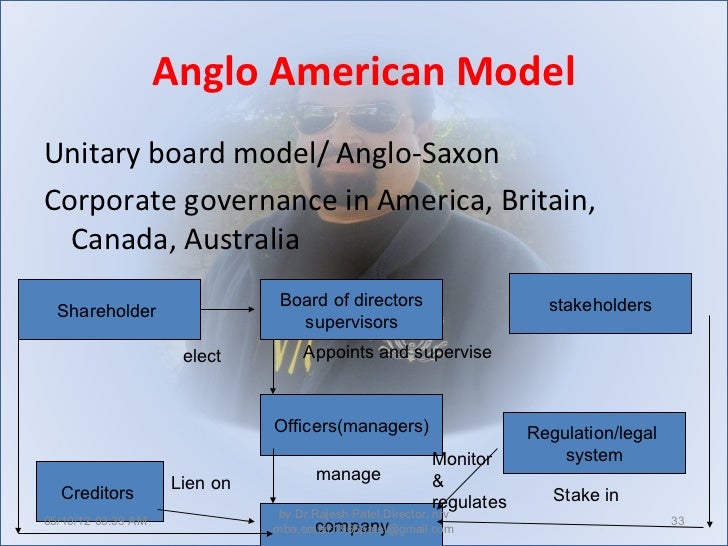
Le monde des affaires peut-il contribuer à assainir le processus politique américain ?


Aujourd’hui, je partage avec vous les réflexions de Ben W. Heineman, Jr*, ex-conseiller en chef de GE et Fellow de la Harvard Law School et de la Kennedy School of Government.

L’article illustre certaines dysfonctions du processus politique américain et montre que les sociétés américaines sont, en partie responsable du climat de méfiance de la population envers Washington.

L’auteur identifie plusieurs moyens que le monde des affaires devrait explorer afin de remédier aux lacunes observées dans le fonctionnement de notre démocratie et des relations entre le gouvernement et les sociétés :

  1. Limitation des sommes investies par les entreprises dans les campagnes politiques (7 milliards US en 2016)
  2. Divulgation financière accrue
  3. Meilleure identification des éléments factuels en matière politique
  4. Reconnaître la nécessité de se mettre à la place de l’autre partie dans le but d’atteindre un équilibre des valeurs
  5. Bâtir de larges coalitions
  6. Garder la tête froide afin d’éviter la confrontation
  7. Éviter la partisanerie

Le monde des entreprises ne doit pas s’ériger en modèle eu égard à la gestion des affaires de l’État ; cependant, je crois que les organisations doivent prendre en compte les moyens suggérés par l’auteur afin d’améliorer la communication et la bonne gouvernance.

Bonne lecture !


Can Business Help Fix Our Broken Politics?


xvm14ba5104-eae6-11e5-bbc3-b89f324a88fb


Many business people are appalled at the current state of our politics. Few, however, would admit that the “business community” is responsible, in part, for our dysfunctional political culture. And fewer yet may be prepared to think about how business can take steps—in concert with other political actors—to help soothe the distemper.

But, this dreary campaign season is a good time for corporate leaders to consider specific changes in political processes—less money, more disclosure, fair facts, balanced proposals, broad coalitions, cooler rhetoric, bi-partisanship—which could help fix our broken politics and rehabilitate business’s own political standing. Such process changes proceed from an understanding that there will always be significant substantive policy differences about societal problems but that those differences require a national politics that promotes common sense, civility and compromise to move the country forward, as has happened before in our history.

First a brief background sketch on the sorry state of our current political discourse.

The problem in our political system is not just the cacophony of the campaigns which distorts and obscures the real issues facing the nation. Below the noise, we have a populist revolt among a significant segment of the electorate that is more sharply critical of business than the general anti-corporate undercurrent which has long been present in American politics. That revolt stems partly from genuine problems of recession and a changing economy which is leaving some people behind but partly from the demagogic appeals to latent anger about race, immigration, Islam and trade. Moreover, the two major parties have been dead-locked for a long time on how to deal with major issues of paramount concern to the economy and the country—e.g., taxes, trade, worker dislocation, inequality, stimulus/deficit, infrastructure, immigration, education, energy and the environment—yielding a Congressional approval rating of only 14 percent!

Moreover, the well-publicized problems in the corporate community have added to political dysfunction, leading to low levels of trust in business’ role in policy and politics. These include: a steady drumbeat of corporate scandals (Wells Fargo is only the latest); ever higher executive compensation combined with stagnant real income of average citizens; corporate mistakes relating to leverage and liquidity as a major cause of the Great Recession; the perception that business elites are have disproportionate influence due to money in politics; and an aggregate sense that too much of corporate involvement in policy is in the service of “crony capitalism”, the range of subsidies, loopholes, franchises, concessions et al. that have little or no basis in advancing the broad public interest.

Business is hardly alone in its credibility problems with parts of the electorate. Other prominent actors—for example, unions, consumers, environmentalists and political parties—also have perceived failings. And, while some of the general distrust is due to political hyperventilation, there are, as noted, genuine substantive differences about whether libertarian, conservative, populist or liberal ideas are the right approach to various national problems.

But the rude noise of our current politics and the genuine substantive differences suggest that business ought to consider working with other actors in our political system on at least the following issues of political process to engender more civility and compromise. Each of these subjects is worthy of extended, book-length discussions, but here are the headlines:

New substantive limits on campaigns awash in money (more than $7B estimated in 2016 federal elections).

Although “independent” spending for educational purposes or in support of candidates is protected speech under the First Amendment, it may be limited under the Constitution if improperly “coordinated” with candidates’ campaigns or if used for “corrupt” purposes. Similarly, “educational” efforts by social welfare organizations authorized by the IRS could be more carefully circumscribed only to include genuine charitable and less partisan activities. Congress could take such narrowing steps or authorize the IRS and a reconstituted Federal Election Commission (which could have a tie-breaking chair appointed by the party in power) to address these issues.

More financial disclosure.

In elections, the Federal Election Commission and the IRS could require more real time disclosure of contributors and expenditures for “independent” entities organized under their jurisdiction. This timely disclosure (the IRS is particularly slow) would also cover more campaign finance if the scope of campaign activity funded through IRS entities was limited, forcing independent funds into the more transparent FEC Super PACs. And, the IRS could consider whether there should be an exception to the general rule of non-disclosure regarding contributors for trade associations or other authorized 501(c)(3) entities engaged in “education” on campaign issues during a defined political season.

Develop fairer, clearer facts in policy disputes.

Corporations and other parties could work with public officials to devise better, honest methods for establishing a record of consensus facts in legislative and regulatory disputes and identifying the assumptions underlying contested facts so that the battle of experts is more clearly understood by decision-makers and the public.

Acknowledge the need to balance values in conflict.

Corporations and other parties should identify and acknowledge the values on both sides of most regulatory and legislative debates and make a good faith effort to give weight to all the values in conflict, e.g. finding a fair balance between the verities of equity and efficiency in social welfare legislation or between access, cost and quality in healthcare legislation or between expedition and safety in drug approvals or between short-term cost and long-term benefit in environmental regulation.

Build broad coalitions.

Too often business public policy efforts take place in the self-referential echo-chamber of trade associations or other business groups. Working with other interested parties to create coalitions that include, but are not limited to, business allies increases the chances of broad-minded approaches that can secure approval and provide durable benefits. Indeed, there no united “business community,” and disagreements among business actors (e.g. global v. domestic, tech v. industrial) means broader coalition building is necessary.

Cool the rhetoric.

One of the poisonous aspects of our current political culture is rhetoric that demonizes opponents with words like “hate” or that bemoans an approaching American Armageddon. Business, especially, should use calm and reasoned civil discourse, recognizing that there are usually legitimate opposing values in political debates and helping find a middle ground that does not demand total victory.

Avoid Partisanship.

Corporations should seek bipartisan or nonpartisan solutions to our most pressing problems to mitigate the anger and hostility exchanged across the aisle on so many pressing national issues which require sensible compromises. Too often relations in Congress or between Congress and the Executive look like an insoluble “blood feud.”

There should be no mistake. These political process issues—relating to money, facts, balance, coalitions, rhetoric and bipartisanship—may be as vexing and controversial for the business community as substantive policy positions. Some companies will resist, inter alia, because they believe their particular substantive position is more important than general process or because they believe gridlock in public policy is better than compromise.

Nonetheless, a timely question is whether corporations, by focusing on these and other process issues, can help heal, rather than exacerbate, the manifest ills in our political system—ills posing serious threats to the maintenance of a healthy constitutional democracy and a sound mixed economy in which vital public goods can be secured and private enterprise can flourish? These issues relating to the process of political participation should be central to a company’s future debates about what constitutes being a “good corporate citizen.” This subject is too vast for a single corporation, but a broad based “coalition of the willing,” extending far beyond corporations, may be the way past the dystopic present—what leading political scientist Francis Fukuyama has warned is American “political decay”—to a post-election future of a vibrant and workable democracy.

__________________________________

*Ben W. Heineman, Jr. is former GE General Counsel and is a senior fellow at Harvard Law School and Harvard Kennedy School of Government. He is author of the new book, The Inside Counsel Revolution: Resolving the Partner-Guardian Tension (Ankerwycke 2016), as well as High Performance with High Integrity (Harvard Business Press 2008).

Livres phares sur la gouvernance d’entreprise


On me demande souvent de proposer un livre qui fait le tour de la question eu égard à ce qui est connu comme statistiquement valide sur les relations entre la gouvernance et le succès des organisations (i.e. la performance financière !)

Voici un article de James McRitchie, publié dans Corporate governance, qui commente succinctement le dernier volume de Richard Leblanc.

Comme je l’ai déjà mentionné dans un autre billet, le livre de Richard Leblanc est certainement l’un des plus importants ouvrages (sinon le plus important) portant sur la gouvernance du conseil d’administration.

Une révision du volume de Richard Leblanc | Handbook of Board Governance

The Handbook of Board Governance


Mentionnons également que le volume publié par David F. Larcker et Brian Tayan, professeurs au Graduate School de l’Université Stanford, en est à sa deuxième édition et il donne l’heure juste sur l’efficacité des principes de gouvernance. Voici une brève présentation du volume de Larcker.

Corporate Governance Matters: A Closer Look at Organizational Choices and Their Consequences (2nd edition)

Je vous recommande donc vivement de vous procurer ces volumes.

Enfin, je profite de l’occasion pour vous indiquer que je viens de recevoir la dernière version  des Principes de gouvernance d’entreprise du G20 et de l’OCDE en français et j’ai suggéré au Collège des administrateurs de sociétés (CAS) d’inclure cette publication dans la section Nouveauté du site du CAS.

Il s’agit d’une publication très attendue dans le monde de la gouvernance. La documentation des organismes internationaux est toujours d’abord publiée en anglais. Ce document en français de l’OCDE sur les principes de gouvernance est la bienvenue !

Bonne lecture !

Formation en éthique 2.0 pour les conseils d’administration


Je me suis engagé dans la diffusion de pratiques exemplaires en matière de gouvernance depuis plus d’une décennie : d’abord, en collaborant à la conception et la gestion d’un des premiers programmes de formation en gouvernance, dans le cadre du Collège des administrateurs de sociétés (CAS) ; ensuite, en créant un blogue dont l’objectif est d’être la référence en matière de documentation en gouvernance dans le monde francophone.

En gouvernance, on parle d’éthique associée aux entreprises depuis fort longtemps, mais j’ai compris qu’il ne suffisait pas de donner bonne conscience aux membres de l’organisation en prêchant les valeurs de l’éthique ! Non, il est essentiel de communiquer le sens profond que prend cette discipline, de s’assurer que les intéressés comprennent les implications sous-jacentes, et adoptent des comportements cohérents.

On doit enseigner les notions d’éthique en exposant concrètement, par des études de cas, les dilemmes qui se présentent aux participants.

L’un des experts mondiaux les plus crédibles pour traiter de ces questions est le spécialiste René Villemure qui œuvre dans ce domaine depuis plus de 18 ans.

René est un communicateur hors pair et un conférencier très recherché pour aborder toutes les questions touchant les notions d’éthique. Il a donné des centaines de conférences sur le sujet, il a participé activement à plusieurs programmes de formation en gouvernance, notamment au CAS, et il a abondamment contribué à enrichir le débat public sur les problèmes d’ordre éthique.


7275865-11183192


René Villemure a récemment mis en œuvre un programme de formation à l’intention des membres de conseils d’administration : L’Éthique pour le conseil. « C’est “l’éthique 2.0”, qui dès aujourd’hui et pour les années à venir, vise à préparer votre réponse aux préoccupations et défis en éthique ».

Voici les objectifs poursuivis par le nouveau programme :

Augmenter la sensibilité et la compréhension de l’éthique par les membres du conseil d’administration ;

S’assurer que votre conseil d’administration soit durable en matière d’éthique ;

Répondre aux nouvelles exigences en matière d’intégrité ;

S’assurer que la culture éthique de votre entreprise est bien ancrée au sein de l’entreprise et auprès de l’ensemble de vos employés ;

Prendre une position éthique distinctive dans votre marché ;

Établir votre positionnement en matière d’éthique avec l’ensemble des parties prenantes en lien avec votre entreprise ;

Mieux adapter la gouvernance éthique de votre entreprise aux différentes cultures, valeurs et règles sur le plan éthique dans les pays avec lesquels votre entreprise transige ou dans les pays où elle est établie ;

Minimiser les impacts des changements démographiques prévisibles en facilitant le recrutement des meilleurs talents ;

Laisser une empreinte éthique durable, digne de confiance, reconnue et unique qui survivra au remplacement des administrateurs.

Pour René Villemure, il est capital de s’adresser directement au conseil d’administration et de mettre en place des interventions ciblées. Vous trouverez, ci-dessous, une présentation des grandes lignes du programme.

Bonne lecture !

L’éthique pour le conseil


Plus que jamais votre organisation doit être proactive afin d’assurer la réalisation de son potentiel éthique


Augmenter la compréhension et la sensibilité du conseil en matière d’éthique

Répondez aux nouvelles exigences en matière d’intégrité

Réduisez l’écart entre les valeurs affichées et celles qui sont pratiquées

Rendez votre culture éthique durable

Attirez les meilleurs talents avec une culture éthique forte

Le programme « L’Éthique pour le conseil »


Un programme qualitatif qui mesure la sensibilité éthique des membres de conseils d’administration, ses forces et ses défis éthiques

Une méthode interactive, vote et discussions

Nos Géoramas permettront d’identifier en un coup d’oeil votre positionnement éthique

Les Axes de mesure


L’Éthique

Mission, Vision et Valeurs

Le rôle du conseil d’administration

Les critères de mesure


La Pratique

La Compréhension

L’Affiche

 Le rapport


Analyse de pertinence éthique

Analyse de la Pratique, de la Compréhension et de l’Affiche

Géoramas éthiques pour chacun des axes et enjeux

Positionnement éthique global

Plan d’action

Un programme flexible et adapté à vos enjeux éthiques


Que ce soit pour initier une démarche éthique, pour valider les initiatives éthiques mises de l’avant, ou encore pour positionner l’éthique de manière durable au sein de votre organisation, le programme L’Éthique pour le conseil s’adapte au contexte et à la structure de votre organisation.


Les étapes du programme:

Analyse du contexte éthique actuel de l’organisation avec un sous-comité du conseil

                          arrow

Rencontre interactive avec le Conseil d’administration

                          arrow

Présentation du rapport, mesures et plan d’action d’Ethikos


Deux billets clés sur les conséquences juridiques du Brexit (en reprise)


Au lendemain du référendum mené en Grande-Bretagne (GB), on peut se demander quelles sont les implications juridiques d’une telle décision. Celles-ci sont nombreuses ; plusieurs scénarios peuvent être envisagés pour prévoir l’avenir des relations entre la GB et l’Union européenne (UE).

Ben Perry de la firme Sullivan & Cromwell et Simon Witty de la firme Davis Polk & Wardwell ont exploré toutes les facettes légales de cette nouvelle situation dans deux articles parus récemment sur le site du Harvard Law School Forum on Corporate Governance.

Ce sont deux articles très approfondis sur les répercussions du Brexit. On doit admettre que le processus de retrait de l’UE est complexe, qu’il y a plusieurs modèles dont la GB peut s’inspirer (Suisse, Norvégien, Islandais, Liechtenstein), et que le vote n’a pas d’effets légaux immédiats. En fait, le processus de sortie et de renégociation peut durer trois ans !

Je vous invite à prendre connaissance de ces deux articles afin d’être mieux informés sur les principales avenues conséquentes au retrait de la GB de l’UE.

Le 25 juin, je vous ai déjà présenté l’article de Perry qui a suscité beaucoup d’intérêt (Brexit: Legal Implications).

Aujourd’hui, je vous présente le texte de l’article de Witty (The Legal Consequences of Brexit) qui met l’accent sur les répercussions prévisibles qu’aura ce retrait sur le marché des capitaux, les fusions et acquisitions, les différends liés aux contrats, les lois antitrusts, les services financiers et les mesures de taxation.

Bonne lecture !

On June 23, 2016, the UK electorate voted to leave the European Union. The referendum was advisory rather than mandatory and does not have any immediate legal consequences. It will, however, have a profound effect. With any next steps being driven by UK and EU politics, it is difficult to predict the future of the UK’s relationship with the EU. This post discusses the process for Brexit, the alternative models of relationship that the UK may seek to adopt, and certain implications for the capital markets, mergers and acquisitions, contractual disputes and enforcement, anti-trust, financial services and tax.

The process for exiting the EU

The treaties that govern the EU expressly contemplate a member state leaving. Under Article 50 of the Treaty on European Union, the UK must notify the European Council of its intention to withdraw from the EU. Once notice is given, the UK has two years to negotiate the terms of its withdrawal. Any extension of the negotiation period will require the consent of all 27 remaining member states. When to invoke the Article 50 mechanism is, therefore, a strategically important decision. In a statement announcing his intention to resign as Prime Minister of the UK, David Cameron stated that the decision to provide notice under Article 50 to the European Council should be taken by the next Prime Minister, who is expected to be in place by October 2016.

Waving United Kingdom and European Union Flag

Any negotiated agreement will require the support of at least 20 out of the 27 remaining member states, representing at least 65% of the EU’s population, and the approval of the European Parliament. If no agreement is reached or no extension is agreed, the UK will automatically exit the EU two years after the Article 50 notice is given, even if no alternative trading model or arrangement has been negotiated. The UK continues to be a member of the EU in the interim period, subject to all EU legislation and rules.

Alternative models of relationship

It is not clear what model of relationship the UK will seek to negotiate with the EU. In the run-up to the referendum, a number of options were suggested. Politicians in favor of withdrawing from the EU did not coalesce around a specific alternative. It is, therefore, unclear what model will ultimately be followed or whether any of the models could be achieved through the Article 50 process. The principal options are outlined below.

The Norwegian model. The UK might seek to join the European Economic Area, as Norway has. The UK would have considerable access to the internal market, i.e., the association of European countries trading with each other without restrictions or tariffs, including in financial services. The UK would have limited access to the internal market for agriculture and fisheries; and it would not benefit from or be bound by the EU’s external trade agreements. In addition, the UK would have to make significant financial contributions to the EU and continue to allow free movement of persons. It would also have to apply EU law in a number of fields, but the UK would no longer participate in policymaking at the EU level, and would be excluded from participation in the European Supervisory Authorities, the key architects of secondary legislation in the financial services sphere. To adopt this model, the UK would require the agreement of all 27 remaining EU member states, plus Iceland, Liechtenstein and Norway.

Negotiated bilateral agreements. Like Switzerland, the UK might seek to enter into various bilateral agreements with the EU to obtain access to the internal market in specific sectors (rather than the market as a whole, which would be the case under the Norwegian model). This model would likely require the UK to accept some of the EU’s rules on free movement of persons and comply with particular EU laws. Again, the UK would not participate formally in the drafting of those laws. The UK would also have to make financial contributions to the EU. Negotiating these bilateral agreements would be a difficult and time-consuming process. Switzerland, for instance, has negotiated more than 100 individual agreements with the EU to cover market access in different sectors. As a result of its complexity, it is unclear whether the EU would work with the UK to negotiate this model within the Article 50 timeframe.

Customs union. A customs union is currently in place between the EU and Turkey in respect of trade in goods, but not services. Under this model, Turkey can export goods to the EU without having to comply with customs restrictions or tariffs. Its external tariffs are also aligned with EU tariffs. The UK might seek to negotiate a similar arrangement with the EU. Under such an arrangement, and unless separately negotiated, UK financial institutions (including UK subsidiaries of US holding companies) would not be able to provide financial and professional services into the EU on equal terms with EU member state firms. For example, the EU passporting regime would not be available, meaning UK firms would have to seek separate licensing in each EU member state to provide certain financial services. Furthermore, in areas where the UK would have access to the internal market, it would likely be required to enforce rules that are equivalent to those in the EU. The UK would not be required to make any financial contributions to the EU, nor would it be bound by the majority of EU law.

Free trade agreement. The UK might seek to negotiate a free trade agreement with the EU, which would cover goods and services. To do so, it may look to the agreement that was recently agreed between the EU and Canada after seven years of negotiations. This agreement removes tariffs in respect of trade in goods, as well as certain non-tariff barriers in respect of trade in goods and services. Although the UK would not be required to contribute to the EU budget, its exports to the EU would have to comply with the applicable EU standards.

WTO membership. Under this model, the UK would not have any preferential access to the internal market or the 53 markets with which the EU has negotiated free trade agreements. Tariffs and other barriers would be imposed on goods and services traded between the UK and the EU, although, under WTO rules, certain caps would apply on tariffs applicable to goods, and limits would be imposed on particular non-tariff barriers applicable to goods and services. The UK would no longer be required to make any financial contributions to the EU, nor would it be bound by EU laws (although it would have to comply with certain rules in order to trade with the EU).

Implications for UK legislation

Regardless of which model it adopts, the UK will no longer be required to apply some (if not all) EU legislation. The UK has implemented certain EU laws (generally, EU directives) via primary legislation that will continue to be part of English law, unless these are amended or repealed. Other EU laws (generally, EU regulations) have direct applicability in the UK without the need for implementation, which means that these laws would fall away once the UK withdraws from the EU, unless they are transposed into UK law. Finally, thousands of statutory instruments have been made pursuant to the European Communities Act 1972. If this act is repealed upon the UK’s withdrawal from the EU, then, unless transposed into UK law, these statutory instruments will cease to apply as well. Therefore, the UK will have to perform a complex exercise to determine which EU laws and EU-derived laws it wishes to retain, amend or repeal, driven in part by the nature of any agreement reached with the EU during exit negotiations.

How may Brexit affect you?

The UK’s withdrawal from the EU will impact countless areas of the economy. The following section discusses a number of Brexit’s potential implications for the capital markets, mergers and acquisitions, contractual disputes and enforcement, anti-trust, financial services and tax. The extent to which these areas will be affected by the UK’s withdrawal from the EU will depend on the model of relationship that the UK and the EU adopt following the Brexit negotiations.

Capital Markets

The financial markets will likely continue to be volatile, particularly during the Brexit negotiations. This may affect the timing of transactions or their ability to be consummated.

The EU Prospectus Directive, which has been transposed into UK law, governs the content, format, approval and publication of prospectuses throughout the EU. Following eventual Brexit, the UK may no longer be bound by the Prospectus Directive and, thus, may seek to amend its prospectus legislation. For example, the Prospectus Directive provides that a company incorporated in an EU member state must prepare a prospectus if it wishes to offer shares to the public and/or request that shares be admitted to trading in the EU, subject to certain exemptions. The UK may wish to expand these exemptions, so that more offers can be made in the UK without a prospectus. Significantly, the Prospectus Directive also provides for the passporting of prospectuses throughout the EU. This means that a company can use a prospectus that has been approved in one member state to offer shares in any other EU member state. Without this passporting regime, UK companies will have to have their prospectuses approved both in the UK and at least one other member state where they wish to offer their shares, which may be particularly costly and time-consuming if the UK amends, for instance, the content requirements for prospectuses following Brexit, so that these no longer align with those prescribed by the Prospectus Directive.

During the Brexit negotiations, transaction documents may need to include specific Brexit provisions, for example to address the uncertainty around the model of relationship to be adopted.

M&A

As a result of ongoing uncertainty around the future of the UK’s relationship with the EU, a number of transactions with a UK nexus may be affected pending the Brexit negotiations.

Share sale transactions generally are not subject to much EU law or regulation. Asset and business sales, however, may be more affected by Brexit. For example, the regulations that protect the rights of employees on a business transfer stem from a European directive. When the UK withdraws from the EU, it may no longer be bound by this directive, and, therefore, the UK may wish to amend or repeal the regulations.

Contractual Disputes and Enforcement

As a member of the EU, the UK is part of a framework for deciding jurisdiction in disputes, recognizing judgments of other member states (and having its own courts’ judgments recognized and enforced throughout the EU) and deciding the governing law of contracts. Following Brexit, the UK may no longer be part of this framework which may affect jurisdiction and governing law choices in transaction documents.

Anti-trust

Currently, mergers that fall within the scope of the EU Merger Regulation can receive EU-wide clearance, which means that they are not also required to be cleared by individual member states. Following Brexit, mergers with a UK nexus may need to be reviewed by the UK’s Competition and Markets Authority separately.

More generally, UK anti-trust legislation is currently based on, and interpreted in line with, EU law, including decisions of the European Commission and the European Court of Justice. Given that UK courts may no longer be required to interpret national law consistently with EU law once the UK withdraws from the EU, businesses face the prospect of having to comply with divergent systems.

Financial Services

Much of the UK’s financial services regulation is based on EU law. This includes legislation such as the Markets in Financial Instruments Directive (MiFID), which regulates investment services and trading venues, the European Market Infrastructure Regulation, which regulates the derivatives market, the Alternative Investment Fund Managers Directive, which regulates hedge funds and private equity, and the Capital Requirements Directive and the Capital Requirements Regulation, which together represent the EU’s implementation of the international Basel III accords for the prudential regulation of banks. The Bank Recovery and Resolution Directive (“BRRD”) has been implemented into UK law via the Banking Act 2009, so the fundamental bank resolution regime should initially survive Brexit. That said, substantial further EU legislative work is expected in this area to modify BRRD (e.g., in relation to the implementation of the TLAC standard), so it is possible that the regimes could diverge rapidly after Brexit. In general with financial services legislation, an assessment will need to be made whether to align with EU legislation or diverge; the greater the divergence, the more the dual burdens on cross-border firms.

As mentioned above, the UK will likely not be part of the European Supervisory Authorities framework and will have no influence in the development of primary or secondary EU legislation and guidance. The UK has been a significant force in the area of financial services legislation and has driven the introduction of, for instance, the BRRD. The UK’s withdrawal may impact the legislative agenda and ultimately the quality of the legislation produced.

Financial institutions established in EEA member states can obtain a “passport” that allows them to access the markets of other EEA member states without being required to set up a subsidiary and obtain a separate license to operate as a financial services institution in those member states. Following Brexit, UK financial services institutions, including subsidiaries of US and other non-EU parent companies, would no longer be able to benefit from passporting (unless the UK were to join the EEA pursuant to the Norway option described above).

Although the UK will likely remain a member of the EU for a substantial period while negotiations are ongoing, there are pressing questions as to how the UK will engage with the ongoing legislative processes that affect the UK financial services industry. There are a number of areas where framework legislation has been passed already, but key secondary legislation is being developed or revised. These areas include the complete overhaul of MiFID and the Payment Services Directive. Even before the UK leaves the EU, we can expect to see a diminished role for the UK Government, UK regulators and UK market participants in shaping the detailed policies and procedures in those areas.

We expect larger financial institutions in the UK, or those based outside the UK that have significant operations in the UK, will wish to contribute to the negotiation process between the EU and UK. In particular, to the extent a unique model for trading relationships is proposed, these institutions may wish to engage with policymakers to minimize disruption and damage to their EU business model.

Tax

The EU has influenced many areas of the UK’s tax system. In some cases, this has been through EU legislation which applies directly in the UK; in other cases, EU rules have been adopted through UK legislation (for example, the UK’s VAT legislation is based on principles which apply across the EU); and, in still other cases, decisions of the European Court of Justice have either influenced the development of UK tax rules, or have prevented the UK’s tax authority from enforcing aspects of the UK’s domestic tax code. This complicated backdrop means that the tax impact of Brexit will be varied and difficult to predict.

Areas to watch include the following:

Direct tax: although the UK has an extensive double tax treaty network, not all treaties provide for zero withholding tax on interest and royalty payments. Accordingly, corporate groups should consider the extent to which existing structures rely on EU rules such as the Parent-Subsidiary Directive or the Interest and Royalties Directive to secure tax efficient payment flows. Similarly, corporate groups proposing to undertake cross border reorganisations would need to consider the extent to which existing cross-EU border merger tax reliefs will survive intact. It should also be borne in mind that, even if Brexit occurs, the UK is likely to continue vigorously supporting the OECD’s BEPS initiative such that there may well be considerable constraints and complexities associated with locating businesses outside the UK.

VAT: although VAT is an EU-wide tax regime, it seems inconceivable that VAT will be abolished. However, it is likely that, over time, there will be a divergence between UK VAT rules and EU VAT rules, including as to input VAT recovery on supplies made to non-UK customers. Additionally, UK companies may lose the administrative benefit of the “one stop shop” for businesses operating in Europe.

Customs duty: if the UK left the customs union, exports to and imports from EU countries may become subject to tariffs or other import duties (as well as additional compliance requirements).

Transfer taxes: it seems that the UK would, at least in principle, be able to (re)impose the 1.5% stamp duty/stamp duty reserve tax charge in respect of UK shares issued or transferred into a clearance or depositary receipt system. Accordingly, the position for UK-headed corporate groups seeking to list on the NYSE or Nasdaq may become less certain.

______________________________

*Ben Perry is a partner in the London office of Sullivan & Cromwell LLP. This post is based on a Sullivan & Cromwell publication.

*Simon Witty is a partner in the Corporate Department at Davis Polk & Wardwell LLP. This post is based on a Davis Polk memorandum.

Guide pratique pour l’amélioration de la gouvernance des OSBL | Une primeur


Ayant collaboré à la réalisation du volume « Améliorer la gouvernance de votre OSBL » des auteurs Jean-Paul Gagné et Daniel Lapointe, j’ai obtenu la primeur de la publication d’un chapitre sur mon blogue en gouvernance.

Le volume a paru en mars. Pour vous donner un aperçu de cette importante publication sur la gouvernance des organisations sans but lucratif (OSBN), j’ai eu la permission des éditeurs, Éditions Caractère et Éditions Transcontinental, de publier l’intégralité du chapitre 4 qui porte sur la composition du conseil d’administration et le recrutement d’administrateurs d’OSBL.

Je suis donc très fier de vous offrir cette primeur et j’espère que le sujet vous intéressera suffisamment pour vous inciter à vous procurer cette nouvelle publication.

Vous trouverez, ci-dessous, un court extrait de la page d’introduction du chapitre 4. Je vous invite à cliquer sur le lien suivant pour avoir accès à l’intégralité du chapitre.


La composition du conseil d’administration et le recrutement d’administrateurs


Vous pouvez également feuilleter cet ouvrage en cliquant ici

Bonne lecture ! Vos commentaires sont les bienvenus.

__________________________________


Les administrateurs d’un OSBL sont généralement élus dans le cadre d’un processus électoral tenu lors d’une assemblée générale des membres. Ils peuvent aussi faire l’objet d’une cooptation ou être désignés en vertu d’un mécanisme particulier prévu dans une loi (tel le Code des professions).

L’élection des administrateurs par l’assemblée générale emprunte l’un ou l’autre des deux scénarios suivants:

1. Les OSBL ont habituellement des membres qui sont invités à une assemblée générale annuelle et qui élisent des administrateurs aux postes à pourvoir. Le plus souvent, les personnes présentes sont aussi appelées à choisir l’auditeur qui fera la vérification des états financiers de l’organisation pour l’exercice en cours.

2. Certains OSBL n’ont pas d’autres membres que leurs administrateurs. Dans ce cas, ces derniers se transforment une fois par année en membres de l’assemblée générale, élisent des administrateurs aux postes vacants et choisissent l’auditeur qui fera la vérification des états financiers de l’organisation pour l’exercice en cours.

ameliorezlagouvernancedevotreosbl

La cooptation autorise le recrutement d’administrateurs en cours d’exercice. Les personnes ainsi choisies entrent au CA lors de la première réunion suivant celle où leur nomination a été approuvée. Ils y siègent de plein droit, en dépit du fait que celle-ci ne sera entérinée qu’à l’assemblée générale annuelle suivante. La cooptation n’est pas seulement utile pour pourvoir rapidement aux postes vacants; elle a aussi comme avantage de permettre au conseil de faciliter la nomination de candidats dont le profil correspond aux compétences recherchées.

Dans les organisations qui élisent leurs administrateurs en assemblée générale, la sélection en fonction des profils déterminés peut présenter une difficulté : en effet, il peut arriver que les membres choisissent des administrateurs selon des critères qui ont peu à voir avec les compétences recherchées, telles leur amabilité, leur popularité, etc. Le comité du conseil responsable du recrutement d’administrateurs peut présenter une liste de candidats (en mentionnant leurs qualifications pour les postes à pourvoir) dans l’espoir que l’assemblée lui fasse confiance et les élise. Certains organismes préfèrent coopter en cours d’exercice, ce qui les assure de recruter un administrateur qui a le profil désiré et qui entrera en fonction dès sa sélection.

Quant à l’élection du président du conseil et, le cas échéant, du vice-président, du secrétaire et du trésorier, elle est généralement faite par les administrateurs. Dans les ordres professionnels, le Code des professions leur permet de déterminer par règlement si le président est élu par le conseil d’administration ou au suffrage universel des membres. Comme on l’a vu, malgré son caractère démocratique, l’élection du président au suffrage universel des membres présente un certain risque, puisqu’un candidat peut réussir à se faire élire à ce poste sans expérience du fonctionnement d’un CA ou en poursuivant un objectif qui tranche avec la mission, la vision ou encore le plan stratégique de l’organisation. Cet enjeu ne doit pas être pris à la légère par le CA. Une façon de minimiser ce risque est de faire connaître aux membres votants le profil recherché pour le président, profil qui aura été préalablement établi par le conseil. On peut notamment y inclure une expérience de conseil d’administration, ce qui aide à réduire la période d’apprentissage du nouveau président et facilite une transition en douceur.

Énoncés de principes de gouvernance généralement reconnus


Voici une « lettre ouverte » publiée sur le forum de la Harvard Law School on Corporate Governance par un groupe d’éminents dirigeants de sociétés publiques (cotées) qui présente les principes de la saine gouvernance : « The Commonsense Principles of Corporate Governance »*.

Les principes sont regroupés en plusieurs thèmes :

  1. La composition du CA et la gouvernance interne
    1. Composition
    2. Élection des administrateurs
    3. Nomination des administrateurs
    4. Rémunération des administrateurs et la propriété d’actions
    5. Structure et fonctionnement des comités du conseil
    6. Nombre de mandats et âge de la retraite
    7. Efficacité des administrateurs
  2. Responsabilités des administrateurs
    1. Communication des administrateurs avec de tierces parties
    2. Activités cruciales du conseil : préparer les ordres du jour
  3. Le droit des actionnaires
  4. La reddition de comptes et la divulgation des activités
  5. Le leadership du conseil
  6. La planification de la relève managériale
  7. La rémunération de la direction
  8. Le rôle du gestionnaire des actifs des clients dans la gouvernance des sociétés


Bonne lecture ! Vos commentaires sont les bienvenus.


Commonsense Principles of Corporate Governance


sociétariat_gouvernance


The following is a series of corporate governance principles for public companies, their boards of directors and their shareholders. These principles are intended to provide a basic framework for sound, long-term-oriented governance. But given the differences among our many public companies—including their size, their products and services, their history and their leadership—not every principle (or every part of every principle) will work for every company, and not every principle will be applied in the same fashion by all companies.

I. Board of Directors—Composition and Internal Governance

a. Composition

  1. Directors’ loyalty should be to the shareholders and the company. A board must not be beholden to the CEO or management. A significant majority of the board should be independent under the New York Stock Exchange rules or similar standards.
  2. All directors must have high integrity and the appropriate competence to represent the interests of all shareholders in achieving the long-term success of their company. Ideally, in order to facilitate engaged and informed oversight of the company and the performance of its management, a subset of directors will have professional experiences directly related to the company’s business. At the same time, however, it is important to recognize that some of the best ideas, insights and contributions can come from directors whose professional experiences are not directly related to the company’s business.
  3. Directors should be strong and steadfast, independent of mind and willing to challenge constructively but not be divisive or self-serving. Collaboration and collegiality also are critical for a healthy, functioning board.
  4. Directors should be business savvy, be shareholder oriented and have a genuine passion for their company.
  5. Directors should have complementary and diverse skill sets, backgrounds and experiences. Diversity along multiple dimensions is critical to a high-functioning board. Director candidates should be drawn from a rigorously diverse pool.
  6. While no one size fits all—boards need to be large enough to allow for a variety of perspectives, as well as to manage required board processes—they generally should be as small as practicable so as to promote an open dialogue among directors.
  7. Directors need to commit substantial time and energy to the role. Therefore, a board should assess the ability of its members to maintain appropriate focus and not be distracted by competing responsibilities. In so doing, the board should carefully consider a director’s service on multiple boards and other commitments.

b. Election of directors

Directors should be elected by a majority of the votes cast “for” and “against/withhold” (i.e., abstentions and non-votes should not be counted for this purpose).

c. Nominating directors

  1. Long-term shareholders should recommend potential directors if they know the individuals well and believe they would be additive to the board.
  2. A company is more likely to attract and retain strong directors if the board focuses on big-picture issues and can delegate other matters to management (see below at II.b., “Board of Directors’ Responsibilities/Critical activities of the board; setting the agenda”).

d. Director compensation and stock ownership

  1. A company’s independent directors should be fairly and equally compensated for board service, although (i) lead independent directors and committee chairs may receive additional compensation and (ii) committee service fees may vary. If directors receive any additional compensation from the company that is not related to their service as a board member, such activity should be disclosed and explained.
  2. Companies should consider paying a substantial portion (e.g., for some companies, as much as 50% or more) of director compensation in stock, performance stock units or similar equity-like instruments. Companies also should consider requiring directors to retain a significant portion of their equity compensation for the duration of their tenure to further directors’ economic alignment with the long-term performance of the company.

e. Board committee structure and service

  1. Companies should conduct a thorough and robust orientation program for their new directors, including background on the industry and the competitive landscape in which the company operates, the company’s business, its operations, and important legal and regulatory issues, etc.
  2. A board should have a well-developed committee structure with clearly understood responsibilities. Disclosures to shareholders should describe the structure and function of each board committee.
  3. Boards should consider periodic rotation of board leadership roles (i.e., committee chairs and the lead independent director), balancing the benefits of rotation against the benefits of continuity, experience and expertise.

f. Director tenure and retirement age

  1. It is essential that a company attract and retain strong, experienced and knowledgeable board members.
  2. Some boards have rules around maximum length of service and mandatory retirement age for directors; others have such rules but permit exceptions; and still others have no such rules at all. Whatever the case, companies should clearly articulate their approach on term limits and retirement age. And insofar as a board permits exceptions, the board should explain (ordinarily in the company’s proxy statement) why a particular exception was warranted in the context of the board’s assessment of its performance and composition.
  3. Board refreshment should always be considered in order to ensure that the board’s skill set and perspectives remain sufficiently current and broad in dealing with fast-changing business dynamics. But the importance of fresh thinking and new perspectives should be tempered with the understanding that age and experience often bring wisdom, judgment and knowledge.

g. Director effectiveness

Boards should have a robust process to evaluate themselves on a regular basis, led by the non-executive chair, lead independent director or appropriate committee chair. The board should have the fortitude to replace ineffective directors.

II. Board of Directors’ Responsibilities

a. Director communication with third parties

  1. Robust communication of a board’s thinking to the company’s shareholders is important. There are multiple ways of going about it. For example, companies may wish to designate certain directors—as and when appropriate and in coordination with management—to communicate directly with shareholders on governance and key shareholder issues, such as CEO compensation. Directors who communicate directly with shareholders ideally will be experienced in such matters.
  2. Directors should speak with the media about the company only if authorized by the board and in accordance with company policy.
  3. In addition, the CEO should actively engage on corporate governance and key shareholder issues (other than the CEO’s own compensation) when meeting with shareholders.

b. Critical activities of the board; setting the agenda

  1. The full board (including, where appropriate, through the non-executive chair or lead independent director) should have input into the setting of the board agenda.
  2. Over the course of the year, the agenda should include and focus on the following items, among others:
    1. A robust, forward-looking discussion of the business.
    2. The performance of the current CEO and other key members of management and succession planning for each of them. One of the board’s most important jobs is making sure the company has the right CEO. If the company does not have the appropriate CEO, the board should act promptly to address the issue.
    3. Creation of shareholder value, with a focus on the long term. This means encouraging the sort of long-term thinking owners of a private company might bring to their strategic discussions, including investments that may not pay off in the short run.
    4. Major strategic issues (including material mergers and acquisitions and major capital commitments) and long-term strategy, including thorough consideration of operational and financial plans, quantitative and qualitative key performance indicators, and assessment of organic and inorganic growth, among others.
    5. The board should receive a balanced assessment on strategic fit, risks and valuation in connection with material mergers and acquisitions. The board should consider establishing an ad hoc Transaction Committee if significant board time is otherwise required to consider a material merger or acquisition. If the company’s stock is to be used in such a transaction, the board should carefully assess the company’s valuation relative to the valuation implied in the acquisition. The objective is to properly evaluate the value of what you are giving vs. the value of what you are getting.
    6. Significant risks, including reputational risks. The board should not be reflexively risk averse; it should seek the proper calibration of risk and reward as it focuses on the long-term interests of the company’s shareholders.
    7. Standards of performance, including the maintaining and strengthening of the company’s culture and values.
    8. Material corporate responsibility matters.
    9. Shareholder proposals and key shareholder concerns.
    10. The board (or appropriate board committee) should determine the best approach to compensate management, taking into account all the factors it deems appropriate, including corporate and individual performance and other qualitative and quantitative factors (see below at VII., “Compensation of Management”).
  3. A board should be continually educated on the company and its industry. If a Board feels it would be productive, outside experts and advisors should be brought in to inform directors on issues and events affecting the company.
  4. The board should minimize the amount of time it spends on frivolous or non-essential matters—the goal is to provide perspective and make decisions to build real value for the company and its shareholders.
  5. As authorized and coordinated by the board, directors should have unfettered access to management, including those below the CEO’s direct reports.
  6. At each meeting, to ensure open and free discussion, the board should meet in executive session without the CEO or other members of management. The independent directors should ensure that they have enough time to do this properly.
  7. The board (or appropriate board committee) should discuss and approve the CEO’s compensation.
  8. In addition to its other responsibilities, the Audit Committee should focus on whether the company’s financial statements would be prepared or disclosed in a materially different manner if the external auditor itself were solely responsible for their preparation.

III. Shareholder Rights

  1. Many public companies and asset managers have recently reviewed their approach to proxy access. Others have not yet undertaken such a review or may have one under way. Among the larger market capitalization companies that have adopted proxy access provisions, generally a shareholder (or group of up to 20 shareholders) who has continuously held a minimum of 3% of the company’s outstanding shares for three years is eligible to include on the company’s proxy statement nominees for a minimum of 20% (and, in some cases, 25%) of the company’s board seats. Generally, only shares in which the shareholder has full, unhedged economic interest count toward satisfaction of the ownership/holding period requirements. A higher threshold of ownership (e.g., 5%) often has been adopted for smaller market capitalization companies (e.g., less than $2 billion).
  2. Dual-class voting is not a best practice. If a company has dual-class voting, which sometimes is intended to protect the company from short-term behavior, the company should consider having specific sunset provisions based upon time or a triggering event, which eliminate dual-class voting. In addition, all shareholders should be treated equally in any corporate transaction.
  3. Written consent and special meeting provisions can be important mechanisms for shareholder action. Where they are adopted, there should be a reasonable minimum amount of outstanding shares required in order to prevent a small minority of shareholders from being able to abuse the rights or waste corporate time and resources.

IV. Public Reporting

  1. Transparency around quarterly financial results is important.
  2. Companies should frame their required quarterly reporting in the broader context of their articulated strategy and provide an outlook, as appropriate, for trends and metrics that reflect progress (or not) on long-term goals. A company should not feel obligated to provide earnings guidance—and should determine whether providing earnings guidance for the company’s shareholders does more harm than good. If a company does provide earnings guidance, the company should be realistic and avoid inflated projections. Making short-term decisions to beat guidance (or any performance benchmark) is likely to be value destructive in the long run.
  3. As appropriate, long-term goals should be disclosed and explained in a specific and measurable way.
  4. A company should take a long-term strategic view, as though the company were private, and explain clearly to shareholders how material decisions and actions are consistent with that view.
  5. Companies should explain when and why they are undertaking material mergers or acquisitions or major capital commitments.
  6. Companies are required to report their results in accordance with Generally Accepted Accounting Principles (“GAAP”). While it is acceptable in certain instances to use non-GAAP measures to explain and clarify results for shareholders, such measures should be sensible and should not be used to obscure GAAP results. In this regard, it is important to note that all compensation, including equity compensation, is plainly a cost of doing business and should be reflected in any non-GAAP measurement of earnings in precisely the same manner it is reflected in GAAP earnings.

V. Board Leadership (Including the Lead Independent Director’s Role)

  1. The board’s independent directors should decide, based upon the circumstances at the time, whether it is appropriate for the company to have separate or combined chair and CEO roles. The board should explain clearly (ordinarily in the company’s proxy statement) to shareholders why it has separated or combined the roles.
  2. If a board decides to combine the chair and CEO roles, it is critical that the board has in place a strong designated lead independent director and governance structure.
  3. Depending on the circumstances, a lead independent director’s responsibilities may include:
    1. Serving as liaison between the chair and the independent directors
    2. Presiding over meetings of the board at which the chair is not present, including executive sessions of the independent directors
    3. Ensuring that the board has proper input into meeting agendas for, and information sent to, the board
    4. Having the authority to call meetings of the independent directors
    5. Insofar as the company’s board wishes to communicate directly with shareholders, engaging (or overseeing the board’s process for engaging) with those shareholders
    6. Guiding the annual board self-assessment
    7. Guiding the board’s consideration of CEO compensation
    8. Guiding the CEO succession planning process

VI. Management Succession Planning

  1. Senior management bench strength can be evaluated by the board and shareholders through an assessment of key company employees; direct exposure to those employees is helpful in making that assessment.
  2. Companies should inform shareholders of the process the board has for succession planning and also should have an appropriate plan if an unexpected, emergency succession is necessary.

VII. Compensation of Management

  1. To be successful, companies must attract and retain the best people—and competitive compensation of management is critical in this regard. To this end, compensation plans should be appropriately tailored to the nature of the company’s business and the industry in which it competes. Varied forms of compensation may be necessary for different types of businesses and different types of employees. While a company’s compensation plans will evolve over time, they should have continuity over multiple years and ensure alignment with long-term performance.
  2. Compensation should have both a current component and a long-term component.
  3. Benchmarks and performance measurements ordinarily should be disclosed to enable shareholders to evaluate the rigor of the company’s goals and the goal-setting process. That said, compensation should not be entirely formula based, and companies should retain discretion (appropriately disclosed) to consider qualitative factors, such as integrity, work ethic, effectiveness, openness, etc. Those matters are essential to a company’s long-term health and ordinarily should be part of how compensation is determined.
  4. Companies should consider paying a substantial portion (e.g., for some companies, as much as 50% or more) of compensation for senior management in the form of stock, performance stock units or similar equity-like instruments. The vesting or holding period for such equity compensation should be appropriate for the business to further senior management’s economic alignment with the long-term performance of the company. With properly designed performance hurdles, stock options may be one element of effective compensation plans, particularly for the CEO. All equity grants (whether stock or options) should be made at fair market value, or higher, at the time of the grant, with particular attention given to any dilutive effect of such grants on existing shareholders.
  5. Companies should clearly articulate their compensation plans to shareholders. While companies should not, in the design of their compensation plans, feel constrained by the preferences of their competitors or the models of proxy advisors, they should be prepared to articulate how their approach links compensation to performance and aligns the interests of management and shareholders over the long term. If a company has well-designed compensation plans and clearly explains its rationale for those plans, shareholders should consider giving the company latitude in connection with individual annual compensation decisions.
  6. If large special compensation awards (not normally recurring annual or biannual awards but those considered special awards or special retention awards) are given to management, they should be carefully evaluated and—in the case of the CEO and other “Named Executive Officers” whose compensation is set forth in the company’s proxy statement—clearly explained.
  7. Companies should maintain clawback policies for both cash and equity compensation.

VIII. Asset Managers’ Role in Corporate Governance

Asset managers, on behalf of their clients, are significant owners of public companies, and, therefore, often are in a position to influence the corporate governance practices of those companies. Asset managers should exercise their voting rights thoughtfully and act in what they believe to be the long-term economic interests of their clients.

  1. Asset managers should devote sufficient time and resources to evaluate matters presented for shareholder vote in the context of long-term value creation. Asset managers should actively engage, as appropriate, based on the issues, with the management and/or board of the company, both to convey the asset manager’s point of view and to understand the company’s perspective. Asset managers should give due consideration to the company’s rationale for its positions, including its perspective on certain governance issues where the company might take a novel or unconventional approach.
  2. Given their importance to long-term investment success, proxy voting and corporate governance activities should receive appropriate senior-level oversight by the asset manager.
  3. Asset managers, on behalf of their clients, should evaluate the performance of boards of directors, including thorough consideration of the following:
    1. To the extent directors are speaking directly with shareholders, the directors’ (i) knowledge of their company’s corporate governance and policies and (ii) interest in understanding the key concerns of the company’s shareholders
    2. The board’s focus on a thoughtful, long-term strategic plan and on performance against that plan
  4. An asset manager’s ultimate decision makers on proxy issues important to long-term value creation should have access to the company, its management and, in some circumstances, the company’s board. Similarly, a company, its management and board should have access to an asset manager’s ultimate decision makers on those issues.
  5. Asset managers should raise critical issues to companies (and vice versa) as early as possible in a constructive and proactive way. Building trust between the shareholders and the company is a healthy objective.
  6. Asset managers may rely on a variety of information sources to support their evaluation and decision-making processes. While data and recommendations from proxy advisors may form pieces of the information mosaic on which asset managers rely in their analysis, ultimately, their votes should be based on independent application of their own voting guidelines and policies.
  7. Asset managers should make public their proxy voting process and voting guidelines and have clear engagement protocols and procedures.
  8. Asset managers should consider sharing their issues and concerns (including, as appropriate, voting intentions and rationales therefor) with the company (especially where they oppose the board’s recommendations) in order to facilitate a robust dialogue if they believe that doing so is in the best interests of their clients.

*The Commonsense Principles of Corporate Governance were developed, and are posted on behalf of, a group of executives leading prominent public corporations and investors in the U.S.

The Open Letter and key facts about the principles are also available here and here.

La gouvernance en Grande-Bretagne | Nouveau paradigme énoncé par Theresa May


Voici les éléments de la proposition de Theresa May eu égard à la nouvelle gouvernance corporative de la Grande-Bretagne.

Ce texte est de Martin Lipton de la firme Wachtell, Lipton, Rosen & Katz. C’est un résumé des principaux points évoqués aujourd’hui par la ministre.

Bonne lecture !

Corporate Governance—A New Paradigm from the U.K.


ShowImage


1. Stakeholder, not shareholder, governance.

2. Board diversity: consumers and workers to be added.

3. Protection from takeover for national champions like Cadbury and AstraZeneca.

4. Binding, not advisory, say-on-pay.

5. Long-term, not short-term, business strategy.

6. Greater corporate transparency.

7. Stricter antitrust.

8. Higher taxes and crack down on tax avoidance and evasion.

9. It is not anti-business to suggest that big business needs to change. Better governance will help these companies to take better decisions, for their own long-term benefit and that of the economy overall.

The full speech is attached.

Le modèle de la maximisation de la valeur aux actionnaires est toujours dominant !


Les théories contemporaines de la gouvernance sont basées sur le modèle de la « maximisation de la valeur aux actionnaires ».

Dans un article paru sur le forum du Harvard Law School on Corporate Governance, l’auteur Marc Moore* explique que, malgré l’émergence d’autres paradigmes des rouages de la gouvernance moderne (Post — Shareholders-Values | PSV), c’est encore le modèle de la maximisation de la valeur aux actionnaires qui domine.

C’est ainsi que le nouveau modèle de réallocation des profits des PSV, qui favoriserait le développement interne de l’entreprise et les investissements à long terme, cède le pas, la plupart du temps, à la redistribution des surplus aux actionnaires, notamment par la voie des dividendes ou par le rachat des actions.

Voici comment l’auteur conclut son article. Quel est votre point de vue ?

The somewhat uncomfortable truth for many observers is that, for better or worse, the American system of shareholder capitalism, and its pivotal corporate governance principle of shareholder primacy, are ultimately products of our own collective (albeit unintentional) civic design. Accordingly, while in many respects the orthodox shareholder-oriented corporate governance framework may be a social evil; it is nonetheless a necessary evil, which US worker-savers implicitly tolerate as the effective social price for sustaining a system of non-occupational income provision outside of direct state control. Until corporate governance scholars and policymakers are capable of coordinating their respective energies towards somehow alleviating US worker-savers’ significant dependence on corporate equity as a source of non-occupational wealth gains, the shareholder-oriented corporation is likely to remain a socially indispensable phenomenon. To those who rue this prospect, it might be retorted “better the devil you know than the devil you don’t.”

Bonne lecture !

The Indispensability of the Shareholder Value Corporation


Despite their differences of opinion on other issues, most corporate law and governance scholars have tended to agree upon one thing at least: that the overarching normative objective of corporate governance—and, by implication, corporate law—should be the maximization (or, at least, long-term enhancement) of shareholder wealth. Indeed this proposition—variously referred to as the “shareholder wealth maximization”, “shareholder value”, or “shareholder primacy” norm—is so ingrained within mainstream corporate governance thinking that it has traditionally been subjected to little serious policy or even academic question. However, the zeitgeist would appear to be slowly but surely changing. The financial crisis may not quite have proved the watershed moment it was initially heralded as in terms of resetting dominant currents of economic or political opinion. Nonetheless, in the narrower but still important domain of corporate governance thinking and policymaking, the past decade’s events have triggered the onset of what promises to be a potentially major paradigm shift in the direction of an evolving “Post-Shareholder-Value” (or “PSV”) consensus.

9352454_orig

On an academic level, this movement is represented by a growing body of influential legal and economic scholarship which contests most of the staple ideological tenets of orthodox corporate governance theory. Amongst the most noteworthy contributions to this literature are Professor Lynn Stout’s influential 2012 book The Shareholder Value Myth (Berret-Koehler), and also Professor Colin Mayer’s excellent 2013 work Firm Commitment: Why the corporation is failing us and how to restore trust in it (Oxford University Press). In particular, proponents of the PSV paradigm typically dismiss the common neo-classical equation of shareholder wealth maximization with economic efficiency in the broader social sense. They also typically eschew individualistic understandings of the firm in terms of its purported internal bargaining dynamics, in favour of alternative conceptual models which celebrate the distinctive value of the corporation’s inherently autonomous corporeal features.

Evidence of a potential drift from the formerly dominant shareholder primacy paradigm in corporate governance is additionally apparent on a practical policy-making level today, not least in the rapid proliferation of Benefit Corporations as a viable and popular alternative legal form to the orthodox for-profit corporation. At the same time, the increasing use by US-listed firms of dual-class voting structures designed to insulate management from outside capital market pressures, coupled with the seemingly greater flexibility afforded to boards over recent years in defending against unwanted takeover bids from so-called corporate “raiders,” both provide additional cause to question the longevity of the shareholder-oriented corporate governance status quo.

But while evolving PSV institutional mechanisms such as Benefit Corporations and dual-class share structures are prima facie encouraging from a social perspective, there is cause for scepticism about their capacity to become anything more than a relatively niche or peripheral feature of the US public corporations landscape. This is principally because such measures, in spite of their apparent reformist potential, are still ultimately quasi-contractual and thus essentially voluntary in nature, meaning that they are unlikely to be adopted in a public corporations context except in extraordinary instances. From a normative point of view, moreover, it is arguable that such measures—irrespective of the extent of their take-up over the coming years—ultimately should remain quasi-contractual and voluntary in nature, as opposed to being placed on any sort of mandatory basis.

In this regard, it should be respected that public corporations are not only the predominant organizational vehicle for conducting large-scale industrial production projects over indefinite time horizons, as academic proponents of the PSV position have vigorously emphasized. Of comparable importance and ingenuity is that fact that—in the United States at least—public corporations are also a necessary structural means of enabling the residual income streams accruing from successful industrial projects to fund the provision of socially essential financial services, via the medium of public capital (and especially equity) markets. Unfortunately, though, these two dimensions of the public corporation are not always mutually compatible. Rather, it would seem that more often than not they are prone to antagonize, rather than complement, one another. This is especially so when it comes to the periodically-vexing managerial question of whether a firm’s residual earnings should be committed internally to the sustenance and development of the productive corporate enterprise itself, or else distributed externally to shareholders in the form of either enhanced dividends or stock buybacks. The problem is that the evolving PSV corporate governance paradigm—as manifested on both an intellectual and policy level today—focuses exclusively on the former of those dimensions at the expense of the latter.

The somewhat uncomfortable truth for many observers is that, for better or worse, the American system of shareholder capitalism, and its pivotal corporate governance principle of shareholder primacy, are ultimately products of our own collective (albeit unintentional) civic design. Accordingly, while in many respects the orthodox shareholder-oriented corporate governance framework may be a social evil; it is nonetheless a necessary evil, which US worker-savers implicitly tolerate as the effective social price for sustaining a system of non-occupational income provision outside of direct state control. Until corporate governance scholars and policymakers are capable of coordinating their respective energies towards somehow alleviating US worker-savers’ significant dependence on corporate equity as a source of non-occupational wealth gains, the shareholder-oriented corporation is likely to remain a socially indispensable phenomenon. To those who rue this prospect, it might be retorted “better the devil you know than the devil you don’t.”

The complete paper is available for download here.


Marc Moore* is Reader in Corporate Law and Director of the Centre for Corporate and Commercial Law (3CL) at the University of Cambridge. This post is based on a recent paper by Dr. Moore. Related research from the Program on Corporate Governance includes The Case for Increasing Shareholder Power by Lucian Bebchuk.

Deux billets clés sur les conséquences juridiques du Brexit


Au lendemain du référendum mené en Grande-Bretagne (GB), on peut se demander quelles sont les implications juridiques d’une telle décision. Celles-ci sont nombreuses ; plusieurs scénarios peuvent être envisagés pour prévoir l’avenir des relations entre la GB et l’Union européenne (UE).

Ben Perry de la firme Sullivan & Cromwell et Simon Witty de la firme Davis Polk & Wardwell ont exploré toutes les facettes légales de cette nouvelle situation dans deux articles parus récemment sur le site du Harvard Law School Forum on Corporate Governance.

Ce sont deux articles très approfondis sur les répercussions du Brexit. On doit admettre que le processus de retrait de l’UE est complexe, qu’il y a plusieurs modèles dont la GB peut s’inspirer (Suisse, Norvégien, Islandais, Liechtenstein), et que le vote n’a pas d’effets légaux immédiats. En fait, le processus de sortie et de renégociation peut durer trois ans !

Je vous invite à prendre connaissance de ces deux articles afin d’être mieux informés sur les principales avenues conséquentes au retrait de la GB de l’UE.

Le 25 juin, je vous ai déjà présenté l’article de Perry qui a suscité beaucoup d’intérêt (Brexit: Legal Implications).

Aujourd’hui, je vous présente le texte de l’article de Witty (The Legal Consequences of Brexit) qui met l’accent sur les répercussions prévisibles qu’aura ce retrait sur le marché des capitaux, les fusions et acquisitions, les différends liés aux contrats, les lois antitrusts, les services financiers et les mesures de taxation.

Bonne lecture !

On June 23, 2016, the UK electorate voted to leave the European Union. The referendum was advisory rather than mandatory and does not have any immediate legal consequences. It will, however, have a profound effect. With any next steps being driven by UK and EU politics, it is difficult to predict the future of the UK’s relationship with the EU. This post discusses the process for Brexit, the alternative models of relationship that the UK may seek to adopt, and certain implications for the capital markets, mergers and acquisitions, contractual disputes and enforcement, anti-trust, financial services and tax.

The process for exiting the EU

The treaties that govern the EU expressly contemplate a member state leaving. Under Article 50 of the Treaty on European Union, the UK must notify the European Council of its intention to withdraw from the EU. Once notice is given, the UK has two years to negotiate the terms of its withdrawal. Any extension of the negotiation period will require the consent of all 27 remaining member states. When to invoke the Article 50 mechanism is, therefore, a strategically important decision. In a statement announcing his intention to resign as Prime Minister of the UK, David Cameron stated that the decision to provide notice under Article 50 to the European Council should be taken by the next Prime Minister, who is expected to be in place by October 2016.

Waving United Kingdom and European Union Flag

Any negotiated agreement will require the support of at least 20 out of the 27 remaining member states, representing at least 65% of the EU’s population, and the approval of the European Parliament. If no agreement is reached or no extension is agreed, the UK will automatically exit the EU two years after the Article 50 notice is given, even if no alternative trading model or arrangement has been negotiated. The UK continues to be a member of the EU in the interim period, subject to all EU legislation and rules.

Alternative models of relationship

It is not clear what model of relationship the UK will seek to negotiate with the EU. In the run-up to the referendum, a number of options were suggested. Politicians in favor of withdrawing from the EU did not coalesce around a specific alternative. It is, therefore, unclear what model will ultimately be followed or whether any of the models could be achieved through the Article 50 process. The principal options are outlined below.

The Norwegian model. The UK might seek to join the European Economic Area, as Norway has. The UK would have considerable access to the internal market, i.e., the association of European countries trading with each other without restrictions or tariffs, including in financial services. The UK would have limited access to the internal market for agriculture and fisheries; and it would not benefit from or be bound by the EU’s external trade agreements. In addition, the UK would have to make significant financial contributions to the EU and continue to allow free movement of persons. It would also have to apply EU law in a number of fields, but the UK would no longer participate in policymaking at the EU level, and would be excluded from participation in the European Supervisory Authorities, the key architects of secondary legislation in the financial services sphere. To adopt this model, the UK would require the agreement of all 27 remaining EU member states, plus Iceland, Liechtenstein and Norway.

Negotiated bilateral agreements. Like Switzerland, the UK might seek to enter into various bilateral agreements with the EU to obtain access to the internal market in specific sectors (rather than the market as a whole, which would be the case under the Norwegian model). This model would likely require the UK to accept some of the EU’s rules on free movement of persons and comply with particular EU laws. Again, the UK would not participate formally in the drafting of those laws. The UK would also have to make financial contributions to the EU. Negotiating these bilateral agreements would be a difficult and time-consuming process. Switzerland, for instance, has negotiated more than 100 individual agreements with the EU to cover market access in different sectors. As a result of its complexity, it is unclear whether the EU would work with the UK to negotiate this model within the Article 50 timeframe.

Customs union. A customs union is currently in place between the EU and Turkey in respect of trade in goods, but not services. Under this model, Turkey can export goods to the EU without having to comply with customs restrictions or tariffs. Its external tariffs are also aligned with EU tariffs. The UK might seek to negotiate a similar arrangement with the EU. Under such an arrangement, and unless separately negotiated, UK financial institutions (including UK subsidiaries of US holding companies) would not be able to provide financial and professional services into the EU on equal terms with EU member state firms. For example, the EU passporting regime would not be available, meaning UK firms would have to seek separate licensing in each EU member state to provide certain financial services. Furthermore, in areas where the UK would have access to the internal market, it would likely be required to enforce rules that are equivalent to those in the EU. The UK would not be required to make any financial contributions to the EU, nor would it be bound by the majority of EU law.

Free trade agreement. The UK might seek to negotiate a free trade agreement with the EU, which would cover goods and services. To do so, it may look to the agreement that was recently agreed between the EU and Canada after seven years of negotiations. This agreement removes tariffs in respect of trade in goods, as well as certain non-tariff barriers in respect of trade in goods and services. Although the UK would not be required to contribute to the EU budget, its exports to the EU would have to comply with the applicable EU standards.

WTO membership. Under this model, the UK would not have any preferential access to the internal market or the 53 markets with which the EU has negotiated free trade agreements. Tariffs and other barriers would be imposed on goods and services traded between the UK and the EU, although, under WTO rules, certain caps would apply on tariffs applicable to goods, and limits would be imposed on particular non-tariff barriers applicable to goods and services. The UK would no longer be required to make any financial contributions to the EU, nor would it be bound by EU laws (although it would have to comply with certain rules in order to trade with the EU).

Implications for UK legislation

Regardless of which model it adopts, the UK will no longer be required to apply some (if not all) EU legislation. The UK has implemented certain EU laws (generally, EU directives) via primary legislation that will continue to be part of English law, unless these are amended or repealed. Other EU laws (generally, EU regulations) have direct applicability in the UK without the need for implementation, which means that these laws would fall away once the UK withdraws from the EU, unless they are transposed into UK law. Finally, thousands of statutory instruments have been made pursuant to the European Communities Act 1972. If this act is repealed upon the UK’s withdrawal from the EU, then, unless transposed into UK law, these statutory instruments will cease to apply as well. Therefore, the UK will have to perform a complex exercise to determine which EU laws and EU-derived laws it wishes to retain, amend or repeal, driven in part by the nature of any agreement reached with the EU during exit negotiations.

How may Brexit affect you?

The UK’s withdrawal from the EU will impact countless areas of the economy. The following section discusses a number of Brexit’s potential implications for the capital markets, mergers and acquisitions, contractual disputes and enforcement, anti-trust, financial services and tax. The extent to which these areas will be affected by the UK’s withdrawal from the EU will depend on the model of relationship that the UK and the EU adopt following the Brexit negotiations.

Capital Markets

The financial markets will likely continue to be volatile, particularly during the Brexit negotiations. This may affect the timing of transactions or their ability to be consummated.

The EU Prospectus Directive, which has been transposed into UK law, governs the content, format, approval and publication of prospectuses throughout the EU. Following eventual Brexit, the UK may no longer be bound by the Prospectus Directive and, thus, may seek to amend its prospectus legislation. For example, the Prospectus Directive provides that a company incorporated in an EU member state must prepare a prospectus if it wishes to offer shares to the public and/or request that shares be admitted to trading in the EU, subject to certain exemptions. The UK may wish to expand these exemptions, so that more offers can be made in the UK without a prospectus. Significantly, the Prospectus Directive also provides for the passporting of prospectuses throughout the EU. This means that a company can use a prospectus that has been approved in one member state to offer shares in any other EU member state. Without this passporting regime, UK companies will have to have their prospectuses approved both in the UK and at least one other member state where they wish to offer their shares, which may be particularly costly and time-consuming if the UK amends, for instance, the content requirements for prospectuses following Brexit, so that these no longer align with those prescribed by the Prospectus Directive.

During the Brexit negotiations, transaction documents may need to include specific Brexit provisions, for example to address the uncertainty around the model of relationship to be adopted.

M&A

As a result of ongoing uncertainty around the future of the UK’s relationship with the EU, a number of transactions with a UK nexus may be affected pending the Brexit negotiations.

Share sale transactions generally are not subject to much EU law or regulation. Asset and business sales, however, may be more affected by Brexit. For example, the regulations that protect the rights of employees on a business transfer stem from a European directive. When the UK withdraws from the EU, it may no longer be bound by this directive, and, therefore, the UK may wish to amend or repeal the regulations.

Contractual Disputes and Enforcement

As a member of the EU, the UK is part of a framework for deciding jurisdiction in disputes, recognizing judgments of other member states (and having its own courts’ judgments recognized and enforced throughout the EU) and deciding the governing law of contracts. Following Brexit, the UK may no longer be part of this framework which may affect jurisdiction and governing law choices in transaction documents.

Anti-trust

Currently, mergers that fall within the scope of the EU Merger Regulation can receive EU-wide clearance, which means that they are not also required to be cleared by individual member states. Following Brexit, mergers with a UK nexus may need to be reviewed by the UK’s Competition and Markets Authority separately.

More generally, UK anti-trust legislation is currently based on, and interpreted in line with, EU law, including decisions of the European Commission and the European Court of Justice. Given that UK courts may no longer be required to interpret national law consistently with EU law once the UK withdraws from the EU, businesses face the prospect of having to comply with divergent systems.

Financial Services

Much of the UK’s financial services regulation is based on EU law. This includes legislation such as the Markets in Financial Instruments Directive (MiFID), which regulates investment services and trading venues, the European Market Infrastructure Regulation, which regulates the derivatives market, the Alternative Investment Fund Managers Directive, which regulates hedge funds and private equity, and the Capital Requirements Directive and the Capital Requirements Regulation, which together represent the EU’s implementation of the international Basel III accords for the prudential regulation of banks. The Bank Recovery and Resolution Directive (“BRRD”) has been implemented into UK law via the Banking Act 2009, so the fundamental bank resolution regime should initially survive Brexit. That said, substantial further EU legislative work is expected in this area to modify BRRD (e.g., in relation to the implementation of the TLAC standard), so it is possible that the regimes could diverge rapidly after Brexit. In general with financial services legislation, an assessment will need to be made whether to align with EU legislation or diverge; the greater the divergence, the more the dual burdens on cross-border firms.

As mentioned above, the UK will likely not be part of the European Supervisory Authorities framework and will have no influence in the development of primary or secondary EU legislation and guidance. The UK has been a significant force in the area of financial services legislation and has driven the introduction of, for instance, the BRRD. The UK’s withdrawal may impact the legislative agenda and ultimately the quality of the legislation produced.

Financial institutions established in EEA member states can obtain a “passport” that allows them to access the markets of other EEA member states without being required to set up a subsidiary and obtain a separate license to operate as a financial services institution in those member states. Following Brexit, UK financial services institutions, including subsidiaries of US and other non-EU parent companies, would no longer be able to benefit from passporting (unless the UK were to join the EEA pursuant to the Norway option described above).

Although the UK will likely remain a member of the EU for a substantial period while negotiations are ongoing, there are pressing questions as to how the UK will engage with the ongoing legislative processes that affect the UK financial services industry. There are a number of areas where framework legislation has been passed already, but key secondary legislation is being developed or revised. These areas include the complete overhaul of MiFID and the Payment Services Directive. Even before the UK leaves the EU, we can expect to see a diminished role for the UK Government, UK regulators and UK market participants in shaping the detailed policies and procedures in those areas.

We expect larger financial institutions in the UK, or those based outside the UK that have significant operations in the UK, will wish to contribute to the negotiation process between the EU and UK. In particular, to the extent a unique model for trading relationships is proposed, these institutions may wish to engage with policymakers to minimize disruption and damage to their EU business model.

Tax

The EU has influenced many areas of the UK’s tax system. In some cases, this has been through EU legislation which applies directly in the UK; in other cases, EU rules have been adopted through UK legislation (for example, the UK’s VAT legislation is based on principles which apply across the EU); and, in still other cases, decisions of the European Court of Justice have either influenced the development of UK tax rules, or have prevented the UK’s tax authority from enforcing aspects of the UK’s domestic tax code. This complicated backdrop means that the tax impact of Brexit will be varied and difficult to predict.

Areas to watch include the following:

Direct tax: although the UK has an extensive double tax treaty network, not all treaties provide for zero withholding tax on interest and royalty payments. Accordingly, corporate groups should consider the extent to which existing structures rely on EU rules such as the Parent-Subsidiary Directive or the Interest and Royalties Directive to secure tax efficient payment flows. Similarly, corporate groups proposing to undertake cross border reorganisations would need to consider the extent to which existing cross-EU border merger tax reliefs will survive intact. It should also be borne in mind that, even if Brexit occurs, the UK is likely to continue vigorously supporting the OECD’s BEPS initiative such that there may well be considerable constraints and complexities associated with locating businesses outside the UK.

VAT: although VAT is an EU-wide tax regime, it seems inconceivable that VAT will be abolished. However, it is likely that, over time, there will be a divergence between UK VAT rules and EU VAT rules, including as to input VAT recovery on supplies made to non-UK customers. Additionally, UK companies may lose the administrative benefit of the “one stop shop” for businesses operating in Europe.

Customs duty: if the UK left the customs union, exports to and imports from EU countries may become subject to tariffs or other import duties (as well as additional compliance requirements).

Transfer taxes: it seems that the UK would, at least in principle, be able to (re)impose the 1.5% stamp duty/stamp duty reserve tax charge in respect of UK shares issued or transferred into a clearance or depositary receipt system. Accordingly, the position for UK-headed corporate groups seeking to list on the NYSE or Nasdaq may become less certain.

______________________________

*Ben Perry is a partner in the London office of Sullivan & Cromwell LLP. This post is based on a Sullivan & Cromwell publication.

*Simon Witty is a partner in the Corporate Department at Davis Polk & Wardwell LLP. This post is based on a Davis Polk memorandum.

Rémunération, par les fonds activistes, de candidats à des postes d’administrateurs | Est-ce acceptable ?


Un actionnaire activiste (Hedge Funds) qui veut faire élire un de ses partisans à un conseil d’administration ciblé peut-il le rémunérer afin qu’il puisse faire campagne pour son élection à un poste d’administrateur ?

Quelle est la loi à cet égard ? Quelles sont les recommandations de la firme ISS dans ces cas ?

La laisse dorée (« golden leash »), comme on appelle ce lien avec le promoteur de la campagne électorale, est-elle congruente avec le droit des actionnaires ? Ou, cette pratique est-elle sujette à d’éventuels conflits d’intérêts au détriment des actionnaires ?

Il semble bien que cette pratique soit de plus en plus répandue et qu’elle soit « légale », bien que la SEC n’ait pas dit son dernier mot à ce stade-ci. La pratique est appuyée par les grandes firmes de conseil en votation (ISS et Glass Lewis).

L’article publié par Andrew A. Schwartz*, professeur à l’École de droit de l’Université du Colorado, est paru aujourd’hui sur le forum de la HBL School on Corporate Governance. On y présente différentes  problématiques, telles que la volonté des CA de bloquer l’élection d’administrateurs externes et la volonté des fonds activistes de remplacer certains administrateurs par des candidats favorables aux changements stratégiques souhaités.

Je crois que vous serez intéressés par une meilleure compréhension de ces pratiques, de plus en plus fréquentes, tolérées et non réglementées.

Qu’en pensez-vous ? Vos opinions sont les bienvenues et elles sont appréciées de nos lecteurs.

Bonne lecture !

Financing Corporate Elections

There is a battle in progress between activist hedge funds and public companies over so-called “golden leash” payments. This is where an activist shareholder running a proxy contest promises to pay her slate of director-candidates a supplemental compensation, over and above the ordinary director fees paid by the company to all directors. The purpose of the golden leash, according to the hedge funds that invented it, is to help activists recruit highly qualified people to challenge incumbent board members and, once on the board, to push for business decisions that will benefit all shareholders. Because the golden leash serves to enhance corporate democracy by helping activists mount effective proxy contests to challenge the incumbent board, the advisory services ISS and Glass Lewis have voiced support for the practice, as have some other commentators.

hqdefault

Many others, however, have expressed concern that the golden leash, by placing a director ‘on the payroll’ of a third party, creates an obvious incentive for her to favor the interests of her sponsor, even at the expense of the corporation or the shareholders as a whole. Thus Columbia Professor John Coffee has analogized the golden leash to a bribe, and UCLA Professor Stephen Bainbridge has called it illegal nonsense. On the suggestion of Wachtell, Lipton, Rosen and Katz, dozens of public companies adopted bylaws that prohibited golden leash payments on their boards. Although most of those bylaws were later retracted in the face of ISS opposition, the battle still rages.

The latest front is at NASDAQ, which has not only proposed a new exchange rule that would require the disclosure of golden leash arrangements, but has also floated the idea of banning the golden leash entirely at NASDAQ-listed companies. The former proposal is currently pending before the SEC, which received thoughtful comments on both sides and which has called for more time to consider it.

So, should we ban the golden leash—or should we laud it? Both sides of the debate make strong arguments, but I think that neither has focused sufficient analytical attention on the nature of the golden leash itself. Before deciding whether to criticize or defend the golden leash, it is surely vital to understand it first, and I undertake that analysis in my latest article, Financing Corporate Elections. In my view, the golden leash is not, or not only, a payment for service performed as a director. Rather, the golden leash can best be understood as a form of campaign contribution paid by the activist sponsor to a director-candidate in a contested proxy contest. At its most basic, the golden leash is a payment of contingent consideration from an activist to a director-candidate in order to encourage the latter to launch a campaign for office; and the same activist is also willing to bear the costs of running the campaign. This fits well into the conceptual framework of third-party campaign finance, where one party pays the expenses of the political campaign of another.

Accepting the golden leash as a campaign contribution, what are the rules or limits on corporate campaign finance? Are there legal limits on who may contribute to a director-candidate or her campaign, or how much they may contribute? May an incumbent board impose such limits by amending its bylaws? What about disclosure? These are all new questions for corporate elections, and there is no case law on point. Yet analogous questions regarding political campaign finance have been analyzed and resolved for decades under the First Amendment and a line of doctrine derived from the landmark Supreme Court case of Buckley v. Valeo, decided in 1976. The so-called “Buckley framework” is premised in part on a concern that incumbent officeholders may impose such tight limits on campaign finance that they neutralize their political competitors and entrench the incumbents in office. In order to protect our republican form of democracy, Buckley thus imposes strict scrutiny, meaning the government must prove that its campaign finance law or regulation furthers a “compelling interest” and is “narrowly tailored” to achieve that interest.

I contend in Financing Corporate Elections that the underlying logic of the Buckley framework is transferrable to the corporate context via the famous Blasius doctrine of Delaware law. [1] Incumbent directors, just like incumbent politicians, have an interest in perpetuating themselves in office, and it is easy to imagine that an incumbent board might impose limits on financing corporate elections that have the effect of hindering insurgent campaigns (and thus entrenching the incumbents). I therefore argue that Blasius should be understood to call for a Buckley-like analysis of corporate campaign finance regulation. My proposed “Blasius-Buckley framework” would ask courts to strictly scrutinize board-imposed campaign finance regulations to determine whether they advance a compelling corporate interest in a narrowly tailored fashion.

How would this insight apply to the golden leash and efforts to limit or ban it? Since the golden leash is a form of campaign contribution, then a board-imposed bylaw that regulates it is just the type of campaign finance regulation that should, in my view, be analyzed using the Blasius-Buckley framework. The first issue under Blasius-Buckley is whether there is a compelling corporate interest in regulating the golden leash, and here the answer is almost certain to be yes. The golden leash poses a direct threat to the foundational corporate interest in having a board of directors whose loyalty unquestionably lies with the corporation and its shareholders. When one party makes large payments directly to a director-candidate, as in the golden leash, this clearly raises the specter that the candidate will follow the sponsor’s commands or advance its interests, even if doing so may not be in the best long-term interest of the corporation or its shareholders as a whole. A corporation surely has a compelling interest in preventing this sort of subversion.

The second prong of the Blasius-Buckley framework goes to narrow tailoring, and this part of the analysis would depend on the precise nature of the limits placed by the incumbent directors. An incumbent board that places too-strict limits on the golden leash may thereby hamstring their rivals and effectively entrench themselves in office, which would offend the core value of shareholder sovereignty. Hence, a bylaw that were to ban the golden leash entirely, as the model bylaw proposed by Wachtell, Lipton, Rosen & Katz appears to do, would probably not pass muster under the narrow-tailoring prong of Blasius-Buckley. But less-draconian bylaws that merely seek to regulate the golden leash would probably survive. Disclosure requirements, reasonable limits on the size and form of golden leash payments, and restrictions on the source of such payments, would likely all qualify as narrowly tailored.

The full article is available for download here.

Endnotes:

[1]SeeBlasius Indus., Inc. v. Atlas Corp., 564 A.2d 651 (Del. Ch. 1988).

_______________________________

*Andrew A. Schwartz is an Associate Professor at University of Colorado Law School. This post is based on Professor Schwartz’s recent article published in The Journal of Corporation Law, available here. Related research from the Program on Corporate Governance includes The Long-Term Effects of Hedge Fund Activism by Lucian Bebchuk, Alon Brav, and Wei Jiang (discussed on the Forum here), The Myth that Insulating Boards Serves Long-Term Value by Lucian Bebchuk (discussed on the Forum here), and Servants of Two Masters? The Feigned Hysteria Over Activist-Paid Directors, by Yaron Nili (discussed on the Forum here).

Étude sur les comportements « limites » des PDG (CEO)


Quelles actions les conseils d’administration sont-ils susceptibles d’adopter dans les cas où leur PDG (CEO) a un comportement « limite » tout en n’étant pas illégal ?

L’article récemment publié par David Larcker* et Brian Tayan** dans la Harvard Business Review présente plusieurs exemples de situations où les CEO captent l’attention du public pour de mauvaises raisons !

Les CA sont les garants de la réputation de l’entreprise et, lorsque confrontés à des comportements fautifs de la part de leur CEO, ils doivent s’assurer de prendre toutes les mesures appropriées.

Les auteurs ont identifié 38 cas de comportements de CEO déviants qui ont un des échos révélateurs et qui ont généré des actions de gestion de crises. L’échantillon des cas retenus a été présenté en cinq grandes catégories :

(1) 34 % des cas impliquent des CEO qui ont menti à propos de leurs affaires personnelles ;

(2) 21 % des cas sont de nature sexuelle, impliquant un subordonné, un entrepreneur ou un consultant ;

(3) 16 % des cas concernent l’utilisation « questionnable » des fonds de l’entreprise ;

(4) 16 % des cas consistent en comportements grossiers ou abusifs ;

(5) 13 % des cas consistent en déclarations publiques qui ont des conséquences négatives sur les clients ou sur un groupe social en particulier.

Les résultats suivants ressortent clairement de l’étude :

– The impact of misbehavior on corporate reputation is significant and long-lasting.

– Shareholders generally (but do not always) react negatively to news of misconduct.

– Most companies take an active approach in responding to allegations of misconduct.

– Corporate punishment for CEO misbehavior is inconsistent.

– CEO misbehavior can reverberate across the organization.

For boards of directors, the lessons are clear: For better or worse, the CEO is often the face of the corporation. When the CEO engages in misconduct, the board has an obligation to investigate the matter, take proactive steps to ensure that it is properly dealt with, and — most important — ensure that corporate reputation, culture, and long-term performance are not damaged.

Je vous invite à lire plus à fond les répercussions de ces mauvais comportements sur la réputation de l’organisation ainsi que les décisions prises par les CA dans chaque situation.

Bonne lecture ! Vos commentaires sont les bienvenus.

Incidents of CEO Bad Behavior


3032212-poster-p-4-aa-dov-charney


Most boards of directors know what to do when their CEO is accused of illegal activity. They conduct an independent investigation, and if the allegations are verified, they take corrective action. In most cases, the CEO is terminated.

It is much less obvious what actions the board should take when the CEO is accused of behavior that is questionable but not illegal. For example, if the CEO makes controversial public statements, has personal relations with an employee or contractor, or develops a reputation for being rude, overbearing, or verbally combative, the board must decide what merits investigation. It must also decide whether to address matters publicly or privately. These decisions become even more important when CEO misbehavior is picked up by the media, bringing unwanted public attention that can have an impact on the organization and its reputation.

To examine how corporations handle allegations of CEO misbehavior, we conducted an extensive review of news media between 2000 and 2015. We identified 38 incidents where a CEO’s behavior garnered a meaningful level of media coverage (defined as more than 10 unique news references). We categorized these incidents as follows:

34% involved reports of a CEO lying to the board or shareholders over personal matters, such as a drunk driving offense, undisclosed criminal record, falsification of credentials, or other behavior.

21% involved a sexual affair or relations with a subordinate, contractor, or consultant.

16% involved CEOs making use of corporate funds in a manner that is questionable but not strictly illegal.

16% involved CEOs engaging in objectionable personal behavior or using abusive language.

13% involved CEOs making public statements that are offensive to customers or social groups.

Examining these incidents in detail, five main findings stood out:

The impact of misbehavior on corporate reputation is significant and long-lasting. The incidents that we identified were cited in over 250 news stories each, on average. Furthermore, media coverage was persistent, with references made to the CEO’s actions up to an average of 4.9 years after initial occurrence. For example, news stories today continue to reference former American Apparel CEO Dov Charney’s odd behavior of walking around the company’s offices in his underwear, even though it was first reported over 10 years ago. Boards should not expect allegations of misbehavior to disappear quickly.

Shareholders generally (but do not always) react negatively to news of misconduct. Among the companies in our sample, share prices declined by a market-adjusted 3.1% (1.1% median) over the three-day trading period around the initial news story. For example, Hewlett-Packard stock fell almost 9% following reports that former CEO Mark Hurd had a personal relationship with a female contractor. However, shareholder reactions are not uniformly negative. Of the 38 companies in our sample. 11 exhibited positive stock price returns when CEO misbehavior made the news. Perhaps unexpectedly, there is no discernible relationship between the type of behavior and stock price reaction.

Most companies take an active approach in responding to allegations of misconduct. In 84% of cases, the company issued a press release or formal statement on the matter. In 71% of cases, a spokesperson provided direct commentary to the press. Board members were much less likely to speak to the media, making direct comments only 37% of the time. In over half of cases (55%), the board of directors was known to initiate an independent review or investigation. The board is most likely to announce an independent review in cases of potential financial misconduct. However, the willingness of an individual director to discuss the matter directly with the press does not appear to be associated with the type of behavior involved or the “severity” of the CEO’s actions.

Corporate punishment for CEO misbehavior is inconsistent. In 58% of incidents, the CEO was eventually terminated for his or her actions. Questionable financial practices was the only category of behavior that almost uniformly resulted in termination; all other behaviors resulted in both outcomes (termination and retention) across our sample. Even behavior as straightforward as falsifying information on a resume was treated inconsistently by different boards. In a third of cases (32%), the board took actions other than termination in response to CEO misconduct, such as stripping the CEO of the chair title, removing the CEO from the board, amending the corporate code of conduct, reducing or eliminating the CEO’s bonus, other director resignation, and other changes to board structure or composition.

CEO misbehavior can reverberate across the organization. Approximately one-third of companies faced additional fallout from the CEO’s actions, including loss of a major client, federal investigation, shareholder or federal lawsuit, or shareholder action such as a proxy battle. Forty-five percent of companies in the sample experienced a significant unrelated governance issue following the event, such as an accounting restatement, unrelated lawsuit, shareholder action, or bankruptcy. As for the CEOs themselves, three were reported to resign from other boards because of their actions. Two CEOs who were terminated were subsequently rehired by the same company. We found that many continued in their position or were hired by other corporations or investment groups; otherwise there was no notable news of what happened to them professionally.

For boards of directors, the lessons are clear: For better or worse, the CEO is often the face of the corporation. When the CEO engages in misconduct, the board has an obligation to investigate the matter, take proactive steps to ensure that it is properly dealt with, and — most important — ensure that corporate reputation, culture, and long-term performance are not damaged.


David Larcker* is the James Irvin Miller Professor of Accounting and Senior Faculty at the Rock Center for Corporate Governance at Stanford University. He is a co-author of the books Corporate Governance Matters and A Real Look at Real World Corporate Governance.

Brian Tayan** is a researcher at the Rock Center for Corporate Governance at Stanford University. He is a co-author of the books Corporate Governance Matters and A Real Look at Real World Corporate Governance.