Quels sont les bénéfices d’une solide culture organisationnelle ?
C’est précisément la question abordée par William C. Dudley,président et CEO de la Federal Reserve Bank de New York, dans une allocution présentée à la Banking Standards Board de Londres.
Dans sa présentation, il évoque trois éléments fondamentaux pour l’amélioration de la culture organisationnelle des entreprises du secteur financier :
Définir la raison d’être et énoncer des objectifs clairs puisque ceux-ci sont nécessaires à l’évaluation de la performance ;
Mesurer la performance de la firme et la comparer aux autres du même secteur ;
S’assurer que les mesures incitatives mènent à des comportements en lien avec les buts que l’organisation veut atteindre.
Selon M. Dudley, il y a plusieurs avantages à intégrer des pratiques de bonne culture dans la gestion de l’entreprise. Il présente clairement les nombreux bénéfices à retirer lorsque l’organisation a une saine culture.
Vous trouverez, ci-dessous, les principales raisons pour lesquelles il est important de se soucier de cette dimension à long terme. Je n’avais encore jamais vu ces raisons énoncées aussi explicitement dans un texte.
L’article a paru aujourd’hui sur le site de la Harvard Law School Forum on Corporate Governance.
I am convinced that a good or ethical culture that is reflected in your firm’s strategy, decision-making processes, and products is also in your economic best interest, for a number of reasons:
Good culture means fewer incidents of misconduct, which leads to lower internal monitoring costs.
Good culture means that employees speak up so that problems get early attention and tend to stay small. Smaller problems lead to less reputational harm and damage to franchise value. And, habits of speaking up lead to better exchanges of ideas—a hallmark of successful organizations.
Good culture means greater credibility with prosecutors and regulators—and fewer and lower fines.
Good culture helps to attract and retain good talent. This creates a virtuous circle of higher performance and greater innovation, and less pressure to cut ethical corners to generate the returns necessary to stay in business.
Good culture builds a strong organizational story that is a source of pride and that can be passed along through generations of employees. It is also attractive to clients.
Good culture helps to rebuild public trust in finance, which could, in turn, lead to a lower burden imposed by regulation over time. Regulation and compliance are expensive substitutes for good stewardship.
Good culture is, in short, a necessary condition for the long-term success of individual firms. Therefore, members of the industry must be good stewards and should seek to make progress on reforming culture in the near term.
Selon le modèle de gouvernance des entreprises privées canadiennes et américaines, le PDG (CEO) relève du conseil d’administration (CA) de l’entreprise. En effet, ce sont les actionnaires qui, lors de l’assemblée générale annuelle (AGA), votent pour des administrateurs dont la responsabilité fiduciaire est de les représenter sur le conseil d’administration de l’entreprise.
Ainsi, lors des AGA des entreprises publiques (cotées en bourse), les actionnaires sont appelés à voter sur une recommandation du CA développée par le comité de gouvernance. Il existe également des règles qui permettent aux actionnaires de faire inscrire des candidats sur la liste présentée par le CA.
Michael Sabia, PDG de la Caisse de dépôt et placement et Robert Tessier, président du conseil d’administration
Le CA a la responsabilité de veiller aux intérêts supérieurs des actionnaires tout en considérant les intérêts des diverses parties prenantes.
Les actionnaires ne votent pas pour un PDG (CEO) ; ils votent pour des représentants en qui ils ont confiance dans la supervision de leurs affaires, notamment dans le choix du premier dirigeant (PDG – CEO).
Il est clair pour tous que c’est le CA qui a la responsabilité d’embaucher le PDG (CEO), de l’orienter, de le rémunérer, de l’évaluer et de mettre en place un processus de relève et de transition.
Personnellement, je ne crois pas approprié que le PDG soit aussi un administrateur au sein du CA, bien qu’il doive y assister à titre de premier dirigeant, mais sans droit de vote.
Cette prise de position implique, a fortiori, que le PDG ne soit pas désigné comme président (Chairman of the Board) du CA.
Bien que notre mode de gouvernance semble exclure le cumul des fonctions de président du conseil et de PDG, il n’existe aucune obligation juridique à le faire.
En fait, on suppose que la séparation des fonctions, entre la présidence du conseil et la présidence de l’entreprise (CEO), est généralement bénéfique à l’exercice de la responsabilité de fiduciaire des administrateurs, c’est-à-dire que des pouvoirs distincts permettent d’éviter les conflits d’intérêts, tout en rassurant les actionnaires.
Cependant, cette pratique cède trop souvent sa place à la volonté bien arrêtée de plusieurs PDG d’exercer le pouvoir absolu, comme c’est encore le cas pour plusieurs entreprises américaines.
Le Canadian Spencer Stuart Board Index estime qu’une majorité de 85 % des 100 plus grandes entreprises canadiennes cotées en bourse a opté pour la dissociation entre les deux fonctions.
Aux États-Unis, en 2013, 45 % des entreprises de l’indice S&P500 dissociaient les rôles de PDG et de président du conseil. Plus de 50 % de ces entreprises combinent les deux fonctions !
L’article d’Yvan Allaire, publié dans le journal Les Affaires du 21 novembre 2016, mentionne « deux arguments invoqués pour appuyer la séparation des rôles » :
1- Le PDG relève du conseil qui doit en évaluer la performance, établir sa rémunération, le remplacer si cette performance est inadéquate, proposer de nouveaux membres pour le conseil ; comment peut-on, comme PDG, présider également le conseil, lequel doit prendre ces décisions critiques pour le PDG ;
Environ 50 % des grandes sociétés américaines sont présidées par un administrateur indépendant, comparativement à 23 % il y a 15 ans.
Toute la question du bien-fondé de la dualité des rôles PDG/Chairman est encore ambiguë, même si les experts de la gouvernance et les actionnaires activistes sont généralement d’accord avec la séparation des fonctions.
2- En notre époque alors que la gouvernance est plus exigeante, plus prenante de temps et d’énergie pour la société ouverte cotée en Bourse, comment une même personne peut-elle s’acquitter de ces deux rôles sans que l’un soit négligé au profit de l’autre ? Dans le nouveau contexte de gouvernance, postérieur à Sarbanes-Oxley, les exigences pour le PCA sont telles qu’il n’est pas souhaitable qu’une même personne assume ces deux fonctions (PCA et PDG).
En conséquence, 85 % des 100 plus grandes entreprises canadiennes cotées en Bourse se sont donné un président du conseil distinct du PDG, mais dans 38 % des cas ce président du conseil ne se qualifiait pas comme indépendant. (Spencer Stuart, février 2012).
La situation n’est certainement pas limpide, mais la tendance est évidente. L’indépendance du président du conseil ainsi que la séparation du pouvoir entre Chairperson du CA et CEO devrait, selon moi, trouver son application dans tous les types d’organisations : OBNL, sociétés d’État, petites et moyennes entreprises, et coopératives.
Évidemment, chaque organisation a ses particularités, lesquelles sont ancrées dans des pratiques de gouvernance assez diverses. La séparation des rôles n’est pas une panacée; c’est une meilleure assurance d’une saine gouvernance.
Cette situation montre clairement que les fonds activistes sont continuellement à la recherche de talents uniques et qu’ils sont prêts à miser des fortunes pour bénéficier de l’expertise incontestable d’un PDG.
In an unexpected turn of events, Canadian Pacific Railway announced the early departure of its CEO, Hunter Harrison, a few minutes before a conference call planned for analysts on Jan. 18. Instead of retiring as planned, Harrison leaves CP at age 72 for a new challenge, running another railway company (almost certainly CSX) on behalf of Mantle Ridge LP, a newly established hedge fund run by Paul Hilal. In his prior role at Pershing Square Capital, Hilal was instrumental in backing its investment in CP and installing Harrison’s management team.
CSX: Hunter Harrison Wants to Run His Fourth Railroad
Harrison thus forfeited all benefits and perquisites that he was entitled to receive from CP, including his pension, and he has agreed to surrender for cancellation almost all of his vested and unvested equity awards. Evidently the hedge fund will make him whole for the loss of this package, valued at approximately $118 million.
What makes Hunter Harrison so valuable? In the enchanted world of finance, there are of course no limits to what someone gets paid as long as it is a fraction of what the payer will gain. Still, one would think that a hedge fund manager looking for someone capable of turning around a poorly performing U.S. company would have an abundance of candidates to choose from. After all, the operating tricks that Harrison has come up with to make railroads more efficient have been described in minute detail in books he’s written. Dozens of seasoned railroad executives have worked with him and for him over the years. They must have learned quite a bit about Harrison’s recipe.
The answer to the $118-million question appears to reside in the fact that the successful transformation of these railroads (CN and CP) was the result, yes, of operational improvements, but more so of a fundamental cultural change. Harrison is a formidable change agent, a transformational leader in the truest meaning of that tired expression.
He claims to have invented a principle called “precision railroading,” which he implemented at three major railroads: Illinois Central, CN, and CP, the last with spectacular results, bringing the operating ratio (operating costs as a percentage of revenue, with a lower ratio being better) to 58.6 per cent for fiscal year 2016, down from 81.3 per cent in 2011, the last full year before Harrison’s took over.
Precision railroading, if it was easily learned from a book and replicated, would have been applied with success long ago at every North American railroad. Yet Harrison still seems to bring something that can make a difference over and above the techniques he developed and implemented. That something seems to be his skill at changing the culture of the railroad, a most difficult skill to imitate.
As a lifetime railroader himself, his decisions and actions display a deep understanding of the daily reality of the operators. He spends time meeting with the workers on the field and communicates profusely about the importance of asset optimization and the control of costs. At CP, he took many symbolic actions to instill in the whole organization the need to think and act like a railroader. For example, he relocated the corporate glass-towered headquarters to a rail yard, a move that was meant partly to cut costs but mostly to keep the employees’ focus on freight operations, and remind them daily of what the business is all about.
Managing a strategic turnaround is not an easy task. The softer, cultural element of it is often neglected, overlooked, and difficult to implement. That is where Harrison excels and why a hedge fund manager is prepared to pay big bucks to get that talent working for him.
But is money really the sole motivation for Harrison to start over at another railroad company at 72? In fact, at this stage of his career, he has more to lose reputation-wise if he fails than anything he can really earn in monetary terms.
The Memphis, Tenn. native, whose career began over five decades ago as an 18-year-old carman-oiler, may be driven by the determination to prove that the theory he has developed is replicable, no matter where. And determined to push his legacy to a new level — that of a railroad industry legend.
__________________________________
*Yvan Allaire est professeur émérite de stratégie à l’Université du Québec à Montréal (UQAM) et président exécutif de l’Institut de la gouvernance des organisations privées et publiques (IGOPP), François Dauphin est directeur de la recherche à l’IGOPP et chargé d’enseignement à l’UQAM.
Yvan Allaire*, président exécutif de l’Institut de la gouvernance des organisations privées et publiques (IGOPP), vient de me transmettre une synthèse de l’analyse de la saga CP-Ackman-Pershing Square, portant sur les leçons à tirer de cet épisode d’agression par un fonds « activiste ».
Cet article a été publié sur le site du Harvard Law School Forum on Corporate Governance and Financial Regulation le 23 décembre 2016.
Comme le disent les auteurs, l’une des leçons à retirer de cette saga est que les conseils d’administration de l’avenir doivent agir comme des activistes, en ce sens qu’ils doivent être continuellement à la recherche d’informations susceptibles de questionner leurs stratégies et leur modèle d’affaires. Sinon, certains fonds activistes seront bien tentés par l’aventure…
Le texte complet du cas est accessible en cliquant sur « here » en fin de texte.
Pershing Square Capital Management, an activist hedge fund owned and managed by Bill Ackman, began hostile maneuvers against the board of CP Rail in September 2011 and ended its association with CP in August 2016, having netted a profit of $2.6 billion for his fund. This Canadian saga, in many ways, an archetype of what hedge fund activism is all about, illustrates the dynamics of these campaigns and the reasons why this particular intervention turned out to be a spectacular success… thus far.
In 2009, the Chairman of the board of the Canadian Pacific Railway (CP) asserted that the company had put in place the best practices of corporate governance; that year, CP was awarded the Governance Gavel Award for Director Disclosure by the Canadian Coalition for Good Governance. Then, in 2011, CP ranked 4th out of some 250 Canadian companies in the Globe & Mail Corporate Governance Ranking. [1] Yet, this stellar corporate governance was no insurance policy against shareholder discontent.
Pershing Square began purchasing shares of CP on September 23, 2011. They filed a 13D form on October 28th showing a stock holding of 12.2%; by December 12, 2011, their holding had reached 14.2% of CP voting shares, thus making Pershing Square the largest shareholder of the company.
On February 6, 2012, Ackman, with Hunter S. Harrison (retired CEO of CN—direct competitor of CP and leader in efficiency among Class 1 North American railways—and his candidate for CEO of CP) by his side, made a fact-based presentation about the shortcomings and failings of the CP board and management. Harrison and Ackman stated that their goal for CP was to achieve an operating ratio of 65 for 2015 (down from 81.3 in 2011—the lower the ratio, the better the performance).
The Board qualified Harrison’s (and Ackman’s) targets of “shot in the dark”, showing a lack of research and a profound misunderstanding of CP’s reality. Relying on an independent consultant report (Oliver Wyman Group), Green mentioned that Harrison’s target for CP’s operating ratio was not achievable since CP’s network was characterized by steeper grades and greater curvature thus adding close to 6.7% to the operating ratio compared to its competitors. [2]
On April 4th 2012, Bill Ackman came out swinging in a scathing letter to CP shareholders disparaging CP’s Board of directors in general, and its CEO, Fred Green, in particular. According to Mr. Ackman, “under the direction of the Board and Mr. Green, CP’s total return to shareholders from the inception of Mr. Green’s CEO tenure to the day prior to Pershing Square’s investment was negative 18% while the other Class I North American railways delivered strong positive total returns to shareholders of 22% to 93%.” [3] Thus, according to him, “Fred Green’s and the Board’s poor decisions, ineffective leadership and inadequate stewardship have destroyed shareholder value.” [4]
A few hours before the annual meeting, CP issued a press release in which it stated that Fred Green had resigned as CEO, and that five other directors, including the Chairman of the Board, John Cleghorn, would not stand for re-election at the company’s shareholder meeting.
Pershing Square had won the proxy fight; all the nominees proposed by Ackman were elected.
Almost exactly five years after first buying shares of CP, Ackman confirmed in August 2016 that Pershing Square would sell its remaining shares of CP, thus formally exiting the “target.” Over those five years, CP has generated a compounded annualized total shareholder return of 45.39% (between September 23, 2011 and August 31, 2016), a performance well above the CN and the S&P/TSX 60 index (CP is a constituent of that index). Pershing Square pocketed an estimated $2.6 billion in profits for its venture into CP.
With massive reductions in the workforce, a transformation of the operations and a radical change of the CP’s organizational culture, CP is undoubtedly a different company from what it was before the proxy fight. In early September 2016, Bill Ackman resigned from CP’s Board, officially concluding this episode.
Lessons in corporate governance
In this day and age, the CP case teaches us that no matter its size or the nature of its business, a company is always at risk of being challenged by dissident shareholders, and most particularly by those funds which make a business of these sorts of operations, the activist hedge funds. Of course, a number of critical features of this saga can be singled out to explain the particular success of this intervention, but this is not the focal point of this post. [5] After all, a widely held company with weak financial results and a stagnating stock price will inevitably attract the attention of these funds.
But the puzzling question and it is an unresolved dilemma of corporate governance remains: how come the board did not know earlier what became apparent very quickly after the Ackman/Harrison takeover? Why would the board not call on independent experts to assess management’s claim that structural differences made it impossible for CP to achieve a performance similar to that of other railroads? The gap in operating ratio between CP and CN had not always been as wide. In fact, as shown in Figure 1, CP had a lower operating ratio than CN during a period of time in the 1990s (Of course, CN was a Crown corporation at that time). The gap eventually widened, reaching unprecedented levels during Fred Green’s tenure (the last full year of operating ratios attributable to Green was in 2011).
Figure 1. Evolution of the operating ratio (%—left scale) for the CP and CN (1994-2015)
How could the board have known that performances far superior to those targeted by the CEO could be swiftly achieved?
Lurking behind these questions is the fundamental flaw of corporate governance: the asymmetry of information, of knowledge and time invested between the governors and the governed, between the board of directors and management. In CP’s case, the directors, as per the norms of “good” fiduciary governance, relied on the information provided by management, believed the plans submitted by management to be adequate and challenging, and based the executives’ lavish compensation on the achievement of these plans. The Chairman, on behalf of the Board, did “extend our appreciation to Fred Green and his management team for aggressively and successfully implementing our Multi-Year plan and creating superior value for our shareholders and customers.” [6] That form of governance is being challenged by activist investors of all stripes.
Their claim, a demonstrable one in the case of CP, is that with the massive amount of information now accessible about a publicly listed company and its competitors, it is possible for dedicated shareholders to spot poor strategies and call for drastic changes. If push comes to shove, these funds will make their case directly to other shareholders via a proxy contest for board membership.
Corporate boards of the future will have to act as “activists” in their quest for information and their ability to question strategies and performances.
5The case analysis identified four factors that are rarely present in other cases of activism, a fact which explains why few of these interventions achieve the level of success of the CP case.(go back)
6Cleghorn, John. Chairman’s letter to shareholders, CP’s Annual Information Form 2011.(go back)
__________________________________
*Yvan Allaire is Emeritus professor of strategy at Université du Québec à Montréal (UQAM) and Executive Chair of the Institute for Governance of Private and Public Organizations (IGOPP); François Dauphin is Director of Research of IGOPP and a lecturer at UQAM. This post is based on their recent paper.
Cet article récemment publié par Richard T. Thakor*, dans le Harvard Law School Forum on Corporate Governance, aborde une problématique très singulière des projets organisationnels de nature stratégique.
L’auteur tente de prouver que même si les CEO ont généralement une vision à long terme de l’organisation, ils doivent adopter des positions qui s’apparentent à des comportements courtermistes pour pouvoir évoluer avec succès dans le monde des affaires. Ainsi, l’auteur insiste sur l’efficacité de certaines actions à court terme lorsque la situation l’exige pour garantir l’avenir à long terme.
Aujourd’hui, le courtermisme a mauvaise presse, mais il faut bien se rendre à l’évidence que c’est très souvent l’approche poursuivie…
L’étude montre qu’il existe deux situations susceptibles d’exister dans toute entreprise :
il y a des circonstances qui amènent les propriétaires à choisir des projets à court terme, même si ceux-ci auraient plus de valeur s’ils étaient effectués avec une vision à long terme. L’auteur insiste pour avancer qu’il y a certaines situations qui retiennent l’attention des propriétaires pour des projets à long terme.
ce sont les gestionnaires détestent les projets à court terme, même si les propriétaires les favorisent. Pour les gestionnaires, ils ne voient pas d’avantages à faire carrière dans un contexte de court terme.
L’auteur donne des exemples de situations qui favorisent l’une ou l’autre approche. Ou les deux !
Bonne lecture. Vos commentaires sont les bienvenus.
In the area of corporate investment policy and governance, one of the most widely-studied topics is corporate “short-termism” or “investment myopia”, which is the practice of preferring lower-valued short-term projects over higher-valued long-term projects. It is widely asserted that short-termism is responsible for numerous ills, including excessive risk-taking and underinvestment in R&D, and that it may even represent a danger to capital quiism itself. Yet, short-termism continues to be widely practiced, exhibits little correlation with firm performance, and does not appear to be used only by incompetent or unsophisticated managers (e.g. Graham and Harvey (2001)). In A Theory of Efficient Short-termism, I challenge the notion that short-termism is inherently a misguided practice that is pursued only by self-serving managers or is the outcome of a desire to cater to short-horizon investors, and theoretically ask whether there are circumstances in which it is economically efficient.
I highlight two main findings related to this question. First, there are circumstances in which the owners of the firm prefer short-term projects, even though long-term projects may have higher values. There are other circumstances in which the firm’s owners prefer long-term projects. Moreover, this is independent of any stock market inefficiencies or pressures. Second, it is the managers with career concerns who dislike short-term projects, even when the firm’s owners prefer them.
These results are derived in the context of a model of internal governance and project choice, with a CEO who must approve projects that are proposed by a manager. The projects are of variable quality—they can be good (positive NPV) projects or bad (negative NPV) projects. The manager knows project quality, but the CEO does not. Regardless of quality, the project can be (observably) chosen to be short-term or long-term, and a long-term project has higher intrinsic value. The probability of success for any good project depends on managerial ability, which is ex ante unknown to everybody.
In this setting, the manager has an incentive to propose only long-term projects, because shorter projects carry with them a risk of revealing negative information about the manager’s ability in the interim. Put differently, by investing in a short-term project that reveals early information about managerial ability, the manager gives the firm (top management) the option of whether to give him a second-period project with managerial private benefits linked to it, whereas with the long-term project the manager keeps this option for himself. The option has value to the firm and to the manager. Thus, the manager prefers to retain the option rather than surrendering it to the firm.
The CEO recognizes the manager’s incentive, and may thus impose a requirement that any project that is funded in the first period must be a short-term project. This makes investing in a bad project in the first period more costly for the manager because adverse information is more likely to be revealed early about the project and hence about managerial ability. The manager’s response may be to not request first-period funding if he has only a bad project. Such short-termism generates another benefit to the firm in that it speeds up learning about the manager’s a priori unknown ability, permitting the firm to condition its second-period investment on this learning.
There are a number of implications of the analysis. First, not all firms will practice short-termism. For example, firms for which the value of long-term projects is much higher than that of short-term projects—such as some R&D-intensive firms—will prefer long-term projects, so not all firms will display short-termism. Second, since short-termism is intended to prevent lower-level managers from investing in bad projects, its use should be greater for managers who typically propose “routine” projects and less for top managers (like the CEO) who would typically be involved in more strategic projects. Related to this, since it is more difficult to ascertain an individual employee’s impact on a project’s payoffs at lower levels of the hierarchy, this suggests that the firm is more likely to impose a short-termism constraint on lower-level managers. Third, the analysis may be particularly germane for managers who care about how their ability is perceived prior to the realization of project payoffs. As an example of this, it is not uncommon for a manager to enter a job with the intention or expectation of finding a new job within a few years. The analysis then suggests that the manager would rather not jeopardize future employment opportunities by allowing (potentially risky) project outcomes to be revealed in the short-term, instead preferring that those outcomes be revealed at a time when the manager need not be concerned about the result (i.e. in a different job).
Overall, the most robust result from this analysis is that informational frictions may bias the investment horizons of firms, and that the bias towards short-termism may, in fact, be value-maximizing in the presence of such frictions. This means that castigating short-termism as well as the rush to regulate CEO compensation to reduce its emphasis on the short term may be worth re-examining. Indeed, not engaging in short-termism may signal an inability or unwillingness on the CEO’s part to resolve intrafirm agency problems and thus adversely affect the firm’s stock price. This is not to suggest that short-termism is necessarily always a value-maximizing practice, since some of it may be undertaken only to boost the firm’s stock price. The point of this paper is simply that some short-termism reduces agency costs and benefits the shareholders.
For example, the project horizon for a beer brewery is typically 15-20 years. Similarly, R&D investments by drug companies have payoff horizons typically exceeding 10 years.
Graham, John R., and Campbell R. Harvey, 2001, “The Theory and Practice of Corporate Finance: Evidence from the Field”. Journal of Financial Economics, 60 (2-3), 187-243.
This is in line with Roe (2015), who states: “Critics need to acknowledge that short-term thinking often makes sense for U.S. businesses, the economy and long-term employment … it makes no sense for brick-and-mortar retailers, say, to invest in long-term in new stores if their sector is likely to have no future because it will soon become a channel for Internet selling.”
One can think about the long-term and short-term projects concretely through examples. Within each firm, there are typically both short-term and long-term projects. For example, for an appliance manufacturer, investing in modifying some feature of an existing appliance, say the size of the freezer section in a refrigerator, would be a short-term project. By contrast, building a plant to make an entirely new product—say a high-technology blender that does not exist in the company’s existing product portfolio—would be a long-term project. The long-term project will have a longer gestation period, with not only a longer time to recover the initial investment through project cash flows, but also a longer time to resolve the uncertainty about whether the project has positive NPV in an ex post sense. There may also be industry differences that determine project duration. For example, long-distance telecom companies (e.g. AT&T) will typically have long-duration projects, whereas consumer electronics firms will have short-duration projects.
*Richard T. Thakor, Assistant Professor of Finance at the University of Minnesota Carlson School of Management.
Aujourd’hui, je partage avec vous les réflexions de Ben W. Heineman, Jr*, ex-conseiller en chef de GE et Fellow de la Harvard Law School et de la Kennedy School of Government.
L’article illustre certaines dysfonctions du processus politique américain et montre que les sociétés américaines sont, en partie responsable du climat de méfiance de la population envers Washington.
L’auteur identifie plusieurs moyens que le monde des affaires devrait explorer afin de remédier aux lacunes observées dans le fonctionnement de notre démocratie et des relations entre le gouvernement et les sociétés :
Limitation des sommes investies par les entreprises dans les campagnes politiques (7 milliards US en 2016)
Divulgation financière accrue
Meilleure identification des éléments factuels en matière politique
Reconnaître la nécessité de se mettre à la place de l’autre partie dans le but d’atteindre un équilibre des valeurs
Bâtir de larges coalitions
Garder la tête froide afin d’éviter la confrontation
Éviter la partisanerie
Le monde des entreprises ne doit pas s’ériger en modèle eu égard à la gestion des affaires de l’État ; cependant, je crois que les organisations doivent prendre en compte les moyens suggérés par l’auteur afin d’améliorer la communication et la bonne gouvernance.
Many business people are appalled at the current state of our politics. Few, however, would admit that the “business community” is responsible, in part, for our dysfunctional political culture. And fewer yet may be prepared to think about how business can take steps—in concert with other political actors—to help soothe the distemper.
But, this dreary campaign season is a good time for corporate leaders to consider specific changes in political processes—less money, more disclosure, fair facts, balanced proposals, broad coalitions, cooler rhetoric, bi-partisanship—which could help fix our broken politics and rehabilitate business’s own political standing. Such process changes proceed from an understanding that there will always be significant substantive policy differences about societal problems but that those differences require a national politics that promotes common sense, civility and compromise to move the country forward, as has happened before in our history.
First a brief background sketch on the sorry state of our current political discourse.
The problem in our political system is not just the cacophony of the campaigns which distorts and obscures the real issues facing the nation. Below the noise, we have a populist revolt among a significant segment of the electorate that is more sharply critical of business than the general anti-corporate undercurrent which has long been present in American politics. That revolt stems partly from genuine problems of recession and a changing economy which is leaving some people behind but partly from the demagogic appeals to latent anger about race, immigration, Islam and trade. Moreover, the two major parties have been dead-locked for a long time on how to deal with major issues of paramount concern to the economy and the country—e.g., taxes, trade, worker dislocation, inequality, stimulus/deficit, infrastructure, immigration, education, energy and the environment—yielding a Congressional approval rating of only 14 percent!
Moreover, the well-publicized problems in the corporate community have added to political dysfunction, leading to low levels of trust in business’ role in policy and politics. These include: a steady drumbeat of corporate scandals (Wells Fargo is only the latest); ever higher executive compensation combined with stagnant real income of average citizens; corporate mistakes relating to leverage and liquidity as a major cause of the Great Recession; the perception that business elites are have disproportionate influence due to money in politics; and an aggregate sense that too much of corporate involvement in policy is in the service of “crony capitalism”, the range of subsidies, loopholes, franchises, concessions et al. that have little or no basis in advancing the broad public interest.
Business is hardly alone in its credibility problems with parts of the electorate. Other prominent actors—for example, unions, consumers, environmentalists and political parties—also have perceived failings. And, while some of the general distrust is due to political hyperventilation, there are, as noted, genuine substantive differences about whether libertarian, conservative, populist or liberal ideas are the right approach to various national problems.
But the rude noise of our current politics and the genuine substantive differences suggest that business ought to consider working with other actors in our political system on at least the following issues of political process to engender more civility and compromise. Each of these subjects is worthy of extended, book-length discussions, but here are the headlines:
New substantive limits on campaigns awash in money (more than $7B estimated in 2016 federal elections).
Although “independent” spending for educational purposes or in support of candidates is protected speech under the First Amendment, it may be limited under the Constitution if improperly “coordinated” with candidates’ campaigns or if used for “corrupt” purposes. Similarly, “educational” efforts by social welfare organizations authorized by the IRS could be more carefully circumscribed only to include genuine charitable and less partisan activities. Congress could take such narrowing steps or authorize the IRS and a reconstituted Federal Election Commission (which could have a tie-breaking chair appointed by the party in power) to address these issues.
More financial disclosure.
In elections, the Federal Election Commission and the IRS could require more real time disclosure of contributors and expenditures for “independent” entities organized under their jurisdiction. This timely disclosure (the IRS is particularly slow) would also cover more campaign finance if the scope of campaign activity funded through IRS entities was limited, forcing independent funds into the more transparent FEC Super PACs. And, the IRS could consider whether there should be an exception to the general rule of non-disclosure regarding contributors for trade associations or other authorized 501(c)(3) entities engaged in “education” on campaign issues during a defined political season.
Develop fairer, clearer facts in policy disputes.
Corporations and other parties could work with public officials to devise better, honest methods for establishing a record of consensus facts in legislative and regulatory disputes and identifying the assumptions underlying contested facts so that the battle of experts is more clearly understood by decision-makers and the public.
Acknowledge the need to balance values in conflict.
Corporations and other parties should identify and acknowledge the values on both sides of most regulatory and legislative debates and make a good faith effort to give weight to all the values in conflict, e.g. finding a fair balance between the verities of equity and efficiency in social welfare legislation or between access, cost and quality in healthcare legislation or between expedition and safety in drug approvals or between short-term cost and long-term benefit in environmental regulation.
Build broad coalitions.
Too often business public policy efforts take place in the self-referential echo-chamber of trade associations or other business groups. Working with other interested parties to create coalitions that include, but are not limited to, business allies increases the chances of broad-minded approaches that can secure approval and provide durable benefits. Indeed, there no united “business community,” and disagreements among business actors (e.g. global v. domestic, tech v. industrial) means broader coalition building is necessary.
Cool the rhetoric.
One of the poisonous aspects of our current political culture is rhetoric that demonizes opponents with words like “hate” or that bemoans an approaching American Armageddon. Business, especially, should use calm and reasoned civil discourse, recognizing that there are usually legitimate opposing values in political debates and helping find a middle ground that does not demand total victory.
Avoid Partisanship.
Corporations should seek bipartisan or nonpartisan solutions to our most pressing problems to mitigate the anger and hostility exchanged across the aisle on so many pressing national issues which require sensible compromises. Too often relations in Congress or between Congress and the Executive look like an insoluble “blood feud.”
There should be no mistake. These political process issues—relating to money, facts, balance, coalitions, rhetoric and bipartisanship—may be as vexing and controversial for the business community as substantive policy positions. Some companies will resist, inter alia, because they believe their particular substantive position is more important than general process or because they believe gridlock in public policy is better than compromise.
Nonetheless, a timely question is whether corporations, by focusing on these and other process issues, can help heal, rather than exacerbate, the manifest ills in our political system—ills posing serious threats to the maintenance of a healthy constitutional democracy and a sound mixed economy in which vital public goods can be secured and private enterprise can flourish? These issues relating to the process of political participation should be central to a company’s future debates about what constitutes being a “good corporate citizen.” This subject is too vast for a single corporation, but a broad based “coalition of the willing,” extending far beyond corporations, may be the way past the dystopic present—what leading political scientist Francis Fukuyama has warned is American “political decay”—to a post-election future of a vibrant and workable democracy.
__________________________________
*Ben W. Heineman, Jr. is former GE General Counsel and is a senior fellow at Harvard Law School and Harvard Kennedy School of Government. He is author of the new book, The Inside Counsel Revolution: Resolving the Partner-Guardian Tension (Ankerwycke 2016), as well as High Performance with High Integrity (Harvard Business Press 2008).
Le 28 septembre 2016, le gouvernement fédéral a proposé un certain nombre de modifications à la Loi canadienne sur les sociétés par actions (projet de loi C-25) afin de clarifier les obligations de divulgation des émetteurs canadiens. Les amendements à la loi ont deux objectifs :
(1) s’assurer que certaines règles adoptées par le Toronto Stock Exchange (TSX) soient clarifiées et incorporées dans la loi canadienne sur les sociétés par actions ;
(2) faire en sorte que la loi amendée reflète davantage les bonnes pratiques de gouvernance généralement reconnue.
Dans leur compte rendu sur les implications de ce projet de loi, paru sur le site du Harvard Law School Forum on Corporate Governance, Louis-Martin O’NeilletJennifer Longhurst,associés de la firme Davies Ward Phillips & Vineberg LLP, discutent de trois changements susceptibles d’affecter la gouvernance et les modes de divulgation des sociétés.
Voici les changements proposés :
True majority voting: requiring shareholders to cast their votes “for” or “against” each individual director’s election (rather than slate voting), and prohibiting a director who has not been elected by a majority of the votes cast from serving as a direcror, except in “prescribed circumstances”;
Annual director elections: requiring corporations to hold annual elections for all directors of a company’s board, effectively prohibiting staggered boards; and
Diversity disclosures: requiring corporations to place before shareholders, at each AGM, information respecting diversity among the directors and among the members of senior management.
Je vous encourage à prendre connaissance de ce bref article.
Amendement à la loi canadienne sur les sociétés par actions | Proposed Changes to the Canada Business Corporations Act – How Could this Affect You?
True majority voting requirement
In 2014, the Toronto Stock Exchange (TSX) implemented rules requiring majority voting for most TSX-listed issuers. This entailed adopting a majority voting policy requiring any undersupported director (i.e., a nominee who does not receive a majority of “for” votes) in an uncontested director election to tender his or her resignation to the board; the board is then required to consider and, save for “exceptional circumstances,” accept that resignation and publicly announce its decision. Since then, there has been some lingering controversy surrounding the TSX’s majority voting standard as a result of many boards rejecting the resignations of undersupported directors in reliance on those so-called exceptional circumstances, despite the expressed will of the shareholders.
For example, our Davies Governance Insights 2015 report revealed that in 2015 only one of 10 directors who failed to achieve majority support from shareholders had their resignation accepted by the board. The report explained how some of the boards relied on the “exceptional circumstances” carve-out to allow undersupported directors to remain on the board. Our most recent Davies Governance Insights 2016 report, however, suggests that this trend may be changing: in 2016, in those cases where directors of issuers on the TSX/S&P Composite and SmallCap indices received less than majority approval, the boards accepted their resignations.
The Proposed Amendments would put an end to this debate. They provide that (1) the shareholders of a distributing corporation will be able to vote only “for” or “against” each individual director (as opposed to withholding their votes); and (2) each director is elected only if the number of “for” votes represents a majority of the total shareholder votes cast. Slate voting would no longer be permitted, except for certain “prescribed corporations” (to be outlined in revised regulations, not yet published, to the CBCA). Moreover, the Proposed Amendments also provide that a director who is not elected by a majority cannot be appointed by the remaining directors to fill a vacancy on the board, except in “prescribed circumstances.”
In doing so, the Proposed Amendments would reverse the current practice that has developed under the TSX rules: rather than having an undersupported nominee elected as a matter of law and leaving to the board the decision on whether to accept their resignation, the Proposed Amendments would mean that a nominee who fails to get a majority of “for” votes is not elected as a matter of law, and may be appointed by the directors only in “prescribed circumstances.” Whether the Proposed Amendments will result in meaningful change to the current practice for TSX-listed companies will, however, depend on what those “prescribed circumstances” are, to be set out in the not yet released regulations to the CBCA.
Annual elections now required
The TSX rules currently require its listed companies to hold annual director elections, effectively prohibiting staggered boards, a fairly uncommon practice in Canada. The Proposed Amendments will bring the CBCA up to speed with this current corporate governance best practice. We note that an exception included in the Proposed Amendments allows for elections to be held in accordance with existing CBCA requirements, which allow for three-year terms and staggered boards, in the case of “any prescribed class of distributing corporations” or “any prescribed circumstances respecting distributing corporations.” There is currently no such exception in the TSX rules, save for foreign issuers. The impact of this change will, therefore, depend upon the prescribed categories of corporations and circumstances that will be proposed in the CBCA regulations, if this change is implemented.
Disclosure relating to diversity
TSX-listed and other non-venture issuers are currently required, under National Instrument 58-101—Disclosure of Corporate Governance Practices (NI 58-101), to disclose certain information relating to the diversity of their board and executive officers, including whether they have adopted a written policy regarding female representation on the board, whether they consider the level of female representation when making board or executive officer nominations or appointments, and whether they have adopted a target regarding the representation of women on the board or in senior management; if not, the issuer must disclose why not. The Proposed Amendments to the CBCA would require “prescribed corporations” to provide the “prescribed information” respecting diversity among their directors and members of senior management.
Once again, the “prescribed corporations” and “prescribed information” that will need to be disclosed have not yet been determined. Accordingly, until proposed regulations clarifying these concepts have been released, it remains unclear whether the Proposed Amendments will alter the existing “comply or explain” model under NI 58-101 or impose stricter requirements on subject companies. We do not, however, expect the Proposed Amendments to impose targets or quotas on issuers; instead, they are likely to promote a similar approach to that currently in place under securities laws.
Conclusions
The majority voting requirement set forth in the Proposed Amendments is likely to bring an end to the debate over those circumstances in which an undersupported director may remain on the board. The questions, however, that are still unanswered will be whether boards will be inclined to use the Proposed Amendments to fill a vacancy by appointing an undersupported director whose failed election created the vacancy in the first place; and, in such a situation, how stringent the “prescribed circumstances” will be that would allow the directors to appoint an undersupported director. We also note there are some inconsistencies between the TSX rules and the Proposed Amendments that could subject some TSX-listed CBCA companies to potentially different (and potentially conflicting) sets of rules. We expect the regulators are attuned to and will be focused on minimizing that risk. In any case, if the Proposed Amendments are adopted, we expect TSX-listed issuers that are governed by the CBCA may need to revisit and revise their majority voting policies to ensure compliance with the Proposed Amendments.
While some view the Proposed Amendments as a welcome modernization of the federal corporate statute and a reflection of the need to enhance companies’ corporate governance practices, in many ways the Proposed Amendments are entrenching practices or policies that are already addressed under the TSX rules and securities laws. By delving into these areas, there remains a risk that the Proposed Amendments could lead to compliance and interpretational issues, as well as confusion over the appropriate mandates for each of the regulators, a concern expressed by some commentators in response to Industry Canada’s initial December 2013 consultation paper on the potential CBCA amendments. In addition, several undetermined exceptions and terms that will be laid out in revised CBCA regulations have yet to be published—only once they are will the full impact of the Proposed Amendments be known.
Cet article récemment publié par Richard T. Thakor*, dans le Harvard Law School Forum on Corporate Governance, aborde une problématique très singulière des projets organisationnels de nature stratégique.
L’auteur tente de prouver que même si les CEO ont généralement une vision à long terme de l’organisation, ils doivent adopter des positions qui s’apparentent à des comportements courtermistes pour pouvoir évoluer avec succès dans le monde des affaires. Ainsi, l’auteur insiste sur l’efficacité de certaines actions à court terme lorsque la situation l’exige pour garantir l’avenir à long terme.
Aujourd’hui, le courtermisme a mauvaise presse, mais il faut bien se rendre à l’évidence que c’est très souvent l’approche poursuivie…
L’étude montre qu’il existe deux situations susceptibles d’exister dans toute entreprise :
il y a des circonstances qui amènent les propriétaires à choisir des projets à court terme, même si ceux-ci auraient plus de valeur s’ils étaient effectués avec une vision à long terme. L’auteur insiste pour avancer qu’il y a certaines situations qui retiennent l’attention des propriétaires pour des projets à long terme.
ce sont les gestionnaires détestent les projets à court terme, même si les propriétaires les favorisent. Pour les gestionnaires, ils ne voient pas d’avantages à faire carrière dans un contexte de court terme.
L’auteur donne des exemples de situations qui favorisent l’une ou l’autre approche. Ou les deux !
Bonne lecture. Vos commentaires sont les bienvenus.
In the area of corporate investment policy and governance, one of the most widely-studied topics is corporate “short-termism” or “investment myopia”, which is the practice of preferring lower-valued short-term projects over higher-valued long-term projects. It is widely asserted that short-termism is responsible for numerous ills, including excessive risk-taking and underinvestment in R&D, and that it may even represent a danger to capital quiism itself. Yet, short-termism continues to be widely practiced, exhibits little correlation with firm performance, and does not appear to be used only by incompetent or unsophisticated managers (e.g. Graham and Harvey (2001)). In A Theory of Efficient Short-termism, I challenge the notion that short-termism is inherently a misguided practice that is pursued only by self-serving managers or is the outcome of a desire to cater to short-horizon investors, and theoretically ask whether there are circumstances in which it is economically efficient.
I highlight two main findings related to this question. First, there are circumstances in which the owners of the firm prefer short-term projects, even though long-term projects may have higher values. There are other circumstances in which the firm’s owners prefer long-term projects. Moreover, this is independent of any stock market inefficiencies or pressures. Second, it is the managers with career concerns who dislike short-term projects, even when the firm’s owners prefer them.
These results are derived in the context of a model of internal governance and project choice, with a CEO who must approve projects that are proposed by a manager. The projects are of variable quality—they can be good (positive NPV) projects or bad (negative NPV) projects. The manager knows project quality, but the CEO does not. Regardless of quality, the project can be (observably) chosen to be short-term or long-term, and a long-term project has higher intrinsic value. The probability of success for any good project depends on managerial ability, which is ex ante unknown to everybody.
In this setting, the manager has an incentive to propose only long-term projects, because shorter projects carry with them a risk of revealing negative information about the manager’s ability in the interim. Put differently, by investing in a short-term project that reveals early information about managerial ability, the manager gives the firm (top management) the option of whether to give him a second-period project with managerial private benefits linked to it, whereas with the long-term project the manager keeps this option for himself. The option has value to the firm and to the manager. Thus, the manager prefers to retain the option rather than surrendering it to the firm.
The CEO recognizes the manager’s incentive, and may thus impose a requirement that any project that is funded in the first period must be a short-term project. This makes investing in a bad project in the first period more costly for the manager because adverse information is more likely to be revealed early about the project and hence about managerial ability. The manager’s response may be to not request first-period funding if he has only a bad project. Such short-termism generates another benefit to the firm in that it speeds up learning about the manager’s a priori unknown ability, permitting the firm to condition its second-period investment on this learning.
There are a number of implications of the analysis. First, not all firms will practice short-termism. For example, firms for which the value of long-term projects is much higher than that of short-term projects—such as some R&D-intensive firms—will prefer long-term projects, so not all firms will display short-termism. Second, since short-termism is intended to prevent lower-level managers from investing in bad projects, its use should be greater for managers who typically propose “routine” projects and less for top managers (like the CEO) who would typically be involved in more strategic projects. Related to this, since it is more difficult to ascertain an individual employee’s impact on a project’s payoffs at lower levels of the hierarchy, this suggests that the firm is more likely to impose a short-termism constraint on lower-level managers. Third, the analysis may be particularly germane for managers who care about how their ability is perceived prior to the realization of project payoffs. As an example of this, it is not uncommon for a manager to enter a job with the intention or expectation of finding a new job within a few years. The analysis then suggests that the manager would rather not jeopardize future employment opportunities by allowing (potentially risky) project outcomes to be revealed in the short-term, instead preferring that those outcomes be revealed at a time when the manager need not be concerned about the result (i.e. in a different job).
Overall, the most robust result from this analysis is that informational frictions may bias the investment horizons of firms, and that the bias towards short-termism may, in fact, be value-maximizing in the presence of such frictions. This means that castigating short-termism as well as the rush to regulate CEO compensation to reduce its emphasis on the short term may be worth re-examining. Indeed, not engaging in short-termism may signal an inability or unwillingness on the CEO’s part to resolve intrafirm agency problems and thus adversely affect the firm’s stock price. This is not to suggest that short-termism is necessarily always a value-maximizing practice, since some of it may be undertaken only to boost the firm’s stock price. The point of this paper is simply that some short-termism reduces agency costs and benefits the shareholders.
For example, the project horizon for a beer brewery is typically 15-20 years. Similarly, R&D investments by drug companies have payoff horizons typically exceeding 10 years.
Graham, John R., and Campbell R. Harvey, 2001, “The Theory and Practice of Corporate Finance: Evidence from the Field”. Journal of Financial Economics, 60 (2-3), 187-243.
This is in line with Roe (2015), who states: “Critics need to acknowledge that short-term thinking often makes sense for U.S. businesses, the economy and long-term employment … it makes no sense for brick-and-mortar retailers, say, to invest in long-term in new stores if their sector is likely to have no future because it will soon become a channel for Internet selling.”
One can think about the long-term and short-term projects concretely through examples. Within each firm, there are typically both short-term and long-term projects. For example, for an appliance manufacturer, investing in modifying some feature of an existing appliance, say the size of the freezer section in a refrigerator, would be a short-term project. By contrast, building a plant to make an entirely new product—say a high-technology blender that does not exist in the company’s existing product portfolio—would be a long-term project. The long-term project will have a longer gestation period, with not only a longer time to recover the initial investment through project cash flows, but also a longer time to resolve the uncertainty about whether the project has positive NPV in an ex post sense. There may also be industry differences that determine project duration. For example, long-distance telecom companies (e.g. AT&T) will typically have long-duration projects, whereas consumer electronics firms will have short-duration projects.
*Richard T. Thakor, Assistant Professor of Finance at the University of Minnesota Carlson School of Management.
Au lendemain du référendum mené en Grande-Bretagne (GB), on peut se demander quelles sont les implications juridiques d’une telle décision. Celles-ci sont nombreuses ; plusieurs scénarios peuvent être envisagés pour prévoir l’avenir des relations entre la GB et l’Union européenne (UE).
Ben Perry de la firme Sullivan & Cromwell et Simon Witty de la firme Davis Polk & Wardwell ont exploré toutes les facettes légales de cette nouvelle situation dans deux articles parus récemment sur le site du Harvard Law School Forum on Corporate Governance.
Ce sont deux articles très approfondis sur les répercussions du Brexit. On doit admettre que le processus de retrait de l’UE est complexe, qu’il y a plusieurs modèles dont la GB peut s’inspirer (Suisse, Norvégien, Islandais, Liechtenstein), et que le vote n’a pas d’effets légaux immédiats. En fait, le processus de sortie et de renégociation peut durer trois ans !
Je vous invite à prendre connaissance de ces deux articles afin d’être mieux informés sur les principales avenues conséquentes au retrait de la GB de l’UE.
Le 25 juin, je vous ai déjà présenté l’article de Perry qui a suscité beaucoup d’intérêt (Brexit: Legal Implications).
Aujourd’hui, je vous présente le texte de l’article de Witty (The Legal Consequences of Brexit) qui met l’accent sur les répercussions prévisibles qu’aura ce retrait sur le marché des capitaux, les fusions et acquisitions, les différends liés aux contrats, les lois antitrusts, les services financiers et les mesures de taxation.
On June 23, 2016, the UK electorate voted to leave the European Union. The referendum was advisory rather than mandatory and does not have any immediate legal consequences. It will, however, have a profound effect. With any next steps being driven by UK and EU politics, it is difficult to predict the future of the UK’s relationship with the EU. This post discusses the process for Brexit, the alternative models of relationship that the UK may seek to adopt, and certain implications for the capital markets, mergers and acquisitions, contractual disputes and enforcement, anti-trust, financial services and tax.
The process for exiting the EU
The treaties that govern the EU expressly contemplate a member state leaving. Under Article 50 of the Treaty on European Union, the UK must notify the European Council of its intention to withdraw from the EU. Once notice is given, the UK has two years to negotiate the terms of its withdrawal. Any extension of the negotiation period will require the consent of all 27 remaining member states. When to invoke the Article 50 mechanism is, therefore, a strategically important decision. In a statement announcing his intention to resign as Prime Minister of the UK, David Cameron stated that the decision to provide notice under Article 50 to the European Council should be taken by the next Prime Minister, who is expected to be in place by October 2016.
Waving United Kingdom and European Union Flag
Any negotiated agreement will require the support of at least 20 out of the 27 remaining member states, representing at least 65% of the EU’s population, and the approval of the European Parliament. If no agreement is reached or no extension is agreed, the UK will automatically exit the EU two years after the Article 50 notice is given, even if no alternative trading model or arrangement has been negotiated. The UK continues to be a member of the EU in the interim period, subject to all EU legislation and rules.
Alternative models of relationship
It is not clear what model of relationship the UK will seek to negotiate with the EU. In the run-up to the referendum, a number of options were suggested. Politicians in favor of withdrawing from the EU did not coalesce around a specific alternative. It is, therefore, unclear what model will ultimately be followed or whether any of the models could be achieved through the Article 50 process. The principal options are outlined below.
The Norwegian model. The UK might seek to join the European Economic Area, as Norway has. The UK would have considerable access to the internal market, i.e., the association of European countries trading with each other without restrictions or tariffs, including in financial services. The UK would have limited access to the internal market for agriculture and fisheries; and it would not benefit from or be bound by the EU’s external trade agreements. In addition, the UK would have to make significant financial contributions to the EU and continue to allow free movement of persons. It would also have to apply EU law in a number of fields, but the UK would no longer participate in policymaking at the EU level, and would be excluded from participation in the European Supervisory Authorities, the key architects of secondary legislation in the financial services sphere. To adopt this model, the UK would require the agreement of all 27 remaining EU member states, plus Iceland, Liechtenstein and Norway.
Negotiated bilateral agreements. Like Switzerland, the UK might seek to enter into various bilateral agreements with the EU to obtain access to the internal market in specific sectors (rather than the market as a whole, which would be the case under the Norwegian model). This model would likely require the UK to accept some of the EU’s rules on free movement of persons and comply with particular EU laws. Again, the UK would not participate formally in the drafting of those laws. The UK would also have to make financial contributions to the EU. Negotiating these bilateral agreements would be a difficult and time-consuming process. Switzerland, for instance, has negotiated more than 100 individual agreements with the EU to cover market access in different sectors. As a result of its complexity, it is unclear whether the EU would work with the UK to negotiate this model within the Article 50 timeframe.
Customs union. A customs union is currently in place between the EU and Turkey in respect of trade in goods, but not services. Under this model, Turkey can export goods to the EU without having to comply with customs restrictions or tariffs. Its external tariffs are also aligned with EU tariffs. The UK might seek to negotiate a similar arrangement with the EU. Under such an arrangement, and unless separately negotiated, UK financial institutions (including UK subsidiaries of US holding companies) would not be able to provide financial and professional services into the EU on equal terms with EU member state firms. For example, the EU passporting regime would not be available, meaning UK firms would have to seek separate licensing in each EU member state to provide certain financial services. Furthermore, in areas where the UK would have access to the internal market, it would likely be required to enforce rules that are equivalent to those in the EU. The UK would not be required to make any financial contributions to the EU, nor would it be bound by the majority of EU law.
Free trade agreement. The UK might seek to negotiate a free trade agreement with the EU, which would cover goods and services. To do so, it may look to the agreement that was recently agreed between the EU and Canada after seven years of negotiations. This agreement removes tariffs in respect of trade in goods, as well as certain non-tariff barriers in respect of trade in goods and services. Although the UK would not be required to contribute to the EU budget, its exports to the EU would have to comply with the applicable EU standards.
WTO membership. Under this model, the UK would not have any preferential access to the internal market or the 53 markets with which the EU has negotiated free trade agreements. Tariffs and other barriers would be imposed on goods and services traded between the UK and the EU, although, under WTO rules, certain caps would apply on tariffs applicable to goods, and limits would be imposed on particular non-tariff barriers applicable to goods and services. The UK would no longer be required to make any financial contributions to the EU, nor would it be bound by EU laws (although it would have to comply with certain rules in order to trade with the EU).
Implications for UK legislation
Regardless of which model it adopts, the UK will no longer be required to apply some (if not all) EU legislation. The UK has implemented certain EU laws (generally, EU directives) via primary legislation that will continue to be part of English law, unless these are amended or repealed. Other EU laws (generally, EU regulations) have direct applicability in the UK without the need for implementation, which means that these laws would fall away once the UK withdraws from the EU, unless they are transposed into UK law. Finally, thousands of statutory instruments have been made pursuant to the European Communities Act 1972. If this act is repealed upon the UK’s withdrawal from the EU, then, unless transposed into UK law, these statutory instruments will cease to apply as well. Therefore, the UK will have to perform a complex exercise to determine which EU laws and EU-derived laws it wishes to retain, amend or repeal, driven in part by the nature of any agreement reached with the EU during exit negotiations.
How may Brexit affect you?
The UK’s withdrawal from the EU will impact countless areas of the economy. The following section discusses a number of Brexit’s potential implications for the capital markets, mergers and acquisitions, contractual disputes and enforcement, anti-trust, financial services and tax. The extent to which these areas will be affected by the UK’s withdrawal from the EU will depend on the model of relationship that the UK and the EU adopt following the Brexit negotiations.
Capital Markets
The financial markets will likely continue to be volatile, particularly during the Brexit negotiations. This may affect the timing of transactions or their ability to be consummated.
The EU Prospectus Directive, which has been transposed into UK law, governs the content, format, approval and publication of prospectuses throughout the EU. Following eventual Brexit, the UK may no longer be bound by the Prospectus Directive and, thus, may seek to amend its prospectus legislation. For example, the Prospectus Directive provides that a company incorporated in an EU member state must prepare a prospectus if it wishes to offer shares to the public and/or request that shares be admitted to trading in the EU, subject to certain exemptions. The UK may wish to expand these exemptions, so that more offers can be made in the UK without a prospectus. Significantly, the Prospectus Directive also provides for the passporting of prospectuses throughout the EU. This means that a company can use a prospectus that has been approved in one member state to offer shares in any other EU member state. Without this passporting regime, UK companies will have to have their prospectuses approved both in the UK and at least one other member state where they wish to offer their shares, which may be particularly costly and time-consuming if the UK amends, for instance, the content requirements for prospectuses following Brexit, so that these no longer align with those prescribed by the Prospectus Directive.
During the Brexit negotiations, transaction documents may need to include specific Brexit provisions, for example to address the uncertainty around the model of relationship to be adopted.
M&A
As a result of ongoing uncertainty around the future of the UK’s relationship with the EU, a number of transactions with a UK nexus may be affected pending the Brexit negotiations.
Share sale transactions generally are not subject to much EU law or regulation. Asset and business sales, however, may be more affected by Brexit. For example, the regulations that protect the rights of employees on a business transfer stem from a European directive. When the UK withdraws from the EU, it may no longer be bound by this directive, and, therefore, the UK may wish to amend or repeal the regulations.
Contractual Disputes and Enforcement
As a member of the EU, the UK is part of a framework for deciding jurisdiction in disputes, recognizing judgments of other member states (and having its own courts’ judgments recognized and enforced throughout the EU) and deciding the governing law of contracts. Following Brexit, the UK may no longer be part of this framework which may affect jurisdiction and governing law choices in transaction documents.
Anti-trust
Currently, mergers that fall within the scope of the EU Merger Regulation can receive EU-wide clearance, which means that they are not also required to be cleared by individual member states. Following Brexit, mergers with a UK nexus may need to be reviewed by the UK’s Competition and Markets Authority separately.
More generally, UK anti-trust legislation is currently based on, and interpreted in line with, EU law, including decisions of the European Commission and the European Court of Justice. Given that UK courts may no longer be required to interpret national law consistently with EU law once the UK withdraws from the EU, businesses face the prospect of having to comply with divergent systems.
Financial Services
Much of the UK’s financial services regulation is based on EU law. This includes legislation such as the Markets in Financial Instruments Directive (MiFID), which regulates investment services and trading venues, the European Market Infrastructure Regulation, which regulates the derivatives market, the Alternative Investment Fund Managers Directive, which regulates hedge funds and private equity, and the Capital Requirements Directive and the Capital Requirements Regulation, which together represent the EU’s implementation of the international Basel III accords for the prudential regulation of banks. The Bank Recovery and Resolution Directive (“BRRD”) has been implemented into UK law via the Banking Act 2009, so the fundamental bank resolution regime should initially survive Brexit. That said, substantial further EU legislative work is expected in this area to modify BRRD (e.g., in relation to the implementation of the TLAC standard), so it is possible that the regimes could diverge rapidly after Brexit. In general with financial services legislation, an assessment will need to be made whether to align with EU legislation or diverge; the greater the divergence, the more the dual burdens on cross-border firms.
As mentioned above, the UK will likely not be part of the European Supervisory Authorities framework and will have no influence in the development of primary or secondary EU legislation and guidance. The UK has been a significant force in the area of financial services legislation and has driven the introduction of, for instance, the BRRD. The UK’s withdrawal may impact the legislative agenda and ultimately the quality of the legislation produced.
Financial institutions established in EEA member states can obtain a “passport” that allows them to access the markets of other EEA member states without being required to set up a subsidiary and obtain a separate license to operate as a financial services institution in those member states. Following Brexit, UK financial services institutions, including subsidiaries of US and other non-EU parent companies, would no longer be able to benefit from passporting (unless the UK were to join the EEA pursuant to the Norway option described above).
Although the UK will likely remain a member of the EU for a substantial period while negotiations are ongoing, there are pressing questions as to how the UK will engage with the ongoing legislative processes that affect the UK financial services industry. There are a number of areas where framework legislation has been passed already, but key secondary legislation is being developed or revised. These areas include the complete overhaul of MiFID and the Payment Services Directive. Even before the UK leaves the EU, we can expect to see a diminished role for the UK Government, UK regulators and UK market participants in shaping the detailed policies and procedures in those areas.
We expect larger financial institutions in the UK, or those based outside the UK that have significant operations in the UK, will wish to contribute to the negotiation process between the EU and UK. In particular, to the extent a unique model for trading relationships is proposed, these institutions may wish to engage with policymakers to minimize disruption and damage to their EU business model.
Tax
The EU has influenced many areas of the UK’s tax system. In some cases, this has been through EU legislation which applies directly in the UK; in other cases, EU rules have been adopted through UK legislation (for example, the UK’s VAT legislation is based on principles which apply across the EU); and, in still other cases, decisions of the European Court of Justice have either influenced the development of UK tax rules, or have prevented the UK’s tax authority from enforcing aspects of the UK’s domestic tax code. This complicated backdrop means that the tax impact of Brexit will be varied and difficult to predict.
Areas to watch include the following:
Direct tax: although the UK has an extensive double tax treaty network, not all treaties provide for zero withholding tax on interest and royalty payments. Accordingly, corporate groups should consider the extent to which existing structures rely on EU rules such as the Parent-Subsidiary Directive or the Interest and Royalties Directive to secure tax efficient payment flows. Similarly, corporate groups proposing to undertake cross border reorganisations would need to consider the extent to which existing cross-EU border merger tax reliefs will survive intact. It should also be borne in mind that, even if Brexit occurs, the UK is likely to continue vigorously supporting the OECD’s BEPS initiative such that there may well be considerable constraints and complexities associated with locating businesses outside the UK.
VAT: although VAT is an EU-wide tax regime, it seems inconceivable that VAT will be abolished. However, it is likely that, over time, there will be a divergence between UK VAT rules and EU VAT rules, including as to input VAT recovery on supplies made to non-UK customers. Additionally, UK companies may lose the administrative benefit of the “one stop shop” for businesses operating in Europe.
Customs duty: if the UK left the customs union, exports to and imports from EU countries may become subject to tariffs or other import duties (as well as additional compliance requirements).
Transfer taxes: it seems that the UK would, at least in principle, be able to (re)impose the 1.5% stamp duty/stamp duty reserve tax charge in respect of UK shares issued or transferred into a clearance or depositary receipt system. Accordingly, the position for UK-headed corporate groups seeking to list on the NYSE or Nasdaq may become less certain.
______________________________
*Ben Perry is a partner in the London office of Sullivan & Cromwell LLP. This post is based on a Sullivan & Cromwell publication.
*Simon Witty is a partner in the Corporate Department at Davis Polk & Wardwell LLP. This post is based on a Davis Polk memorandum.
Nous avons déjà abordé l’importance d’inscrire un item « huis clos » à l’ordre du jour des réunions du conseil d’administration. Celui-ci doit normalement être à la fin de la réunion et comporter une limite de temps afin d’éviter que la réunion ne s’éternise… et que les membres de la direction (qui souvent attendent la fin de la rencontre) soient mieux informés.
Ensuite, le président du conseil d’administration (PCA) devrait rencontrer le président et chef de la direction (PCD) en privé, et dans les meilleurs délais, afin de rendre compte des résultats et de la portée du huis clos. Cette responsabilité du PCA est déterminante, car les dirigeants ont de grandes attentes et un souci eu égard aux discussions du huis clos.
Plusieurs dirigeants et membres de conseil m’ont fait part de leurs préoccupations concernant la tenue des huis clos. Il y a des malaises dissimulés en ce qui a trait à cette activité ; il faut donc s’assurer de bien gérer la situation, car les huis clos peuvent souvent avoir des conséquences inattendues, voire contre-productives !
Ainsi, le huis clos :
(1) ne doit pas être une activité imprévue et occasionnelle inscrite à l’ordre du jour
(2) doit comporter une limite de temps
(3) doit être piloté par le PCA
(4) doit comporter un suivi systématique et
(5) doit se dérouler dans un lieu qui permet de préserver la confidentialité absolue des discussions.
J’insiste sur cette dernière condition parce que l’on a trop souvent tendance à la négliger ou à l’oublier, carrément. Dans de nombreux cas, la rencontre du conseil a lieu dans un local inapproprié, et les dirigeants peuvent entendre les conversations, surtout lorsqu’elles sont très animées…
Au début de la séance, les membres sont souvent insoucieux ; avec le temps, certains peuvent s’exprimer très (trop) directement, impulsivement et de manière inconvenante. Si, par mégarde, les membres de la direction entendent les propos énoncés, l’exercice peut prendre l’allure d’une véritable calamité et avoir des conséquences non anticipées sur le plan des relations interpersonnelles entre les membres de la direction et avec les membres du conseil.
L’ajout d’un huis clos à l’ordre du jour témoigne d’une volonté de saine gouvernance, mais, on le comprend, il y a un certain nombre de règles à respecter si on ne veut pas provoquer la discorde. Les OBNL, qui ont généralement peu de moyens, sont particulièrement vulnérables aux manquements à la confidentialité ! Je crois que dans les OBNL, les dommages collatéraux peuvent avoir des incidences graves sur les relations entre employés, et même sur la pérennité de l’organisation.
J’ai à l’esprit plusieurs cas de mauvaise gestion des facteurs susmentionnés et je crois qu’il vaut mieux ne pas tenir le bien-fondé du huis clos pour acquis.
Ayant déjà traité des bienfaits des huis clos lors d’un billet antérieur, je profite de l’occasion pour vous souligner, à nouveau, un article intéressant de Matthew Scott sur le site de Corporate Secretary qui aborde un sujet qui préoccupe beaucoup de hauts dirigeants : lehuis clos lors des sessions du conseil d’administration ou de certains comités.
L’auteur explique très bien la nature et la nécessité de cette activité à inscrire à l’ordre du jour du conseil. Voici les commentaires que j’exprimais à cette occasion.
«Compte tenu de la “réticence” de plusieurs hauts dirigeants à la tenue de cette activité, il est généralement reconnu que cet item devrait toujours être présent à l’ordre du jour afin d’éliminer certaines susceptibilités.
Le huis clos est un temps privilégié que les administrateurs indépendants se donnent pour se questionner sur l’efficacité du conseil et la possibilité d’améliorer la dynamique interne; mais c’est surtout une occasion pour les membres de discuter librement, sans la présence des gestionnaires, de sujets délicats tels que la planification de la relève, la performance des dirigeants, la rémunération globale de la direction, les poursuites judiciaires, les situations de conflits d’intérêts, les arrangements confidentiels, etc. On ne rédige généralement pas de procès-verbal à la suite de cette activité, sauf lorsque les membres croient qu’une résolution doit absolument apparaître au P.V.
La mise en place d’une période de huis clos est une pratique relativement récente, depuis que les conseils d’administration ont réaffirmé leur souveraineté sur la gouvernance des entreprises. Cette activité est maintenant considérée comme une pratique exemplaire de gouvernance et presque toutes les sociétés l’ont adoptée.
Notons que le rôle du président du conseil, en tant que premier responsable de l’établissement de l’agenda, est primordial à cet égard. C’est lui qui doit informer le PCD de la position des membres indépendants à la suite du huis clos, un exercice qui demande du tact!
Je vous invite à lire l’article ci-dessous. Vos commentaires sont les bienvenus».
La littérature en gouvernance aborde de plus en plus fréquemment les sujets du renouvellement des membres du conseil d’administration, de l’âge et de la durée des mandats en les associant à l’indépendance des administrateurs.
Plusieurs investisseurs institutionnels et firmes de conseil en votation ont inclus le facteur de longévité des administrateurs parmi les éléments à considérer dans l’évaluation du rôle des administrateurs indépendants.
David A. Katz*, associé de la firme Wachtell, Lipton, Rosen & Katz, a publié un article dans le Harvard Law School Forum, qui présente clairement la problématique liée à cet enjeu ; il conclut qu’il n’y a pas de lien de causalité entre le nombre d’années de présence à un conseil et l’indépendance des administrateurs.
Le travail du comité de gouvernance, notamment les plans de relève des administrateurs et l’évaluation des performances des administrateurs sont les meilleurs gages d’une saine indépendance.
In conclusion, we believe that the focus on director tenure is generally misplaced, and that investors would be better served by directly addressing any underlying issues and concerns rather than using board tenure as a proxy. Appropriate board refreshment and director succession plans, accompanied by robust annual director evaluations, are the best means for public companies to ensure that board members are independent, engaged and productive and that they have the relevant experience and expertise to assist the company as it executes on its strategy.
Director tenure, or “board refreshment,” is a corporate governance flashpoint at the moment for institutional investors, boards of directors and proxy advisory firms. One of the top takeaways from the 2016 proxy season, according to EY, is that “board composition remains a key focus—with director tenure and board leadership coming under increased investor scrutiny.” [1] Many investors and shareholder activists view director tenure as integral to issues of board composition, succession planning, diversity, and, most of all, independence.
Fortunately, term limits for directors is an idea that, in the United States, appears to have more appeal in theory than in practice. Term limits are in place at only three percent of S&P 500 companies—a decrease from five percent in 2010. Although the sample size is small, term limits in this group range from 10 to 20 years. [2] And, despite the seeming popularity of term limits among investors, during the 2016 proxy season, there were no shareholder proposals regarding director term limits, and during the 2015 proxy season, there were only two. [3] The small number of boards that have mandatory term limits indicates that the vast majority of directors—though they may appreciate the arguments in favor of term limits—determine, as a practical matter, that director tenure is best evaluated on a case-by-case basis, both at the company level and at the level of individual directors. The best way to achieve healthy board turnover is not term limits or retirement ages but a robust director evaluation process combined with an ongoing director succession process.
Board Tenure and Director Independence
For some investors, director term limits represent another avenue to address concerns over director independence. Firmly entrenched as an ideal, yet subject to many interpretations, “director independence” remains the linchpin of good corporate governance. Rules on independence generally aim to ensure that directors deemed “independent” have no conflicts of interest with respect to their service on the board, through financial investments, professional or personal connections, recent employment with the company, and the like. It is considered particularly important that members of the key board committees—audit, nominating/governance, and compensation—have no apparent conflicts that would cast doubt on their ability to exercise, or their likelihood of exercising, their business judgment in an objective and professional manner. Notably, having a significant investment in the company as a stockholder (other than a controlling stockholder), generally does not affect a director’s independence under the SEC or stock exchange rules, even though such directors may have different interests than other shareholders.
Shareholder groups and institutional investors have begun to incorporate director tenure considerations into their company evaluations and voting recommendations. Globally, mandatory term limits and comply-or-explain regimes are being implemented as the issue becomes increasingly high-profile worldwide. [4] Notably, a 2016 Spencer Stuart global survey of 4,000 directors in 60 different countries indicated that directors in private companies are significantly less likely to be subject to term limits. [5] It is telling that, absent the pressures faced by public companies, private boards clearly choose to maintain their latitude regarding board composition decisions.
One source of these pressures may be that in recent years, the average age of directors has increased, and mandatory director retirement ages have either been increased or eliminated at many public companies. Public companies naturally wish to retain productive, experienced directors—many of whom are staying active later in life than their predecessors in previous generations—as well as a recognition that age is not itself generally a limiting fact for a good director. Companies with robust annual director evaluation programs should not need a mandatory retirement age to weed out poorly performing directors. Similarly, younger directors need to undergo the same evaluation on an annual basis to ensure that their performance is up to par.
Long service as an independent director on a board is viewed by some as creating a conflict on the basis that extended tenure creates too close a relationship among longstanding board members and chief executives. Accordingly, a number of influential investors and proxy advisors include director tenure as a consideration in determining their proxy voting policies. CalPERS, for example, updated its proxy voting policy for 2016 to assert that “director independence can be compromised at twelve years of service,” and that after such time, companies should conduct “rigorous evaluations to either classify the director as non-independent or provide a detailed annual explanation of why the director can continue to be classified as independent.” [6]
Equating long tenure with a lack of independence is problematic in several ways. As a statistical matter, the average tenure of CEOs in the S&P 500 is 7.4 years, an increase of less than one year in the last decade. [7] Average director tenure in the S&P 500, meanwhile, has remained stable in recent years at roughly 8.5 years. [8] Long coterminous service of directors and chief executives would appear to be the exception rather than the norm. Moreover, long-serving directors are often the ones that have accrued the expertise and standing to influence and effectively oversee a long-serving or otherwise powerful CEO. Institutional investors surveyed by EY last year expressed reservations about director term limits, indicating their concern that mandatory limits do not adequately account for the valuable contributions of experienced directors. Some of these investors felt that a guideline, rather than a strict requirement, as to director tenure could provide a useful starting point for a discussion of board refreshment. [9]
Some investors and academics have gone so far as to propose that, after a certain length of tenure, directors should be considered not independent for the purposes of serving on the audit and compensation committees. [10] In our view, this would be counterproductive in important ways. First, it would limit the usefulness of a board’s most experienced directors by precluding them from serving on the key committees where their expertise may be most valuable. Second, such a ban would impinge upon the board’s business judgment and discretion by micromanaging the very organizational structure of the board itself. Ultimately, if a company’s shareholders have so little confidence in their directors that they feel the need to intervene in board committee assignments, they could not possibly trust the directors to supervise the company generally. Director tenure is an issue at once too picayune—as it is well within the discretion of the board—and too significant—as it affects the board’s latitude to do its job effectively—to be determined by shareholders or outside groups rather than by directors themselves.
We believe that many investors as well as proxy advisory firms are looking at this issue the wrong way. Rather than focusing on simply the longest tenured directors, we believe that it is the average tenure of the entire board that is most relevant. This is a more meaningful metric for evaluating board refreshment and director succession.
Boards Must Maintain Flexibility
Boards should, as a general matter, annually perform a substantive self-evaluation, in which director tenure is one element to consider. The directors should review not only the contributions of current directors, but also the ongoing needs of the board. New directors will be essential as the company undergoes natural changes in strategy and management, and as the board ensures that it creates opportunities to benefit from the contributions of directors with diverse professional and personal backgrounds. A significant amount of director turnover happens as a matter of course: For instance, EY estimates that nearly 20 percent of directors in the S&P 100 are set to retire in the next five years. [11] As an indication that the board is aware of tenure concerns among some investor groups, companies may choose to set forth the average tenure of non-management directors as a separate item in their proxy statement disclosures. [12] As noted above, in our view, average tenure is a more appropriate measure.
When considering the adoption of mandatory term or age limits, boards should recognize that waiving the limits often requires disclosure and may result in negative publicity and even negative vote recommendations. Glass Lewis, for example, does not encourage the adoption of what it calls “inflexible rules” regarding director terms; indeed, its 2016 proxy guidelines endorse the position that length of tenure and age are not correlated with director performance. That said, its policy is to consider recommending a vote against directors on the nominating and/or governance committees if the board waives the company’s mandatory term limit absent explanations and special circumstances. [13]
Directors would be well advised to consider the approach of BlackRock, whose policy is aimed at the substantive issues to which director tenure is only superficially related. BlackRock focuses not on the number of years of service but instead on “board responsiveness to shareholders on board composition concerns, evidence of board entrenchment, insufficient attention to board diversity, and/or failure to promote adequate board succession planning.” [14]
BlackRock sensibly observes in its stated policy that long board tenure does not necessarily impair director independence.
As both Glass Lewis and BlackRock note in their policy statements, term limits can be a tool for boards that are having difficulty in moving long-serving members off the board. Though negotiations of this nature indeed can be fraught, boards are far better served in the long term by working their way through the issue and preserving their own discretion rather than implementing a rule that, while helpful in one instance, may prove undesirable in the future.
In conclusion, we believe that the focus on director tenure is generally misplaced, and that investors would be better served by directly addressing any underlying issues and concerns rather than using board tenure as a proxy. Appropriate board refreshment and director succession plans, accompanied by robust annual director evaluations, are the best means for public companies to ensure that board members are independent, engaged and productive and that they have the relevant experience and expertise to assist the company as it executes on its strategy.
Endnotes:
[1] EY Center for Board Matters, “Four Takeaways from Proxy Season 2016,” discussed on the Forum here. (go back)
[3] The first was at Barnwell Industries, Inc., and it did not come to a vote. The second was at Costco Wholesale Corporation, and it received supporting votes from less than 5 percent of the outstanding shares. (go back)
[4] See David A. Katz & Laura A. McIntosh, “Renewed Focus on Director Tenure,” May 22, 2014, discussed on the Forum here, for a discussion of viewpoints on director tenure in the United States and abroad. (go back)
[5] Spencer Stuart 2016 Global Board of Directors Survey, at 9, available at https://www.spencerstuart.com/research-and-insight/2016-global-board-of-directors-survey. The survey found that 39 percent of public companies have mandatory term limits, as opposed to 30 percent of private companies. In addition, 33 percent of public companies had mandatory retirement ages, as opposed to 12 percent of private companies. (go back)
*David A. Katz is a partner and Laura A. McIntosh is a consulting attorney at Wachtell, Lipton, Rosen & Katz. The following post is based on an article by Mr. Katz and Ms. McIntosh that first appeared in the New York Law Journal. The views expressed are the authors’ and do not necessarily represent the views of the partners of Wachtell, Lipton, Rosen & Katz or the firm as a whole. Related research from the Program on Corporate Governance includes The “New Insiders”: Rethinking Independent Directors’ Tenure by Yaron Nili (discussed on the Forum here).
Les théories contemporaines de la gouvernance sont basées sur le modèle de la « maximisation de la valeur aux actionnaires ».
Dans un article paru sur le forum du Harvard Law School on Corporate Governance, l’auteur Marc Moore* explique que, malgré l’émergence d’autres paradigmes des rouages de la gouvernance moderne (Post — Shareholders-Values | PSV), c’est encore le modèle de la maximisation de la valeur aux actionnaires qui domine.
C’est ainsi que le nouveau modèle de réallocation des profits des PSV, qui favoriserait le développement interne de l’entreprise et les investissements à long terme, cède le pas, la plupart du temps, à la redistribution des surplus aux actionnaires, notamment par la voie des dividendes ou par le rachat des actions.
Voici comment l’auteur conclut son article. Quel est votre point de vue ?
The somewhat uncomfortable truth for many observers is that, for better or worse, the American system of shareholder capitalism, and its pivotal corporate governance principle of shareholder primacy, are ultimately products of our own collective (albeit unintentional) civic design. Accordingly, while in many respects the orthodox shareholder-oriented corporate governance framework may be a social evil; it is nonetheless a necessary evil, which US worker-savers implicitly tolerate as the effective social price for sustaining a system of non-occupational income provision outside of direct state control. Until corporate governance scholars and policymakers are capable of coordinating their respective energies towards somehow alleviating US worker-savers’ significant dependence on corporate equity as a source of non-occupational wealth gains, the shareholder-oriented corporation is likely to remain a socially indispensable phenomenon. To those who rue this prospect, it might be retorted “better the devil you know than the devil you don’t.”
Despite their differences of opinion on other issues, most corporate law and governance scholars have tended to agree upon one thing at least: that the overarching normative objective of corporate governance—and, by implication, corporate law—should be the maximization (or, at least, long-term enhancement) of shareholder wealth. Indeed this proposition—variously referred to as the “shareholder wealth maximization”, “shareholder value”, or “shareholder primacy” norm—is so ingrained within mainstream corporate governance thinking that it has traditionally been subjected to little serious policy or even academic question. However, the zeitgeist would appear to be slowly but surely changing. The financial crisis may not quite have proved the watershed moment it was initially heralded as in terms of resetting dominant currents of economic or political opinion. Nonetheless, in the narrower but still important domain of corporate governance thinking and policymaking, the past decade’s events have triggered the onset of what promises to be a potentially major paradigm shift in the direction of an evolving “Post-Shareholder-Value” (or “PSV”) consensus.
On an academic level, this movement is represented by a growing body of influential legal and economic scholarship which contests most of the staple ideological tenets of orthodox corporate governance theory. Amongst the most noteworthy contributions to this literature are Professor Lynn Stout’s influential 2012 book The Shareholder Value Myth (Berret-Koehler), and also Professor Colin Mayer’s excellent 2013 work Firm Commitment: Why the corporation is failing us and how to restore trust in it (Oxford University Press). In particular, proponents of the PSV paradigm typically dismiss the common neo-classical equation of shareholder wealth maximization with economic efficiency in the broader social sense. They also typically eschew individualistic understandings of the firm in terms of its purported internal bargaining dynamics, in favour of alternative conceptual models which celebrate the distinctive value of the corporation’s inherently autonomous corporeal features.
Evidence of a potential drift from the formerly dominant shareholder primacy paradigm in corporate governance is additionally apparent on a practical policy-making level today, not least in the rapid proliferation of Benefit Corporations as a viable and popular alternative legal form to the orthodox for-profit corporation. At the same time, the increasing use by US-listed firms of dual-class voting structures designed to insulate management from outside capital market pressures, coupled with the seemingly greater flexibility afforded to boards over recent years in defending against unwanted takeover bids from so-called corporate “raiders,” both provide additional cause to question the longevity of the shareholder-oriented corporate governance status quo.
But while evolving PSV institutional mechanisms such as Benefit Corporations and dual-class share structures are prima facie encouraging from a social perspective, there is cause for scepticism about their capacity to become anything more than a relatively niche or peripheral feature of the US public corporations landscape. This is principally because such measures, in spite of their apparent reformist potential, are still ultimately quasi-contractual and thus essentially voluntary in nature, meaning that they are unlikely to be adopted in a public corporations context except in extraordinary instances. From a normative point of view, moreover, it is arguable that such measures—irrespective of the extent of their take-up over the coming years—ultimately should remain quasi-contractual and voluntary in nature, as opposed to being placed on any sort of mandatory basis.
In this regard, it should be respected that public corporations are not only the predominant organizational vehicle for conducting large-scale industrial production projects over indefinite time horizons, as academic proponents of the PSV position have vigorously emphasized. Of comparable importance and ingenuity is that fact that—in the United States at least—public corporations are also a necessary structural means of enabling the residual income streams accruing from successful industrial projects to fund the provision of socially essential financial services, via the medium of public capital (and especially equity) markets. Unfortunately, though, these two dimensions of the public corporation are not always mutually compatible. Rather, it would seem that more often than not they are prone to antagonize, rather than complement, one another. This is especially so when it comes to the periodically-vexing managerial question of whether a firm’s residual earnings should be committed internally to the sustenance and development of the productive corporate enterprise itself, or else distributed externally to shareholders in the form of either enhanced dividends or stock buybacks. The problem is that the evolving PSV corporate governance paradigm—as manifested on both an intellectual and policy level today—focuses exclusively on the former of those dimensions at the expense of the latter.
The somewhat uncomfortable truth for many observers is that, for better or worse, the American system of shareholder capitalism, and its pivotal corporate governance principle of shareholder primacy, are ultimately products of our own collective (albeit unintentional) civic design. Accordingly, while in many respects the orthodox shareholder-oriented corporate governance framework may be a social evil; it is nonetheless a necessary evil, which US worker-savers implicitly tolerate as the effective social price for sustaining a system of non-occupational income provision outside of direct state control. Until corporate governance scholars and policymakers are capable of coordinating their respective energies towards somehow alleviating US worker-savers’ significant dependence on corporate equity as a source of non-occupational wealth gains, the shareholder-oriented corporation is likely to remain a socially indispensable phenomenon. To those who rue this prospect, it might be retorted “better the devil you know than the devil you don’t.”
The complete paper is available for download here.
Marc Moore* is Reader in Corporate Law and Director of the Centre for Corporate and Commercial Law (3CL) at the University of Cambridge. This post is based on a recent paper by Dr. Moore. Related research from the Program on Corporate Governance includes The Case for Increasing Shareholder Power by Lucian Bebchuk.
Au lendemain du référendum mené en Grande-Bretagne (GB), on peut se demander quelles sont les implications juridiques d’une telle décision. Celles-ci sont nombreuses ; plusieurs scénarios peuvent être envisagés pour prévoir l’avenir des relations entre la GB et l’Union européenne (UE).
Ben Perry de la firme Sullivan & Cromwell et Simon Witty de la firme Davis Polk & Wardwell ont exploré toutes les facettes légales de cette nouvelle situation dans deux articles parus récemment sur le site du Harvard Law School Forum on Corporate Governance.
Ce sont deux articles très approfondis sur les répercussions du Brexit. On doit admettre que le processus de retrait de l’UE est complexe, qu’il y a plusieurs modèles dont la GB peut s’inspirer (Suisse, Norvégien, Islandais, Liechtenstein), et que le vote n’a pas d’effets légaux immédiats. En fait, le processus de sortie et de renégociation peut durer trois ans !
Je vous invite à prendre connaissance de ces deux articles afin d’être mieux informés sur les principales avenues conséquentes au retrait de la GB de l’UE.
Le 25 juin, je vous ai déjà présenté l’article de Perry qui a suscité beaucoup d’intérêt (Brexit: Legal Implications).
Aujourd’hui, je vous présente le texte de l’article de Witty (The Legal Consequences of Brexit) qui met l’accent sur les répercussions prévisibles qu’aura ce retrait sur le marché des capitaux, les fusions et acquisitions, les différends liés aux contrats, les lois antitrusts, les services financiers et les mesures de taxation.
On June 23, 2016, the UK electorate voted to leave the European Union. The referendum was advisory rather than mandatory and does not have any immediate legal consequences. It will, however, have a profound effect. With any next steps being driven by UK and EU politics, it is difficult to predict the future of the UK’s relationship with the EU. This post discusses the process for Brexit, the alternative models of relationship that the UK may seek to adopt, and certain implications for the capital markets, mergers and acquisitions, contractual disputes and enforcement, anti-trust, financial services and tax.
The process for exiting the EU
The treaties that govern the EU expressly contemplate a member state leaving. Under Article 50 of the Treaty on European Union, the UK must notify the European Council of its intention to withdraw from the EU. Once notice is given, the UK has two years to negotiate the terms of its withdrawal. Any extension of the negotiation period will require the consent of all 27 remaining member states. When to invoke the Article 50 mechanism is, therefore, a strategically important decision. In a statement announcing his intention to resign as Prime Minister of the UK, David Cameron stated that the decision to provide notice under Article 50 to the European Council should be taken by the next Prime Minister, who is expected to be in place by October 2016.
Waving United Kingdom and European Union Flag
Any negotiated agreement will require the support of at least 20 out of the 27 remaining member states, representing at least 65% of the EU’s population, and the approval of the European Parliament. If no agreement is reached or no extension is agreed, the UK will automatically exit the EU two years after the Article 50 notice is given, even if no alternative trading model or arrangement has been negotiated. The UK continues to be a member of the EU in the interim period, subject to all EU legislation and rules.
Alternative models of relationship
It is not clear what model of relationship the UK will seek to negotiate with the EU. In the run-up to the referendum, a number of options were suggested. Politicians in favor of withdrawing from the EU did not coalesce around a specific alternative. It is, therefore, unclear what model will ultimately be followed or whether any of the models could be achieved through the Article 50 process. The principal options are outlined below.
The Norwegian model. The UK might seek to join the European Economic Area, as Norway has. The UK would have considerable access to the internal market, i.e., the association of European countries trading with each other without restrictions or tariffs, including in financial services. The UK would have limited access to the internal market for agriculture and fisheries; and it would not benefit from or be bound by the EU’s external trade agreements. In addition, the UK would have to make significant financial contributions to the EU and continue to allow free movement of persons. It would also have to apply EU law in a number of fields, but the UK would no longer participate in policymaking at the EU level, and would be excluded from participation in the European Supervisory Authorities, the key architects of secondary legislation in the financial services sphere. To adopt this model, the UK would require the agreement of all 27 remaining EU member states, plus Iceland, Liechtenstein and Norway.
Negotiated bilateral agreements. Like Switzerland, the UK might seek to enter into various bilateral agreements with the EU to obtain access to the internal market in specific sectors (rather than the market as a whole, which would be the case under the Norwegian model). This model would likely require the UK to accept some of the EU’s rules on free movement of persons and comply with particular EU laws. Again, the UK would not participate formally in the drafting of those laws. The UK would also have to make financial contributions to the EU. Negotiating these bilateral agreements would be a difficult and time-consuming process. Switzerland, for instance, has negotiated more than 100 individual agreements with the EU to cover market access in different sectors. As a result of its complexity, it is unclear whether the EU would work with the UK to negotiate this model within the Article 50 timeframe.
Customs union. A customs union is currently in place between the EU and Turkey in respect of trade in goods, but not services. Under this model, Turkey can export goods to the EU without having to comply with customs restrictions or tariffs. Its external tariffs are also aligned with EU tariffs. The UK might seek to negotiate a similar arrangement with the EU. Under such an arrangement, and unless separately negotiated, UK financial institutions (including UK subsidiaries of US holding companies) would not be able to provide financial and professional services into the EU on equal terms with EU member state firms. For example, the EU passporting regime would not be available, meaning UK firms would have to seek separate licensing in each EU member state to provide certain financial services. Furthermore, in areas where the UK would have access to the internal market, it would likely be required to enforce rules that are equivalent to those in the EU. The UK would not be required to make any financial contributions to the EU, nor would it be bound by the majority of EU law.
Free trade agreement. The UK might seek to negotiate a free trade agreement with the EU, which would cover goods and services. To do so, it may look to the agreement that was recently agreed between the EU and Canada after seven years of negotiations. This agreement removes tariffs in respect of trade in goods, as well as certain non-tariff barriers in respect of trade in goods and services. Although the UK would not be required to contribute to the EU budget, its exports to the EU would have to comply with the applicable EU standards.
WTO membership. Under this model, the UK would not have any preferential access to the internal market or the 53 markets with which the EU has negotiated free trade agreements. Tariffs and other barriers would be imposed on goods and services traded between the UK and the EU, although, under WTO rules, certain caps would apply on tariffs applicable to goods, and limits would be imposed on particular non-tariff barriers applicable to goods and services. The UK would no longer be required to make any financial contributions to the EU, nor would it be bound by EU laws (although it would have to comply with certain rules in order to trade with the EU).
Implications for UK legislation
Regardless of which model it adopts, the UK will no longer be required to apply some (if not all) EU legislation. The UK has implemented certain EU laws (generally, EU directives) via primary legislation that will continue to be part of English law, unless these are amended or repealed. Other EU laws (generally, EU regulations) have direct applicability in the UK without the need for implementation, which means that these laws would fall away once the UK withdraws from the EU, unless they are transposed into UK law. Finally, thousands of statutory instruments have been made pursuant to the European Communities Act 1972. If this act is repealed upon the UK’s withdrawal from the EU, then, unless transposed into UK law, these statutory instruments will cease to apply as well. Therefore, the UK will have to perform a complex exercise to determine which EU laws and EU-derived laws it wishes to retain, amend or repeal, driven in part by the nature of any agreement reached with the EU during exit negotiations.
How may Brexit affect you?
The UK’s withdrawal from the EU will impact countless areas of the economy. The following section discusses a number of Brexit’s potential implications for the capital markets, mergers and acquisitions, contractual disputes and enforcement, anti-trust, financial services and tax. The extent to which these areas will be affected by the UK’s withdrawal from the EU will depend on the model of relationship that the UK and the EU adopt following the Brexit negotiations.
Capital Markets
The financial markets will likely continue to be volatile, particularly during the Brexit negotiations. This may affect the timing of transactions or their ability to be consummated.
The EU Prospectus Directive, which has been transposed into UK law, governs the content, format, approval and publication of prospectuses throughout the EU. Following eventual Brexit, the UK may no longer be bound by the Prospectus Directive and, thus, may seek to amend its prospectus legislation. For example, the Prospectus Directive provides that a company incorporated in an EU member state must prepare a prospectus if it wishes to offer shares to the public and/or request that shares be admitted to trading in the EU, subject to certain exemptions. The UK may wish to expand these exemptions, so that more offers can be made in the UK without a prospectus. Significantly, the Prospectus Directive also provides for the passporting of prospectuses throughout the EU. This means that a company can use a prospectus that has been approved in one member state to offer shares in any other EU member state. Without this passporting regime, UK companies will have to have their prospectuses approved both in the UK and at least one other member state where they wish to offer their shares, which may be particularly costly and time-consuming if the UK amends, for instance, the content requirements for prospectuses following Brexit, so that these no longer align with those prescribed by the Prospectus Directive.
During the Brexit negotiations, transaction documents may need to include specific Brexit provisions, for example to address the uncertainty around the model of relationship to be adopted.
M&A
As a result of ongoing uncertainty around the future of the UK’s relationship with the EU, a number of transactions with a UK nexus may be affected pending the Brexit negotiations.
Share sale transactions generally are not subject to much EU law or regulation. Asset and business sales, however, may be more affected by Brexit. For example, the regulations that protect the rights of employees on a business transfer stem from a European directive. When the UK withdraws from the EU, it may no longer be bound by this directive, and, therefore, the UK may wish to amend or repeal the regulations.
Contractual Disputes and Enforcement
As a member of the EU, the UK is part of a framework for deciding jurisdiction in disputes, recognizing judgments of other member states (and having its own courts’ judgments recognized and enforced throughout the EU) and deciding the governing law of contracts. Following Brexit, the UK may no longer be part of this framework which may affect jurisdiction and governing law choices in transaction documents.
Anti-trust
Currently, mergers that fall within the scope of the EU Merger Regulation can receive EU-wide clearance, which means that they are not also required to be cleared by individual member states. Following Brexit, mergers with a UK nexus may need to be reviewed by the UK’s Competition and Markets Authority separately.
More generally, UK anti-trust legislation is currently based on, and interpreted in line with, EU law, including decisions of the European Commission and the European Court of Justice. Given that UK courts may no longer be required to interpret national law consistently with EU law once the UK withdraws from the EU, businesses face the prospect of having to comply with divergent systems.
Financial Services
Much of the UK’s financial services regulation is based on EU law. This includes legislation such as the Markets in Financial Instruments Directive (MiFID), which regulates investment services and trading venues, the European Market Infrastructure Regulation, which regulates the derivatives market, the Alternative Investment Fund Managers Directive, which regulates hedge funds and private equity, and the Capital Requirements Directive and the Capital Requirements Regulation, which together represent the EU’s implementation of the international Basel III accords for the prudential regulation of banks. The Bank Recovery and Resolution Directive (“BRRD”) has been implemented into UK law via the Banking Act 2009, so the fundamental bank resolution regime should initially survive Brexit. That said, substantial further EU legislative work is expected in this area to modify BRRD (e.g., in relation to the implementation of the TLAC standard), so it is possible that the regimes could diverge rapidly after Brexit. In general with financial services legislation, an assessment will need to be made whether to align with EU legislation or diverge; the greater the divergence, the more the dual burdens on cross-border firms.
As mentioned above, the UK will likely not be part of the European Supervisory Authorities framework and will have no influence in the development of primary or secondary EU legislation and guidance. The UK has been a significant force in the area of financial services legislation and has driven the introduction of, for instance, the BRRD. The UK’s withdrawal may impact the legislative agenda and ultimately the quality of the legislation produced.
Financial institutions established in EEA member states can obtain a “passport” that allows them to access the markets of other EEA member states without being required to set up a subsidiary and obtain a separate license to operate as a financial services institution in those member states. Following Brexit, UK financial services institutions, including subsidiaries of US and other non-EU parent companies, would no longer be able to benefit from passporting (unless the UK were to join the EEA pursuant to the Norway option described above).
Although the UK will likely remain a member of the EU for a substantial period while negotiations are ongoing, there are pressing questions as to how the UK will engage with the ongoing legislative processes that affect the UK financial services industry. There are a number of areas where framework legislation has been passed already, but key secondary legislation is being developed or revised. These areas include the complete overhaul of MiFID and the Payment Services Directive. Even before the UK leaves the EU, we can expect to see a diminished role for the UK Government, UK regulators and UK market participants in shaping the detailed policies and procedures in those areas.
We expect larger financial institutions in the UK, or those based outside the UK that have significant operations in the UK, will wish to contribute to the negotiation process between the EU and UK. In particular, to the extent a unique model for trading relationships is proposed, these institutions may wish to engage with policymakers to minimize disruption and damage to their EU business model.
Tax
The EU has influenced many areas of the UK’s tax system. In some cases, this has been through EU legislation which applies directly in the UK; in other cases, EU rules have been adopted through UK legislation (for example, the UK’s VAT legislation is based on principles which apply across the EU); and, in still other cases, decisions of the European Court of Justice have either influenced the development of UK tax rules, or have prevented the UK’s tax authority from enforcing aspects of the UK’s domestic tax code. This complicated backdrop means that the tax impact of Brexit will be varied and difficult to predict.
Areas to watch include the following:
Direct tax: although the UK has an extensive double tax treaty network, not all treaties provide for zero withholding tax on interest and royalty payments. Accordingly, corporate groups should consider the extent to which existing structures rely on EU rules such as the Parent-Subsidiary Directive or the Interest and Royalties Directive to secure tax efficient payment flows. Similarly, corporate groups proposing to undertake cross border reorganisations would need to consider the extent to which existing cross-EU border merger tax reliefs will survive intact. It should also be borne in mind that, even if Brexit occurs, the UK is likely to continue vigorously supporting the OECD’s BEPS initiative such that there may well be considerable constraints and complexities associated with locating businesses outside the UK.
VAT: although VAT is an EU-wide tax regime, it seems inconceivable that VAT will be abolished. However, it is likely that, over time, there will be a divergence between UK VAT rules and EU VAT rules, including as to input VAT recovery on supplies made to non-UK customers. Additionally, UK companies may lose the administrative benefit of the “one stop shop” for businesses operating in Europe.
Customs duty: if the UK left the customs union, exports to and imports from EU countries may become subject to tariffs or other import duties (as well as additional compliance requirements).
Transfer taxes: it seems that the UK would, at least in principle, be able to (re)impose the 1.5% stamp duty/stamp duty reserve tax charge in respect of UK shares issued or transferred into a clearance or depositary receipt system. Accordingly, the position for UK-headed corporate groups seeking to list on the NYSE or Nasdaq may become less certain.
______________________________
*Ben Perry is a partner in the London office of Sullivan & Cromwell LLP. This post is based on a Sullivan & Cromwell publication.
*Simon Witty is a partner in the Corporate Department at Davis Polk & Wardwell LLP. This post is based on a Davis Polk memorandum.
Aujourd’hui, je vous propose la lecture d’un article paru dans la revue European Journal of Risk Regulation (EJRR) qui scrute le scandale de Volkswagensous l’angle juridique, mais, surtout, sous l’angle des manquements à la saine gouvernance.
Le texte se présente comme un cas en gouvernance et en management. Celui-ci devrait alimenter les réflexions sur l’éthique, les valeurs culturelles et les effets des pressions excessives à la performance.
Vous trouverez, ci-dessous, l’intégralité de l’article avec le consentement de l’auteure. Je n’ai pas inclus les références, qui sont très abondantes et qui peuvent être consultées sur le site de la maison d’édition lexxion.
Like some other crises and scandals that periodically occur in the business community, the Volkswagen (“VW”) scandal once again highlights the devastating consequences of corporate misconduct, once publicly disclosed, and the media storm that generally follows the discovery of such significant misbehaviour by a major corporation. Since the crisis broke in September 2015, the media have relayed endless détails about the substantial negative impacts on VW on various stakeholder groups such as employees, directors, investors, suppliers and consumers, and on the automobile industry as a whole (1)
The multiple and negative repercussions at the economic, organizational and legal levels have quickly become apparent, in particular in the form of resignations, changes in VW’s senior management, layoffs, a hiring freeze, the end to the marketing of diesel-engined vehicles, vehicle recalls, a decline in car sales, a drop in market capitalization, and the launching of internal investigations by VW and external investigations by the public authorities. This comes in addition to the threat of numerous civil, administrative, penal and criminal lawsuits and the substantial penalties they entail, as well as the erosion of trust in VW and the automobile industry generally (2).
FILE PHOTO: Martin Winterkorn, chief executive officer of Volkswagen AG, reacts during an earnings news conference at the company’s headquarters in Wolfsburg, Germany, on Monday, March 12, 2012. Volkswagen said 11 million vehicles were equipped with diesel engines at the center of a widening scandal over faked pollution controls that will cost the company at least 6.5 billion euros ($7.3 billion). Photographer: Michele Tantussi/Bloomberg *** Local Caption *** Martin Winterkorn
A scandal of this extent cannot fail to raise a number of questions, in particular concerning the cause of the alleged cheating, liable actors, the potential organizational and regulatory problems related to compliance, and ways to prevent further misconduct at VW and within the automobile industry. Based on the information surrounding the VW scandal, it is premature to capture all facets of the case. In order to analyze inmore depth the various problems raised, we will have to wait for the findings of the investigations conducted both internally by the VW Group and externally by the regulatory authorities.
While recognizing the incompleteness of the information made available to date by VW and certain commentators, we can still use this documentation to highlight a few features of the case that deserve to be studied from the standpoint of corporate governance.
This Article remains relatively modest in scope, and is designed to highlight certain organizational factors that may explain the deviant behaviour observed at VW. More specifically, it submits that the main cause of VW’s alleged wrongdoing lies in the company’s ambitious production targets for the U.S. market and the time and budget constraints imposed on employees to reach those targets. Arguably, the corporate strategy and pressures exerted on VW’s employees may have led them to give preference to the performance priorities set by the company rather than compliance with the applicable legal and ethical standards. And this corporate misconduct could not be detected because of deficiencies in the monitoring and control mechanisms, and especially in the compliance system established by the company to ensure that legal requirements were respected.
Although limited in scope, this inquiry may prove useful in identifying means to minimize, in the future, the risk of similar misconduct, not only at VW but wihin other companies as well (3). Given the limited objectives of the Article, which focuses on certain specific organizational deficiencies at VW, the legal questions raised by the case will not be addressed. However, the Article will refer to one aspect of the law of business corporations in the United States, Canada and in the EU Member States in order to emphasize the crucial role that boards in publicly-held companies must exercise to minimize the risk of misconduct (4).
II. A Preliminary Admission by VW: Individual Misconduct by a few Software Engineers
When a scandal erupts in the business community following a case of fraud, embezzlement, corruption, the marketing of dangerous products or other deviant behaviour, the company concerned and the regulatory authorities are required to quickly identify the individuals responsible for the alleged misbehaviour. For example, in the Enron, WorldCom, Tyco and Adelphia scandals of the early 2000s, the investigations revealed that certain company senior managers had acted fraudulently by orchestrating accounting manipulations to camouflage their business’s dire financial situation (5).
These revelations led to the prosecution and conviction of the officers responsible for the corporations’ misconduct (6). In the United States, the importanace of identifying individual wrongdoers is clearly stated in the Principles of Federal Prosecutions of Business Organizations issued by the U.S. Department of Justice which provide guidelines for prosecutions of corporate misbehaviour (7). On the basis of a memo issued in 2015 by the Department of Justice (the “Yatesmemo”) (8), these principles were recently revised to express a renewed commitment to investigate and prosecute individuals responsible for corporate wrongdoing.While recognizing the importance of individual prosecutions in that context, the strategy is only one of the ways to respond to white-collar crime. From a prevention standpoint, it is essential to conduct a broader examination of the organizational environment in which senior managers and employees work to determine if the enterprise’s culture, values, policies, monitoring mechanisms and practices contribute or have contributed to the adoption of deviant behaviour (9).
In the Volkswagen case, the company’s management concentrated first on identifying the handful of individuals it considered to be responsible for the deception, before admitting few weeks later that organizational problems had also encouraged or facilitated the unlawful corporate behaviour. Once news broke of the Volkswagen scandal, one of VW’s officers quickly linked the wrongdoing to the actions of a few employees, but without uncovering any governance problems or misbehaviour at the VW management level (10).
In October 2015, the President and Chief Executive Officer of the VW Group in the United States, Michael Horn, stated in testimony before a Congressional Subcommittee: “[t]his was a couple of software engineers who put this for whatever reason » […]. To my understanding, this was not a corporate decision. This was something individuals did » (11). In other words, the US CEO considered that sole responsibility for the scandal lay with a handful of engineers working at the company, while rejecting any allegation tending to incriminate the company’s management.
This portion of his testimony failed to convince the members of the Subcommittee, who expressed serious doubts about placing sole blame on the misbehaviour of a few engineers, given that the problem had existed since 2009. As expressed in a sceptical response from one of the committee’s members: « I cannot accept VW’s portrayal of this as something by a couple of rogue software engineers […] Suspending three folks – it goes way, way higher than that » (12).
Although misconduct similar to the behaviour uncovered at Volkswagen can often be explained by the reprehensible actions of a few individuals described as « bad apples », the violation of rules can also be explained by the existence of organizational problems within a company (13).
III. Recognition of Organizational Failures by VW
In terms of corporate governance, an analysis of misbehaviour can highlight problems connected with the culture, values, policies and strategies promoted by a company’s management that have a negative influence on the behaviour of senior managers and employees. Considering the importance of the organizational environment in which these players act, regulators provide for several internal and external governance mechanisms to reduce the risk of corporate misbehaviour or to minimize agency problems (14). As one example of an internal governance mechanism, the law of business corporations in the U.S., Canada and the EU Member States gives the board of directors (in a one-tier board structure, as prescribed Under American and Canadian corporation law) and the management board and supervisory board (in a two tier board structure, as provided for in some EU Member States, such as Germany) a key role to play in monitoring the company’s activities and internal dealings (15). As part of their monitoring mission, the board must ensure that the company and its agents act in a diligent and honest way and in compliance with the regulations, in particular by establishing mechanisms or policies in connection with risk management, internal controls, information disclosure, due diligence investigation and compliance (16).
When analysing the Volkswagen scandal from the viewpoint of its corporate governance, the question to be asked is whether the culture, values, priorities, strategies and monitoring and control mechanisms established by the company’s management board and supervisory board – in other words « the tone at the top »-, created an environment that contributed to the emergence of misbehaviour (17).
In this saga, although the initial testimony given to the Congressional Subcommittee by the company’s U.S. CEO, Michael Horn, assigned sole responsibility to a small circle of individuals, « VW’s senior management later recognized that the misconduct could not be explained simply by the deviant behaviour of a few people, since the evidence also pointed to organizational problems supporting the violation of regulations (18). In December 2015, VW’s management released the following observations, drawn from the preliminary results of its internal investigation:
« Group Audit’s examination of the relevant processes indicates that the software-influenced NOx emissions behavior was due to the interaction of three factors:
– The misconduct and shortcomings of individual employees
– Weaknesses in some processes
– A mindset in some areas of the Company that tolerated breaches of rules » (19).
Concerning the question of process,VW released the following audit key findings:
« Procedural problems in the relevant subdivisions have encouraged misconduct;
Faults in reporting and monitoring systems as well as failure to comply with existing regulations;
IT infrastructure partially insufficient and antiquated. » (20)
More fundamentally, VW’s management pointed out at the same time that the information obtained up to that point on “the origin and development of the nitrogen issue […] proves not to have been a one-time error, but rather a chain of errors that were allowed to happen (21). The starting point was a strategic decision to launch a large-scale promotion of diesel vehicles in the United States in 2005. Initially, it proved impossible to have the EA 189 engine meet by legal means the stricter nitrogen oxide requirements in the United States within the required timeframe and budget » (22).
In other words, this revelation by VW’s management suggests that « the end justified the means » in the sense that the ambitious production targets for the U.S. market and the time and budget constraints imposed on employees encouraged those employees to use illegal methods in operational terms to achieve the company’s objective. And this misconduct could not be detected because of deficiencies in the monitoring and control mechanisms, and especially in the compliance system established by the company to ensure that legal requirements were respected. Among the reasons given to explain the crisis, some observers also pointed to the excessive centralization of decision-making powers within VW’s senior management, and an organizational culture that acted as a brake on internal communications and discouraged mid-level managers from passing on bad news (23).
IV. Organizational Changes Considered as a Preliminary Step
In response to the crisis, VW’s management, in a press release in December 2015, set out the main organizational changes planned to minimize the risk of similar misconduct in the future. The changes mainly involved « instituting a comprehensive new alignment that affects the structure of the Group, as well as is way of thinking and its strategic goals (24).
In structural terms, VW changed the composition of the Group’s Board of Management to include the person responsible for the Integrity and Legal Affairs Department as a board member (25). In the future, the company wanted to give « more importance to digitalization, which will report directly to the Chairman of the Board of Management, » and intended to give « more independence to brand and divisions through a more decentralized management (26). With a view to initiating a new mindset, VW’s management stated that it wanted to avoid « yes-men » and to encourage managers and engineers « who are curious, independent, and pioneering » (27). However, the December 2015 press release reveals little about VW’s strategic objectives: « Strategy 2025, with which Volkswagen will address the main issues for the future, is scheduled to be presented in mid 2016 » (28).
Although VW’s management has not yet provided any details on the specific objectives targeted in its « Strategy 2025 », it is revealing to read the VW annual reports from before 2015 in which the company sets out clear and ambitious objectives for productivity and profitability. For example, the annual reports for 2007, 2009 and 2014 contained the following financial objectives, which the company hoped to reach by 2018.
In its 2007 annual report,VW specified, under the heading « Driving ideas »:
“Financial targets are equally ambitious: for example, the Volkswagen Passenger Cars brand aims to increase its unit sales by over 80 percent to 6.6 million vehicles by 2018, thereby reaching a global market share of approximately 9 percent. To make it one of the most profitable automobile companies as well, it is aiming for an ROI of 21 percent and a return on sales before tax of 9 percent.” (29).
Under the same heading, VW stated in its 2009 annual report:
“In 2018, the Volkswagen Group aims to be the most successful and fascinating automaker in the world. […] Over the long term, Volkswagen aims to increase unit sales to more than 10 million vehicles a year: it intends to capture an above-average share as the major growth markets develop (30).
And in its 2014 annual report, under the heading « Goals and Strategies », VW said:
“The goal is to generate unit sales of more than 10 million vehicles a year; in particular, Volkswagen intends to capture an above-average share of growth in the major growth markets.”
Volkswagen’s aim is a long-term return on sales before tax of at least 8% so as to ensure that the Group’s solid financial position and ability to act are guaranteed even in difficult market periods (31).
Besides these specific objectives for financial performance, the annual reports show that the company’s management recognized, at least on paper, the importance of ensuring regulatory compliance and promoting corporate social responsibility (CSR) and sustainability (31). However, after the scandal broke in September 2015, questions can be asked about the effectiveness of the governance mechanisms, especially of the reporting and monitoring systems put in place by VW to achieve company goals in this area (33). In light of the preliminary results of VW’s internal investigation (34), as mentionned above, it seems that, in the organizational culture, the commitment to promote compliance, CSR and sustainability was not as strong as the effort made to achieve the company’s financial performance objectives.
Concerning the specific and challenging priorities of productivity and profitability established by VW’s management in previous years, the question is whether the promotion of financial objectives such as these created a risk because of the pressure it placed on employees within the organizational environment. The priorities can, of course, exert a positive influence and motivate employees to make an even greater effort to achieve the objectives (35). On the other hand, the same priority can exert a negative influence by potentially encouraging employees to use all means necessary to achieve the performance objectives set, in order to protect their job or obtain a promotion, even if the means they use for that purpose contravene the regulations. In other words, the employees face a « double bind » or dilemma which, depending on the circumstances, can lead them to give preference to the performance priorities set by the company rather than compliance with the applicable legal and ethical standards.
In the management literature, a large number of theoretical and empirical studies emphasize the beneficial effects of the setting of specific and challenging goals on employee motivation and performance within a company (36). However, while recognizing these beneficial effects, some authors point out the unwanted or negative side effects they may have.
As highlighted by Ordóñez, Schweitzer, Galinsky and Bazerman, specific goal setting can result in employees focusing solely on those goals while neglecting other important, but unstated, objectives (37). They also mention that employees motivated by « specific, challenging goals adopt riskier strategies and choose riskier gambles than do those with less challenging or vague goals (38). As an additional unwanted side effet, goal setting can encourage unlawful or unethical behaviour, either by inciting employees to use dishonest methods to meet the performance objectives targeted, or to “misrepresent their performance level – in other words, to report that they met a goal when in fact they fell short (39). Based on these observations, the authors suggest that companies should set their objectives with the greatest care and propose various ways to guard against the unwanted side effects highlighted in their study. This approach could prove useful for VW’s management which will once again, at some point, have to define its objectives and stratégies.
V. Conclusion
In the information released to the public after the emissions cheating scandal broke, as mentioned above, VW’s management quickly stated that the misconduct was directly caused by the individual misbehaviour of a couple of software engineers. Later, however, it admitted that the individual misconduct of a few employees was not the only cause, and that there were also organizational deficiencies within the company itself.
Although the VW Group’s public communications have so far provided few details about the cause of the crisis, the admission by management that both individual and organizational failings were involved constitutes, in our opinion, a lever for understanding the various factors that may have led to reprehensible conduct within the company. Based on the investigations that will be completed over the coming months, VW’s management will be in a position to identify more precisely the nature of these organizational failings and to propose ways to minimize the risk of future violations. During 2016, VW’s management will also announce the objectives and stratégies it intends to pursue over the next few years.
Un actionnaire activiste (Hedge Funds) qui veut faire élire un de ses partisans à un conseil d’administration ciblé peut-il le rémunérer afin qu’il puisse faire campagne pour son élection à un poste d’administrateur ?
Quelle est la loi à cet égard ? Quelles sont les recommandations de la firme ISS dans ces cas ?
La laisse dorée (« golden leash »), comme on appelle ce lien avec le promoteur de la campagne électorale, est-elle congruente avec le droit des actionnaires ? Ou, cette pratique est-elle sujette à d’éventuels conflits d’intérêts au détriment des actionnaires ?
Il semble bien que cette pratique soit de plus en plus répandue et qu’elle soit « légale », bien que la SEC n’ait pas dit son dernier mot à ce stade-ci. La pratique est appuyée par les grandes firmes de conseil en votation (ISS et Glass Lewis).
L’article publié par Andrew A. Schwartz*, professeur à l’École de droit de l’Université du Colorado, est paru aujourd’hui sur le forum de la HBL School on Corporate Governance. On y présente différentes problématiques, telles que la volonté des CA de bloquer l’élection d’administrateurs externes et la volonté des fonds activistes de remplacer certains administrateurs par des candidats favorables aux changements stratégiques souhaités.
Je crois que vous serez intéressés par une meilleure compréhension de ces pratiques, de plus en plus fréquentes, tolérées et non réglementées.
Qu’en pensez-vous ? Vos opinions sont les bienvenues et elles sont appréciées de nos lecteurs.
There is a battle in progress between activist hedge funds and public companies over so-called “golden leash” payments. This is where an activist shareholder running a proxy contest promises to pay her slate of director-candidates a supplemental compensation, over and above the ordinary director fees paid by the company to all directors. The purpose of the golden leash, according to the hedge funds that invented it, is to help activists recruit highly qualified people to challenge incumbent board members and, once on the board, to push for business decisions that will benefit all shareholders. Because the golden leash serves to enhance corporate democracy by helping activists mount effective proxy contests to challenge the incumbent board, the advisory services ISS and Glass Lewis have voiced support for the practice, as have some othercommentators.
Many others, however, have expressed concern that the golden leash, by placing a director ‘on the payroll’ of a third party, creates an obvious incentive for her to favor the interests of her sponsor, even at the expense of the corporation or the shareholders as a whole. Thus Columbia Professor John Coffee has analogized the golden leash to a bribe, and UCLA Professor Stephen Bainbridge has called it illegal nonsense. On the suggestion of Wachtell, Lipton, Rosen and Katz, dozens of public companies adopted bylaws that prohibited golden leash payments on their boards. Although most of those bylaws were later retracted in the face of ISS opposition, the battle still rages.
So, should we ban the golden leash—or should we laud it? Both sides of the debate make strong arguments, but I think that neither has focused sufficient analytical attention on the nature of the golden leash itself. Before deciding whether to criticize or defend the golden leash, it is surely vital to understand it first, and I undertake that analysis in my latest article, Financing Corporate Elections. In my view, the golden leash is not, or not only, a payment for service performed as a director. Rather, the golden leash can best be understood as a form of campaign contribution paid by the activist sponsor to a director-candidate in a contested proxy contest. At its most basic, the golden leash is a payment of contingent consideration from an activist to a director-candidate in order to encourage the latter to launch a campaign for office; and the same activist is also willing to bear the costs of running the campaign. This fits well into the conceptual framework of third-party campaign finance, where one party pays the expenses of the political campaign of another.
Accepting the golden leash as a campaign contribution, what are the rules or limits on corporate campaign finance? Are there legal limits on who may contribute to a director-candidate or her campaign, or how much they may contribute? May an incumbent board impose such limits by amending its bylaws? What about disclosure? These are all new questions for corporate elections, and there is no case law on point. Yet analogous questions regarding political campaign finance have been analyzed and resolved for decades under the First Amendment and a line of doctrine derived from the landmark Supreme Court case of Buckley v. Valeo, decided in 1976. The so-called “Buckley framework” is premised in part on a concern that incumbent officeholders may impose such tight limits on campaign finance that they neutralize their political competitors and entrench the incumbents in office. In order to protect our republican form of democracy, Buckley thus imposes strict scrutiny, meaning the government must prove that its campaign finance law or regulation furthers a “compelling interest” and is “narrowly tailored” to achieve that interest.
I contend in Financing Corporate Elections that the underlying logic of the Buckley framework is transferrable to the corporate context via the famous Blasius doctrine of Delaware law. [1] Incumbent directors, just like incumbent politicians, have an interest in perpetuating themselves in office, and it is easy to imagine that an incumbent board might impose limits on financing corporate elections that have the effect of hindering insurgent campaigns (and thus entrenching the incumbents). I therefore argue that Blasius should be understood to call for a Buckley-like analysis of corporate campaign finance regulation. My proposed “Blasius-Buckley framework” would ask courts to strictly scrutinize board-imposed campaign finance regulations to determine whether they advance a compelling corporate interest in a narrowly tailored fashion.
How would this insight apply to the golden leash and efforts to limit or ban it? Since the golden leash is a form of campaign contribution, then a board-imposed bylaw that regulates it is just the type of campaign finance regulation that should, in my view, be analyzed using the Blasius-Buckley framework. The first issue under Blasius-Buckley is whether there is a compelling corporate interest in regulating the golden leash, and here the answer is almost certain to be yes. The golden leash poses a direct threat to the foundational corporate interest in having a board of directors whose loyalty unquestionably lies with the corporation and its shareholders. When one party makes large payments directly to a director-candidate, as in the golden leash, this clearly raises the specter that the candidate will follow the sponsor’s commands or advance its interests, even if doing so may not be in the best long-term interest of the corporation or its shareholders as a whole. A corporation surely has a compelling interest in preventing this sort of subversion.
The second prong of the Blasius-Buckley framework goes to narrow tailoring, and this part of the analysis would depend on the precise nature of the limits placed by the incumbent directors. An incumbent board that places too-strict limits on the golden leash may thereby hamstring their rivals and effectively entrench themselves in office, which would offend the core value of shareholder sovereignty. Hence, a bylaw that were to ban the golden leash entirely, as the model bylaw proposed by Wachtell, Lipton, Rosen & Katz appears to do, would probably not pass muster under the narrow-tailoring prong of Blasius-Buckley. But less-draconian bylaws that merely seek to regulate the golden leash would probably survive. Disclosure requirements, reasonable limits on the size and form of golden leash payments, and restrictions on the source of such payments, would likely all qualify as narrowly tailored.
Quelles actions les conseils d’administration sont-ils susceptibles d’adopter dans les cas où leur PDG (CEO) a un comportement « limite » tout en n’étant pas illégal ?
L’article récemment publié par David Larcker* et Brian Tayan** dans la Harvard Business Review présente plusieurs exemples de situations où les CEO captent l’attention du public pour de mauvaises raisons !
Les CA sont les garants de la réputation de l’entreprise et, lorsque confrontés à des comportements fautifs de la part de leur CEO, ils doivent s’assurer de prendre toutes les mesures appropriées.
Les auteurs ont identifié 38 cas de comportements de CEO déviants qui ont un des échos révélateurs et qui ont généré des actions de gestion de crises. L’échantillon des cas retenus a été présenté en cinq grandes catégories :
(1) 34 % des cas impliquent des CEO qui ont menti à propos de leurs affaires personnelles ;
(2) 21 % des cas sont de nature sexuelle, impliquant un subordonné, un entrepreneur ou un consultant ;
(3) 16 % des cas concernent l’utilisation « questionnable » des fonds de l’entreprise ;
(4) 16 % des cas consistent en comportements grossiers ou abusifs ;
(5) 13 % des cas consistent en déclarations publiques qui ont des conséquences négatives sur les clients ou sur un groupe social en particulier.
Les résultats suivants ressortent clairement de l’étude :
– The impact of misbehavior on corporate reputation is significant and long-lasting.
– Shareholders generally (but do not always) react negatively to news of misconduct.
– Most companies take an active approach in responding to allegations of misconduct.
– Corporate punishment for CEO misbehavior is inconsistent.
– CEO misbehavior can reverberate across the organization.
For boards of directors, the lessons are clear: For better or worse, the CEO is often the face of the corporation. When the CEO engages in misconduct, the board has an obligation to investigate the matter, take proactive steps to ensure that it is properly dealt with, and — most important — ensure that corporate reputation, culture, and long-term performance are not damaged.
Je vous invite à lire plus à fond les répercussions de ces mauvais comportements sur la réputation de l’organisation ainsi que les décisions prises par les CA dans chaque situation.
Bonne lecture ! Vos commentaires sont les bienvenus.
Most boards of directors know what to do when their CEO is accused of illegal activity. They conduct an independent investigation, and if the allegations are verified, they take corrective action. In most cases, the CEO is terminated.
It is much less obvious what actions the board should take when the CEO is accused of behavior that is questionable but not illegal. For example, if the CEO makes controversial public statements, has personal relations with an employee or contractor, or develops a reputation for being rude, overbearing, or verbally combative, the board must decide what merits investigation. It must also decide whether to address matters publicly or privately. These decisions become even more important when CEO misbehavior is picked up by the media, bringing unwanted public attention that can have an impact on the organization and its reputation.
To examine how corporations handle allegations of CEO misbehavior, we conducted an extensive review of news media between 2000 and 2015. We identified 38 incidents where a CEO’s behavior garnered a meaningful level of media coverage (defined as more than 10 unique news references). We categorized these incidents as follows:
34% involved reports of a CEO lying to the board or shareholders over personal matters, such as a drunk driving offense, undisclosed criminal record, falsification of credentials, or other behavior.
21% involved a sexual affair or relations with a subordinate, contractor, or consultant.
16% involved CEOs making use of corporate funds in a manner that is questionable but not strictly illegal.
16% involved CEOs engaging in objectionable personal behavior or using abusive language.
13% involved CEOs making public statements that are offensive to customers or social groups.
Examining these incidents in detail, five main findings stood out:
The impact of misbehavior on corporate reputation is significant and long-lasting. The incidents that we identified were cited in over 250 news stories each, on average. Furthermore, media coverage was persistent, with references made to the CEO’s actions up to an average of 4.9 years after initial occurrence. For example, news stories today continue to reference former American Apparel CEO Dov Charney’s odd behavior of walking around the company’s offices in his underwear, even though it was first reported over 10 years ago. Boards should not expect allegations of misbehavior to disappear quickly.
Shareholders generally (but do not always) react negatively to news of misconduct. Among the companies in our sample, share prices declined by a market-adjusted 3.1% (1.1% median) over the three-day trading period around the initial news story. For example, Hewlett-Packard stock fell almost 9% following reports that former CEO Mark Hurd had a personal relationship with a female contractor. However, shareholder reactions are not uniformly negative. Of the 38 companies in our sample. 11 exhibited positive stock price returns when CEO misbehavior made the news. Perhaps unexpectedly, there is no discernible relationship between the type of behavior and stock price reaction.
Most companies take an active approach in responding to allegations of misconduct. In 84% of cases, the company issued a press release or formal statement on the matter. In 71% of cases, a spokesperson provided direct commentary to the press. Board members were much less likely to speak to the media, making direct comments only 37% of the time. In over half of cases (55%), the board of directors was known to initiate an independent review or investigation. The board is most likely to announce an independent review in cases of potential financial misconduct. However, the willingness of an individual director to discuss the matter directly with the press does not appear to be associated with the type of behavior involved or the “severity” of the CEO’s actions.
Corporate punishment for CEO misbehavior is inconsistent. In 58% of incidents, the CEO was eventually terminated for his or her actions. Questionable financial practices was the only category of behavior that almost uniformly resulted in termination; all other behaviors resulted in both outcomes (termination and retention) across our sample. Even behavior as straightforward as falsifying information on a resume was treated inconsistently by different boards. In a third of cases (32%), the board took actions other than termination in response to CEO misconduct, such as stripping the CEO of the chair title, removing the CEO from the board, amending the corporate code of conduct, reducing or eliminating the CEO’s bonus, other director resignation, and other changes to board structure or composition.
CEO misbehavior can reverberate across the organization. Approximately one-third of companies faced additional fallout from the CEO’s actions, including loss of a major client, federal investigation, shareholder or federal lawsuit, or shareholder action such as a proxy battle. Forty-five percent of companies in the sample experienced a significant unrelated governance issue following the event, such as an accounting restatement, unrelated lawsuit, shareholder action, or bankruptcy. As for the CEOs themselves, three were reported to resign from other boards because of their actions. Two CEOs who were terminated were subsequently rehired by the same company. We found that many continued in their position or were hired by other corporations or investment groups; otherwise there was no notable news of what happened to them professionally.
For boards of directors, the lessons are clear: For better or worse, the CEO is often the face of the corporation. When the CEO engages in misconduct, the board has an obligation to investigate the matter, take proactive steps to ensure that it is properly dealt with, and — most important — ensure that corporate reputation, culture, and long-term performance are not damaged.
David Larcker* is the James Irvin Miller Professor of Accounting and Senior Faculty at the Rock Center for Corporate Governance at Stanford University. He is a co-author of the books Corporate Governance Matters and A Real Look at Real World Corporate Governance.
Brian Tayan** is a researcher at the Rock Center for Corporate Governance at Stanford University. He is a co-author of the books Corporate Governance Matters and A Real Look at Real World Corporate Governance.
Avez-vous confiance dans les conseillers en rémunération pour faire des propositions salariales qui reflètent vraiment la contribution des dirigeants, et qui sont nécessaires pour la rétention des personnes ?
Dans quelle mesure ceux-ci sont-ils responsables de l’augmentation, souvent excessive, des rémunérations des dirigeants ?
Une étude, à laquelle le professeur Omesh Kini de Georgia State University a contribué, montre que, bien que les consultants soient embauchés par les comités de ressources humaines des CA, ceux-ci peuvent subir l’influence indirecte de la direction.
L’auteur décrit différentes approches de firmes de conseillers dans l’établissement des plans de rémunérations des dirigeants. Les firmes prétendent se différencier en proposant des « packages » de rémunération censés aligner les objectifs des actionnaires sur ceux des administrateurs. Les consultants sont sensibles aux effets du « say on pay » et, par conséquent, tentent d’élaborer des programmes de rémunération bien étoffés.
Plusieurs auteurs avancent que les firmes de conseils en rémunération ont tendance à utiliser des échantillons de comparaisons salariales susceptibles de justifier des rémunérations élevées, sinon excessives. Les auteurs suggèrent que les consultants souhaitent obtenir d’autres contrats avec l’entreprise (« repeat business ») et, en ce sens, elles agissent en fonction de leurs intérêts d’affaires.
L’étude montre que, contrairement à la croyance populaire, les firmes de conseillers en rémunération n’opèrent pas de façon très différente les unes des autres. En réalité, elles ne se distinguent pas par des approches particulières.
Les résultats de l’étude montrent que le choix de la firme de consultants a peu d’importance lorsque l’entreprise est reconnue pour ses solides mécanismes de gouvernance. En revanche, si la gouvernance de l’entreprise laisse à désirer (plusieurs administrateurs non indépendants, comité de RH peu soucieux, PDG omniprésent au CA, manque de leadership du président du conseil, CA peu informé, etc.), les firmes de consultants en rémunération sont plus enclines à proposer des plans salariaux généreux.
Les conclusions de cette étude indiquent que les mécanismes de gouvernance sont les facteurs les plus révélateurs dans l’établissement d’une rémunération juste et adéquate et que le choix d’une firme de conseillers particulière est très secondaire, sinon sans réels effets.
Vous trouverez, ci-dessous, un résumé de l’article paru récemment sur le forum du Harvard Law School.
In our paper, Do Compensation Consultants have Distinct Styles?, which was recently made public on SSRN, we investigate whether the choice of a specific compensation consultant affects the compensation level and structure of top managers. This question is crucially important because existing studies that examine the compensation of CEOs show that compensation schemes influence their behavior and, consequently, impact firm economic outcomes. Compensation consultants are typically hired by the board of directors’ compensation committee to help craft compensation policies for the top managers of the corporation. Although they serve at the behest of the board, consultants can imprint their own distinct styles in fashioning compensation policies for a firm. We examine whether individual compensation consultants influence compensation policies in unique ways, i.e., exhibit distinct “styles,” after controlling for the known economic determinants of these policies.
Compensation consultants strive to signal distinct styles in a positive manner via their own advertising. For example, Towers Watson claims to “bring a unique portfolio of resources” to the table, with an emphasis on aligning board actions with shareholders (e.g., avoiding “say on pay” disputes). [1] Conversely, the media has reported that consulting advice varies little. For example, Towers Perrin was accused in 1997 of giving nearly identical reports on workplace diversity to multiple consulting clients across different industries. [2] Towers Perrin’s response was that all of the clients reported in the article faced similar economic forces and, therefore, received similar advice. [3] Thus, the anecdotal evidence on consultant style is mixed.
Compensation consultants have been in the direct line of fire from academics, board members, and policy makers. For example, Bebchuk and Fried (2014) take the view that managers will influence the employment of consultants who are likely to recommend higher pay and use their advice to justify excessive compensation. They further argue that compensation consultants, driven by their cross-selling incentives and/or desire to obtain repeat business, design compensation plans that provide excessive pay to managers. Thus, they suggest that compensation consultants worsen, rather than alleviate, agency problems within firms. Board members also claim that compensation consultants are to blame for spiraling CEO pay (Workforce, February 7, 2008). Finally, the former SEC Commissioner Roel C. Campos in a speech stated, “Another significant driver of excessive CEO compensation is the use of compensation consultants.” He goes on to add, “It is extremely difficult to avoid using high comparables, and consultants can pretty much find high comparable income data to support paying a high amount to the CEO. This is the case even if the consultant reports directly to the board.”
Thus, it is an open question whether individual compensation consultants: (i) have distinct styles and managers/boards hire consultants with a specific style, (ii) do not have distinct styles, but instead give compensation advice based purely on economic characteristics, and (iii) respond in a distinct manner to the incentives that arise from the governance environment of the client firm and their own self-interest. We investigate these issues in our paper. In the process, we attempt to shed light on whether compensation consultants facilitate compensation arrangements that reflect a competitive equilibrium in the level of pay and an efficient equilibrium in the incentives provided by optimal contracts (the “efficient” view) or that compensation contracts are written by captive boards and pliant compensation consultants to enhance the welfare of powerful CEOs (the “agency” view).
Our empirical tests detect little evidence suggesting that individual consultants have their own distinct styles. This evidence can be interpreted in two different ways. One possibility is that compensation consultants do not have any specific style and are perfect substitutes for each other. Consequently, the choice of compensation consultant will not matter much because their compensation advice will be grounded in the economic determinants of compensation level and structure and, thus, will be quite similar. An alternative possibility is that compensation consultants do not have distinct styles, but will work in their own self-interest by reacting to the incentives provided by the hiring firm. We distinguish between these views by finding style-like effects for the subsample of client firms with weak governance mechanisms, but not for the subsample of client firms with strong governance mechanisms. These results suggest that the choice of individual consultant does not matter in firms that have strong governance mechanisms. For the weak governance firms, we find that the style-like effects are largely driven by firms that hire consultants who do not have any non-compensation related businesses. In this subsample, both the lead return on assets and Tobin’s q for their client firms are significantly lower for consultants who recommend a higher salary or higher salary percentage as a proportion of total compensation. We also document style-like effects for the subsample of client firms with whom the consultant has existing business relationships unrelated to compensation consulting (conflicted consultants). Further, when these conflicted consultants recommend higher equity-based compensation, the client firms’ values as measured by their lead Tobin’s q are significantly lower and that these client firms tend to have higher accruals.
Our overall conclusion is that it does not matter which compensation consultant is hired by client firms with strong governance mechanisms in place because they will get similar advice based on their economic characteristics and environment. We conjecture that these client firms may still decide to choose a more reputable consultant because of the stronger certification role it plays, but they will likely have to pay higher fees for the services of this consultant. However, consistent with the Bebchuk and Fried (2104) view that consultants can aggravate agency problems within firms, we do observe style-like effects and some resultant perverse outcomes when there is greater potential for managers to take actions in their self-interest and/or when consultants have weaker incentives to provide objective advice. Thus, based on our subsample analysis, we find evidence consistent with both the “efficient” and “agency” views of compensation contracts.
Voici un article très pertinent publié sur le Forum en gouvernance du Harvard Law School par Peter Cziraki, professeur d’économie à l’Université de Toronto, qui porte sur un sujet assez mal connu : la nature des transactions effectuées par des personnes initiées (internes à l’organisation) sur la valeur future de l’entreprise.
La recherche de l’auteur porte sur deux types de transactions : (1) le rachat d’actions par l’entreprise et (2) l’offre d’achat d’actions au public.
En résumé, les résultats montrent que les initiés ont tendance à acheter plus d’actions avant la période de rachat d’action par l’entreprise. Ils ont également tendance à vendre davantage avant la période d’offre de vente par leur entreprise.
Le chercheur conclut que non seulement les transactions d’initiés sont indicatives de la valeur future de l’entreprise, mais aussi que les intérêts des initiés sont en congruence avec les décisions de leur entreprise.
Pour les personnes intéressées à connaître davantage la méthodologie de l’étude, je les invite à lire l’article ci-dessous.
The evidence that share repurchases and seasoned equity offers (SEOs) contain value-relevant information is extensive in the corporate finance literature. In addition, we also know that insider trading is informative about future firm value. What is less clear is how trading by firms’ insiders prior to corporate events interacts with firms’ actions and whether this interaction contains additional value-relevant information. In our paper, What Do Insiders Know? Evidence from Insider Trading Around Share Repurchases and SEOs, which was recently made publicly available on SSRN, we examine the information contained in insider trades prior to open market share repurchases and seasoned equity offerings using a comprehensive sample of over 4,300 repurchase and nearly 1,800 SEO announcements.
We find that insiders tend to “put their money where their mouth is.” They buy more before repurchases and sell more before SEOs. In particular, there is a sizable increase in insiders’ net buying in the months before a repurchase announcement, equal to 13% of the standard deviation of a measure of net insider trading. There is a similarly large decrease in insiders’ net buying in the months before an SEO announcement, equal to 40% of the standard deviation of the same measure of net insider trading.
Next, we show that insiders’ actions prior to announcements of repurchases and SEOs influence the market’s perception of these events. More insider buying and less insider selling prior to share repurchases is associated with larger positive announcement returns. Similarly, more net buying by insiders before SEOs is associated with less negative announcement returns. A one-standard-deviation increase in pre-event abnormal net insider purchases is associated with an increase of around 80 basis points in abnormal returns measured over the three-day period around repurchase announcements. Similarly, a one-standard-deviation increase in abnormal net insider purchases prior to SEOs is associated with abnormal announcement returns that are 45 basis points higher. These numbers are substantial relative to the average announcement returns of 2.1% in the case of repurchases and -2.6% in the case of SEOs.
Our results also indicate that the market does not immediately absorb all the information in insider trading prior to repurchase announcements. For repurchases, the tercile of firms with the highest insider net purchases prior to the event outperforms firms with the lowest insider net purchases by six percentage points in following one year. On the other hand, the market seems to incorporate the information contained in pre-SEO insider trading fast—there is no evidence of a positive association between pre-SEO insider trading and post-SEO long-term returns.
We design our empirical analysis to ensure that these results can be attributed to the joint signal in insider trading and event announcements. In particular, we examine announcement returns relative to returns of firms that have similar characteristics and exhibit comparable insider trading patterns, but do not engage in share repurchase or SEO. This matched-firm evidence demonstrates that there are complementarities between value-relevant information contained in insider trading prior to SEOs and repurchases on one hand and the information in these event announcements on the other hand. We find that the relation between insider trading and future returns is twice as strong around repurchases as it is at other times.
Finally, we analyze why insider trading around repurchases and SEOs is informative for future returns; or what do insiders know that outside investors do not know? We investigate the types of information that insiders seem to possess and convey to the market. Insiders buy more (sell less) prior to repurchases (SEOs) when expected future operating performance is better. For example, the average change in the return on assets in the three years following repurchase announcements is 1.5-1.6 percentage points higher for repurchases belonging to the top tercile of insider net buying than for those belonging to the bottom tercile. The respective figures are 1.0-1.4 percentage points for the case of pre-SEO insider net buying. We also find highly statistically and economically significant differences in changes in risk and cost of capital following repurchases between firms characterized by relatively high net insider purchases and those with low net insider purchases. Using the Fama-French (1997) model as the benchmark, the reduction in post-repurchase cost of capital is 1.1-1.2 percentage points larger within the tercile of repurchases with the most insider net buying than within the tercile with the least insider net buying. This is not the case for SEOs: pre-SEO insider trading does not seem to be negatively associated with post-SEO risk and cost of capital.
In addition, our results suggest that large part of the information contained in insider trading is not about investor sentiment and insiders’ desire to trade against it. In most cases, the information contained in pre-event insider trading does not differ significantly between subsamples of firms sorted by a measure of relative misvaluation.
Overall, our findings suggest that corporate insiders’ personal investment decisions tend to be consistent with their firms’ actions: Insiders sell more on average prior to SEOs and they sell less on average prior to open market repurchases. Investors seem to incorporate the information in insider trading prior to corporate events when forming reactions to event announcements, although the speed with which the market incorporates the information in pre-event insider trading varies across events. The information that insiders trade on prior to corporate events seems to be about future changes in operating performance and, in the case of repurchases, about future changes in the cost of capital. Altogether, it seems that insiders use their superior information about their firm’s fundamentals (about operating performance and changes in risk) to optimize their trades before corporate events.
Vous trouverez, ci-dessous, l’extrait d’une lettre que Warren Buffett fait parvenir annuellement à tous les actionnaires de Berkshire Hathaway. Les énoncés de cette lettre sont issus des rapports annuels de la société.
Cette lettre réfère aux orientations de l’entreprise eu égard à la sélection des administrateurs siégeant au conseil d’administration de Berkshire Hathaway, mais aussi, je suppose, aux nombreux conseils d’administration dans lesquels la société est représentée. Quels enseignements peut-on retirer de l’approche Berkshire, et qui peut expliquer, en partie, le succès phénoménal de cette entreprise ?
Ce que le comité de sélection recherche, ce sont des administrateurs foncièrement indépendants, c’est-à-dire des personnes qui ont la volonté, l’expérience et les compétences pour poser les questions clés aux membres de la direction. Selon Buffett la vraie indépendance est très rare.
Le secret pour assurer cette indépendance est de choisir des personnes dont les intérêts sont alignés sur les intérêts supérieurs des actionnaires, et solidement ancrés dans la détention d’une partie significative de l’actionnariat (pas d’options ou d’unités d’action avec restriction ou différées).
Également, la rémunération des administrateurs de Berkshire est minimale ; selon la doctrine Buffett, aucun administrateur ne devrait compter sur une rémunération susceptible de constituer une part importante de ses revenus et ainsi de compromettre son indépendance (on parle ici de rémunérations globales de l’ordre de 250 000 $ et plus…).
La sélection des administrateurs repose donc sur quatre critères fondamentaux : (1) l’orientation propriétaire (2) l’expérience et la connaissance des affaires (3) l’intérêt pour l’entreprise et (4) l’indépendance complète vis-à-vis du management.
La lettre se termine par ce propos empreint de sagesse… et de simplicité.
At Berkshire, we are in thespecialized activity of running a business well, and therefore we seek businessjudgment.
Je suis reconnaissant à Henry D. Wolfe, investisseur privé dans le capital de risque et dans les fonds LBO, pour avoir partagé cette lettre sur LinkedIn.
Bonne lecture !
Warren Buffett: Annual Letter Comments Regarding the Selection of Corporate Directors
True independence – meaning the willingness to challenge a forceful CEO when something is wrong or foolish – is an enormously valuable trait in a director. It is also rare. The place to look for it is amonghigh-grade people whose interests are in line with those of rank-and-file shareholders – and are inline in a very big way.
We’ve made that search at Berkshire. We now have eleven directors and each of them, combined with members of their families, owns more than $4 million of Berkshire stock. Moreover, all have held major stakes in Berkshire for many years. In the case of six of the eleven, family ownership amounts to at least hundreds of millions and dates back at least three decades. All eleven directors purchased their holdingsin the market just as you did; we’ve never passed out options or restricted shares. Charlie and I lovesuch honest-to-God ownership. After all, who ever washes a rental car?
In addition, director fees at Berkshire are nominal (as my son, Howard, periodically reminds me). Thus, the upside from Berkshire for all eleven is proportionately the same as the upside for any Berkshire shareholder. And it always will be…
The bottom line for our directors: You win, they win big; you lose, they lose big. Our approach might be called owner-capitalism. We know of no better way to engender true independence. (This structure does not guarantee perfect behavior, however: I’ve sat on boards of companies in which Berkshire had huge stakes and remained silent as questionable proposals were rubber-stamped.)
In addition to being independent, directors should have business savvy, a shareholder orientation and a genuine interest in the company. The rarest of these qualities is business savvy – and if it is lacking, the other two are of little help. Many people who are smart, articulate and admired have no real understanding of business. That’s no sin; they may shine elsewhere. But they don’t belong on corporate boards.
In selecting a new director, we were guided by our long-standing criteria, which are that board members be owner-oriented, business-savvy, interested and truly independent. I say “truly” because many directors who are now deemed independent by various authorities and observers are far from that, relying heavily as they do on directors’ fees to maintain their standard of living. These payments, which come in many forms, often range between $150,000 and $250,000 annually, compensation that may approach or even exceed all other income of the “independent” director. And – surprise, surprise – director compensation has soared in recent years, pushed up by recommendations from corporate America’s favorite consultant, Ratchet, Ratchet and Bingo. (The name may be phony, but the action it conveys is not.)
Charlie and I believe our four criteria are essential if directors are to do their job – which, by law, is to faithfully represent owners. Yet these criteria are usually ignored. Instead, consultants and CEOs seeking board candidates will often say, “We’re looking for a woman,” or “a Hispanic,” or “someone from abroad,” or what have you. It sometimes sounds as if the mission is to stock Noah’s ark. Over the years I’ve been queried many times about potential directors and have yet to hear anyone ask, “Does he think like an intelligent owner?”
The questions I instead get would sound ridiculous to someone seeking candidates for, say, a football team, or an arbitration panel or a military command. In those cases, the selectors would look for people who had the specific talents and attitudes that were required for a specialized job. At Berkshire, we are in thespecialized activity of running a business well, and therefore we seek businessjudgment.






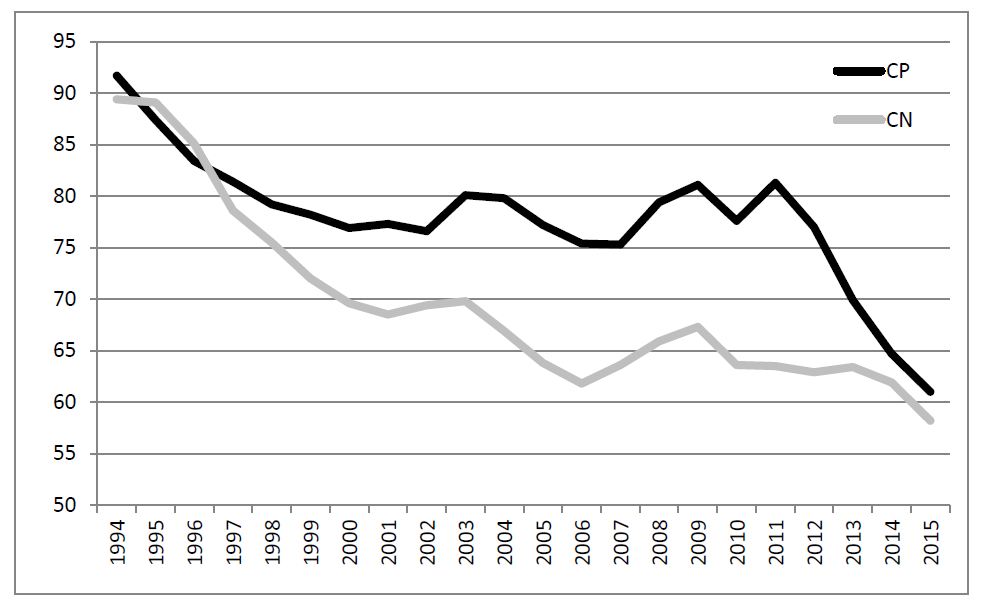





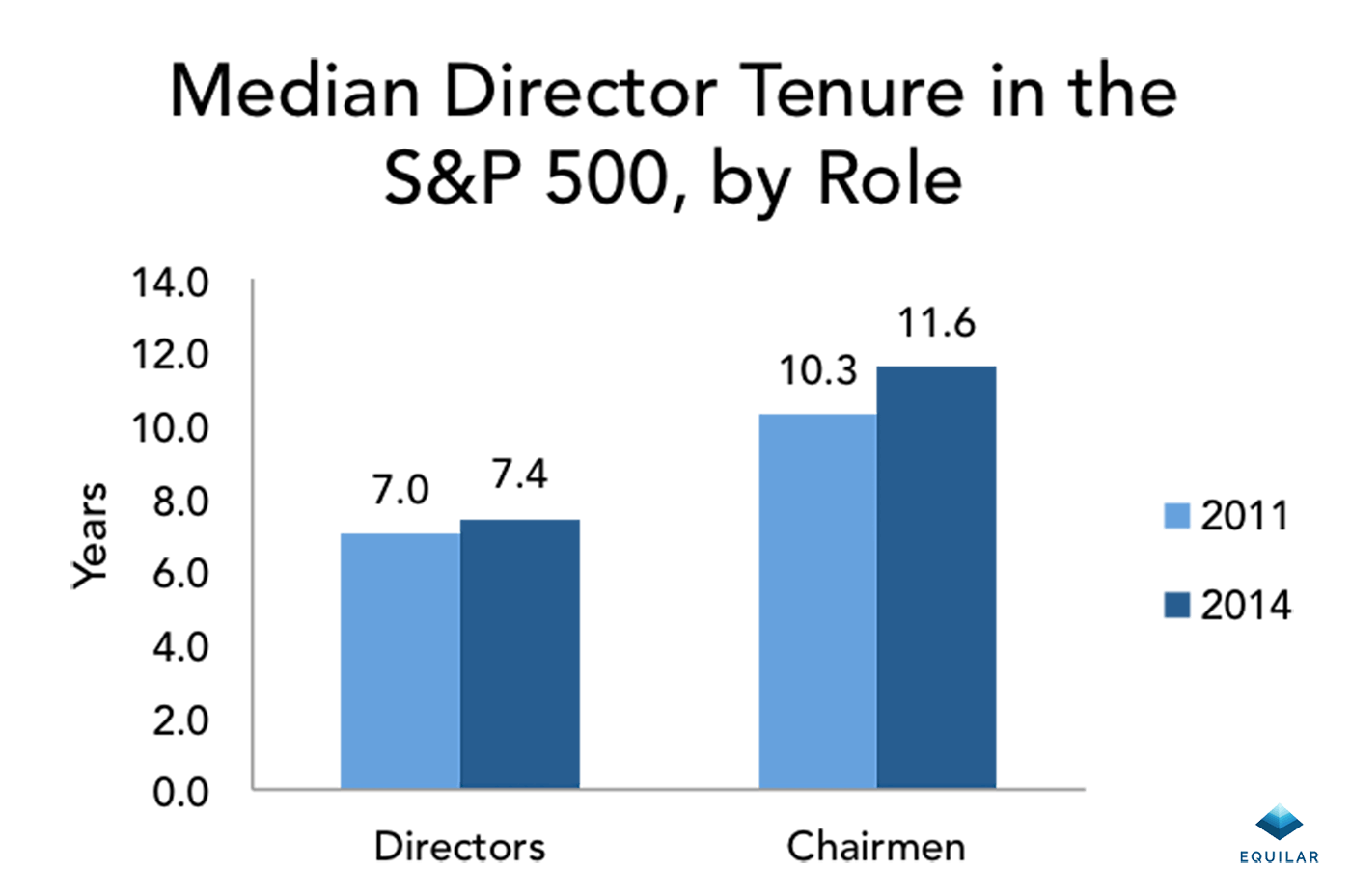






 Gouvernance | Jacques Grisé