Voici un article-choc publié par Chris Hughes dans la revue Bloomberg qui porte sur l’indépendance (ou le manque d’indépendance) des quatre grandes firmes d’audit dans le monde.
Il y a une sérieuse polémique eu égard à l’indépendance réelle des grandes firmes d’audit.
Cet article donne les grandes lignes de la problématique et il esquisse des avenues de solution.
Shareholders need to be the client, not company executives.
L’une des quatre grandes firmes
British lawmakers are pushing for a full-blown antitrust probe into the country’s four big accountancy firms following the demise of U.K. construction group Carillion Plc.
The current domination of KPMG, PricewaterhouseCoopers, EY and Deloitte isn’t working for shareholders. But creating more competition among the bean counters won’t be enough on its own. The fundamental problem is who the client is. The thrust of reform should be on making auditors see that their client is the investor and not the company executive. Randgold Resources is the only FTSE 100 company not to be audited by one of the Big Four !
Carillion’s accounts weren’t completely useless. Recent annual reports contained red flags of the company’s deteriorating financial health that were apparent to the smart money. Some long funds cut their holdings and hedge funds took large short positions, as my colleague Chris Bryant points out.
If the evidence was there to those who looked hard, it’s odd that the company was given a clean bill of health from accountancy firm KPMG months before it went bust. The impression is that auditors are on the side of the company rather than the shareholder. (KPMG says it believes it conducted its audit appropriately.)
Would more competition have made a difference? Companies may have only one accountant available if the few competing firms are already working for a rival. A lack of choice in any market usually leads to lower quality.
One response would be to force the Big Four to shed clients to mid-tier firms, creating a Big Five or Big Six. The risk is this greater competition just leads to a race to the bottom on fees with no improvement in quality. Other remedies are needed first.
The combination of audit and more lucrative consultancy work has long been chided – with good reason. Consultancy creates a client-pleasing culture. That’s at odds with the auditor’s role in challenging the assumptions behind company statements.
Opponents of a separation say combining the two services helps attract talent. This is a weak argument. Further lowering the current cap on consultancy fees, or completely separating audit and consultancy, is hard to argue with.
The accountancy firm should clearly serve the non-executive directors on the company’s audit committee which, in turn, is charged with looking out for shareholders. The risk is that the auditor’s main point of contact is the executive in the form of the chief financial officer.
Shareholders already have a vote on the appointment of the auditor. But annual reports could provide more useful disclosure on the frequency and depth of the last year’s contact between the firm and the audit committee, and between the latter and shareholders.
Now consider the nature of the job itself. Companies present the accounts, auditors check them. Out pops a financial statement that gives the false impression of extreme precision. Numbers that are the based on assumptions might be better presented as a range, accompanied by a critique of the judgments applied by the company.
Creating more big audit firms may create upward pressure on quality. But so long as they aren’t incentivized to have shareholders front of mind, it won’t be a long wait for the next Carillion.
Quelles sont les conséquences de ne pas divulguer une intrusion importante du système de sécurité informatique ?
Les auteurs, Matthew C. Solomon* et Pamela L. Marcogliese, dans un billet publié sur le forum du HLS, ont étudié de près la situation des manquements à la sécurité informatique de Yahoo et ils nous présentent les conséquences de la non-divulgation d’attaques cybernétiques et de bris à la sécurité des informations des clients.
Ils exposent le cas très clairement, puis ils s’attardent aux modalités des arrangements financiers avec la Securities and Exchange Commission (SEC).
Comme ce sont des événements susceptibles de se produire de plus en plus, il importe que les entreprises soient bien au fait de ce qui les attend en cas de violation des obligations de divulgation.
Les auteurs font les cinq (5) constats suivants eu égard à la situation vécue par Yahoo :
— First, public companies should take seriously the SEC’s repeated warnings that one of its top priorities is ensuring that public companies meet their obligations to adequately disclose material cybersecurity incidents and risks. This requires regular assessment of cyber incidents and risks in light of the company’s disclosures, with the assistance of outside counsel and auditors as appropriate, and ensuring that there are adequate disclosure controls in place for such incidents and risks.
— Second, the SEC’s recently released interpretive guidance on cybersecurity disclosure is an important guidepost for all companies with such disclosure obligations. The guidance specifically cited the fact that the SEC views disclosure that a company is subject to future cybersecurity attacks as inadequate if the company had already suffered such incidents. Notably, the Yahoo settlement specifically faulted the company for this precise inadequacy in its disclosures. Similarly, the recent guidance encouraged companies to adopt comprehensive policies and procedures related to cybersecurity and to assess their compliance regularly, including the sufficiency of their disclosure controls and procedures as they relate to cybersecurity disclosure. The Yahoo settlement also found that the company had inadequate such controls.
— Third, at the same time the SEC announced the settlement, it took care to emphasize that “[w]e do not second-guess good faith exercises of judgment about cyber-incident disclosure.” [7] The SEC went on to note that Yahoo failed to meet this standard with respect to the 2014 Breach, but by articulating a “good faith” standard the SEC likely meant to send a message to the broader market that it is not seeking to penalize companies that make reasonable efforts to meet their cyber disclosure obligations.
— Fourth, it is also notable that the SEC charges did not include allegations that Yahoo violated securities laws with respect to the 2013 Breach. Yahoo had promptly disclosed the 2013 Breach after learning about it in late 2016, but updated its disclosure almost a year later with significant new information about the scope of the breach. The SEC’s recent guidance indicated that it was mindful that some material facts may not be available at the time of the initial disclosure, as was apparently the case with respect to the 2013 Breach. [8] At the same time, the SEC cautioned that “an ongoing internal or external investigation – which often can be lengthy – would not on its own provide a basis for avoiding disclosures of a material cybersecurity incident.” [9]
— Finally, it is worth noting that the Commission did not insist on settlements with any individuals. Companies, of course, can only commit securities violations through the actions of their employees. While it is not unusual for the Commission to settle entity-only cases on a “collective negligence” theory, the SEC Chair and the Enforcement Division’s leadership have emphasized the need to hold individuals accountable in order to maximize the deterrent impact of SEC actions. [10]
On April 24, 2018, Altaba, formerly known as Yahoo, entered into a settlement with the Securities and Exchange Commission (the “SEC”), pursuant to which Altaba agreed to pay $35 million to resolve allegations that Yahoo violated federal securities laws in connection with the disclosure of the 2014 data breach of its user database. The case represents the first time a public company has been charged by the SEC for failing to adequately disclose a cyber breach, an area that is expected to face continued heightened scrutiny as enforcement authorities and the public are increasingly focused on the actions taken by companies in response to such incidents. Altaba’s settlement with the SEC, coming on the heels of its agreement to pay $80 million to civil class action plaintiffs alleging similar disclosure violations, underscores the increasing potential legal exposure for companies based on failing to properly disclose cybersecurity risks and incidents.
Background
As alleged, Yahoo learned in late 2014 that it had recently suffered a data breach affecting over 500 million user accounts (the “2014 Breach”). Yahoo did not disclose the 2014 Breach until September 2016. During the time period Yahoo was aware of the undisclosed breach, it entered into negotiations to be acquired by Verizon and finalized a stock purchase agreement in July 2016, two months prior to the disclosure of the 2014 Breach. Following the disclosure in September 2016, Yahoo’s stock price dropped 3% and it later renegotiated the stock purchase agreement to reduce the price paid for Yahoo’s operating business by $350 million.
In or about late 2016, following its disclosure of the 2014 Breach, Yahoo learned about a separate breach that had taken place in August 2013 and promptly announced that such breach had affected 1 billion users (the “2013 Breach”). In October 2017, Yahoo updated its disclosure concerning the 2013 Breach, announcing that it now believed that all 3 billion of its accounts had been affected.
The Settlement
Altaba’s SEC settlement centered on the 2014 Breach only. The SEC found that despite learning of the 2014 Breach in late 2014—which resulted in the theft of as many as 500 million of its users’ Yahoo usernames, email addresses, telephone numbers, dates of birth, hashed passwords, and security questions and answers, referred to internally as Yahoo’s “crown jewels”— Yahoo failed to timely disclose the material cybersecurity incident in any of its public securities filings until September 2016. Although Yahoo senior management and relevant legal staff were made aware of the 2014 Breach, according to the SEC, they “did not properly assess the scope, business impact, or legal implications of the breach, including how and where the breach should have been disclosed in Yahoo’s public filings or whether the fact of the breach rendered, or would render, any statements made by Yahoo in its public filings misleading.” [1] The SEC also faulted Yahoo’s senior management and legal staff because they “did not share information regarding the breach with Yahoo’s auditors or outside counsel in order to assess the company’s disclosure obligations in its public filings.” [2]
Among other things, the SEC found that Yahoo’s risk factor disclosures in its annual and quarterly reports from 2014 through 2016 were materially misleading in that they claimed the company only faced the risk of potential future data breaches, without disclosing that “a massive data breach” had in fact already occurred. [3]
The SEC also alleged that Yahoo management’s discussion and analysis of financial condition and results of operations (“MD&A”) in those reports was also misleading to the extent it omitted known trends or uncertainties with regard to liquidity or net revenue presented by the 2014 Breach. [4]Finally, the SEC further found that Yahoo did not maintain adequate disclosure controls and procedures designed to ensure that reports from Yahoo’s information security team raising actual incidents of the theft of user data, or the significant risk of theft of user data, were properly and timely assessed to determine how and where data breaches should be disclosed in Yahoo’s public filings. [5]
Based on these allegations, the SEC found that Yahoo violated Sections 17(a)(2) and 17(a)(3) of the Securities Act and Section 13(a) of the Securities Exchange Act. [6] To settle the charges, Altaba, without admitting or denying liability, agreed to cease and desist from any further violations of the federal securities laws and pay a civil penalty of $35 million.
Takeaways
There are several important takeaways from the settlement:
— First, public companies should take seriously the SEC’s repeated warnings that one of its top priorities is ensuring that public companies meet their obligations to adequately disclose material cybersecurity incidents and risks. This requires regular assessment of cyber incidents and risks in light of the company’s disclosures, with the assistance of outside counsel and auditors as appropriate, and ensuring that there are adequate disclosure controls in place for such incidents and risks.
— Second, the SEC’s recently released interpretive guidance on cybersecurity disclosure is an important guidepost for all companies with such disclosure obligations. The guidance specifically cited the fact that the SEC views disclosure that a company is subject to future cybersecurity attacks as inadequate if the company had already suffered such incidents. Notably, the Yahoo settlement specifically faulted the company for this precise inadequacy in its disclosures. Similarly, the recent guidance encouraged companies to adopt comprehensive policies and procedures related to cybersecurity and to assess their compliance regularly, including the sufficiency of their disclosure controls and procedures as they relate to cybersecurity disclosure. The Yahoo settlement also found that the company had inadequate such controls.
— Third, at the same time the SEC announced the settlement, it took care to emphasize that “[w]e do not second-guess good faith exercises of judgment about cyber-incident disclosure.” [7] The SEC went on to note that Yahoo failed to meet this standard with respect to the 2014 Breach, but by articulating a “good faith” standard the SEC likely meant to send a message to the broader market that it is not seeking to penalize companies that make reasonable efforts to meet their cyber disclosure obligations.
— Fourth, it is also notable that the SEC charges did not include allegations that Yahoo violated securities laws with respect to the 2013 Breach. Yahoo had promptly disclosed the 2013 Breach after learning about it in late 2016, but updated its disclosure almost a year later with significant new information about the scope of the breach. The SEC’s recent guidance indicated that it was mindful that some material facts may not be available at the time of the initial disclosure, as was apparently the case with respect to the 2013 Breach. [8] At the same time, the SEC cautioned that “an ongoing internal or external investigation – which often can be lengthy – would not on its own provide a basis for avoiding disclosures of a material cybersecurity incident.” [9]
— Finally, it is worth noting that the Commission did not insist on settlements with any individuals. Companies, of course, can only commit securities violations through the actions of their employees. While it is not unusual for the Commission to settle entity-only cases on a “collective negligence” theory, the SEC Chair and the Enforcement Division’s leadership have emphasized the need to hold individuals accountable in order to maximize the deterrent impact of SEC actions. [10]
8As we have previously discussed, the federal securities laws do not impose a general affirmative duty on public companies to continuously disclose material information and, as acknowledged in Footnote 37 of the interpretive guidance, circuits are split on whether a duty to update exists. However, in circuits where a duty to update has been found to exist, a distinction has often been drawn between statements of a policy nature that are within the company’s control and statements describing then current facts that would be expected to change over time. The former have been held subject to a duty to update while the latter have not. See In re Advanta Corp. Securities Litigation, 180 F.3d 525, 536 (3d Cir. 1997) (“[T]he voluntary disclosure of an ordinary earnings forecast does not trigger any duty to update.”); In re Burlington Coat Factory Securities Litigation, 114 F.3d 1410, 1433 (3d Cir. 1997); In re Duane Reade Inc. Securities Litigation, No. 02 Civ. 6478 (NRB), 2003 WL 22801416, at *7 (S.D.N.Y. Nov. 25, 2003), aff’d sub nom. Nardoff v. Duane Reade, Inc., 107 F. App’x 250 (2d Cir. 2004) (“‘company has no duty to update forward–looking statements merely because changing circumstances have proven them wrong.’”).(go back)
10See, e.g., Steven R. Peikin, Co-Director, Div. Enf’t., SEC, Reflections on the Past, Present, and Future of the SEC’s Enforcement of the Foreign Corrupt Practices Act, Keynote Address at N.Y.U. Program on Corporate Law and Enforcement Conference: No Turning Back: 40 Years of the FCAP and 20 Years of the OECD Anti-Bribery Convention Impacts, Achievements, and Future Challenges (Nov. 9, 2017), https://www.sec.gov/news/speech/speech-peikin2017-11-09;
SEC Div. Enf’t., Annual Report A Look Back at Fiscal Year 2017, at 2 (Nov. 15, 2017), https://www.sec.gov/files/enforcement-annual-report2017.pdf.(go back)
*Matthew C. Solomon and Pamela L. Marcogliese are partners and Rahul Mukhi is counsel at Cleary Gottlieb Steen & Hamilton LLP. This post is based on a Cleary Gottlieb publication by Mr. Solomon, Ms. Marcogliese, Ms. Mukhi, and Kal Blassberger.
Aujourd’hui, je vous présente le point de vue de l’association Investor Stewardship Group (the “ISG”) Governance Principles, eu égard aux principes de gouvernance que celle-ci entend promouvoir.
Je reproduis ici les principaux éléments de l’article publié par Anne Meyer* et paru sur le forum du Harvard Law School, notamment les six principes qui gouvernent leur conduite.
1 — Les CA sont redevables envers les actionnaires ;
2 — Les actionnaires doivent avoir des droits de vote qui sont proportionnels à leurs intérêts économiques ;
3 — Les CA doivent être à l’écoute des actionnaires et être proactifs dans la compréhension de leurs perspectives ;
4 — Les CA doivent avoir une solide structure de leadership indépendante ;
5 — Les CA doivent adopter des structures de gouvernance qui mènent à des pratiques efficaces ;
6 — Les CA doivent adopter des structures de rémunération des dirigeants qui sont alignées sur la stratégie à long terme de l’entreprise.
Bonne lecture ! Vos commentaires sont les bienvenus.
In this post, we provide an overview of the Investor Stewardship Group (the “ISG”) Governance Principles and steps for public companies to consider when evaluating how the principles may be incorporated into their own disclosure and engagement priorities. The ISG’s website, including a link to the ISG Governance Principles, is available here. In January 2017, the Investor Stewardship Group (the “ISG”), a collective of large U.S.-based and international institutional investors and asset managers, announced the launch of its Framework for U.S. Stewardship and Governance (the “Framework”). The measure is an unprecedented attempt to establish a set of elementary corporate governance principles for U.S. listed companies (the “ISG Governance Principles”) as well as parallel stewardship principles for U.S. institutional investors. The Framework’s effective date was January 1, 2018, in order to provide U.S. listed companies with time to adjust to the corporate governance principles prior to the 2018 proxy season.
As the 2018 proxy season gets into full swing, there is evidence that ISG members will be utilizing the Framework as a tool for evaluating the governance regimes at their portfolio companies, informing their engagement priorities, and potentially factoring compliance with the ISG Governance Principles into selected voting policies and decisions. In December, the ISG issued a press release “encouraging companies to articulate how their governance structures and practices align with the ISG’s Corporate Governance Principles and where and why they differ in approach”, leaving it to companies to determine how and where to disclose such alignment. And at least one large investor, State Street Global Advisors, has specifically highlighted that it will screen portfolio companies for compliance with the principles.
As a result, companies and their boards should continue to benchmark and understand how their specific governance practices relate to ISG Governance Principles and remain cognizant of this new regime as they prepare for engagement with investors and draft public disclosures.
Background
The ISG’s global reach and financial influence is significant; currently consisting of 50 investors representing over $22 trillion invested in the U.S. equity markets. The ISG’s signatories includes some of the largest and most influential institutional investors, including BlackRock, CalSTRS, State Street Global Advisors, TIAA Investments, T. Rowe Price, ValueAct Capital and Vanguard, among others. The Framework’s stewardship principles emphasize that these institutional investors have a vested interest and responsibility for the long-term economic success of their portfolio companies.
The ISG’s roll-out of the Framework characterized it as a “sustained initiative” and emphasized an evolutionary view of the ability of U.S. companies and investors to work together under the Framework.
Corporate governance practices at U.S. listed companies have historically been informed by multiple regulatory and rules-based regimes. Rules and regulations of the Securities and Exchange Commission, stock exchange listing requirements, state corporate codes, case law and federal legislation adopted in the wake of past financial market crises, have been the primary dictating standards. More recently, shareholders and other stakeholders have played a larger role in influencing corporate governance norms at U.S. listed companies through engagement and various forms of shareholder activism. In contrast, the ISG Governance Principles are based substantially on U.K., Continental European and other non-U.S. frameworks that establish principles-based corporate governance standards and tend to rely on “comply-or-explain” accountability. [1] Advocates for this type of principles-based approach stress the flexibility that it gives for companies to adopt a tailored response to important tenets such as boardroom transparency, as opposed to responding more narrowly to prescriptive rules. As institutional investors continue to focus more attention on environmental and social matters, including related governance concerns, the Framework’s principles-based approach will be a tool, for both institutions and companies, to promote mutually agreeable objectives, particularly given the lack of rulemaking or legislation mandating more specific disclosure on trending topics such as board diversity and environmental concerns.
The ISG Governance Principles
The six ISG Governance Principles are broad principles that will not look new to those who have been following key issues in corporate governance over the past several years. Indeed, they were designed to reflect the common corporate governance principles that are already embedded in member institutions’ proxy voting and engagement guidelines. The principles emphasize the importance of boardroom effectiveness and oversight, alignment of executive compensation with long-term financial results, and board accountability demonstrated in part through the adoption of governance best practices, including a one-share one-vote capital structure and independent board leadership.
Principle 1: Boards are accountable to shareholders
This principle encompasses the annual election of directors, majority voting, proxy access and more robust disclosure surrounding board practices and corporate governance. Companies are also asked to explain how any anti-takeover measures are in the best long-term interest of the company.
Interestingly, BlackRock’s CEO Larry Fink recently published a letter to the CEOs at the world’s largest public companies in which he argued explicitly that boards are accountable to other stakeholders, such as employees and customers, in addition to shareholders.
Principle 2: Shareholders should be entitled to voting rights in proportion to their economic interest
This principle sets a base line of one-share one-vote and encourages companies with existing multi-class share structures to review and consider phasing out control shares.
In 2017, this issue became national news when Snap Inc. filed for an IPO of non-voting shares. Many large investors were vehemently opposed and at the urging of the Council for Institutional Investors and other investor advocates, the stock index provider FTSE Russell refused to include these shares in its indices.
Principle 3: Boards should be responsive to shareholders and be proactive in order to understand their perspectives
Under this principle, companies are expected to implement shareholder proposals that receive “significant” support or explain why they have not done so. Independent directors are encouraged to participate in engagement on matters that are meaningful to investors, and directors may be held accountable with “against” votes in instances where investors do not feel that their concerns have been adequately addressed.
Principle 4: Boards should have a strong, independent leadership structure
There are two common independent leadership structures at U.S. companies—an independent chairperson and an independent lead director (where the role of Chairman and CEO are combined)—and the principles acknowledge that signatory investors have differing opinions on whether they provide adequate independent oversight.
The overarching position under the principles is that the role of the independent board leader should be “clearly defined and sufficiently robust to ensure effective and constructive leadership.”
Principle 5: Boards should adopt structures and practices that enhance their effectiveness
This principle encompasses an array of board structure and effectiveness issues, including: strong board composition and board diversity; board and committee responsibilities; director attentiveness, preparedness and time commitments; and board refreshment.
Board diversity, in particular gender diversity, has emerged as a high priority for most of the largest institutional investors. There has also been a focus on screening for long-tenured directors and directors that are over-boarded or have poor attendance records as a proxy for identifying directors that may not be adequately engaged or independent.
Principle 6: Boards should develop management incentive structures that are aligned with the long-term strategy of the company
This principle emphasizes that the board, in particular the compensation committee, is responsible for ensuring that drivers and performance goals that underpin the company’s long-term strategy are adequately reflected in a company’s management incentive structure.
Steps to Consider
As noted, the ISG Governance Principles are intended to provide a framework of broad, high-level principles. The individual investors that comprise the ISG have their own voting guidelines and engagement priorities that are tailored to their own investment philosophy and strategy. Even on current hot button issues, such as board diversity, investors have differing views and companies should consider the practices they adopt depending upon their specific facts and circumstances. There are, however, general steps that we recommend companies take to address the growing influence of the Framework.
These include:
Understand how the company’s corporate governance structure and practices relate to the six ISG Governance Principles.
Review the company’s public disclosure regarding corporate governance structure and practices; consider enhancements to be responsive to the ISG’s request that companies disclose how their governance aligns or differs from the ISG Governance Principles.
As with other corporate governance benchmarking exercises, companies should be particularly cognizant of how and why their practices may differ from the ISG Governance Principles and whether these differences are adequately explained in public disclosures. As investors screen their portfolio companies’ governance practices, they will often consider valid explanations, but in the absence of effective disclosure the company may be unnecessarily penalized.
Management and the board should be informed and prepared to respond to questions about the company’s alignment with the ISG Governance Principles during shareholder engagements. Companies can also consider proactively addressing the issue in written materials or prepared remarks during investor presentations.
In preparing for shareholder engagements with ISG signatories, understand how and if they are explicitly incorporating the ISG Governance Principles into engagement and voting priorities and continue to screen their individual voting and engagement policies.
Companies should determine whether, and how, they wish to address and incorporate the ISG Governance Principles based upon their own specific governance profile, disclosure regime and approach to shareholder engagement.
Endnotes
1 See in particular the UK Investor Stewardship Code, on which the US ISG Principles are largely based. The UK Code “sets out a number of areas of good practice to which … institutional investors should aspire.” Available here.
*Anne Meyer is Senior Managing Director, Don Cassidy is Executive Vice President, and Rajeev Kumar is Senior Managing Director at Georgeson LLC. This post is based their recent Georgeson publication. Related research from the Program on Corporate Governance includes The Agency Problems of Institutional Investors by Lucian Bebchuk, Alma Cohen, and Scott Hirst.
Aujourd’hui, je partage avec vous un article publié dans le magazine suisse Le Temps.ch qui présente les résultats d’une recherche sur la bonne gouvernance des caisses de retraite en lien avec les recommandations des fonds de placement tels que BlackRock.
L’auteur, Emmanuel Garessus, montre que même si le lien entre la performance des sociétés et la bonne gouvernance semble bien établi, les caisses de retraite faisant l’objet de la recherche ont des indices de gouvernance assez dissemblables. L’étude montre que les caisses ayant des indices de gouvernance faibles ont des rendements plus modestes en comparaison avec les indices de référence retenus.
Également, il ressort de cette étude que c’était surtout la prédominance de la gestion des risques qui était associée à la performance des caisses de retraite.
Comme le dit Christian Ehmann, spécialisé dans la sélection de fonds de placement auprès de Safra Sarasin, « la gouvernance n’est pas une cause de surperformance, mais il existe un lien direct entre les deux ».
Encore une fois, il appert que BlackRock défend les petits épargnants-investisseurs en proposant des normes de gouvernance uniformisées s’appliquant au monde des entreprises cotées en bourses.
J’ai reproduit l’article en français ci-dessous afin que vous puissiez bien saisir l’objet de l’étude et ses conclusions.
Bonne lecture ! Vos commentaires sont les bienvenus.
Le principe de gouvernance selon lequel une action donne droit à une voix en assemblée générale est bafoué par de très nombreuses sociétés, surtout technologiques, au premier rang desquelles on trouve Facebook, Snap, Dropbox et Google. BlackRock, le plus grand groupe de fonds de placement du monde, demande aux autorités d’intervenir et de présenter des standards minimaux, indique le Financial Times.
Le groupe dont Philipp Hildebrand est vice-président préfère un appel à l’Etat plutôt que de laisser les fournisseurs d’indices (MSCI, Dow Jones, etc.) modifier la composition des indices en y intégrant divers critères d’exclusion. Barbara Novick, vice-présidente de BlackRock, a envoyé une lettre à Baer Pettit, président de MSCI, afin de l’informer de son désir de mettre de l’ordre dans les structures de capital des sociétés cotées.
Mark Zuckerberg détient 60% des droits de vote
De nombreuses sociétés ont deux catégories d’actions donnant droit à un nombre distinct de droits de vote. Les titres Facebook de la classe B ont par exemple dix fois plus de droits de vote que ceux de la classe A. Mark Zuckerberg, grâce à ses actions de classe B (dont il détient 75% du total), est assuré d’avoir 60% des droits de vote du groupe. A la suite du dernier scandale lié à Cambridge Analytica, le fondateur du réseau social ne court donc aucun risque d’être mis à la porte, explique Business Insider. L’intervention de BlackRock n’empêche pas l’un de ses fonds (Global Allocation Fund) d’avoir probablement accumulé des titres Facebook après sa correction de mars, selon Reuters, pour l’intégrer dans ses dix principales positions.
Cette structure du capital répartie en plusieurs catégories d’actions permet à un groupe d’actionnaires, généralement les fondateurs, de contrôler la société avec un minimum d’actions. Les titres ayant moins ou pas de droit de vote augmentent de valeur si la société se développe bien, mais leurs détenteurs ont moins de poids en assemblée générale. Les sociétés qui disposent d’une double catégorie de titres la justifient par le besoin de se soustraire aux réactions à court terme du marché boursier et de rester ainsi concentrés sur les objectifs à long terme. Ce sont souvent des sociétés technologiques.
Facebook respecte très imparfaitement les principes de bonne conduite en matière de gouvernance. Mark Zuckerberg, 33 ans, est en effet à la fois président du conseil d’administration et président de la direction générale. Ce n’est pas optimal puisque, en tant que président, il se contrôle lui-même. Sa rémunération est également inhabituelle. Sur les 8,9 millions de dollars de rémunération, 83% sont liés à ses frais de sécurité et le reste presque entièrement à l’utilisation d’un avion privé (son salaire est de 1 dollar et son bonus nul).
Quand BlackRock défend le petit épargnant
Le site de prévoyance IPE indique que le fonds de pension suédois AP7, l’un des plus grands actionnaires du réseau social, est parvenu l’an dernier à empêcher l’émission d’une troisième catégorie de titres Facebook. Cette dernière classe d’actions n’aurait offert aucun droit de vote. Une telle décision, si elle avait été menée à bien, aurait coûté 10 milliards de dollars à AP7. Finalement Facebook a renoncé.
BlackRock prend la défense du petit investisseur. Il est leader de la gestion indicielle et des ETF et ses produits restent investis à long terme dans tous les titres composant un indice. Il préfère influer sur la gouvernance par ses prises de position que de vendre le titre. Le plus grand groupe de fonds de placement du monde demande aux autorités de réglementation d’établir des standards de gouvernance en collaboration avec les sociétés de bourse plutôt que de s’en remettre aux fournisseurs d’indices comme MSCI.
La création de plusieurs classes d’actions peut être justifiée par des start-up en forte croissance dont les fondateurs ne veulent pas diluer leur pouvoir. BlackRock reconnaît ce besoin spécifique aux start-up en forte croissance, mais le gérant estime que «ce n’est acceptable que durant une phase transitoire. Ce n’est pas une situation durable.»
Le géant des fonds de placement aimerait que les producteurs d’indices soutiennent sa démarche et créent des «indices alternatifs» afin d’accroître la transparence et de réduire l’exposition aux sociétés avec plusieurs catégories de titres. L’initiative de BlackRock est également appuyée par George Dallas, responsable auprès du puissant International Corporate Governance Network (ICGN).
La gouvernance des «bonnes caisses de pension»
La recherche économique a largement démontré l’impact positif d’une bonne gouvernance sur la performance d’une entreprise. Mais presque tout reste à faire en matière de fonds de placement et de caisses de pension.
«La gouvernance n’est pas une cause de surperformance, mais il existe un lien direct entre les deux. Les caisses de pension qui appartiennent au meilleur quart en termes de bonne gouvernance présentent une surperformance de 1% par année par rapport au moins bon quart», explique Christian Ehmann, spécialisé dans la sélection de fonds de placement auprès de Safra Sarasin, lors d’une présentation organisée par la CFA Society Switzerland, à Zurich.
Ce dernier est avec le professeur Manuel Ammann coauteur d’une étude sur la gouvernance et la performance au sein des caisses de pension suisses (Is Governance Related to Investment Performance and Asset Allocation?, Université de Saint-Gall, 2016). «Le travail sur cette étude m’a amené à porter une attention particulière à la gouvernance des fonds de placement dans mon travail quotidien», déclare Christian Ehmann. Son regard porte notamment sur la structure de l’équipe de gestion, son organisation et son système de gestion des risques. «Je m’intéresse par exemple à la politique de l’équipe de gérants en cas de catastrophe», indique-t-il.
Claire surperformance
L’étude réalisée sur 139 caisses de pension suisses, représentant 43% des actifs gérés, consiste à noter objectivement la qualité de la gouvernance et à définir le lien avec la performance de gestion. L’analyse détaille les questions de gouvernance en fonction de six catégories, de la gestion du risque à la transparence des informations en passant par le système d’incitations, l’objectif et la stratégie d’investissement ainsi que les processus de placement. Sur un maximum de 60 points, la moyenne a été de 21 (plus bas de 10 et plus haut de 50). La dispersion est donc très forte entre les caisses de pension. Certaines institutions de prévoyance ne disposent par exemple d’aucun système de gestion du risque.
Les auteurs ont mesuré la performance sur trois ans (2010 à 2012), le rendement relatif par rapport à l’indice de référence et l’écart de rendement par rapport au rendement sans risque (ratio de Sharpe). Toutes ces mesures confirment le lien positif entre la gouvernance et la performance (gain de 2,7 points de base par point de gouvernance). Les moteurs de surperformance proviennent clairement de la gestion du risque et du critère portant sur les objectifs et la stratégie d’investissement. Les auteurs constatent aussi que même les meilleurs, en termes de gouvernance, sous-performent leur indice de référence.
La deuxième étape de la recherche portait sur l’existence ou non d’une relation entre le degré de gouvernance et l’allocation des actifs. Ce lien n’a pas pu être établi.
Voici un article très intéressant publié dans l’édition d’avril 2018 de la Harvard Business Review qui porte sur l’identification des grands principes qui guident les comportements des présidents de conseil d’administration.
L’auteur, Stanislav Shekshnia*, est professeur à l’Institut européen d’administration des affaires (INSEAD) et chercheur émérite dans le domaine de la gouvernance. Son article est basé sur une enquête auprès de 200 présidents de conseils.
Que doit-on retenir de cette recherche eu égard aux rôles distinctifs des présidents de conseils d’administration et aux caractéristiques qui les distinguent des CEO ?
Huit principes ressortent de ces analyses :
(1) Be the guide on the side; show restraint and leave room for others
(2) Practice teaming—not team building
(3) Own the prep work; a big part of the job is preparing the board’s agenda and briefings
(4) Take committees seriously; most of the board’s work is done in them
(5) Remain impartial
(6) Measure the board’s effectiveness by its inputs, not its outputs
(7) Don’t be the CEO’s boss
(8) Be a representative with shareholders, not a player.
Je vous invite à lire l’article au complet puisqu’il regorge d’exemples très efficaces.
The majority of board chairs are former CEOs, who are used to calling the shots and being stars. So it’s no surprise that many start behaving as if they are alternative chief executives of their firms. That sows conflict and confusion at the top. In addition, as research by INSEAD’s Corporate Governance Centre shows, the two jobs are distinctly different—and so are the skills needed in them. The chair leads the board, not the company, and that means being a facilitator of effective group discussions, not a team commander.
After surveying 200 board chairs and interviewing 140 chairs, directors, shareholders, and CEOs, INSEAD has distilled the requirements for the chair’s role down to eight principles: (1) Be the guide on the side; show restraint and leave room for others. (2) Practice teaming—not team building. (3) Own the prep work; a big part of the job is preparing the board’s agenda and briefings. (4) Take committees seriously; most of the board’s work is done in them. (5) Remain impartial. (6) Measure the board’s effectiveness by its inputs, not its outputs. (7) Don’t be the CEO’s boss. (8) Be a representative with shareholders, not a player. While many executives need to shift gears and mindsets to follow these, successful chairs say the effort pays off.
_____________________________________
*Stanislav Shekshnia is a professor at INSEAD. He is also a senior partner at Ward Howell, a global human capital consultancy firm, and a board member at a number of public and private companies in Central and Eastern Europe.
J’ai trouvé très intéressantes les questions qu’un nouvel administrateur pourrait se poser afin de mieux cerner les principaux facteurs liés à la bonne gouvernance d’un conseil d’administration.
Bien sûr, ce petit questionnaire peut également être utilisé par un membre de CA qui veut évaluer la qualité de la gouvernance de son propre conseil d’administration.
Les administrateurs peuvent interroger le président du conseil, les autres membres du conseil et le secrétaire corporatif.
Les douze questions énumérées ci-dessous ont fait l’objet d’une discussion lors d’une table ronde organisée par INSEAD Directors Forum du campus asiatique de Singapore.
Cet article a été publié par Noelle Ahlberg Kleiterp* sur le site de la Harvard Law School Forum on Corporate Governance.
Chaque question est accompagnée de quelques réflexions utiles pour permettre le passage à l’acte.
Bonne lecture ! Vos commentaires sont les bienvenus.
In many countries, boards of directors (particularly those of large organisations) have functioned too long as black boxes. Directors’ focus has often—and understandably so—been monopolised by a laundry list of issues to be discussed and typically approved at quarterly meetings.
The board’s own performance, effectiveness, processes and habits receive scant reflection. Many directors are happy to leave the corporate secretary with the task of keeping sight of governance best practices; certainly they do not regard it as their own responsibility.
It occurred to me later that these questions could be of broader use to directors as a framework for beginning a reassessment of their board role.
However, increased regulatory pressures are now pushing boards toward greater responsibility, transparency and self-awareness. In some countries, annual board reviews have become compulsory. In addition, mounting concerns about board diversity provide greater scope for questioning the status quo.
Achieving a more heterogeneous mix of specialisations, cultures and professional experiences entails a willingness to revise some unwritten rules that, in many instances, have governed board functions. And that is not without risk.
At the same time, the “diversity recruits” wooed for board positions may not know the explicit, let alone the implicit, rules. Some doubtless never anticipated they would be asked to join a board. Such invitations often come out of the blue, with little motivation or clarity about what is expected from the new recruit. No universal guidelines are available to aid candidates as they decide whether to accept their invitation.
Long-standing directors and outliers alike could benefit from a crash course in the fundamentals of well-run boards. This was the subject of a roundtable discussion held in February 2017 as part of the INSEAD Directors Forum on the Asia campus.
As discussion leader, I gave the participants, most of whom were recent recipients of INSEAD’s Certificate in Corporate Governance, a basic quiz designed to prompt reflection about how their board applies basic governance principles. It occurred to me later that these questions could be of broader use to directors as a framework for beginning a reassessment of their board role.
Questions and reflections
Q1) True/False: My board maintains a proper ratio of governing vs. executing.
Reflection: Recall basic principles of governance. If you are executing, who is maintaining oversight over you? Why aren’t the executive team executing and the board governing?
Q2) True/False: My board possesses the required competencies to fulfil its duties.
Reflection: Competencies can be industry-specific or universal (such as being an effective director). Many boards are reluctant to replace members, yet the needs of the organisation shift and demand new competencies, particularly in the digital age. Does your board have a director trained in corporate governance who could take the lead? Or does it adopt the outdated view of governance as a matter for the corporate secretary, perhaps in consultation with owners?
Q3) True/False: The frequency and duration of my board meetings are sufficient.
Reflection: Do you cover what you must cover and have ample time for strategy discussions? Are discussions taking place at the table that should be conducted prior to meetings?
Q4) How frequently does your chairperson meet with management: weekly, fortnightly, monthly, or otherwise?
Reflection: Meetings can be face-to-face or virtual. An alternative question is: Consider email traffic between the chair/board and management—is correspondence at set times (e.g. prior to scheduled meetings/calls) or random in terms of topic and frequency?
Q5) Is this frequency excessive, adequate or insufficient?
Reflection: Consider what is driving the frequency of the meetings (or email traffic). Is there a pressing topic that justifies more frequent interactions? Is there a lack of trust or lack of interest driving the frequency?
Q6) True/False: My board possesses the ideal mix of competencies to handle the most pressing issue on the agenda.
Reflection: If one issue continually appears on the agenda (e.g. marketing-related), there could be reason to review the board’s effectiveness with regards to this issue, and probably the mix of skills within the current board. If the necessary expertise were present at the table, could the board have resolved the issue?
Q7) True/False: The executive team is competent/capable. If “false”, is your board acting on this?
Reflection: At this point in the quiz, you should be considering whether incompetency is the issue. If so, is it being addressed? How comfortable are you, for example, that your executive team is capable of addressing digitisation?
Q8) True/False: My chairperson is effective.
Reflection: Perhaps incompetency rests with the chairperson or with a few board members. Are elements within control of the chairperson well managed? Does your board function professionally? If not, does the chair intervene and improve matters? Are you alone in your views regarding board effectiveness? A “false” answer here should lead you to take an activist role at the table to guide the chair and the board to effectiveness.
Q9) Yes/No: Does your board effectively make use of committees? If “yes”, how many and for which topics? If “no”, why not?
Reflection: Well-defined committees (e.g. audit, nomination, risk) improve the efficiency of board meetings and are a vital component of governance. In the non-profit arena, use of board committees is less common. However, non-profit boards can equally benefit from this basic guiding principle of good governance.
Q10) True/False: Recruitment/nomination of new board members adheres to a robust process.
Reflection: When are openings posted? Who reviews/targets potential candidates? How are candidate criteria determined? And is there a clear “on-boarding” process that is regularly revisited?
Q11) True/False: My board performs a board review annually.
Reflection: A board review will touch on many elements mentioned in previous questions. Obtaining buy-in for the first review might prove painful. Thereafter knowledge of an annual review will undoubtedly lead to more conscious governance and opportunities to introduce improvements (including replacement of board members). Procedurally, the review of the board as a whole should precede the review of individuals.
Q12) Think of a tough decision your board has made. Recall how the decision was reached and results were monitored. Was “fair process leadership” (FPL) at play?
Reflection: Put yourself in the shoes of a fellow board member, perhaps the one most dissatisfied with the outcome of a particular decision. Would that person agree that fair process was adhered to, despite his or her own feelings? Boards that apply fair process move on—as a team—from what is perceived to be a negative outcome for an individual board member. If decisions are made rashly and lack follow-up, FPL is not applied. Energies will quickly leave the room.
From reflection to action
Roundtable participants agreed that these questions should be applied in light of the longevity of the organisation concerned. Compared with most mature organisations, a start-up will need many more board meetings and more interactions between the board and the management team. The “exit” phase of an organisation (or a sub-part of the organisation) is another time in the lifecycle that requires intensified board involvement.
Particularly in the non-profit sector, where directors commonly work pro bono, passion for the organisational mission should be a prerequisite for all prospective board members. However, passion—in the form of a determination to see the organisation’s strategy succeed—should be a consideration for all board members and nominees, regardless of the sector.
Directors who apply the above framework and are dissatisfied with what they discover could seek solutions in their professional networks, corporate governance textbooks or a course such as INSEAD’s International Directors Programme.
If you are considering a board role, you could use the 12 questions, tweak them for your needs and evaluate your answers. Speak not only with the chair, but also with as many board members and relevant executive team members as you can. Understand your comfort level with how the board operates and applies governance principles before accepting a mandate.
Noelle Ahlberg Kleiterp, MBA, IDP-C, has worked for 25 years across three continents with companies including GE, KPMG, Andersen Consulting and Atradius. Noelle owns a sole proprietorship in Singapore and serves as a board member on a non-profit organisation in Singapore.
L’une des questions prédominantes — et souvent controversées — dans l’évaluation des principes de saine gouvernance concerne l’indépendance des administrateurs.
L’Institut sur la gouvernance (IGOPP) propose une approche nouvelle et originale sur la question de l’indépendance des membres des conseils d’administration.
Dans un document « L’indépendance des conseils : un enjeu de légitimité », l’IGOPP propose que toute organisation dotée d’un conseil d’administration cherche à constituer un conseil qui soit à la fois légitime et crédible.
L’enjeu n’est pas tellement l’indépendance des conseils mais bien leur légitimité et leur crédibilité. La qualité d’indépendance ne prend son sens que si elle contribue à rehausser la légitimité d’un conseil.
C’est par sa légitimité qu’un conseil acquiert le droit et l’autorité de s’imposer à la direction d’une organisation. Les conseils d’organisations publiques ou privées, sans actionnaire ou sans actionnaire actif détenant plus de 10 % du capital-actions ordinaire, devraient être composés d’une majorité nette d’administrateurs indépendants. De plus, tous leurs comités statutaires devraient être composés exclusivement de membres indépendants.
L’article ci-dessous, écrit à la suite d’une table ronde réunissant plusieurs spécialistes de la gouvernance européenne, aborde trois sujets incontournables, en tentant de tirer des enseignements pour le futur :
(1) l’indépendance des administrateurs et la pertinence du concept
(2) les divers aspects de la rémunération et les obligations fiduciaires
(3) l’identification des actionnaires et les questions de procuration des votes
Dans ce billet, nous vous proposons les questionnements reliés à l’indépendance des administrateurs.
L’indépendance est-elle une bonne idée ?
Quels sont les problèmes liés à l’indépendance ?
Quels sont les résultats de recherche qui montrent que l’indépendance améliore la qualité de la gouvernance ?
Comment composer avec l’influence des gestionnaires et des conflits d’intérêts ?
L’article publié par Christian Strenger*est paru sur le site de Harvard Law School Forum on Corporate Govervance.
Alors, selon vous, pourquoi l’indépendance des administrateurs est-elle un gage de bonne gouvernance ?
Bonne lecture ! Vos commentaires sont les bienvenus.
L’indépendance des administrateurs : panacée ou boîte de Pandore?
Board Independence: the Quality Question and dealing with Insider Issues
Background
A reliable formula for board effectiveness has been elusive, but the importance of effective boards warrants ongoing reflection and research by both academics and practitioners.
In spite of the diversity of governance models around the world, the concept of independence plays a prominent role in most, if not all, codes of governance globally as an intrinsic component of good board structure. For example, independence features, to varying degrees of emphasis, in the governance frameworks of the US, UK, Germany and Japan. It is also reflected in global frameworks, such as the ICGN Global Governance Principles or the OECD Corporate Governance Principles.
But what does independence mean in a corporate governance context, and does it deliver what we want it to? This session seeks to challenge how we think about independence and addresses several fundamental questions relating to boards and corporate governance:
Is board independence essential to quality in corporate governance—or is independence simply a placebo that doesn’t do anything but makes us feel better?
What do we expect board independence to achieve in practical terms?
Are independent directors really in a position to monitor and control corporate insiders?
These are questions that have relevance for company managers and directors, but also for investors, regulators and stakeholders.
Role of boards
A company’s board of directors is at the core of its corporate governance. Boards play a range of advisory and control functions. This includes strategic direction and risk/control oversight, along with the monitoring and reward of executive management.
At a more overarching level, agency theory suggests that one of the key roles of the board is to serve as an agent protecting the interests of shareholders vis-à-vis company management or controlling owners. This reflects a duty of care to support the company’s long-term success and sustainable value creation and to ensure the alignment of interests between management, controlling owners, minority investors—taking into account stakeholder interests as well.
Why is independence a good idea?
Shareholders and other stakeholders expect boards to have the ability and authority to think and act independently from company executives or controlling owners. The board may be unable to serve effectively in its agency role if its directors’ judgements are not free of conflicts or any other external influence other than promoting the long-term success of the firm.
What are the problems related to independence?
It is important to recognise that independence has to be looked at in the context of how it affects board processes, decisions and overall governance. Yet spite of the inherent virtues of independence, its realisation in practice is not an easy fix; nor does it intrinsically enhance board effectiveness. A director must be able to contribute something other than independence alone, whether that is in the form of sector knowledge, commercial experience, international experience, technical skills or other areas that support the board’s oversight of company management.
Moreover, independence is ultimately a state of mind, not a product of definitions. There are many different sets of criteria that seek to define independence for individual directors. While these sorts of criteria can be useful, they can also be crude, misleading or incomplete.
The Lehman Brothers board in 2008, the year of its demise, was an example of a nominally independent board. But was this board able to operate independently of a strong Chair/CEO? Was there enough financial sector expertise amongst this group of independent directors to provide a rigorous challenge? (See Annex 1 in the complete publication).
Does independence ensure quality? What is the evidence?
Independence may be real, but it can be hard, if not impossible, to measure in a meaningful way. It is much easier to measure structural features of boards than it is to measure the quality of board processes. But sometimes what is easily measurable is not worth measuring. So while it is possible (and very common) to calculate simple ratios, such as independent directors/total directors a common gauge of board independence, they may not tell us much. Indeed, the evidence of empirical studies using simplistic/conventional measures of independence has been inconclusive (See Annex 2).
Many board attributes, including independence, which are regarded as “best practice” lack clear empirical grounding, at least in an econometric context. So, in many features of our corporate governance codes we are dealing in effect with opinions more than facts.
How to deal with insider influence and vested interests?
Insider influences can vary depending on the nature of the company. For widely-held companies, the vested interests of executive management often take the form of high pay for limited performance. In controlled companies vested interests may be the controlling owners themselves in terms of entrenchment and self-dealing.
Are independent directors really equipped to challenge these insiders? Or is that possibly asking for a bit too much? The empirical evidence cited above suggests that independent directors may not have a meaningful impact on board governance. But the evidence does suggest in the area of audit committees that independence is important. This makes logical sense, but it also suggests that for an independent director to provide meaningful oversight, independence must be combined with other important attributes, including sectoral knowledge and financial expertise. Independence as a determinant of board effectiveness therefore may be a necessary, but not a sufficient, condition.
Conclusion
We need to recognise that independence may be overrated, or at least not always live up to its billing. At least as it is conventionally defined, independence has not proven to be a panacea or silver bullet to ensure good corporate governance. At the same time, however, the concept of board independence is important and worth preserving, if nothing else as an aspirational ideal.
Discussion Results
Independent directors seem to be an intuitive solution for the agency problem stemming from the separation of ownership and control, but also for limiting the power of controlling shareholders in a corporation.
The starting point of the discussion was: Why do we need independence in the first place? As investors and other stakeholders want to see their interests served and protected by the board, the absence of potential conflicts of interest between non-executive directors and managers or undue influence from a major shareholder are the answers. Disclosure of meaningful ties of the non-executive directors to the management or controlling shareholders is important. The discussion also emphasized that reasonable diversity can be a contributing factor for board independence, and that truly independent board members can play a key role in avoiding too much convergence in decision making, as well as in focusing on the well-being of the company itself, and not any separate vested interests. While the discussion highlighted many benefits of board independence, it also pointed to potential costs: board independence may come with costs relating to problems in information flows, access to information and processing. Thus, it is important to complement board independence with proper board procedures and processes.
A key point of the discussion was the definition of independence itself. Besides the obligatory disclosure of relevant ties of a non-executive board member to management or controlling shareholders, regulators tried to formalize criteria to define independent board members. Academic literature also strives to evaluate how predefined criteria affect company decisions. However, results of these efforts are mixed and can hardly achieve “true” independence. The description of certain characteristics could introduce independence on paper, but may not reflect correctly the individual case of a board member. A predefined strict categorization would in practice suffer from a “ticking the box” approach. Independence from a controlling shareholder is equally hard to define as thresholds for shareholdings may not reflect the individual circumstances. The discussion also highlighted that strict definitions of independence might also require companies to replace experienced board members with new independent board members. That could lead to a temporary loss of experience and industry expertise.
Ways for the Future:
The realistic description of board independence needs a detailed assessment of the individual and a disclosure of ties of a non-executive board member to the management or controlling shareholders. Furthermore, disclosure of the selection process of the nomination committee should bring important insights for investors and the stakeholders.
The discussion further emphasized that formal characteristics alone could be misleading to determine the independence of a board member, focusing on “independence in mind” as an important aspect. As this factor is difficult to gauge or measure, investors may have to communicate with the chair in individual cases.
A sensible and company specific skillset of personnel management, industry knowledge and experience must be represented in the board as a priority, as formal independence alone is not a sufficient prerequisite for the selection process. The discussion emphasized that extensive information is key to allow proper evaluation of true independence. This should be complemented by sufficient access to the chair for communication with investors. The latest German code revision emphasizes that chairs make themselves available to investors for such supervisory board related issues.
Ways for the Future:
Full disclosure of important ties between individual board members with management and controlling shareholders should be obligatory. To properly evaluate the board member proposals, the disclosure of the skillsets of board members and the selection process would bring further important insights for investors. An idea proposed to support the process was the development of a “board skills matrix” for individual boards.
The discussion highlighted the key role of the nomination committee in the identificatio n and evaluation of independent directors. It was therefore suggested that the chair of the nomination committee should make himself available to investors. This point was controversially discussed due to possible loss of a “One Voice” communication strategy, so that communication should be confined to the chair of the supervisory board.
Another important point of the discussion was the regular evaluation of non-executive board members, as this may bring improvements for independent guidance and decision making of the full board. It could also identify areas of strength and weaknesses for an improved performance of both boards. A key prerequisite for a successful evaluation is the independence of the conducting leader.
The discussants raised the issue of the differences emerging from national governance environments, such as different shareholder structures and cultural differences. While the Anglo American approach to independence appears to work in the UK, this differs from continental European countries such as Germany and France.
Ways for the Future:
A solution to cross-country differences is the development of “local optima” that reflect the special circumstances in each country, rather from pursuing a “one fits all” approach.
Conclusion
The participants concluded that board independence remains a central issue in the corporate governance debate. The discussion identified definition issues as critical. It was also highlighted that full disclosure of the individual independence is important. Formal independence alone does not ensure board or director effectiveness. It must be accompanied with skills, knowledge and experience to obtain satisfactory board work results. Disclosure on the individual board members’ selection process and independence characteristics should be made available to investors and the other stakeholders.
*Christian Strengeris Academic Director at the Center for Corporate Governance at HHL Leipzig Graduate School of Management. This post is based on a publication by Mr. Strenger and Jörg Rochell, President and Managing Director at ESMT Berlin, for a symposium held in Berlin on November 9, 2017, sponsored by ESMT Berlin and the Center for Corporate Governance at HHL Leipzig Graduate School of Management.
Voici un article très intéressant qui présente une vision différente de la gouvernance à l’« Américaine ».
Les auteurs XAVIER HOLLANDTS et BERTRAND VALIORGUE sont enseignants-chercheurs en stratégie et gouvernance des entreprises. L’article vient de paraître sur le site LesEchos.fr.
Le projet français de loi « Pacte » a pour objectif de repenser les grandes notions de gouvernance, notamment la place de la participation des salariés à titre d’administrateur à part entière.
L’article examine trois idées reçues qu’il est important de bien élucider :
(1) la participation permet d’équilibrer le rapport capital/travail
(2) la participation améliore le dialogue social
(3) la participation améliore la performance
Bonne lecture ! Vos commentaires sont les bienvenus.
Voilà de quelle manière les auteurs concluent leur article :
Compte tenu de ces éléments, faut-il promouvoir la participation des salariés à la gouvernance des entreprises ? Oui car l’accroissement de cette participation nous semble nécessaire pour deux raisons. L’arrivée d’administrateurs élus par les salariés au sein des conseils d’administration va permettre de recentrer les discussions sur l’entreprise, son projet stratégique, les investissements de long terme et son apport au progrès social et environnemental. Cette arrivée va redonner tout leur sens et prérogatives aux conseils d’administration.
La participation des salariés à la gouvernance va en outre apporter des éclairages et des moyens nouveaux pour gérer l’actif clé de la performance des entreprises : le capital humain. Les administrateurs salariés vont aider les dirigeants à mieux prendre en compte et développer cet actif qui est facteur majeur de compétitivité, d’innovation et de performance durable. On objectera alors que d’autres parties prenantes jouent aussi un rôle clé dans le processus de création de valeur et que leur présence au sein des conseils d’administration serait bienvenue. Ceux-là n’auraient pas tort.
Ma veille en gouvernance m’amène à vous proposer la lecture d’un article publié par Demi Derem* et Elizabeth Maiellano sur les défis posés par un ensemble de directives récemment approuvées par le Parlement européen et qui traitent du droit des actionnaires : « Shareholder Rights Directive (SRD) ».
La Commission Européenne (CE) veut que les entreprises cotées aient une meilleure connaissance de leurs investisseurs et qu’elles soient en mesure d’interagir d’une manière claire et transparente avec eux. Voici un extrait qui montre l’ampleur des nouvelles directives.
The SRD also grants shareholders the right to vote on companies’ remuneration policies, which may increase the policy analysis and assessment required by the buy-side. Similarly, the SRD requires that any material transaction (as defined by national regulators) between a listed company and a related third party must be announced and approved by the shareholders and the board.
Depending on national requirements, the announcement may also need to be accompanied by a report about the impact of the transaction from an independent third party, the board or a committee of independent directors.
La lecture de cet article montre que les entreprises ont peu de temps pour se conformer aux directives. Les auteurs explorent les impacts de l’adoption de ces règles sur les principaux intéressés, notamment sur les investisseurs institutionnels et les firmes d’intermédiation.
All parties in the shareholder communication chain need to prepare for the enhanced requirements of the new Shareholder Rights Directive—and try to influence its local implementation to encourage a harmonised approach.
The new Shareholder Rights Directive (SRD), adopted by the European Council and approved by the European Parliament this spring, is a laudable initiative intended to encourage shareholder engagement in listed companies in Europe and improve the transparency of related processes— including proxy voting. The European Commission (EC) wants to see proof that companies understand their investors and communicate with them in a clear and transparent manner.
The new SRD updates its 2007 predecessor and introduces some new requirements related to remunerating directors, identifying shareholders, facilitating the exercise of shareholder rights, transmitting information and providing transparency for institutional investors, asset managers and proxy advisors. The majority of the SRD is required to be translated into national law by European member states by June 2019 (although some elements will not come into force until September 2020).
Given the complexities introduced by the new SRD, firms across the shareholder communication chain need to begin preparing now if they are to meet its requirements by 2019. These are expected to entail significant and potentially costly changes relating to process reforms and transparency requirements, impacting issuers, asset managers, custodians, central securities depositories (CSDs), and a range of other intermediaries and service providers.
The two-year member-state transposition process will involve adaptation of the SRD’s requirements to reflect domestic market structures and local legal processes. We encourage all affected firms to engage with the EC and national regulators, and share their views on how the SRD should be implemented. This is vital for achieving outcomes that are equitable and commensurate with the corporate governance benefits of the SRD. If national regulators opt for significantly different interpretations of the SRD, this would be challenging for industry participants.
For example, one global custodian has expressed concern about the risk of national divergence requiring compliance efforts to be tailored to each regulator’s interpretation, thereby increasing the complexity and cost of SRD implementation for firms operating in more than one market.
Another securities services firm believes that discrepancies in implementation dates in different jurisdictions will be problematic for global firms.
Institutional investor impact
Institutional investors and asset managers are likely to be affected by the SRD in a number of ways. For example, both will have to be more transparent about their engagement with investee companies and how they integrate shareholder engagement into their investment strategy. Under the SRD this information must be reported annually and made available on buy-side firms’ websites. These firms must also disclose annually their voting behaviour and explain significant votes and their use of proxy advisor services. The SRD introduces these requirements on a comply-or-explain basis.
The SRD also grants shareholders the right to vote on companies’ remuneration policies, which may increase the policy analysis and assessment required by the buy-side. Similarly, the SRD requires that any material transaction (as defined by national regulators) between a listed company and a related third party must be announced and approved by the shareholders and the board. Depending on national requirements, the announcement may also need to be accompanied by a report about the impact of the transaction from an independent third party, the board or a committee of independent directors.
These new requirements will result in the production of more data and more reporting before a vote, potentially creating a significant burden on asset managers and investors as they try to manage this information flow. This burden is likely to be particularly noticeable with related party transactions.
Intermediary implications
Intermediary firms will need to keep a close watch on national requirements for the adoption of specific identification standards and data items for shareholder transparency requirements. For instance, markets could set different minimum levels of holdings that must be disclosed.
In addition, the SRD refers to providing data in a standardised format but does not specify the standards, so these may be provided by the EC. However, if the disclosure of certain data items would breach some countries’ data privacy laws, national regulators would have to alter the local requirements.
Another change introduced by the SRD is that intermediaries will have to store shareholder information for at least 12 months after they become aware that someone has ceased to be a shareholder. Data storage and retention requirements are therefore likely to increase.
A particular concern for intermediaries is that the SRD requires them to transmit general meeting agenda and voting information “without delay”. National regulators could interpret this as a requirement for real-time or near-real-time reporting. If this means that vote information has to be transmitted immediately, intermediaries will need to introduce intraday processing support. Meanwhile, the need to use a standardised format could result in amendments to current SWIFT message formats, with associated costs. It is also likely that the volume of voting instructions and amendments will increase after implementation of the SRD.
One custodian has expressed concern about the lack of regulatory clarity on whether post-meeting announcements will also have to be transmitted immediately. The EC and national regulators will need to confirm the level of information that must be passed on to shareholders. Some intermediaries may face operational headaches if their current processes can support the transmission of voting information but not of other data items in the same standardised and immediate manner.
Intermediaries could face the brunt of the costs of SRD implementation, particularly because European member states can prohibit intermediaries from charging fees for the cost of changes related to disclosure. If regulators decide to mandate this, intermediaries will have to absorb all compliance costs rather than passing a percentage on to clients.
If regulators are more lenient, intermediaries may be able to pass on certain costs, but the SRD specifies that these must be proven to be proportionate to the cost of offering the service. Intermediaries could therefore have to pay for the full cost of transparency requirements in some jurisdictions, while providing an audit trail of operational costs (and facing questions about any inefficiencies) in others.
The bundling of proxy costs into custody fees may also need re-evaluating, because intermediaries will need to disclose their fees in relation to proxy services. The SRD stresses the need for “non-discriminatory and proportionate” fees and jurisdictions will also have the power to prohibit fees for proxy services. If some do prohibit fees, firms’ business models will need to be revised.
Widespread impact
Issuers and registrars will also be affected by the SRD in relation to the standardisation of meeting announcements and the provision of vote confirmation. And proxy service providers will be impacted, although global firms that already comply with some jurisdictions’ voluntary requirements in transparency and reporting will feel less short-term impact. They could face both opportunities and challenges—with the potential to deliver new services to help intermediaries to support requirements such as vote confirmation, but needing to invest to do so.
The SRD’s transposition period presents market participants with an opportunity to review the impact on their operations, engage with regulators and assess their readiness. It is something that the industry should embrace and collaborate on to get right.
___________________________________________
*Demi Derem is general manager for Investor Communication Solutions, International, at Broadridge, and Elizabeth Maiellano is vice president for product management, Investor Communication Solutions, International, at Broadridge. This article has been prepared in collaboration with Broadridge, a supporter of Board Agenda.
Vous souhaitez en savoir davantage sur les tendances en ce qui concerne les actions à droits de vote multiples dans le contexte des É.-U. L’article* ci-dessous, publié sur le forum du Harvard Law School, fait le point sur ce sujet.
Comme vous le constaterez, les avis sont assez partagés sur les pratiques d’émission d’actions qui imposent des droits de vote différents selon les classes. Certaines compagnies, dont Snap inc., ont poussé un peu plus loin la logique des classes d’actions en proposant une catégorie d’action sans droit de vote.
Les compagnies qui ont osé offrir cette classe d’action ont connu des chutes de prix après l’offre publique d’achat (OPA). Cependant, cela n’a pas découragé d’autres entreprises de la Silicon Valley de faire des offres d’actions à droits de vote multiples. À cet égard, je vous renvoie à mon article du 17 mai 2017 intitulé « La gouvernance des entreprises à droit de vote multiple ».
Certaines bourses, dont la S&P Dow Jones, bannissent l’inscription de compagnies ayant ce type de structure, alors que d’autres, telles que le NYSE et le NASDAQ, sont beaucoup plus libérales…
Les deux plus grandes firmes de conseil en votation, ISS et Glass Lewis, ont de sérieuses réserves concernant ce type de structure de capital.
On sait qu’au Québec, cette structure d’actionnariat est assez répandue, et même encouragée.
À la lumière des tendances présentées dans l’article, quel est l’avenir de cette approche à l’émission d’actions ?
Bonne lecture ! Vos commentaires sont les bienvenus.
This past year has been marked by significant and, in some cases, opposing attitudes and practices with respect to multi-class share structures. We are likely to see some of this churn continue in 2018 as the various market participants continue to define or refine their positions on this issue.
In 2016, a coalition of investors and pension funds lobbied against multi-class structures and, in 2017, the Council for Institutional Investors (CII) was vocal about its view that one vote per share is central to good governance. This movement is largely in connection with a minority trend of multi-class high-vote/low-vote and, sometimes, no-vote equity structures. In the spring of 2017, the initial public offering (IPO) of Snap Inc. put significant pressure on the issue when Snap offered its no-vote common stock to the public, followed shortly by Blue Apron’s IPO, which sold a class of low-vote stock to the public, while its capital structure also has a class of non-voting stock. Both companies suffered significant stock price drops following their IPOs.
In response to growing market pressure, in summer 2017, the S&P Dow Jones banned companies with multiple share class structures from inclusion in several of its indices (while nonetheless allowing for the grandfathering of companies that are already included in the index), the FTSE Russell announced it would begin excluding from its indices those companies without publicly-held voting stock representing at least five percent of a company’s voting rights and, in November, MSCI announced its review of unequal voting structures and its decision to temporarily treat any securities of companies with unequal voting structures as ineligible for certain of its indices.
In addition, proxy advisory firms ISS and Glass Lewis piled on with the recent release of policies that result in their recommending voting against board and/or committee members at companies with dual-class structures, depending on other governance factors. Furthermore, Glass Lewis’ 2018 voting policies indicate that for companies with disproportionate voting and economic rights, it will carefully examine the voting turnout on proposals and if a majority of low-vote shareholders support a shareholder proposal or oppose a management proposal, Glass Lewis believes the board should demonstrate appropriate responsiveness to this voting outcome.
Despite this pressure, many companies, so far at least, seem undeterred in their pursuits of going public with a multi-class structure as a way of preserving founder or early investor control, in part in an attempt to combat the trend in increasing short-term, activist and other shareholder demands. Significant IPOs with dual-class stock occurred in the latter half of the year—after the indices’ ban—including Roku, CarGuus, StitchFix, Sogou and Qudian.
Importantly, NYSE and NASDAQ continue to permit, and even actively court, multi-class companies for listing. And momentum may be increasing internationally as well. After failing to attract the 2014 Alibaba IPO, the Hong Kong Exchange recognized its struggle to capture market-share for new technology companies with untraditional capital structures and issued a proposal to permit companies with multi-class structures to list IPOs on a new listing board. More recently, the Hong Kong government signaled its willingness to amending existing rules to permit multi-class companies to list under the status quo.
So far, the Securities and Exchange Commission (SEC) has largely side-stepped the issue in its regulatory agenda. In the fall U.S. Department of the Treasury report, the Treasury reiterated that corporate governance and shareholder rights are a matter of state law and recommended that the SEC’s role continue to be limited to reviewing the adequacy of disclosure and effects on shareholder voting for companies with dual-class stocks.
It may be premature to know the impact that the ban by many of the indices will have on the desire for companies to go public with multi-class structures. After all, many IPO companies are not eligible for immediate inclusion in any index (and each index has its own set of requirements). For instance, the S&P 500 has requirements on the length of public company trading (12 months), market capitalization ($6.1 billion) public float (50 percent of the class of stock) and performance (the sum of the four most recent consecutive quarters’ earnings must be positive), that make it impossible for a newly-public company to be listed inside a year and, for some companies, a significant number of years post-IPO.
The strength of the indices’ ban will be tested when a recently-public multi-class company achieves significant growth and would otherwise be eligible to be included in an index. Will some of the largest index-based funds, which may conceptually prefer equal voting rights for all shareholders, be satisfied with being left out of a company’s shareholder base because the company’s multi-class structure otherwise precludes it from being included in the index? According to an analysis conducted by State Street Global Advisors using data from FactSet, companies in the S&P 500 with multi-class stock structures outperformed their single-class counterparts by approximately 26 percent cumulatively over the 10-year period ending in 2016, and exclusion of those companies would have resulted in underperformance of the index by approximately 1.86 percent over the same period.
Already BlackRock, the world’s largest asset manager and a signatory on the coalition of investors advocating for equal rights for all shareholders, has publicly bristled at the thought of limiting returns for its clients due to the ban and has publicly disagreed with it, stating that “policymakers, not index providers, should set equity investing and corporate governance standards” and that it would support shareholder review of a company’s capital structure periodically through management proposals in the company’s proxy statement. Depending on stock performance of the IPO class of 2017, the first potential test case could occur as early as 2018 and this will be a development to monitor throughout the year.
______________________________________
*Pamela Marcogliese is a partner and Elizabeth Bieber is an associate at Cleary Gottlieb Steen & Hamilton LLP. This post is based on a Cleary Gottlieb publication by Ms. Marcogliese and Ms. Bieber. Related research from the Program on Corporate Governance includes The Untenable Case for Perpetual Dual-Class Stock by Lucian Bebchuk and Kobi Kastiel (discussed on the Forum here).
Aujourd’hui, je partage avec vous un article de Kerry E. Berchem et Christine B. LaFollette, associés de la firme Akin Gump Strauss Hauer & Feld, qui donne un aperçu des principales préoccupations des CA en 2018.
Ce qui est intéressant, outre les thèmes choisis, c’est l’impact de l’agenda de l’administration Trump sur la gouvernance des sociétés, notamment les points suivants :
– Assouplissements de la réglementation de la SEC ;
– Applications des directives de la SEC, en autres les efforts de remplacement de la réforme Dodd-Frank ;
– Nouveaux échanges commerciaux et applications de sanctions plus sévères ;
– La réforme de la fiscalité.
Bonne lecture ! Vos commentaires sont les bienvenus.
Cybersecurity preparedness is essential in 2018 as the risk of, and associated adverse impact of, breaches continue to rise. The past year redefined the upward bounds of the megabreach, including the Yahoo!, Equifax and Uber hacks, and the SEC cyber-attack. As Securities and Exchange Commission (SEC) Co-Directors of Enforcement Stephanie Avakian and Steven Peikin warned, “The greatest threat to our markets right now is the cyber threat.” No crisis should go to waste. Boards should learn from others’ misfortunes and focus on governance, crisis management and recommended best practices relating to cyber issues.
2. Corporate social responsibility.
By embracing corporate social responsibility (CSR) initiatives, boards are able to proactively identify and address legal, financial, operational and reputational risks in a way that can increase the company value to all stakeholders-investors, shareholders, employees and consumers. Boards should invest in CSR programming as an integral element of company risk assessment and compliance programs, and should advocate public reporting of CSR initiatives. Such initiatives can serve as both differentiating and value-enhancing factors. According to recent studies, companies with strong CSR practices are less likely to suffer large price declines, and they tend to have better three- to five-year returns on equity, as well as a greater chance of long-term success.
3. Managing five generations of employees.
In the coming years, employers will face the unprecedented challenge of having five generations of employees in the workplace. Companies and their boards can help address these tensions by better understanding employee expectations, encouraging cross-generation mentorship, and setting an example of generational diversity with respect to company leadership and members of the board. If managed correctly, boards and companies alike can benefit from the wisdom, collaboration and innovation that comes with generational diversity.
4. Corporate strategy.
Strategic planning with a particular focus on potential acquisitions should continue to be a high priority for boards in 2018. Boards should expect to face conflicting pressures, since shareholders will expect companies to invest in both long-term growth opportunities and short-term stock enhancement measures, including the deployment of excess cash for stock buybacks. Cross-border transactions will likely continue to be attractive options, subject to increased regulatory scrutiny in certain industries and of certain buyers.
5. Board composition.
Board diversity is being actively considered and encouraged by regulators, corporate governance groups and investors, both in the United States and internationally, and the current focus on board diversity is likely to continue. Companies should review the applicable diversity-related obligations in their jurisdictions and assess their current board composition, director search and nomination process, board refreshment practices and diversity policies.
6. Shareholder activism.
Shareholder activism has entrenched itself in the modern climate of corporate governance. In particular, shareholder activists have entered industries that, until recently, have generally steered clear of such investors, including the energy sector. There is an increased emphasis by prominent investors on challenging transactions, corporate strategy and traditional corporate governance concerns, such as board composition and staggered boards.
7. Internal investigations.
Boards are increasingly confronted with the possibility of wrongdoing implicating the company or its employees. The decision whether or not to undertake an independent internal investigation, and how, requires careful consideration and consultation with counsel, since the response of the board will have important implications for the ultimate effects on the company.
8. SEC regulatory relief.
We expect that the Trump administration and the Republican-led U.S. Congress will advance reforms in 2018 designed to encourage companies toward public ownership and to facilitate capital formation in both public and private markets. Although smaller companies will likely be the greatest beneficiaries of the proposals currently being considered, many proposals are expected to also benefit large public companies-by eliminating certain duplicative and nonmaterial disclosure requirements and by addressing concerns regarding shareholder proposals.
9. SEC enforcement.
In addition to new leadership at the SEC, ambitious legislative proposals in Congress and further developments in insider trading law have the potential to impact SEC enforcement, although certain enforcement streams, such as accounting and other disclosure-related investigations, are likely to remain largely unchanged. The SEC’s own cyber breach has brought renewed focus at the agency on information security and the integrity of trading systems. Efforts to repeal Dodd-Frank have also advanced through both chambers of Congress.
10. Trade and sanctions.
During the first year of the Trump administration, U.S. sanctions were expanded significantly to include complex new restrictions that target transactions with Iran, Russia, North Korea and Venezuela, among others. Additionally, there has been an uptick in sanctions enforcement actions, including a continued focus by U.S. enforcement agencies on officers and directors that approve, or engage in, proscribed activities. Accordingly, in an effort to avoid running afoul of U.S. sanctions, boards should be vigilant in understanding how these evolving rules apply to the business activities of their companies and management teams.
Special Bonus: Tax reform.
Tax reform has been a top priority for the Trump Administration and Republicans in Congress. After a slow start to 2017 in terms of legislative wins, the House and Senate are poised to send the first comprehensive tax reform bill to the President’s desk in more than thirty years. While the differences between the House and Senate bills still need to be resolved, the new Tax Cuts and Jobs Act is expected to pass by the end of the year and will present both benefits and challenges for companies in implementation and adaptation as unintended consequences are inevitably uncovered in the months and years to come.
Au début de la nouvelle année 2018, il est intéressant de connaître les tendances les plus marquantes dans les entreprises cotées en bourse.
L’enquête menée par David A. Bell*, associé de la firme Fenwick & West, est assez instructive à cet égard. Dans l’ensemble, l’année 2017 n’a pas connu de changements très significatifs dans les règles de gouvernance.
Cependant, l’étude est intéressante au regard des différences entre les entreprises de la Silicone Vallée 150 Index (SV 150) et les entreprises de la Standard & Poor’s 100 Index (S&P 100). Voici un sommaire des résultats :
Structure de classe d’actions multi votantes
Il y a peu de différences entre les deux groupes d’entreprises, soit environ 10 % pour le SV 150 et 9 % pour la S&P 100.
Règles de composition des conseils d’administration (Classified Boards)
Cette année, on a constaté peu de changements dans les règles de composition des conseils d’administration dans les deux groupes d’entreprises : 6,7 % pour le groupe SV 150 et 4 % pour le groupe S&P 100.
Vote majoritaire
C’est le domaine où il y a eu les changements les plus significatifs. Ainsi, presque toutes les entreprises de la S&P 100 ont adopté le vote majoritaire pour l’élection des administrateurs tandis que pour les entreprises du SV 150, l’adoption de la règle du vote majoritaire est passée de 0 à 60 % en 2 ans.
Directives concernant l’acquisition d’actions par les administrateurs
Les entreprises des deux groupes ont émis des directives concernant (1) le minimum de possession d’actions et (2) la période requise de rétention des actions. Mais, dans l’ensemble, on assiste à une augmentation continue des acquisitions d’actions par les administrateurs et les dirigeants dans les deux groupes.
Politiques de distribution d’actions avec droit de vote comme mode de rémunération
Il y a une nette tendance au maintien des politiques de distribution d’actions avec droit de vote comme mode de rémunération des administrateurs et des dirigeants dans le groupe du SV 150. Cette rémunération en actions est beaucoup plus importante dans ce groupe que dans le groupe de la S&P 100.
La diversité au conseil
La présence de femmes sur les conseils d’administration est toujours en augmentation : 25,4 % des administrateurs dans le SV 150 et 23,9 % dans la S&P 100.
Taille des CA, fréquence des réunions du conseil et structures de leadership
Il existe toujours une différence importante entre les deux groupes eu égard à la dualité des rôles de présidents du conseil et PDG de l’entreprise. La dualité est présente dans 33 % des entreprises du SV 150 et dans 72 % des entreprises de la S&P 100. La fréquence des réunions du CA a diminué dans les deux groupes.
Les administrateurs provenant de la direction sont plus nombreux dans les entreprises du SV 150, bien qu’en constante diminution depuis plusieurs années.
La taille des CA est en diminution dans les entreprises du SV 150 et elle nettement plus petite que dans les entreprises de la S&P 100.
Propositions d’actionnaires
On constate une diminution de l’activisme des actionnaires dans les deux groupes d’entreprises. En fait, on note une seule contestation d’élection des administrateurs en 2017.
Officiers de la hautes direction
On note une diminution du nombre de hauts dirigeants dans les deux groupes d’entreprises bien que le déclin soit beaucoup plus marqué dans les entreprises du SV 100. En outre, on assiste à une croissance soutenue des postes de Secrétaire corporatif « exécutif » et de Chef exécutif des technologies.
Pour plus de détails concernant ces résultats, veuillez consulter l’article ci-dessous, publié sur le site de la Harvard Law School Forum on Corporate Governance.
Since 2003, Fenwick has collected a unique body of information on the corporate governance practices of publicly traded companies that is useful for Silicon Valley companies and publicly‑traded technology and life science companies across the U.S. as well as public companies and their advisors generally. Fenwick’s annual survey covers a variety of corporate governance practices and data for the companies included in the Standard & Poor’s 100 Index (S&P 100) and the technology and life science companies included in the Silicon Valley [1]
Significant Findings
Governance practices and trends (or perceived trends) among the largest companies are generally presented as normative for all public companies. However, it is also somewhat axiomatic that corporate governance practices should be tailored to suit the circumstances of the individual company involved. Among the significant differences between the corporate governance practices of the SV 150 technology and life science companies and the uniformly large public companies of the S&P 100 are:
Dual‑Class Voting Stock Structure.
Adoption of dual-class voting stock structures has emerged as a recent clear trend among Silicon Valley technology companies—among the mid-to-larger SV 150 companies—though it is still a small percentage of companies. Historically, dual-class voting stock structures have been significantly more common among S&P 100 companies than among SV 150 companies, though the frequency in the SV 150 (11.3% in 2016 to 10.9% in 2017) has surpassed the S&P 100 (9.0% in both 2016 and 2017) in recent years.
Classified Boards
Classified boards are now significantly more common among SV 150 companies than among S&P 100 companies. Compared to the prior year, classified boards remained fairly consistent, holding steady at 6.7% for the top 15 companies in the SV 150 while the S&P 100 has been at 4.0% since 2016.
Majority Voting
The rate of implementation of some form of majority voting has risen substantially over the period of this survey. The increase has been particularly dramatic among S&P 100 companies, rising from 10% to 97% between the 2004 and 2017 proxy seasons. Among SV 150 companies, the rate has risen from zero in the 2005 proxy season to 59.9% in the 2017 proxy season.
Stock Ownership Guidelines
The prevalence of stock ownership guidelines has generally increased over time in both groups but the SV 150 only recently surpassed the level of the S&P 100. This year’s edition of the survey includes additional detail regarding the minimum holding amount and period requirements for executives and directors.
Executives and Directors ‑ Equity, Voting Power Ownership
There is a clear multi-year trend that the distribution of simple equity ownership and voting power ownership skews higher among technology and life sciences companies in the SV 150 than among S&P 100 companies.
Board Diversity
2017 continued the long-term trend in the SV 150 of increasing numbers of women directors and declining numbers of boards without women members. The rate of increase in women directors for SV 150 overall continues to be higher than among S&P 100 companies. When measured as a percentage of the total number of directors, the top 15 of the SV 150 now slightly exceed their S&P 100 peers (the top 15 averaged 25.4% women directors in the 2017 proxy season, compared to 23.9% in the S&P 100). Companies with at least one woman director went from 74% to 78.2% over the past year for the SV 150. Over a two-year period the percentage of companies with at least one woman director grew by 10 percentage points.
Board Size, Meeting Frequency, Leadership
Combined chair/CEOs existed at about one third of companies in the SV 150, while combined chair/CEOs exist at about 72% of S&P 100. SV 150 companies held board meetings more often in fiscal 2016, while S&P 100 companies decreased meeting frequency in 2016 (companies report meetings for the prior year). SV 150 companies, though, continued to skew noticeably toward fewer meetings compared to the S&P 100. Insider directors are more common among members of the boards of SV 150 companies than among board members at S&P 100 companies, though continuing a long-term downward trend. The number of directors also tends to be substantially lower among SV 150 companies than among S&P 100 companies.
Stockholder Proposals
Stockholder activism—measured in the form of proposals included in the proxy statements of companies—is substantially lower among the SV 150 than among S&P 100 companies. There is a current general downward trend of stockholder activism in both groups, although the SV 150 has had an upward trend in number of proposals in recent years. This year each group had just one contested director election. For more detail, please see our post, Silicon Valley and S&P 100: A Comparison of 2017 Proxy Season Results.
Executive Officers
The number of executive officers tends to be substantially lower among SV 150 companies than among the S&P 100, and there continues to be a general decline in the average number of executive officers per company in both groups. By contrast, the percentage of companies including General Counsel, Chief Legal Officer or Chief Technology Officer or engineering executive as “executive officers” have been on a long-term upswing.
Complete Coverage
In complete publication, available here, we present statistical information for a subset of the data we have collected over the years, updating for the 2017 proxy season. These include:
– makeup of board leadership
– number of insider directors
– gender diversity on boards of directors
– size and number of meetings for boards and their primary committees
– frequency and number of other standing committees
– majority voting
– board classification
– use of a dual‑class voting structure
– frequency, coverage and details of executive officer and director stock ownership guidelines
– frequency and number of shareholder proposals
– number and makeup of executive officers
In each case, comparative data is presented for the S&P 100 companies and for the high technology and life science companies included in the SV 150, as well as trend information over the history of the survey. In a number of instances we also present data showing comparison of the top 15, top 50, middle 50 and bottom 50 companies of the SV 150 (in terms of revenue), [2] illustrating the impact of company size or scale on the relevant governance practices.
1The S&P 100 is a cross‑section of companies across industries, but is not a cross‑section of companies across all size ranges (it represents the largest companies in the United States). While the SV 150 is made up of the largest public companies in Silicon Valley by one measure—revenue, it is actually a fairly broad cross‑section of companies by size, but is limited to the technology and life science companies based in Silicon Valley. Compared to the S&P 100, SV 150 companies are generally much smaller and younger, have lower revenue. The 2017 constituent companies of the SV 150 range from Apple and Alphabet with revenue of approximately $218B and $90B, respectively, to Aemetis and DSP Group with revenue of approximately $143M and $138M, respectively, in each case for the four quarters ended on or about December 31, 2016. Apple went public in 1980, Alphabet (as Google) in 2004, Aemetis in 2007 and DSP Group in 1994. Apple and Alphabet’s peers clearly include companies in the S&P 100, of which they are also constituent members (eight companies were constituents of both indices for the survey in the 2017 proxy season), where market capitalization averages approximately $130B. Aemetis and DSP Group’s peers are smaller technology and life sciences companies that went public relatively recently and have market capitalizations well under $1B. In terms of number of employees, the SV 150 averages 9,500 employees (with a median of 1,800 employees), ranging from Hewlett Packard Enterprise with 195,000 employees spread around the world in dozens of countries, to companies such as Aemetis with 144 employees in the United States and India, as of the end of their respective fiscal years 2016. The S&P 100 averages 130,000 employees and includes Wal‑Mart with 2.3 million employees in more than two dozen countries at its most recent fiscal year-end.(go back)
2The top 15, top 50, middle 50 and bottom 50 companies of the SV 150 include companies with revenue in the following respective ranges: $8.4B or more, $1.6B or more, $380M but less than $1.6B, and $138M but less than $375M. The respective average market capitalizations of these groups are $178.8B, $66B, $3.3B and $1.2B.(go back
________________________________________________
*David A. Bellis partner in the corporate and securities group at Fenwick & West LLP. This post is based on portions of a Fenwick publication titled Corporate Governance Practices and Trends: A Comparison of Large Public Companies and Silicon Valley Companies (2017 Proxy Season); the complete survey is available here.
Les changements apportés à la gouvernance des entreprises passent souvent par un renouvellement du membership du conseil d’administration.
Le document publié par Spencer Stuart intitulé 2017 Spencer Stuart Board Index montre que les pressions sont de plus en plus grandes, notamment de la part des investisseurs institutionnels, pour moduler la composition du CA.
Ainsi, tel que le rapporte Julie Daum, Laurel McCarthy et Ann Yerger, dans une publication de Spencer Stuart, les changements sont assez importants, bien que jugés encore trop lents.
Vous trouverez, ci-dessous un résumé de cette publication ainsi que dix (10) suggestions à considérer afin de poursuivre dans la voie du renouvellement de la composition des conseils d’administration.
En cette période des fêtes de Noël et de la nouvelle année, je vous souhaite une lecture agréable et profitable.
Conseils d’administration : mesdames, il y a des places à prendre !
Interest in the composition of U.S. boards has never been greater. Pressure for change is coming from many fronts, particularly from institutional and activist investors. We have been tracking board composition issues for more than 30 years, and as the data from our 2017 Spencer Stuart Board Index show, U.S. boards are evolving, slowly.
– The number of new independent directors elected to S&P 500 boards during the 2017 proxy year rose to 397, the most since 2004 and an increase of 15% from 2016.
– For the first time in the history of our survey, just over half (50.1%) of incoming independent directors on S&P 500 boards are women or minorities.
– A record-breaking 45% of the new S&P 500 independent directors are serving on their first public company board.
– Boards are seeking talent beyond C-suite chairs, CEOs, presidents or COOs. Slightly more than a third of new independent directors are active or retired C-suite executives, down from 47% 10 years ago.
– Fewer active CEOs serve on boards. Today only 37% of S&P 500 CEOs serve on one or more outside public company boards, down from 52% 10 years ago.
Calls for greater boardroom diversity—encompassing considerations such as gender, race, age, skills, qualifications and backgrounds—are on the rise. And boards are responding.
Director skills and experiences are changing. Nearly 20% of new independent S&P 500 directors have experience in the technology or telecommunications industries. Directors with backgrounds in banking, finance, investment or accounting are in high demand, representing 29% of new directors in 2017, up from 19% in 2007. Of this group, directors with investing and investment management experience are of particular interest. Thirteen percent (13%) of new directors come from the investment field, up from 5% a decade ago; less than 20% of these directors were appointed under publicized settlements with activist investors.
S&P 500 boards are opening their doors to directors without prior public board experience. These first-time independent directors are more likely than other new directors to be actively employed (64% versus 42%). They are less likely to be C-suite executives and more likely to have other executive experiences, such as division or subsidiary leadership. They are younger, with an average age of 55.2, compared to 57.3 for other incoming independent directors. They are also more likely to be diverse; more than half (55%) of this year’s incoming first-time directors are women or minorities, a significant jump from 37% a year ago.
Female representation among all new independent S&P 500 directors rose to 36% in 2017—the highest percentage we’ve ever tracked—while 20% of incoming independent directors are minorities, defined as African-American, Hispanic/Latino or Asian. (Six percent of the new directors are women and minorities.) Women are increasingly assuming leadership roles on S&P 500 boards, chairing 20% of audit committees, 17% of compensation committees and 22% of nominating committees, up from 15%, 11% and 20%, respectively, in 2016.
Despite these steps forward, the overall pace of change in boardroom diversity remains slow. With 48% of S&P 500 boards adding no directors, board turnover continues to be low and hinders change to the overall composition of U.S. boardrooms.
– Today 22% of all S&P 500 directors are women, up incrementally from 21% in 2016 and 17% in 2012.
– Minority representation at the top 200 S&P 500 companies is low. Seventeen percent (17%) of directors of the top 200 companies are male or female minorities, and representation of African-Americans and Hispanics/Latinos in the top 200 boardrooms has not significantly changed over the past five to 10 years.
Boardroom refreshment faces other headwinds. About three-quarters (73%) of S&P 500 boards report having a mandatory retirement age for directors, unchanged over the past five years, and boards continue to raise retirement ages. Today 42% of S&P 500 companies with retirement policies set their retirement age at 75 or older, compared with 22% in 2012 and just 11% in 2007. Meanwhile, the percentage of S&P 500 companies disclosing some form of individual director assessments is low (37%) and largely unchanged. The data suggest that rather than using evaluations to evaluate director fit in the boardroom, boards are relying on mandatory retirement ages as a primary mechanism for board refreshment.
10 ways boards can continue to evolve
Purposeful leadership by directors is required to continue the evolution in the boardroom. In our experience working with boards, the most effective strategies for building a board composed of the diverse portfolio of skills, qualifications, perspectives and backgrounds matched to the company’s current and future strategic objectives and risks include these 10 elements:
Continuously review the board’s skill sets and performance relative to the company’s strategy and direction. The annual board self-evaluation is a natural platform for the board to review its composition and future needs so that it is in the best position to oversee management as new challenges and market opportunities emerge.
Expand the use of peer and self-evaluations, which can be invaluable tools for providing feedback to and enhancing the performance of new and tenured directors, and for identifying gaps in boardroom skills and experiences.
Take a hard look at formal policies—such as mandatory retirement policies—intended to promote turnover and evaluate whether the policies may be impeding refreshment.
Understand that boardroom diversity, defined broadly but with an emphasis on gender and racial diversity, is of growing interest not just to investors, but also to other key company stakeholders, including employees, suppliers and customers. A tangible commitment to boardroom diversity will be increasingly important, and a “one and done” mentality will be challenged more often in the future, particularly as boards plan for anticipated board vacancies. One approach is to strive to interview several qualified candidates for every open board seat.
Carefully define the expertise that is important for the board—for example, industry or functional knowledge, digital expertise or international experience. Be clear about the perspectives or expertise that the board is looking to gain.
Foster an open mind about what a director candidate should look like and the different ways a director can contribute. Consider senior business unit or functional leaders, including younger executives who may be experts in specific areas such as e-commerce, digital marketing and cybersecurity.
Avoid creating an overly long list of director qualifications, which can limit the talent pool. Be realistic about desired director qualifications; sitting CEOs today are serving on fewer (if any) outside boards. The selection process should cast a wide net and look for the best candidate—not just the one known to board members.
Consider candidates without prior board experience. When assessing first-time candidates, look at their underlying capabilities and mindset—including what we call “board intrinsics,” attributes such as intellectual approach, independent-mindedness, integrity, interpersonal skills and inclination to engage—to understand how likely they are to be able to contribute as well-rounded directors. Spencer Stuart’s Board Intrinsics™ assessment approach focuses on these critical underlying talents and competencies. Candidates who score well in all five areas are most likely to be capable of contributing as “all-round” directors, in addition to the specific knowledge, skill or set of experiences that makes them of interest to boards.
Establish a robust new director orientation program. All new directors—male and female, first-time and experienced—benefit from an orientation program that helps them quickly get up to speed on the business and the company’s approach to governance.
Commit to transparency about board governance practices. With investor attention to board performance on the rise, boards are enhancing their disclosure about key areas of investor interest, including board composition and leadership, director tenure and turnover, board evaluation and performance, and shareholder engagement.
Vous trouverez, ci-dessous, une publication des auteursSteve Wolosky*, Andrew Freedman, et Ron Berenblat, associés de la firme Olshan Frome Wolosky, qui présente, de façon intelligible, ce que les actionnaires activistes doivent prévoir lorsqu’ils décident de faire inscrire de nouveaux administrateurs sur la liste des candidats aux élections annuelles.
Au cours des dernières années, le phénomène de l’activisme a connu une progression assez substantielle. La gouvernance des entreprises passe souvent par une solide compréhension de ce que les actionnaires activistes cherchent à accomplir.
Les entreprises qui ont des lacunes dans la gouvernance (au conseil) et dans l’efficacité des hauts dirigeants (notamment du CEO) sont beaucoup plus susceptibles d’être la cible des campagnes activistes. Les conseils offerts par la firme Olshan Frome Wolosky sont très utiles, autant pour les actionnaires activistes, que pour les dirigeants des entreprises visés. Leurs recommandations à l’intention des activistes portent sur les cinq points ci-dessous.
– Il est temps de présenter des candidatures qui démontrent un souci marqué pour la diversité dans la composition du conseil d’administration. C’est l’un des plus importants critères des firmes de conseils en votation (ISS et Glass Lewis) et des investisseurs institutionnels.
– Lorsque les actionnaires activistes ciblent le CEO d’une organisation, ceux-ci sont invités à la prudence dans la présentation des arguments à l’actionnariat, car il est toujours délicat et difficile de s’attaquer à la tête dirigeante de l’entreprise.
– Les experts de la gouvernance et les groupes d’activistes ont essentiellement mis l’accent sur les opérations américaines. Cependant, au cours des dernières années, on assiste à un activisme de plus en plus international. Les auteurs incitent donc les actionnaires activistes à s’intéresser aux entreprises mondiales, en soulignant que le terrain est souvent plus propice à leurs activités dans certains pays, tels que la Corée du Sud, le Canada, etc. Certains mécanismes de défense légaux qui existent aux États-Unis sont absents des réglementations de plusieurs pays.
– Les auteurs mettent en garde les actionnaires activistes contre des propositions de candidatures considérées comme « illégitimes ». Il arrive que, dans la préparation de dossiers de candidatures de haut calibre, les activistes aient tendance à oublier la règle du maximum de cinq conseils pour un administrateur indépendant et de deux pour un CEO siégeant à d’autres conseils.
– Enfin, les auteurs soulignent le fait que les entreprises utilisent toutes sortes de moyens de défense pour éliminer les candidatures provenant des activistes. Pour eux, qui prêchent pour leurs paroisses, il est crucial de bien connaître les règlements intérieurs de l’entreprise ciblée ainsi que les mécanismes de nomination.
Bien entendu, la firme Olshan Frome Wolosky propose leurs services juridiques afin de maximiser les efforts des activistes !
J’espère que ce bref tour d’horizon du monde de l’actionnariat activiste vous sera utile dans la bonne gouvernance des entreprises dans lesquelles vous êtes impliqués.
Je vous souhaite donc une bonne lecture et j’attends vos commentaires.
Nomination deadlines for the 2018 proxy season are fast approaching. Based on feedback from our shareholder activist clients and colleagues in the activism community, we are preparing for a very busy nomination season, which will begin to pick up steam in the next few weeks and continue into the new year. Drawing from our experience as the leading law firm to shareholder activists—including our involvement in delivering over 55 nomination letters during the past 12 months alone—and our views on current hot-button topics such as board diversity, global activism and the targeting of CEOs, Olshan’s Activist & Equity Investment Group presents you with its list of top 5 things activists should consider before nominating directors for the upcoming proxy season.
1. It’s Time to Diversify
We are beginning to advise our clients to include diversity as a key criterion in selecting their slates of nominees and, in the case of short-slate contests, identifying the incumbent directors they will seek to replace. Board diversity is currently one of the hottest corporate governance topics and will be highly relevant during the upcoming proxy season. In addition to highlighting the inequality engendered by the lack of diversity of current public company boards, there is abundant research showing a correlation between diverse boards and improved financial performance, corporate governance and accountability to shareholders.
As a result, numerous institutional investors have prioritized their efforts to foster greater diversity, particularly gender diversity, in the boardroom. Earlier this year, BlackRock stated that it will reach out to portfolio companies “to better understand their progress on improving gender balance in the boardroom.” Vanguard recently sent an open letter to public companies stating that over the coming years it will focus on gender diversity in the boardroom and that it “expect[s] boards to focus on it as well, and their demonstration of meaningful progress over time will inform our engagement and voting going forward.” State Street voted against the election of directors at 400 portfolio companies that it determined had failed to take adequate measures to address the absence of women in the boardroom. There is a high probability that one or more of these or other like-minded institutional investors will account for a meaningful percentage of the shareholder base in any domestic election contest initiated by an activist.
An activist’s likelihood of success in an election contest is inextricably tied to the qualifications and expertise of the activist’s director slate. Based on the unebbing wave of board diversity awareness and volume of research extolling the strengths of diverse boards, highly-qualified dissident nominees with diverse backgrounds not only improve the quality of the overall dissident slate—and are therefore more likely to be viewed favorably by shareholders—but are also more likely to be better positioned to advance the activist’s platform once elected to the board. For the same reasons, diversity should also be taken into consideration when evaluating which incumbent directors an activist may seek to replace in a short-slate election contest.
2. Beware of CEO “Bloodlust”
Departing from the early days of shareholder activism, there was a noticeable spike during the past year in the number of activist campaigns that sought the removal of members of their targets’ upper management, particularly CEOs. Elliott Management’s election contest against Arconic, which sought to hold CEO Klaus Kleinfeld directly accountable to shareholders, led to Kleinfeld’s departure during the late stages of the campaign. Pressure from Mantle Ridge resulted in the appointment of Hunter Harrison as the new CEO of CSX. After Marcato Capital ran a slate of directors at Buffalo Wild Wings and called upon the company to replace its CEO Sally Smith, Smith announced on the day of the annual meeting her intention to resign as CEO. Just six months later, Buffalo Wild Wings agreed to be acquired by Arby’s Restaurant Group for a hefty premium.
In a recently settled activist situation, Jeereddi Partners and Purple Mountain Capital initially nominated two director candidates for election at Tuesday Morning’s annual meeting, one of which was recruited specifically for the purpose of becoming the next CEO. Interestingly, in a communication to Tuesday Morning’s employees apprising them of the activist incursion, the existing CEO stated that the investor group’s tactic of seeking to replace him reflected a “new norm” of activism:
These activists also seek to have one of their candidates join the management team as CEO. This tactic used by activist investors is common in today’s market environment.
A Wall Street Journal article by David Benoit succinctly identified this trend in its headline—“Activist Investors Have a New Bloodlust: CEOs.”
Despite the growing number of activist campaigns targeting CEOs, activists should think long and hard before going for the jugular. While every situation is different, seeking to replace a director who is also the CEO (even in a short-slate contest) or calling for the ouster of a CEO as part of the activist’s platform in an election contest is still an aggressive strategy. Attempting to remove the principal executive officer of a company may not sit well with other institutional investors or the proxy advisory firms, depending on the facts and circumstances.
This topic was recently addressed by proxy advisory firm Institutional Shareholder Services (“ISS”) after one of the defense law firms publicly expressed its view that ISS should alter its analytical framework for reviewing proxy contests to take into account whether the dissident is seeking to replace a CEO/director. In commentary issued by ISS dismissing the need to change its analytical framework in this manner, ISS stated:
… the notion that ISS does not already view the targeting of a CEO as an unusual and significant factor—and thus worthy of careful consideration in a short-slate fight—would be a misrepresentation of our framework.
The removal of a CEO from a board represents a vote of no-confidence that carries further-reaching consequences than the removal of most other directors. However, in instances of demonstrably poor execution, operational issues, or undue management influence over the board, such targeting may be appropriate—provided that the consequent risks have been properly assessed.
ISS’ perspective on this topic is highly instructive and, in our view, should be applied broadly by an activist when evaluating whether to target a CEO. Activists should understand that the standard will be higher for obtaining shareholder support and ISS’ recommendation to remove the CEO from the board in an election contest. As ISS points out above, the facts and circumstances of a particular situation could make the targeting of a CEO appropriate, and hence a winning strategy for an activist. Nevertheless, activists should proceed with caution before going down this path.
3. Let’s Go Global
As the activism space gets more and more crowded in the U.S. as a result of an increasing number of activists and bloated war chests activist managers are tasked to deploy, opportunities abound in Europe, Asia and Australia. The corporate governance regimes of certain of these jurisdictions are actually more favorable to shareholders than in the U.S. and the breadth of legal and structural defenses that are commonly utilized by targets in the U.S. are not present in many of these countries. We would even characterize certain countries as “wide open” for shareholder activism. In South Korea, President Moon Jae-in and other government officials are actually inviting foreign shareholders to invest in South Korean companies and play activist roles in overseeing their investments as the administration attempts to promote a culture of accountability to foreign and minority shareholders that South Korea historically lacked.
Offshore campaigns recently commenced by U.S. activist titans are capturing headlines. Third Point is putting pressure on Swiss conglomerate Nestlé to improve productivity, divest non-priority assets and return capital to shareholders. Corvex Management successfully blocked Swiss chemical giant Clariant’s proposed merger with Huntsman. Elliott Management has multiple active situations in Europe, Asia and Australia.
These high-profile campaigns are not isolated incidents. Shareholder activists of all sizes and vintages are taking companies to task all over the globe. In fact, over 290 non-U.S. companies were publicly subjected to activist demands during 2017 (through October 31) according to Activist Insight Online. The action is not only in the U.S.
Activists who are willing to cast a wider net in evaluating potential situations may find prime opportunities abroad. Olshan has experience advising activists in Canada, Europe and Asia and has relationships with law firms, solicitors and consultants all over the globe who can advise on local securities laws, proxy mechanics and cultural considerations that are unique to each jurisdiction.
4. Don’t Go Overboard
Activists should make sure each of their director nominees complies with the “overboarding” guidelines of the two leading proxy advisory firms—ISS and Glass Lewis. Under the current ISS proxy voting guidelines, ISS will generally recommend a vote against or withhold from an individual director nominee who (i) serves on more than five public company boards, or (ii) is CEO of a public company who serves on the boards of more than two public companies (besides his or her own); provided that the negative vote recommendation will only apply to the CEO’s outside boards. ISS may give a positive recommendation for an overboarded nominee after he or she undertakes to gain compliance with the guideline by resigning from an existing directorship if elected at the meeting in question.
Under the Glass Lewis guidelines, Glass Lewis will generally recommend a vote against an individual director nominee who (i) serves on more than five public company boards, or (ii) is an executive officer of a public company while serving on a total of more than two public company boards. Glass Lewis may refrain from making a negative vote recommendation on overboarded nominees if provided with “sufficient rationale” for their board service.
Given the importance of obtaining ISS and Glass Lewis support in most election contests, it is critical that activists take measures to ensure that their nominees are not overboarded. This can be done by requiring prospective nominees to provide updated bios or resumes, including all current directorships and executive officer positions. This is typically covered by Olshan’s form of nominee questionnaire we recommend all our activist clients obtain from their prospective nominees prior to nominating. Nominees should also be made aware of the overboarding requirements and reminded to consult with the activist before accepting additional directorships or executive officer positions prior to the meeting date.
5. Sweat the Mechanics
Failure to pay close attention to the mechanics involved in the nomination process could allow the target company to gain the upper hand or even derail the activist’s campaign in its entirety. Activists who are in the process of evaluating a potential campaign should contact us early in the process so we can begin to identify and work through all the mechanics, which could be complex and involve more than just putting shares in record name in order to validly nominate.
Understanding the company’s advance notice procedures for nominating directors typically contained in the bylaws is critical from both a timing and strategic standpoint. Activists should not necessarily rely on any nomination deadline set forth in the prior year’s proxy statement as these deadlines are often erroneously calculated by the company under the advance notice procedures contained in the bylaws or confused with the Rule 14a-8 deadline due to sloppy drafting. Allowing us sufficient time to review the nomination procedures in the bylaws will ensure that everyone is working with the correct nomination deadline and monitoring the company’s public filings and press releases for the meeting date. This is critical as under most nomination procedures, companies have the ability to accelerate the nomination deadline by announcing a meeting date that is a certain number of days (typically more than 30 or 60 days) before the anniversary of the previous year’s meeting.
Companies are artfully expanding their nomination procedures in order to flush out activists earlier in the process and to make it more expensive for them to nominate. For example, there is a good chance the nomination procedures will contain a requirement that the dissident nominees complete and sign the target company’s director questionnaires for inclusion in the activist’s nomination package. If this is the case, we will need to reach out to company counsel in order to obtain the form of questionnaire prior to the nomination deadline. Getting us involved early can allow us to ensure that the company does not use the nominee questionnaire requirement as a defensive tactic. We are aware of companies whose nomination procedures give them up to 10 days to provide the form of questionnaire after one has been requested by a shareholder. For such companies, we would need to request the form of questionnaire more than 10 days prior to the nomination deadline in order to be in a position to receive the form of questionnaire and submit a complete nomination package prior to the deadline. Otherwise, the company would be permitted to wait until after the nomination deadline before providing a form of questionnaire, thereby preventing the activist from being in technical compliance with the advance nomination procedures.
*Steve Wolosky, Andrew Freedman, and Ron Berenblat are partners at Olshan Frome Wolosky LLP. This post is based on an Olshan publication by Mr. Wolosky, Mr. Freedman, and Mr. Berenblat. Related research from the Program on Corporate Governance includes Dancing With Activists by Lucian Bebchuk, Alon Brav, Wei Jang, and Thomas Keusch (discussed on the Forum here).
Vous trouverez, ci-dessous, un document partagé par Joanne Desjardins*, qui porte sur le rôle du CA dans l’établissement d’une solide culture organisationnelle.
C’est certainement l’un des guides les plus utiles sur le sujet. Il s’agit d’une référence essentielle en matière de gouvernance.
Je vous invite à lire le sommaire exécutif. Vos commentaires sont appréciés.
In Australia, the regulators Australian Prudential Regulation Authority (APRA) and Australian Securities and Investments Commission (ASIC) have both signalled that there are significant risks around poor corporate culture. ASIC recognises that culture is at the heart of how an organisation and its staff think and behave, while APRA directs boards to define the institution’s risk appetite and establish a risk management strategy, and to ensure management takes the necessary steps to monitor and manage material risks. APRA takes a broad approach to ‘risk culture’ – includingrisk emerging from a poor culture.
Regulators across the globe are grappling with the issue of risk culture and how best to monitor it. While regulators generally do not dictate a cultural framework, they have identified common areas that may influence an organisation’s risk culture: leadership, good governance, translating values and principles into practices, measurement and accountability, effective communication and challenge, recruitment and incentives. Ultimately, the greatest risk lies in organisations that are believed to be hypocritical when it comes to the espoused versus actual culture.
The board is ultimately responsible for the definition and oversight of culture. In the US, Mary Jo White, Chair of the Securities and Exchange Commission (SEC), recognised that a weak risk culture is the root cause of many large governancefailures, and that the board must set the ‘tone at the top’.
Culture also has an important role to play in risk management and risk appetite, and can pose significant risks that may affect an organisation’s long-term viability.
However, culture is much more about people than it is about rules. This guide argues that an ethical framework – which is different from a code of ethics or a code of conduct – should sit at the heart of the governance framework of an organisation. An ethical framework includes a clearly espoused purpose, supported by values and principles.
There is no doubt that increasing attention is being given to the ethical foundations of an organisation as a driving force of culture, and one method of achieving consistency of organisational conduct is to build an ethical framework in which employees can function effectively by achieving clarity about what the organisation deems to be a ‘good’ or a ‘right’ decision.
Culture can be measured by looking at the extent to which the ethical framework of the organisation is perceived to be or is actually embedded within day-to-day practices. Yet measurement and evaluation of culture is in its early stages, and boards and senior management need to understand whether the culture they have is the culture they want.
In organisations with strong ethical cultures, the systems and processes of the organisation will align with the ethical framework. And people will use the ethical framework in the making of day-to-day decisions – both large and small.
Setting and embedding a clear ethical framework is not just the role of the board and senior management – all areas can play a role. This publication provides high-level guidance to these different roles:
The board is responsible for setting the tone at the top. The board should set the ethical foundations of the organisation through the ethical framework. Consistently, the board needs to be assured that the ethical framework is embedded within the organisation’s systems, processes and culture.
Management is responsible for implementing and monitoring the desired culture as defined and set by the board. They are also responsible for demonstrating leadership of the culture.
Human resources (HR) is fundamental in shaping, reinforcing and changing corporate culture within an organisation. HR drives organisational change programs that ensure cultural alignment with the ethical framework of the organisation. HR provides alignment to the ethical framework through recruitment, orientation, training, performance management, remuneration and other incentives.
Internal audit assesses how culture is being managed and monitored, and can provide an independent view of the current corporate culture.
External audit provides an independent review of an entity’s financial affairs according to legislative requirements, and provides the audit committee with valuable, objective insight into aspects of the entity’s governance and internal controls including its risk management.
*Joanne Desjardinsest administratrice de sociétés et consultante en gouvernance. Elle possède plus de 18 années d’expérience comme avocate et comme consultante en gouvernance, en stratégie et en gestion des ressources humaines. Elle est constamment à l’affût des derniers développements en gouvernance et publie des articles sur le sujet.
[On Thursday, November 23], the United States celebrates Thanksgiving, a holiday that has roots across many cultures in celebrating a bountiful harvest. And so we thought it fitting to take this week to appreciate the year’s harvest of advances in corporate governance that companies around the world have made since the beginning of the year. While issuers and investors no doubt have their plates full (pun intended) with more complex and numerous governance topics to consider, they have plenty of reasons to cherish the positive changes resulting from their labors throughout the past year.
In our effort to identify reasons to give thanks in the corporate governance world, we reviewed ISS’ Governance QualityScore factors for four select markets (the United States, Canada, United Kingdom and Australia). In this assessment, we look at net improvement in each governance factor by counting the number of companies where practices improved and subtracting the number of companies whose practice deteriorated for a given factor. For example, in the S&P 500, 104 companies increased their proportion of non-executive directors with tenure of less than 6 years, while 51 companies saw the percentage of such board members decline. As such, the S&P 500 universe experienced a net improvement in board refreshment of 53 companies since the beginning of the year.
Gender Diversity Takes the Cake
In the U.S., Canada and the United Kingdom, gender diversity ranks consistently among the top factors that showed improvement since the beginning of the year. In the U.S., a net of 18 percent of Russell 3000 companies showed an increase in the proportion of women on the board. The trend can largely be attributed to an increasing number of asset managers and asset owners publicly declaring board diversity as a priority issue in their stewardship campaigns. In particular, 2017 marks the first year when all of the three largest U.S. asset managers put board gender diversity on top of their engagement agendas. SSGA adopted a voting policy in March, while Vanguard recently joined the U.S. Chapter of the 30% Club, and BlackRock identified gender diversity as one of its engagement priorities for 2017-2018. The trend will likely continue as more investors embrace gender diversity initiatives.
In Canada, the rate of change is even faster with a net improvement of 32 percent of TSX Composite companies showing an increase in the proportion of women on boards. The trend is driven in part by regulation and in part by investor initiatives, per the recent amendments to National Instrument 58-101 to include a Diversity Disclosure Requirement for TSX-listed companies. At the same time, the Canadian Coalition of Good Governance and several large individual asset owners and asset managers have adopted policies to promote gender diversity on boards.
In the United Kingdom, gender diversity ranked as the fourth most-improved factor this year. Gender diversity became a focus item in 2011, when the first target of 25% gender diverse boards for the FTSE 100 was set by the government-backed Lord Davies Women on Boards report. Since then, the objectives have evolved, with the most recent target set at women comprising one-third of FTSE 350 boards by 2020. As such, the trend in the UK market shows that board gender diversity is a long-term issue that will continue to develop as companies reevaluate their board composition priorities (often in response to investor initiatives and regulatory changes).
S&P 500 – Board Evaluations, Refreshment and Proxy Access
The highest-ranking improvement factor among S&P 500 companies is the disclosure of enhanced practices for annual board evaluation with a net 18% of companies disclosing an improvement. It is not clear whether companies are actively improving the board evaluation process or if this is merely an improvement in disclosure; either way, this is a welcome change, which will likely lead to more transparency and accountability on board structure. Gender diversity appears at both the second and fourth places on the list, with S&P 500 companies leading the way in the U.S. with bringing more women into the boardroom. As of today, 22.7% of all S&P 500 directorships are held by women. Not surprisingly, proxy access is third on the list due to continuing shareholder campaigns to introduce access rights. As of now, approximately 60 percent of S&P 500 companies have adopted proxy access. And finally, in line with the greater emphasis placed on board composition and board renewal in recent years, the proportion of non-executive directors with a tenure of less than six years is the fourth most improved governance factor.
Russell 3000 (ex S&P 500) – Following the Lead of Larger Companies
Governance improvements among smaller U.S. firms were similar to the trends observed in the S&P 500 index. Gender diversity, board refreshment and annual board performance evaluation are on the top four spots, confirming the proposition that best practices established by larger firms tend to trickle down to smaller firms. In addition, stock ownership requirements for CEOs made the top-five list in this segment of the market. Compensation improvements are widely dispersed but fairly common among top improvement factors below the top five for both large and small companies. Such practices include the adoption clawback provisions, vesting periods for stock options, anti-pledging policies and prohibitions of option cash buyouts.
Canada – Advancing on Multiple Governance Fronts
Gender diversity takes top honors in Canada, with strong increases in both the proportion and number of women serving on Canadian boards. Canadian investors have paid significant attention to overboarded directors in recent years, especially given the pervasiveness of a small network of interconnected boards in certain sectors. Greater engagement on the issue appears to lead to positive change, as fewer companies appear to have directors with overboarding concerns. Improved disclosure on performance metrics for short-term incentive plans corresponds with the recent trend of voluntary adoption of say-on-pay votes, which has driven better disclosure on compensation issues. Finally, fewer companies allow for the discretionary participation of non-employee directors in equity-based plans. This trend corresponds to investor expectations to limit such practices and to align director compensation with the long-term interests of shareholders.
United Kingdom – Compensation Leads the Way
In the United Kingdom, improvements to compensation practices dominate the landscape. This trend matches investors’ experience relative to meeting agendas, whereby much of the discussion focuses on the non-binding approval of the remuneration report and the binding proposal on remuneration policy. The most common compensation-related improvements suggest a strengthening of the link between executive compensation and the long-term interests of shareholders. Stock ownership requirements for executives and retention periods for restricted stock awards are meant to improve accountability and protect against short-termism in executive’s decision making. At the same time, better disclosure on performance metrics for short-term incentives aligns with the overall principle of pay-for-performance.
Australia – Fewer Overboarded Directors and Improved Incentive Structures
In Australia, the board-related practice of overboarding stands out as the most improved governance practice of the year. This trend is in line with investor expectations (also reflected in ISS’ most recent policy update) to limit the number of board positions held by directors, especially those in senior leadership such as the Chair of the Board or the CEO. The remaining factors are primarily compensation-related. An increase in the deferral of bonuses coincides with newly proposed rules for increased regulatory oversight of executive remuneration in the banking sector in light of a series of recent scandals. As such, bonus deferral policies may become the norm in future years.
Global Trends – A World of Change
The improvements discussed above are indicative of only some of the major trends observed globally. Overall, improved disclosure requirements and revised codes of best practice drive a sea-change in governance practices in both developed and emerging markets in Europe, Asia and Latin America. In addition, company disclosures on environmental and social issues improve, as corporations, investors and regulators explore better ways to assess the potential risks related to ESG factors. We will monitor changes in governance practices in the future, as policy priorities are bound to evolve further.
Le séminaire à la maîtrise de Gouvernance de l’entreprise (DRT-7022) dispensé par Ivan Tchotourian*, professeur en droit des affaires de la Faculté de droit de l’Université Laval, entend apporter aux étudiants une réflexion originale sur les liens entre la sphère économico-juridique, la gouvernance des entreprises et les enjeux sociétaux actuels**.
Ce billet veut contribuer au partage des connaissances en gouvernance à une large échelle. Le présent billet est une fiche de lecture réalisée par Mme Bénédicte Allard-Dupuis.
Mme Bénédicte Allard-Dupuis a travaillé sur un article de référence du spécialiste et auteur de nombreux écrits en gouvernance d’entreprise Andrew Keay intitulé : « Shareholder Primacy in Corporate Law : Can it survive? Should it Survive? ».
Dans le cadre de ce billet, l’auteure revient sur le texte pour le mettre en perspective et y apporter une vision comparative.
Bonne lecture ! Vos commentaires sont appréciés.
Valeur actionnariale versus valeur partenariale
Retour surShareholder Primacy in Corporate Law : Can it survive? Should it Survive?d’Andrew Keay
par
Bénédicte Allard-Dupuis
Dans son article « Shareholder Primacy in Corporate Law : Can it survive? Should it Survive? » (European Company and Financial Law Review. 2010, Vol. 7, no 3, p. 369-413), le professeur de l’Université de Leeds Andrew Keay se questionne sur la place qu’occupe, dans la gestion des entreprises, les théories actionnariales et les parties prenantes. Son analyse de la législation britannique démontre que la théorie des parties prenantes est celle qui domine à l’heure actuelle. Pour ce qui est des États-Unis, l’auteur indique qu’un changement s’opère dans la même direction que celle qui a cours actuellement en Grande-Bretagne. En effet, les écrits doctrinaux sur la théorie des parties prenantes se font de plus en plus nombreux.
L’auteur se demande alors si la théorie actionnariale – jusque-là prédominante dans la gouvernance des sociétés dans les juridictions anglo-saxonnes – peut maintenir sa position de tête ? Est-il d’ailleurs légitime que cette théorie conserve une place prédominante ? Le professeur Andrew Keay fait d’abord un rappel des points historiques de l’évolution de la théorie actionnariale. Cette théorie prend naissance dans les années 1800 et a des assises scientifiques très solides. Plusieurs grands penseurs en économie et en droit, dont un prix Nobel (Milton Friedman), appuient sans réserve ce mode de gouvernance et sa place prédominante comme mode de gestion dans les plus grandes économies du monde. Avec l’évolution des marchés, la théorie actionnariale a occupé finalement une place centrale jusque récemment.
L’auteur défini la théorie actionnariale à travers des exemples jurisprudentiels et doctrinaux qui ont façonné le droit à travers le temps. Nous pouvons constater que celle-ci s’est raffinée au fil des temps afin de s’adapter à l’évolution des marchés de capitaux à travers le monde. La primauté des intérêts des actionnaires est au cœur des préoccupations des administrateurs : le but premier est alors de faire fructifier le portefeuille des actionnaires tout en respectant la loi.
Arguments au soutien de la théorie actionnariale
Plusieurs arguments militent en la faveur de la théorie actionnariale. L’auteur en expose quelques-uns avec le point commun suivant : cette théorie serait basée sur un principe très fort d’efficacité et d’efficience.
Premièrement, comme les actionnaires investissent dans la société, ils auraient un intérêt prioritaire par rapport aux autres parties prenantes lorsque cette dernière fait des profits. Deuxièmement, la théorie de l’agence prévoit que les gestionnaires travailleraient en réalité pour le compte des actionnaires dans le but de faire fructifier leurs parts dans la société. Troisièmement, le fait que les gestionnaire aient pour but de faire fructifier l’argent des actionnaires amène la société à faire plus de profits, ce qui profite aux autres parties prenantes. Quatrièmement, l’auteur avance que cette théorie serait certaine et prévisible. En effet, les attentes des actionnaires sont claires ! Cinquièmement, l’auteur mentionne que la théorie actionnariale permettrait d’augmenter la santé de la société en général, c’est-à-dire qu’elle n’entrerait pas en conflit avec les intérêts à long-terme de la société. Sixièmement, l’auteur voit les actionnaires comme les copropriétaires de la société. Ils auraient donc un pouvoir de contrôle sur celle-ci. Septièmement, l’auteur ajoute que lorsque les gestionnaires acceptent de gérer la société, ils accepteraient par le fait même de prendre des décisions qui favorisent et maximisent les profits des actionnaires. Huitièmement, les actionnaires peuvent être considérés comme vulnérables par rapport aux autres parties prenantes : les parties prenantes sont protégées par les termes du contrat, ce qui n’est pas le cas des actionnaires. Neuvièmement, la théorie actionnariale servirait à combler un certain flou dans l’ensemble des contrats corporatifs. En effet, les actionnaires seraient les seules parties prenantes à ne pas avoir de contrat avec la société pour garantir leur investissement, puisque cela occasionnerait trop de problèmes (notamment en termes de coûts) dans la prise de décisions. In fine, les actionnaires seraient les mieux placés pour contrôler le travail des gestionnaires.
Critiques évoquées par l’auteur
L’auteur poursuit avec une série de critiques faites à l’égard de la théorie actionnariale.
La première critique est que cette théorie n’aurait qu’une perspective de court-terme de la croissance de l’entreprise. Dans un deuxième temps, la théorie ne prendrait pas en compte les intérêts divergents des actionnaires. Troisièmement, la vision des actionnaires tendrait à être très étroite et trop simpliste pour que les gestionnaires puissent objectivement prendre les bonnes décisions. Quatrièmement, la raison d’être de cette théorie serait peu morale, puisqu’étant essentiellement basée sur la rentabilité. Cinquièmement, certains problèmes éthiques seraient soulevés, comme la rémunération importante des gestionnaires pour les motiver à prendre des décisions avantageuses pour les actionnaires. Sixièmement, cette théorie encouragerait la prise de risques irréfléchie, en prenant des décisions dans le seul but de maximiser les profits. Septièmement, Il appert que cette théorie serait plus ou moins appropriée aux grandes entreprises, dans la mesure où elle a été introduite initialement dans le but de résoudre les problèmes entre actionnaires dans les petites entreprises. Huitièmement, la théorie actionnariale serait difficilement applicable en pratique, puisque les gestionnaires devraient s’assurer que l’intérêt des autres parties prenantes est pris en compte pour maximiser les intérêts des actionnaires.
Conclusion
À la lumière d’une analyse détaillée, l’auteur conclu que la théorie actionnariale, malgré les critiques dont elle fait l’objet, pourrait survivre et, même, qu’elle devrait survivre… Le débat est donc loin d’être clos; disons même que le professeur Andrew Keay l’ouvre à nouveau !
*Ivan Tchotourian, professeur en droit des affaires, codirecteur du Centre d’Études en Droit Économique (CÉDÉ), membre du Groupe de recherche en droit des services financiers (www.grdsf.ulaval.ca), Faculté de droit, Université Laval.
**Le séminaire s’interroge sur le contenu des normes de gouvernance et leur pertinence dans un contexte de profonds questionnements des modèles économique et financier. Dans le cadre de ce séminaire, il est proposé aux étudiants depuis l’hiver 2014 d’avoir une expérience originale de publication de leurs travaux de recherche qui ont porté sur des sujets d’actualité de gouvernance d’entreprise.
Aujourd’hui, je vous suggère la lecture d’un excellent guide publié par International Corporate Governance Network (ICGN). Ce document présente succinctement les grands principes qui devraient gouverner l’établissement de la rémunération des administrateurs indépendants (« non-executive »).
Il va de soi que la rémunération des administrateurs ne représente qu’une part infime du budget d’une entreprise, et celle-ci est relativement très inférieure aux rémunérations consenties aux dirigeants ! Cependant, il est vital d’apporter une attention particulière à la rémunération des administrateurs, car ceux-ci sont les fiduciaires des actionnaires, ceux qui doivent les représenter, en veillant à la saine gestion de la société.
Il est important que le comité de gouvernance se penche annuellement sur la question de la rémunération des administrateurs indépendants, et que ce comité propose une politique de rémunération qui tient compte du rôle déterminant de ces derniers. Plusieurs variables doivent être prises en ligne de compte notamment, la comparaison avec d’autres entreprises similaires, les responsabilités des administrateurs dans les différents rôles qui leur sont attribués au sein du conseil, la nature de l’entreprise (taille, cycle de développement, type de mission, circonstances particulières, etc.).
Personnellement, je suis d’avis que tous les administrateurs de sociétés obtiennent une compensation pour leurs efforts, même si, dans certains cas, les sommes affectées s’avèrent peu élevées. Les organisations ont avantage à offrir de justes rémunérations à leurs administrateurs afin (1) d’attirer de nouvelles recrues hautement qualifiées (2) de s’assurer que les intérêts des administrateurs sont en adéquation avec les intérêts des parties prenantes, et (3) d’être en mesure de s’attendre à une solide performance de leur part et de divulguer les rémunérations globales.
Le document du ICNG propose une réflexion dans trois domaines : (1) la structure de rémunération (2) la reddition de comptes, et (3) les principes de transparence.
On me demande souvent qui doit statuer sur la politique de rémunération des administrateurs, puisqu’il semble que ceux-ci déterminent leurs propres compensations !
Ultimement, ce sont les actionnaires qui doivent approuver les rémunérations des administrateurs telles que présentées dans la circulaire de procuration. Cependant, le travail en aval se fait, annuellement, par le comité de gouvernance lequel recommande au conseil une structure de rémunération des administrateurs non exécutifs. Notons que les comités de gouvernance ont souvent recours à des firmes spécialisées en rémunération pour les aider dans leurs décisions.
C’est cette recommandation qui devrait être amenée à l’assemblée générale annuelle pour approbation, même si dans plusieurs pays, la juridiction ne le requiert pas.
En tant qu’administrateur, si vous souhaitez connaître le point de vue du plus grand réseau de gouvernance à l’échelle internationale, je vous invite à lire ce document synthétique.
Bonne lecture. Vos commentaires sur le sujet sont sollicités.
Aujourd’hui, je partage avec vous la liste des dix thèmes majeurs en gouvernance que les auteurs Kerry E. Berchem* et Rick L. Burdick* ont identifiés pour l’année 2017.
Vous êtes assurément au fait de la plupart de ces dimensions, mais il faut noter l’importance accrue à porter aux questions stratégiques, aux changements politiques, aux relations avec les actionnaires, à la cybersécurité, aux nouvelles réglementations de la SEC, à la composition du CA, à l’établissement de la rémunération et aux répercussions possibles des changements climatiques.
Afin de mieux connaître l’ampleur de ces priorités de gouvernance pour les administrateurs de sociétés, je vous invite à lire l’ensemble du rapport publié par Akin Gump.
1. Corporate strategy: Oversee the development of the corporate strategy in an increasingly uncertain and volatile world economy with new and more complex risks
Directors will need to continue to focus on strategic planning, especially in light of significant anticipated changes in U.S. government policies, continued international upheaval, the need for productive shareholder relations, potential changes in interest rates, uncertainty in commodity prices and cybersecurity risks, among other factors.
2. Political changes: Monitor the impact of major political changes, including the U.S. presidential and congressional elections and Brexit
Many uncertainties remain about how the incoming Trump administration will govern, but President-elect Trump has stated that he will pursue vast changes in diverse regulatory sectors, including international trade, health care, energy and the environment. These changes are likely to reshape the legal landscape in which companies conduct their business, both in the United States and abroad.
With respect to Brexit, although it is clear that the United Kingdom will, very probably, leave the European Union, there is no certainty as to when exactly this will happen or what the U.K.’s future relationship, if any, with the EU will be. Once the negotiations begin, boards will need to be quick to assess the likely shape of any deal between the U.K. and the EU and to consider how to adjust their business model to mitigate the threats and take advantage of the opportunities that may present themselves.
3. Shareholder relations: Foster shareholder relations and assess company vulnerabilities to prepare for activist involvement
The current environment demands that directors of public companies remain mindful of shareholder relations and company vulnerabilities by proactively engaging with shareholders, addressing shareholder concerns and performing a self-diagnostic analysis. Directors need to understand their company’s vulnerabilities, such as a de-staggered board or the lack of access to a poison pill, and be mindful of them in any engagement or negotiation process.
4. Cybersecurity: Understand and oversee cybersecurity risks to prepare for increasingly sophisticated and frequent attacks
As cybercriminals raise the stakes with escalating ransomware attacks and hacking of the Internet of Things, companies will need to be even more diligent in their defenses and employee training. In addition, cybersecurity regulation will likely increase in 2017. The New York State Department of Financial Services has enacted a robust cybersecurity regulation, with heightened encryption, log retention and certification requirements, and other regulators have issued significant guidance. Multinational companies will continue implementation of the EU General Data Protection Regulation requirements, which will be effective in May 2018. EU-U.S. Privacy Shield will face a significant legal challenge, particularly in light of concerns regarding President-elect Trump’s protection of privacy. Trump has stated that the government needs to be “very, very tough on cyber and cyberwarfare” and has indicated that he will form a “cyber review team” to evaluate cyber defenses and vulnerabilities.
5. SEC scrutiny: Monitor the SEC’s increased scrutiny and more frequent enforcement actions, including whistleblower developments, guidance on non-GAAP measures and tougher positions on insider trading
2016 saw the Securities and Exchange Commission (SEC) award tens of millions of dollars to whistleblowers and bring first-of-a-kind cases applying new rules flowing from the protections now afforded to whistleblowers of potential violations of the federal securities laws. The SEC was also active in its review of internal accounting controls and their ability to combat cyber intrusions and other modern-day threats to corporate infrastructure. The SEC similarly continued its comprehensive effort to police insider trading schemes and other market abuses, and increased its scrutiny of non-GAAP (generally accepted accounting principles) financial measure disclosures. 2017 is expected to bring the appointment of three new commissioners, including a new chairperson to replace outgoing chair Mary Jo White, which will retilt the scales at the commissioner level to a 3-2 majority of Republican appointees. 2017 may also bring significant changes to rules promulgated previously under Dodd-Frank.
6. CFIUS: Account for CFIUS risks in transactions involving non-U.S. investments in businesses with a U.S. presence
Over the past year, the interagency Committee on Foreign Investment in the United States (CFIUS) has been particularly active in reviewing—and, at times, intervening in—non-U.S. investments in U.S. businesses to address national security concerns. CFIUS has the authority to impose mitigation measures on a transaction before it can proceed, and may also recommend that the President block a pending transaction or order divestiture of a U.S. business in a completed transaction. Companies that have not sufficiently accounted for CFIUS risks may face significant hurdles in successfully closing a deal. With the incoming Trump administration, there is also the potential for an expanded role for CFIUS, particularly in light of campaign statements opposing certain foreign investments.
7. Board composition: Evaluate and refresh board composition to help achieve the company’s goals, increase diversity and manage turnover
In order to promote fresh, dynamic and engaged perspectives in the boardroom and help the company achieve its goals, a board should undertake focused reassessments of its underlying composition and skills, including a review and analysis of board tenure, continuity and diversity in terms of upbringing, educational background, career expertise, gender, age, race and political affiliation.
8. Executive compensation: Determine appropriate executive compensation against the background of an increased focus on CEO pay ratios
Executive compensation will continue to be a hot topic for directors in 2017, especially given that public companies will soon have to start complying with the CEO pay ratio disclosure rules. Recent developments suggest that such disclosure might not be as burdensome or harmful to relations with employees and the public as was initially feared.
The SEC’s final rules allow for greater flexibility and ease in making this calculation, and a survey of companies that have already estimated their ratios indicates that the ratio might not be as high, on average, as previously reported.
9. Antitrust scrutiny: Monitor the increased scrutiny of the antitrust authorities and the implications on various proposed combinations
Despite the promise of synergies and the potential to transform a company’s future, antitrust regulators have become increasingly hostile toward strategic transactions, with the Department of Justice and Federal Trade Commission suing to block 12 transactions since 2015. Although directors should brace for a longer antitrust review, to help navigate the regulatory climate, work upfront can dramatically improve prospects for success. Company directors should develop appropriate deal rationales and, with the benefit of upfront work, allocate antitrust risk in the merger agreement. Merger and acquisition activity may also benefit from the Trump administration, taking, at least for certain industries, a less-aggressive antitrust enforcement stance.
10. Environmental disasters and contagious diseases: Monitor the impact of increasingly volatile weather events and contagious disease outbreaks on risk management processes, employee needs and logistics planning
While the causes of climate change remain a political sticking point, it cannot be debated that volatile weather events, environmental damage and a rise in the diseases that tend to follow, are having increasingly adverse impacts on businesses and markets. Businesses will need to account for, or transfer the risk of, the increasing likelihood of these impacts. The SEC recently announced investigations into climate-risk disclosures within the oil and gas sector to ensure that they adequately allow investors to account for these effects on the bottom line. The growing number of shareholder resolutions and suits addressing climate change confirm that investors want this information, regardless of the position of the next administration.
*Kerry E. Berchem is partner and head of the corporate practice, and Rick L. Burdick is partner and chair of the Global Energy & Transactions group, at Akin Gump Strauss Hauer & Feld LLP.

















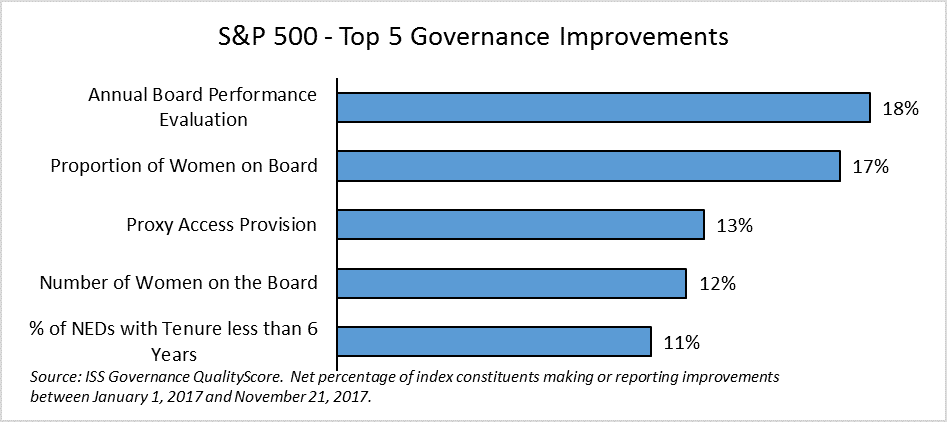
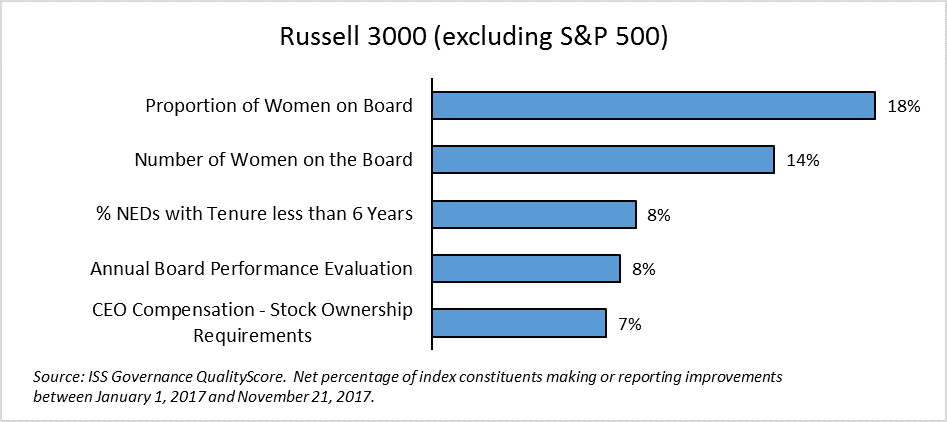
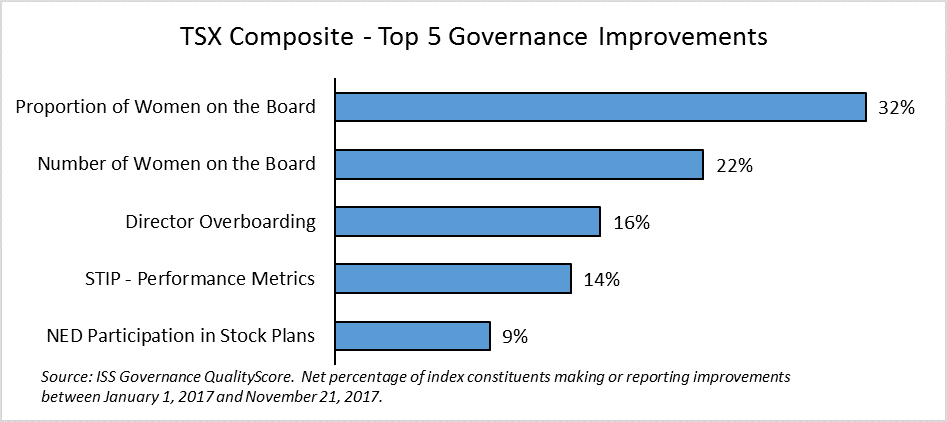
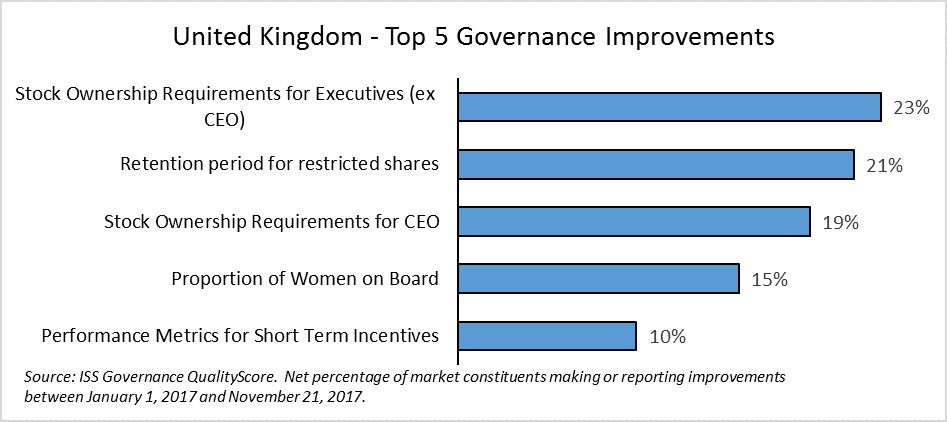
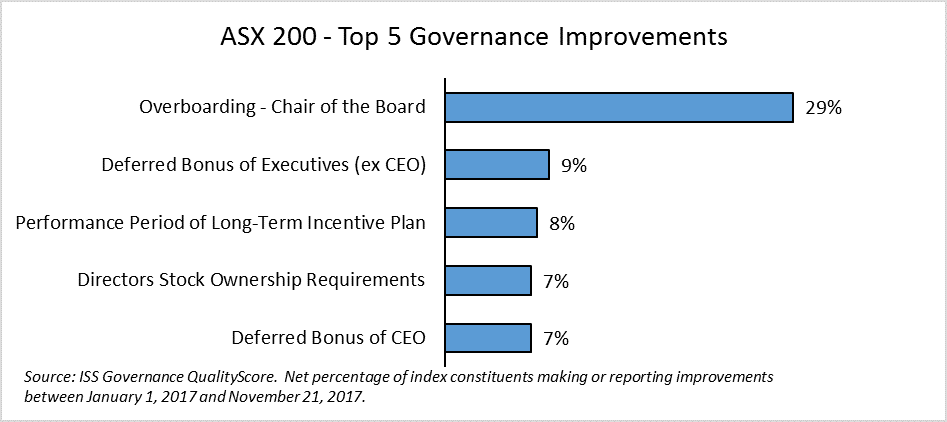
 L’auteur se demande alors si la théorie actionnariale – jusque-là prédominante dans la gouvernance des sociétés dans les juridictions anglo-saxonnes – peut maintenir sa position de tête ? Est-il d’ailleurs légitime que cette théorie conserve une place prédominante ? Le professeur Andrew Keay fait d’abord un rappel des points historiques de l’évolution de la théorie actionnariale. Cette théorie prend naissance dans les années 1800 et a des assises scientifiques très solides. Plusieurs grands penseurs en économie et en droit, dont un prix Nobel (Milton Friedman), appuient sans réserve ce mode de gouvernance et sa place prédominante comme mode de gestion dans les plus grandes économies du monde. Avec l’évolution des marchés, la théorie actionnariale a occupé finalement une place centrale jusque récemment.


 Gouvernance | Jacques Grisé