Lettre ouverte du président des Fonds Vanguard à l’ensemble des administrateurs de compagnies publiques


F. William McNabb III is Chairman and CEO of Vanguard; Glenn Booraem is the head of Investment Stewardship and a principal at Vanguard. This post is based on an excerpt from a recent Vanguard publication by Mr. Booraem, and an open letter to directors of public companies worldwide by Mr. McNabb.


Cinq questions destinées au nouveau président de Vanguard

Investment Stewardship 2017 Annual Report


An open letter to directors of public companies worldwide

Thank you for your role in overseeing the Vanguard funds’ sizable investment in your company. We depend on you to represent our funds’ ownership interests on behalf of our more than 20 million investors worldwide. Our investors depend on Vanguard to be a responsible steward of their assets, and we promote principles of corporate governance that we believe will enhance the long-term value of their investments.

At Vanguard, a long-term perspective informs every aspect of our investment approach, from the way we manage our funds to the advice we give our investors. Our index funds are structurally long-term, holding their investments almost indefinitely. And our active equity managers—who invest nearly $500 billion on our clients’ behalf—are behaviorally long-term, with most holding their positions longer than peer averages. The typical dollar invested with Vanguard stays for more than ten years.

A long-term perspective also underpins our Investment Stewardship program. We believe that well-governed companies are more likely to perform well over the long run. To this end, we consider four pillars when we evaluate corporate governance practices:

  1. The board: A high-functioning, well-composed, independent, diverse, and experienced board with effective ongoing evaluation practices.
  2. Governance structures: Provisions and structures that empower shareholders and protect their rights.
  3. Appropriate compensation: Pay that incentivizes relative outperformance over the long term.
  4. Risk oversight: Effective, integrated, and ongoing oversight of relevant industry- and company-specific risks.

These pillars guide our proxy voting and engagement activity, and we hope that by sharing this framework with you, you’ll have a better perspective on our approach to stewardship.

I’d like to highlight a few key themes that are increasingly important in our stewardship efforts:

Good governance starts with a great board.

We believe that when a company has a great board of directors, good results are more likely to follow.

We view the board as one of a company’s most critical strategic assets. When the board contributes the right mix of skill, expertise, thought, tenure, and personal characteristics, sustainable economic value becomes much easier to achieve. A thoughtfully composed, diverse board more objectively oversees how management navigates challenges and opportunities critical to shareholders’ interests. And a company’s strategic needs for the future inform effectively planned evolution of the board.

Gender diversity is one element of board composition that we will continue to focus on over the coming years. We expect boards to focus on it as well, and their demonstration of meaningful progress over time will inform our engagement and voting going forward. There is compelling evidence that boards with a critical mass of women have outperformed those that are less diverse. Diverse boards also more effectively demonstrate governance best practices that we believe lead to long-term shareholder value. Our stance on this issue is therefore an economic imperative, not an ideological choice. This is among the reasons why we recently joined the 30% Club, a global organization that advocates for greater representation of women in boardrooms and leadership roles. The club’s mission to enhance opportunities for women from “schoolroom to boardroom” is one that we think bodes well for broadening the pipeline of great directors.

Directors are shareholders’ eyes and ears on risk.

Risk and opportunity shape every business. Shareholders rely on a strong board to oversee the strategy for realizing opportunities and mitigating risks. Thorough disclosure of relevant and material risks—a key board responsibility—enables share prices to fully reflect all significant known (and reasonably foreseeable) risks and opportunities. Given our extensive indexed investments, which rely on the price-setting mechanism of the market, that market efficiency is critical to Vanguard and our clients.

Climate risk is an example of a slowly developing and highly uncertain risk—the kind that tests the strength of a board’s oversight and risk governance. Our evolving position on climate risk (much like our stance on gender diversity) is based on the economic bottom line for Vanguard investors. As significant long-term owners of many companies in industries vulnerable to climate risk, Vanguard investors have substantial value at stake.

Although there is no one-size-fits-all approach, market solutions to climate risk and other evolving disclosure practices can be valuable when they reflect the shared priorities of issuers and investors. Our participation in the Investor Advisory Group to the Sustainability Accounting Standards Board (SASB) reflects our belief that materiality-driven, sector-specific disclosures will better illuminate risks in a way that aids market efficiency and price discovery. We believe it is incumbent on all market participants—investors, boards, and management alike—to embrace the disclosure of sustainability risks that bear on a company’s long-term value creation prospects.

Engagement builds mutual understanding and a basis for progress.

Timely and substantive dialogue with companies is core to our investment stewardship approach. We see engagement as mutually beneficial: We convey Vanguard’s views and we hear companies’ perspectives, which adds context to our analysis.

Our funds’ votes on ballot measures—171,000 discrete items in the past year alone—are an outcome of this process, not the starting point. As we analyze ballot items, particularly controversial ones, we often invite direct and open-ended dialogue with the company. We seek management’s and the board’s perspectives on the issues at hand, and we evaluate them against our principles and leading practices. To understand the full picture, we often also engage with other investors, including activists and shareholder proponents. Our goal is that a fund’s ultimate voting decision does not come as a surprise. Our ability to make informed decisions depends on maintaining an ongoing exchange of ideas in a setting in which we can cover the intention and strategy behind the issues.

Yet our engagement activities are not solely focused on the ballot. Because our funds will hold most of their portfolio companies practically permanently, it’s important for us to build relationships with boards and management teams that transcend a transactional focus on any specific issue or vote. Engagement is a process, not an event, whose value only grows over time. A CEO we engaged with once said, “You can’t wait to build a relationship until you need it,” and that couldn’t be more true.

The opportunity to articulate our perspectives and understand a board’s thinking on a range of topics—anchored at the intersection of the firm’s strategy and its enabling governance practices—is a crucial part of our stewardship obligations. Although ballot items are reduced to a series of binary choices—yes or no, for or against—engagement beyond the ballot enables us to deal in nuance and in dialogue that drives meaningful progress over time.

There is a growing role for independent directors in engagement, both on issues over which they hold exclusive purview (such as CEO compensation and board composition/succession) and on deepening investors’ understanding of the alignment between a company’s strategy and governance practices. Our interest in engaging with directors is by no means intended to interfere with management’s ownership of the message on corporate strategy and performance. Rather, we believe it’s appropriate for directors to periodically hear directly from and be heard by the shareowners on whose behalf they serve.

* * *

Our focus on corporate governance and investment stewardship has been and will continue to be a deliberate manifestation of Vanguard’s core purpose: “To take a stand for all investors, to treat them fairly, and to give them the best chance for investment success.” Our four pillars and our increased focus on climate risk and gender diversity are not fleeting priorities for Vanguard. As essentially permanent owners of the companies you lead, we have a special obligation to be engaged stewards actively focused on the long term. Our Investment Stewardship team—available at InvestmentStewardship@vanguard.com—stands ready to engage with you and your leadership teams on matters of mutual importance to our respective stakeholders. Thank you for valuing our perspective and being our partner in stewardship.

Sincerely,

William McNabb III
Chairman and Chief Executive Officer
The Vanguard Group, Inc.

* * *

Investment Stewardship 2017 Annual Report

Our values and beliefs

“To take a stand for all investors, to treat them fairly, and to give them the best chance for investment success.”

—Vanguard’s core purpose

Vanguard’s core values of focus, integrity, and stewardship are reflected every day in the way that we engage with our clients, our crew (what we call our employees), and our community. We view our Investment Stewardship program as a natural extension of these values and of Vanguard’s core purpose. Our clients depend on us to be good stewards of their assets, and we depend on corporate boards to prudently oversee the companies in which our funds invest. That is why we believe we have a unique mission to advocate for a world in which the actions and values of public companies and of investors are aligned to create value for Vanguard fund shareholders over the long term.

We believe well-governed companies will perform better over the long term.

Effective corporate governance is more than the collection of a company’s formal provisions and bylaws. A board of directors serves on behalf of all shareholders and is critical in establishing trust and transparency and ensuring the health of a company—and of the capital markets—over time. This board-centric view is the foundation of Vanguard’s approach to investment stewardship. It guides our discussions with company directors and management, as well as our voting of proxies on the funds’ behalf at shareholder meetings around the globe. Great governance starts with a board of directors that is capable of selecting the right management team, holding that team accountable through appropriate incentives, and overseeing relevant risks that are material to the business. We believe that effective corporate governance is an important ingredient for the long-term success of companies and their investors. And when portfolio companies perform well, so do our clients’ investments.

We value long-term progress over short-term gain.

Because our funds typically own the stock of companies for long periods (and, in the case of index funds, are structurally permanent holders of companies), our emphasis on investment outcomes over the long term is unwavering. That’s why we deliberately focus on enduring themes and topics that drive long-term value, rather than solely short-term results. We believe that companies and boards should similarly be focused on long-term shareholder value—both through the sustainability of their strategy and operations, and by managing the risks most material to their long-term success.

Our approach

Vanguard’s Investment Stewardship team comprises an experienced group of senior leaders and analysts who are responsible for representing Vanguard shareholders’ interests through industry advocacy, company engagement, and proxy voting on behalf of the Vanguard funds. The team also houses an internal research and communications function that is active in developing Vanguard’s views, policies, and ongoing approach to investment stewardship. Our data and technology group supports every aspect of our Investment Stewardship program.

We take a thoughtful and deliberate approach to investment stewardship.

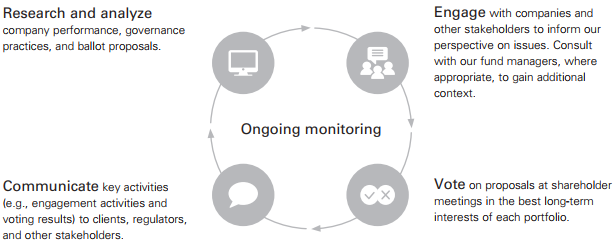
Our team supports effective corporate governance practices in three ways:

Advocating for policies that we believe will enhance the sustainable, long-term value of our clients’ investments. We promote good corporate governance and responsible investment through thoughtful participation in industry events and discussions where we can expand our advocacy and enhance our understanding of investment issues.

Engaging with portfolio company executives and directors to share our corporate governance principles and learn about portfolio companies’ corporate governance practices. We characterize our approach as “quiet diplomacy focused on results”—providing constructive input that will, in our view, better position companies to deliver sustainable value over the long term for all investors.

Voting proxies at company shareholder meetings across each of our portfolios and around the globe. Because of our ongoing advocacy and engagement efforts, companies should be aware of our governance principles and positions by the time we cast our funds’ votes.

Our process is iterative and ongoing

Our four pillars

Board

Good governance begins with a great board of directors. Our primary interest is to ensure that the individuals who represent the interests of all shareholders are independent (both in mindset and freedom from conflicts), capable (across the range of relevant skills for the company and industry), and appropriately experienced (so as to bring valuable perspective to their roles). We also believe that diversity of thought, background, and experience, as well as of personal characteristics (such as gender, race, and age), meaningfully contributes to the board’s ability to serve as effective, engaged stewards of shareholders’ interests. If a company has a well-composed, high-functioning board, good results are more likely to follow.

Structure

We believe in the importance of governance structures that empower shareholders and ensure accountability of the board and management. We believe that shareholders should be able to hold directors accountable as needed through certain governance and bylaw provisions. Among these preferred provisions are that directors must stand for election by shareholders annually and must secure a majority of the votes in order to join or remain on the board. In instances where the board appears resistant to shareholder input, we also support the right of shareholders to call special meetings and to place director nominees on the company’s ballot.

Compensation

We believe that performance-linked compensation policies and practices are fundamental drivers of the sustainable, long-term value for a company’s investors. The board plays a central role in determining appropriate executive pay that incentivizes performance relative to peers and competitors. Providing effective disclosure of these practices, their alignment with company performance, and their outcomes is crucial to giving shareholders confidence in the link between incentives and rewards and the creation of value over the long term.

Risk

Boards are responsible for effective oversight and governance of the risks most relevant and material to each company in the context of its industry and region. We believe that boards should take a thorough, integrated, and thoughtful approach to identifying, understanding, quantifying, overseeing, and—where appropriate—disclosing risks that have the potential to affect shareholder value over the long term. Importantly, boards should communicate their approach to risk oversight to shareholders through their normal course of business.

By the numbers: Voting and engagement

Engagement and voting trends

2015 proxy season 2016 proxy season  2017 proxy season
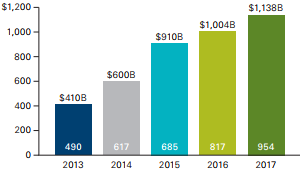
Company engagements 685 817 954
Companies voted 10,560 11,564 12,974
Meetings voted 12,785 16,740 18,905
Proposals voted 124,230 157,506 171,385
Countries voted in* 70 70 68

* The number of countries can vary each year. In certain markets, some companies do not hold shareholder meetings annually.
Note: The annual proxy season is from July 1 to June 30.

Our voting

Proxy voting reflects our governance pillars worldwide.

Meetings voted by region

Note: Data pertains to voting activity from July 1, 2016, through June 30, 2017

Global voting activity

* Includes more than 26,000 proposals related to capitalization; 8,000 proposals related to mergers and acquisitions; 16,000 routine business proposals; and 1,000 other shareholder proposals.
Note: Data pertains to voting activity from July 1, 2016, through June 30, 2017.

Our engagement

We engage with companies of all sizes.

Market Capitalization % of 2017 proxy season engagements
Under $1 billion 19%
$1 billion–under $10 billion 44%
$10 billion–under $50 billion 24%
$50 billion and over 13%

Our engagement with portfolio companies has grown significantly over time.

Number of engagements and assets represented

Note: Dollar figures represent the market value of Vanguard fund investments in companies with which we engaged as of June 30, 2017.

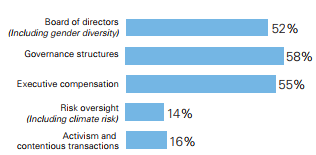
We engage on a range of topics aligned with our four pillars

Frequency of topics discussed during Vanguard engagements (%)

Note: Figures do not total 100%, as individual engagements often span multiple topics.

Boards in focus: Vanguard’s view on gender diversity

One of our most fundamental governance beliefs is that good governance begins with a great board of directors. We believe that diversity among directors—along dimensions such as gender, experience, race, background, age, and tenure—can strengthen a board’s range of perspectives and its capacity to make complex, fully considered decisions.

While we have long discussed board composition and diversity with portfolio companies, gender diversity has emerged as one dimension on which there is compelling support for positive effects on shareholder value. In recent years, a growing body of research has demonstrated that greater gender diversity on boards can lead to better company performance and governance.

Companies should be prepared to discuss—in both their public disclosures and their engagement with investors—their plans to incorporate appropriate diversity over time in their board composition. While we believe that board evolution is a process, not an event, the demonstration of meaningful progress over time will inform our engagement and voting going forward.

Boards in focus: Gender diversity

Engagement case studies

Gender diversity on boards was an important topic of engagement for us during the 12 months ended June 30, 2017. Below are summary examples of discussions we had on the subject.

High-impact engagement on gender diversity

Over several interactions with a U.S. industrial company, our team shared Vanguard’s perspective on board composition and evaluation. The company had undergone recent leadership transitions and was open to amending elements of its governance structure to align with best practices. We expressed particular support for meaningful gender diversity and expressed concern that the board previously had only one female director in its recent history.

Right after this year’s annual general meeting, the company announced it was adding four new directors with diverse experience, including two women. This outcome is the best-case scenario: The board welcomed shareholder input, we shared our view on best corporate governance practices, and the board ultimately incorporated our perspective into its board evolution process.

A denial of diversity’s value

A Canadian materials company that had consistently underperformed was governed by an entrenched, all-male board with seemingly nominal independence from the CEO. A 2017 shareholder resolution asked the company to adopt and publish a policy governing gender diversity on the board. Before voting, Vanguard engaged with the company to learn about its board evolution process, including its perspective on gender diversity. The engagement revealed that the company understood neither the value of gender diversity nor the importance of being responsive to shareholders’ concerns. Despite verbally endorsing gender diversity, the company resisted specifying a strategy or making a commitment to achieve it. The board, when seeking new members, relied solely on recommendations from current directors, a practice that can entrench the current board’s perspective and limit diversity. Our funds voted in support of the shareholder resolution, and we will continue to engage and hold the board accountable for meaningful progress over time.

Mixed results from an ongoing engagement

A U.S. consumer discretionary company had no women on its board, a problem magnified by its medium-term underperformance relative to peers, a classified board structure, and a lengthy average director tenure. We engaged with management twice between the 2016 and 2017 annual meetings to share our perspective on the importance of gender diversity and recommend that they make it a priority for future board evolution and director searches.

In its 2017 proxy, the company described board diversity as critical to the firm’s sustainable value and named gender as an element of diversity to be considered during the director search and nomination process. The company has since added a non-independent woman to the board. Although this move is directionally correct, it does not fully address our concerns; we will continue to encourage the company to add gender diversity to its ranks of independent directors.

Risk in focus: Vanguard’s view on climate risk

As the steward of long-term shareholder value for more than 20 million investors, Vanguard closely monitors how our portfolio companies identify, manage, and mitigate risks—including climate risk. Our approach to climate risk is evolving as the world’s and business community’s understanding of the topic matures.

This year, for the first time, our funds supported a number of climate-related shareholder resolutions opposed by company management. We are also discussing climate risk with company management and boards more than ever before. Our Investment Stewardship team is committed to engaging with a range of stakeholders to inform our perspective on these issues, and to share our thinking with the market, our portfolio companies, and our investors.

Risk in focus: Climate risk

A Q&A with Glenn Booraem, Vanguard’s Investment Stewardship Officer

Vanguard is an investment management company. Why should Vanguard fund investors be concerned about climate risk?

Mr. Booraem: Climate risk has the potential to be a significant long-term risk for companies in many industries. As stewards of our clients’ long-term investments, we must be finely attuned to this risk. We acknowledge that our clients’ views on climate risk span the ideological spectrum. But our position on climate risk is anchored in long-term economic value—not ideology. Regardless of one’s perspective on climate, there’s no doubt that changes in global regulation, energy consumption, and consumer preferences will have a significant economic impact on companies, particularly in the energy, industrial, and utilities sectors.

Why the shift in Vanguard’s assessment of climate risk, and why now?

Mr. Booraem: We’ve been discussing climate risk with portfolio companies for several years. It has been, and will remain, one of our engagement priorities for the foreseeable future. This past year, we engaged with more companies on this issue than ever before, and for the first time our funds supported two climate-related shareholder resolutions in cases where we believed that companies’ disclosure practices weren’t on par with emerging expectations in the market. As with other issues, our point of view has evolved as the topic has matured and, importantly, as its link to shareholder value has become more clear.

What is your top concern when you learn that a company in which a Vanguard portfolio invests does not have a rigorous strategy to evaluate and mitigate climate risk?

Mr. Booraem: Our concern is fundamentally that in the absence of clear disclosure and informed board oversight, the market lacks insight into the material risks of investing in that firm. It’s of paramount importance to us that the market is able to reflect risk and opportunity in stock prices, particularly for our index funds, which don’t get to select the stocks they own. When we’re not confident that companies have an appropriate level of board oversight or disclosure, we’re concerned that the market may not accurately reflect the value of the investment. Because we represent primarily long-term investors, this bias is particularly problematic when underweighting long-term risks inflates a company’s value.

Now that Vanguard has articulated a clear stance on climate risk, what can portfolio companies expect?

Mr. Booraem: First, companies should expect that we’re going to focus on their public disclosures, both about the risk itself and about their board’s and management’s oversight of that risk. Thorough disclosure is the foundation for the market’s understanding of the issue. Second, companies should expect that we’ll evaluate their disclosures in the context of both their leading peers and evolving market standards, such as those articulated by the Sustainability Accounting Standards Board (SASB). Third, they should expect that we’ll listen to their perspective on these and other matters. And finally, they should see our funds’ proxy voting as an extension of our engagement. When we consider a shareholder resolution on climate risk, we give companies a fair hearing on the merits of the proposal and consider their past commitments and the strength of their governance structure.

Engagement case studies

In the 12 months ended June 30, 2017, the topic of climate risk disclosure grew in frequency and prominence in our engagements with companies, particularly those in the energy, industrial, and utilities sectors, where climate risk was addressed in nearly every conversation we had. Below are examples of our engagements on climate risk.

Two companies’ commitments to enhanced disclosure

Our team led similar engagements with two U.S. energy companies facing shareholder resolutions on climate risk. One resolution requested that the first company publish an annual report on climate risk impacts and strategy. At the second company, a resolution requested disclosure of the company’s strategy and targets for transitioning to a low- carbon economy. In both cases, when we engaged with the companies, their management teams committed to improving their climate risk disclosure. Given the companies’ demonstrated responsiveness to shareholder feedback and commitment to improving, our funds did not support either shareholder proposal. Our team will continue to track and evaluate the companies’ progress toward their commitments as we consider our votes in future years.

A vote against a risk and governance outlier For years we engaged with a U.S. energy company that lagged its peers on climate risk disclosure and board accessibility. This year, a shareholder proposal requesting that the company produce a climate risk assessment report demonstrated a compelling link between the requested disclosures and long-term shareholder value. Because the board serves on behalf of shareholders and plays a critical role in risk oversight, we believed it was appropriate to seek a direct dialogue with independent directors about climate risk. Management resisted connecting the independent directors with shareholders, making the company a significant industry outlier in good governance practice. Without the confidence that the board understood or represented our view that climate risk poses a material risk in the energy sector, our team viewed the climate risk and governance issues as intertwined. Ultimately, our funds voted for the shareholder proposal and withheld votes on relevant independent directors for failing to engage with shareholders.

A vote for greater climate risk disclosure

A shareholder proposal at a U.S. energy company asked for an annual report with climate risk disclosure, including scenario planning. Through extensive research and engagements with the company’s management, its independent directors, and other industry stakeholders, our team identified governance shortfalls and a clear connection to long-term shareholder value. The company lagged its peers in disclosure, risk planning, and board oversight and responsiveness to shareholder concerns. Crucially, although the company’s public filings identified climate risk as a material issue, it failed to articulate plans for mitigation or adaptation. A similar proposal last year garnered significant support, but the company made no meaningful changes in response. Engagement had limited effect, so our funds voted for the shareholder proposal.

* * *

This post was excerpted from a Vanguard report; the complete publication is available here.
Gouvernance des sociétés d’État | une étude montre des problèmes dans la moitié d’entre elles


Yvan Allaire, président exécutif du conseil de l’Institut sur la gouvernance (IGOPP) vient de publier, en collaboration avec François Dauphin, un nouveau document de recherche intitulé « Nos sociétés d’État sont-elles bien gouvernées ? » lequel a fait l’objet d’une analyse succincte par le journaliste Gérald Fillion de la Société Radio-Canada.

Selon l’IGOPP, « les contribuables s’attendent à ce que ces sociétés fassent bon usage des fonds publics qui leur sont confiés, que leur gestion soit efficace, efficiente et transparente, que leur mandat soit clair et pertinent. Leur conseil d’administration, s’appuyant sur des règles et principes de saine gouvernance, devrait jouer un rôle essentiel à cet égard ».

Je crois que ce rapport de recherche saura intéresser les spécialistes de la gouvernance qui œuvrent dans les sociétés d’État et dans les autres organisations parapubliques. Personnellement, je crois que les auteurs ont élaboré une méthodologie de recherche tout à fait pertinente pour évaluer la bonne gouvernance, non seulement des sociétés d’État, mais également de tous les types d’organisation.


Vous trouverez ci-dessous une analyse de Gérald Filion, suivie de la référence au document de recherche de l’IGOPP.


Sur 46 sociétés d’État au Québec seulement 23 obtiennent la note de passage en matière de gouvernance, selon une étude préparée par les chercheurs Yvan Allaire et François Dauphin.

Si les grandes sociétés se démarquent, notamment la Caisse de dépôt, la SAQ et Loto-Québec, d’autres affichent de faibles résultats qui pourraient amener le gouvernement à devoir repenser leur modèle de gouvernance. Parmi les derniers de classe, on compte l’École nationale de police, le Musée national des beaux-arts de Québec et l’Institut de tourisme et d’hôtellerie du Québec.

Ce rapport, publié jeudi par l’Institut sur la gouvernance d’entreprises publiques et privées, s’intéresse à 47 instruments de mesure de la gouvernance des sociétés pour établir un pointage sur 100. La note de passage est établie à 60. Ont été exclues de l’étude 13 sociétés jugées inactives dans les faits ou trop petites. Les 46 sociétés d’État retenues encaissent annuellement des revenus de 63 milliards de dollars et comptent 65 000 employés.

L’Institut sur la gouvernance évalue les sociétés sur les compétences des administrateurs, la transparence, la reddition de compte, la structure du conseil et le déroulement des séances du conseil. Et les résultats sont très inégaux.

L’École nationale de police échoue sur tous les plans, tout particulièrement sur les questions de compétence et de nomination. À l’autre bout du spectre, la Société d’habitation du Québec se démarque à tous les niveaux, avec une note parfaite dans la composition et la structure de son conseil, qui touche surtout à la question de l’indépendance.

L’Institut recommande au gouvernement de revoir certaines lois jugées « désuètes » pour encadrer les sociétés, de rendre publics les profils d’expertise et d’expérience des administrateurs et une foule d’informations pertinentes à leur propos.

Il propose aussi que le gouvernement cesse de rendre le dépôt du rapport annuel des sociétés d’État obligatoire à l’Assemblée nationale avant de le rendre public. Les rapports doivent être disponibles dans des délais plus rapides selon l’Institut sur la gouvernance. Actuellement, il faut attendre 6 mois en moyenne après la fin de l’exercice pour avoir accès au rapport annuel.

Les conseils d’administration des sociétés d’État, écrivent les chercheurs, doivent adopter des principes qui dépassent les exigences de la loi, surtout au chapitre de la « divulgation des profils de compétence, divulgation non obligatoire, mais non prohibée. »

Les conseils doivent s’assurer également que l’information, sur les sites internet des sociétés d’État, est facilement accessible, notamment les résultats de la société, ses stratégies ainsi que les indicateurs de performance. De plus, « une divulgation exhaustive des éléments de rémunération des hauts dirigeants est incontournable. »

Le gouvernement se mêle de tout

L’Institut illustre, chiffres à l’appui, combien le gouvernement s’assure de garder le contrôle sur les nominations des administrateurs.

« Ainsi, écrivent Yvan Allaire et François Dauphin, dans seulement cinq cas avons-nous trouvé une participation claire de la part du conseil dans le processus de sélection des candidats et candidates au poste d’administrateur. Bien sûr, le manque de transparence fausse peut-être en partie les données pour cet élément. Néanmoins, la participation du conseil dans le processus de sélection est extrêmement importante pour assurer non seulement la présence de compétences et d’expériences complémentaires au groupe, mais aussi pour faciliter l’obtention (ou le maintien) d’une dynamique de groupe fonctionnelle. »

Sur les 46 sociétés d’État, seulement trois établissent publiquement sur leur site un lien entre la biographie des administrateurs et les compétences recherchées au conseil.

L’Institut sur la gouvernance est d’avis également qu’une personne ne devrait pas siéger à plus de cinq conseils d’administration en même temps. Or, « au moins quinze (32,6 %) des sociétés comptaient au minimum un membre du conseil siégeant sur plus de cinq conseils d’administration, incluant quelques présidents de conseil. »

Aussi, « 19 sociétés (41,3 %) ne fournissent pas l’information sur l’assiduité des membres aux réunions du conseil. »

Les auteurs constatent également qu’il y a « une différence importante entre les organisations assujetties à la Loi québécoise sur la gouvernance des sociétés d’État promulguée en 2006 et celles qui ne le sont pas. En effet, les sociétés assujetties doivent divulguer davantage d’information, ne serait-ce que pour s’y conformer. Aussi, elles ont en moyenne une note de 70,7, comparativement à 45,2 pour les sociétés qui ne se conforment qu’aux exigences de leurs lois respectives. »

Manque de transparence

C’est pas moins de dix sociétés sur les 46 qui n’ont pas d’indicateur de performance ou de cible pour les évaluer, ou qui ne publient pas leur plan stratégique. Ce manque de transparence touche notamment la Commission de la capitale nationale, Héma-Québec et la Société de la Place des Arts de Montréal.

Yvan Allaire et François Daupin affirment également que « la transparence quant à la rémunération des hauts dirigeants des sociétés d’État peut et devrait être grandement améliorée, ne serait-ce que pour se rapprocher des exigences imposées aux sociétés pourtant dites “privées”.»

Enfin, les auteurs invitent les sociétés d’État à rendre publics la teneur des formations offertes aux administrateurs et les processus d’évaluation des membres du conseil. Cela dit, près du quart des sociétés d’État ne font pas d’évaluation et ne dévoilent pas cette information.


Je vous invite à lire l’ensemble du document sur le site de l’IGOPP, notamment pour connaître les 47 critères de mesure de la gouvernance.

Bonne lecture ! Vos commentaires sont les bienvenus.


Nos sociétés d’État sont-elles bien gouvernées? |  L’IGOPP leur attribue des notes de gouvernance


La composition de votre CA est-elle adéquate pour faire face au futur ? | Résultats d’une étude américaine de PwC


Au fil des ans, j’ai publié plusieurs billets sur la composition des conseils d’administration. Celle-ci devient un enjeu de plus en plus critique pour les investisseurs et les actionnaires en 2017. Voici les billets publiés qui traitent de la composition des conseils d’administration :

La composition du conseil d’administration | Élément clé d’une saine gouvernance

Conseils d’administration d’OBNL : Problèmes de croissance et composition du conseil

Approche stratégique à la composition d’un conseil d’administration (1re partie de 2)

Approche stratégique à la composition d’un conseil d’administration (2e partie de 2)

L’évolution de la composition des conseils d’administration du CAC 40 ?

Priorité à la diversité sur les conseils d’administration | Les entreprises à un tournant !

Bâtir un conseil d’administration à « valeur ajoutée »

Assurer une efficacité supérieure du conseil d’administration 

Enquête mondiale sur les conseils d’administration et la gouvernance 

Le rapport 2016 de la firme ISS sur les pratiques relatives aux conseils d’administration 

L’article publié par Paula Loop, directrice du Centre de la gouvernance de PricewaterhouseCoopers (PwC), est très pertinent pour tous les CA de ce monde. Il a été publié sur le forum du Harvard Law School on Corporate Governance.

Même si l’étude de PwC concerne les entreprises américaines cotées en bourse (S&P 500), les conclusions s’appliquent aussi aux entreprises canadiennes.

Le sujet à l’ordre du jour des Boards est le renouvellement (refreshment) du conseil afin d’être mieux préparé à affronter les changements futurs. Le CA a-t-il la composition optimale pour s’adapter aux nouvelles circonstances d’affaires ?

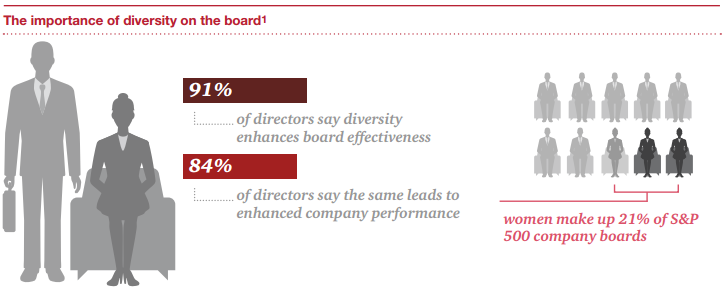
La recherche de PwC a porté sur les résultats de l’évolution des CA dans neuf (9) secteurs industriels. Dans l’ensemble, 91 % des administrateurs croient que la diversité contribue à l’efficacité du conseil. De plus, 84 % des administrateurs lient la variable de la diversité à l’accroissement de la performance organisationnelle.

L’auteure avance qu’il existe trois moyens utiles aux fins du renouvellement des CA :

  1. Une plus grande diversité ;
  2. La fixation d’un âge limite et d’un nombre de mandats maximum ;
  3. L’évaluation de la séparation des rôles entre la présidence du conseil (Chairperson) et la présidence de l’entreprise (CEO).

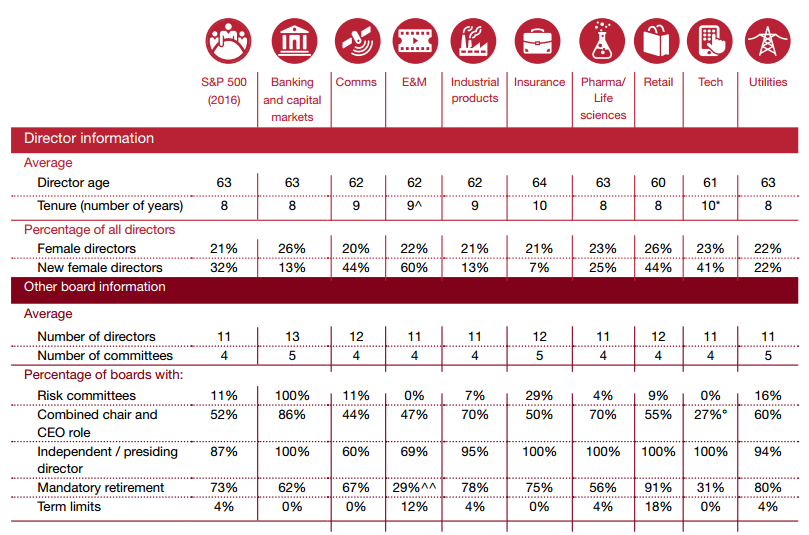
L’article est très intéressant en raison des efforts consentis à la présentation des résultats par l’illustration infographique. Le tableau présenté en annexe est particulièrement pertinent, car on y trouve une synthèse des principales variables liées au renouvellement des CA selon les neuf secteurs industriels ainsi que l’indice du S&P 500.

Au Canada, les recherches montrent que les entreprises sont beaucoup plus proactives eu égard aux facteurs de renouvellement des conseils d’administration.

Bonne lecture !

Does your board have the right makeup for the future?


Résultats de recherche d'images pour « composition du conseil d'administration »


Board composition is “the” issue for investors in 2017. Some industries are taking more steps to refresh their board than others—how does yours stack up? As the economic environment changes and lines between industries start to blur, companies are looking for directors with different, less traditional and even broader skills. Technology skills will be key across sectors.

Who’s sitting in your boardroom? Do your directors bring the right mix of skills, experiences and expertise to best oversee your company? Are they a diverse group, or a group with common backgrounds and outlooks? Can they help see into the future and how your industry is likely to take shape? And are some of your directors serving on your board as well as those in other industries?

These questions should be top of mind for executives and board members alike. Why? Because the volume of challenges companies are facing and the pace of change has intensified in recent years. From emerging technologies and cybersecurity threats to new competitors and changing regulatory requirements, companies–and their boards–have to keep up. Some boards have realized that having board members with multiple industry perspectives can prove helpful when navigating the vast amount of change businesses are faced with today.

If your board isn’t thinking about its composition and refreshment, you are opening up the door to scrutiny. Board composition is “the” issue for investors in 2017. Investors want to know who is sitting in the boardroom and whether they are the best people for the job. If they don’t think you have the right people on the board, you will likely hear about it. This is no longer something that is “nice” to think about, it’s becoming something boards “must” think about. And think about regularly.

How can you refresh your board?


In 2016, we analyzed the board demographics of select companies in nine industries to see how they compared to each other and to the S&P 500. Where does your industry fall when it comes to board refreshment? Does your board have the right makeup for the future?


There are a number of ways to refresh your board. One way is to think about diversity. Many have taken on the gender imbalance on their boards and are adding more women directors. But diversity isn’t only about women. It’s about race, ethnicity, skills, experience, expertise, age and even geography. It’s about diversity of thought and perspective. And it’s not just a talking point anymore. Regulators started drafting disclosure rules around board diversity in mid-2016. Whether the rules become final remains to be seen, but either way, board diversity is in the spotlight. Add to that the common criticism that the US is far behind its developed country peers. Norway, France and the Netherlands have been using quotas for a while, and Germany in 2015 passed a law mandating 30% women on the boards of its biggest companies. While it’s unlikely quotas would be enacted in the US, some believe they’re a needed catalyst.


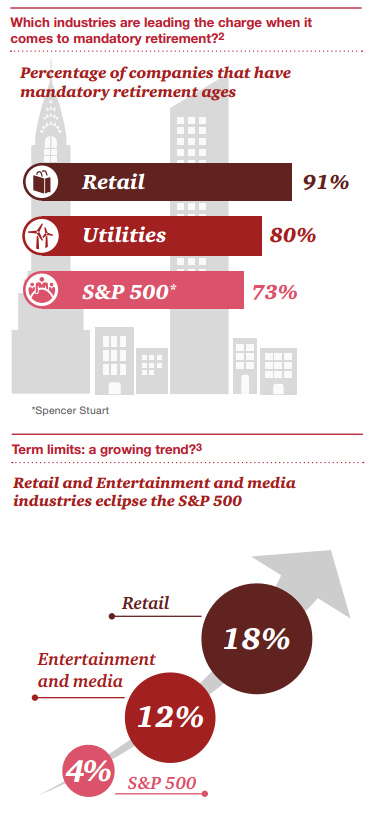
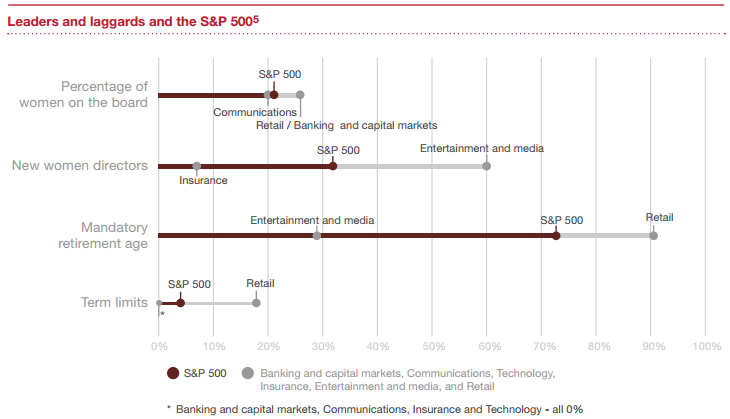
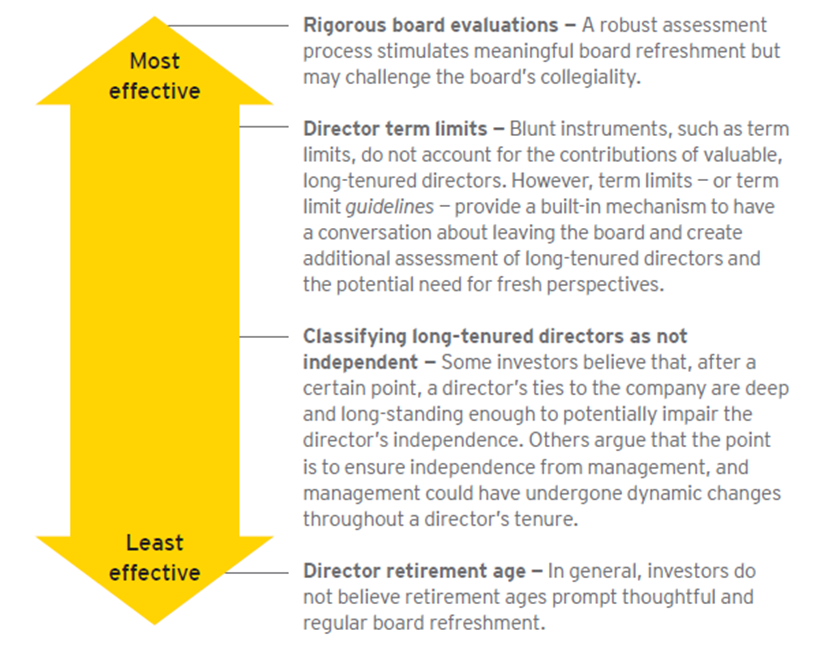
While we only looked at gender diversity on boards, we believe this is a good indicator of the efforts some boards are making to become more diverse overall. Secondly, mandatory retirement ages and term limits are two tools that boards can use to refresh itself. Our analysis showed that some industries seemed to be adopting these provisions more so than others. Some directors question their effectiveness.

Some of the industries in our PwC peer group analysis don’t have term limits at all

Banking and capital markets

Insurance

Communications

Technology

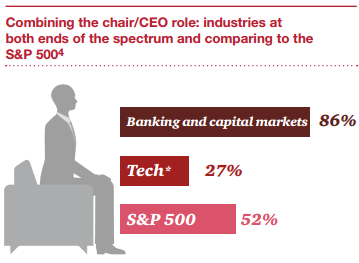
A third move that some companies have taken often, under investor pressure—is to evaluate their leadership structure and split the chair and CEO role. While the issue is still one that investors care about, certain industries have kept the combined role. And some companies don’t plan on making the change any time soon. Most often, boards with a combined chair/CEO role have an independent lead or presiding director. This may ease concerns that institutional investors and proxy firms may have about independence in the leadership role.


Who would have thought? Some interesting findings


While our analysis shows that most industries didn’t veer too far from the S&P 500 averages for most benchmarking categories, a few stand out. Retail in particular seems to be leading the charge when it comes to board refreshment.


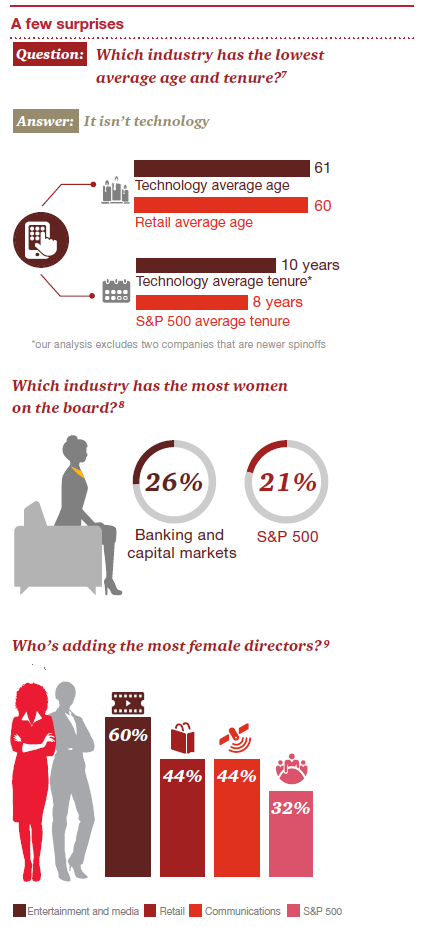
Other industries aren’t moving along quite so quickly. And there were some surprises. Which industry had the lowest average age? Perhaps surprisingly, it’s not technology. Retail claimed that one, too. And, also unexpected, was that technology had one of the highest average tenures. [6] Another surprising finding came from our analysis of the banking and capital markets industry—an industry that’s often considered to be male-dominated. BCM boards had the highest percentage of women, at 26%. That compares to just 21% for the S&P 500. Both the entertainment and media and the communications industries were also ahead of the curve when it comes to women in the boardroom, with the highest and second-highest percentages of new female directors. Retail tied with communications for second-highest, as well.


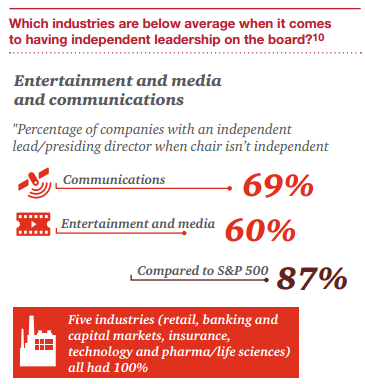
On a less progressive note, both the entertainment and media and communications industries were below the S&P 500 average when it came to having an independent lead or presiding director when the board chair is not independent. And they ranked lowest of the industries we analyzed on this topic—by far.

Blurred lines across industries


Skills, experience and diversity of thought will likely become even more important in the coming years. In the past five years alone, once bright industry lines have started to blur. Take the retail industry, for example. Brick and mortar stores, shopping malls and strip malls were what used to come to mind when thinking about that industry. Now it’s mobile devices and drones. Across many industries, business models are changing, competitors from different industries are appearing and new skills are needed. The picture of what your industry looks like today may not be the same in just a few years.

Technology is the key to much of this change. Just a few years ago, many boards were not enthusiastic about the idea of adding a director solely with technology or digital skills. But times are changing. Technology is increasingly becoming a critical skill to have on the board. We consulted our experts in the nine industries we analyzed, and all of them put technology high on the “must-have” list for new directors. Interestingly, financial, operational and industry experience—the top three from our 2016 Annual Corporate Directors Survey, were not among the most commonly listed.

Taking a fresh look


If your company is shifting gears and changing the way it does business, it may be important to take a fresh look at your board composition at more frequent intervals. Some boards use a skills matrix to see what they might be lacking in their board composition. Others may be forced by a shareholder activist to add new skills to the board.


So how do you fill the holes in the backgrounds or skills you want from your directors? One way is to look to other industries. As our analysis shows, board composition and refreshment approaches vary by industry. As industry lines blur, other industry perspectives could compliment your company—it might be helpful to consider filling any holes with board members from other industries.

No matter which approach you take, it’s very important to think about your board’s composition proactively. Use your board evaluations to understand which directors have the necessary skills and expertise—and which might be lacking what the board needs. Think about your board holistically as you think about your company’s future. Your board composition is critical to ensuring your board is effective—and keeping up with the world outside the boardroom.


Appendix


How do our industry peer groups stack up to the S&P 500? Making this evaluation can be a good way to begin determining whether your board has the right balance in terms of board composition.


Analysis excludes two companies that are newer spinoffs.
Analysis excludes one company that does not combine or separate the roles.
Excludes the tenure of one newly-formed company.
Four of the five companies that have a mandatory retirement age have waived or state that the board can choose to waive it.

Sources: Spencer Stuart, U.S. Board Index 2016, November, 2016; PwC analysis of US SEC registrants: 27 of the largest industrial products companies by market capitalization and revenue, May 2016; 11 of the largest retail companies by revenue, May 2016; 21 of the largest banking and capital markets companies by revenue, September 2016; 24 of the largest insurance companies by market capitalization, May 2016; 17 of the largest entertainment and media companies by revenue, May 2016; nine of the largest communications companies by revenue, May 2016; 25 of the largest power and utilities companies by revenue, October 2016; 16 of the largest technology companies by revenue, May 2016; 23 of the largest pharma/life sciences companies by revenue, May 2016.


Endnotes:

1Sources: PwC, 2016 Annual Corporate Directors Survey, October 2016; Spencer Stuart, 2016 US Board Index, November 2016.(go back)

2Sources: PwC analysis of 11 of the largest retail companies by revenue that are also US SEC registrants, May 2016; PwC analysis of 25 of the largest power and utilities companies by revenue that are also US SEC registrants, October 2016; Spencer Stuart, U.S. Board Index 2016, November 2016.(go back)

3Sources: PwC analysis of 11 of the largest retail companies by revenue that are also US SEC registrants, May 2016; PwC analysis of 17 of the largest entertainment and media companies by revenue that are also US SEC registrants, May 2016; Spencer Stuart, S. Board Index 2016, November 2016.(go back)

4Sources: PwC analysis of 21 of the largest banking and capital markets companies by revenue that are also US SEC registrants, September 2016; PwC analysis of 16 of the largest technology companies by revenue that are also US SEC registrants, May 2016; Spencer Stuart, S. Board Index 2016, November 2016.(go back)

5Sources: PwC analysis of US SEC registrants: nine of the largest communications companies by revenue, May 2016; 11 of the largest retail companies by revenue, May 2016; 21 of the largest banking and capital markets companies by revenue, September 2016; 24 of the largest insurance companies by market capitalization, May 2016; 16 of the largest technology companies by revenue, May 2016; 17 of the largest entertainment and media companies by revenue, May 2016; Spencer Stuart, U.S. Board Index 2016, November 2016.(go back)

6Analysis excludes two companies that are newer spinoffs.(go back)

7Sources: PwC analysis of 16 of the largest technology companies by revenue that are also US SEC registrants, May 2016; Spencer Stuart, U.S. Board Index 2016, November 2016.(go back)

8Sources: PwC analysis of 11 of the largest retail companies by revenue that are also US SEC registrants, May 2016; PwC analysis of 21 of the largest banking and capital markets companies by revenue that are also US SEC registrants, September 2016; Spencer Stuart, U.S. Board Index 2016, November, 2016(go back)

9Sources: PwC analysis of 17 of the largest entertainment and media companies by revenue that are also US SEC registrants, May 2016; PwC analysis of nine of the largest communications companies by revenue that are also US SEC registrants, May 2016; PwC analysis of 11 of the largest retail companies by revenue that are also US SEC registrants, May 2016; Spencer Stuart, S. Board Index 2016, November 2016.(go back)

10Sources: PwC analysis of 17 of the largest entertainment and media companies by revenue that are also US SEC registrants, May 2016; PwC analysis of nine of the largest communications companies by revenue that are also US SEC registrants, May 2016; Spencer Stuart, S. Board Index 2016, November 2016; PwC analysis of 11 of the largest retail companies by revenue that are also US SEC registrants, May 2016; PwC analysis of 21 of the largest banking and capital markets companies by revenue that are also US SEC registrants, September 2016; PwC analysis of 24 of the largest insurance companies by market capitalization that are also US SEC registrants, May 2016; PwC analysis of 16 of the largest technology companies by revenue that are also US SEC registrants, May 2016; PwC analysis of 23 of the largest pharma/life sciences companies by revenue that are also US SEC registrants, May 2016.

Priorité à la diversité sur les conseils d’administration | Les entreprises à un tournant !


Selon David A. Katz et Laura A. McIntosh, associés de la firme Wachtell, Lipton, Rosen & Katz, les entreprises américaines ont franchi un point de non-retour eu égard à l’acceptation de la contribution de la diversité à la profitabilité des sociétés.

En effet, il est de plus en plus acquis que l’accroissement de la diversité a des effets positifs sur les deux rôles majeurs du conseil d’administration : (1) la surveillance (oversight) et (2) la création de valeur des entreprises.

Ce court article, publié sur le site du Harvard Law School Forum, décrit les progrès réalisés dans la mise en œuvre de la diversité sur les CA et montre que les entreprises en sont à un tournant dans ce domaine.

Bonne lecture ! Vos commentaires sont appréciés.


Corporate Governance Update: Prioritizing Board Diversity


In what has been called a “breakout year” for gender diversity on U.S. public company boards, corporate America showed increasing enthusiasm for diversity-promoting measures during 2016. Recent studies have demonstrated the greater profitability of companies whose boards are meaningfully diverse. In many cases, companies have collaborated with investors to increase the number of women on their boards, and a number of prominent corporate leaders have publicly encouraged companies to prioritize diversity. The Business Roundtable, a highly influential group of corporate executives, recently released a statement that explicitly links board diversity with board performance in the two key areas of oversight and value creation. Likewise, a group of corporate leaders—including Warren Buffett, Jamie Dimon, Jeff Immelt, and Larry Fink, among others—published their own “Commonsense Principles of Corporate Governance,” (discussed on the Forum here) an open letter highlighting diversity as a key element of board composition.

board-diversity_forbes

Momentum toward gender parity on boards is building, particularly in the top tier of public corporations. Pension funds from several states have taken strong stances intended to encourage meaningful board diversity at the 25 percent to 30 percent level. Last year, then-SEC Chair Mary Jo White cited the correlation of board diversity with improved company performance and identified board diversity as an important issue for the Commission, signaling that it may be a priority for regulators going forward. Boards should take note of the evolving best practices in board composition and look for ways to improve, from a diversity standpoint, their candidate search, director nomination, and board refreshment practices. We recommend that boards include this issue as part of an annual discussion on director succession, similar to the annual discussion regarding CEO succession.

Diversity and Performance

A board of directors has two primary roles: oversight and long-term value creation. This year, the Business Roundtable released updated governance guidelines (discussed on the Forum here) that link a commitment to diversity to the successful accomplishment of both goals. Its 2016 guidelines include a statement on diversity that reads, in part, “Diverse backgrounds and experiences on corporate boards … strengthen board performance and promote the creation of long-term shareholder value.” In a statement accompanying the guidelines, Business Roundtable leader John Hayes noted that a “diversity of thought and perspective … adds to good decision-making” and enables “Americans, as well as American corporations, to prosper.” Board success and competence thus is recast to include diversity as an essential element rather than as an afterthought or as a concession to special interests.

Similarly, the “Commonsense Principles of Corporate Governance” (discussed on the Forum here) outlined over the summer by a group of corporate leaders highlights diversity on boards—multi-dimensional diversity—and correlates that diversity with improved performance. The signers of the principles, including an activist investor, a pension plan, and various chief executives, stated unequivocally in their accompanying letter that “diverse boards make better decisions.” A consensus seems to be emerging among corporate leaders that, as stated by the Business Roundtable, boards should include “a diversity of thought, backgrounds, experiences, and expertise and a range of tenures that are appropriate given the company’s current and anticipated circumstances and that, collectively, enable the board to perform its oversight function effectively.” With regard to oversight, a recent study by Spencer Stuart and WomenCorporateDirectors Foundation (discussed on the Forum here) found that female directors generally are more concerned about risks, and are more willing to address them, than are their male colleagues. Boards should, where possible, develop a pipeline of candidates whose career paths are enabling them to acquire the relevant professional expertise to be valuable public company directors in their industry.

In order to promote diversity in board composition, boards should become familiar with director search approaches to identify qualified candidates that would not otherwise come to the attention of the nominating committee. Executive search firms, public databases, and inquiries to organizations such as 2020 Women on Boards are a few of the ways that boards can find candidates that may be beyond their typical field of view. Organizations exist to help companies in their recruitment efforts. Crain’s Detroit Business, for example, has compiled a database of qualified female director candidates in Michigan, who are invited to apply and are vetted for inclusion. Boards may wish to commit to including individuals with diverse backgrounds in the pool of qualified candidates for each vacancy to be filled.

The Future of Diversity

In 2016, shareholder proposals on board diversity met with increased success. The numbers are still small: Nine proposals made it onto the ballot last year, nearly double the total in 2015 and triple the total in 2014. Nonetheless, support reached unprecedented levels in certain cases: A diversity proposal—which was not opposed by management—at FleetCor Technologies received over 70 percent shareholder support. Another diversity proposal—which was opposed by management—at Joy Global received support from 52percent of the voting shares (though the proposal did not pass due to abstentions). Diversity proposals are generally supported by the proxy advisory firms, including Institutional Shareholder Services and Glass Lewis.

Perhaps more significantly, shareholder proposals in several cases resulted in increased board diversity without ever coming to a vote. The pension fund Wespath submitted proposals this year seeking to increase diversity at three major corporations, and in each case withdrew the proposals when the subject companies agreed to add women to their boards. A spokesperson for Wespath stated that the fund had privately communicated their desire for increased diversity and had filed proposals as a “last resort” to spur change.

In a similar effort, CalSTRS recently submitted 125 letters to boards at California corporations whose boards had no women directors; in response, 35 of the companies appointed female board members. CalSTRS has indicated that if its private approaches are unsuccessful, it will proceed with shareholder proposals. The Wespath and CalSTRS examples are valuable for boards. Listening to investors, being responsive, and staying out in front of issues to forestall shareholder proposals is far better than reacting to frustrated investors who feel compelled to resort to extreme measures to get corporate attention. It is also greatly preferable to a situation in which activist investors press for legislative actions such as quotas or other mandatory board composition requirements, as we have seen in other countries.

2017 is likely to be a year in which progress toward greater board diversity significantly accelerates. Indeed, it is becoming clear that gender diversity—if not gender parity—one day will be a standard aspect of board composition. While the process of realizing that future should not be artificially or counterproductively hastened, it should be welcomed as a state of affairs that will be beneficial to all corporate constituents and, beyond, to the greater good of U.S. business and American culture.


Six mesures pour améliorer la gouvernance des organismes publics au Québec | Yvan Allaire


Je suis tout à fait d’accord avec la teneur de l’article de l’IGOPP, publié par Yvan Allaire* intitulé « Six mesures pour améliorer la gouvernance des organismes publics au Québec», lequel dresse un état des lieux qui soulève des défis considérables pour l’amélioration de la gouvernance dans le secteur public et propose des mesures qui pourraient s’avérer utiles. Celui-ci fut a été soumis au journal Le Devoir, pour publication.

L’article soulève plusieurs arguments pour des conseils d’administration responsables, compétents, légitimes et crédibles aux yeux des ministres responsables.

Même si la Loi sur la gouvernance des sociétés d’État a mis en place certaines dispositions qui balisent adéquatement les responsabilités des C.A., celles-ci sont poreuses et n’accordent pas l’autonomie nécessaire au conseil d’administration, et à son président, pour effectuer une véritable veille sur la gestion de ces organismes.

Selon l’auteur, les ministres contournent allègrement les C.A., et ne les consultent pas. La réalité politique amène les ministres responsables à ne prendre principalement avis que du PDG ou du président du conseil : deux postes qui sont sous le contrôle et l’influence du ministère du conseil exécutif ainsi que des ministres responsables des sociétés d’État (qui ont trop souvent des mandats écourtés !).

Rappelons, en toile de fond à l’article, certaines dispositions de la loi :

– Au moins les deux tiers des membres du conseil d’administration, dont le président, doivent, de l’avis du gouvernement, se qualifier comme administrateurs indépendants.

– Le mandat des membres du conseil d’administration peut être renouvelé deux fois

– Le conseil d’administration doit constituer les comités suivants, lesquels ne doivent être composés que de membres indépendants :

1 ° un comité de gouvernance et d’éthique ;

2 ° un comité d’audit ;

3 ° un comité des ressources humaines.

– Les fonctions de président du conseil d’administration et de président-directeur général de la société ne peuvent être cumulées.

– Le ministre peut donner des directives sur l’orientation et les objectifs généraux qu’une société doit poursuivre.

– Les conseils d’administration doivent, pour l’ensemble des sociétés, être constitués à parts égales de femmes et d’hommes.

Yvan a accepté d’agir en tant qu’auteur invité dans mon blogue en gouvernance. Voici donc son article.


Six mesures pour améliorer la gouvernance des organismes publics au Québec

par Yvan Allaire*


La récente controverse à propos de la Société immobilière du Québec a fait constater derechef que, malgré des progrès certains, les espoirs investis dans une meilleure gouvernance des organismes publics se sont dissipés graduellement. Ce n’est pas tellement les crises récurrentes survenant dans des organismes ou sociétés d’État qui font problème. Ces phénomènes sont inévitables même avec une gouvernance exemplaire comme cela fut démontré à maintes reprises dans les sociétés cotées en Bourse. Non, ce qui est remarquable, c’est l’acceptation des limites inhérentes à la gouvernance dans le secteur public selon le modèle actuel.


535284-membres-conseils-administration-16-societes


En fait, propriété de l’État, les organismes publics ne jouissent pas de l’autonomie qui permettrait à leur conseil d’administration d’assumer les responsabilités essentielles qui incombent à un conseil d’administration normal : la nomination du PDG par le conseil (sauf pour la Caisse de dépôt et placement, et même pour celle-ci, la nomination du PDG par le conseil est assujettie au veto du gouvernement), l’établissement de la rémunération des dirigeants par le conseil, l’élection des membres du conseil par les « actionnaires » sur proposition du conseil, le conseil comme interlocuteur auprès des actionnaires.

Ainsi, le C.A. d’un organisme public, dépouillé des responsabilités qui donnent à un conseil sa légitimité auprès de la direction, entouré d’un appareil gouvernemental en communication constante avec le PDG, ne peut que difficilement affirmer son autorité sur la direction et décider vraiment des orientations stratégiques de l’organisme.

Pourtant, l’engouement pour la « bonne » gouvernance, inspirée par les pratiques de gouvernance mises en place dans les sociétés ouvertes cotées en Bourse, s’était vite propagé dans le secteur public. Dans un cas comme dans l’autre, la notion d’indépendance des membres du conseil a pris un caractère mythique, un véritable sine qua non de la « bonne » gouvernance. Or, à l’épreuve, on a vite constaté que l’indépendance qui compte est celle de l’esprit, ce qui ne se mesure pas, et que l’indépendance qui se mesure est sans grand intérêt et peut, en fait, s’accompagner d’une dangereuse ignorance des particularités de l’organisme à gouverner.

Ce constat des limites des conseils d’administration que font les ministres et les ministères devrait les inciter à modifier ce modèle de gouvernance, à procéder à une sélection plus serrée des membres de conseil, à prévoir une formation plus poussée des membres de C.A. sur les aspects substantifs de l’organisme dont ils doivent assumer la gouvernance.

Or, l’État manifeste plutôt une indifférence courtoise, parfois une certaine hostilité, envers les conseils et leurs membres que l’on estime ignorants des vrais enjeux et superflus pour les décisions importantes.

Évidemment, le caractère politique de ces organismes exacerbe ces tendances. Dès qu’un organisme quelconque de l’État met le gouvernement dans l’embarras pour quelque faute ou erreur, les partis d’opposition sautent sur l’occasion, et les médias aidant, le gouvernement est pressé d’agir pour que le « scandale » s’estompe, que la « crise » soit réglée au plus vite. Alors, les ministres concernés deviennent préoccupés surtout de leur contrôle sur ce qui se fait dans tous les organismes sous leur responsabilité, même si cela est au détriment d’une saine gouvernance.

Ce brutal constat fait que le gouvernement, les ministères et ministres responsables contournent les conseils d’administration, les consultent rarement, semblent considérer cette agitation de gouvernance comme une obligation juridique, un mécanisme pro-forma utile qu’en cas de blâme à partager.

Prenant en compte ces réalités qui leur semblent incontournables, les membres des conseils d’organismes publics, bénévoles pour la plupart, se concentrent alors sur les enjeux pour lesquels ils exercent encore une certaine influence, se réjouissent d’avoir cette occasion d’apprentissage et apprécient la notoriété que leur apporte dans leur milieu ce rôle d’administrateur.

Cet état des lieux, s’il est justement décrit, soulève des défis considérables pour l’amélioration de la gouvernance dans le secteur public. Les mesures suivantes pourraient s’avérer utiles :

  1. Relever considérablement la formation donnée aux membres de conseil en ce qui concerne les particularités de fonctionnement de l’organisme, ses enjeux, ses défis et critères de succès. Cette formation doit aller bien au-delà des cours en gouvernance qui sont devenus quasi-obligatoires. Sans une formation sur la substance de l’organisme, un nouveau membre de conseil devient une sorte de touriste pendant un temps assez long avant de comprendre suffisamment le caractère de l’organisation et son fonctionnement.
  2. Accorder aux conseils d’administration un rôle élargi pour la nomination du PDG de l’organisme ; par exemple, le conseil pourrait, après recherche de candidatures et évaluation de celles-ci, recommander au gouvernement deux candidats pour le choix éventuel du gouvernement. Le conseil serait également autorisé à démettre un PDG de ses fonctions, après consultation du gouvernement.
  3. De même, le gouvernement devrait élargir le bassin de candidats et candidates pour les conseils d’administration, recevoir l’avis du conseil sur le profil recherché.
  4. Une rémunération adéquate devrait être versée aux membres de conseil ; le bénévolat en ce domaine prive souvent les organismes de l’État du talent essentiel au succès de la gouvernance.
  5. Rendre publique la grille de compétences pour les membres du conseil dont doivent se doter la plupart des organismes publics ; fournir une information détaillée sur l’expérience des membres du conseil et rapprocher l’expérience/expertise de chacun de la grille de compétences établie. Cette information devrait apparaître sur le site Web de l’organisme.
  6. Au risque de trahir une incorrigible naïveté, je crois que l’on pourrait en arriver à ce que les problèmes qui surgissent inévitablement dans l’un ou l’autre organisme public soient pris en charge par le conseil d’administration et la direction de l’organisme. En d’autres mots, en réponse aux questions des partis d’opposition et des médias, le ministre responsable indique que le président du conseil de l’organisme en cause et son PDG tiendront incessamment une conférence de presse pour expliquer la situation et présenter les mesures prises pour la corriger. Si leur intervention semble insuffisante, alors le ministre prend en main le dossier et en répond devant l’opinion publique.

_______________________________________________

*Yvan Allaire, Ph. D. (MIT), MSRC Président exécutif du conseil, IGOPP Professeur émérite de stratégie, UQÀM

Enquête mondiale sur les conseils d’administration et la gouvernance


Voici un récent article publié par Julie Hembrock Daum, directrice à Spencer Stuart et Susan Stauberg, PDG à Fondation WomenCorporateDirectors.

Cet article a été publié dans le Harvard Law School Forum aujourd’hui et il présente l’état de la gouvernance à l’échelle internationale (60 pays) en mettant particulièrement l’accent sur la diversité et les différences de perception entre les hommes et les femmes qui occupent des postes d’administrateurs de grandes sociétés privées ou publiques.

On me demande souvent de proposer des références en relation avec la gouvernance globale. Les gens veulent connaître les tendances et les progrès des efforts entrepris dans le domaine de la diversité dans le monde.

L’enquête citée ci-dessous fournit des données actuelles sur les principaux enjeux concernant les Board.

Je crois que tous les gestionnaires seront intéressés par la présentation succincte, claire et bien illustrée des données de la mondialisation de la gouvernance.

Bonne lecture ; vos commentaires sont appréciés.


2016 Global Board of Directors Survey


The growing demands on corporate boards are transforming boardrooms globally, with directors taking on a more strategic, dynamic and responsive role to help steer their companies through a hypercompetitive and volatile business environment. Economic and political uncertainties make long-term planning more difficult. The proliferation of cyber attacks—and their consequences for business in financial  olosses and reputational damage—increases the scope of risk oversight. A rise in institutional and activist shareholder activity requires boards to identify vulnerabilities in board renewal and performance and, in some cases, establish protocols for engagement. And all of these demands have pushed issues around board composition and diversity to the fore, as boards cannot afford to have directors around the table who aren’t delivering value.

 boardroom presentation
Boardroom presentation

In this context, Spencer Stuart, the WomenCorporateDirectors (WCD) Foundation, Professor Boris Groysberg and doctoral candidate Yo-Jud Cheng of Harvard Business School and researcher Deborah Bell partnered together on the 2016 Global Board of Directors Survey, one of the most comprehensive surveys of corporate directors around the world.

We received responses from more than 4,000 male and female directors from 60 countries, providing a comprehensive snapshot of the business climate and strategic priorities as seen from the boardroom of many of the world’s top public and large, privately held companies.

The survey explores in depth how boards think and operate. It captures in detail the governance practices, strategic priorities and views on board effectiveness of corporate directors around the world. It also confirmed many of our observations from working with boards. The economy is top of mind, and many directors are uncertain about economic prospects and not seeing growth in the future. At the same time, directors are responding proactively to the many new demands they face, looking for opportunities to enhance composition and improve board performance.

Findings compare and contrast the views between male and female corporate board directors, and highlight similarities and differences between public and private companies and among directors from different regions in five key areas:

  1. Political and economic landscape
  2. Company strategy and risks
  3. Board governance and effectiveness
  4. Board diversity and quotas
  5. Director identification and recruitment

This post highlights key findings around these topics, providing directors an overview of how their peers view their own boards and the challenges that their companies face. In subsequent reports, we will dive deeper into specific governance areas and explore additional perspectives on board composition, risk areas, and strengths and weaknesses in boardrooms today.

Key Findings

Political and Economic Landscape: Uncertainty dominates boardroom outlook.

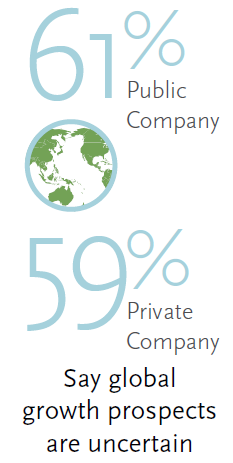
ss1Our survey finds that directors around the world are uncertain about global growth prospects, with directors in North America and Western Europe least confident about the prospects for growth. Sixty-three percent of directors in these regions see uncertain economic conditions, compared with 36% in Asia and 40% in Africa.

Only 2% of directors across all regions predict a period of strong global growth over the next three years, while 16% expect a global slowdown. “This pessimism about growth is one of the most surprising findings of our survey,” said Boris Groysberg of Harvard Business School. “It seems that the market volatility and low prospects for growth as well as the unpredictable economic outlook are what keep board members awake at night.”

More than one-third of directors of companies headquartered in Asia and roughly one-quarter of directors of companies in Australia/New Zealand expect relatively faster growth in emerging economies versus developed countries.

Political and Economic Landscape: Economy, regulations and cybersecurity top issues for directors.

ss2
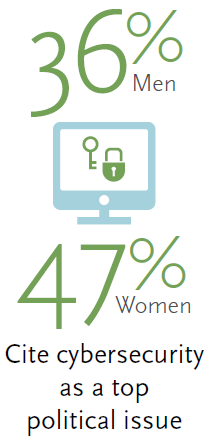
Across all industries and regions, directors rank the economy and the regulatory environment as the political issues most relevant to them. Cybersecurity is an increasingly important issue in many regions. More than one-third of directors of companies in Australia/New Zealand, North America and Western Europe say cybersecurity is a top issue. “Cybersecurity continues to be a leading issue on the agenda from a regulatory, reputational and contingency standpoint,” says Julie Hembrock Daum, head of Spencer Stuart’s North American Board Practice.

“We see boards considering a number of different approaches to getting smart about the broader impact of technology on the business. In certain cases they have added a director with a strong digital or security background. However, the board should not isolate cybersecurity responsibility with just this one board member, but continue to view cybersecurity as a full board priority.”

Political instability is a concern in several regions. In Central and South America, one-half of directors cite political instability as an issue. Corporate tax rates are an issue particularly in North America.

ss3

Company Risks: Women directors report higher concerns about risk than male directors.

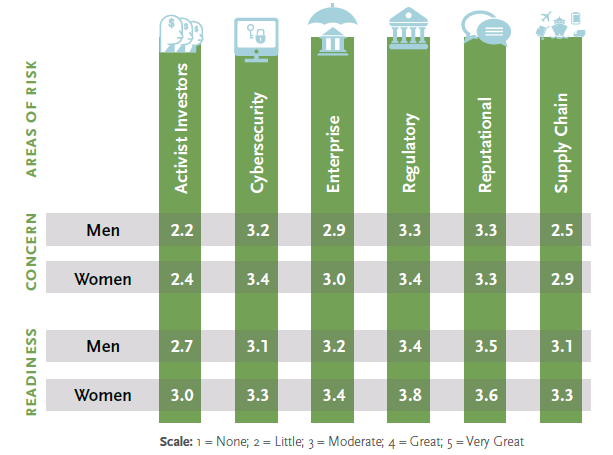
Directors globally express the most concern about regulatory and reputational risks, followed by cybersecurity, and less about activist investors and supply chain risks. In general, directors report that their companies are prepared to handle the most important risks, with companies’ level of readiness matching the most concerning areas of risk. However, directors of private companies systematically rank their boards as being less prepared versus public company boards when it comes to such risks.

Nearly across the board, female directors report a higher level of concern about various risks to a company than their male peers—from concerns about activist investors and cybersecurity to regulatory risk and the supply chain. However, female directors also feel that their companies have a higher level of readiness to address these risks than do their male cohorts.

Susan Stautberg, chairman and CEO of the WCD Foundation, believes that women directors may be educating themselves more about the potential risks:

“We believe that women in particular bring a real thirst for knowledge and curiosity to their board service, and this includes getting up-to-speed on what the real risks are to an organization. All good directors do this, but we think being relatively new to the boardroom can create a greater sense of urgency to learn.”

ss4

Strategy: Top challenges differ for public and private companies.

Talent, regulations, global and domestic competition, and innovation are seen by directors as the top impediments to achieving their companies’ strategic objectives. How those challenges rank specifically depends in part on whether directors are serving public or private companies.

Nearly half of private company directors (versus 38% of public company directors) rate attracting and retaining talent as a key challenge to achieving their company’s strategic objectives. This is followed by domestic competitive threats, the regulatory environment, innovation and global competitive threats. Among public companies, 43% of directors (versus 32% of private company directors) say the regulatory environment is a top challenge, followed by attracting and retaining talent, global competitive threats, innovation and domestic competitive threats.

“This was interesting because we do see in larger, more established public companies a greater maturity in their HR processes and deeper resources invested in talent management and development,” says Daum. “Identifying and recruiting individuals who fit the culture, bring impact to the organization and endure is a high priority for nearly all companies. However, many private companies, which tend to be smaller and have less brand awareness as a whole, often have less robust HR structures to attract the level of talent across the organization.”

Perceived challenges also differ somewhat by industry and region, with the regulatory environment being more concerning for companies in the energy/utilities, financials/professional services and healthcare industries, and in Asia, Australia/New Zealand, North America and Western Europe. Global competitive threats are the leading concern for companies in the industrials and materials sectors, and in Western Europe.

Interestingly, while cybersecurity is viewed as an important risk, few directors consider it a major challenge to achieving strategic objectives. Similarly, activist shareholders, compensation, cost of commodities and supply chain risk are not perceived as challenges to achieving strategic goals.

On average, directors rate their board’s overall performance as being slightly above average (3.7 out of 5). Directors see their boards as having the strongest processes related to staying current on the company and the industry, compliance, financial planning and board composition, and weakest in cybersecurity, the evaluation of individual directors, CEO succession planning and HR/talent management.

“These ratings underscore directors’ views that attracting and retaining top talent is a common challenge, and underline the need for these HR competencies on boards,” says Stautberg. Harvard Business School doctoral candidate Yo-Jud Cheng adds, “Despite the fact that directors recognize their weaknesses in these areas, boards continue to prioritize more conventional areas of expertise, such as industry knowledge and auditing, in their appointments of new directors.”

Public company directors rate their overall board performance slightly higher than private company directors (3.8 versus 3.4) and give themselves higher marks for creating effective board structures, evaluation of individual directors, cybersecurity and compliance. We also see some variation across regions.

Board Turnover: Directors—especially women—favor tools to trigger change.

A little more than one-third of boards have term limits for directors, averaging six years, while approximately one-quarter of boards have a mandatory retirement age, averaging 72 years. Boards in Western Europe are most likely to have term limits, and boards in North America are least likely to set term limits. However, boards in North America are more likely to have a mandatory retirement age than boards in Western Europe (34% versus 18%). We also see a stark contrast between public and private companies in both term limits (39% versus 30%) and mandatory retirement ages (33% versus 12%).ss5

While these tools for triggering director turnover generally have not been widely adopted, the survey indicates that directors favor adoption of such mechanisms. Sixty percent of directors think that boards should have mandatory term limits for directors, and 45% think that there should be a mandatory retirement age. Even in private companies, which are considerably less likely to adopt these practices today, directors shared similar opinions as compared to their counterparts in public companies. Female directors even more strongly support triggers for turnover; 68% (versus 56% of men) favor director term limits and 57% (versus 39% of men) support mandatory retirement ages.

“It was encouraging to see the majority of respondents in favor of retirement ages and term limits. Turnover among S&P 500 companies has trended at 5% to 7%—roughly 300 to 350 seats a year. Boards need tools they can use to ensure that new perspectives and thinking are regularly being brought to the boardroom,” says Daum. “This isn’t just an issue tied to activist shareholders, but something institutional shareholders are asking about as well: what are boards doing to ensure independent and fresh thinking?”

ss6Not surprisingly, 43% of directors believe that a director loses his or her independence after about 10 years. Respondents from North America are less likely to tie director independence to years served, with only one-third agreeing that a director loses independence after a certain amount of time on the board.

Board Diversity: Greater independence doesn’t always drive greater diversity.

Public companies represented in the survey have larger boards than private companies—on average 8.9 directors versus 7.6—and a larger representation of independent directors, 74% versus 54%. Yet, public and private company boards are similar in terms of the representation of women, minorities and new directors. On average, 18% of board members are women, 7% are ethnic minorities and 13% have been appointed in the past 12 months.

“This finding was very interesting. There has been much debate about the use and effectiveness of quotas. To see the relative parity of diversity among public and private companies reinforces that the tone needs to come from the top regarding bringing a fresh, diverse perspective representative of the company’s stakeholders and interests,” says Daum. Groysberg adds, “Although we are hearing more talk about the importance of diversity from boards, it’s not necessarily translating into numbers. Unfortunately, we haven’t seen as much progress as we were hoping for compared to our past survey on the diversity of boards.”

Boards are largest in the financials/professional services sector (9.1 directors) and smallest in the IT/telecom sector (7.5 directors). Female representation is highest (20% or more) in the consumer staples, financial services/professional services and consumer discretionary sectors, and lowest in IT/telecom (13%).

Looking across regions, board size is smallest in Australia/New Zealand, where boards average 6.7 members, as compared to the global average of 8.5 members. Boards in Australia/New Zealand and North America have the highest proportion of independent directors, and boards in Asia have the lowest proportion. Female representation is lowest in Central and South America and Asia.

ss7

Boardroom Diversity: Why isn’t the number of women on boards increasing?

As the percentage of women on boards remains stagnant, there is both a gender divide and a generation divide on why this is. Male directors, especially older respondents, report the “lack of qualified female candidates,” while women directors most often cite the fact that diversity is not a priority in board recruiting and that traditional networks tend to be male-dominated. Younger male directors surveyed (those 55 and younger) are inclined to agree with women that traditional networks tend to be male-dominated. “Men in the younger generation, I think, just see their qualified female colleagues out there, but know that the traditional board networks still tend to be male,” says Stautberg. “It’s often hard to see an informal ‘network’ if you are in the middle of it, but you can see it very clearly when you’re on the outside.”

ss8

Boardroom Diversity: Quotas not supported overall.

Nearly 75% of surveyed directors do not personally support boardroom diversity quotas, but support for quotas varies significantly by gender and, to a lesser degree, by age. Forty-nine percent of female directors support diversity quotas, but only 9% of male directors do. Older women are less likely to favor quotas than younger women; 67% of female directors ages 55 and younger personally support boardroom quotas, compared with 36% of female directors over 55 (the majority of male directors, of any age, do not support quotas). Female directors also are more likely to be in favor of government regulatory agencies requiring boards to disclose specific practices/steps being taken to seat diverse candidates (43% versus 14% of male directors).

If quotas aren’t the answer, what do directors think would increase board diversity? Male and female directors agree that having board leadership that champions board diversity is the most effective way to build diverse corporate boards. Men feel more strongly than women that efforts to develop a pipeline of diverse board candidates throuss9gh director advocacy, mentorship and training is an effective way to increase diversity.

Directors as a whole agree that shareholder pressure and board targets are less effective tools for increasing board diversity.


Boardroom Diversity: Search firms have been successful in expanding the talent pool of qualified female directors.

Directors take a variety of pathways to the boardroom: in roughly equal measures, directors were known to the board or another director, recruited by a search firm or known by the CEO. Public company directors are more likely to be recruited by an executive search firm than private company directors, while private company directors are more likely to have been appointed by a major shareholder.

The survey highlights gender differences, as well, in the paths to the boardroom. Female directors are more likely than their male counterparts to have been recruited by an executive search firm, while male directors are more likely to have been appointed by a major shareholder. “Search firms may be able to open doors that networking opportunities may not have been doing until relatively recently, at least for women,” says Stautberg. “Building up networks and getting known is something that women directors are engaging in much more actively now.”

And, indeed, 39% of female directors report that their gender was a significant factor in their board appointment, versus 1% of men.

Conclusion

Corporate boards face no shortage of challenges—from economic uncertainty to strategic and competitive shifts to a dynamic set of risks. Investor attention to board performance and governance has also escalated, and many boards are holding themselves to higher standards. Directors want to ensure that their boards contribute at the highest level, incorporating diverse perspectives, aligning with shareholder interests and setting a positive tone at the top for the organization.

Yet our research has revealed a gap between best practice and reality, especially in areas such as board diversity, HR/talent management, CEO succession planning and director evaluations. But the study provides hope that boards will make progress, as directors support practices that can help promote change. Future research is needed to track progress on these fronts and to study the impact of measures such as quotas and diversity on board performance.

Amid the many challenges confronting corporations—and the growing expectations on corporate boards—directors must be thoughtful about defining the skill sets needed around the board table and diligent in recruiting the right directors, planning for CEO succession and evaluating their own performance. In this way, they will be best positioned to contribute at the high levels which they are demanding of themselves, and to which others are holding them accountable.

The complete publication is available here.
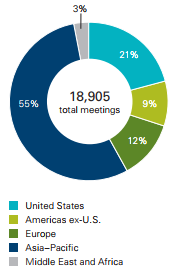

*Julie Hembrock Daum leads the North American Board Practice at Spencer Stuart, and Susan Stautberg is the Chairman and CEO of the WomenCorporateDirectors Foundation. This post relates to the 2016 Global Board of Directors Survey, a co-publication from Spencer Stuart and the WCD Foundation authored by Ms. Daum; Ms. Stautberg; Dr. Boris Groysberg, Richard P. Chapman Professor of Business Administration at Harvard Business School; Yo-Jud Cheng, doctoral candidate at Harvard Business School; and Deborah Bell, researcher.

Enquête mondiale sur les conseils d’administration et la gouvernance


Voici un récent article publié par Julie Hembrock Daum, directrice à Spencer Stuart et Susan Stauberg, PDG à Fondation WomenCorporateDirectors.

Cet article a été publié dans le Harvard Law School Forum aujourd’hui et il présente l’état de la gouvernance à l’échelle internationale (60 pays) en mettant particulièrement l’accent sur la diversité et les différences de perception entre les hommes et les femmes qui occupent des postes d’administrateurs de grandes sociétés privées ou publiques.

On me demande souvent de proposer des références en relation avec la gouvernance globale. Les gens veulent connaître les tendances et les progrès des efforts entrepris dans le domaine de la diversité dans le monde.

L’enquête citée ci-dessous fournit des données actuelles sur les principaux enjeux concernant les Board.

Je crois que tous les gestionnaires seront intéressés par la présentation succincte, claire et bien illustrée des données de la mondialisation de la gouvernance.

Bonne lecture ; vos commentaires sont appréciés.


2016 Global Board of Directors Survey


The growing demands on corporate boards are transforming boardrooms globally, with directors taking on a more strategic, dynamic and responsive role to help steer their companies through a hypercompetitive and volatile business environment. Economic and political uncertainties make long-term planning more difficult. The proliferation of cyber attacks—and their consequences for business in financial  olosses and reputational damage—increases the scope of risk oversight. A rise in institutional and activist shareholder activity requires boards to identify vulnerabilities in board renewal and performance and, in some cases, establish protocols for engagement. And all of these demands have pushed issues around board composition and diversity to the fore, as boards cannot afford to have directors around the table who aren’t delivering value.

 boardroom presentation
Boardroom presentation

In this context, Spencer Stuart, the WomenCorporateDirectors (WCD) Foundation, Professor Boris Groysberg and doctoral candidate Yo-Jud Cheng of Harvard Business School and researcher Deborah Bell partnered together on the 2016 Global Board of Directors Survey, one of the most comprehensive surveys of corporate directors around the world.

We received responses from more than 4,000 male and female directors from 60 countries, providing a comprehensive snapshot of the business climate and strategic priorities as seen from the boardroom of many of the world’s top public and large, privately held companies.

The survey explores in depth how boards think and operate. It captures in detail the governance practices, strategic priorities and views on board effectiveness of corporate directors around the world. It also confirmed many of our observations from working with boards. The economy is top of mind, and many directors are uncertain about economic prospects and not seeing growth in the future. At the same time, directors are responding proactively to the many new demands they face, looking for opportunities to enhance composition and improve board performance.

Findings compare and contrast the views between male and female corporate board directors, and highlight similarities and differences between public and private companies and among directors from different regions in five key areas:

  1. Political and economic landscape
  2. Company strategy and risks
  3. Board governance and effectiveness
  4. Board diversity and quotas
  5. Director identification and recruitment

This post highlights key findings around these topics, providing directors an overview of how their peers view their own boards and the challenges that their companies face. In subsequent reports, we will dive deeper into specific governance areas and explore additional perspectives on board composition, risk areas, and strengths and weaknesses in boardrooms today.

Key Findings

Political and Economic Landscape: Uncertainty dominates boardroom outlook.

ss1Our survey finds that directors around the world are uncertain about global growth prospects, with directors in North America and Western Europe least confident about the prospects for growth. Sixty-three percent of directors in these regions see uncertain economic conditions, compared with 36% in Asia and 40% in Africa.

Only 2% of directors across all regions predict a period of strong global growth over the next three years, while 16% expect a global slowdown. “This pessimism about growth is one of the most surprising findings of our survey,” said Boris Groysberg of Harvard Business School. “It seems that the market volatility and low prospects for growth as well as the unpredictable economic outlook are what keep board members awake at night.”

More than one-third of directors of companies headquartered in Asia and roughly one-quarter of directors of companies in Australia/New Zealand expect relatively faster growth in emerging economies versus developed countries.

Political and Economic Landscape: Economy, regulations and cybersecurity top issues for directors.

ss2
Across all industries and regions, directors rank the economy and the regulatory environment as the political issues most relevant to them. Cybersecurity is an increasingly important issue in many regions. More than one-third of directors of companies in Australia/New Zealand, North America and Western Europe say cybersecurity is a top issue. “Cybersecurity continues to be a leading issue on the agenda from a regulatory, reputational and contingency standpoint,” says Julie Hembrock Daum, head of Spencer Stuart’s North American Board Practice.

“We see boards considering a number of different approaches to getting smart about the broader impact of technology on the business. In certain cases they have added a director with a strong digital or security background. However, the board should not isolate cybersecurity responsibility with just this one board member, but continue to view cybersecurity as a full board priority.”

Political instability is a concern in several regions. In Central and South America, one-half of directors cite political instability as an issue. Corporate tax rates are an issue particularly in North America.

ss3

Company Risks: Women directors report higher concerns about risk than male directors.

Directors globally express the most concern about regulatory and reputational risks, followed by cybersecurity, and less about activist investors and supply chain risks. In general, directors report that their companies are prepared to handle the most important risks, with companies’ level of readiness matching the most concerning areas of risk. However, directors of private companies systematically rank their boards as being less prepared versus public company boards when it comes to such risks.

Nearly across the board, female directors report a higher level of concern about various risks to a company than their male peers—from concerns about activist investors and cybersecurity to regulatory risk and the supply chain. However, female directors also feel that their companies have a higher level of readiness to address these risks than do their male cohorts.

Susan Stautberg, chairman and CEO of the WCD Foundation, believes that women directors may be educating themselves more about the potential risks:

“We believe that women in particular bring a real thirst for knowledge and curiosity to their board service, and this includes getting up-to-speed on what the real risks are to an organization. All good directors do this, but we think being relatively new to the boardroom can create a greater sense of urgency to learn.”

ss4

Strategy: Top challenges differ for public and private companies.

Talent, regulations, global and domestic competition, and innovation are seen by directors as the top impediments to achieving their companies’ strategic objectives. How those challenges rank specifically depends in part on whether directors are serving public or private companies.

Nearly half of private company directors (versus 38% of public company directors) rate attracting and retaining talent as a key challenge to achieving their company’s strategic objectives. This is followed by domestic competitive threats, the regulatory environment, innovation and global competitive threats. Among public companies, 43% of directors (versus 32% of private company directors) say the regulatory environment is a top challenge, followed by attracting and retaining talent, global competitive threats, innovation and domestic competitive threats.

“This was interesting because we do see in larger, more established public companies a greater maturity in their HR processes and deeper resources invested in talent management and development,” says Daum. “Identifying and recruiting individuals who fit the culture, bring impact to the organization and endure is a high priority for nearly all companies. However, many private companies, which tend to be smaller and have less brand awareness as a whole, often have less robust HR structures to attract the level of talent across the organization.”

Perceived challenges also differ somewhat by industry and region, with the regulatory environment being more concerning for companies in the energy/utilities, financials/professional services and healthcare industries, and in Asia, Australia/New Zealand, North America and Western Europe. Global competitive threats are the leading concern for companies in the industrials and materials sectors, and in Western Europe.

Interestingly, while cybersecurity is viewed as an important risk, few directors consider it a major challenge to achieving strategic objectives. Similarly, activist shareholders, compensation, cost of commodities and supply chain risk are not perceived as challenges to achieving strategic goals.

On average, directors rate their board’s overall performance as being slightly above average (3.7 out of 5). Directors see their boards as having the strongest processes related to staying current on the company and the industry, compliance, financial planning and board composition, and weakest in cybersecurity, the evaluation of individual directors, CEO succession planning and HR/talent management.

“These ratings underscore directors’ views that attracting and retaining top talent is a common challenge, and underline the need for these HR competencies on boards,” says Stautberg. Harvard Business School doctoral candidate Yo-Jud Cheng adds, “Despite the fact that directors recognize their weaknesses in these areas, boards continue to prioritize more conventional areas of expertise, such as industry knowledge and auditing, in their appointments of new directors.”

Public company directors rate their overall board performance slightly higher than private company directors (3.8 versus 3.4) and give themselves higher marks for creating effective board structures, evaluation of individual directors, cybersecurity and compliance. We also see some variation across regions.

Board Turnover: Directors—especially women—favor tools to trigger change.

A little more than one-third of boards have term limits for directors, averaging six years, while approximately one-quarter of boards have a mandatory retirement age, averaging 72 years. Boards in Western Europe are most likely to have term limits, and boards in North America are least likely to set term limits. However, boards in North America are more likely to have a mandatory retirement age than boards in Western Europe (34% versus 18%). We also see a stark contrast between public and private companies in both term limits (39% versus 30%) and mandatory retirement ages (33% versus 12%).ss5

While these tools for triggering director turnover generally have not been widely adopted, the survey indicates that directors favor adoption of such mechanisms. Sixty percent of directors think that boards should have mandatory term limits for directors, and 45% think that there should be a mandatory retirement age. Even in private companies, which are considerably less likely to adopt these practices today, directors shared similar opinions as compared to their counterparts in public companies. Female directors even more strongly support triggers for turnover; 68% (versus 56% of men) favor director term limits and 57% (versus 39% of men) support mandatory retirement ages.

“It was encouraging to see the majority of respondents in favor of retirement ages and term limits. Turnover among S&P 500 companies has trended at 5% to 7%—roughly 300 to 350 seats a year. Boards need tools they can use to ensure that new perspectives and thinking are regularly being brought to the boardroom,” says Daum. “This isn’t just an issue tied to activist shareholders, but something institutional shareholders are asking about as well: what are boards doing to ensure independent and fresh thinking?”

ss6Not surprisingly, 43% of directors believe that a director loses his or her independence after about 10 years. Respondents from North America are less likely to tie director independence to years served, with only one-third agreeing that a director loses independence after a certain amount of time on the board.

Board Diversity: Greater independence doesn’t always drive greater diversity.

Public companies represented in the survey have larger boards than private companies—on average 8.9 directors versus 7.6—and a larger representation of independent directors, 74% versus 54%. Yet, public and private company boards are similar in terms of the representation of women, minorities and new directors. On average, 18% of board members are women, 7% are ethnic minorities and 13% have been appointed in the past 12 months.

“This finding was very interesting. There has been much debate about the use and effectiveness of quotas. To see the relative parity of diversity among public and private companies reinforces that the tone needs to come from the top regarding bringing a fresh, diverse perspective representative of the company’s stakeholders and interests,” says Daum. Groysberg adds, “Although we are hearing more talk about the importance of diversity from boards, it’s not necessarily translating into numbers. Unfortunately, we haven’t seen as much progress as we were hoping for compared to our past survey on the diversity of boards.”

Boards are largest in the financials/professional services sector (9.1 directors) and smallest in the IT/telecom sector (7.5 directors). Female representation is highest (20% or more) in the consumer staples, financial services/professional services and consumer discretionary sectors, and lowest in IT/telecom (13%).

Looking across regions, board size is smallest in Australia/New Zealand, where boards average 6.7 members, as compared to the global average of 8.5 members. Boards in Australia/New Zealand and North America have the highest proportion of independent directors, and boards in Asia have the lowest proportion. Female representation is lowest in Central and South America and Asia.

ss7

Boardroom Diversity: Why isn’t the number of women on boards increasing?

As the percentage of women on boards remains stagnant, there is both a gender divide and a generation divide on why this is. Male directors, especially older respondents, report the “lack of qualified female candidates,” while women directors most often cite the fact that diversity is not a priority in board recruiting and that traditional networks tend to be male-dominated. Younger male directors surveyed (those 55 and younger) are inclined to agree with women that traditional networks tend to be male-dominated. “Men in the younger generation, I think, just see their qualified female colleagues out there, but know that the traditional board networks still tend to be male,” says Stautberg. “It’s often hard to see an informal ‘network’ if you are in the middle of it, but you can see it very clearly when you’re on the outside.”

ss8

Boardroom Diversity: Quotas not supported overall.

Nearly 75% of surveyed directors do not personally support boardroom diversity quotas, but support for quotas varies significantly by gender and, to a lesser degree, by age. Forty-nine percent of female directors support diversity quotas, but only 9% of male directors do. Older women are less likely to favor quotas than younger women; 67% of female directors ages 55 and younger personally support boardroom quotas, compared with 36% of female directors over 55 (the majority of male directors, of any age, do not support quotas). Female directors also are more likely to be in favor of government regulatory agencies requiring boards to disclose specific practices/steps being taken to seat diverse candidates (43% versus 14% of male directors).

If quotas aren’t the answer, what do directors think would increase board diversity? Male and female directors agree that having board leadership that champions board diversity is the most effective way to build diverse corporate boards. Men feel more strongly than women that efforts to develop a pipeline of diverse board candidates throuss9gh director advocacy, mentorship and training is an effective way to increase diversity.

Directors as a whole agree that shareholder pressure and board targets are less effective tools for increasing board diversity.


Boardroom Diversity: Search firms have been successful in expanding the talent pool of qualified female directors.

Directors take a variety of pathways to the boardroom: in roughly equal measures, directors were known to the board or another director, recruited by a search firm or known by the CEO. Public company directors are more likely to be recruited by an executive search firm than private company directors, while private company directors are more likely to have been appointed by a major shareholder.

The survey highlights gender differences, as well, in the paths to the boardroom. Female directors are more likely than their male counterparts to have been recruited by an executive search firm, while male directors are more likely to have been appointed by a major shareholder. “Search firms may be able to open doors that networking opportunities may not have been doing until relatively recently, at least for women,” says Stautberg. “Building up networks and getting known is something that women directors are engaging in much more actively now.”

And, indeed, 39% of female directors report that their gender was a significant factor in their board appointment, versus 1% of men.

Conclusion

Corporate boards face no shortage of challenges—from economic uncertainty to strategic and competitive shifts to a dynamic set of risks. Investor attention to board performance and governance has also escalated, and many boards are holding themselves to higher standards. Directors want to ensure that their boards contribute at the highest level, incorporating diverse perspectives, aligning with shareholder interests and setting a positive tone at the top for the organization.

Yet our research has revealed a gap between best practice and reality, especially in areas such as board diversity, HR/talent management, CEO succession planning and director evaluations. But the study provides hope that boards will make progress, as directors support practices that can help promote change. Future research is needed to track progress on these fronts and to study the impact of measures such as quotas and diversity on board performance.

Amid the many challenges confronting corporations—and the growing expectations on corporate boards—directors must be thoughtful about defining the skill sets needed around the board table and diligent in recruiting the right directors, planning for CEO succession and evaluating their own performance. In this way, they will be best positioned to contribute at the high levels which they are demanding of themselves, and to which others are holding them accountable.

The complete publication is available here.
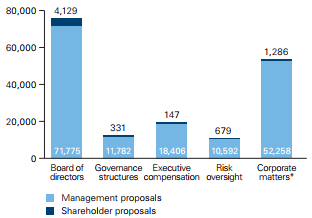

*Julie Hembrock Daum leads the North American Board Practice at Spencer Stuart, and Susan Stautberg is the Chairman and CEO of the WomenCorporateDirectors Foundation. This post relates to the 2016 Global Board of Directors Survey, a co-publication from Spencer Stuart and the WCD Foundation authored by Ms. Daum; Ms. Stautberg; Dr. Boris Groysberg, Richard P. Chapman Professor of Business Administration at Harvard Business School; Yo-Jud Cheng, doctoral candidate at Harvard Business School; and Deborah Bell, researcher.

Le rapport 2016 de la firme ISS sur les pratiques relatives aux conseils d’administration


Chaque année, la firme ISS produit un rapport très attendu sur les pratiques relatives aux conseils d’administration.

L’étude publiée par Carol Bowie*, directrice de la recherche à Institutional Shareholder Services (ISS), et parue sur le forum du HLS, présente de façon claire l’état de la situation, les tendances qui se dessinent ainsi que les nouvelles normes qui prévalent dans les entreprises du S&P 500, du MidCap 400 et du SmallCap 600.

Par exemple, 88 % des entreprises du S&P 500 ont adopté la pratique du vote majoritaire, délaissant ainsi la pratique de la pluralité des voix.

Également, plus de 80 % des entreprises du S&P 500 soumettent leurs administrateurs à des élections annuelles, délaissant ainsi l’habitude des « Staggered Boards » (élections des administrateurs à des périodes différentes).

253092c

En ce qui concerne la réalité de la diversité des conseils d’administration, on note des progrès continus, mais lents. Ainsi, 98 % des entreprises du S&P 500 ont au moins une femme sur le conseil, et 79 % ont au moins un membre d’une minorité sur le conseil. Au total, environ 20 % de femmes siègent à des conseils d’administration et 17 % des administrateurs proviennent de minorités diverses.

Enfin, l’étude montre que 13,3 % de tous les postes d’administrateurs ont été pourvus par de nouvelles recrues (moins de 2 ans sur le CA).

Je vous invite à jeter un œil aux tableaux qui ponctuent le rapport.

Bonne lecture !


ISS 2016 Board Practices Study


ISS’ latest update of the structure and composition of boards and individual director attributes at Standard & Poor’s U.S. “Super 1,500” companies (i.e., companies in the S&P 500, MidCap 400, and SmallCap 600 indices) found a number of new and continuing trends in board practices and director attributes at these key index companies.

Majority Votes for Directors and Annual Board Elections are the New Normal

Based on analysis of public filings (primarily proxy statements) related to shareholder meetings occurring from July 1, 2014, through June 30, 2015, the study reports that annual board elections and majority vote standards for those elections are now the norm across the S&P 1500. While larger companies initially led the way in adopting these accountability enhancements, the pace of abandoning staggered board terms at smaller companies picked up speed in 2015. Also, Small- and MidCap companies adopted majority vote standards for board elections at a faster pace than their S&P 500 counterparts in 2015—increasing by 4 and 3 percentages points, respectively among the Small- and MidCap firms. For the third consecutive year, well over half of all study companies have majority voting standards, which is now the clear market standard at S&P 500 companies, with over 88 percent of companies in the index having adopted the practice. Only 61 total S&P 500 companies maintain a plurality vote standard, down from 67 last year and 87 in 2013.

5-31-1

There has also been a significant increase over the last five years in the number of companies holding annual elections, both at the S&P 1500 and at each constituent index. The proportion is significantly higher at S&P 500 companies, where it has risen more than 20 percentage points in the last five years. Still, over 60 percent of S&P 1500 companies (and over 80 percent of S&P 500 companies) now hold annual elections for all directors, While the prevalence has increased in the S&P 1500 every year since 2009, the largest jump occurred last year, when it rose from 60 to 64 percent, driven by an 8 percentage point increase at the S&P 500, where only 84 boards now hold staggered elections.

Many companies completed the gradual removals of their classified board structures that had begun in response to a large wave of shareholder proposals offered in a campaign organized by the now defunct Shareholder Rights Project at Harvard Law School. A majority of SmallCap companies held annual elections for the first time in 2014, a trend that has continued, as an additional 2 percent of the index’s companies held annual elections in 2015. Bucking the trend were the MidCap companies, which showed a slight decrease in the proportion holding annual elections in 2015, after steading increases in 2009 through 2014.

Board Diversity

Many corporate governance experts believe that the interplay of different backgrounds and perspectives enhances the effectiveness of boards and facilitates greater long-term corporate success. Some advocates for board diversity believe that a “tone at the top” will penetrate the corporate hierarchy and lead to increased diversity across all ranks of employment.
5-31-2
Companies with larger market caps generally have higher levels of gender and racial/ethnic diversity than those with smaller valuations. As of ISS’ latest analysis, almost all S&P 500 companies have at least one female or minority director, while 90 percent of MidCap boards and 78 percent of SmallCap boards have at least one female or minority member. There has been a market-wide increase over the past five years in board diversity:

Ninety-eight percent of S&P 500 boards have at least one female member and 79 percent have at least one minority, up from 89 and 63 percent in 2010, respectively;

Eighty-four percent of MidCap boards have at least one female member and 53 percent have at least one minority, increased from 74 and 36 percent in 2010, respectively; and

Sixty-nine percent of SmallCap boards have at least one female member and 41 percent have at least one minority, increased from 54 and 22 percent in 2010, respectively.

5-31-3
More than 88 percent of S&P 1500 companies have at least one female or minority director, and a majority of the S&P 1500 have either one female and/or one minority, who, in some instances, are the same individual. Minority women hold 329 directorships, an increase from 279 in 2014. Although this represents an absolute increase, the proportion of S&P 1500 directorships held by minority women has remained at approximately 2.4 percent since 2010.

New Directors

In 2015, 1,833 seats, or about 13.3 percent of all directorships, were filled by directors with less than two years’ tenure and who were elected for the first time in 2014 or 2015 (“new” directors). That compares with about 12 percent of all directorships filled by “new” directors in last year’s analysis, suggesting a slight increase in the turnover rate. The characteristics of these new directors were analyzed to develop a better understanding of what companies may be considering when choosing new director candidates.
5-31-4
New directors are generally younger than directors with tenures of over two years. Also, the average age difference is 5.3 years, an increase from 2014.

Fifty-three percent of new directors serve on only one board, which continues the trend identified in last year’s study, which found that nominating committees are bringing on directors who have no prior board experience. However, a majority of open S&P 500 positions, 56 percent, were filled by a director who sits on at least one other board, which drives the “average” number of outside boards for new directors up to nearly one and underscores the fact that market leading companies seek directors with a track record. New directors are more likely than those with more than two years tenure to be outside hires; 46 percent of all directors joining boards in 2014 and 2015 sit on only one board and are not executives of the companies whose boards they have joined.

Similarly, the percentage of new directors who are female or identified as an ethnic/racial minority continues to exceed the proportion of longer-tenured female- and minority-held S&P 1500 directorships. While the proportion of new directorships held by females has increased for several consecutive years, this momentum seems to be slower for minority directors. Minority directors comprised 16 percent of new directorships in 2015, compared to 10 percent of all new directors in 2014. Female directors filled 27 percent of new directorships in 2015, up from 22 percent in 2014, and 20 percent in 2013. This increase highlights both the overall growth in the number of directorships held by women and the acceleration in the growth of female directorships.

______________________

*This post is based on a recent publication authored by ISS U.S. Research analysts Andrew Borek, Liz Williams, and Rob Yates. Information on how to obtain the full report is available here.
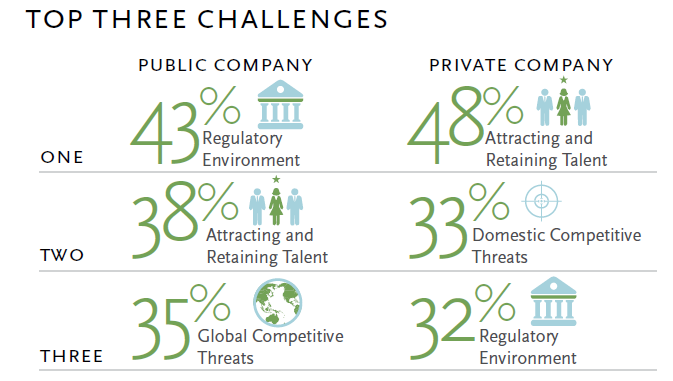
Des logiciels capables de repérer des anomalies dans les informations financières des entreprises !


Le billet d’aujourd’hui nous a été soumis par Patrice Bloch, ASC,  fondateur du cabinet français Conseil Independia.

L’article paru en février 2016 dans le journal électronique Les échos.fr nous invite à réfléchir sur l’utilisation de logiciels performants pour détecter des erreurs dans les informations financières communiquées dans les rapports de gestion.

Voici donc l’article en question, reproduit ici avec la permission de l’auteur.

Vos commentaires sont appréciés. Bonne lecture !


Quand les algorithmes détectent les fausses informations financières

par

Patrice Bloch*

618123_1381908921_logiciels-intro


Des logiciels sont désormais capables de repérer des anomalies dans les informations financières communiquées par les entreprises

Le Big Data au quotidien. Il est maintenant constaté et admis que l’information est partout via notamment les diverses connexions que nous utilisons : internet, objets connectés…

Appliqué à la finance, le Big Data est bien sûr présent dans les transactions boursières .

Il s’est affiné depuis quelques années jusqu’à la lecture des bilans pour en dégager des modèles d’opinion sur les entreprises. D’une manière générale, l’information devient de plus en plus accessible de par l’analyse « industrielle » de documents au moyen d’ algorithmes adaptés .

(1) La communication financière mise à l’épreuve

Cette surenchère de robots a pour conséquence une évolution des moyens de surveillance des autorités financières notamment qui tentent de prévenir et/ou de déceler les manipulations de cours de bourse par exemple. Inversement, une entreprise peut être tentée d’utiliser un logiciel pour détecter un autre logiciel censeur, et ainsi satisfaire aux normes prescrites alors que le produit n’est pas conforme.

Les affaires financières qui ont éclaté au grand jour (Enron et consorts) ont paradoxalement affiché une communication financière répondant aux critères requis dans une parfaite conformité. De même, les conseils d’administration ainsi que les contrôleurs des comptes approuvaient les fausses situations affichées. Ce sont des détails qui ont mis à jour les scandales (notamment le hors bilan de Enron, un salarié qui révèle une manipulation par ailleurs…).

(2) Déceler les informations dissimulées

L’émergence du Big Data met à l’épreuve la communication financière des sociétés, car une masse d’information circule à leurs propos et n’est pas contrôlée par les protagonistes : salariés, dirigeants, fournisseurs, banques, journalistes, actionnaires, autres parties prenantes, environnement économique, géopolitique…

L’entreprise communique ses états financiers qui seront confrontés à une masse d’information via des algorithmes qui croiseront toutes ces données. Une information dissimulée pourrait être révélée incidemment par le truchement d’événements apparemment anodins dans un contexte géopolitique par exemple.

(3) Mieux choisir ses investissements

Les gendarmes boursiers sont équipés de logiciels capables de détecter des anomalies dans les informations émises. Les investisseurs, et notamment les activistes, recherchent continuellement l’information qui orientera le choix de l’investissement et ils sont très certainement à la fine pointe de l’élaboration de l’algorithme pertinent.

Actuellement, la société Muddy Waters est particulièrement active sur le cours de Casino. Sans se prononcer sur le bien-fondé de ses déclarations, il est fort probable que ce cabinet utilise, entre autres, des moyens de recherche d’information liés au Big Data. Inversement, cette démarche peut être gratifiante pour l’entreprise « vertueuse » qui n’est pas prise en défaut et qui peut donc faire l’objet de recommandations d’achat. Le Big data sera peut-être l’épreuve de vérité pour la communication financière qui passera sous les projecteurs des algorithmes.

_____________________________________

*Patrice Bloch est fondateur et PDG du cabinet de conseil INDEPENDIA, une société française indépendante, fondée en 2000. Près de 30 années d’expérience ont amené Patrice Bloch à concilier l’approche opérationnelle et conceptuelle dans différents domaines économiques à très haut niveau auprès de dirigeants, états-majors et conseils d’administration de sociétés cotées (notamment, CAC 40), et de PME de tailles importantes. De formation finance (Institut de Haute Finance de Paris – Master), ancien auditeur IHEDN (Institut des Hautes Études de la Défense nationale – Intelligence Économique), Patrice Bloch a effectué des recherches doctorales sur la gouvernance. Il est diplômé du Collège des Administrateurs de l’Université Laval de Québec (Canada) et détient le titre d’ASC (Administrateur de sociétés certifié).

Gouvernance d’entreprises | Ne pas oublier les fondamentaux !


Le billet d’aujourd’hui nous a été soumis par Patrice Bloch, ASC,  fondateur du cabinet français Conseil Independia.

L’article met l’accent sur l’importance de maintenir la flamme de la gouvernance d’entreprise bien vivante, alors que certains pensent qu’elle est en voie d’essoufflement.

Voici donc l’article en question, reproduit ici avec la permission de l’auteur.

Vos commentaires sont appréciés. Bonne lecture !


Gouvernance d’entreprises | Ne pas oublier les fondamentaux

Par Patrice Bloch*

gouvernance---phrase1


Au faîte de l’actualité économique internationale depuis plusieurs années, la thématique Gouvernance d’Entreprise semble cependant s’essouffler, et ce malgré les apparences.

La gouvernance d’entreprise a connu son essor depuis les années 90 avec deux grandes orientations : (1) la répartition/équilibre des pouvoirs, et (2) la transparence.

Les sujets évolutifs ne manquent pas à propos des conseils d’administration : la séparation du poste de président du conseil et de président directeur général, la mise en place d’administrateurs indépendants, la parité hommes-femmes, l’administrateur salarié, la prise en considération de nouvelles tendances sociétales (ISR , RSE…), les agences de conseil en vote (proxy advisors)…

À ce jour, force est de constater que de nombreux progrès structurels ont été accomplis et que le terme Gouvernance est un indicateur de référence pour la firme concernée et son environnement.

Toutefois, les mêmes problèmes demeurent et leurs solutions fluctuent : par exemple, le choix de la séparation des pouvoirs ou le maintien d’une seule entité ne favorise pas une option sur une autre, l’indépendance de l’administrateur est sujette à caution, et le rôle des proxy advisors est reconsidéré.

Les jeux de pouvoir et les scandales financiers n’ont pas disparu. La gouvernance est-elle en mal d’inspiration ? Les évolutions actées ne sont-elles que des réponses à des courants sociétaux sans changer le fond de la gouvernance ?

Et si la gouvernance faisait fausse route ? Il sera objecté qu’une entreprise est avant tout une équipe humaine et non un ensemble de machines. C’est une évidence qui pourrait justement avoir été occultée. Les firmes répondent depuis des années à des demandes de conformité qui induisent une standardisation des profils d’administrateurs et de managers. Les « modes » passent, les comportements demeurent.

La structure organisationnelle présenterait donc deux visages : le visage de la conformité affichée sur l’extérieur, et le visage intangible qui représente le socle de l’intérieur.

À force de rechercher incessamment de nouveaux sujets de gouvernance, il serait plus pertinent de se pencher sur le fond et notamment sur les profils des acteurs. Les compétences techniques ne suffisent plus, car il est envisageable qu’une entreprise puisse être à l’avenir dirigée par des logiciels.

La gouvernance aurait intérêt à se réinventer autour de la question des profils fondamentaux des administrateurs (éthique, conflit d’intérêts, indépendance…).

« The tone at the top », la confiance est à ce prix pour garantir au mieux les piliers de la gouvernance : pouvoir et transparence. Les bonnes pratiques marquent le pas, il faut réagir. Les robots frappent à la porte.

_____________________________________

*Patrice Bloch est fondateur et PDG du cabinet de conseil INDEPENDIA, une société française indépendante, fondée en 2000. Près de 30 années d’expérience ont amené Patrice Bloch à concilier l’approche opérationnelle et conceptuelle dans différents domaines économiques à très haut niveau auprès de dirigeants, états-majors et conseils d’administration de sociétés cotées (notamment, CAC 40), et de PME de tailles importantes. De formation finance (Institut de Haute Finance de Paris – Master), ancien auditeur IHEDN (Institut des Hautes Études de la Défense nationale – Intelligence Économique), Patrice Bloch a effectué des recherches doctorales sur la gouvernance. Il est diplômé du Collège des Administrateurs de l’Université Laval de Québec (Canada) et détient le titre d’ASC (Administrateur de sociétés certifié).

Quotas de diversité aux conseils d’administration : Qu’en est-il aujourd’hui ?


Je cède régulièrement la parole à Johanne Bouchard* à titre d’auteure invitée sur mon blogue en gouvernance. Celle-ci a une solide expérience d’interventions de consultation auprès de conseils d’administration de sociétés américaines ainsi que d’accompagnements auprès de hauts dirigeants de sociétés publiques (cotées), d’organismes à but non lucratif (OBNL) et d’entreprises en démarrage.

Dans ce billet, elle nous donne son point de vue sur l’approbation de quota de diversité aux conseils d’administration. C’est un sujet de grande actualité, et l’expérience varie passablement d’une autorité réglementaire à une autre.

Il ressort de cela que de plus en plus d’autorités réglementaires sont tentées par l’imposition de cibles à atteindre en matière de diversité, notamment eu égard à la représentation des femmes sur les conseils d’administration. Dans ce billet, elle nous présente son point de vue pour une meilleure diversité et elle nous instruit sur les mesures adoptées dans d’autres pays.

L’expérience de Johanne Bouchard auprès d’entreprises cotées en bourse est soutenue ; elle en tire des enseignements utiles pour tous les conseils d’administration.

Bonne lecture ! Vos commentaires sont toujours accueillis favorablement.


Quotas de diversité aux conseils d’administration : Qu’arrive-t-il maintenant?

par

Johanne Bouchard

board-diversity_forbes


À l’échelle mondiale, l’appel à la diversité est lancé. Récemment, particulièrement au cours de cette dernière année, il y a eu beaucoup de battage autour de la question des quotas. Notamment, de nombreux gouvernements ont pris des mesures en vue d’imposer des quotas aux conseils d’administration.

Puisque je prône un rendement optimal de la gouvernance des conseils d’administration et de la composition de tout type de conseils d’administration, particulièrement et surtout quand le besoin se fait sentir de revitaliser les conseils d’administration d’entreprises, je pense que la diversité doit être la première idée qui nous vient à l’esprit.

Bien que, selon moi, la diversité au sein des conseils d’administration inclue les femmes, la connaissance et l’expérience internationale, la connaissance de l’industrie, l’ethnicité et l’âge, je veux ici porter mon attention aux efforts actuels de générer un plus grand équilibre au sein de nos conseils d’administration en ce qui concerne l’égalité des genres.

J’écris aujourd’hui pour éveiller la conscience sur la question des quotas imposés aux conseils d’administration. Pourquoi devons-nous tous être très vigilants à ce sujet, pour qu’ensemble nous puissions observer attentivement les vagues que cela crée à travers le monde? Environ, une douzaine de pays, qui ont moins de 10 % de femmes administratrices au sein de leurs conseils d’administration, ont appliqué les quotas avant même de voir des résultats concrets et d’observer les conséquences que ceux-ci pouvaient avoir sur le comportement des individus, le processus de recrutement et la parité des chances entre les femmes et les hommes.

Les quotas imposés aux conseils d’administration sont établis pour augmenter la représentation des femmes aux conseils d’administration, dans l’espoir que cette représentativité se retransmettra aux autres enjeux liés à l’inégalité des genres dans le monde des affaires, dans tous les secteurs des entreprises, à l’intérieur de nos établissements scolaires, dans nos organisations politiques et gouvernementales sur toute la planète.

Le fait étant qu’en 2015, les femmes sont encore sous-représentées dans les rôles de leadership où elles peuvent exceller et avoir une incidence. Elles ne sont pas rémunérées sur la même échelle que leurs collègues masculins et la présence des femmes (particulièrement importante pour moi) à STEM (Science, technologie, ingénierie, mathématiques) est loin d’avoir atteint un niveau acceptable dans plusieurs universités.

Il y a une tendance en Europe et au Canada à légiférer sur l’augmentation de la présence des femmes sur les conseils d’administration, afin d’accélérer une croissance qui ne s’est pas faite naturellement. Les États-Unis montent la garde, et plusieurs croient que les quotas américains sont improbables.

Le débat autour de cette tendance réfère aux aspects plus controversés d’une action affirmative et aux avantages des quotas à long terme. Les statistiques démontrent que les quotas produisent des changements immédiats quant à la diversité des genres dans tous les pays qui les appliquent, mais des questions se posent quant à leurs bienfaits à long terme et à leur valeur symbolique.

Regardons ce qui se passe maintenant avec la diversité aux conseils d’administration

Alison Smale et Claire Cain Miller ont signalé, dans le magazine The New York Times (le 6 mars 2015), que :

« L’Allemagne a adopté une loi contraignant quelques-unes des plus grandes entreprises en Europe à attribuer 30 % des postes de supervision aux femmes, à partir de l’année prochaine. Moins de 20 % des sièges aux conseils d’administration en Allemagne sont occupés par des femmes, alors que certaines des plus grandes entreprises multinationales au monde y sont installées (dans ce pays), incluant Volkswagen, BMW et Daimler (le fabriquant des véhicules Mercedes-Benz) de même que Siemens, Deutsche Bank, BASF, Bayer et Merck. »

Dans cet article, le ministre de la Justice de l’Allemagne était cité alors qu’il affirmait que, « pour l’Allemagne (la loi est) la plus grande contribution à l’égalité des genres depuis l’obtention du droit de vote accordé aux femmes » (en Allemagne en 1918).

En Norvège, l’adoption des quotas relatifs au genre au sein des conseils d’administration des entreprises était une première, comme l’expliquait The Economist dans son article de mars 2014 « L’expansion des quotas relatifs au genre au sein des conseils d’administration ». Le quota de 40 % attribué aux femmes aux postes d’administration dans des entreprises cotées en Bourse est entré en vigueur en 2008, et « les entreprises non conformes pouvaient, en principe, être dissoutes par la force, bien qu’aucune n’ait eu à subir un tel sort. »

L’adoption des quotas relatifs au genre au sein des conseils d’administration en Norvège a provoqué un changement important à court terme quant à la présence des femmes au sein des conseils. Selon l’article de Danielle Paquette, paru dans The Washington Post (le 9 février 2015) « Pourquoi les Américaines détestent les quotas dans les conseils d’administration », le changement n’a pas encore infiltré d’autres enjeux d’inégalité de genre dans l’environnement des entreprises en Norvège.

Le Royaume-Uni n’a encore pris aucune mesure législative à date. Plutôt, une initiative, appelée « le Club 30 % » a été lancée en 2010. Helena Morrissey, la chef de la direction et fondatrice de Newton Investment Management et du Club 30 %, a indiqué : « Nous croyons que plus les femmes siègent aux conseils d’administration sans l’imposition des quotas, plus elles peuvent prouver leur valeur ajoutée. D’ici à ce qu’on atteigne le 30 %, le système s’autoperpétuera. »

En juin 2014, au Canada, à la suite du rapport fédéral du conseil consultatif, on a demandé aux plus importantes entreprises d’augmenter le nombre de femmes au sein de leur conseil d’administration, recommandant une augmentation de 30 % de la présence des femmes à leur conseil d’administration, mais sans quotas ni exigences réglementaires.

L’approche, à laquelle on réfère par l’expression « conformez-vous et expliquez », exige que les entreprises divulguent les statistiques relatives à la diversité, ce qui nous l’espérons, amènera les 500 plus grandes entreprises à procéder aux changements nécessaires. À la fin de 2015, l’Ontario, a pris l’initiative d’imposer des modifications législatives, puisque les entreprises ne coopéraient pas volontairement à la demande d’augmenter le nombre de femmes aux postes de leadership.

Les États-Unis sont à la traîne ; à cet égard ! Ainsi qu’il a été publié dans Fortune (le 13 janvier 2015) : « Les femmes gagnent des sièges aux conseils d’administration à l’échelle mondiale, mais pas aux États-Unis. » Selon l’index de recensements Catalyst 2014 Census Index, 19,2 % des sièges des conseils d’administration des entreprises inscrites au S&P 500 sont occupés par des femmes ; les États-Unis ne prennent aucune mesure dynamique pour faire bouger l’aiguille.

Les progrès à reconnaître la potentialité des femmes comme candidates aux conseils d’administration sont lents aux États-Unis. Cependant, un certain nombre d’initiatives telles que The Thirty Percent Coalition, 2020 Women on Boards et The Alliance for Board Diversity (ABD), démystifient le processus et accélèrent la diversification des conseils d’administration.

La définition du mot quota dans le dictionnaire Merriam Webster’s m’a fait grincer les dents : « an official limit on the number or amount of people or things that are allowed », c’est-à-dire une limite officielle du nombre ou du montant de personnes ou de choses autorisées. Selon moi, au 21e siècle, la limitation et la restriction ne devraient pas être la méthode à prendre pour atteindre l’objectif de la composition optimale des conseils d’administration et d’un équilibre naturel des compétences au sein du conseil.

La seconde définition de quota est : « a specific amount or number that is expected to be achieved », soit une quantité ou un nombre précis que l’on s’attend à atteindre, ce qui m’est apparu comme une manière tout à fait inacceptable de parler de la présence des femmes à la table des conseils d’administration et dans des postes de leadership. Les valeurs numériques ne créent pas l’impression de renforcement. Le pouvoir vient du fait d’inclure les femmes parce qu’elles peuvent contribuer de manière significative au conseil d’administrateur.

La troisième définition est : « the number or amount constituting a proportional share », soit un nombre ou un montant représentant une part proportionnelle, une définition avec laquelle je ne me sentais pas plus à l’aise. La composition du conseil d’administration n’est pas qu’une question de « part proportionnelle », mais la question est plutôt d’atteindre un niveau optimal de diversité en priorisant la connaissance, l’expérience, l’éducation et les liens internationaux — puis de s’assurer qu’il n’existe pas de discrimination relative au genre, à l’ethnie, à l’âge et à l’origine des candidats.

***

En tant que femme qui a l’intention de siéger à plusieurs conseils d’administration et qui a conseillé des conseils d’administration de différents types et de différentes tailles, j’ai observé et j’ai fait l’expérience directe que les femmes ont été sous-représentées dans les salles des conseils d’administration, et le sont encore. Le fait est que la plupart de mes clients aux conseils d’administration étaient des hommes.

La plupart des conseils d’administration des entreprises publiques avec lesquels j’ai travaillé étaient principalement composés d’hommes, tandis que les conseils d’administration d’organismes à but non lucratif avaient atteint un meilleur équilibre entre les hommes et les femmes. Cependant, j’ai rarement fait personnellement l’expérience de discrimination dirigée directement contre les femmes dans le processus de sélection d’un nouvel administrateur.

J’ai observé et remarqué les avantages que pouvait apporter la présence d’une femme au conseil d’administration (et il y a des études qui démontrent ce que j’ai moi-même observé). Bien que la plupart des conseils d’administration des entreprises de mes clients aient été composés d’hommes à 99 %, quand je leur ai suggéré d’augmenter la mixité des genres au sein de leur conseil, ils ont tous bien accueilli cette recommandation. Leur principale question a été de savoir comment trouver le meilleur talent avec les qualités qu’ils recherchaient alors qu’ils augmentaient et revitalisaient leur conseil d’administration.

En conclusion, le débat est vif, et il y a des arguments puissants pour et contre les quotas. J’ai voulu poser la question autrement, en parlant directement aux personnes qui font partie des statistiques. Donc, un prochain billet regroupera les commentaires collectés pendant des sondages d’opinion que j’ai menés en avril 2015.

Il est important que les hommes et les femmes aux postes de leadership et aux conseils d’administration, à l’échelle mondiale, comprennent comment les pays abordent le sujet de la diversité des genres. La diversité des genres au sein de nos conseils d’administration ne devrait pas être considérée comme « équitable ». C’est de la bonne gouvernance. Point à la ligne.

______________________________

*Johanne Bouchard est consultante auprès de conseils d’administration, de chefs de la direction et de comités de direction. Johanne a développé une expertise au niveau de la dynamique et de la composition de conseils d’administration. Après l’obtention de son diplôme d’ingénieure en informatique, sa carrière l’a menée à œuvrer dans tous les domaines du secteur de la technologie, du marketing et de la stratégie à l’échelle mondiale.

Approche stratégique à la composition d’un conseil d’administration (2e partie de 2)


Je cède régulièrement la parole à Johanne Bouchard* à titre d’auteure invitée sur mon blogue en gouvernance. Celle-ci a une solide expérience d’interventions de consultation auprès de conseils d’administration de sociétés américaines ainsi que d’accompagnements auprès de hauts dirigeants de sociétés publiques (cotées), d’organismes à but non lucratif (OBNL) et d’entreprises en démarrage.

Afin de boucler la liste des considérations importantes dans la constitution et le renouvellement d’un conseil d’administration, elle nous fait part, dans ce deuxième billet, de trois autres éléments fondamentaux à tenir en ligne afin de mettre en place une gouvernance exemplaire.

Avant même de s’engager dans le recrutement de nouveaux administrateurs, l’auteure insiste pour prendre en considération plusieurs questions critiques, dont :

(1) le choix d’administrateurs chevronnés, tel que des PDG (CEO) indépendants ou à la retraite

(2) le choix d’administrateurs possédant des expertises diversifiées, essentielles au bon fonctionnement du conseil

(3) l’importance de considérer la diversité comme une valeur primordiale et bénéfique afin de se doter d’un conseil inclusif.

Comme mentionné dans un précédent billet, les entreprises doivent se doter d’une solide stratégie de recrutement d’administrateurs et viser l’excellence en optimisant les compétences requises, les expériences pertinentes, la complémentarité (le mix) et la diversité des profils. Ces activités doivent être précédées d’une sérieuse réflexion sur les besoins et les stratégies de l’organisation.

L’expérience de Johanne Bouchard auprès d’entreprises cotées en bourse est soutenue ; elle en tire des enseignements utiles pour tous les conseils d’administration.

Bonne lecture ! Vos commentaires sont toujours accueillis favorablement.


Directives importantes pour une approche stratégique de la composition d’un conseil d’administration (2e partie de 2)

par

Johanne Bouchard

Tout comme une équipe de football définit sa stratégie de jeu, vous devez également avoir un portrait complet des personnes qui doivent se retrouver autour de la table du conseil d’administration. Dans un chapitre précédent, j’ai expliqué les raisons qui ont motivé ce choix, en plus des quelques considérations à retenir pour vous guider dans l’élaboration d’une approche stratégique à la composition du conseil d’administration. Dans ce chapitre, j’aimerais vous offrir trois (3) considérations essentielles à l’élaboration de votre stratégie :

  1. Le pouvoir d’avoir en poste un chef de la direction ou un directeur des opérations comme administrateur indépendant.
  2. La valeur inestimable de la diversité des connaissances et de l’expérience dans des domaines complémentaires démontrée par tous les administrateurs.
  3. La valeur incomparable résultant de la recherche active de la diversité des genres et des ethnies au sein de la composition des conseils d’administration.


Directives importantes pour une approche stratégique de la composition d’un conseil d’administration (2e partie de 2)


1. Considérez la nomination d’un chef de la direction ou d’un directeur des opérations doté d’une solide expérience du fonctionnement des sociétés et de son leadership


Il est extrêmement précieux de disposer, à la table du conseil, d’un administrateur qui est « au cœur de l’action », qui peut offrir un degré de pragmatisme et de soutien au chef de la direction de votre organisation, particulièrement quelqu’un qui a l’expérience pour faire passer une entreprise de petite à moyenne capitalisation. Alors que les chefs de la direction de très grandes entreprises ou d’entreprises inscrites au Fortune 500 ont une valeur commerciale considérable, plusieurs sont bien loin du quotidien ardu associé aux problèmes de croissance du développement d’une entreprise. Peu importe la situation, je trouve qu’on obtient un meilleur équilibre au sein du conseil d’administration en ayant un second chef de la direction à la table du conseil. Il n’est peut-être pas évident pour un chef de la direction en poste de penser à jongler avec les demandes de sa propre entreprise, de son propre conseil d’administration, en plus de participer à un autre conseil d’administration, mais ne vous découragez pas — en trouver un sera « gagnant ».

Selon le rapport 2014 Spencer Stuart Board Index Highlights :

« Pour la première fois, plus de la moitié des nouveaux administrateurs sont retraités et 53 % des nouveaux administrateurs indépendants sont des cadres et des professionnels retraités, en comparaison avec 39 % des nouveaux administrateurs en 2009. Les chefs de la direction actifs sont les candidats les plus demandés.

Les chefs de la direction semblent avoir de la difficulté à refuser des postes à d’autres conseils d’administration. Ainsi, 46 % des chefs de la direction du S&P 500 siègent à d’autres conseils d’administration, comparativement à 49 % il y a 5 ans. Aujourd’hui, les chefs de la direction siègent en moyenne à 0,6 conseil d’administration externe – sensiblement le même ratio que depuis 2010. »


2. Considérez la diversité générale de la connaissance et de l’expérience.


Étant donné que le rôle du conseil d’administration est de plus en plus lié à la stratégie et que les administrateurs doivent consacrer plus de temps à la planification stratégique, de quelle manière la composition du conseil d’administration intègre-t-elle totalement la diversité des connaissances et des expériences afin d’avoir des administrateurs bien formés aux questions d’ordre stratégique ?

La revue PwC dit ceci :

« De plus en plus, les conseils d’administration recrutent des administrateurs ayant des connaissances et des expériences diversifiées… Conformément à ce que les administrateurs disent depuis les dernières années, les expertises liées aux finances, à l’industrie et aux opérations constituent les attributs les plus importants pour les administrateurs. L’expertise financière domine la liste (considérée comme étant très importante par 93 % des administrateurs). Cela est suivi des expertises de l’industrie et du fonctionnement (considérées comme très importantes par 72 % et 68 % des administrateurs, respectivement)… Comme les années précédentes, les administrateurs veulent passer plus de temps à la planification stratégique; 62 % au moins veulent plus de temps et de réflexion dans la salle du conseil et presque un sur trois veut beaucoup plus de temps et de réflexion. »

Gardant ces faits à l’esprit, les conseils d’administration doivent profiter d’opinions émanant de diverses sources d’expériences et de connaissances. Considérez ceci :

Connaissances internationales et globales — Les entreprises qui aspirent à se positionner sur la scène mondiale doivent se doter d’un conseil d’administration capable de fonctionner à ce niveau. Il n’y a pas assez de conseils d’administration qui ont des administrateurs avec une solide expérience de la scène internationale et globale.

Connaissances de l’industrie — Les administrateurs qui siègent à des conseils d’administration aux États-Unis aujourd’hui sont des personnes qui ont un excellent jugement en affaires, enrichi d’une longue et précieuse expérience. Puisqu’ils ne siègent qu’occasionnellement à titre d’administrateurs, ils peuvent n’avoir qu’une connaissance partielle de l’industrie, ce qui limite la pleine utilisation de tous leurs talents. Les experts de votre industrie sont-ils bien représentés au sein de votre CA afin de vous procurer un avantage concurrentiel puissant ?

Connaissances en matière de finances — Certains conseils d’administration sont trop axés vers les finances, tandis que d’autres n’ont pas suffisamment de connaissances du marché des capitaux, des investissements et de la finance d’entreprises. Comment exploitez-vous ces connaissances pour renforcer votre conseil ?

Chefs de la direction/directeurs généraux à la retraite — Alors qu’un chef de la direction/directeur général est un atout précieux, demandons-nous s’il y a, au sein du conseil d’administration, une personne qui a vécu un processus de fusion et acquisition (M&A) ou d’un IPO, des administrateurs qui connaîssent les défis de l’approvisionnement et de la production, des renversements de situation et de la croissance interne ? Comment intégrez-vous ces considérations dans la stratégie de composition de votre conseil d’administration ?

Connaissances des nouvelles technologies — Notre monde a changé rapidement et le changement continue de s’accélérer. Avez-vous les leaders, les entrepreneurs ou les spécialistes qui comprennent les dimensions technologiques qui nourriront ou freineront votre croissance ? De nos jours, toutes les entreprises sont portées par la technologie et les données. Pouvez-vous vous permettre de retenir les services d’un administrateur qui ignore les enjeux de la technologie ? Combien d’administrateurs à votre conseil d’administration sont doués pour la technologie ? Combien d’administrateurs devraient être experts de l’Internet et des réseaux sociaux ? Combien devraient comprendre la technologie informatique (TI) associée à votre entreprise ?

Connaissances en gestion des risquesPwC dit : « Près de la moitié des directeurs n’ont pas discuté d’un plan de gestion de crise en cas de bris de sécurité dans l’entreprise, et plus des deux tiers n’ont pas discuté d’une police d’assurance en matière de cybersécurité pour l’entreprise. » Êtes-vous complaisant ou proactif eu égard à l’évaluation et au renouvellement de votre conseil d’administration ?

Connaissances du marketing — Avez-vous besoin d’un ou de plusieurs administrateurs spécialisés dans la fonction marketing. Êtes-vous conscient des inconvénients à ne pas avoir de gens compétents en marketing au sein de votre conseil d’administration ?

Connaissances en matière de réglementation et de relations gouvernementales — Compte tenu de ce que vous êtes, des types de produits et de services que vous commercialisez, êtes-vous représenté avec toute la rigueur nécessaire ?


3. Considérez la valeur d’un conseil inclusif


Selon la revue PwC :

« 24 % de tous les nouveaux administrateurs du S&P 500 nommés depuis les deux dernières années étaient des femmes, alors que la présence des femmes dans la composition des conseils d’administration n’est que de 18 %… Les administrateurs masculins et féminins ont des points de vue différents eu égard à l’importance de la diversité des genres et de la diversité ethnique aux conseils d’administration. Les administratrices sont beaucoup plus susceptibles de considérer comme importante la diversité aux conseils d’administration. Par exemple, 61 % des femmes administratrices considèrent que la diversité des genres est très importante, en comparaison avec 32 % des hommes administrateurs. Également, 42 % des femmes administratrices considèrent la diversité ethnique comme très importante, comparée à seulement 24 % pour leurs homologues masculins. Ces résultats expliquent peut-être pourquoi la diversité n’a pas augmenté de manière marquante au sein des conseils d’administration d’entreprises publiques depuis les cinq dernières années. »

Comment voyez-vous alors la contribution des femmes et des minorités à la richesse et à l’étendue de l’expertise autour de la table du conseil ? Les leaders au conseil doivent délibérément investir dans le recrutement d’administrateurs ayant des compétences diversifiées et ils doivent être prêts à modifier la composition actuelle de leur conseil afin de faire place à des candidatures issues de la diversité, pourvu que ces candidatures présentent les compétences professionnelles requises à la table. Les administrateurs doivent déployer de réels efforts pour recruter ces talents. Les CA doivent considérer la diversité comme une valeur primordiale et bénéfique.

Évitez de recruter des administrateurs qui sont en conflits d’intérêts manifestes, même s’ils ont à cœur les intérêts supérieurs du conseil. Tout devient si compliqué quand surgissent ces enjeux, et compte tenu de la complexité de gouverner efficacement un conseil d’administration, il est inutile de décupler le poids de la responsabilité du conseil.

Richard Branson a dit : « La complexité est votre ennemi. N’importe quel idiot peut compliquer les choses. Il est difficile de faire les choses simplement. »

J’ajouterais qu’il ne devrait pas être trop difficile de garder les choses simples. Mais, on est souvent porté à se mêler de tout, ce qui complique les choses. Mes conseils à l’intention des conseils d’administration et des autres : maîtrisez les éléments que vous pouvez contrôler; vous serez ainsi mieux préparé pour faire face aux situations incontrôlables.

______________________________

*Johanne Bouchard est consultante auprès de conseils d’administration, de chefs de la direction et de comités de direction. Johanne a développé une expertise au niveau de la dynamique et de la composition de conseils d’administration. Après l’obtention de son diplôme d’ingénieure en informatique, sa carrière l’a menée à œuvrer dans tous les domaines du secteur de la technologie, du marketing et de la stratégie à l’échelle mondiale.

Un trop grand attentisme dans la gouvernance des sociétés conduit les autorités règlementaires à l’imposition de directives contraignantes


Les autorités règlementaires canadiennes insistent depuis longtemps sur la mise en place de mesures propices à l’amélioration de la gouvernance dans les sociétés cotées en bourse. Cependant, les directives ne sont pas très contraignantes ; elles s’apparentent à la stratégie du « Comply or Explain » que l’on retrouve dans la plupart des codes de gouvernance.

Richard Leblanc* vient de publier un excellent article dans Listed, The Magazine for Canadian Listed Companies, sur l’importance pour les entreprises d’agir avant que les régulateurs n’imposent des cibles à atteindre, dans des délais relativement courts. Ainsi, comme le mentionne le professeur Leblanc, lorsque les régulateurs veulent que des changements se réalisent, ils déterminent des cibles ou des quotas chiffrés !

Or, nos entreprises se traînent les pieds en ce qui concerne la durée des mandats des administrateurs ainsi que la divulgation des politiques de diversité et les cibles eu égard au nombre de femmes sur les conseils. La flexibilité permise par le processus du Comply or Explain est déficiente, car, à ce jour, seulement 19 % des CA prescrivent des limites aux mandats des administrateurs, 14 % dévoilent leur politique de diversité et 7 % ont des cibles claires pour l’atteinte d’un niveau de femmes sur le CA.

Puisque les entreprises peuvent soumettre leurs explications pour ne pas satisfaire certaines attentes, ils en profitent, trop souvent, pour noyer le poisson en adoptant un discours verbeux et légaliste. Par exemple, les attentes en ce qui concerne la limite des mandats varient entre 9 et 15 ans, et entre 30 % et 50 % pour le nombre de femmes sur les CA.

L’auteur exhorte les entreprises à se fixer des cibles avant que les régulateurs ne le fassent à leur place.

With comply or explain, Canadian regulators gave companies an opportunity to craft policies that work for them. But they haven’t ruled out quotas or term limits if inadequate progress continues.

Afin d’éviter que les directives deviennent vraiment contraignantes, l’auteur recommande aux entreprises émettrices de tenir compte des huit conseils suivants :


Board reform : the writing on the wall


• Do not misjudge the regulator, or the importance of gender diversity for the current provincial and new federal governments.

• Act on conflicts of interest. If a tenure or diversity policy affects one or more of your directors, excuse these directors from the room. They should not influence the decision.

• Land on a target. If your board has zero women, start with one woman as your target. Targets should be aspirational and dynamic.

AMF-autorite-des-marches-financier

• If you think 9 years is too low for director tenure, choose 12 years. 15 years is on the high end, and companies are landing on 12, particularly large, complex companies. But pick a target.

• If you do not pick a target for tenure, then you best have a rigorous and consequential peer director assessment regime, whose output is actual director resignations.

• Own the tenure and diversity policy. Draft it yourself, or have an independent adviser assist you. Do not assume an inadequate policy will go unnoticed.

• Watch for past practices that might bias women. If your talent pool is directors whom you know, rather than the best directors available, then you best enlarge your talent pool.

• No director is irreplaceable, and directorships are not lifetime appointments. But if you believe a particular director’s tenure is advantageous, use average director tenure or have exceptions built into a policy to give you degrees of freedom.

___________________________________

*Richard Leblanc is an associate professor, governance, law & ethics, at York University’s Faculty of Liberal Arts and Professional Studies and a member of the Ontario Bar. E-mail: rleblanc@yorku.ca.

Représentation des femmes au sein des conseils d’administration au Québec


Vous trouverez, ci-dessous, les résultats d’une étude de la Chaire de recherche en gouvernance de sociétés portant sur la représentation des femmes au sein des conseils d’administration de sociétés ciblées par la Table des partenaires influents.

Voici, dans un premier temps, une brève mise en contexte de la création de la Table des partenaires influents (que l’on retrouve sur le site de la Chaire)


Impression

Mise en contexte

Dans son Plan d’action gouvernemental pour l’égalité entre les femmes et les hommes 2011 2015, le Secrétariat à la condition féminine (Secrétariat) prévoyait, à la mesure 91, de faire la promotion de la parité dans les conseils d’administration des grandes entreprises privées. C’est dans ce contexte que la Table des partenaires influents a été créée et a eu pour mandat de proposer des moyens concrets pour augmenter le nombre de femmes dans la haute direction et les conseils d’administration des sociétés cotées, de promouvoir l’objectif fixé et de susciter l’adhésion à celui-ci.

La Table était coprésidée par Mme Monique Jérôme-Forget, ancienne ministre des Finances et ancienne présidente du Conseil du trésor du Québec, et par M. Guy Saint-Pierre, ancien président et chef de la direction du Groupe SNC Lavalin inc. et ancien président du conseil d’administration de la Banque Royale du Canada. Les autres membres étaient :

M. Yvon Charest, président et chef de la direction, Industrielle Alliance, Assurance et Services financiers inc.

Mme Jacynthe Côté, chef de la direction, Rio Tinto Alcan

Mme Paule Gauthier, avocate spécialisée en médiation et arbitrage, Stein Monast

Mme Isabelle Hudon, présidente, Financière Sun Life, Québec

M. Hubert T. Lacroix, président-directeur général, CBC/Radio-Canada

Mme Monique Leroux, présidente et chef de la direction, Mouvement Desjardins

Sociétés visées

Les sociétés cotées en Bourse ayant leur siège social au Québec, ainsi que celles qui y ont des activités commerciales significatives.

Recommandations

Dans sa stratégie d’action annoncée le 19 avril 2013 la Table des partenaires influents (la Table) recommandait :

Que les entreprises privées cotées en Bourse prennent un engagement volontaire afin d’augmenter le nombre de femmes dans leur conseil d’administration et au sein de leur haute direction et en fassent la divulgation dans leur circulaire de direction. La Table recommandait aux sociétés une zone de parité de représentation des deux genres allant de 40 % à 60 %.

Quant aux délais, la Table suggérait de s’inspirer des cibles suivantes : 20 % des postes occupés par des femmes d’ici 2018, 30 % en 2023 et 40 % en 2028. Pour ce faire, la Table recommandait :

que le Secrétariat s’assure de la constitution et de la publication d’un tableau annuel faisant état de la représentation des femmes dans les conseils d’administration de 60 sociétés cotées en Bourse

la diffusion des engagements volontaires pris par ces sociétés cotées en Bourse en cours d’années

la collecte et la présentation des données relatives aux initiatives prises, aux ressources investies et aux obstacles rencontrés par des sociétés cotées en Bourse pour servir de modèles aux autres entreprises


En réponse à ces recommandations de la Table, le Secrétariat a confié un mandat au titulaire de la Chaire de recherche en gouvernance de sociétés, le professeur Jean Bédard, et à la titulaire de la Chaire de leadership en enseignement – Femmes et Organisations, la professeure Sophie Brière.

Vous trouverez, ci-dessous, le rapport de la Chaire de recherche en gouvernance de sociétés :

Représentation des femmes au sein des conseils d’administration des sociétés


Bonne lecture !

Indicateurs de mesure d’un « bon » conseil d’administration | Quelques éléments à considérer


Aujourd’hui, je vous propose la lecture d’un excellent article de Knud B. Jensen, paru dans le numéro Juillet-Août 2014, du Ivey Business Journal, section Governance.

L’auteur a fait une analyse attentive des études établissant une relation entre l’efficacité des « Boards » et les résultats financiers de l’entreprise. Sa conclusion ne surprendra pas les experts de la gouvernance car on sait depuis un certain temps que la plupart des études sont de nature analytique et que les relations étudiées sont associatives, donc de l’ordre des corrélations statistiques.

Mais, même les résultats dits scientifiques (empiriques), n’apportent pas une réponse claire aux relations causales entre l’efficacité des conseils d’administration et les résultats attendus, à court et long terme … Pourquoi ?

L’auteur suggère qu’un modèle de gouvernance ne peut être utilisé à toutes les sauces, parce que les organisations évoluent dans des contextes (certains diront univers) éminemment différents !

L’analyse fine de l’efficacité des C.A. montre que les variables contextuelles devraient avoir une place de choix dans l’évaluation de l’efficacité de la gouvernance.

La gouvernance est une discipline organisationnelle et son analyse devrait reposer sur les « théories organisationnelles, tels que le design, la culture, la personnalité et le leadership du PDG (CEO), ainsi que sur les compétences « contextuelles » des administrateurs ». C’est plus complexe et plus difficile que de faire des analyses statistiques … ce qui n’empêche pas de poursuivre dans la voie de la recherche scientifique.

Voici un extrait de cet article. Je vous invite cependant à le lire au complet afin de bien saisir toutes les nuances.

Bonne lecture ! Vos commentaires sont grandement appréciés.

« The key to rating boards is understanding context. Most researchers and public policies assume a similar board system across industries. This assumption allows law makers and researchers to ignore inter-company board differences. Nevertheless, board functions and effectiveness must reflect the context in which an organization finds itself. After all, board processes and functions are clearly dependent on context (growth or the lack of it, competition, strategy or the lack of it, etc.). For example, after it became very clear that the functioning of the board of directors at Canadian Pacific was no longer suitable to drive company growth, an activist shareholder pushed for new directors and a reorganized board. This led to a dramatic increase in cost ratios, profit and share price. It changed the function of the board. Other illustrations where context called for a change of the board include BlackBerry (formerly RIM) and Barrick Gold….

When it comes to an effective governance model, one size does not fit all.  Context is paramount. Context is both endogenous and exogenous. Endogenous variables include complexity, asset base, competitive advantage, capital structure, quality of management, and board culture and leadership.  Exogenous variables include industry structures, position in growth cycle, competitive force, macroeconomics (interest rate, commodity pricing), world supply and growth, political changes, and unforeseen events (earthquakes, tsunamis, etc.). These variables are key inputs for company performance and determine whether earnings are above or below average. Simply put, companies may need a different type of board to fit with different sets of endogenous and exogenous variables.

Boards and management typically have different mandates, not to mention a different social architecture to carry them out. It is generally agreed that the CEO and the management teams run the firm, while the board approves strategy, selects the CEO and determines the incentives, sets risk management, and approves major investments and changes to the capital structure.  But as discussed in Boards that Lead (2014) by Ram Charan, Dennis Casey and Michael Useen, directors must also lead the corporation on the most crucial issues. As a result, the ideal level of board involvement remains a grey area and is rarely defined. Setting boundaries when there are overlapping responsibilities is difficult. Nevertheless, how the functional relationships between the board and management work is probably far more important than board features to the growth, and sometimes survival, of the organization.

In Back to the Drawing Board (2004), Colin Carter and Jay Lorsch suggest the reason so little has resulted from the various reforms aimed at improving governance is the focus on visible variables, or what others have labeled structural issues, instead of a focus on process or inside board behavior. In other words, features have trumped functions.

The increase in complexity may be another issue. Keep in mind that directors don’t spend a lot of time together, which is a barrier to good behavior and process and makes it difficult for boards to function as a dynamic team. According to a 2013 McKinsey survey of over 700 corporate board members, directors spend an average of 22 days per year on company issues and two thirds do not think they have a complete understanding of the firm’s strategy. Clearly, there are severe limitations on boards, which have more to do than time available, especially with their limited number of board meetings packed with presentations from management.

Boards should be viewed as an organizational system, with context part of any performance judgment. This view has more merit in distinguishing between effective and ineffective boards than the structural view. Human resource metrics may hold more promise and be more important than the structural indices currently used to distinguish between effective and ineffective boards. »

________________________________________________________

De bonnes pratiques de gouvernance en provenance de l’Australie !


Il est toujours passionnant de connaître comment d’autres nations abordent et gèrent les problèmes d’inégalité et d’iniquité. Vous connaissez l’organisation Male Champions of Change (MCC) ?

C’est un concept australien, et c’est ce dont nous parle , vice-présidente exécutive de l’entreprise Widen the Circle, dans son billet sur le blogue du HuffPost.

Vingt-cinq haut dirigeants australiens se sont donnés comme mission d’influencer les leaders des entreprises à combler l’écart entre les hommes et les femmes dans les organisations du pays, et à proposer des changements durables dans les pratiques de gouvernance.

L’expression « If not, why not? » est largement employée par le mouvement du Male Champions of Change. Si les objectifs ne sont pas atteints, on s’attend à avoir une solide explication. C’est une approche intéressante. Est-ce suffisant ?

Voici l’introduction à cet article. Bonne lecture !

Best Practices From the Land Down Under

In Australia, there’s an organization of business leaders who call themselves Male Champions of Change (MCC). Made up of 25 men — mostly CEOs and board directors, as well as the Chief of the Army — the group is committed to creating « significant and sustainable change in the unacceptably low levels of women in leadership. »Property%20Male%20Champions%20of%20Change%20Logo

Their charter states that men need to « step up beside women, » to play a role in « progressing what is a significant economic and societal issue for Australia. » This role includes using their collective influence; identifying and addressing systemic policy, behavioral and cultural impediments to change; and sharing with each other best practices, as well as the more tricky challenges they face.

Because of their involvement with MCC, many members have taken action within their own companies. I thought I’d share some of these best practices here.


Composition et renouvellement des CA | Une enquête de EY


Je vous invite à prendre connaissance du rapport publié par Ernst & Young Center for Board Matters dans lequel on présente les résultats d’une enquête portant, entre autre, sur la composition des CA et sur les mécanismes de renouvellement des membres du conseil.

Jamais la composition des conseils d’administration n’aura été autant scrutée par les investisseurs et les actionnaires. Et ce n’est que le début des interventions des actionnaires pour l’obtention d’un Board exemplaire…

Il y a vingt ans, il y avait peu d’interrogations sur la matrice des compétences, des habiletés et des expériences des membres des conseils d’administration. De nos jours les actionnaires veulent savoir si leurs élus sont aptes (1) à accompagner la direction dans l’exécution de la stratégie et (2) à superviser la gestion des risques (voir mon billet sur ce sujet Trois étapes pour aider le CA à s’acquitter de ses obligations à l’égard de la surveillance de la gestion des risques).

Le problème du renouvellement des membres du conseil, l’absence d’une politique claire concernant le nombre limite d’années de service au conseil, ainsi que le manque flagrant de diversité sur les conseils sont des facteurs-clés qui amènent les actionnaires à exiger une plus grande divulgation des profils des administrateurs et un processus de nomination plus ouvert, lors des assemblées annuelles.

L’article a été publié sur le blogue du Harvard Law School Forum on Corporate Governance. Voici une brève synthèse des résultats :

More than three-fourths of the investors we spoke with believe companies are not doing a good job of explaining why they have the right directors in the boardroom.
Companies can improve disclosures by making explicit which directors on the board are qualified to oversee key areas of risk for the company and how director qualifications align with strategy. Providing clarity around how board candidates are identified and vetted and the process for supporting board diversity goals may also strengthen investor confidence in the nomination process.
Rigorous board evaluations, including assessing the performance of individual board members, as well as the performance and composition of the board and its committees, are generally considered valuable mechanisms for stimulating thoughtful board turnover, but views about other approaches (e.g., term limits) differ widely.

L’article présente les avenues à explorer pour améliorer la composition des CA. Également, l’article propose trois bons moyens pour renforcer la divulgation liée à la composition du conseil. Enfin, l’article présente une manière originale de conceptualiser le renouvellement des conseils, en s’appuyant, notamment, sur de solides évaluations des administrateurs.

Voici des extraits de l’article. Bonne lecture !

2015 Proxy Season Insights: Board Composition

Room for improvement in making the case for board composition

Despite investor acknowledgement that some leading companies are doing an excellent job in this area, most of the investors we spoke with believe companies are generally not making a compelling enough case in the proxy statement for why their directors are the best candidates for the job.

ey-most-companies-do-good-job

Three ways companies can enhance board composition disclosures

  1. Make disclosures company-specific and tie qualifications to strategy and risk: Be explicit about why the director brings value to the board based on the company’s specific circumstances. Companies should not assume that the connection between a director’s expertise and the company’s strategic and risk oversight needs is obvious. Also, explaining how the board, as a whole, is the right fit can be valuable, particularly given that most investors are evaluating boards holistically.
  2. Provide more disclosure around the director recruitment process and how candidates are sourced and vetted: Disclosing more information around the nomination process—how directors were identified (e.g., through a search firm), what the vetting process entailed, etc.—can mitigate concerns about the recruitment process being insular and informal.
  3. Discuss efforts to enhance gender and ethnic diversity: Many companies—nearly 60% of S&P 500 companies—say they specifically identify gender and ethnicity as a consideration when identifying director nominees, but that is not always reflected in the gender and ethnic makeup of the board. Disclosing a formal process to support board diversity, including providing clarity around what is considered an appropriate level of diversity, can highlight efforts to recruit diverse directors.

A skills matrix tied to company strategy can be a valuable disclosure tool but is not the only way to convey a thoughtful approach. A letter from the lead director or chairman that discusses the board’s succession planning and refreshment process and any recent composition changes can also be effective.

Beyond disclosure, engagement can provide investors a valuable dimension in assessing board quality. Involving key directors in conversations with shareholders can provide further insight into board dynamics, individual director strengths and composition decisions.

Views vary on mechanisms to trigger board renewal

When we asked investors what mechanisms boards can use to most effectively stimulate refreshment, the vast majority chose rigorous board evaluations as the optimal solution and director retirement ages as the least effective. However, views around the different mechanisms and how they should be used vary—as does how investors approach the topic of tenure altogether.

Some investors evaluate tenure and director succession planning as a forward-looking risk, while others focus on past company performance and decisions. The commentary below represents investor opinions on each mechanism.

One of the top takeaways from our dialogue dinners was the importance of robust board evaluations, including evaluations of individual board members, to meaningful board refreshment and board effectiveness. Some directors noted the value in bringing in an independent third party to facilitate in-depth board assessments and in changing evaluation methods as appropriate to reinvigorate the process. Some also noted that board evaluation effectiveness relies on the strength of the independent board leader leading the evaluation.

When it comes to how boards manage director tenure internally, setting expectations up front that directors’ board service will be for a limited amount of time—not necessarily until they reach retirement age—is important. We’ve heard from some directors that having periodic conversations with individual board members about their future on the board is valuable and can help provide “off ramps” and a healthy succession planning process.

ey-mechanisms-is-the-most-effective

Conclusion

Given investors’ increasing focus on board composition, companies may want to review and enhance proxy statement disclosures to ensure that director qualifications are explicitly tied to company-specific strategy and risks and that the board’s approach to diversity and succession planning is transparent.

Beyond disclosure, ongoing dialogue with institutional investors that involves independent board leaders may allow for a rich discussion around board composition. Also, through regular board refreshment and enhanced communications around director succession planning, companies may head off investor uncertainty and temptations to go down a rules-based path regarding director terms.

Un guide des pratiques de gouvernance dans l’Union Européenne (EU)


Vous trouverez, ci-dessous, un guide complet des pratiques de gouvernance relatives aux entreprises de l’Union Européenne.

Il n’y a pas de version française de ce document à ce stade-ci. J’ai cependant demandé à ecoDa (European Confederation of Directors’ Associations) si un guide en français était en préparation. Toute personne intéressée par la gouvernance européenne trouvera ici un excellent outil d’information.

Bonne lecture !

This publication has been produced in collaboration with the European Confederation of Directors’ Associations (ecoDa) primarily aimed at ecoDa’s membership and for supporting IFC’s work in surrounding regions with countries aspiring to understand and follow rules, standards and practices applied in the EU countries but which may be of wider relevance and interest to practitioners, policy makers, development finance institutions, investors, board directors, business reporters, and others.

A Guide to Corporate Governance Practices in the European Union

The purpose of this publication is twofold: to describe the corporate governance framework within the European Union and to highlight good European governance practices. It focuses on the particular aspects of European governance practices that distinguish this region from other parts of the world.DSCN3217

In addition to providing a useful source of reference, this guide is designed to be relevant to anyone interested in the evolving debate about European corporate governance. It should be of particular interest to the following parties:

Policymakers and corporate governance specialists, to assist in the identification of good practices among the member states. Improvements in corporate governance practices in a country may attract foreign direct investment.

Directors of listed and unlisted companies, to inspire them to look again at their ways of working.

Directors of state-owned enterprises (SOEs), to assist in improving corporate governance practices prior to selling off state assets.

Bankers, to assist in the identification of good corporate governance practices to inform their lending and investing practices.

Staff within development financial institutions, to assist in the identification of good corporate

Proxy advisors and legal advisors, to assist in the identification of corporate governance compliance issues.

Investors, shareholders, stock brokers, and investment advisors, to assist in the identification of good practices in investor engagement and activism.

Senior company management, to assist in the identification of good relationship-management practices with boards of directors.

Journalists and academics within business schools, who are interested in good corporate governance practices.

Private sector and public sector stakeholders from the EU candidate and potential candidate countries in their preparation for eventual accession. Geographical areas of potential readership may include the following in particular:

The 18 Eurozone countries (listed in Appendix A);

The 28 EU member states (Appendix B);

The five EU candidate countries (Appendix C);

The three potential candidate countries

The 47 European Council Countries (Appendix E); and

Emerging markets and others seeking to increase trade or attract investment with European countries.

Pourquoi un C.A. a-t-il besoin d’administrateurs externes … et indépendants ? | En rappel


Aujourd’hui, je vous recommande cette brève lecture dominicale sur les bénéfices à retirer d’un conseil composé, en tout ou en partie, d’administrateurs externes, mais … indépendants.

L’article est récemment paru sur le blogue de * un spécialiste des questions de gouvernance. Nous avons déjà publié un article de cet auteur sur notre blogue il y a un an.

Selon nous, l’admission d’administrateurs externes au sein du conseil est l’une des actions les plus profitables pour tous les types d’entreprises, qu’elles soient, cotées, privées, PME, familiales, coopératives, gouvernementales, ou à but non lucratif.

Selon votre expérience, quels sont les autres avantages qui vous paraissent importants ? Pouvez-vous faire un témoignage en faveur d’un conseil composé uniquement d’administrateurs externes ? Je serais heureux de publier un recueil de bonnes pratiques à ce sujet.

Voici trois autres billets publiés sur mon blogue au cours des dernières années.

Contribution des administrateurs externes à la vision des entreprises

Les bénéfices reliés à la nomination d’administrateurs externes au sein d’une PME

Un argumentaire en faveur du choix d’administrateurs externes au C.A.

Bonne lecture. J’attends vos commentaires !

Why Your Board Needs Outside Directors

Boards without outside directors do not make objective decisions. Boards need outside directors to see all sides of a problem and find the best solution. Outside directors bring incredible value with their “fresh eyes.”369

I believe boards that have not brought somebody new to the organization in the last one to two years run the risk of stalling the growth of the company.

Public companies are obligated to have outside directors, but private and family businesses are not. The Wall Street Journal states: “In US public companies, outside directors make up 66% of all boards and 72% of S&P 500 company boards.”

7 Benefits of Outside Directors:

  1. Unbiased advice: Their advice is not tainted by the existing boards views and politics.
  2. Different perspective than insiders: A CEO needs different views and perspectives to problems that only outsiders can bring. This is especially true for a family business.
  3. Objective: Outsiders have been there and done that and can add the objective advice that boards need to distinguish crises and normal situations.
  4. New skills: New board members skills and experiences bring a different view to problems and discussions.
  5. Credibility: It sends the message that you are a serious organization. This can help with negotiating new financing, selling the company or an IPO.
  6. New resources and contacts: Outside directors bring a whole new set of contacts and connections that can be leveraged. Contact introductions include customers, suppliers, and bankers.
  7. On your side: Outside directors are on management’s side and will give opinions and advice that the company’s lawyers, accountants and bankers cannot give.

I was chairman, CEO and board director of SafeData, a data backup and recovery company. Our premium service offering was cloud-based high availability. High availability is data replication from one server to another.

We had an exceptional outside director who benefited us in all 7 areas. We spoke with him daily. He made the difference in our growth and successful sale of the company.

______________________________

** Outside Director | Interim CEO | CEO | Growth Strategist | Technology | Industrial | CEO Coach & Advisor

Pourquoi un C.A. a-t-il besoin d’administrateurs externes … et indépendants ?


Aujourd’hui, je vous recommande cette brève lecture dominicale sur les bénéfices à retirer d’un conseil composé, en tout ou en partie, d’administrateurs externes, mais … indépendants.

L’article est récemment paru sur le blogue de * un spécialiste des questions de gouvernance. Nous avons déjà publié un article de cet auteur sur notre blogue il y a un an.

Selon nous, l’admission d’administrateurs externes au sein du conseil est l’une des actions les plus profitables pour tous les types d’entreprises, qu’elles soient, cotées, privées, PME, familiales, coopératives, gouvernementales, ou à but non lucratif.

Selon votre expérience, quels sont les autres avantages qui vous paraissent importants ? Pouvez-vous faire un témoignage en faveur d’un conseil composé uniquement d’administrateurs externes ? Je serais heureux de publier un recueil de bonnes pratiques à ce sujet.

Voici trois autres billets publiés sur mon blogue au cours des dernières années.

Contribution des administrateurs externes à la vision des entreprises

Les bénéfices reliés à la nomination d’administrateurs externes au sein d’une PME

Un argumentaire en faveur du choix d’administrateurs externes au C.A.

Bonne lecture. J’attends vos commentaires !

Why Your Board Needs Outside Directors

Boards without outside directors do not make objective decisions. Boards need outside directors to see all sides of a problem and find the best solution. Outside directors bring incredible value with their “fresh eyes.”369

I believe boards that have not brought somebody new to the organization in the last one to two years run the risk of stalling the growth of the company.

Public companies are obligated to have outside directors, but private and family businesses are not. The Wall Street Journal states: “In US public companies, outside directors make up 66% of all boards and 72% of S&P 500 company boards.”

7 Benefits of Outside Directors:

  1. Unbiased advice: Their advice is not tainted by the existing boards views and politics.
  2. Different perspective than insiders: A CEO needs different views and perspectives to problems that only outsiders can bring. This is especially true for a family business.
  3. Objective: Outsiders have been there and done that and can add the objective advice that boards need to distinguish crises and normal situations.
  4. New skills: New board members skills and experiences bring a different view to problems and discussions.
  5. Credibility: It sends the message that you are a serious organization. This can help with negotiating new financing, selling the company or an IPO.
  6. New resources and contacts: Outside directors bring a whole new set of contacts and connections that can be leveraged. Contact introductions include customers, suppliers, and bankers.
  7. On your side: Outside directors are on management’s side and will give opinions and advice that the company’s lawyers, accountants and bankers cannot give.

I was chairman, CEO and board director of SafeData, a data backup and recovery company. Our premium service offering was cloud-based high availability. High availability is data replication from one server to another.

We had an exceptional outside director who benefited us in all 7 areas. We spoke with him daily. He made the difference in our growth and successful sale of the company.

______________________________

** Outside Director | Interim CEO | CEO | Growth Strategist | Technology | Industrial | CEO Coach & Advisor