Un guide essentiel pour comprendre et enseigner la gouvernance | En reprise


Plusieurs administrateurs et formateurs me demandent de leur proposer un document de vulgarisation sur le sujet de la gouvernance. J’ai déjà diffusé sur mon blogue un guide à l’intention des journalistes spécialisés dans le domaine de la gouvernance des sociétés à travers le monde. Il a été publié par le Global Corporate Governance Forum et International Finance Corporation (un organisme de la World Bank) en étroite coopération avec International Center for Journalists.

Je n’ai encore rien vu de plus complet et de plus pertinent sur la meilleure manière d’appréhender les multiples problématiques reliées à la gouvernance des entreprises mondiales. La direction de Global Corporate Governance Forum m’a fait parvenir le document en français le 14 février.

Qui dirige l’entreprise : Guide pratique de médiatisation du gouvernement d’entreprise — document en français


Ce guide est un outil pédagogique indispensable pour acquérir une solide compréhension des diverses facettes de la gouvernance des sociétés. Les auteurs ont multiplié les exemples de problèmes d’éthiques et de conflits d’intérêts liés à la conduite des entreprises mondiales.

On apprend aux journalistes économiques — et à toutes les personnes préoccupées par la saine gouvernance — à raffiner les investigations et à diffuser les résultats des analyses effectuées. Je vous recommande fortement de lire le document, mais aussi de le conserver en lieu sûr car il est fort probable que vous aurez l’occasion de vous en servir.

Vous trouverez ci-dessous quelques extraits de l’introduction à l’ouvrage. Bonne lecture !

Who’s Running the Company ? A Guide to Reporting on Corporate Governance

À propos du Guide

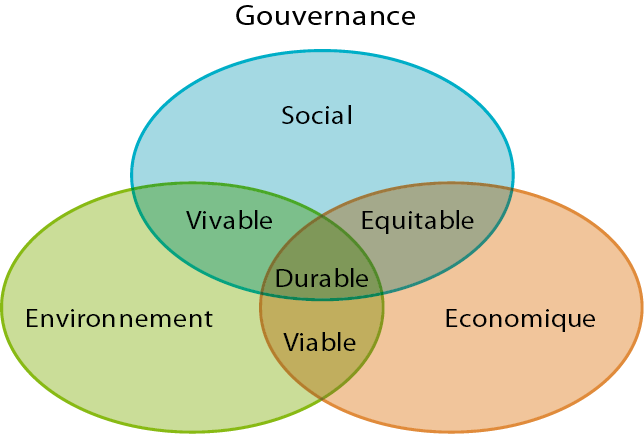
schema_DD_lightbox


« This Guide is designed for reporters and editors who already have some experience covering business and finance. The goal is to help journalists develop stories that examine how a company is governed, and spot events that may have serious consequences for the company’s survival, shareholders and stakeholders. Topics include the media’s role as a watchdog, how the board of directors functions, what constitutes good practice, what financial reports reveal, what role shareholders play and how to track down and use information shedding light on a company’s inner workings. Journalists will learn how to recognize “red flags,” or warning  signs, that indicate whether a company may be violating laws and rules. Tips on reporting and writing guide reporters in developing clear, balanced, fair and convincing stories.


Three recurring features in the Guide help reporters apply “lessons learned” to their own “beats,” or coverage areas:

– Reporter’s Notebook: Advise from successful business journalists

– Story Toolbox:  How and where to find the story ideas

– What Do You Know? Applying the Guide’s lessons

Each chapter helps journalists acquire the knowledge and skills needed to recognize potential stories in the companies they cover, dig out the essential facts, interpret their findings and write clear, compelling stories:

  1. What corporate governance is, and how it can lead to stories. (Chapter 1, What’s good governance, and why should journalists care?)
  2. How understanding the role that the board and its committees play can lead to stories that competitors miss. (Chapter 2, The all-important board of directors)
  3. Shareholders are not only the ultimate stakeholders in public companies, but they often are an excellent source for story ideas. (Chapter 3, All about shareholders)
  4. Understanding how companies are structured helps journalists figure out how the board and management interact and why family-owned and state-owned enterprises (SOEs), may not always operate in the best interests of shareholders and the public. (Chapter 4, Inside family-owned and state-owned enterprises)
  5. Regulatory disclosures can be a rich source of exclusive stories for journalists who know where to look and how to interpret what they see. (Chapter 5, Toeing the line: regulations and disclosure)
  6. Reading financial statements and annual reports — especially the fine print — often leads to journalistic scoops. (Chapter 6, Finding the story behind the numbers)
  7. Developing sources is a key element for reporters covering companies. So is dealing with resistance and pressure from company executives and public relations directors. (Chapter 7, Writing and reporting tips)

Each chapter ends with a section on Sources, which lists background resources pertinent to that chapter’s topics. At the end of the Guide, a Selected Resources section provides useful websites and recommended reading on corporate governance. The Glossary defines terminology used in covering companies and corporate governance ».

Here’s what Ottawa’s new rules for state-owned buyers may look like (business.financialpost.com)

The Vote is Cast: The Effect of Corporate Governance on Shareholder Value (greenbackd.com)

Effective Drivers of Good Corporate Governance (shilpithapar.com)

Mieux connaître la relation entre l’anxiété et la performance | Congrès de l’Ordre des administrateurs agréés


Aujourd’hui, je vous propose de méditer sur le billet de Scott Stossel*, paru le 6 janvier 2014 dans HBR Blog Network, que j’avais déjà publié en janvier 2014. Celui-ci aborde un sujet intrigant et très pertinent à quiconque se préoccupe de performance optimale.

Ce sujet de discussion est particulièrement approprié à l’aube du Congrès de l’Ordre des administrateurs agréés (OAAQ) des 18 et 19 février 2016, dont le thème est : « La performance | Au-delà des chiffres ! », auquel je vous invite à participer.


adma


On connaît la relation entre l’anxiété (ce sentiment diffus d’appréhension souvent injustifiée et infondée) et la performance — dans l’accomplissement d’une tâche. La performance est optimale lorsque l’on réussit à équilibrer l’intensité de l’anxiété : généralement, trop d’anxiété est nuisible à l’exécution de l’activité ; peu d’anxiété conduit à une plus faible performance.

English: Signs & Symptoms of Anxiety
English: Signs & Symptoms of Anxiety (Photo credit: Wikipedia)

La maîtrise de l’anxiété est très importante dans la conduite de nos vies, plus particulièrement dans les activités liées à la performance au travail. Les administrateurs et les managers doivent apprendre à en bien connaître la manifestation, eux dont les tâches consistent à assurer une solide performance et une gouvernance exemplaire.

Si vous croyez être sujets à des accès d’angoisses immotivées, vous n’êtes pas les seuls… et il existe des moyens pour y faire face. Cet article vous ouvrira plusieurs voies d’accommodement possibles ; bref, si vous expérimentez ce sentiment diffus d’anxiété — et que cela influence négativement votre travail — cet article est pour vous. Je vous invite aussi à lire les excellents commentaires à la fin de l’article.

En quoi ce sujet concerne-t-il la gouvernance ?

Donnez votre point de vue. Bonne lecture !

The Relationship Between Anxiety and Performance

An influential study conducted a hundred years ago by two Harvard psychologists, Robert M. Yerkes and John Dillingham Dodson, demonstrated that moderate levels of anxiety improve performance in humans and animals: too much anxiety, obviously, impairs performance, but so does too little. Their findings have been experimentally demonstrated in both animals and humans many times since then.

“Without anxiety, little would be accomplished,” David Barlow, founder of the Center for Anxiety and Related Disorders at Boston University, has written. “The performance of athletes, entertainers, executives, artisans, and students would suffer; creativity would diminish; crops might not be planted. And we would all achieve that idyllic state long sought after in our fast-paced society of whiling away our lives under a shade tree. This would be as deadly for the species as nuclear war.”

So how do you find the right balance? How do you get yourself into the performance zone where anxiety is beneficial? That’s a really tough question. For me, years of medication and intensive therapy have (sometimes, somewhat) taken the physical edge off my nerves so I could focus on trying to do well, not on removing myself from the center of attention as quickly as possible. For those who choke during presentations to board members or pitches to clients, for example, but probably aren’t what you’d call clinically anxious, the best approach may be one akin to what Beilock has athletes do in her experiments: redirecting your mind, in the moment, to something other than how you’re comporting yourself, so you can allow the skills and knowhow you’ve worked so hard to acquire to automatically kick into gear and carry you through. Your focus should not be on worrying about outcomes or consequences or on how you’re being perceived but simply on the task at hand. Prepare thoroughly (but not too obsessively) in advance; then stay in the moment. If you’re feeling anxious, breathe from your diaphragm in order to keep your sympathetic nervous system from revving up too much. And remember that it can be good to be keyed up: the right amount of nervousness will enhance your performance.


* Scott Stossel est l’éditeur de la revue The Atlantic et l’auteur du volume My Age of Anxiety: Fear, Hope, Dread, and the Search for Peace of Mind (Knopf 2014).

Enhanced by Zemanta

Dix thèmes majeurs pour les administrateurs en 2016 | Harvard Law School Forum on Corporate Governance


Vous trouverez, ci-dessous, les dix thèmes les plus importants pour les administrateurs de sociétés selon Kerry E. Berchem, associé du groupe de pratiques corporatives à la firme Akin Gump Strauss Hauer & Feld LLP. Cet article est paru aujourd’hui sur le blogue le Harvard Law School Forum on Corporate Governance.

Bien qu’il y ait peu de changements dans l’ensemble des priorités cette année, on peut quand même noter :

(1) l’accent crucial accordé au long terme ;

(2) Une bonne gestion des relations avec les actionnaires dans la foulée du nombre croissant d’activités menées par les activistes ;

(3) Une supervision accrue des activités liées à la cybersécurité…

Pour plus de détails sur chaque thème, je vous propose la lecture synthèse de l’article ci-dessous.

Bonne lecture !


Ten Topics for Directors in 2016 |   Harvard Law School Forum on Corporate Governance


U.S. public companies face a host of challenges as they enter 2016. Here is our annual list of hot topics for the boardroom in the coming year:

  1. Oversee the development of long-term corporate strategy in an increasingly interdependent and volatile world economy
  2. Cultivate shareholder relations and assess company vulnerabilities as activist investors target more companies with increasing success
  3. Oversee cybersecurity as the landscape becomes more developed and cyber risk tops director concerns
  4. Oversee risk management, including the identification and assessment of new and emerging risks
  5. Assess the impact of social media on the company’s business plans
  6. Stay abreast of Delaware law developments and other trends in M&A
  7. Review and refresh board composition and ensure appropriate succession
  8. Monitor developments that could impact the audit committee’s already heavy workload
  9. Set appropriate executive compensation as CEO pay ratios and income inequality continue to make headlines
  10. Prepare for and monitor developments in proxy access

Strategic Planning Considerations

Strategic planning continues to be a high priority for directors and one to which they want to devote more time. Figuring out where the company wants to—and where it should want to—go and how to get there is not getting any easier, particularly as companies find themselves buffeted by macroeconomic and geopolitical events over which they have no control.

axes

In addition to economic and geopolitical uncertainty, a few other challenges and considerations for boards to keep in mind as they strategize for 2016 and beyond include:

finding ways to drive top-line growth

focusing on long-term goals and enhancing long-term shareholder value in the face of mounting pressures to deliver short-term results

the effect of low oil and gas prices

figuring out whether and when to deploy growing cash stockpiles

assessing the opportunities and risks of climate change and resource scarcity

addressing corporate social responsibility.

Shareholder Activism

Shareholder activism and “suggestivism” continue to gain traction. With the success that activists have experienced throughout 2015, coupled with significant new money being allocated to activist funds, there is no question that activism will remain strong in 2016.

In the first half of 2015, more than 200 U.S. companies were publicly subjected to activist demands, and approximately two-thirds of these demands were successful, at least in part. [1] A much greater number of companies are actually targeted by activism, as activists report that less than a third of their campaigns actually become public knowledge. [2] Demands have continued, and will continue, to vary: from requests for board representation, the removal of officers and directors, launching a hostile bid, advocating specific business strategies and/or opining on the merit of M&A transactions. But one thing is clear: the demands are being heard. According to a recent survey of more than 350 mutual fund managers, half had been contacted by an activist in the past year, and 45 percent of those contacted decided to support the activist. [3]

With the threat of activism in the air, boards need to cultivate shareholder relations and assess company vulnerabilities. Directors—who are charged with overseeing the long-term goals of their companies—must also understand how activists may look at the company’s strategy and short-term results. They must understand what tactics and tools activists have available to them. They need to know and understand what defenses the company has in place and whether to adopt other protective measures for the benefit of the overall organization and stakeholders.

Cybersecurity

Nearly 90 percent of CEOs worry that cyber threats could adversely impact growth prospects. [4] Yet in a recent survey, nearly 80 percent of the more than 1,000 information technology leaders surveyed had not briefed their board of directors on cybersecurity in the last 12 months. [5] The cybersecurity landscape has become more developed and as such, companies and their directors will likely face stricter scrutiny of their protection against cyber risk. Cyber risk—and the ultimate fall out of a data breach—should be of paramount concern to directors.

One of the biggest concerns facing boards is how to provide effective oversight of cybersecurity. The following are questions that boards should be asking:

Governance. Has the board established a cybersecurity review > committee and determined clear lines of reporting and > responsibility for cyber issues? Does the board have directors with the necessary expertise to understand cybersecurity and related issues?

Critical asset review. Has the company identified what its highest cyber risks assets are (e.g., intellectual property, personal information and trade secrets)? Are sufficient resources allocated to protect these assets?

Threat assessment. What is the daily/weekly/monthly threat report for the company? What are the current gaps and how are they being resolved?

Incident response preparedness. Does the company have an incident response plan and has it been tested in the past six months? Has the company established contracts via outside counsel with forensic investigators in the event of a breach to facilitate quick response and privilege protection?

Employee training. What training is provided to employees to help them identify common risk areas for cyber threat?

Third-party management. What are the company’s practices with respect to third parties? What are the procedures for issuing credentials? Are access rights limited and backdoors to key data entry points restricted? Has the company conducted cyber due diligence for any acquired companies? Do the third-party contracts contain proper data breach notification, audit rights, indemnification and other provisions?

Insurance. Does the company have specific cyber insurance and does it have sufficient limits and coverage?

Risk disclosure. Has the company updated its cyber risk disclosures in SEC filings or other investor disclosures to reflect key incidents and specific risks?

The SEC and other government agencies have made clear that it is their expectation that boards actively manage cyber risk at an enterprise level. Given the complexity of the cybersecurity inquiry, boards should seriously consider conducting an annual third-party risk assessment to review current practices and risks.

Risk Management

Risk management goes hand in hand with strategic planning—it is impossible to make informed decisions about a company’s strategic direction without a comprehensive understanding of the risks involved. An increasingly interconnected world continues to spawn newer and more complex risks that challenge even the best-managed companies. How boards respond to these risks is critical, particularly with the increased scrutiny being placed on boards by regulators, shareholders and the media. In a recent survey, directors and general counsel identified IT/cybersecurity as their number one worry, and they also expressed increasing concern about corporate reputation and crisis preparedness. [6]

Given the wide spectrum of risks that most companies face, it is critical that boards evaluate the manner in which they oversee risk management. Most companies delegate primary oversight responsibility for risk management to the audit committee. Of course, audit committees are already burdened with a host of other responsibilities that have increased substantially over the years. According to Spencer Stuart’s 2015 Board Index, 12 percent of boards now have a stand-alone risk committee, up from 9 percent last year. Even if primary oversight for monitoring risk management is delegated to one or more committees, the entire board needs to remain engaged in the risk management process and be informed of material risks that can affect the company’s strategic plans. Also, if primary oversight responsibility for particular risks is assigned to different committees, collaboration among the committees is essential to ensure a complete and consistent approach to risk management oversight.

Social Media

Companies that ignore the significant influence that social media has on existing and potential customers, employees and investors, do so at their own peril. Ubiquitous connectivity has profound implications for businesses. In addition to understanding and encouraging changes in customer relationships via social media, directors need to understand and weigh the risks created by social media. According to a recent survey, 91 percent of directors and 79 percent of general counsel surveyed acknowledged that they do not have a thorough understanding of the social media risks that their companies face. [7]

As part of its oversight duties, the board of directors must ensure that management is thoughtfully addressing the strategic opportunities and challenges posed by the explosive growth of social media by probing management’s knowledge, plans and budget decisions regarding these developments. Given new technology and new social media forums that continue to arise, this is a topic that must be revisited regularly.

M&A Developments

M&A activity has been robust in 2015 and is on track for another record year. According to Thomson Reuters, global M&A activity exceeded $3.2 trillion with almost 32,000 deals during the first three quarters of 2015, representing a 32 percent increase in deal value and a 2 percent increase in deal volume compared to the same period last year. The record deal value mainly results from the increase in mega-deals over $10 billion, which represented 36 percent of the announced deal value. While there are some signs of a slowdown in certain regions based on deal volume in recent quarters, global M&A is expected to carry on its strong pace in the beginning of 2016.

Directors must prepare for possible M&A activity in the future by keeping abreast of developments in Delaware case law and other trends in M&A. The Delaware courts churned out several noteworthy decisions in 2015 regarding M&A transactions that should be of interest to directors, including decisions on the court’s standard of review of board actions, exculpation provisions, appraisal cases and disclosure-only settlements.

Board Composition and Succession Planning

Boards have to look at their composition and make an honest assessment of whether they collectively have the necessary experience and expertise to oversee the new opportunities and challenges facing their companies. Finding the right mix of people to serve on a company’s board of directors, however, is not necessarily an easy task, and not everyone will agree with what is “right.” According to Spencer Stuart’s 2015 Board Index, board composition and refreshment and director tenure were among the top issues that shareholders raised with boards. Because any perceived weakness in a director’s qualification could open the door for activist shareholders, boards should endeavor to have an optimal mix of experience, skills and diversity. In light of the importance placed on board composition, it is critical that boards have a long-term board succession plan in place. Boards that are proactive with their succession planning are able to find better candidates and respond faster and more effectively when an activist approaches or an unforeseen vacancy occurs.

Audit Committees

Averaging 8.8 meetings a year, audit continues to be the most time-consuming committee. [8] Audit committees are burdened not only with overseeing a company’s risks, but also a host of other responsibilities that have increased substantially over the years. Prioritizing an audit committee’s already heavy workload and keeping directors apprised of relevant developments, including enhanced audit committee disclosures, accounting changes and enhanced SEC scrutiny will be important as companies prepare for 2016.

Executive Compensation

Perennially in the spotlight, executive compensation will continue to be a hot topic for directors in 2016. But this year, due to the SEC’s active rulemaking in 2015, directors will have more to fret about than just say-on-pay. Roughly five years after the Dodd-Frank Wall Street Reform and Consumer Protection Act was enacted, the SEC finally adopted the much anticipated CEO pay ratio disclosure rules, which have already begun stirring the debate on income inequality and exorbitant CEO pay. The SEC also made headway on other Dodd-Frank regulations, including proposed rules on pay-for-performance, clawbacks and hedging disclosures. Directors need to start planning how they will comply with these rules as they craft executive compensation for 2016.

Proxy Access

2015 was a turning point for shareholder proposals seeking to implement proxy access, which gives certain shareholders the ability to nominate directors and include those nominees in a company’s proxy materials. During the 2015 proxy season, the number of shareholder proposals relating to proxy access, as well as the overall shareholder support for such proposals, increased significantly. Indeed, approximately 110 companies received proposals requesting the board to amend the company’s bylaws to allow for proxy access, and of those proposals that went to a vote, the average support was close to 54 percent of votes cast in favor, with 52 proposals receiving majority support. [9] New York City Comptroller Scott Springer and his 2015 Boardroom Accountability Project were a driving force, submitting 75 proxy access proposals at companies targeted for perceived excessive executive compensation, climate change issues and lack of board diversity. Shareholder campaigns for proxy access are expected to continue in 2016. Accordingly, it is paramount that boards prepare for and monitor developments in proxy access, including, understanding the provisions that are emerging as typical, as well as the role of institutional investors and proxy advisory firms.

The complete publication is available here.

Endnotes:

[1] Activist Insight, “2015: The First Half in Numbers,” Activism Monthly (July 2015).
(go back)

[2] Activist Insight, “Activist Investing—An Annual Review of Trends in Shareholder Activism,” p. 8. (2015).
(go back)

[3] David Benoit and Kirsten Grind, “Activist Investors’ Secret Ally: Big Mutual Funds,” The Wall Street Journal (August 9, 2015).
(go back)

[4] PwC’s 18th Annual Global CEO Survey 2015.
(go back)

[5] Ponemon Institute’s 2015 Global Megatrends in Cybersecurity (February 2015).
(go back)

[6] Kimberley S. Crowe, “Law in the Boardroom 2015,” Corporate Board Member Magazine (2nd Quarter 2015). See also, Protiviti, “Executive Perspectives on Top Risks for 2015.”
(go back)

[7] Kimberley S. Crowe, supra.
(go back)

[8] 2015 Spencer Stuart Board Index, at p. 26.
(go back)

[9] Georgeson, 2015 Annual Corporate Governance Review, at p. 5.
(go back)

Les dix (10) billets vedettes en gouvernance sur mon blogue en 2015


Voici une liste des billets en gouvernance les plus populaires publiés sur mon blogue en 2015.

Cette liste constitue, en quelque sorte, un sondage de l’intérêt manifesté par des dizaines de milliers de personnes sur différents thèmes de la gouvernance des sociétés. On y retrouve des points de vue bien étayés sur des sujets d’actualité relatifs aux conseils d’administration.

Les dix (10) articles les plus lus du Blogue en gouvernance ont fait l’objet de plus de 10 000 visites.

Que retrouve-t-on dans ce blogue et quels en sont les objectifs?

Ce blogue fait l’inventaire des documents les plus pertinents et les plus récents en gouvernance des entreprises. La sélection des billets est le résultat d’une veille assidue des articles de revue, des blogues et des sites web dans le domaine de la gouvernance, des publications scientifiques et professionnelles, des études et autres rapports portant sur la gouvernance des sociétés, au Canada et dans d’autres pays, notamment aux États-Unis, au Royaume-Uni, en France, en Europe, et en Australie.

icon-share-flatJe fais un choix parmi l’ensemble des publications récentes et pertinentes et je commente brièvement la publication. L’objectif de ce blogue est d’être la référence en matière de documentation en gouvernance dans le monde francophone, en fournissant au lecteur une mine de renseignements récents (les billets) ainsi qu’un outil de recherche simple et facile à utiliser pour répertorier les publications en fonction des catégories les plus pertinentes.

Quelques statistiques à propos du blogue Gouvernance | Jacques Grisé

Ce blogue a été initié le 15 juillet 2011 et, à date, il a accueilli plus de 170000 visiteurs. Le blogue a progressé de manière tout à fait remarquable et, au 31 décembre 2015, il était fréquenté par des milliers de visiteurs par mois. Depuis le début, j’ai œuvré à la publication de 1305 billets.

En 2016, j’estime qu’environ 5000 personnes par mois visiteront le blogue afin de s’informer sur diverses questions de gouvernance. À ce rythme, on peut penser qu’environ 60000 personnes visiteront le site du blogue en 2016. 

On note que 44 % des billets sont partagés par l’intermédiaire de LinkedIn et 45 % par différents moteurs de recherche. Les autres réseaux sociaux (Twitter, Facebook et Tumblr) se partagent 11 % des références.

Voici un aperçu du nombre de visiteurs par pays :

  1. Canada (64 %)
  2. France, Suisse, Belgique (20 %)
  3. Maghreb (Maroc, Tunisie, Algérie) (5 %)
  4. Autres pays de l’Union européenne (3 %)
  5. États-Unis (3 %)
  6. Autres pays de provenance (5 %)

En 2014, le blogue Gouvernance | Jacques Grisé a été inscrit dans deux catégories distinctes du concours canadien Made in Blog (MiB Awards) : Business et Marketing et médias sociaux. Le blogue a été retenu parmi les dix (10) finalistes à l’échelle canadienne dans chacune de ces catégories, le seul en gouvernance. Il n’y avait pas de concours en 2015.

Vos commentaires sont toujours grandement appréciés. Je réponds toujours à ceux-ci.

N.B. Vous pouvez vous inscrire ou faire des recherches en allant au bas de cette page.

Bonne lecture !

Voici les Top 10 de l’année 2015 du blogue en gouvernance de www.jacquesgrisegouvernance.com


1.       Un document complet sur les principes d’éthique et de saine gouvernance dans les organismes à buts charitables
2.       Guides de gouvernance à l’intention des OBNL : Questions et réponses
3.       Vous siégez à un conseil d’administration | comment bien se comporter ?
4.       Que faire avec un membre de CA « toxique » ?
5.       LE RÔLE DU PRÉSIDENT DU CONSEIL D’ADMINISTRATION (PCA) | LE CAS DES CÉGEP
6.       Éloge à la confiance du PCD envers son CA
7.       Le rôle du comité exécutif versus le rôle du conseil d’administration
8.       Vous prenez un nouveau poste ? Bravo, mais attention !
9.       Les 10 plus importantes préoccupations des C.A. en 2015
10.   Quelles sont les qualités managériales recherchées par les C.A. | Entrevue avec le PCD de Korn/Ferry

Joyeuses fêtes !

Top priorités des CA en 2016 | EY


Aujourd’hui, je vous présente les cinq priorités des CA pour 2016, telles qu’identifiées par Ruby Sharma et Ann Yerger, de l’Ernst & Young Center for Board Matters.

Encore une fois, les auteurs invitent les administrateurs à prendre les devants et à être proactifs dans la mise en œuvre de stratégies à long terme pour répondre à ces défis.

Je suis très heureux que l’on parle de 5 priorités plutôt que 10 ou 15, car dans ces cas, les termes priorités ne valent plus rien dire ! Le texte qui suit donne les grandes lignes de chacune de ces priorités. Je vous invite donc à vous y référer.

  1. La première priorité consiste à examiner la composition du CA, évaluer son efficacité et réfléchir à son renouvellement.
  2. La deuxième priorité est de se questionner sur les relations entre les investisseurs et les parties prenantes. La communication avec les actionnaires est de plus en plus une responsabilité du CA, car les investisseurs sont appelés à jouer un rôle prédominant dans la gouvernance des sociétés.
  3. La troisième priorité pour le conseil est de s’assurer que l’organisation est adéquatement préparée pour réagir aux situations susceptibles de compromettre la sécurité cybernétique.
  4. La quatrième priorité est de bien superviser la nature et l’importance des risques que court l’organisation.
  5. Enfin, la cinquième priorité est de s’assurer que l’entreprise a un bon système de gestion des talents et que ses risques sont minimisés à cet égard.

Bonne lecture ! Joyeuses fêtes.


Top Board Priorities for 2016


Board effectiveness, composition and refreshment

It is a recurring question for directors and their organizations—how do good boards become great? Improving board effectiveness, making sure boards maintain the right combination of skills and experience, and enhancing transparency and accountability will characterize exceptional boards in 2016. Performing robust and thoughtful board self-assessments, with consideration of peer and individual director evaluations, will be critical for board effectiveness.

homme d'affaire

Effective boards will balance the viewpoints of tenured directors with the fresh perspectives of new members. These boards will make certain that the appropriate breadth of industry expertise is represented in the boardroom and that the composition of the board reflects the increasing convergence of sectors. Boards will seek directors with a greater diversity of knowledge and experience in order to match boardroom talents with evolving business strategies reflective of the interconnected global economic environment and technological and demographic changes.

We recently found that among Fortune 100 companies with retirement-age policies, 19% of directorships are held by individuals within five years of reaching the board’s designated retirement age. [1] Since a significant number of directors are currently approaching retirement, boards will have an opportunity to review their oversight needs and engage in strategic director succession planning in the coming year.

Investor and stakeholder engagement

The day of the passive investor is behind us. Investors around the globe are increasingly asking tough questions on the issues that matter most to them. They want to understand the board’s role in the oversight of enterprise risk, including emerging risks, strategy and execution. They want to know if boards are robustly evaluating their own performance and confirming that the right portfolio of skill sets aligned with company strategies are represented in the boardroom.

Investors will continue to seek meaningful communications and engagement with board leadership and committee chairs on issues such as company strategy, board composition (including diversity), director tenure, succession planning and executive compensation.

As a result, effective communication is emerging as a growing responsibility of corporate directors. Boards will focus on shareholder communication plans to ensure first, that required filings are not merely “compliance” documents but effective communication tools, and second, that designated directors are fully prepared to engage directly with investors on appropriate governance matters such as oversight of strategy, disclosure effectiveness and board refreshment processes.

Cybersecurity

The advent of new technologies and an ecosystem of digital interconnectedness significantly increase an organization’s exposure to theft of its most valuable assets, which include confidential customer data and vital information such as intellectual property and strategic blueprints. Preparedness is the first line of defense. Yet only 7% of organizations claim to have a robust incident response program that includes third parties and law enforcement and is integrated with their broader threat and vulnerability management function. [2]

The emphasis for boards will be to make sure that companies are shoring up critical infrastructure, enhancing crisis response and mapping a strategy that emphasizes a good balance of preventive and responsive tactics. This means being able to efficiently guide an organization through the layers of risks and threats, and boards should appropriately set the risk appetite and be prepared to swing into decisive action to handle any incidents.

Boards accept that the risk of a cyber breach needs to be continually managed, and adequate preparation that enables an organization to get back up and running quickly following an attack will be a key consideration for boards.

Knowing where the vulnerabilities lie is vital. Boards will continue to confirm that companies have a system and backup plan that facilitates data migration in a crisis. They will also need to make sure that their organizations firm up relationships with federal investigating authorities, who can move swiftly in response to attacks and minimize exposure and damage.

Oversight of ERM

As boards continue to focus on their roles in long-term value creation, effective oversight of ERM will be high on their agendas. Oversight of ERM will comprise operational, financial, strategic, compliance and reputational risks.

Board oversight will entail setting the “tone at the top” by promoting, assessing and monitoring risk culture and appetite.

Oversight of talent risk management

Boards recognize the crucial role they play in human capital matters as they relate to overseeing the management of three key risks: culture, talent and strategy. The business reason is compelling since talent and culture are arguably the biggest drivers of innovation, growth and the ability to outperform the competition. In recent conversations we have had with board directors, three out of four said that human capital strategy will be one of the top emerging risks that boards will face in 2016.

Boards will play an important role in ensuring that leadership stays focused on building the right talent strategy. Boards will focus on how to prepare for generational transitions in their organizations and anticipate the changing dynamics at the boardroom and management levels. As new and complex opportunities and risks emerge with evolving strategies and growth markets, having the right people to execute on strategies is an important imperative for success.

For many boards, talent management remains a big challenge. Failure to understand and mitigate human capital risks and complexities will impact strategy and value creation.

Endnotes:

[1] “Five-year outlook: nearly 20% of directors poised for board exit,” Ernst & Young LLP, August 2015, (discussed on the Forum here).
(go back)

[2] “Creating trust in Ruby Sharma is a principal and Ann Yerger is an executive director at the EY Center for Board Matters at Ernst & Young LLP. The following post is based on a report from the EY Center for Board Matters, available here.


L’éthique pour les conseils d’administration | Commission Charbonneau


Vous trouverez, ci-dessous, un billet publié par René Villemure, éthicien, à la suite du dépôt des recommandations contenues dans le rapport de la Commission Charbonneau.

L’auteur fait ressortir deux recommandations spécifiques aux ordres professionnels et il propose un programme de formation en éthique à l’intention des membres de CA des ordres.

  1. La Commission recommande que l’on impose une formation en éthique et en déontologie aux membres des ordres professionnels.
  2. La Commission suggère d’améliorer la formation des administrateurs des ordres professionnels.


1093636-renaud-lachance-france-charbonneau

Afin d’assister les ordres professionnels dans l’accomplissement de leur mission dans un climat éthique, nous avons mis sur pied le programme L’Éthique pour le conseil. Ce programme permet de mesurer de manière qualitative et quantitative la compréhension et la sensibilité éthique des membres de conseils d’administration des ordres professionnels.

Parce que c’est en amont que doit avoir lieu une réflexion éthique, le programme L’Éthique pour le conseil permet aux administrateurs d’identifier leurs forces, leurs faiblesses et défis en matière d’éthique et de culture organisationnelle.

L’Éthique pour le conseil permettra aux ordres professionnels de se conformer à la recommandation 30 du rapport de la Commission Charbonneau.

L’éthique n’est plus un luxe, c’est une nécessité.

Pour plus d’informations, veuillez consulter les éléments du programme de formation en vous référant au document :

L’éthique pour le conseil


À PROPOS D‘ETHIKOS

Depuis 1998, Ethikos innove. Leader en matière d’éthique, à l’époque où personne ne connaissait ni ne s’intéressait aux termes « intégrité », « gouvernance », « responsabilité sociétale des entreprises » et « gestion éthique », elle a été la première société au Canada à parler de gestion éthique des organisations.

LE PRÉSIDENT D’ETHIKOS, RENÉ VILLEMURE, EN BREF

Innovateur et visionnaire, dès 1998, il invente les concepts de Diagnostic éthique©, de Modèle de gestion éthique© et signe la conception de la méthode Éthique et valeurs©. En 2005, il est reconnu par la Chaire de management éthique des HEC-Montréal comme étant une des 120 personnalités internationales ayant contribué au développement d’une éthique intégrale. Depuis 2009, il enseigne la Gouvernance éthique au Collège des administrateurs de sociétés de l’Université Laval à Québec et offre des séminaires éthiques à l’Institut Français des Administrateurs (IFA) à Paris.

En 2010, l’Observatoire des tendances de Paris le reconnaît comme étant un des 200 Éclaireurs du futur. La même année, il signe la préface du livre Entretiens avec Henry Mintzberg. Créateur en 2012 des programmes ADN Éthique de la marque©, Éthiciens sans frontières© et Entreprise Socialement Exemplaire© et créateur en 2014 de L’Éthique pour le conseil/ Boardethics©. En 2014, René Villemure a été nommé Membre associé de la Fondation Michaëlle Jean. René Villemure est diplômé en philosophie de l’Université de Sherbrooke.

Que faire quand la confiance entre le conseil et la direction est faible ? | Le cas d’une OBNL en rappel


Voici un cas qui origine du blogue australien de Julie Garland McLellan et qui intéressera certainement tous les membres de conseils d’administration d’OBNL.  J’ai choisi de partager à nouveau ce cas en gouvernance avec vous car je crois qu’il évoque trop souvent les situations vécues par certaines organisations à but non lucratif.

Ce cas présente la situation réelle d’une entreprise dont les liens de confiance entre le C.A. et la direction se sont effrités.

Qu’en pensez-vous ? Que feriez-vous à la place de Jake ?

Quelle analyse vous semble la plus appropriée dans notre contexte ? Que pensez-vous des analyses effectuées par les trois experts ?

« Boards operate best when each director trusts each other director to adhere to the jointly accepted governance processes and policies as well as the relevant laws and regulations. This month our real life case study considers what to do when that trust is lost. Consider: What would you advise a friend to do under these circumstances ? »


Que faire quand la confiance est perdue ?


Jake is a club chairman. The former chairman resigned after a major disagreement with the rest of the board which arose because the former chairman signed a major contract. When the board discovered what had happened they were furious that a large decision had been made without involving them. The former chairman stormed from the meeting and resigned in writing the following morning.

The Board then acted without a formal chair, directors took turns to chair the meetings, until the next election. During this time the board rewrote the by-laws which previously allowed the chairman to sign contracts after verification by the treasurer that doing so would not lead to insolvency. They adopted new by-laws that stated no director, including – for absence of doubt – the chairman and/or treasurer, could commit the club to any contract, expenditure or course of action unless approved in a duly constituted board meeting.

P1110362

Jake was not previously on the board and was elected unopposed after being invited by the treasurer to stand for election. He is a successful businessman but has no experience with consensual board decision-making. He has now discovered that the club is wallowing because recent decisions have not been made in a timely fashion. His fellow directors are numerous, factionated and indecisive. The CEO has low delegations and the constitution envisages that the chairman, CEO and treasurer should make decisions between meetings and use the board to ratify strategy, engage members and provide oversight. The amended by-laws prevent the constitution from working but don’t provide an alternative workable model.

The board reacted with horror to a suggestion that they soften the new by-laws but don’t appear willing to improve their own performance so the club can operate under the new by-laws. Staff performance reviews and bonuses are soon to be agreed and Jake is fairly certain that his board will not make rational decisions or support the CEO’s recommendations. He knows that he needs to act decisively to avert disaster but doesn’t know where to start.

How can Jake create an environment that allows for effective management of the club before this situation spirals out of control?

En rappel | Ce que chaque administrateur de sociétés devrait savoir à propos de la sécurité infonuagique


Cet article est basé sur un rapport de recherche de Paul A. Ferrillo, avocat conseil chez Weil, Gotshal & Manges, et de Dave Burg et Aaron Philipp de PricewaterhouseCoopers. Les auteurs présentent une conceptualisation des facteurs infonuagiques (cloud computing) qui influencent les entreprises, en particulier les comportements de leurs administrateurs.

L’article donne une définition du phénomène infonuagique et montre comment les conseils d’administration sont interpellés par les risques que peuvent constituer les cyber-attaques. En fait, la partie la plus intéressante de l’article consiste à mieux comprendre, ce que les auteurs appellent, la « Gouvernance infonuagique » (Cloud Cyber Governance).

L’article propose plusieurs questions critiques que les administrateurs doivent adresser à la direction de l’entreprise.

Vous trouverez, ci-dessous, les points saillants de cet article lequel devrait intéresser les administrateurs préoccupés par les aspects de sécurité des opérations infonuagiques.

Bonne lecture !


Cloud Cyber Security: What Every Director Needs to Know

« There are four competing business propositions affecting most American businesses today. Think of them as four freight trains on different tracks headed for a four-way stop signal at fiber optic speed.

First, with a significant potential for cost savings, American business has adopted cloud computing as an efficient and effective way to manage countless bytes of data from remote locations at costs that would be unheard of if they were forced to store their data on hard servers. According to one report, “In September 2013, International Data Corporation predicted that, between 2013 and 2017, spending on pubic IT cloud computing will experience a compound annual growth of 23.5%.” Another report noted, “By 2014, cloud computing is expected to become a $150 billion industry. And for good reason—whether users are on a desktop computer or mobile device, the cloud provides instant access to data anytime, anywhere there is an Internet connection.”

IMG_20140219_205959

The second freight train is data security. Making your enterprise’s information easier for you to access and analyze also potentially makes it easier for others to do, too. 2013 and 2014 have been the years of “the big data breach,” with millions of personal data and information records stolen by hackers. Respondents to the 2014 Global State of Information Security® Survey reported a 25% increase in detected security incidents over 2012 and a 45% increase compared to 2011. Though larger breaches at global retailers are extremely well known, what is less known is that cloud providers are not immune from attack. Witness the cyber breach against a file sharing cloud provider that was perpetrated by lax password security and which caused a spam attack on its customers. “The message is that cyber criminals, just like legitimate companies, are seeing the ‘business benefits’ of cloud services. Thus, they’re signing up for accounts and reaching sensitive files through these accounts. For the cyber criminals this only takes a run-of-the-mill knowledge level … This is the next step in a new trend … and it will only continue.”

The third freight train is the plaintiff’s litigation bar. Following cyber breach after cyber breach, they are viewing the corporate horizon as rich with opportunities to sue previously unsuspecting companies caught in the middle of a cyber disaster, with no clear way out. They see companies scrambling to contend with major breaches, investor relation delays, and loss of brand and reputation.

The last freight train running towards the intersection of cloud computing and data security is the topic of cyber governance—i.e., what directors should be doing or thinking about to protect their firm’s most critical and valuable IP assets. In our previous article, we noted that though directors are not supposed to be able to predict all potential issues when it comes to cyber security issues, they do have a basic fiduciary duty to oversee the risk management of the enterprise, which includes securing its intellectual property and trade secrets. The purpose of this article is to help directors and officers potentially avoid a freight train collision by helping the “cyber governance train” control the path and destiny of the company. We will discuss basic cloud security principles, and basic questions directors should ask when considering whether or not the data their management desires to run on a cloud-based architecture will be as safe from attack as possible. As usual when dealing with cyber security issues, there are no 100% foolproof answers. Even cloud experts disagree on cloud-based data security practices and their effectiveness] There are only good questions a board can ask to make sure it is fulfilling its duties to shareholders to protect the company’s valuable IP assets.

What is Cloud Computing/What Are Its Basic Platforms

“Cloud computing is a model for enabling ubiquitous, convenient, on-demand network access to a shared pool of configurable computing resources (e.g., networks, servers, storage, applications, and services). Cloud computing is a disruptive technology that has the potential to enhance collaboration, agility, scaling, and availability, and provides the opportunities for cost reduction through optimized and efficient computing. The cloud model envisages a world where components can be rapidly orchestrated, provisioned, implemented and decommissioned, and scaled up or down to provide an on-demand utility-like model of allocation and consumption.”

Cloud computing is generally based upon three separate and distinct architectures that matter when considering the security of the data sitting in the particular cloud environment.

……

Cloud Cyber Governance

As shown above, what is commonly referred to as the cloud actually can mean many different things depending on the context and use. Using SaaS to manage a customer base has a vastly different set of governance criteria to using IaaS as a development environment. As such, there are very few accepted standards for properly monitoring/administering a cloud-based environment. There are many IT consultants in the cloud-based computing environment that can be consulted in that regard. Our view, however, is that directors are ultimately responsible for enterprise risk management, and that includes cyber security, a subset of which is cloud-based cyber-security. Thus it is important for directors to have a basic understanding of the risks involved in cloud-based data storage systems, and with cloud-based storage providers. Below are a few basic questions that come to mind that a director could pose to management, and the company’s CISO and CIO:

1. Where will your data be stored geographically (which may determine which laws apply to the protection of the company’s data), and in what data centers?

2. Is there any type of customer data co-mingling that could potentially expose the company data to competitors or other parties?

3. What sort of encryption does the cloud-based provider use?

4. What is the vendor’s backup and disaster recovery plan?

5. What is the vendor’s incident response and notification plan?

6. What kind of access will you have to security information on your data stored in the cloud in the event the company needs to respond to a regulatory request or internal investigation?

7. How transparent is the cloud provider’s own security posture? What sort of access can your company get to the cloud provider’s data center and personnel to make sure it is receiving what it is paying for?

8. What is the cloud servicer’s responsibility to update its security systems as technology and sophistication evolves?

9. What is the cloud provider’s ability to timely detect (i.e., continuously monitor) and respond to a security incident, and what sort of logging information is kept in order to potentially detect anomalous activity?

10. Are there any third party requirements (such as HITECH/HIPAA) that the provider needs to conform to for your industry?

11. Is the cloud service provider that is being considered already approved under the government’s FedRamp authorization process, which pre-approves cloud service providers and their security controls?

12. Finally, does the company’s cyber insurance liability policy cover cloud-based Losses assuming there is a breach and customer records are stolen or otherwise compromised?  This is a very important question to ask, especially if the company involved is going to use a cyber-insurance policy as a risk transfer mechanism. When in doubt, a knowledgeable cyber-insurance broker should be consulted to make sure cloud-based Losses are covered.

High-profile breaches have proven conclusively that cybersecurity is a board issue first and foremost. Being a board member is tough work. Board members have a lot on their plate, including, first and foremost, financial reporting issues. But as high-profile breaches have shown, major cyber breaches have almost the same effect as a high profile accounting problem or restatement. They cause havoc with investors, stock prices, vendors, branding, corporate reputation and consumers. Directors should be ready to ask tough questions regarding cyber security and cloud-based security issues so they do not find themselves on the wrong end of a major data breach, either on the ground or in the cloud. »

En rappel | Le C.A. doit clarifier les rôles de chef de la conformité (CCO) et de chef des affaires juridiques (General Counsel)


On note une ambigüité de rôle croissante entre les fonctions de chef de la conformité (CCO) et de chef du contentieux (General Counsel).  Cet article de Michael W. Peregrine, associé de la firme McDermott Will & Emery vise à souligner les responsabilités réciproques de chaque poste ainsi qu’à montrer que celles-ci ont intérêt à être mieux définies afin d’éviter les risques de conflits associés à leur exécution.

L’auteur suggère que le rôle de chef de la conformité prend une place de plus en plus prépondérante dans la structure des organisations, en vertu du caractère « d’indépendance » rattaché à cette fonction. Les deux postes doivent donc être dissociés, le chef du contentieux se rapportant au PDG et le chef de la conformité se rapportant au conseil d’administration !

L’article insiste sur une meilleure description de ces deux postes et sur le rôle que doit jouer le conseil d’administration à cet égard.

Je vous invite à lire ce court article paru sur le blogue du Harvard Law School Forum on Corporate Governance afin de mieux connaître la nature des arguments invoqués. Bonne lecture !

Compliance or Legal? The Board’s Duty to Assure Clarity

Key Developments

Government Positions. The first, and perhaps most pronounced, of these developments has been efforts of the federal government to encourage (and, in some cases, to require) that the positions of compliance officer and general counsel be separate organizational positions held by separate officers; that the compliance officer not report to the general counsel; and that the compliance officer have a direct reporting relationship to the governing board.

There also appears to be a clear trend—while certainly not universal—among many corporations to follow the government’s lead and adopt the “separate relationship” structure, for a variety of valid and appropriate reasons. Yet, the focus on compliance officer “independence” obscures the need for compliance programs to have leadership from, coordination of or other connection to, the general counsel.P1030083

Another concern arises from the (dubious) perspective that the compliance officer should not have a reporting relationship to the general counsel. One of the underlying premises here is that the general counsel somehow has at least a potential, if not actual, conflict of interest with respect to advice that the compliance officer may provide to management or the board. However, this perspective ignores critical professional responsibility obligations of the general counsel (e.g., Rules 1.6, 1.7 and 1.13).

The third, and potentially most significant of these potential concerns relates to the preservation of the attorney-client privilege when the chief compliance officer is not the general counsel. In a recent published article, a leading corporate lawyer argues persuasively that the forced separation of the compliance and legal functions jeopardizes the ability to preserve the privilege in connection with corporate compliance based investigations.

Corporate Guardian. A second, and more subtle, development has been a series of public comments by compliance industry thought leaders suggesting that the role of “guardian of the corporate reputation” is exclusively reserved for the corporate compliance officer; that the compliance officer is the organizational “subject matter expert” for ethics and culture, as well as compliance. This “jurisdictional claim” appears to be premised on the questionable perspective that “lawyers tell you whether you can do something, and compliance tells you whether you should”.

This perspective ignores the extent to which the general counsel is specifically empowered to provide such advice by virtue of the rules of professional responsibility; principally Rule 2.1 (“Advisor”). It is also contrary to long standing public discourse that frames the lawyer’s role as a primary guardian of the organizational reputation. For example, the estimable Ben Heineman, Jr. has described the role of the general counsel as the “lawyer-statesman”, the essence of which is the responsibility to “move beyond the first question—‘is it legal?’—to the ultimate question—‘is it right?’”

Job Descriptions. The third significant development is efforts by compliance industry commentators to extend the portfolio of the CCO, to a point where it appears to conflict with the expanding role of the general counsel. As one prominent compliance authority states, “The CCO mandate is ambitious, broad, and complex; no less than to oversee the organization’s ability to ‘prevent and detect misconduct’”.

This point of view is being used to justify greater compliance officer involvement in matters such as internal investigations, corporate governance, conflict of interest resolution, the development of codes of ethics, and similar areas of organizational administration.

The debate over roles and responsibilities is exacerbated by the extent to which the term “compliance” continuously appears in the public milieu in the form of “shorthand”. In this way, the term appears to reference some sort of broad organizational commitment to adherence with applicable law; i.e., more as a state of corporate consciousness than as an executive-level job description. To the extent that “compliance” is used loosely in the business and governance media, it serves to confuse corporate leadership about the real distinctions between accepted legal and compliance components.

Expansive definitions of the compliance function are also at odds with new surveys that depict the expanding organizational prominence of the general counsel. These new surveys lend empirical support to the view that the general counsel of a sophisticated enterprise (such as a health care system) has highly consequential responsibilities, and thus should occupy a position of hierarchical importance within the organization.

The Board’s Role

As developments cause the roles and responsibilities of the compliance officer and the general counsel to become increasingly blurred, the board has an obligation to establish clarity and reduce the potential for organizational risk. The failure to clearly delineate the respective duties of these key corporate officers can create administrative waste and inefficiency; increase internal confusion and tension; jeopardize application of the attorney-client privilege, and “draw false distinctions between organizational and legal risk”.

An effective board response would certainly include directing the compliance officer and general counsel, with the support of the CEO and outside advisors, to prepare for board consideration a set of mutually acceptable job descriptions for their respective positions. This would include a confirmation of the board reporting rights of both officers. It would also include the preparation of a detailed communication protocol that would address important GC/CCO coordination issues.

The perceptive board may also wish to explore, with the support of external advisors, the very sensitive core issues associated with compliance officer independence, and with the hierarchical position of the compliance officer; i.e., should that position be placed in the corporate hierarchy on an equal footing with the corporate legal function, or in some subordinate or other supporting role.

The board can and should be assertive in adopting measures that support the presence of a vibrant, effective compliance program that teams productively with the general counsel.


Mise à jour des attentes envers les CA des sociétés cotées


Martin Lipton, associé fondateur de la firme Wachtell, Lipton, Rosen & Katz, spécialisée dans les cas de fusions et acquisitions ainsi que dans les politiques de gouvernance et les stratégies des entreprises publiques, fait le point sur les rôles et responsabilités des conseils d’administration contemporains.

Les défis posés aux administrateurs sont de plus en plus complexes et, pour l’auteur, il est important de revenir sur les pratiques exemplaires en matière de gouvernance afin d’actualiser ce qui est attendu, aujourd’hui, des conseils d’administration des entreprises publiques.

Il s’agit ici d’une description relativement exhaustive des attentes que les investisseurs institutionnels, les experts de la gouvernance et les firmes conseil en votation, ont à l’égard des CA.

Voici un extrait de la conclusion ainsi qu’un sommaire des attentes.

To meet these expectations, it will be necessary for major public companies  :

(1) to have a sufficient number of directors to staff the requisite standing and special committees and to meet expectations for diversity;

(2) to have directors who have knowledge of, and experience with, the company’s businesses, even if this results in the board having more than one director who is not “independent”;

(3) to have directors who are able to devote sufficient time to preparing for and attending board and committee meetings;

(4) to provide the directors with regular tutorials by internal and external experts as part of expanded director education; and

(5) to maintain a truly collegial relationship among and between the company’s senior executives and the members of the board that enhances the board’s role both as strategic partner and as monitor.

Bonne lecture ! Vos commentaires sont toujours les bienvenus.


The Spotlight on Boards


The ever evolving challenges facing corporate boards, and especially this year the statements by BlackRock, State Street and Vanguard of what they expect from boards, prompts an updated snapshot of what is expected from the board of directors of a major public company—not just the legal rules, but also the aspirational “best practices” that have come to have almost as much influence on board and company behavior.

Boards are expected to:

Establish the appropriate “Tone at the Top” to actively cultivate a corporate culture that gives high priority to ethical standards, principles of fair dealing, professionalism, integrity, full compliance with legal requirements and ethically sound strategic goals.

roles

Choose the CEO, monitor his or her performance and have a succession plan in case the CEO becomes unavailable or fails to meet performance expectations.

Maintain a close relationship with the CEO and work with management to encourage entrepreneurship, appropriate risk taking, and investment to promote the long-term success of the company (despite the constant pressures for short-term performance) and to navigate the dramatic changes in domestic and world-wide economic, social and political conditions. Approve the company’s annual operating plan and long-term strategy, monitor performance and provide advice to management as a strategic partner.

Develop an understanding of shareholder perspectives on the company and foster long-term relationships with shareholders, as well as deal with the requests of shareholders for meetings to discuss governance, the business portfolio, and operating strategy, and for greater transparency into the board’s practices and priorities. Evaluate the demands of corporate governance activists, make changes that the board believes will improve governance and resist changes that the board believes will not be constructive. Work with management and advisors to review the company’s business and strategy, with a view toward minimizing vulnerability to attacks by activist hedge funds.

Organize the business, and maintain the collegiality, of the board and its committees so that each of the increasingly time-consuming matters that the board and board committees are expected to oversee receive the appropriate attention of the directors.

Plan for and deal with crises, especially crises where the tenure of the CEO is in question, where there has been a major disaster or a risk management crisis, or where hard-earned reputation is threatened by a product failure or a socio-political issue. Many crises are handled less than optimally because management and the board have not been proactive in planning to deal with crises, and because the board cedes control to outside counsel and consultants.

Determine executive compensation to achieve the delicate balance of enabling the company to recruit, retain and incentivize the most talented executives, while also avoiding media and populist criticism of “excessive” compensation and taking into account the implications of the “say-on-pay” vote.

Face the challenge of recruiting and retaining highly qualified directors who are willing to shoulder the escalating work load and time commitment required for board service, while at the same time facing pressure from shareholders and governance advocates to embrace “board refreshment”, including issues of age, length of service, independence, expertise, gender and diversity. Provide compensation for directors that fairly reflects the significantly increased time and energy that they must now spend in serving as board and board committee members.

Evaluate, or arrange for the evaluation of, the board’s performance and the performance of the board committees and each director.

Determine the company’s reasonable risk appetite (financial, safety, cyber, political, reputation, etc.), oversee the implementation by management of state-of-the-art standards for managing risk, monitor the management of those risks within the parameters of the company’s risk appetite and seek to ensure that necessary steps are taken to foster a culture of risk-aware and risk-adjusted decision-making throughout the organization.

Oversee the implementation by management of state-of-the-art standards for compliance with legal and regulatory requirements, monitor compliance and respond appropriately to “red flags.”

Take center stage whenever there is a proposed transaction that creates a real or perceived conflict between the interests of stockholders and those of management, including takeovers and attacks by activist hedge funds focused on the CEO.

Recognize that shareholder litigation against the company and its directors is part of modern corporate life and should not deter the board from approving a significant acquisition or other material transaction, or rejecting a merger proposal or a hostile takeover bid, all of which is within the business judgment of the board.

Set high standards of social responsibility for the company, including human rights, and monitor performance and compliance with those standards.

Oversee relations with government, community and other constituents.

Review corporate governance guidelines and committee charters and tailor them to promote effective board functioning.


*Martin Lipton is a founding partner of Wachtell, Lipton, Rosen & Katz, specializing in mergers and acquisitions and matters affecting corporate policy and strategy. This post is based on a Wachtell Lipton memorandum by Mr. Lipton and Sabastian V. Niles. Mr. Niles is counsel at Wachtell Lipton specializing in rapid response shareholder activism and preparedness, takeover defense, corporate governance, and M&A.

Gestion des risques informatiques en rappel | Les administrateurs doivent poser les bonnes questions !


Voici le résumé d’un article paru dans le Wall Street Journal le 21 juillet 2015, basé sur un billet de NACD In The News*.

Les administrateurs doivent être au fait de la situation de l’entreprise eu égard à la sécurité informatique. Cependant, la plupart des administrateurs ne savent pas trop comment s’y prendre pour s’assurer qu’ils s’acquittent de leurs responsabilités.

L’article propose six questions que les administrateurs devraient poser à l’équipe de la sécurité informatique de l’entreprise afin de mieux saisir la problématique de la sécurité cyber informatique.

Ces questions ne couvrent certainement pas tous les angles mais elles ont l’avantage de contribuer à une meilleure connaissance, partagée par tous les administrateurs.

Les questions suggérées sont vraiment percutantes :

What was our most significant cybersecurity incident in the past quarter? What was our response?

What was our most significant near miss? How was it discovered?

How is the performance of the security team evaluated?

Do you have relationships with law enforcement, such as the FBI and Interpol?

Do you work with business leaders on due diligence of acquisition targets? With supply chain leaders on security protocols of vendors and other partners?

What process is in place to ensure you can escalate serious issues and provide prompt, full disclosure of cybersecurity deficiencies?

               * Source: National Association of Corporate Directors (NACD)

Bonne lecture !

Cybersecurity: Boards Must Ask Sharper, Smarter Questions

Boards are trying to build more productive, transparent relationships with cybersecurity chiefs to decrease the risk of attack. But directors can by stymied by a lack of basic security knowledge.

New guidance from the National Association of Corporate Directors suggests asking more searching questions of chief information security officers, including how they measure their teams and technology and whether they have ongoing contacts with the Federal Bureau of Investigation and other law enforcement bodies that investigate attacks.

Former Thomson Reuters CEO Tom Glocer chairs Morgan Stanley’s technology committee. Philippe Lopez/AFP/Getty Images

The most common question directors ask of CISOs is whether their company is vulnerable to breaches similar to those at Target Corp.Anthem Inc. and the U.S. Office of Personnel Management, said Phil Ferraro, a former CISO at Las Vegas Sands Corp. who now consults with boards. But that approach is simplistic, he said. “Directors don’t understand that no security is ever perfect.”

More productive are conversations about how to decrease the risk of attack and the process for managing one when it occurs, Mr. Ferraro said. For example, the NACD suggests boards continuously ask about the most significant cybersecurity incident in the prior quarter and how the security team handled it, so that the discussion may lead to better practices.

Key Questions Directors Must Ask Cybersecurity Chiefs

  1. What was our most significant cybersecurity incident in the past quarter? What was our response?
  2. What was our most significant near miss? How was it discovered?
  3. How is the performance of the security team evaluated?
  4. Do you have relationships with law enforcement, such as the FBI and Interpol?
  5. Do you work with business leaders on due diligence of acquisition targets? With supply chain leaders on security protocols of vendors and other partners?
  6. What process is in place to ensure you can escalate serious issues and provide prompt, full disclosure of cybersecurity deficiencies?

Still, there is no single set of questions directors can ask to uncover all cybersecurity weak spots, said Tom Glocer, a director at Morgan Stanley and Merck & Co. Inc., and the former CEO of Thomson Reuters Corp.

“My experience is that the horribly dangerous cyber threats are the ones you don’t even know about,” said Mr. Glocer, who chairs Morgan Stanley’s board-level technology committee.

But directors should engage CISOs in continuous discussion to let management know that the board “cares and is watching,” he said. Security is a regular agenda item at Morgan Stanley board meetings, discussed boardwide and in the risk and technology committees. Morgan Stanley is one of just 15 of the Fortune 100 with a formal technology committee at the board level.

At boards less versed in technology and cybersecurity, CISOs must often first educate directors about the range of potential security problems because many members “simply don’t know,” Mr. Ferraro said.

Just 11% of board members across industries say they have a “high level” of knowledge about the topic, according to a recent NACD survey of 1,034 directors.

An important check is for CISOs to talk with board members about developing a process to ensure they can escalate serious issues and provide prompt, full disclosure of cybersecurity deficiencies, the NACD advised. “That’s something boards have got to pay attention to, because they’re on the line as much as management when something bad happens,”  Mr. Ferraro said.

Un guide utile pour bien évaluer les risques | En reprise


Voici un article très intéressant sur l’évaluation des risques publié par H. Glen Jenkinset paru dans Inside Counsel (IC) Magazine.

Il s’agit d’un bref exposé sur la notion de risques organisationnels et sur les principaux éléments qu’il faut considérer afin d’en faire une gestion efficace.

Je vous invite à prendre connaissance des autres publications sur le site de IC, notamment Evaluating and managing litigation risk.

Bonne lecture !

Risk assessment: A primer for corporate counsel


The scope of legal responsibilities for in-house counsel varies depending on the size and complexity of the company. For instance, an attorney located at corporate headquarters could be chiefly responsible for issues affecting the shared services that are available and used by corporate headquarters, as well as every business unit and division. And yet at other times, in-house counsel’s concerns may be restricted to matters affecting only the parent company or a specific liability issue faced by only one business unit.

risk management flow chart concept handwritten by businessmanIn each instance, however, in-house counsel are generally concerned with specific legal tasks and proactive risk management.

What exactly does risk management mean, and what does it encompass? Furthermore, once the definition of risk management has been established and accepted by the company’s management team, how can in-house counsel efficiently and comprehensively assess all possible risks?

Merriam Webster’s dictionary defines risk as “the possibility that something bad or unpleasant will happen.” Whenever many of us in the accounting and legal profession hear the word “risk,” we inherently may succumb to the aforementioned particular negative connotation of risk. How many times have we heard the phrase, “Risk is a part of life,’ and how often have we associated those five words with an undesirable implication?”


Alternatively, A Positive View of Risk

Taking risks does not always have to be painstakingly negative. It is unlikely that many will disagree with the Institute of Risk Management’s (IRM) assertion that “avoiding all risk would result in no achievement, no progress and no reward.” This statement undoubtedly portrays a different perspective of risk, indicating the potential of a positive outcome.

IRM goes on to define risk as “the combination of the probability of an event and its consequence. Consequences can range from positive and negative.”

Therein lies the basic premise of risk management. If the consequences of risk can be both positive and negative, it would seem only prudent to try and effectively manage risk to have the highest probability of a positive outcome.

Applying IRM’s definition of risk, together with the premise that avoiding all risk would result in no achievement, no progress and no reward, we intrinsically recognize that not all risks are bad and not all risks are to be avoided.

Over the course of three successive articles on risk, we will take a closer look at how in-house counsel works with internal and external resources to help identify, evaluate and categorize risk.

 Risk Assessment: The Starting Point for Successful Risk Management

Risk assessment is the identification, analysis and evaluation of risks involved in a given situation. Risk assessment also implies a comparison against benchmarks or standards, and the determination of an acceptable level of risk. The evaluation of risks should also provide management with a remediation or control for the identified hazard.

The word “risk” alone without any context is a vague and ill-defined term. There is safety risk, country risk, political risk, health risk and the ongoing list is virtually boundless and it is next to impossible to comprehensively assess all possible risks.

According to Tori Silas, privacy officer and senior counsel with Cox Enterprises, Inc., Cox uses the external resources of multinational accounting and advisory companies to assist with its risk assessments. Using best practices they have developed by analyzing business processes and assessing risk for companies on a global level, these organizations assist in the identification of risks in particular areas of the business, and provide a framework within which to rate risks and prioritize remediation efforts associated with those risks.

Assessment Begins with Knowing Who Decides Acceptable Levels of Risk

As an example of financial risk, according to a Tulane University study, the chances of getting hit by an asteroid or comet are 1,000 times greater than winning a jackpot mega millions lottery. Yet, some have accepted that level of risk and will habitually trade their money to play the lottery rather than investing their money or capital in an endeavor that has a much higher probability of building wealth. Whether right or wrong, a good or bad decision, those who make the choice of playing the lottery have intrinsically accepted the financial risk of losing their money in lieu of the near impossible odds to reap a grand reward.

No matter our opinion of playing the lottery, I think we would all agree that it would be highly unlikely to find a pragmatic business executive allotting some portion the company’s wealth and assets to invest in lottery tickets. But why not? Who decides the parameters of acceptable levels of risk for a business and against what benchmarks are those decisions made?

The business owners, board of directors and executive management define the business objectives, and establish the risk appetite and risk tolerances that are to be contemplated on an overall basis by management when making decisions and evaluating options and alternatives. Together they establish a system of rules, practices and processes by which their company is directed and controlled. This concept is often referred to as corporate governance. Businesses of all sizes embrace this concept, but small businesses may cloak this concept within the singular frame of mind of its ownership’s values, ideologies, philosophies, beliefs and individual business principles.

As the privacy officer for Cox Enterprises, Silas strives to make certain the employees of their consumer facing companies are aware of Cox’s obligations regarding data privacy and that they are appropriately trained to identify and mitigate risk related to and to protect any private consumer data they may have collected.

Corporate Governance

Since the purpose of a risk assessment is the identification, analysis, and evaluation of risks that could adversely impact the business meeting its objectives, the process of conducting a risk assessment should be integrated into existing management processes. According to Silas, Cox Enterprises also utilizes its own internal audit services department to examine functional processes and identify opportunities to strengthen controls and mitigate risks. It is recommended that risk assessments should be conducted using a top-down approach beginning with the top level of the company and filtering its way down through each division and business unit.

For example, a company may have three divisions: manufacturing, marketing and finance. Each of those divisions may operate in four global sectors. Using a top-down approach the three top divisions would conduct a risk assessment and each subdivision that is located in each global sector would conduct their own risk assessment. The top-down approach would then be complimented by bottom-up process where the risk assessments are sent up the business chain, gathered and compiled into an integrated risk assessment matrix.

Ten Tips for Conducting an Effective Risk Assessment

In quick summary, here are ten additional tips for conducting an effective risk assessment:

  1. Create, plan and conduct a formal risk assessment;
  2. Define the context and objectives of the risk assessment;
  3. Define and understand the organizations acceptable risk tolerance;
  4. Bring together the best team to conduct the risk assessment;
  5. Employ the best risk assessment techniques for the situation;
  6. Understand control measures to mitigate risk;
  7. Be objective and impartial conducting the risk assessment;
  8. Identify the environment that is conducive to risks;
  9. Identify who could be harmed; and
  10. Review, revisit and re-perform the risk assessment.

Le rôle des conseils d’administration lors des fusions et acquisitions


Les enjeux évoqués dans cet article sont les suivants :

  1. Quel ont les tendances en matière de fusions et acquisitions dans le monde, particulièrement aux É.U. ?
  2. Quel est le rôle du conseil dans les activités de F&A ?
  3. Le CA doit-il être proactif dans les situations de F&A; quelles questions les administrateurs doivent-ils poser eu égard aux occasions et aux risques envisagés ?
  4. Quel sera l’impact des F&A sur la composition et la combinaison des membres de CA des deux entités ?
  5. Lorsque le CA est approché pour l’acquisition d’une autre entreprise (cible), quelles questions les administrateurs devraient-ils poser ?
  6. Si le CA est approché pour vendre la compagnie, ou certaines de ses composantes, quelles préoccupations les administrateurs devraient-ils avoir ?

Cet article vous sensibilisera certainement à la problématique de gouvernance dans des situations de fusions et acquisitions, lesquelles sont de plus en plus importantes dans le monde des entreprises publiques ou privées.

Bonne lecture ! Vos commentaires sont les bienvenus.

Role of the Board in M&A

What is the current trend in M&A?

Right now, M&A deal value is at its highest since the global financial crisis began, according to Dealogic. In the first half of 2015, deal value rose to $2.28 trillion—approaching the record-setting first half of 2007, when $2.59 trillion changed hands just before the onset of the financial crisis. Global healthcare deal value reached a record $346.7 billion in early 2015, which includes the highest-ever U.S. health M&A activity. And total global deal value for July 2015 alone was $549.7 billion worldwide, entering record books as the second highest monthly total for value since April 2007. The United States played an important part in this developing story: M&A deal value in the first half of 2015 exceeded the $1 trillion mark for announced U.S. targets, with a total of $1.2 trillion.

000000004245

What is the board’s role in M&A?

This question can be answered in two words: readiness and oversight. At any given time, directors may need to consider either the sale of their own company or the purchase of another company. The key word here is may: nothing obliges a board to buy or sell if a transaction is not in the best interests of the company and its owners. After all, internal growth and independence usually remain options for a company under ordinary circumstances. Nonetheless, the board must still carefully weigh all opportunities to buy or sell as part of its routine corporate oversight.

Director responsibilities will vary by industry and company, but in general, corporate directors have duties of care and loyalty under state law that also apply in the M&A context.

  1. Duty of care. The duty of care requires that directors be informed and exercise appropriate diligence and good faith as they make business decisions and otherwise fulfill their general oversight responsibilities. When reviewing plans to sell a company unit or to buy or merge with another company, the board must exercise proper oversight of management, especially with respect to issues of strategy and compliance with legal obligations such as mandatory disclosures. Pricing is another important consideration, and boards should be wary of claims of synergy. Academic studies offer mixed opinions on the track record for merger returns. Some find positive returns compared to non-acquiring peers (Petrova and Shafer, 2010), especially for frequent acquirers (Cass Business School and Intralinks, 2014). Other studies, for example a recent Fiduciary Group study citing McKinsey, claim a 70% failure rate.
  2. Duty of loyalty. The duty of loyalty requires that a director act in the best interests of the corporation, including in the M&A context. Boards can maintain independence from an M&A transaction by appointing a standing committee of the board composed entirely of independent, non-conflicted directors to review the terms of a particular deal with the help of an independent third party, who can render a fairness opinion. (The National Association of Corporate Directors submitted an amicus curiae letter on this issue in May 2015.) For a substantive legal discussion of the board’s role in M&A transactions, see this article by Holly J. Gregory of Sidley Austin, which appeared in Practical Law (May 2014).

Should the board be proactive in M&A, and if so, what are the most important questions directors should ask management about the opportunities and risks that M&A entails?

Even if your board is not currently considering an M&A transaction, it is important to remain aware of M&A as a strategic potential for the company, whether as buyer or seller. Here are some questions to ask, as noted in a recent article by Protiviti:

What potential opportunities and risks are involved in growing through acquisition?

Does M&A activity align with our current strategy and in what ways?

Looking at our portfolio of products and company units, are there any we might consider selling at this time? Why or why not?

Do we know the current market value of our company and its various units (if these are separable)?

What impact will a merger have on the boards of the combining companies, and how can boards weather the change?

M&A typically leads to a change in board composition, with the board of the acquired company (often referred to as the target board) usually being absorbed into the acquiring board. According to a study by Kevin W. McLaughlin and Chinmoy Ghosh of the University of Connecticut, among the mergers of Fortune 500 companies, most directors on the acquiring board (83%) stay on, while only about one-third of directors from the target board (34% of the inside directors and 29% of the outside directors) continue to serve after the merger. The study also shows that for acquiring company boards, outside directors who sit on more than one other outside board have a higher chance of remaining members. For both acquirers and targets, outside directors with CEO experience are more likely to keep their seats.

In the September–October 2014 issue of NACD Directorship, Johanne Bouchard and Ken Smith consider these findings and offer Advice for Effective Board Mergers. Their article outlines what boards can do to prepare for their own mergers. “Whether the board composition changes as a result of the merger or acquisition,” they note, “the board will benefit from holding a special session (or sometimes multiple sessions) to regroup and align before going into the first official board meeting.” At that first meeting they can get to know each other and the leadership team, check strategy, transfer knowledge, establish the role of the board chair, and “begin to function as an effective board.”

If the board is approached by management or a third party with a proposal to buy another company, what issues and questions should directors raise?

The extent of the board’s involvement in a proposed transaction will vary depending on the size of the acquisition and the risks it may pose. If a very large company regularly buys smaller companies in its industry and has already developed a process for finding, acquiring, and integrating these firms, boards need not focus on the details of any particular transaction. They can and should, however, periodically review the entire merger process, from strategy to integration, in the context of strategic opportunities, attendant risks, and operational implications, to make sure that the process is sound and functional.

The board’s primary role is to perform a reality check on management’s plans. A common claim in proposed mergers is that the whole will be greater than the sum of its parts—what Mark Sirower of Deloitte calls “the synergy trap” in his classic book of that name. But the challenges of integration can often result in a loss of value, an issue that is explored in noteworthy articles from McKinsey and Protiviti. Drawing on these articles as well as the thoughtful questions raised in the Report of the NACD Blue Ribbon Commission on Strategy Development, we have compiled a few queries the board may wish to put to managers and advisors.

Strategic considerations: Why are we considering this deal? If there are synergies, what hard evidence indicates that they will materialize?

Tactical considerations: What processes are now in place to create a pipeline of potential acquisitions, close deals, and execute the post-M&A integration?

Risk: What is the company’s current risk profile, and how does it correspond to the company’s risk appetite?

Capital and cost implications: Does our company have the cash on hand, projected cash flow, and/or available credit to commit to this transaction?

Operations: What changes will need to be made to the current operating structure and logistics following the merger? Will the supply chain be affected?

Talent: As we blend the human resources from the two companies, will we have the right talent to make this merger a success?

Technology: Is the company’s technology infrastructure capable of supporting the planned merger? How will the acquired company’s technology be treated post-merger?

Culture: Will the merger involve a blending of two different cultures? Do we foresee conflicts? If so, what are our plans for resolving them? Will there be a new post-merger culture? How can we ensure that all retained employees thrive in the new environment?

Monitoring Progress: What are the dashboard components for this deal? What elements will management monitor and how frequently? What dashboard metrics will the board use to measure the transaction’s overall success?

If the board is approached by management or a third party to sell the company or a company unit, what issues and questions should directors raise?

While many constituencies will have a stake in any proposed company sale (including notably employees), shareholders’ main focus will be price. The two critical legal considerations in this regard are the Revlon doctrine (for public companies) and fraudulent conveyance (for asset-based transactions, usually relating to private companies).

  1. Revlon doctrine. In the landmark case of Revlon Inc. vs. MacAndrews & Forbes Holdings (1986), the court described the role of the board of directors as that of a price-oriented “neutral auctioneer” once a decision has been made to sell the company. This Revlon “doctrine” or “standard” is alive and well even today. It was cited in the In re: Family Dollar Stores decision of December 2014, in which the court denied a stockholder action claiming that the Family Dollar Stores board had violated its Revlon duty by merging with Dollar Tree Inc. and by failing to consider a bid from Dollar General Corp. According to recent commentary by Francis G.X. Pileggi, a regular columnist for NACD Directorship, this case showed an “enhanced scrutiny standard of review for breach of fiduciary duty claims under the Revlon standard.”
  2. Fraudulent conveyance. All company directors, whether of public or private companies, have a duty to make sure that the company being sold is represented accurately to the buyer. Otherwise they can be sued for approving a “fraudulent conveyance,” especially in an asset sale. Fraudulent conveyance lawsuits became very common during the leveraged buyout era of the 1980s, when acquirers that overpaid for assets using borrowed funds failed to generate returns and tried to recoup losses. This longstanding legal concept, like the Revlon doctrine, is still in current use and was recently cited in relation to the LyondellBasell merger, according to the law firm of Kurtzman Carson Consultants LLC.

***

In light of these concerns, questions to ask before approving the sale of a company or a division might include the following:

Are we certain that the sale is our best option? Have we assessed alternatives?

Under state law and/or our bylaws, do shareholders need to approve this sale?

Have we received a valid fairness opinion on the price?

Does this sale conform with the Revlon doctrine?

If this is an asset sale, are we sure that the assets have been properly appraised?

By asking the kinds of questions discussed in this brief commentary, boards can improve the chances that any M&A transaction, if pursued, will create optimal value for all participants.

Guide destiné à mieux évaluer les risques


Voici un article très intéressant sur l’évaluation des risques publié par H. Glen Jenkinset paru dans Inside Counsel (IC) Magazine.

Il s’agit d’un bref exposé sur la notion de risques organisationnels et sur les principaux éléments qu’il faut considérer afin d’en faire une gestion efficace.

Je vous invite à prendre connaissance des autres publications sur le site de IC, notamment Evaluating and managing litigation risk.

Bonne lecture !

Risk assessment: A primer for corporate counsel

The scope of legal responsibilities for in-house counsel varies depending on the size and complexity of the company. For instance, an attorney located at corporate headquarters could be chiefly responsible for issues affecting the shared services that are available and used by corporate headquarters, as well as every business unit and division. And yet at other times, in-house counsel’s concerns may be restricted to matters affecting only the parent company or a specific liability issue faced by only one business unit.

risk management flow chart concept handwritten by businessmanIn each instance, however, in-house counsel are generally concerned with specific legal tasks and proactive risk management.

What exactly does risk management mean, and what does it encompass? Furthermore, once the definition of risk management has been established and accepted by the company’s management team, how can in-house counsel efficiently and comprehensively assess all possible risks?

Merriam Webster’s dictionary defines risk as “the possibility that something bad or unpleasant will happen.” Whenever many of us in the accounting and legal profession hear the word “risk,” we inherently may succumb to the aforementioned particular negative connotation of risk. How many times have we heard the phrase, “Risk is a part of life,’ and how often have we associated those five words with an undesirable implication?”


Alternatively, A Positive View of Risk

Taking risks does not always have to be painstakingly negative. It is unlikely that many will disagree with the Institute of Risk Management’s (IRM) assertion that “avoiding all risk would result in no achievement, no progress and no reward.” This statement undoubtedly portrays a different perspective of risk, indicating the potential of a positive outcome.

IRM goes on to define risk as “the combination of the probability of an event and its consequence. Consequences can range from positive and negative.”

Therein lies the basic premise of risk management. If the consequences of risk can be both positive and negative, it would seem only prudent to try and effectively manage risk to have the highest probability of a positive outcome.

Applying IRM’s definition of risk, together with the premise that avoiding all risk would result in no achievement, no progress and no reward, we intrinsically recognize that not all risks are bad and not all risks are to be avoided.

Over the course of three successive articles on risk, we will take a closer look at how in-house counsel works with internal and external resources to help identify, evaluate and categorize risk.

 Risk Assessment: The Starting Point for Successful Risk Management

Risk assessment is the identification, analysis and evaluation of risks involved in a given situation. Risk assessment also implies a comparison against benchmarks or standards, and the determination of an acceptable level of risk. The evaluation of risks should also provide management with a remediation or control for the identified hazard.

The word “risk” alone without any context is a vague and ill-defined term. There is safety risk, country risk, political risk, health risk and the ongoing list is virtually boundless and it is next to impossible to comprehensively assess all possible risks.

According to Tori Silas, privacy officer and senior counsel with Cox Enterprises, Inc., Cox uses the external resources of multinational accounting and advisory companies to assist with its risk assessments. Using best practices they have developed by analyzing business processes and assessing risk for companies on a global level, these organizations assist in the identification of risks in particular areas of the business, and provide a framework within which to rate risks and prioritize remediation efforts associated with those risks.

Assessment Begins with Knowing Who Decides Acceptable Levels of Risk

As an example of financial risk, according to a Tulane University study, the chances of getting hit by an asteroid or comet are 1,000 times greater than winning a jackpot mega millions lottery. Yet, some have accepted that level of risk and will habitually trade their money to play the lottery rather than investing their money or capital in an endeavor that has a much higher probability of building wealth. Whether right or wrong, a good or bad decision, those who make the choice of playing the lottery have intrinsically accepted the financial risk of losing their money in lieu of the near impossible odds to reap a grand reward.

No matter our opinion of playing the lottery, I think we would all agree that it would be highly unlikely to find a pragmatic business executive allotting some portion the company’s wealth and assets to invest in lottery tickets. But why not? Who decides the parameters of acceptable levels of risk for a business and against what benchmarks are those decisions made?

The business owners, board of directors and executive management define the business objectives, and establish the risk appetite and risk tolerances that are to be contemplated on an overall basis by management when making decisions and evaluating options and alternatives. Together they establish a system of rules, practices and processes by which their company is directed and controlled. This concept is often referred to as corporate governance. Businesses of all sizes embrace this concept, but small businesses may cloak this concept within the singular frame of mind of its ownership’s values, ideologies, philosophies, beliefs and individual business principles.

As the privacy officer for Cox Enterprises, Silas strives to make certain the employees of their consumer facing companies are aware of Cox’s obligations regarding data privacy and that they are appropriately trained to identify and mitigate risk related to and to protect any private consumer data they may have collected.

Corporate Governance

Since the purpose of a risk assessment is the identification, analysis, and evaluation of risks that could adversely impact the business meeting its objectives, the process of conducting a risk assessment should be integrated into existing management processes. According to Silas, Cox Enterprises also utilizes its own internal audit services department to examine functional processes and identify opportunities to strengthen controls and mitigate risks. It is recommended that risk assessments should be conducted using a top-down approach beginning with the top level of the company and filtering its way down through each division and business unit.

For example, a company may have three divisions: manufacturing, marketing and finance. Each of those divisions may operate in four global sectors. Using a top-down approach the three top divisions would conduct a risk assessment and each subdivision that is located in each global sector would conduct their own risk assessment. The top-down approach would then be complimented by bottom-up process where the risk assessments are sent up the business chain, gathered and compiled into an integrated risk assessment matrix.

Ten Tips for Conducting an Effective Risk Assessment

In quick summary, here are ten additional tips for conducting an effective risk assessment:

  1. Create, plan and conduct a formal risk assessment;
  2. Define the context and objectives of the risk assessment;
  3. Define and understand the organizations acceptable risk tolerance;
  4. Bring together the best team to conduct the risk assessment;
  5. Employ the best risk assessment techniques for the situation;
  6. Understand control measures to mitigate risk;
  7. Be objective and impartial conducting the risk assessment;
  8. Identify the environment that is conducive to risks;
  9. Identify who could be harmed; and
  10. Review, revisit and re-perform the risk assessment.

Gestion des risques informatiques | Les administrateurs doivent poser les bonnes questions !


Voici le résumé d’un article paru dans le Wall Street Journal le 21 juillet 2015, basé sur un billet de NACD In The News*.

Les administrateurs doivent être au fait de la situation de l’entreprise eu égard à la sécurité informatique. Cependant, la plupart des administrateurs ne savent pas trop comment s’y prendre pour s’assurer qu’ils s’acquittent de leurs responsabilités.

L’article propose six questions que les administrateurs devraient poser à l’équipe de la sécurité informatique de l’entreprise afin de mieux saisir la problématique de la sécurité cyber informatique.

Ces questions ne couvrent certainement pas tous les angles mais elles ont l’avantage de contribuer à une meilleure connaissance, partagée par tous les administrateurs.

Les questions suggérées sont vraiment percutantes :

What was our most significant cybersecurity incident in the past quarter? What was our response?

What was our most significant near miss? How was it discovered?

How is the performance of the security team evaluated?

Do you have relationships with law enforcement, such as the FBI and Interpol?

Do you work with business leaders on due diligence of acquisition targets? With supply chain leaders on security protocols of vendors and other partners?

What process is in place to ensure you can escalate serious issues and provide prompt, full disclosure of cybersecurity deficiencies?

               * Source: National Association of Corporate Directors (NACD)

Bonne lecture !

Cybersecurity: Boards Must Ask Sharper, Smarter Questions

Boards are trying to build more productive, transparent relationships with cybersecurity chiefs to decrease the risk of attack. But directors can by stymied by a lack of basic security knowledge.

New guidance from the National Association of Corporate Directors suggests asking more searching questions of chief information security officers, including how they measure their teams and technology and whether they have ongoing contacts with the Federal Bureau of Investigation and other law enforcement bodies that investigate attacks.

Former Thomson Reuters CEO Tom Glocer chairs Morgan Stanley’s technology committee. Philippe Lopez/AFP/Getty Images

The most common question directors ask of CISOs is whether their company is vulnerable to breaches similar to those at Target Corp.Anthem Inc. and the U.S. Office of Personnel Management, said Phil Ferraro, a former CISO at Las Vegas Sands Corp. who now consults with boards. But that approach is simplistic, he said. “Directors don’t understand that no security is ever perfect.”

More productive are conversations about how to decrease the risk of attack and the process for managing one when it occurs, Mr. Ferraro said. For example, the NACD suggests boards continuously ask about the most significant cybersecurity incident in the prior quarter and how the security team handled it, so that the discussion may lead to better practices.

Key Questions Directors Must Ask Cybersecurity Chiefs

  1. What was our most significant cybersecurity incident in the past quarter? What was our response?
  2. What was our most significant near miss? How was it discovered?
  3. How is the performance of the security team evaluated?
  4. Do you have relationships with law enforcement, such as the FBI and Interpol?
  5. Do you work with business leaders on due diligence of acquisition targets? With supply chain leaders on security protocols of vendors and other partners?
  6. What process is in place to ensure you can escalate serious issues and provide prompt, full disclosure of cybersecurity deficiencies?

Still, there is no single set of questions directors can ask to uncover all cybersecurity weak spots, said Tom Glocer, a director at Morgan Stanley and Merck & Co. Inc., and the former CEO of Thomson Reuters Corp.

“My experience is that the horribly dangerous cyber threats are the ones you don’t even know about,” said Mr. Glocer, who chairs Morgan Stanley’s board-level technology committee.

But directors should engage CISOs in continuous discussion to let management know that the board “cares and is watching,” he said. Security is a regular agenda item at Morgan Stanley board meetings, discussed boardwide and in the risk and technology committees. Morgan Stanley is one of just 15 of the Fortune 100 with a formal technology committee at the board level.

At boards less versed in technology and cybersecurity, CISOs must often first educate directors about the range of potential security problems because many members “simply don’t know,” Mr. Ferraro said.

Just 11% of board members across industries say they have a “high level” of knowledge about the topic, according to a recent NACD survey of 1,034 directors.

An important check is for CISOs to talk with board members about developing a process to ensure they can escalate serious issues and provide prompt, full disclosure of cybersecurity deficiencies, the NACD advised. “That’s something boards have got to pay attention to, because they’re on the line as much as management when something bad happens,”  Mr. Ferraro said.

Mieux contrôler les risques de litiges | Un guide en 4 étapes à l’intention des administrateurs


Les administrateurs de sociétés doivent accomplir leurs devoirs de diligence et de vigilance dans la surveillance des organisations. Les situations litigieuses sont de plus en plus fréquentes et les conséquences peuvent, non seulement affecter le succès des entreprises, mais aussi les intérêts des administrateurs.

L’article qui suit propose un cadre de référence très utile pour aider les administrateurs à s’acquitter de leurs responsabilités eu égard à la supervision des situations litigieuses.

Il a récemment été publié dans le Harvard Law School Forum on Corporate Governance par Jeff G. Hammel, associé de la firme Latham & Watkins, LLP.

bail-commercial
Les litiges organisationnels et les responsabilités des administrateurs

L’auteur explique les devoirs et les responsabilités des administrateurs en matière de litige, notamment en faisant ressortir les quatre étapes suivantes :

1. Suivre les cas litigieux susceptibles d’avoir de lourdes conséquences pour l’entreprise;

2. S’assurer de recevoir des rapports réguliers de la direction;

3. Poser les bonnes questions afin de s’assurer que la direction a pris les bonnes actions;

4. Être bien informé des polices d’assurance-responsabilité de la compagnie.

Voici un extrait de cet article. Bonne lecture !

Boardroom Perspectives: Oversight of Material Litigation in Four Practical Steps

1. Get Involved in the Right Cases

While public company directors need not be briefed on every claim or potential claim facing the company, management should consider involving the board in the important cases—and early on. Board involvement will depend upon various factors, including whether the adverse party is a competitor or customer, or former senior employee or executive; the amount of damages sought; the subject matter of the litigation; and the level of publicity a case has generated or is expected to generate.

2. Receive Regular Reports from Management

In order to be adequately prepared to give strategic advice, approve a settlement or take other necessary action, it is important for boards to stay adequately informed about the material litigation facing the company. Litigation reports to the board are typically prepared by the company’s general counsel or outside counsel, and include, as appropriate:

A general status update

A discussion of strategy

An assessment of risk

Budget information

Insurance coverage

Next steps

Reports preferably have the appropriate level of detail to inform the board without being unduly burdensome. In addition, reports are ideally provided in the context of the attorney-client privilege to protect the company. Minutes serve to reflect the discussion and create the record of director oversight.

3. Ask the Right Questions

Staying on top of material litigation involves frequent and open communication among management and directors. The board’s job is to ask the right questions to hold management accountable. For example, directors might ask:

What are the goals/objectives of the litigation?

What is the impact of the litigation on company resources?

Will the litigation require reliance on expert testimony?

Does the litigation subject the company to adverse publicity, and if so, what steps does the company plan to take to address this issue?

Does the litigation require a critical evaluation of one of the company’s business processes?

What is the company’s tolerance for risk, and to what extent should the company consider more adversarial or cooperative strategies?

Is settlement advisable, and what is the timing to broach settlement?

4. Keep Abreast of the Company’s Liability Insurance Policies

Comprehensive liability insurance policies help reduce the exposure to litigation risks, damages and expenses, but can vary widely in coverage, exclusions and limitations. To use liability insurance policies effectively in litigation risk management, directors may wish to review the policies the company maintains for itself and its directors and officers. For example, directors could:

Confirm that systems are in place to provide for timely notification to insurers of all claims, including potential claims

Verify that applications for new and renewal insurance policies are properly vetted (to ensure that misstatements or omissions in an application do not serve as a basis for rescission or denial of coverage); and

Understand coverage exclusions in director and officer insurance policies which, if invoked, could result in the denial of coverage for individual directors and officers

By following these steps in appropriate cases, board members can provide oversight to help management teams protect their companies from potentially damaging material litigation.

L’efficacité des conseils | Cinq moyens à la disposition des présidents de CA


Voici un article intéressant partagé par Roseanne Landay sur son blogue. Il s’agit d’une synthèse d’un document de recherche de la firme Egon Zhender : Unlocking Great Leadership: How Chairmen Enhance Board Effectiveness.

Dans cet article, on met l’accent sur cinq (5) approches qui peuvent être utilisées par les présidents de conseils d’administration pour améliorer l’efficacité de leurs CA, en trouvant le juste équilibre entre la profitabilité à court terme et la vision à long terme, la surveillance effectuée par le CA et le management, l’expression d’idées diverses et la mise en œuvre d’une stratégie concertée.

Dans sa recherche, Egon Zhender a interrogé plusieurs présidents de conseils ainsi que plusieurs administrateurs indépendants de grandes entreprises multinationales afin d’identifier les meilleures pratiques eu égard à l’efficacité des CA, dans les domaines suivants :

(1)  La surveillance des risques;

(2)  La planification de la relève;

(3)  Les principes de saine gouvernance;

(4)  L’implication dans la stratégie de l’entreprise;

(5)  La culture et la dynamique du conseil.

Vous trouverez ci-dessous une très brève description des résultats de l’étude. Vous pouvez également prendre connaissance du document complet en allant sur le site http//www.egonzehnder.com/files/unlocking_great_leadership.pdf

Bonne lecture !

Board Effectiveness: 5 Best Practices For Achieving Balance

Risk Oversight :

Interviews with independent chairs and directors found that boards are experiencing an increase in the range of risks they must oversee — from financial, operational and reputational risks to risks associated with cybersecurity, sustainability, digital and social media, talent, and innovation. To ensure that risk is regularly addressed by the board, interviewees suggest not only including it on the agenda but also eliciting candid assessments from management, such as by asking the CEO « to articulate clearly the top three things that are going right and three that are not.”

le-conseil-d-administration-et-le-bureau-renouveles

Succession Planning : 

Increased attention to succession planning can improve Board effectiveness. Whereas many boards have an emergency succession plan, they might not have a plan for longer-term succession planning.  In its paper, EgonZhender elaborates in greater detail the following best practices for long-term succession planning: 1) Develop the CEO specification; 2) Assess internal candidates; and, 3) Assess potential external candidates.  The chair of a global insurance company where succession planning is a high priority states: “Succession planning is discussed at every other meeting of the board . . .  and information is shared transparently on the performance of possible successors.”

Good Governance :

Good governance begins with a clear understanding that the board’s role is to oversee the company, not manage it.  In addition, practicing good governance does not end at the board meeting but extends to the structure and functioning of board committees.  In fact, as an interviewee states, “The quality of committee work is more meaningful than the full board meeting. Two-thirds of the total time should be spent in committees and one-third in meetings of the full board.” Adds another, “The chair’s role is to encourage the committees to have candid, substantive discussions and synthesize their conclusions for the full board.”

Strategy Engagement :

Involvement in strategy is a major responsibility for boards. Different from management, independent board directors often can provide a broad, dispasionate perspective. Recent increases in activist shareholders and mergers and acquisitions also require independent directors to have a deep understanding of the company’s strategy and the ability to recognize what will be best for shareholders or, if a nonprofit, constituents. Furthermore, with a good understanding of the company’s long-term strategy, the board can better design its own composition to meet the demands of the future.

Culture & Dynamics :

The board chair sets the tone for the board’s culture and dynamics, the linchpin to an effective board. A culture of trust and openness is necessary for eliciting candid, constructive, diverse dialogue.  Among the ways chairs can develop a healthy atmosphere and productive interactions is to solicit input from independent directors and management prior to developing the board meeting agenda. This can be done through board surveys or one-on-one conversations. However, the chair must be careful not to split the board by creating a preferred group of insiders. Ultimately, says an independent director, the chairman should create an environment which “encourages participation and allows board members to derive meaning, inspiration and satisfaction from their work.”


*Egon Zehnder is the world’s leading privately held executive search and talent management consultancy with more than 400 consultants in 69 offices across 41 countries. The firm provides senior-level executive search, board search and advisory, CEO succession and family business advisory, as well as leadership assessment and development to the world’s most respected organizations. Egon Zehnder’s clients range from the largest corporations to emerging growth companies, family and private-equity controlled entities, government and regulatory bodies, and major educational and cultural organizations.

Pourquoi les dirigeants doivent-ils revoir la qualité de leurs prévisions ?


Les outils de prédiction (« forcasting ») se sont grandement améliorés au cours des vingt dernières années, malgré le fait que les économies soient de plus en plus interdépendantes, complexes et changeantes.  Selon KPMG, 13 % des entreprises errent au sujet de leurs prévisions, ce qui constitue un manque à gagner considérable.

Il devient très couteux pour les entreprises de faire des erreurs de prévision. Selon, *, dans un article paru récemment dans Chief Executive Magazine, les hauts dirigeants et le conseil d’administration sont, en grande partie, responsables de ces erreurs.

Heureusement, les progrès spectaculaires attribuables à l’ère numérique peuvent aider les organisations à mieux appréhender les tendances du futur et à améliorer leur compétitivité. L’auteur ne livre pas de recettes miracles mais il donne quelques exemples très éloquents.

Je crois que les CA doivent poser la question qui tue à leurs dirigeants : « Sur quelles bases prévoit-on la pérennité de l’entreprise ? »

« Quels instruments de prévision utilise-t-on ? Et que font nos concurrents à cet égard ? ».

L’article suivant devrait vous sensibiliser à l’importance de bien faire ce travail de prévision.

Voici un court extrait de l’article. Bonne lecture !

Why CEOs Must Change How Their Organizations Forecast


Forecasts are the foundation of all operational and strategic plans. If the forecasted expectations fail to align with reality, CEOs suffer the brunt of their decisions. The business literature is littered with dozens of examples of leading companies forced to concede missed expectations based on a failed forecast. The result is lost revenue growth and shareholder value, if not the CEO’s job.

income-forecasting-from-the-not-for-high-profits_2

This problem is acute and getting worse. Companies, on average, are missing their forecasts by an average of 13%, according to a KPMG survey. Altogether, they say, this adds up to more than $200 billion in projected revenue that was forecasted to materialize, but ultimately failed to happen.

Why do so many companies miss their targets? One answer is clear: Their CEOs are basing their decisions on half-baked assumptions, conclusions driven solely by the organization’s internal business data. The potential impact of external events is either generalized or disregarded in the analyses.

In an era of constant macroeconomic and geopolitical upheaval, creating a forecast leveraging just the company’s internal data is like predicting the temperature outside one’s house based on how warm it is inside. Yet, it’s this external information that can often make or break a forecast. No global company, for instance, is immune to the ongoing volatility in Asian markets. None can discount the effects of a weakened Euro, the gyrating cost of energy, or the rapid impact of innovative technologies on consumer behaviors.

Emerging economic trends in a geographic region may influence interest rates, inflation and credit capacity, resulting in higher than projected business expenses. Even changing weather patterns can disrupt supply chains and sharply curtail a country’s GDPt, snapping shut consumers’ wallets, when the forecast predicted rising disposable income.

This wide and growing range of potential outcomes from external events is lost in many of today’s forecasts, as they are focused on last year’s quarterly business data to guide next year’s quarterly projections. Target setting without external analyses is like tossing darts wearing a blindfold. Such dangerous forecasts lower the odds of a CEO making superior decisions on whether to enter or exit a market, develop a new product or stick with the current lineup, or engage a new geographic territory.

……

The bottom line: CEOs can no longer rest comfortably, assured that their business forecasts are accurate or even useful to their decision-making. With their jobs increasingly on the line for missing Wall Street estimates, the time has come to invest in robust forecasting tools with predictive data analytics that take into account the world around us.


*Rich Wagner is the founder and CEO of forecasting solutions provider Prevedere. The company’s cloud-based solution collects and analyzes more than 1.5 million global variables in real time to enable companies to systematically compare and correlate internal and external data to predict future revenue and costs.

Principes de gouvernance et règlementations en vigueur dans les pays membres de l’OCDE


Ce matin, je porte à votre attention un document-clé de l’Organisation de coopération et de développement économiques (OCDE) qui présente en détail toutes les informations concernant les pratiques de gouvernance dans les 34 pays de l’OCDE ainsi que dans un certain nombre d’autres pays influents : Argentine, Brésil, Hong Kong, Chine, Inde, Indonésie, Lituanie, Arabie Saoudite et Singapore.

Le document intitulé Corporate Governance Factbook est une ressource informationnelle indispensable pour mieux comprendre et comparer les codes de gouvernance et les règlementations relatives aux diverses juridictions. Il s’agit de la deuxième édition de cette publication; celle-ci alimente les révisions apportées annuellement aux Principes de Gouvernance de l’OCDE, principes de gouvernance universellement reconnus.

Le Canada a collaboré activement au partage des informations sur la gouvernance. Ainsi, le rapport présente une multitude de tableaux qui comparent la situation du Canada avec celle des autres pays retenus. C’est une mine d’information vraiment exceptionnelle.

Le document est en version anglaise pour le moment. Vous trouverez, ci-dessous, la référence au document ainsi que la table des matières :

Corporate Governance Factbook


Introduction

The Corporate Landscape

– The ownership structure of listed companies

The Corporate Governance Framework

– The regulatory framework for corporate governance
– Cross-border application of corporate governance requirements
– The main public regulators of corporate governance
– Stock exchangesCorporate Governance Factbook 250 pixels wide

The Rights of Shareholders and Key Ownership Functions

– Notification of general meetings and information provided to shareholders
– Shareholder rights to request a meeting and to place items on the agenda
– Shareholder voting
– Related party transactions
– Takeover bid rules
– The roles and responsibilities of institutional investors

The Corporate Board of Directors

– Basic board structure and independence
– Board-level committees
– Board nomination and election
– Board and key executive remuneration

Quatre grandes tendances mondiales susceptibles de déboulonner nos paradigmes !


Aujourd’hui, je veux vous faire partager un aperçu de l’univers qui confrontera nos organisations dans le futur.

Cet extrait d’un nouveau livre publié par Richard Dobbs, James Manyika, et Jonathan Woetzel*, tous trois directeurs d’un des groupes du McKinsey Global Institute, expose les quatre grandes forces susceptibles de fracasser les paradigmes existants. 

Les auteurs expliquent comment l’ampleur et l’interdépendance des changements provoqueront une redéfinition de nos sociétés, et comment nos dirigeants devront s’ajuster à la nouvelle réalité. Ils doivent en être conscients maintenant !

Voici les quatre tendances chocs :

1. La montée fulgurante de l’urbanisation

2. L’accélération des changements technologiques

3. La réalité d’une population vieillissante

4. Un réseau d’interconnections globales

Je vous invite à lire ce court extrait présenté par les auteurs.

The four global forces breaking all the trends

In the Industrial Revolution of the late 18th and early 19th centuries, one new force changed everything. Today our world is undergoing an even more dramatic transition due to the confluence of four fundamental disruptive forces—any of which would rank among the greatest changes the global economy has ever seen. Compared with the Industrial Revolution, we estimate that this change is happening ten times faster and at 300 times the scale, or roughly 3,000 times the impact. Although we all know that these disruptions are happening, most of us fail to comprehend their full magnitude and the second- and third-order effects that will result. Much as waves can amplify one another, these trends are gaining strength, magnitude, and influence as they interact with, coincide with, and feed upon one another. Together, these four fundamental disruptive trends are producing monumental change.

Product Details

1. Beyond Shanghai: The age of urbanization

The first trend is the shifting of the locus of economic activity and dynamism to emerging markets like China and to cities within those markets. These emerging markets are going through simultaneous industrial and urban revolutions, shifting the center of the world economy east and south at a speed never before witnessed. As recently as 2000, 95 percent of the Fortune Global 500—the world’s largest international companies including Airbus, IBM, Nestlé, Shell, and The Coca-Cola Company, to name a few—were headquartered in developed economies. By 2025, when China will be home to more large companies than either the United States or Europe, we expect nearly half of the world’s large companies—defined as those with revenue of $1 billion or more—to be headquartered in emerging markets. “Over the years, people in our headquarters, in Frankfurt, started complaining to me, ‘We don’t see you much around here anymore,’” said Josef Ackermann, the former chief executive officer of Deutsche Bank. “Well, there was a reason why: growth has moved elsewhere—to Asia, Latin America, the Middle East.”

Perhaps equally important, the locus of economic activity is shifting within these markets. The global urban population has been rising by an average of 65 million people annually during the past three decades, the equivalent of adding seven Chicagos a year, every year. Nearly half of global GDP growth between 2010 and 2025 will come from 440 cities in emerging markets—95 percent of them small- and medium-size cities that many Western executives may not even have heard of and couldn’t point to on a map.1 1.For more, see Urban world: Cities and the rise of the consuming class, McKinsey Global Institute, June 2012. Yes, Mumbai, Dubai, and Shanghai are familiar. But what about Hsinchu, in northern Taiwan? Brazil’s Santa Catarina state, halfway between São Paulo and the Uruguayan border? Or Tianjin, a city that lies around 120 kilometers southeast of Beijing? In 2010, we estimated that the GDP of Tianjin was around $130 billion, making it around the same size as Stockholm, the capital of Sweden. By 2025, we estimate that the GDP of Tianjin will be around $625 billion—approximately that of all of Sweden.

2. The tip of the iceberg: Accelerating technological change

The second disruptive force is the acceleration in the scope, scale, and economic impact of technology. Technology—from the printing press to the steam engine and the Internet—has always been a great force in overturning the status quo. The difference today is the sheer ubiquity of technology in our lives and the speed of change. It took more than 50 years after the telephone was invented until half of American homes had one. It took radio 38 years to attract 50 million listeners. But Facebook attracted 6 million users in its first year and that number multiplied 100 times over the next five years. China’s mobile text- and voice-messaging service WeChat has 300 million users, more than the entire adult population of the United States. Accelerated adoption invites accelerated innovation. In 2009, two years after the iPhone’s launch, developers had created around 150,000 applications. By 2014, that number had hit 1.2 million, and users had downloaded more than 75 billion total apps, more than ten for every person on the planet. As fast as innovation has multiplied and spread in recent years, it is poised to change and grow at an exponential speed beyond the power of human intuition to anticipate.

Processing power and connectivity are only part of the story. Their impact is multiplied by the concomitant data revolution, which places unprecedented amounts of information in the hands of consumers and businesses alike, and the proliferation of technology-enabled business models, from online retail platforms like Alibaba to car-hailing apps like Uber. Thanks to these mutually amplifying forces, more and more people will enjoy a golden age of gadgetry, of instant communication, and of apparently boundless information. Technology offers the promise of economic progress for billions in emerging economies at a speed that would have been unimaginable without the mobile Internet. Twenty years ago, less than 3 percent of the world’s population had a mobile phone; now two-thirds of the world’s population has one, and one-third of all humans are able to communicate on the Internet.2 2.Smartphone Users Worldwide Will Total 1.75 Billion in 2014,” eMarketer, January 16, 2014, emarketer.com; The state of broadband 2012: Achieving digital inclusion for all, Broadband Commission September 2012, broadbandcommission.org. Technology allows businesses such as WhatsApp to start and gain scale with stunning speed while using little capital. Entrepreneurs and start-ups now frequently enjoy advantages over large, established businesses. The furious pace of technological adoption and innovation is shortening the life cycle of companies and forcing executives to make decisions and commit resources much more quickly.

3. Getting old isn’t what it used to be: Responding to the challenges of an aging world

The human population is getting older. Fertility is falling, and the world’s population is graying dramatically. While aging has been evident in developed economies for some time—Japan and Russia have seen their populations decline over the past few years—the demographic deficit is now spreading to China and soon will reach Latin America. For the first time in human history, aging could mean that the planet’s population will plateau in most of the world. Thirty years ago, only a small share of the global population lived in the few countries with fertility rates substantially below those needed to replace each generation—2.1 children per woman. But by 2013, about 60 percent of the world’s population lived in countries with fertility rates below the replacement rate. This is a sea change. The European Commission expects that by 2060, Germany’s population will shrink by one-fifth, and the number of people of working age will fall from 54 million in 2010 to 36 million in 2060, a level that is forecast to be less than France’s. China’s labor force peaked in 2012, due to income-driven demographic trends. In Thailand, the fertility rate has fallen from 5 in the 1970s to 1.4 today. A smaller workforce will place a greater onus on productivity for driving growth and may cause us to rethink the economy’s potential. Caring for large numbers of elderly people will put severe pressure on government finances.

4. Trade, people, finance, and data: Greater global connections

The final disruptive force is the degree to which the world is much more connected through trade and through movements in capital, people, and information (data and communication)—what we call “flows.” Trade and finance have long been part of the globalization story but, in recent decades, there’s been a significant shift. Instead of a series of lines connecting major trading hubs in Europe and North America, the global trading system has expanded into a complex, intricate, sprawling web. Asia is becoming the world’s largest trading region. “South–south” flows between emerging markets have doubled their share of global trade over the past decade. The volume of trade between China and Africa rose from $9 billion in 2000 to $211 billion in 2012. Global capital flows expanded 25 times between 1980 and 2007. More than one billion people crossed borders in 2009, over five times the number in 1980. These three types of connections all paused during the global recession of 2008 and have recovered only slowly since. But the links forged by technology have marched on uninterrupted and with increasing speed, ushering in a dynamic new phase of globalization, creating unmatched opportunities, and fomenting unexpected volatility.

Resetting intuition

These four disruptions gathered pace, grew in scale, and started collectively to have a material impact on the world economy around the turn of the 21st century. Today, they are disrupting long-established patterns in virtually every market and every sector of the world economy—indeed, in every aspect of our lives. Everywhere we look, they are causing trends to break down, to break up, or simply to break. The fact that all four are happening at the same time means that our world is changing radically from the one in which many of us grew up, prospered, and formed the intuitions that are so vital to our decision making.

This can play havoc with forecasts and pro forma plans that were made simply by extrapolating recent experience into the near and distant future. Many of the assumptions, tendencies, and habits that had long proved so reliable have suddenly lost much of their resonance. We’ve never had more data and advice at our fingertips—literally. The iPhone or the Samsung Galaxy contains far more information and processing power than the original supercomputer. Yet we work in a world in which even, perhaps especially, professional forecasters are routinely caught unawares. That’s partly because intuition still underpins much of our decision making.

Our intuition has been formed by a set of experiences and ideas about how things worked during a time when changes were incremental and somewhat predictable. Globalization benefited the well established and well connected, opening up new markets with relative ease. Labor markets functioned quite reliably. Resource prices fell. But that’s not how things are working now—and it’s not how they are likely to work in the future. If we look at the world through a rearview mirror and make decisions on the basis of the intuition built on our experience, we could well be wrong. In the new world, executives, policy makers, and individuals all need to scrutinize their intuitions from first principles and boldly reset them if necessary. This is especially true for organizations that have enjoyed great success.

While it is full of opportunities, this era is deeply unsettling. And there is a great deal of work to be done. We need to realize that much of what we think we know about how the world works is wrong; to get a handle on the disruptive forces transforming the global economy; to identify the long-standing trends that are breaking; to develop the courage and foresight to clear the intellectual decks and prepare to respond. These lessons apply as much to policy makers as to business executives, and the process of resetting your internal navigation system can’t begin soon enough.

There is an urgent imperative to adjust to these new realities. Yet, for all the ingenuity, inventiveness, and imagination of the human race, we tend to be slow to adapt to change. There is a powerful human tendency to want the future to look much like the recent past. On these shoals, huge corporate vessels have repeatedly foundered. Revisiting our assumptions about the world we live in—and doing nothing—will leave many of us highly vulnerable. Gaining a clear-eyed perspective on how to negotiate the changing landscape will help us prepare to succeed.

____________________________________

Richard Dobbs is a director of the McKinsey Global Institute and a director in McKinsey’s London office, James Manyika is a director of the McKinsey Global Institute and a director in the San Francisco office, and Jonathan Woetzel is a director of the McKinsey Global Institute and a director in the Shanghai office.

This article is an edited excerpt from No Ordinary Disruption: The Four Global Forces Breaking All the Trends, to be be published on May 12 by PublicAffairs. To learn more about it and preorder copies, please visit Amazon, Barnes & Noble, or other leading bookstores.