Ce matin, je porte à votre attention un document-clé de l’Organisation de coopération et de développement économiques (OCDE) qui présente en détail toutes les informations concernant les pratiques de gouvernance dans les 34 pays de l’OCDE ainsi que dans un certain nombre d’autres pays influents : Argentine, Brésil, Hong Kong, Chine, Inde, Indonésie, Lituanie, Arabie Saoudite et Singapore.
Le document intitulé Corporate Governance Factbook est une ressource informationnelle indispensable pour mieux comprendre et comparer les codes de gouvernance et les règlementations relatives aux diverses juridictions. Il s’agit de la deuxième édition de cette publication; celle-ci alimente les révisions apportées annuellement aux Principes de Gouvernance de l’OCDE, principes de gouvernance universellement reconnus.
Le Canada a collaboré activement au partage des informations sur la gouvernance. Ainsi, le rapport présente une multitude de tableaux qui comparent la situation du Canada avec celle des autres pays retenus. C’est une mine d’information vraiment exceptionnelle.
Le document est en version anglaise pour le moment. Vous trouverez, ci-dessous, la référence au document ainsi que la table des matières :
– The regulatory framework for corporate governance
– Cross-border application of corporate governance requirements
– The main public regulators of corporate governance
– Stock exchanges
The Rights of Shareholders and Key Ownership Functions
– Notification of general meetings and information provided to shareholders
– Shareholder rights to request a meeting and to place items on the agenda
– Shareholder voting
– Related party transactions
– Takeover bid rules
– The roles and responsibilities of institutional investors
The Corporate Board of Directors
– Basic board structure and independence
– Board-level committees
– Board nomination and election
– Board and key executive remuneration
Aujourd’hui, je veux vous faire partager un aperçu de l’univers qui confrontera nos organisations dans le futur.
Cet extrait d’un nouveau livre publié par Richard Dobbs, JamesManyika, et Jonathan Woetzel*, tous trois directeurs d’un des groupes du McKinsey Global Institute, expose les quatre grandes forces susceptibles de fracasser les paradigmes existants.
Les auteurs expliquent comment l’ampleur et l’interdépendance des changements provoqueront une redéfinition de nos sociétés, et comment nos dirigeants devront s’ajuster à la nouvelle réalité. Ils doivent en être conscients maintenant !
Voici les quatre tendances chocs :
1. La montée fulgurante de l’urbanisation
2. L’accélération des changements technologiques
3. La réalité d’une population vieillissante
4. Un réseau d’interconnections globales
Je vous invite à lire ce court extrait présenté par les auteurs.
In the Industrial Revolution of the late 18th and early 19th centuries, one new force changed everything. Today our world is undergoing an even more dramatic transition due to the confluence of four fundamental disruptive forces—any of which would rank among the greatest changes the global economy has ever seen. Compared with the Industrial Revolution, we estimate that this change is happening ten times faster and at 300 times the scale, or roughly 3,000 times the impact. Although we all know that these disruptions are happening, most of us fail to comprehend their full magnitude and the second- and third-order effects that will result. Much as waves can amplify one another, these trends are gaining strength, magnitude, and influence as they interact with, coincide with, and feed upon one another. Together, these four fundamental disruptive trends are producing monumental change.
1. Beyond Shanghai: The age of urbanization
The first trend is the shifting of the locus of economic activity and dynamism to emerging markets like China and to cities within those markets. These emerging markets are going through simultaneous industrial and urban revolutions, shifting the center of the world economy east and south at a speed never before witnessed. As recently as 2000, 95 percent of the Fortune Global 500—the world’s largest international companies including Airbus, IBM, Nestlé, Shell, and The Coca-Cola Company, to name a few—were headquartered in developed economies. By 2025, when China will be home to more large companies than either the United States or Europe, we expect nearly half of the world’s large companies—defined as those with revenue of $1 billion or more—to be headquartered in emerging markets. “Over the years, people in our headquarters, in Frankfurt, started complaining to me, ‘We don’t see you much around here anymore,’” said Josef Ackermann, the former chief executive officer of Deutsche Bank. “Well, there was a reason why: growth has moved elsewhere—to Asia, Latin America, the Middle East.”
Perhaps equally important, the locus of economic activity is shifting within these markets. The global urban population has been rising by an average of 65 million people annually during the past three decades, the equivalent of adding seven Chicagos a year, every year. Nearly half of global GDP growth between 2010 and 2025 will come from 440 cities in emerging markets—95 percent of them small- and medium-size cities that many Western executives may not even have heard of and couldn’t point to on a map.11.For more, see Urban world: Cities and the rise of the consuming class, McKinsey Global Institute, June 2012. Yes, Mumbai, Dubai, and Shanghai are familiar. But what about Hsinchu, in northern Taiwan? Brazil’s Santa Catarina state, halfway between São Paulo and the Uruguayan border? Or Tianjin, a city that lies around 120 kilometers southeast of Beijing? In 2010, we estimated that the GDP of Tianjin was around $130 billion, making it around the same size as Stockholm, the capital of Sweden. By 2025, we estimate that the GDP of Tianjin will be around $625 billion—approximately that of all of Sweden.
2. The tip of the iceberg: Accelerating technological change
The second disruptive force is the acceleration in the scope, scale, and economic impact of technology. Technology—from the printing press to the steam engine and the Internet—has always been a great force in overturning the status quo. The difference today is the sheer ubiquity of technology in our lives and the speed of change. It took more than 50 years after the telephone was invented until half of American homes had one. It took radio 38 years to attract 50 million listeners. But Facebook attracted 6 million users in its first year and that number multiplied 100 times over the next five years. China’s mobile text- and voice-messaging service WeChat has 300 million users, more than the entire adult population of the United States. Accelerated adoption invites accelerated innovation. In 2009, two years after the iPhone’s launch, developers had created around 150,000 applications. By 2014, that number had hit 1.2 million, and users had downloaded more than 75 billion total apps, more than ten for every person on the planet. As fast as innovation has multiplied and spread in recent years, it is poised to change and grow at an exponential speed beyond the power of human intuition to anticipate.
Processing power and connectivity are only part of the story. Their impact is multiplied by the concomitant data revolution, which places unprecedented amounts of information in the hands of consumers and businesses alike, and the proliferation of technology-enabled business models, from online retail platforms like Alibaba to car-hailing apps like Uber. Thanks to these mutually amplifying forces, more and more people will enjoy a golden age of gadgetry, of instant communication, and of apparently boundless information. Technology offers the promise of economic progress for billions in emerging economies at a speed that would have been unimaginable without the mobile Internet. Twenty years ago, less than 3 percent of the world’s population had a mobile phone; now two-thirds of the world’s population has one, and one-third of all humans are able to communicate on the Internet.22.Smartphone Users Worldwide Will Total 1.75 Billion in 2014,” eMarketer, January 16, 2014, emarketer.com; The state of broadband 2012: Achieving digital inclusion for all, Broadband Commission September 2012, broadbandcommission.org. Technology allows businesses such as WhatsApp to start and gain scale with stunning speed while using little capital. Entrepreneurs and start-ups now frequently enjoy advantages over large, established businesses. The furious pace of technological adoption and innovation is shortening the life cycle of companies and forcing executives to make decisions and commit resources much more quickly.
3. Getting old isn’t what it used to be: Responding to the challenges of an aging world
The human population is getting older. Fertility is falling, and the world’s population is graying dramatically. While aging has been evident in developed economies for some time—Japan and Russia have seen their populations decline over the past few years—the demographic deficit is now spreading to China and soon will reach Latin America. For the first time in human history, aging could mean that the planet’s population will plateau in most of the world. Thirty years ago, only a small share of the global population lived in the few countries with fertility rates substantially below those needed to replace each generation—2.1 children per woman. But by 2013, about 60 percent of the world’s population lived in countries with fertility rates below the replacement rate. This is a sea change. The European Commission expects that by 2060, Germany’s population will shrink by one-fifth, and the number of people of working age will fall from 54 million in 2010 to 36 million in 2060, a level that is forecast to be less than France’s. China’s labor force peaked in 2012, due to income-driven demographic trends. In Thailand, the fertility rate has fallen from 5 in the 1970s to 1.4 today. A smaller workforce will place a greater onus on productivity for driving growth and may cause us to rethink the economy’s potential. Caring for large numbers of elderly people will put severe pressure on government finances.
4. Trade, people, finance, and data: Greater global connections
The final disruptive force is the degree to which the world is much more connected through trade and through movements in capital, people, and information (data and communication)—what we call “flows.” Trade and finance have long been part of the globalization story but, in recent decades, there’s been a significant shift. Instead of a series of lines connecting major trading hubs in Europe and North America, the global trading system has expanded into a complex, intricate, sprawling web. Asia is becoming the world’s largest trading region. “South–south” flows between emerging markets have doubled their share of global trade over the past decade. The volume of trade between China and Africa rose from $9 billion in 2000 to $211 billion in 2012. Global capital flows expanded 25 times between 1980 and 2007. More than one billion people crossed borders in 2009, over five times the number in 1980. These three types of connections all paused during the global recession of 2008 and have recovered only slowly since. But the links forged by technology have marched on uninterrupted and with increasing speed, ushering in a dynamic new phase of globalization, creating unmatched opportunities, and fomenting unexpected volatility.
Resetting intuition
These four disruptions gathered pace, grew in scale, and started collectively to have a material impact on the world economy around the turn of the 21st century. Today, they are disrupting long-established patterns in virtually every market and every sector of the world economy—indeed, in every aspect of our lives. Everywhere we look, they are causing trends to break down, to break up, or simply to break. The fact that all four are happening at the same time means that our world is changing radically from the one in which many of us grew up, prospered, and formed the intuitions that are so vital to our decision making.
This can play havoc with forecasts and pro forma plans that were made simply by extrapolating recent experience into the near and distant future. Many of the assumptions, tendencies, and habits that had long proved so reliable have suddenly lost much of their resonance. We’ve never had more data and advice at our fingertips—literally. The iPhone or the Samsung Galaxy contains far more information and processing power than the original supercomputer. Yet we work in a world in which even, perhaps especially, professional forecasters are routinely caught unawares. That’s partly because intuition still underpins much of our decision making.
Our intuition has been formed by a set of experiences and ideas about how things worked during a time when changes were incremental and somewhat predictable. Globalization benefited the well established and well connected, opening up new markets with relative ease. Labor markets functioned quite reliably. Resource prices fell. But that’s not how things are working now—and it’s not how they are likely to work in the future. If we look at the world through a rearview mirror and make decisions on the basis of the intuition built on our experience, we could well be wrong. In the new world, executives, policy makers, and individuals all need to scrutinize their intuitions from first principles and boldly reset them if necessary. This is especially true for organizations that have enjoyed great success.
While it is full of opportunities, this era is deeply unsettling. And there is a great deal of work to be done. We need to realize that much of what we think we know about how the world works is wrong; to get a handle on the disruptive forces transforming the global economy; to identify the long-standing trends that are breaking; to develop the courage and foresight to clear the intellectual decks and prepare to respond. These lessons apply as much to policy makers as to business executives, and the process of resetting your internal navigation system can’t begin soon enough.
There is an urgent imperative to adjust to these new realities. Yet, for all the ingenuity, inventiveness, and imagination of the human race, we tend to be slow to adapt to change. There is a powerful human tendency to want the future to look much like the recent past. On these shoals, huge corporate vessels have repeatedly foundered. Revisiting our assumptions about the world we live in—and doing nothing—will leave many of us highly vulnerable. Gaining a clear-eyed perspective on how to negotiate the changing landscape will help us prepare to succeed.
____________________________________
Richard Dobbs is a director of the McKinsey Global Institute and a director in McKinsey’s London office, James Manyika is a director of the McKinsey Global Institute and a director in the San Francisco office, and Jonathan Woetzel is a director of the McKinsey Global Institute and a director in the Shanghai office.
L’une des activités les plus cruciales et … décisives d’un PDG (PCD) est de constituer une équipe de hauts dirigeants d’une grande qualité. Son succès personnel et celui de l’organisation dépend ultimement de la cohésion et de l’efficacité de son équipe de direction.
Alors, lorsqu’un problème de performance chez l’un ou plusieurs de ses lieutenants est identifié, il doit nécessairement procéder au rétablissement de l’équilibre, de l’équité et de la performance de son équipe. Mais comment ?
Quels sont les facteurs déterminants dans les mesures correctives que peut apporter le PDG ? Comment doit-il agir pour faire face à la musique ?
C’est un sujet d’une grande complexité, qui exige une solide dose d’analyse de la situation, de coaching et de courage. D’autant plus que l’expérience montre que les équipes de direction sont destinées à échouer un jour ou l’autre !
Voici l’hypothèse qui sous-tend toute la discussion de l’article de Mark Nadler, récemment publié sur le blogue du Harvard Law School Forum on Corporate Governance.
Our approach is grounded in some basic notions concerning the complexity of senior-level jobs and the profound consequences that can result from deficient performance at the top. Experience and observation lead us to this troubling but inescapable conclusion: The composition of the executive team virtually guarantees that some of its members will fail.
Each member of the executive team is required to play multiple, complex, and essential roles—and what’s more, to play them in concert with the CEO and with each other. That’s why it’s so difficult, and so crucial, to create and maintain an effective cast of senior characters. Basically, each member is expected to play these roles:
– Individual contributor, providing specialized analysis, perspectives, and technical expertise to the rest of the team
– Organizational leader, managing the performance of a major segment of the enterprise and representing that segment’s interests in the corporate setting
– Supporter of the CEO, promulgating the CEO’s agenda both publicly and privately
– Colleague and peer, demonstrating public and private support for fellow members of the executive team
– Executive team member, taking an active and appropriate role in the team’s collective work
– External representative of the team and the organization to the workforce at large and to outside constituencies
– Potential successor to the CEO or a potential member of the next generation of top-tier leadership
With each team member playing so many vital roles, just one ineffective, unqualified, or disruptive member can undermine the team and damage the organization in countless ways. The consequences can range from an impotent executive team to the breakdown of a key operating unit to the alienation of essential customers. Within the organization, the perceived tolerance of a senior executive who fails to meet objectives or openly flouts the organization’s values creates a huge credibility problem for management in general, and for the CEO in particular.
L’auteur explore les avenues qui se présentent aux PDG dans les cas de gestion de la performance de son équipe, en considérant plusieurs enjeux liés à la dynamique interpersonnelle des équipes de direction.
La lecture de cet article sera très utile aux PDG aux prises avec des problèmes de procrastination à cet égard.
Picture, if you will, the chief executive officer of a Fortune 500 company slumped over a conference table, holding his head in his hands, anguishing over whether the time had come to pull the plug on one of his most senior executives. “Tell me,” he asks in despair, “is it this hard for everybody?”
Yes, it is.
Of all the complex, sensitive, and stressful issues that confront CEOs, none consumes as much time, generates as much angst, or extracts such a high personal toll as dealing with executive team members who are just not working out. Billion-dollar acquisitions, huge strategic shifts, even decisions to eliminate thousands of jobs—all pale in comparison with the anxiety most CEOs experience when it comes to deciding the fate of their direct reports.
To be sure, there are exceptions. Every once in a while, an executive fouls up so dramatically or is so woefully incompetent that the CEO’s course of action is clear. However, that’s rarely the case. More typically, these situations slowly escalate. Early warning signs are either dismissed or overlooked, and by the time the problem starts reaching crisis proportions, the CEO has become deeply invested in making things work. He or she procrastinates, grasping at one flawed excuse after another. Meanwhile, the cost of inaction mounts daily, exacted in poor leadership and lost opportunities.
This issue is so critical because it is so common. Embedded in the unique composition and roles of the executive team are the seeds of failure; it’s virtually guaranteed that over time, a substantial number of the CEO’s direct reports will fall by the wayside. The stark truth, as David Kearns of Xerox once remarked, is that the majority of executive careers end in disappointment. Nowhere is Kearns’s observation more poignant than at the executive team level. Of all the ambitious young managers who yearn to become CEOs, only a fraction will achieve their ultimate dream. Even among the relative handful who achieve the second tier, only a few possess the rare combination of intelligence, competence, savvy, flexibility, and luck to go out on top. The pyramid is steep and slippery; the closer you get to the top, the harder it is to hold on.
There are lots of ways for senior executives to stumble, and when they do, the shock waves can rock the enterprise. At the most senior level, each executive’s performance is magnified; one dysfunctional individual can stop the entire executive team in its tracks and wreak havoc throughout the organization. Consequently, decisions about replacing executive team members are highly leveraged, with far-reaching consequences often involving thousands of people and literally billions of dollars.
Despite those organizational consequences, the decision by any CEO to remove a direct report is, in the end, an intensely personal one. This isn’t a matter of reasoning your way through a strategic problem or even of deciding to lay off multitudes of workers halfway around the globe. Instead, it involves the face-to-face acknowledgment of failure by a powerful, successful member of the inner circle, quite possibly a long-time colleague. There is no way to take the pain out of these decisions; instead, our intent here is to suggest ways to make them somewhat more rational. There are processes and techniques that can help CEOs deal with executives who are in deep trouble, and methods to sort through the conflicting considerations that inevitably muddle the final decision. When the time comes to actually dismiss someone, however, there are no slick approaches or decision trees that can substitute for character and courage.
Aujourd’hui, j’aborde un sujet assez peu étudié par les experts en gouvernance, mais néanmoins crucial pour assurer le succès de la croissance des entreprises : Il s’agit de l’attention qu’il faut apporter à la reconstitution du nouveau conseil d’administration résultant de la fusion ou de l’acquisition de deux entités privées ou publiques.
La période de transition post-acquisition se traduit souvent par des gestes et des attitudes des CA qui les rendent moins efficaces, à une période nécessitant une surveillance accrue.
L’article publié par Johanne Bouchard* et Ken Smith** dans la revue NACD Directorship décrit quatre principales situations de M&A, en illustrant les difficultés de fonctionnement susceptibles d’être vécues à la suite de la recomposition des conseils d’administration.
C’est un article phare qui montre clairement la nécessité pour les nouvelles entités de se faire accompagner dans les périodes critiques du choix des membres, de l’induction des nouveaux membres et de la dynamique de la nouvelle équipe d’administrateurs.
Je vous invite à lire le document ci-dessous. En voici, quelques extraits :
The board may be least effective post-deal, at the very time when its oversight may be most important.
The proposed board composition wouldideally be part of the merger proposal put to shareholders for approval.
Many boards surprise themselves with what they didn’t know about each other… until they put these things on the table in the context of a big challenge such as an acquisition.
The organization structure and culture should be aligned with the overall strategy and facilitate the deal logic.
*Johanne Bouchard is an advisor to boards, CEOs, and executives. She is an expert in board composition and dynamics, and provides support in strategic alignment, board effectiveness, and post-deal board integration. Bouchard has been a serial entrepreneur and held C-level management positions at leading high-tech companies in Silicon Valley.
**Ken Smith has been a strategy consultant for more than 25 years, having served leading Canadian and U.S. corporations. He is an expert in M&A strategy and implementation, and co-wrote The Art of M&A Strategy (McGraw-Hill, 2012) with NACD Chief Knowledge Officer, Alexandra R. Lajoux.
Dans ce billet, je vous propose une courte lecture suggérée par Chantal Rassart, associée | Chef de la gestion des connaissances en audit, de la firme Deloitte. Dans le numéro d’avril, un aperçu des nouveautés dans le domaine de la gouvernance d’entreprise, Chantal Rassart présente le point de vue de Heather Stockton, associée | Consultation, sur l’amélioration des pratiques des comités de ressources humaines du CA eu égard aux défis posés par la gestion des talents.
L’auteure insiste surtout sur l’importance cruciale de la mise en place d’un plan de formation à l’intention des hauts dirigeants. Les études montrent que les entreprises qui ont misées à fond sur le perfectionnement des dirigeants ont obtenu une performance financière significativement supérieure aux entreprises qui ont négligé cette acticité de développement des talents.
L’article présente également cinq questions que les comités de ressources humaines du CA devraient poser relativement à la gestion des talents.
Quel est votre point de vue à ce propos ? Voici un extrait de l’article en question.
Bonne lecture !
Nos prédictions se sont concrétisées
En 2011, nous avions prédit que nous assisterions à une baisse de l’importance accordée à la rémunération des cadres et à la relève du PDG et à une augmentation de l’importance accordée aux objectifs à long terme des entreprises en matière de gestion des talents et de diversité. Ces prédictions se sont bel et bien concrétisées. Il suffit de jeter un coup d’œil à ce qui est publié ou de discuter avec des administrateurs d’entreprises de toutes tailles et formes juridiques pour constater la place importante qu’occupent maintenant le leadership des futurs dirigeants et les talents dans les activités de gouvernance et de surveillance des conseils d’administration. Alors que nos regards se tournent vers l’avenir, nous constatons que les organisations devront faire face à de nouveaux défis et on s’attend à ce que les conseils d’administration adoptent une approche différente en matière de surveillance afin de les aider à répondre aux attentes de plus en plus élevées des clients, à la concurrence de plus en plus féroce, aux innovations rapides et à l’évolution accélérée des technologies.
Impératif d’affaires
L’attention accrue portée au perfectionnement des dirigeants a des incidences concrètes sur les indicateurs clés de performance de toutes les fonctions de l’organisation. Les organisations qui comptent au sein de leur équipe des dirigeants « de grande qualité » sont 13 fois plus susceptibles de dépasser leurs concurrents sur le plan notamment de la performance financière, de la qualité des produits et des services et de la fidélisation et de la mobilisation du personnel.
Une autre étude récente a examiné la performance d’entreprises durant une décennie en fonction du niveau d’effort consacré au perfectionnement des dirigeants. Les entreprises se situant dans la tranche des 15 % ayant consacré le plus d’efforts au perfectionnement des dirigeants ont accru leur capitalisation boursière de 122 pour cent, tandis que celles se situant dans la tranche des 15 % ayant consacré le moins d’efforts n’ont accru leur capitalisation boursière que de 37 pour cent.
Questions que les comités des ressources humaines devraient se poser
À la lumière de tous ces changements et compte tenu du rôle clair que joue le perfectionnement des talents dans la croissance de l’entreprise, les conseils d’administration devraient examiner continuellement comment leur entreprise se positionne par rapport à ses concurrents sur le plan des talents et comment elle parvient à répondre aux priorités d’affaires tandis que la concurrence s’intensifie. Le comité des ressources humaines peut contribuer au changement pour aider les chefs de la direction et des ressources humaines à diriger leur entreprise vers l’avenir. Outre les questions liées à la rémunération des dirigeants et à la relève du chef de la direction, les comités des ressources humaines devraient poser les cinq questions clés suivantes à la direction :
Quelles qualités et connaissances les futurs hauts dirigeants et dirigeants actuels possèdent-ils? Dans quelle mesure sont-ils prêts à assumer la relève?
Avez-vous en place un plan transition pour préparer les futurs candidats au poste de chef de la direction d’ici la fin du processus de relève?
Le comité de gouvernance du conseil d’administration a-t-il passé en revue la composition du conseil à la lumière de la stratégie d’entreprise, de sa clientèle et des marchés dans lesquels l’entreprise évolue pour s’assurer que l’entreprise dispose des personnes adéquates pour diriger l’entreprise?
Le comité des ressources humaines du conseil d’administration a-t-il discuté de la stratégie relative au travail de l’avenir lorsqu’il a approuvé la stratégie à moyen et à long terme et de la façon dont celle-ci pourrait changer les besoins immobiliers futurs, la nature du travail de votre entreprise et la façon dont vous appuierez vos dirigeants et employés dans le futur?
Le comité des ressources humaines comprend-il les plans du chef des ressources humaines pour moderniser la fonction des ressources humaines et s’aligner sur le travail de l’avenir et votre stratégie d’affaires?
Si le chef de la direction et son équipe de direction ont une vision claire du « comment », vous avez alors les bons ingrédients pour continuer de vous démarquer de vos concurrents et d’obtenir des résultats durables. Une réponse négative à l’une des questions ci-dessus peut avoir une incidence sur la capacité de l’entreprise à atteindre les objectifs de sa stratégie d’affaires. Vos leaders et vos gens sont la seule chose que vos concurrents ne peuvent copier – tout le reste peut être automatisé, créé ou imité.
Cet article a été publié sur le site de IT Business.ca en avril 2015. Son auteur, Gerard Buckley*, est un expert en gouvernance; il nous fait part de son expérience avec le fonctionnement des conseils d’administration et il nous présente les six éléments-clés qui contribuent à l’efficacité des CA. et qui constituent sa recette secrète.
Ce bref article est intéressant et il va directement au cœur de la question du succès des bons conseils.
« There are few experiences that can have such an extremely different outcome on the spectrum from total nightmare to self-fulfilling achievement, but sitting on a board of directors is one of those experiences. When one has the privilege to serve on a good board it is both a pleasant, educational, and a rewarding experience. When the opposite is true, it can be exacerbating, draining of energy, and very frustrating. I have personally enjoyed the former and attempted to turn around the latter with varying degrees of success. In this blog post, I would like to provide some of the characteristics I find to be common in a good board. »
Great leadership
In most organizations I have been a part of – whether it is a public corporation or the youth organizations I serve on the board of – I always find if there is strong leadership, it leads to a well-run company and a well-functioning board. With a confident and mature CEO there most often will be a strong lead director or chair of the board. Both of these positions must be filled with well-meaning and strong individuals of integral character. If not, the leadership on the board must be instrumental in weeding out unqualified board members and those board members who are disruptive unprepared. Some may need coaching and others may need to be plainly relieved of their board duties.
Diversity
A well-functioning board requires diversity of thought, experience, gender, and culture. If all of the board members think and act alike, their decisions will reflect their lack of diversity. I don’t only mean culture and gender. Well run boards also reflect diversity of age, experience, and industry that include complementary skills such as risk management, channel distribution, sales, marketing, human resources, compensation, information technology, finance, fundraising, and industry vertical knowledge. A board needs to be clear about duties, roles and responsibilities of it’s directors in the recruiting process to ensure that applicants expectations and the company are aligned.
Directors who leave their egos at the door
When a board consists of directors who have the company or organization foremost in their minds and feel they don’t have to prove themselves most often make the best contribution to the company. These characteristics are most often present in confident, seasoned executives who have accumulated several years of board experience. All directors need to have their interests aligned with the company. When there is the existence of venture capital investor appointed directors, these directors need to be focused on the strategic direction of the company. That is often not the case and detracts from having a high functioning board.
Strategically minded
A organization with a strong strategic direction where the CEO, chair, directors, and management is most often the organization that will have a strong board and be successful. Whether it is a start-up, a charity or a Fortune 500 company. When the board is holding the CEO accountable for this strategic direction and the directors are not getting their fingers, or worse, noses into the weeds or micro-operations of the company, the best chance of success exists. I have often experienced boards where the director has a lack of governance experience and education. Often, they compensate for this by getting into the minutiae and minor details of the operations of the organization. When directors are mature, experienced, educated and confident in their board roles the resulting board is most often well functioning.
Strong committee structure
A high functioning board will have strong committees with good leadership that will do the heavy lifting on specific board work that will include committees such as audit, compensation, governance and risk. Then based on the need and complexity of the company there will be committees for IT, cyber security, investment, finance and merger and acquisitions when required. The directors will be confident in discharging their duties when they are presented with well-framed reports from the committees of the board.
Time commitment
The days are over when a board member can hold down 10 or 15 board roles. As an individual board member, you have to be committed to the agenda and work of the board you sit on. A board member should have the time and schedule flexibility to be able to attend between five and nine board meetings and another five committee meetings a year and be substantially prepared for those meetings by reading the pre-meeting materials. A director can not deliberate and participate in a discussion without being prepared. In the case of a large bank board the suggested time commitment is half of a full-time career position. Even if you are on the board of a growth stage private company that is raising financing or being acquired, the time commitment can be substantial for extended periods of time. Therefore to ensure your board is high functioning you require board members who have the proper amount of time a schedule flexibility to discharge their responsibilities properly.
When these characteristics exist whether it is in a tech Start-up or multi-billion dollar company the participation in this high functioning board of directors will be both a rewarding and educational experience.
_______________________________
*Gerard Buckley has been working in the financial industry for over 32 years, helping companies strategically plan for accelerated levels of growth at Scotia Capital, Maple Leaf Angels and Jaguar Capital where he is now Managing Director. He leads a management consulting practice with mandates focused on growth in entrepreneurial companies and is an expert in structuring companies to access financing by employing governance, financial management and funding strategies. Gerard has worked on Merger & Acquisition teams transacting over $10 billion of deal flow in his career.As an experienced investor and a member of Angel Investment Networks, he understands the process of investment in growth private companies and advises CEO’s on how to prepare. Gerard is Chairperson of The Board of Directors of Maple Leaf Angels Corporation and was the Entrepreneur in Resident at INcubes, an internet accelerator based in Toronto. He served as a member on the Small and Medium Enterprise Committee of The Ontario Securities Commission and has served on the board of an Exempt Market Dealer and a TSX.V Public Company. He has a passion for helping young entrepreneurs prepare their companies for scale. Read more about Gerard’s advisory firm at http://www.jaguarcapital.ca.
Vous trouverez, ci-dessous, un article publié dans Harvard Business Review (HBR) par Bill Huyettet Rodney Zemmel qui montre que l’engagement accru des administrateurs dans diverses facettes de leurs activités peut avoir des retombées très positives pour l’organisation.
« McKinsey research suggests that the most effective directors are meeting these challenges by spending twice as many days a year on board activities as other directors do« .
Ainsi, l’article explore cinq (5) façons pour accroître l’implication des administrateurs :
(1) l’implication entre les réunions;
(2) l’implication dans le processus d’élaboration de la stratégie;
(3) l’implication dans la recherche de nouveaux talents;
(4) l’implication dans certains projets;
(5) l’engagement par le questionnement critique.
Je vous invite à prendre connaissance des détails au sujet de chaque point. Bonne lecture !
“Ask me for anything,” Napoleon Bonaparte once remarked, “but time.” Board members today don’t have that luxury either. Directors remain under pressure from activist investors and other constituents, regulation is becoming more demanding, and businesses are growing more complex. McKinsey research suggests that the most effective directors are meeting these challenges by spending twice as many days a year on board activities as other directors do.
As directors and management teams adapt, they’re bumping into limits—both on the amount of time directors can be asked to spend before the role is no longer attractive and on the scope of the activities they can undertake before creating organizational noise or concerns among top executives about micromanagement. We recently discussed some of these tensions with board members and executives at Prium, a New York-based forum for CEOs (in which McKinsey participates). The ideas that emerged, while far from definitive, provide constructive lessons for boardrooms. If there’s one overriding theme, it’s that boosting effectiveness isn’t just about spending more time; it’s also about changing the nature of the engagement between directors and the executive teams they work with.
Engaging between meetings. Maggie Wilderotter, chairman and CEO of Frontier Communications (and a member of the boards of P&G and Xerox) stresses that “it’s not just about the meetings. It’s about being able to touch base in between meetings and staying current.” Such impromptu discussions strengthen a board’s hand on the company’s pulse. Keeping board members informed also minimizes the time spent on background that slows up regular board meetings. And the communication works both ways. “I also want board members to elevate issues that they’re seeing on the horizon that we should be thinking about,” explains Wilderotter. “To me, it’s really more of a two-way street.” Directors and executive teams will need to work out what rhythm and frequency are right for them. Denise Ramos, president and CEO of ITT, notes that “conversations with board members every week or every two weeks may be too much.” For boards seeking to boost their level of engagement between meetings, experimentation and course correction when things get out of balance are likely to be necessary.
Engaging with strategy as it’s forming. Strategy, especially on the corporate-wide (as opposed to BU) level, is an area where the diverse experiences and pattern-recognition skills of experienced directors enable them to add significant value. But that’s only possible if they’re participating early in the formation of strategy and stress-testing it along the way, as opposed to reviewing a strategy that’s been fully thought through by executives. In the description of Wilderotter, strategy needs to become “a collaborative process where different opinions can be put on the table” and “different options can be reviewed and discarded.” This shifts the board’s attitude from reactive to proactive and can infuse a degree of radicalism into the boardroom. Effective directors don’t shy away from bold strategic questions, such as “What businesses should this company own?” and “What businesses should this company not own?” We were impressed by one board that even dared ask, “Should this company continue to exist?” In fact, that board concluded that the company should not continue to exist, and effected a highly successful reorganization separating the firm into several freestanding enterprises.
Engaging on talent. Directors have long assumed responsibility for selecting and replacing CEOs, both in the normal course of business and in “hit by a bus” scenarios. Many also find it useful to track succession and promotion—for example, by holding annual reviews of a company’s top 30 to 50 key executives. But to raise the bar, some boards are moving from simply observing talent to actively cultivating it. Case in point: directors who tap their networks to source new hires. Donald Gogel, the chairman and CEO of Clayton, Dubilier & Rice, explains that “our board members can operate like a highly effective search firm. There’s nothing like recruiting an executive who worked for you for a long time, particularly in some functional areas where you know that he or she is both capable and a great fit.” Other boards actively mentor high-performing executives, which allows those executives to draw upon the directors’ experience and enables the board to evaluate in-house successors more fully.
Engaging the field. Another way to enhance board engagement is to assign directors specific operational areas to engage on. Board members can assume roles in specific company initiatives, such as cybersecurity, clean technologies, or risk— becoming not only “the board’s eyes and ears,” notes Eduardo Mestre, Senior Advisor for Evercore Partners and a board director of Comcast and Avis Budget, “but really being a very active participant in the process.” Jack Krol, chairman of Delphi Automotive and former chairman and CEO of DuPont, requires board members to visit at least one business site every 12 months. At the same time, directors should be mindful not to interfere with operational teams or to supplant managers. The goal is to target specific projects that are particularly appropriate for individual directors and to encourage participating board members to be, as one director says, “collaborative, not intrusive.”
Engaging on the tough questions. We noted above the value of probing difficult strategic issues, but the importance of asking uncomfortable questions extends beyond strategy sessions to a wide range of issues. “You should have some directors—perhaps 20% of the board—who know the industry and can challenge any operating executive in that company on industry content,” says Dennis Carey, a Korn Ferry vice chairman who has served on several boards. “But the problem is not too few people on boards who know their industries. The problem is too many people who know the industries, who are looking in the rearview mirror and assuming that what made money over the past 20 years will make money again.” Michael Campbell, a former chairman, CEO, and president of Arch Chemicals, builds on this theme by adding that “every board member does not necessarily need to have industry experience. But they must have the courage in the boardroom to ask difficult questions.”
Our McKinsey colleagues have noted in past articles that understanding how a company creates (and destroys) value makes it much easier to identify critical issues promptly. In fact, it is worth asking whether everyone in the boardroom does indeed understand how the company and each of its divisions make money. Gogel even suggested that “boards should have at least one person who has the responsibility to think like an activist investor. Many boards are caught unaware because no director is playing that role.”
As boards raise and grapple with uncomfortable questions, it’s important to connect the dots between issues—perhaps by tasking one director with serving in an “integrator” role. “We get into a boardroom,” Wilderotter remarked, “and everybody’s a peer. But having a specific capacity to bring disparate points together is critical to keeping a board functional versus having it be dysfunctional.”
Ultimately, there are no shortcuts to building and maintaining well-tuned board and executive mechanics. Each of the measures requires hard work from the board members, and sometimes a CEO with thick skin. But a good director will provide the extra effort, and an effective CEO will make the most of an engaged board’s limited time.
Bill Huyett is a director in McKinsey’s Boston office. Rodney Zemmel is a director in McKinsey’s New York office.
Ce billet présente les résultats d’une étude menée par Aaron J. Atkinson and Bradley A. Freelan, associés des pratiques de fusions et acquisitions chez Fasken Martineau Dumoulin, qui porte sur la situation des OPA hostiles au Canada et sur les propositions de changements visées par le processus de consultation des ACVM du règlement 62-105. Vous trouverez, ci-dessous, le sommaire exécutif de la version française de cette étude que vous pourrez télécharger sur le site de Fasken Martineau. Cette étude fait le point sur la situation canadienne et expose 5 conclusions très intéressantes. Bonne lecture !
Au Canada, les façons d’acquérir une société ouverte sont nombreuses. Toutefois, une offre publique d’achat (« OPA ») présentée directement aux actionnaires constitue le seul et unique moyen d’acquérir le contrôle légal de la société sans l’appui ni le consentement de son conseil d’administration. Une telle OPA non sollicitée (ou « hostile ») sert souvent à contourner le conseil de l’émetteur visé pour présenter une offre directement aux actionnaires après l’échec de discussions avec le conseil, une manœuvre qui place par le fait même la société visée « en jeu ».
C’est d’ailleurs cette caractéristique unique des OPA qui alimente un débat aussi nourri au sujet du rôle que doit jouer le conseil d’un émetteur visé et de la portée adéquate de ses pouvoirs pour réagir à une opération qui, fondamentalement, en est une entre l’initiateur et les actionnaires de cet émetteur visé. D’un côté, les lois sur les valeurs mobilières prévoient un rôle essentiellement « consultatif » pour le conseil, qui a alors pour tâche de formuler une recommandation aux actionnaires. D’un autre côté, les lois canadiennes sur les sociétés par actions confèrent au conseil une plus grande latitude dans la gestion des affaires de la société, ce qui, en théorie, et dans les limites de la règle du jugement commercial, permettrait au conseil de tout simplement « refuser » l’offre d’achat pour y mettre fin. Or, on sait qu’en pratique, cette théorie est difficilement applicable.
En réalité, le principal outil à la disposition du conseil pour se prémunir contre une OPA hostile, soit le régime de droits des actionnaires (couramment appelé la « pilule empoisonnée »), comporte un caractère inéluctablement temporaire. En effet, lorsqu’elles ont été appelées à le faire, les autorités de réglementation des valeurs mobilières ont presque toujours rendu inopérants les régimes de droits des actionnaires après un certain temps, ce qui a alors permis à l’initiateur de contourner le conseil et de donner aux actionnaires la possibilité de prendre leur propre décision.
Devant cette situation, certains intervenants du marché sont d’avis que « cette position est plus favorable aux initiateurs qu’aux émetteurs visés et à leurs actionnaires, qu’elle limite le pouvoir discrétionnaire du conseil et des actionnaires et qu’elle ne maximise pas nécessairement la valeur pour ces derniers.
En 2015, les autorités canadiennes en valeurs mobilières diffuseront une proposition afin d’aborder ces préoccupations et de traiter d’autres enjeux, en apportant d’importants changements au régime canadien de réglementation des OPA. Plutôt que d’imposer une limite à la durée des régimes de droits ou aux mesures que peut prendre le conseil d’un émetteur visé, les modifications proposées allongeront considérablement la période pendant laquelle une OPA hostile doit demeurer ouverte, qui passera de 35 à 120 jours, et prévoiront une condition de dépôt minimal correspondant à la majorité des actions de l’émetteur visé. Ainsi, les actionnaires, plutôt que le conseil de l’émetteur visé, continueront d’avoir le dernier mot dans toute OPA.
En vue de contribuer au débat, nous avons mené une analyse empirique de l’ensemble des 143 OPA non sollicitées visant l’acquisition du contrôle légal de sociétés ouvertes canadiennes cotées en bourse au cours de la période de dix ans terminée le 31 décembre 2014. Les parties qui ont lancé ces OPA étaient principalement des initiateurs dits « stratégiques » (90 %), plutôt que des initiateurs « financiers » (10 %), ce qui confirme la croyance populaire voulant que les acquéreurs financiers tendent à éviter la quête très publique du contrôle d’une société en l’absence du soutien de son conseil. Par ailleurs, deux tiers des initiateurs étaient situés au Canada, les autres étant américains (22 %) et étrangers (11 %).
Des 143 OPA analysées, 139 constituaient des courses aux procurations en vue d’acquérir le contrôle légal de la société ciblée. Parmi elles, des offres concurrentes visant une même société ont émergé dans quatre cas. La répartition des émetteurs ciblés reflétait essentiellement, pour la période visée par l’étude, la répartition des émetteurs canadiens cotés en bourse selon le secteur d’activité (à l’exception du secteur des services financiers, lequel était considérablement sous-représenté, possiblement en raison des contraintes réglementaires rigoureuses touchant la propriété de bon nombre des émetteurs de ce secteur) de même que selon la capitalisation boursière (à l’exception des émetteurs à microcapitalisation, qui étaient eux aussi considérablement sous-représentés, possiblement en raison des coûts élevés afférents au lancement d’une OPA en bonne et due forme par rapport à la taille de l’émetteur).
Nombre d’OPA non sollicitées visant le contrôle légal par année de déclenchement de l’OPA (143 OPA)
Parmi les sociétés ciblées, 127 d’entre elles (91 %) ont été ciblées par l’OPA d’un « premier joueur », c’est-à-dire que l’OPA a été lancée en l’absence de toute autre proposition publique d’acquisition. Pour déterminer si le régime canadien de réglementation des OPA favorise les initiateurs, un point de départ logique consiste à évaluer les résultats de telles OPA, puisqu’on peut présumer que, dans la plupart des cas, le conseil de l’émetteur visé ne cherchait pas activement un changement de contrôle lorsque l’initiateur a mis la société « en jeu ». Bien que ce fut le point de départ de notre étude, ce fut loin d’en être la fin.
Une minorité des sociétés ciblées (9 %) proposait publiquement une opération de changement de contrôle lorsque l’OPA hostile a été annoncée, c’est-à-dire que l’initiateur recherchait volontairement une enchère compétitive. Nous avons donc évalué séparément l’impact, s’il en est, de la dynamique de l’enchère sur les résultats. Enfin, bien que l’issue de toute OPA hostile soit le produit de nombreux facteurs, nous avons examiné, autant que possible, l’incidence potentielle de certains facteurs clés dont les parties avaient le contrôle. On pense par exemple à la prime et à la forme de la contrepartie offerte par l’initiateur, à l’adoption d’un régime de droits des actionnaires par la société ciblée, et à la recommandation formulée par le conseil d’administration.
Répartition des émetteurs viséspar secteur d’activité
Notre analyse vise à alimenter le débat actuel et ne prétend pas fournir des réponses définitives. Nous espérons que notre étude sera lue dans cet état d’esprit et, bien entendu, vos commentaires sont les bienvenus.
FAITS SAILLANTS
1. En lançant une opération de prise de contrôle publique, l’initiateur d’une OPA hostile réussissait dans plus de la moitié des cas. Toutefois, un changement de contrôle n’était en aucun cas inévitable.
L’OPA hostile d’un premier joueur a réussi dans 55 % des cas. En tenant compte des OPA contrecarrées par l’arrivée d’un chevalier blanc, c’est plus de 70 % des émetteurs canadiens cotés en bourse qui ont été acquis après avoir été mis « en jeu » par une OPA hostile. En même temps, près de 30 % des émetteurs visés par un initiateur premier joueur ont maintenu leur indépendance. C’est donc dire que la vente de la société n’est d’aucune façon inéluctable. Cependant, le bien-fondé d’une telle issue pour les actionnaires reste à prouver : au premier anniversaire de l’annonce de l’OPA, le titre de plus de 60 % de ces émetteurs visés se négociait à un escompte par rapport au prix définitif offert aux termes de l’OPA.
2. Bien que peu fréquents, les scénarios avec concurrence, lorsqu’ils se sont produits, ont été clairement à l’avantage des actionnaires alors que l’initiateur d’une OPA hostile se retrouvait souvent les mains vides.
Dans une bataille sans concurrent avec l’émetteur visé, l’initiateur a été victorieux dans les deux tiers des cas. En présence de concurrents, l’émetteur visé a été acquis dans 86 % des cas, mais l’acquéreur ultime fut l’initiateur dans seulement 33 % des cas. Mais peu importe la partie victorieuse, les actionnaires ont toujours bénéficié de l’émergence de concurrents, puisque dans de tels cas, la prime définitive offerte par l’initiateur était en moyenne de 76 % (une amélioration de 69 % par rapport à la prime définitive moyenne offerte aux termes des OPA sans concurrence). Bien que les initiateurs aient de bonnes raisons de craindre la concurrence, l’émergence de compétiteurs est demeurée somme toute rare : seules 37 % des OPA ont fait l’objet d’une concurrence.
3. Offrir une somme au comptant ou une prime solide augmentait les chances de réussite d’un initiateur d’OPA hostile. Toutefois, démarrer d’une position de force s’est révélé une formule avantageuse.
Plus des trois quarts de toutes les OPA comportaient une contrepartie au moins partiellement au comptant, et avec raison : en l’absence de compétition, l’initiateur offrant une contrepartie au moins partiellement au comptant avait gain de cause dans 72 % des cas et, en présence de concurrents, l’initiateur qui offrait une contrepartie entièrement au comptant améliorait substantiellement ses chances de succès (42 % contre 17 %). Bien qu’une prime initiale élevée n’ait pas dissuadé la concurrence, une prime de 30 % ou plus a permis à l’initiateur de remporter la mise dans près de 75 % des cas en l’absence de concurrence, et, en présence de concurrence, une prime relative positive était trois fois plus susceptible de faire gagner l’initiateur.
Parmi toutes les stratégies que peut envisager un initiateur pour remporter son OPA, l’acquisition d’une participation importante dans l’émetteur visé et la conclusion de conventions de dépôt avec ses actionnaires se sont révélées gagnantes. Ces stratégies se sont traduites par un taux de succès de 87 % lorsque l’initiateur détenait dès le début une participation de 20 % ou plus dans l’émetteur visé.
4. Les régimes de droits des actionnaires ont démontré leur valeur en permettant de du temps et en favorisant la concurrence.
Les régimes de droits des actionnaires ont permis aux conseils d’administration des émetteurs visés de gagner du temps, en doublant pratiquement, en moyenne, la période minimale de cinq semaines prévue par la loi avant que l’initiateur ne puisse prendre livraison d’actions aux termes de son offre. Ce délai additionnel s’est révélé critique : lorsqu’un initiateur premier joueur se trouvait confronté à une concurrence, cette concurrence a émergé après la fin de la période minimale prévue par la loi dans près de 70 % des cas. Il n’est donc pas surprenant que des concurrents se soient manifestés pour contrer l’initiateur premier joueur deux fois plus souvent lorsque l’émetteur visé avait adopté un régime de droits des actionnaires.
5. L’appui du conseil était un atout précieux : les initiateurs ont réalisé une OPA dans presque tous les cas où ceux-ci avaient obtenu l’appui du conseil d’administration, contrairement à ceux qui n’avaient pas un tel appui, notamment si la recommandation du conseil était plus susceptible d’influer sur le résultat.
Dans les cas où l’initiateur a ultimement obtenu le soutien du conseil d’administration de la société visée, son OPA a réussi dans tous les cas sauf un, soit 98 % du temps. Au contraire, sans l’appui du conseil, les OPA hostiles n’ont réussi que dans 22 % des cas. De plus, la décision du conseil de ne pas appuyer une OPA s’alignait plus fréquemment avec l’issue de l’OPA dans les cas où la recommandation du conseil aurait dû avoir plus d’influence : un alignement de 80 % dans les cas sans concurrence où le régime de droits des actionnaires était toujours en vigueur au moment de la recommandation finale du conseil; un alignement de 83 % lorsque l’actionnariat était moins concentré parmi les initiés, de sorte que le conseil était plus enclin à jouer un rôle de conseiller et de mandataire dans les négociations; et un alignement de 95 % dans le cas d’une OPA entièrement en actions, qui est davantage susceptible de faire les frais d’une critique négative du conseil de l’émetteur visé.
Ce que nous réserve l’avenir
Une OPA hostile demeure une manœuvre relativement peu fréquente au Canada : parmi les quelques 3 700 sociétés ouvertes cotées en bourse au Canada, en moyenne, seulement 14 ont fait l’objet d’une OPA hostile au cours d’une année donnée pendant la période de dix ans visée par l’étude. Cela ne veut pas dire pour autant que le spectre d’une OPA hostile est une menace en l’air. Dans une situation où des parties s’affrontent de façon évidente, si un régime favorisait réellement une partie plutôt qu’un autre et donnait un résultat nettement plus fréquent qu’un autre, le comportement (et le pouvoir de négociation de toutes les parties) sera naturellement influencé.
Les intervenants préoccupés par le fait que le régime actuel favorise les initiateurs plutôt que les émetteurs visés seront sans doute rassurés de savoir que le nouveau régime, s’il est adopté dans sa forme actuelle, devrait conférer un pouvoir accru aux conseils d’administration, en modifiant fondamentalement la dynamique des négociations futures en matière d’OPA, et pourrait faire augmenter l’incidence de la concurrence. D’un autre côté, à la lumière des risques accrus et des coûts potentiels du nouveau régime de réglementation pour les initiateurs, les prochaines années pourraient amener une baisse des OPA non sollicitées et, par le fait même, une baisse du risque même de faire l’objet d’une OPA. Dans la perspective où les réformes réglementaires visent à améliorer la dynamique des offres en conférant aux porteurs de titres un pouvoir de choix accru et en maximisant la valeur pour les actionnaires, cet objectif ne peut être atteint que si les initiateurs d’OPA estiment toujours avoir une chance de succès raisonnable malgré les risques inhérents au lancement d’une OPA.
Je vous invite à prendre connaissance du rapport publié par Ernst & YoungCenter for Board Matters dans lequel on présente les résultats d’une enquête portant, entre autre, sur la composition des CA et sur les mécanismes de renouvellement des membres du conseil.
Jamais la composition des conseils d’administration n’aura été autant scrutée par les investisseurs et les actionnaires. Et ce n’est que le début des interventions des actionnaires pour l’obtention d’un Board exemplaire…
Il y a vingt ans, il y avait peu d’interrogations sur la matrice des compétences, des habiletés et des expériences des membres des conseils d’administration. De nos jours les actionnaires veulent savoir si leurs élus sont aptes (1) à accompagner la direction dans l’exécution de la stratégie et (2) à superviser la gestion des risques (voir mon billet sur ce sujet Trois étapes pour aider le CA à s’acquitter de ses obligations à l’égard de la surveillance de la gestion des risques).
Le problème du renouvellement des membres du conseil, l’absence d’une politique claire concernant le nombre limite d’années de service au conseil, ainsi que le manque flagrant de diversité sur les conseils sont des facteurs-clés qui amènent les actionnaires à exiger une plus grande divulgation des profils des administrateurs et un processus de nomination plus ouvert, lors des assemblées annuelles.
L’article a été publié sur le blogue du Harvard Law School Forum on Corporate Governance. Voici une brève synthèse des résultats :
More than three-fourths of the investors we spoke with believe companies are not doing a good job of explaining why they have the right directors in the boardroom.
Companies can improve disclosures by making explicit which directors on the board are qualified to oversee key areas of risk for the company and how director qualifications align with strategy. Providing clarity around how board candidates are identified and vetted and the process for supporting board diversity goals may also strengthen investor confidence in the nomination process.
Rigorous board evaluations, including assessing the performance of individual board members, as well as the performance and composition of the board and its committees, are generally considered valuable mechanisms for stimulating thoughtful board turnover, but views about other approaches (e.g., term limits) differ widely.
L’article présente les avenues à explorer pour améliorer la composition des CA. Également, l’article propose trois bons moyens pour renforcer la divulgation liée à la composition du conseil. Enfin, l’article présente une manière originale de conceptualiser le renouvellement des conseils, en s’appuyant, notamment, sur de solides évaluations des administrateurs.
Room for improvement in making the case for board composition
Despite investor acknowledgement that some leading companies are doing an excellent job in this area, most of the investors we spoke with believe companies are generally not making a compelling enough case in the proxy statement for why their directors are the best candidates for the job.
Three ways companies can enhance board composition disclosures
Make disclosures company-specific and tie qualifications to strategy and risk: Be explicit about why the director brings value to the board based on the company’s specific circumstances. Companies should not assume that the connection between a director’s expertise and the company’s strategic and risk oversight needs is obvious. Also, explaining how the board, as a whole, is the right fit can be valuable, particularly given that most investors are evaluating boards holistically.
Provide more disclosure around the director recruitment process and how candidates are sourced and vetted: Disclosing more information around the nomination process—how directors were identified (e.g., through a search firm), what the vetting process entailed, etc.—can mitigate concerns about the recruitment process being insular and informal.
Discuss efforts to enhance gender and ethnic diversity: Many companies—nearly 60% of S&P 500 companies—say they specifically identify gender and ethnicity as a consideration when identifying director nominees, but that is not always reflected in the gender and ethnic makeup of the board. Disclosing a formal process to support board diversity, including providing clarity around what is considered an appropriate level of diversity, can highlight efforts to recruit diverse directors.
A skills matrix tied to company strategy can be a valuable disclosure tool but is not the only way to convey a thoughtful approach. A letter from the lead director or chairman that discusses the board’s succession planning and refreshment process and any recent composition changes can also be effective.
Beyond disclosure, engagement can provide investors a valuable dimension in assessing board quality. Involving key directors in conversations with shareholders can provide further insight into board dynamics, individual director strengths and composition decisions.
Views vary on mechanisms to trigger board renewal
When we asked investors what mechanisms boards can use to most effectively stimulate refreshment, the vast majority chose rigorous board evaluations as the optimal solution and director retirement ages as the least effective. However, views around the different mechanisms and how they should be used vary—as does how investors approach the topic of tenure altogether.
Some investors evaluate tenure and director succession planning as a forward-looking risk, while others focus on past company performance and decisions. The commentary below represents investor opinions on each mechanism.
One of the top takeaways from our dialogue dinners was the importance of robust board evaluations, including evaluations of individual board members, to meaningful board refreshment and board effectiveness. Some directors noted the value in bringing in an independent third party to facilitate in-depth board assessments and in changing evaluation methods as appropriate to reinvigorate the process. Some also noted that board evaluation effectiveness relies on the strength of the independent board leader leading the evaluation.
When it comes to how boards manage director tenure internally, setting expectations up front that directors’ board service will be for a limited amount of time—not necessarily until they reach retirement age—is important. We’ve heard from some directors that having periodic conversations with individual board members about their future on the board is valuable and can help provide “off ramps” and a healthy succession planning process.
Conclusion
Given investors’ increasing focus on board composition, companies may want to review and enhance proxy statement disclosures to ensure that director qualifications are explicitly tied to company-specific strategy and risks and that the board’s approach to diversity and succession planning is transparent.
Beyond disclosure, ongoing dialogue with institutional investors that involves independent board leaders may allow for a rich discussion around board composition. Also, through regular board refreshment and enhanced communications around director succession planning, companies may head off investor uncertainty and temptations to go down a rules-based path regarding director terms.
Virginie Seghers, fondatrice du cabinet Prophil, a co-publié avec Mazars, Delsol Avocats et la chaire « Philanthropie » de l’Essec une étude sur les « fondations actionnaires en Europe » où l’on découvre que les entreprises dont elles sont actionnaires sont en général plus stables que les autres, et sont souvent aussi plus rentables.
Notre pays méconnaît largement un mode de gouvernance répandu dans le reste de l’Europe. Au Danemark, en Suisse, en Allemagne, de grandes entreprises industrielles et commerciales sont couramment détenues par des fondations.
Et le modèle s’avère durable et vertueux. Pourquoi ?
Quelles sont les spécificités des fondations actionnaires ?
Les voici résumées autour de 10 mots clés.
Qu’en est-il au Québec ? Ce sera le sujet d’un autre billet.
Ikea, Lego, Rolex, Bosch, Carlsberg : ces marques sont mondialement connues. Mais parmi leurs millions de clients, combien connaissent leur autre particularité ? Les groupes industriels à l’origine de ces « success stories » sont, depuis longtemps, tous la propriété de… fondations ! Pourtant, faire rimer économie et philanthropie ne va pas de soi, et le terme même de « fondation actionnaire » peut paraître un oxymore. Car la philanthropie s’accorde a priori avec le « don », et l’actionnariat avec l’investissement.
Le terme n’est d’ailleurs pas stabilisé, et ne correspond à aucun statut juridique propre dans les pays étudiés : les Suisses parlent de « fondation entrepreneuriale » ou de « fondation économique», les Danois évoquent les « fondations commerciales », et les anglosaxons les « industrial fondations ». Chez nos voisins, industrie et philanthropie vont assurément de pair.
MAJORITAIRE
La fondation actionnaire, telle que nous la traitons dans cette étude, désigne une fondation à but non lucratif, propriétaire d’une entreprise industrielle ou commerciale. Elle possède tout ou partie des actions, et la majorité des droits de vote et/ou la minorité de blocage.
Ce qui n’empêche donc pas les entreprises concernées d’être en partie cotées en bourse (les fondations actionnaires représentent 54% de la capitalisation boursière de Copenhague).
Dès lors, plusieurs fondations, qui certes détiennent des actions d’entreprises, sortent du champ de cette étude, notamment celles qui ont décidé de filialiser des activités connexes à leur objet, en créant des sociétés (une fondation culturelle qui, par exemple, crée une maison d’édition).
FAMILLES
Les fondations actionnaires sont essentiellement des histoires de familles, d’engagement personnel, comme les nombreux cas de cette étude en témoignent.
Dans un esprit de résistance (La Montagne), avec la volonté de protéger et développer un patrimoine industriel (Bosch), ou avec le souhait d’articuler des engagements humanistes avec une transmission sereine de l’entreprise en absence d’ayant droits (Pierre Fabre), chaque histoire est celle d’un homme, d’une famille qui se projette dans le long terme, avec la volonté de perpétuer une culture d’entreprise singulière, dans une double approche économique et sociétale.
PHILANTHROPIE
Cette transmission est, en soi, un acte de philanthropie majeur. Car les propriétaires font don de leurs titres à une structure créée à cet effet, et renoncent donc aux gains, le cas échéant substantiels, d’une vente avec plus-value. Ils sont philanthropes.
Mais la philanthropie s’exprime aussi, et surtout, dans les dons des fondations, rendus possibles par les dividendes perçus et/ou les intérêts des dotations.
Par exemple, les fondations actionnaires donnent plus de 800 millions d’euros par an au Danemark (seul pays où des études aussi précises existent) et la fondation Novo Nordisk représente, à elle seule, 120 millions d’euros. Sa dotation est telle qu’elle pourrait continuer à vivre sans même percevoir de dividendes !
INTÉRÊT GÉNÉRAL
Au Danemark, la première mission des fondations actionnaires est majoritairement de protéger et de développer l’entreprise ; la seconde, de soutenir une cause culturelle et/ou sociale.
La double mission économique et philanthropique est parfaitement assumée et le rôle de gestion de l’entreprise, prioritaire. Maintenir le patrimoine industriel dans ce petit pays, conserver des fleurons industriels, protéger l’emploi sont considérés comme des sujets d’intérêt général.
Ce n’est pas le cas en France, où intérêt général et activité commerciale ne vont pas facilement de pair. Le principe de spécialité impose en effet aux fondations françaises d’avoir une mission exclusivement d’intérêt général, qui, dans une vision encore assez restrictive, ne peut être économique.
Quant à l’Allemagne, il n’est pas obligatoire d’avoir une mission d’intérêt général pour créer une fondation, a fortiori une fondation actionnaire. Comme le dit le célèbre banquier privé Thierry Lombard, les fondations actionnaires soulèvent des questions non seulement « de loi, mais d’idéologie ».
GOUVERNANCE
C’est le sujet clé. Dans les pays étudiés, et selon le droit national, deux modes de gouvernance prédominent :
1. soit une gestion directe de l’entreprise par la fondation, qui suppose une double finalité pleinement assumée et un conseil d’administration capable de prendre des décisions économiques et philanthropiques à la fois ;
2. soit une gestion indirecte, avec une distinction nette des instances de gouvernance de l’entreprise et de la fondation, via la création d’une société holding intermédiaire. Le droit et la fiscalité sont souvent complexes et variables d’un pays à l’autre : nous avons fait appel à d’éminents spécialistes nationaux pour nous décrire leur « état du droit ».
Notons que dans les fondations actionnaires, la succession des dirigeants n’est pas un sujet aussi sensible qu’ailleurs. La question se règle en général longtemps à l’avance, au niveau de la fondation.
RESPONSABILITÉ SOCIALE
Cette performance globale n’est pas une série de bonnes actions, mais un engagement stratégique d’une entreprise, qui se préoccupe de sa contribution économique, sociale et sociétale à son environnement.
Les entreprises les plus avancées ont compris que leur intérêt particulier rencontrait ici l’intérêt général, pour peu qu’elles ne restent pas les yeux rivés sur une gestion à court terme.
Alors que la pratique de la RSE est devenu de plus en plus un exercice imposé, et trop souvent l’instrument de directions de la communication, la fondation actionnaire place, par nature, la responsabilité sociale et l’approche de long terme au coeur de sa stratégie : dans une forme de fertilisation croisée, fondation et entreprise intrinsèquement liées, s’influencent.
LONG TERME
À un monde économique de plus en plus instable et à court terme, la fondation actionnaire oppose un modèle d’actionnariat stable et durable. La menace de prédateurs est évacuée, puisque toute tentative d’OPA hostile est impossible, et une vision de long terme, dont la redistribution de dividendes n’est pas l’unique préoccupation, oriente la stratégie.
TROISIÈME VOIE
Cette aventure, les tenants de l’économie positive et les philosophes de l’économie altruiste seraient prêts à la tenter. Car intrinsèquement les fondations actionnaires devraient faire consensus : elles allient la création de valeur économique à la force du don, au service d’une économie durable et d’une cohésion sociale renforcée.
C’est pourquoi il est si important de défricher cette troisième voie qui, en France, n’est encore qu’un sentier. La fondation actionnaire peut contribuer à faire émerger un nouveau capitalisme, plus altruiste et durable. Ce paysage pour les générations à venir, beaucoup l’appellent de leurs voeux.
EFFICACITÉ
Mais peut-on conjuguer gouvernance philanthropique et efficacité économique ? Les quelques études scientifiques (voir le panorama danois) existantes tendraient à le prouver : les performances des entreprises propriétés de fondations sont meilleures que celles où l’actionnariat est dispersé*. Le phénomène est comparable dans les sociétés familiales.
D’un point de vue social, ce type d’entreprises semble mieux traverser les crises conjoncturelles. Les dirigeants peuvent en effet s’appuyer sur une meilleure implication de leurs collaborateurs, rassurés par la stabilité de l’actionnariat.
Enfin, à l’heure où les cadres sont à la recherche de sens dans leur vie professionnelle, les valeurs promues par les fondations leur donnent une bonne raison de s’investir dans l’entreprise.
___________________________________
*Comparatif de l’efficacité des fondations actionnaires (colonne de droite), face aux entreprises à l’actionnariat dispersé (colonne de gauche), et aux entreprises à l’actionnariat familial (colonne du centre) (en anglais)
Source: Steen Thomsen, « Corporate ownership by industrial foundations »)
On constate que les fondations-actionnaires ne sous-performent jamais les autres types d’entreprises. Selon Steen Thomsen, auteur de l’étude dont est tirée le tableau (« Corporate Ownership by Industrial Foundations« ), « les fondations-actionnaires présentent un taux de rentabilité et de croissance comparable aux entreprises classiques, mais avec un niveau de sécurité financière bien plus élevé » (comme le montre le ratio « equity/assets » de 47 au lieu de 36 pour les entreprises à l’actionnariat dispersé, et 38 pour les entreprises familiales).
Quel doit être le rôle du conseil d’administration eu égard à la surveillance de la gestion des risques ? L’article publié par Scott Hodgkins, Steven B. Stokdyk, et Joel H. Trotter dans le forum du site du Harvard Law School présente, d’une manière très concise, les trois étapes qu’un conseil doit entreprendre en matière de gestion des risques d’une société.
Les auteurs rappellent l’utilisation d’un modèle développé par le COSO (Committee of Sponsoring Organizations de la Commission Treadway), bien connu en gouvernance, qui invite les CA à :
S’entendre avec la direction sur un niveau de risque acceptable (l’appétit pour le risque);
Comprendre les efforts de la direction dans l’exécution des pratiques de gestion des risques;
Revoir le portefeuille des risques en considérant l’appétit pour le risque;
Connaître les risques les plus importants de l’entreprise, ainsi que les stratégies de la direction pour les contrôler.
L’article discute des trois étapes que le CA doit accomplir afin de s’acquitter de son rôle en matière de gestion des risques :
Déterminer le modèle de supervision privilégié par le CA;
Convenir avec le management d’une approche appropriée à la gestion des risques et revoir l’approche retenue;
Évaluer les ressources du CA en matière de gestion de risques et éviter les biais et la pensée de groupe.
Voici donc un extrait de l’article qui précise chacune des trois étapes.
1. Determine the board’s preferred oversight model
Typically, boards either retain primary responsibility for risk oversight or delegate initial oversight duties to a committee, such as the audit committee or a risk committee. Where the board retains primary responsibility, individual committees may provide input on specific types of risk, such as compensation risk, audit and financial risk, and regulatory and compliance risk.
In selecting between the active board model and the committee model, the board should consider those directors with the necessary expertise to oversee unique market, liquidity, regulatory, innovation, cybersecurity and other risks that may require special attention. The board should also consider whether adding duties to an existing committee, such as the audit committee, may be too burdensome in light of existing workload.
These issues are unique to each company, and the key is to ensure that the model you choose is effective for your situation.
2. Develop a stated approach to risk management
Some companies may adopt a risk management statement or policy. As with other policy statements, a risk management statement can create a tone-at-the-top benchmark for assessing value-creation opportunities as they arise and provide guideposts for management’s operational decisions.
A risk management statement should separately identify:
Acceptable strategic risks
Undesirable risks
Risk tolerances or thresholds in stated categories, such as strategic, financial, operational and compliance
In developing the company’s approach, the board should consider:
Investor expectations of the company’s risk appetite
Competitors’ apparent risk appetite
Stress-tests for risk scenarios, using historical experience and sensitivity analysis
Long-term strategy versus existing core competencies
Effects of new business generation on desired risk profile
Strategic planning and operations compared to articulated risk appetite
Developing a stated approach to risk management requires good working relationships among the board members, the CEO and management, as well as active participation by all involved.
3. Assess board capabilities and effectiveness, reviewing for bias and groupthink
The board must evaluate its own capabilities and effectiveness, paying particular attention to the possible emergence of cognitive bias or groupthink.
In assessing board capabilities and effectiveness, the board should consider:
Directors’ skills and expertise compared to the company’s current and future operations
Possible director education initiatives or new directors with additional skills
Delegation of risk oversight in highly technical areas, such as cybersecurity
Retention of independent experts to evaluate specific risk management practices
Clear allocation of responsibility among the board committees and members
The balance between board-level risk oversight and management-level day-to-day ERM Boards must also guard against two types of bias:
Resistance to new ideas from outsiders, thus overlooking new opportunities or risks
Confirmation bias, incorrectly filtering information and confirming preconceptions
Maintaining contact with business realities also requires collegiality and open communication among management and directors.
Boards should consider their risk oversight in light of these three steps to assist in framing an effective approach to enterprise-level risk exposures.
Les personnes intéressées par les nouvelles recherches en gouvernance des entreprises sont invitées à assister au Colloque étudiant en gouvernance de société mardi 14 avril 2015
En partenariat avec la FSA et la Chaire en gouvernance des sociétés, le CÉDÉ organise un colloque étudiant. Les étudiants du cours de Gouvernance de l’entreprise DRT-6056 du professeur Ivan Tchotourian et du cours de Gouvernance des sociétés CTB-7000 du professeur Jean Bédard présenteront lors de cet événement le bilan de travaux de recherche réalisés durant la session d’hiver 2015.
Heure : 8 h 30 à 11 h 30
Lieu : Salon Hermès de la Faculté des sciences de l’administration
Plusieurs OBNL sont à la recherche d’un document présentant les principes les plus importants s’appliquant aux organismes à buts charitables.
Le site ci-dessous vous mènera à une description sommaire des principes de gouvernance qui vous servirons de guide dans la gestion et la surveillance des OBNL de ce type. J’espère que ces informations vous seront utiles.
Vous pouvez également vous procurer le livre The Complete Principles for Good Governance and Ethical Practice.
What are the principles ?
The Principles for Good Governance and Ethical Practice outlines 33 principles of sound practice for charitable organizations and foundations related to legal compliance and public disclosure, effective governance, financial oversight, and responsible fundraising. The Principles should be considered by every charitable organization as a guide for strengthening its effectiveness and accountability. The Principles were developed by the Panel on the Nonprofit Sector in 2007 and updated in 2015 to reflect new circumstances in which the charitable sector functions, and new relationships within and between the sectors.
The Principles Organizational Assessment Tool allows organizations to determine their strengths and weaknesses in the application of the Principles, based on its four key content areas (Legal Compliance and Public Disclosure, Effective Governance, Strong Financial Oversight, and Responsible Fundraising). This probing tool asks not just whether an organization has the requisite policies and practices in place, but also enables an organization to determine the efficacy of those practices. After completing the survey (by content area or in full), organizations will receive a score report for each content area and a link to suggested resources for areas of improvement.
Voici une liste des 33 principes énoncés. Bonne lecture !
Voici un communiqué du CAS sur le choix des entreprises qui se sont démarquées dans le domaine de gouvernance.
Première Grande soirée de la gouvernance Les Affaires
Afin de souligner les meilleures pratiques des conseils d’administration, Les Affaires, en collaboration avec le Collège des administrateurs de sociétés, l’Institut des administrateurs de sociétés et l’Institut sur la gouvernance d’organisations privées et publiques (IGOPP), tenait le 1er avril dernier la Grande soirée de la gouvernance.
Dans la catégorie Professionnalisation, c’est le conseil d’administration de Marquis Imprimeur qui a été retenu à titre de modèle en se dotant d’un conseil plus solide pour accompagner la croissance. Le Collège tient à souligner la participation du président du CA, M. Jacques Mallette, et du PDG de l’entreprise, M. Serge Loubier, parmi ses formateurs au cours Gouvernance des PME. De plus, M. Jacques Lefebvre, ASC, siège également sur ce conseil et en préside le comité de gouvernance depuis 2009.
Le conseil d’administration de Promutuel Assurance a été, quant à lui, désigné dans la catégorie Transformation en raison de son plan d’action pour changer sa culture grâce à la formation continue. Le Collège a collaboré étroitement à la réalisation de ce plan remarquable avec M. Martin Bergeron, ASC, dans l’un de ses volets visant la formation des 200 administrateurs de l’ensemble des mutuelles.
Le conseil d’administration de Pages Jaunes Limitée s’est aussi distingué dans la catégorie Situation de crise par les actions qu’il a posé au cours des dernières années pour sortir plus fort d’une crise financière.
Mary Ann Cloyd, responsable du Center for Board Governance de PricewaterhouseCoopers (PwC), vient de publier dans le forum du HLS un important document de référence sur le phénomène de l’activisme des actionnaires.
Son texte présente une excellente vulgarisation des activités conduites par les parties intéressées : Qui, Quoi, Quand et Comment ?
Je vous suggère de lire l’article au complet car il est très bien illustré par l’infographie. Vous trouverez ici un extrait de celui-ci.
“Activism” represents a range of activities by one or more of a publicly traded corporation’s shareholders that are intended to result in some change in the corporation. The activities fall along a spectrum based on the significance of the desired change and the assertiveness of the investors’ activities. On the more aggressive end of the spectrum is hedge fund activism that seeks a significant change to the company’s strategy, financial structure, management, or board. On the other end of the spectrum are one-on-one engagements between shareholders and companies triggered by Dodd-Frank’s “say on pay” advisory vote.
The purpose of this post is to provide an overview of activism along this spectrum: who the activists are, what they want, when they are likely to approach a company, the tactics most likely to be used, how different types of activism along the spectrum cumulate, and ways that companies can both prepare for and respond to each type of activism.
Hedge fund activism
At the most assertive end of the spectrum is hedge fund activism, when an investor, usually a hedge fund or other investor aligned with a hedge fund, seeks to effect a significant change in the company’s strategy.
Background
Some of these activists have been engaged in this type of activity for decades (e.g., Carl Icahn, Nelson Peltz). In the 1980s, these activists frequently sought the breakup of the company—hence their frequent characterization as “corporate raiders.” These activists generally used their own money to obtain a large block of the company’s shares and engage in a proxy contest for control of the board.
In the 1990s, new funds entered this market niche (e.g., Ralph Whitworth’s Relational Investors, Robert Monks’ LENS Fund, John Paulson’s Paulson & Co., and Andrew Shapiro’s Lawndale Capital). These new funds raised money from other investors and used minority board representation (i.e., one or two board seats, rather than a board majority) to influence corporate strategy. While a company breakup was still one of the potential changes sought by these activists, many also sought new executive management, operational efficiencies, or financial restructuring.
Today
During the past decade, the number of activist hedge funds across the globe has dramatically increased, with total assets under management now exceeding $100 billion. Since 2003 (and through May 2014), 275 new activist hedge funds were launched.
Forty-one percent of today’s activist hedge funds focus their activities on North America, and 32% have a focus that spans across global regions. The others focus on specific regions: Asia (15%), Europe (8%), and other regions of the world (4%).
Why?
The goals of today’s activist hedge funds are broad, including all of those historically sought, as well as changes that fall within the category of “capital allocation strategy” (e.g., return of large amounts of reserved cash to investors through stock buybacks or dividends, revisions to the company’s acquisition strategy).
How?
The tactics of these newest activists are also evolving. Many are spending time talking to the company in an effort to negotiate consensus around specific changes intended to unlock value, before pursuing a proxy contest or other more “public” (e.g., media campaign) activities. They may also spend pre-announcement time talking to some of the company’s other shareholders to gauge receptivity to their contemplated changes. Lastly, these activists (along with the companies responding to them) are grappling with the potential impact of high-frequency traders on the identity of the shareholder base that is eligible to vote on proxy matters.
Some contend that hedge fund activism improves a company’s stock price (at least in the short term), operational performance, and other measures of share value (including more disciplined capital investments). Others contend that, over the long term, hedge fund activism increases the company’s share price volatility as well as its leverage, without measurable improvements around cash management or R&D spending.
…
When is a company likely to be the target of activism?
Although each hedge fund activist’s process for identifying targets is proprietary, most share certain broad similarities:
The company has a low market value relative to book value, but is profitable, generally has a well-regarded brand, and has sound operating cash flows and return on assets. Alternatively, the company’s cash reserves exceed both its own historic norms and those of its peers. This is a risk particularly when the market is unclear about the company’s rationale for the large reserve. For multi- business companies, activists are also alert for one or more of the company’s business lines or sectors that are significantly underperforming in its market.
Institutional investors own the vast majority of the company’s outstanding voting stock.
The company’s board composition does not meet all of today’s “best practice” expectations. For example, activists know that other investors may be more likely to support their efforts when the board is perceived as being “stale”—that is, the board has had few new directors over the past three to five years, and most of the existing directors have served for very long periods. Companies that have been repeatedly targeted by non-hedge fund activists are also attractive to some hedge funds who are alert to the cumulative impact of shareholder dissatisfaction.
A company is most likely to be a target of non-hedge fund activism based on a combination of the following factors:
How can a company effectively prepare for—and respond to—an activist campaign?
Prepare
We believe that companies that put themselves in the shoes of an activist will be most able to anticipate, prepare for, and respond to an activist campaign. In our view, there are four key steps that a company and its board should consider before an activist knocks on the door:
Critically evaluate all business lines and market regions. Some activists have reported that when they succeed in getting on a target’s board, one of the first things they notice is that the information the board has been receiving from management is often extremely voluminous and granular, and does not aggregate data in a way that highlights underperforming assets.
Companies (and boards) may want to reassess how the data they review is aggregated and presented. Are revenues and costs of each line of business (including R&D costs) and each market region clearly depicted, so that the P&L of each component of the business strategy can be critically assessed? This assessment should be undertaken in consideration of the possible impact on the company’s segment reporting, and in consultation with the company’s management and likely its independent auditor.
Monitor the company’s ownership and understand the activists. Companies routinely monitor their ownership base for significant shifts, but they may also want to ensure that they know whether activists (of any type) are current shareholders.
Understanding what these shareholders may seek (i.e., understanding their “playbook”) will help the company assess its risk of becoming a target.
Evaluate the “risk factors.” Knowing in advance how an activist might criticize a company allows a company and its board to consider whether to proactively address one or more of the risk factors, which in turn can strengthen its credibility with the company’s overall shareholder base. If multiple risk factors exist, the company can also reduce its risk by addressing just one or two of the higher risk factors.
Even if the company decides not to make any changes based on such an evaluation, going through the deliberative process will help enable company executives and directors to articulate why they believe staying the course is in the best long-term interests of the company and its investors.
Develop an engagement plan that is tailored to the company’s shareholders and the issues that the company faces. If a company identifies areas that may attract the attention of an activist, developing a plan to engage with its other shareholders around these topics can help prepare for—and in some cases may help to avoid—an activist campaign. This is true even if the company decides not to make any changes.
Activists typically expect to engage with both members of management and the board. Accordingly, the engagement plan should prepare for either circumstance.
Whether the company decides to make changes or not, explaining to the company’s most significant shareholders why decisions have been made will help these shareholders better understand how directors are fulfilling their oversight responsibilities, strengthening their confidence that directors are acting in investors’ best long-term interests.
These communications are often most effective when the company has a history of ongoing engagement with its shareholders. Sometimes, depending on the company’s shareholder profile, the company may opt to defer actual execution of this plan until some future event occurs (e.g., an activist in fact approaches the company, or files a Schedule 13d with the SEC, which effectively announces its intent to seek one or more board seats). Preparing the plan, however, enables the company to act quickly when circumstances warrant.
Respond
In responding to an activist’s approach, consider the advice that large institutional investors have shared with us: good ideas can come from anyone. While there may be circumstances that call for more defensive responses to an activist’s campaign (e.g., litigation), in general, we believe the most effective response plans have three components:
Objectively consider the activist’s ideas. By the time an activist first approaches a company, the activist has usually already (a) developed specific proposals for unlocking value at the company, at least in the short term, and (b) discussed (and sometimes consequently revised) these ideas with a select few of the company’s shareholders. Even if these conversations have not occurred by the time the activist first approaches the company, they are likely to occur soon thereafter. The company’s institutional investors generally spend considerable time objectively evaluating the activist’s suggestion—and most investors expect that the company’s executive management and board will be similarly open- minded and deliberate.
Look for areas around which to build consensus. In 2013, 72 of the 90 US board seats won by activists were based on voluntary agreements with the company, rather than via a shareholder vote. This demonstrates that most targeted companies are finding ways to work with activists, avoiding the potentially high costs of proxy contests. Activists are also motivated to reach agreement if possible. If given the option, most activists would prefer to spend as little time as possible to achieve the changes they believe will enhance the value of their investment in the company. While they may continue to own company shares for extensive periods of time, being able to move their attention and energy to their next target helps to boost the returns to their own investors.
Actively engage with the company’s key shareholders to tell the company’s story. An activist will likely be engaging with fellow investors, so it’s important that key shareholders also hear from the company’s management and often the board. In the best case, the company already has established a level of credibility with those shareholders upon which new communications can build. If the company does not believe the activist’s proposed changes are in the best long-term interests of the company and its owners, investors will want to know why—and just as importantly, the process the company used to reach this conclusion. If the activist and company are able to reach an agreement, investors will want to hear that the executives and directors embrace the changes as good for the company. Company leaders that are able to demonstrate to investors that they were part of positive changes, rather than simply had changes thrust upon them, enhance investor confidence in their stewardship.
Epilogue—life after activism
When the activism has concluded—the annual meeting is over, changes have been implemented, or the hedge fund has moved its attention to another target—the risk of additional activism doesn’t go away. Depending on how the company has responded to the activism, the significance of any changes, and the perception of the board’s independence and open-mindedness, the company may again be targeted. Incorporating the “Prepare” analysis into the company’s ongoing processes, conducting periodic self-assessments for risk factors, and engaging in a tailored and focused shareholder engagement program can enhance the company’s resiliency, strengthening its long-term relationship with investors.
Voici un excellent article publié par Tim Koller, Marc Goedhart et David Wessels dans le magazine Insights & Publications de McKinsey & Company, qui avance qu’il est préférable d’opter pour l’appréciation de la valeur aux actionnaires plutôt que pour la satisfaction de toutes les parties prenantes, en autant que l’entreprise met l’accent sur la gestion à long terme.
Cet article explique les principes fondamentaux du modèle d’affaires nord-américain en précisant ce qu’implique (1) la création de valeur pour les actionnaires et (2) la réconciliation des intérêts des parties prenantes (stakeholders).
Les auteurs montrent que la recherche, même inconsciente, de résultats à court terme est vraiment ce qui pose problème. Ce n’est pas la recherche d’accroissement de la valeur des actions qui est questionnable dans le modèle, c’est le court-termisme qui domine les actions.
Shareholder-oriented capitalism is still the best path to broad economic prosperity, as long as companies focus on the long term.
L’article réfute les argumentations des approches qui évoquent la primauté de la réconciliation des intérêts des parties prenantes sur la recherche des intérêts des actionnaires.
The guiding principle of business value creation is a refreshingly simple construct: companies that grow and earn a return on capital that exceeds their cost of capital create value. The financial crisis of 2007–08 and the Great Recession that followed are only the most recent reminders that when managers, boards of directors, and investors forget this guiding principle, the consequences are disastrous—so much so, in fact, that some economists now call into question the very foundations of shareholder-oriented capitalism. Confidence in business has tumbled.11.An annual Gallup poll in the United States showed that the percent of respondents with little or no confidence in big business increased from 27 percent in the 1983–86 period to 38 percent in the 2011–14 period. For more, see “Confidence in institutions,” gallup.com. Politicians and commentators are pushing for more regulation and fundamental changes in corporate governance. Academics and even some business leaders have called for companies to change their focus from increasing shareholder value to a broader focus on all stakeholders, including customers, employees, suppliers, and local communities.
No question, the complexity of managing the interests of myriad owners and stakeholders in a modern corporation demands that any reform discussion begin with a large dose of humility and tolerance for ambiguity in defining the purpose of business. But we believe the current debate has muddied a fundamental truth: creating shareholder value is not the same as maximizing short-term profits—and companies that confuse the two often put both shareholder value and stakeholder interests at risk. Indeed, a system focused on creating shareholder value from business isn’t the problem; short-termism is. Great managers don’t skimp on safety, don’t make value-destroying investments just because their peers are doing it, and don’t use accounting or financial gimmicks to boost short-term profits, because ultimately such moves undermine intrinsic value.
What’s needed at this time of reflection on the virtues and vices of capitalism is a clearer definition of shareholder value creation that can guide managers and board directors, rather than blurring their focus with a vague stakeholder agenda. We do believe that companies are better able to deliver long-term value to shareholders when they consider stakeholder concerns; the key is for managers to examine those concerns systematically for opportunities to do both.
What does it mean to create shareholder value?
If investors knew as much about a company as its managers, maximizing its current share price might be equivalent to maximizing value over time. In the real world, investors have only a company’s published financial results and their own assessment of the quality and integrity of its management team. For large companies, it’s difficult even for insiders to know how the financial results are generated. Investors in most companies don’t know what’s really going on inside a company or what decisions managers are making. They can’t know, for example, whether the company is improving its margins by finding more efficient ways to work or by simply skimping on product development, maintenance, or marketing.
Since investors don’t have complete information, it’s not difficult for companies to pump up their share price in the short term. For example, from 1997 to 2003, a global consumer-products company consistently generated annual growth in earnings per share (EPS) between 11 and 16 percent. Managers attributed the company’s success to improved efficiency. Impressed, investors pushed the company’s share price above that of its peers—unaware that the company was shortchanging its investment in product development and brand building to inflate short-term profits, even as revenue growth declined. In 2003, managers were compelled to admit what they’d done. Not surprisingly, the company went through a painful period of rebuilding, and its stock price took years to recover.
In contrast, the evidence makes it clear that companies with a long strategic horizon create more value. The banks that had the insight and courage to forgo short-term profits during the real-estate bubble earned much better returns for shareholders over the longer term.22.Bin Jiang and Tim Koller, “How to choose between growth and ROIC,” McKinsey on Finance, September 2007. Oil and gas companies known for investing in safety outperform those that haven’t. We’ve found, empirically, that long-term revenue growth—particularly organic revenue growth—is the most important driver of shareholder returns for companies with high returns on capital (though not for companies with low returns on capital).33.Bin Jiang and Tim Koller, “How to choose between growth and ROIC,” McKinsey on Finance, September 2007. We’ve also found a strong positive correlation between long-term shareholder returns and investments in R&D—evidence of a commitment to creating value in the longer term.44.Tim Koller, Marc Goedhart, and David Wessels, Valuation: Measuring and Managing the Value of Companies, fifth edition, Hoboken, NJ: John Wiley & Sons, 2010.
The weight of such evidence and our experience supports a clear definition of what it means to create shareholder value, which is to create value for the collective of all shareholders, present and future. This means managers should not take actions to increase today’s share price if they will reduce it down the road. It’s the task of management and the board to have the courage to make long-term value-creating decisions despite the short-term consequences.
Can stakeholder interests be reconciled?
Much recent criticism of shareholder-oriented capitalism has called on companies to focus on a broader set of stakeholders, not just shareholders. It’s a view that has long been influential in continental Europe, where it is frequently embedded in the governance structures of the corporate form of organization. And we agree that for most companies anywhere in the world, pursuing the creation of long-term shareholder value requires satisfying other stakeholders as well.
…
Short-termism runs deep
What’s most relevant about Stout’s argument, and that of others, is its implicit criticism of short-termism—and that is a fair critique of today’s capitalism. Despite overwhelming evidence linking intrinsic investor preferences to long-term value creation,1010.Robert N. Palter, Werner Rehm, and Jonathan Shih, “Communicating with the right investors,” McKinsey Quarterly, April 2008. too many managers continue to plan and execute strategy, and then report their performance against shorter-term measures, EPS in particular.
As a result of their focus on short-term EPS, major companies often pass up value-creating opportunities. In a survey of 400 CFOs, two Duke University professors found that fully 80 percent of the CFOs said they would reduce discretionary spending on potentially value-creating activities such as marketing and R&D in order to meet their short-term earnings targets.1111.John R. Graham, Campbell R. Harvey, and Shiva Rajgopal, “Value destruction and financial reporting decisions,” Financial Analysts Journal, 2006, Volume 62, Number 6, pp. 27–39. In addition, 39 percent said they would give discounts to customers to make purchases this quarter, rather than next, in order to hit quarterly EPS targets. Such biases shortchange all stakeholders.
…
Shareholder capitalism won’t solve all social issues
There are some trade-offs that company managers can’t make—and neither a shareholder nor a stakeholder approach to governance can help. This is especially true when it comes to issues that affect people who aren’t immediately involved with the company as investors, customers, or suppliers. These so-called externalities—parties affected by a company who did not choose to be so—are often beyond the ken of corporate decision making because there is no objective basis for making trade-offs among parties.
If, for example, climate change is one of the largest social issues facing the world, then one natural place to look for a solution is coal-fired power plants, among the largest man-made sources of carbon emissions. But how are the managers of a coal-mining company to make all the trade-offs needed to begin solving our environmental problems? If a long-term shareholder focus led them to anticipate potential regulatory changes, they should modify their investment strategies accordingly; they may not want to open new mines, for example. But if the company abruptly stopped operating existing ones, not only would its shareholders be wiped out but so would its bondholders (since bonds are often held by pension funds). All of its employees would be out of work, with magnifying effects on the entire local community. Second-order effects would be unpredictable. Without concerted action among all coal producers, another supplier could step up to meet demand. Even with concerted action, power plants might be unable to produce electricity, idling their workers and causing electricity shortages that undermine the economy. What objective criteria would any individual company use to weigh the economic and environmental trade-offs of such decisions—whether they’re privileging shareholders or stakeholders?
In some cases, individual companies won’t be able to satisfy all stakeholders. For any individual company, the complexity of addressing universal social issues such as climate change leaves us with an unresolved question: If not them, then who? Some might argue that it would be better for the government to develop incentives, regulations, and taxes, for example, to encourage a migration away from polluting sources of energy. Others may espouse a free-market approach, allowing creative destruction to replace aging technologies and systems with cleaner, more efficient sources of power.
Shareholder capitalism has taken its lumps in recent years, no question. And given the complexity of the issues, it’s unlikely that either the shareholder or stakeholder model of governance can be analytically proved superior. Yet we see in our work that the shareholder model, thoughtfully embraced as a collective approach to present and future value creation, is the best at bridging the broad and varied interests of shareholders and stakeholders alike.
_______________________________
*Marc Goedhard is a senior expert in McKinsey’s Amsterdam office, and Tim Koller* is a principal in the New York office; David Wessels* is an adjunct professor of finance and director of executive education at the University of Pennsylvania’s Wharton School.
Voici un article qui rappelle les règles à suivre pour un administrateur siégeant sur le conseil d’une entreprise familiale, d’une entreprise privée de capital de risque, d’une entreprise gérée par les fondateurs ou toute autre combinaison de celles-ci. L’article a initialement été publié par Jim McHugh en mars 2015 dans Private Company Director Magazine.
Pour plusieurs administrateurs, le fait de prendre position en faveur de la direction, des propriétaires dirigeants ou du management en général peut constituer un manquement aux obligations de fiduciaire, surtout si la position adoptée est contraire à celle de certains autres administrateurs qui ont des intérêts à protéger !
L’incident relaté dans l’extrait suivant est assez révélateur …
You’ve become one of them.” That’s what a fellow Director (“MoneyGuy”) said to me after one of XYZ Company’s regular board meetings. MoneyGuy was from XYZ’s lead investor group and the majority shareholder. The ’them’ MoneyGuy was speaking about was XYZ’s management team. From his tone, I knew MoneyGuy wasn’t giving me a compliment; I was being admonished because I ‘sided with management’ about a particular matter that was pivotal to the future of the company.
What had I done wrong? To find the answer, you’ll need to read the following fifteen “rules” on how to work with owners.
Ce commentaire d’un collègue administrateur a incité Jim McHugh* à proposer quinze (15) règles de conduite dans des cas similaires. Je vous invite donc à lire ces règles et à ajouter votre grain de sel.
1. Remember your role as a fiduciary. MoneyGuy knew I had a fiduciary responsibility to the corporation, not just to him and his private equity firm. They put me on the Board to be ‘an outside, independent voice.’ Somehow that slipped his mind! This brings me to Rule #2…
2. Don’t be a rubber stamp. You can get rubber stamps at Staples. MoneyGuy or any other majority shareholder should realize that you are not on the Board just to be another automatic vote for them. Another Director friend told me: “There is a fine line to walk as an independent director when those sitting around the table own the company and you are effectively their invited guest.” If management knows you are truly independent and not there to throw them under the bus, this will help build trust with all.
3. Understand the owner’s expectations and their personal and financial goals. One owner told me: “I believe the most important consideration for an outside Director is to ensure the shareholders’ goals and desires are fully understood. Private company owners are likely to have a complex mix of primary and secondary goals that often change based on circumstances impacting their lives. Multiple shareholders might present further complications which need to be blended into the stew.”
4. Understand the owners’ personalities. This is different than #3. The particular personality style of the individual majority shareholder exerts a significant influence on the board and management.
5. Get to know the management team. Is the CEO and senior team strong-willed, weak or balanced? How well does the CEO work with the company’s owners? Being aware of the strengths and weaknesses of the C-Suite will help you be a better coach to the owners.
6. Understand the culture of the company. Why? Because you and your other directors do have a role in shaping it and maintaining it by your actions.
7. Be consequential. Joe White used this term in his book Boards That Excel. One CEO/owner told me: “I want Directors that challenge me and bring perspective and skills I lack. I also want them to be well-grounded. The one thing my board has lacked is someone who is very knowledgeable about the specifics of my industry, but I think that has been outweighed by Directors with broad experience who see the big picture.”
8. Understand the business model and the industry. I had recently joined the Board of a company and we were discussing changes to the distribution channels. One Director said: “That’s not how we go to market now, is it?” He had been on the Board for over ten years and did not know one of the basic aspects of the business model!
9. Be a colleague, not an adversary. You are on the Board to give your opinion and offer advice, suggestions and ideas, not to advance your own career or agenda. I disagreed with MoneyGuy, but I wasn’t being disagreeable. No grandstanding, no pontificating allowed.
10. Don’t be timid about personally coaching or mentoring the owners. Even though they own the company, they may need advice on areas they are unfamiliar with. See #7.
11. Trust your gut. It’s ok to be a nudge (…and be Columbo-like). For those of you who are too young to know who Columbo was, Google him. Don’t allow the CEO and the team to stiff arm you or ignore your questions. Hopefully you have proved to the owners that your probing is done with good intentions.
12. Prepare for and attend the meetings. How obvious is this? Don’t be a no show or empty seat.
13. Participate. Be available to the owners not only at the Board meetings but also between the meetings. Encourage honest two-way communication and feedback.
14. Embrace and use technology. Just a pet peeve of mine…I’m tired of hearing about people being ‘too old’ to learn today’s communication technologies. The cloud is something more than moisture in the air.
15. Stay fresh. Owners don’t want ‘stale’, they deserve ‘fresh’.
None of this is complicated and these rules may seem pretty basic and just common sense to you. But if that’s the case, then why have I witnessed so many Directors who don’t follow these, who behave irrationally and/or who are ineffective with ownership?
___________________________________
Jim McHugh* is an Entrepreneur, Director, CEO Coach, Optimist, Instigator of Positive Change…and Fixer of Stuck Companies. CEOs, family owners, investors and Boards enlist Jim to be their ‘fresh pair of eyes’ and confidant.
Voici un excellent article paru dans la section Business du The New York Times du 28 mars 2015 qui porte sur les appréhensions, relativement injustifiées, des communications (engagement) entre les administrateurs et leurs actionnaires (en dehors des assemblées annuelles).
L’article évoque le manque de communication des Boards américains avec leurs actionnaires et avec les parties prenantes, contrairement à la situation qui prévaut du côté européen. Selon l’auteure, cette grande distance entre les administrateurs et les actionnaires mène aux insatisfactions croissantes de ceux-ci, et cela se reflète dans l’augmentation du nombre d’administrateurs n’obtenant pas le soutien requis lors des assemblées annuelles.
On le sait, les actionnaires des entreprises américaines souhaitent pouvoir faire inscrire leurs propositions dans les circulaires de procuration, notamment pour présenter des candidatures aux postes d’administrateurs.
Il est donc temps de revoir le mode de communication entre les deux acteurs principaux et d’exposer les avantages à collaborer à la gouvernance de l’entreprise. Plusieurs pays européens donnent l’exemple à cet égard.
Ainsi, en Suède et en Norvège, les cinq (5) plus grands actionnaires d’une entreprise reçoivent des invitations à se joindre au comité de gouvernance et de nomination afin de choisir des administrateurs potentiels.
En Europe, les actionnaires ont plus de poids; ceux qui possèdent au moins 1 % de la propriété peuvent soumettre des candidatures pour les postes d’administrateurs. De plus, dans certains pays européens, contrairement à la situation américaine, les administrateurs doivent soumettre leurs démissions s’ils ne reçoivent pas un soutien majoritaire aux élections.
It’s shareholder meeting season again, corporate America’s version of Groundhog Day.
This is the time of year when company directors venture out of the boardroom to encounter the investors they have a duty to serve. After the meetings are over, like so many Punxsutawney Phils, these directors scurry back to their sheltered confines for another year.
This is a bit hyperbolic, of course. But institutional investors argue that there’s a troubling lack of interaction these days between many corporate boards in the United States and their most important investors. They point to contrasting practices in Europe as evidence that it’s time for this to change.
“It’s a very different culture in the U.S.,” said Deborah Gilshan, corporate governance counsel at RPMI Railpen Investments, the sixth-largest pension fund in Britain, which has 20 billion pounds, or about $30 billion, in assets. “In the U.K., we get lots of access to the companies we invest in. In fact, I’ve often wondered why a director wouldn’t want to know directly what a thoughtful shareholder thinks.”
As Ms. Gilshan indicated, directors at European companies routinely make themselves available for investor discussions; in some countries, such meetings are required. Many directors of foreign companies even — gasp — give shareholders their private email addresses and phone numbers.
Their counterparts in the United States seem fearful of such contact. Large shareholders say that some directors of American companies refuse to meet at all, preferring to let company officials speak for them.
Dans ce blogue, j’ai souvent rappelé le rôle fondamental du président du conseil dans le bon fonctionnement des réunions du CA mais aussi dans la mise en œuvre de règles de saine gouvernance.
L’article qui suit, publié par David Ferguson et Chuanchan Ma sur le site de l’Association of Corporate Counsel, insiste sur trois points importants eu égard au rôle légal du président du conseil d’administration (PCA) :
(1) Le comportement du président lors des rencontres du conseil;
(2) Le rôle du PCA eu égard aux règles de gouvernance;
« The chair of the board is responsible for leading the board, facilitating the effective contribution of all directors and promoting constructive and respectful relations between directors and between the board and management. The chair is also responsible for setting the board’s agenda and ensuring that adequate time is available for discussion of all agenda items, in particular strategic issues ».
(3) L’autorité du président du conseil dans le processus de gouvernance.
Je vous invite à lire ce court article afin de mieux comprendre le rôle essentiel d’un président du conseil (PCA).
The constitutions of most companies divide the corporate powers between the board of directors, which is usually given the power to manage the company’s business, and the members, who usually have the power to appoint and remove directors and change the constitution. The powers of the board and members are usually exercised through resolutions passed at a meeting.
This article considers the role of the chair in the context of meetings as well as the broad corporate governance role allocated to an individual director appointed to the role of chair of a public company. This reveals the increased expectations of the role while noting the limited formal powers of the chair.
The chair’s role in meetings
Courts have taken the view that, generally, a meeting can only take place with more than one participant.2 This reflects the fact that “according to the ordinary usage of the English language” that it is not possible for a person to have a meeting with themselves. This is the case even though the one person present holds proxies for others.3 While exceptions to this general position have been identified to enable a meeting of a single holder of a class of shares4 , the general concept of a meeting contemplates discussion between the participants and, for this reason, courts have also held that a meeting of directors or shareholders cannot proceed without a chair.
This indispensable element of any meeting was recognized in Colorado Constructions Pty Ltd v Platus5 where Street J identified that the chair’s role included the setting of the order of business, nomination of the person entitled to speak, putting questions to the meeting, declaring resolutions carried or not carried and declaring the meeting closed. As noted in a subsequent case, “the essence of chairmanship is actually exercising procedural control over the meeting”.6
In carrying out this role, the chair is required to act impartially to ensure that the meeting operates in a fair manner. As observed by Young J in NAB v Market Holdings Pty Ltd (in liq)7 , citing National Dwelling Society v Sykes8:
It is the duty of the chairman, and his functions, to preserve order, and to take care that the proceedings are conducted in a proper manner, that the sense of the meeting is properly ascertained with regard to any question which is properly before the meeting.
The chair’s role in corporate governance
Most public company constitutions provide that the board of directors will elect one of their number to act as chair and that the person elected also acts as chair of general meetings. While the position of chair could be filled on an ad hoc basis, there is a broader corporate governance significance to the role that the chair of a public company plays. This is reflected in the following excerpt from commentary to Recommendation 2.5 of the ASX Corporate Governance Principles and Recommendations:
The chair of the board is responsible for leading the board, facilitating the effective contribution of all directors and promoting constructive and respectful relations between directors and between the board and management. The chair is also responsible for setting the board’s agenda and ensuring that adequate time is available for discussion of all agenda items, in particular strategic issues.
Accordingly, the role of chair in a public company is usually attributed special status and additional remuneration. Although the position can be carried out in different individual styles, the chair often acts as spokesperson for the company on high level matters and usually plays an important link between the board and management of the company. It is worth noting that the ASX Corporate Governance Principles and Recommendations also express the view that the chair should be a non-executive role so as to separate the chair’s role from that of the chief executive officer and the executive management team. This article has been formulated on the assumption that the chair is a nonexecutive director, but a fuller discussion of this issue is beyond its scope.
The allocation of a broader corporate governance role has been recognised as potentially giving rise to a more extensive duty of care and diligence on the part of the chair. As noted by Austin J in reflecting on the duties of the chair of the board of One.Tel Limited:9
The court’s role, in determining liability of a defendant for his conduct as company chairman, is to articulate and apply a standard of care that reflects contemporary community expectations.
Austin J further noted that it is now commonplace to observe that the standard of care expected of company directors, both by the common law (including equity) and under statutory provisions, has been raised over the last century or so, and that “[o]ne might correspondingly expect that the standard for company chairmen has also been raised”.10
The individual requirements of the standard of care owed by the chair of a public company will depend on the allocation of corporate governance roles and responsibilities within the company and the skills and experience of the individual person carrying out the role of chair.11 In this respect, the responsibilities of the chair are not limited to delegated tasks but include the responsibilities with which the chair is entrusted by reason of his or her expertise and experience.12
The authority of the chair
Despite the essential nature of the chair’s role in the context of meetings and the elevated duty of care and diligence that may be attributed to the chair’s role within public companies, a person appointed to that role does not have authority, merely by virtue of that office, to make decisions binding on the company or to give binding directions.13 The board makes its decisions by resolutions which are carried or lost depending on a majority vote. Accordingly, unless the board has delegated powers, the chair has no more power to carry out matters on behalf of a company than any other individual non-executive director.
The chair’s authority in the context of meetings is more robust. Constitutions typically provide that the chair is elected by the board of directors and, in some cases, provide that the chair has a casting vote at meetings of directors and members. Consistent with his or her role in regulating meetings, constitutions also usually provide that the chair of a general meeting can require a vote to be taken by way of a poll and empower the chair to make certain rulings at the meeting.14 Where a company’s constitution provides that rulings by the chair on certain matters are final and the chair makes a ruling on those matters in good faith, there is no right in the meeting to challenge the ruling, although it could be overturned by a court in appropriate circumstances. Even if a decision is made by the chair in connection with the proper conduct of a meeting that does not have the protection of an express constitutional provision, courts have indicated that the decision should be regarded as correct unless the contrary is proved by a person objecting to it.15
If the chair has a casting vote at a meeting, that right must be exercised “honestly and in accordance with what (the chair) believes to be the best interests of those who may be affected by the vote”. Subject to this, the chair is entitled to exercise the casting vote as he or she thinks fit.16 While there has been a view that, because the chair has a duty to maintain impartiality, a casting vote should be used to maintain the status quo so as to allow further discussion of the relevant matter, it is doubtful that this general proposition exists.17
A number of provisions of the Corporations Act 2001 (Cth) also recognize the special status of the chair’s role in meetings. For example, the Corporations Act acknowledges that the chair often receives multiple proxy appointments and therefore imposes an obligation on the chair to vote as proxy on a poll.18 It also gives greater scope for the chair, as compared to other directors, to vote proxies in connection with directors’ remuneration.
Vous trouverez, ci-dessous, un guide complet des pratiques de gouvernance relatives aux entreprises de l’Union Européenne.
Il n’y a pas de version française de ce document à ce stade-ci. J’ai cependant demandé à ecoDa (European Confederation of Directors’ Associations) si un guide en français était en préparation. Toute personne intéressée par la gouvernance européenne trouvera ici un excellent outil d’information.
Bonne lecture !
This publication has been produced in collaboration with the European Confederation of Directors’ Associations (ecoDa) primarily aimed at ecoDa’s membership and for supporting IFC’s work in surrounding regions with countries aspiring to understand and follow rules, standards and practices applied in the EU countries but which may be of wider relevance and interest to practitioners, policy makers, development finance institutions, investors, board directors, business reporters, and others.
The purpose of this publication is twofold: to describe the corporate governance framework within the European Union and to highlight good European governance practices. It focuses on the particular aspects of European governance practices that distinguish this region from other parts of the world.
In addition to providing a useful source of reference, this guide is designed to be relevant to anyone interested in the evolving debate about European corporate governance. It should be of particular interest to the following parties:
Policymakers and corporate governance specialists, to assist in the identification of good practices among the member states. Improvements in corporate governance practices in a country may attract foreign direct investment.
Directors of listed and unlisted companies, to inspire them to look again at their ways of working.
Directors of state-owned enterprises (SOEs), to assist in improving corporate governance practices prior to selling off state assets.
Bankers, to assist in the identification of good corporate governance practices to inform their lending and investing practices.
Staff within development financial institutions, to assist in the identification of good corporate
Proxy advisors and legal advisors, to assist in the identification of corporate governance compliance issues.
Investors, shareholders, stock brokers, and investment advisors, to assist in the identification of good practices in investor engagement and activism.
Senior company management, to assist in the identification of good relationship-management practices with boards of directors.
Journalists and academics within business schools, who are interested in good corporate governance practices.
Private sector and public sector stakeholders from the EU candidate and potential candidate countries in their preparation for eventual accession. Geographical areas of potential readership may include the following in particular:
The 18 Eurozone countries (listed in Appendix A);
The 28 EU member states (Appendix B);
The five EU candidate countries (Appendix C);
The three potential candidate countries
The 47 European Council Countries (Appendix E); and
Emerging markets and others seeking to increase trade or attract investment with European countries.






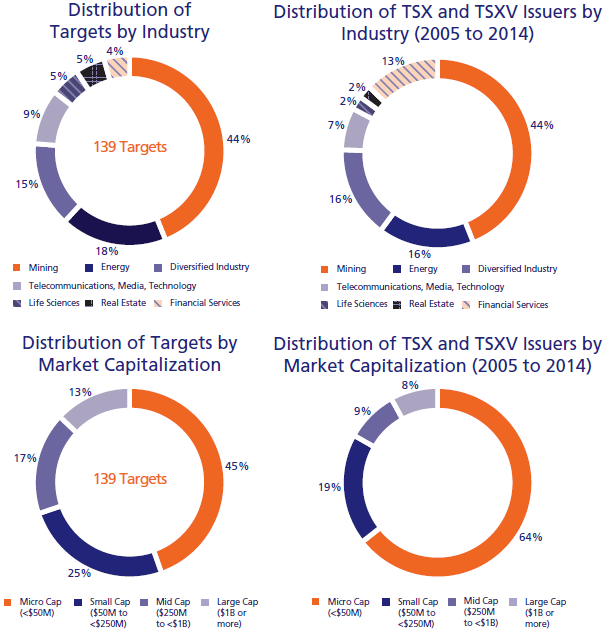

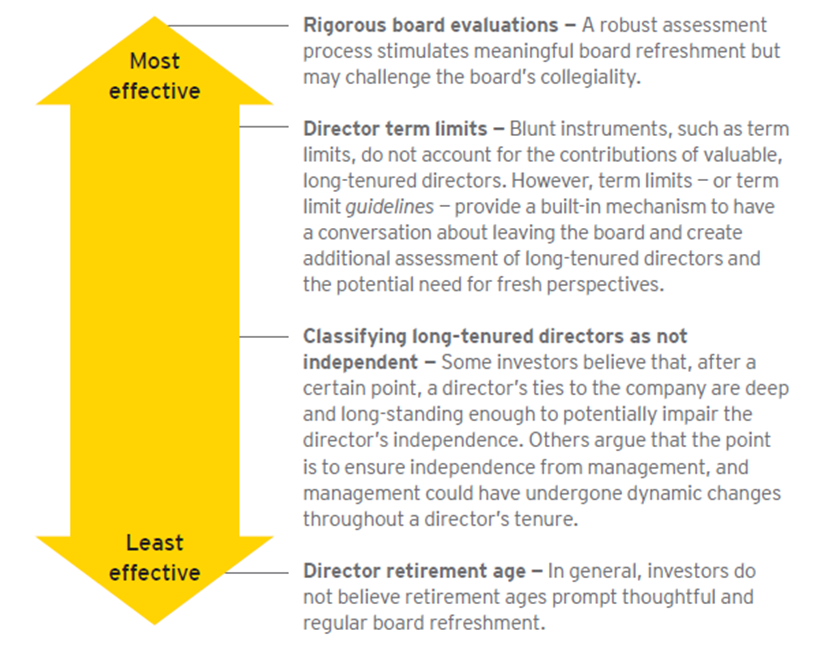





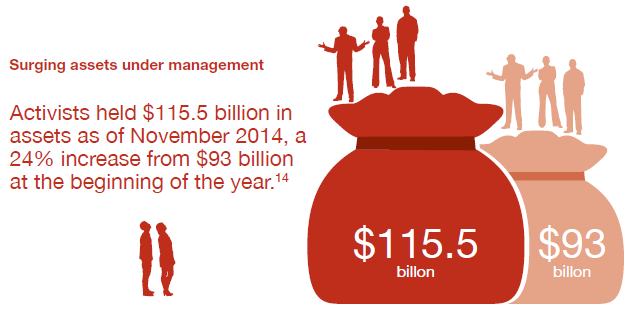
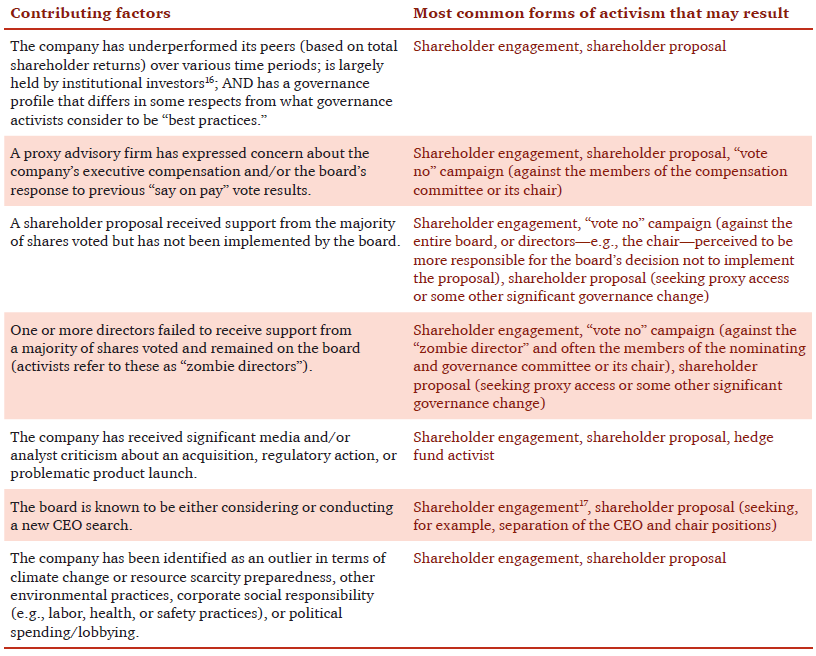





 Gouvernance | Jacques Grisé