On me demande souvent de proposer un livre qui fait le tour de la question eu égard à ce qui est connu comme statistiquementvalide sur les relations entre la gouvernance et le succès des organisations (i.e. la performance financière !)
Voici un article de James McRitchie, publié dans Corporate governance, qui commente succinctement le dernier volume de Richard Leblanc.
Comme je l’ai déjà mentionné dans un autre billet, le livre de Richard Leblanc est certainement l’un des plus importants ouvrages (sinon le plus important) portant sur la gouvernance du conseil d’administration.
Mentionnons également que le volume publié par David F. Larckeret Brian Tayan, professeurs au Graduate School de l’Université Stanford, en est à sa deuxième édition et il donne l’heure juste sur l’efficacité des principes de gouvernance. Voici une brève présentation du volume de Larcker.
Je vous recommande donc vivement de vous procurer ces volumes.
Enfin, je profite de l’occasion pour vous indiquer que je viens de recevoir la dernière version des Principes de gouvernance d’entreprise du G20 et de l’OCDEen français et j’ai suggéré au Collège des administrateurs de sociétés (CAS) d’inclure cette publication dans la section Nouveauté du site du CAS.
Il s’agit d’une publication très attendue dans le monde de la gouvernance. La documentation des organismes internationaux est toujours d’abord publiée en anglais. Ce document en français de l’OCDE sur les principes de gouvernance est la bienvenue !
Voici un excellent article partagé par Paul Michaud, ASC, et publié dans The Economist.
Il y a plusieurs pratiques du management et de la gouvernance à revoir à l’âge des grandes entreprises internationales qui se démarquent par l’excellence de leur modèle d’acquisiteur, de consolidateur et de synergiste.
Incumbents have always had a tendency to grow fat and complacent. In an era of technological disruption, that can be lethal. New technology allows companies to come from nowhere (as Nokia once did) and turn entire markets upside down. Challengers can achieve scale faster than ever before. According to Bain, a consultancy, successful new companies reach Fortune 500 scale more than twice as fast as they did two decades ago. They can also take on incumbents in completely new ways: Airbnb is competing with the big hotel chains without buying a single hotel.
Vous trouverez, ci-dessous un bref extrait de cet article que je vous encourage à lire.
IN SEPTEMBER 2009 Fast Company magazine published a long article entitled “Nokia rocks the world”. The Finnish company was the world’s biggest mobile-phone maker, accounting for 40% of the global market and serving 1.1 billion users in 150 countries, the article pointed out. It had big plans to expand into other areas such as digital transactions, music and entertainment. “We will quickly become the world’s biggest entertainment media network,” a Nokia vice-president told the magazine.
It did not quite work out that way. Apple was already beginning to eat into Nokia’s market with its smartphones. Nokia’s digital dreams came to nothing. The company has become a shadow of its former self. Having sold its mobile-phone business to Microsoft, it now makes telecoms network Equipment.
There are plenty of examples of corporate heroes becoming zeros: think of BlackBerry, Blockbuster, Borders and Barings, to name just four that begin with a “b”. McKinsey notes that the average company’s tenure on the S&P 500 list has fallen from 61 years in 1958 to just 18 in 2011, and predicts that 75% of current S&P 500 companies will have disappeared by 2027. Ram Charan, a consultant, argues that the balance of power has shifted from defenders to attackers.
Incumbents have always had a tendency to grow fat and complacent. In an era of technological disruption, that can be lethal. New technology allows companies to come from nowhere (as Nokia once did) and turn entire markets upside down. Challengers can achieve scale faster than ever before. According to Bain, a consultancy, successful new companies reach Fortune 500 scale more than twice as fast as they did two decades ago. They can also take on incumbents in completely new ways: Airbnb is competing with the big hotel chains without buying a single hotel.
Next in line for disruption, some say, are financial services and the car industry. Anthony Jenkins, a former chief executive of Barclays, a bank, worries that banking is about to experience an “Uber moment”. Elon Musk, a founder of Tesla Motors, hopes to dismember the car industry (as well as colonise Mars).
It is perfectly possible that the consolidation described so far in this special report will prove temporary. But two things argue against it. First, a high degree of churn is compatible with winner-takes-most markets. Nokia and Motorola have been replaced by even bigger companies, not dozens of small ones. Venture capitalists are betting on continued consolidation, increasingly focusing on a handful of big companies such as Tesla. Sand Hill Road, the home of Silicon Valley’s venture capitalists, echoes with talk of “decacorns” and “hyperscaling”.
Second, today’s tech giants have a good chance of making it into old age. They have built a formidable array of defences against their rivals. Most obviously, they are making products that complement each other. Apple’s customers usually buy an entire suite of its gadgets because they are designed to work together. The tech giants are also continuously buying up smaller companies. In 2012 Facebook acquired Instagram for $1 billion, which works out at $30 for each of the service’s 33m users. In 2014 Facebook bought WhatsApp for $22 billion, or $49 for each of the 450m users. This year Microsoft spent $26.2 billion on LinkedIn, or $60.5 for each of the 433m users. Companies that a decade ago might have gone public, such as Nest, a company that makes remote-control gadgets for the home, and Waze, a mapping service, are now being gobbled up by established giants.
Voici un récent article publié par Julie Hembrock Daum, directrice à Spencer Stuart et Susan Stauberg, PDG à Fondation WomenCorporateDirectors.
Cet article a été publié dans le Harvard Law School Forum aujourd’hui et il présente l’état de la gouvernance à l’échelle internationale (60 pays) en mettant particulièrement l’accent sur la diversité et les différences de perception entre les hommes et les femmes qui occupent des postes d’administrateurs de grandes sociétés privées ou publiques.
On me demande souvent de proposer des références en relation avec la gouvernance globale. Les gens veulent connaître les tendances et les progrès des efforts entrepris dans le domaine de la diversité dans le monde.
L’enquête citée ci-dessous fournit des données actuelles sur les principaux enjeux concernant les Board.
Je crois que tous les gestionnaires seront intéressés par la présentation succincte, claire et bien illustrée des données de la mondialisation de la gouvernance.
The growing demands on corporate boards are transforming boardrooms globally, with directors taking on a more strategic, dynamic and responsive role to help steer their companies through a hypercompetitive and volatile business environment. Economic and political uncertainties make long-term planning more difficult. The proliferation of cyber attacks—and their consequences for business in financial olosses and reputational damage—increases the scope of risk oversight. A rise in institutional and activist shareholder activity requires boards to identify vulnerabilities in board renewal and performance and, in some cases, establish protocols for engagement. And all of these demands have pushed issues around board composition and diversity to the fore, as boards cannot afford to have directors around the table who aren’t delivering value.
Boardroom presentation
In this context, Spencer Stuart, the WomenCorporateDirectors (WCD) Foundation, Professor Boris Groysberg and doctoral candidate Yo-Jud Cheng of Harvard Business School and researcher Deborah Bell partnered together on the 2016 Global Board of Directors Survey, one of the most comprehensive surveys of corporate directors around the world.
We received responses from more than 4,000 male and female directors from 60 countries, providing a comprehensive snapshot of the business climate and strategic priorities as seen from the boardroom of many of the world’s top public and large, privately held companies.
The survey explores in depth how boards think and operate. It captures in detail the governance practices, strategic priorities and views on board effectiveness of corporate directors around the world. It also confirmed many of our observations from working with boards. The economy is top of mind, and many directors are uncertain about economic prospects and not seeing growth in the future. At the same time, directors are responding proactively to the many new demands they face, looking for opportunities to enhance composition and improve board performance.
Findings compare and contrast the views between male and female corporate board directors, and highlight similarities and differences between public and private companies and among directors from different regions in five key areas:
Political and economic landscape
Company strategy and risks
Board governance and effectiveness
Board diversity and quotas
Director identification and recruitment
This post highlights key findings around these topics, providing directors an overview of how their peers view their own boards and the challenges that their companies face. In subsequent reports, we will dive deeper into specific governance areas and explore additional perspectives on board composition, risk areas, and strengths and weaknesses in boardrooms today.
Key Findings
Political and Economic Landscape: Uncertainty dominates boardroom outlook.
Our survey finds that directors around the world are uncertain about global growth prospects, with directors in North America and Western Europe least confident about the prospects for growth. Sixty-three percent of directors in these regions see uncertain economic conditions, compared with 36% in Asia and 40% in Africa.
Only 2% of directors across all regions predict a period of strong global growth over the next three years, while 16% expect a global slowdown. “This pessimism about growth is one of the most surprising findings of our survey,” said Boris Groysberg of Harvard Business School. “It seems that the market volatility and low prospects for growth as well as the unpredictable economic outlook are what keep board members awake at night.”
More than one-third of directors of companies headquartered in Asia and roughly one-quarter of directors of companies in Australia/New Zealand expect relatively faster growth in emerging economies versus developed countries.
Political and Economic Landscape: Economy, regulations and cybersecurity top issues for directors.
Across all industries and regions, directors rank the economy and the regulatory environment as the political issues most relevant to them. Cybersecurity is an increasingly important issue in many regions. More than one-third of directors of companies in Australia/New Zealand, North America and Western Europe say cybersecurity is a top issue. “Cybersecurity continues to be a leading issue on the agenda from a regulatory, reputational and contingency standpoint,” says Julie Hembrock Daum, head of Spencer Stuart’s North American Board Practice.
“We see boards considering a number of different approaches to getting smart about the broader impact of technology on the business. In certain cases they have added a director with a strong digital or security background. However, the board should not isolate cybersecurity responsibility with just this one board member, but continue to view cybersecurity as a full board priority.”
Political instability is a concern in several regions. In Central and South America, one-half of directors cite political instability as an issue. Corporate tax rates are an issue particularly in North America.
Company Risks: Women directors report higher concerns about risk than male directors.
Directors globally express the most concern about regulatory and reputational risks, followed by cybersecurity, and less about activist investors and supply chain risks. In general, directors report that their companies are prepared to handle the most important risks, with companies’ level of readiness matching the most concerning areas of risk. However, directors of private companies systematically rank their boards as being less prepared versus public company boards when it comes to such risks.
Nearly across the board, female directors report a higher level of concern about various risks to a company than their male peers—from concerns about activist investors and cybersecurity to regulatory risk and the supply chain. However, female directors also feel that their companies have a higher level of readiness to address these risks than do their male cohorts.
Susan Stautberg, chairman and CEO of the WCD Foundation, believes that women directors may be educating themselves more about the potential risks:
“We believe that women in particular bring a real thirst for knowledge and curiosity to their board service, and this includes getting up-to-speed on what the real risks are to an organization. All good directors do this, but we think being relatively new to the boardroom can create a greater sense of urgency to learn.”
Strategy: Top challenges differ for public and private companies.
Talent, regulations, global and domestic competition, and innovation are seen by directors as the top impediments to achieving their companies’ strategic objectives. How those challenges rank specifically depends in part on whether directors are serving public or private companies.
Nearly half of private company directors (versus 38% of public company directors) rate attracting and retaining talent as a key challenge to achieving their company’s strategic objectives. This is followed by domestic competitive threats, the regulatory environment, innovation and global competitive threats. Among public companies, 43% of directors (versus 32% of private company directors) say the regulatory environment is a top challenge, followed by attracting and retaining talent, global competitive threats, innovation and domestic competitive threats.
“This was interesting because we do see in larger, more established public companies a greater maturity in their HR processes and deeper resources invested in talent management and development,” says Daum. “Identifying and recruiting individuals who fit the culture, bring impact to the organization and endure is a high priority for nearly all companies. However, many private companies, which tend to be smaller and have less brand awareness as a whole, often have less robust HR structures to attract the level of talent across the organization.”
Perceived challenges also differ somewhat by industry and region, with the regulatory environment being more concerning for companies in the energy/utilities, financials/professional services and healthcare industries, and in Asia, Australia/New Zealand, North America and Western Europe. Global competitive threats are the leading concern for companies in the industrials and materials sectors, and in Western Europe.
Interestingly, while cybersecurity is viewed as an important risk, few directors consider it a major challenge to achieving strategic objectives. Similarly, activist shareholders, compensation, cost of commodities and supply chain risk are not perceived as challenges to achieving strategic goals.
Boardroom Grades: Directors consider boards weaker in people-related processes.
On average, directors rate their board’s overall performance as being slightly above average (3.7 out of 5). Directors see their boards as having the strongest processes related to staying current on the company and the industry, compliance, financial planning and board composition, and weakest in cybersecurity, the evaluation of individual directors, CEO succession planning and HR/talent management.
“These ratings underscore directors’ views that attracting and retaining top talent is a common challenge, and underline the need for these HR competencies on boards,” says Stautberg. Harvard Business School doctoral candidate Yo-Jud Cheng adds, “Despite the fact that directors recognize their weaknesses in these areas, boards continue to prioritize more conventional areas of expertise, such as industry knowledge and auditing, in their appointments of new directors.”
Public company directors rate their overall board performance slightly higher than private company directors (3.8 versus 3.4) and give themselves higher marks for creating effective board structures, evaluation of individual directors, cybersecurity and compliance. We also see some variation across regions.
Board Turnover: Directors—especially women—favor tools to trigger change.
A little more than one-third of boards have term limits for directors, averaging six years, while approximately one-quarter of boards have a mandatory retirement age, averaging 72 years. Boards in Western Europe are most likely to have term limits, and boards in North America are least likely to set term limits. However, boards in North America are more likely to have a mandatory retirement age than boards in Western Europe (34% versus 18%). We also see a stark contrast between public and private companies in both term limits (39% versus 30%) and mandatory retirement ages (33% versus 12%).
While these tools for triggering director turnover generally have not been widely adopted, the survey indicates that directors favor adoption of such mechanisms. Sixty percent of directors think that boards should have mandatory term limits for directors, and 45% think that there should be a mandatory retirement age. Even in private companies, which are considerably less likely to adopt these practices today, directors shared similar opinions as compared to their counterparts in public companies. Female directors even more strongly support triggers for turnover; 68% (versus 56% of men) favor director term limits and 57% (versus 39% of men) support mandatory retirement ages.
“It was encouraging to see the majority of respondents in favor of retirement ages and term limits. Turnover among S&P 500 companies has trended at 5% to 7%—roughly 300 to 350 seats a year. Boards need tools they can use to ensure that new perspectives and thinking are regularly being brought to the boardroom,” says Daum. “This isn’t just an issue tied to activist shareholders, but something institutional shareholders are asking about as well: what are boards doing to ensure independent and fresh thinking?”
Not surprisingly, 43% of directors believe that a director loses his or her independence after about 10 years. Respondents from North America are less likely to tie director independence to years served, with only one-third agreeing that a director loses independence after a certain amount of time on the board.
Public companies represented in the survey have larger boards than private companies—on average 8.9 directors versus 7.6—and a larger representation of independent directors, 74% versus 54%. Yet, public and private company boards are similar in terms of the representation of women, minorities and new directors. On average, 18% of board members are women, 7% are ethnic minorities and 13% have been appointed in the past 12 months.
“This finding was very interesting. There has been much debate about the use and effectiveness of quotas. To see the relative parity of diversity among public and private companies reinforces that the tone needs to come from the top regarding bringing a fresh, diverse perspective representative of the company’s stakeholders and interests,” says Daum. Groysberg adds, “Although we are hearing more talk about the importance of diversity from boards, it’s not necessarily translating into numbers. Unfortunately, we haven’t seen as much progress as we were hoping for compared to our past survey on the diversity of boards.”
Boards are largest in the financials/professional services sector (9.1 directors) and smallest in the IT/telecom sector (7.5 directors). Female representation is highest (20% or more) in the consumer staples, financial services/professional services and consumer discretionary sectors, and lowest in IT/telecom (13%).
Looking across regions, board size is smallest in Australia/New Zealand, where boards average 6.7 members, as compared to the global average of 8.5 members. Boards in Australia/New Zealand and North America have the highest proportion of independent directors, and boards in Asia have the lowest proportion. Female representation is lowest in Central and South America and Asia.
Boardroom Diversity: Why isn’t the number of women on boards increasing?
As the percentage of women on boards remains stagnant, there is both a gender divide and a generation divide on why this is. Male directors, especially older respondents, report the “lack of qualified female candidates,” while women directors most often cite the fact that diversity is not a priority in board recruiting and that traditional networks tend to be male-dominated. Younger male directors surveyed (those 55 and younger) are inclined to agree with women that traditional networks tend to be male-dominated. “Men in the younger generation, I think, just see their qualified female colleagues out there, but know that the traditional board networks still tend to be male,” says Stautberg. “It’s often hard to see an informal ‘network’ if you are in the middle of it, but you can see it very clearly when you’re on the outside.”
Boardroom Diversity: Quotas not supported overall.
Nearly 75% of surveyed directors do not personally support boardroom diversity quotas, but support for quotas varies significantly by gender and, to a lesser degree, by age. Forty-nine percent of female directors support diversity quotas, but only 9% of male directors do. Older women are less likely to favor quotas than younger women; 67% of female directors ages 55 and younger personally support boardroom quotas, compared with 36% of female directors over 55 (the majority of male directors, of any age, do not support quotas). Female directors also are more likely to be in favor of government regulatory agencies requiring boards to disclose specific practices/steps being taken to seat diverse candidates (43% versus 14% of male directors).
If quotas aren’t the answer, what do directors think would increase board diversity? Male and female directors agree that having board leadership that champions board diversity is the most effective way to build diverse corporate boards. Men feel more strongly than women that efforts to develop a pipeline of diverse board candidates through director advocacy, mentorship and training is an effective way to increase diversity.
Directors as a whole agree that shareholder pressure and board targets are less effective tools for increasing board diversity.
Boardroom Diversity: Search firms have been successful in expanding the talent pool of qualified female directors.
Directors take a variety of pathways to the boardroom: in roughly equal measures, directors were known to the board or another director, recruited by a search firm or known by the CEO. Public company directors are more likely to be recruited by an executive search firm than private company directors, while private company directors are more likely to have been appointed by a major shareholder.
The survey highlights gender differences, as well, in the paths to the boardroom. Female directors are more likely than their male counterparts to have been recruited by an executive search firm, while male directors are more likely to have been appointed by a major shareholder. “Search firms may be able to open doors that networking opportunities may not have been doing until relatively recently, at least for women,” says Stautberg. “Building up networks and getting known is something that women directors are engaging in much more actively now.”
And, indeed, 39% of female directors report that their gender was a significant factor in their board appointment, versus 1% of men.
Conclusion
Corporate boards face no shortage of challenges—from economic uncertainty to strategic and competitive shifts to a dynamic set of risks. Investor attention to board performance and governance has also escalated, and many boards are holding themselves to higher standards. Directors want to ensure that their boards contribute at the highest level, incorporating diverse perspectives, aligning with shareholder interests and setting a positive tone at the top for the organization.
Yet our research has revealed a gap between best practice and reality, especially in areas such as board diversity, HR/talent management, CEO succession planning and director evaluations. But the study provides hope that boards will make progress, as directors support practices that can help promote change. Future research is needed to track progress on these fronts and to study the impact of measures such as quotas and diversity on board performance.
Amid the many challenges confronting corporations—and the growing expectations on corporate boards—directors must be thoughtful about defining the skill sets needed around the board table and diligent in recruiting the right directors, planning for CEO succession and evaluating their own performance. In this way, they will be best positioned to contribute at the high levels which they are demanding of themselves, and to which others are holding them accountable.
*Julie Hembrock Daum leads the North American Board Practice at Spencer Stuart, and Susan Stautberg is the Chairman and CEO of the WomenCorporateDirectors Foundation. This post relates to the 2016 Global Board of Directors Survey, a co-publication from Spencer Stuart and the WCD Foundation authored by Ms. Daum; Ms. Stautberg; Dr. Boris Groysberg, Richard P. Chapman Professor of Business Administration at Harvard Business School; Yo-Jud Cheng, doctoral candidate at Harvard Business School; and Deborah Bell, researcher.
Voici un cas de gouvernance publié sur le site de Julie Garland McLellan* qui concerne les relations entre la présidente du conseil et sa fille nouvellement nommée comme CEO de cette entreprise privée de taille moyenne.
Le cas illustre le processus de transition familiale et les efforts à exercer afin de ne pas interférer avec les affaires de l’entreprise.
Il s’agit d’un cas très fréquent dans les entreprises familiales. Comment Hannah peut-elle continuer à faire profiter sa fille de ses conseils tout en s’assurant de ne pas empiéter sur ses responsabilités ?
Le cas présente la situation de manière assez succincte, mais explicite ; puis, trois experts en gouvernance se prononcent sur le dilemme qui se présente aux personnes qui vivent des situations similaires.
Bonne lecture ! Vos commentaires sont toujours les bienvenus.
Hannah prepared for the transition. She did a course of director education and understands her duties as a non-executive. She loves her daughter, trusts her judgement as CEO and genuinely wants to see her succeed. Nothing is going wrong but Hannah can’t help interfering. She is bored and longs for the days when she could visit customers or sit and strategise with her management team.
Once a week she has a formal meeting with the CEO in her office. In between times she is in frequent contact. Although by mutual agreement these contacts should be purely social or family oriented Hannah finds herself talking business and is hurt when her daughter suggests they leave it for the weekly meeting or put it onto the board agenda.
Over the past few months Hannah has improved governance, record-keeping, training and succession planning systems but she is running out of projects she can do without undermining her daughter. She also recognises that, as a medium sized unlisted business, the company does not need any more governance structures.
How can Hannah find fulfilment in her new role?
Paul’s Answer …..
Julie’s Answer ….
Jakob’s Answer ….
*Julie Garland McLellan is a practising non-executive director and board consultant based in Sydney, Australia.
Vous trouverez, ci-dessous, les dix thèmes les plus importants pour les administrateurs de sociétés selon Kerry E. Berchem, associé du groupe de pratiques corporatives à la firme Akin Gump Strauss Hauer & Feld LLP. Cet article est paru aujourd’hui sur le blogue le Harvard Law School Forum on Corporate Governance.
Bien qu’il y ait peu de changements dans l’ensemble des priorités cette année, on peut quand même noter :
(1) l’accent crucial accordé au long terme ;
(2) Une bonne gestion des relations avec les actionnaires dans la foulée du nombre croissant d’activités menées par les activistes ;
(3) Une supervision accrue des activités liées à la cybersécurité…
Pour plus de détails sur chaque thème, je vous propose la lecture synthèse de l’article ci-dessous.
U.S. public companies face a host of challenges as they enter 2016. Here is our annual list of hot topics for the boardroom in the coming year:
Oversee the development of long-term corporate strategy in an increasingly interdependent and volatile world economy
Cultivate shareholder relations and assess company vulnerabilities as activist investors target more companies with increasing success
Oversee cybersecurity as the landscape becomes more developed and cyber risk tops director concerns
Oversee risk management, including the identification and assessment of new and emerging risks
Assess the impact of social media on the company’s business plans
Stay abreast of Delaware law developments and other trends in M&A
Review and refresh board composition and ensure appropriate succession
Monitor developments that could impact the audit committee’s already heavy workload
Set appropriate executive compensation as CEO pay ratios and income inequality continue to make headlines
Prepare for and monitor developments in proxy access
Strategic Planning Considerations
Strategic planning continues to be a high priority for directors and one to which they want to devote more time. Figuring out where the company wants to—and where it should want to—go and how to get there is not getting any easier, particularly as companies find themselves buffeted by macroeconomic and geopolitical events over which they have no control.
In addition to economic and geopolitical uncertainty, a few other challenges and considerations for boards to keep in mind as they strategize for 2016 and beyond include:
finding ways to drive top-line growth
focusing on long-term goals and enhancing long-term shareholder value in the face of mounting pressures to deliver short-term results
the effect of low oil and gas prices
figuring out whether and when to deploy growing cash stockpiles
assessing the opportunities and risks of climate change and resource scarcity
addressing corporate social responsibility.
Shareholder Activism
Shareholder activism and “suggestivism” continue to gain traction. With the success that activists have experienced throughout 2015, coupled with significant new money being allocated to activist funds, there is no question that activism will remain strong in 2016.
In the first half of 2015, more than 200 U.S. companies were publicly subjected to activist demands, and approximately two-thirds of these demands were successful, at least in part. [1] A much greater number of companies are actually targeted by activism, as activists report that less than a third of their campaigns actually become public knowledge. [2] Demands have continued, and will continue, to vary: from requests for board representation, the removal of officers and directors, launching a hostile bid, advocating specific business strategies and/or opining on the merit of M&A transactions. But one thing is clear: the demands are being heard. According to a recent survey of more than 350 mutual fund managers, half had been contacted by an activist in the past year, and 45 percent of those contacted decided to support the activist. [3]
With the threat of activism in the air, boards need to cultivate shareholder relations and assess company vulnerabilities. Directors—who are charged with overseeing the long-term goals of their companies—must also understand how activists may look at the company’s strategy and short-term results. They must understand what tactics and tools activists have available to them. They need to know and understand what defenses the company has in place and whether to adopt other protective measures for the benefit of the overall organization and stakeholders.
Cybersecurity
Nearly 90 percent of CEOs worry that cyber threats could adversely impact growth prospects. [4] Yet in a recent survey, nearly 80 percent of the more than 1,000 information technology leaders surveyed had not briefed their board of directors on cybersecurity in the last 12 months. [5] The cybersecurity landscape has become more developed and as such, companies and their directors will likely face stricter scrutiny of their protection against cyber risk. Cyber risk—and the ultimate fall out of a data breach—should be of paramount concern to directors.
One of the biggest concerns facing boards is how to provide effective oversight of cybersecurity. The following are questions that boards should be asking:
Governance. Has the board established a cybersecurity review > committee and determined clear lines of reporting and > responsibility for cyber issues? Does the board have directors with the necessary expertise to understand cybersecurity and related issues?
Critical asset review. Has the company identified what its highest cyber risks assets are (e.g., intellectual property, personal information and trade secrets)? Are sufficient resources allocated to protect these assets?
Threat assessment. What is the daily/weekly/monthly threat report for the company? What are the current gaps and how are they being resolved?
Incident response preparedness. Does the company have an incident response plan and has it been tested in the past six months? Has the company established contracts via outside counsel with forensic investigators in the event of a breach to facilitate quick response and privilege protection?
Employee training. What training is provided to employees to help them identify common risk areas for cyber threat?
Third-party management. What are the company’s practices with respect to third parties? What are the procedures for issuing credentials? Are access rights limited and backdoors to key data entry points restricted? Has the company conducted cyber due diligence for any acquired companies? Do the third-party contracts contain proper data breach notification, audit rights, indemnification and other provisions?
Insurance. Does the company have specific cyber insurance and does it have sufficient limits and coverage?
Risk disclosure. Has the company updated its cyber risk disclosures in SEC filings or other investor disclosures to reflect key incidents and specific risks?
The SEC and other government agencies have made clear that it is their expectation that boards actively manage cyber risk at an enterprise level. Given the complexity of the cybersecurity inquiry, boards should seriously consider conducting an annual third-party risk assessment to review current practices and risks.
Risk Management
Risk management goes hand in hand with strategic planning—it is impossible to make informed decisions about a company’s strategic direction without a comprehensive understanding of the risks involved. An increasingly interconnected world continues to spawn newer and more complex risks that challenge even the best-managed companies. How boards respond to these risks is critical, particularly with the increased scrutiny being placed on boards by regulators, shareholders and the media. In a recent survey, directors and general counsel identified IT/cybersecurity as their number one worry, and they also expressed increasing concern about corporate reputation and crisis preparedness. [6]
Given the wide spectrum of risks that most companies face, it is critical that boards evaluate the manner in which they oversee risk management. Most companies delegate primary oversight responsibility for risk management to the audit committee. Of course, audit committees are already burdened with a host of other responsibilities that have increased substantially over the years. According to Spencer Stuart’s 2015 Board Index, 12 percent of boards now have a stand-alone risk committee, up from 9 percent last year. Even if primary oversight for monitoring risk management is delegated to one or more committees, the entire board needs to remain engaged in the risk management process and be informed of material risks that can affect the company’s strategic plans. Also, if primary oversight responsibility for particular risks is assigned to different committees, collaboration among the committees is essential to ensure a complete and consistent approach to risk management oversight.
Social Media
Companies that ignore the significant influence that social media has on existing and potential customers, employees and investors, do so at their own peril. Ubiquitous connectivity has profound implications for businesses. In addition to understanding and encouraging changes in customer relationships via social media, directors need to understand and weigh the risks created by social media. According to a recent survey, 91 percent of directors and 79 percent of general counsel surveyed acknowledged that they do not have a thorough understanding of the social media risks that their companies face. [7]
As part of its oversight duties, the board of directors must ensure that management is thoughtfully addressing the strategic opportunities and challenges posed by the explosive growth of social media by probing management’s knowledge, plans and budget decisions regarding these developments. Given new technology and new social media forums that continue to arise, this is a topic that must be revisited regularly.
M&A Developments
M&A activity has been robust in 2015 and is on track for another record year. According to Thomson Reuters, global M&A activity exceeded $3.2 trillion with almost 32,000 deals during the first three quarters of 2015, representing a 32 percent increase in deal value and a 2 percent increase in deal volume compared to the same period last year. The record deal value mainly results from the increase in mega-deals over $10 billion, which represented 36 percent of the announced deal value. While there are some signs of a slowdown in certain regions based on deal volume in recent quarters, global M&A is expected to carry on its strong pace in the beginning of 2016.
Directors must prepare for possible M&A activity in the future by keeping abreast of developments in Delaware case law and other trends in M&A. The Delaware courts churned out several noteworthy decisions in 2015 regarding M&A transactions that should be of interest to directors, including decisions on the court’s standard of review of board actions, exculpation provisions, appraisal cases and disclosure-only settlements.
Board Composition and Succession Planning
Boards have to look at their composition and make an honest assessment of whether they collectively have the necessary experience and expertise to oversee the new opportunities and challenges facing their companies. Finding the right mix of people to serve on a company’s board of directors, however, is not necessarily an easy task, and not everyone will agree with what is “right.” According to Spencer Stuart’s 2015 Board Index, board composition and refreshment and director tenure were among the top issues that shareholders raised with boards. Because any perceived weakness in a director’s qualification could open the door for activist shareholders, boards should endeavor to have an optimal mix of experience, skills and diversity. In light of the importance placed on board composition, it is critical that boards have a long-term board succession plan in place. Boards that are proactive with their succession planning are able to find better candidates and respond faster and more effectively when an activist approaches or an unforeseen vacancy occurs.
Audit Committees
Averaging 8.8 meetings a year, audit continues to be the most time-consuming committee. [8] Audit committees are burdened not only with overseeing a company’s risks, but also a host of other responsibilities that have increased substantially over the years. Prioritizing an audit committee’s already heavy workload and keeping directors apprised of relevant developments, including enhanced audit committee disclosures, accounting changes and enhanced SEC scrutiny will be important as companies prepare for 2016.
Executive Compensation
Perennially in the spotlight, executive compensation will continue to be a hot topic for directors in 2016. But this year, due to the SEC’s active rulemaking in 2015, directors will have more to fret about than just say-on-pay. Roughly five years after the Dodd-Frank Wall Street Reform and Consumer Protection Act was enacted, the SEC finally adopted the much anticipated CEO pay ratio disclosure rules, which have already begun stirring the debate on income inequality and exorbitant CEO pay. The SEC also made headway on other Dodd-Frank regulations, including proposed rules on pay-for-performance, clawbacks and hedging disclosures. Directors need to start planning how they will comply with these rules as they craft executive compensation for 2016.
Proxy Access
2015 was a turning point for shareholder proposals seeking to implement proxy access, which gives certain shareholders the ability to nominate directors and include those nominees in a company’s proxy materials. During the 2015 proxy season, the number of shareholder proposals relating to proxy access, as well as the overall shareholder support for such proposals, increased significantly. Indeed, approximately 110 companies received proposals requesting the board to amend the company’s bylaws to allow for proxy access, and of those proposals that went to a vote, the average support was close to 54 percent of votes cast in favor, with 52 proposals receiving majority support. [9] New York City Comptroller Scott Springer and his 2015 Boardroom Accountability Project were a driving force, submitting 75 proxy access proposals at companies targeted for perceived excessive executive compensation, climate change issues and lack of board diversity. Shareholder campaigns for proxy access are expected to continue in 2016. Accordingly, it is paramount that boards prepare for and monitor developments in proxy access, including, understanding the provisions that are emerging as typical, as well as the role of institutional investors and proxy advisory firms.
[1] Activist Insight, “2015: The First Half in Numbers,” Activism Monthly (July 2015). (go back)
[2] Activist Insight, “Activist Investing—An Annual Review of Trends in Shareholder Activism,” p. 8. (2015). (go back)
[3] David Benoit and Kirsten Grind, “Activist Investors’ Secret Ally: Big Mutual Funds,” The Wall Street Journal (August 9, 2015). (go back)
[4] PwC’s 18th Annual Global CEO Survey 2015. (go back)
[5] Ponemon Institute’s 2015 Global Megatrends in Cybersecurity (February 2015). (go back)
[6] Kimberley S. Crowe, “Law in the Boardroom 2015,” Corporate Board Member Magazine (2nd Quarter 2015). See also, Protiviti, “Executive Perspectives on Top Risks for 2015.” (go back)
Au lendemain du référendum mené en Grande-Bretagne (GB), on peut se demander quelles sont les implications juridiques d’une telle décision. Celles-ci sont nombreuses ; plusieurs scénarios peuvent être envisagés pour prévoir l’avenir des relations entre la GB et l’Union européenne (UE).
Ben Perry de la firme Sullivan & Cromwell et Simon Witty de la firme Davis Polk & Wardwell ont exploré toutes les facettes légales de cette nouvelle situation dans deux articles parus récemment sur le site du Harvard Law School Forum on Corporate Governance.
Ce sont deux articles très approfondis sur les répercussions du Brexit. On doit admettre que le processus de retrait de l’UE est complexe, qu’il y a plusieurs modèles dont la GB peut s’inspirer (Suisse, Norvégien, Islandais, Liechtenstein), et que le vote n’a pas d’effets légaux immédiats. En fait, le processus de sortie et de renégociation peut durer trois ans !
Je vous invite à prendre connaissance de ces deux articles afin d’être mieux informés sur les principales avenues conséquentes au retrait de la GB de l’UE.
Le 25 juin, je vous ai déjà présenté l’article de Perry qui a suscité beaucoup d’intérêt (Brexit: Legal Implications).
Aujourd’hui, je vous présente le texte de l’article de Witty (The Legal Consequences of Brexit) qui met l’accent sur les répercussions prévisibles qu’aura ce retrait sur le marché des capitaux, les fusions et acquisitions, les différends liés aux contrats, les lois antitrusts, les services financiers et les mesures de taxation.
On June 23, 2016, the UK electorate voted to leave the European Union. The referendum was advisory rather than mandatory and does not have any immediate legal consequences. It will, however, have a profound effect. With any next steps being driven by UK and EU politics, it is difficult to predict the future of the UK’s relationship with the EU. This post discusses the process for Brexit, the alternative models of relationship that the UK may seek to adopt, and certain implications for the capital markets, mergers and acquisitions, contractual disputes and enforcement, anti-trust, financial services and tax.
The process for exiting the EU
The treaties that govern the EU expressly contemplate a member state leaving. Under Article 50 of the Treaty on European Union, the UK must notify the European Council of its intention to withdraw from the EU. Once notice is given, the UK has two years to negotiate the terms of its withdrawal. Any extension of the negotiation period will require the consent of all 27 remaining member states. When to invoke the Article 50 mechanism is, therefore, a strategically important decision. In a statement announcing his intention to resign as Prime Minister of the UK, David Cameron stated that the decision to provide notice under Article 50 to the European Council should be taken by the next Prime Minister, who is expected to be in place by October 2016.
Waving United Kingdom and European Union Flag
Any negotiated agreement will require the support of at least 20 out of the 27 remaining member states, representing at least 65% of the EU’s population, and the approval of the European Parliament. If no agreement is reached or no extension is agreed, the UK will automatically exit the EU two years after the Article 50 notice is given, even if no alternative trading model or arrangement has been negotiated. The UK continues to be a member of the EU in the interim period, subject to all EU legislation and rules.
Alternative models of relationship
It is not clear what model of relationship the UK will seek to negotiate with the EU. In the run-up to the referendum, a number of options were suggested. Politicians in favor of withdrawing from the EU did not coalesce around a specific alternative. It is, therefore, unclear what model will ultimately be followed or whether any of the models could be achieved through the Article 50 process. The principal options are outlined below.
The Norwegian model. The UK might seek to join the European Economic Area, as Norway has. The UK would have considerable access to the internal market, i.e., the association of European countries trading with each other without restrictions or tariffs, including in financial services. The UK would have limited access to the internal market for agriculture and fisheries; and it would not benefit from or be bound by the EU’s external trade agreements. In addition, the UK would have to make significant financial contributions to the EU and continue to allow free movement of persons. It would also have to apply EU law in a number of fields, but the UK would no longer participate in policymaking at the EU level, and would be excluded from participation in the European Supervisory Authorities, the key architects of secondary legislation in the financial services sphere. To adopt this model, the UK would require the agreement of all 27 remaining EU member states, plus Iceland, Liechtenstein and Norway.
Negotiated bilateral agreements. Like Switzerland, the UK might seek to enter into various bilateral agreements with the EU to obtain access to the internal market in specific sectors (rather than the market as a whole, which would be the case under the Norwegian model). This model would likely require the UK to accept some of the EU’s rules on free movement of persons and comply with particular EU laws. Again, the UK would not participate formally in the drafting of those laws. The UK would also have to make financial contributions to the EU. Negotiating these bilateral agreements would be a difficult and time-consuming process. Switzerland, for instance, has negotiated more than 100 individual agreements with the EU to cover market access in different sectors. As a result of its complexity, it is unclear whether the EU would work with the UK to negotiate this model within the Article 50 timeframe.
Customs union. A customs union is currently in place between the EU and Turkey in respect of trade in goods, but not services. Under this model, Turkey can export goods to the EU without having to comply with customs restrictions or tariffs. Its external tariffs are also aligned with EU tariffs. The UK might seek to negotiate a similar arrangement with the EU. Under such an arrangement, and unless separately negotiated, UK financial institutions (including UK subsidiaries of US holding companies) would not be able to provide financial and professional services into the EU on equal terms with EU member state firms. For example, the EU passporting regime would not be available, meaning UK firms would have to seek separate licensing in each EU member state to provide certain financial services. Furthermore, in areas where the UK would have access to the internal market, it would likely be required to enforce rules that are equivalent to those in the EU. The UK would not be required to make any financial contributions to the EU, nor would it be bound by the majority of EU law.
Free trade agreement. The UK might seek to negotiate a free trade agreement with the EU, which would cover goods and services. To do so, it may look to the agreement that was recently agreed between the EU and Canada after seven years of negotiations. This agreement removes tariffs in respect of trade in goods, as well as certain non-tariff barriers in respect of trade in goods and services. Although the UK would not be required to contribute to the EU budget, its exports to the EU would have to comply with the applicable EU standards.
WTO membership. Under this model, the UK would not have any preferential access to the internal market or the 53 markets with which the EU has negotiated free trade agreements. Tariffs and other barriers would be imposed on goods and services traded between the UK and the EU, although, under WTO rules, certain caps would apply on tariffs applicable to goods, and limits would be imposed on particular non-tariff barriers applicable to goods and services. The UK would no longer be required to make any financial contributions to the EU, nor would it be bound by EU laws (although it would have to comply with certain rules in order to trade with the EU).
Implications for UK legislation
Regardless of which model it adopts, the UK will no longer be required to apply some (if not all) EU legislation. The UK has implemented certain EU laws (generally, EU directives) via primary legislation that will continue to be part of English law, unless these are amended or repealed. Other EU laws (generally, EU regulations) have direct applicability in the UK without the need for implementation, which means that these laws would fall away once the UK withdraws from the EU, unless they are transposed into UK law. Finally, thousands of statutory instruments have been made pursuant to the European Communities Act 1972. If this act is repealed upon the UK’s withdrawal from the EU, then, unless transposed into UK law, these statutory instruments will cease to apply as well. Therefore, the UK will have to perform a complex exercise to determine which EU laws and EU-derived laws it wishes to retain, amend or repeal, driven in part by the nature of any agreement reached with the EU during exit negotiations.
How may Brexit affect you?
The UK’s withdrawal from the EU will impact countless areas of the economy. The following section discusses a number of Brexit’s potential implications for the capital markets, mergers and acquisitions, contractual disputes and enforcement, anti-trust, financial services and tax. The extent to which these areas will be affected by the UK’s withdrawal from the EU will depend on the model of relationship that the UK and the EU adopt following the Brexit negotiations.
Capital Markets
The financial markets will likely continue to be volatile, particularly during the Brexit negotiations. This may affect the timing of transactions or their ability to be consummated.
The EU Prospectus Directive, which has been transposed into UK law, governs the content, format, approval and publication of prospectuses throughout the EU. Following eventual Brexit, the UK may no longer be bound by the Prospectus Directive and, thus, may seek to amend its prospectus legislation. For example, the Prospectus Directive provides that a company incorporated in an EU member state must prepare a prospectus if it wishes to offer shares to the public and/or request that shares be admitted to trading in the EU, subject to certain exemptions. The UK may wish to expand these exemptions, so that more offers can be made in the UK without a prospectus. Significantly, the Prospectus Directive also provides for the passporting of prospectuses throughout the EU. This means that a company can use a prospectus that has been approved in one member state to offer shares in any other EU member state. Without this passporting regime, UK companies will have to have their prospectuses approved both in the UK and at least one other member state where they wish to offer their shares, which may be particularly costly and time-consuming if the UK amends, for instance, the content requirements for prospectuses following Brexit, so that these no longer align with those prescribed by the Prospectus Directive.
During the Brexit negotiations, transaction documents may need to include specific Brexit provisions, for example to address the uncertainty around the model of relationship to be adopted.
M&A
As a result of ongoing uncertainty around the future of the UK’s relationship with the EU, a number of transactions with a UK nexus may be affected pending the Brexit negotiations.
Share sale transactions generally are not subject to much EU law or regulation. Asset and business sales, however, may be more affected by Brexit. For example, the regulations that protect the rights of employees on a business transfer stem from a European directive. When the UK withdraws from the EU, it may no longer be bound by this directive, and, therefore, the UK may wish to amend or repeal the regulations.
Contractual Disputes and Enforcement
As a member of the EU, the UK is part of a framework for deciding jurisdiction in disputes, recognizing judgments of other member states (and having its own courts’ judgments recognized and enforced throughout the EU) and deciding the governing law of contracts. Following Brexit, the UK may no longer be part of this framework which may affect jurisdiction and governing law choices in transaction documents.
Anti-trust
Currently, mergers that fall within the scope of the EU Merger Regulation can receive EU-wide clearance, which means that they are not also required to be cleared by individual member states. Following Brexit, mergers with a UK nexus may need to be reviewed by the UK’s Competition and Markets Authority separately.
More generally, UK anti-trust legislation is currently based on, and interpreted in line with, EU law, including decisions of the European Commission and the European Court of Justice. Given that UK courts may no longer be required to interpret national law consistently with EU law once the UK withdraws from the EU, businesses face the prospect of having to comply with divergent systems.
Financial Services
Much of the UK’s financial services regulation is based on EU law. This includes legislation such as the Markets in Financial Instruments Directive (MiFID), which regulates investment services and trading venues, the European Market Infrastructure Regulation, which regulates the derivatives market, the Alternative Investment Fund Managers Directive, which regulates hedge funds and private equity, and the Capital Requirements Directive and the Capital Requirements Regulation, which together represent the EU’s implementation of the international Basel III accords for the prudential regulation of banks. The Bank Recovery and Resolution Directive (“BRRD”) has been implemented into UK law via the Banking Act 2009, so the fundamental bank resolution regime should initially survive Brexit. That said, substantial further EU legislative work is expected in this area to modify BRRD (e.g., in relation to the implementation of the TLAC standard), so it is possible that the regimes could diverge rapidly after Brexit. In general with financial services legislation, an assessment will need to be made whether to align with EU legislation or diverge; the greater the divergence, the more the dual burdens on cross-border firms.
As mentioned above, the UK will likely not be part of the European Supervisory Authorities framework and will have no influence in the development of primary or secondary EU legislation and guidance. The UK has been a significant force in the area of financial services legislation and has driven the introduction of, for instance, the BRRD. The UK’s withdrawal may impact the legislative agenda and ultimately the quality of the legislation produced.
Financial institutions established in EEA member states can obtain a “passport” that allows them to access the markets of other EEA member states without being required to set up a subsidiary and obtain a separate license to operate as a financial services institution in those member states. Following Brexit, UK financial services institutions, including subsidiaries of US and other non-EU parent companies, would no longer be able to benefit from passporting (unless the UK were to join the EEA pursuant to the Norway option described above).
Although the UK will likely remain a member of the EU for a substantial period while negotiations are ongoing, there are pressing questions as to how the UK will engage with the ongoing legislative processes that affect the UK financial services industry. There are a number of areas where framework legislation has been passed already, but key secondary legislation is being developed or revised. These areas include the complete overhaul of MiFID and the Payment Services Directive. Even before the UK leaves the EU, we can expect to see a diminished role for the UK Government, UK regulators and UK market participants in shaping the detailed policies and procedures in those areas.
We expect larger financial institutions in the UK, or those based outside the UK that have significant operations in the UK, will wish to contribute to the negotiation process between the EU and UK. In particular, to the extent a unique model for trading relationships is proposed, these institutions may wish to engage with policymakers to minimize disruption and damage to their EU business model.
Tax
The EU has influenced many areas of the UK’s tax system. In some cases, this has been through EU legislation which applies directly in the UK; in other cases, EU rules have been adopted through UK legislation (for example, the UK’s VAT legislation is based on principles which apply across the EU); and, in still other cases, decisions of the European Court of Justice have either influenced the development of UK tax rules, or have prevented the UK’s tax authority from enforcing aspects of the UK’s domestic tax code. This complicated backdrop means that the tax impact of Brexit will be varied and difficult to predict.
Areas to watch include the following:
Direct tax: although the UK has an extensive double tax treaty network, not all treaties provide for zero withholding tax on interest and royalty payments. Accordingly, corporate groups should consider the extent to which existing structures rely on EU rules such as the Parent-Subsidiary Directive or the Interest and Royalties Directive to secure tax efficient payment flows. Similarly, corporate groups proposing to undertake cross border reorganisations would need to consider the extent to which existing cross-EU border merger tax reliefs will survive intact. It should also be borne in mind that, even if Brexit occurs, the UK is likely to continue vigorously supporting the OECD’s BEPS initiative such that there may well be considerable constraints and complexities associated with locating businesses outside the UK.
VAT: although VAT is an EU-wide tax regime, it seems inconceivable that VAT will be abolished. However, it is likely that, over time, there will be a divergence between UK VAT rules and EU VAT rules, including as to input VAT recovery on supplies made to non-UK customers. Additionally, UK companies may lose the administrative benefit of the “one stop shop” for businesses operating in Europe.
Customs duty: if the UK left the customs union, exports to and imports from EU countries may become subject to tariffs or other import duties (as well as additional compliance requirements).
Transfer taxes: it seems that the UK would, at least in principle, be able to (re)impose the 1.5% stamp duty/stamp duty reserve tax charge in respect of UK shares issued or transferred into a clearance or depositary receipt system. Accordingly, the position for UK-headed corporate groups seeking to list on the NYSE or Nasdaq may become less certain.
______________________________
*Ben Perry is a partner in the London office of Sullivan & Cromwell LLP. This post is based on a Sullivan & Cromwell publication.
*Simon Witty is a partner in the Corporate Department at Davis Polk & Wardwell LLP. This post is based on a Davis Polk memorandum.
Voici la troisième édition d’un document australien de KPMG, très bien conçu, qui répond clairement aux questions que tous les administrateurs de sociétés se posent dans le cours de leurs mandats.
Même si la publication est dédiée à l’auditoire australien de KPMG, je crois que la réalité réglementaire nord-américaine est trop semblable pour se priver d’un bon « kit » d’outils qui peut aider à constituer un Board efficace.
C’est un formidable document électronique interactif de 182 pages. Voyez la table des matières ci-dessous.
J’ai demandé à KPMG de me procurer une version française du même document mais il ne semble pas en exister.
Our business environment provides an ever-changing spectrum of risks and opportunities. The role of the director continues to be shaped by a multitude of forces including economic uncertainty, larger and more complex organisations, the increasing pace of technological innovation and digitisation along with a more rigorous regulatory environment.
At the same time there is more onus on directors to operate transparently and be more accountable for their actions and decisions.
To support directors in their challenging role, KPMG has created an interactive Directors’ Toolkit. Now in its third edition, this comprehensive guide is in a user friendly electronic format. It is designed to assist directors to more effectively discharge their duties and improve board performance and decision-making.
Key topics
Duties and responsibilities of a director
Oversight of strategy and governance
Managing shareholder and stakeholder expectations
Structuring an effective board and sub-committees
Enabling key executive appointments
Managing productive meetings
Better practice terms of reference, charters and agendas
Establishing new boards.
What’s New
In this latest version, we have included newly updated sections on:
Roles, responsibilities and expectations of directors of not-for-profit organisations
Risks and opportunities social media presents for directors and organisations
Key responsibilities of directors for overseeing investment governance, operations and processes.
Plusieurs administrateurs et formateurs me demandent de leur proposer un document de vulgarisation sur le sujet de la gouvernance. J’ai déjà diffusé sur mon blogue un guide à l’intention des journalistes spécialisés dans le domaine de la gouvernance des sociétés à travers le monde. Il a été publié par le Global Corporate Governance Forum et International Finance Corporation (un organisme de la World Bank) en étroite coopération avec International Center for Journalists.
Je n’ai encore rien vu de plus complet et de plus pertinent sur la meilleure manière d’appréhender les multiples problématiques reliées à la gouvernance des entreprises mondiales. La direction de Global Corporate Governance Forum m’a fait parvenir le document en français le 14 février.
Ce guide est un outil pédagogique indispensable pour acquérir une solide compréhension des diverses facettes de la gouvernance des sociétés. Les auteurs ont multiplié les exemples de problèmes d’éthiques et de conflits d’intérêts liés à la conduite des entreprises mondiales.
On apprend aux journalistes économiques — et à toutes les personnes préoccupées par la saine gouvernance — à raffiner les investigations et à diffuser les résultats des analyses effectuées. Je vous recommande fortement de lire le document, mais aussi de le conserver en lieu sûr car il est fort probable que vous aurez l’occasion de vous en servir.
Vous trouverez ci-dessous quelques extraits de l’introduction à l’ouvrage. Bonne lecture !
« This Guide is designed for reporters and editors who already have some experience covering business and finance. The goal is to help journalists develop stories that examine how a company is governed, and spot events that may have serious consequences for the company’s survival, shareholders and stakeholders. Topics include the media’s role as a watchdog, how the board of directors functions, what constitutes good practice, what financial reports reveal, what role shareholders play and how to track down and use information shedding light on a company’s inner workings. Journalists will learn how to recognize “red flags,” or warning signs, that indicate whether a company may be violating laws and rules. Tips on reporting and writing guide reporters in developing clear, balanced, fair and convincing stories.
Three recurring features in the Guide help reporters apply “lessons learned” to their own “beats,” or coverage areas:
– Reporter’s Notebook: Advise from successful business journalists
– Story Toolbox: How and where to find the story ideas
– What Do You Know? Applying the Guide’s lessons
Each chapter helps journalists acquire the knowledge and skills needed to recognize potential stories in the companies they cover, dig out the essential facts, interpret their findings and write clear, compelling stories:
What corporate governance is, and how it can lead to stories. (Chapter 1, What’s good governance, and why should journalists care?)
How understanding the role that the board and its committees play can lead to stories that competitors miss. (Chapter 2, The all-important board of directors)
Shareholders are not only the ultimate stakeholders in public companies, but they often are an excellent source for story ideas. (Chapter 3, All about shareholders)
Understanding how companies are structured helps journalists figure out how the board and management interact and why family-owned and state-owned enterprises (SOEs), may not always operate in the best interests of shareholders and the public. (Chapter 4, Inside family-owned and state-owned enterprises)
Regulatory disclosures can be a rich source of exclusive stories for journalists who know where to look and how to interpret what they see. (Chapter 5, Toeing the line: regulations and disclosure)
Reading financial statements and annual reports — especially the fine print — often leads to journalistic scoops. (Chapter 6, Finding the story behind the numbers)
Developing sources is a key element for reporters covering companies. So is dealing with resistance and pressure from company executives and public relations directors. (Chapter 7, Writing and reporting tips)
Each chapter ends with a section on Sources, which lists background resources pertinent to that chapter’s topics. At the end of the Guide, a Selected Resources section provides useful websites and recommended reading on corporate governance. The Glossary defines terminology used in covering companies and corporate governance ».
Voici les éléments de la proposition de Theresa May eu égard à la nouvelle gouvernance corporative de la Grande-Bretagne.
Ce texte est de Martin Lipton de la firme Wachtell, Lipton, Rosen & Katz. C’est un résumé des principaux points évoqués aujourd’hui par la ministre.
Bonne lecture !
Corporate Governance—A New Paradigm from the U.K.
1. Stakeholder, not shareholder, governance.
2. Board diversity: consumers and workers to be added.
3. Protection from takeover for national champions like Cadbury and AstraZeneca.
4. Binding, not advisory, say-on-pay.
5. Long-term, not short-term, business strategy.
6. Greater corporate transparency.
7. Stricter antitrust.
8. Higher taxes and crack down on tax avoidance and evasion.
9. It is not anti-business to suggest that big business needs to change. Better governance will help these companies to take better decisions, for their own long-term benefit and that of the economy overall.
Au lendemain du référendum mené en Grande-Bretagne (GB), on peut se demander quelles sont les implications juridiques d’une telle décision. Celles-ci sont nombreuses ; plusieurs scénarios peuvent être envisagés pour prévoir l’avenir des relations entre la GB et l’Union européenne (UE).
Ben Perry de la firme Sullivan & Cromwell et Simon Witty de la firme Davis Polk & Wardwell ont exploré toutes les facettes légales de cette nouvelle situation dans deux articles parus récemment sur le site du Harvard Law School Forum on Corporate Governance.
Ce sont deux articles très approfondis sur les répercussions du Brexit. On doit admettre que le processus de retrait de l’UE est complexe, qu’il y a plusieurs modèles dont la GB peut s’inspirer (Suisse, Norvégien, Islandais, Liechtenstein), et que le vote n’a pas d’effets légaux immédiats. En fait, le processus de sortie et de renégociation peut durer trois ans !
Je vous invite à prendre connaissance de ces deux articles afin d’être mieux informés sur les principales avenues conséquentes au retrait de la GB de l’UE.
Le 25 juin, je vous ai déjà présenté l’article de Perry qui a suscité beaucoup d’intérêt (Brexit: Legal Implications).
Aujourd’hui, je vous présente le texte de l’article de Witty (The Legal Consequences of Brexit) qui met l’accent sur les répercussions prévisibles qu’aura ce retrait sur le marché des capitaux, les fusions et acquisitions, les différends liés aux contrats, les lois antitrusts, les services financiers et les mesures de taxation.
On June 23, 2016, the UK electorate voted to leave the European Union. The referendum was advisory rather than mandatory and does not have any immediate legal consequences. It will, however, have a profound effect. With any next steps being driven by UK and EU politics, it is difficult to predict the future of the UK’s relationship with the EU. This post discusses the process for Brexit, the alternative models of relationship that the UK may seek to adopt, and certain implications for the capital markets, mergers and acquisitions, contractual disputes and enforcement, anti-trust, financial services and tax.
The process for exiting the EU
The treaties that govern the EU expressly contemplate a member state leaving. Under Article 50 of the Treaty on European Union, the UK must notify the European Council of its intention to withdraw from the EU. Once notice is given, the UK has two years to negotiate the terms of its withdrawal. Any extension of the negotiation period will require the consent of all 27 remaining member states. When to invoke the Article 50 mechanism is, therefore, a strategically important decision. In a statement announcing his intention to resign as Prime Minister of the UK, David Cameron stated that the decision to provide notice under Article 50 to the European Council should be taken by the next Prime Minister, who is expected to be in place by October 2016.
Waving United Kingdom and European Union Flag
Any negotiated agreement will require the support of at least 20 out of the 27 remaining member states, representing at least 65% of the EU’s population, and the approval of the European Parliament. If no agreement is reached or no extension is agreed, the UK will automatically exit the EU two years after the Article 50 notice is given, even if no alternative trading model or arrangement has been negotiated. The UK continues to be a member of the EU in the interim period, subject to all EU legislation and rules.
Alternative models of relationship
It is not clear what model of relationship the UK will seek to negotiate with the EU. In the run-up to the referendum, a number of options were suggested. Politicians in favor of withdrawing from the EU did not coalesce around a specific alternative. It is, therefore, unclear what model will ultimately be followed or whether any of the models could be achieved through the Article 50 process. The principal options are outlined below.
The Norwegian model. The UK might seek to join the European Economic Area, as Norway has. The UK would have considerable access to the internal market, i.e., the association of European countries trading with each other without restrictions or tariffs, including in financial services. The UK would have limited access to the internal market for agriculture and fisheries; and it would not benefit from or be bound by the EU’s external trade agreements. In addition, the UK would have to make significant financial contributions to the EU and continue to allow free movement of persons. It would also have to apply EU law in a number of fields, but the UK would no longer participate in policymaking at the EU level, and would be excluded from participation in the European Supervisory Authorities, the key architects of secondary legislation in the financial services sphere. To adopt this model, the UK would require the agreement of all 27 remaining EU member states, plus Iceland, Liechtenstein and Norway.
Negotiated bilateral agreements. Like Switzerland, the UK might seek to enter into various bilateral agreements with the EU to obtain access to the internal market in specific sectors (rather than the market as a whole, which would be the case under the Norwegian model). This model would likely require the UK to accept some of the EU’s rules on free movement of persons and comply with particular EU laws. Again, the UK would not participate formally in the drafting of those laws. The UK would also have to make financial contributions to the EU. Negotiating these bilateral agreements would be a difficult and time-consuming process. Switzerland, for instance, has negotiated more than 100 individual agreements with the EU to cover market access in different sectors. As a result of its complexity, it is unclear whether the EU would work with the UK to negotiate this model within the Article 50 timeframe.
Customs union. A customs union is currently in place between the EU and Turkey in respect of trade in goods, but not services. Under this model, Turkey can export goods to the EU without having to comply with customs restrictions or tariffs. Its external tariffs are also aligned with EU tariffs. The UK might seek to negotiate a similar arrangement with the EU. Under such an arrangement, and unless separately negotiated, UK financial institutions (including UK subsidiaries of US holding companies) would not be able to provide financial and professional services into the EU on equal terms with EU member state firms. For example, the EU passporting regime would not be available, meaning UK firms would have to seek separate licensing in each EU member state to provide certain financial services. Furthermore, in areas where the UK would have access to the internal market, it would likely be required to enforce rules that are equivalent to those in the EU. The UK would not be required to make any financial contributions to the EU, nor would it be bound by the majority of EU law.
Free trade agreement. The UK might seek to negotiate a free trade agreement with the EU, which would cover goods and services. To do so, it may look to the agreement that was recently agreed between the EU and Canada after seven years of negotiations. This agreement removes tariffs in respect of trade in goods, as well as certain non-tariff barriers in respect of trade in goods and services. Although the UK would not be required to contribute to the EU budget, its exports to the EU would have to comply with the applicable EU standards.
WTO membership. Under this model, the UK would not have any preferential access to the internal market or the 53 markets with which the EU has negotiated free trade agreements. Tariffs and other barriers would be imposed on goods and services traded between the UK and the EU, although, under WTO rules, certain caps would apply on tariffs applicable to goods, and limits would be imposed on particular non-tariff barriers applicable to goods and services. The UK would no longer be required to make any financial contributions to the EU, nor would it be bound by EU laws (although it would have to comply with certain rules in order to trade with the EU).
Implications for UK legislation
Regardless of which model it adopts, the UK will no longer be required to apply some (if not all) EU legislation. The UK has implemented certain EU laws (generally, EU directives) via primary legislation that will continue to be part of English law, unless these are amended or repealed. Other EU laws (generally, EU regulations) have direct applicability in the UK without the need for implementation, which means that these laws would fall away once the UK withdraws from the EU, unless they are transposed into UK law. Finally, thousands of statutory instruments have been made pursuant to the European Communities Act 1972. If this act is repealed upon the UK’s withdrawal from the EU, then, unless transposed into UK law, these statutory instruments will cease to apply as well. Therefore, the UK will have to perform a complex exercise to determine which EU laws and EU-derived laws it wishes to retain, amend or repeal, driven in part by the nature of any agreement reached with the EU during exit negotiations.
How may Brexit affect you?
The UK’s withdrawal from the EU will impact countless areas of the economy. The following section discusses a number of Brexit’s potential implications for the capital markets, mergers and acquisitions, contractual disputes and enforcement, anti-trust, financial services and tax. The extent to which these areas will be affected by the UK’s withdrawal from the EU will depend on the model of relationship that the UK and the EU adopt following the Brexit negotiations.
Capital Markets
The financial markets will likely continue to be volatile, particularly during the Brexit negotiations. This may affect the timing of transactions or their ability to be consummated.
The EU Prospectus Directive, which has been transposed into UK law, governs the content, format, approval and publication of prospectuses throughout the EU. Following eventual Brexit, the UK may no longer be bound by the Prospectus Directive and, thus, may seek to amend its prospectus legislation. For example, the Prospectus Directive provides that a company incorporated in an EU member state must prepare a prospectus if it wishes to offer shares to the public and/or request that shares be admitted to trading in the EU, subject to certain exemptions. The UK may wish to expand these exemptions, so that more offers can be made in the UK without a prospectus. Significantly, the Prospectus Directive also provides for the passporting of prospectuses throughout the EU. This means that a company can use a prospectus that has been approved in one member state to offer shares in any other EU member state. Without this passporting regime, UK companies will have to have their prospectuses approved both in the UK and at least one other member state where they wish to offer their shares, which may be particularly costly and time-consuming if the UK amends, for instance, the content requirements for prospectuses following Brexit, so that these no longer align with those prescribed by the Prospectus Directive.
During the Brexit negotiations, transaction documents may need to include specific Brexit provisions, for example to address the uncertainty around the model of relationship to be adopted.
M&A
As a result of ongoing uncertainty around the future of the UK’s relationship with the EU, a number of transactions with a UK nexus may be affected pending the Brexit negotiations.
Share sale transactions generally are not subject to much EU law or regulation. Asset and business sales, however, may be more affected by Brexit. For example, the regulations that protect the rights of employees on a business transfer stem from a European directive. When the UK withdraws from the EU, it may no longer be bound by this directive, and, therefore, the UK may wish to amend or repeal the regulations.
Contractual Disputes and Enforcement
As a member of the EU, the UK is part of a framework for deciding jurisdiction in disputes, recognizing judgments of other member states (and having its own courts’ judgments recognized and enforced throughout the EU) and deciding the governing law of contracts. Following Brexit, the UK may no longer be part of this framework which may affect jurisdiction and governing law choices in transaction documents.
Anti-trust
Currently, mergers that fall within the scope of the EU Merger Regulation can receive EU-wide clearance, which means that they are not also required to be cleared by individual member states. Following Brexit, mergers with a UK nexus may need to be reviewed by the UK’s Competition and Markets Authority separately.
More generally, UK anti-trust legislation is currently based on, and interpreted in line with, EU law, including decisions of the European Commission and the European Court of Justice. Given that UK courts may no longer be required to interpret national law consistently with EU law once the UK withdraws from the EU, businesses face the prospect of having to comply with divergent systems.
Financial Services
Much of the UK’s financial services regulation is based on EU law. This includes legislation such as the Markets in Financial Instruments Directive (MiFID), which regulates investment services and trading venues, the European Market Infrastructure Regulation, which regulates the derivatives market, the Alternative Investment Fund Managers Directive, which regulates hedge funds and private equity, and the Capital Requirements Directive and the Capital Requirements Regulation, which together represent the EU’s implementation of the international Basel III accords for the prudential regulation of banks. The Bank Recovery and Resolution Directive (“BRRD”) has been implemented into UK law via the Banking Act 2009, so the fundamental bank resolution regime should initially survive Brexit. That said, substantial further EU legislative work is expected in this area to modify BRRD (e.g., in relation to the implementation of the TLAC standard), so it is possible that the regimes could diverge rapidly after Brexit. In general with financial services legislation, an assessment will need to be made whether to align with EU legislation or diverge; the greater the divergence, the more the dual burdens on cross-border firms.
As mentioned above, the UK will likely not be part of the European Supervisory Authorities framework and will have no influence in the development of primary or secondary EU legislation and guidance. The UK has been a significant force in the area of financial services legislation and has driven the introduction of, for instance, the BRRD. The UK’s withdrawal may impact the legislative agenda and ultimately the quality of the legislation produced.
Financial institutions established in EEA member states can obtain a “passport” that allows them to access the markets of other EEA member states without being required to set up a subsidiary and obtain a separate license to operate as a financial services institution in those member states. Following Brexit, UK financial services institutions, including subsidiaries of US and other non-EU parent companies, would no longer be able to benefit from passporting (unless the UK were to join the EEA pursuant to the Norway option described above).
Although the UK will likely remain a member of the EU for a substantial period while negotiations are ongoing, there are pressing questions as to how the UK will engage with the ongoing legislative processes that affect the UK financial services industry. There are a number of areas where framework legislation has been passed already, but key secondary legislation is being developed or revised. These areas include the complete overhaul of MiFID and the Payment Services Directive. Even before the UK leaves the EU, we can expect to see a diminished role for the UK Government, UK regulators and UK market participants in shaping the detailed policies and procedures in those areas.
We expect larger financial institutions in the UK, or those based outside the UK that have significant operations in the UK, will wish to contribute to the negotiation process between the EU and UK. In particular, to the extent a unique model for trading relationships is proposed, these institutions may wish to engage with policymakers to minimize disruption and damage to their EU business model.
Tax
The EU has influenced many areas of the UK’s tax system. In some cases, this has been through EU legislation which applies directly in the UK; in other cases, EU rules have been adopted through UK legislation (for example, the UK’s VAT legislation is based on principles which apply across the EU); and, in still other cases, decisions of the European Court of Justice have either influenced the development of UK tax rules, or have prevented the UK’s tax authority from enforcing aspects of the UK’s domestic tax code. This complicated backdrop means that the tax impact of Brexit will be varied and difficult to predict.
Areas to watch include the following:
Direct tax: although the UK has an extensive double tax treaty network, not all treaties provide for zero withholding tax on interest and royalty payments. Accordingly, corporate groups should consider the extent to which existing structures rely on EU rules such as the Parent-Subsidiary Directive or the Interest and Royalties Directive to secure tax efficient payment flows. Similarly, corporate groups proposing to undertake cross border reorganisations would need to consider the extent to which existing cross-EU border merger tax reliefs will survive intact. It should also be borne in mind that, even if Brexit occurs, the UK is likely to continue vigorously supporting the OECD’s BEPS initiative such that there may well be considerable constraints and complexities associated with locating businesses outside the UK.
VAT: although VAT is an EU-wide tax regime, it seems inconceivable that VAT will be abolished. However, it is likely that, over time, there will be a divergence between UK VAT rules and EU VAT rules, including as to input VAT recovery on supplies made to non-UK customers. Additionally, UK companies may lose the administrative benefit of the “one stop shop” for businesses operating in Europe.
Customs duty: if the UK left the customs union, exports to and imports from EU countries may become subject to tariffs or other import duties (as well as additional compliance requirements).
Transfer taxes: it seems that the UK would, at least in principle, be able to (re)impose the 1.5% stamp duty/stamp duty reserve tax charge in respect of UK shares issued or transferred into a clearance or depositary receipt system. Accordingly, the position for UK-headed corporate groups seeking to list on the NYSE or Nasdaq may become less certain.
______________________________
*Ben Perry is a partner in the London office of Sullivan & Cromwell LLP. This post is based on a Sullivan & Cromwell publication.
*Simon Witty is a partner in the Corporate Department at Davis Polk & Wardwell LLP. This post is based on a Davis Polk memorandum.
Aujourd’hui, je vous propose la lecture d’un article paru dans la revue European Journal of Risk Regulation (EJRR) qui scrute le scandale de Volkswagensous l’angle juridique, mais, surtout, sous l’angle des manquements à la saine gouvernance.
Le texte se présente comme un cas en gouvernance et en management. Celui-ci devrait alimenter les réflexions sur l’éthique, les valeurs culturelles et les effets des pressions excessives à la performance.
Vous trouverez, ci-dessous, l’intégralité de l’article avec le consentement de l’auteure. Je n’ai pas inclus les références, qui sont très abondantes et qui peuvent être consultées sur le site de la maison d’édition lexxion.
Like some other crises and scandals that periodically occur in the business community, the Volkswagen (“VW”) scandal once again highlights the devastating consequences of corporate misconduct, once publicly disclosed, and the media storm that generally follows the discovery of such significant misbehaviour by a major corporation. Since the crisis broke in September 2015, the media have relayed endless détails about the substantial negative impacts on VW on various stakeholder groups such as employees, directors, investors, suppliers and consumers, and on the automobile industry as a whole (1)
The multiple and negative repercussions at the economic, organizational and legal levels have quickly become apparent, in particular in the form of resignations, changes in VW’s senior management, layoffs, a hiring freeze, the end to the marketing of diesel-engined vehicles, vehicle recalls, a decline in car sales, a drop in market capitalization, and the launching of internal investigations by VW and external investigations by the public authorities. This comes in addition to the threat of numerous civil, administrative, penal and criminal lawsuits and the substantial penalties they entail, as well as the erosion of trust in VW and the automobile industry generally (2).
FILE PHOTO: Martin Winterkorn, chief executive officer of Volkswagen AG, reacts during an earnings news conference at the company’s headquarters in Wolfsburg, Germany, on Monday, March 12, 2012. Volkswagen said 11 million vehicles were equipped with diesel engines at the center of a widening scandal over faked pollution controls that will cost the company at least 6.5 billion euros ($7.3 billion). Photographer: Michele Tantussi/Bloomberg *** Local Caption *** Martin Winterkorn
A scandal of this extent cannot fail to raise a number of questions, in particular concerning the cause of the alleged cheating, liable actors, the potential organizational and regulatory problems related to compliance, and ways to prevent further misconduct at VW and within the automobile industry. Based on the information surrounding the VW scandal, it is premature to capture all facets of the case. In order to analyze inmore depth the various problems raised, we will have to wait for the findings of the investigations conducted both internally by the VW Group and externally by the regulatory authorities.
While recognizing the incompleteness of the information made available to date by VW and certain commentators, we can still use this documentation to highlight a few features of the case that deserve to be studied from the standpoint of corporate governance.
This Article remains relatively modest in scope, and is designed to highlight certain organizational factors that may explain the deviant behaviour observed at VW. More specifically, it submits that the main cause of VW’s alleged wrongdoing lies in the company’s ambitious production targets for the U.S. market and the time and budget constraints imposed on employees to reach those targets. Arguably, the corporate strategy and pressures exerted on VW’s employees may have led them to give preference to the performance priorities set by the company rather than compliance with the applicable legal and ethical standards. And this corporate misconduct could not be detected because of deficiencies in the monitoring and control mechanisms, and especially in the compliance system established by the company to ensure that legal requirements were respected.
Although limited in scope, this inquiry may prove useful in identifying means to minimize, in the future, the risk of similar misconduct, not only at VW but wihin other companies as well (3). Given the limited objectives of the Article, which focuses on certain specific organizational deficiencies at VW, the legal questions raised by the case will not be addressed. However, the Article will refer to one aspect of the law of business corporations in the United States, Canada and in the EU Member States in order to emphasize the crucial role that boards in publicly-held companies must exercise to minimize the risk of misconduct (4).
II. A Preliminary Admission by VW: Individual Misconduct by a few Software Engineers
When a scandal erupts in the business community following a case of fraud, embezzlement, corruption, the marketing of dangerous products or other deviant behaviour, the company concerned and the regulatory authorities are required to quickly identify the individuals responsible for the alleged misbehaviour. For example, in the Enron, WorldCom, Tyco and Adelphia scandals of the early 2000s, the investigations revealed that certain company senior managers had acted fraudulently by orchestrating accounting manipulations to camouflage their business’s dire financial situation (5).
These revelations led to the prosecution and conviction of the officers responsible for the corporations’ misconduct (6). In the United States, the importanace of identifying individual wrongdoers is clearly stated in the Principles of Federal Prosecutions of Business Organizations issued by the U.S. Department of Justice which provide guidelines for prosecutions of corporate misbehaviour (7). On the basis of a memo issued in 2015 by the Department of Justice (the “Yatesmemo”) (8), these principles were recently revised to express a renewed commitment to investigate and prosecute individuals responsible for corporate wrongdoing.While recognizing the importance of individual prosecutions in that context, the strategy is only one of the ways to respond to white-collar crime. From a prevention standpoint, it is essential to conduct a broader examination of the organizational environment in which senior managers and employees work to determine if the enterprise’s culture, values, policies, monitoring mechanisms and practices contribute or have contributed to the adoption of deviant behaviour (9).
In the Volkswagen case, the company’s management concentrated first on identifying the handful of individuals it considered to be responsible for the deception, before admitting few weeks later that organizational problems had also encouraged or facilitated the unlawful corporate behaviour. Once news broke of the Volkswagen scandal, one of VW’s officers quickly linked the wrongdoing to the actions of a few employees, but without uncovering any governance problems or misbehaviour at the VW management level (10).
In October 2015, the President and Chief Executive Officer of the VW Group in the United States, Michael Horn, stated in testimony before a Congressional Subcommittee: “[t]his was a couple of software engineers who put this for whatever reason » […]. To my understanding, this was not a corporate decision. This was something individuals did » (11). In other words, the US CEO considered that sole responsibility for the scandal lay with a handful of engineers working at the company, while rejecting any allegation tending to incriminate the company’s management.
This portion of his testimony failed to convince the members of the Subcommittee, who expressed serious doubts about placing sole blame on the misbehaviour of a few engineers, given that the problem had existed since 2009. As expressed in a sceptical response from one of the committee’s members: « I cannot accept VW’s portrayal of this as something by a couple of rogue software engineers […] Suspending three folks – it goes way, way higher than that » (12).
Although misconduct similar to the behaviour uncovered at Volkswagen can often be explained by the reprehensible actions of a few individuals described as « bad apples », the violation of rules can also be explained by the existence of organizational problems within a company (13).
III. Recognition of Organizational Failures by VW
In terms of corporate governance, an analysis of misbehaviour can highlight problems connected with the culture, values, policies and strategies promoted by a company’s management that have a negative influence on the behaviour of senior managers and employees. Considering the importance of the organizational environment in which these players act, regulators provide for several internal and external governance mechanisms to reduce the risk of corporate misbehaviour or to minimize agency problems (14). As one example of an internal governance mechanism, the law of business corporations in the U.S., Canada and the EU Member States gives the board of directors (in a one-tier board structure, as prescribed Under American and Canadian corporation law) and the management board and supervisory board (in a two tier board structure, as provided for in some EU Member States, such as Germany) a key role to play in monitoring the company’s activities and internal dealings (15). As part of their monitoring mission, the board must ensure that the company and its agents act in a diligent and honest way and in compliance with the regulations, in particular by establishing mechanisms or policies in connection with risk management, internal controls, information disclosure, due diligence investigation and compliance (16).
When analysing the Volkswagen scandal from the viewpoint of its corporate governance, the question to be asked is whether the culture, values, priorities, strategies and monitoring and control mechanisms established by the company’s management board and supervisory board – in other words « the tone at the top »-, created an environment that contributed to the emergence of misbehaviour (17).
In this saga, although the initial testimony given to the Congressional Subcommittee by the company’s U.S. CEO, Michael Horn, assigned sole responsibility to a small circle of individuals, « VW’s senior management later recognized that the misconduct could not be explained simply by the deviant behaviour of a few people, since the evidence also pointed to organizational problems supporting the violation of regulations (18). In December 2015, VW’s management released the following observations, drawn from the preliminary results of its internal investigation:
« Group Audit’s examination of the relevant processes indicates that the software-influenced NOx emissions behavior was due to the interaction of three factors:
– The misconduct and shortcomings of individual employees
– Weaknesses in some processes
– A mindset in some areas of the Company that tolerated breaches of rules » (19).
Concerning the question of process,VW released the following audit key findings:
« Procedural problems in the relevant subdivisions have encouraged misconduct;
Faults in reporting and monitoring systems as well as failure to comply with existing regulations;
IT infrastructure partially insufficient and antiquated. » (20)
More fundamentally, VW’s management pointed out at the same time that the information obtained up to that point on “the origin and development of the nitrogen issue […] proves not to have been a one-time error, but rather a chain of errors that were allowed to happen (21). The starting point was a strategic decision to launch a large-scale promotion of diesel vehicles in the United States in 2005. Initially, it proved impossible to have the EA 189 engine meet by legal means the stricter nitrogen oxide requirements in the United States within the required timeframe and budget » (22).
In other words, this revelation by VW’s management suggests that « the end justified the means » in the sense that the ambitious production targets for the U.S. market and the time and budget constraints imposed on employees encouraged those employees to use illegal methods in operational terms to achieve the company’s objective. And this misconduct could not be detected because of deficiencies in the monitoring and control mechanisms, and especially in the compliance system established by the company to ensure that legal requirements were respected. Among the reasons given to explain the crisis, some observers also pointed to the excessive centralization of decision-making powers within VW’s senior management, and an organizational culture that acted as a brake on internal communications and discouraged mid-level managers from passing on bad news (23).
IV. Organizational Changes Considered as a Preliminary Step
In response to the crisis, VW’s management, in a press release in December 2015, set out the main organizational changes planned to minimize the risk of similar misconduct in the future. The changes mainly involved « instituting a comprehensive new alignment that affects the structure of the Group, as well as is way of thinking and its strategic goals (24).
In structural terms, VW changed the composition of the Group’s Board of Management to include the person responsible for the Integrity and Legal Affairs Department as a board member (25). In the future, the company wanted to give « more importance to digitalization, which will report directly to the Chairman of the Board of Management, » and intended to give « more independence to brand and divisions through a more decentralized management (26). With a view to initiating a new mindset, VW’s management stated that it wanted to avoid « yes-men » and to encourage managers and engineers « who are curious, independent, and pioneering » (27). However, the December 2015 press release reveals little about VW’s strategic objectives: « Strategy 2025, with which Volkswagen will address the main issues for the future, is scheduled to be presented in mid 2016 » (28).
Although VW’s management has not yet provided any details on the specific objectives targeted in its « Strategy 2025 », it is revealing to read the VW annual reports from before 2015 in which the company sets out clear and ambitious objectives for productivity and profitability. For example, the annual reports for 2007, 2009 and 2014 contained the following financial objectives, which the company hoped to reach by 2018.
In its 2007 annual report,VW specified, under the heading « Driving ideas »:
“Financial targets are equally ambitious: for example, the Volkswagen Passenger Cars brand aims to increase its unit sales by over 80 percent to 6.6 million vehicles by 2018, thereby reaching a global market share of approximately 9 percent. To make it one of the most profitable automobile companies as well, it is aiming for an ROI of 21 percent and a return on sales before tax of 9 percent.” (29).
Under the same heading, VW stated in its 2009 annual report:
“In 2018, the Volkswagen Group aims to be the most successful and fascinating automaker in the world. […] Over the long term, Volkswagen aims to increase unit sales to more than 10 million vehicles a year: it intends to capture an above-average share as the major growth markets develop (30).
And in its 2014 annual report, under the heading « Goals and Strategies », VW said:
“The goal is to generate unit sales of more than 10 million vehicles a year; in particular, Volkswagen intends to capture an above-average share of growth in the major growth markets.”
Volkswagen’s aim is a long-term return on sales before tax of at least 8% so as to ensure that the Group’s solid financial position and ability to act are guaranteed even in difficult market periods (31).
Besides these specific objectives for financial performance, the annual reports show that the company’s management recognized, at least on paper, the importance of ensuring regulatory compliance and promoting corporate social responsibility (CSR) and sustainability (31). However, after the scandal broke in September 2015, questions can be asked about the effectiveness of the governance mechanisms, especially of the reporting and monitoring systems put in place by VW to achieve company goals in this area (33). In light of the preliminary results of VW’s internal investigation (34), as mentionned above, it seems that, in the organizational culture, the commitment to promote compliance, CSR and sustainability was not as strong as the effort made to achieve the company’s financial performance objectives.
Concerning the specific and challenging priorities of productivity and profitability established by VW’s management in previous years, the question is whether the promotion of financial objectives such as these created a risk because of the pressure it placed on employees within the organizational environment. The priorities can, of course, exert a positive influence and motivate employees to make an even greater effort to achieve the objectives (35). On the other hand, the same priority can exert a negative influence by potentially encouraging employees to use all means necessary to achieve the performance objectives set, in order to protect their job or obtain a promotion, even if the means they use for that purpose contravene the regulations. In other words, the employees face a « double bind » or dilemma which, depending on the circumstances, can lead them to give preference to the performance priorities set by the company rather than compliance with the applicable legal and ethical standards.
In the management literature, a large number of theoretical and empirical studies emphasize the beneficial effects of the setting of specific and challenging goals on employee motivation and performance within a company (36). However, while recognizing these beneficial effects, some authors point out the unwanted or negative side effects they may have.
As highlighted by Ordóñez, Schweitzer, Galinsky and Bazerman, specific goal setting can result in employees focusing solely on those goals while neglecting other important, but unstated, objectives (37). They also mention that employees motivated by « specific, challenging goals adopt riskier strategies and choose riskier gambles than do those with less challenging or vague goals (38). As an additional unwanted side effet, goal setting can encourage unlawful or unethical behaviour, either by inciting employees to use dishonest methods to meet the performance objectives targeted, or to “misrepresent their performance level – in other words, to report that they met a goal when in fact they fell short (39). Based on these observations, the authors suggest that companies should set their objectives with the greatest care and propose various ways to guard against the unwanted side effects highlighted in their study. This approach could prove useful for VW’s management which will once again, at some point, have to define its objectives and stratégies.
V. Conclusion
In the information released to the public after the emissions cheating scandal broke, as mentioned above, VW’s management quickly stated that the misconduct was directly caused by the individual misbehaviour of a couple of software engineers. Later, however, it admitted that the individual misconduct of a few employees was not the only cause, and that there were also organizational deficiencies within the company itself.
Although the VW Group’s public communications have so far provided few details about the cause of the crisis, the admission by management that both individual and organizational failings were involved constitutes, in our opinion, a lever for understanding the various factors that may have led to reprehensible conduct within the company. Based on the investigations that will be completed over the coming months, VW’s management will be in a position to identify more precisely the nature of these organizational failings and to propose ways to minimize the risk of future violations. During 2016, VW’s management will also announce the objectives and stratégies it intends to pursue over the next few years.
Comment votre organisation peut-elle mieux contrôler les risques liés à ses tiers ? C’est ce que vous apprend ce document de Deloitte dans un numéro du bulletin « À l’ordre du jour du conseil ».
Encore récemment, le risque lié aux fournisseurs se limitait pour ainsi dire à la qualité des produits ou des matières premières fournies ou à la possibilité qu’un fournisseur ne respecte pas ses engagements d’approvisionnement et perturbe ainsi la production. Aujourd’hui, les entreprises sont de plus en plus tenues responsables du comportement de leurs fournisseurs, que ce soit en ce qui a trait aux pratiques en matière de santé, de sécurité et d’environnement, au respect des lois sur le travail et autres règlements, à l’utilisation de la propriété intellectuelle, à l’approvisionnement en matières premières, à la corruption et plus encore. Et comme les clients ne font pas de différence entre une organisation et ses fournisseurs, les actions de tiers peuvent également nuire à la réputation de l’organisation ou à la confiance de ses clients.
Voici un aperçu de ce document, notamment les questions que les administrateurs devraient se poser eu égard aux risques reliés aux entités tierces. On y présente également le point de vue de José Écio Pereira, administrateur de compagnie et associé retraité de Deloitte.
L’usine d’un fournisseur s’effondre, faisant des centaines de victimes parmi les travailleurs, dont certains sont des enfants. Des milliers de fichiers contenant des données sur les cartes de crédit de clients et d’autres renseignements financiers confidentiels font l’objet de piratage d’un tiers autorisé à accéder au réseau de l’entreprise. Un fournisseur a utilisé des matériaux contaminés et une vaste campagne de rappel visant certains produits doit être lancée.
Encore récemment, le risque lié aux fournisseurs se limitait pour ainsi dire à la qualité des produits ou des matières premières fournis ou à la possibilité qu’un fournisseur ne respecte pas ses engagements d’approvisionnement et perturbe ainsi la production.
De nos jours, des lois comme la Foreign Corrupt Practices Act aux États-Unis, la Bribery Act au Royaume-Uni et d’autres encore font en sorte que les entreprises sont de plus en plus souvent tenues responsables des agissements de leurs fournisseurs. De même, les clients ne distinguent pas toujours une entreprise de ses fournisseurs. Pour eux, l’entreprise est celle qui leur fournit une solution ; s’il survient un problème, c’est elle qu’ils tiennent responsable, et c’est donc sa réputation qui est en péril. C’est pourquoi les entreprises doivent maintenant élargir leur surveillance des risques à l’entreprise étendue1 et observer chez leurs tiers fournisseurs les pratiques de santé, de sécurité et d’environnement, le respect des lois sur le travail et autres règlements, l’utilisation de la propriété intellectuelle, l’approvisionnement en matières premières, la corruption et plus encore.
Questions que les administrateurs devraient poser
(1) Notre entreprise a-t-elle évalué de manière exhaustive son risque lié aux tiers et, si c’est le cas, quelles en sont les composantes les plus déterminantes pour l’entreprise à l’heure actuelle ?
(2) Quels sont les tiers susceptibles d’entraver le plus gravement la capacité de l’entreprise à atteindre ses buts et objectifs stratégiques ?
(3) Que faisons-nous pour gérer et surveiller de manière proactive le risque et son évolution au sein de notre entreprise étendue ? Quels outils de gestion du risque utilisons-nous ?
(4) Qui est responsable de la gestion du risque lié aux tiers dans notre entreprise ?
(5) À quelle fréquence la direction informe-t-elle le conseil d’administration de son évaluation des risques de tiers et du processus mis en place pour atténuer ces risques ? Cette information est-elle suffisamment détaillée et présentée en temps opportun ?
Le point de vue d’un administrateur
José Écio Pereira est membre des conseils d’administration de Votorantim Cimentos, Fibria et Gafisa et a été membre du conseil de BRMalls ; il préside également le comité d’audit de Votorantim Cimentos et de Gafisa. Il est le propriétaire fondateur de JEPereira Consultoria em Gestão de Negócios et a été associé, maintenant à la retraite, de Deloitte Brésil.
Le risque lié aux entités tierces figure-t-il à l’ordre du jour des conseils d’administration ?
Les conseils dont je connais le fonctionnement effectuent une évaluation du risque tous les trois ou quatre mois. Le risque lié aux entités tierces à proprement parler n’est pas un point distinct à l’ordre du jour, mais nous l’abordons dans notre analyse des risques. Ceci dit, il est clair que de nos jours, les conseils accordent plus d’attention au risque lié aux tiers qu’il y a à peine deux ans. Au Brésil, c’est principalement à cause de la loi anticorruption (Clean Company Act) de 2014. En vertu de cette loi, les entreprises peuvent être tenues responsables des activités illégales ou de la conduite contraire à l’éthique de leurs tiers fournisseurs.
Depuis que cette loi est en vigueur, les administrateurs examinent de beaucoup plus près les risques associés aux tiers fournisseurs des entreprises qu’ils supervisent. Ils examinent les pratiques de leurs fournisseurs en matière de conditions de travail, de normes pour les employés, de mesures de santé et de sécurité et d’autres facteurs pour s’assurer que tous respectent les normes de l’entreprise qui a fait appel à eux. La santé financière des fournisseurs est un autre paramètre fort important, surtout au vu de la situation économique actuelle au Brésil. Les entreprises veulent être sûres que leurs fournisseurs paient leurs impôts et respectent leurs obligations juridiques, en particulier dans leurs relations avec leurs employés, et qu’ils seront à même de poursuivre leur exploitation.
Les administrateurs examinent-ils les relations avec des tiers dans le contexte du cyberrisque ?
Je pense que les entreprises dont les systèmes sont connectés avec ceux de tiers fournisseurs à des fins d’approvisionnement ou de logistique sont conscientes de l’existence du cyberrisque et prennent les mesures nécessaires pour s’en prémunir. Mais ces mesures sont généralement liées aux échanges de produits et de services.
Dans une perspective plus vaste, je dirais que la plupart des entreprises ne disposent pas de systèmes d’information appropriés pour gérer leurs relations avec des tiers. Les systèmes de la plupart des entreprises ne sont pas assez sophistiqués pour se connecter aux systèmes des fournisseurs ; les entreprises ont recours à divers outils pour gérer leurs relations avec des tiers et souvent, ces outils ne sont pas très bien intégrés entre eux. Les relations sont par exemple gérées à l’aide de plusieurs systèmes, y compris des chiffriers et des outils manuels qui ne sont pas du tout conçus pour cet usage.
À qui devrait revenir la responsabilité des tiers fournisseurs ?
Le conseil d’administration doit jouer un rôle de supervision et faire en sorte que les cadres supérieurs disposent d’un processus de gestion du risque lié aux tiers.
Au Brésil, c’est souvent le service de l’approvisionnement qui reste responsable des problèmes opérationnels et qui vérifie que les produits et les services sont bien fournis selon les modalités du contrat conclu avec le tiers fournisseur. De plus, nombre d’entreprises mettent aussi sur pied une fonction particulière chargée de la gestion des contrats conclus avec des tiers. La plupart des entreprises brésiliennes entretiennent plusieurs relations avec des tiers : services alimentaires, sécurité, transports, fabrication. Toutes sont essentielles au fonctionnement d’une entreprise au quotidien. Les entreprises sont donc nombreuses à affecter davantage de ressources à la gestion efficace des contrats.
Certaines entreprises surveillent constamment leurs fournisseurs pour s’assurer que les contrats sont observés à la lettre. Bon nombre exigent que leurs fournisseurs autoévaluent leur conformité contractuelle, en plus d’effectuer des audits périodiques et d’autres tests afin de vérifier le respect des contrats. Toutes ces mesures représentent un travail colossal et parfois, il faut y consacrer une fonction administrative particulière.
Je vais vous relater un exemple authentique. L’une des sociétés avec lesquelles je collabore est en train de construire de nouvelles installations de grande envergure. C’est un investissement de près de 2 milliards de dollars américains, et c’est un projet d’environ : 18 mois. À l’heure actuelle, la construction vient juste de commencer. Plusieurs fournisseurs y travaillent, que ce soit pour la sécurité du chantier ou pour l’approvisionnement en matériel ou son installation.
L’entreprise a mis sur pied un comité directeur de projet qui comprend entre autres des membres de l’équipe de direction. Ce comité se réunit au moins une fois tous les : 15 jours, et les relations avec les fournisseurs reviennent justement sans cesse à son ordre du jour. C’est beaucoup plus qu’une question de diligence raisonnable ; le comité procède aussi au suivi constant des tiers fournisseurs.
Le comité directeur présente chaque mois au conseil l’état d’avancement du projet. Le rapport d’avancement consigne tout ce qui a trait aux tiers fournisseurs : le défaut de verser les retenues sur salaires des employés, de payer des impôts fonciers ou des avantages sociaux, la violation des règles de santé et de sécurité sur le chantier, aussi bien que les problèmes opérationnels comme le non-respect des échéances par un fournisseur ou la qualité insuffisante des services qu’il a rendus. Lorsque des problèmes surgissent, le comité de projet les reporte sur la « carte du risque » du projet, et la direction prend les mesures de suivi nécessaires, y compris l’application des pénalités contractuelles, le cas échéant.
Les entreprises devraient-elles aussi définir leurs propres normes déontologiques à l’endroit des tiers fournisseurs ?
Après l’entrée en vigueur de la loi brésilienne anticorruption, la plupart des entreprises ont passé en revue leurs normes déontologiques et leur code de conduite ; l’une des grandes nouveautés, c’est qu’elles y ont ajouté des procédures et des règles qui s’adressent aux tiers fournisseurs.
Par le passé, toutes les activités encadrant les règles de déontologie, comme la formation et les ateliers, étaient entreprises dans une perspective interne. Les normes s’appliquaient au personnel de l’entreprise, mais ne dépassaient pas les limites de celle-ci pour viser également les fournisseurs externes. Maintenant, la portée s’est élargie et les règles régissant les employés, les mesures de santé et de sécurité, les conditions de travail, l’obéissance aux lois, etc., englobent aussi les tiers fournisseurs. Les entreprises ont également étendu leurs programmes de formation et invitent leurs fournisseurs à leurs séminaires et ateliers où seront expliqués les règles et les processus de surveillance.
L’organisation Corporate Practice Commentatorvient de publier la liste des meilleurs articles en gouvernance, plus précisément ceux qui concernent le marché des actions.
La sélection a été faite par les professeurs qui se spécialisent en droit corporatif. Cette année plus de 540 articles ont été analysés.
La liste inclut trois articles de la Faculté du Harvard Law School issus du programme en gouvernance corporative dont Lucian Bebchuk, John Coates et Jesse Fried font partie.
Voici la liste en ordre alphabétique.
Bonne recherche !
Les dix articles américains les plus marquants en gouvernance corporative en 2015
Bartlett, Robert P. III. Do Institutional Investors Value the Rule 10b-5 Private Right of Action? Evidence from Investors’ Trading Behavior following Morrison v. National Australia Bank Ltd. 44 J. Legal Stud. 183-227 (2015).
Bebchuk, Lucian, Alon Brav and Wei Jiang. The Long-term Effects of Hedge Fund Activism. 115 Colum. L. Rev. 1085-1155 (2015).
Bratton, William W. and Michael L. Wachter. Bankers and Chancellors. 93 Tex. L. Rev. 1-84 (2014).
Cain, Matthew D. and Steven Davidoff Solomon. A Great Game: The Dynamics of State Competition and Litigation. 100 Iowa L. Rev. 465-500 (2015).
Casey, Anthony J. The New Corporate Web: Tailored Entity Partitions and Creditors’ Selective Enforcement. 124 Yale L. J. 2680-2744 (2015).
Coates, John C. IV. Cost-benefit Analysis of Financial Regulation: Case Studies and Implications. 124 Yale L .J. 882-1011 (2015).
Edelman, Paul H., Randall S. Thomas and Robert B. Thompson. Shareholder Voting in an Age of Intermediary Capitalism. 87 S. Cal. L. Rev. 1359-1434 (2014).
Fisch, Jill E., Sean J. Griffith and Steven Davidoff Solomon. Confronting the Peppercorn Settlement in Merger Litigation: An Empirical Analysis and a Proposal for Reform. 93 Tex. L. Rev. 557-624 (2015).
Fried, Jesse M. The Uneasy Case for Favoring Long-term Shareholders. 124 Yale L. J. 1554-1627 (2015).
Judge, Kathryn. Intermediary Influence. 82 U. Chi. L. Rev. 573-642 (2015).
Le séminaire à la maîtrise de Gouvernance de l’entreprise (DRT-7022) dispensé par Ivan Tchotourian*, professeur en droit des affaires de la Faculté de droit de l’Université Laval, entend apporter aux étudiants une réflexion originale sur les liens entre la sphère économico-juridique, la gouvernance des entreprises et les enjeux sociétaux actuels.
Le séminaire s’interroge sur le contenu des normes de gouvernance et leur pertinence dans un contexte de profonds questionnements des modèles économique et financier. Dans le cadre de ce séminaire, il est proposé aux étudiants de l’hiver 2016 d’avoir une expérience originale de publication de leurs travaux de recherche qui ont porté sur des sujets d’actualité de gouvernance d’entreprise.
Cette publication numérique entend contribuer au partage des connaissances en gouvernance à une large échelle. Le présent billet expose le résultat des recherches de Margaux Mortéo et de Léonie Pamerleau sur les liens entre la rémunération des dirigeants, les effets de la démission du PDG et les questions éthiques sous-jacentes.
Dans le cadre de ce billet, les auteurs reviennent sur l’affaire Volkswagen, notamment sur la légitimité des parachutes dorés dans les cas de démission « obligée ». Ils se questionnent également sur les valeurs éthiques dans de tels cas.
Bonne lecture ! Vos commentaires sont appréciés.
Éthique, démission et parachutes dorés | une délicate alchimie
par
Margaux Mortéo et Léonie Pamerleau
La légitimité des parachutes dorés : Le cas de Volkswagen
Volkswagen, une entreprise automobile leader sur le marché, a fait face à l’un des plus gros scandales dans ce secteur[1]. À la suite de la découverte des tricheries utilisées par la firme afin de commercialiser des véhicules diesel tout en cachant leurs effets polluants, le PDG de Volkswagen (Martin Winterkorn) a décidé le 23 septembre 2015 de démissionner de son poste. Or, cette démission, qui s’inscrit dans un processus quasi habituel des dirigeants face à de telles circonstances, ne semble pas si légitime au regard de certains aspects en raison de l’énorme parachute doré, aussi appelé golden parachute. Cela soulève en effet plusieurs aspects, notamment la responsabilité d’un dirigeant face à des dégâts causés à l’environnement et ce que cela engendre au regard de la réputation de l’entreprise, « actif stratégique le plus important sur le plan de la création de valeur » [2].
Une démission en quête de légitimité ?
Cette pratique est loin d’être un cas isolé. En juillet dernier, le PDG de Toshiba (Hisao Tanaka) a démissionné de ses fonctions suite à un scandale comptable [3]. Cette pratique démontre une quête de légitimité de la part des puissants dirigeants de sociétés. La raison est simple : ces derniers semblent entachés d’une immunité du fait de leur position, mais décident cependant de céder leur place pour le bien-être de leur entreprise, en portant sur leurs épaules le poids de l’entière responsabilité. Martin Winterkorn a même déclaré que son départ avait pour but de permettre à Volkswagen de « (…) prendre un nouveau départ ».
Cette décision, très médiatisée, tente de redorer l’image de l’entreprise, sans compter le fait que le PDG n’a pas tout perdu dans l’affaire.
L’étonnante attribution d’un parachute doré confortable
Démissionner semble honorable, mais quand Martin Winterkorn a la garantie d’obtenir près de 28,5 millions d’euros et de prétendre jusqu’à 60 millions d’euros, les objectifs de son départ peuvent avoir le mérite d’être revus. Bien que paraissant légitime, la démission d’un dirigeant de société cotée est souvent accompagnée de golden parachute. Ce qui est intéressant c’est que le contrat qui instituait Winterkorn à la tête d’une des plus importantes sociétés automobiles prévoyait que ce parachute doré lui serait accordé… quelles que soient les raisons de son départ.
La presse n’a pas manqué à son devoir d’information du public en dénonçant cette situation d’autant plus que « (…) les parachutes dorés ainsi que les bonus et primes des dirigeants sont de plus en plus élevés et dépassent ce que l’on peut imaginer » [4] et que l’échec (et le départ) d’un dirigeant fait « (…) partie des risques normaux du métier de patron » [5].
Face à d’énormes scandales, comme celui de Volkswagen, il est normal de se questionner sur la légitimité de telles sommes. Bien que le dirigeant ait pour ambition un nouveau départ de la société, pourquoi dans ce cas bénéficier de bonus qui coûtent à la société ? L’illusion est bonne, mais elle n’est somme toute pas parfaite. Martin Winterkorn a laissé croire que son intérêt n’était porté que vers les actionnaires, les administrateurs et les parties prenantes, mais le fait de pouvoir prétendre à 60 millions d’euros remet tout en cause.
Et l’éthique dans tout cela ?
Si la loi permet de telles sommes de départ, et ce même en cas de fraude, quand est-il de l’éthique ? Ces indemnités de départ, quel que soit leur nom sont-elles légitimes dans un contexte de prise de conscience de la responsabilité sociétale des entreprises (RSE) ? Les parties prenantes sont-elles respectées face à ce genre de comportement ?
Sachant qu’à l’heure actuelle il est impossible d’ignorer complètement les enjeux entourant la RSE, il est normal de se questionner relativement à la légitimité de parachutes dorés [6]. Dans le cas de Volkswagen plus précisément, il est possible de voir les actionnaires se lever et tenter d’empêcher le président d’obtenir son golden parachute, notamment au regard des résultats boursiers moyens de l’entreprise [7].
Vont-ils le faire ? Ne sont-ce pas aux administrateurs eux-mêmes à réagir [8] ? Tant de questions et d’interrogations en réponse au scandale du géant automobile allemand restent en attente de réponses.
[2] Olivier Mondet, « La réputation de l’entreprise est-elle un actif spécifique ? », CREG Versailles, vendredi 21 mars 2014, en ligne : http://www.creg.ac-versailles.fr/spip.php?article732 (consulté le 30 novembre 2015).
[5] J. El Ahdab, « Les parachutes dorés et autres indemnités conventionnelles de départ des dirigeants : approche pluridisciplinaire et comparée », Rev. Sociétés, 2004, p. 18.
[6] Christine Neau-Leduc, « La responsabilité sociale de l’entreprise : quels enjeux juridique ? » Droit social, 2006, p. 956.
[7] Jena McGregor, « Outgoing Volkswagen CEO’s exit package could top $67 million », Washington Post, 24 septembre 2015.
[8] « Boards are responsible for limiting excess pay », Financial Times, 17 avril 2016, en ligne : http://www.ft.com/cms/s/194a5de6-02fa-11e6-af1d-c47326021344, Authorised=false.html?siteedition=uk&_i_location=http%3A%2F%2Fwww.ft.com%2Fcms%2Fs%2F0%2F194a5de6-02fa-11e6-af1d-c47326021344.html%3Fsiteedition%3Duk&_i_referer=&classification=conditional_standard&iab=barrier-app#ixzz4677JCobn (consulté le 18 avril 2015).
______________________
*Ivan Tchotourian, professeur en droit des affaires, codirecteur du Centre d’Études en Droit Économique (CÉDÉ), membre du Groupe de recherche en droit des services financiers (www.grdsf.ulaval.ca), Faculté de droit, Université Laval.
Voici un article d’un grand intérêt publié par Forester Wong de l’Université Columbia et paru aujourd’hui sur le site du Harvard Law School Forum on Corporate Governance. Dans cette recherche doctorale, l’auteur tente de répondre à trois questions très pertinentes pour toute personne s’intéressant à l’effet des comportements activistes sur la gouvernance des entreprises publiques (cotées) et sur le cours des actions.
(1) Assiste-t-on à la formation d’une meute d’investisseurs menée par un activiste dominant ?
(2) Quels sont les mécanismes sous-jacents à cette « coalition » ?
(3) Le comportement de meute est-il efficace ?
Le chercheur a tenté de répondre à ces questions en utilisant une base de données regroupant 1 992 campagnes d’activistes (hedge funds) sur une période allant de 1990 à 2014. Notons qu’aux États-Unis, les investisseurs sont obligés de divulguer leur taux de participation dans le capital d’une entreprise publique dès que la part de leur investissement dépasse 5 % (Schedule 13 D).
Les résultats ont montré qu’il y avait effectivement une forme de comportement de meute puisque plusieurs autres grands investisseurs se joignent à la campagne menée par l’activiste principal.
Les résultats montrent également que l’ampleur des transactions est en grande partie le fait de l’activiste dominant, et que l’accumulation des parts de propriété n’est pas le fruit d’une action spontanée de la part des investisseurs. Les meneurs avisent les institutions avec lesquelles ils sont en relation de leurs intentions d’accumuler des actions de l’entreprise, ce qui influence le cours des actions à la hausse.
Enfin, les résultats ont montré que les comportements de meute des investisseurs donnaient des résultats positifs en termes de succès de la campagne. En effet, ces comportements d’activistes sont utilisés pour contrer les tentatives de blocage des offres hostiles.
Pour plus de détails sur la recherche, je vous invite à lire l’extrait de cet article.
Some commentators attribute the success of certain hedge fund activism events to “wolf pack” activism, the theory that the primary activist is successful because of the support offered by other investors (i.e., the wolf pack). Commentators usually assume that activist hedge funds orchestrate the formation of wolf packs. According to this line of thinking, the lead activist—the 13D filer—recruits other investors to join the campaign before the 13D filing becomes public because the public announcement of the activist’s campaign typically leads to a positive stock return. In effect, the activist uses the expected jump in stock price to compensate the other investors for their support. This arrangement may be viewed as a way to circumvent securities regulations and takeover defenses triggered by holdings thresholds. The SEC, for example, requires activists to file a Schedule 13D within 10 days after crossing a 5% ownership threshold. By inducing other investors to acquire shares of the target, the lead activist may be able to accumulate a larger percentage of de facto ownership before triggering regulation thresholds, thereby increasing the chances of a successful campaign (Coffee and Palia, 2015). I label this as the Coordinated Effort Hypothesis. However, an alternative mechanism is that wolf packs arise spontaneously because investors monitor and target the same firms around the same time. Brav, Dasgupta, and Mathews (2015), for example, analytically show that, under certain conditions, a pack can form around an activist campaign without any explicit coordination by the activist. I label this as the Spontaneous Formation Hypothesis.
In my paper, Wolves at the Door: A Closer Look at Hedge-Fund Activism, which was recently made publicly available on SSRN, I investigate wolf pack activism by addressing the following three questions. First, is there any evidence of wolf pack formation? Second, what is the mechanism for such pack formation? Third, is the “wolf pack” tactic effective? I investigate these questions using 1,922 activist hedge funds’ campaigns—all campaigns in the SharkRepellent database from 1990 through 2014 in which an activist filed Schedule 13D.
First, I find evidence consistent with wolf pack formation. I document a higher level of share turnover prior to the public disclosure of activists’ campaigns. In particular, on the day that the 13D filer crosses the 5% threshold (the “trigger date”), a date that is not publicly observable until the 13D filing, the share turnover is about 325% of the normal trading volume. Furthermore, using a manually collected dataset, I find that the bulk of the trading volume reflects trades by investors other than the lead activist. In the 60 days prior to the public disclosure, the abnormal trading volume by other investors cumulates to around 9% of total shares outstanding (the median holding by lead activists is 6%), possibly indicating that investors other than the lead activist accumulate significant share-holdings before the public disclosure of activists’ campaigns.
Second, I examine the mechanism of wolf pack formation. As mentioned above, there are two theories for how wolf packs are formed. The Coordinated Effort Hypothesis assumes that the wolf pack is orchestrated by the lead activist as a way to bypass certain regulatory constraints. By contrast, the Spontaneous Formation Hypothesis proposes that wolf pack arises spontaneously because investors monitor and target the same firms around the same time. My results find evidence consistent with the Coordinated Effort Hypothesis. In particular, my evidence indicates that these share turnovers are more likely to be mustered by the lead activist than to occur spontaneously, and that lead activists are tipping off institutions with which they have prior relationships. Using a proprietary dataset, I find that an institution is more likely to accumulate shares in an activist’s campaign if the institution has done so in an earlier period.
In addition, by showing substantial trading by other investors on the trigger date, I provide evidence against the Spontaneous Formation Hypothesis. While other investors may independently decide to accumulate shares in the target firm, it is not clear why so many of them would do so on the same day—and even less clear why they would do so exactly on the day the 13D filer crosses the 5% threshold (i.e., the trigger date). Under the Spontaneous Formation Hypothesis, the only explanation for this synchronicity would be that they are all responding to the same, sudden changes in market conditions. Using a battery of univariate and multivariate tests, I show that the abnormal trading volume on the trigger date cannot be fully explained by any sudden changes in market conditions.
Finally, in the last section of my paper, I find evidence that the “wolf pack” tactic is effective. The presence of a wolf pack is associated with a statistically significant 6% increase in the success rate of campaigns and a statistically significant 8.3% (6.9%) increase in buy and hold abnormal (raw) returns calculated over the duration of the campaigns. Furthermore, consistent with the notion that the wolf packs are used to circumvent securities takeover defenses, I find that wolf packs are more likely to occur in better-defended companies, as proxied by Bullet Proof Rating (a takeover defense measure by FactSet) and the use of poison pills.
Voici une liste des billets en gouvernance les plus populaires publiés sur mon blogue au cours du dernier trimestre se terminant le 31 mars 2016.
Cette liste constitue, en quelque sorte, un sondage de l’intérêt manifesté par des milliers de personnes sur différents thèmes de la gouvernance des sociétés. On y retrouve des points de vue bien étayés sur des sujets d’actualité relatifs aux conseils d’administration.
Que retrouve-t-on dans ce blogue et quels en sont les objectifs?
Ce blogue fait l’inventaire des documents les plus pertinents et les plus récents en gouvernance des entreprises. La sélection des billets est le résultat d’une veille assidue des articles de revue, des blogues et des sites web dans le domaine de la gouvernance, des publications scientifiques et professionnelles, des études et autres rapports portant sur la gouvernance des sociétés, au Canada et dans d’autres pays, notamment aux États-Unis, au Royaume-Uni, en France, en Europe, et en Australie.
Je fais un choix parmi l’ensemble des publications récentes et pertinentes et je commente brièvement la publication.
L’objectif de ce blogue est d’être la référence en matière de documentation en gouvernance dans le monde francophone, en fournissant au lecteur une mine de renseignements récents (les billets) ainsi qu’un outil de recherche simple et facile à utiliser pour répertorier les publications en fonction des catégories les plus pertinentes.
Quelques statistiques à propos du blogue Gouvernance | Jacques Grisé
Ce blogue a été initié le 15 juillet 2011 et, à date, il a accueilli plus de 170000 visiteurs. Le blogue a progressé de manière tout à fait remarquable et, au 31 décembre 2015, il était fréquenté par plusieurs milliers de visiteurs par mois. Depuis le début, j’ai œuvré à la publication de 1305 billets.
En 2016, j’estime qu’environ 5000 personnes par mois visiteront le blogue afin de s’informer sur diverses questions de gouvernance. À ce rythme, on peut penser qu’environ 60000 personnes visiteront le site du blogue en 2016.
On note que 44 % des billets sont partagés par l’intermédiaire de LinkedIn et 45 % par différents moteurs de recherche. Les autres réseaux sociaux (Twitter, Facebook et Tumblr) se partagent 11 % des références.
Voici un aperçu du nombre de visiteurs par pays :
Canada (64 %)
France, Suisse, Belgique (20 %)
Maghreb (Maroc, Tunisie, Algérie) (5 %)
Autres pays de l’Union européenne (3 %)
États-Unis (3 %)
Autres pays de provenance (5 %)
Il y a deux ans, le blogue Gouvernance | Jacques Grisé a été inscrit dans deux catégories distinctes du concours canadien Made in Blog (MiB Awards) : Business et Marketing et médias sociaux. Le blogue a été retenu parmi les dix (10) finalistes à l’échelle canadienne dans chacune de ces catégories, le seul en gouvernance. Il n’y avait pas de concours en 2015.
Vos commentaires sont toujours grandement appréciés. Je réponds toujours à ceux-ci.
N.B. Vous pouvez vous inscrire ou faire des recherches en allant au bas de cette page.
Plusieurs administrateurs et formateurs me demandent de leur proposer un document de vulgarisation sur le sujet de la gouvernance. J’ai déjà diffusé sur mon blogue un guide à l’intention des journalistes spécialisés dans le domaine de la gouvernance des sociétés à travers le monde. Il a été publié par le Global Corporate Governance Forum et International Finance Corporation (un organisme de la World Bank) en étroite coopération avec International Center for Journalists.
Je n’ai encore rien vu de plus complet et de plus pertinent sur la meilleure manière d’appréhender les multiples problématiques reliées à la gouvernance des entreprises mondiales. La direction de Global Corporate Governance Forum m’a fait parvenir le document en français le 14 février.
Ce guide est un outil pédagogique indispensable pour acquérir une solide compréhension des diverses facettes de la gouvernance des sociétés. Les auteurs ont multiplié les exemples de problèmes d’éthiques et de conflits d’intérêts liés à la conduite des entreprises mondiales.
On apprend aux journalistes économiques — et à toutes les personnes préoccupées par la saine gouvernance — à raffiner les investigations et à diffuser les résultats des analyses effectuées. Je vous recommande fortement de lire le document, mais aussi de le conserver en lieu sûr car il est fort probable que vous aurez l’occasion de vous en servir.
Vous trouverez ci-dessous quelques extraits de l’introduction à l’ouvrage. Bonne lecture !
« This Guide is designed for reporters and editors who already have some experience covering business and finance. The goal is to help journalists develop stories that examine how a company is governed, and spot events that may have serious consequences for the company’s survival, shareholders and stakeholders. Topics include the media’s role as a watchdog, how the board of directors functions, what constitutes good practice, what financial reports reveal, what role shareholders play and how to track down and use information shedding light on a company’s inner workings. Journalists will learn how to recognize “red flags,” or warning signs, that indicate whether a company may be violating laws and rules. Tips on reporting and writing guide reporters in developing clear, balanced, fair and convincing stories.
Three recurring features in the Guide help reporters apply “lessons learned” to their own “beats,” or coverage areas:
– Reporter’s Notebook: Advise from successful business journalists
– Story Toolbox: How and where to find the story ideas
– What Do You Know? Applying the Guide’s lessons
Each chapter helps journalists acquire the knowledge and skills needed to recognize potential stories in the companies they cover, dig out the essential facts, interpret their findings and write clear, compelling stories:
What corporate governance is, and how it can lead to stories. (Chapter 1, What’s good governance, and why should journalists care?)
How understanding the role that the board and its committees play can lead to stories that competitors miss. (Chapter 2, The all-important board of directors)
Shareholders are not only the ultimate stakeholders in public companies, but they often are an excellent source for story ideas. (Chapter 3, All about shareholders)
Understanding how companies are structured helps journalists figure out how the board and management interact and why family-owned and state-owned enterprises (SOEs), may not always operate in the best interests of shareholders and the public. (Chapter 4, Inside family-owned and state-owned enterprises)
Regulatory disclosures can be a rich source of exclusive stories for journalists who know where to look and how to interpret what they see. (Chapter 5, Toeing the line: regulations and disclosure)
Reading financial statements and annual reports — especially the fine print — often leads to journalistic scoops. (Chapter 6, Finding the story behind the numbers)
Developing sources is a key element for reporters covering companies. So is dealing with resistance and pressure from company executives and public relations directors. (Chapter 7, Writing and reporting tips)
Each chapter ends with a section on Sources, which lists background resources pertinent to that chapter’s topics. At the end of the Guide, a Selected Resources section provides useful websites and recommended reading on corporate governance. The Glossary defines terminology used in covering companies and corporate governance ».
Vous trouverez, ci-dessous, les conclusions d’une étude menées par ISS concernant l’influence de la structure de leadership du CA sur la rémunération globale des CEO d’entreprises américaines.
On sait que dans les entreprises publiques (cotées en bourse) aux É.U., 51 % persistent à combiner les deux rôles de président du CA et de CEO (en baisse de 3 points depuis 2014).
La firme de conseil en votation ISS recommande depuis de nombreuses années aux entreprises de séparer les fonctions de président du conseil et président et de chef de la direction (CEO).
ISS prône l’indépendance des administrateurs des CA, notamment celle du président du conseil, comme indice d’une bonne gouvernance. Les résultats ont cependant souvent été mitigés eu égard à la relation entre l’indépendance du président du conseil et la performance de l’entreprise.
Une analyse d’ISS auprès de 484 entreprises, sur une période de trois ans, montre les résultats suivants eu égard à l’influence du leadership du conseil sur la rémunération du président de l’entreprise (CEO). Ainsi, l’étude montre que lorsque le président du CA est une personne interne de l’organisation, la rémunération du CEO est :
(1) 13 % plus élevée que lorsque le président combine les deux rôles ;
(2) 38 % plus élevée que lorsque le président est un administrateur désigné ;
(3) 42 % plus élevée que lorsque le président est un administrateur indépendant.
Sur la base de résultats tels que ceux-ci, la firme ISS considère qu’il est dans l’intérêt supérieur des actionnaires d’avoir une structure de leadership du conseil avec un administrateur indépendant comme président.
L’article publié par la firme juridique Cooley et paru sur le site de Lexology* donne les détails de l’étude et fait état de deux autres études qui indiquent que la performance de l’entreprise n’est pas significativement liée au modèle de gouvernance en vigueur. Cependant, ISS constate que la rémunération du CEO est fortement liée à l’indépendance du président du conseil.
Voici le texte de cet article. Quel est votre point de vue à ce sujet ?
According to a new report from ISS, the structure of board leadership plays a significant role in relative levels of CEO compensation. Combining the CEO and board chair titles is still the most prevalent leadership structure among S&P 500 companies, with 51% of companies combined the roles in 2015, a slight decline from 54% in 2014. However, the study found, when it comes to CEO compensation, having an independent chair makes a difference.
In the study, ISS analyzed companies in the S&P 500 over a three-year period. The study looked at CEO compensation in the context of four board leadership structures: combined CEO/chair; “insider chair,” where the board chair is a current employee or officer (other than the CEO) – most commonly an executive chair – a beneficial owner of more than 50% of the company’s voting power or named in the Summary Compensation Table; “affiliated outsider,” typically former CEOs/interim officers, non-CEO executives, immediate family members of current or former officers, transactional or professional relationships, or non-employee founders; and “independent outsider” with no material connection to the company other than board service.
Analyzing final data for 484 companies, the study found that CEOs on boards with a separate “insider” as chair averaged annual compensation over the three-year period that was about 13% higher than CEOs with a combined chair role, 38% more than CEOs with an affiliated outsider chair and 42% more than CEOs with an independent board chair. One caveat, however, was that CEOs at four companies with insider chairs received dramatically higher compensation, which skewed the mean average; when the comparison was instead based on the medians for each category, compensation was highest for CEOs who served in a combined role as CEO/chair median.
To provide another perspective, the study also aggregated CEO compensation in the three non-independent categories – combined CEO/chair, insider chair and affiliated outsider chair – and compared the result to CEO pay at companies with an independent outsider chair. CEOs in the resulting non-independent group had average annual compensation that was 26% higher than the group of CEOs with an independent outsider chair.
The study also performed regression analyses using four other variables: three-year “indexed” TSR of the company versus the S&P 500; company revenues; CEO tenure; and whether there was a change in CEO during the three-year period. Only two of the five variables – first revenue and then board leadership structure – were found to have significance. Using the same variables, the study also analyzed CEO pay for only two categories of board leadership structure: the combined CEO/chair and the independent outsider chair. This comparison had the highest level of significance, indicating that the difference between the two types of board leadership structure accounted for $2.51 million of the difference in the CEO pay levels for those two structures. To examine whether the difference might be attributable to the additional work associated with the dual role, the study also performed a similar analysis comparing CEO comp for the combined non-independent group with the independent chair group; the results were similar.
The study concluded that
“the fact that, on average, a CEO’s pay is generally higher when that post is held in conjunction with the board chair role or with an insider chairman provides some confirmation to suspicions that insiders are not the best monitors of shareholder interests in the board room, at least as measured by CEO pay. Further, the fact that CEOs with an insider board chair received, on average, the highest compensation packages regardless of relative shareholder returns indicates that the reason for higher pay to individuals in a combined CEO/chair role may not be due to high performance or to boards recognizing the increased workload involved in holding both positions, as further supported by various regression analyses. While this analysis does not establish cause and effect, one speculation is that companies that have more independent oversight are able to provide a more effective check to the CEO, including pay determination, as evidenced by the much lower average CEO compensation under the independent outsider structure.”
It’s worth noting that views about the benefits of separation of the CEO and chair roles are far from uniform. In “Seven Myths of Boards of Directors,” two academics from Stanford Business School viewed the concept that board chairs should always be independent as a myth that is “not substantiated by empirical evidence.”The authors contended that activists have pressured companies to separate the positions of CEO and board chair based on the argument that an independent chair without ties to management will provide more vigilant oversight, acting as an effective counterweight to management when required. Nevertheless, the authors contend, “the research evidence does not support this conclusion.” The authors cite various studies finding “no statistical relationship between the independence status of the chairman and operating performance,” “no evidence that a change in independence status (separation or combination) impacts future operating performance,” and some evidence that “forced separation is detrimental to firm outcomes: Companies that separate the roles due to investor pressure exhibit negative returns around the announcement date and lower subsequent operating performance.” Accordingly, they argue, the costs and benefits of requiring an independent chair depend on the circumstances, and quote the former head of the FDIC, Sheila Bair: “Too much is made of separating these roles. … It’s really more about the people and whether they are competent and setting the right tone and culture.”(See this PubCo post.)
Similarly, a 2013 Director Notes paper from The Conference Board argues that, while the debate over separation of the CEO/chair roles has “raged for at least 20 years and shows no signs of abating,” research on the issue “has yielded only one overarching conclusion: a CEO who also serves as board chair is no better or worse for company performance than an independent director serving as board chair. To study the impact of CEO/board chair separation on company performance, the authors studied companies in the S&P 1500 that underwent a CEO-board chair separation between 2003 and 2005. The results of the study demonstrated that the context for the separation of roles had a significant impact on the outcome: the study showed that a CEO-board chair separation would promote strong future performance only when it followed weak performance, [and] that a separation following strong performance would hurt performance going forward.” Once again, circumstances matter.
Interestingly, while the policies of ISS and Glass Lewis generally favor shareholder proposals to separate the CEO/chair role, ISS’s view is somewhat nuanced: under its current approach, in assessing whether to recommend in favor of the proposal, ISS takes the position that “any single factor that may have previously resulted in a ‘For’ or ‘Against’ recommendation may be mitigated by other positive or negative aspects, respectively. Thus a holistic review of all of the factors related to company’s board leadership structure, governance practices, and performance will be conducted under the new approach.” And, notwithstanding the views of these proxy advisory firms, the efforts of governance activists to separate the CEO/chair roles have not exactly caught fire. CFO.com reports that “shareholders have proven largely comfortable with the combined role: They have voted on 372 proposals to separate the roles at S&P 500 companies over the past decade, but approved only about 6% of them, according to ISS.” It remains to be seen whether the results of this new study will lead ISS to enhance the level of its resistance to combining these roles, galvanize governance advocates to promote more separation proposals or cause shareholders to take a fresh look at these proposals.
*Lexology collaborates with the world’s leading lawyers and other thought leaders to deliver tailored updates and analysis to the desktops of business professionals worldwide on a daily basis. With an archive of over 450,000 articles in more than 20 languages covering 50 work areas worldwide, Lexology is a powerful research Platform.
Voici la troisième édition d’un document australien de KPMG, très bien conçu, qui répond clairement aux questions que tous les administrateurs de sociétés se posent dans le cours de leurs mandats.
Même si la publication est dédiée à l’auditoire australien de KPMG, je crois que la réalité réglementaire nord-américaine est trop semblable pour se priver d’un bon « kit » d’outils qui peut aider à constituer un Board efficace.
C’est un formidable document électronique interactif de 182 pages. Voyez la table des matières ci-dessous.
J’ai demandé à KPMG de me procurer une version française du même document mais il ne semble pas en exister.
Our business environment provides an ever-changing spectrum of risks and opportunities. The role of the director continues to be shaped by a multitude of forces including economic uncertainty, larger and more complex organisations, the increasing pace of technological innovation and digitisation along with a more rigorous regulatory environment.
At the same time there is more onus on directors to operate transparently and be more accountable for their actions and decisions.
To support directors in their challenging role, KPMG has created an interactive Directors’ Toolkit. Now in its third edition, this comprehensive guide is in a user friendly electronic format. It is designed to assist directors to more effectively discharge their duties and improve board performance and decision-making.
Key topics
Duties and responsibilities of a director
Oversight of strategy and governance
Managing shareholder and stakeholder expectations
Structuring an effective board and sub-committees
Enabling key executive appointments
Managing productive meetings
Better practice terms of reference, charters and agendas
Establishing new boards.
What’s New
In this latest version, we have included newly updated sections on:
Roles, responsibilities and expectations of directors of not-for-profit organisations
Risks and opportunities social media presents for directors and organisations
Key responsibilities of directors for overseeing investment governance, operations and processes.
M. Danny Pagé, président de l’Institut d’administration publique du grand Montréal, porte à mon attention la 1re Édition d’un événement international majeur réunissant 90 leaders économiques et politiques d’Afrique, d’Europe et d’Amérique, douze ministres et le Maire de Montréal, Monsieur Denis Coderre.
Ce rendez-vous de la francophonie en management public et en organisation du commerce se tiendra à Montréal les 21 et 22 mars 2016 sous la coprésidence d’honneur du président du Conseil du Trésor, ministre responsable de l’administration gouvernementale et de la révision permanente des programmes, Monsieur Sam Hamad, et du Maire de la Ville de Montréal, Monsieur Denis Coderre.
Cette rencontre abordera deux thèmes :
(1) le premier thème porte sur la modernisation de l’État appuyée par la stratégie numérique dans un contexte de crise mondiale des finances publiques | Une présentation comparée des meilleures pratiques de la Belgique, de la France, du Sénégal, du Québec et du Canada
(2) le deuxième thème porte sur les modèles de gouvernance et de développement économique des villes. Le modèle montréalais des sociétés de développement commercial (SDC) et la fiscalité des PME comme moteur du développement local seront notamment abordés.




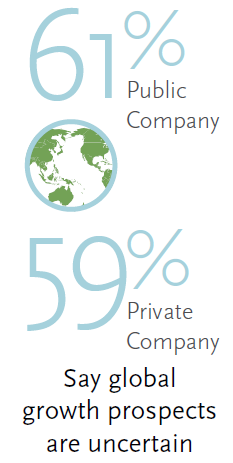
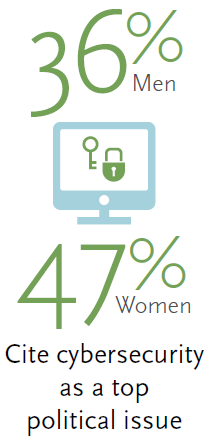
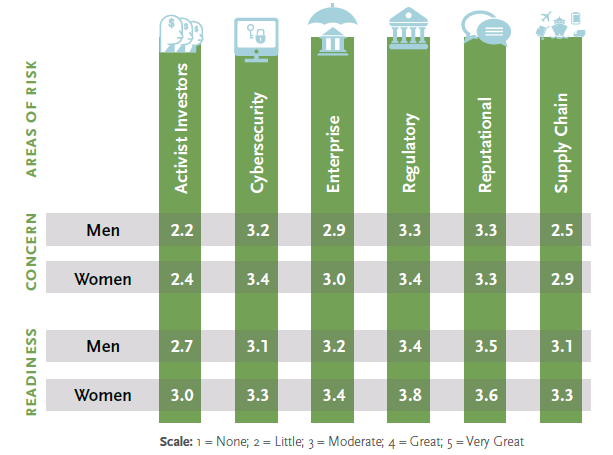
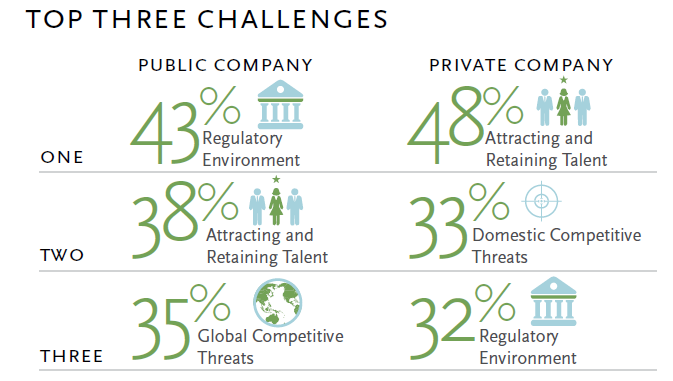
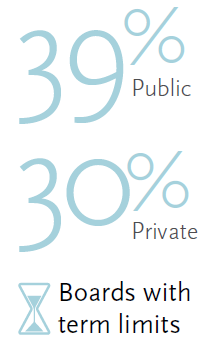
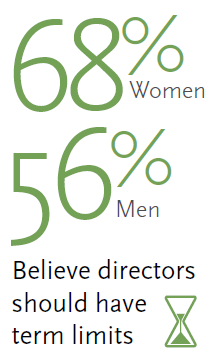
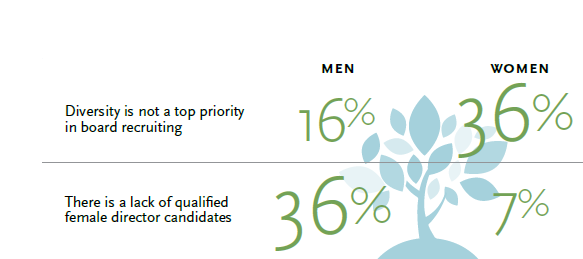
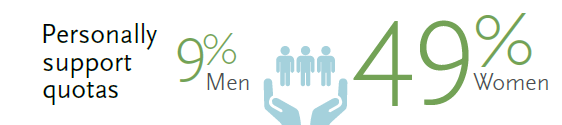
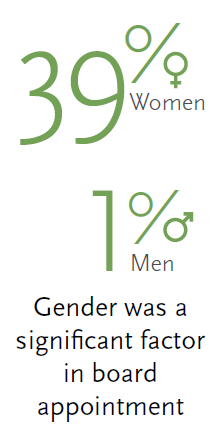












 Gouvernance | Jacques Grisé