Comment le CA peut-il gérer les cyber risques ?


Cet article explique comment les entreprises doivent agir afin de minimiser les risques cybernétiques et les cyberattaques.

Paula Loop*, directrice au Governance Insights Center, vient de publier les conclusions d’une étude de PwC :  2018 Global State of Information Security® Survey

Les résultats sont présentés sous forme de questions relatives à la sécurité informatique :

  1. Le CA doit-il être le responsable de la surveillance de cette activité ?
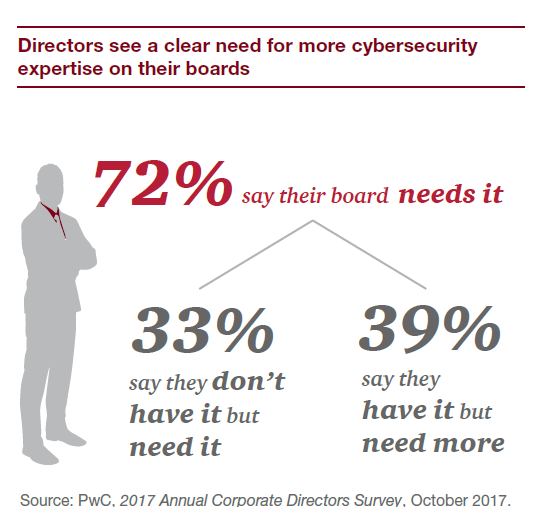
  2. Votre CA nécessite-t-il plus d’expertise dans le domaine de la cybersécurité ?
  3. Avons-nous toutes les compétences requises au sein du CA ?
  4. Possédons-nous les informations nécessaires pour la supervision des risques de cybersécurité ?
  5. Le CA, et notamment son président, a-t-il développé un niveau de relation ouverte avec le responsable des technologies (CISO) ?
  6. Comment savoir si les contrôles mis en place pour prévenir les brèches dans les systèmes sont efficaces ?


Les auteurs donnent un exemple de tableau de bord utile pour les CA :


Despite how pervasive the threats are, 44% of the 9,500 executives surveyed in PwC’s 2018 Global State of Information Security® Survey say they don’t have an overall information security strategy. That gives you a sense of how much work companies still need to do. Overseeing cyber risk is a huge challenge, but we have ideas for how directors can tackle cybersecurity head-on.


L’article présente également une mine d’informations eu égard aux enjeux, aux défis et aux actions qu’un CA doit entreprendre pour assurer une solide sécurité informatique.

Je vous invite à lire les conclusions de l’étude de PwC ci-dessous. Pour plus d’information sur ce sujet, vous pouvez consulter le rapport complet.

Bonne lecture !


Overseeing Cyber Risk

 

Résultats de recherche d'images pour « cyber risques entreprise »


Directors can add value as their companies struggle to tackle cyber risk. We put the threat environment in context for you and outline the top issues confronting companies and boards. And we identify concrete steps for boards to up their game in this complex area.

You don’t need us to tell you that cyber threats are everywhere. Breaches make headlines on

what seems like a daily basis. They also cost companies—in money and reputation. Indeed, cyber threats are among US CEOs’ top concerns, according to PwC’s 20th Global CEO Survey.

The pace of cyber breaches isn’t slowing. In part, we’re making it too easy for attackers. How? Employees fall for sophisticated phishing schemes, neglect to install security updates or use weak passwords. We are also doing more work on mobile devices, which tend not to be as well protected. And companies don’t always invest enough in cybersecurity or patch their systems promptly when problems are discovered.

The nature of cyber threats is also evolving. The self-propagating WannaCry attack, for instance, could infect a computer even if the user didn’t click on the link. Indeed, 2017 saw a number of major ransomware attacks that froze computer systems—keeping some companies offline for weeks.

Despite how pervasive the threats are, 44% of the 9,500 executives surveyed in PwC’s 2018 Global State of Information Security® Survey say they don’t have an overall information security strategy. That gives you a sense of how much work companies still need to do. Overseeing cyber risk is a huge challenge, but we have ideas for how directors can tackle cybersecurity head-on.


Challenge:

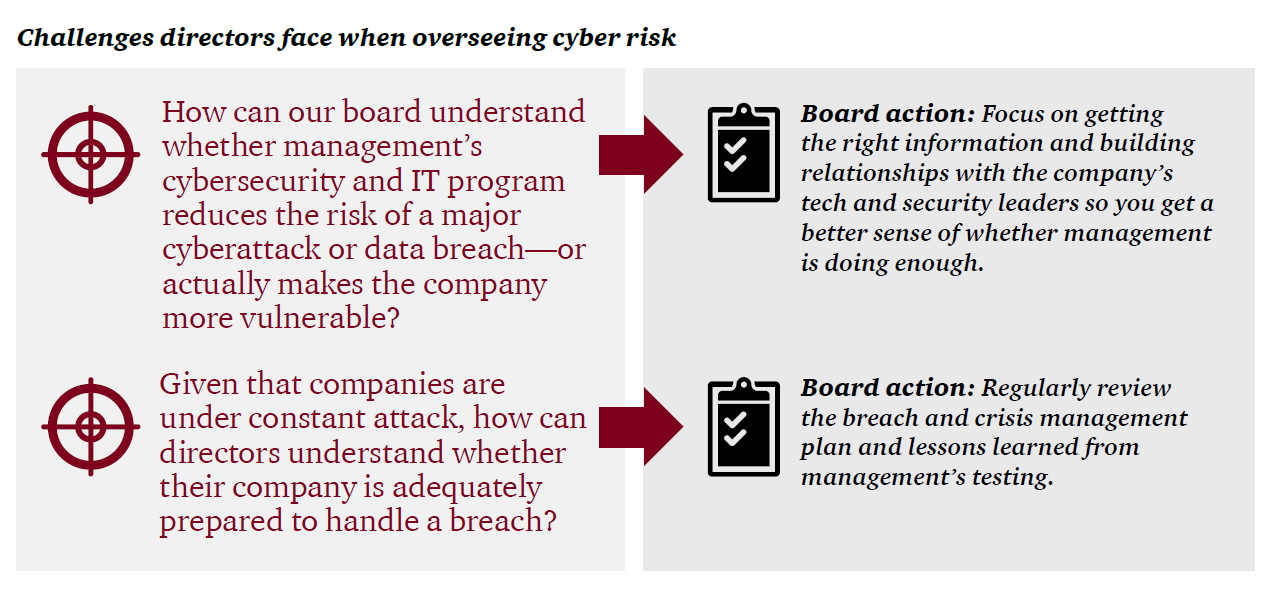
How can our board understand whether management’s cybersecurity and IT program reduces the risk of a major cyberattack or data breach—or actually makes the company more vulnerable?


Many directors are not confident that management has a handle on cyber threats. PwC’s 2017 Annual Corporate Directors Survey found that only 39% of directors are very comfortable that their company has identified its most valuable and sensitive digital assets. And a quarter had little or no faith at all that their company has identified who might attack.

There are obviously many moving parts that management needs to get right. Many companies align their programs and investments with a cybersecurity framework to help ensure they’re addressing everything they should.

For a board to oversee cyber risks effectively, it needs the right information on how the company addresses those risks. But 63% of directors say they’re not very comfortable that their company is providing the board with adequate cybersecurity metrics. [1]

Boards also shortchange the time they give to discussing cyber risks. We often see board agendas allocate relatively little time to the topic.

Another part of the challenge is that few boards have directors with current technology or cybersecurity expertise. And that puts directors at a disadvantage in being able to figure out if management is doing enough to address this area of significant risk.


Why does cybersecurity often break down in companies?


Common issues Why they matter
There’s no inventory of the company’s digital assets Companies can’t protect assets they don’t know about. Management should be able to explain what information and data they hold, why it’s needed, where it is (within the company’s systems or with third parties) and whether it’s properly protected. They should also know which data is most valuable (the crown jewels).
The company doesn’t know which third parties it digitally connects with A company may interact—and even share sensitive information—with thousands of suppliers and contractors. Hackers often target these third parties as a way to get into a company’s network. Yet more than half of companies don’t keep a comprehensive inventory of the third parties they share sensitive information with. [2]
The company hasn’t identified who is most likely to come after its data Knowing who might attack helps the company better anticipate how they might attack. That in turn may help the company put up better defenses.
The company has poor cyber hygiene Systems that aren’t properly configured are more vulnerable to attacks. So companies should employ leading practices, like multi-factor authentication, to protect highly sensitive information. They also need to do the basics right—like removing access on a timely basis for people who leave the company or change jobs.
The company hasn’t patched known system vulnerabilities System vulnerabilities are being uncovered constantly. But not all software companies push out patches to users. So the company needs to ensure someone regularly monitors to see if patch updates are available. And then make sure those fixes get made.
The company has a wide attack surface Providing more ways to access company systems makes things easier for employees, customers and third parties. And for hackers. So companies need stronger controls (such as multi-factor authentication). And they need to increase their monitoring for suspicious activity.
Employees aren’t trained on their role in security Current employees are the top source of security incidents—whether intentional or not. [3] Yet only half (52%) of executives say their company has an employee security awareness training program. [4]
Cybersecurity is viewed as the CISO’s responsibility A chief information security officer (CISO) can’t do the job alone. Other groups like Infrastructure or Operations need to cooperate and provide resources to address cyber issues.

Board action:

Focus on getting the right information and building relationships with the company’s tech and security leaders so you get a better sense of whether management is doing enough


This is a really tough area to oversee. Here are a number of questions to help as you address it.

1. Since cybersecurity is really a business issue, should the full board oversee it?

Half of directors say their audit committee is responsible for cyber risk, and 16% give it to either a separate risk committee or a separate IT committee. Only 30% say it’s a full board responsibility. [5] If the full board doesn’t want to oversee cyber risk, ensure that, at a minimum, whichever committee is assigned the responsibility provides regular and comprehensive reporting up to the whole board. And consider moving it from the already overloaded audit committee to another board committee.

2. Does our board need greater cybersecurity or technology expertise?

For some companies, the answer will be to recruit a director with serious expertise in cybersecurity. But others won’t choose to close their skill gap by adding a new director. People with these skills are hard to find, especially since the technology landscape is changing so quickly. Some boards may not have room to add another member. Others may not want to add someone with such specific expertise unless they’re confident that person could handle other board matters as well. So instead they look for other ways to address any gap, including continuing education and using outside advisors.

3. Is everyone in the room who needs to be?

The cybersecurity discussion should include business, technology and risk management leaders—as well as the CEO and CFO. Why? For one, it reinforces that cyber is an enterprise-wide issue—and that directors expect everyone to be accountable for managing the risk. The discussion also may expose other areas where there are security gaps. For example, while a CISO will often cover IT, many industrial organizations also need to protect OT—the operational technology that directs what happens in physical plants or processes. So if the CISO isn’t covering OT, the board needs to hear from whoever is.

4. Do we have the information we need to oversee cyber risk?

First, consider whether you have the basic information you need on the company’s IT environment. Without this background, it’s tough to make sense of the level of risk the company faces. There are a few key areas:

The nature of the company’s systems.

Are they developed in-house, purchased and customized or in the cloud?

Are any no longer supported by vendors?

Is the company running multiple versions of key systems in different divisions?

To what extent has the company integrated the systems of companies it acquired?

The security resources.

Where does IT security report?

What are IT security’s resources and budget? How do they compare to industry benchmarks?

Has the company adopted a cybersecurity framework (e.g., NIST, ISO 27001)?

This type of basic information doesn’t change much, so directors likely only need periodic refreshers.

On the other hand, directors will want more frequent reporting on what does change. Each company needs to figure out which items—quantitative and qualitative—are most relevant. It’s also helpful for directors to see whether management believes cyber risk is increasing, stable or decreasing.

A good dashboard gives directors an at-a-glance understanding of the state of the company’s cyber risk. There are a number of different approaches to assembling a dashboard. One is to simply classify issues between external and internal factors, like the example we show below.

If boards sense the dashboard isn’t giving a complete or accurate picture, they shouldn’t be afraid to challenge what’s presented in it. Read more to find out how.


Example of what a dashboard might look like


5. Have we built a relationship that allows the CISO to be candid with us?

The CISO has a lot of responsibility but doesn’t always have the authority to insist that other technology and business leaders fall in line. A strong relationship with the board helps the CISO feel comfortable giving directors the true picture (warts and all) of cyber risks, including his or her views on whether resources are adequate. Periodic private sessions with the CISO are a key part of understanding whether the company is doing enough to manage these risks.

6. How can we know whether the controls and processes designed to prevent data breaches are working?

Speaking to objective groups, such as internal audit, can offer the board different perspectives. The board may also want to hire its own outside consultants to periodically review the state of cybersecurity at the company and report back to the board.

 How can directors improve their knowledge of cybersecurity?

Hold deep-dive discussions about the company’s situation. That could include the company’s cybersecurity strategy, the types of cyber threats facing the company and the nature of the company’s “crown jewels.”

Attend external programs. There are a number of conferences that focus on the oversight of cyber risk.

Ask management what it has learned from connecting with peers and industry groups.

Ask law enforcement (e.g., the FBI) and other experts to present on the threat environment, attack trends and common vulnerabilities. Then discuss with management how the company is addressing these developments.

Challenge:

Given that companies are under constant attack, how can directors understand whether their company is adequately prepared to handle a breach?


No company is immune to the threat of a breach. One particularly scary aspect of cybersecurity is that companies may only know they’ve been breached when an outside party, such as the FBI, notifies them. Then there’s the question of what the company needs to do once it discovers a breach. Obviously it needs to investigate and patch its systems. But there’s much more.

Nearly all US states and many countries have laws requiring entities to notify individuals when there’s been a security breach involving personally identifiable information. These laws often set a deadline for notification—sometimes as short as 72 hours. The data breach notification laws change from time to time, making it a challenge to keep up to date. Separately, companies should also consider any potential SEC disclosure requirements regarding cyber risks and incidents.

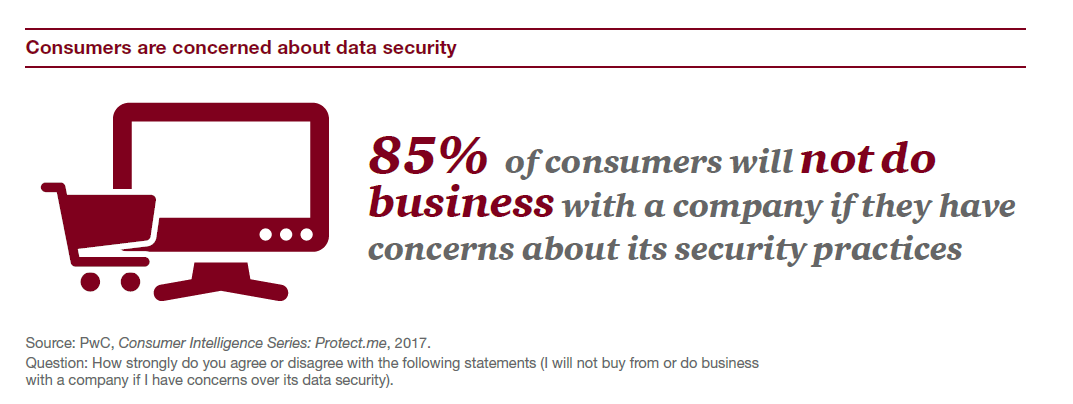
Breaches can mean significant fines from regulatory agencies, as well as class-action lawsuits. They can also damage a company’s reputation and brand—resulting in loss of customers, as well as investors possibly losing confidence in the company. And as we have seen with some breaches, senior executives can lose their jobs.

Breaches also mean more costs to companies—to investigate, remediate and compensate those who were harmed. Only half of US companies have cyber insurance, [6] despite the growing number and size of incidents. In part, there’s still some skepticism on how claims will be covered.

Given how likely a breach is and how much companies need to do to respond, it’s surprising that 54% of executives say their companies don’t have an incident response plan. [7] Yet companies that responded well to a breach—thanks to better preparation—usually come out of the crisis better than those that had to scramble.


Board action:

Regularly review the breach and crisis management plan and lessons learned from management’s testing


It’s important to ask management about the company’s cyber incident response and crisis management plan on a regular basis. If there isn’t one, press management for a timeline to develop and test one.

If there is a plan, discuss what it entails and how the company intends to continue operating in the event of a disruptive attack. It should also identify everyone who needs to be involved, which could include the communications team, finance leaders, business leaders, legal counsel and the broader crisis response team, as well as IT specialists. The plan should specify which external resources are on retainer to support the internal teams. And who the company will work with on the law enforcement side.

A key part of the plan should cover breach notification and escalation procedures. When will the board be notified? What is the company’s plan to inform regulators? How and when will other stakeholders—including individuals whose personal information may have been lost—be informed?

Also ask management about plan testing and what changes were made as a result of the last test. Some directors even observe or participate in tabletop testing exercises to get a better appreciation for how management plans to address a cyber crisis.

Finally, have management explain if it has updated controls or recovery plans based on recent incidents at other organizations.


In conclusion…


As cyber threats persist, boards recognize they need to step up their cyber risk oversight. That starts when directors recognize that the responsibility for handling cyber risk goes well beyond the CISO. How? By insisting that cybersecurity be a business discussion, with the right senior executives in the room and a sophisticated understanding of the threats.


____________________________________________________________

Endnotes

1PwC, 2017 Annual Corporate Directors Survey, October 2017.(go back)

2Ponemon Institute, Data Risk in the Third-Party Ecosystem, September 28, 2017.(go back)

3PwC, Global State of Information Security® Survey 2018, October 2017.(go back)

4Ibid.(go back)

5PwC, 2017 Annual Corporate Directors Survey, October 2017.(go back)

6Insurance Journal, “Why 27% of U.S. Firms Have No Plans to Buy Cyber Insurance”, May 31, 2017; http://www.insurancejournal.com/news/national/2017/05/31/452647.htm(go back)

7PwC, Global State of Information Security® Survey 2018, October 2017.(go back)

_______________________________________________

*Paula Loop is Leader at the Governance Insights Center, Catherine Bromilow is Partner at the Governance Insights Center, and Sean Joyce is US Cybersecurity and Privacy Leader at PricewaterhouseCoopers LLP. This post is based on a PwC publication by Ms. Loop, Ms. Bromilow, and Mr. Joyce.

Dix thèmes prioritaires à mettre à l’ordre du jour des Boards en 2018


Aujourd’hui, je partage avec vous un article de Kerry E. Berchem et Christine B. LaFollette, associés de la firme Akin Gump Strauss Hauer & Feld, qui donne un aperçu des principales préoccupations des CA en 2018.

Ce qui est intéressant, outre les thèmes choisis, c’est l’impact de l’agenda de l’administration Trump sur la gouvernance des sociétés, notamment les points suivants :

– Assouplissements de la réglementation de la SEC ;

– Applications des directives de la SEC, en autres les efforts de remplacement de la réforme Dodd-Frank ;

– Nouveaux échanges commerciaux et applications de sanctions plus sévères ;

– La réforme de la fiscalité.

Bonne lecture ! Vos commentaires sont les bienvenus.


Top 10 Topics for Directors in 2018


1. Cybersecurity threats.

Cybersecurity preparedness is essential in 2018 as the risk of, and associated adverse impact of, breaches continue to rise. The past year redefined the upward bounds of the megabreach, including the Yahoo!, Equifax and Uber hacks, and the SEC cyber-attack. As Securities and Exchange Commission (SEC) Co-Directors of Enforcement Stephanie Avakian and Steven Peikin warned, “The greatest threat to our markets right now is the cyber threat.” No crisis should go to waste. Boards should learn from others’ misfortunes and focus on governance, crisis management and recommended best practices relating to cyber issues.

2. Corporate social responsibility.

By embracing corporate social responsibility (CSR) initiatives, boards are able to proactively identify and address legal, financial, operational and reputational risks in a way that can increase the company value to all stakeholders-investors, shareholders, employees and consumers. Boards should invest in CSR programming as an integral element of company risk assessment and compliance programs, and should advocate public reporting of CSR initiatives. Such initiatives can serve as both differentiating and value-enhancing factors. According to recent studies, companies with strong CSR practices are less likely to suffer large price declines, and they tend to have better three- to five-year returns on equity, as well as a greater chance of long-term success.

3. Managing five generations of employees.

In the coming years, employers will face the unprecedented challenge of having five generations of employees in the workplace. Companies and their boards can help address these tensions by better understanding employee expectations, encouraging cross-generation mentorship, and setting an example of generational diversity with respect to company leadership and members of the board. If managed correctly, boards and companies alike can benefit from the wisdom, collaboration and innovation that comes with generational diversity.

4. Corporate strategy.

Strategic planning with a particular focus on potential acquisitions should continue to be a high priority for boards in 2018. Boards should expect to face conflicting pressures, since shareholders will expect companies to invest in both long-term growth opportunities and short-term stock enhancement measures, including the deployment of excess cash for stock buybacks. Cross-border transactions will likely continue to be attractive options, subject to increased regulatory scrutiny in certain industries and of certain buyers.

5. Board composition.

Board diversity is being actively considered and encouraged by regulators, corporate governance groups and investors, both in the United States and internationally, and the current focus on board diversity is likely to continue. Companies should review the applicable diversity-related obligations in their jurisdictions and assess their current board composition, director search and nomination process, board refreshment practices and diversity policies.

6. Shareholder activism.

Shareholder activism has entrenched itself in the modern climate of corporate governance. In particular, shareholder activists have entered industries that, until recently, have generally steered clear of such investors, including the energy sector. There is an increased emphasis by prominent investors on challenging transactions, corporate strategy and traditional corporate governance concerns, such as board composition and staggered boards.

7. Internal investigations.

Boards are increasingly confronted with the possibility of wrongdoing implicating the company or its employees. The decision whether or not to undertake an independent internal investigation, and how, requires careful consideration and consultation with counsel, since the response of the board will have important implications for the ultimate effects on the company.

8. SEC regulatory relief.

We expect that the Trump administration and the Republican-led U.S. Congress will advance reforms in 2018 designed to encourage companies toward public ownership and to facilitate capital formation in both public and private markets. Although smaller companies will likely be the greatest beneficiaries of the proposals currently being considered, many proposals are expected to also benefit large public companies-by eliminating certain duplicative and nonmaterial disclosure requirements and by addressing concerns regarding shareholder proposals.

9. SEC enforcement.

In addition to new leadership at the SEC, ambitious legislative proposals in Congress and further developments in insider trading law have the potential to impact SEC enforcement, although certain enforcement streams, such as accounting and other disclosure-related investigations, are likely to remain largely unchanged. The SEC’s own cyber breach has brought renewed focus at the agency on information security and the integrity of trading systems. Efforts to repeal Dodd-Frank have also advanced through both chambers of Congress.

10. Trade and sanctions.

During the first year of the Trump administration, U.S. sanctions were expanded significantly to include complex new restrictions that target transactions with Iran, Russia, North Korea and Venezuela, among others. Additionally, there has been an uptick in sanctions enforcement actions, including a continued focus by U.S. enforcement agencies on officers and directors that approve, or engage in, proscribed activities. Accordingly, in an effort to avoid running afoul of U.S. sanctions, boards should be vigilant in understanding how these evolving rules apply to the business activities of their companies and management teams.

Special Bonus: Tax reform.

Tax reform has been a top priority for the Trump Administration and Republicans in Congress. After a slow start to 2017 in terms of legislative wins, the House and Senate are poised to send the first comprehensive tax reform bill to the President’s desk in more than thirty years. While the differences between the House and Senate bills still need to be resolved, the new Tax Cuts and Jobs Act is expected to pass by the end of the year and will present both benefits and challenges for companies in implementation and adaptation as unintended consequences are inevitably uncovered in the months and years to come.

The complete publication is available here.

Dix thèmes majeurs pour les administrateurs de sociétés en 2017


Aujourd’hui, je partage avec vous la liste des dix thèmes majeurs en gouvernance que les auteurs Kerry E. Berchem* et Rick L. Burdick* ont identifiés pour l’année 2017.

Vous êtes assurément au fait de la plupart de ces dimensions, mais il faut noter l’importance accrue à porter aux questions stratégiques, aux changements politiques, aux relations avec les actionnaires, à la cybersécurité, aux nouvelles réglementations de la SEC, à la composition du CA, à l’établissement de la rémunération et aux répercussions possibles des changements climatiques.

sans-titre-gump

Afin de mieux connaître l’ampleur de ces priorités de gouvernance pour les administrateurs de sociétés, je vous invite à lire l’ensemble du rapport publié par Akin Gump.

Bonne lecture !

Dix thèmes majeurs pour les administrateurs de sociétés en 2017


top-10


1. Corporate strategy: Oversee the development of the corporate strategy in an increasingly uncertain and volatile world economy with new and more complex risks

Directors will need to continue to focus on strategic planning, especially in light of significant anticipated changes in U.S. government policies, continued international upheaval, the need for productive shareholder relations, potential changes in interest rates, uncertainty in commodity prices and cybersecurity risks, among other factors.

2. Political changes: Monitor the impact of major political changes, including the U.S. presidential and congressional elections and Brexit

Many uncertainties remain about how the incoming Trump administration will govern, but President-elect Trump has stated that he will pursue vast changes in diverse regulatory sectors, including international trade, health care, energy and the environment. These changes are likely to reshape the legal landscape in which companies conduct their business, both in the United States and abroad.

With respect to Brexit, although it is clear that the United Kingdom will, very probably, leave the European Union, there is no certainty as to when exactly this will happen or what the U.K.’s future relationship, if any, with the EU will be. Once the negotiations begin, boards will need to be quick to assess the likely shape of any deal between the U.K. and the EU and to consider how to adjust their business model to mitigate the threats and take advantage of the opportunities that may present themselves.

3. Shareholder relations: Foster shareholder relations and assess company vulnerabilities to prepare for activist involvement

The current environment demands that directors of public companies remain mindful of shareholder relations and company vulnerabilities by proactively engaging with shareholders, addressing shareholder concerns and performing a self-diagnostic analysis. Directors need to understand their company’s vulnerabilities, such as a de-staggered board or the lack of access to a poison pill, and be mindful of them in any engagement or negotiation process.

4. Cybersecurity: Understand and oversee cybersecurity risks to prepare for increasingly sophisticated and frequent attacks

As cybercriminals raise the stakes with escalating ransomware attacks and hacking of the Internet of Things, companies will need to be even more diligent in their defenses and employee training. In addition, cybersecurity regulation will likely increase in 2017. The New York State Department of Financial Services has enacted a robust cybersecurity regulation, with heightened encryption, log retention and certification requirements, and other regulators have issued significant guidance. Multinational companies will continue implementation of the EU General Data Protection Regulation requirements, which will be effective in May 2018. EU-U.S. Privacy Shield will face a significant legal challenge, particularly in light of concerns regarding President-elect Trump’s protection of privacy. Trump has stated that the government needs to be “very, very tough on cyber and cyberwarfare” and has indicated that he will form a “cyber review team” to evaluate cyber defenses and vulnerabilities.

5. SEC scrutiny: Monitor the SEC’s increased scrutiny and more frequent enforcement actions, including whistleblower developments, guidance on non-GAAP measures and tougher positions on insider trading

2016 saw the Securities and Exchange Commission (SEC) award tens of millions of dollars to whistleblowers and bring first-of-a-kind cases applying new rules flowing from the protections now afforded to whistleblowers of potential violations of the federal securities laws. The SEC was also active in its review of internal accounting controls and their ability to combat cyber intrusions and other modern-day threats to corporate infrastructure. The SEC similarly continued its comprehensive effort to police insider trading schemes and other market abuses, and increased its scrutiny of non-GAAP (generally accepted accounting principles) financial measure disclosures. 2017 is expected to bring the appointment of three new commissioners, including a new chairperson to replace outgoing chair Mary Jo White, which will retilt the scales at the commissioner level to a 3-2 majority of Republican appointees. 2017 may also bring significant changes to rules promulgated previously under Dodd-Frank.

6. CFIUS: Account for CFIUS risks in transactions involving non-U.S. investments in businesses with a U.S. presence

Over the past year, the interagency Committee on Foreign Investment in the United States (CFIUS) has been particularly active in reviewing—and, at times, intervening in—non-U.S. investments in U.S. businesses to address national security concerns. CFIUS has the authority to impose mitigation measures on a transaction before it can proceed, and may also recommend that the President block a pending transaction or order divestiture of a U.S. business in a completed transaction. Companies that have not sufficiently accounted for CFIUS risks may face significant hurdles in successfully closing a deal. With the incoming Trump administration, there is also the potential for an expanded role for CFIUS, particularly in light of campaign statements opposing certain foreign investments.

7. Board composition: Evaluate and refresh board composition to help achieve the company’s goals, increase diversity and manage turnover

In order to promote fresh, dynamic and engaged perspectives in the boardroom and help the company achieve its goals, a board should undertake focused reassessments of its underlying composition and skills, including a review and analysis of board tenure, continuity and diversity in terms of upbringing, educational background, career expertise, gender, age, race and political affiliation.

8. Executive compensation: Determine appropriate executive compensation against the background of an increased focus on CEO pay ratios

Executive compensation will continue to be a hot topic for directors in 2017, especially given that public companies will soon have to start complying with the CEO pay ratio disclosure rules. Recent developments suggest that such disclosure might not be as burdensome or harmful to relations with employees and the public as was initially feared.
The SEC’s final rules allow for greater flexibility and ease in making this calculation, and a survey of companies that have already estimated their ratios indicates that the ratio might not be as high, on average, as previously reported.

9. Antitrust scrutiny: Monitor the increased scrutiny of the antitrust authorities and the implications on various proposed combinations

Despite the promise of synergies and the potential to transform a company’s future, antitrust regulators have become increasingly hostile toward strategic transactions, with the Department of Justice and Federal Trade Commission suing to block 12 transactions since 2015. Although directors should brace for a longer antitrust review, to help navigate the regulatory climate, work upfront can dramatically improve prospects for success. Company directors should develop appropriate deal rationales and, with the benefit of upfront work, allocate antitrust risk in the merger agreement. Merger and acquisition activity may also benefit from the Trump administration, taking, at least for certain industries, a less-aggressive antitrust enforcement stance.

10. Environmental disasters and contagious diseases: Monitor the impact of increasingly volatile weather events and contagious disease outbreaks on risk management processes, employee needs and logistics planning

While the causes of climate change remain a political sticking point, it cannot be debated that volatile weather events, environmental damage and a rise in the diseases that tend to follow, are having increasingly adverse impacts on businesses and markets. Businesses will need to account for, or transfer the risk of, the increasing likelihood of these impacts. The SEC recently announced investigations into climate-risk disclosures within the oil and gas sector to ensure that they adequately allow investors to account for these effects on the bottom line. The growing number of shareholder resolutions and suits addressing climate change confirm that investors want this information, regardless of the position of the next administration.

The complete publication is available here.


*Kerry E. Berchem is partner and head of the corporate practice, and Rick L. Burdick is partner and chair of the Global Energy & Transactions group, at Akin Gump Strauss Hauer & Feld LLP.

Cadre de référence pour évaluer la gouvernance des sociétés | Questionnaire de 100 items


Le Bureau de la vérification interne (BVI) de l’Université de Montréal (UdeM) a récemment développé un cadre de référence novateur pour l’évaluation de la gouvernance. La méthodologie, ainsi que le questionnaire qui en résulte, contribue, à mon avis, à l’avancement des connaissances dans le domaine de l’évaluation des caractéristiques et des pratiques de la gouvernance par les auditeurs internes.

Ayant eu l’occasion de collaborer à la conception de cet instrument de mesure de la gouvernance des sociétés, j’ai obtenu du BVI la permission de publier le résultat de cet exercice.

Cette version du cadre se veut « générique » et peut être utilisée pour l’évaluation de la gouvernance d’un projet, d’une activité, d’une unité ou d’une entité.

De ce fait, les termes, les intervenants ainsi que les structures attendues doivent être adaptés au contexte de l’évaluation. Il est à noter que ce cadre de référence correspond à une application optimale recherchée en matière de gouvernance. Certaines pratiques pourraient ne pas s’appliquer ou ne pas être retenues de façon consciente et transparente par l’organisation.

Le questionnaire se décline en dix thèmes, chacun comportant dix items :


Thème 1 — Structure et fonctionnement du Conseil

Thème 2 — Travail du président du Conseil

Thème 3 — Relation entre le Conseil et le directeur général (direction)

Thème 4 — Structure et travail des comités du Conseil

Thème 5 — Performance du Conseil et de ses comités

Thème 6 — Recrutement, rémunération et évaluation du rendement du directeur général

Thème 7 — Planification stratégique

Thème 8 — Performance et reddition de comptes

Thème 9 — Gestion des risques

Thème 10 — Éthique et culture organisationnelle


On retrouvera en Annexe une représentation graphique du cadre conceptuel qui permet d’illustrer les liens entre les thèmes à évaluer dans le présent référentiel.

L’évaluation s’effectue à l’aide d’un questionnaire de type Likert (document distinct du cadre de référence). L’échelle de Likert est une échelle de jugement par laquelle la personne interrogée exprime son degré d’accord ou de désaccord eu égard à une affirmation ou une question.


  1. Tout à fait d’accord
  2. D’accord
  3. Ni en désaccord ni d’accord
  4. Pas d’accord
  5. Pas du tout d’accord
  6. Ne s’applique pas (S.O.)


Une section commentaire est également incluse dans le questionnaire afin que les participants puissent exprimer des informations spécifiques à la question. L’audit interne doit réaliser son évaluation à l’aide de questionnaires ainsi que sur la base de la documentation qui lui sera fournie.


archives_gouvernance


Thème 1 — Structure et fonctionnement du Conseil

(Questions destinées au président du comité de gouvernance [PCG] et/ou au président du Conseil [PC])


1.       Le Conseil compte-t-il une proportion suffisante de membres indépendants pour lui permettre d’interagir de manière constructive avec la direction ?
2.       La taille du Conseil vous semble-t-elle raisonnable compte tenu des objectifs et de la charge de travail actuel ? (dans une fourchette idéale de 9 à 13 membres, avec une moyenne d’environ 10 membres)
3.       La composition du Conseil est-elle guidée par une politique sur la diversité des membres ?
4.       Le Conseil a-t-il conçu un processus rigoureux de recrutement de ses membres, basé sur une matrice des compétences complémentaires ?
5.       Le président et les membres du comité responsable du recrutement (comité de gouvernance) ont-ils clairement exprimé aux candidats potentiels les attentes de l’organisation en matière de temps, d’engagement et de contributions reliés avec leurs compétences ?
6.       Les réunions sont-elles bien organisées et structurées ? (durée, PV, taux de présence, documentation pertinente et à temps, etc.)
7.       Les échanges portent-ils sur surtout sur des questions stratégiques, sans porter sur les activités courantes (qui sont davantage du ressort de l’équipe de direction) ?
8.       Les membres sont-ils à l’aise d’émettre des propos qui vont à contre-courant des idées dominantes ?
9.       Une séance à huis clos est-elle systématiquement prévue à la fin de chacune des réunions afin de permettre aux membres indépendants de discuter des sujets sensibles ?
10.    Les membres ont-ils accès à la planification des rencontres sur une période idéale de 18 mois en y incluant certains items ou sujets récurrents qui seront abordés lors des réunions du Conseil (plan de travail) ?


Thème 2 — Travail du président du Conseil 

(Questions destinées à un administrateur indépendant, au PC [auto-évaluation] et au président du comité de gouvernance [PCG])


1.       Le président s’assure-t-il de former un solide tandem avec le directeur général et de partager avec lui une vision commune de l’organisation ?
2.       Le président promeut-il de hauts standards d’efficacité et d’intégrité afin de donner le ton à l’ensemble de l’organisation ?
3.       Le président, de concert avec le directeur général, prépare-t-il adéquatement les réunions du Conseil ?
4.       Le président préside-t-il avec compétence et doigté les réunions du Conseil ?
5.       Le président s’assure-t-il que les échanges portent surtout sur des questions stratégiques et que les réunions du Conseil ne versent pas dans la micro gestion ?
6.       Le président s’investit-il pleinement dans la sélection des présidents et des membres des comités du Conseil ?
7.       Le président s’assure-t-il de l’existence d’une formation et d’une trousse d’accueil destinées aux nouveaux membres afin qu’ils soient opérationnels dans les plus brefs délais ?
8.       Le président s’assure-t-il de l’existence d’un processus d’évaluation du rendement du Conseil et de ses membres ?
9.       Le président prend-il la peine d’aborder les membres non performants pour les aider à trouver des solutions ?
10.    Le président s’assure-t-il que les membres comprennent bien leurs devoirs de fiduciaire, c’est-à-dire qu’ils doivent veiller aux meilleurs intérêts de l’organisation et non aux intérêts de la base dont ils sont issus ?


Thème 3 — Relation entre le Conseil et le directeur général (direction)

(Questions destinées au PC et au Directeur général [DG])


1.       Le président du Conseil et le directeur général ont-ils des rencontres régulières et statutaires pour faire le point entre les réunions du Conseil ?
2.       Le président du Conseil et le directeur général maintiennent-ils une communication franche et ouverte ? (équilibre entre une saine tension et des relations harmonieuses et efficaces)
3.       Le Conseil résiste-t-il à la tentation de faire de la micro gestion lors de ses réunions et s’en tient-il à assumer les responsabilités qui lui incombent ?
4.       Le Conseil agit-il de façon respectueuse à l’endroit du directeur général lors des réunions du Conseil et cherche-t-il à l’aider à réussir ?
5.       Le Conseil procède-t-il à une évaluation annuelle du rendement du directeur général (par le comité de GRH) basée sur des critères objectifs et mutuellement acceptés ?
6.       Les membres du Conseil s’abstiennent-ils de donner des ordres ou des directives aux employés qui relèvent de l’autorité du directeur général ?
7.       Le président comprend-il que le directeur général ne relève pas de lui, mais plutôt du Conseil, et agit-il en conséquence ?
8.       Le directeur général aide-t-il adéquatement le président dans la préparation des réunions du Conseil, fournit-il aux membres l’information dont ils ont besoin et répond-il à leurs questions de manière satisfaisante ?
9.       Le directeur général s’assure-t-il de ne pas embourber les réunions du Conseil de sujets qui relèvent de sa propre compétence ?
10.    Le directeur général accepte-t-il de se rallier aux décisions prises par le Conseil, même dans les cas où il a exprimé des réserves ?


Thème 4 — Structure et travail des comités du Conseil

 (Questions destinées au PC et au président d’un des comités)


1.       Existe-t-il, au sein de votre organisation, les comités du Conseil suivants :

·         Audit ?

·         Gouvernance ?

·         Ressources humaines ?

·         Gestion des risques ?

·         Sinon, a-t-on inclus les responsabilités de ces comités dans le mandat du Conseil ou d’une autre instance indépendante ?

·         Autres comités reliés à la recherche (ex. éthique, scientifique) ?


2.       Les recommandations des comités du Conseil aident-elles le Conseil à bien s’acquitter de son rôle ?
3.       Les comités du Conseil sont-ils actifs et présentent-ils régulièrement des rapports au Conseil ?
4.       Estimez-vous que les comités créent de la valeur pour votre organisation ?
5.       Les comités du Conseil s’abstiennent-ils de s’immiscer dans la sphère de responsabilité du directeur général ?
6.       À l’heure actuelle, la séparation des rôles et responsabilités respectifs du Conseil, des comités et de la direction est-elle officiellement documentée, généralement comprise et mise en pratique ?
7.       Les membres qui siègent à un comité opérationnel comprennent-ils qu’ils travaillent sous l’autorité du directeur général ?
8.       Le directeur général est-il invité à assister aux réunions des comités du Conseil ?
9.       Chacun des comités et des groupes de travail du Conseil dispose-t-il d’un mandat clair et formulé par écrit ?
10.    S’il existe un comité exécutif dans votre organisation, son existence est-elle prévue dans le règlement de régie interne et, si oui, son rôle est-il clairement défini ?


Thème 5 — Performance du Conseil et de ses comités 

(Questions destinées au PC et au président du comité de gouvernance [PCG])


1.       Est-ce que la rémunération des membres du Conseil a été déterminée par le comité de gouvernance ou avec l’aide d’un processus indépendant ? (Jetons de présence ?)
2.       Par quels processus s’assure-t-on que le Conseil consacre suffisamment de temps et d’attention aux tendances émergentes et à la prévision des besoins futurs de la collectivité qu’il sert ?
3.       Est-ce que l’on procède à l’évaluation de la performance du Conseil, des comités et de ses membres au moins annuellement ?
4.       Est-ce que la logique et la démarche d’évaluation ont été expliquées aux membres du Conseil, et ceux-ci ont-ils pu donner leur point de vue avant de procéder à l’évaluation ?
5.       A-t-on convenu préalablement de la façon dont les données seront gérées de manière à fournir une garantie sur la confidentialité de l’information recueillie ?
6.       Est-ce que le président de Conseil croit que le directeur général et la haute direction font une évaluation positive de l’apport des membres du Conseil ?
7.       L’évaluation du Conseil et de ses comités mène-t-elle à un plan d’action réaliste pour prendre les mesures nécessaires selon leur priorité ?
8.       L’évaluation du Conseil permet-elle de relever les lacunes en matière de compétences et d’expérience qui pourraient être comblées par l’ajout de nouveaux membres ?
9.       Est-ce que les membres sont évalués en fonction des compétences et connaissances qu’ils sont censés apporter au Conseil ?
10.    Les membres sont-ils informés par le président du Conseil de leurs résultats d’évaluation dans le but d’aboutir à des mesures de perfectionnement ?


Thème 6 — Recrutement, rémunération et évaluation du rendement du DG

(Questions destinées au PC, au DG [auto-évaluation] et au président du comité des RH)


1.       Existe-t-il une description du poste de directeur général ? Cette description a-t-elle servi au moment de l’embauche du titulaire du poste ?
2.       Un comité du Conseil (comité de GRH) ou un groupe de membres indépendants est-il responsable de l’évaluation du rendement du directeur général (basé sur des critères objectifs) ?
3.       Le président du Conseil s’est-il vu confier un rôle prépondérant au sein du comité responsable de l’évaluation du rendement du directeur général afin qu’il exerce le leadership que l’on attend de lui ?
4.       Le comité responsable de l’évaluation du rendement et le directeur général ont-ils convenu d’objectifs de performance sur lesquels ce dernier sera évalué ?
5.       Le rendement du directeur général est-il évalué au moins une fois l’an en fonction de ces objectifs ?
6.       Les objectifs de rendement du directeur général sont-ils liés au plan stratégique ?
7.       Le comité responsable de l’évaluation du rendement s’est-il entretenu avec le directeur général en cours d’année pour lui donner une rétroaction préliminaire ?
8.       La rémunération du directeur général est-elle équitable par rapport à l’ensemble des employés et a-t-elle fait l’objet d’une analyse comparative avec le marché des organisations afin d’assurer un certain degré de compétitivité ?
9.       Les hausses salariales du directeur général sont-elles uniquement accordées en fonction de l’évaluation de son rendement ?
10.    Est-ce que le Conseil consacre l’attention nécessaire à la succession du directeur général et dispose-t-il d’un processus robuste d’identification d’un nouveau premier dirigeant, tant pour les transitions planifiées que non planifiées ?


Thème 7 — Planification stratégique 

(Questions destinées au PC et au DG)


1.       Votre organisation possède-t-elle un plan stratégique incluant notamment :

·         le contexte dans lequel évoluent la société et les principaux enjeux auxquels elle fait face ?

·         les objectifs et les orientations stratégiques de la société ?

·         les résultats visés au terme de la période couverte par le plan ?

·         les indicateurs de performance utilisés pour mesurer l’atteinte des résultats ?

2.       Le plan stratégique porte-t-il sur une période cohérente avec la mission et l’environnement dans lequel il œuvre ?
3.       La mission, les valeurs et l’énoncé de vision de l’organisation ont-ils été déterminés et réévalués périodiquement ?
4.       Est-ce qu’il y a eu une analyse Forces/faiblesses et opportunités/menaces ?
5.       L’ensemble des parties prenantes de l’organisation a-t-il été consulté notamment au moyen de sondages et d’entrevues, et lors d’un atelier de planification stratégique ?
6.       Les membres ont-ils été engagés dans le processus, notamment par la création d’un comité ad hoc chargé de piloter l’exercice et par des rapports périodiques aux réunions du Conseil ?
7.       Le Conseil évalue-t-il la stratégie proposée, notamment les hypothèses clés, les principaux risques, les ressources nécessaires et les résultats cibles, et s’assure-t-il qu’il traite les questions primordiales telles que l’émergence de la concurrence et l’évolution des préférences des clients ?
8.       Le président du Conseil s’assure-t-il que le plan stratégique soit débattu lors de réunions spéciales et que le Conseil dispose de suffisamment de temps pour être efficace ?
9.       Le Conseil est-il satisfait des plans de la direction pour la mise en œuvre de la stratégie approuvée ?
10.    Le Conseil surveille-t-il la viabilité permanente de la stratégie, et est-elle ajustée, si nécessaire, pour répondre aux évolutions de l’environnement ?


Thème 8 — Performance et reddition de comptes

 (Questions destinées au Président du comité d’audit ou au PC, au DG et au secrétaire corporatif)


1.       S’assure-t-on que les indicateurs de performance utilisés par la direction et présentés au Conseil sont reliés à la stratégie de l’organisation et aux objectifs à atteindre ?
2.       S’assure-t-on que les indicateurs de la performance sont équilibrés entre indicateurs financiers et non financiers, qu’ils comprennent des indicateurs prévisionnels et permettent une comparaison des activités similaires ?
3.       A-t-on une assurance raisonnable de la fiabilité des indicateurs de performance qui sont soumis au Conseil ?
4.       Utilise-t-on des informations de sources externes afin de mieux évaluer la performance de l’organisation ?
5.       Le Conseil et les comités réexaminent-ils régulièrement la pertinence de l’information qu’il reçoit ?
6.       Le Conseil examine-t-il d’un œil critique les informations à fournir aux parties prenantes ?
7.       Le Conseil est-il satisfait du processus de communication de crise de la société et est-il à même de surveiller de près son efficacité si une crise survient ?
8.       Le Conseil est-il satisfait de son implication actuelle dans la communication avec les parties prenantes externes et comprend-il les évolutions susceptibles de l’inciter à modifier son degré de participation ?
9.       Est-ce que la direction transmet suffisamment d’information opérationnelle au Conseil afin que celui-ci puisse bien s’acquitter de ses responsabilités de surveillance ?
10.    Est-ce que le Conseil s’assure que les informations sont fournies aux parties prenantes telles que les organismes réglementaires, les organismes subventionnaires et les partenaires d’affaires ?


Thème 9 — Gestion des risques

 (Questions destinées au PC et au Président du comité de Gestion des risques ou au Président du comité d’audit)


1.       L’organisation a-t-elle une politique de gestion des risques et obtient-elle l’adhésion de l’ensemble des dirigeants et des employés ?
2.       L’organisation a-t-elle identifié et évalué les principaux risques susceptibles de menacer sa réputation, son intégrité, ses programmes et sa pérennité ainsi que les principaux mécanismes d’atténuation ?
3.       L’organisation a-t-elle un plan de gestion de la continuité advenant un sinistre ?
4.       Est-ce que les risques les plus élevés font l’objet de mandats d’audit interne afin de donner un niveau d’assurance suffisant aux membres du Conseil ?
5.       L’organisation se penche-t-elle occasionnellement sur les processus de contrôle des transactions, par exemple l’autorisation des dépenses, l’achat de biens et services, la vérification et l’approbation des factures et des frais de déplacement, l’émission des paiements, etc. ?
6.       Existe-t-il une délégation d’autorité documentée et comprise par tous les intervenants ?
7.       Le Conseil a-t-il convenu avec la direction de l’appétit pour le risque ? (le niveau de risque que l’organisation est prête à assumer)
8.       Le Conseil est-il informé en temps utile lors de la matérialisation d’un risque critique et s’assure-t-il que la direction les gère convenablement ?
9.       S’assure-t-on que la direction entretient une culture qui encourage l’identification et la gestion des risques ?
10.   Le Conseil s’est-il assuré que la direction a pris les mesures nécessaires pour se prémunir des risques émergents, notamment ceux reliés à la cybersécurité et aux cyberattaques ?


Thème 10 — Éthique et culture organisationnelle

 (Questions destinées au DG et au PC)


1.       Les politiques de votre organisation visant à favoriser l’éthique sont-elles bien connues et appliquées par ses employés, partenaires et bénévoles ?
2.       Le Conseil de votre organisation aborde-t-il régulièrement la question de l’éthique, notamment en recevant des rapports sur les plaintes, les dénonciations ?
3.       Le Conseil et l’équipe de direction de votre organisation participent-ils régulièrement à des activités de formation visant à parfaire leurs connaissances et leurs compétences en matière d’éthique ?
4.       S’assure-t-on que la direction générale est exemplaire et a développé une culture fondée sur des valeurs qui se déclinent dans l’ensemble de l’organisation ?
5.       S’assure-t-on que la direction prend au sérieux les manquements à l’éthique et les gère promptement et de façon cohérente ?
6.       S’assure-t-on que la direction a élaboré un code de conduite efficace auquel elle adhère, et veille à ce que tous les membres du personnel en comprennent la teneur, la pertinence et l’importance ?
7.       S’assure-t-on de l’existence de canaux de communication efficaces (ligne d’alerte téléphonique dédiée, assistance téléphonique, etc.) pour permettre aux membres du personnel et partenaires de signaler les problèmes ?
8.       Le Conseil reconnaît-il l’impact sur la réputation de l’organisation du comportement de ses principaux fournisseurs et autres partenaires ?
9.       Est-ce que le président du Conseil donne le ton au même titre que le DG au niveau des opérations sur la culture organisationnelle au nom de ses croyances, son attitude et ses valeurs ?
10.    Est-ce que l’organisation a la capacité d’intégrer des changements à même ses processus, outils ou comportements dans un délai raisonnable ?


Annexe

Présentation du schéma conceptuel


Thème (1) — Structure et fonctionnement du Conseil

Thème (2) — Travail du président du Conseil

Thème (3) — Relation entre le Conseil et le directeur général (direction)

Thème (4) — Structure et travail des comités du Conseil

Thème (5) — Performance du Conseil et de ses comités

Thème (6) — Recrutement, rémunération et évaluation du rendement du directeur général

Thème (7) — Planification stratégique

Thème (8) — Performance et reddition de comptes

Thème (9) — Gestion des risques

Thème (10) — Éthique et culture organisationnelle


Cadre de référence pour évaluer la gouvernance des sociétés | Questionnaire de 100 items


Le Bureau de la vérification interne (BVI) de l’Université de Montréal (UdeM) a récemment développé un cadre de référence novateur pour l’évaluation de la gouvernance. La méthodologie, ainsi que le questionnaire qui en résulte, contribue, à mon avis, à l’avancement des connaissances dans le domaine de l’évaluation des caractéristiques et des pratiques de la gouvernance par les auditeurs internes.

Ayant eu l’occasion de collaborer à la conception de cet instrument de mesure de la gouvernance des sociétés, j’ai obtenu du BVI la permission de publier le résultat de cet exercice.

Cette version du cadre se veut « générique » et peut être utilisée pour l’évaluation de la gouvernance d’un projet, d’une activité, d’une unité ou d’une entité.

De ce fait, les termes, les intervenants ainsi que les structures attendues doivent être adaptés au contexte de l’évaluation. Il est à noter que ce cadre de référence correspond à une application optimale recherchée en matière de gouvernance. Certaines pratiques pourraient ne pas s’appliquer ou ne pas être retenues de façon consciente et transparente par l’organisation.

Le questionnaire se décline en dix thèmes, chacun comportant dix items :


Thème 1 — Structure et fonctionnement du Conseil

Thème 2 — Travail du président du Conseil

Thème 3 — Relation entre le Conseil et le directeur général (direction)

Thème 4 — Structure et travail des comités du Conseil

Thème 5 — Performance du Conseil et de ses comités

Thème 6 — Recrutement, rémunération et évaluation du rendement du directeur général

Thème 7 — Planification stratégique

Thème 8 — Performance et reddition de comptes

Thème 9 — Gestion des risques

Thème 10 — Éthique et culture organisationnelle


On retrouvera en Annexe une représentation graphique du cadre conceptuel qui permet d’illustrer les liens entre les thèmes à évaluer dans le présent référentiel.

L’évaluation s’effectue à l’aide d’un questionnaire de type Likert (document distinct du cadre de référence). L’échelle de Likert est une échelle de jugement par laquelle la personne interrogée exprime son degré d’accord ou de désaccord eu égard à une affirmation ou une question.


  1. Tout à fait d’accord
  2. D’accord
  3. Ni en désaccord ni d’accord
  4. Pas d’accord
  5. Pas du tout d’accord
  6. Ne s’applique pas (S.O.)


Une section commentaire est également incluse dans le questionnaire afin que les participants puissent exprimer des informations spécifiques à la question. L’audit interne doit réaliser son évaluation à l’aide de questionnaires ainsi que sur la base de la documentation qui lui sera fournie.


Résultats de recherche d'images pour « gouvernance d'entreprise conseil d'administration »


Thème 1 — Structure et fonctionnement du Conseil

(Questions destinées au président du comité de gouvernance [PCG] et/ou au président du Conseil [PC])


1.       Le Conseil compte-t-il une proportion suffisante de membres indépendants pour lui permettre d’interagir de manière constructive avec la direction ?
2.       La taille du Conseil vous semble-t-elle raisonnable compte tenu des objectifs et de la charge de travail actuel ? (dans une fourchette idéale de 9 à 13 membres, avec une moyenne d’environ 10 membres)
3.       La composition du Conseil est-elle guidée par une politique sur la diversité des membres ?
4.       Le Conseil a-t-il conçu un processus rigoureux de recrutement de ses membres, basé sur une matrice des compétences complémentaires ?
5.       Le président et les membres du comité responsable du recrutement (comité de gouvernance) ont-ils clairement exprimé aux candidats potentiels les attentes de l’organisation en matière de temps, d’engagement et de contributions reliés avec leurs compétences ?
6.       Les réunions sont-elles bien organisées et structurées ? (durée, PV, taux de présence, documentation pertinente et à temps, etc.)
7.       Les échanges portent-ils sur surtout sur des questions stratégiques, sans porter sur les activités courantes (qui sont davantage du ressort de l’équipe de direction) ?
8.       Les membres sont-ils à l’aise d’émettre des propos qui vont à contre-courant des idées dominantes ?
9.       Une séance à huis clos est-elle systématiquement prévue à la fin de chacune des réunions afin de permettre aux membres indépendants de discuter des sujets sensibles ?
10.    Les membres ont-ils accès à la planification des rencontres sur une période idéale de 18 mois en y incluant certains items ou sujets récurrents qui seront abordés lors des réunions du Conseil (plan de travail) ?


Thème 2 — Travail du président du Conseil 

(Questions destinées à un administrateur indépendant, au PC [auto-évaluation] et au président du comité de gouvernance [PCG])


1.       Le président s’assure-t-il de former un solide tandem avec le directeur général et de partager avec lui une vision commune de l’organisation ?
2.       Le président promeut-il de hauts standards d’efficacité et d’intégrité afin de donner le ton à l’ensemble de l’organisation ?
3.       Le président, de concert avec le directeur général, prépare-t-il adéquatement les réunions du Conseil ?
4.       Le président préside-t-il avec compétence et doigté les réunions du Conseil ?
5.       Le président s’assure-t-il que les échanges portent surtout sur des questions stratégiques et que les réunions du Conseil ne versent pas dans la micro gestion ?
6.       Le président s’investit-il pleinement dans la sélection des présidents et des membres des comités du Conseil ?
7.       Le président s’assure-t-il de l’existence d’une formation et d’une trousse d’accueil destinées aux nouveaux membres afin qu’ils soient opérationnels dans les plus brefs délais ?
8.       Le président s’assure-t-il de l’existence d’un processus d’évaluation du rendement du Conseil et de ses membres ?
9.       Le président prend-il la peine d’aborder les membres non performants pour les aider à trouver des solutions ?
10.    Le président s’assure-t-il que les membres comprennent bien leurs devoirs de fiduciaire, c’est-à-dire qu’ils doivent veiller aux meilleurs intérêts de l’organisation et non aux intérêts de la base dont ils sont issus ?


Thème 3 — Relation entre le Conseil et le directeur général (direction)

(Questions destinées au PC et au Directeur général [DG])


1.       Le président du Conseil et le directeur général ont-ils des rencontres régulières et statutaires pour faire le point entre les réunions du Conseil ?
2.       Le président du Conseil et le directeur général maintiennent-ils une communication franche et ouverte ? (équilibre entre une saine tension et des relations harmonieuses et efficaces)
3.       Le Conseil résiste-t-il à la tentation de faire de la micro gestion lors de ses réunions et s’en tient-il à assumer les responsabilités qui lui incombent ?
4.       Le Conseil agit-il de façon respectueuse à l’endroit du directeur général lors des réunions du Conseil et cherche-t-il à l’aider à réussir ?
5.       Le Conseil procède-t-il à une évaluation annuelle du rendement du directeur général (par le comité de GRH) basée sur des critères objectifs et mutuellement acceptés ?
6.       Les membres du Conseil s’abstiennent-ils de donner des ordres ou des directives aux employés qui relèvent de l’autorité du directeur général ?
7.       Le président comprend-il que le directeur général ne relève pas de lui, mais plutôt du Conseil, et agit-il en conséquence ?
8.       Le directeur général aide-t-il adéquatement le président dans la préparation des réunions du Conseil, fournit-il aux membres l’information dont ils ont besoin et répond-il à leurs questions de manière satisfaisante ?
9.       Le directeur général s’assure-t-il de ne pas embourber les réunions du Conseil de sujets qui relèvent de sa propre compétence ?
10.    Le directeur général accepte-t-il de se rallier aux décisions prises par le Conseil, même dans les cas où il a exprimé des réserves ?


Thème 4 — Structure et travail des comités du Conseil

 (Questions destinées au PC et au président d’un des comités)


1.       Existe-t-il, au sein de votre organisation, les comités du Conseil suivants :

·         Audit ?

·         Gouvernance ?

·         Ressources humaines ?

·         Gestion des risques ?

·         Sinon, a-t-on inclus les responsabilités de ces comités dans le mandat du Conseil ou d’une autre instance indépendante ?

·         Autres comités reliés à la recherche (ex. éthique, scientifique) ?


2.       Les recommandations des comités du Conseil aident-elles le Conseil à bien s’acquitter de son rôle ?
3.       Les comités du Conseil sont-ils actifs et présentent-ils régulièrement des rapports au Conseil ?
4.       Estimez-vous que les comités créent de la valeur pour votre organisation ?
5.       Les comités du Conseil s’abstiennent-ils de s’immiscer dans la sphère de responsabilité du directeur général ?
6.       À l’heure actuelle, la séparation des rôles et responsabilités respectifs du Conseil, des comités et de la direction est-elle officiellement documentée, généralement comprise et mise en pratique ?
7.       Les membres qui siègent à un comité opérationnel comprennent-ils qu’ils travaillent sous l’autorité du directeur général ?
8.       Le directeur général est-il invité à assister aux réunions des comités du Conseil ?
9.       Chacun des comités et des groupes de travail du Conseil dispose-t-il d’un mandat clair et formulé par écrit ?
10.    S’il existe un comité exécutif dans votre organisation, son existence est-elle prévue dans le règlement de régie interne et, si oui, son rôle est-il clairement défini ?


Thème 5 — Performance du Conseil et de ses comités 

(Questions destinées au PC et au président du comité de gouvernance [PCG])


1.       Est-ce que la rémunération des membres du Conseil a été déterminée par le comité de gouvernance ou avec l’aide d’un processus indépendant ? (Jetons de présence ?)
2.       Par quels processus s’assure-t-on que le Conseil consacre suffisamment de temps et d’attention aux tendances émergentes et à la prévision des besoins futurs de la collectivité qu’il sert ?
3.       Est-ce que l’on procède à l’évaluation de la performance du Conseil, des comités et de ses membres au moins annuellement ?
4.       Est-ce que la logique et la démarche d’évaluation ont été expliquées aux membres du Conseil, et ceux-ci ont-ils pu donner leur point de vue avant de procéder à l’évaluation ?
5.       A-t-on convenu préalablement de la façon dont les données seront gérées de manière à fournir une garantie sur la confidentialité de l’information recueillie ?
6.       Est-ce que le président de Conseil croit que le directeur général et la haute direction font une évaluation positive de l’apport des membres du Conseil ?
7.       L’évaluation du Conseil et de ses comités mène-t-elle à un plan d’action réaliste pour prendre les mesures nécessaires selon leur priorité ?
8.       L’évaluation du Conseil permet-elle de relever les lacunes en matière de compétences et d’expérience qui pourraient être comblées par l’ajout de nouveaux membres ?
9.       Est-ce que les membres sont évalués en fonction des compétences et connaissances qu’ils sont censés apporter au Conseil ?
10.    Les membres sont-ils informés par le président du Conseil de leurs résultats d’évaluation dans le but d’aboutir à des mesures de perfectionnement ?


Thème 6 — Recrutement, rémunération et évaluation du rendement du DG

(Questions destinées au PC, au DG [auto-évaluation] et au président du comité des RH)


1.       Existe-t-il une description du poste de directeur général ? Cette description a-t-elle servi au moment de l’embauche du titulaire du poste ?
2.       Un comité du Conseil (comité de GRH) ou un groupe de membres indépendants est-il responsable de l’évaluation du rendement du directeur général (basé sur des critères objectifs) ?
3.       Le président du Conseil s’est-il vu confier un rôle prépondérant au sein du comité responsable de l’évaluation du rendement du directeur général afin qu’il exerce le leadership que l’on attend de lui ?
4.       Le comité responsable de l’évaluation du rendement et le directeur général ont-ils convenu d’objectifs de performance sur lesquels ce dernier sera évalué ?
5.       Le rendement du directeur général est-il évalué au moins une fois l’an en fonction de ces objectifs ?
6.       Les objectifs de rendement du directeur général sont-ils liés au plan stratégique ?
7.       Le comité responsable de l’évaluation du rendement s’est-il entretenu avec le directeur général en cours d’année pour lui donner une rétroaction préliminaire ?
8.       La rémunération du directeur général est-elle équitable par rapport à l’ensemble des employés et a-t-elle fait l’objet d’une analyse comparative avec le marché des organisations afin d’assurer un certain degré de compétitivité ?
9.       Les hausses salariales du directeur général sont-elles uniquement accordées en fonction de l’évaluation de son rendement ?
10.    Est-ce que le Conseil consacre l’attention nécessaire à la succession du directeur général et dispose-t-il d’un processus robuste d’identification d’un nouveau premier dirigeant, tant pour les transitions planifiées que non planifiées ?


Thème 7 — Planification stratégique 

(Questions destinées au PC et au DG)


1.       Votre organisation possède-t-elle un plan stratégique incluant notamment :

·         le contexte dans lequel évoluent la société et les principaux enjeux auxquels elle fait face ?

·         les objectifs et les orientations stratégiques de la société ?

·         les résultats visés au terme de la période couverte par le plan ?

·         les indicateurs de performance utilisés pour mesurer l’atteinte des résultats ?

2.       Le plan stratégique porte-t-il sur une période cohérente avec la mission et l’environnement dans lequel il œuvre ?
3.       La mission, les valeurs et l’énoncé de vision de l’organisation ont-ils été déterminés et réévalués périodiquement ?
4.       Est-ce qu’il y a eu une analyse Forces/faiblesses et opportunités/menaces ?
5.       L’ensemble des parties prenantes de l’organisation a-t-il été consulté notamment au moyen de sondages et d’entrevues, et lors d’un atelier de planification stratégique ?
6.       Les membres ont-ils été engagés dans le processus, notamment par la création d’un comité ad hoc chargé de piloter l’exercice et par des rapports périodiques aux réunions du Conseil ?
7.       Le Conseil évalue-t-il la stratégie proposée, notamment les hypothèses clés, les principaux risques, les ressources nécessaires et les résultats cibles, et s’assure-t-il qu’il traite les questions primordiales telles que l’émergence de la concurrence et l’évolution des préférences des clients ?
8.       Le président du Conseil s’assure-t-il que le plan stratégique soit débattu lors de réunions spéciales et que le Conseil dispose de suffisamment de temps pour être efficace ?
9.       Le Conseil est-il satisfait des plans de la direction pour la mise en œuvre de la stratégie approuvée ?
10.    Le Conseil surveille-t-il la viabilité permanente de la stratégie, et est-elle ajustée, si nécessaire, pour répondre aux évolutions de l’environnement ?


Thème 8 — Performance et reddition de comptes

 (Questions destinées au Président du comité d’audit ou au PC, au DG et au secrétaire corporatif)


1.       S’assure-t-on que les indicateurs de performance utilisés par la direction et présentés au Conseil sont reliés à la stratégie de l’organisation et aux objectifs à atteindre ?
2.       S’assure-t-on que les indicateurs de la performance sont équilibrés entre indicateurs financiers et non financiers, qu’ils comprennent des indicateurs prévisionnels et permettent une comparaison des activités similaires ?
3.       A-t-on une assurance raisonnable de la fiabilité des indicateurs de performance qui sont soumis au Conseil ?
4.       Utilise-t-on des informations de sources externes afin de mieux évaluer la performance de l’organisation ?
5.       Le Conseil et les comités réexaminent-ils régulièrement la pertinence de l’information qu’il reçoit ?
6.       Le Conseil examine-t-il d’un œil critique les informations à fournir aux parties prenantes ?
7.       Le Conseil est-il satisfait du processus de communication de crise de la société et est-il à même de surveiller de près son efficacité si une crise survient ?
8.       Le Conseil est-il satisfait de son implication actuelle dans la communication avec les parties prenantes externes et comprend-il les évolutions susceptibles de l’inciter à modifier son degré de participation ?
9.       Est-ce que la direction transmet suffisamment d’information opérationnelle au Conseil afin que celui-ci puisse bien s’acquitter de ses responsabilités de surveillance ?
10.    Est-ce que le Conseil s’assure que les informations sont fournies aux parties prenantes telles que les organismes réglementaires, les organismes subventionnaires et les partenaires d’affaires ?


Thème 9 — Gestion des risques

 (Questions destinées au PC et au Président du comité de Gestion des risques ou au Président du comité d’audit)


1.       L’organisation a-t-elle une politique de gestion des risques et obtient-elle l’adhésion de l’ensemble des dirigeants et des employés ?
2.       L’organisation a-t-elle identifié et évalué les principaux risques susceptibles de menacer sa réputation, son intégrité, ses programmes et sa pérennité ainsi que les principaux mécanismes d’atténuation ?
3.       L’organisation a-t-elle un plan de gestion de la continuité advenant un sinistre ?
4.       Est-ce que les risques les plus élevés font l’objet de mandats d’audit interne afin de donner un niveau d’assurance suffisant aux membres du Conseil ?
5.       L’organisation se penche-t-elle occasionnellement sur les processus de contrôle des transactions, par exemple l’autorisation des dépenses, l’achat de biens et services, la vérification et l’approbation des factures et des frais de déplacement, l’émission des paiements, etc. ?
6.       Existe-t-il une délégation d’autorité documentée et comprise par tous les intervenants ?
7.       Le Conseil a-t-il convenu avec la direction de l’appétit pour le risque ? (le niveau de risque que l’organisation est prête à assumer)
8.       Le Conseil est-il informé en temps utile lors de la matérialisation d’un risque critique et s’assure-t-il que la direction les gère convenablement ?
9.       S’assure-t-on que la direction entretient une culture qui encourage l’identification et la gestion des risques ?
10.   Le Conseil s’est-il assuré que la direction a pris les mesures nécessaires pour se prémunir des risques émergents, notamment ceux reliés à la cybersécurité et aux cyberattaques ?


Thème 10 — Éthique et culture organisationnelle

 (Questions destinées au DG et au PC)


1.       Les politiques de votre organisation visant à favoriser l’éthique sont-elles bien connues et appliquées par ses employés, partenaires et bénévoles ?
2.       Le Conseil de votre organisation aborde-t-il régulièrement la question de l’éthique, notamment en recevant des rapports sur les plaintes, les dénonciations ?
3.       Le Conseil et l’équipe de direction de votre organisation participent-ils régulièrement à des activités de formation visant à parfaire leurs connaissances et leurs compétences en matière d’éthique ?
4.       S’assure-t-on que la direction générale est exemplaire et a développé une culture fondée sur des valeurs qui se déclinent dans l’ensemble de l’organisation ?
5.       S’assure-t-on que la direction prend au sérieux les manquements à l’éthique et les gère promptement et de façon cohérente ?
6.       S’assure-t-on que la direction a élaboré un code de conduite efficace auquel elle adhère, et veille à ce que tous les membres du personnel en comprennent la teneur, la pertinence et l’importance ?
7.       S’assure-t-on de l’existence de canaux de communication efficaces (ligne d’alerte téléphonique dédiée, assistance téléphonique, etc.) pour permettre aux membres du personnel et partenaires de signaler les problèmes ?
8.       Le Conseil reconnaît-il l’impact sur la réputation de l’organisation du comportement de ses principaux fournisseurs et autres partenaires ?
9.       Est-ce que le président du Conseil donne le ton au même titre que le DG au niveau des opérations sur la culture organisationnelle au nom de ses croyances, son attitude et ses valeurs ?
10.    Est-ce que l’organisation a la capacité d’intégrer des changements à même ses processus, outils ou comportements dans un délai raisonnable ?


Annexe

Présentation du schéma conceptuel


Thème (1) — Structure et fonctionnement du Conseil

Thème (2) — Travail du président du Conseil

Thème (3) — Relation entre le Conseil et le directeur général (direction)

Thème (4) — Structure et travail des comités du Conseil

Thème (5) — Performance du Conseil et de ses comités

Thème (6) — Recrutement, rémunération et évaluation du rendement du directeur général

Thème (7) — Planification stratégique

Thème (8) — Performance et reddition de comptes

Thème (9) — Gestion des risques

Thème (10) — Éthique et culture organisationnelle


Gestion des risques liés à la cybersécurité | Guide pratique de McCarthyTetrault pour les entreprises


Aujourd’hui, je vous présente un formidable guide, publié par McCarthyTetrault, sur les risques associés aux questions de la cybersécurité dans les entreprises.

Vous y trouverez une information complète ainsi que divers outils de diagnostic essentiels aux conseils d’administration qui doivent se préparer à affronter des attaques de nature cybernétique, lesquelles sont de plus en plus fréquentes.

Cet excellent document a été porté à mon attention par Joanne Desjardins, LL.B., MBA, CRHA, ASC, associée de la firme Arsenal conseils, spécialisés en gouvernance et en stratégie.

L’ouvrage est divisé en quatre parties :

(1) une mise en contexte de la situation ;

(2) Pourquoi se préparer aux risques ;

(3) Le programme de préparation aux cyberrisques ;

(4) L’exécution efficace du plan d’intervention.

Voici un aperçu de l’introduction. Je vous invite à prendre connaissance de ce document très bien conçu.

Bonne lecture ! Vos commentaires sont les bienvenus.


Gestion des risques liés à la cybersécurité | Guide pratique de McCarthyTetrault pour les entreprises


Résultats de recherche d'images pour « gestion des risques cybernétiques »


Qui dit données dit possibilité de perte de données. La façon dont une organisation se prépare à une atteinte à la protection des données — et la gère si elle se produit – a un effet mesurable sur les répercussions d’une telle atteinte. En gérant efficacement un tel incident, qui peut coûter des millions de dollars et ruiner la réputation d’une organisation, on peut le maîtriser et réduire considérablement la gravité de ses conséquences. Par exemple, à la suite d’une atteinte très médiatisée à la protection des données par un logiciel malveillant installé sur les caisses en libre-service de Home Depot, deux sociétés canadiennes ont entamé des actions collectives, réclamant une indemnisation de 500 millions de dollars ; les recours ont finalement été réglés pour un montant de 400 000 $. Cette réduction importante est justifiée, dit le juge, au vu de la réponse « exemplaire » de Home Depot & NBSP ; : 1

Dans l’affaire en question, attendu : a) que Home Depot n’a apparemment commis aucun acte répréhensible ; b) qu’elle a réagi rapidement et d’une manière responsable, généreuse et exemplaire aux actes criminels perpétrés contre elle par les pirates informatiques ; c) que le comportement de Home Depot n’avait nul besoin d’être géré ; d) que la probabilité que les membres du groupe aient gain de cause contre Home Depot tant sur le plan de la responsabilité que de la preuve de dommages consécutifs était négligeable, voire nulle ; et e) que le risque d’échec devant les tribunaux et les frais de litige connexes étaient importants et immédiats, j’aurais approuvé l’abandon de l’action collective proposé par M. Lozanski, avec ou sans dépens et sans aucun avantage pour les membres du groupe présumés. [traduction libre].

Prolifération des données

Les renseignements personnels se définissent comme les données pouvant servir à identifier une personne, et leur collecte crée des obligations de protection de la vie privée (expliquant l’existence de lois sur la protection de la vie privée). Avec les progrès technologiques, les organisations recueillent, conservent et transfèrent plus de renseignements personnels sur les consommateurs, les professionnels, les patients et les employés que jamais auparavant. L’accumulation de grandes quantités de renseignements personnels dans d’immenses bases de données augmente le risque d’accès non autorisé à ces informations ainsi que les conséquences qui peuvent en découler. Une seule atteinte à la protection des données personnelles peut aujourd’hui toucher des millions de personnes.

L’adoption croissante d’identifiants biométriques (empreintes digitales ou vocales, reconnaissance faciale, etc.) par les entreprises crée aujourd’hui de nouveaux risques, soit la perte ou la mauvaise utilisation de ces éléments d’identification immuables.

Incidents de plus en plus importants et sophistiqués

Si les incidents connaissent une augmentation croissante, le problème le plus important est leur sophistication grandissante. Les modèles d’affaires des malfaiteurs ont évolué et, en plus de recourir à des méthodes toujours plus complexes, leurs cibles ont changé. Autrefois, le modus operandi consistait à voler des renseignements de cartes de crédit pour effectuer des transactions non autorisées. Aujourd’hui, les cyberadversaires utilisent des méthodes d’ingénierie sociale (comme l’hameçonnage au moyen de courriels frauduleux visant à amener par la tromperie des employés à fournir des informations confidentielles ou sensibles) pour obtenir des renseignements de valeur pour l’entreprise. Ces renseignements sont ensuite monnayés directement par leur utilisation dans le cadre de délits d’initiés, vendus à des concurrents (dans le cas d’une propriété intellectuelle ou d’un secret commercial) ou utilisés pour exiger une rançon.

Les hauts dirigeants d’entreprise craignent de plus en plus les atteintes à la protection des données, et il est désormais communément admis que les sociétés ne doivent pas se demander si un tel incident se produira, mais quand ?

Incidents de plus en plus coûteux

Les atteintes à la protection des données deviennent de plus en plus coûteuses. Si de nouveaux produits (comme les assurances contre les cyberrisques) contribuent à en défrayer les coûts, la réaction la plus fréquente au signalement d’un incident est une poursuite en justice (le plus souvent une action collective). Les dommages-intérêts octroyés ont certes été jusqu’ici relativement minimes, mais les coûts de gestion d’une atteinte à la protection des données peuvent être incroyablement élevés.

La réglementation en la matière a un coût. De récentes modifications apportées à la Loi sur la protection des renseignements personnels et les documents électroniques (LPRPDE) du Canada ont introduit l’obligation de notification d’une atteinte et une amende de 100 000 $ CA par atteinte en cas de non-respect de cette exigence — s’ajoutant aux frais financiers et aux coûts des atteintes à la réputation qu’engendrent les incidents liés à la confidentialité des données.

Les coûts ne se limitent pas aux dommages : la responsabilité des atteintes à la protection des données peut être imputée au conseil d’administration. Gregg Steinhafel, chef de la direction et président du conseil de Target, a démissionné tout juste après l’incident dont son entreprise a été victime. Un sort similaire a frappé Amy Pascal, qui a quitté ses fonctions de chef de Sony Pictures dans la foulée du piratage de Sony.

Les coûts ne se limitent pas aux dommages : la responsabilité des atteintes à la protection des données peut être imputée au conseil d’administration. Gregg Steinhafel, chef de la direction et président du conseil de Target, a démissionné tout juste après l’incident dont son entreprise a été victime. Un sort similaire a frappé Amy Pascal, qui a quitté ses fonctions de chef de Sony Pictures dans la foulée du piratage de Sony.

La composition de votre CA est-elle adéquate pour faire face au futur ? | Résultats d’une étude américaine de PwC


Au fil des ans, j’ai publié plusieurs billets sur la composition des conseils d’administration. Celle-ci devient un enjeu de plus en plus critique pour les investisseurs et les actionnaires en 2017. Voici les billets publiés qui traitent de la composition des conseils d’administration :

La composition du conseil d’administration | Élément clé d’une saine gouvernance

Conseils d’administration d’OBNL : Problèmes de croissance et composition du conseil

Approche stratégique à la composition d’un conseil d’administration (1re partie de 2)

Approche stratégique à la composition d’un conseil d’administration (2e partie de 2)

L’évolution de la composition des conseils d’administration du CAC 40 ?

Priorité à la diversité sur les conseils d’administration | Les entreprises à un tournant !

Bâtir un conseil d’administration à « valeur ajoutée »

Assurer une efficacité supérieure du conseil d’administration 

Enquête mondiale sur les conseils d’administration et la gouvernance 

Le rapport 2016 de la firme ISS sur les pratiques relatives aux conseils d’administration 

L’article publié par Paula Loop, directrice du Centre de la gouvernance de PricewaterhouseCoopers (PwC), est très pertinent pour tous les CA de ce monde. Il a été publié sur le forum du Harvard Law School on Corporate Governance.

Même si l’étude de PwC concerne les entreprises américaines cotées en bourse (S&P 500), les conclusions s’appliquent aussi aux entreprises canadiennes.

Le sujet à l’ordre du jour des Boards est le renouvellement (refreshment) du conseil afin d’être mieux préparé à affronter les changements futurs. Le CA a-t-il la composition optimale pour s’adapter aux nouvelles circonstances d’affaires ?

La recherche de PwC a porté sur les résultats de l’évolution des CA dans neuf (9) secteurs industriels. Dans l’ensemble, 91 % des administrateurs croient que la diversité contribue à l’efficacité du conseil. De plus, 84 % des administrateurs lient la variable de la diversité à l’accroissement de la performance organisationnelle.

L’auteure avance qu’il existe trois moyens utiles aux fins du renouvellement des CA :

  1. Une plus grande diversité ;
  2. La fixation d’un âge limite et d’un nombre de mandats maximum ;
  3. L’évaluation de la séparation des rôles entre la présidence du conseil (Chairperson) et la présidence de l’entreprise (CEO).

L’article est très intéressant en raison des efforts consentis à la présentation des résultats par l’illustration infographique. Le tableau présenté en annexe est particulièrement pertinent, car on y trouve une synthèse des principales variables liées au renouvellement des CA selon les neuf secteurs industriels ainsi que l’indice du S&P 500.

Au Canada, les recherches montrent que les entreprises sont beaucoup plus proactives eu égard aux facteurs de renouvellement des conseils d’administration.

Bonne lecture !

Does your board have the right makeup for the future?


Résultats de recherche d'images pour « composition du conseil d'administration »


Board composition is “the” issue for investors in 2017. Some industries are taking more steps to refresh their board than others—how does yours stack up? As the economic environment changes and lines between industries start to blur, companies are looking for directors with different, less traditional and even broader skills. Technology skills will be key across sectors.

Who’s sitting in your boardroom? Do your directors bring the right mix of skills, experiences and expertise to best oversee your company? Are they a diverse group, or a group with common backgrounds and outlooks? Can they help see into the future and how your industry is likely to take shape? And are some of your directors serving on your board as well as those in other industries?

These questions should be top of mind for executives and board members alike. Why? Because the volume of challenges companies are facing and the pace of change has intensified in recent years. From emerging technologies and cybersecurity threats to new competitors and changing regulatory requirements, companies–and their boards–have to keep up. Some boards have realized that having board members with multiple industry perspectives can prove helpful when navigating the vast amount of change businesses are faced with today.

If your board isn’t thinking about its composition and refreshment, you are opening up the door to scrutiny. Board composition is “the” issue for investors in 2017. Investors want to know who is sitting in the boardroom and whether they are the best people for the job. If they don’t think you have the right people on the board, you will likely hear about it. This is no longer something that is “nice” to think about, it’s becoming something boards “must” think about. And think about regularly.

How can you refresh your board?


In 2016, we analyzed the board demographics of select companies in nine industries to see how they compared to each other and to the S&P 500. Where does your industry fall when it comes to board refreshment? Does your board have the right makeup for the future?


There are a number of ways to refresh your board. One way is to think about diversity. Many have taken on the gender imbalance on their boards and are adding more women directors. But diversity isn’t only about women. It’s about race, ethnicity, skills, experience, expertise, age and even geography. It’s about diversity of thought and perspective. And it’s not just a talking point anymore. Regulators started drafting disclosure rules around board diversity in mid-2016. Whether the rules become final remains to be seen, but either way, board diversity is in the spotlight. Add to that the common criticism that the US is far behind its developed country peers. Norway, France and the Netherlands have been using quotas for a while, and Germany in 2015 passed a law mandating 30% women on the boards of its biggest companies. While it’s unlikely quotas would be enacted in the US, some believe they’re a needed catalyst.


While we only looked at gender diversity on boards, we believe this is a good indicator of the efforts some boards are making to become more diverse overall. Secondly, mandatory retirement ages and term limits are two tools that boards can use to refresh itself. Our analysis showed that some industries seemed to be adopting these provisions more so than others. Some directors question their effectiveness.

Some of the industries in our PwC peer group analysis don’t have term limits at all

Banking and capital markets

Insurance

Communications

Technology

A third move that some companies have taken often, under investor pressure—is to evaluate their leadership structure and split the chair and CEO role. While the issue is still one that investors care about, certain industries have kept the combined role. And some companies don’t plan on making the change any time soon. Most often, boards with a combined chair/CEO role have an independent lead or presiding director. This may ease concerns that institutional investors and proxy firms may have about independence in the leadership role.


Who would have thought? Some interesting findings


While our analysis shows that most industries didn’t veer too far from the S&P 500 averages for most benchmarking categories, a few stand out. Retail in particular seems to be leading the charge when it comes to board refreshment.


Other industries aren’t moving along quite so quickly. And there were some surprises. Which industry had the lowest average age? Perhaps surprisingly, it’s not technology. Retail claimed that one, too. And, also unexpected, was that technology had one of the highest average tenures. [6] Another surprising finding came from our analysis of the banking and capital markets industry—an industry that’s often considered to be male-dominated. BCM boards had the highest percentage of women, at 26%. That compares to just 21% for the S&P 500. Both the entertainment and media and the communications industries were also ahead of the curve when it comes to women in the boardroom, with the highest and second-highest percentages of new female directors. Retail tied with communications for second-highest, as well.


On a less progressive note, both the entertainment and media and communications industries were below the S&P 500 average when it came to having an independent lead or presiding director when the board chair is not independent. And they ranked lowest of the industries we analyzed on this topic—by far.

Blurred lines across industries


Skills, experience and diversity of thought will likely become even more important in the coming years. In the past five years alone, once bright industry lines have started to blur. Take the retail industry, for example. Brick and mortar stores, shopping malls and strip malls were what used to come to mind when thinking about that industry. Now it’s mobile devices and drones. Across many industries, business models are changing, competitors from different industries are appearing and new skills are needed. The picture of what your industry looks like today may not be the same in just a few years.

Technology is the key to much of this change. Just a few years ago, many boards were not enthusiastic about the idea of adding a director solely with technology or digital skills. But times are changing. Technology is increasingly becoming a critical skill to have on the board. We consulted our experts in the nine industries we analyzed, and all of them put technology high on the “must-have” list for new directors. Interestingly, financial, operational and industry experience—the top three from our 2016 Annual Corporate Directors Survey, were not among the most commonly listed.

Taking a fresh look


If your company is shifting gears and changing the way it does business, it may be important to take a fresh look at your board composition at more frequent intervals. Some boards use a skills matrix to see what they might be lacking in their board composition. Others may be forced by a shareholder activist to add new skills to the board.


So how do you fill the holes in the backgrounds or skills you want from your directors? One way is to look to other industries. As our analysis shows, board composition and refreshment approaches vary by industry. As industry lines blur, other industry perspectives could compliment your company—it might be helpful to consider filling any holes with board members from other industries.

No matter which approach you take, it’s very important to think about your board’s composition proactively. Use your board evaluations to understand which directors have the necessary skills and expertise—and which might be lacking what the board needs. Think about your board holistically as you think about your company’s future. Your board composition is critical to ensuring your board is effective—and keeping up with the world outside the boardroom.


Appendix


How do our industry peer groups stack up to the S&P 500? Making this evaluation can be a good way to begin determining whether your board has the right balance in terms of board composition.


Analysis excludes two companies that are newer spinoffs.
Analysis excludes one company that does not combine or separate the roles.
Excludes the tenure of one newly-formed company.
Four of the five companies that have a mandatory retirement age have waived or state that the board can choose to waive it.

Sources: Spencer Stuart, U.S. Board Index 2016, November, 2016; PwC analysis of US SEC registrants: 27 of the largest industrial products companies by market capitalization and revenue, May 2016; 11 of the largest retail companies by revenue, May 2016; 21 of the largest banking and capital markets companies by revenue, September 2016; 24 of the largest insurance companies by market capitalization, May 2016; 17 of the largest entertainment and media companies by revenue, May 2016; nine of the largest communications companies by revenue, May 2016; 25 of the largest power and utilities companies by revenue, October 2016; 16 of the largest technology companies by revenue, May 2016; 23 of the largest pharma/life sciences companies by revenue, May 2016.


Endnotes:

1Sources: PwC, 2016 Annual Corporate Directors Survey, October 2016; Spencer Stuart, 2016 US Board Index, November 2016.(go back)

2Sources: PwC analysis of 11 of the largest retail companies by revenue that are also US SEC registrants, May 2016; PwC analysis of 25 of the largest power and utilities companies by revenue that are also US SEC registrants, October 2016; Spencer Stuart, U.S. Board Index 2016, November 2016.(go back)

3Sources: PwC analysis of 11 of the largest retail companies by revenue that are also US SEC registrants, May 2016; PwC analysis of 17 of the largest entertainment and media companies by revenue that are also US SEC registrants, May 2016; Spencer Stuart, S. Board Index 2016, November 2016.(go back)

4Sources: PwC analysis of 21 of the largest banking and capital markets companies by revenue that are also US SEC registrants, September 2016; PwC analysis of 16 of the largest technology companies by revenue that are also US SEC registrants, May 2016; Spencer Stuart, S. Board Index 2016, November 2016.(go back)

5Sources: PwC analysis of US SEC registrants: nine of the largest communications companies by revenue, May 2016; 11 of the largest retail companies by revenue, May 2016; 21 of the largest banking and capital markets companies by revenue, September 2016; 24 of the largest insurance companies by market capitalization, May 2016; 16 of the largest technology companies by revenue, May 2016; 17 of the largest entertainment and media companies by revenue, May 2016; Spencer Stuart, U.S. Board Index 2016, November 2016.(go back)

6Analysis excludes two companies that are newer spinoffs.(go back)

7Sources: PwC analysis of 16 of the largest technology companies by revenue that are also US SEC registrants, May 2016; Spencer Stuart, U.S. Board Index 2016, November 2016.(go back)

8Sources: PwC analysis of 11 of the largest retail companies by revenue that are also US SEC registrants, May 2016; PwC analysis of 21 of the largest banking and capital markets companies by revenue that are also US SEC registrants, September 2016; Spencer Stuart, U.S. Board Index 2016, November, 2016(go back)

9Sources: PwC analysis of 17 of the largest entertainment and media companies by revenue that are also US SEC registrants, May 2016; PwC analysis of nine of the largest communications companies by revenue that are also US SEC registrants, May 2016; PwC analysis of 11 of the largest retail companies by revenue that are also US SEC registrants, May 2016; Spencer Stuart, S. Board Index 2016, November 2016.(go back)

10Sources: PwC analysis of 17 of the largest entertainment and media companies by revenue that are also US SEC registrants, May 2016; PwC analysis of nine of the largest communications companies by revenue that are also US SEC registrants, May 2016; Spencer Stuart, S. Board Index 2016, November 2016; PwC analysis of 11 of the largest retail companies by revenue that are also US SEC registrants, May 2016; PwC analysis of 21 of the largest banking and capital markets companies by revenue that are also US SEC registrants, September 2016; PwC analysis of 24 of the largest insurance companies by market capitalization that are also US SEC registrants, May 2016; PwC analysis of 16 of the largest technology companies by revenue that are also US SEC registrants, May 2016; PwC analysis of 23 of the largest pharma/life sciences companies by revenue that are also US SEC registrants, May 2016.

Dix thèmes majeurs pour les administrateurs de sociétés en 2017


Aujourd’hui, je partage avec vous la liste des dix thèmes majeurs en gouvernance que les auteurs Kerry E. Berchem* et Rick L. Burdick* ont identifiés pour l’année 2017.

Vous êtes assurément au fait de la plupart de ces dimensions, mais il faut noter l’importance accrue à porter aux questions stratégiques, aux changements politiques, aux relations avec les actionnaires, à la cybersécurité, aux nouvelles réglementations de la SEC, à la composition du CA, à l’établissement de la rémunération et aux répercussions possibles des changements climatiques.

sans-titre-gump

Afin de mieux connaître l’ampleur de ces priorités de gouvernance pour les administrateurs de sociétés, je vous invite à lire l’ensemble du rapport publié par Akin Gump.

Bonne lecture !

Dix thèmes majeurs pour les administrateurs de sociétés en 2017


top-10


1. Corporate strategy: Oversee the development of the corporate strategy in an increasingly uncertain and volatile world economy with new and more complex risks

Directors will need to continue to focus on strategic planning, especially in light of significant anticipated changes in U.S. government policies, continued international upheaval, the need for productive shareholder relations, potential changes in interest rates, uncertainty in commodity prices and cybersecurity risks, among other factors.

2. Political changes: Monitor the impact of major political changes, including the U.S. presidential and congressional elections and Brexit

Many uncertainties remain about how the incoming Trump administration will govern, but President-elect Trump has stated that he will pursue vast changes in diverse regulatory sectors, including international trade, health care, energy and the environment. These changes are likely to reshape the legal landscape in which companies conduct their business, both in the United States and abroad.

With respect to Brexit, although it is clear that the United Kingdom will, very probably, leave the European Union, there is no certainty as to when exactly this will happen or what the U.K.’s future relationship, if any, with the EU will be. Once the negotiations begin, boards will need to be quick to assess the likely shape of any deal between the U.K. and the EU and to consider how to adjust their business model to mitigate the threats and take advantage of the opportunities that may present themselves.

3. Shareholder relations: Foster shareholder relations and assess company vulnerabilities to prepare for activist involvement

The current environment demands that directors of public companies remain mindful of shareholder relations and company vulnerabilities by proactively engaging with shareholders, addressing shareholder concerns and performing a self-diagnostic analysis. Directors need to understand their company’s vulnerabilities, such as a de-staggered board or the lack of access to a poison pill, and be mindful of them in any engagement or negotiation process.

4. Cybersecurity: Understand and oversee cybersecurity risks to prepare for increasingly sophisticated and frequent attacks

As cybercriminals raise the stakes with escalating ransomware attacks and hacking of the Internet of Things, companies will need to be even more diligent in their defenses and employee training. In addition, cybersecurity regulation will likely increase in 2017. The New York State Department of Financial Services has enacted a robust cybersecurity regulation, with heightened encryption, log retention and certification requirements, and other regulators have issued significant guidance. Multinational companies will continue implementation of the EU General Data Protection Regulation requirements, which will be effective in May 2018. EU-U.S. Privacy Shield will face a significant legal challenge, particularly in light of concerns regarding President-elect Trump’s protection of privacy. Trump has stated that the government needs to be “very, very tough on cyber and cyberwarfare” and has indicated that he will form a “cyber review team” to evaluate cyber defenses and vulnerabilities.

5. SEC scrutiny: Monitor the SEC’s increased scrutiny and more frequent enforcement actions, including whistleblower developments, guidance on non-GAAP measures and tougher positions on insider trading

2016 saw the Securities and Exchange Commission (SEC) award tens of millions of dollars to whistleblowers and bring first-of-a-kind cases applying new rules flowing from the protections now afforded to whistleblowers of potential violations of the federal securities laws. The SEC was also active in its review of internal accounting controls and their ability to combat cyber intrusions and other modern-day threats to corporate infrastructure. The SEC similarly continued its comprehensive effort to police insider trading schemes and other market abuses, and increased its scrutiny of non-GAAP (generally accepted accounting principles) financial measure disclosures. 2017 is expected to bring the appointment of three new commissioners, including a new chairperson to replace outgoing chair Mary Jo White, which will retilt the scales at the commissioner level to a 3-2 majority of Republican appointees. 2017 may also bring significant changes to rules promulgated previously under Dodd-Frank.

6. CFIUS: Account for CFIUS risks in transactions involving non-U.S. investments in businesses with a U.S. presence

Over the past year, the interagency Committee on Foreign Investment in the United States (CFIUS) has been particularly active in reviewing—and, at times, intervening in—non-U.S. investments in U.S. businesses to address national security concerns. CFIUS has the authority to impose mitigation measures on a transaction before it can proceed, and may also recommend that the President block a pending transaction or order divestiture of a U.S. business in a completed transaction. Companies that have not sufficiently accounted for CFIUS risks may face significant hurdles in successfully closing a deal. With the incoming Trump administration, there is also the potential for an expanded role for CFIUS, particularly in light of campaign statements opposing certain foreign investments.

7. Board composition: Evaluate and refresh board composition to help achieve the company’s goals, increase diversity and manage turnover

In order to promote fresh, dynamic and engaged perspectives in the boardroom and help the company achieve its goals, a board should undertake focused reassessments of its underlying composition and skills, including a review and analysis of board tenure, continuity and diversity in terms of upbringing, educational background, career expertise, gender, age, race and political affiliation.

8. Executive compensation: Determine appropriate executive compensation against the background of an increased focus on CEO pay ratios

Executive compensation will continue to be a hot topic for directors in 2017, especially given that public companies will soon have to start complying with the CEO pay ratio disclosure rules. Recent developments suggest that such disclosure might not be as burdensome or harmful to relations with employees and the public as was initially feared.
The SEC’s final rules allow for greater flexibility and ease in making this calculation, and a survey of companies that have already estimated their ratios indicates that the ratio might not be as high, on average, as previously reported.

9. Antitrust scrutiny: Monitor the increased scrutiny of the antitrust authorities and the implications on various proposed combinations

Despite the promise of synergies and the potential to transform a company’s future, antitrust regulators have become increasingly hostile toward strategic transactions, with the Department of Justice and Federal Trade Commission suing to block 12 transactions since 2015. Although directors should brace for a longer antitrust review, to help navigate the regulatory climate, work upfront can dramatically improve prospects for success. Company directors should develop appropriate deal rationales and, with the benefit of upfront work, allocate antitrust risk in the merger agreement. Merger and acquisition activity may also benefit from the Trump administration, taking, at least for certain industries, a less-aggressive antitrust enforcement stance.

10. Environmental disasters and contagious diseases: Monitor the impact of increasingly volatile weather events and contagious disease outbreaks on risk management processes, employee needs and logistics planning

While the causes of climate change remain a political sticking point, it cannot be debated that volatile weather events, environmental damage and a rise in the diseases that tend to follow, are having increasingly adverse impacts on businesses and markets. Businesses will need to account for, or transfer the risk of, the increasing likelihood of these impacts. The SEC recently announced investigations into climate-risk disclosures within the oil and gas sector to ensure that they adequately allow investors to account for these effects on the bottom line. The growing number of shareholder resolutions and suits addressing climate change confirm that investors want this information, regardless of the position of the next administration.

The complete publication is available here.


*Kerry E. Berchem is partner and head of the corporate practice, and Rick L. Burdick is partner and chair of the Global Energy & Transactions group, at Akin Gump Strauss Hauer & Feld LLP.

Deux livres phares sur la gouvernance d’entreprise


On me demande souvent de proposer un livre qui fait le tour de la question eu égard à ce qui est connu comme statistiquement valide sur les relations entre la gouvernance et le succès des organisations (i.e. la performance financière !)

Le volume publié par David F. Larcker et Brian Tayan, professeurs au Graduate School de l’Université Stanford, en est à sa deuxième édition et il donne l’heure juste sur l’efficacité des principes de gouvernance.

Je vous recommande donc vivement ce volume.

Également, je profite de l’occasion pour vous indiquer que je viens de recevoir la dernière version  des Principes de gouvernance d’entreprise du G20 et de l’OCDE en français et j’ai suggéré au Collège des administrateurs de sociétés (CAS) d’inclure cette publication dans la section Nouveauté du site du CAS.

Il s’agit d’une publication très attendue dans le monde de la gouvernance. La documentation des organismes internationaux est toujours d’abord publiée en anglais. Ce document en français de l’OCDE sur les principes de gouvernance est la bienvenue !

Voici une brève présentation du volume de Larcker. Bonne lecture !

This is the most comprehensive and up-to-date reference for implementing and sustaining superior corporate governance. Stanford corporate governance experts David Larcker and Bryan Tayan carefully synthesize current academic and professional research, summarizing what is known and unknown, and where the evidence remains inconclusive.

Corporate Governance Matters, Second Edition reviews the field’s newest research on issues including compensation, CEO labor markets, board structure, succession, risk, international governance, reporting, audit, institutional and activist investors, governance ratings, and much more. Larcker and Tayan offer models and frameworks demonstrating how the components of governance fit together, with updated examples and scenarios illustrating key points. Throughout, their balanced approach is focused strictly on two goals: to “get the story straight,” and to provide useful tools for making better, more informed decisions.

Book cover: Corporate Governance Matters, 2nd edition

This edition presents new or expanded coverage of key issues ranging from risk management and shareholder activism to alternative corporate governance structures. It also adds new examples, scenarios, and classroom elements, making this text even more useful in academic settings. For all directors, business leaders, public policymakers, investors, stakeholders, and MBA faculty and students concerned with effective corporate governance.

Selected Editorial Reviews

An outstanding work of unique breadth and depth providing practical advice supported by detailed research.
Alan Crain, Jr., Senior Vice President and General Counsel, Baker Hughes
Extensively researched, with highly relevant insights, this book serves as an ideal and practical reference for corporate executives and students of business administration.
Narayana N.R. Murthy, Infosys Technologies
Corporate Governance Matters is a comprehensive, objective, and insightful analysis of academic and professional research on corporate governance.
Professor Katherine Schipper, Duke University, and former member of the Financial Accounting Standards Board

Dix thèmes majeurs pour les administrateurs en 2016 | Harvard Law School Forum on Corporate Governance


Vous trouverez, ci-dessous, les dix thèmes les plus importants pour les administrateurs de sociétés selon Kerry E. Berchem, associé du groupe de pratiques corporatives à la firme Akin Gump Strauss Hauer & Feld LLP. Cet article est paru aujourd’hui sur le blogue le Harvard Law School Forum on Corporate Governance.

Bien qu’il y ait peu de changements dans l’ensemble des priorités cette année, on peut quand même noter :

(1) l’accent crucial accordé au long terme ;

(2) Une bonne gestion des relations avec les actionnaires dans la foulée du nombre croissant d’activités menées par les activistes ;

(3) Une supervision accrue des activités liées à la cybersécurité…

Pour plus de détails sur chaque thème, je vous propose la lecture synthèse de l’article ci-dessous.

Bonne lecture !


Ten Topics for Directors in 2016 |   Harvard Law School Forum on Corporate Governance


U.S. public companies face a host of challenges as they enter 2016. Here is our annual list of hot topics for the boardroom in the coming year:

  1. Oversee the development of long-term corporate strategy in an increasingly interdependent and volatile world economy
  2. Cultivate shareholder relations and assess company vulnerabilities as activist investors target more companies with increasing success
  3. Oversee cybersecurity as the landscape becomes more developed and cyber risk tops director concerns
  4. Oversee risk management, including the identification and assessment of new and emerging risks
  5. Assess the impact of social media on the company’s business plans
  6. Stay abreast of Delaware law developments and other trends in M&A
  7. Review and refresh board composition and ensure appropriate succession
  8. Monitor developments that could impact the audit committee’s already heavy workload
  9. Set appropriate executive compensation as CEO pay ratios and income inequality continue to make headlines
  10. Prepare for and monitor developments in proxy access

Strategic Planning Considerations

Strategic planning continues to be a high priority for directors and one to which they want to devote more time. Figuring out where the company wants to—and where it should want to—go and how to get there is not getting any easier, particularly as companies find themselves buffeted by macroeconomic and geopolitical events over which they have no control.

axes

In addition to economic and geopolitical uncertainty, a few other challenges and considerations for boards to keep in mind as they strategize for 2016 and beyond include:

finding ways to drive top-line growth

focusing on long-term goals and enhancing long-term shareholder value in the face of mounting pressures to deliver short-term results

the effect of low oil and gas prices

figuring out whether and when to deploy growing cash stockpiles

assessing the opportunities and risks of climate change and resource scarcity

addressing corporate social responsibility.

Shareholder Activism

Shareholder activism and “suggestivism” continue to gain traction. With the success that activists have experienced throughout 2015, coupled with significant new money being allocated to activist funds, there is no question that activism will remain strong in 2016.

In the first half of 2015, more than 200 U.S. companies were publicly subjected to activist demands, and approximately two-thirds of these demands were successful, at least in part. [1] A much greater number of companies are actually targeted by activism, as activists report that less than a third of their campaigns actually become public knowledge. [2] Demands have continued, and will continue, to vary: from requests for board representation, the removal of officers and directors, launching a hostile bid, advocating specific business strategies and/or opining on the merit of M&A transactions. But one thing is clear: the demands are being heard. According to a recent survey of more than 350 mutual fund managers, half had been contacted by an activist in the past year, and 45 percent of those contacted decided to support the activist. [3]

With the threat of activism in the air, boards need to cultivate shareholder relations and assess company vulnerabilities. Directors—who are charged with overseeing the long-term goals of their companies—must also understand how activists may look at the company’s strategy and short-term results. They must understand what tactics and tools activists have available to them. They need to know and understand what defenses the company has in place and whether to adopt other protective measures for the benefit of the overall organization and stakeholders.

Cybersecurity

Nearly 90 percent of CEOs worry that cyber threats could adversely impact growth prospects. [4] Yet in a recent survey, nearly 80 percent of the more than 1,000 information technology leaders surveyed had not briefed their board of directors on cybersecurity in the last 12 months. [5] The cybersecurity landscape has become more developed and as such, companies and their directors will likely face stricter scrutiny of their protection against cyber risk. Cyber risk—and the ultimate fall out of a data breach—should be of paramount concern to directors.

One of the biggest concerns facing boards is how to provide effective oversight of cybersecurity. The following are questions that boards should be asking:

Governance. Has the board established a cybersecurity review > committee and determined clear lines of reporting and > responsibility for cyber issues? Does the board have directors with the necessary expertise to understand cybersecurity and related issues?

Critical asset review. Has the company identified what its highest cyber risks assets are (e.g., intellectual property, personal information and trade secrets)? Are sufficient resources allocated to protect these assets?

Threat assessment. What is the daily/weekly/monthly threat report for the company? What are the current gaps and how are they being resolved?

Incident response preparedness. Does the company have an incident response plan and has it been tested in the past six months? Has the company established contracts via outside counsel with forensic investigators in the event of a breach to facilitate quick response and privilege protection?

Employee training. What training is provided to employees to help them identify common risk areas for cyber threat?

Third-party management. What are the company’s practices with respect to third parties? What are the procedures for issuing credentials? Are access rights limited and backdoors to key data entry points restricted? Has the company conducted cyber due diligence for any acquired companies? Do the third-party contracts contain proper data breach notification, audit rights, indemnification and other provisions?

Insurance. Does the company have specific cyber insurance and does it have sufficient limits and coverage?

Risk disclosure. Has the company updated its cyber risk disclosures in SEC filings or other investor disclosures to reflect key incidents and specific risks?

The SEC and other government agencies have made clear that it is their expectation that boards actively manage cyber risk at an enterprise level. Given the complexity of the cybersecurity inquiry, boards should seriously consider conducting an annual third-party risk assessment to review current practices and risks.

Risk Management

Risk management goes hand in hand with strategic planning—it is impossible to make informed decisions about a company’s strategic direction without a comprehensive understanding of the risks involved. An increasingly interconnected world continues to spawn newer and more complex risks that challenge even the best-managed companies. How boards respond to these risks is critical, particularly with the increased scrutiny being placed on boards by regulators, shareholders and the media. In a recent survey, directors and general counsel identified IT/cybersecurity as their number one worry, and they also expressed increasing concern about corporate reputation and crisis preparedness. [6]

Given the wide spectrum of risks that most companies face, it is critical that boards evaluate the manner in which they oversee risk management. Most companies delegate primary oversight responsibility for risk management to the audit committee. Of course, audit committees are already burdened with a host of other responsibilities that have increased substantially over the years. According to Spencer Stuart’s 2015 Board Index, 12 percent of boards now have a stand-alone risk committee, up from 9 percent last year. Even if primary oversight for monitoring risk management is delegated to one or more committees, the entire board needs to remain engaged in the risk management process and be informed of material risks that can affect the company’s strategic plans. Also, if primary oversight responsibility for particular risks is assigned to different committees, collaboration among the committees is essential to ensure a complete and consistent approach to risk management oversight.

Social Media

Companies that ignore the significant influence that social media has on existing and potential customers, employees and investors, do so at their own peril. Ubiquitous connectivity has profound implications for businesses. In addition to understanding and encouraging changes in customer relationships via social media, directors need to understand and weigh the risks created by social media. According to a recent survey, 91 percent of directors and 79 percent of general counsel surveyed acknowledged that they do not have a thorough understanding of the social media risks that their companies face. [7]

As part of its oversight duties, the board of directors must ensure that management is thoughtfully addressing the strategic opportunities and challenges posed by the explosive growth of social media by probing management’s knowledge, plans and budget decisions regarding these developments. Given new technology and new social media forums that continue to arise, this is a topic that must be revisited regularly.

M&A Developments

M&A activity has been robust in 2015 and is on track for another record year. According to Thomson Reuters, global M&A activity exceeded $3.2 trillion with almost 32,000 deals during the first three quarters of 2015, representing a 32 percent increase in deal value and a 2 percent increase in deal volume compared to the same period last year. The record deal value mainly results from the increase in mega-deals over $10 billion, which represented 36 percent of the announced deal value. While there are some signs of a slowdown in certain regions based on deal volume in recent quarters, global M&A is expected to carry on its strong pace in the beginning of 2016.

Directors must prepare for possible M&A activity in the future by keeping abreast of developments in Delaware case law and other trends in M&A. The Delaware courts churned out several noteworthy decisions in 2015 regarding M&A transactions that should be of interest to directors, including decisions on the court’s standard of review of board actions, exculpation provisions, appraisal cases and disclosure-only settlements.

Board Composition and Succession Planning

Boards have to look at their composition and make an honest assessment of whether they collectively have the necessary experience and expertise to oversee the new opportunities and challenges facing their companies. Finding the right mix of people to serve on a company’s board of directors, however, is not necessarily an easy task, and not everyone will agree with what is “right.” According to Spencer Stuart’s 2015 Board Index, board composition and refreshment and director tenure were among the top issues that shareholders raised with boards. Because any perceived weakness in a director’s qualification could open the door for activist shareholders, boards should endeavor to have an optimal mix of experience, skills and diversity. In light of the importance placed on board composition, it is critical that boards have a long-term board succession plan in place. Boards that are proactive with their succession planning are able to find better candidates and respond faster and more effectively when an activist approaches or an unforeseen vacancy occurs.

Audit Committees

Averaging 8.8 meetings a year, audit continues to be the most time-consuming committee. [8] Audit committees are burdened not only with overseeing a company’s risks, but also a host of other responsibilities that have increased substantially over the years. Prioritizing an audit committee’s already heavy workload and keeping directors apprised of relevant developments, including enhanced audit committee disclosures, accounting changes and enhanced SEC scrutiny will be important as companies prepare for 2016.

Executive Compensation

Perennially in the spotlight, executive compensation will continue to be a hot topic for directors in 2016. But this year, due to the SEC’s active rulemaking in 2015, directors will have more to fret about than just say-on-pay. Roughly five years after the Dodd-Frank Wall Street Reform and Consumer Protection Act was enacted, the SEC finally adopted the much anticipated CEO pay ratio disclosure rules, which have already begun stirring the debate on income inequality and exorbitant CEO pay. The SEC also made headway on other Dodd-Frank regulations, including proposed rules on pay-for-performance, clawbacks and hedging disclosures. Directors need to start planning how they will comply with these rules as they craft executive compensation for 2016.

Proxy Access

2015 was a turning point for shareholder proposals seeking to implement proxy access, which gives certain shareholders the ability to nominate directors and include those nominees in a company’s proxy materials. During the 2015 proxy season, the number of shareholder proposals relating to proxy access, as well as the overall shareholder support for such proposals, increased significantly. Indeed, approximately 110 companies received proposals requesting the board to amend the company’s bylaws to allow for proxy access, and of those proposals that went to a vote, the average support was close to 54 percent of votes cast in favor, with 52 proposals receiving majority support. [9] New York City Comptroller Scott Springer and his 2015 Boardroom Accountability Project were a driving force, submitting 75 proxy access proposals at companies targeted for perceived excessive executive compensation, climate change issues and lack of board diversity. Shareholder campaigns for proxy access are expected to continue in 2016. Accordingly, it is paramount that boards prepare for and monitor developments in proxy access, including, understanding the provisions that are emerging as typical, as well as the role of institutional investors and proxy advisory firms.

The complete publication is available here.

Endnotes:

[1] Activist Insight, “2015: The First Half in Numbers,” Activism Monthly (July 2015).
(go back)

[2] Activist Insight, “Activist Investing—An Annual Review of Trends in Shareholder Activism,” p. 8. (2015).
(go back)

[3] David Benoit and Kirsten Grind, “Activist Investors’ Secret Ally: Big Mutual Funds,” The Wall Street Journal (August 9, 2015).
(go back)

[4] PwC’s 18th Annual Global CEO Survey 2015.
(go back)

[5] Ponemon Institute’s 2015 Global Megatrends in Cybersecurity (February 2015).
(go back)

[6] Kimberley S. Crowe, “Law in the Boardroom 2015,” Corporate Board Member Magazine (2nd Quarter 2015). See also, Protiviti, “Executive Perspectives on Top Risks for 2015.”
(go back)

[7] Kimberley S. Crowe, supra.
(go back)

[8] 2015 Spencer Stuart Board Index, at p. 26.
(go back)

[9] Georgeson, 2015 Annual Corporate Governance Review, at p. 5.
(go back)

Livres phares sur la gouvernance d’entreprise


On me demande souvent de proposer un livre qui fait le tour de la question eu égard à ce qui est connu comme statistiquement valide sur les relations entre la gouvernance et le succès des organisations (i.e. la performance financière !)

Voici un article de James McRitchie, publié dans Corporate governance, qui commente succinctement le dernier volume de Richard Leblanc.

Comme je l’ai déjà mentionné dans un autre billet, le livre de Richard Leblanc est certainement l’un des plus importants ouvrages (sinon le plus important) portant sur la gouvernance du conseil d’administration.

Une révision du volume de Richard Leblanc | Handbook of Board Governance

The Handbook of Board Governance


Mentionnons également que le volume publié par David F. Larcker et Brian Tayan, professeurs au Graduate School de l’Université Stanford, en est à sa deuxième édition et il donne l’heure juste sur l’efficacité des principes de gouvernance. Voici une brève présentation du volume de Larcker.

Corporate Governance Matters: A Closer Look at Organizational Choices and Their Consequences (2nd edition)

Je vous recommande donc vivement de vous procurer ces volumes.

Enfin, je profite de l’occasion pour vous indiquer que je viens de recevoir la dernière version  des Principes de gouvernance d’entreprise du G20 et de l’OCDE en français et j’ai suggéré au Collège des administrateurs de sociétés (CAS) d’inclure cette publication dans la section Nouveauté du site du CAS.

Il s’agit d’une publication très attendue dans le monde de la gouvernance. La documentation des organismes internationaux est toujours d’abord publiée en anglais. Ce document en français de l’OCDE sur les principes de gouvernance est la bienvenue !

Bonne lecture !

Dix thèmes majeurs pour les administrateurs en 2016 | Harvard Law School Forum on Corporate Governance


Vous trouverez, ci-dessous, les dix thèmes les plus importants pour les administrateurs de sociétés selon Kerry E. Berchem, associé du groupe de pratiques corporatives à la firme Akin Gump Strauss Hauer & Feld LLP. Cet article est paru aujourd’hui sur le blogue le Harvard Law School Forum on Corporate Governance.

Bien qu’il y ait peu de changements dans l’ensemble des priorités cette année, on peut quand même noter :

(1) l’accent crucial accordé au long terme ;

(2) Une bonne gestion des relations avec les actionnaires dans la foulée du nombre croissant d’activités menées par les activistes ;

(3) Une supervision accrue des activités liées à la cybersécurité…

Pour plus de détails sur chaque thème, je vous propose la lecture synthèse de l’article ci-dessous.

Bonne lecture !


Ten Topics for Directors in 2016 |   Harvard Law School Forum on Corporate Governance


U.S. public companies face a host of challenges as they enter 2016. Here is our annual list of hot topics for the boardroom in the coming year:

  1. Oversee the development of long-term corporate strategy in an increasingly interdependent and volatile world economy
  2. Cultivate shareholder relations and assess company vulnerabilities as activist investors target more companies with increasing success
  3. Oversee cybersecurity as the landscape becomes more developed and cyber risk tops director concerns
  4. Oversee risk management, including the identification and assessment of new and emerging risks
  5. Assess the impact of social media on the company’s business plans
  6. Stay abreast of Delaware law developments and other trends in M&A
  7. Review and refresh board composition and ensure appropriate succession
  8. Monitor developments that could impact the audit committee’s already heavy workload
  9. Set appropriate executive compensation as CEO pay ratios and income inequality continue to make headlines
  10. Prepare for and monitor developments in proxy access

Strategic Planning Considerations

Strategic planning continues to be a high priority for directors and one to which they want to devote more time. Figuring out where the company wants to—and where it should want to—go and how to get there is not getting any easier, particularly as companies find themselves buffeted by macroeconomic and geopolitical events over which they have no control.

axes

In addition to economic and geopolitical uncertainty, a few other challenges and considerations for boards to keep in mind as they strategize for 2016 and beyond include:

finding ways to drive top-line growth

focusing on long-term goals and enhancing long-term shareholder value in the face of mounting pressures to deliver short-term results

the effect of low oil and gas prices

figuring out whether and when to deploy growing cash stockpiles

assessing the opportunities and risks of climate change and resource scarcity

addressing corporate social responsibility.

Shareholder Activism

Shareholder activism and “suggestivism” continue to gain traction. With the success that activists have experienced throughout 2015, coupled with significant new money being allocated to activist funds, there is no question that activism will remain strong in 2016.

In the first half of 2015, more than 200 U.S. companies were publicly subjected to activist demands, and approximately two-thirds of these demands were successful, at least in part. [1] A much greater number of companies are actually targeted by activism, as activists report that less than a third of their campaigns actually become public knowledge. [2] Demands have continued, and will continue, to vary: from requests for board representation, the removal of officers and directors, launching a hostile bid, advocating specific business strategies and/or opining on the merit of M&A transactions. But one thing is clear: the demands are being heard. According to a recent survey of more than 350 mutual fund managers, half had been contacted by an activist in the past year, and 45 percent of those contacted decided to support the activist. [3]

With the threat of activism in the air, boards need to cultivate shareholder relations and assess company vulnerabilities. Directors—who are charged with overseeing the long-term goals of their companies—must also understand how activists may look at the company’s strategy and short-term results. They must understand what tactics and tools activists have available to them. They need to know and understand what defenses the company has in place and whether to adopt other protective measures for the benefit of the overall organization and stakeholders.

Cybersecurity

Nearly 90 percent of CEOs worry that cyber threats could adversely impact growth prospects. [4] Yet in a recent survey, nearly 80 percent of the more than 1,000 information technology leaders surveyed had not briefed their board of directors on cybersecurity in the last 12 months. [5] The cybersecurity landscape has become more developed and as such, companies and their directors will likely face stricter scrutiny of their protection against cyber risk. Cyber risk—and the ultimate fall out of a data breach—should be of paramount concern to directors.

One of the biggest concerns facing boards is how to provide effective oversight of cybersecurity. The following are questions that boards should be asking:

Governance. Has the board established a cybersecurity review > committee and determined clear lines of reporting and > responsibility for cyber issues? Does the board have directors with the necessary expertise to understand cybersecurity and related issues?

Critical asset review. Has the company identified what its highest cyber risks assets are (e.g., intellectual property, personal information and trade secrets)? Are sufficient resources allocated to protect these assets?

Threat assessment. What is the daily/weekly/monthly threat report for the company? What are the current gaps and how are they being resolved?

Incident response preparedness. Does the company have an incident response plan and has it been tested in the past six months? Has the company established contracts via outside counsel with forensic investigators in the event of a breach to facilitate quick response and privilege protection?

Employee training. What training is provided to employees to help them identify common risk areas for cyber threat?

Third-party management. What are the company’s practices with respect to third parties? What are the procedures for issuing credentials? Are access rights limited and backdoors to key data entry points restricted? Has the company conducted cyber due diligence for any acquired companies? Do the third-party contracts contain proper data breach notification, audit rights, indemnification and other provisions?

Insurance. Does the company have specific cyber insurance and does it have sufficient limits and coverage?

Risk disclosure. Has the company updated its cyber risk disclosures in SEC filings or other investor disclosures to reflect key incidents and specific risks?

The SEC and other government agencies have made clear that it is their expectation that boards actively manage cyber risk at an enterprise level. Given the complexity of the cybersecurity inquiry, boards should seriously consider conducting an annual third-party risk assessment to review current practices and risks.

Risk Management

Risk management goes hand in hand with strategic planning—it is impossible to make informed decisions about a company’s strategic direction without a comprehensive understanding of the risks involved. An increasingly interconnected world continues to spawn newer and more complex risks that challenge even the best-managed companies. How boards respond to these risks is critical, particularly with the increased scrutiny being placed on boards by regulators, shareholders and the media. In a recent survey, directors and general counsel identified IT/cybersecurity as their number one worry, and they also expressed increasing concern about corporate reputation and crisis preparedness. [6]

Given the wide spectrum of risks that most companies face, it is critical that boards evaluate the manner in which they oversee risk management. Most companies delegate primary oversight responsibility for risk management to the audit committee. Of course, audit committees are already burdened with a host of other responsibilities that have increased substantially over the years. According to Spencer Stuart’s 2015 Board Index, 12 percent of boards now have a stand-alone risk committee, up from 9 percent last year. Even if primary oversight for monitoring risk management is delegated to one or more committees, the entire board needs to remain engaged in the risk management process and be informed of material risks that can affect the company’s strategic plans. Also, if primary oversight responsibility for particular risks is assigned to different committees, collaboration among the committees is essential to ensure a complete and consistent approach to risk management oversight.

Social Media

Companies that ignore the significant influence that social media has on existing and potential customers, employees and investors, do so at their own peril. Ubiquitous connectivity has profound implications for businesses. In addition to understanding and encouraging changes in customer relationships via social media, directors need to understand and weigh the risks created by social media. According to a recent survey, 91 percent of directors and 79 percent of general counsel surveyed acknowledged that they do not have a thorough understanding of the social media risks that their companies face. [7]

As part of its oversight duties, the board of directors must ensure that management is thoughtfully addressing the strategic opportunities and challenges posed by the explosive growth of social media by probing management’s knowledge, plans and budget decisions regarding these developments. Given new technology and new social media forums that continue to arise, this is a topic that must be revisited regularly.

M&A Developments

M&A activity has been robust in 2015 and is on track for another record year. According to Thomson Reuters, global M&A activity exceeded $3.2 trillion with almost 32,000 deals during the first three quarters of 2015, representing a 32 percent increase in deal value and a 2 percent increase in deal volume compared to the same period last year. The record deal value mainly results from the increase in mega-deals over $10 billion, which represented 36 percent of the announced deal value. While there are some signs of a slowdown in certain regions based on deal volume in recent quarters, global M&A is expected to carry on its strong pace in the beginning of 2016.

Directors must prepare for possible M&A activity in the future by keeping abreast of developments in Delaware case law and other trends in M&A. The Delaware courts churned out several noteworthy decisions in 2015 regarding M&A transactions that should be of interest to directors, including decisions on the court’s standard of review of board actions, exculpation provisions, appraisal cases and disclosure-only settlements.

Board Composition and Succession Planning

Boards have to look at their composition and make an honest assessment of whether they collectively have the necessary experience and expertise to oversee the new opportunities and challenges facing their companies. Finding the right mix of people to serve on a company’s board of directors, however, is not necessarily an easy task, and not everyone will agree with what is “right.” According to Spencer Stuart’s 2015 Board Index, board composition and refreshment and director tenure were among the top issues that shareholders raised with boards. Because any perceived weakness in a director’s qualification could open the door for activist shareholders, boards should endeavor to have an optimal mix of experience, skills and diversity. In light of the importance placed on board composition, it is critical that boards have a long-term board succession plan in place. Boards that are proactive with their succession planning are able to find better candidates and respond faster and more effectively when an activist approaches or an unforeseen vacancy occurs.

Audit Committees

Averaging 8.8 meetings a year, audit continues to be the most time-consuming committee. [8] Audit committees are burdened not only with overseeing a company’s risks, but also a host of other responsibilities that have increased substantially over the years. Prioritizing an audit committee’s already heavy workload and keeping directors apprised of relevant developments, including enhanced audit committee disclosures, accounting changes and enhanced SEC scrutiny will be important as companies prepare for 2016.

Executive Compensation

Perennially in the spotlight, executive compensation will continue to be a hot topic for directors in 2016. But this year, due to the SEC’s active rulemaking in 2015, directors will have more to fret about than just say-on-pay. Roughly five years after the Dodd-Frank Wall Street Reform and Consumer Protection Act was enacted, the SEC finally adopted the much anticipated CEO pay ratio disclosure rules, which have already begun stirring the debate on income inequality and exorbitant CEO pay. The SEC also made headway on other Dodd-Frank regulations, including proposed rules on pay-for-performance, clawbacks and hedging disclosures. Directors need to start planning how they will comply with these rules as they craft executive compensation for 2016.

Proxy Access

2015 was a turning point for shareholder proposals seeking to implement proxy access, which gives certain shareholders the ability to nominate directors and include those nominees in a company’s proxy materials. During the 2015 proxy season, the number of shareholder proposals relating to proxy access, as well as the overall shareholder support for such proposals, increased significantly. Indeed, approximately 110 companies received proposals requesting the board to amend the company’s bylaws to allow for proxy access, and of those proposals that went to a vote, the average support was close to 54 percent of votes cast in favor, with 52 proposals receiving majority support. [9] New York City Comptroller Scott Springer and his 2015 Boardroom Accountability Project were a driving force, submitting 75 proxy access proposals at companies targeted for perceived excessive executive compensation, climate change issues and lack of board diversity. Shareholder campaigns for proxy access are expected to continue in 2016. Accordingly, it is paramount that boards prepare for and monitor developments in proxy access, including, understanding the provisions that are emerging as typical, as well as the role of institutional investors and proxy advisory firms.

The complete publication is available here.

Endnotes:

[1] Activist Insight, “2015: The First Half in Numbers,” Activism Monthly (July 2015).
(go back)

[2] Activist Insight, “Activist Investing—An Annual Review of Trends in Shareholder Activism,” p. 8. (2015).
(go back)

[3] David Benoit and Kirsten Grind, “Activist Investors’ Secret Ally: Big Mutual Funds,” The Wall Street Journal (August 9, 2015).
(go back)

[4] PwC’s 18th Annual Global CEO Survey 2015.
(go back)

[5] Ponemon Institute’s 2015 Global Megatrends in Cybersecurity (February 2015).
(go back)

[6] Kimberley S. Crowe, “Law in the Boardroom 2015,” Corporate Board Member Magazine (2nd Quarter 2015). See also, Protiviti, “Executive Perspectives on Top Risks for 2015.”
(go back)

[7] Kimberley S. Crowe, supra.
(go back)

[8] 2015 Spencer Stuart Board Index, at p. 26.
(go back)

[9] Georgeson, 2015 Annual Corporate Governance Review, at p. 5.
(go back)

Éthique, démission et parachutes dorés | une délicate alchimie


Le séminaire à la maîtrise de Gouvernance de l’entreprise (DRT-7022) dispensé  par Ivan Tchotourian*, professeur en droit des affaires de la Faculté de droit de l’Université Laval, entend apporter aux étudiants une réflexion originale sur les liens entre la sphère économico-juridique, la gouvernance des entreprises et les enjeux sociétaux actuels.

Le séminaire s’interroge sur le contenu des normes de gouvernance et leur pertinence dans un contexte de profonds questionnements des modèles économique et financier. Dans le cadre de ce séminaire, il est proposé aux étudiants de l’hiver 2016 d’avoir une expérience originale de publication de leurs travaux de recherche qui ont porté sur des sujets d’actualité de gouvernance d’entreprise.

Cette publication numérique entend contribuer au partage des connaissances en gouvernance à une large échelle. Le présent billet expose le résultat des recherches de Margaux Mortéo et de Léonie Pamerleau sur les liens entre la rémunération des dirigeants, les effets de la démission du PDG et les questions éthiques sous-jacentes.

Dans le cadre de ce billet, les auteurs reviennent sur l’affaire Volkswagen, notamment sur la légitimité des parachutes dorés dans les cas de démission « obligée ». Ils se questionnent également sur les valeurs éthiques dans de tels cas.

Bonne lecture ! Vos commentaires sont appréciés.


Éthique, démission et parachutes dorés | une délicate alchimie

par

Margaux Mortéo et Léonie Pamerleau


La légitimité des parachutes dorés : Le cas de Volkswagen

Volkswagen, une entreprise automobile leader sur le marché, a fait face à l’un des plus gros scandales dans ce secteur[1]. À la suite de la découverte des tricheries utilisées par la firme afin de commercialiser des véhicules diesel tout en cachant leurs effets polluants, le PDG de Volkswagen (Martin Winterkorn) a décidé le 23 septembre 2015 de démissionner de son poste. Or, cette démission, qui s’inscrit dans un processus quasi habituel des dirigeants face à de telles circonstances, ne semble pas si légitime au regard de certains aspects en raison de l’énorme parachute doré, aussi appelé golden parachute. Cela soulève en effet plusieurs aspects, notamment la responsabilité d’un dirigeant face à des dégâts causés à l’environnement et ce que cela engendre au regard de la réputation de l’entreprise, « actif stratégique le plus important sur le plan de la création de valeur » [2].

Une démission en quête de légitimité ?

Cette pratique est loin d’être un cas isolé. En juillet dernier, le PDG de Toshiba (Hisao Tanaka) a démissionné de ses fonctions suite à un scandale comptable [3]. Cette pratique démontre une quête de légitimité de la part des puissants dirigeants de sociétés. La raison est simple : ces derniers semblent entachés d’une immunité du fait de leur position, mais décident cependant de céder leur place pour le bien-être de leur entreprise, en portant sur leurs épaules le poids de l’entière responsabilité. Martin Winterkorn a même déclaré que son départ avait pour but de permettre à Volkswagen de « (…) prendre un nouveau départ ».

h-CEO-PAY-640x362

Cette décision, très médiatisée, tente de redorer l’image de l’entreprise, sans compter le fait que le PDG n’a pas tout perdu dans l’affaire.

L’étonnante attribution d’un parachute doré confortable

Démissionner semble honorable, mais quand Martin Winterkorn a la garantie d’obtenir près de 28,5 millions d’euros et de prétendre jusqu’à 60 millions d’euros, les objectifs de son départ peuvent avoir le mérite d’être revus. Bien que paraissant légitime, la démission d’un dirigeant de société cotée est souvent accompagnée de golden parachute. Ce qui est intéressant c’est que le contrat qui instituait Winterkorn à la tête d’une des plus importantes sociétés automobiles prévoyait que ce parachute doré lui serait accordé… quelles que soient les raisons de son départ.

La presse n’a pas manqué à son devoir d’information du public en dénonçant cette situation d’autant plus que « (…) les parachutes dorés ainsi que les bonus et primes des dirigeants sont de plus en plus élevés et dépassent ce que l’on peut imaginer » [4] et que l’échec (et le départ) d’un dirigeant fait « (…) partie des risques normaux du métier de patron » [5].

Face à d’énormes scandales, comme celui de Volkswagen, il est normal de se questionner sur la légitimité de telles sommes. Bien que le dirigeant ait pour ambition un nouveau départ de la société, pourquoi dans ce cas bénéficier de bonus qui coûtent à la société ? L’illusion est bonne, mais elle n’est somme toute pas parfaite. Martin Winterkorn a laissé croire que son intérêt n’était porté que vers les actionnaires, les administrateurs et les parties prenantes, mais le fait de pouvoir prétendre à 60 millions d’euros remet tout en cause.

Et l’éthique dans tout cela ?

Si la loi permet de telles sommes de départ, et ce même en cas de fraude, quand est-il de l’éthique ? Ces indemnités de départ, quel que soit leur nom sont-elles légitimes dans un contexte de prise de conscience de la responsabilité sociétale des entreprises (RSE) ? Les parties prenantes sont-elles respectées face à ce genre de comportement ?

Sachant qu’à l’heure actuelle il est impossible d’ignorer complètement les enjeux entourant la RSE, il est normal de se questionner relativement à la légitimité de parachutes dorés [6]. Dans le cas de Volkswagen plus précisément, il est possible de voir les actionnaires se lever et tenter d’empêcher le président d’obtenir son golden parachute, notamment au regard des résultats boursiers moyens de l’entreprise [7].

Vont-ils le faire ? Ne sont-ce pas aux administrateurs eux-mêmes à réagir [8] ? Tant de questions et d’interrogations en réponse au scandale du géant automobile allemand restent en attente de réponses.


[1] Frank Zeller, « Tests manipulés : Volkswagen savait », LaPresse, 27 septembre 2015, en ligne : http://auto.lapresse.ca/actualites/volkswagen/201509/27/01-4904281-tests-manipules-volkswagen-savait.php (consulté le 30 novembre 2015).

[2] Olivier Mondet, « La réputation de l’entreprise est-elle un actif spécifique ? », CREG Versailles, vendredi 21 mars 2014, en ligne : http://www.creg.ac-versailles.fr/spip.php?article732 (consulté le 30 novembre 2015).

[3] « Démission du patron de Toshiba, impliqué dans un vaste scandale comptable », L’OBS à la une, 21 juillet 2015, en ligne : http://tempsreel.nouvelobs.com/topnews/20150721.AFP4308/scandale-toshiba-demission-du-pdg-hisao-tanaka-et de-deux-de-ses-predecesseurs.html (consulté le 30 novembre 2015).

[4] Ivan Tchotourian, « Une décennie d’excès des dirigeants en matière de rémunération : repenser la répartition des pouvoirs dans l’entreprise : une solution perse porteuse de risques », Paris, LGDJ, 2011, p. 9, en ligne : https://papyrus.bib.umontreal.ca/xmlui/bitstream/handle/1866/5208/ChapitreRemunerationetPouvoirs2011_IT.pdf (consulté le 10 décembre 2015).

[5] J. El Ahdab, « Les parachutes dorés et autres indemnités conventionnelles de départ des dirigeants : approche pluridisciplinaire et comparée », Rev. Sociétés, 2004, p. 18.

[6] Christine Neau-Leduc, « La responsabilité sociale de l’entreprise : quels enjeux juridique ? » Droit social, 2006, p. 956.

[7] Jena McGregor, « Outgoing Volkswagen CEO’s exit package could top $67 million », Washington Post, 24 septembre 2015.

[8] « Boards are responsible for limiting excess pay », Financial Times, 17 avril 2016, en ligne : http://www.ft.com/cms/s/194a5de6-02fa-11e6-af1d-c47326021344, Authorised=false.html?siteedition=uk&_i_location=http%3A%2F%2Fwww.ft.com%2Fcms%2Fs%2F0%2F194a5de6-02fa-11e6-af1d-c47326021344.html%3Fsiteedition%3Duk&_i_referer=&classification=conditional_standard&iab=barrier-app#ixzz4677JCobn (consulté le 18 avril 2015).

______________________

*Ivan Tchotourian, professeur en droit des affaires, codirecteur du Centre d’Études en Droit Économique (CÉDÉ), membre du Groupe de recherche en droit des services financiers (www.grdsf.ulaval.ca), Faculté de droit, Université Laval.

Rendez-vous Internationaux de la Francophonie en Management Public et organisation du commerce


M. Danny Pagé, président de l’Institut d’administration publique du grand Montréal, porte à mon attention la 1re Édition d’un événement international majeur réunissant 90 leaders économiques et politiques d’Afrique, d’Europe et d’Amérique, douze ministres et le Maire de Montréal, Monsieur Denis Coderre.

Ce rendez-vous de la francophonie en management public et en organisation du commerce se tiendra à Montréal les 21 et 22 mars 2016 sous la coprésidence d’honneur du président du Conseil du Trésor, ministre responsable de l’administration gouvernementale et de la révision permanente des programmes, Monsieur Sam Hamad, et du Maire de la Ville de Montréal, Monsieur Denis Coderre.


Cette rencontre abordera deux thèmes :

(1) le premier thème porte sur la modernisation de l’État appuyée par la stratégie numérique dans un contexte de crise mondiale des finances publiques | Une présentation comparée des meilleures pratiques de la Belgique, de la France, du Sénégal, du Québec et du Canada


(2) le deuxième thème porte sur les modèles de gouvernance et de développement économique des villes. Le modèle montréalais des sociétés de développement commercial (SDC) et la fiscalité des PME comme moteur du développement local seront notamment abordés.


Veuillez consulter le programme du colloque de deux jours

Des logiciels capables de repérer des anomalies dans les informations financières des entreprises !


Le billet d’aujourd’hui nous a été soumis par Patrice Bloch, ASC,  fondateur du cabinet français Conseil Independia.

L’article paru en février 2016 dans le journal électronique Les échos.fr nous invite à réfléchir sur l’utilisation de logiciels performants pour détecter des erreurs dans les informations financières communiquées dans les rapports de gestion.

Voici donc l’article en question, reproduit ici avec la permission de l’auteur.

Vos commentaires sont appréciés. Bonne lecture !


Quand les algorithmes détectent les fausses informations financières

par

Patrice Bloch*

618123_1381908921_logiciels-intro


Des logiciels sont désormais capables de repérer des anomalies dans les informations financières communiquées par les entreprises

Le Big Data au quotidien. Il est maintenant constaté et admis que l’information est partout via notamment les diverses connexions que nous utilisons : internet, objets connectés…

Appliqué à la finance, le Big Data est bien sûr présent dans les transactions boursières .

Il s’est affiné depuis quelques années jusqu’à la lecture des bilans pour en dégager des modèles d’opinion sur les entreprises. D’une manière générale, l’information devient de plus en plus accessible de par l’analyse « industrielle » de documents au moyen d’ algorithmes adaptés .

(1) La communication financière mise à l’épreuve

Cette surenchère de robots a pour conséquence une évolution des moyens de surveillance des autorités financières notamment qui tentent de prévenir et/ou de déceler les manipulations de cours de bourse par exemple. Inversement, une entreprise peut être tentée d’utiliser un logiciel pour détecter un autre logiciel censeur, et ainsi satisfaire aux normes prescrites alors que le produit n’est pas conforme.

Les affaires financières qui ont éclaté au grand jour (Enron et consorts) ont paradoxalement affiché une communication financière répondant aux critères requis dans une parfaite conformité. De même, les conseils d’administration ainsi que les contrôleurs des comptes approuvaient les fausses situations affichées. Ce sont des détails qui ont mis à jour les scandales (notamment le hors bilan de Enron, un salarié qui révèle une manipulation par ailleurs…).

(2) Déceler les informations dissimulées

L’émergence du Big Data met à l’épreuve la communication financière des sociétés, car une masse d’information circule à leurs propos et n’est pas contrôlée par les protagonistes : salariés, dirigeants, fournisseurs, banques, journalistes, actionnaires, autres parties prenantes, environnement économique, géopolitique…

L’entreprise communique ses états financiers qui seront confrontés à une masse d’information via des algorithmes qui croiseront toutes ces données. Une information dissimulée pourrait être révélée incidemment par le truchement d’événements apparemment anodins dans un contexte géopolitique par exemple.

(3) Mieux choisir ses investissements

Les gendarmes boursiers sont équipés de logiciels capables de détecter des anomalies dans les informations émises. Les investisseurs, et notamment les activistes, recherchent continuellement l’information qui orientera le choix de l’investissement et ils sont très certainement à la fine pointe de l’élaboration de l’algorithme pertinent.

Actuellement, la société Muddy Waters est particulièrement active sur le cours de Casino. Sans se prononcer sur le bien-fondé de ses déclarations, il est fort probable que ce cabinet utilise, entre autres, des moyens de recherche d’information liés au Big Data. Inversement, cette démarche peut être gratifiante pour l’entreprise « vertueuse » qui n’est pas prise en défaut et qui peut donc faire l’objet de recommandations d’achat. Le Big data sera peut-être l’épreuve de vérité pour la communication financière qui passera sous les projecteurs des algorithmes.

_____________________________________

*Patrice Bloch est fondateur et PDG du cabinet de conseil INDEPENDIA, une société française indépendante, fondée en 2000. Près de 30 années d’expérience ont amené Patrice Bloch à concilier l’approche opérationnelle et conceptuelle dans différents domaines économiques à très haut niveau auprès de dirigeants, états-majors et conseils d’administration de sociétés cotées (notamment, CAC 40), et de PME de tailles importantes. De formation finance (Institut de Haute Finance de Paris – Master), ancien auditeur IHEDN (Institut des Hautes Études de la Défense nationale – Intelligence Économique), Patrice Bloch a effectué des recherches doctorales sur la gouvernance. Il est diplômé du Collège des Administrateurs de l’Université Laval de Québec (Canada) et détient le titre d’ASC (Administrateur de sociétés certifié).

Dix thèmes majeurs pour les administrateurs en 2016 | Harvard Law School Forum on Corporate Governance


Vous trouverez, ci-dessous, les dix thèmes les plus importants pour les administrateurs de sociétés selon Kerry E. Berchem, associé du groupe de pratiques corporatives à la firme Akin Gump Strauss Hauer & Feld LLP. Cet article est paru aujourd’hui sur le blogue le Harvard Law School Forum on Corporate Governance.

Bien qu’il y ait peu de changements dans l’ensemble des priorités cette année, on peut quand même noter :

(1) l’accent crucial accordé au long terme ;

(2) Une bonne gestion des relations avec les actionnaires dans la foulée du nombre croissant d’activités menées par les activistes ;

(3) Une supervision accrue des activités liées à la cybersécurité…

Pour plus de détails sur chaque thème, je vous propose la lecture synthèse de l’article ci-dessous.

Bonne lecture !


Ten Topics for Directors in 2016 |   Harvard Law School Forum on Corporate Governance


U.S. public companies face a host of challenges as they enter 2016. Here is our annual list of hot topics for the boardroom in the coming year:

  1. Oversee the development of long-term corporate strategy in an increasingly interdependent and volatile world economy
  2. Cultivate shareholder relations and assess company vulnerabilities as activist investors target more companies with increasing success
  3. Oversee cybersecurity as the landscape becomes more developed and cyber risk tops director concerns
  4. Oversee risk management, including the identification and assessment of new and emerging risks
  5. Assess the impact of social media on the company’s business plans
  6. Stay abreast of Delaware law developments and other trends in M&A
  7. Review and refresh board composition and ensure appropriate succession
  8. Monitor developments that could impact the audit committee’s already heavy workload
  9. Set appropriate executive compensation as CEO pay ratios and income inequality continue to make headlines
  10. Prepare for and monitor developments in proxy access

Strategic Planning Considerations

Strategic planning continues to be a high priority for directors and one to which they want to devote more time. Figuring out where the company wants to—and where it should want to—go and how to get there is not getting any easier, particularly as companies find themselves buffeted by macroeconomic and geopolitical events over which they have no control.

axes

In addition to economic and geopolitical uncertainty, a few other challenges and considerations for boards to keep in mind as they strategize for 2016 and beyond include:

finding ways to drive top-line growth

focusing on long-term goals and enhancing long-term shareholder value in the face of mounting pressures to deliver short-term results

the effect of low oil and gas prices

figuring out whether and when to deploy growing cash stockpiles

assessing the opportunities and risks of climate change and resource scarcity

addressing corporate social responsibility.

Shareholder Activism

Shareholder activism and “suggestivism” continue to gain traction. With the success that activists have experienced throughout 2015, coupled with significant new money being allocated to activist funds, there is no question that activism will remain strong in 2016.

In the first half of 2015, more than 200 U.S. companies were publicly subjected to activist demands, and approximately two-thirds of these demands were successful, at least in part. [1] A much greater number of companies are actually targeted by activism, as activists report that less than a third of their campaigns actually become public knowledge. [2] Demands have continued, and will continue, to vary: from requests for board representation, the removal of officers and directors, launching a hostile bid, advocating specific business strategies and/or opining on the merit of M&A transactions. But one thing is clear: the demands are being heard. According to a recent survey of more than 350 mutual fund managers, half had been contacted by an activist in the past year, and 45 percent of those contacted decided to support the activist. [3]

With the threat of activism in the air, boards need to cultivate shareholder relations and assess company vulnerabilities. Directors—who are charged with overseeing the long-term goals of their companies—must also understand how activists may look at the company’s strategy and short-term results. They must understand what tactics and tools activists have available to them. They need to know and understand what defenses the company has in place and whether to adopt other protective measures for the benefit of the overall organization and stakeholders.

Cybersecurity

Nearly 90 percent of CEOs worry that cyber threats could adversely impact growth prospects. [4] Yet in a recent survey, nearly 80 percent of the more than 1,000 information technology leaders surveyed had not briefed their board of directors on cybersecurity in the last 12 months. [5] The cybersecurity landscape has become more developed and as such, companies and their directors will likely face stricter scrutiny of their protection against cyber risk. Cyber risk—and the ultimate fall out of a data breach—should be of paramount concern to directors.

One of the biggest concerns facing boards is how to provide effective oversight of cybersecurity. The following are questions that boards should be asking:

Governance. Has the board established a cybersecurity review > committee and determined clear lines of reporting and > responsibility for cyber issues? Does the board have directors with the necessary expertise to understand cybersecurity and related issues?

Critical asset review. Has the company identified what its highest cyber risks assets are (e.g., intellectual property, personal information and trade secrets)? Are sufficient resources allocated to protect these assets?

Threat assessment. What is the daily/weekly/monthly threat report for the company? What are the current gaps and how are they being resolved?

Incident response preparedness. Does the company have an incident response plan and has it been tested in the past six months? Has the company established contracts via outside counsel with forensic investigators in the event of a breach to facilitate quick response and privilege protection?

Employee training. What training is provided to employees to help them identify common risk areas for cyber threat?

Third-party management. What are the company’s practices with respect to third parties? What are the procedures for issuing credentials? Are access rights limited and backdoors to key data entry points restricted? Has the company conducted cyber due diligence for any acquired companies? Do the third-party contracts contain proper data breach notification, audit rights, indemnification and other provisions?

Insurance. Does the company have specific cyber insurance and does it have sufficient limits and coverage?

Risk disclosure. Has the company updated its cyber risk disclosures in SEC filings or other investor disclosures to reflect key incidents and specific risks?

The SEC and other government agencies have made clear that it is their expectation that boards actively manage cyber risk at an enterprise level. Given the complexity of the cybersecurity inquiry, boards should seriously consider conducting an annual third-party risk assessment to review current practices and risks.

Risk Management

Risk management goes hand in hand with strategic planning—it is impossible to make informed decisions about a company’s strategic direction without a comprehensive understanding of the risks involved. An increasingly interconnected world continues to spawn newer and more complex risks that challenge even the best-managed companies. How boards respond to these risks is critical, particularly with the increased scrutiny being placed on boards by regulators, shareholders and the media. In a recent survey, directors and general counsel identified IT/cybersecurity as their number one worry, and they also expressed increasing concern about corporate reputation and crisis preparedness. [6]

Given the wide spectrum of risks that most companies face, it is critical that boards evaluate the manner in which they oversee risk management. Most companies delegate primary oversight responsibility for risk management to the audit committee. Of course, audit committees are already burdened with a host of other responsibilities that have increased substantially over the years. According to Spencer Stuart’s 2015 Board Index, 12 percent of boards now have a stand-alone risk committee, up from 9 percent last year. Even if primary oversight for monitoring risk management is delegated to one or more committees, the entire board needs to remain engaged in the risk management process and be informed of material risks that can affect the company’s strategic plans. Also, if primary oversight responsibility for particular risks is assigned to different committees, collaboration among the committees is essential to ensure a complete and consistent approach to risk management oversight.

Social Media

Companies that ignore the significant influence that social media has on existing and potential customers, employees and investors, do so at their own peril. Ubiquitous connectivity has profound implications for businesses. In addition to understanding and encouraging changes in customer relationships via social media, directors need to understand and weigh the risks created by social media. According to a recent survey, 91 percent of directors and 79 percent of general counsel surveyed acknowledged that they do not have a thorough understanding of the social media risks that their companies face. [7]

As part of its oversight duties, the board of directors must ensure that management is thoughtfully addressing the strategic opportunities and challenges posed by the explosive growth of social media by probing management’s knowledge, plans and budget decisions regarding these developments. Given new technology and new social media forums that continue to arise, this is a topic that must be revisited regularly.

M&A Developments

M&A activity has been robust in 2015 and is on track for another record year. According to Thomson Reuters, global M&A activity exceeded $3.2 trillion with almost 32,000 deals during the first three quarters of 2015, representing a 32 percent increase in deal value and a 2 percent increase in deal volume compared to the same period last year. The record deal value mainly results from the increase in mega-deals over $10 billion, which represented 36 percent of the announced deal value. While there are some signs of a slowdown in certain regions based on deal volume in recent quarters, global M&A is expected to carry on its strong pace in the beginning of 2016.

Directors must prepare for possible M&A activity in the future by keeping abreast of developments in Delaware case law and other trends in M&A. The Delaware courts churned out several noteworthy decisions in 2015 regarding M&A transactions that should be of interest to directors, including decisions on the court’s standard of review of board actions, exculpation provisions, appraisal cases and disclosure-only settlements.

Board Composition and Succession Planning

Boards have to look at their composition and make an honest assessment of whether they collectively have the necessary experience and expertise to oversee the new opportunities and challenges facing their companies. Finding the right mix of people to serve on a company’s board of directors, however, is not necessarily an easy task, and not everyone will agree with what is “right.” According to Spencer Stuart’s 2015 Board Index, board composition and refreshment and director tenure were among the top issues that shareholders raised with boards. Because any perceived weakness in a director’s qualification could open the door for activist shareholders, boards should endeavor to have an optimal mix of experience, skills and diversity. In light of the importance placed on board composition, it is critical that boards have a long-term board succession plan in place. Boards that are proactive with their succession planning are able to find better candidates and respond faster and more effectively when an activist approaches or an unforeseen vacancy occurs.

Audit Committees

Averaging 8.8 meetings a year, audit continues to be the most time-consuming committee. [8] Audit committees are burdened not only with overseeing a company’s risks, but also a host of other responsibilities that have increased substantially over the years. Prioritizing an audit committee’s already heavy workload and keeping directors apprised of relevant developments, including enhanced audit committee disclosures, accounting changes and enhanced SEC scrutiny will be important as companies prepare for 2016.

Executive Compensation

Perennially in the spotlight, executive compensation will continue to be a hot topic for directors in 2016. But this year, due to the SEC’s active rulemaking in 2015, directors will have more to fret about than just say-on-pay. Roughly five years after the Dodd-Frank Wall Street Reform and Consumer Protection Act was enacted, the SEC finally adopted the much anticipated CEO pay ratio disclosure rules, which have already begun stirring the debate on income inequality and exorbitant CEO pay. The SEC also made headway on other Dodd-Frank regulations, including proposed rules on pay-for-performance, clawbacks and hedging disclosures. Directors need to start planning how they will comply with these rules as they craft executive compensation for 2016.

Proxy Access

2015 was a turning point for shareholder proposals seeking to implement proxy access, which gives certain shareholders the ability to nominate directors and include those nominees in a company’s proxy materials. During the 2015 proxy season, the number of shareholder proposals relating to proxy access, as well as the overall shareholder support for such proposals, increased significantly. Indeed, approximately 110 companies received proposals requesting the board to amend the company’s bylaws to allow for proxy access, and of those proposals that went to a vote, the average support was close to 54 percent of votes cast in favor, with 52 proposals receiving majority support. [9] New York City Comptroller Scott Springer and his 2015 Boardroom Accountability Project were a driving force, submitting 75 proxy access proposals at companies targeted for perceived excessive executive compensation, climate change issues and lack of board diversity. Shareholder campaigns for proxy access are expected to continue in 2016. Accordingly, it is paramount that boards prepare for and monitor developments in proxy access, including, understanding the provisions that are emerging as typical, as well as the role of institutional investors and proxy advisory firms.

The complete publication is available here.

Endnotes:

[1] Activist Insight, “2015: The First Half in Numbers,” Activism Monthly (July 2015).
(go back)

[2] Activist Insight, “Activist Investing—An Annual Review of Trends in Shareholder Activism,” p. 8. (2015).
(go back)

[3] David Benoit and Kirsten Grind, “Activist Investors’ Secret Ally: Big Mutual Funds,” The Wall Street Journal (August 9, 2015).
(go back)

[4] PwC’s 18th Annual Global CEO Survey 2015.
(go back)

[5] Ponemon Institute’s 2015 Global Megatrends in Cybersecurity (February 2015).
(go back)

[6] Kimberley S. Crowe, “Law in the Boardroom 2015,” Corporate Board Member Magazine (2nd Quarter 2015). See also, Protiviti, “Executive Perspectives on Top Risks for 2015.”
(go back)

[7] Kimberley S. Crowe, supra.
(go back)

[8] 2015 Spencer Stuart Board Index, at p. 26.
(go back)

[9] Georgeson, 2015 Annual Corporate Governance Review, at p. 5.
(go back)

Un guide complet sur la gouvernance des sociétés publiques, privées et OBNL à l’intention des administrateurs | Richard Leblanc


Voici, en primeur, un aperçu de la première édition du livre de Richard Leblanc qui sera publié par Wiley (disponible en mai 2016).

On me demande souvent des références sur un volume incontournable en gouvernance. En voici un de 450 pages que je vous recommande fortement !

Vous pouvez le précommander sur le site d’Amazon.com

J’ai reproduit, ci-dessous, le descriptif du livre tel qu’il apparaît sur le site d’Amazon.                              

The Handbook of Board Governance: A Comprehensive Guide for Public, Private and Not for Profit Board Members


Build a more effective board with insight from the forefront of corporate governance

The Handbook of Board Governance provides comprehensive, expert-led coverage of all aspects of corporate governance for public, nonprofit, and private boards. Written by collaboration among subject matter experts, this book combines academic rigor and practitioner experience to provide thorough guidance and deep insight. From diversity, effectiveness, and responsibilities, to compensation, succession planning, and financial literacy, the topics are at once broad-ranging and highly relevant to current and aspiring directors. The coverage applies to governance at public companies, private and small or medium companies, state-owned enterprises, family owned organizations, and more, to ensure complete and clear guidance on a diverse range of issues. An all-star contributor list including Ram Charan, Bob Monks, Neil Minow, and David Nadler, among others, gives you the insight of thought leaders in the areas relevant to your organization.

A well-functioning board is essential to an organization’s achievement. Whether the goal is furthering a mission or dominating a market, the board’s composition, strategy, and practices are a determining factor in the organization’s ultimate success. This guide provides the information essential to building a board that works.

  1. Delve into the board’s strategic role in value creation
  2. Gain useful insight into compensation, risk, accountability, legal obligations
  3. Understand the many competencies required of an effective director
  4. Get up to speed on blind spots, trendspotting, and social media in the board room


The board is responsible for a vast and varied collection of duties, but the singular mission is to push the organization forward. Poor organization, one-sided composition, inefficient practices, and ineffective oversight detract from that mission, but all can be avoided. The Handbook of Board Governance provides practical guidance and expert insight relevant to board members across the Spectrum.

Les dix (10) billets vedettes en gouvernance sur mon blogue en 2015


Voici une liste des billets en gouvernance les plus populaires publiés sur mon blogue en 2015.

Cette liste constitue, en quelque sorte, un sondage de l’intérêt manifesté par des dizaines de milliers de personnes sur différents thèmes de la gouvernance des sociétés. On y retrouve des points de vue bien étayés sur des sujets d’actualité relatifs aux conseils d’administration.

Les dix (10) articles les plus lus du Blogue en gouvernance ont fait l’objet de plus de 10 000 visites.

Que retrouve-t-on dans ce blogue et quels en sont les objectifs?

Ce blogue fait l’inventaire des documents les plus pertinents et les plus récents en gouvernance des entreprises. La sélection des billets est le résultat d’une veille assidue des articles de revue, des blogues et des sites web dans le domaine de la gouvernance, des publications scientifiques et professionnelles, des études et autres rapports portant sur la gouvernance des sociétés, au Canada et dans d’autres pays, notamment aux États-Unis, au Royaume-Uni, en France, en Europe, et en Australie.

icon-share-flatJe fais un choix parmi l’ensemble des publications récentes et pertinentes et je commente brièvement la publication. L’objectif de ce blogue est d’être la référence en matière de documentation en gouvernance dans le monde francophone, en fournissant au lecteur une mine de renseignements récents (les billets) ainsi qu’un outil de recherche simple et facile à utiliser pour répertorier les publications en fonction des catégories les plus pertinentes.

Quelques statistiques à propos du blogue Gouvernance | Jacques Grisé

Ce blogue a été initié le 15 juillet 2011 et, à date, il a accueilli plus de 170000 visiteurs. Le blogue a progressé de manière tout à fait remarquable et, au 31 décembre 2015, il était fréquenté par des milliers de visiteurs par mois. Depuis le début, j’ai œuvré à la publication de 1305 billets.

En 2016, j’estime qu’environ 5000 personnes par mois visiteront le blogue afin de s’informer sur diverses questions de gouvernance. À ce rythme, on peut penser qu’environ 60000 personnes visiteront le site du blogue en 2016. 

On note que 44 % des billets sont partagés par l’intermédiaire de LinkedIn et 45 % par différents moteurs de recherche. Les autres réseaux sociaux (Twitter, Facebook et Tumblr) se partagent 11 % des références.

Voici un aperçu du nombre de visiteurs par pays :

  1. Canada (64 %)
  2. France, Suisse, Belgique (20 %)
  3. Maghreb (Maroc, Tunisie, Algérie) (5 %)
  4. Autres pays de l’Union européenne (3 %)
  5. États-Unis (3 %)
  6. Autres pays de provenance (5 %)

En 2014, le blogue Gouvernance | Jacques Grisé a été inscrit dans deux catégories distinctes du concours canadien Made in Blog (MiB Awards) : Business et Marketing et médias sociaux. Le blogue a été retenu parmi les dix (10) finalistes à l’échelle canadienne dans chacune de ces catégories, le seul en gouvernance. Il n’y avait pas de concours en 2015.

Vos commentaires sont toujours grandement appréciés. Je réponds toujours à ceux-ci.

N.B. Vous pouvez vous inscrire ou faire des recherches en allant au bas de cette page.

Bonne lecture !

Voici les Top 10 de l’année 2015 du blogue en gouvernance de www.jacquesgrisegouvernance.com


1.       Un document complet sur les principes d’éthique et de saine gouvernance dans les organismes à buts charitables
2.       Guides de gouvernance à l’intention des OBNL : Questions et réponses
3.       Vous siégez à un conseil d’administration | comment bien se comporter ?
4.       Que faire avec un membre de CA « toxique » ?
5.       LE RÔLE DU PRÉSIDENT DU CONSEIL D’ADMINISTRATION (PCA) | LE CAS DES CÉGEP
6.       Éloge à la confiance du PCD envers son CA
7.       Le rôle du comité exécutif versus le rôle du conseil d’administration
8.       Vous prenez un nouveau poste ? Bravo, mais attention !
9.       Les 10 plus importantes préoccupations des C.A. en 2015
10.   Quelles sont les qualités managériales recherchées par les C.A. | Entrevue avec le PCD de Korn/Ferry

Joyeuses fêtes !

Top priorités des CA en 2016 | EY


Aujourd’hui, je vous présente les cinq priorités des CA pour 2016, telles qu’identifiées par Ruby Sharma et Ann Yerger, de l’Ernst & Young Center for Board Matters.

Encore une fois, les auteurs invitent les administrateurs à prendre les devants et à être proactifs dans la mise en œuvre de stratégies à long terme pour répondre à ces défis.

Je suis très heureux que l’on parle de 5 priorités plutôt que 10 ou 15, car dans ces cas, les termes priorités ne valent plus rien dire ! Le texte qui suit donne les grandes lignes de chacune de ces priorités. Je vous invite donc à vous y référer.

  1. La première priorité consiste à examiner la composition du CA, évaluer son efficacité et réfléchir à son renouvellement.
  2. La deuxième priorité est de se questionner sur les relations entre les investisseurs et les parties prenantes. La communication avec les actionnaires est de plus en plus une responsabilité du CA, car les investisseurs sont appelés à jouer un rôle prédominant dans la gouvernance des sociétés.
  3. La troisième priorité pour le conseil est de s’assurer que l’organisation est adéquatement préparée pour réagir aux situations susceptibles de compromettre la sécurité cybernétique.
  4. La quatrième priorité est de bien superviser la nature et l’importance des risques que court l’organisation.
  5. Enfin, la cinquième priorité est de s’assurer que l’entreprise a un bon système de gestion des talents et que ses risques sont minimisés à cet égard.

Bonne lecture ! Joyeuses fêtes.


Top Board Priorities for 2016


Board effectiveness, composition and refreshment

It is a recurring question for directors and their organizations—how do good boards become great? Improving board effectiveness, making sure boards maintain the right combination of skills and experience, and enhancing transparency and accountability will characterize exceptional boards in 2016. Performing robust and thoughtful board self-assessments, with consideration of peer and individual director evaluations, will be critical for board effectiveness.

homme d'affaire

Effective boards will balance the viewpoints of tenured directors with the fresh perspectives of new members. These boards will make certain that the appropriate breadth of industry expertise is represented in the boardroom and that the composition of the board reflects the increasing convergence of sectors. Boards will seek directors with a greater diversity of knowledge and experience in order to match boardroom talents with evolving business strategies reflective of the interconnected global economic environment and technological and demographic changes.

We recently found that among Fortune 100 companies with retirement-age policies, 19% of directorships are held by individuals within five years of reaching the board’s designated retirement age. [1] Since a significant number of directors are currently approaching retirement, boards will have an opportunity to review their oversight needs and engage in strategic director succession planning in the coming year.

Investor and stakeholder engagement

The day of the passive investor is behind us. Investors around the globe are increasingly asking tough questions on the issues that matter most to them. They want to understand the board’s role in the oversight of enterprise risk, including emerging risks, strategy and execution. They want to know if boards are robustly evaluating their own performance and confirming that the right portfolio of skill sets aligned with company strategies are represented in the boardroom.

Investors will continue to seek meaningful communications and engagement with board leadership and committee chairs on issues such as company strategy, board composition (including diversity), director tenure, succession planning and executive compensation.

As a result, effective communication is emerging as a growing responsibility of corporate directors. Boards will focus on shareholder communication plans to ensure first, that required filings are not merely “compliance” documents but effective communication tools, and second, that designated directors are fully prepared to engage directly with investors on appropriate governance matters such as oversight of strategy, disclosure effectiveness and board refreshment processes.

Cybersecurity

The advent of new technologies and an ecosystem of digital interconnectedness significantly increase an organization’s exposure to theft of its most valuable assets, which include confidential customer data and vital information such as intellectual property and strategic blueprints. Preparedness is the first line of defense. Yet only 7% of organizations claim to have a robust incident response program that includes third parties and law enforcement and is integrated with their broader threat and vulnerability management function. [2]

The emphasis for boards will be to make sure that companies are shoring up critical infrastructure, enhancing crisis response and mapping a strategy that emphasizes a good balance of preventive and responsive tactics. This means being able to efficiently guide an organization through the layers of risks and threats, and boards should appropriately set the risk appetite and be prepared to swing into decisive action to handle any incidents.

Boards accept that the risk of a cyber breach needs to be continually managed, and adequate preparation that enables an organization to get back up and running quickly following an attack will be a key consideration for boards.

Knowing where the vulnerabilities lie is vital. Boards will continue to confirm that companies have a system and backup plan that facilitates data migration in a crisis. They will also need to make sure that their organizations firm up relationships with federal investigating authorities, who can move swiftly in response to attacks and minimize exposure and damage.

Oversight of ERM

As boards continue to focus on their roles in long-term value creation, effective oversight of ERM will be high on their agendas. Oversight of ERM will comprise operational, financial, strategic, compliance and reputational risks.

Board oversight will entail setting the “tone at the top” by promoting, assessing and monitoring risk culture and appetite.

Oversight of talent risk management

Boards recognize the crucial role they play in human capital matters as they relate to overseeing the management of three key risks: culture, talent and strategy. The business reason is compelling since talent and culture are arguably the biggest drivers of innovation, growth and the ability to outperform the competition. In recent conversations we have had with board directors, three out of four said that human capital strategy will be one of the top emerging risks that boards will face in 2016.

Boards will play an important role in ensuring that leadership stays focused on building the right talent strategy. Boards will focus on how to prepare for generational transitions in their organizations and anticipate the changing dynamics at the boardroom and management levels. As new and complex opportunities and risks emerge with evolving strategies and growth markets, having the right people to execute on strategies is an important imperative for success.

For many boards, talent management remains a big challenge. Failure to understand and mitigate human capital risks and complexities will impact strategy and value creation.

Endnotes:

[1] “Five-year outlook: nearly 20% of directors poised for board exit,” Ernst & Young LLP, August 2015, (discussed on the Forum here).
(go back)

[2] “Creating trust in Ruby Sharma is a principal and Ann Yerger is an executive director at the EY Center for Board Matters at Ernst & Young LLP. The following post is based on a report from the EY Center for Board Matters, available here.


En rappel | Ce que chaque administrateur de sociétés devrait savoir à propos de la sécurité infonuagique


Cet article est basé sur un rapport de recherche de Paul A. Ferrillo, avocat conseil chez Weil, Gotshal & Manges, et de Dave Burg et Aaron Philipp de PricewaterhouseCoopers. Les auteurs présentent une conceptualisation des facteurs infonuagiques (cloud computing) qui influencent les entreprises, en particulier les comportements de leurs administrateurs.

L’article donne une définition du phénomène infonuagique et montre comment les conseils d’administration sont interpellés par les risques que peuvent constituer les cyber-attaques. En fait, la partie la plus intéressante de l’article consiste à mieux comprendre, ce que les auteurs appellent, la « Gouvernance infonuagique » (Cloud Cyber Governance).

L’article propose plusieurs questions critiques que les administrateurs doivent adresser à la direction de l’entreprise.

Vous trouverez, ci-dessous, les points saillants de cet article lequel devrait intéresser les administrateurs préoccupés par les aspects de sécurité des opérations infonuagiques.

Bonne lecture !


Cloud Cyber Security: What Every Director Needs to Know

« There are four competing business propositions affecting most American businesses today. Think of them as four freight trains on different tracks headed for a four-way stop signal at fiber optic speed.

First, with a significant potential for cost savings, American business has adopted cloud computing as an efficient and effective way to manage countless bytes of data from remote locations at costs that would be unheard of if they were forced to store their data on hard servers. According to one report, “In September 2013, International Data Corporation predicted that, between 2013 and 2017, spending on pubic IT cloud computing will experience a compound annual growth of 23.5%.” Another report noted, “By 2014, cloud computing is expected to become a $150 billion industry. And for good reason—whether users are on a desktop computer or mobile device, the cloud provides instant access to data anytime, anywhere there is an Internet connection.”

IMG_20140219_205959

The second freight train is data security. Making your enterprise’s information easier for you to access and analyze also potentially makes it easier for others to do, too. 2013 and 2014 have been the years of “the big data breach,” with millions of personal data and information records stolen by hackers. Respondents to the 2014 Global State of Information Security® Survey reported a 25% increase in detected security incidents over 2012 and a 45% increase compared to 2011. Though larger breaches at global retailers are extremely well known, what is less known is that cloud providers are not immune from attack. Witness the cyber breach against a file sharing cloud provider that was perpetrated by lax password security and which caused a spam attack on its customers. “The message is that cyber criminals, just like legitimate companies, are seeing the ‘business benefits’ of cloud services. Thus, they’re signing up for accounts and reaching sensitive files through these accounts. For the cyber criminals this only takes a run-of-the-mill knowledge level … This is the next step in a new trend … and it will only continue.”

The third freight train is the plaintiff’s litigation bar. Following cyber breach after cyber breach, they are viewing the corporate horizon as rich with opportunities to sue previously unsuspecting companies caught in the middle of a cyber disaster, with no clear way out. They see companies scrambling to contend with major breaches, investor relation delays, and loss of brand and reputation.

The last freight train running towards the intersection of cloud computing and data security is the topic of cyber governance—i.e., what directors should be doing or thinking about to protect their firm’s most critical and valuable IP assets. In our previous article, we noted that though directors are not supposed to be able to predict all potential issues when it comes to cyber security issues, they do have a basic fiduciary duty to oversee the risk management of the enterprise, which includes securing its intellectual property and trade secrets. The purpose of this article is to help directors and officers potentially avoid a freight train collision by helping the “cyber governance train” control the path and destiny of the company. We will discuss basic cloud security principles, and basic questions directors should ask when considering whether or not the data their management desires to run on a cloud-based architecture will be as safe from attack as possible. As usual when dealing with cyber security issues, there are no 100% foolproof answers. Even cloud experts disagree on cloud-based data security practices and their effectiveness] There are only good questions a board can ask to make sure it is fulfilling its duties to shareholders to protect the company’s valuable IP assets.

What is Cloud Computing/What Are Its Basic Platforms

“Cloud computing is a model for enabling ubiquitous, convenient, on-demand network access to a shared pool of configurable computing resources (e.g., networks, servers, storage, applications, and services). Cloud computing is a disruptive technology that has the potential to enhance collaboration, agility, scaling, and availability, and provides the opportunities for cost reduction through optimized and efficient computing. The cloud model envisages a world where components can be rapidly orchestrated, provisioned, implemented and decommissioned, and scaled up or down to provide an on-demand utility-like model of allocation and consumption.”

Cloud computing is generally based upon three separate and distinct architectures that matter when considering the security of the data sitting in the particular cloud environment.

……

Cloud Cyber Governance

As shown above, what is commonly referred to as the cloud actually can mean many different things depending on the context and use. Using SaaS to manage a customer base has a vastly different set of governance criteria to using IaaS as a development environment. As such, there are very few accepted standards for properly monitoring/administering a cloud-based environment. There are many IT consultants in the cloud-based computing environment that can be consulted in that regard. Our view, however, is that directors are ultimately responsible for enterprise risk management, and that includes cyber security, a subset of which is cloud-based cyber-security. Thus it is important for directors to have a basic understanding of the risks involved in cloud-based data storage systems, and with cloud-based storage providers. Below are a few basic questions that come to mind that a director could pose to management, and the company’s CISO and CIO:

1. Where will your data be stored geographically (which may determine which laws apply to the protection of the company’s data), and in what data centers?

2. Is there any type of customer data co-mingling that could potentially expose the company data to competitors or other parties?

3. What sort of encryption does the cloud-based provider use?

4. What is the vendor’s backup and disaster recovery plan?

5. What is the vendor’s incident response and notification plan?

6. What kind of access will you have to security information on your data stored in the cloud in the event the company needs to respond to a regulatory request or internal investigation?

7. How transparent is the cloud provider’s own security posture? What sort of access can your company get to the cloud provider’s data center and personnel to make sure it is receiving what it is paying for?

8. What is the cloud servicer’s responsibility to update its security systems as technology and sophistication evolves?

9. What is the cloud provider’s ability to timely detect (i.e., continuously monitor) and respond to a security incident, and what sort of logging information is kept in order to potentially detect anomalous activity?

10. Are there any third party requirements (such as HITECH/HIPAA) that the provider needs to conform to for your industry?

11. Is the cloud service provider that is being considered already approved under the government’s FedRamp authorization process, which pre-approves cloud service providers and their security controls?

12. Finally, does the company’s cyber insurance liability policy cover cloud-based Losses assuming there is a breach and customer records are stolen or otherwise compromised?  This is a very important question to ask, especially if the company involved is going to use a cyber-insurance policy as a risk transfer mechanism. When in doubt, a knowledgeable cyber-insurance broker should be consulted to make sure cloud-based Losses are covered.

High-profile breaches have proven conclusively that cybersecurity is a board issue first and foremost. Being a board member is tough work. Board members have a lot on their plate, including, first and foremost, financial reporting issues. But as high-profile breaches have shown, major cyber breaches have almost the same effect as a high profile accounting problem or restatement. They cause havoc with investors, stock prices, vendors, branding, corporate reputation and consumers. Directors should be ready to ask tough questions regarding cyber security and cloud-based security issues so they do not find themselves on the wrong end of a major data breach, either on the ground or in the cloud. »