La très grande majorité des gens croient que la rémunération des dirigeants est associée à une performance supérieure de leurs sociétés. Ce n’est pas ce que l’étude récemment publiée dans le Wall Street Journal par Theo Francis* tend à démontrer.
L’étude de la firme de recherche MSCI auprès de 800 CEO indique que, depuis 2006, les CEO les moins bien payés produisent des rendements supérieurs pour leurs firmes ! La différence est assez significative.
Je vous laisse le soin de lire ce compte rendu et de me donner vos impressions.
The best-paid CEOs tend to run some of the worst-performing companies and vice versa—even when pay and performance are measured over the course of many years, according to a new study.
The analysis, from corporate-governance research firm MSCI, examined the pay of some 800 CEOs at 429 large and midsize U.S. companies during the decade ending in 2014, and also looked at the total shareholder return of the companies during the same period.
MSCI found that $100 invested in the 20% of companies with the highest-paid CEOs would have grown to $265 over 10 years. The same amount invested in the companies with the lowest-paid CEOs would have grown to $367. The report is expected to be released as early as Monday.
The results call into question a fundamental tenet of modern CEO pay: the idea that significant slugs of stock options or restricted stock, especially when the size of the award is also tied to company performance in other ways, helps drive better company performance, which in turn will improve results for shareholders. Equity incentive awards now make up 70% of CEO pay in the U.S.
“The highest paid had the worst performance by a significant margin,” said Ric Marshall, a senior corporate governance researcher at MSCI. “It just argues for the equity portion of CEO pay to be more conservative.”
Executive-pay critics have long said pay and performance could be better aligned, and in June, The Wall Street Journal reported little relationship between one-year pay and performance figures for the S&P 500. Most longer-term analyses have used considered three or five years at a time.
The MSCI study compared 10-year total shareholder return—stock appreciation plus dividends—and cumulative total CEO pay as reported in proxy-filing summary-compensation tables.
The study also examined pay and performance among companies within the same broad economic sectors and found similar results: The top-paid half of CEOs in a sector tended to run companies that performed worse than their peers, while the lower-paid half tended to outperform.
“Whether you look at the entire group or adjust by market-cap and sector, you really get very similar results,” Mr. Marshall.
One possible factor driving the results, the researchers concluded: Annual pay reviews and proxy disclosures, which discourage boards and executives from focusing on longer-term results. The report recommended that the Securities and Exchange Commission require disclosure of cumulative incentive pay over long periods, to help illustrate a CEO’s pay relative to longer-term performance.
__________________________
*Theo Francis covers corporate news for The Wall Street Journal from Washington, D.C., and specializes in using regulatory documents to write about complex financial, business, economic, legal and regulatory issues.
Voici une « lettre ouverte » publiée sur le forum de la Harvard Law School on Corporate Governance par un groupe d’éminents dirigeants de sociétés publiques (cotées) qui présente les principes de la saine gouvernance : « The Commonsense Principles of Corporate Governance »*.
Les principes sont regroupés en plusieurs thèmes :
La composition du CA et la gouvernance interne
Composition
Élection des administrateurs
Nomination des administrateurs
Rémunération des administrateurs et la propriété d’actions
Structure et fonctionnement des comités du conseil
Nombre de mandats et âge de la retraite
Efficacité des administrateurs
Responsabilités des administrateurs
Communication des administrateurs avec de tierces parties
Activités cruciales du conseil : préparer les ordres du jour
Le droit des actionnaires
La reddition de comptes et la divulgation des activités
Le leadership du conseil
La planification de la relève managériale
La rémunération de la direction
Le rôle du gestionnaire des actifs des clients dans la gouvernance des sociétés
Bonne lecture ! Vos commentaires sont les bienvenus.
The following is a series of corporate governance principles for public companies, their boards of directors and their shareholders. These principles are intended to provide a basic framework for sound, long-term-oriented governance. But given the differences among our many public companies—including their size, their products and services, their history and their leadership—not every principle (or every part of every principle) will work for every company, and not every principle will be applied in the same fashion by all companies.
I. Board of Directors—Composition and Internal Governance
a. Composition
Directors’ loyalty should be to the shareholders and the company. A board must not be beholden to the CEO or management. A significant majority of the board should be independent under the New York Stock Exchange rules or similar standards.
All directors must have high integrity and the appropriate competence to represent the interests of all shareholders in achieving the long-term success of their company. Ideally, in order to facilitate engaged and informed oversight of the company and the performance of its management, a subset of directors will have professional experiences directly related to the company’s business. At the same time, however, it is important to recognize that some of the best ideas, insights and contributions can come from directors whose professional experiences are not directly related to the company’s business.
Directors should be strong and steadfast, independent of mind and willing to challenge constructively but not be divisive or self-serving. Collaboration and collegiality also are critical for a healthy, functioning board.
Directors should be business savvy, be shareholder oriented and have a genuine passion for their company.
Directors should have complementary and diverse skill sets, backgrounds and experiences. Diversity along multiple dimensions is critical to a high-functioning board. Director candidates should be drawn from a rigorously diverse pool.
While no one size fits all—boards need to be large enough to allow for a variety of perspectives, as well as to manage required board processes—they generally should be as small as practicable so as to promote an open dialogue among directors.
Directors need to commit substantial time and energy to the role. Therefore, a board should assess the ability of its members to maintain appropriate focus and not be distracted by competing responsibilities. In so doing, the board should carefully consider a director’s service on multiple boards and other commitments.
b. Election of directors
Directors should be elected by a majority of the votes cast “for” and “against/withhold” (i.e., abstentions and non-votes should not be counted for this purpose).
c. Nominating directors
Long-term shareholders should recommend potential directors if they know the individuals well and believe they would be additive to the board.
A company is more likely to attract and retain strong directors if the board focuses on big-picture issues and can delegate other matters to management (see below at II.b., “Board of Directors’ Responsibilities/Critical activities of the board; setting the agenda”).
d. Director compensation and stock ownership
A company’s independent directors should be fairly and equally compensated for board service, although (i) lead independent directors and committee chairs may receive additional compensation and (ii) committee service fees may vary. If directors receive any additional compensation from the company that is not related to their service as a board member, such activity should be disclosed and explained.
Companies should consider paying a substantial portion (e.g., for some companies, as much as 50% or more) of director compensation in stock, performance stock units or similar equity-like instruments. Companies also should consider requiring directors to retain a significant portion of their equity compensation for the duration of their tenure to further directors’ economic alignment with the long-term performance of the company.
e. Board committee structure and service
Companies should conduct a thorough and robust orientation program for their new directors, including background on the industry and the competitive landscape in which the company operates, the company’s business, its operations, and important legal and regulatory issues, etc.
A board should have a well-developed committee structure with clearly understood responsibilities. Disclosures to shareholders should describe the structure and function of each board committee.
Boards should consider periodic rotation of board leadership roles (i.e., committee chairs and the lead independent director), balancing the benefits of rotation against the benefits of continuity, experience and expertise.
f. Director tenure and retirement age
It is essential that a company attract and retain strong, experienced and knowledgeable board members.
Some boards have rules around maximum length of service and mandatory retirement age for directors; others have such rules but permit exceptions; and still others have no such rules at all. Whatever the case, companies should clearly articulate their approach on term limits and retirement age. And insofar as a board permits exceptions, the board should explain (ordinarily in the company’s proxy statement) why a particular exception was warranted in the context of the board’s assessment of its performance and composition.
Board refreshment should always be considered in order to ensure that the board’s skill set and perspectives remain sufficiently current and broad in dealing with fast-changing business dynamics. But the importance of fresh thinking and new perspectives should be tempered with the understanding that age and experience often bring wisdom, judgment and knowledge.
g. Director effectiveness
Boards should have a robust process to evaluate themselves on a regular basis, led by the non-executive chair, lead independent director or appropriate committee chair. The board should have the fortitude to replace ineffective directors.
II. Board of Directors’ Responsibilities
a. Director communication with third parties
Robust communication of a board’s thinking to the company’s shareholders is important. There are multiple ways of going about it. For example, companies may wish to designate certain directors—as and when appropriate and in coordination with management—to communicate directly with shareholders on governance and key shareholder issues, such as CEO compensation. Directors who communicate directly with shareholders ideally will be experienced in such matters.
Directors should speak with the media about the company only if authorized by the board and in accordance with company policy.
In addition, the CEO should actively engage on corporate governance and key shareholder issues (other than the CEO’s own compensation) when meeting with shareholders.
b. Critical activities of the board; setting the agenda
The full board (including, where appropriate, through the non-executive chair or lead independent director) should have input into the setting of the board agenda.
Over the course of the year, the agenda should include and focus on the following items, among others:
A robust, forward-looking discussion of the business.
The performance of the current CEO and other key members of management and succession planning for each of them. One of the board’s most important jobs is making sure the company has the right CEO. If the company does not have the appropriate CEO, the board should act promptly to address the issue.
Creation of shareholder value, with a focus on the long term. This means encouraging the sort of long-term thinking owners of a private company might bring to their strategic discussions, including investments that may not pay off in the short run.
Major strategic issues (including material mergers and acquisitions and major capital commitments) and long-term strategy, including thorough consideration of operational and financial plans, quantitative and qualitative key performance indicators, and assessment of organic and inorganic growth, among others.
The board should receive a balanced assessment on strategic fit, risks and valuation in connection with material mergers and acquisitions. The board should consider establishing an ad hoc Transaction Committee if significant board time is otherwise required to consider a material merger or acquisition. If the company’s stock is to be used in such a transaction, the board should carefully assess the company’s valuation relative to the valuation implied in the acquisition. The objective is to properly evaluate the value of what you are giving vs. the value of what you are getting.
Significant risks, including reputational risks. The board should not be reflexively risk averse; it should seek the proper calibration of risk and reward as it focuses on the long-term interests of the company’s shareholders.
Standards of performance, including the maintaining and strengthening of the company’s culture and values.
Material corporate responsibility matters.
Shareholder proposals and key shareholder concerns.
The board (or appropriate board committee) should determine the best approach to compensate management, taking into account all the factors it deems appropriate, including corporate and individual performance and other qualitative and quantitative factors (see below at VII., “Compensation of Management”).
A board should be continually educated on the company and its industry. If a Board feels it would be productive, outside experts and advisors should be brought in to inform directors on issues and events affecting the company.
The board should minimize the amount of time it spends on frivolous or non-essential matters—the goal is to provide perspective and make decisions to build real value for the company and its shareholders.
As authorized and coordinated by the board, directors should have unfettered access to management, including those below the CEO’s direct reports.
At each meeting, to ensure open and free discussion, the board should meet in executive session without the CEO or other members of management. The independent directors should ensure that they have enough time to do this properly.
The board (or appropriate board committee) should discuss and approve the CEO’s compensation.
In addition to its other responsibilities, the Audit Committee should focus on whether the company’s financial statements would be prepared or disclosed in a materially different manner if the external auditor itself were solely responsible for their preparation.
III. Shareholder Rights
Many public companies and asset managers have recently reviewed their approach to proxy access. Others have not yet undertaken such a review or may have one under way. Among the larger market capitalization companies that have adopted proxy access provisions, generally a shareholder (or group of up to 20 shareholders) who has continuously held a minimum of 3% of the company’s outstanding shares for three years is eligible to include on the company’s proxy statement nominees for a minimum of 20% (and, in some cases, 25%) of the company’s board seats. Generally, only shares in which the shareholder has full, unhedged economic interest count toward satisfaction of the ownership/holding period requirements. A higher threshold of ownership (e.g., 5%) often has been adopted for smaller market capitalization companies (e.g., less than $2 billion).
Dual-class voting is not a best practice. If a company has dual-class voting, which sometimes is intended to protect the company from short-term behavior, the company should consider having specific sunset provisions based upon time or a triggering event, which eliminate dual-class voting. In addition, all shareholders should be treated equally in any corporate transaction.
Written consent and special meeting provisions can be important mechanisms for shareholder action. Where they are adopted, there should be a reasonable minimum amount of outstanding shares required in order to prevent a small minority of shareholders from being able to abuse the rights or waste corporate time and resources.
IV. Public Reporting
Transparency around quarterly financial results is important.
Companies should frame their required quarterly reporting in the broader context of their articulated strategy and provide an outlook, as appropriate, for trends and metrics that reflect progress (or not) on long-term goals. A company should not feel obligated to provide earnings guidance—and should determine whether providing earnings guidance for the company’s shareholders does more harm than good. If a company does provide earnings guidance, the company should be realistic and avoid inflated projections. Making short-term decisions to beat guidance (or any performance benchmark) is likely to be value destructive in the long run.
As appropriate, long-term goals should be disclosed and explained in a specific and measurable way.
A company should take a long-term strategic view, as though the company were private, and explain clearly to shareholders how material decisions and actions are consistent with that view.
Companies should explain when and why they are undertaking material mergers or acquisitions or major capital commitments.
Companies are required to report their results in accordance with Generally Accepted Accounting Principles (“GAAP”). While it is acceptable in certain instances to use non-GAAP measures to explain and clarify results for shareholders, such measures should be sensible and should not be used to obscure GAAP results. In this regard, it is important to note that all compensation, including equity compensation, is plainly a cost of doing business and should be reflected in any non-GAAP measurement of earnings in precisely the same manner it is reflected in GAAP earnings.
V. Board Leadership (Including the Lead Independent Director’s Role)
The board’s independent directors should decide, based upon the circumstances at the time, whether it is appropriate for the company to have separate or combined chair and CEO roles. The board should explain clearly (ordinarily in the company’s proxy statement) to shareholders why it has separated or combined the roles.
If a board decides to combine the chair and CEO roles, it is critical that the board has in place a strong designated lead independent director and governance structure.
Depending on the circumstances, a lead independent director’s responsibilities may include:
Serving as liaison between the chair and the independent directors
Presiding over meetings of the board at which the chair is not present, including executive sessions of the independent directors
Ensuring that the board has proper input into meeting agendas for, and information sent to, the board
Having the authority to call meetings of the independent directors
Insofar as the company’s board wishes to communicate directly with shareholders, engaging (or overseeing the board’s process for engaging) with those shareholders
Guiding the annual board self-assessment
Guiding the board’s consideration of CEO compensation
Guiding the CEO succession planning process
VI. Management Succession Planning
Senior management bench strength can be evaluated by the board and shareholders through an assessment of key company employees; direct exposure to those employees is helpful in making that assessment.
Companies should inform shareholders of the process the board has for succession planning and also should have an appropriate plan if an unexpected, emergency succession is necessary.
VII. Compensation of Management
To be successful, companies must attract and retain the best people—and competitive compensation of management is critical in this regard. To this end, compensation plans should be appropriately tailored to the nature of the company’s business and the industry in which it competes. Varied forms of compensation may be necessary for different types of businesses and different types of employees. While a company’s compensation plans will evolve over time, they should have continuity over multiple years and ensure alignment with long-term performance.
Compensation should have both a current component and a long-term component.
Benchmarks and performance measurements ordinarily should be disclosed to enable shareholders to evaluate the rigor of the company’s goals and the goal-setting process. That said, compensation should not be entirely formula based, and companies should retain discretion (appropriately disclosed) to consider qualitative factors, such as integrity, work ethic, effectiveness, openness, etc. Those matters are essential to a company’s long-term health and ordinarily should be part of how compensation is determined.
Companies should consider paying a substantial portion (e.g., for some companies, as much as 50% or more) of compensation for senior management in the form of stock, performance stock units or similar equity-like instruments. The vesting or holding period for such equity compensation should be appropriate for the business to further senior management’s economic alignment with the long-term performance of the company. With properly designed performance hurdles, stock options may be one element of effective compensation plans, particularly for the CEO. All equity grants (whether stock or options) should be made at fair market value, or higher, at the time of the grant, with particular attention given to any dilutive effect of such grants on existing shareholders.
Companies should clearly articulate their compensation plans to shareholders. While companies should not, in the design of their compensation plans, feel constrained by the preferences of their competitors or the models of proxy advisors, they should be prepared to articulate how their approach links compensation to performance and aligns the interests of management and shareholders over the long term. If a company has well-designed compensation plans and clearly explains its rationale for those plans, shareholders should consider giving the company latitude in connection with individual annual compensation decisions.
If large special compensation awards (not normally recurring annual or biannual awards but those considered special awards or special retention awards) are given to management, they should be carefully evaluated and—in the case of the CEO and other “Named Executive Officers” whose compensation is set forth in the company’s proxy statement—clearly explained.
Companies should maintain clawback policies for both cash and equity compensation.
VIII. Asset Managers’ Role in Corporate Governance
Asset managers, on behalf of their clients, are significant owners of public companies, and, therefore, often are in a position to influence the corporate governance practices of those companies. Asset managers should exercise their voting rights thoughtfully and act in what they believe to be the long-term economic interests of their clients.
Asset managers should devote sufficient time and resources to evaluate matters presented for shareholder vote in the context of long-term value creation. Asset managers should actively engage, as appropriate, based on the issues, with the management and/or board of the company, both to convey the asset manager’s point of view and to understand the company’s perspective. Asset managers should give due consideration to the company’s rationale for its positions, including its perspective on certain governance issues where the company might take a novel or unconventional approach.
Given their importance to long-term investment success, proxy voting and corporate governance activities should receive appropriate senior-level oversight by the asset manager.
Asset managers, on behalf of their clients, should evaluate the performance of boards of directors, including thorough consideration of the following:
To the extent directors are speaking directly with shareholders, the directors’ (i) knowledge of their company’s corporate governance and policies and (ii) interest in understanding the key concerns of the company’s shareholders
The board’s focus on a thoughtful, long-term strategic plan and on performance against that plan
An asset manager’s ultimate decision makers on proxy issues important to long-term value creation should have access to the company, its management and, in some circumstances, the company’s board. Similarly, a company, its management and board should have access to an asset manager’s ultimate decision makers on those issues.
Asset managers should raise critical issues to companies (and vice versa) as early as possible in a constructive and proactive way. Building trust between the shareholders and the company is a healthy objective.
Asset managers may rely on a variety of information sources to support their evaluation and decision-making processes. While data and recommendations from proxy advisors may form pieces of the information mosaic on which asset managers rely in their analysis, ultimately, their votes should be based on independent application of their own voting guidelines and policies.
Asset managers should make public their proxy voting process and voting guidelines and have clear engagement protocols and procedures.
Asset managers should consider sharing their issues and concerns (including, as appropriate, voting intentions and rationales therefor) with the company (especially where they oppose the board’s recommendations) in order to facilitate a robust dialogue if they believe that doing so is in the best interests of their clients.
*The Commonsense Principles of Corporate Governance were developed, and are posted on behalf of, a group of executives leading prominent public corporations and investors in the U.S.
The Open Letter and key facts about the principles are also available here and here.
Voici les éléments de la proposition de Theresa May eu égard à la nouvelle gouvernance corporative de la Grande-Bretagne.
Ce texte est de Martin Lipton de la firme Wachtell, Lipton, Rosen & Katz. C’est un résumé des principaux points évoqués aujourd’hui par la ministre.
Bonne lecture !
Corporate Governance—A New Paradigm from the U.K.
1. Stakeholder, not shareholder, governance.
2. Board diversity: consumers and workers to be added.
3. Protection from takeover for national champions like Cadbury and AstraZeneca.
4. Binding, not advisory, say-on-pay.
5. Long-term, not short-term, business strategy.
6. Greater corporate transparency.
7. Stricter antitrust.
8. Higher taxes and crack down on tax avoidance and evasion.
9. It is not anti-business to suggest that big business needs to change. Better governance will help these companies to take better decisions, for their own long-term benefit and that of the economy overall.
Voici une liste des billets en gouvernance les plus populaires publiés sur mon blogue au deuxième trimestre de 2016.
Cette liste de 15 billets constitue, en quelque sorte, un sondage de l’intérêt manifesté par des milliers de personnes sur différents thèmes de la gouvernance des sociétés. On y retrouve des points de vue bien étayés sur des sujets d’actualité relatifs aux conseils d’administration.
Que retrouve-t-on dans ce blogue et quels en sont les objectifs?
Ce blogue fait l’inventaire des documents les plus pertinents et les plus récents en gouvernance des entreprises. La sélection des billets est le résultat d’une veille assidue des articles de revue, des blogues et des sites web dans le domaine de la gouvernance, des publications scientifiques et professionnelles, des études et autres rapports portant sur la gouvernance des sociétés, au Canada et dans d’autres pays, notamment aux États-Unis, au Royaume-Uni, en France, en Europe, et en Australie.
Je fais un choix parmi l’ensemble des publications récentes et pertinentes et je commente brièvement la publication. L’objectif de ce blogue est d’être la référence en matière de documentation en gouvernance dans le monde francophone, en fournissant au lecteur une mine de renseignements récents (les billets) ainsi qu’un outil de recherche simple et facile à utiliser pour répertorier les publications en fonction des catégories les plus pertinentes.
Quelques statistiques à propos du blogue Gouvernance | Jacques Grisé
Ce blogue a été initié le 15 juillet 2011 et, à date, il a accueilli plus de 192000 visiteurs. Le blogue a progressé de manière tout à fait remarquable et, au30 juin 2016, il était fréquenté pardes milliers devisiteurs par mois. Depuis le début,j’aiœuvré à la publication de 1373billets.
En 2016, j’estime qu’environ 5000 personnes par mois visiteront le blogue afin de s’informer sur diverses questions de gouvernance. À ce rythme, on peut penser qu’environ 60000 personnesvisiteront le site du blogue en 2016.
On note que 80 % des billets sont partagés par l’intermédiaire de différents moteurs de recherche et 20 % par LinkedIn, Twitter, Facebook et Tumblr.
Voici un aperçu du nombre de visiteurs par pays :
Canada (64 %)
France, Suisse, Belgique (20 %)
Maghreb [Maroc, Tunisie, Algérie] (5 %)
Autres pays de l’Union européenne (3 %)
États-Unis [3 %]
Autres pays de provenance (5 %)
En 2014, le blogue Gouvernance | Jacques Grisé a été inscrit dans deux catégories distinctes du concours canadien Made in Blog [MiB Awards] : Business et Marketing et médias sociaux. Le blogue a été retenu parmi les dix [10] finalistes à l’échelle canadienne dans chacune de ces catégories, le seul en gouvernance. Il n’y avait pas de concours en 2015.
Vos commentaires sont toujours grandement appréciés. Je réponds toujours à ceux-ci.
N.B. Vous pouvez vous inscrire ou faire des recherches en allant au bas de cette page.
Bonne lecture !
Voici les Tops 15 du second trimestre de 2016 du blogue en gouvernance
Les autorités réglementaires, les firmes spécialisées en votation et les experts en gouvernance suggèrent que les rôles et les fonctions de président du conseil d’administration soient distincts des attributions des PDG (CEO).
En fait, on suppose que la séparation des fonctions, entre la présidence du conseil et la présidence de l’entreprise (CEO), est généralement bénéfique, c’est-à-dire que des pouvoirs distincts permettent d’éviter les conflits d’intérêts, tout en rassurant les actionnaires.
C’est ce que les professeurs de finance Harley Ryan*, Narayanan Jayaraman et Vikram Nanda ont tenté de valider empiriquement dans leur récente étude sur le sujet. L’article a paru aujourd’hui dans le forum du Harvard Law School on Corporate Governance. Comme on le sait, la plupart des études antérieures ne sont pas concluantes à cet égard.
Les auteurs ont proposé un modèle d’apprentissage de la dualité des deux fonctions en identifiant une stratégie basée sur la préparation de la relève : “passing the baton” (PTB). Dans ce modèle, les administrateurs s’allouent une période de probation afin de bien connaître les habiletés de leurs nouveaux CEO.
Si les membres du CA sont rassurés sur les talents du CEO et s’ils sont satisfaits de ses performances, ils lui attribuent également le poste de « chairman ». Le pouvoir accru du CEO améliore la rétention des meilleurs éléments.
Les résultats de la recherche montrent que les CEO qui ont obtenu le titre de « chairman » dans ces conditions (PTB) tendent à mieux réussir qu’avant la nomination à ce poste. De plus, les actionnaires sont plutôt réceptifs à ce mode de nomination, surtout si la promotion est faite dans un court délai, car cela leur indique que le CEO constitue une valeur sûre pour l’organisation.
Les auteurs insistent sur l’importance de considérer les mécanismes d’apprentissage en place (PTB) ainsi que les objectifs de rétention des meilleurs CEO dans l’évaluation des structures de gouvernance.
Ainsi, les actionnaires ne sont pas toujours nécessairement mieux servis par la séparation des deux rôles. Notons cependant qu’en général, les sociétés cotées ont de plus en plus tendance à séparer les deux fonctions.
Le billet paru sur mon blogue le 17 novembre 2015 fait état de la situation à ce jour :
Les études contemporaines démontrent une nette tendance en faveur de la séparation des deux rôles. Le Canadian Spencer Stuart Board Index estime qu’une majorité de 85 % des 100 plus grandes entreprises canadiennes cotées en bourse ont opté pour la dissociation entre les deux fonctions. Dans le même sens, le rapport Clarkson affiche que 84 % des entreprises inscrites à la bourse de Toronto ont procédé à ladite séparation. Subsistent cependant encore de nos jours des entreprises canadiennes qui permettent le cumul. L’entreprise Air Transat A.T. Inc en est la parfaite illustration : M. Jean-Marc Eustache est à la fois président du conseil et chef de la direction. A contrario, le fond de solidarité de la Fédération des travailleurs du Québec vient récemment de procéder à la séparation des deux fonctions.
Aux États-Unis en 2013, 45 % des entreprises de l’indice S&P500 (au total 221 entreprises) dissocient les rôles de PDG et de président du conseil. Toutefois, les choses ne sont pas aussi simples qu’elles y paraissent : 27 % des entreprises de cet indice ont recombiné ces deux rôles. Évoquons à ce titre le cas de Target Corp dont les actionnaires ont refusé la dissociation des deux fonctions .
Est-ce dans l’air du temps ? Est-ce le résultat d’études sérieuses sur les principes de bonne gouvernance ?
Comme on dit souvent en management : Ça dépend des cas !
Considerable disagreement exists on the merits of CEO-Chair duality. In recent years, there has been growing regulatory and investor pressure to split the titles of CEO and Chairman of the Board. In fact, there is a significant trend towards separation of the two titles. However, the empirical evidence in the literature is inconclusive on the impact of separating these roles. We argue that the inconclusive evidence arises from endogenous self-selection that complicates empirical identification strategies and the ability to recognize the correct counterfactual firms.
In our paper, Does Combining the CEO and Chair Roles Cause Poor Firm Performance?, which was recently made publicly available on SSRN, we propose a learning model of CEO-chair duality and implement an identification strategy to address sample selection issues. Our model and identification is based on “passing the baton” (PTB) firms that award the chair position after a probationary period during which the board of directors learns about the ability of the CEO. In the model, the board optimally awards the additional position of board chair if the CEO demonstrates sufficient talent. The increase in CEO power improves the retention of high-quality CEOs by mitigating concerns about the board reneging on compensation contracts. The model delivers several implications that we test in our empirical analysis.
Using a very large sample of over 22,000 firm-year observations for the period 1995-2010, we explore the determinants and consequences of the combining the two roles. Firms that always combine the two roles, always separate the roles, or award the additional title following a period of evaluation exhibit significantly different firm characteristics, which suggest self-selection. We find that PTB firms are more likely to be from industries that are less homogenous. This is consistent with a learning rationale underlying PTB strategies: CEO performance is harder to benchmark in such industries and reneging on contracts may be of greater concern to CEOs. We also find that firms with more business segments are more likely to combine the two roles. These findings suggest that more complex organizations are better served by combining the roles of the CEO and the Chairman.
Overall, CEOs that receive the additional title of board chair outperform their industry benchmark before receiving both titles. In firms that combine the roles after observing the CEO’s performance under a separate board chair, the combination is positively related to both firm and industry performance in the two years prior to the combination. As predicted by our model, a naïve analysis of the post-chair appointment performance, one that fails to control for selection issues and mean reversion in performance data, indicates a significant drop in firm performance relative to the pre-chair period. However, in a matched sample of firms where the matching criteria includes the pre-appointment performance and firm attributes that predict a high propensity for using a PTB succession strategy, there is no evidence of post-appointment underperformance. These results suggest that the pass-the-baton succession process appears to be an equilibrium mechanism in which some firms optimally use the PTB structure to learn about the CEO and then award the additional title of board chair to increase the odds of retaining talented CEOS. Thus, the evidence is broadly consistent with the learning hypothesis that the additional title is awarded by the board after evaluating the ability of the CEO.
Our model suggests that, ceteris paribus, talented CEOs in a weaker bargaining position relative to the board will tend to be promoted to chair more quickly. The reason is that more vulnerable CEOs are more likely to pursue outside opportunities. Supportive of the prediction, we find that when the board is more independent, is not coopted and the CEO is externally sourced—the promotion to chair occurs more quickly. These findings are also counter to the notion that agency considerations and influence are central to the CEO being appointed chairman. We also show that stockholders react positively to combinations that occur early in the CEO’s tenure, which suggests that early promotions reveal directors’ private information about the quality of the CEO to the market. This is inconsistent with alternative explanations such as an incentive rationale for PTB or agency problem, since both of these alternatives would suggest a negative market reaction to such promotions.
A major implication of our analysis for researchers is that one should consider learning mechanisms and retention objectives when evaluating various board structures. Structures that are seemingly incompatible with effective monitoring may in fact be optimal when one considers the impact of learning on retention. For governance activists and policy makers, the implications of our analysis are straightforward: the results call into question the prevailing wisdom that suggests that shareholders will always be better served by separating the two roles. Thus, those who seek to reform governance should be cautious in proposing to unambiguously separate the roles of CEO and board chair. Forcing separation by fiat is likely not an ideal policy. Overall our evidence suggests that having one type of executive and board leadership structure is not optimal for all firms.
Harley Ryan* is Associate Professor of Finance at Georgia State University, Narayanan Jayaraman is Professor of Finance at Georgia Institute of Technology et Vikram Nanda is Professor of Finance at the University of Texas at Dallas.
Les théories contemporaines de la gouvernance sont basées sur le modèle de la « maximisation de la valeur aux actionnaires ».
Dans un article paru sur le forum du Harvard Law School on Corporate Governance, l’auteur Marc Moore* explique que, malgré l’émergence d’autres paradigmes des rouages de la gouvernance moderne (Post — Shareholders-Values | PSV), c’est encore le modèle de la maximisation de la valeur aux actionnaires qui domine.
C’est ainsi que le nouveau modèle de réallocation des profits des PSV, qui favoriserait le développement interne de l’entreprise et les investissements à long terme, cède le pas, la plupart du temps, à la redistribution des surplus aux actionnaires, notamment par la voie des dividendes ou par le rachat des actions.
Voici comment l’auteur conclut son article. Quel est votre point de vue ?
The somewhat uncomfortable truth for many observers is that, for better or worse, the American system of shareholder capitalism, and its pivotal corporate governance principle of shareholder primacy, are ultimately products of our own collective (albeit unintentional) civic design. Accordingly, while in many respects the orthodox shareholder-oriented corporate governance framework may be a social evil; it is nonetheless a necessary evil, which US worker-savers implicitly tolerate as the effective social price for sustaining a system of non-occupational income provision outside of direct state control. Until corporate governance scholars and policymakers are capable of coordinating their respective energies towards somehow alleviating US worker-savers’ significant dependence on corporate equity as a source of non-occupational wealth gains, the shareholder-oriented corporation is likely to remain a socially indispensable phenomenon. To those who rue this prospect, it might be retorted “better the devil you know than the devil you don’t.”
Despite their differences of opinion on other issues, most corporate law and governance scholars have tended to agree upon one thing at least: that the overarching normative objective of corporate governance—and, by implication, corporate law—should be the maximization (or, at least, long-term enhancement) of shareholder wealth. Indeed this proposition—variously referred to as the “shareholder wealth maximization”, “shareholder value”, or “shareholder primacy” norm—is so ingrained within mainstream corporate governance thinking that it has traditionally been subjected to little serious policy or even academic question. However, the zeitgeist would appear to be slowly but surely changing. The financial crisis may not quite have proved the watershed moment it was initially heralded as in terms of resetting dominant currents of economic or political opinion. Nonetheless, in the narrower but still important domain of corporate governance thinking and policymaking, the past decade’s events have triggered the onset of what promises to be a potentially major paradigm shift in the direction of an evolving “Post-Shareholder-Value” (or “PSV”) consensus.
On an academic level, this movement is represented by a growing body of influential legal and economic scholarship which contests most of the staple ideological tenets of orthodox corporate governance theory. Amongst the most noteworthy contributions to this literature are Professor Lynn Stout’s influential 2012 book The Shareholder Value Myth (Berret-Koehler), and also Professor Colin Mayer’s excellent 2013 work Firm Commitment: Why the corporation is failing us and how to restore trust in it (Oxford University Press). In particular, proponents of the PSV paradigm typically dismiss the common neo-classical equation of shareholder wealth maximization with economic efficiency in the broader social sense. They also typically eschew individualistic understandings of the firm in terms of its purported internal bargaining dynamics, in favour of alternative conceptual models which celebrate the distinctive value of the corporation’s inherently autonomous corporeal features.
Evidence of a potential drift from the formerly dominant shareholder primacy paradigm in corporate governance is additionally apparent on a practical policy-making level today, not least in the rapid proliferation of Benefit Corporations as a viable and popular alternative legal form to the orthodox for-profit corporation. At the same time, the increasing use by US-listed firms of dual-class voting structures designed to insulate management from outside capital market pressures, coupled with the seemingly greater flexibility afforded to boards over recent years in defending against unwanted takeover bids from so-called corporate “raiders,” both provide additional cause to question the longevity of the shareholder-oriented corporate governance status quo.
But while evolving PSV institutional mechanisms such as Benefit Corporations and dual-class share structures are prima facie encouraging from a social perspective, there is cause for scepticism about their capacity to become anything more than a relatively niche or peripheral feature of the US public corporations landscape. This is principally because such measures, in spite of their apparent reformist potential, are still ultimately quasi-contractual and thus essentially voluntary in nature, meaning that they are unlikely to be adopted in a public corporations context except in extraordinary instances. From a normative point of view, moreover, it is arguable that such measures—irrespective of the extent of their take-up over the coming years—ultimately should remain quasi-contractual and voluntary in nature, as opposed to being placed on any sort of mandatory basis.
In this regard, it should be respected that public corporations are not only the predominant organizational vehicle for conducting large-scale industrial production projects over indefinite time horizons, as academic proponents of the PSV position have vigorously emphasized. Of comparable importance and ingenuity is that fact that—in the United States at least—public corporations are also a necessary structural means of enabling the residual income streams accruing from successful industrial projects to fund the provision of socially essential financial services, via the medium of public capital (and especially equity) markets. Unfortunately, though, these two dimensions of the public corporation are not always mutually compatible. Rather, it would seem that more often than not they are prone to antagonize, rather than complement, one another. This is especially so when it comes to the periodically-vexing managerial question of whether a firm’s residual earnings should be committed internally to the sustenance and development of the productive corporate enterprise itself, or else distributed externally to shareholders in the form of either enhanced dividends or stock buybacks. The problem is that the evolving PSV corporate governance paradigm—as manifested on both an intellectual and policy level today—focuses exclusively on the former of those dimensions at the expense of the latter.
The somewhat uncomfortable truth for many observers is that, for better or worse, the American system of shareholder capitalism, and its pivotal corporate governance principle of shareholder primacy, are ultimately products of our own collective (albeit unintentional) civic design. Accordingly, while in many respects the orthodox shareholder-oriented corporate governance framework may be a social evil; it is nonetheless a necessary evil, which US worker-savers implicitly tolerate as the effective social price for sustaining a system of non-occupational income provision outside of direct state control. Until corporate governance scholars and policymakers are capable of coordinating their respective energies towards somehow alleviating US worker-savers’ significant dependence on corporate equity as a source of non-occupational wealth gains, the shareholder-oriented corporation is likely to remain a socially indispensable phenomenon. To those who rue this prospect, it might be retorted “better the devil you know than the devil you don’t.”
The complete paper is available for download here.
Marc Moore* is Reader in Corporate Law and Director of the Centre for Corporate and Commercial Law (3CL) at the University of Cambridge. This post is based on a recent paper by Dr. Moore. Related research from the Program on Corporate Governance includes The Case for Increasing Shareholder Power by Lucian Bebchuk.
Je crois que cet article intéressera tous les administrateurs siégeant à des conseils d’administration. Personnellement, je suis très heureux de constater que la démarche ait consisté en des rencontres avec des groupes d’administrateurs chevronnés.
Plusieurs messages très pertinents ressortent des rencontres. Ils sont regroupés selon les catégories suivantes :
La taille du conseil
La composition du conseil
La présidence du conseil
L’évaluation du conseil
Information et prise de décision
Les comités du conseil
Je vous invite à lire l’ensemble du document sur le site de l’IGOPP. Voici un extrait de cet article.
« Une longue expérience comme administrateur de sociétés mène souvent au constat que la qualité de la gouvernance et l’efficacité d’un conseil tiennent à des facteurs subtils, difficilement quantifiables, mais tout aussi importants, voire plus importants, que les aspects fiduciaires et formels.
Cette dimension informelle de la gouvernance prend forme et substance dans les échanges, les interactions sociales, l’encadrement des discussions, le style de leadership du président du conseil, dans tout ce qui se passe avant et après les réunions formelles ainsi qu’autour de la table au moment des réunions du conseil et de ses comités.
Cela est vrai pour tout type de sociétés, que ce soient une entreprise cotée en bourse, un organisme public, une société d’État, une coopérative ou un organisme sans but lucratif.
L’IGOPP estime que pour relever encore l’efficacité des conseils d’administration il est important de bien comprendre ce qui peut contribuer à une dynamique productive entre les membres d’un conseil.
Pourtant, alors que les études sur tous les aspects de la gouvernance foisonnent, cet aspect fait l’objet de peu de recherches empiriques, et ce pour une raison bien simple. Les conseils d’administration ne peuvent donner à des chercheurs un accès direct à leurs réunions ni à leur documentation en raison des contraintes de confidentialité.
Le professeur Richard Leblanc, grâce au réseau de son directeur de thèse de doctorat et co-auteur James Gillies, a pu, rare exception, observer un certain nombre de conseils d’administration en action. Ils ont publié en 2005 un ouvrage Inside the Boardroom, lequel propose une intéressante typologie des comportements dominants des membres de conseil au cours de réunions.
Depuis aucune autre étude empirique n’a été menée sur le sujet. D’ailleurs, l’ouvrage de Leblanc et Gillies, se limitant aux comportements observables lors de réunions formelles, ne nous éclairait que sur une partie du phénomène »
…
« L’IGOPP a voulu mieux comprendre cette dynamique et, si possible, proposer aux administrateurs et présidents de conseil des suggestions pouvant améliorer la qualité de la gouvernance.
L’IGOPP a donc invité des membres de conseil expérimentés et férus de gouvernance pour un échange sur cet enjeu. Les 14 personnes suivantes ont accepté promptement notre invitation et nous les en remercions chaleureusement:
Jacynthe Côté
Gérard Coulombe
Isabelle Courville
Paule Doré
Jean La Couture
Sylvie Lalande
John LeBoutillier
Brian Levitt
David L. McAusland
Marie-José Nadeau
Réal Raymond
Louise Roy
Guylaine Saucier
Jean-Marie Toulouse, qui a agi comme modérateur des discussions.
Collectivement, nos interlocuteurs siègent au sein de 75 conseils, dont 34 sont des sociétés ouvertes parmi lesquelles 14 ont leur siège hors Québec.
Nous avons tenu quatre sessions, chacune comptant un petit nombre d’administrateurs, de façon à ce que les discussions permettent à tous de s’exprimer pleinement.
Ces sessions furent riches en commentaires, observations pertinentes et suggestions utiles ».
Plusieurs messages très pertinents ressortent des rencontres. Ils sont regroupés selon les catégories suivantes :
La taille du conseil
La composition du conseil
La présidence du conseil
L’évaluation du conseil
Information et prise de décision
Les comités du conseil
En conclusion, l’auteur mentionne que « ce texte tente de rendre justice aux échanges entre les 14 administrateurs chevronnés qui ont participé à cette recherche de pistes d’amélioration de la dynamique des conseils d’administration et donc de la gouvernance de nos sociétés ».
Aujourd’hui, je vous propose la lecture d’un article paru dans la revue European Journal of Risk Regulation (EJRR) qui scrute le scandale de Volkswagensous l’angle juridique, mais, surtout, sous l’angle des manquements à la saine gouvernance.
Le texte se présente comme un cas en gouvernance et en management. Celui-ci devrait alimenter les réflexions sur l’éthique, les valeurs culturelles et les effets des pressions excessives à la performance.
Vous trouverez, ci-dessous, l’intégralité de l’article avec le consentement de l’auteure. Je n’ai pas inclus les références, qui sont très abondantes et qui peuvent être consultées sur le site de la maison d’édition lexxion.
Like some other crises and scandals that periodically occur in the business community, the Volkswagen (“VW”) scandal once again highlights the devastating consequences of corporate misconduct, once publicly disclosed, and the media storm that generally follows the discovery of such significant misbehaviour by a major corporation. Since the crisis broke in September 2015, the media have relayed endless détails about the substantial negative impacts on VW on various stakeholder groups such as employees, directors, investors, suppliers and consumers, and on the automobile industry as a whole (1)
The multiple and negative repercussions at the economic, organizational and legal levels have quickly become apparent, in particular in the form of resignations, changes in VW’s senior management, layoffs, a hiring freeze, the end to the marketing of diesel-engined vehicles, vehicle recalls, a decline in car sales, a drop in market capitalization, and the launching of internal investigations by VW and external investigations by the public authorities. This comes in addition to the threat of numerous civil, administrative, penal and criminal lawsuits and the substantial penalties they entail, as well as the erosion of trust in VW and the automobile industry generally (2).
FILE PHOTO: Martin Winterkorn, chief executive officer of Volkswagen AG, reacts during an earnings news conference at the company’s headquarters in Wolfsburg, Germany, on Monday, March 12, 2012. Volkswagen said 11 million vehicles were equipped with diesel engines at the center of a widening scandal over faked pollution controls that will cost the company at least 6.5 billion euros ($7.3 billion). Photographer: Michele Tantussi/Bloomberg *** Local Caption *** Martin Winterkorn
A scandal of this extent cannot fail to raise a number of questions, in particular concerning the cause of the alleged cheating, liable actors, the potential organizational and regulatory problems related to compliance, and ways to prevent further misconduct at VW and within the automobile industry. Based on the information surrounding the VW scandal, it is premature to capture all facets of the case. In order to analyze inmore depth the various problems raised, we will have to wait for the findings of the investigations conducted both internally by the VW Group and externally by the regulatory authorities.
While recognizing the incompleteness of the information made available to date by VW and certain commentators, we can still use this documentation to highlight a few features of the case that deserve to be studied from the standpoint of corporate governance.
This Article remains relatively modest in scope, and is designed to highlight certain organizational factors that may explain the deviant behaviour observed at VW. More specifically, it submits that the main cause of VW’s alleged wrongdoing lies in the company’s ambitious production targets for the U.S. market and the time and budget constraints imposed on employees to reach those targets. Arguably, the corporate strategy and pressures exerted on VW’s employees may have led them to give preference to the performance priorities set by the company rather than compliance with the applicable legal and ethical standards. And this corporate misconduct could not be detected because of deficiencies in the monitoring and control mechanisms, and especially in the compliance system established by the company to ensure that legal requirements were respected.
Although limited in scope, this inquiry may prove useful in identifying means to minimize, in the future, the risk of similar misconduct, not only at VW but wihin other companies as well (3). Given the limited objectives of the Article, which focuses on certain specific organizational deficiencies at VW, the legal questions raised by the case will not be addressed. However, the Article will refer to one aspect of the law of business corporations in the United States, Canada and in the EU Member States in order to emphasize the crucial role that boards in publicly-held companies must exercise to minimize the risk of misconduct (4).
II. A Preliminary Admission by VW: Individual Misconduct by a few Software Engineers
When a scandal erupts in the business community following a case of fraud, embezzlement, corruption, the marketing of dangerous products or other deviant behaviour, the company concerned and the regulatory authorities are required to quickly identify the individuals responsible for the alleged misbehaviour. For example, in the Enron, WorldCom, Tyco and Adelphia scandals of the early 2000s, the investigations revealed that certain company senior managers had acted fraudulently by orchestrating accounting manipulations to camouflage their business’s dire financial situation (5).
These revelations led to the prosecution and conviction of the officers responsible for the corporations’ misconduct (6). In the United States, the importanace of identifying individual wrongdoers is clearly stated in the Principles of Federal Prosecutions of Business Organizations issued by the U.S. Department of Justice which provide guidelines for prosecutions of corporate misbehaviour (7). On the basis of a memo issued in 2015 by the Department of Justice (the “Yatesmemo”) (8), these principles were recently revised to express a renewed commitment to investigate and prosecute individuals responsible for corporate wrongdoing.While recognizing the importance of individual prosecutions in that context, the strategy is only one of the ways to respond to white-collar crime. From a prevention standpoint, it is essential to conduct a broader examination of the organizational environment in which senior managers and employees work to determine if the enterprise’s culture, values, policies, monitoring mechanisms and practices contribute or have contributed to the adoption of deviant behaviour (9).
In the Volkswagen case, the company’s management concentrated first on identifying the handful of individuals it considered to be responsible for the deception, before admitting few weeks later that organizational problems had also encouraged or facilitated the unlawful corporate behaviour. Once news broke of the Volkswagen scandal, one of VW’s officers quickly linked the wrongdoing to the actions of a few employees, but without uncovering any governance problems or misbehaviour at the VW management level (10).
In October 2015, the President and Chief Executive Officer of the VW Group in the United States, Michael Horn, stated in testimony before a Congressional Subcommittee: “[t]his was a couple of software engineers who put this for whatever reason » […]. To my understanding, this was not a corporate decision. This was something individuals did » (11). In other words, the US CEO considered that sole responsibility for the scandal lay with a handful of engineers working at the company, while rejecting any allegation tending to incriminate the company’s management.
This portion of his testimony failed to convince the members of the Subcommittee, who expressed serious doubts about placing sole blame on the misbehaviour of a few engineers, given that the problem had existed since 2009. As expressed in a sceptical response from one of the committee’s members: « I cannot accept VW’s portrayal of this as something by a couple of rogue software engineers […] Suspending three folks – it goes way, way higher than that » (12).
Although misconduct similar to the behaviour uncovered at Volkswagen can often be explained by the reprehensible actions of a few individuals described as « bad apples », the violation of rules can also be explained by the existence of organizational problems within a company (13).
III. Recognition of Organizational Failures by VW
In terms of corporate governance, an analysis of misbehaviour can highlight problems connected with the culture, values, policies and strategies promoted by a company’s management that have a negative influence on the behaviour of senior managers and employees. Considering the importance of the organizational environment in which these players act, regulators provide for several internal and external governance mechanisms to reduce the risk of corporate misbehaviour or to minimize agency problems (14). As one example of an internal governance mechanism, the law of business corporations in the U.S., Canada and the EU Member States gives the board of directors (in a one-tier board structure, as prescribed Under American and Canadian corporation law) and the management board and supervisory board (in a two tier board structure, as provided for in some EU Member States, such as Germany) a key role to play in monitoring the company’s activities and internal dealings (15). As part of their monitoring mission, the board must ensure that the company and its agents act in a diligent and honest way and in compliance with the regulations, in particular by establishing mechanisms or policies in connection with risk management, internal controls, information disclosure, due diligence investigation and compliance (16).
When analysing the Volkswagen scandal from the viewpoint of its corporate governance, the question to be asked is whether the culture, values, priorities, strategies and monitoring and control mechanisms established by the company’s management board and supervisory board – in other words « the tone at the top »-, created an environment that contributed to the emergence of misbehaviour (17).
In this saga, although the initial testimony given to the Congressional Subcommittee by the company’s U.S. CEO, Michael Horn, assigned sole responsibility to a small circle of individuals, « VW’s senior management later recognized that the misconduct could not be explained simply by the deviant behaviour of a few people, since the evidence also pointed to organizational problems supporting the violation of regulations (18). In December 2015, VW’s management released the following observations, drawn from the preliminary results of its internal investigation:
« Group Audit’s examination of the relevant processes indicates that the software-influenced NOx emissions behavior was due to the interaction of three factors:
– The misconduct and shortcomings of individual employees
– Weaknesses in some processes
– A mindset in some areas of the Company that tolerated breaches of rules » (19).
Concerning the question of process,VW released the following audit key findings:
« Procedural problems in the relevant subdivisions have encouraged misconduct;
Faults in reporting and monitoring systems as well as failure to comply with existing regulations;
IT infrastructure partially insufficient and antiquated. » (20)
More fundamentally, VW’s management pointed out at the same time that the information obtained up to that point on “the origin and development of the nitrogen issue […] proves not to have been a one-time error, but rather a chain of errors that were allowed to happen (21). The starting point was a strategic decision to launch a large-scale promotion of diesel vehicles in the United States in 2005. Initially, it proved impossible to have the EA 189 engine meet by legal means the stricter nitrogen oxide requirements in the United States within the required timeframe and budget » (22).
In other words, this revelation by VW’s management suggests that « the end justified the means » in the sense that the ambitious production targets for the U.S. market and the time and budget constraints imposed on employees encouraged those employees to use illegal methods in operational terms to achieve the company’s objective. And this misconduct could not be detected because of deficiencies in the monitoring and control mechanisms, and especially in the compliance system established by the company to ensure that legal requirements were respected. Among the reasons given to explain the crisis, some observers also pointed to the excessive centralization of decision-making powers within VW’s senior management, and an organizational culture that acted as a brake on internal communications and discouraged mid-level managers from passing on bad news (23).
IV. Organizational Changes Considered as a Preliminary Step
In response to the crisis, VW’s management, in a press release in December 2015, set out the main organizational changes planned to minimize the risk of similar misconduct in the future. The changes mainly involved « instituting a comprehensive new alignment that affects the structure of the Group, as well as is way of thinking and its strategic goals (24).
In structural terms, VW changed the composition of the Group’s Board of Management to include the person responsible for the Integrity and Legal Affairs Department as a board member (25). In the future, the company wanted to give « more importance to digitalization, which will report directly to the Chairman of the Board of Management, » and intended to give « more independence to brand and divisions through a more decentralized management (26). With a view to initiating a new mindset, VW’s management stated that it wanted to avoid « yes-men » and to encourage managers and engineers « who are curious, independent, and pioneering » (27). However, the December 2015 press release reveals little about VW’s strategic objectives: « Strategy 2025, with which Volkswagen will address the main issues for the future, is scheduled to be presented in mid 2016 » (28).
Although VW’s management has not yet provided any details on the specific objectives targeted in its « Strategy 2025 », it is revealing to read the VW annual reports from before 2015 in which the company sets out clear and ambitious objectives for productivity and profitability. For example, the annual reports for 2007, 2009 and 2014 contained the following financial objectives, which the company hoped to reach by 2018.
In its 2007 annual report,VW specified, under the heading « Driving ideas »:
“Financial targets are equally ambitious: for example, the Volkswagen Passenger Cars brand aims to increase its unit sales by over 80 percent to 6.6 million vehicles by 2018, thereby reaching a global market share of approximately 9 percent. To make it one of the most profitable automobile companies as well, it is aiming for an ROI of 21 percent and a return on sales before tax of 9 percent.” (29).
Under the same heading, VW stated in its 2009 annual report:
“In 2018, the Volkswagen Group aims to be the most successful and fascinating automaker in the world. […] Over the long term, Volkswagen aims to increase unit sales to more than 10 million vehicles a year: it intends to capture an above-average share as the major growth markets develop (30).
And in its 2014 annual report, under the heading « Goals and Strategies », VW said:
“The goal is to generate unit sales of more than 10 million vehicles a year; in particular, Volkswagen intends to capture an above-average share of growth in the major growth markets.”
Volkswagen’s aim is a long-term return on sales before tax of at least 8% so as to ensure that the Group’s solid financial position and ability to act are guaranteed even in difficult market periods (31).
Besides these specific objectives for financial performance, the annual reports show that the company’s management recognized, at least on paper, the importance of ensuring regulatory compliance and promoting corporate social responsibility (CSR) and sustainability (31). However, after the scandal broke in September 2015, questions can be asked about the effectiveness of the governance mechanisms, especially of the reporting and monitoring systems put in place by VW to achieve company goals in this area (33). In light of the preliminary results of VW’s internal investigation (34), as mentionned above, it seems that, in the organizational culture, the commitment to promote compliance, CSR and sustainability was not as strong as the effort made to achieve the company’s financial performance objectives.
Concerning the specific and challenging priorities of productivity and profitability established by VW’s management in previous years, the question is whether the promotion of financial objectives such as these created a risk because of the pressure it placed on employees within the organizational environment. The priorities can, of course, exert a positive influence and motivate employees to make an even greater effort to achieve the objectives (35). On the other hand, the same priority can exert a negative influence by potentially encouraging employees to use all means necessary to achieve the performance objectives set, in order to protect their job or obtain a promotion, even if the means they use for that purpose contravene the regulations. In other words, the employees face a « double bind » or dilemma which, depending on the circumstances, can lead them to give preference to the performance priorities set by the company rather than compliance with the applicable legal and ethical standards.
In the management literature, a large number of theoretical and empirical studies emphasize the beneficial effects of the setting of specific and challenging goals on employee motivation and performance within a company (36). However, while recognizing these beneficial effects, some authors point out the unwanted or negative side effects they may have.
As highlighted by Ordóñez, Schweitzer, Galinsky and Bazerman, specific goal setting can result in employees focusing solely on those goals while neglecting other important, but unstated, objectives (37). They also mention that employees motivated by « specific, challenging goals adopt riskier strategies and choose riskier gambles than do those with less challenging or vague goals (38). As an additional unwanted side effet, goal setting can encourage unlawful or unethical behaviour, either by inciting employees to use dishonest methods to meet the performance objectives targeted, or to “misrepresent their performance level – in other words, to report that they met a goal when in fact they fell short (39). Based on these observations, the authors suggest that companies should set their objectives with the greatest care and propose various ways to guard against the unwanted side effects highlighted in their study. This approach could prove useful for VW’s management which will once again, at some point, have to define its objectives and stratégies.
V. Conclusion
In the information released to the public after the emissions cheating scandal broke, as mentioned above, VW’s management quickly stated that the misconduct was directly caused by the individual misbehaviour of a couple of software engineers. Later, however, it admitted that the individual misconduct of a few employees was not the only cause, and that there were also organizational deficiencies within the company itself.
Although the VW Group’s public communications have so far provided few details about the cause of the crisis, the admission by management that both individual and organizational failings were involved constitutes, in our opinion, a lever for understanding the various factors that may have led to reprehensible conduct within the company. Based on the investigations that will be completed over the coming months, VW’s management will be in a position to identify more precisely the nature of these organizational failings and to propose ways to minimize the risk of future violations. During 2016, VW’s management will also announce the objectives and stratégies it intends to pursue over the next few years.
Avez-vous confiance dans les conseillers en rémunération pour faire des propositions salariales qui reflètent vraiment la contribution des dirigeants, et qui sont nécessaires pour la rétention des personnes ?
Dans quelle mesure ceux-ci sont-ils responsables de l’augmentation, souvent excessive, des rémunérations des dirigeants ?
Une étude, à laquelle le professeur Omesh Kini de Georgia State University a contribué, montre que, bien que les consultants soient embauchés par les comités de ressources humaines des CA, ceux-ci peuvent subir l’influence indirecte de la direction.
L’auteur décrit différentes approches de firmes de conseillers dans l’établissement des plans de rémunérations des dirigeants. Les firmes prétendent se différencier en proposant des « packages » de rémunération censés aligner les objectifs des actionnaires sur ceux des administrateurs. Les consultants sont sensibles aux effets du « say on pay » et, par conséquent, tentent d’élaborer des programmes de rémunération bien étoffés.
Plusieurs auteurs avancent que les firmes de conseils en rémunération ont tendance à utiliser des échantillons de comparaisons salariales susceptibles de justifier des rémunérations élevées, sinon excessives. Les auteurs suggèrent que les consultants souhaitent obtenir d’autres contrats avec l’entreprise (« repeat business ») et, en ce sens, elles agissent en fonction de leurs intérêts d’affaires.
L’étude montre que, contrairement à la croyance populaire, les firmes de conseillers en rémunération n’opèrent pas de façon très différente les unes des autres. En réalité, elles ne se distinguent pas par des approches particulières.
Les résultats de l’étude montrent que le choix de la firme de consultants a peu d’importance lorsque l’entreprise est reconnue pour ses solides mécanismes de gouvernance. En revanche, si la gouvernance de l’entreprise laisse à désirer (plusieurs administrateurs non indépendants, comité de RH peu soucieux, PDG omniprésent au CA, manque de leadership du président du conseil, CA peu informé, etc.), les firmes de consultants en rémunération sont plus enclines à proposer des plans salariaux généreux.
Les conclusions de cette étude indiquent que les mécanismes de gouvernance sont les facteurs les plus révélateurs dans l’établissement d’une rémunération juste et adéquate et que le choix d’une firme de conseillers particulière est très secondaire, sinon sans réels effets.
Vous trouverez, ci-dessous, un résumé de l’article paru récemment sur le forum du Harvard Law School.
In our paper, Do Compensation Consultants have Distinct Styles?, which was recently made public on SSRN, we investigate whether the choice of a specific compensation consultant affects the compensation level and structure of top managers. This question is crucially important because existing studies that examine the compensation of CEOs show that compensation schemes influence their behavior and, consequently, impact firm economic outcomes. Compensation consultants are typically hired by the board of directors’ compensation committee to help craft compensation policies for the top managers of the corporation. Although they serve at the behest of the board, consultants can imprint their own distinct styles in fashioning compensation policies for a firm. We examine whether individual compensation consultants influence compensation policies in unique ways, i.e., exhibit distinct “styles,” after controlling for the known economic determinants of these policies.
Compensation consultants strive to signal distinct styles in a positive manner via their own advertising. For example, Towers Watson claims to “bring a unique portfolio of resources” to the table, with an emphasis on aligning board actions with shareholders (e.g., avoiding “say on pay” disputes). [1] Conversely, the media has reported that consulting advice varies little. For example, Towers Perrin was accused in 1997 of giving nearly identical reports on workplace diversity to multiple consulting clients across different industries. [2] Towers Perrin’s response was that all of the clients reported in the article faced similar economic forces and, therefore, received similar advice. [3] Thus, the anecdotal evidence on consultant style is mixed.
Compensation consultants have been in the direct line of fire from academics, board members, and policy makers. For example, Bebchuk and Fried (2014) take the view that managers will influence the employment of consultants who are likely to recommend higher pay and use their advice to justify excessive compensation. They further argue that compensation consultants, driven by their cross-selling incentives and/or desire to obtain repeat business, design compensation plans that provide excessive pay to managers. Thus, they suggest that compensation consultants worsen, rather than alleviate, agency problems within firms. Board members also claim that compensation consultants are to blame for spiraling CEO pay (Workforce, February 7, 2008). Finally, the former SEC Commissioner Roel C. Campos in a speech stated, “Another significant driver of excessive CEO compensation is the use of compensation consultants.” He goes on to add, “It is extremely difficult to avoid using high comparables, and consultants can pretty much find high comparable income data to support paying a high amount to the CEO. This is the case even if the consultant reports directly to the board.”
Thus, it is an open question whether individual compensation consultants: (i) have distinct styles and managers/boards hire consultants with a specific style, (ii) do not have distinct styles, but instead give compensation advice based purely on economic characteristics, and (iii) respond in a distinct manner to the incentives that arise from the governance environment of the client firm and their own self-interest. We investigate these issues in our paper. In the process, we attempt to shed light on whether compensation consultants facilitate compensation arrangements that reflect a competitive equilibrium in the level of pay and an efficient equilibrium in the incentives provided by optimal contracts (the “efficient” view) or that compensation contracts are written by captive boards and pliant compensation consultants to enhance the welfare of powerful CEOs (the “agency” view).
Our empirical tests detect little evidence suggesting that individual consultants have their own distinct styles. This evidence can be interpreted in two different ways. One possibility is that compensation consultants do not have any specific style and are perfect substitutes for each other. Consequently, the choice of compensation consultant will not matter much because their compensation advice will be grounded in the economic determinants of compensation level and structure and, thus, will be quite similar. An alternative possibility is that compensation consultants do not have distinct styles, but will work in their own self-interest by reacting to the incentives provided by the hiring firm. We distinguish between these views by finding style-like effects for the subsample of client firms with weak governance mechanisms, but not for the subsample of client firms with strong governance mechanisms. These results suggest that the choice of individual consultant does not matter in firms that have strong governance mechanisms. For the weak governance firms, we find that the style-like effects are largely driven by firms that hire consultants who do not have any non-compensation related businesses. In this subsample, both the lead return on assets and Tobin’s q for their client firms are significantly lower for consultants who recommend a higher salary or higher salary percentage as a proportion of total compensation. We also document style-like effects for the subsample of client firms with whom the consultant has existing business relationships unrelated to compensation consulting (conflicted consultants). Further, when these conflicted consultants recommend higher equity-based compensation, the client firms’ values as measured by their lead Tobin’s q are significantly lower and that these client firms tend to have higher accruals.
Our overall conclusion is that it does not matter which compensation consultant is hired by client firms with strong governance mechanisms in place because they will get similar advice based on their economic characteristics and environment. We conjecture that these client firms may still decide to choose a more reputable consultant because of the stronger certification role it plays, but they will likely have to pay higher fees for the services of this consultant. However, consistent with the Bebchuk and Fried (2104) view that consultants can aggravate agency problems within firms, we do observe style-like effects and some resultant perverse outcomes when there is greater potential for managers to take actions in their self-interest and/or when consultants have weaker incentives to provide objective advice. Thus, based on our subsample analysis, we find evidence consistent with both the “efficient” and “agency” views of compensation contracts.
Dans ce billet, je fais référence à un très bon article de Richard Leblanc, paru récemment dans CanadianBusiness.com, qui met l’accent sur la sensibilisation du Conseil à l’importance accrue du contrôle interne dans les OBNL.
L’auteur donne quelques bons exemples d’organisations où le contrôle interne a été défaillant et il montre que les OBNL sont particulièrement vulnérables à des malversations, surtout lorsque l’on sait que le contrôle interne est à peu près inexistant !
C’est la responsabilité du conseil d’administration de s’assurer que les bons contrôles sont en place. L’intérêt public l’exige !
« Non-profit and charitable organizations have stretched resources, which makes them particularly vulnerable to fraudsters. The Salvation Army is currently going through such a situation after a whistleblower informed the organization that $2 million in donated toys had disappeared from—or wasn’t delivered to—their main warehouse in north Toronto over roughly two years ».
Vous trouverez, ci-dessous, l’extrait d’une lettre que Warren Buffett fait parvenir annuellement à tous les actionnaires de Berkshire Hathaway. Les énoncés de cette lettre sont issus des rapports annuels de la société.
Cette lettre réfère aux orientations de l’entreprise eu égard à la sélection des administrateurs siégeant au conseil d’administration de Berkshire Hathaway, mais aussi, je suppose, aux nombreux conseils d’administration dans lesquels la société est représentée. Quels enseignements peut-on retirer de l’approche Berkshire, et qui peut expliquer, en partie, le succès phénoménal de cette entreprise ?
Ce que le comité de sélection recherche, ce sont des administrateurs foncièrement indépendants, c’est-à-dire des personnes qui ont la volonté, l’expérience et les compétences pour poser les questions clés aux membres de la direction. Selon Buffett la vraie indépendance est très rare.
Le secret pour assurer cette indépendance est de choisir des personnes dont les intérêts sont alignés sur les intérêts supérieurs des actionnaires, et solidement ancrés dans la détention d’une partie significative de l’actionnariat (pas d’options ou d’unités d’action avec restriction ou différées).
Également, la rémunération des administrateurs de Berkshire est minimale ; selon la doctrine Buffett, aucun administrateur ne devrait compter sur une rémunération susceptible de constituer une part importante de ses revenus et ainsi de compromettre son indépendance (on parle ici de rémunérations globales de l’ordre de 250 000 $ et plus…).
La sélection des administrateurs repose donc sur quatre critères fondamentaux : (1) l’orientation propriétaire (2) l’expérience et la connaissance des affaires (3) l’intérêt pour l’entreprise et (4) l’indépendance complète vis-à-vis du management.
La lettre se termine par ce propos empreint de sagesse… et de simplicité.
At Berkshire, we are in thespecialized activity of running a business well, and therefore we seek businessjudgment.
Je suis reconnaissant à Henry D. Wolfe, investisseur privé dans le capital de risque et dans les fonds LBO, pour avoir partagé cette lettre sur LinkedIn.
Bonne lecture !
Warren Buffett: Annual Letter Comments Regarding the Selection of Corporate Directors
True independence – meaning the willingness to challenge a forceful CEO when something is wrong or foolish – is an enormously valuable trait in a director. It is also rare. The place to look for it is amonghigh-grade people whose interests are in line with those of rank-and-file shareholders – and are inline in a very big way.
We’ve made that search at Berkshire. We now have eleven directors and each of them, combined with members of their families, owns more than $4 million of Berkshire stock. Moreover, all have held major stakes in Berkshire for many years. In the case of six of the eleven, family ownership amounts to at least hundreds of millions and dates back at least three decades. All eleven directors purchased their holdingsin the market just as you did; we’ve never passed out options or restricted shares. Charlie and I lovesuch honest-to-God ownership. After all, who ever washes a rental car?
In addition, director fees at Berkshire are nominal (as my son, Howard, periodically reminds me). Thus, the upside from Berkshire for all eleven is proportionately the same as the upside for any Berkshire shareholder. And it always will be…
The bottom line for our directors: You win, they win big; you lose, they lose big. Our approach might be called owner-capitalism. We know of no better way to engender true independence. (This structure does not guarantee perfect behavior, however: I’ve sat on boards of companies in which Berkshire had huge stakes and remained silent as questionable proposals were rubber-stamped.)
In addition to being independent, directors should have business savvy, a shareholder orientation and a genuine interest in the company. The rarest of these qualities is business savvy – and if it is lacking, the other two are of little help. Many people who are smart, articulate and admired have no real understanding of business. That’s no sin; they may shine elsewhere. But they don’t belong on corporate boards.
In selecting a new director, we were guided by our long-standing criteria, which are that board members be owner-oriented, business-savvy, interested and truly independent. I say “truly” because many directors who are now deemed independent by various authorities and observers are far from that, relying heavily as they do on directors’ fees to maintain their standard of living. These payments, which come in many forms, often range between $150,000 and $250,000 annually, compensation that may approach or even exceed all other income of the “independent” director. And – surprise, surprise – director compensation has soared in recent years, pushed up by recommendations from corporate America’s favorite consultant, Ratchet, Ratchet and Bingo. (The name may be phony, but the action it conveys is not.)
Charlie and I believe our four criteria are essential if directors are to do their job – which, by law, is to faithfully represent owners. Yet these criteria are usually ignored. Instead, consultants and CEOs seeking board candidates will often say, “We’re looking for a woman,” or “a Hispanic,” or “someone from abroad,” or what have you. It sometimes sounds as if the mission is to stock Noah’s ark. Over the years I’ve been queried many times about potential directors and have yet to hear anyone ask, “Does he think like an intelligent owner?”
The questions I instead get would sound ridiculous to someone seeking candidates for, say, a football team, or an arbitration panel or a military command. In those cases, the selectors would look for people who had the specific talents and attitudes that were required for a specialized job. At Berkshire, we are in thespecialized activity of running a business well, and therefore we seek businessjudgment.
L’organisation Corporate Practice Commentatorvient de publier la liste des meilleurs articles en gouvernance, plus précisément ceux qui concernent le marché des actions.
La sélection a été faite par les professeurs qui se spécialisent en droit corporatif. Cette année plus de 540 articles ont été analysés.
La liste inclut trois articles de la Faculté du Harvard Law School issus du programme en gouvernance corporative dont Lucian Bebchuk, John Coates et Jesse Fried font partie.
Voici la liste en ordre alphabétique.
Bonne recherche !
Les dix articles américains les plus marquants en gouvernance corporative en 2015
Bartlett, Robert P. III. Do Institutional Investors Value the Rule 10b-5 Private Right of Action? Evidence from Investors’ Trading Behavior following Morrison v. National Australia Bank Ltd. 44 J. Legal Stud. 183-227 (2015).
Bebchuk, Lucian, Alon Brav and Wei Jiang. The Long-term Effects of Hedge Fund Activism. 115 Colum. L. Rev. 1085-1155 (2015).
Bratton, William W. and Michael L. Wachter. Bankers and Chancellors. 93 Tex. L. Rev. 1-84 (2014).
Cain, Matthew D. and Steven Davidoff Solomon. A Great Game: The Dynamics of State Competition and Litigation. 100 Iowa L. Rev. 465-500 (2015).
Casey, Anthony J. The New Corporate Web: Tailored Entity Partitions and Creditors’ Selective Enforcement. 124 Yale L. J. 2680-2744 (2015).
Coates, John C. IV. Cost-benefit Analysis of Financial Regulation: Case Studies and Implications. 124 Yale L .J. 882-1011 (2015).
Edelman, Paul H., Randall S. Thomas and Robert B. Thompson. Shareholder Voting in an Age of Intermediary Capitalism. 87 S. Cal. L. Rev. 1359-1434 (2014).
Fisch, Jill E., Sean J. Griffith and Steven Davidoff Solomon. Confronting the Peppercorn Settlement in Merger Litigation: An Empirical Analysis and a Proposal for Reform. 93 Tex. L. Rev. 557-624 (2015).
Fried, Jesse M. The Uneasy Case for Favoring Long-term Shareholders. 124 Yale L. J. 1554-1627 (2015).
Judge, Kathryn. Intermediary Influence. 82 U. Chi. L. Rev. 573-642 (2015).
Le séminaire à la maîtrise de Gouvernance de l’entreprise (DRT-7022) dispensé par Ivan Tchotourian*, professeur en droit des affaires de la Faculté de droit de l’Université Laval, entend apporter aux étudiants une réflexion originale sur les liens entre la sphère économico-juridique, la gouvernance des entreprises et les enjeux sociétaux actuels.
Le séminaire s’interroge sur le contenu des normes de gouvernance et leur pertinence dans un contexte de profonds questionnements des modèles économique et financier. Dans le cadre de ce séminaire, il est proposé aux étudiants de l’hiver 2016 d’avoir une expérience originale de publication de leurs travaux de recherche qui ont porté sur des sujets d’actualité de gouvernance d’entreprise.
Cette publication numérique entend contribuer au partage des connaissances en gouvernance à une large échelle. Le présent billet expose le résultat des recherches de Margaux Mortéo et de Léonie Pamerleau sur les liens entre la rémunération des dirigeants, les effets de la démission du PDG et les questions éthiques sous-jacentes.
Dans le cadre de ce billet, les auteurs reviennent sur l’affaire Volkswagen, notamment sur la légitimité des parachutes dorés dans les cas de démission « obligée ». Ils se questionnent également sur les valeurs éthiques dans de tels cas.
Bonne lecture ! Vos commentaires sont appréciés.
Éthique, démission et parachutes dorés | une délicate alchimie
par
Margaux Mortéo et Léonie Pamerleau
La légitimité des parachutes dorés : Le cas de Volkswagen
Volkswagen, une entreprise automobile leader sur le marché, a fait face à l’un des plus gros scandales dans ce secteur[1]. À la suite de la découverte des tricheries utilisées par la firme afin de commercialiser des véhicules diesel tout en cachant leurs effets polluants, le PDG de Volkswagen (Martin Winterkorn) a décidé le 23 septembre 2015 de démissionner de son poste. Or, cette démission, qui s’inscrit dans un processus quasi habituel des dirigeants face à de telles circonstances, ne semble pas si légitime au regard de certains aspects en raison de l’énorme parachute doré, aussi appelé golden parachute. Cela soulève en effet plusieurs aspects, notamment la responsabilité d’un dirigeant face à des dégâts causés à l’environnement et ce que cela engendre au regard de la réputation de l’entreprise, « actif stratégique le plus important sur le plan de la création de valeur » [2].
Une démission en quête de légitimité ?
Cette pratique est loin d’être un cas isolé. En juillet dernier, le PDG de Toshiba (Hisao Tanaka) a démissionné de ses fonctions suite à un scandale comptable [3]. Cette pratique démontre une quête de légitimité de la part des puissants dirigeants de sociétés. La raison est simple : ces derniers semblent entachés d’une immunité du fait de leur position, mais décident cependant de céder leur place pour le bien-être de leur entreprise, en portant sur leurs épaules le poids de l’entière responsabilité. Martin Winterkorn a même déclaré que son départ avait pour but de permettre à Volkswagen de « (…) prendre un nouveau départ ».
Cette décision, très médiatisée, tente de redorer l’image de l’entreprise, sans compter le fait que le PDG n’a pas tout perdu dans l’affaire.
L’étonnante attribution d’un parachute doré confortable
Démissionner semble honorable, mais quand Martin Winterkorn a la garantie d’obtenir près de 28,5 millions d’euros et de prétendre jusqu’à 60 millions d’euros, les objectifs de son départ peuvent avoir le mérite d’être revus. Bien que paraissant légitime, la démission d’un dirigeant de société cotée est souvent accompagnée de golden parachute. Ce qui est intéressant c’est que le contrat qui instituait Winterkorn à la tête d’une des plus importantes sociétés automobiles prévoyait que ce parachute doré lui serait accordé… quelles que soient les raisons de son départ.
La presse n’a pas manqué à son devoir d’information du public en dénonçant cette situation d’autant plus que « (…) les parachutes dorés ainsi que les bonus et primes des dirigeants sont de plus en plus élevés et dépassent ce que l’on peut imaginer » [4] et que l’échec (et le départ) d’un dirigeant fait « (…) partie des risques normaux du métier de patron » [5].
Face à d’énormes scandales, comme celui de Volkswagen, il est normal de se questionner sur la légitimité de telles sommes. Bien que le dirigeant ait pour ambition un nouveau départ de la société, pourquoi dans ce cas bénéficier de bonus qui coûtent à la société ? L’illusion est bonne, mais elle n’est somme toute pas parfaite. Martin Winterkorn a laissé croire que son intérêt n’était porté que vers les actionnaires, les administrateurs et les parties prenantes, mais le fait de pouvoir prétendre à 60 millions d’euros remet tout en cause.
Et l’éthique dans tout cela ?
Si la loi permet de telles sommes de départ, et ce même en cas de fraude, quand est-il de l’éthique ? Ces indemnités de départ, quel que soit leur nom sont-elles légitimes dans un contexte de prise de conscience de la responsabilité sociétale des entreprises (RSE) ? Les parties prenantes sont-elles respectées face à ce genre de comportement ?
Sachant qu’à l’heure actuelle il est impossible d’ignorer complètement les enjeux entourant la RSE, il est normal de se questionner relativement à la légitimité de parachutes dorés [6]. Dans le cas de Volkswagen plus précisément, il est possible de voir les actionnaires se lever et tenter d’empêcher le président d’obtenir son golden parachute, notamment au regard des résultats boursiers moyens de l’entreprise [7].
Vont-ils le faire ? Ne sont-ce pas aux administrateurs eux-mêmes à réagir [8] ? Tant de questions et d’interrogations en réponse au scandale du géant automobile allemand restent en attente de réponses.
[2] Olivier Mondet, « La réputation de l’entreprise est-elle un actif spécifique ? », CREG Versailles, vendredi 21 mars 2014, en ligne : http://www.creg.ac-versailles.fr/spip.php?article732 (consulté le 30 novembre 2015).
[5] J. El Ahdab, « Les parachutes dorés et autres indemnités conventionnelles de départ des dirigeants : approche pluridisciplinaire et comparée », Rev. Sociétés, 2004, p. 18.
[6] Christine Neau-Leduc, « La responsabilité sociale de l’entreprise : quels enjeux juridique ? » Droit social, 2006, p. 956.
[7] Jena McGregor, « Outgoing Volkswagen CEO’s exit package could top $67 million », Washington Post, 24 septembre 2015.
[8] « Boards are responsible for limiting excess pay », Financial Times, 17 avril 2016, en ligne : http://www.ft.com/cms/s/194a5de6-02fa-11e6-af1d-c47326021344, Authorised=false.html?siteedition=uk&_i_location=http%3A%2F%2Fwww.ft.com%2Fcms%2Fs%2F0%2F194a5de6-02fa-11e6-af1d-c47326021344.html%3Fsiteedition%3Duk&_i_referer=&classification=conditional_standard&iab=barrier-app#ixzz4677JCobn (consulté le 18 avril 2015).
______________________
*Ivan Tchotourian, professeur en droit des affaires, codirecteur du Centre d’Études en Droit Économique (CÉDÉ), membre du Groupe de recherche en droit des services financiers (www.grdsf.ulaval.ca), Faculté de droit, Université Laval.
Dans son édition d’avril 2016, le magazine Financier Worldwide présente une excellente analyse de la dynamique d’un conseil d’administration efficace. Pour l’auteur, il est important que le président du conseil soit habileté à exercer un niveau de saine tension entre les administrateurs et la direction de l’entreprise.
Il n’y a pas de place pour la complaisance au conseil. Les membres doivent comprendre que leur rôle est de veiller aux « intérêts supérieurs » de l’entreprise, notamment des propriétaires-actionnaires, mais aussi d’autres parties prenantes.
Le PDG de l’entreprise est recruté par le CA pour faire croître l’entreprise et exécuter une stratégie liée à son modèle d’affaires. Lui aussi doit travailler dans le meilleur intérêt des actionnaires… mais c’est la responsabilité fiduciaire du CA de s’en assurer en mettant en place les mécanismes de surveillance appropriés.
La théorie de l’agence stipule que le CA représente l’autorité souveraine de l’entreprise (puisqu’il possède la légitimité que lui confèrent les actionnaires). Le CA confie à un PDG (et à son équipe de gestion) le soin de réaliser les objectifs stratégiques retenus. Les deux parties — le Board et le Management — doivent bien comprendre leurs rôles respectifs, et trouver les bons moyens pour gérer la tension inhérente à l’exercice de la gouvernance et de la gestion.
Les administrateurs doivent s’efforcer d’apporter une valeur ajoutée à la gestion en conseillant la direction sur les meilleures orientations à adopter, et en instaurant un climat d’ouverture, de soutien et de transparence propice à la réalisation de performances élevées.
Il est important de noter que les actionnaires s’attendent à la loyauté des administrateurs ainsi qu’à leur indépendance d’esprit face à la direction. Les administrateurs sont élus par les actionnaires et sont donc imputables envers eux. C’est la raison pour laquelle le conseil d’administration doit absolument mettre en place un processus d’évaluation de ces membres et divulguer sa méthodologie.
Vous trouverez, ci-dessous, l’article du Financier Worldwide qui illustre assez clairement les tensions existantes entre le CA et la direction, ainsi que les moyens proposés pour assurer la collaboration entre les deux parties.
In this age of heightened risk, the need for effective governance has caused a dynamic shift in the role of the board of directors. Cyber security, rapid technological growth and a number of corporate scandals resulting from the financial crisis of 2008, all underscore the necessity of boards working constructively with management to ensure efficient oversight, rather than simply providing strategic direction. This is, perhaps, no more critical than in the middle market, where many companies often don’t have the resources larger organisations have to attract board members, but yet their size requires more structure and governance than smaller companies might need.
Following the best practices of high-performing boards can help lead to healthy tension between management and directors for improved results and better risk management. We all know conflict in the boardroom might sometimes be unavoidable, as the interests of directors and management don’t necessarily always align. Add various personalities and management styles to the mix, and discussions can sometimes get heated. It’s important to deal with situations when they occur in order to constructively manage potential differences of opinion to create a healthy tension that makes the entire organisation stronger.
Various conflict management styles can be employed to ensure that any potential boardroom tension within your organisation is healthy. If an issue seems minor to one person but vital to the rest of the group, accommodation can be an effective way to handle tension. If minor issues arise, it might be best to simply avoid those issues, whereas collaboration should be used with important matters. Arguably, this is the best solution for most situations and it allows the board to effectively address varying opinions. If consensus can’t be reached, however, it might become necessary for the chairman or the lead director to use authoritarian style to manage tension and make decisions. Compromise might be the best approach when the board is pressed for time and needs to take immediate action.
The board chairperson can be integral to the resolution process, helping monitor and manage boardroom conflict. With this in mind, boards should elect chairs with the proven ability to manage all personality types. The chairperson might also be the one to initiate difficult conversations on topics requiring deeper scrutiny. That said, the chairperson cannot be the only enforcer; directors need to assist in conflict resolution to maintain a proper level of trust throughout the group. And the CEO should be proactive in raising difficult issues as well, and boards are typically most effective when the CEO is confident, takes the initiative in learning board best practices and works collaboratively.
Gone are the days of the charismatic, autocratic CEO. Many organisations have separated the role of CEO and chairperson, and have introduced vice chairs and lead directors to achieve a better balance of power. Another way to ensure a proper distribution of authority is for the board to pay attention to any red flags that might be raised by the CEO’s behaviour. For example, if a CEO feels they have all the answers, doesn’t respect the oversight of the board, or attempts to manage or marginalise the board, the chairperson and board members will likely need to be assertive, rather than simply following the CEO’s lead. Initially this might seem counterintuitive, however, in the long-run, this approach will likely create a healthier tension than if they simply ‘followed the leader’.
Everyone in the boardroom needs to understand their basic functions for an effective relationship -executives should manage, while the board oversees. In overseeing, the board’s major responsibilities include approving strategic plans and goals, selecting a CEO, determining a mission or purpose, identifying key risks, and providing oversight of the compliance of corporate policies and regulations. Clearly understanding the line between operations and strategy is also important.
Organisations with the highest performing boards are clear on the appropriate level of engagement for the companies they represent – and that varies from one organisation to the next. Determining how involved the board will be and what type of model the board will follow is key to effective governance and a good relationship with management. For example, an entity that is struggling financially might require a more engaged board to help put it back on track.
Many elements, such as tension, trust, diversity of thought, gender, culture and expertise can impact the delicate relationship between the board and management. Good communication is vital to healthy tension. Following best practices for interaction before, during and after board meetings can enhance conflict resolution and board success.
Before each board meeting, management should prepare themselves and board members by distributing materials and the board package in a timely manner. These materials should be reviewed by each member, with errors or concerns forwarded to the appropriate member of management, and areas of discussion highlighted for the chair. An agenda focused on strategic issues and prioritised by importance of matters can also increase productivity.
During the meeting, board members should treat one another with courtesy and respect, holding questions held until after presentations (or as the presenter directs). Board-level matters should be discussed and debated if necessary, and a consensus reached. Time spent on less strategic or pressing topics should be limited to ensure effective meetings. If appropriate, non-board-level matters might be handed to management for follow-up.
Open communication should also continue after board meetings. Sometimes topics discussed during board meetings take time to digest. When this happens, board members should connect with appropriate management team members to further discuss or clarify. There are also various board committee meetings that need to occur between board meetings. Board committees should be doing the ‘heavy lifting’ for the full board, making the larger group more efficient and effective. Other more informal interactions can further strengthen the relationship between directors and management.
Throughout the year, the board’s engagement with management can be broadened to include discussions with more key players. Gaining multiple perspectives by interacting with other areas of the organisation, such as general counsels, external and internal auditors, public relations and human resources, can help the board identify and address key risks. By participating in internal and external company events, board members get to know management and the company’s customers on a first-hand basis.
Of course, a strategy is necessary for the board as well, as regulatory requirements have increased, leading to greater pressure for high-quality performance. Effective boards maintain a plan for development and succession. They also implement CEO and board evaluation processes to ensure goals are being met and board members are performing optimally. In addition to the evaluation process, however, board members must hold themselves totally accountable for instilling trust in the boardroom.
Competition in today’s increasingly global and complex business environment is fierce, and calls for new approaches for success. Today’s boards need to build on established best practices and create good relationships with management to outperform competitors. The highest performing boards are clear on their functions, and understand the level of engagement appropriate for the companies they support. They are accountable and set the right tone, while being able to discern true goals and aspirations from trendiness. They are capable of understanding and dealing with the ‘big issues’ and are strategic in their planning and implementation of approaches that work for the companies they serve. With the ever-changing risk universe, the ability to work with the right amount of healthy tension is essential to effective governance.
_______________________________________
Hussain T. Hasan is on the Consulting Leadership team as well as a board member at RSM US LLP.
Dans son édition d’avril 2016, le magazine Financier Worldwide présente une excellente analyse de la dynamique d’un conseil d’administration efficace. Pour l’auteur, il est important que le président du conseil soit habileté à exercer un niveau de saine tension entre les administrateurs et la direction de l’entreprise.
Il n’y a pas de place pour la complaisance au conseil. Les membres doivent comprendre que leur rôle est de veiller aux « intérêts supérieurs » de l’entreprise, notamment des propriétaires-actionnaires, mais aussi d’autres parties prenantes.
Le PDG de l’entreprise est recruté par le CA pour faire croître l’entreprise et exécuter une stratégie liée à son modèle d’affaires. Lui aussi doit travailler dans le meilleur intérêt des actionnaires… mais c’est la responsabilité fiduciaire du CA de s’en assurer en mettant en place les mécanismes de surveillance appropriés.
La théorie de l’agence stipule que le CA représente l’autorité souveraine de l’entreprise (puisqu’il possède la légitimité que lui confèrent les actionnaires). Le CA confie à un PDG (et à son équipe de gestion) le soin de réaliser les objectifs stratégiques retenus. Les deux parties — le Board et le Management — doivent bien comprendre leurs rôles respectifs, et trouver les bons moyens pour gérer la tension inhérente à l’exercice de la gouvernance et de la gestion.
Les administrateurs doivent s’efforcer d’apporter une valeur ajoutée à la gestion en conseillant la direction sur les meilleures orientations à adopter, et en instaurant un climat d’ouverture, de soutien et de transparence propice à la réalisation de performances élevées.
Il est important de noter que les actionnaires s’attendent à la loyauté des administrateurs ainsi qu’à leur indépendance d’esprit face à la direction. Les administrateurs sont élus par les actionnaires et sont donc imputables envers eux. C’est la raison pour laquelle le conseil d’administration doit absolument mettre en place un processus d’évaluation de ces membres et divulguer sa méthodologie.
Vous trouverez, ci-dessous, l’article du Financier Worldwide qui illustre assez clairement les tensions existantes entre le CA et la direction, ainsi que les moyens proposés pour assurer la collaboration entre les deux parties.
In this age of heightened risk, the need for effective governance has caused a dynamic shift in the role of the board of directors. Cyber security, rapid technological growth and a number of corporate scandals resulting from the financial crisis of 2008, all underscore the necessity of boards working constructively with management to ensure efficient oversight, rather than simply providing strategic direction. This is, perhaps, no more critical than in the middle market, where many companies often don’t have the resources larger organisations have to attract board members, but yet their size requires more structure and governance than smaller companies might need.
Following the best practices of high-performing boards can help lead to healthy tension between management and directors for improved results and better risk management. We all know conflict in the boardroom might sometimes be unavoidable, as the interests of directors and management don’t necessarily always align. Add various personalities and management styles to the mix, and discussions can sometimes get heated. It’s important to deal with situations when they occur in order to constructively manage potential differences of opinion to create a healthy tension that makes the entire organisation stronger.
Various conflict management styles can be employed to ensure that any potential boardroom tension within your organisation is healthy. If an issue seems minor to one person but vital to the rest of the group, accommodation can be an effective way to handle tension. If minor issues arise, it might be best to simply avoid those issues, whereas collaboration should be used with important matters. Arguably, this is the best solution for most situations and it allows the board to effectively address varying opinions. If consensus can’t be reached, however, it might become necessary for the chairman or the lead director to use authoritarian style to manage tension and make decisions. Compromise might be the best approach when the board is pressed for time and needs to take immediate action.
The board chairperson can be integral to the resolution process, helping monitor and manage boardroom conflict. With this in mind, boards should elect chairs with the proven ability to manage all personality types. The chairperson might also be the one to initiate difficult conversations on topics requiring deeper scrutiny. That said, the chairperson cannot be the only enforcer; directors need to assist in conflict resolution to maintain a proper level of trust throughout the group. And the CEO should be proactive in raising difficult issues as well, and boards are typically most effective when the CEO is confident, takes the initiative in learning board best practices and works collaboratively.
Gone are the days of the charismatic, autocratic CEO. Many organisations have separated the role of CEO and chairperson, and have introduced vice chairs and lead directors to achieve a better balance of power. Another way to ensure a proper distribution of authority is for the board to pay attention to any red flags that might be raised by the CEO’s behaviour. For example, if a CEO feels they have all the answers, doesn’t respect the oversight of the board, or attempts to manage or marginalise the board, the chairperson and board members will likely need to be assertive, rather than simply following the CEO’s lead. Initially this might seem counterintuitive, however, in the long-run, this approach will likely create a healthier tension than if they simply ‘followed the leader’.
Everyone in the boardroom needs to understand their basic functions for an effective relationship -executives should manage, while the board oversees. In overseeing, the board’s major responsibilities include approving strategic plans and goals, selecting a CEO, determining a mission or purpose, identifying key risks, and providing oversight of the compliance of corporate policies and regulations. Clearly understanding the line between operations and strategy is also important.
Organisations with the highest performing boards are clear on the appropriate level of engagement for the companies they represent – and that varies from one organisation to the next. Determining how involved the board will be and what type of model the board will follow is key to effective governance and a good relationship with management. For example, an entity that is struggling financially might require a more engaged board to help put it back on track.
Many elements, such as tension, trust, diversity of thought, gender, culture and expertise can impact the delicate relationship between the board and management. Good communication is vital to healthy tension. Following best practices for interaction before, during and after board meetings can enhance conflict resolution and board success.
Before each board meeting, management should prepare themselves and board members by distributing materials and the board package in a timely manner. These materials should be reviewed by each member, with errors or concerns forwarded to the appropriate member of management, and areas of discussion highlighted for the chair. An agenda focused on strategic issues and prioritised by importance of matters can also increase productivity.
During the meeting, board members should treat one another with courtesy and respect, holding questions held until after presentations (or as the presenter directs). Board-level matters should be discussed and debated if necessary, and a consensus reached. Time spent on less strategic or pressing topics should be limited to ensure effective meetings. If appropriate, non-board-level matters might be handed to management for follow-up.
Open communication should also continue after board meetings. Sometimes topics discussed during board meetings take time to digest. When this happens, board members should connect with appropriate management team members to further discuss or clarify. There are also various board committee meetings that need to occur between board meetings. Board committees should be doing the ‘heavy lifting’ for the full board, making the larger group more efficient and effective. Other more informal interactions can further strengthen the relationship between directors and management.
Throughout the year, the board’s engagement with management can be broadened to include discussions with more key players. Gaining multiple perspectives by interacting with other areas of the organisation, such as general counsels, external and internal auditors, public relations and human resources, can help the board identify and address key risks. By participating in internal and external company events, board members get to know management and the company’s customers on a first-hand basis.
Of course, a strategy is necessary for the board as well, as regulatory requirements have increased, leading to greater pressure for high-quality performance. Effective boards maintain a plan for development and succession. They also implement CEO and board evaluation processes to ensure goals are being met and board members are performing optimally. In addition to the evaluation process, however, board members must hold themselves totally accountable for instilling trust in the boardroom.
Competition in today’s increasingly global and complex business environment is fierce, and calls for new approaches for success. Today’s boards need to build on established best practices and create good relationships with management to outperform competitors. The highest performing boards are clear on their functions, and understand the level of engagement appropriate for the companies they support. They are accountable and set the right tone, while being able to discern true goals and aspirations from trendiness. They are capable of understanding and dealing with the ‘big issues’ and are strategic in their planning and implementation of approaches that work for the companies they serve. With the ever-changing risk universe, the ability to work with the right amount of healthy tension is essential to effective governance.
_______________________________________
Hussain T. Hasan is on the Consulting Leadership team as well as a board member at RSM US LLP.
Voici un article récemment publié dans The Economist, qui met en évidence les énormes faiblesses de la gouvernance corporative de Valeant, l’un des « fleurons » de l’industrie pharmaceutique canadienne.
Selon le magazine, il s’agit du plus désastreux constat d’échec d’une firme cotée à la bourse de New York depuis la faillite de Lehman Brothers en 2008 !
À part un modèle d’affaires déficient et douteux, quelles sont les leçons à tirer pour les conseils d’administration de sociétés publiques ?
Les auteurs insistent sur les problèmes de contrôle interne, la faiblesse notoire du conseil d’administration, les interventions opportunistes des actionnaires activistes, notamment Jeffrey Ubben de ValueAct et Bill Ackman de Pershing Square, qui détiennent quatre des douze sièges du conseil d’administration. À lui seul Pershing Square détient 9 % des actions et son président Bill Ackman vient de joindre le CA.
Vous trouverez, ci-dessous, le paragraphe introductif de l’article paru dans The Economist.
Until recently, America hadn’t had a spectacular corporate disaster since Lehman Brothers in 2008. But Valeant, a Canadian but New York-listed drug firm, now meets all of the tests: a bad business model, accounting problems, acquisitions, debt, an oddly low tax rate, a weak board, credulous analysts, and managers with huge pay packets and a mentality of denial. The result has been a $75 billion loss for shareholders and, possibly, a default on $31 billion of debt.
Je vous invite à lire la suite de cet article, notamment les trois leçons que nous devrions en retirer.
On March 21st Valeant announced that Michael Pearson, its CEO, was leaving.
Valeant’s business model was buying other drug firms, cutting costs and yanking up prices. Since 2010 it has done $35 billion of deals, mainly financed by debt. At a time when Americans face stagnant living standards, a strategy based on squeezing customers was bound to encounter political hostility—“I’m going after them,” Hillary Clinton has vowed.
Valeant added to this mix a tendency towards evasiveness. In October investigative reporters revealed its murky relationship with a drugs dispensary, Philidor, which it consolidated into its accounts yet did not control. The relationship was severed but the Securities and Exchange Commission is still investigating. Federal prosecutors are also looking into various of the company’s practices. On Christmas Eve Michael Pearson, Valeant’s CEO and architect, went into hospital with pneumonia. On February 28th Mr Pearson (total pay awarded of $55m since 2012, according to Bloomberg) returned to work, welcomed back by the chairman for his “vision and execution”.
The facts that have emerged in March suggest that Mr Pearson should have been fired. Profit targets have been cut by 24% compared with October’s. The accounts will be restated and the filing of an annual report delayed. The results released on March 15th contain neither a full cash-flow statement nor a balance-sheet, but it appears that Valeant has been generating only just enough cash to pay its $1.6 billion interest bill this year. As suppliers and customers get wary, its cashflow may fall, leading to a default.
There are three lessons. First, boards matter: the managers should have been removed in October. Second, disasters happen in plain sight. Valeant issued $1.45 billion of shares in March 2015, when 90% of Wall Street analysts covering its shares rated them a “buy”. Yet as early as 2014 a rival firm, Allergan, had made an outspoken attack on Valeant’s finances, the thrust of which has been proved correct.
The final lesson is that “activist” investors, who aim to play a hands-on role at the firms that they invest in, have no monopoly on wisdom. Jeffrey Ubben of ValueAct and Bill Ackman of Pershing Square both own chunks of Valeant and have supported it. Mr Ackman is at present trying to consolidate America’s railway system. Mr Ubben is trying to shake up Rolls-Royce, a British aerospace firm. After Valeant, why should anyone listen to what they say?
_____________________________
Pour en connaître davantage sur la société Valeant et sur le rôle des administrateurs :
Plusieurs administrateurs et formateurs me demandent de leur proposer un document de vulgarisation sur le sujet de la gouvernance. J’ai déjà diffusé sur mon blogue un guide à l’intention des journalistes spécialisés dans le domaine de la gouvernance des sociétés à travers le monde. Il a été publié par le Global Corporate Governance Forum et International Finance Corporation (un organisme de la World Bank) en étroite coopération avec International Center for Journalists.
Je n’ai encore rien vu de plus complet et de plus pertinent sur la meilleure manière d’appréhender les multiples problématiques reliées à la gouvernance des entreprises mondiales. La direction de Global Corporate Governance Forum m’a fait parvenir le document en français le 14 février.
Ce guide est un outil pédagogique indispensable pour acquérir une solide compréhension des diverses facettes de la gouvernance des sociétés. Les auteurs ont multiplié les exemples de problèmes d’éthiques et de conflits d’intérêts liés à la conduite des entreprises mondiales.
On apprend aux journalistes économiques — et à toutes les personnes préoccupées par la saine gouvernance — à raffiner les investigations et à diffuser les résultats des analyses effectuées. Je vous recommande fortement de lire le document, mais aussi de le conserver en lieu sûr car il est fort probable que vous aurez l’occasion de vous en servir.
Vous trouverez ci-dessous quelques extraits de l’introduction à l’ouvrage. Bonne lecture !
« This Guide is designed for reporters and editors who already have some experience covering business and finance. The goal is to help journalists develop stories that examine how a company is governed, and spot events that may have serious consequences for the company’s survival, shareholders and stakeholders. Topics include the media’s role as a watchdog, how the board of directors functions, what constitutes good practice, what financial reports reveal, what role shareholders play and how to track down and use information shedding light on a company’s inner workings. Journalists will learn how to recognize “red flags,” or warning signs, that indicate whether a company may be violating laws and rules. Tips on reporting and writing guide reporters in developing clear, balanced, fair and convincing stories.
Three recurring features in the Guide help reporters apply “lessons learned” to their own “beats,” or coverage areas:
– Reporter’s Notebook: Advise from successful business journalists
– Story Toolbox: How and where to find the story ideas
– What Do You Know? Applying the Guide’s lessons
Each chapter helps journalists acquire the knowledge and skills needed to recognize potential stories in the companies they cover, dig out the essential facts, interpret their findings and write clear, compelling stories:
What corporate governance is, and how it can lead to stories. (Chapter 1, What’s good governance, and why should journalists care?)
How understanding the role that the board and its committees play can lead to stories that competitors miss. (Chapter 2, The all-important board of directors)
Shareholders are not only the ultimate stakeholders in public companies, but they often are an excellent source for story ideas. (Chapter 3, All about shareholders)
Understanding how companies are structured helps journalists figure out how the board and management interact and why family-owned and state-owned enterprises (SOEs), may not always operate in the best interests of shareholders and the public. (Chapter 4, Inside family-owned and state-owned enterprises)
Regulatory disclosures can be a rich source of exclusive stories for journalists who know where to look and how to interpret what they see. (Chapter 5, Toeing the line: regulations and disclosure)
Reading financial statements and annual reports — especially the fine print — often leads to journalistic scoops. (Chapter 6, Finding the story behind the numbers)
Developing sources is a key element for reporters covering companies. So is dealing with resistance and pressure from company executives and public relations directors. (Chapter 7, Writing and reporting tips)
Each chapter ends with a section on Sources, which lists background resources pertinent to that chapter’s topics. At the end of the Guide, a Selected Resources section provides useful websites and recommended reading on corporate governance. The Glossary defines terminology used in covering companies and corporate governance ».
Ayant collaboré à la réalisation du volume « Améliorer la gouvernance de votre OSBL » des auteurs Jean-Paul Gagné et Daniel Lapointe, j’ai obtenu la primeur de la publication d’un chapitre sur mon blogue en gouvernance.
Pour vous donner un aperçu de cette importante publication sur la gouvernance des organisations sans but lucratif (OSBN), j’ai eu la permission des éditeurs, Éditions Caractère et Éditions Transcontinental, de publier l’intégralité du chapitre 4 qui porte sur la composition du conseil d’administration et le recrutement d’administrateurs d’OSBL.
Je suis heureux de vous offrir cette primeur et j’espère que le sujet vous intéressera suffisamment pour vous inciter à vous procurer cette nouvelle publication.
Vous trouverez, ci-dessous, un court extrait de la page d’introduction du chapitre 4. Je vous invite à cliquer sur le lien suivant pour avoir accès à l’intégralité du chapitre.
Vous pouvez également feuilleter cet ouvrage en cliquant ici
Bonne lecture ! Vos commentaires sont les bienvenus.
__________________________________
Les administrateurs d’un OSBL sont généralement élus dans le cadre d’un processus électoral tenu lors d’une assemblée générale des membres. Ils peuvent aussi faire l’objet d’une cooptation ou être désignés en vertu d’un mécanisme particulier prévu dans une loi (tel le Code des professions).
L’élection des administrateurs par l’assemblée générale emprunte l’un ou l’autre des deux scénarios suivants:
1. Les OSBL ont habituellement des membres qui sont invités à une assemblée générale annuelle et qui élisent des administrateurs aux postes à pourvoir. Le plus souvent, les personnes présentes sont aussi appelées à choisir l’auditeur qui fera la vérification des états financiers de l’organisation pour l’exercice en cours.
2. Certains OSBL n’ont pas d’autres membres que leurs administrateurs. Dans ce cas, ces derniers se transforment une fois par année en membres de l’assemblée générale, élisent des administrateurs aux postes vacants et choisissent l’auditeur qui fera la vérification des états financiers de l’organisation pour l’exercice en cours.
La cooptation autorise le recrutement d’administrateurs en cours d’exercice. Les personnes ainsi choisies entrent au CA lors de la première réunion suivant celle où leur nomination a été approuvée. Ils y siègent de plein droit, en dépit du fait que celle-ci ne sera entérinée qu’à l’assemblée générale annuelle suivante. La cooptation n’est pas seulement utile pour pourvoir rapidement aux postes vacants; elle a aussi comme avantage de permettre au conseil de faciliter la nomination de candidats dont le profil correspond aux compétences recherchées.
Dans les organisations qui élisent leurs administrateurs en assemblée générale, la sélection en fonction des profils déterminés peut présenter une difficulté : en effet, il peut arriver que les membres choisissent des administrateurs selon des critères qui ont peu à voir avec les compétences recherchées, telles leur amabilité, leur popularité, etc. Le comité du conseil responsable du recrutement d’administrateurs peut présenter une liste de candidats (en mentionnant leurs qualifications pour les postes à pourvoir) dans l’espoir que l’assemblée lui fasse confiance et les élise. Certains organismes préfèrent coopter en cours d’exercice, ce qui les assure de recruter un administrateur qui a le profil désiré et qui entrera en fonction dès sa sélection.
Quant à l’élection du président du conseil et, le cas échéant, du vice-président, du secrétaire et du trésorier, elle est généralement faite par les administrateurs. Dans les ordres professionnels, le Code des professions leur permet de déterminer par règlement si le président est élu par le conseil d’administration ou au suffrage universel des membres. Comme on l’a vu, malgré son caractère démocratique, l’élection du président au suffrage universel des membres présente un certain risque, puisqu’un candidat peut réussir à se faire élire à ce poste sans expérience du fonctionnement d’un CA ou en poursuivant un objectif qui tranche avec la mission, la vision ou encore le plan stratégique de l’organisation. Cet enjeu ne doit pas être pris à la légère par le CA. Une façon de minimiser ce risque est de faire connaître aux membres votants le profil recherché pour le président, profil qui aura été préalablement établi par le conseil. On peut notamment y inclure une expérience de conseil d’administration, ce qui aide à réduire la période d’apprentissage du nouveau président et facilite une transition en douceur.
Vous trouverez, ci-dessous, les conclusions d’une étude menées par ISS concernant l’influence de la structure de leadership du CA sur la rémunération globale des CEO d’entreprises américaines.
On sait que dans les entreprises publiques (cotées en bourse) aux É.U., 51 % persistent à combiner les deux rôles de président du CA et de CEO (en baisse de 3 points depuis 2014).
La firme de conseil en votation ISS recommande depuis de nombreuses années aux entreprises de séparer les fonctions de président du conseil et président et de chef de la direction (CEO).
ISS prône l’indépendance des administrateurs des CA, notamment celle du président du conseil, comme indice d’une bonne gouvernance. Les résultats ont cependant souvent été mitigés eu égard à la relation entre l’indépendance du président du conseil et la performance de l’entreprise.
Une analyse d’ISS auprès de 484 entreprises, sur une période de trois ans, montre les résultats suivants eu égard à l’influence du leadership du conseil sur la rémunération du président de l’entreprise (CEO). Ainsi, l’étude montre que lorsque le président du CA est une personne interne de l’organisation, la rémunération du CEO est :
(1) 13 % plus élevée que lorsque le président combine les deux rôles ;
(2) 38 % plus élevée que lorsque le président est un administrateur désigné ;
(3) 42 % plus élevée que lorsque le président est un administrateur indépendant.
Sur la base de résultats tels que ceux-ci, la firme ISS considère qu’il est dans l’intérêt supérieur des actionnaires d’avoir une structure de leadership du conseil avec un administrateur indépendant comme président.
L’article publié par la firme juridique Cooley et paru sur le site de Lexology* donne les détails de l’étude et fait état de deux autres études qui indiquent que la performance de l’entreprise n’est pas significativement liée au modèle de gouvernance en vigueur. Cependant, ISS constate que la rémunération du CEO est fortement liée à l’indépendance du président du conseil.
Voici le texte de cet article. Quel est votre point de vue à ce sujet ?
According to a new report from ISS, the structure of board leadership plays a significant role in relative levels of CEO compensation. Combining the CEO and board chair titles is still the most prevalent leadership structure among S&P 500 companies, with 51% of companies combined the roles in 2015, a slight decline from 54% in 2014. However, the study found, when it comes to CEO compensation, having an independent chair makes a difference.
In the study, ISS analyzed companies in the S&P 500 over a three-year period. The study looked at CEO compensation in the context of four board leadership structures: combined CEO/chair; “insider chair,” where the board chair is a current employee or officer (other than the CEO) – most commonly an executive chair – a beneficial owner of more than 50% of the company’s voting power or named in the Summary Compensation Table; “affiliated outsider,” typically former CEOs/interim officers, non-CEO executives, immediate family members of current or former officers, transactional or professional relationships, or non-employee founders; and “independent outsider” with no material connection to the company other than board service.
Analyzing final data for 484 companies, the study found that CEOs on boards with a separate “insider” as chair averaged annual compensation over the three-year period that was about 13% higher than CEOs with a combined chair role, 38% more than CEOs with an affiliated outsider chair and 42% more than CEOs with an independent board chair. One caveat, however, was that CEOs at four companies with insider chairs received dramatically higher compensation, which skewed the mean average; when the comparison was instead based on the medians for each category, compensation was highest for CEOs who served in a combined role as CEO/chair median.
To provide another perspective, the study also aggregated CEO compensation in the three non-independent categories – combined CEO/chair, insider chair and affiliated outsider chair – and compared the result to CEO pay at companies with an independent outsider chair. CEOs in the resulting non-independent group had average annual compensation that was 26% higher than the group of CEOs with an independent outsider chair.
The study also performed regression analyses using four other variables: three-year “indexed” TSR of the company versus the S&P 500; company revenues; CEO tenure; and whether there was a change in CEO during the three-year period. Only two of the five variables – first revenue and then board leadership structure – were found to have significance. Using the same variables, the study also analyzed CEO pay for only two categories of board leadership structure: the combined CEO/chair and the independent outsider chair. This comparison had the highest level of significance, indicating that the difference between the two types of board leadership structure accounted for $2.51 million of the difference in the CEO pay levels for those two structures. To examine whether the difference might be attributable to the additional work associated with the dual role, the study also performed a similar analysis comparing CEO comp for the combined non-independent group with the independent chair group; the results were similar.
The study concluded that
“the fact that, on average, a CEO’s pay is generally higher when that post is held in conjunction with the board chair role or with an insider chairman provides some confirmation to suspicions that insiders are not the best monitors of shareholder interests in the board room, at least as measured by CEO pay. Further, the fact that CEOs with an insider board chair received, on average, the highest compensation packages regardless of relative shareholder returns indicates that the reason for higher pay to individuals in a combined CEO/chair role may not be due to high performance or to boards recognizing the increased workload involved in holding both positions, as further supported by various regression analyses. While this analysis does not establish cause and effect, one speculation is that companies that have more independent oversight are able to provide a more effective check to the CEO, including pay determination, as evidenced by the much lower average CEO compensation under the independent outsider structure.”
It’s worth noting that views about the benefits of separation of the CEO and chair roles are far from uniform. In “Seven Myths of Boards of Directors,” two academics from Stanford Business School viewed the concept that board chairs should always be independent as a myth that is “not substantiated by empirical evidence.”The authors contended that activists have pressured companies to separate the positions of CEO and board chair based on the argument that an independent chair without ties to management will provide more vigilant oversight, acting as an effective counterweight to management when required. Nevertheless, the authors contend, “the research evidence does not support this conclusion.” The authors cite various studies finding “no statistical relationship between the independence status of the chairman and operating performance,” “no evidence that a change in independence status (separation or combination) impacts future operating performance,” and some evidence that “forced separation is detrimental to firm outcomes: Companies that separate the roles due to investor pressure exhibit negative returns around the announcement date and lower subsequent operating performance.” Accordingly, they argue, the costs and benefits of requiring an independent chair depend on the circumstances, and quote the former head of the FDIC, Sheila Bair: “Too much is made of separating these roles. … It’s really more about the people and whether they are competent and setting the right tone and culture.”(See this PubCo post.)
Similarly, a 2013 Director Notes paper from The Conference Board argues that, while the debate over separation of the CEO/chair roles has “raged for at least 20 years and shows no signs of abating,” research on the issue “has yielded only one overarching conclusion: a CEO who also serves as board chair is no better or worse for company performance than an independent director serving as board chair. To study the impact of CEO/board chair separation on company performance, the authors studied companies in the S&P 1500 that underwent a CEO-board chair separation between 2003 and 2005. The results of the study demonstrated that the context for the separation of roles had a significant impact on the outcome: the study showed that a CEO-board chair separation would promote strong future performance only when it followed weak performance, [and] that a separation following strong performance would hurt performance going forward.” Once again, circumstances matter.
Interestingly, while the policies of ISS and Glass Lewis generally favor shareholder proposals to separate the CEO/chair role, ISS’s view is somewhat nuanced: under its current approach, in assessing whether to recommend in favor of the proposal, ISS takes the position that “any single factor that may have previously resulted in a ‘For’ or ‘Against’ recommendation may be mitigated by other positive or negative aspects, respectively. Thus a holistic review of all of the factors related to company’s board leadership structure, governance practices, and performance will be conducted under the new approach.” And, notwithstanding the views of these proxy advisory firms, the efforts of governance activists to separate the CEO/chair roles have not exactly caught fire. CFO.com reports that “shareholders have proven largely comfortable with the combined role: They have voted on 372 proposals to separate the roles at S&P 500 companies over the past decade, but approved only about 6% of them, according to ISS.” It remains to be seen whether the results of this new study will lead ISS to enhance the level of its resistance to combining these roles, galvanize governance advocates to promote more separation proposals or cause shareholders to take a fresh look at these proposals.
*Lexology collaborates with the world’s leading lawyers and other thought leaders to deliver tailored updates and analysis to the desktops of business professionals worldwide on a daily basis. With an archive of over 450,000 articles in more than 20 languages covering 50 work areas worldwide, Lexology is a powerful research Platform.
Un grand colloque en gouvernance se tiendra le vendredi 1er avril 2016 au salon Hermès de la Faculté des sciences de l’administration (FSA) de l’Université Laval.
Ce colloque, organisé conjointement par le Centre d’études en droit économique (Faculté de droit, ULaval) et la Chaire de recherche en gouvernance de sociétés (FSA, ULaval), est l’occasion de débattre de manière pluridisciplinaire sur les grands enjeux contemporains en gouvernance d’entreprise.
Les thématiques abordées concernent :
la composition et la mission des conseils d’administration
les devoirs des administrateurs relativement à l’information
le contenu et la légitimité des pouvoirs des actionnaires
l’activisme actionnarial
l’opportunité de normes de divulgation ou impératives
Le colloque présente les perspectives et les points de vue d’intervenants provenant des milieux suivants : autorités réglementaires, organisations professionnelles, praticiens, administrateurs et chercheurs en gouvernance.
Voici le programme de la journée « Rencontre du droit, de l’administration et de la finance» préparé par les professeurs Jean Bédard et Ivan Tchotourian.
La présidence de la journée a été confiée à Nicolle Forget, administratrice de sociétés.
Horaire de la journée
DÉTAIL
8 h 30
Mot d’accueil
Eugénie Brouillet, doyenne et professeure, Faculté de droit, Université Laval
8 h 35
Mot de bienvenue
Jean Bédard, professeur et titulaire de la Chaire de recherche en gouvernance des sociétés, FSA ULaval
Ivan Tchotourian, professeur et codirecteur du CÉDÉ, Faculté de droit, Université Laval
8 h 40
Le point de vue du régulateur sur la gouvernance
9 h
Le conseil d’administration en question
Ce panel abordera de nombreux questionnements actuels sur le conseil d’administration. Sa mission, sa composition (et notamment la parité hommes-femmes), le contrôle de la rémunération des dirigeants qui lui incombe, la place des valeurs éthiques, les pratiques les plus actuelles seront les sujets principaux qui seront discutés par les panélistes.
– Actualités juridiques et CA. : Olga Farman, avocate, Norton Rose Fulbright
– Parité et CA, bilan des initiatives juridiques : Sonia Struthers, avocate associée, McCarthyTetrault
– CA et parité, bilan 2014 des pratiques des entreprises : Jean Bédard, professeur et titulaire de la Chaire de recherche en gouvernance des sociétés, et Sophie Brière, professeure, FSA ULaval
10 h
Période de questions
10 h 25
Pause-café
10 h 40
Devoirs des administrateurs et divulgation d’information
Dans le cadre de ce panel portant sur les devoirs des administrateurs, le risque communicationnel, la gestion des informations par le biais des médias sociaux, la divulgation extra-financière, la notion d’intérêt social feront l’objet d’une attention particulière.
– Médias sociaux et risque communicationnel : Vincent Bergeron, avocat et agent de marque, associé, Rodic, et Pierre Fournier-Simard, avocat et consultant, McKinsey Montréal
– Divulgation extra-financière des sociétés par actions, où en est-on ? : Michelle RODRIGUE, professeure, FSA, Université Laval
– Information et responsabilité des administrateurs en droit des valeurs mobilières, étude empirique 2008-2014 : Jean Bédard, professeur et titulaire de la Chaire de recherche en gouvernance des sociétés, FSA, Université Laval, Ivan Tchotourian, professeur et codirecteur du CÉDÉ, Faculté de droit, Université Laval
11 h 55
Période de questions
12 h 20
Repas
13 h 45
Point de vue de la CCGG
14 h
Table ronde
Activisme actionnarial et droit de voteAnimateur : Daniel ST-ONGE, conseiller en gouvernance
La table ronde analysera l’exercice du pouvoir des actionnaires et les visages contemporains de l’usage du droit de vote. Les sujets qui seront débattus sont les suivants : les conséquences de l’instauration du vote majoritaire, les stratégies de dialogue entre les actionnaires et la direction, la participation des actionnaires aux objectifs de l’entreprise, la place des agences en conseil de vote, le principe « 1 action = 1 voix ».
Stéphane Rousseau, professeur, Vice-doyen aux études supérieures et à la recherche, titulaire de la Chaire en gouvernance et droit des affaires, Faculté de droit, Université de Montréal
Daniel Thouin, président du Mouvement d’éducation et de défense des actionnaires (MÉDAC)
Julien Le Maux, professeur, HEC Montréal
15 h 15
Période de questions
15 h 45
Mot de clôture
16 h
Verre de l’amitié
Toutes les informations concernant cet événement sont disponibles sur le site





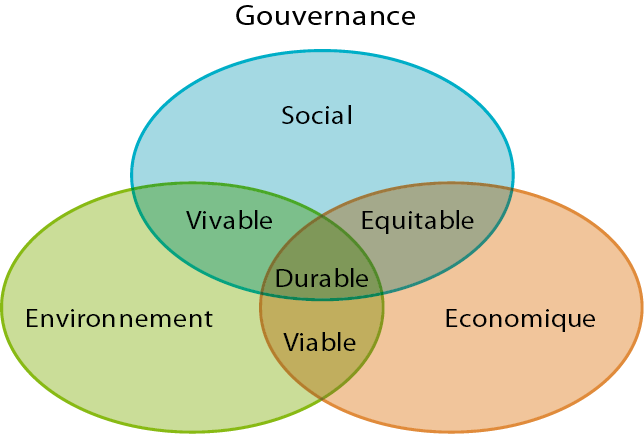



 Gouvernance | Jacques Grisé