Un guide essentiel pour comprendre et enseigner la gouvernance | En rappel


Plusieurs administrateurs et formateurs me demandent de leur proposer un document de vulgarisation sur le sujet de la gouvernance. J’ai déjà diffusé sur mon blogue un guide à l’intention des journalistes spécialisés dans le domaine de la gouvernance des sociétés à travers le monde. Il a été publié par le Global Corporate Governance Forum et International Finance Corporation (un organisme de la World Bank) en étroite coopération avec International Center for Journalists.

Je n’ai encore rien vu de plus complet et de plus pertinent sur la meilleure manière d’appréhender les multiples problématiques reliées à la gouvernance des entreprises mondiales. La direction de Global Corporate Governance Forum m’a fait parvenir le document en français le 14 février.

Qui dirige l’entreprise : Guide pratique de médiatisation du gouvernement d’entreprise — document en français


Ce guide est un outil pédagogique indispensable pour acquérir une solide compréhension des diverses facettes de la gouvernance des sociétés. Les auteurs ont multiplié les exemples de problèmes d’éthiques et de conflits d’intérêts liés à la conduite des entreprises mondiales.

On apprend aux journalistes économiques — et à toutes les personnes préoccupées par la saine gouvernance — à raffiner les investigations et à diffuser les résultats des analyses effectuées. Je vous recommande fortement de lire le document, mais aussi de le conserver en lieu sûr car il est fort probable que vous aurez l’occasion de vous en servir.

Vous trouverez ci-dessous quelques extraits de l’introduction à l’ouvrage. Bonne lecture !

Who’s Running the Company ? A Guide to Reporting on Corporate Governance

À propos du Guide

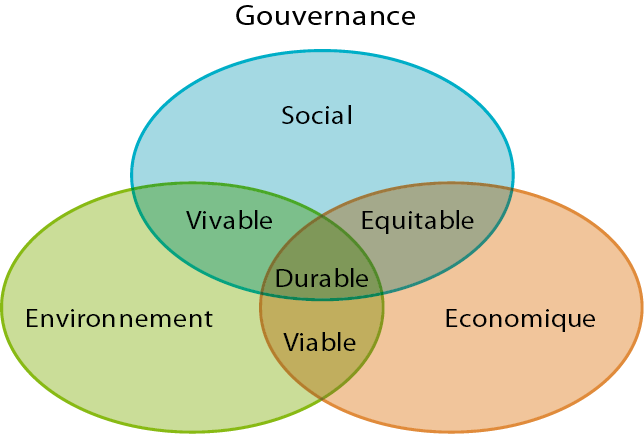
schema_DD_lightbox


« This Guide is designed for reporters and editors who already have some experience covering business and finance. The goal is to help journalists develop stories that examine how a company is governed, and spot events that may have serious consequences for the company’s survival, shareholders and stakeholders. Topics include the media’s role as a watchdog, how the board of directors functions, what constitutes good practice, what financial reports reveal, what role shareholders play and how to track down and use information shedding light on a company’s inner workings. Journalists will learn how to recognize “red flags,” or warning  signs, that indicate whether a company may be violating laws and rules. Tips on reporting and writing guide reporters in developing clear, balanced, fair and convincing stories.


Three recurring features in the Guide help reporters apply “lessons learned” to their own “beats,” or coverage areas:

– Reporter’s Notebook: Advise from successful business journalists

– Story Toolbox:  How and where to find the story ideas

– What Do You Know? Applying the Guide’s lessons

Each chapter helps journalists acquire the knowledge and skills needed to recognize potential stories in the companies they cover, dig out the essential facts, interpret their findings and write clear, compelling stories:

  1. What corporate governance is, and how it can lead to stories. (Chapter 1, What’s good governance, and why should journalists care?)
  2. How understanding the role that the board and its committees play can lead to stories that competitors miss. (Chapter 2, The all-important board of directors)
  3. Shareholders are not only the ultimate stakeholders in public companies, but they often are an excellent source for story ideas. (Chapter 3, All about shareholders)
  4. Understanding how companies are structured helps journalists figure out how the board and management interact and why family-owned and state-owned enterprises (SOEs), may not always operate in the best interests of shareholders and the public. (Chapter 4, Inside family-owned and state-owned enterprises)
  5. Regulatory disclosures can be a rich source of exclusive stories for journalists who know where to look and how to interpret what they see. (Chapter 5, Toeing the line: regulations and disclosure)
  6. Reading financial statements and annual reports — especially the fine print — often leads to journalistic scoops. (Chapter 6, Finding the story behind the numbers)
  7. Developing sources is a key element for reporters covering companies. So is dealing with resistance and pressure from company executives and public relations directors. (Chapter 7, Writing and reporting tips)

Each chapter ends with a section on Sources, which lists background resources pertinent to that chapter’s topics. At the end of the Guide, a Selected Resources section provides useful websites and recommended reading on corporate governance. The Glossary defines terminology used in covering companies and corporate governance ».

Here’s what Ottawa’s new rules for state-owned buyers may look like (business.financialpost.com)

The Vote is Cast: The Effect of Corporate Governance on Shareholder Value (greenbackd.com)

Effective Drivers of Good Corporate Governance (shilpithapar.com)

Guide pratique pour l’amélioration de la gouvernance des OSBL | Une primeur


Ayant collaboré à la réalisation du volume « Améliorer la gouvernance de votre OSBL » des auteurs Jean-Paul Gagné et Daniel Lapointe, j’ai obtenu la primeur de la publication d’un chapitre sur mon blogue en gouvernance.

Le volume a paru en mars. Pour vous donner un aperçu de cette importante publication sur la gouvernance des organisations sans but lucratif (OSBN), j’ai eu la permission des éditeurs, Éditions Caractère et Éditions Transcontinental, de publier l’intégralité du chapitre 4 qui porte sur la composition du conseil d’administration et le recrutement d’administrateurs d’OSBL.

Je suis donc très fier de vous offrir cette primeur et j’espère que le sujet vous intéressera suffisamment pour vous inciter à vous procurer cette nouvelle publication.

Vous trouverez, ci-dessous, un court extrait de la page d’introduction du chapitre 4. Je vous invite à cliquer sur le lien suivant pour avoir accès à l’intégralité du chapitre.


La composition du conseil d’administration et le recrutement d’administrateurs


Vous pouvez également feuilleter cet ouvrage en cliquant ici

Bonne lecture ! Vos commentaires sont les bienvenus.

__________________________________


Les administrateurs d’un OSBL sont généralement élus dans le cadre d’un processus électoral tenu lors d’une assemblée générale des membres. Ils peuvent aussi faire l’objet d’une cooptation ou être désignés en vertu d’un mécanisme particulier prévu dans une loi (tel le Code des professions).

L’élection des administrateurs par l’assemblée générale emprunte l’un ou l’autre des deux scénarios suivants:

1. Les OSBL ont habituellement des membres qui sont invités à une assemblée générale annuelle et qui élisent des administrateurs aux postes à pourvoir. Le plus souvent, les personnes présentes sont aussi appelées à choisir l’auditeur qui fera la vérification des états financiers de l’organisation pour l’exercice en cours.

2. Certains OSBL n’ont pas d’autres membres que leurs administrateurs. Dans ce cas, ces derniers se transforment une fois par année en membres de l’assemblée générale, élisent des administrateurs aux postes vacants et choisissent l’auditeur qui fera la vérification des états financiers de l’organisation pour l’exercice en cours.

ameliorezlagouvernancedevotreosbl

La cooptation autorise le recrutement d’administrateurs en cours d’exercice. Les personnes ainsi choisies entrent au CA lors de la première réunion suivant celle où leur nomination a été approuvée. Ils y siègent de plein droit, en dépit du fait que celle-ci ne sera entérinée qu’à l’assemblée générale annuelle suivante. La cooptation n’est pas seulement utile pour pourvoir rapidement aux postes vacants; elle a aussi comme avantage de permettre au conseil de faciliter la nomination de candidats dont le profil correspond aux compétences recherchées.

Dans les organisations qui élisent leurs administrateurs en assemblée générale, la sélection en fonction des profils déterminés peut présenter une difficulté : en effet, il peut arriver que les membres choisissent des administrateurs selon des critères qui ont peu à voir avec les compétences recherchées, telles leur amabilité, leur popularité, etc. Le comité du conseil responsable du recrutement d’administrateurs peut présenter une liste de candidats (en mentionnant leurs qualifications pour les postes à pourvoir) dans l’espoir que l’assemblée lui fasse confiance et les élise. Certains organismes préfèrent coopter en cours d’exercice, ce qui les assure de recruter un administrateur qui a le profil désiré et qui entrera en fonction dès sa sélection.

Quant à l’élection du président du conseil et, le cas échéant, du vice-président, du secrétaire et du trésorier, elle est généralement faite par les administrateurs. Dans les ordres professionnels, le Code des professions leur permet de déterminer par règlement si le président est élu par le conseil d’administration ou au suffrage universel des membres. Comme on l’a vu, malgré son caractère démocratique, l’élection du président au suffrage universel des membres présente un certain risque, puisqu’un candidat peut réussir à se faire élire à ce poste sans expérience du fonctionnement d’un CA ou en poursuivant un objectif qui tranche avec la mission, la vision ou encore le plan stratégique de l’organisation. Cet enjeu ne doit pas être pris à la légère par le CA. Une façon de minimiser ce risque est de faire connaître aux membres votants le profil recherché pour le président, profil qui aura été préalablement établi par le conseil. On peut notamment y inclure une expérience de conseil d’administration, ce qui aide à réduire la période d’apprentissage du nouveau président et facilite une transition en douceur.

La gouvernance en chiffres | EY


Voici un document appréciable et remarquable qui illustre les principales données sur la gouvernance des sociétés américaines en les présentant sous forme chiffrée. Cet article est paru dans Harvard Law School forum par Ann Yerger, directrice générale du « Center for Board Matters » d’Ernst & Young.

L’auteur a compilé les données de plus de 3 000 sociétés publiques aux États-Unis, en les présentant selon les 5 indices les plus importants : S&P 500, S&P MidCap 400, S&P SmallCap 600, S&P 1500 et Russell 3000.

On se pose souvent des questions sur le profil de la gouvernance, notamment sur la composition des CA ; l’étude répond bien à ces interrogations et est facile à comprendre.

La présentation sous forme de tableaux et d’infographies est très explicite.

Bonne lecture !

Corp-Gov

Board Composition

Board composition* S&P 500 S&P MidCap 400  S&P SmallCap 600  S&P 1500 Russell 3000
Age 62 years 63 years 62 years 62 years 61 years
Gender diversity 2 (21%) 2 (16%) 1 (14%) 2 (17%) 1 (14%)
Independence 85% 82% 81% 83% 79%
Tenure 9 years 9 years 9 years 9 years 8 years
* Numbers based on all directorships in each index; gender diversity data represents average number of women directors on a board (and the percentage this represents)

Board Meetings and Size

Board meetings and size S&P 500 S&P MidCap 400  S&P SmallCap 600  S&P 1500 Russell 3000
Board meetings 8 7 8 8 8
Board size 10.8 9.3 8.3 9.4 8.8

Board Leadership Structure

Board leadership structure* S&P 500 S&P MidCap 400  S&P SmallCap 600  S&P 1500 Russell 3000
Separate chair/CEO 47% 57% 61% 55% 56%
Independent chair 28% 37% 42% 36% 36%
Independent lead director 54% 51% 41% 48% 40%
* Percentage based on portion of index; data through 31 Dec 2015

Board Elections

Board elections* S&P 500 S&P MidCap 400  S&P SmallCap 600  S&P 1500 Russell 3000
Annual elections 91% 62% 55% 69% 60%
Majority voting in director elections 88% 60% 38% 62% 44%
* Percentage based on portion of index; data through 31 Dec 2015

Board and Executive Compensation

Board and executive compensation S&P 500 S&P MidCap 400  S&P SmallCap 600  S&P 1500 Russell 3000
Independent directors $291,987 $310,238 $171,120 $248,625 $226,053
CEO 3-yr average pay $12.4 million $6.2 million $3.3 million $7.1 million $5.6 million
NEO 3-yr average pay $4.7 million $2.2 million $1.2 million $2.6 million $2.1 million
Average pay ratio: CEO / NEO 2.6 times 2.8 times 2.8 times 2.7 times 2.7 times
* Numbers based on all directorships and executive positions in each index

Russell 3000 Opposition in Votes in Director Elections

Russell 3000: Opposition votes in director elections Full year 2015 Year to date 2016
Total elections 17,808 15,529
Average opposition votes received (support) 4.0% (96.0%) 4.1% (95.9%)
Russell 3000: Opposition votes received by board nominees Full year 2015 Year to date 2016
Directors with less than 80% support (% of nominees) 4.0% 4.0%
Number of directors 709 615
Directors with less than 50% support (% of nominees) 0.3% 0.3%
Number of directors 56 46

Say-on-Pay Proposals

Russell 3000: Say-on-Pay proposals voted Full year 2015 Year to date 2016
Total proposals voted 2,194 1,850
Proposals with less than 70% support (% of proposals) 8.0% 6.7%
Number of proposals 175 124
Proposals with less than 50% support (% of proposals) 2.6% 1.5%
Number of proposals 56 27
Say-on-Pay proposals vote support Full year 2015 Year to date 2016
S&P 500 92.0% 91.5%
S&P 1500 91.6% 91.8%
Russell 3000 91.3% 91.5%

Shareholder Proposals

Shareholder proposal categories Number voted Portion of voted proposals
Environmental/social 199 39%
Board-focused 163 32%
Compensation 56 11%
Anti-takeover/strategic 86 17%
Routine/other 7 1%
All 511 100%


Top shareholder proposals by vote support* Average support
Eliminate Classified Board 74.7%
Adopt Majority Vote to Elect Directors 68.5%
Eliminate Supermajority Vote 61.0%
Adopt/Amend Proxy Access 51.8%
Allow Shareholders to Call Special Meeting 41.9%
Allow Shareholders to Act by Written Consent 39.7%
Increase/Report on Board Diversity 35.4%
Address Corporate EEO/Diversity 32.5%
Appoint Independent Board Chair 29.2%
Review/Report on Climate Related Risks 28.6%
* Based on topics where at least 5 shareholder proposals went to a vote


Top shareholder proposals by number voted* Number voted
Adopt/Amend Proxy Access 76
Appoint Independent Board Chair 47
Review/Report on Lobbying Activities 40
Review/Report on Political Spending 29
Address Human Rights 23
Adopt Majority Vote to Elect Directors 22
Limit Post-Employment Executive Pay 21
Report on Sustainability 20
Allow Shareholders to Call Special Meeting 18
Review/Report on Climate Related Risks 18
* Based on topics where at least 5 shareholder proposals went to a vote

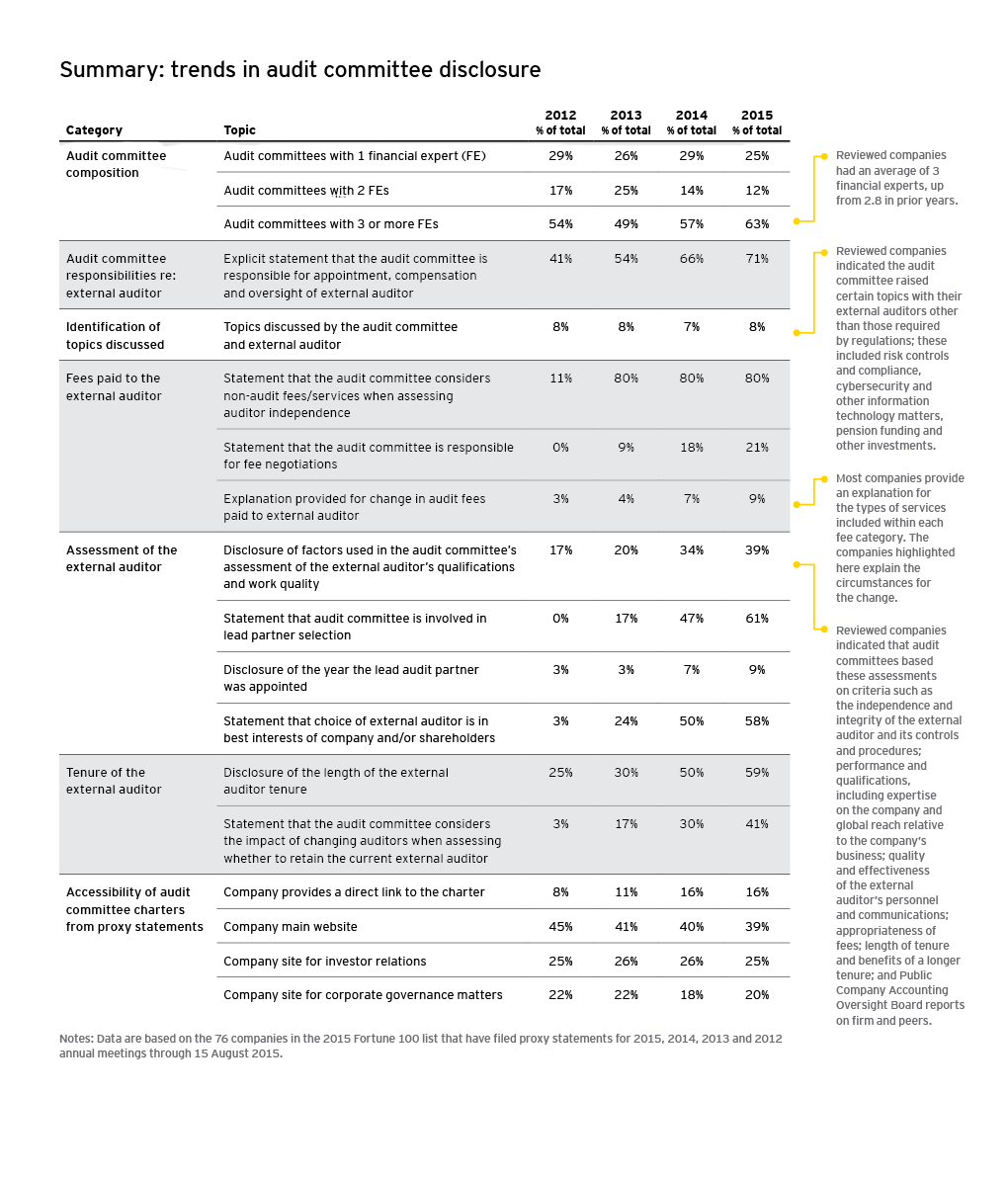
Trends in Audit Committee Disclosures

The data below was current as of August 2015 and appears in Audit committee reporting to shareholders in 2015.


ey

Shareholder Engagement Trends

The data below was current as of June 2016 and appears in Four takeaways from proxy season 2016 (discussed on the Forum here).

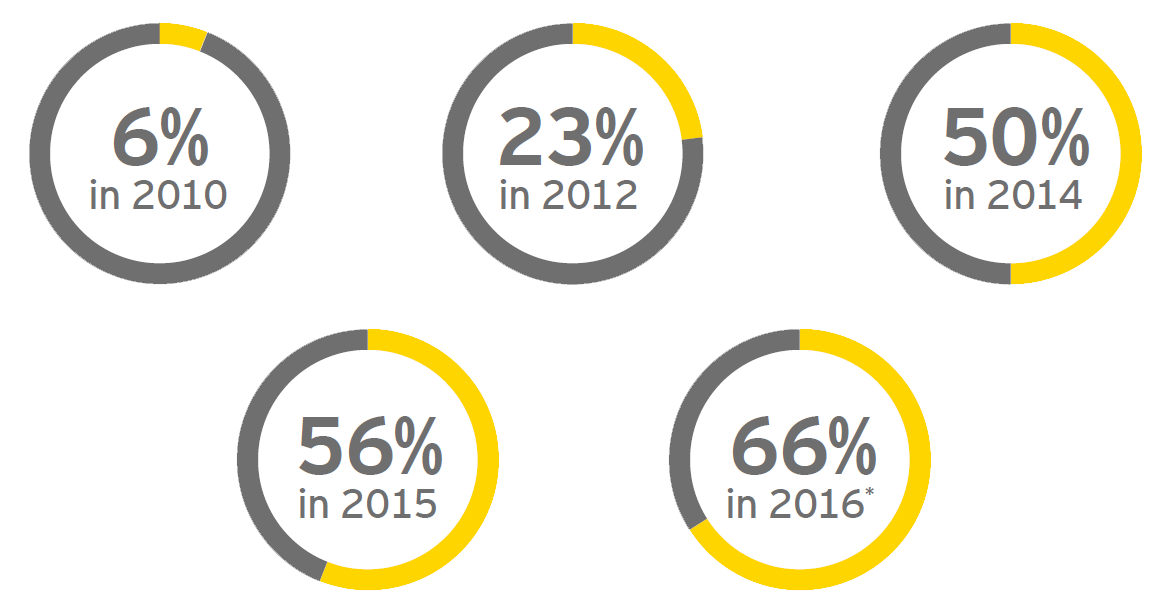
S&P 500 companies disclosing engaging with investors*

ey-sandp-500-companies-disclosing-engaging-with-investors-June-2016

*Percentages for 2016 based on 436 proxy statements for S&P 500 companies available as of June 10, 2016.

__________________________________

*Ann Yerger is an executive director at the EY Center for Board Matters at Ernst & Young LLP.

Une révision du volume de Richard Leblanc | Handbook of Board Governance


Voici un article de James McRitchie, publié dans Corporate governance, qui commente succinctement le dernier volume de Richard Leblanc.

Comme je l’ai déjà mentionné dans un autre billet, le livre de Richard Leblanc est certainement l’un des plus importants ouvrages (sinon le plus important) portant sur la gouvernance du conseil d’administration.

Je vous encourage à prendre connaissance de la revue de M. McRitchie, et à vous procurer cette bible.

Bonne lecture !


The Handbook of Board Governance


The Handbook of Board Governance


I continue my review of The Handbook of Board Governance: A Comprehensive Guide for Public, Private, and Not-for-Profit Board Member. With the current post, I provide comments on Part 2 of the book, What Makes for a Good Board? See prior introductory comments and those on Part 1. I suspect the book will soon be the most popular collection of articles of current interest in the field of corporate governance.

The Handbook of Board Governance: Director Independence, Competency, and Behavior


Dr. Richard Leblanc‘s chapter focuses on the above three elements that make an effective director. Regulations require independence but not industry expertise; both are important elements. Leblanc cites ways director independence is commonly compromised and how independence ‘of mind’ can be enhanced. He then applies most of the same principles to choosing external advisors.  Throughout the chapter he employees useful exhibits that reinforce the text with bullet points, tables, etc. for quick reference.

Director competency matrices have become relatively commonplace, although not ubiquitous. Leblanc not only provides a sample and scale, he reminds readers that being a CEO is an experience, not a competency and experience is not synonymous with competency. A sample board diversity matrix is also presented with measurable objectives for age, gender, ethnicity and geography.

Director behavior is the last topic in Leblanc’s chapter. Of course, each board needs to define how its directors are to act, subject to self- and peer-assessment but Leblanc’s ten behaviors is a good starting place:

  1. Independent Judgment
  2. Integrity
  3. Organizational Loyalty
  4. Commitment
  5. Capacity to Challenge
  6. Willingness to Act
  7. Conceptual Thinking Skills
  8. Communication Skills
  9. Teamwork Skills
  10. Influence Skills

That’s just one list of many. Leblanc’s examples and commentary on each adds color and depth. Under the UK’s Corporate Governance Code, director reviews are required to be facilitated by an independent provider every two or three years. Great advice for boards elsewhere as well. As Leblanc reminds readers:

« Proxy access and other renewal reforms are the direct result of boards steadfastly resisting director recruitment on the basis of competencies, the removal of underperforming directors; and the lack of boardroom refreshment, diversification, and renewal ».

Les dirigeants les mieux payés dirigent les entreprises les moins performantes


La très grande majorité des gens croient que la rémunération des dirigeants est associée à une performance supérieure de leurs sociétés. Ce n’est pas ce que l’étude récemment publiée dans le Wall Street Journal par Theo Francis* tend à démontrer.

L’étude de la firme de recherche MSCI auprès de 800 CEO indique que, depuis 2006, les CEO les moins bien payés produisent des rendements supérieurs pour leurs firmes ! La différence est assez significative.

Je vous laisse le soin de lire ce compte rendu et de me donner vos impressions.

Bonne lecture !

Best-Paid CEOs Run Some of Worst-Performing Companies


The best-paid CEOs tend to run some of the worst-performing companies and vice versa—even when pay and performance are measured over the course of many years, according to a new study.

The analysis, from corporate-governance research firm MSCI, examined the pay of some 800 CEOs at 429 large and midsize U.S. companies during the decade ending in 2014, and also looked at the total shareholder return of the companies during the same period.

MSCI found that $100 invested in the 20% of companies with the highest-paid CEOs would have grown to $265 over 10 years. The same amount invested in the companies with the lowest-paid CEOs would have grown to $367. The report is expected to be released as early as Monday.


Graphique salaires CEO


The results call into question a fundamental tenet of modern CEO pay: the idea that significant slugs of stock options or restricted stock, especially when the size of the award is also tied to company performance in other ways, helps drive better company performance, which in turn will improve results for shareholders. Equity incentive awards now make up 70% of CEO pay in the U.S.

“The highest paid had the worst performance by a significant margin,” said Ric Marshall, a senior corporate governance researcher at MSCI. “It just argues for the equity portion of CEO pay to be more conservative.”

Executive-pay critics have long said pay and performance could be better aligned, and in June, The Wall Street Journal reported little relationship between one-year pay and performance figures for the S&P 500. Most longer-term analyses have used considered three or five years at a time.

The MSCI study compared 10-year total shareholder return—stock appreciation plus dividends—and cumulative total CEO pay as reported in proxy-filing summary-compensation tables.

The study also examined pay and performance among companies within the same broad economic sectors and found similar results: The top-paid half of CEOs in a sector tended to run companies that performed worse than their peers, while the lower-paid half tended to outperform.

“Whether you look at the entire group or adjust by market-cap and sector, you really get very similar results,” Mr. Marshall.

One possible factor driving the results, the researchers concluded: Annual pay reviews and proxy disclosures, which discourage boards and executives from focusing on longer-term results. The report recommended that the Securities and Exchange Commission require disclosure of cumulative incentive pay over long periods, to help illustrate a CEO’s pay relative to longer-term performance.

__________________________

*Theo Francis covers corporate news for The Wall Street Journal from Washington, D.C., and specializes in using regulatory documents to write about complex financial, business, economic, legal and regulatory issues.

Énoncés de principes de gouvernance généralement reconnus


Voici une « lettre ouverte » publiée sur le forum de la Harvard Law School on Corporate Governance par un groupe d’éminents dirigeants de sociétés publiques (cotées) qui présente les principes de la saine gouvernance : « The Commonsense Principles of Corporate Governance »*.

Les principes sont regroupés en plusieurs thèmes :

  1. La composition du CA et la gouvernance interne
    1. Composition
    2. Élection des administrateurs
    3. Nomination des administrateurs
    4. Rémunération des administrateurs et la propriété d’actions
    5. Structure et fonctionnement des comités du conseil
    6. Nombre de mandats et âge de la retraite
    7. Efficacité des administrateurs
  2. Responsabilités des administrateurs
    1. Communication des administrateurs avec de tierces parties
    2. Activités cruciales du conseil : préparer les ordres du jour
  3. Le droit des actionnaires
  4. La reddition de comptes et la divulgation des activités
  5. Le leadership du conseil
  6. La planification de la relève managériale
  7. La rémunération de la direction
  8. Le rôle du gestionnaire des actifs des clients dans la gouvernance des sociétés


Bonne lecture ! Vos commentaires sont les bienvenus.


Commonsense Principles of Corporate Governance


sociétariat_gouvernance


The following is a series of corporate governance principles for public companies, their boards of directors and their shareholders. These principles are intended to provide a basic framework for sound, long-term-oriented governance. But given the differences among our many public companies—including their size, their products and services, their history and their leadership—not every principle (or every part of every principle) will work for every company, and not every principle will be applied in the same fashion by all companies.

I. Board of Directors—Composition and Internal Governance

a. Composition

  1. Directors’ loyalty should be to the shareholders and the company. A board must not be beholden to the CEO or management. A significant majority of the board should be independent under the New York Stock Exchange rules or similar standards.
  2. All directors must have high integrity and the appropriate competence to represent the interests of all shareholders in achieving the long-term success of their company. Ideally, in order to facilitate engaged and informed oversight of the company and the performance of its management, a subset of directors will have professional experiences directly related to the company’s business. At the same time, however, it is important to recognize that some of the best ideas, insights and contributions can come from directors whose professional experiences are not directly related to the company’s business.
  3. Directors should be strong and steadfast, independent of mind and willing to challenge constructively but not be divisive or self-serving. Collaboration and collegiality also are critical for a healthy, functioning board.
  4. Directors should be business savvy, be shareholder oriented and have a genuine passion for their company.
  5. Directors should have complementary and diverse skill sets, backgrounds and experiences. Diversity along multiple dimensions is critical to a high-functioning board. Director candidates should be drawn from a rigorously diverse pool.
  6. While no one size fits all—boards need to be large enough to allow for a variety of perspectives, as well as to manage required board processes—they generally should be as small as practicable so as to promote an open dialogue among directors.
  7. Directors need to commit substantial time and energy to the role. Therefore, a board should assess the ability of its members to maintain appropriate focus and not be distracted by competing responsibilities. In so doing, the board should carefully consider a director’s service on multiple boards and other commitments.

b. Election of directors

Directors should be elected by a majority of the votes cast “for” and “against/withhold” (i.e., abstentions and non-votes should not be counted for this purpose).

c. Nominating directors

  1. Long-term shareholders should recommend potential directors if they know the individuals well and believe they would be additive to the board.
  2. A company is more likely to attract and retain strong directors if the board focuses on big-picture issues and can delegate other matters to management (see below at II.b., “Board of Directors’ Responsibilities/Critical activities of the board; setting the agenda”).

d. Director compensation and stock ownership

  1. A company’s independent directors should be fairly and equally compensated for board service, although (i) lead independent directors and committee chairs may receive additional compensation and (ii) committee service fees may vary. If directors receive any additional compensation from the company that is not related to their service as a board member, such activity should be disclosed and explained.
  2. Companies should consider paying a substantial portion (e.g., for some companies, as much as 50% or more) of director compensation in stock, performance stock units or similar equity-like instruments. Companies also should consider requiring directors to retain a significant portion of their equity compensation for the duration of their tenure to further directors’ economic alignment with the long-term performance of the company.

e. Board committee structure and service

  1. Companies should conduct a thorough and robust orientation program for their new directors, including background on the industry and the competitive landscape in which the company operates, the company’s business, its operations, and important legal and regulatory issues, etc.
  2. A board should have a well-developed committee structure with clearly understood responsibilities. Disclosures to shareholders should describe the structure and function of each board committee.
  3. Boards should consider periodic rotation of board leadership roles (i.e., committee chairs and the lead independent director), balancing the benefits of rotation against the benefits of continuity, experience and expertise.

f. Director tenure and retirement age

  1. It is essential that a company attract and retain strong, experienced and knowledgeable board members.
  2. Some boards have rules around maximum length of service and mandatory retirement age for directors; others have such rules but permit exceptions; and still others have no such rules at all. Whatever the case, companies should clearly articulate their approach on term limits and retirement age. And insofar as a board permits exceptions, the board should explain (ordinarily in the company’s proxy statement) why a particular exception was warranted in the context of the board’s assessment of its performance and composition.
  3. Board refreshment should always be considered in order to ensure that the board’s skill set and perspectives remain sufficiently current and broad in dealing with fast-changing business dynamics. But the importance of fresh thinking and new perspectives should be tempered with the understanding that age and experience often bring wisdom, judgment and knowledge.

g. Director effectiveness

Boards should have a robust process to evaluate themselves on a regular basis, led by the non-executive chair, lead independent director or appropriate committee chair. The board should have the fortitude to replace ineffective directors.

II. Board of Directors’ Responsibilities

a. Director communication with third parties

  1. Robust communication of a board’s thinking to the company’s shareholders is important. There are multiple ways of going about it. For example, companies may wish to designate certain directors—as and when appropriate and in coordination with management—to communicate directly with shareholders on governance and key shareholder issues, such as CEO compensation. Directors who communicate directly with shareholders ideally will be experienced in such matters.
  2. Directors should speak with the media about the company only if authorized by the board and in accordance with company policy.
  3. In addition, the CEO should actively engage on corporate governance and key shareholder issues (other than the CEO’s own compensation) when meeting with shareholders.

b. Critical activities of the board; setting the agenda

  1. The full board (including, where appropriate, through the non-executive chair or lead independent director) should have input into the setting of the board agenda.
  2. Over the course of the year, the agenda should include and focus on the following items, among others:
    1. A robust, forward-looking discussion of the business.
    2. The performance of the current CEO and other key members of management and succession planning for each of them. One of the board’s most important jobs is making sure the company has the right CEO. If the company does not have the appropriate CEO, the board should act promptly to address the issue.
    3. Creation of shareholder value, with a focus on the long term. This means encouraging the sort of long-term thinking owners of a private company might bring to their strategic discussions, including investments that may not pay off in the short run.
    4. Major strategic issues (including material mergers and acquisitions and major capital commitments) and long-term strategy, including thorough consideration of operational and financial plans, quantitative and qualitative key performance indicators, and assessment of organic and inorganic growth, among others.
    5. The board should receive a balanced assessment on strategic fit, risks and valuation in connection with material mergers and acquisitions. The board should consider establishing an ad hoc Transaction Committee if significant board time is otherwise required to consider a material merger or acquisition. If the company’s stock is to be used in such a transaction, the board should carefully assess the company’s valuation relative to the valuation implied in the acquisition. The objective is to properly evaluate the value of what you are giving vs. the value of what you are getting.
    6. Significant risks, including reputational risks. The board should not be reflexively risk averse; it should seek the proper calibration of risk and reward as it focuses on the long-term interests of the company’s shareholders.
    7. Standards of performance, including the maintaining and strengthening of the company’s culture and values.
    8. Material corporate responsibility matters.
    9. Shareholder proposals and key shareholder concerns.
    10. The board (or appropriate board committee) should determine the best approach to compensate management, taking into account all the factors it deems appropriate, including corporate and individual performance and other qualitative and quantitative factors (see below at VII., “Compensation of Management”).
  3. A board should be continually educated on the company and its industry. If a Board feels it would be productive, outside experts and advisors should be brought in to inform directors on issues and events affecting the company.
  4. The board should minimize the amount of time it spends on frivolous or non-essential matters—the goal is to provide perspective and make decisions to build real value for the company and its shareholders.
  5. As authorized and coordinated by the board, directors should have unfettered access to management, including those below the CEO’s direct reports.
  6. At each meeting, to ensure open and free discussion, the board should meet in executive session without the CEO or other members of management. The independent directors should ensure that they have enough time to do this properly.
  7. The board (or appropriate board committee) should discuss and approve the CEO’s compensation.
  8. In addition to its other responsibilities, the Audit Committee should focus on whether the company’s financial statements would be prepared or disclosed in a materially different manner if the external auditor itself were solely responsible for their preparation.

III. Shareholder Rights

  1. Many public companies and asset managers have recently reviewed their approach to proxy access. Others have not yet undertaken such a review or may have one under way. Among the larger market capitalization companies that have adopted proxy access provisions, generally a shareholder (or group of up to 20 shareholders) who has continuously held a minimum of 3% of the company’s outstanding shares for three years is eligible to include on the company’s proxy statement nominees for a minimum of 20% (and, in some cases, 25%) of the company’s board seats. Generally, only shares in which the shareholder has full, unhedged economic interest count toward satisfaction of the ownership/holding period requirements. A higher threshold of ownership (e.g., 5%) often has been adopted for smaller market capitalization companies (e.g., less than $2 billion).
  2. Dual-class voting is not a best practice. If a company has dual-class voting, which sometimes is intended to protect the company from short-term behavior, the company should consider having specific sunset provisions based upon time or a triggering event, which eliminate dual-class voting. In addition, all shareholders should be treated equally in any corporate transaction.
  3. Written consent and special meeting provisions can be important mechanisms for shareholder action. Where they are adopted, there should be a reasonable minimum amount of outstanding shares required in order to prevent a small minority of shareholders from being able to abuse the rights or waste corporate time and resources.

IV. Public Reporting

  1. Transparency around quarterly financial results is important.
  2. Companies should frame their required quarterly reporting in the broader context of their articulated strategy and provide an outlook, as appropriate, for trends and metrics that reflect progress (or not) on long-term goals. A company should not feel obligated to provide earnings guidance—and should determine whether providing earnings guidance for the company’s shareholders does more harm than good. If a company does provide earnings guidance, the company should be realistic and avoid inflated projections. Making short-term decisions to beat guidance (or any performance benchmark) is likely to be value destructive in the long run.
  3. As appropriate, long-term goals should be disclosed and explained in a specific and measurable way.
  4. A company should take a long-term strategic view, as though the company were private, and explain clearly to shareholders how material decisions and actions are consistent with that view.
  5. Companies should explain when and why they are undertaking material mergers or acquisitions or major capital commitments.
  6. Companies are required to report their results in accordance with Generally Accepted Accounting Principles (“GAAP”). While it is acceptable in certain instances to use non-GAAP measures to explain and clarify results for shareholders, such measures should be sensible and should not be used to obscure GAAP results. In this regard, it is important to note that all compensation, including equity compensation, is plainly a cost of doing business and should be reflected in any non-GAAP measurement of earnings in precisely the same manner it is reflected in GAAP earnings.

V. Board Leadership (Including the Lead Independent Director’s Role)

  1. The board’s independent directors should decide, based upon the circumstances at the time, whether it is appropriate for the company to have separate or combined chair and CEO roles. The board should explain clearly (ordinarily in the company’s proxy statement) to shareholders why it has separated or combined the roles.
  2. If a board decides to combine the chair and CEO roles, it is critical that the board has in place a strong designated lead independent director and governance structure.
  3. Depending on the circumstances, a lead independent director’s responsibilities may include:
    1. Serving as liaison between the chair and the independent directors
    2. Presiding over meetings of the board at which the chair is not present, including executive sessions of the independent directors
    3. Ensuring that the board has proper input into meeting agendas for, and information sent to, the board
    4. Having the authority to call meetings of the independent directors
    5. Insofar as the company’s board wishes to communicate directly with shareholders, engaging (or overseeing the board’s process for engaging) with those shareholders
    6. Guiding the annual board self-assessment
    7. Guiding the board’s consideration of CEO compensation
    8. Guiding the CEO succession planning process

VI. Management Succession Planning

  1. Senior management bench strength can be evaluated by the board and shareholders through an assessment of key company employees; direct exposure to those employees is helpful in making that assessment.
  2. Companies should inform shareholders of the process the board has for succession planning and also should have an appropriate plan if an unexpected, emergency succession is necessary.

VII. Compensation of Management

  1. To be successful, companies must attract and retain the best people—and competitive compensation of management is critical in this regard. To this end, compensation plans should be appropriately tailored to the nature of the company’s business and the industry in which it competes. Varied forms of compensation may be necessary for different types of businesses and different types of employees. While a company’s compensation plans will evolve over time, they should have continuity over multiple years and ensure alignment with long-term performance.
  2. Compensation should have both a current component and a long-term component.
  3. Benchmarks and performance measurements ordinarily should be disclosed to enable shareholders to evaluate the rigor of the company’s goals and the goal-setting process. That said, compensation should not be entirely formula based, and companies should retain discretion (appropriately disclosed) to consider qualitative factors, such as integrity, work ethic, effectiveness, openness, etc. Those matters are essential to a company’s long-term health and ordinarily should be part of how compensation is determined.
  4. Companies should consider paying a substantial portion (e.g., for some companies, as much as 50% or more) of compensation for senior management in the form of stock, performance stock units or similar equity-like instruments. The vesting or holding period for such equity compensation should be appropriate for the business to further senior management’s economic alignment with the long-term performance of the company. With properly designed performance hurdles, stock options may be one element of effective compensation plans, particularly for the CEO. All equity grants (whether stock or options) should be made at fair market value, or higher, at the time of the grant, with particular attention given to any dilutive effect of such grants on existing shareholders.
  5. Companies should clearly articulate their compensation plans to shareholders. While companies should not, in the design of their compensation plans, feel constrained by the preferences of their competitors or the models of proxy advisors, they should be prepared to articulate how their approach links compensation to performance and aligns the interests of management and shareholders over the long term. If a company has well-designed compensation plans and clearly explains its rationale for those plans, shareholders should consider giving the company latitude in connection with individual annual compensation decisions.
  6. If large special compensation awards (not normally recurring annual or biannual awards but those considered special awards or special retention awards) are given to management, they should be carefully evaluated and—in the case of the CEO and other “Named Executive Officers” whose compensation is set forth in the company’s proxy statement—clearly explained.
  7. Companies should maintain clawback policies for both cash and equity compensation.

VIII. Asset Managers’ Role in Corporate Governance

Asset managers, on behalf of their clients, are significant owners of public companies, and, therefore, often are in a position to influence the corporate governance practices of those companies. Asset managers should exercise their voting rights thoughtfully and act in what they believe to be the long-term economic interests of their clients.

  1. Asset managers should devote sufficient time and resources to evaluate matters presented for shareholder vote in the context of long-term value creation. Asset managers should actively engage, as appropriate, based on the issues, with the management and/or board of the company, both to convey the asset manager’s point of view and to understand the company’s perspective. Asset managers should give due consideration to the company’s rationale for its positions, including its perspective on certain governance issues where the company might take a novel or unconventional approach.
  2. Given their importance to long-term investment success, proxy voting and corporate governance activities should receive appropriate senior-level oversight by the asset manager.
  3. Asset managers, on behalf of their clients, should evaluate the performance of boards of directors, including thorough consideration of the following:
    1. To the extent directors are speaking directly with shareholders, the directors’ (i) knowledge of their company’s corporate governance and policies and (ii) interest in understanding the key concerns of the company’s shareholders
    2. The board’s focus on a thoughtful, long-term strategic plan and on performance against that plan
  4. An asset manager’s ultimate decision makers on proxy issues important to long-term value creation should have access to the company, its management and, in some circumstances, the company’s board. Similarly, a company, its management and board should have access to an asset manager’s ultimate decision makers on those issues.
  5. Asset managers should raise critical issues to companies (and vice versa) as early as possible in a constructive and proactive way. Building trust between the shareholders and the company is a healthy objective.
  6. Asset managers may rely on a variety of information sources to support their evaluation and decision-making processes. While data and recommendations from proxy advisors may form pieces of the information mosaic on which asset managers rely in their analysis, ultimately, their votes should be based on independent application of their own voting guidelines and policies.
  7. Asset managers should make public their proxy voting process and voting guidelines and have clear engagement protocols and procedures.
  8. Asset managers should consider sharing their issues and concerns (including, as appropriate, voting intentions and rationales therefor) with the company (especially where they oppose the board’s recommendations) in order to facilitate a robust dialogue if they believe that doing so is in the best interests of their clients.

*The Commonsense Principles of Corporate Governance were developed, and are posted on behalf of, a group of executives leading prominent public corporations and investors in the U.S.

The Open Letter and key facts about the principles are also available here and here.

La gouvernance en Grande-Bretagne | Nouveau paradigme énoncé par Theresa May


Voici les éléments de la proposition de Theresa May eu égard à la nouvelle gouvernance corporative de la Grande-Bretagne.

Ce texte est de Martin Lipton de la firme Wachtell, Lipton, Rosen & Katz. C’est un résumé des principaux points évoqués aujourd’hui par la ministre.

Bonne lecture !

Corporate Governance—A New Paradigm from the U.K.


ShowImage


1. Stakeholder, not shareholder, governance.

2. Board diversity: consumers and workers to be added.

3. Protection from takeover for national champions like Cadbury and AstraZeneca.

4. Binding, not advisory, say-on-pay.

5. Long-term, not short-term, business strategy.

6. Greater corporate transparency.

7. Stricter antitrust.

8. Higher taxes and crack down on tax avoidance and evasion.

9. It is not anti-business to suggest that big business needs to change. Better governance will help these companies to take better decisions, for their own long-term benefit and that of the economy overall.

The full speech is attached.

Le fait de siéger à des CA externes augmente-t-il les chances de promotion d’un haut dirigeant dans son entreprise ?


Voici un article très intéressant, récemment publié dans Harvard Business Review par Steven Boivie, Scott D. Graffin, Abbie Oliver et Michael C. Withers, qui montre, de façon convaincante, que, pour un haut dirigeant, le fait de siéger à un CA externe augmente ses chances de promotion dans son entreprise.

Lorsque l’on sait que le travail des administrateurs des entreprises publiques (cotées) est de plus en plus exigeant, l’on peut se demander pourquoi un PDG (CEO) accepte de siéger à un conseil d’administration d’une autre entreprise !

Les auteurs de l’étude ont trouvé des réponses à cette question. Les hauts dirigeants des entreprises de la S&P 1500 qui siègent à d’autres CA augmentent de 44 % leurs chances d’accéder à un poste de CEO dans une entreprise de la S&P 1500, comparativement à leurs collègues qui ne siègent pas à d’autres CA. Et, même s’ils n’ont pas de promotion, la recherche montre que leur rémunération s’accroît de 13 %.

So what do these findings mean for today’s boards of directors and aspiring CEOs? The evidence shows that board appointments increase an executive’s visibility and give him/her access to unique contacts and learning opportunities. Further, these opportunities translate into tangible economic benefits, specifically promotions and raises, which help explain why a sane person would choose to sit on a board.

La recherche d’administrateurs avec un profil de CEO ou de haut dirigeant est de plus en plus fréquente et les firmes de recrutement considèrent que l’obtention de promotions est un signe de leadership notable.

Photo1-petit-poisson

L’étude conclut que, contrairement à la croyance populaire, le fait de siéger à des conseils constitue un atout pour un haut dirigeant, un moyen susceptible d’accroître ses opportunités de carrière.

Il semble bien que le haut dirigeant considère qu’il y a un avantage personnel réel à exercer la fonction d’administrateur dans une autre entreprise. Mais, le CA de l’entreprise sur lequel il siège en retire-t-il un avantage aussi appréciable ?

Ultimately board service is a key professional development tool in grooming potential CEOs that executives and boards alike are beginning to recognize and value.

Je vous invite à lire ce court article du HBR.

Bonne lecture !

Serving on Boards Helps Executives Get Promoted


More than 25 years ago, William Sahlman wrote the HBR article “Why Sane People Shouldn’t Serve on Public Boards,” in which he compared serving on a board to driving without a seatbelt, that it was just too risky—to their time, reputations, and finances—for too little reward.

Board service has always been very demanding. When Warren Buffett retired from Coca-Cola’s board in 2006, he said he no longer had the time necessary. When you consider all of the retreats, travel, reading, meeting prep time, transactions, and committee meetings involved, it is a wonder anyone serves at all.

So why would a busy executive agree to sit on a board? Why is there is a cottage industry of executive search firms focusing on “reverse board searches,” where they proactively work to place executives on outside corporate boards? What do executives gain from serving on boards?

This question was at the heart of a recent study we conducted that is forthcoming at the Academy of Management Journal. In an effort to explore executives’ motivations for serving on boards, we looked at how board service is evaluated in the executive labor market. Specifically we studied whether or not board service increased an executive’s likelihood of receiving a promotion, becoming a CEO, and/or receiving a pay increase.

We hypothesized that being a board director would help an executive in two main ways: First, sitting on a board serves as an important signal or “seal of approval,” for an executive. It means that other people think this executive has potential and value as a result of being selected to serve on a board. Second, board service is an avenue for an executive to gain access to unique knowledge, skills, and connections, so firms actively use external board appointments as a way to groom and develop executives. As Mary Cranston, former CEO and Chairman of Pillsbury, LLP said in an interview, “Being on that board really helped me develop as a CEO because I had another CEO to watch. It was an incredible leadership school for me. On a board you’re together a lot, and you’re working on problems together and you have a shared fiduciary duty, so it creates very tight bonds of friendship.” Similarly, Sempra CEO Debra L. Reed has also said that sitting on the board of another company is “better than an M.B.A.


*Steven Boivie is an associate professor in the Mays Business School at Texas A&M University, Scott D. Graffin is an associate professor at the University of Georgia’s Terry College of Business and also an International Research Fellow at Oxford University’s Centre for Corporate Reputation, Abbie G. Oliver is a doctoral candidate in strategic management at the University of Georgia’s Terry College of Business, Michael C. Withers is an assistant professor of management in the Mays Business School at Texas A&M University.

Les firmes de conseillers en rémunération contribuent-elles à la mise en place de plans salariaux excessifs des PDG ?


Avez-vous confiance dans les conseillers en rémunération pour faire des propositions salariales qui reflètent vraiment la contribution des dirigeants, et qui sont nécessaires pour la rétention des personnes ?

Dans quelle mesure ceux-ci sont-ils responsables de l’augmentation, souvent excessive, des rémunérations des dirigeants ?

Une étude, à laquelle le professeur Omesh Kini de Georgia State University a contribué, montre que, bien que les consultants soient embauchés par les comités de ressources humaines des CA, ceux-ci peuvent subir l’influence indirecte de la direction.

L’auteur décrit différentes approches de firmes de conseillers dans l’établissement des plans de rémunérations des dirigeants. Les firmes prétendent se différencier en proposant des « packages » de rémunération censés aligner les objectifs des actionnaires sur ceux des administrateurs. Les consultants sont sensibles aux effets du « say on pay » et, par conséquent, tentent d’élaborer des programmes de rémunération bien étoffés.

Plusieurs auteurs avancent que les firmes de conseils en rémunération ont tendance à utiliser des échantillons de comparaisons salariales susceptibles de justifier des rémunérations élevées, sinon excessives. Les auteurs suggèrent que les consultants souhaitent obtenir d’autres contrats avec l’entreprise (« repeat business ») et, en ce sens, elles agissent en fonction de leurs intérêts d’affaires.

L’étude montre que, contrairement à la croyance populaire, les firmes de conseillers en rémunération n’opèrent pas de façon très différente les unes des autres. En réalité, elles ne se distinguent pas par des approches particulières.

Les résultats de l’étude montrent que le choix de la firme de consultants a peu d’importance lorsque l’entreprise est reconnue pour ses solides mécanismes de gouvernance. En revanche, si la gouvernance de l’entreprise laisse à désirer (plusieurs administrateurs non indépendants, comité de RH peu soucieux, PDG omniprésent au CA, manque de leadership du président du conseil, CA peu informé, etc.), les firmes de consultants en rémunération sont plus enclines à proposer des plans salariaux généreux.

Les conclusions de cette étude indiquent que les mécanismes de gouvernance sont les facteurs les plus révélateurs dans l’établissement d’une rémunération juste et adéquate et que le choix d’une firme de conseillers particulière est très secondaire, sinon sans réels effets.

Vous trouverez, ci-dessous, un résumé de l’article paru récemment sur le forum du Harvard Law School.

Bonne lecture !

Do Compensation Consultants Have Distinct Styles ?


In our paper, Do Compensation Consultants have Distinct Styles?, which was recently made public on SSRN, we investigate whether the choice of a specific compensation consultant affects the compensation level and structure of top managers. This question is crucially important because existing studies that examine the compensation of CEOs show that compensation schemes influence their behavior and, consequently, impact firm economic outcomes. Compensation consultants are typically hired by the board of directors’ compensation committee to help craft compensation policies for the top managers of the corporation. Although they serve at the behest of the board, consultants can imprint their own distinct styles in fashioning compensation policies for a firm. We examine whether individual compensation consultants influence compensation policies in unique ways, i.e., exhibit distinct “styles,” after controlling for the known economic determinants of these policies.

Compensation consultants strive to signal distinct styles in a positive manner via their own advertising. For example, Towers Watson claims to “bring a unique portfolio of resources” to the table, with an emphasis on aligning board actions with shareholders (e.g., avoiding “say on pay” disputes). [1] Conversely, the media has reported that consulting advice varies little. For example, Towers Perrin was accused in 1997 of giving nearly identical reports on workplace diversity to multiple consulting clients across different industries. [2] Towers Perrin’s response was that all of the clients reported in the article faced similar economic forces and, therefore, received similar advice. [3] Thus, the anecdotal evidence on consultant style is mixed.

cadres

Compensation consultants have been in the direct line of fire from academics, board members, and policy makers. For example, Bebchuk and Fried (2014) take the view that managers will influence the employment of consultants who are likely to recommend higher pay and use their advice to justify excessive compensation. They further argue that compensation consultants, driven by their cross-selling incentives and/or desire to obtain repeat business, design compensation plans that provide excessive pay to managers. Thus, they suggest that compensation consultants worsen, rather than alleviate, agency problems within firms. Board members also claim that compensation consultants are to blame for spiraling CEO pay (Workforce, February 7, 2008). Finally, the former SEC Commissioner Roel C. Campos in a speech stated, “Another significant driver of excessive CEO compensation is the use of compensation consultants.” He goes on to add, “It is extremely difficult to avoid using high comparables, and consultants can pretty much find high comparable income data to support paying a high amount to the CEO. This is the case even if the consultant reports directly to the board.”

Thus, it is an open question whether individual compensation consultants: (i) have distinct styles and managers/boards hire consultants with a specific style, (ii) do not have distinct styles, but instead give compensation advice based purely on economic characteristics, and (iii) respond in a distinct manner to the incentives that arise from the governance environment of the client firm and their own self-interest. We investigate these issues in our paper. In the process, we attempt to shed light on whether compensation consultants facilitate compensation arrangements that reflect a competitive equilibrium in the level of pay and an efficient equilibrium in the incentives provided by optimal contracts (the “efficient” view) or that compensation contracts are written by captive boards and pliant compensation consultants to enhance the welfare of powerful CEOs (the “agency” view).

Our empirical tests detect little evidence suggesting that individual consultants have their own distinct styles. This evidence can be interpreted in two different ways. One possibility is that compensation consultants do not have any specific style and are perfect substitutes for each other. Consequently, the choice of compensation consultant will not matter much because their compensation advice will be grounded in the economic determinants of compensation level and structure and, thus, will be quite similar. An alternative possibility is that compensation consultants do not have distinct styles, but will work in their own self-interest by reacting to the incentives provided by the hiring firm. We distinguish between these views by finding style-like effects for the subsample of client firms with weak governance mechanisms, but not for the subsample of client firms with strong governance mechanisms. These results suggest that the choice of individual consultant does not matter in firms that have strong governance mechanisms. For the weak governance firms, we find that the style-like effects are largely driven by firms that hire consultants who do not have any non-compensation related businesses. In this subsample, both the lead return on assets and Tobin’s q for their client firms are significantly lower for consultants who recommend a higher salary or higher salary percentage as a proportion of total compensation. We also document style-like effects for the subsample of client firms with whom the consultant has existing business relationships unrelated to compensation consulting (conflicted consultants). Further, when these conflicted consultants recommend higher equity-based compensation, the client firms’ values as measured by their lead Tobin’s q are significantly lower and that these client firms tend to have higher accruals.

Our overall conclusion is that it does not matter which compensation consultant is hired by client firms with strong governance mechanisms in place because they will get similar advice based on their economic characteristics and environment. We conjecture that these client firms may still decide to choose a more reputable consultant because of the stronger certification role it plays, but they will likely have to pay higher fees for the services of this consultant. However, consistent with the Bebchuk and Fried (2104) view that consultants can aggravate agency problems within firms, we do observe style-like effects and some resultant perverse outcomes when there is greater potential for managers to take actions in their self-interest and/or when consultants have weaker incentives to provide objective advice. Thus, based on our subsample analysis, we find evidence consistent with both the “efficient” and “agency” views of compensation contracts.

The full paper is available for download here.

__________________________

Endnotes:

[1] See Towers Watson’s 2015 brochure, “Putting Clients First.”
(go back)

[2] “Familiar Refrain: Consultant’s Advice on Diversity was Anything But Diverse…” Wall Street Journal, 3/11/1997.
(go back)

[3] “TP responds to WSJ allegations.” Consultants News 27, 4/1/1997.
(go back)

Éthique, démission et parachutes dorés | une délicate alchimie


Le séminaire à la maîtrise de Gouvernance de l’entreprise (DRT-7022) dispensé  par Ivan Tchotourian*, professeur en droit des affaires de la Faculté de droit de l’Université Laval, entend apporter aux étudiants une réflexion originale sur les liens entre la sphère économico-juridique, la gouvernance des entreprises et les enjeux sociétaux actuels.

Le séminaire s’interroge sur le contenu des normes de gouvernance et leur pertinence dans un contexte de profonds questionnements des modèles économique et financier. Dans le cadre de ce séminaire, il est proposé aux étudiants de l’hiver 2016 d’avoir une expérience originale de publication de leurs travaux de recherche qui ont porté sur des sujets d’actualité de gouvernance d’entreprise.

Cette publication numérique entend contribuer au partage des connaissances en gouvernance à une large échelle. Le présent billet expose le résultat des recherches de Margaux Mortéo et de Léonie Pamerleau sur les liens entre la rémunération des dirigeants, les effets de la démission du PDG et les questions éthiques sous-jacentes.

Dans le cadre de ce billet, les auteurs reviennent sur l’affaire Volkswagen, notamment sur la légitimité des parachutes dorés dans les cas de démission « obligée ». Ils se questionnent également sur les valeurs éthiques dans de tels cas.

Bonne lecture ! Vos commentaires sont appréciés.


Éthique, démission et parachutes dorés | une délicate alchimie

par

Margaux Mortéo et Léonie Pamerleau


La légitimité des parachutes dorés : Le cas de Volkswagen

Volkswagen, une entreprise automobile leader sur le marché, a fait face à l’un des plus gros scandales dans ce secteur[1]. À la suite de la découverte des tricheries utilisées par la firme afin de commercialiser des véhicules diesel tout en cachant leurs effets polluants, le PDG de Volkswagen (Martin Winterkorn) a décidé le 23 septembre 2015 de démissionner de son poste. Or, cette démission, qui s’inscrit dans un processus quasi habituel des dirigeants face à de telles circonstances, ne semble pas si légitime au regard de certains aspects en raison de l’énorme parachute doré, aussi appelé golden parachute. Cela soulève en effet plusieurs aspects, notamment la responsabilité d’un dirigeant face à des dégâts causés à l’environnement et ce que cela engendre au regard de la réputation de l’entreprise, « actif stratégique le plus important sur le plan de la création de valeur » [2].

Une démission en quête de légitimité ?

Cette pratique est loin d’être un cas isolé. En juillet dernier, le PDG de Toshiba (Hisao Tanaka) a démissionné de ses fonctions suite à un scandale comptable [3]. Cette pratique démontre une quête de légitimité de la part des puissants dirigeants de sociétés. La raison est simple : ces derniers semblent entachés d’une immunité du fait de leur position, mais décident cependant de céder leur place pour le bien-être de leur entreprise, en portant sur leurs épaules le poids de l’entière responsabilité. Martin Winterkorn a même déclaré que son départ avait pour but de permettre à Volkswagen de « (…) prendre un nouveau départ ».

h-CEO-PAY-640x362

Cette décision, très médiatisée, tente de redorer l’image de l’entreprise, sans compter le fait que le PDG n’a pas tout perdu dans l’affaire.

L’étonnante attribution d’un parachute doré confortable

Démissionner semble honorable, mais quand Martin Winterkorn a la garantie d’obtenir près de 28,5 millions d’euros et de prétendre jusqu’à 60 millions d’euros, les objectifs de son départ peuvent avoir le mérite d’être revus. Bien que paraissant légitime, la démission d’un dirigeant de société cotée est souvent accompagnée de golden parachute. Ce qui est intéressant c’est que le contrat qui instituait Winterkorn à la tête d’une des plus importantes sociétés automobiles prévoyait que ce parachute doré lui serait accordé… quelles que soient les raisons de son départ.

La presse n’a pas manqué à son devoir d’information du public en dénonçant cette situation d’autant plus que « (…) les parachutes dorés ainsi que les bonus et primes des dirigeants sont de plus en plus élevés et dépassent ce que l’on peut imaginer » [4] et que l’échec (et le départ) d’un dirigeant fait « (…) partie des risques normaux du métier de patron » [5].

Face à d’énormes scandales, comme celui de Volkswagen, il est normal de se questionner sur la légitimité de telles sommes. Bien que le dirigeant ait pour ambition un nouveau départ de la société, pourquoi dans ce cas bénéficier de bonus qui coûtent à la société ? L’illusion est bonne, mais elle n’est somme toute pas parfaite. Martin Winterkorn a laissé croire que son intérêt n’était porté que vers les actionnaires, les administrateurs et les parties prenantes, mais le fait de pouvoir prétendre à 60 millions d’euros remet tout en cause.

Et l’éthique dans tout cela ?

Si la loi permet de telles sommes de départ, et ce même en cas de fraude, quand est-il de l’éthique ? Ces indemnités de départ, quel que soit leur nom sont-elles légitimes dans un contexte de prise de conscience de la responsabilité sociétale des entreprises (RSE) ? Les parties prenantes sont-elles respectées face à ce genre de comportement ?

Sachant qu’à l’heure actuelle il est impossible d’ignorer complètement les enjeux entourant la RSE, il est normal de se questionner relativement à la légitimité de parachutes dorés [6]. Dans le cas de Volkswagen plus précisément, il est possible de voir les actionnaires se lever et tenter d’empêcher le président d’obtenir son golden parachute, notamment au regard des résultats boursiers moyens de l’entreprise [7].

Vont-ils le faire ? Ne sont-ce pas aux administrateurs eux-mêmes à réagir [8] ? Tant de questions et d’interrogations en réponse au scandale du géant automobile allemand restent en attente de réponses.


[1] Frank Zeller, « Tests manipulés : Volkswagen savait », LaPresse, 27 septembre 2015, en ligne : http://auto.lapresse.ca/actualites/volkswagen/201509/27/01-4904281-tests-manipules-volkswagen-savait.php (consulté le 30 novembre 2015).

[2] Olivier Mondet, « La réputation de l’entreprise est-elle un actif spécifique ? », CREG Versailles, vendredi 21 mars 2014, en ligne : http://www.creg.ac-versailles.fr/spip.php?article732 (consulté le 30 novembre 2015).

[3] « Démission du patron de Toshiba, impliqué dans un vaste scandale comptable », L’OBS à la une, 21 juillet 2015, en ligne : http://tempsreel.nouvelobs.com/topnews/20150721.AFP4308/scandale-toshiba-demission-du-pdg-hisao-tanaka-et de-deux-de-ses-predecesseurs.html (consulté le 30 novembre 2015).

[4] Ivan Tchotourian, « Une décennie d’excès des dirigeants en matière de rémunération : repenser la répartition des pouvoirs dans l’entreprise : une solution perse porteuse de risques », Paris, LGDJ, 2011, p. 9, en ligne : https://papyrus.bib.umontreal.ca/xmlui/bitstream/handle/1866/5208/ChapitreRemunerationetPouvoirs2011_IT.pdf (consulté le 10 décembre 2015).

[5] J. El Ahdab, « Les parachutes dorés et autres indemnités conventionnelles de départ des dirigeants : approche pluridisciplinaire et comparée », Rev. Sociétés, 2004, p. 18.

[6] Christine Neau-Leduc, « La responsabilité sociale de l’entreprise : quels enjeux juridique ? » Droit social, 2006, p. 956.

[7] Jena McGregor, « Outgoing Volkswagen CEO’s exit package could top $67 million », Washington Post, 24 septembre 2015.

[8] « Boards are responsible for limiting excess pay », Financial Times, 17 avril 2016, en ligne : http://www.ft.com/cms/s/194a5de6-02fa-11e6-af1d-c47326021344, Authorised=false.html?siteedition=uk&_i_location=http%3A%2F%2Fwww.ft.com%2Fcms%2Fs%2F0%2F194a5de6-02fa-11e6-af1d-c47326021344.html%3Fsiteedition%3Duk&_i_referer=&classification=conditional_standard&iab=barrier-app#ixzz4677JCobn (consulté le 18 avril 2015).

______________________

*Ivan Tchotourian, professeur en droit des affaires, codirecteur du Centre d’Études en Droit Économique (CÉDÉ), membre du Groupe de recherche en droit des services financiers (www.grdsf.ulaval.ca), Faculté de droit, Université Laval.

Les dix (10) billets vedettes sur mon blogue en gouvernance au premier trimestre de 2016


Voici une liste des billets en gouvernance les plus populaires publiés sur mon blogue au cours du dernier trimestre se terminant le 31 mars 2016.

Cette liste constitue, en quelque sorte, un sondage de l’intérêt manifesté par des milliers de personnes sur différents thèmes de la gouvernance des sociétés. On y retrouve des points de vue bien étayés sur des sujets d’actualité relatifs aux conseils d’administration.

Que retrouve-t-on dans ce blogue et quels en sont les objectifs?

Ce blogue fait l’inventaire des documents les plus pertinents et les plus récents en gouvernance des entreprises. La sélection des billets est le résultat d’une veille assidue des articles de revue, des blogues et des sites web dans le domaine de la gouvernance, des publications scientifiques et professionnelles, des études et autres rapports portant sur la gouvernance des sociétés, au Canada et dans d’autres pays, notamment aux États-Unis, au Royaume-Uni, en France, en Europe, et en Australie.

ECH20163057_1

Je fais un choix parmi l’ensemble des publications récentes et pertinentes et je commente brièvement la publication.

L’objectif de ce blogue est d’être la référence en matière de documentation en gouvernance dans le monde francophone, en fournissant au lecteur une mine de renseignements récents (les billets) ainsi qu’un outil de recherche simple et facile à utiliser pour répertorier les publications en fonction des catégories les plus pertinentes.

Quelques statistiques à propos du blogue Gouvernance | Jacques Grisé

Ce blogue a été initié le 15 juillet 2011 et, à date, il a accueilli plus de 170000 visiteurs. Le blogue a progressé de manière tout à fait remarquable et, au 31 décembre 2015, il était fréquenté par plusieurs milliers de visiteurs par mois. Depuis le début, j’ai œuvré à la publication de 1305 billets.

En 2016, j’estime qu’environ 5000 personnes par mois visiteront le blogue afin de s’informer sur diverses questions de gouvernance. À ce rythme, on peut penser qu’environ 60000 personnes visiteront le site du blogue en 2016. 

On note que 44 % des billets sont partagés par l’intermédiaire de LinkedIn et 45 % par différents moteurs de recherche. Les autres réseaux sociaux (Twitter, Facebook et Tumblr) se partagent 11 % des références.

Voici un aperçu du nombre de visiteurs par pays :

  1. Canada (64 %)
  2. France, Suisse, Belgique (20 %)
  3. Maghreb (Maroc, Tunisie, Algérie) (5 %)
  4. Autres pays de l’Union européenne (3 %)
  5. États-Unis (3 %)
  6. Autres pays de provenance (5 %)

Il y a deux ans, le blogue Gouvernance | Jacques Grisé a été inscrit dans deux catégories distinctes du concours canadien Made in Blog (MiB Awards) : Business et Marketing et médias sociaux. Le blogue a été retenu parmi les dix (10) finalistes à l’échelle canadienne dans chacune de ces catégories, le seul en gouvernance. Il n’y avait pas de concours en 2015.

Vos commentaires sont toujours grandement appréciés. Je réponds toujours à ceux-ci.


N.B. Vous pouvez vous inscrire ou faire des recherches en allant au bas de cette page.


Bonne lecture !

1.      Cinq (5) principes simples et universels de saine gouvernance ?
2.      Comment un bon président de CA se prépare-t-il pour sa réunion ?
3.      Composition du conseil d’administration d’OSBL et recrutement d’administrateurs | Une primeur
4.      Le rôle du comité exécutif versus le rôle du conseil d’administration
5.      Document complet de KPMG sur les bonnes pratiques de gouvernance et de gestion d’un CA | The Directors Toolkit
6.      Une formation en éthique 2.0 pour les conseils d’administration
7.      La nouvelle réalité des comités de gouvernance des conseils d’administration
8.      Dix thèmes majeurs pour les administrateurs en 2016 | Harvard Law School Forum on Corporate Governance
9.      Un guide essentiel pour comprendre et enseigner la gouvernance | En reprise

10.  L’utilisation des huis clos lors des sessions de C.A.

Modèle d’affaires hasardeux et gouvernance désastreuse à la société canadienne Valeant


Voici un article récemment publié dans The Economist, qui met en évidence les énormes faiblesses de la gouvernance corporative de Valeant, l’un des « fleurons » de l’industrie pharmaceutique canadienne.

Selon le magazine, il s’agit du plus désastreux constat d’échec d’une firme cotée à la bourse de New York depuis la faillite de Lehman Brothers en 2008 !

À part un modèle d’affaires déficient et douteux, quelles sont les leçons à tirer pour les conseils d’administration de sociétés publiques ?

Les auteurs insistent sur les problèmes de contrôle interne, la faiblesse notoire du conseil d’administration, les interventions opportunistes des actionnaires activistes, notamment Jeffrey Ubben de ValueAct et Bill Ackman de Pershing Square, qui détiennent quatre des douze sièges du conseil d’administration. À lui seul Pershing Square détient 9 % des actions et son président Bill Ackman vient de joindre le CA.

Un article paru hier dans Canadian Business montre encore plus clairement comment l’inefficacité du conseil d’administration est à l’origine des problèmes de Valeant (Why the trouble at Valeant starts with its board of directors).

Vous trouverez, ci-dessous, le paragraphe introductif de l’article paru dans The Economist.

Until recently, America hadn’t had a spectacular corporate disaster since Lehman Brothers in 2008. But Valeant, a Canadian but New York-listed drug firm, now meets all of the tests: a bad business model, accounting problems, acquisitions, debt, an oddly low tax rate, a weak board, credulous analysts, and managers with huge pay packets and a mentality of denial. The result has been a $75 billion loss for shareholders and, possibly, a default on $31 billion of debt.

Je vous invite à lire la suite de cet article, notamment les trois leçons que nous devrions en retirer.

Bonne lecture !


He who would Valeant be | Corporate Governance


On March 21st Valeant announced that Michael Pearson, its CEO, was leaving.

Valeant’s business model was buying other drug firms, cutting costs and yanking up prices. Since 2010 it has done $35 billion of deals, mainly financed by debt. At a time when Americans face stagnant living standards, a strategy based on squeezing customers was bound to encounter political hostility—“I’m going after them,” Hillary Clinton has vowed.

Valeant added to this mix a tendency towards evasiveness. In October investigative reporters revealed its murky relationship with a drugs dispensary, Philidor, which it consolidated into its accounts yet did not control. The relationship was severed but the Securities and Exchange Commission is still investigating. Federal prosecutors are also looking into various of the company’s practices. On Christmas Eve Michael Pearson, Valeant’s CEO and architect, went into hospital with pneumonia. On February 28th Mr Pearson (total pay awarded of $55m since 2012, according to Bloomberg) returned to work, welcomed back by the chairman for his “vision and execution”.


The facts that have emerged in March suggest that Mr Pearson should have been fired. Profit targets have been cut by 24% compared with October’s. The accounts will be restated and the filing of an annual report delayed. The results released on March 15th contain neither a full cash-flow statement nor a balance-sheet, but it appears that Valeant has been generating only just enough cash to pay its $1.6 billion interest bill this year. As suppliers and customers get wary, its cashflow may fall, leading to a default.

There are three lessons. First, boards matter: the managers should have been removed in October. Second, disasters happen in plain sight. Valeant issued $1.45 billion of shares in March 2015, when 90% of Wall Street analysts covering its shares rated them a “buy”. Yet as early as 2014 a rival firm, Allergan, had made an outspoken attack on Valeant’s finances, the thrust of which has been proved correct.

The final lesson is that “activist” investors, who aim to play a hands-on role at the firms that they invest in, have no monopoly on wisdom. Jeffrey Ubben of ValueAct and Bill Ackman of Pershing Square both own chunks of Valeant and have supported it. Mr Ackman is at present trying to consolidate America’s railway system. Mr Ubben is trying to shake up Rolls-Royce, a British aerospace firm. After Valeant, why should anyone listen to what they say?

_____________________________

Pour en connaître davantage sur la société Valeant et sur le rôle des administrateurs : 

How Valeant challenged convention—for better, then for worse

Valeant CEO stepping down, company blames former CFO for misstated earnings

Four ways CEOs can win back the public’s trust

Four ways to build a better corporate board of directors

How corporate boards can set executive pay more fairly

What are corporate boards ethically obligated to know?

How to get corporate boards to think longer-term

How to make corporate boards more diverse

Un guide essentiel pour comprendre et enseigner la gouvernance | En reprise


Plusieurs administrateurs et formateurs me demandent de leur proposer un document de vulgarisation sur le sujet de la gouvernance. J’ai déjà diffusé sur mon blogue un guide à l’intention des journalistes spécialisés dans le domaine de la gouvernance des sociétés à travers le monde. Il a été publié par le Global Corporate Governance Forum et International Finance Corporation (un organisme de la World Bank) en étroite coopération avec International Center for Journalists.

Je n’ai encore rien vu de plus complet et de plus pertinent sur la meilleure manière d’appréhender les multiples problématiques reliées à la gouvernance des entreprises mondiales. La direction de Global Corporate Governance Forum m’a fait parvenir le document en français le 14 février.

Qui dirige l’entreprise : Guide pratique de médiatisation du gouvernement d’entreprise — document en français


Ce guide est un outil pédagogique indispensable pour acquérir une solide compréhension des diverses facettes de la gouvernance des sociétés. Les auteurs ont multiplié les exemples de problèmes d’éthiques et de conflits d’intérêts liés à la conduite des entreprises mondiales.

On apprend aux journalistes économiques — et à toutes les personnes préoccupées par la saine gouvernance — à raffiner les investigations et à diffuser les résultats des analyses effectuées. Je vous recommande fortement de lire le document, mais aussi de le conserver en lieu sûr car il est fort probable que vous aurez l’occasion de vous en servir.

Vous trouverez ci-dessous quelques extraits de l’introduction à l’ouvrage. Bonne lecture !

Who’s Running the Company ? A Guide to Reporting on Corporate Governance

À propos du Guide

schema_DD_lightbox


« This Guide is designed for reporters and editors who already have some experience covering business and finance. The goal is to help journalists develop stories that examine how a company is governed, and spot events that may have serious consequences for the company’s survival, shareholders and stakeholders. Topics include the media’s role as a watchdog, how the board of directors functions, what constitutes good practice, what financial reports reveal, what role shareholders play and how to track down and use information shedding light on a company’s inner workings. Journalists will learn how to recognize “red flags,” or warning  signs, that indicate whether a company may be violating laws and rules. Tips on reporting and writing guide reporters in developing clear, balanced, fair and convincing stories.


Three recurring features in the Guide help reporters apply “lessons learned” to their own “beats,” or coverage areas:

– Reporter’s Notebook: Advise from successful business journalists

– Story Toolbox:  How and where to find the story ideas

– What Do You Know? Applying the Guide’s lessons

Each chapter helps journalists acquire the knowledge and skills needed to recognize potential stories in the companies they cover, dig out the essential facts, interpret their findings and write clear, compelling stories:

  1. What corporate governance is, and how it can lead to stories. (Chapter 1, What’s good governance, and why should journalists care?)
  2. How understanding the role that the board and its committees play can lead to stories that competitors miss. (Chapter 2, The all-important board of directors)
  3. Shareholders are not only the ultimate stakeholders in public companies, but they often are an excellent source for story ideas. (Chapter 3, All about shareholders)
  4. Understanding how companies are structured helps journalists figure out how the board and management interact and why family-owned and state-owned enterprises (SOEs), may not always operate in the best interests of shareholders and the public. (Chapter 4, Inside family-owned and state-owned enterprises)
  5. Regulatory disclosures can be a rich source of exclusive stories for journalists who know where to look and how to interpret what they see. (Chapter 5, Toeing the line: regulations and disclosure)
  6. Reading financial statements and annual reports — especially the fine print — often leads to journalistic scoops. (Chapter 6, Finding the story behind the numbers)
  7. Developing sources is a key element for reporters covering companies. So is dealing with resistance and pressure from company executives and public relations directors. (Chapter 7, Writing and reporting tips)

Each chapter ends with a section on Sources, which lists background resources pertinent to that chapter’s topics. At the end of the Guide, a Selected Resources section provides useful websites and recommended reading on corporate governance. The Glossary defines terminology used in covering companies and corporate governance ».

Here’s what Ottawa’s new rules for state-owned buyers may look like (business.financialpost.com)

The Vote is Cast: The Effect of Corporate Governance on Shareholder Value (greenbackd.com)

Effective Drivers of Good Corporate Governance (shilpithapar.com)

Composition du conseil d’administration d’OSBL et recrutement d’administrateurs


Ayant collaboré à la réalisation du volume « Améliorer la gouvernance de votre OSBL » des auteurs Jean-Paul Gagné et Daniel Lapointe, j’ai obtenu la primeur de la publication d’un chapitre sur mon blogue en gouvernance.

Pour vous donner un aperçu de cette importante publication sur la gouvernance des organisations sans but lucratif (OSBN), j’ai eu la permission des éditeurs, Éditions Caractère et Éditions Transcontinental, de publier l’intégralité du chapitre 4 qui porte sur la composition du conseil d’administration et le recrutement d’administrateurs d’OSBL.

Je suis heureux de vous offrir cette primeur et j’espère que le sujet vous intéressera suffisamment pour vous inciter à vous procurer cette nouvelle publication.

Vous trouverez, ci-dessous, un court extrait de la page d’introduction du chapitre 4. Je vous invite à cliquer sur le lien suivant pour avoir accès à l’intégralité du chapitre.


La composition du conseil d’administration et le recrutement d’administrateurs


Vous pouvez également feuilleter cet ouvrage en cliquant ici

Bonne lecture ! Vos commentaires sont les bienvenus.

__________________________________


Les administrateurs d’un OSBL sont généralement élus dans le cadre d’un processus électoral tenu lors d’une assemblée générale des membres. Ils peuvent aussi faire l’objet d’une cooptation ou être désignés en vertu d’un mécanisme particulier prévu dans une loi (tel le Code des professions).

L’élection des administrateurs par l’assemblée générale emprunte l’un ou l’autre des deux scénarios suivants:

1. Les OSBL ont habituellement des membres qui sont invités à une assemblée générale annuelle et qui élisent des administrateurs aux postes à pourvoir. Le plus souvent, les personnes présentes sont aussi appelées à choisir l’auditeur qui fera la vérification des états financiers de l’organisation pour l’exercice en cours.

2. Certains OSBL n’ont pas d’autres membres que leurs administrateurs. Dans ce cas, ces derniers se transforment une fois par année en membres de l’assemblée générale, élisent des administrateurs aux postes vacants et choisissent l’auditeur qui fera la vérification des états financiers de l’organisation pour l’exercice en cours.

ameliorezlagouvernancedevotreosbl

La cooptation autorise le recrutement d’administrateurs en cours d’exercice. Les personnes ainsi choisies entrent au CA lors de la première réunion suivant celle où leur nomination a été approuvée. Ils y siègent de plein droit, en dépit du fait que celle-ci ne sera entérinée qu’à l’assemblée générale annuelle suivante. La cooptation n’est pas seulement utile pour pourvoir rapidement aux postes vacants; elle a aussi comme avantage de permettre au conseil de faciliter la nomination de candidats dont le profil correspond aux compétences recherchées.

Dans les organisations qui élisent leurs administrateurs en assemblée générale, la sélection en fonction des profils déterminés peut présenter une difficulté : en effet, il peut arriver que les membres choisissent des administrateurs selon des critères qui ont peu à voir avec les compétences recherchées, telles leur amabilité, leur popularité, etc. Le comité du conseil responsable du recrutement d’administrateurs peut présenter une liste de candidats (en mentionnant leurs qualifications pour les postes à pourvoir) dans l’espoir que l’assemblée lui fasse confiance et les élise. Certains organismes préfèrent coopter en cours d’exercice, ce qui les assure de recruter un administrateur qui a le profil désiré et qui entrera en fonction dès sa sélection.

Quant à l’élection du président du conseil et, le cas échéant, du vice-président, du secrétaire et du trésorier, elle est généralement faite par les administrateurs. Dans les ordres professionnels, le Code des professions leur permet de déterminer par règlement si le président est élu par le conseil d’administration ou au suffrage universel des membres. Comme on l’a vu, malgré son caractère démocratique, l’élection du président au suffrage universel des membres présente un certain risque, puisqu’un candidat peut réussir à se faire élire à ce poste sans expérience du fonctionnement d’un CA ou en poursuivant un objectif qui tranche avec la mission, la vision ou encore le plan stratégique de l’organisation. Cet enjeu ne doit pas être pris à la légère par le CA. Une façon de minimiser ce risque est de faire connaître aux membres votants le profil recherché pour le président, profil qui aura été préalablement établi par le conseil. On peut notamment y inclure une expérience de conseil d’administration, ce qui aide à réduire la période d’apprentissage du nouveau président et facilite une transition en douceur.

La rémunération du PDG est liée à l’indépendance du président du conseil !


Vous trouverez, ci-dessous, les conclusions d’une étude menées par ISS concernant l’influence de la structure de leadership du CA sur la rémunération globale des CEO d’entreprises américaines.

On sait que dans les entreprises publiques (cotées en bourse) aux É.U., 51 % persistent à combiner les deux rôles de président du CA et de CEO (en baisse de 3 points depuis 2014).

La firme de conseil en votation ISS recommande depuis de nombreuses années aux entreprises de séparer les fonctions de président du conseil et président et de chef de la direction (CEO).

ISS prône l’indépendance des administrateurs des CA, notamment celle du président du conseil, comme indice d’une bonne gouvernance. Les résultats ont cependant souvent été mitigés eu égard à la relation entre l’indépendance du président du conseil et la performance de l’entreprise.

Une analyse d’ISS auprès de 484 entreprises, sur une période de trois ans, montre les résultats suivants eu égard à l’influence du leadership du conseil sur la rémunération du président de l’entreprise (CEO). Ainsi, l’étude montre que lorsque le président du CA est une personne interne de l’organisation, la rémunération du CEO est :

(1) 13 % plus élevée que lorsque le président combine les deux rôles ;

(2) 38 % plus élevée que lorsque le président est un administrateur désigné ;

(3) 42 % plus élevée que lorsque le président est un administrateur indépendant.

Sur la base de résultats tels que ceux-ci, la firme ISS considère qu’il est dans l’intérêt supérieur des actionnaires d’avoir une structure de leadership du conseil avec un administrateur indépendant comme président.

L’article publié par la firme juridique Cooley et paru sur le site de Lexology* donne les détails de l’étude et fait état de deux autres études qui indiquent que la performance de l’entreprise n’est pas significativement liée au modèle de gouvernance en vigueur. Cependant, ISS constate que la rémunération du CEO est fortement liée à l’indépendance du président du conseil.

Voici le texte de cet article. Quel est votre point de vue à ce sujet ?

Bonne lecture !


ISS study shows board leadership structure affects CEO compensation


According to a new report from ISS, the structure of board leadership plays a significant role in relative levels of CEO compensation. Combining the CEO and board chair titles is still the most prevalent leadership structure among S&P 500 companies, with 51% of companies combined the roles in 2015, a slight decline from 54% in 2014. However, the study found, when it comes to CEO compensation, having an independent chair makes a difference.

2231-1-fr-medium

In the study, ISS analyzed companies in the S&P 500 over a three-year period. The study looked at CEO compensation in the context of four board leadership structures: combined CEO/chair; “insider chair,” where the board chair is a current employee or officer (other than the CEO) – most commonly an executive chair – a beneficial owner of more than 50% of the company’s voting power or named in the Summary Compensation Table; “affiliated outsider,” typically former CEOs/interim officers, non-CEO executives, immediate family members of current or former officers, transactional or professional relationships, or non-employee founders; and “independent outsider” with no material connection to the company other than board service.

Analyzing final data for 484 companies, the study found that CEOs on boards with a separate “insider” as chair averaged annual compensation over the three-year period that was about 13% higher than CEOs with a combined chair role, 38% more than CEOs with an affiliated outsider chair and 42% more than CEOs with an independent board chair. One caveat, however, was that CEOs at four companies with insider chairs received dramatically higher compensation, which skewed the mean average; when the comparison was instead based on the medians for each category, compensation was highest for CEOs who served in a combined role as CEO/chair median.

To provide another perspective, the study also aggregated CEO compensation in the three non-independent categories – combined CEO/chair, insider chair and affiliated outsider chair – and compared the result to CEO pay at companies with an independent outsider chair. CEOs in the resulting non-independent group had average annual compensation that was 26% higher than the group of CEOs with an independent outsider chair.

The study also performed regression analyses using four other variables: three-year “indexed” TSR of the company versus the S&P 500; company revenues; CEO tenure; and whether there was a change in CEO during the three-year period. Only two of the five variables – first revenue and then board leadership structure – were found to have significance. Using the same variables, the study also analyzed CEO pay for only two categories of board leadership structure: the combined CEO/chair and the independent outsider chair. This comparison had the highest level of significance, indicating that the difference between the two types of board leadership structure accounted for $2.51 million of the difference in the CEO pay levels for those two structures. To examine whether the difference might be attributable to the additional work associated with the dual role, the study also performed a similar analysis comparing CEO comp for the combined non-independent group with the independent chair group; the results were similar.

The study concluded that

the fact that, on average, a CEO’s pay is generally higher when that post is held in conjunction with the board chair role or with an insider chairman provides some confirmation to suspicions that insiders are not the best monitors of shareholder interests in the board room, at least as measured by CEO pay. Further, the fact that CEOs with an insider board chair received, on average, the highest compensation packages regardless of relative shareholder returns indicates that the reason for higher pay to individuals in a combined CEO/chair role may not be due to high performance or to boards recognizing the increased workload involved in holding both positions, as further supported by various regression analyses. While this analysis does not establish cause and effect, one speculation is that companies that have more independent oversight are able to provide a more effective check to the CEO, including pay determination, as evidenced by the much lower average CEO compensation under the independent outsider structure.”

It’s worth noting that views about the benefits of separation of the CEO and chair roles are far from uniform. In “Seven Myths of Boards of Directors,” two academics from Stanford Business School viewed the concept that board chairs should always be independent as a myth that is “not substantiated by empirical evidence.”The authors contended that activists have pressured companies to separate the positions of CEO and board chair based on the argument that an independent chair without ties to management will provide more vigilant oversight, acting as an effective counterweight to management when required. Nevertheless, the authors contend, “the research evidence does not support this conclusion.” The authors cite various studies finding “no statistical relationship between the independence status of the chairman and operating performance,” “no evidence that a change in independence status (separation or combination) impacts future operating performance,” and some evidence that “forced separation is detrimental to firm outcomes: Companies that separate the roles due to investor pressure exhibit negative returns around the announcement date and lower subsequent operating performance.” Accordingly, they argue, the costs and benefits of requiring an independent chair depend on the circumstances, and quote the former head of the FDIC, Sheila Bair: “Too much is made of separating these roles. … It’s really more about the people and whether they are competent and setting the right tone and culture.”(See this PubCo post.)

Similarly, a 2013 Director Notes paper from The Conference Board argues that, while the debate over separation of the CEO/chair roles has “raged for at least 20 years and shows no signs of abating,” research on the issue “has yielded only one overarching conclusion: a CEO who also serves as board chair is no better or worse for company performance than an independent director serving as board chair. To study the impact of CEO/board chair separation on company performance, the authors studied companies in the S&P 1500 that underwent a CEO-board chair separation between 2003 and 2005. The results of the study demonstrated that the context for the separation of roles had a significant impact on the outcome: the study showed that a CEO-board chair separation would promote strong future performance only when it followed weak performance, [and] that a separation following strong performance would hurt performance going forward.” Once again, circumstances matter.

Interestingly, while the policies of ISS and Glass Lewis generally favor shareholder proposals to separate the CEO/chair role, ISS’s view is somewhat nuanced: under its current approach, in assessing whether to recommend in favor of the proposal, ISS takes the position that “any single factor that may have previously resulted in a ‘For’ or ‘Against’ recommendation may be mitigated by other positive or negative aspects, respectively. Thus a holistic review of all of the factors related to company’s board leadership structure, governance practices, and performance will be conducted under the new approach.” And, notwithstanding the views of these proxy advisory firms, the efforts of governance activists to separate the CEO/chair roles have not exactly caught fire. CFO.com reports that “shareholders have proven largely comfortable with the combined role: They have voted on 372 proposals to separate the roles at S&P 500 companies over the past decade, but approved only about 6% of them, according to ISS.” It remains to be seen whether the results of this new study will lead ISS to enhance the level of its resistance to combining these roles, galvanize governance advocates to promote more separation proposals or cause shareholders to take a fresh look at these proposals.


Qu’est-ce qui influence la rémunération des dirigeants d’organisation sans but lucratif ?


Qu’est-ce qui influence la rémunération des dirigeants d’organisation sans but lucratif.? C’est la question à laquelle Elizabeth K. Keating et Peter Frumkin ont tenté de répondre dans une recherche scientifique notoire, dont un résumé est publié dans la revue Nonprofit Quaterly.

L’établissement d’une juste rémunération dans toute organisation est un domaine assez complexe. Mais, dans les entreprises à but non lucratif, c’est souvent un défi de taille et un dilemme !

Lorsque l’on gère l’argent qui vient, en grande partie, du public, on est souvent mal à l’aise pour offrir des rémunérations comparables au secteur privé. Les comparatifs ne sont pas faciles à établir…

Cependant, il faut que l’organisation paie une rémunération convenable ; sinon, elle ne pourra pas retenir les meilleurs talents et faire croître l’entreprise.

Bien sûr, la situation a beaucoup évolué au cours des 30 dernières années. On conçoit plus facilement maintenant que les services rendus pour gérer de telles organisations doivent être rémunérés à leur juste valeur. Mais, le secteur des OBNL est encore dominé par des salaires relativement bas et par la contribution de généreux bénévoles…

Contrairement à la plupart des entreprises privées, les OBNL rémunèrent leur personnel selon un salaire fixe. Cependant, les comparaisons avec le secteur privé ont amené plusieurs OBNL à offrir des rémunérations basées sur la performance (ex : les résultats de la collecte de fonds, la compression des dépenses, les surplus dégagés).

Dans la plupart des OBNL, les augmentations de salaires des dirigeants demeurent des sujets chauds… très chauds, étant donné les moyens limités de ces organisations, la propension à faire appel au bénévolat et les contraintes liées aux missions sociales.

Résultats de recherche d'images pour « rémunération dirigeants OBNL »Les auteurs de l’étude ont développé trois hypothèses pour expliquer les comportements de rémunération dans le secteur des entreprises à but non lucratif :

(1) Les PDG qui gèrent des organisations de grandes tailles seront mieux rémunérés ;

(2) Les rémunérations des PDG d’OBNL ne seront pas basées sur la performance financière de leurs organisations ;

(3) Les rémunérations des PDG d’OBNL ne seront pas déterminées par la liquidité financière.

En résumé, les recherches montrent que les hypothèses retenues sont validées dans presque tous les secteurs étudiés. C’est vraiment la taille et la croissance de l’organisation qui sont les facteurs déterminants dans l’établissement des rémunérations des hauts dirigeants. Dans ce secteur, la bonne performance ne doit pas être liée directement à la rémunération.

La plupart des administrateurs de ces organisations ne sont pas rémunérés, souvent pour des raisons de valeurs morales. Cependant, je crois que, si l’entreprise en a les moyens, elle doit prévoir une certaine forme de rémunération pour les administrateurs qui ont les mêmes responsabilités fiduciaires que les administrateurs des entreprises privées.

Je crois personnellement qu’une certaine compensation est de mise, même si celle-ci n’est pas élevée. Les administrateurs se sentiront toujours plus redevables s’ils retirent une rémunération pour leur travail. Même si la rétribution est minimale, elle contribuera certainement à les mobiliser davantage.

Cette citation résume assez bien les conclusions de l’étude :

One final implication of our analysis bears on the enduring performance-measurement quandary that confronts so many nonprofit organizations. We believe that nonprofits may rely on organizational size to make compensation decisions, drawing on free cash flows when available, rather than addressing the challenge of defining, quantifying, and measuring the social benefits that they produce. Nonprofits typically produce services that are complex and that generate not only direct outputs but also indirect, long-term, and societal benefits. These types of services often make it difficult to both develop good outcome measures and establish causality between program activity and impact. In the absence of effective metrics of social performance and mission accomplishment, many organizations rely on other factors in setting compensation. Perhaps, once better measures of mission fulfillment are developed and actively implemented, nonprofits will be able to structure CEO compensation in ways that provide appropriate incentives to managers who successfully advance the missions of nonprofit organizations, while respecting the full legal and ethical implications of the nondistribution constraint.

Pour plus d’information concernant le détail de l’étude, je vous conseille de prendre connaissance des extraits suivants.

Bonne lecture !

What Drives Nonprofit Executive Compensation?


Résultats de recherche d'images pour « rémunération dirigeants OBNL »


*This article is adapted from “The Price of Doing Good: Executive Compensation in Nonprofit Organizations,” an article by the authors published in the August 2010 issue (volume 29, issue 3) of Policy and Society, an Elsevier/ ScienceDirect publication. The original report can be accessed here.

Document complet de KPMG sur les bonnes pratiques de gouvernance et de gestion d’un CA | The Directors Toolkit


Voici la troisième édition d’un document australien de KPMG, très bien conçu, qui répond clairement aux questions que tous les administrateurs de sociétés se posent dans le cours de leurs mandats.

Même si la publication est dédiée à l’auditoire australien de KPMG, je crois que la réalité réglementaire nord-américaine est trop semblable pour se priver d’un bon « kit » d’outils qui peut aider à constituer un Board efficace.

C’est un formidable document électronique interactif de 182 pages. Voyez la table des matières ci-dessous.

J’ai demandé à KPMG de me procurer une version française du même document mais il ne semble pas en exister.

Bonne lecture !

The Directors Toolkit | KPMG

 The Directors' Toolkit cover

Our business environment provides an ever-changing spectrum of risks and opportunities. The role of the director continues to be shaped by a multitude of forces including economic uncertainty, larger and more complex organisations, the increasing pace of technological innovation and digitisation along with a more rigorous regulatory environment.

At the same time there is more onus on directors to operate transparently and be more accountable for their actions and decisions.

To support directors in their challenging role, KPMG has created an interactive Directors’ Toolkit. Now in its third edition, this comprehensive guide is in a user friendly electronic format. It is designed to assist directors to more effectively discharge their duties and improve board performance and decision-making.

Key topics

Duties and responsibilities of a director

Oversight of strategy and governance

Managing shareholder and stakeholder expectations

Structuring an effective board and sub-committees

Enabling key executive appointments

Managing productive meetings

Better practice terms of reference, charters and agendas

Establishing new boards.

What’s New

In this latest version, we have included newly updated sections on:

Roles, responsibilities and expectations of directors of not-for-profit organisations

Risks and opportunities social media presents for directors and organisations

Key responsibilities of directors for overseeing investment governance, operations and processes.

Survey concernant les pratiques de gouvernance des sociétés | Silicon Valley et S&P 100


Voici une étude vraiment très intéressante publiée par David A. Bell* associé de la firme Fenwick & West LLP, et paru sur le blogue du Harvard Law School Forum on Corporate Governance.

L’auteur étudie les caractéristiques des pratiques de gouvernance des entreprises du Silicon Valley 150 Index [SV 150] et des sociétés publiques du S&P 100 et il décortique les changements significatifs au cours des dernières années eu égard aux éléments suivants :

Actions à multiples votes — leur utilisation a triplé depuis 4 ans dans les entreprises du Silicon Valley 150 Index [SV 150].

Élection d’administrateurs à des périodes différentes [Classified Boards] — peu de changement à cet égard, les entreprises en faisant usage encore à environ 50 %

Administrateurs internes — le nombre d’administrateurs issus de la direction est en diminution constante depuis 5 ans.

Leadership du CA — la combinaison des rôles de président du conseil et de PDG est encore très importante dans les deux cas. Les entreprises de la Silicon Valley sont moins susceptibles d’avoir le même président du conseil et PDG (35 % des entreprises du SV 150, comparé à 76%des sociétés du S&P 100).

Diversité des genres — on constate un accroissement du nombre de femmes sur les conseils. Les femmes représentent 19,1 % des membres des 15 plus grandes entreprises du SV 150 et 21,6 % des femmes du S&P 100.

Vote à la majorité —le vote à la majorité est de plus en plus adopté par les sociétés du S&P 100 (92 %), comparativement aux entreprises du SV 150 (47 %).

Règles concernant l’acquisition d’actions par la direction — elles sont de plus en plus répandues (96 % dans les sociétés du S&P 100, comparées à 61 % dans les entreprises du SV 150)

Administrateurs dirigeants — on note une diminution significative du nombre d’administrateurs provenant de la haute direction des entreprises au cours de 10 dernières années (de 8,8 à 6,2 dans les entreprises du SV 150, et de 13,2 à 10,7 dans les sociétés du S&P 100).

Je vous invite à lire l’article au complet si vous souhaitez avoir plus d’information sur l’une ou l’autre de ces pratiques. Voici un résumé des principales conclusions.

Bonne lecture !

Corporate Governance Survey—2015 Proxy Season


t_corp


Since 2003, Fenwick has collected a unique body of information on the corporate governance practices of publicly traded companies that is useful for Silicon Valley companies and publicly-traded technology and life science companies across the U.S. as well as public companies and their advisors generally. Fenwick’s annual survey covers a variety of corporate governance practices and data for the companies included in the Standard & Poor’s 100 Index (S&P 100) and the high technology and life science companies included in the Silicon Valley 150 Index (SV 150). [1]

Significant Findings

Governance practices and trends (or perceived trends) among the largest companies are generally presented as normative for all public companies. However, it is also somewhat axiomatic that corporate governance practices should be tailored to suit the circumstances of the individual company involved. Among the significant differences between the corporate governance practices of the SV 150 high technology and life science companies and the uniformly large public companies of the S&P 100 are:

  1. Dual-class Stock. There is a clear multi-year trend of increasing use of dual-class stock structures among SV 150 companies, which allow founders or other major long-term holders to retain control of a company through special shares with outsized voting rights. Their use has tripled since 2011 to 9.4%, up from 2.9%.
  2. Classified Boards. Companies in the S&P 100 have inherent protection from hostile takeovers in part due to their much larger size, so we’ve seen them declassify in recent years from ~47% a little more than a decade ago down to only 10% in the 2015 proxy season (though that is unchanged from 2014). During that same 10 year period the number of SV 150 companies with classified boards has held firm at ~45%, though with the top 15 companies in Silicon Valley (measured by revenue) now having rates lower than their S&P 100 peers.
  3. Insiders. While there has been a longer term downward trend in insiders in both groups, the percentage of insider directors has held essentially steady over the past five years in the SV 150 but has declined slightly in the S&P 100 over the same period.
  4. Board Leadership. Silicon Valley companies are also substantially less likely to have a combined chair/CEO (35% compared to 76% in the S&P 100). Where there is a board chair separate from the CEO, the S&P 100 are about as likely as SV 150 companies to have a non-insider chair (in the 2015 proxy season, 58% compared to 60%, respectively).
  5. Gender Diversity. Overall, 2015 continued the long term trend in the SV 150 of gradually increasing numbers of women directors (both in absolute numbers and as a percentage of board members), as well as the trend of declining numbers of boards without women members. The rate of increase for the SV 150 continues to be higher than among S&P 100 companies. Women directors make up an average of 19.1% of board members among the top 15 companies of the SV 150, compared to 21.6% among their peers in the S&P 100. The number of SV 150 companies without women directors fell to 48 (compared to 57 in the 2014 proxy season and 72 companies as recently as the 2012 proxy season).
  6. Majority Voting. While there is a clear trend toward adoption of some form of majority voting in both groups, the rate of adoption remains substantially higher among S&P 100 companies (92% compared to 47% of SV 150 companies in the 2015 proxy season, in each case unchanged from the 2014 proxy season), although in the S&P 100 majority voting declined 5% from the 2011 proxy season (compared to an 11% increase for the SV 150).
  7. Stock Ownership Guidelines. Stock ownership guidelines for executive officers remain substantially more common among S&P 100 companies (in the 2015 proxy season, 96% compared to 61% in the SV 150), though there was a marked increase among the SV 150 in the 2015 proxy season. There has been a substantial increase for both groups over the course of the survey (from 58% for the S&P 100 and 8% for the SV 150 in 2004), including a 9% increase in the SV 150 over the last year. Similar trends hold for stock ownership guidelines covering board members (although the S&P 100 percentage is about 10% lower for directors compared to officers over the period of the survey, while the SV 150 has been slightly higher for directors compared to officers in recent years).
  8. Executive Officers. In both groups there has been a long-term, slow but steady decline in the average number of executive officers per company, as well as a narrowing in the range of the number of executive officers in each group, which continued in the 2015 proxy season. The SV 150 moved from an average of 8.8, maximum of 18 and minimum of 4 in the 1996 proxy season to an average of 6.2, maximum of 14 and minimum of 2 in the 2012 proxy season. The S&P 100 companies moved from an average of 13.2, maximum of 41 and minimum of 5 in 1996 proxy season to an average of 10.7, maximum of 21 and minimum of 3 in the 2014 proxy season.

Complete Coverage

In complete publication, available here, we present statistical information for a subset of the data we have collected over eleven years. These include:

– makeup of board leadership

– number of insider directors

– gender diversity on boards of directors

– size and number of meetings for boards and their primary committees

– frequency and number- of other standing committees

– majority voting

– board classification

– use of a dual-class voting structure

– frequency and coverage of executive officer and director stock ownership guidelines

– frequency and number of shareholder proposals

– number of executive officers

In each case, comparative data is presented for the S&P 100 companies and for the high technology and life science companies included in the SV 150, as well as trend information over the history of the survey. In a number of instances we also present data showing comparison of the top 15, top 50, middle 50 and bottom 50 companies of the SV 150 (in terms of revenue), [2] illustrating the impact of company size or scale on the relevant governance practices.

The complete publication is available here.


*David A. Bell is partner in the corporate and securities group at Fenwick & West LLP. This post is based on portions of a Fenwick publication titled Corporate Governance Practices and Trends: A Comparison of Large Public Companies and Silicon Valley Companies (2015 Proxy Season).

Comparaison des réglementations américaines et canadiennes | Composition des CA et politiques de rémunération


Chaque année, la firme de conseil OSLER publie un document sur la gouvernance des sociétés qui fait le point sur les réglementations en vigueur ou à venir aux États-Unis et au Canada.

Plusieurs personnes se questionnent sur les distinctions entre ces deux juridictions. En fait, la plupart de mes contacts croient que la réglementation des autorités canadiennes en valeurs mobilières (ACVM) est la même que celle de la SEC américaine.

Bien que ces deux réglementations se ressemblent à bien des égards, il existe des différences notables que le document de OSLER met en lumière.

Ainsi, les réglementations concernant (1) la divulgation de la diversité au sein des conseils (2) le renouvellement des conseils d’administration (3) l’accès aux procurations (4) le cumul des mandats d’administrateur (5) le vote consultatif sur la rémunération (6) la divulgation des ratios relatifs à la rémunération (7) la rémunération au rendement, et (8) la récupération de la rémunération sont étudiées afin de constater l’effet des changements en vigueur et les différences entre le Canada et les É.U.

Voici certains extraits pertinents issus du document de OSLER :

original


OSLER a constaté « d’importants manquements au chapitre de la conformité, une faible représentation des femmes au sein des conseils d’administration et des hautes directions, le nombre peu élevé d’émetteurs ayant des politiques du conseil ou des objectifs visant à augmenter la mixité au sein des conseils, et pratiquement aucun émetteur ayant des cibles de représentation féminine à la haute direction. Les conseils d’administration canadiens devraient envisager des façons d’accroître la diversité au sein des conseils d’administration et des hautes directions ».

Renouvellement des conseils d’administration

Les Autorités canadiennes en valeurs mobilières (ACVM) ont révélé que « seulement 19 % des émetteurs examinés avaient adopté une combinaison quelconque de limites à la durée des mandats et/ou de limite d’âge…. Toutefois, la grande majorité des émetteurs ne se sont dotés d’aucun mécanisme officiel pour le renouvellement du conseil à part leur processus d’évaluation des administrateurs ».

Notons que les émetteurs assujettis sont tenus de divulguer les limites à la durée du mandat des administrateurs ainsi que les mécanismes de renouvellement du conseil. S’ils ne se conforment pas, ils doivent en expliquer les raisons.

Accès aux procurations

Le rapport de OSLER précise que l’accès aux procurations « désigne les propositions visant à permettre aux actionnaires admissibles de présenter des candidats au poste d’administrateur dans les documents de sollicitation de procurations de l’émetteur. Conformément à la règle proposée à l’origine par la SEC, l’accès aux procurations aux États-Unis permet aux actionnaires détenant collectivement au moins 3 % des actions en circulation et qui sont actionnaires depuis au moins trois ans à présenter des candidats pour combler jusqu’à 25 % des postes au conseil, et de voir leurs candidats figurer dans la circulaire de sollicitation de procurations ».

La situation au Canada pourrait être un peu différente si la proposition de la Coalition canadienne pour une bonne gouvernance (CCGG) était acceptée. Celle-ci propose de « permettre aux actionnaires détenant collectivement au moins 3 % des actions en circulation (5 %, dans le cas des plus petites entreprises) à présenter des candidats pour combler jusqu’à 25 % des postes au conseil et à faire figurer leurs candidats dans la circulaire de sollicitation de procurations de l’émetteur, sans exigence quant à la durée de la détention d’actions avant la présentation des candidatures ».

Cumul des mandats d’administrateur

« Dorénavant, un administrateur qui est chef de la direction est considéré comme cumulant trop de mandats s’il siège au conseil de plus d’une société ouverte en plus du conseil d’administration de la société qui l’emploie (auparavant, il fallait que ce soit plus de deux sociétés). Un administrateur qui n’est pas chef de la direction cumule trop de mandats lorsqu’il siège à plus de quatre conseils d’administration de sociétés ouvertes (auparavant, c’était plus de six sociétés) ».

Vote consultatif sur la rémunération

Contrairement aux É.U., « le vote consultatif sur la rémunération est facultatif au Canada et l’adoption de ce mécanisme continue d’augmenter, bien que très lentement ».

Divulgation des ratios relatifs à la rémunération

« La SEC a publié des règles définitives sur la divulgation du ratio de la rémunération du chef de la direction par rapport à la rémunération médiane des employés, qui exigeront la divulgation de ces renseignements à compter de 2018 ». Au Canada, il n’y a aucune obligation en ce sens.

Rémunération au rendement

« La SEC a proposé des règles relatives à la divulgation de la rémunération au rendement en avril 2015 ». Les émetteurs canadiens ne sont pas assujettis aux règles américaines.

Récupération de la rémunération

« Au cours de l’été, la SEC a proposé des règles visant à obliger les émetteurs de titres inscrits à la cote d’une bourse américaine à adopter, communiquer et appliquer des politiques en matière de récupération de la rémunération incitative afin de recouvrer la rémunération incitative excessive reçue au cours de la période de trois ans précédant la date à laquelle l’émetteur est tenu de redresser des états financiers déjà publiés en raison d’une erreur. La proposition de la SEC accélérera probablement le rythme d’adoption d’arrangements de récupération au Canada, et augmentera sans doute le nombre d’arrangements ayant pour critère de déclenchement le redressement des états financiers, même en l’absence d’inconduite ».

Si vous souhaitez obtenir plus d’information sur ces sujets, je vous invite à consulter le document ci-dessous.

Bonne lecture !

La composition des conseils d’administration et la rémunération sous les projecteurs | OSLER


La composition des conseils d’administration et le recrutement ont continué d’être des questions clés en matière de gouvernance en 2015, à la suite de modifications apportées aux exigences en matière de divulgation et d’initiatives relatives à la gouvernance d’entreprise de la part d’investisseurs institutionnels visant à promouvoir la possibilité pour les actionnaires de proposer des candidats (l’accès aux procurations), et ce, aux États-Unis et au Canada. La rémunération est aussi demeurée une question prioritaire. Alors que des actionnaires institutionnels ont manifesté leur opposition lors de votes consultatifs sur la rémunération tenus par trois grands émetteurs canadiens, la Securities and Exchange Commission a mis de l’avant plusieurs initiatives réglementaires relatives à la rémunération.

Dix thèmes majeurs pour les administrateurs en 2016 | Harvard Law School Forum on Corporate Governance


Vous trouverez, ci-dessous, les dix thèmes les plus importants pour les administrateurs de sociétés selon Kerry E. Berchem, associé du groupe de pratiques corporatives à la firme Akin Gump Strauss Hauer & Feld LLP. Cet article est paru aujourd’hui sur le blogue le Harvard Law School Forum on Corporate Governance.

Bien qu’il y ait peu de changements dans l’ensemble des priorités cette année, on peut quand même noter :

(1) l’accent crucial accordé au long terme ;

(2) Une bonne gestion des relations avec les actionnaires dans la foulée du nombre croissant d’activités menées par les activistes ;

(3) Une supervision accrue des activités liées à la cybersécurité…

Pour plus de détails sur chaque thème, je vous propose la lecture synthèse de l’article ci-dessous.

Bonne lecture !


Ten Topics for Directors in 2016 |   Harvard Law School Forum on Corporate Governance


U.S. public companies face a host of challenges as they enter 2016. Here is our annual list of hot topics for the boardroom in the coming year:

  1. Oversee the development of long-term corporate strategy in an increasingly interdependent and volatile world economy
  2. Cultivate shareholder relations and assess company vulnerabilities as activist investors target more companies with increasing success
  3. Oversee cybersecurity as the landscape becomes more developed and cyber risk tops director concerns
  4. Oversee risk management, including the identification and assessment of new and emerging risks
  5. Assess the impact of social media on the company’s business plans
  6. Stay abreast of Delaware law developments and other trends in M&A
  7. Review and refresh board composition and ensure appropriate succession
  8. Monitor developments that could impact the audit committee’s already heavy workload
  9. Set appropriate executive compensation as CEO pay ratios and income inequality continue to make headlines
  10. Prepare for and monitor developments in proxy access

Strategic Planning Considerations

Strategic planning continues to be a high priority for directors and one to which they want to devote more time. Figuring out where the company wants to—and where it should want to—go and how to get there is not getting any easier, particularly as companies find themselves buffeted by macroeconomic and geopolitical events over which they have no control.

axes

In addition to economic and geopolitical uncertainty, a few other challenges and considerations for boards to keep in mind as they strategize for 2016 and beyond include:

finding ways to drive top-line growth

focusing on long-term goals and enhancing long-term shareholder value in the face of mounting pressures to deliver short-term results

the effect of low oil and gas prices

figuring out whether and when to deploy growing cash stockpiles

assessing the opportunities and risks of climate change and resource scarcity

addressing corporate social responsibility.

Shareholder Activism

Shareholder activism and “suggestivism” continue to gain traction. With the success that activists have experienced throughout 2015, coupled with significant new money being allocated to activist funds, there is no question that activism will remain strong in 2016.

In the first half of 2015, more than 200 U.S. companies were publicly subjected to activist demands, and approximately two-thirds of these demands were successful, at least in part. [1] A much greater number of companies are actually targeted by activism, as activists report that less than a third of their campaigns actually become public knowledge. [2] Demands have continued, and will continue, to vary: from requests for board representation, the removal of officers and directors, launching a hostile bid, advocating specific business strategies and/or opining on the merit of M&A transactions. But one thing is clear: the demands are being heard. According to a recent survey of more than 350 mutual fund managers, half had been contacted by an activist in the past year, and 45 percent of those contacted decided to support the activist. [3]

With the threat of activism in the air, boards need to cultivate shareholder relations and assess company vulnerabilities. Directors—who are charged with overseeing the long-term goals of their companies—must also understand how activists may look at the company’s strategy and short-term results. They must understand what tactics and tools activists have available to them. They need to know and understand what defenses the company has in place and whether to adopt other protective measures for the benefit of the overall organization and stakeholders.

Cybersecurity

Nearly 90 percent of CEOs worry that cyber threats could adversely impact growth prospects. [4] Yet in a recent survey, nearly 80 percent of the more than 1,000 information technology leaders surveyed had not briefed their board of directors on cybersecurity in the last 12 months. [5] The cybersecurity landscape has become more developed and as such, companies and their directors will likely face stricter scrutiny of their protection against cyber risk. Cyber risk—and the ultimate fall out of a data breach—should be of paramount concern to directors.

One of the biggest concerns facing boards is how to provide effective oversight of cybersecurity. The following are questions that boards should be asking:

Governance. Has the board established a cybersecurity review > committee and determined clear lines of reporting and > responsibility for cyber issues? Does the board have directors with the necessary expertise to understand cybersecurity and related issues?

Critical asset review. Has the company identified what its highest cyber risks assets are (e.g., intellectual property, personal information and trade secrets)? Are sufficient resources allocated to protect these assets?

Threat assessment. What is the daily/weekly/monthly threat report for the company? What are the current gaps and how are they being resolved?

Incident response preparedness. Does the company have an incident response plan and has it been tested in the past six months? Has the company established contracts via outside counsel with forensic investigators in the event of a breach to facilitate quick response and privilege protection?

Employee training. What training is provided to employees to help them identify common risk areas for cyber threat?

Third-party management. What are the company’s practices with respect to third parties? What are the procedures for issuing credentials? Are access rights limited and backdoors to key data entry points restricted? Has the company conducted cyber due diligence for any acquired companies? Do the third-party contracts contain proper data breach notification, audit rights, indemnification and other provisions?

Insurance. Does the company have specific cyber insurance and does it have sufficient limits and coverage?

Risk disclosure. Has the company updated its cyber risk disclosures in SEC filings or other investor disclosures to reflect key incidents and specific risks?

The SEC and other government agencies have made clear that it is their expectation that boards actively manage cyber risk at an enterprise level. Given the complexity of the cybersecurity inquiry, boards should seriously consider conducting an annual third-party risk assessment to review current practices and risks.

Risk Management

Risk management goes hand in hand with strategic planning—it is impossible to make informed decisions about a company’s strategic direction without a comprehensive understanding of the risks involved. An increasingly interconnected world continues to spawn newer and more complex risks that challenge even the best-managed companies. How boards respond to these risks is critical, particularly with the increased scrutiny being placed on boards by regulators, shareholders and the media. In a recent survey, directors and general counsel identified IT/cybersecurity as their number one worry, and they also expressed increasing concern about corporate reputation and crisis preparedness. [6]

Given the wide spectrum of risks that most companies face, it is critical that boards evaluate the manner in which they oversee risk management. Most companies delegate primary oversight responsibility for risk management to the audit committee. Of course, audit committees are already burdened with a host of other responsibilities that have increased substantially over the years. According to Spencer Stuart’s 2015 Board Index, 12 percent of boards now have a stand-alone risk committee, up from 9 percent last year. Even if primary oversight for monitoring risk management is delegated to one or more committees, the entire board needs to remain engaged in the risk management process and be informed of material risks that can affect the company’s strategic plans. Also, if primary oversight responsibility for particular risks is assigned to different committees, collaboration among the committees is essential to ensure a complete and consistent approach to risk management oversight.

Social Media

Companies that ignore the significant influence that social media has on existing and potential customers, employees and investors, do so at their own peril. Ubiquitous connectivity has profound implications for businesses. In addition to understanding and encouraging changes in customer relationships via social media, directors need to understand and weigh the risks created by social media. According to a recent survey, 91 percent of directors and 79 percent of general counsel surveyed acknowledged that they do not have a thorough understanding of the social media risks that their companies face. [7]

As part of its oversight duties, the board of directors must ensure that management is thoughtfully addressing the strategic opportunities and challenges posed by the explosive growth of social media by probing management’s knowledge, plans and budget decisions regarding these developments. Given new technology and new social media forums that continue to arise, this is a topic that must be revisited regularly.

M&A Developments

M&A activity has been robust in 2015 and is on track for another record year. According to Thomson Reuters, global M&A activity exceeded $3.2 trillion with almost 32,000 deals during the first three quarters of 2015, representing a 32 percent increase in deal value and a 2 percent increase in deal volume compared to the same period last year. The record deal value mainly results from the increase in mega-deals over $10 billion, which represented 36 percent of the announced deal value. While there are some signs of a slowdown in certain regions based on deal volume in recent quarters, global M&A is expected to carry on its strong pace in the beginning of 2016.

Directors must prepare for possible M&A activity in the future by keeping abreast of developments in Delaware case law and other trends in M&A. The Delaware courts churned out several noteworthy decisions in 2015 regarding M&A transactions that should be of interest to directors, including decisions on the court’s standard of review of board actions, exculpation provisions, appraisal cases and disclosure-only settlements.

Board Composition and Succession Planning

Boards have to look at their composition and make an honest assessment of whether they collectively have the necessary experience and expertise to oversee the new opportunities and challenges facing their companies. Finding the right mix of people to serve on a company’s board of directors, however, is not necessarily an easy task, and not everyone will agree with what is “right.” According to Spencer Stuart’s 2015 Board Index, board composition and refreshment and director tenure were among the top issues that shareholders raised with boards. Because any perceived weakness in a director’s qualification could open the door for activist shareholders, boards should endeavor to have an optimal mix of experience, skills and diversity. In light of the importance placed on board composition, it is critical that boards have a long-term board succession plan in place. Boards that are proactive with their succession planning are able to find better candidates and respond faster and more effectively when an activist approaches or an unforeseen vacancy occurs.

Audit Committees

Averaging 8.8 meetings a year, audit continues to be the most time-consuming committee. [8] Audit committees are burdened not only with overseeing a company’s risks, but also a host of other responsibilities that have increased substantially over the years. Prioritizing an audit committee’s already heavy workload and keeping directors apprised of relevant developments, including enhanced audit committee disclosures, accounting changes and enhanced SEC scrutiny will be important as companies prepare for 2016.

Executive Compensation

Perennially in the spotlight, executive compensation will continue to be a hot topic for directors in 2016. But this year, due to the SEC’s active rulemaking in 2015, directors will have more to fret about than just say-on-pay. Roughly five years after the Dodd-Frank Wall Street Reform and Consumer Protection Act was enacted, the SEC finally adopted the much anticipated CEO pay ratio disclosure rules, which have already begun stirring the debate on income inequality and exorbitant CEO pay. The SEC also made headway on other Dodd-Frank regulations, including proposed rules on pay-for-performance, clawbacks and hedging disclosures. Directors need to start planning how they will comply with these rules as they craft executive compensation for 2016.

Proxy Access

2015 was a turning point for shareholder proposals seeking to implement proxy access, which gives certain shareholders the ability to nominate directors and include those nominees in a company’s proxy materials. During the 2015 proxy season, the number of shareholder proposals relating to proxy access, as well as the overall shareholder support for such proposals, increased significantly. Indeed, approximately 110 companies received proposals requesting the board to amend the company’s bylaws to allow for proxy access, and of those proposals that went to a vote, the average support was close to 54 percent of votes cast in favor, with 52 proposals receiving majority support. [9] New York City Comptroller Scott Springer and his 2015 Boardroom Accountability Project were a driving force, submitting 75 proxy access proposals at companies targeted for perceived excessive executive compensation, climate change issues and lack of board diversity. Shareholder campaigns for proxy access are expected to continue in 2016. Accordingly, it is paramount that boards prepare for and monitor developments in proxy access, including, understanding the provisions that are emerging as typical, as well as the role of institutional investors and proxy advisory firms.

The complete publication is available here.

Endnotes:

[1] Activist Insight, “2015: The First Half in Numbers,” Activism Monthly (July 2015).
(go back)

[2] Activist Insight, “Activist Investing—An Annual Review of Trends in Shareholder Activism,” p. 8. (2015).
(go back)

[3] David Benoit and Kirsten Grind, “Activist Investors’ Secret Ally: Big Mutual Funds,” The Wall Street Journal (August 9, 2015).
(go back)

[4] PwC’s 18th Annual Global CEO Survey 2015.
(go back)

[5] Ponemon Institute’s 2015 Global Megatrends in Cybersecurity (February 2015).
(go back)

[6] Kimberley S. Crowe, “Law in the Boardroom 2015,” Corporate Board Member Magazine (2nd Quarter 2015). See also, Protiviti, “Executive Perspectives on Top Risks for 2015.”
(go back)

[7] Kimberley S. Crowe, supra.
(go back)

[8] 2015 Spencer Stuart Board Index, at p. 26.
(go back)

[9] Georgeson, 2015 Annual Corporate Governance Review, at p. 5.
(go back)