Il y a une pléthore d’arguments qui circulent dans la littérature sur la gouvernance et qui concernent les pour et contre des fonds activistes eu égard aux avantages pour les actionnaires.Voici un article publié par Kai Haakon E. Liekefett*, président de Shareholder Activism Defense Team, paru dans récemment dans ethicalboardroom.L’auteur tente de montrer l’hypocrisie des fonds activistes de type « edge fund » eu égard aux points suivants :
In virtually every activism campaign, hedge fund activists don the mantle of the shareholders’ champion and accuse the target company’s board and management of subpar corporate governance.
This claim to having ‘best practices of corporate governance’ at heart is hollow – even hypocritical – as evidenced by at least three examples: hedge fund activists actually undermine the shareholder franchise, they weaken the independence and diversity of the board, and they waffle on their anti-takeover protection stance.
1. Undermining the shareholder franchise
Shareholders have a significant interest in maintaining their franchise: the right to elect directors, approve significant transactions such as a merger or the sale of all or a substantial part of the assets, or amend the charter of a corporation. Hedge fund activists promote themselves as ferocious proponents of this franchise and of ‘shareholder democracy’. In their campaigns, they demand shareholder votes on any matter that allegedly touches on shareholder rights, including areas where corporate law and the bylaws bestow authority on the board.
Yet, in most activism situations, activists seek to influence board decisions and obtain board seats through private settlement negotiations. The price of peace for the corporation is often accepting the addition of one or more activist representatives to the board to avoid the cost and disruption of a proxy contest. Notably, hedge fund activists will accuse directors of ‘entrenchment’ if a board does not settle and instead opts to let the shareholders decide at the ballot box. This practice of entering into private settlements to appoint directors without a shareholder vote is, of course, directly contrary to the shareholder franchise. For this reason, major institutional investors have called publicly on companies to engage with a broader base of shareholders prior to settling with an activist.
In the same vein, activists habitually accuse directors of ‘disenfranchising shareholders’ when they refresh the board in the face of an activist campaign, arguing that a board must not appoint new directors without shareholder approval. Remarkably, all these concerns for the shareholder franchise quickly disappear once a company engages in settlement discussions with an activist. In private negotiations, activists commonly insist on an immediate appointment to the board. A board’s request to delay the appointment and allow shareholders to vote on an activist’s director designees at the annual meeting is usually met with fierce resistance.
“THERE ARE NUMEROUS EXAMPLES OF CORPORATE GOVERNANCE ‘BEST PRACTICES’ THAT ACTIVISTS TEND TO IGNORE IN CONNECTION WITH THEIR CAMPAIGNS”
Note also that in these private settlement negotiations, activists almost always seek recovery of their campaign expenses and companies typically agree to some level of payment. These demands for expense reimbursement are almost never submitted to shareholders for approval. While the proxy rules expressly require dissidents to disclose ‘whether the question of such reimbursement will be submitted to a vote of security holders’, an activist hedge fund’s interest in the shareholder franchise evaporates once the fund’s own wallet is concerned. All too often, it appears that the activists’ concern for the shareholder franchise is merely for public consumption.
2. Weakening board independence and diversity
The main target of most activist campaigns is the composition of a company’s board of directors. The business model of hedge fund activism is to identify undervalued public companies whose intrinsic value is substantially higher than the share price on the stock exchange. And if the stock market undervalues a company, then it is only fair to look to those in charge of the company: the board of directors. Consequently, activists often argue that a board needs a refresh, typically calling for ‘shareholder representatives’ and ‘industry experts’ to be appointed as directors.
Of course, activists are not interested in just any type of ‘shareholder representative’ in the boardroom. The preferred director candidate is a principal or employee of the activist hedge fund itself. The reason is that activists intend to use the influence in the boardroom to push aggressively for their own agenda. And, in most cases, that agenda is to push the company to take some strategic action that will return financial value to the hedge fund in the near-term – such as a quick sale at a premium – irrespective of the company’s long-term potential.
Often, an activist will also identify the need for more ‘industry experts’ to join the board and propose experts affiliated with the activist to be added. Activists may give lip service to the need for independent director candidates but when they have to choose between placing an independent candidate or themselves on the board, their preferred candidate is an activist principal or employee. Frequently, even if they passionately argued for ‘much-needed industry expertise’ beforehand, activists are quick to drop their independent board nominee in favour of a 30-something activist employee who lacks any significant relevant experience. This is particularly true for smaller activist hedge funds but is also evident at larger companies. Last year, ISS and the Investor Responsibility Research Center Institute (IRRC) published a study of the impact of activism on board refreshment at S&P 1500 companies targeted by activists. The study found that activist nominees and directors appointed to boards by activists via settlements were nearly three times more likely to be ‘financial services professionals’ compared to directors appointed unilaterally by boards.
Moreover, while proxy advisory firms and key institutional investors increasingly demand more gender and ethnic diversity in boardrooms, most activist slates exclusively feature white, male director candidates. According to last year’s ISS/IRRC study, women comprised only 8.4 per cent of dissident nominees on proxy contest ballots and directors appointed via settlements with activists, and only 4.2 per cent of those candidates and directors were ethnically or racially diverse.
There are numerous other examples of corporate governance ‘best practices’ that activists tend to ignore in connection with their campaigns:
(a) Overboarding ISS, Glass Lewis and most institutional investors agree that a director should not sit on too many boards (in particular if the director is also an executive in his ‘daytime’ job). For activists, this seems to be a non-issue when it comes to themselves or their fund-nominated candidates. In addition, the practice of funds nominating the same people for various campaigns raises independence concerns. As noted in the aforementioned ISS/IRRC study: “Many of these ‘busy’ directors appear to be ‘go-to’ nominees for individual activists. The serial nomination of favourite candidates raises questions about the ‘independence’ of these individuals from their activist sponsors”.
(b) Director tenure Directors who sit on the same board for 10 years and more typically end up in the crosshairs of activist hedge funds, which argue that such directors are entrenched and cannot provide objective oversight. However, it is not uncommon for activist directors to remain on the board for many years if they cannot push the company into a sale.
(c) Mandatory retirement age Young activists frequently decry the high average age of boards and may target older directors as part of a campaign. By contrast, one rarely hears a call for age limits on the board from the more seasoned activists of the 1980s, who are pushing 70 years and beyond. In some campaigns, activists nominated director candidates who were 75 years old, 80 years old or even older.
3. Inconsistency on takeover defences
Activists love to attack companies for their takeover defences and perceived lack of ‘shareholder rights’. They crucify boards who dare to adopt a poison pill in response to a hostile bid or activist stake accumulation. They condemn bylaw amendments for ‘changing the rules of the game after the game has started’. And they deride classified boards as an outrageous entrenchment device whose sole purpose is to shield incumbent directors from the ballot box.
UNLOCKING VALUE Activist hedge funds want to deliver outsize returns within two years
Against this backdrop, it is fascinating and educational to observe what sometimes happens once activists join a board. Activists claim to hate poison pills unless, of course, they were able to acquire a large stake of 15 to 25 per cent before the pill was adopted. In these cases, an activist is sometimes perfectly fine with capping other shareholders at 10 per cent or less because it ensures that the activist remains the largest shareholder with the most influence.
It is also not usual for an activist-controlled board to maintain the very same bylaws the activist previously voraciously attacked in the campaign. Sometimes, activists will limit shareholder rights even further. The rights to act by written consent and call special meetings tend to be among the victims. If shareholders can act by written consent or call special meetings to remove the board, insurgents do not have to wait for an annual shareholder meeting to wage a proxy fight. However, once activists are in charge of a boardroom, these shareholder rights primarily constitute a threat to their own control.
The last example is the classified board (aka ‘staggered board’). In a company with a classified board, only a fraction (usually, one third) of the board members are up for re-election every year. Activists are fierce opponents of classified boards. Classification makes it harder for them to win a proxy fight. For example, it is more difficult to win an election contest for three board seats on a nine-member board if only three board seats are up for election and not all nine directorships. Activists also like the intimidation factor of threatening a proxy fight for control of a board. It makes it easier to settle for two or three seats if the activist starts by demanding seven or more seats. Everything changes, of course, once an activist is on the board. Then, many activists are perfectly comfortable with with it being a classified board. In settlement negotiations, activists often fight hard to be in the director classes that are not up for re-election in the near term. Occasionally, they even suggest a ‘reshuffling’ of the director classes to achieve this. Activists also often refuse to leave a classified board after a standstill expires, arguing that they need to be allowed to serve out their three-year term – even if they previously campaigned for annual director elections.
“ACTIVISTS HAVE BEEN ABLE TO CLOAK THEMSELVES IN THE MANTLE OF SHAREHOLDER CHAMPION WHILE PRIVATELY PUSHING TO INCREASE THEIR OWN INFLUENCE”
In other words, when it comes to takeover defences, activists’ perspectives depend on whether they have control of the boardroom or not. When activists are successful in ‘conquering the castle’, there is sometimes little reluctance on their part to pull up the drawbridge.
The true reason why activists love corporate governance
These examples make clear that most activists really do not care about corporate governance all that much. So why are activists so focussed on corporate governance in their campaigns? For the same reason why politicians kiss babies during political campaigns: it plays well with the voters. Most institutional investors and the proxy advisory firms ISS and Glass Lewis care deeply about governance issues. That is because they believe, with some justification, that good corporate governance will create shareholder value in the long-term. The long term, of course, is rarely the game of activist hedge funds. Most of these funds have capital with relatively short lock-ups, which means that their own investors will be breathing down their neck if they do not deliver outsize returns within a year or two.
Many activists will admit after a few drinks that their professed passion for governance is only a means to an end. Activists preach so-called ‘best practices of corporate governance’ in every proxy fight because it is an effective way to smear an incumbent board and rile up the voters who do care about governance issues.
Conclusion
Hedge fund activists have been able to cloak themselves in the mantle of a shareholder champion while privately pushing to increase their own influence. Institutional investors and proxy advisory firms should not look to activist hedge funds as promoters of good corporate practices. Activists are no Robin Hoods. They care about good corporate governance just as much as they care about taking from the rich and giving to the poor.
Kai Haakon Liekefett* is a partner of Sidley Austin LLP in New York and the chair of the firm’s Shareholder Activism Defense Team. He has over 18 years of experience in corporate law in New York, London, Germany, Hong Kong and Tokyo. He dedicates 100% of his time to defending companies against shareholder activism campaigns and proxy contests. Kai holds a Ph.D. from Freiburg University; an Executive MBA from Muenster Business School; and an LL.M., James Kent Scholar, from Columbia Law School. He is admitted to practice in New York and Germany. The opinions expressed in this article are those of the author and not necessarily those of Sidley Austin LLP or its clients.
Je vous invite à prendre connaissance du futur code de gouvernance du Royaume-Uni (R.-U.).
À cet effet, voici un billet de Martin Lipton*, paru sur le site de Harvard Law School Forum on Corporate Governance, qui présente un aperçu des points saillants.
Bonne lecture !
The Financial Reporting Council today [July 16, 2018] issued a revised corporate governance code and announced that a revised investor stewardship code will be issued before year-end. The code and related materials are available at www.frc.org.uk.
The revised code contains two provisions that will be of great interest. They will undoubtedly be relied upon in efforts to update the various U.S. corporate governance codes. They will also be used to further the efforts to expand the sustainability and stakeholder concerns of U.S. boards.
First, the introduction to the code makes note that shareholder primacy needs to be moderated and that the concept of the “purpose” of the corporation, as long put forth in the U.K. by Colin Mayer and recently popularized in the U.S. by Larry Fink in his 2018 letter to CEO’s, is the guiding principle for the revised code:
Companies do not exist in isolation. Successful and sustainable businesses underpin our economy and society by providing employment and creating prosperity. To succeed in the long-term, directors and the companies they lead need to build and maintain successful relationships with a wide range of stakeholders. These relationships will be successful and enduring if they are based on respect, trust and mutual benefit. Accordingly, a company’s culture should promote integrity and openness, value diversity and be responsive to the views of shareholders and wider stakeholders.
Second, the code provides that the board is responsible for policies and practices which reinforce a healthy culture and that the board should engage:
with the workforce through one, or a combination, of a director appointed from the workforce, a formal workforce advisory panel and a designated non-executive director, or other arrangements which meet the circumstances of the company and the workforce.
It will be interesting to see how this provision will be implemented and whether it gains any traction in the U.S.
Martin Lipton* is a founding partner of Wachtell, Lipton, Rosen & Katz, specializing in mergers and acquisitions and matters affecting corporate policy and strategy. This post is based on a Wachtell Lipton memorandum by Mr. Lipton.
Voici un article-choc publié par Chris Hughes dans la revue Bloomberg qui porte sur l’indépendance (ou le manque d’indépendance) des quatre grandes firmes d’audit dans le monde.
Il y a une sérieuse polémique eu égard à l’indépendance réelle des grandes firmes d’audit.
Cet article donne les grandes lignes de la problématique et il esquisse des avenues de solution.
Shareholders need to be the client, not company executives.
L’une des quatre grandes firmes
British lawmakers are pushing for a full-blown antitrust probe into the country’s four big accountancy firms following the demise of U.K. construction group Carillion Plc.
The current domination of KPMG, PricewaterhouseCoopers, EY and Deloitte isn’t working for shareholders. But creating more competition among the bean counters won’t be enough on its own. The fundamental problem is who the client is. The thrust of reform should be on making auditors see that their client is the investor and not the company executive. Randgold Resources is the only FTSE 100 company not to be audited by one of the Big Four !
Carillion’s accounts weren’t completely useless. Recent annual reports contained red flags of the company’s deteriorating financial health that were apparent to the smart money. Some long funds cut their holdings and hedge funds took large short positions, as my colleague Chris Bryant points out.
If the evidence was there to those who looked hard, it’s odd that the company was given a clean bill of health from accountancy firm KPMG months before it went bust. The impression is that auditors are on the side of the company rather than the shareholder. (KPMG says it believes it conducted its audit appropriately.)
Would more competition have made a difference? Companies may have only one accountant available if the few competing firms are already working for a rival. A lack of choice in any market usually leads to lower quality.
One response would be to force the Big Four to shed clients to mid-tier firms, creating a Big Five or Big Six. The risk is this greater competition just leads to a race to the bottom on fees with no improvement in quality. Other remedies are needed first.
The combination of audit and more lucrative consultancy work has long been chided – with good reason. Consultancy creates a client-pleasing culture. That’s at odds with the auditor’s role in challenging the assumptions behind company statements.
Opponents of a separation say combining the two services helps attract talent. This is a weak argument. Further lowering the current cap on consultancy fees, or completely separating audit and consultancy, is hard to argue with.
The accountancy firm should clearly serve the non-executive directors on the company’s audit committee which, in turn, is charged with looking out for shareholders. The risk is that the auditor’s main point of contact is the executive in the form of the chief financial officer.
Shareholders already have a vote on the appointment of the auditor. But annual reports could provide more useful disclosure on the frequency and depth of the last year’s contact between the firm and the audit committee, and between the latter and shareholders.
Now consider the nature of the job itself. Companies present the accounts, auditors check them. Out pops a financial statement that gives the false impression of extreme precision. Numbers that are the based on assumptions might be better presented as a range, accompanied by a critique of the judgments applied by the company.
Creating more big audit firms may create upward pressure on quality. But so long as they aren’t incentivized to have shareholders front of mind, it won’t be a long wait for the next Carillion.
Comment a évolué la situation du statut d’indépendance des administrateurs en 2017 ?
La publication d’EY est très intéressante à cet égard ; elle tente de répondre à cette question et elle brosse un tableau de la composition des conseils d’administration en 2017.
L’étude effectuée par l’équipe de Steve W. Klemash* auprès des entreprises du Fortune 100 montre clairement l’importance accrue accordée au critère d’administrateur indépendant au fil des ans.
Ainsi, au cours des deux dernières années, 80 % des administrateurs nommés par les actionnaires avaient la qualité d’administrateurs indépendants.
La plupart des nouveaux administrateurs avaient une expertise en finance et comptabilité et 44 % de ceux-ci ont été nommés sur le comité d’audit.
Cette année, 54 % des nouveaux arrivants étaient des personnes qui n’étaient pas CEO, comparativement à 51 % l’année précédente.
On compte 40 % de femmes parmi les nouveaux administrateurs en 2017.
Également, les nouveaux administrateurs sont plus jeunes : 15 % ont moins de 50 ans comparativement à 9 % l’année précédente. De plus, 85 % des nouveaux administrateurs avaient entre 50 ans et 67 ans.
Les entreprises recherchent une plus grande diversité de profils d’origine, d’expertises, d’habiletés et d’expériences.
J’ai tenté de résumer les principales conclusions de cette étude. Je vous renvoie à l’étude originale afin d’en connaître les détails.
Bonne lecture ! Vos commentaires sont les bienvenus.
Companies are continuing to bring fresh and diverse perspectives into the boardroom and to enhance alignment of board composition with their forward-looking strategies.
In our second annual report, we share the results of our analysis of independent directors who were elected by shareholders to the board of a Fortune 100 company for the first time in 2017—what we refer to as the “new class of 2017.”
We looked at corporate disclosures to see what qualifications and characteristics were specifically highlighted, showcasing what this new class of directors brings to the boardroom. Our research was based on a review of proxy statements filed by companies on the 2017 Fortune 100 list. We also reviewed the same 83 companies’ class of 2016 directors to provide consistency in year-on-year comparisons.
Our perspective
What we’re hearing in the market is that boards are seeking slates of candidates who bring a diverse perspective and a range of functional expertise, including on complex, evolving areas such as digital transformation, e-commerce, public policy, regulation and talent management. As a result, boards are increasingly considering highly qualified, nontraditional candidates, such as non-CEOs, as well as individuals from a wider range of backgrounds. These developments are expanding the short lists of potential director candidates.
At the same time, companies are expanding voluntary disclosures around board composition. Our review of Fortune 100 disclosures around board composition found that:
While diverse director candidates are in high demand and related shifts in board composition are underway, these developments may be slow to manifest. For example, consider that the average Fortune 100 board has 10 seats. In this context, the addition of a single new director is unlikely to dramatically shift averages in terms of gender diversity, age, tenure or other considerations.
That said, whether a board’s pace of change is sufficient depends on a company’s specific circumstances and evolving board oversight needs. Boards should challenge their approach to refreshment, asking whether they are meeting the company’s diversity, strategy and risk oversight needs. Waiting for an open seat to nominate a diverse candidate may mean waiting for the value that diversity could bring.
In 2018, we anticipate that companies will continue to offer more voluntary disclosure on board composition, showing how their directors represent the best mix of individuals for the company—across multiple dimensions, including a diversity of backgrounds, expertise, skill sets and experiences.
Key findings
1. Most Fortune 100 companies welcomed a new independent director in 2017
This past year, over half of the Fortune 100 companies we reviewed added at least one independent director. This figure is a little lower than the prior year; but overall, during the two-year period from 2016 to 2017, over 80% of the companies added at least one independent director. Taking into account director exits—whether due to retirement, corporate restructuring, pursuit of new opportunities or other reasons—we found that nearly all of the companies experienced some type of change in board composition during this period.
2. The class of 2017 brings greater finance and accounting, public policy and regulatory, and operational skills to the table.
Corporate finance and accounting were the most common director qualifications cited by companies in 2017, up from fifth in 2016. A couple areas saw notable increases: government and public policy, operations and manufacturing, and transactional finance. This year, some areas tied in ranking, and in a twist, corporate references to expertise in strategy fell from third in 2016 to below the top 10 categories of expertise. Companies also made fewer references to board service or governance expertise compared to the prior year.
3. Most of the 2017 entering class was assigned to audit committees.
The strength of corporate finance and accounting expertise of the entering class is seen, too, with regards to key committee designations. Of the three “key committees” of audit, compensation, and nominating and governance, the 2017 entering class was primarily assigned to serve on audit committees. A closer look at the disclosures shows that 63% of the new directors that were assigned to the audit committee were formally designated as audit committee financial experts. In comparison, the corresponding figure in the prior year was 59%.
4. The Fortune 100 class of 2017 includes more non-CEOs.
While experience as a CEO is often cited as a traditional first cut for search firms, 54% of the entering class served in other roles, with non-CEO backgrounds including other executive roles or non-corporate backgrounds (academia, scientific organizations, nonprofits, government, military, etc.). This represents a slight increase from 2016 with most of the shift stemming from individuals holding or having held other senior executive positions. Approximately 30% appear to be joining a Fortune 100 public company board, having never previously served on a public company board—similar to 2016.
5. The class of 2017 is 40% female
As in the prior year, 40% of the entering class were women, but overall percentages were largely unchanged, with women directors averaging 28% board representation compared to 27% in 2016. Also, there was minimal age difference, with the women directors averaging 57 compared to 58 for male counterparts. Among the directors bringing the top categories of expertise, women directors accounted for over one-third of the disclosed director qualifications. In some cases, they represented over half of the disclosed category of expertise.
6. The class of 2017 tends to be younger
There appears to be an ongoing shift toward younger directors. For the class of 2017 entering directors, the average age of these individuals was 57, compared to 63 for incumbents and 68 for exiting directors. Of the entering class, 15% were under 50, an increase from 9% in the prior year. And, for the second consecutive year, we observe that over half of the entering class was under the age of 60. Exiting directors largely continue to be age 68 or older.
Questions for the board to consider
– How is the company aligning the skills of its directors—and that of the full board—to the company’s long-term strategy through board refreshment and succession planning efforts? How is the company providing voluntary disclosures around its approach in these areas?
– Does the company’s pool of director candidates challenge traditional search norms such as title, age, industry and geography?
– How is the company addressing growing investor and stakeholder attention to board diversity, and is the company providing disclosure around the diversity of the board—defined as including considerations such as age, gender, race, ethnicity, nationality—in addition to skills and expertise?
*Steve W. Klemash is Americas Leader, Kellie C. Huennekens is Associate Director, and Jamie Smith is Associate Director, at the EY Center for Board Matters. This post is based on their EY publication.
Les études montrent que ces types d’arrangements ne sont pas immanquablement dommageables pour les actionnaires, comme nous laissent croire plusieurs groupes d’intérêt tels que le Conseil des investisseurs institutionnels et la firme de conseil Institutional Shareholder Services (« ISS »). Plusieurs militent en faveur d’une durée limitée pour de telles émissions d’actions.
Les récentes émissions d’actions à classes multiples des entreprises de haute technologie ne nous permettent pas, à ce stade-ci, de statuer sur les avantages à long terme pour les actionnaires.
In our paper, The Life-Cycle of Dual Class Firms, we consider the market valuation of dual class firms over their life cycle. Dual class financing is on the rise in recent years, particularly among high-tech firms, following Google’s seminal 2004 dual-class IPO structure. This financing choice leaves control of the firms in the hands of entrepreneurs, giving outside investors with inferior-vote shares no direct mechanism to influence the board or management. Rather, public investors buying inferior vote shares at the IPO are betting that granting the entrepreneurs such control allows them to better implement their unique vision.
However, as dual class firms mature and their vision is largely accomplished, entrepreneurs’ leadership may no longer be needed, and entrepreneurs may start self-serving behavior. Public investors’ resentment may then develop, accusing dual class firms’ controlling shareholders for wanting their money without any accountability. Such public pressure arguably recently led MSCI to issue a proposal to reduce the weight of inferior-vote shares in MSCI indices by multiplying the regular weight by the shares fractional voting power. Notably, the same MSCI also issued a report a few months ago stating that “[o]ur research shows that unequal voting stocks in aggregate outperformed the market over the period from November 2007 to August 2017, and that excluding them from market indexes would have reduced the indexes’ total returns by approximately 30 basis points per year over our sample period.” Obviously, confusion reigns over the merits of dual class financing.
Bebchuk and Kastiel (2017) (The Untenable Case for Perpetual Dual-Class Stock, Virginia Law Review) argue that any initial benefits of dual class structures decay with firm age, while the potential agency costs associated with dual class structures increase with time. Thus, Professors Bebchuk and Kastiel advocate sunset clauses to dual class financing. The sunset clauses would require the “non-interested” public shareholders of the firm to vote on whether or not to extend the dual class structure, some pre-determined number of years after the IPO. If the extension proposal is declined, firms would unify the low- and high-vote shares, i.e., convert all shares into a single class of shares with “one share one vote”.
In our paper, we empirically investigate the desirability of sunset provisions by examining the life-cycle of dual class firms. Using an extensive sample of all single-and dual-class firm IPOs in the U.S. during 1980-2015, and relying on comparing dual class firms to similar single class firms, we document several novel phenomena in the life cycle of dual class firms.
First, the difference in firm valuation between dual and single class firms strongly varies over the corporate life cycle. At the IPO, dual class firms tend to have higher valuations, as at the IPO year-end the market valuation of dual class firms is, on average, 11% higher than that of matched single class firms. This initial valuation premium of dual class firms dissipates in the years after the IPO, and on average it becomes insignificantly negative about six to nine years after the IPO. We also find that the difference between the voting and equity stakes of the controlling shareholders of dual class firms (the “wedge”) tends to increase as the firm ages. According to one of our estimates, the mean wedge increases from 16% one year after the IPO to 22% five years after the IPO, and to 26% nine years after the IPO. The widening of the wedge is typically associated with more severe valuation reducing agency problems—see Masulis et al. (2009) (Agency Costs and Dual-Class Companies, Journal of Finance). Bebchuk and Kastiel (2018) (The Perils of Small-Minority Controllers, forthcoming Georgetown Law Review) analyze the perils of the widening wedges and advocate informing the public and capping it.
Second, we document interesting differences between dual class firms with a valuation premium (relative to their matched single class firms) at the IPO and dual class firms with a valuation discount at the IPO. Dual class firms with a valuation premium at the end of their IPO year gradually tend to lose this premium, until their valuations become very similar to those of their single class counterparts about six to nine years after the IPO. In contrast, we find no evidence for a life cycle in the relative valuation of initially discounted dual class firms, as their valuation discount persists from the time of their IPO to when they are mature dual class firms as well. The behavior of the subsample of dual class firms with a valuation premium at the IPO suggests that for some firms the dual class structure does not harm valuations, at least in the first decade after the IPO. On the other hand, the behavior of the subsample of dual class firms with an initial valuation discount, which we find is highly persistent, suggests that a mandatory sunset provision may be useful for these firms.
Third, a natural solution to possible dual class inefficiency is a voluntary firm-initiated dual class share unification, in which all share classes are transformed into “one share one vote”. We find that only about 20% of dual class firms unify their shares within 9 years after the IPO. Furthermore, voluntary unifications become rare after six years following the IPO. Most of the mature dual class firms elect to retain a dual class structure, perhaps because unification is against the interests of their controlling shareholders. This implies that some inefficient dual class structures may persist.
Our findings suggest that some sort of a sunset provision might be useful, especially for firms that trade at a valuation discount. Further, regarding the set-in time of any sunset provision, our study suggests to wait at least six years after the IPO. Regulators should also be worried about some potential negative consequences of any sunset regulation. First, some founders may be more reluctant to issue publicly traded shares if their reign over the firm is likely to be more limited in time. Public may lose the opportunity to invest in some breakthrough firms. Second, controlling shareholders may intensify their private benefits extraction in the period before their extra power expires. Third, it is possible that shareholders may elect to abolish dual class structures even when they are (still) beneficial.
Finally, our paper also documents several other interesting life cycle phenomena of dual class firms such as their higher survival rates, similar stock returns and lower likelihoods of being taken over, compared to matched single class firms. We conclude that unequal vote structures are viable financing tools.
The complete paper is available for download here.
________________________________________
*Martijn Cremers* is Bernard J. Hank Professor of Finance at University of Notre Dame Mendoza College of Business, and an ECGI research member; Beni Lauterbach is a Professor of Finance and the Raymond Ackerman Family Chair in Corporate Governance at Bar Ilan University Graduate School of Business Administration, and an ECGI research member; Anete Pajuste is an Associate Professor of Finance and Head of Accounting and Finance Department at the Stockholm School of Economics, and an ECGI research member. This post is based on their recent paper.
Aujourd’hui, je vous présente le point de vue de l’association Investor Stewardship Group (the “ISG”) Governance Principles, eu égard aux principes de gouvernance que celle-ci entend promouvoir.
Je reproduis ici les principaux éléments de l’article publié par Anne Meyer* et paru sur le forum du Harvard Law School, notamment les six principes qui gouvernent leur conduite.
1 — Les CA sont redevables envers les actionnaires ;
2 — Les actionnaires doivent avoir des droits de vote qui sont proportionnels à leurs intérêts économiques ;
3 — Les CA doivent être à l’écoute des actionnaires et être proactifs dans la compréhension de leurs perspectives ;
4 — Les CA doivent avoir une solide structure de leadership indépendante ;
5 — Les CA doivent adopter des structures de gouvernance qui mènent à des pratiques efficaces ;
6 — Les CA doivent adopter des structures de rémunération des dirigeants qui sont alignées sur la stratégie à long terme de l’entreprise.
Bonne lecture ! Vos commentaires sont les bienvenus.
In this post, we provide an overview of the Investor Stewardship Group (the “ISG”) Governance Principles and steps for public companies to consider when evaluating how the principles may be incorporated into their own disclosure and engagement priorities. The ISG’s website, including a link to the ISG Governance Principles, is available here. In January 2017, the Investor Stewardship Group (the “ISG”), a collective of large U.S.-based and international institutional investors and asset managers, announced the launch of its Framework for U.S. Stewardship and Governance (the “Framework”). The measure is an unprecedented attempt to establish a set of elementary corporate governance principles for U.S. listed companies (the “ISG Governance Principles”) as well as parallel stewardship principles for U.S. institutional investors. The Framework’s effective date was January 1, 2018, in order to provide U.S. listed companies with time to adjust to the corporate governance principles prior to the 2018 proxy season.
As the 2018 proxy season gets into full swing, there is evidence that ISG members will be utilizing the Framework as a tool for evaluating the governance regimes at their portfolio companies, informing their engagement priorities, and potentially factoring compliance with the ISG Governance Principles into selected voting policies and decisions. In December, the ISG issued a press release “encouraging companies to articulate how their governance structures and practices align with the ISG’s Corporate Governance Principles and where and why they differ in approach”, leaving it to companies to determine how and where to disclose such alignment. And at least one large investor, State Street Global Advisors, has specifically highlighted that it will screen portfolio companies for compliance with the principles.
As a result, companies and their boards should continue to benchmark and understand how their specific governance practices relate to ISG Governance Principles and remain cognizant of this new regime as they prepare for engagement with investors and draft public disclosures.
Background
The ISG’s global reach and financial influence is significant; currently consisting of 50 investors representing over $22 trillion invested in the U.S. equity markets. The ISG’s signatories includes some of the largest and most influential institutional investors, including BlackRock, CalSTRS, State Street Global Advisors, TIAA Investments, T. Rowe Price, ValueAct Capital and Vanguard, among others. The Framework’s stewardship principles emphasize that these institutional investors have a vested interest and responsibility for the long-term economic success of their portfolio companies.
The ISG’s roll-out of the Framework characterized it as a “sustained initiative” and emphasized an evolutionary view of the ability of U.S. companies and investors to work together under the Framework.
Corporate governance practices at U.S. listed companies have historically been informed by multiple regulatory and rules-based regimes. Rules and regulations of the Securities and Exchange Commission, stock exchange listing requirements, state corporate codes, case law and federal legislation adopted in the wake of past financial market crises, have been the primary dictating standards. More recently, shareholders and other stakeholders have played a larger role in influencing corporate governance norms at U.S. listed companies through engagement and various forms of shareholder activism. In contrast, the ISG Governance Principles are based substantially on U.K., Continental European and other non-U.S. frameworks that establish principles-based corporate governance standards and tend to rely on “comply-or-explain” accountability. [1] Advocates for this type of principles-based approach stress the flexibility that it gives for companies to adopt a tailored response to important tenets such as boardroom transparency, as opposed to responding more narrowly to prescriptive rules. As institutional investors continue to focus more attention on environmental and social matters, including related governance concerns, the Framework’s principles-based approach will be a tool, for both institutions and companies, to promote mutually agreeable objectives, particularly given the lack of rulemaking or legislation mandating more specific disclosure on trending topics such as board diversity and environmental concerns.
The ISG Governance Principles
The six ISG Governance Principles are broad principles that will not look new to those who have been following key issues in corporate governance over the past several years. Indeed, they were designed to reflect the common corporate governance principles that are already embedded in member institutions’ proxy voting and engagement guidelines. The principles emphasize the importance of boardroom effectiveness and oversight, alignment of executive compensation with long-term financial results, and board accountability demonstrated in part through the adoption of governance best practices, including a one-share one-vote capital structure and independent board leadership.
Principle 1: Boards are accountable to shareholders
This principle encompasses the annual election of directors, majority voting, proxy access and more robust disclosure surrounding board practices and corporate governance. Companies are also asked to explain how any anti-takeover measures are in the best long-term interest of the company.
Interestingly, BlackRock’s CEO Larry Fink recently published a letter to the CEOs at the world’s largest public companies in which he argued explicitly that boards are accountable to other stakeholders, such as employees and customers, in addition to shareholders.
Principle 2: Shareholders should be entitled to voting rights in proportion to their economic interest
This principle sets a base line of one-share one-vote and encourages companies with existing multi-class share structures to review and consider phasing out control shares.
In 2017, this issue became national news when Snap Inc. filed for an IPO of non-voting shares. Many large investors were vehemently opposed and at the urging of the Council for Institutional Investors and other investor advocates, the stock index provider FTSE Russell refused to include these shares in its indices.
Principle 3: Boards should be responsive to shareholders and be proactive in order to understand their perspectives
Under this principle, companies are expected to implement shareholder proposals that receive “significant” support or explain why they have not done so. Independent directors are encouraged to participate in engagement on matters that are meaningful to investors, and directors may be held accountable with “against” votes in instances where investors do not feel that their concerns have been adequately addressed.
Principle 4: Boards should have a strong, independent leadership structure
There are two common independent leadership structures at U.S. companies—an independent chairperson and an independent lead director (where the role of Chairman and CEO are combined)—and the principles acknowledge that signatory investors have differing opinions on whether they provide adequate independent oversight.
The overarching position under the principles is that the role of the independent board leader should be “clearly defined and sufficiently robust to ensure effective and constructive leadership.”
Principle 5: Boards should adopt structures and practices that enhance their effectiveness
This principle encompasses an array of board structure and effectiveness issues, including: strong board composition and board diversity; board and committee responsibilities; director attentiveness, preparedness and time commitments; and board refreshment.
Board diversity, in particular gender diversity, has emerged as a high priority for most of the largest institutional investors. There has also been a focus on screening for long-tenured directors and directors that are over-boarded or have poor attendance records as a proxy for identifying directors that may not be adequately engaged or independent.
Principle 6: Boards should develop management incentive structures that are aligned with the long-term strategy of the company
This principle emphasizes that the board, in particular the compensation committee, is responsible for ensuring that drivers and performance goals that underpin the company’s long-term strategy are adequately reflected in a company’s management incentive structure.
Steps to Consider
As noted, the ISG Governance Principles are intended to provide a framework of broad, high-level principles. The individual investors that comprise the ISG have their own voting guidelines and engagement priorities that are tailored to their own investment philosophy and strategy. Even on current hot button issues, such as board diversity, investors have differing views and companies should consider the practices they adopt depending upon their specific facts and circumstances. There are, however, general steps that we recommend companies take to address the growing influence of the Framework.
These include:
Understand how the company’s corporate governance structure and practices relate to the six ISG Governance Principles.
Review the company’s public disclosure regarding corporate governance structure and practices; consider enhancements to be responsive to the ISG’s request that companies disclose how their governance aligns or differs from the ISG Governance Principles.
As with other corporate governance benchmarking exercises, companies should be particularly cognizant of how and why their practices may differ from the ISG Governance Principles and whether these differences are adequately explained in public disclosures. As investors screen their portfolio companies’ governance practices, they will often consider valid explanations, but in the absence of effective disclosure the company may be unnecessarily penalized.
Management and the board should be informed and prepared to respond to questions about the company’s alignment with the ISG Governance Principles during shareholder engagements. Companies can also consider proactively addressing the issue in written materials or prepared remarks during investor presentations.
In preparing for shareholder engagements with ISG signatories, understand how and if they are explicitly incorporating the ISG Governance Principles into engagement and voting priorities and continue to screen their individual voting and engagement policies.
Companies should determine whether, and how, they wish to address and incorporate the ISG Governance Principles based upon their own specific governance profile, disclosure regime and approach to shareholder engagement.
Endnotes
1 See in particular the UK Investor Stewardship Code, on which the US ISG Principles are largely based. The UK Code “sets out a number of areas of good practice to which … institutional investors should aspire.” Available here.
*Anne Meyer is Senior Managing Director, Don Cassidy is Executive Vice President, and Rajeev Kumar is Senior Managing Director at Georgeson LLC. This post is based their recent Georgeson publication. Related research from the Program on Corporate Governance includes The Agency Problems of Institutional Investors by Lucian Bebchuk, Alma Cohen, and Scott Hirst.
Aujourd’hui, je partage avec vous un article publié dans le magazine suisse Le Temps.ch qui présente les résultats d’une recherche sur la bonne gouvernance des caisses de retraite en lien avec les recommandations des fonds de placement tels que BlackRock.
L’auteur, Emmanuel Garessus, montre que même si le lien entre la performance des sociétés et la bonne gouvernance semble bien établi, les caisses de retraite faisant l’objet de la recherche ont des indices de gouvernance assez dissemblables. L’étude montre que les caisses ayant des indices de gouvernance faibles ont des rendements plus modestes en comparaison avec les indices de référence retenus.
Également, il ressort de cette étude que c’était surtout la prédominance de la gestion des risques qui était associée à la performance des caisses de retraite.
Comme le dit Christian Ehmann, spécialisé dans la sélection de fonds de placement auprès de Safra Sarasin, « la gouvernance n’est pas une cause de surperformance, mais il existe un lien direct entre les deux ».
Encore une fois, il appert que BlackRock défend les petits épargnants-investisseurs en proposant des normes de gouvernance uniformisées s’appliquant au monde des entreprises cotées en bourses.
J’ai reproduit l’article en français ci-dessous afin que vous puissiez bien saisir l’objet de l’étude et ses conclusions.
Bonne lecture ! Vos commentaires sont les bienvenus.
Le principe de gouvernance selon lequel une action donne droit à une voix en assemblée générale est bafoué par de très nombreuses sociétés, surtout technologiques, au premier rang desquelles on trouve Facebook, Snap, Dropbox et Google. BlackRock, le plus grand groupe de fonds de placement du monde, demande aux autorités d’intervenir et de présenter des standards minimaux, indique le Financial Times.
Le groupe dont Philipp Hildebrand est vice-président préfère un appel à l’Etat plutôt que de laisser les fournisseurs d’indices (MSCI, Dow Jones, etc.) modifier la composition des indices en y intégrant divers critères d’exclusion. Barbara Novick, vice-présidente de BlackRock, a envoyé une lettre à Baer Pettit, président de MSCI, afin de l’informer de son désir de mettre de l’ordre dans les structures de capital des sociétés cotées.
Mark Zuckerberg détient 60% des droits de vote
De nombreuses sociétés ont deux catégories d’actions donnant droit à un nombre distinct de droits de vote. Les titres Facebook de la classe B ont par exemple dix fois plus de droits de vote que ceux de la classe A. Mark Zuckerberg, grâce à ses actions de classe B (dont il détient 75% du total), est assuré d’avoir 60% des droits de vote du groupe. A la suite du dernier scandale lié à Cambridge Analytica, le fondateur du réseau social ne court donc aucun risque d’être mis à la porte, explique Business Insider. L’intervention de BlackRock n’empêche pas l’un de ses fonds (Global Allocation Fund) d’avoir probablement accumulé des titres Facebook après sa correction de mars, selon Reuters, pour l’intégrer dans ses dix principales positions.
Cette structure du capital répartie en plusieurs catégories d’actions permet à un groupe d’actionnaires, généralement les fondateurs, de contrôler la société avec un minimum d’actions. Les titres ayant moins ou pas de droit de vote augmentent de valeur si la société se développe bien, mais leurs détenteurs ont moins de poids en assemblée générale. Les sociétés qui disposent d’une double catégorie de titres la justifient par le besoin de se soustraire aux réactions à court terme du marché boursier et de rester ainsi concentrés sur les objectifs à long terme. Ce sont souvent des sociétés technologiques.
Facebook respecte très imparfaitement les principes de bonne conduite en matière de gouvernance. Mark Zuckerberg, 33 ans, est en effet à la fois président du conseil d’administration et président de la direction générale. Ce n’est pas optimal puisque, en tant que président, il se contrôle lui-même. Sa rémunération est également inhabituelle. Sur les 8,9 millions de dollars de rémunération, 83% sont liés à ses frais de sécurité et le reste presque entièrement à l’utilisation d’un avion privé (son salaire est de 1 dollar et son bonus nul).
Quand BlackRock défend le petit épargnant
Le site de prévoyance IPE indique que le fonds de pension suédois AP7, l’un des plus grands actionnaires du réseau social, est parvenu l’an dernier à empêcher l’émission d’une troisième catégorie de titres Facebook. Cette dernière classe d’actions n’aurait offert aucun droit de vote. Une telle décision, si elle avait été menée à bien, aurait coûté 10 milliards de dollars à AP7. Finalement Facebook a renoncé.
BlackRock prend la défense du petit investisseur. Il est leader de la gestion indicielle et des ETF et ses produits restent investis à long terme dans tous les titres composant un indice. Il préfère influer sur la gouvernance par ses prises de position que de vendre le titre. Le plus grand groupe de fonds de placement du monde demande aux autorités de réglementation d’établir des standards de gouvernance en collaboration avec les sociétés de bourse plutôt que de s’en remettre aux fournisseurs d’indices comme MSCI.
La création de plusieurs classes d’actions peut être justifiée par des start-up en forte croissance dont les fondateurs ne veulent pas diluer leur pouvoir. BlackRock reconnaît ce besoin spécifique aux start-up en forte croissance, mais le gérant estime que «ce n’est acceptable que durant une phase transitoire. Ce n’est pas une situation durable.»
Le géant des fonds de placement aimerait que les producteurs d’indices soutiennent sa démarche et créent des «indices alternatifs» afin d’accroître la transparence et de réduire l’exposition aux sociétés avec plusieurs catégories de titres. L’initiative de BlackRock est également appuyée par George Dallas, responsable auprès du puissant International Corporate Governance Network (ICGN).
La gouvernance des «bonnes caisses de pension»
La recherche économique a largement démontré l’impact positif d’une bonne gouvernance sur la performance d’une entreprise. Mais presque tout reste à faire en matière de fonds de placement et de caisses de pension.
«La gouvernance n’est pas une cause de surperformance, mais il existe un lien direct entre les deux. Les caisses de pension qui appartiennent au meilleur quart en termes de bonne gouvernance présentent une surperformance de 1% par année par rapport au moins bon quart», explique Christian Ehmann, spécialisé dans la sélection de fonds de placement auprès de Safra Sarasin, lors d’une présentation organisée par la CFA Society Switzerland, à Zurich.
Ce dernier est avec le professeur Manuel Ammann coauteur d’une étude sur la gouvernance et la performance au sein des caisses de pension suisses (Is Governance Related to Investment Performance and Asset Allocation?, Université de Saint-Gall, 2016). «Le travail sur cette étude m’a amené à porter une attention particulière à la gouvernance des fonds de placement dans mon travail quotidien», déclare Christian Ehmann. Son regard porte notamment sur la structure de l’équipe de gestion, son organisation et son système de gestion des risques. «Je m’intéresse par exemple à la politique de l’équipe de gérants en cas de catastrophe», indique-t-il.
Claire surperformance
L’étude réalisée sur 139 caisses de pension suisses, représentant 43% des actifs gérés, consiste à noter objectivement la qualité de la gouvernance et à définir le lien avec la performance de gestion. L’analyse détaille les questions de gouvernance en fonction de six catégories, de la gestion du risque à la transparence des informations en passant par le système d’incitations, l’objectif et la stratégie d’investissement ainsi que les processus de placement. Sur un maximum de 60 points, la moyenne a été de 21 (plus bas de 10 et plus haut de 50). La dispersion est donc très forte entre les caisses de pension. Certaines institutions de prévoyance ne disposent par exemple d’aucun système de gestion du risque.
Les auteurs ont mesuré la performance sur trois ans (2010 à 2012), le rendement relatif par rapport à l’indice de référence et l’écart de rendement par rapport au rendement sans risque (ratio de Sharpe). Toutes ces mesures confirment le lien positif entre la gouvernance et la performance (gain de 2,7 points de base par point de gouvernance). Les moteurs de surperformance proviennent clairement de la gestion du risque et du critère portant sur les objectifs et la stratégie d’investissement. Les auteurs constatent aussi que même les meilleurs, en termes de gouvernance, sous-performent leur indice de référence.
La deuxième étape de la recherche portait sur l’existence ou non d’une relation entre le degré de gouvernance et l’allocation des actifs. Ce lien n’a pas pu être établi.
Nous avons souvent publié des billets qui abordent diverses conséquences liées à l’émission d’actions à votes multiples. L’article intitulé, « ACTIONS MULTIVOTANTES : LE MODÈLE DE BOMBARDIER SOULÈVE DES VAGUES », publié dans La Presse le 21 juillet 2015 avait d’ailleurs fait couler beaucoup d’encre.
Ces émissions d’actions sont-elles fondées, justifiées, légitimes et équitables dans le contexte de la gouvernance des sociétés cotées en bourse ? Voici ce que pense Yvan Allaire, président del’Institut sur la gouvernance d’organisations privées et publiques, dans un article paru dans Les Affaires le 9 mai 2016 : Pourquoi le Canada a besoin des actions multivotantes ?
Vous trouverez, ci-dessous, un article publié par David J. Berger de la firme Wilson Sonsini Goodrich & Rosati, et par Laurie Simon Hodrick de la Stanford Law School, paru sur le site du Harvard Law School Forum on CorporateGovernance, qui fait le point sur cette épineuse question.
Les études montrent que ces types d’arrangements ne sont pas immanquablement dommageables pour les actionnaires, comme nous laissent croire plusieurs groupes d’intérêt tels que le Conseil des investisseurs institutionnels et la firme de conseil Institutional Shareholder Services (« ISS »). Plusieurs militent en faveur d’une durée limitée pour de telles émissions d’actions.
Les récentes émissions d’actions à classes multiples des entreprises de haute technologie ne nous permettent pas, à ce stade-ci, de statuer sur les avantages à long terme pour les actionnaires.
Les auteurs concluent qu’il est trop hâtif pour se prononcer définitivement sur la question, et pour réglementer cette structure de capital.
Clarion calls for regulating dual-class stock have become a common occurrence. For example, the Council of Institutional Investors (“CII”) has called upon the NYSE and Nasdaq to adopt a rule requiring all companies going public with dual-class shares to include a so-called “sunset provision” in their charter, which would convert the company to a single class of stock after a set period of years. CII has also urged index providers to discourage the inclusion of firms with dual-class structures (and both the S&P Dow Jones and FTSE Russell indices have already done so). Many individual CII members, along with some of the world’s largest mutual funds and other investors, have joined together in the “Framework for U.S. Stewardship and Governance” to take a strong stance against dual class structures.
Proxy advisory services have also announced their opposition to dual-class companies. For example, Institutional Shareholder Services (“ISS”) has announced a plan to recommend against directors at companies with differential voting rights if there are no “reasonable sunset” provisions. Even the SEC’s Investor Advisory Committee has raised its own concerns about dual-class stock companies, calling on the SEC to “devote more resources” to “identify risks” arising out of governance disputes from dual-class structures. [1]
Yet what is the empirical evidence supporting these calls for regulation of dual-class companies? Dual-class companies have existed for nearly a century, going back to the Dodge Brothers’ IPO in 1925 and Ford’s IPO in 1956. Historically, technology companies did not adopt a dual-class capital structure. Rather, until Google’s (now Alphabet) 2004 IPO, most dual-class companies were family businesses, media companies seeking to ensure their publications could maintain journalistic editorial independence, or other companies led by a strong group of insiders. These companies often adopted their dual-class structures to avoid the pressures of having to focus primarily on short-term variations in stock price.
Many of these older dual-class companies were the focus of a seminal 2010 paper that found that dual class firms tend to be more levered and to underperform their single class counterparts, with increased insider cash flow rights increasing firm value and increased insider voting rights reducing firm value. [2]
Since 2010, there have been an increasing number of technology companies going public with dual-class (or multi-class) share structures. Anecdotal evidence is mixed, but the early empirical evidence on the performance of these newer dual-class companies as a group is quite interesting. In particular, though many of these companies have not been public for very long, the limited available data suggests that these newer dual-class companies might even be out-performing single-class structured companies.
For example, MSCI, one of the largest global index providers, recently released a study showing that companies with “unequal voting stocks in aggregate outperformed the market over the period from November 2007 to August 2017.” [3] The study further concluded that excluding these companies “from market indexes would have reduced the indexes’ total returns by approximately 30 basis points per year over [the] sample period.” The differential was even greater in North America, where stocks with unequal voting rights outperformed stocks with the more traditional one-share/one-vote structure by 4.5% annually.
Recent academic research corroborates the outperformance of the newly public companies with dual-class stock. For example, one study concludes that dual-class companies, avoiding short-term market pressures, have more growth opportunities and obtain higher market valuations than matched single-class firms [4] Even with respect to perpetual dual-class stock companies, research shows that these companies, when controlled by a founding family, “significantly and economically” outperform nonfamily firms. [5] Another study maintains that it might be more efficient to give more voting power to shareholders who are better informed, thereby allowing them more influence, and correspondingly less voting power to those who are less informed, including passive index funds. Passive investors would pay a discounted price in exchange for waiving their voting rights. [6]
We have begun our own preliminary research on these issues, with considerations including corporate control, liquidity, capital allocation, “next generation” issues, and using stock as currency for acquisitions and to reward employees. While still in its initial stage, our analysis also raises fundamental questions about how much value shareholders perceive in having voting stock versus non-voting stock in these relatively new to market technology companies. For example, consider Classes A and C of Alphabet, issued through a stock dividend four years ago, which are different only in specific ways, most notably that A has one vote per share and C has none. [7] Atypically, for each of the last three trading days in February, Alphabet’s non-voting class C share, GOOG, had a higher closing market price than its voting class A share, GOOGL. [8] More broadly, since GOOG was introduced on April 3, 2014, the correlation between the two classes’ stock prices is 99.9%, and they have similar stock price standard deviations, betas, trading volume, and short interest. [9]
We believe that it is too early to make a definitive determination from an economic standpoint as to whether having dual-class stock is better or worse for investors in the current market environment, especially for younger companies. Any consideration to limit dual-class stock, including adoption of mandatory sunset provisions, must be based on analysis not anecdotes. It should also recognize the changing nature of public markets, including the following:
The dominance of shareholder primacy has led boards of single-class companies to feel short-term pressure from shareholders. As no less an authority than Delaware Chief Justice Strine has frequently recognized, boards respond to those who elect them. In today’s world, for most public companies that is a handful of institutional investors, as by 2016 institutional investors owned 70% of all public shares, while just three money managers held the largest stock position in 88% of the companies in the S&P 500. [10] While many of these institutions emphasize that they are long-term holders, directors of companies with high institutional investor ownership continue to feel the pressure to take actions to achieve short-term stock increases. For example, a recent survey of over 1000 directors and C-level executives by McKinsey and the Canadian Pension Plan Investment Board (“CPPIB”) found that nearly 80% of these executives felt “especially pressured” to demonstrate strong financial results in two years or less. [11]
The changing nature of the public and private capital markets. The increased use by technology companies of dual-class capital structures when entering the public markets must be viewed within the changing nature of both the public and private markets for technology companies. According to the Wall Street Journal, more money was raised in private markets than in public markets in 2017, while the number of public companies continues to decline—the number of public companies has fallen by about half since 1996. [12] SEC Commissioner Clayton (among others) has spoken repeatedly about the problems arising out of the decline in the number of public companies. Limiting the ability of public companies to have different capital structures will certainly impact the decision by some companies about whether or not to go public.
Dual-class stock and alternative capital structures across the world. Regulators considering how to respond to the growth of dual-class stock should consider the growing acceptance of dual-class stock in markets globally. For example, in recent months both Hong Kong and Singapore have opened their markets to dual-class listings. Many European markets already have rules allowing for dual-class companies or other similar structures that allow companies to focus on longer-term principles as well as non-shareholder constituencies. Even in the U.S., newer markets, such as the Long-Term Stock Exchange, are working to list companies with alternative capital structures, so that companies can focus on building a business, in apparent recognition that surrendering to the current dominance of shareholder primacy may not be the best governance structure for all companies.
For these reasons, we believe that the current effort to mandate some form of one-share one-vote for all public companies in the U.S. is premature. The limited empirical evidence on the technology and emerging growth companies that are the target of these regulations is insufficient to support the adoption of new regulations, as the evidence that is available indicates that the most recent group of dual-class companies may have performed as well, if not better, than those with a single class of stock.
2 Paul Gompers, Joy Ishii, and Andrew Metrick, “Extreme Governance: An Analysis of Dual-Class Shares in the United States,” Review of Financial Studies 23, 1051-1087 (2010). See also Ronald Masulis, Cong Wang, and Fei Xie, “Agency Problems at Dual-Class Companies” Journal of Finance64, 1697-1727 (2009).(go back)
3 Dmitris Melas, “Putting the Spotlight on Spotify: Why have Stocks with Unequal Voting Right Outperformed?” MSCI Research, April 3, 2018. The study’s findings are robust to controlling for common factors including country, sector, and style factor exposures.(go back)
4 Bradford Jordan, Soohyung Kim, Nad Mark Liu, “Growth Opportunities, Short-Term Market Pressure, and Dual-Class Share Structure,” Journal of Corporate Finance 41, 304-328 (2016).(go back)
5 See Ronald Anderson, Ezgi Ottolenghi, and David Reeb, “The Dual Class Premium: A Family Affair,” August 2017.(go back)
6 Dorothy Shapiro Lund, “Nonvoting Shares and Efficient Corporate Governance,” Stanford Law Review 71 (forthcoming 2019).(go back)
7 There are also class B shares with 10 votes per share, 92.7% of which are owned by executives Eric Schmidt, Sergey Brin, and Larry Page as of December 31, 2017, representing 56.7% of the total voting power (source: Alphabet 10K).(go back)
8 GOOG also closed higher than GOOGL on March 14, March 16, and March 20, 2018. This is not the first such finding: In 1994, Comcast’s nonvoting shares often sold for more than its voting shares. See Paul Schultz and Sophie Shive, “Mispricing of Dual-Class Shares: Profit Opportunities, Arbitrage, and Trading,” Journal of Financial Economics 98, 524-549 (2010).(go back)
9 For the past four years, GOOG and GOOGL have standard deviations (betas) of 176.6 (1.24) and 177.8 (1.23), respectively. GOOGL is slightly more liquid than GOOG, as GOOGL daily share volume averages 2.3 million shares, while GOOG averages 1.97 million shares. GOOGL and GOOG have short interest of 3.4 million and 3.6 million shares, respectively.(go back)
10 See The Hon. Kara M. Stein, Commissioner, Securities and Exchange Commission, The Markets in 2017: What’s at Stake, February 24, 2017.(go back)
11 See Dominic Barton and Mark Wiseman, Investing for the Long-Term, Harvard Business Review, 2014.(go back)
12 Jean Eaglesham and Coulter Jones, “The Fuel Powering Corporate America: $2.4 Trillion in Private Fundraising,” Wall Street Journal, April 3, 2018.(go back)
______________________________
*David J. Berger is a partner at Wilson Sonsini Goodrich & Rosati; and Laurie Simon Hodrick is Visiting Professor of Law and Rock Center for Corporate Governance Fellow at Stanford Law School, Visiting Fellow at the Hoover Institution, and A. Barton Hepburn Professor Emerita of Economics in the Faculty of Business at Columbia Business School. Related research from the Program on Corporate Governance includes The Untenable Case for Perpetual Dual-Class Stock (discussed on the Forum here) and The Perils of Small-Minority Controllers (discussed on the Forum here), both by Lucian Bebchuk and Kobi Kastiel.
Quelle est la raison d’être d’une entreprise sur le plan juridique ? À qui doit-elle rendre des comptes ?
Une entreprise est-elle au service exclusif de ses actionnaires ou doit-elle obligatoirement considérer les intérêts de ses parties prenantes (stakeholders) avant de prendre des décisions de nature stratégiques ?
On conviendra que ces questions ont fréquemment été abordées dans ces pages. Cependant, la réalité de la conduite des organisations semble toujours refléter le modèle de la primauté des actionnaires, mieux connu maintenant sous l’appellation « démocratie de l’actionnariat ».
L’article de Martin Lipton* fait le point sur l’évolution de la reconnaissance des parties prenantes au cours des quelque dix dernières années.
Je crois que les personnes intéressées par les questions de gouvernance (notamment les administrateurs de sociétés) doivent être informées des enjeux qui concernent leurs responsabilités fiduciaires.
Bonne lecture. ! Vos commentaires sont les bienvenus.
Whether the purpose of the corporation is to generate profits for its shareholders or to operate in the interests of all of its stakeholders has been actively debated since 1932, when it was the subject of dueling law review articles by Columbia law professor Adolf Berle (shareholders) and Harvard law professor Merrick Dodd (stakeholders).
Following “Chicago School” economics professor Milton Friedman’s famous (some might say infamous) 1970 New York Times article announcing ex cathedra that the social responsibility of a corporation is to increase its profits, shareholder primacy was widely viewed as the purpose and basis for the governance of a corporation. My 1979 article, Takeover Bids in the Target’s Boardroom, arguing that the board of directors of a corporation that was the target of a takeover bid had the right, if not the duty, to consider the interests of all stakeholders in deciding whether to accept or reject the bid, was widely derided and rejected by the Chicago School economists and law professors who embraced Chicago School economics. Despite the 1985 decision of the Supreme Court of Delaware citing my article in holding that a board of directors could take into account stakeholder interests, and over 30 states enacting constituency (stakeholder) statutes, shareholder primacy continued to dominate academic, economic, financial and legal thinking—often disguised as “shareholder democracy.”
While the debate continued and stakeholder governance gained adherents in the new millennium, shareholder primacy continued to dominate. Only since the 2008 financial crisis and resulting recession has there been significant recognition that shareholder primacy has been a major driver of short-termism, encourages activist attacks on corporations, reduces R&D expenditures, depresses wages and reduces long-term sustainable investments—indeed, it promotes inequality and strikes at the very heart of our society. In the past five years, the necessity for changes has been recognized by significant academic, business, financial and investor reports and opinions. An example is the 2017 paper I and a Wachtell Lipton team prepared for the World Economic Forum, The New Paradigm: A Roadmap for an Implicit Corporate Governance Partnership Between Corporations and Investors to Achieve Sustainable Long-Term Investment and Growth, whichquotes or cites many of the others.
This year we are seeing important new support for counterbalancing shareholder primacy and promoting long-term sustainable investment. Among the many prominent examples is the January 2018 annual letter from Larry Fink, Chairman of BlackRock, to CEOs:
Without a sense of purpose, no company, either public or private, can achieve its full potential. It will ultimately lose the license to operate from key stakeholders. It will succumb to short-term pressures to distribute earnings, and, in the process, sacrifice investments in employee development, innovation, and capital expenditures that are necessary for long-term growth. It will remain exposed to activist campaigns that articulate a clearer goal, even if that goal serves only the shortest and narrowest of objectives. And ultimately, that company will provide subpar returns to the investors who depend on it to finance their retirement, home purchases, or higher education.
This was followed in March by the report of a commission appointed by the French Government recommending amendment to the French Civil Code to add, “The company shall be managed in its own interest, considering the social and environmental consequences of its activity,” following the existing, “All companies shall have a lawful purpose and be incorporated in the common interest of the shareholders.” The draft amendment is intended to establish the principle that each company should pursue its own interest—namely, the continuity of its operation, sustainability through investment, collective creation and innovation. The report notes that this amendment integrates corporate and social responsibility considerations into corporate governance and goes on to state that each company has a purpose not reducible to profit and needs to be aware of its purpose. The report recommends an amendment to the French Commercial Code for the purpose of entrusting the boards of directors to define a company’s purpose in order to guide the company’s strategy, taking into account its social and environmental consequences.
Subject to the outcome of its impact assessment, the Commission will table a legislative proposal to clarify institutional investors’ and asset managers’ duties in relation to sustainability considerations by Q2 2018. The proposal will aim to (i) explicitly require institutional investors and asset managers to integrate sustainability considerations in the investment decision-making process and (ii) increase transparency, towards end-investors on how they integrate such sustainability factors in their investment decisions in particular as concerns their exposure to sustainability risks.
Further, the Commission proposes a number of other laws or regulations designed to promote ESG, CSR and sustainable long-term investment.
In addition to these examples, there are similar policy statements by major investors and similar efforts at legislation to modulate or eliminate shareholder primacy in Great Britain and the United States. While it is not certain that any legislation will soon be enacted, it is clear that the problems have been identified, support is growing to find a way to address them and if implicit stakeholder governance does not take hold, legislation will ensue to assure it.
_____________________________________
*Martin Lipton is a founding partner of Wachtell, Lipton, Rosen & Katz, specializing in mergers and acquisitions and matters affecting corporate policy and strategy. This post is based on a Wachtell Lipton publication by Mr. Lipton.
Les administrateurs de sociétés doivent apporter une attention spéciale à la gestion des risques telle qu’elle est mise en œuvre par les dirigeants des entreprises.
Les préoccupations des fiduciaires pour la gestion des risques, quoique fondamentales, sont relativement récentes, et les administrateurs ne savent souvent pas comment aborder cette question.
L’article présenté, ci-dessous, est le fruit d’une recherche de Martin Lipton, fondateur de la firme Wachtell, Lipton, Rosen & Katz, spécialisée dans les fusions et acquisitions ainsi que dans les affaires de gouvernance.
L’auteur et ses collaborateurs ont produit un guide des pratiques exemplaires en matière de gestion des risques. Cet article de fond s’adresse aux administrateurs et touche aux éléments-clés de la gestion des risques :
(1) la distinction entre la supervision des risques et la gestion des risques ;
(2) les leçons que l’on doit tirer de la supervision des risques à Wells Fargo ;
(3) l’importance accordée par les investisseurs institutionnels aux questions des risques ;
(4) « tone at the top » et culture organisationnelle ;
(5) les devoirs fiduciaires, les contraintes réglementaires et les meilleures pratiques ;
(6) quelques recommandations spécifiques pour améliorer la supervision des risques ;
(7) les programmes de conformité juridiques ;
(8) les considérations touchant les questions de cybersécurité ;
(9) quelques facettes se rapportant aux risques environnementaux, sociaux et de gouvernance ;
(10) l’anticipation des risques futurs.
Voici donc l’introduction de l’article. Je vous invite à prendre connaissance de l’article au complet.
The past year has seen continued evolution in the political, legal and economic arenas as technological change accelerates. Innovation, new business models, dealmaking and rapidly evolving technologies are transforming competitive and industry landscapes and impacting companies’ strategic plans and prospects for sustainable, long-term value creation. Tax reform has created new opportunities and challenges for companies too. Meanwhile, the severe consequences that can flow from misconduct within an organization serve as a reminder that corporate operations are fraught with risk. Social and environmental issues, including heightened focus on income inequality and economic disparities, scrutiny of sexual misconduct issues and evolving views on climate change and natural disasters, have taken on a new salience in the public sphere, requiring companies to exercise utmost care to address legitimate issues and avoid public relations crises and liability.
Corporate risk taking and the monitoring of corporate risk remain prominently top of mind for boards of directors, investors, legislators and the media. Major institutional shareholders and proxy advisory firms increasingly evaluate risk oversight matters when considering withhold votes in uncontested director elections and routinely engage companies on risk-related topics. This focus on risk management has also led to increased scrutiny of compensation arrangements throughout the organization that have the potential for incentivizing excessive risk taking. Risk management is no longer simply a business and operational responsibility of management. It has also become a governance issue that is squarely within the oversight responsibility of the board. This post highlights a number of issues that have remained critical over the years and provides an update to reflect emerging and recent developments. Key topics addressed in this post include:
the distinction between risk oversight and risk management;
a lesson from Wells Fargo on risk oversight;
the strong institutional investor focus on risk matters;
tone at the top and corporate culture;
fiduciary duties, legal and regulatory frameworks and third-party guidance on best practices;
specific recommendations for improving risk oversight;
legal compliance programs;
special considerations regarding cybersecurity matters;
special considerations pertaining to environmental, social and governance (ESG) risks; and
Aujourd’hui, je partage avec vous un cas publié sur le site de Julie Garland McLellan qui demande beaucoup d’analyse, de stratégie et de jugement.
Dans ce cas, Xandra, la présidente du comité d’audit d’une petite association professionnelle, propose une solution courageuse afin de mettre un terme au déclin du membership de l’organisation : une diminution des frais de cotisation en échange d’une hausse des frais de service et des frais associés à la formation.
La proposition a été jugée inéquitable par les membres, qui ont soulevé leur grande désapprobation, en la condamnant sur les réseaux sociaux.
Plusieurs membres insistent pour que cette décision soit mise au vote lors de l’AGA, et que le PDG soit démis de ses fonctions.
Étant donné que les règlements internes de l’organisation ne permettent pas aux membres de voter sur ces questions en assemblée générale (puisque c’est une prérogative du CA), le président du conseil demande à Xandra de préparer une défense pour le rejet de la requête.
Xandra est cependant consciente que la stratégie de communication arrêtée devra faire l’objet d’une analyse judicieuse afin de ne pas mettre la survie de l’organisation en danger.
Comment la responsable doit-elle procéder pour présenter une argumentation convaincante ?
La situation est exposée de manière assez synthétique ; puis, trois experts se prononcent sur le dilemme que vit Xandra.
Je vous invite donc à prendre connaissance de ces avis, en cliquant sur le lien ci-dessous, et me faire part vos commentaires.
This month our case study investigates the options for a board to respond to shareholders who know that they want something but don’t quite know how to get it. I hope you enjoy thinking about the governance and strategic implications of this dilemma:
Xandra chairs the audit committee of a small professional association. She has a strong working relationship with the chair and CEO who are implementing a strategic reform based on ‘user pays services’ to redress a fall in membership numbers and hence revenue. The strategy bravely introduced a reduced membership fee compensated by charges for advisory services and an increase in the cost of member events and education.
Some members felt that this was unfair as they used more services than others and would now pay a higher total amount each year. They have voiced their concerns through the company’s Facebook page and in an ‘open’ letter addressed to the board. In the letter they have said that they want to put a motion to the next AGM asking for a vote on the new pricing strategy and for the CEO to be dismissed. They copied the letter to a journalist in a national paper. The journalist has not contacted the company for comment or published the letter.
The CEO has checked the bylaws and the open letter does not meet the technical requirements for requisitioning a motion (indeed the authors seem to have confused their right to requisition an EGM with the right of members to speak at the AGM and ask questions of the board and auditor).
As the only person qualified in directorship on the association board, the Chair has asked Xandra « how can we push back against this request? »
Xandra is not sure that it is wise to rebuff a clear request for engagement with the members on an issue that is important for the survival of their association. She agrees that putting a motion to a members’ meeting could be dangerous. She also agrees that the matter needs to be handled sensitively and away from emotive online fora where passions are running unexpectedly high
Voici un article qui met en garde les structures de gouvernance telles que Facebook.
L’article publié sur le site de Directors&Boards par Eve Tahmincioglu soulève plusieurs questions fondamentales :
(1) L’actionnariat à vote multiple conduit-il à une structure de gouvernance convenable et acceptable ?
(2) Pourquoi le principe de gouvernance stipulant une action, un vote, est-il bafoué dans le cas de plusieurs entreprises de la Silicone Valley ?
(3) Quel est le véritable pouvoir d’un conseil d’administration où les fondateurs sont majoritaires par le jeu des actions à classe multiple ?
(4) Doit-on réglementer pour rétablir la position de suprématie du conseil d’administration dirigé par des administrateurs indépendants ?
(5) Dans une situation de gestion de crise comme celle qui confronte Facebook, quel est le rôle d’un administrateur indépendant, président de conseil ?
(6) Les médias cherchent à connaître la position du PDG sans se questionner sur les responsabilités des administrateurs. Est-ce normal en gestion de crise ?
Je vous invite à lire l’article ci-dessous et à exprimer vos idées sur les principes de bonne gouvernance appliqués aux entreprises publiques contrôlées par les fondateurs.
Facebook is arguably facing one of the toughest challenges the company has ever faced. But the slow and tepid response from leadership, including the boards of directors, concerns governance experts.
The scandal involving data-mining firm Cambridge Analytica allegedly led to 50 million Facebook users’ private information being compromised but a public accounting from Facebook’s CEO and chairman Mark Zuckerberg has been slow coming.
Could this be a governance breakdown?
“This high-powered board needs to engage more strongly,” says Steve Odland, CEO of the Committee for Economic Development and a board member for General Mills, Inc. and Analogic Corporation. Facebook’s board includes Netflix’s CEO Reed Hastings; Susan D. Desmond-Hellmann, CEO of The Gates Foundation; the former chairman of American Express Kenneth I. Chenault; and PayPal cofounder Peter A. Thiel, among others.
Odland points out that Facebook has two powerful and well-known executives, Zuckerberg and Facebook COO Sheryl Sandberg, who have been publicly out there on every subject, but largely absent on this one.
“They need to get out and publicly talk about this quickly,” Odland maintains. “They didn’t have to have all the answers. But this vacuum of communications gets filled by others, and that’s not good for the company.”
Indeed, politicians, the Federal Trade Commission and European politicians are stepping in, he says, “and that could threaten the whole platform.”
Typically, he adds, it comes back to management to engage and use the board, but “I don’t think Zuckerberg is all that experienced in that regard. This is where the board needs to help him.”
But how much power does the board have?
Charles Elson, director of the University of Delaware’s Weinberg Center for Corporate Governance, sees the dual-class ownership structure of Facebook that gives the majority of voting power to Zuckerberg and thus undermines shareholders and the board’s power.
“It’s his board because of the dual-class stock. There is nothing [directors] can do; neither can the shareholders and a lawsuit would yield really nothing,” he explains.
Increasingly, company founders have been opting to shore up control by creating stock ownership structures that undercut shareholder voting power, where only a decade ago almost all chose the standard and accepted one-share, one-vote model.
Now the Snap Inc. initial public offering (IPO) takes it even further with the first-ever solely non-voting stock model. It’s a stock ownership structure that further undercuts shareholder influence, undermines corporate governance and will likely shift the burden of investment grievances to the courts.
By offering stock in the company with no shareholder vote at all, Snap — the company behind the popular mobile-messaging app Snapchat that’s all about giving a voice to the many — has acknowledged that public voting power at companies with a hierarchy of stock ownership classes is only a fiction. And it begs the question: Why does Snap even need a board?
Alas, Facebook’s shares have tanked as a result of the Cambridge Analytica revelations, and it’s unclear what’s happening among the leaders at Facebook to deal with the crisis.
Facebook’s board, advises Odland, needs to get involved and help create privacy policies and if those are violated, they need to follow up.
“This is a relatively young company in a relatively young industry that has grown to be a powerhouse and incredibly important,” he explains. Given that, he says, there are “new forms of risk management this board needs to tackle.”
Voici un article très intéressant qui présente une vision différente de la gouvernance à l’« Américaine ».
Les auteurs XAVIER HOLLANDTS et BERTRAND VALIORGUE sont enseignants-chercheurs en stratégie et gouvernance des entreprises. L’article vient de paraître sur le site LesEchos.fr.
Le projet français de loi « Pacte » a pour objectif de repenser les grandes notions de gouvernance, notamment la place de la participation des salariés à titre d’administrateur à part entière.
L’article examine trois idées reçues qu’il est important de bien élucider :
(1) la participation permet d’équilibrer le rapport capital/travail
(2) la participation améliore le dialogue social
(3) la participation améliore la performance
Bonne lecture ! Vos commentaires sont les bienvenus.
Voilà de quelle manière les auteurs concluent leur article :
Compte tenu de ces éléments, faut-il promouvoir la participation des salariés à la gouvernance des entreprises ? Oui car l’accroissement de cette participation nous semble nécessaire pour deux raisons. L’arrivée d’administrateurs élus par les salariés au sein des conseils d’administration va permettre de recentrer les discussions sur l’entreprise, son projet stratégique, les investissements de long terme et son apport au progrès social et environnemental. Cette arrivée va redonner tout leur sens et prérogatives aux conseils d’administration.
La participation des salariés à la gouvernance va en outre apporter des éclairages et des moyens nouveaux pour gérer l’actif clé de la performance des entreprises : le capital humain. Les administrateurs salariés vont aider les dirigeants à mieux prendre en compte et développer cet actif qui est facteur majeur de compétitivité, d’innovation et de performance durable. On objectera alors que d’autres parties prenantes jouent aussi un rôle clé dans le processus de création de valeur et que leur présence au sein des conseils d’administration serait bienvenue. Ceux-là n’auraient pas tort.
Les investisseurs institutionnels (II) cherchent constamment à améliorer leur portefeuille d’entreprises dans une perspective à long terme.
Ainsi, les II sont à la recherche de moyens pour communiquer efficacement avec les sociétés dans lesquelles elles investissent.
L’étude menée par Steve W. Klemash, leader du EY Center for Board Matters, auprès de 60 grands investisseurs institutionnels américains tous azimuts, a tenté de déterminer les cinq plus importantes priorités à accorder aux choix des entreprises sous gestion.
Voici donc les cinq grands thèmes qui intéressent les investisseurs institutionnels dans la sélection des entreprises :
(1) La composition du conseil d’administration, avec un œil sur l’amélioration de la diversité ;
(2) Un niveau d’expertise des administrateurs qui est en lien avec les objectifs d’affaires de l’entreprise ;
(3) Une attention accrue accordée aux risques de nature climatique ou environnemental ;
(4) Une attention marquée accordée à la gestion des talents
(5) Une rémunération qui est très bien alignée sur la performance et la stratégie.
Je vous propose un résumé des principaux résultats de travaux de recherche de EY. Pour plus de détails, je vous invite à consulter l’article ci-dessous.
Les cinq grandes priorités des investisseurs institutionnels en 2018
1. La composition du conseil d’administration, avec un œil sur l’amélioration de la diversité
2. Un niveau d’expertise des administrateurs qui est en lien avec les objectifs d’affaires de l’entreprise
3. Une attention accrue accordée aux risques de nature climatique ou environnemental
4. Une attention marquée accordée à la gestion des talents
5. Une rémunération qui est très bien alignée sur la performance et la stratégie
Investor priorities as seen through the shareholder proposal lens
For a broader perspective of investor priorities, a review of the top shareholder proposal topics of 2017, based on average support, shows that around half focus on environment and social topics. While the average support for many of these proposal topics appear low, this understates impact. Environmental and social proposals typically see withdrawal rates of around one-third, primarily due to company-investor successes in reaching agreement. Depending on the company situation and specific proposal being voted, some proposals may receive strong support of votes cast by a company’s broader base of investors.
Conclusion
Institutional investors are increasingly asking companies about how they are navigating changing business environments, technological disruption and environmental challenges to achieve long-term, sustained growth. By addressing these same topics in their interactions with and disclosures to investors, boards and executives have an opportunity to highlight to investors how the company is positioned to navigate business transformations over the short- and long-term. This opportunity, in turn, enables companies to attract the kind of investors that support the approach taken by the board and management. Like strong board composition, enhanced disclosure and investor engagement efforts can serve as competitive advantages.
Questions for the board to consider
– Are there opportunities to strengthen disclosures around the board’s composition and director qualifications and how these support company strategy?
– Do the board and its committees have appropriate access to deep, timely expertise and open communication channels with management as needed for effective oversight?
– Do the board and management understand how key investors generally view the company’s disclosures and strategic initiatives regarding environmental and social matters?
– How does the board define and articulate its oversight responsibilities with regard to talent? And does the board believe that the company has an adequate plan for talent management considering recent employee and employment-related developments and the company’s competitive position?
– To what extent have the board and management offered to dialogue with the governance specialists at their key investor organizations, whether active or passive, and including the largest and smallest, vocal shareholder proponents?
____________________________________________
*Steve W. Klemash* is EY Americas Leader at the EY Center for Board Matters. This post is based on an EY publication by Mr. Klemash.
Ma veille en gouvernance m’amène à vous proposer la lecture d’un article publié par Demi Derem* et Elizabeth Maiellano sur les défis posés par un ensemble de directives récemment approuvées par le Parlement européen et qui traitent du droit des actionnaires : « Shareholder Rights Directive (SRD) ».
La Commission Européenne (CE) veut que les entreprises cotées aient une meilleure connaissance de leurs investisseurs et qu’elles soient en mesure d’interagir d’une manière claire et transparente avec eux. Voici un extrait qui montre l’ampleur des nouvelles directives.
The SRD also grants shareholders the right to vote on companies’ remuneration policies, which may increase the policy analysis and assessment required by the buy-side. Similarly, the SRD requires that any material transaction (as defined by national regulators) between a listed company and a related third party must be announced and approved by the shareholders and the board.
Depending on national requirements, the announcement may also need to be accompanied by a report about the impact of the transaction from an independent third party, the board or a committee of independent directors.
La lecture de cet article montre que les entreprises ont peu de temps pour se conformer aux directives. Les auteurs explorent les impacts de l’adoption de ces règles sur les principaux intéressés, notamment sur les investisseurs institutionnels et les firmes d’intermédiation.
All parties in the shareholder communication chain need to prepare for the enhanced requirements of the new Shareholder Rights Directive—and try to influence its local implementation to encourage a harmonised approach.
The new Shareholder Rights Directive (SRD), adopted by the European Council and approved by the European Parliament this spring, is a laudable initiative intended to encourage shareholder engagement in listed companies in Europe and improve the transparency of related processes— including proxy voting. The European Commission (EC) wants to see proof that companies understand their investors and communicate with them in a clear and transparent manner.
The new SRD updates its 2007 predecessor and introduces some new requirements related to remunerating directors, identifying shareholders, facilitating the exercise of shareholder rights, transmitting information and providing transparency for institutional investors, asset managers and proxy advisors. The majority of the SRD is required to be translated into national law by European member states by June 2019 (although some elements will not come into force until September 2020).
Given the complexities introduced by the new SRD, firms across the shareholder communication chain need to begin preparing now if they are to meet its requirements by 2019. These are expected to entail significant and potentially costly changes relating to process reforms and transparency requirements, impacting issuers, asset managers, custodians, central securities depositories (CSDs), and a range of other intermediaries and service providers.
The two-year member-state transposition process will involve adaptation of the SRD’s requirements to reflect domestic market structures and local legal processes. We encourage all affected firms to engage with the EC and national regulators, and share their views on how the SRD should be implemented. This is vital for achieving outcomes that are equitable and commensurate with the corporate governance benefits of the SRD. If national regulators opt for significantly different interpretations of the SRD, this would be challenging for industry participants.
For example, one global custodian has expressed concern about the risk of national divergence requiring compliance efforts to be tailored to each regulator’s interpretation, thereby increasing the complexity and cost of SRD implementation for firms operating in more than one market.
Another securities services firm believes that discrepancies in implementation dates in different jurisdictions will be problematic for global firms.
Institutional investor impact
Institutional investors and asset managers are likely to be affected by the SRD in a number of ways. For example, both will have to be more transparent about their engagement with investee companies and how they integrate shareholder engagement into their investment strategy. Under the SRD this information must be reported annually and made available on buy-side firms’ websites. These firms must also disclose annually their voting behaviour and explain significant votes and their use of proxy advisor services. The SRD introduces these requirements on a comply-or-explain basis.
The SRD also grants shareholders the right to vote on companies’ remuneration policies, which may increase the policy analysis and assessment required by the buy-side. Similarly, the SRD requires that any material transaction (as defined by national regulators) between a listed company and a related third party must be announced and approved by the shareholders and the board. Depending on national requirements, the announcement may also need to be accompanied by a report about the impact of the transaction from an independent third party, the board or a committee of independent directors.
These new requirements will result in the production of more data and more reporting before a vote, potentially creating a significant burden on asset managers and investors as they try to manage this information flow. This burden is likely to be particularly noticeable with related party transactions.
Intermediary implications
Intermediary firms will need to keep a close watch on national requirements for the adoption of specific identification standards and data items for shareholder transparency requirements. For instance, markets could set different minimum levels of holdings that must be disclosed.
In addition, the SRD refers to providing data in a standardised format but does not specify the standards, so these may be provided by the EC. However, if the disclosure of certain data items would breach some countries’ data privacy laws, national regulators would have to alter the local requirements.
Another change introduced by the SRD is that intermediaries will have to store shareholder information for at least 12 months after they become aware that someone has ceased to be a shareholder. Data storage and retention requirements are therefore likely to increase.
A particular concern for intermediaries is that the SRD requires them to transmit general meeting agenda and voting information “without delay”. National regulators could interpret this as a requirement for real-time or near-real-time reporting. If this means that vote information has to be transmitted immediately, intermediaries will need to introduce intraday processing support. Meanwhile, the need to use a standardised format could result in amendments to current SWIFT message formats, with associated costs. It is also likely that the volume of voting instructions and amendments will increase after implementation of the SRD.
One custodian has expressed concern about the lack of regulatory clarity on whether post-meeting announcements will also have to be transmitted immediately. The EC and national regulators will need to confirm the level of information that must be passed on to shareholders. Some intermediaries may face operational headaches if their current processes can support the transmission of voting information but not of other data items in the same standardised and immediate manner.
Intermediaries could face the brunt of the costs of SRD implementation, particularly because European member states can prohibit intermediaries from charging fees for the cost of changes related to disclosure. If regulators decide to mandate this, intermediaries will have to absorb all compliance costs rather than passing a percentage on to clients.
If regulators are more lenient, intermediaries may be able to pass on certain costs, but the SRD specifies that these must be proven to be proportionate to the cost of offering the service. Intermediaries could therefore have to pay for the full cost of transparency requirements in some jurisdictions, while providing an audit trail of operational costs (and facing questions about any inefficiencies) in others.
The bundling of proxy costs into custody fees may also need re-evaluating, because intermediaries will need to disclose their fees in relation to proxy services. The SRD stresses the need for “non-discriminatory and proportionate” fees and jurisdictions will also have the power to prohibit fees for proxy services. If some do prohibit fees, firms’ business models will need to be revised.
Widespread impact
Issuers and registrars will also be affected by the SRD in relation to the standardisation of meeting announcements and the provision of vote confirmation. And proxy service providers will be impacted, although global firms that already comply with some jurisdictions’ voluntary requirements in transparency and reporting will feel less short-term impact. They could face both opportunities and challenges—with the potential to deliver new services to help intermediaries to support requirements such as vote confirmation, but needing to invest to do so.
The SRD’s transposition period presents market participants with an opportunity to review the impact on their operations, engage with regulators and assess their readiness. It is something that the industry should embrace and collaborate on to get right.
___________________________________________
*Demi Derem is general manager for Investor Communication Solutions, International, at Broadridge, and Elizabeth Maiellano is vice president for product management, Investor Communication Solutions, International, at Broadridge. This article has been prepared in collaboration with Broadridge, a supporter of Board Agenda.
Aujourd’hui, je fais une première expérience de publication d’un billet en gouvernance parue sur le site du Harvard Law School Forum on Corporate Governance, le 6 février 2018.
En effet, j’édite la traduction en français d’un article publié par Abe M. Friedman*, CEO de la firme CamberView. Cette publication constitue, à mon avis, un moment décisif dans la conception de la gouvernance telle que vue par un investisseur avisé.
Comme plusieurs lecteurs sont particulièrement intéressés par les contenus en français, j’ai utilisé l’outil de traduction de Google pour faire ressortir les implications de la lettre annuelle aux PDG de Larry Fink, PDG de BlackRock.
Vous comprendrez que la traduction est perfectible, mais je crois qu’elle est compréhensible avec un minimum d’édition.
Je vous invite également à lire la dernière mise à jour des recommandations de BlackRock en vue des votes aux assemblées annuelles : Updated BlackRock Proxy Voting Guidelines
Bonne lecture !
Le mardi 16 janvier, Larry Fink, PDG de BlackRock, a publié sa lettre annuelle aux PDG décrivant une vision audacieuse liant la prospérité des entreprises à leur capacité à fournir de solides performances financières tout en contribuant positivement à la société. Intitulée « A Sense of Purpose », cette lettre souligne l’approche de plus en plus active de BlackRock en matière d’engagement actionnarial ; elle constitue son opinion selon laquelle les conseils d’administration jouent un rôle central dans la direction stratégique à long terme des sociétés ainsi que dans la prise en compte des facteurs de risque environnementaux, sociaux, de gouvernance (ESG) et de création de valeur à long terme.
La lettre est un autre signal d’un changement fondamental dans la pensée des gestionnaires d’actifs traditionnels sur des sujets que certains ont toujours considérés comme non économiques. Alors que la pression monte sur les grands gestionnaires d’actifs sur la façon dont ils « supervisent » les « portefeuilles » de leurs entreprises, ces questions sociales et environnementales sont de plus en plus considérées comme essentielles à la création de valeur et à la durabilité à long terme. La position d’avant-garde sur la responsabilité d’entreprise prise dans la lettre est un indicateur de la manière dont les attentes changeantes des propriétaires d’actifs sont intégrées dans le comportement des gestionnaires d’actifs. Pour les entreprises, ce changement a créé un nouvel ensemble d’attentes, et le potentiel d’un examen plus approfondi de la part des investisseurs qui pourraient continuer à croître dans les années à venir.
Thèmes clés — ESG, engagement des actionnaires, administrateurs et activisme
La lettre de cette année réitère un certain nombre de thèmes tirés des communications des années précédentes et explique comment BlackRock s’attend à ce que les sociétés améliorent la valeur à long terme pour les actionnaires.
ESG et importance de la diversité du conseil d’administration dans la création de valeur à long terme
La lettre de Fink souligne la conviction de BlackRock que la gestion des questions ESG est essentielle à une croissance durable. De l’avis de BlackRock, exercer la surveillance de ces défis ainsi que d’autres défis émergents à la création de valeur à long terme relève de la compétence du conseil, qui, selon M. Fink, devrait inclure une diversité de genres, d’ethnies, d’expériences et de façons de penser. Les entreprises devraient s’attendre à ce que BlackRock (et, avec le temps, d’autres grands investisseurs institutionnels) investisse plus de temps pour comprendre la gestion des risques des entreprises liée à leur impact plus large sur les communautés, la société et l’environnement. Cela signifie probablement un soutien croissant aux propositions d’actionnaires sur ces sujets et une pression accrue sur les conseils pour qu’ils démontrent qu’ils s’adressent sérieusement à ces questions.
Engagement des actionnaires
Citant le besoin d’être des « agents actifs et engagés pour le compte des clients investis avec BlackRock », la lettre appelle à un nouveau modèle d’engagement des actionnaires qui comprend des communications pendant toute l’année sur les moyens d’améliorer la valeur à long terme. Alors que M. Fink note que BlackRock a engagé des ressources importantes pour améliorer ses propres efforts d’intendance des investissements au cours des dernières années, il écrit que « la croissance de l’indexation exige que nous prenions maintenant cette fonction à un nouveau niveau. » BlackRock a l’intention de doubler la taille de ses équipes de supervision.
Le rôle du conseil dans la communication et la supervision de la stratégie d’entreprise pour la croissance à long terme
Revenant sur un thème commun des communications précédentes, la lettre de cette année souligne l’importance du conseil pour aider les entreprises à définir un cadre stratégique pour la création de valeur à long terme. Bien que le nombre moyen d’heures consacrées par les membres du conseil à leur rôle ait augmenté au cours des dernières années, M. Fink continue d’élever la barre, soulignant que les administrateurs, dont les compétences et l’expérience proviennent uniquement de réunions sporadiques, ne remplissent pas leur devoir envers les actionnaires. La lettre de cette année contient une liste de questions que les sociétés (c.-à-d. les conseils d’administration et la direction) devraient poser pour s’assurer qu’elles sont en mesure de maintenir leur rendement à long terme. Ces questions comprennent explicitement l’impact sociétal des entreprises et les importants changements structurels (tels que les conditions économiques, l’automation et les changements climatiques) qui influencent le potentiel de croissance.
S’engager sur l’activisme
Fink écrit qu’une « raison centrale de la montée de l’activisme — et des luttes intempestives par procuration — est que les entreprises n’ont pas été assez explicites sur leurs stratégies à long terme. » Il souligne, à titre d’exemple, la réforme fiscale récemment adoptée et son potentiel d’augmentation des flux de trésorerie après impôt, comme un moyen pour les activistes de cibler les entreprises qui ne communiquent pas efficacement leur stratégie à long terme. M. Fink encourage les entreprises à s’engager avec les investisseurs et autres parties prenantes au début du processus lorsque ceux-ci offrent « des idées précieuses — plus souvent que certains détracteurs ne le suggèrent », une observation cohérente avec le soutien sélectif de BlackRock aux activistes dans les luttes par procuration.
Recommandations aux émetteurs
Cette lettre représente une évolution significative de l’opinion publique de BlackRock sur la responsabilité des entreprises et des conseils d’administration de gérer activement les impacts sociétaux de leurs activités au bénéfice de toutes les parties prenantes. M. Fink affirme que l’objectif des propriétaires d’actifs est non seulement d’améliorer leurs rendements d’investissement, mais aussi de voir le secteur privé relever les défis sociaux qui assureront la « prospérité et la sécurité » de leurs concitoyens.
BlackRock n’est pas le seul à faire ce changement philosophique. Les derniers mois ont fourni des exemples de la façon dont cette nouvelle dynamique façonne les décisions de vote et d’investissement. L’été dernier, des résolutions sur la divulgation des risques climatiques ont été adoptées pour la première fois dans de grandes entreprises énergétiques. En novembre, State Street Global Advisors a révélé qu’elle avait voté contre les administrateurs de 400 entreprises qui, selon elle, n’avaient pas fait d’efforts pour accroître la diversité au sein du conseil. Plus tôt ce mois-ci, JANA Partners et CalSTRS se sont associés pour mener une campagne d’activisme sur la question de savoir si Apple permet aux parents de protéger leurs enfants en utilisant la technologie et JANA a également créé un fonds pour cibler d’autres entreprises.
Afin de répondre aux questions soulevées dans la lettre de M. Fink, les sociétés ouvertes devraient envisager :
Construire une pratique de l’engagement continu tout au long de l’année sur la gouvernance et la durabilité avec leurs meilleurs investisseurs afin de rester en contrôle de l’activisme et d’être au-devant des investisseurs face à un défi.
Expliquer le processus du conseil dans le développement de la stratégie à long terme, dans le rôle de supervision de l’entreprise ainsi que dans les discussions avec les investisseurs.
Présenter les investisseurs à une variété de membres de l’équipe de direction et, à l’occasion, à un ou plusieurs membres du conseil d’administration pour établir des relations et faire confiance, au fil du temps, à tous les dirigeants de l’entreprise.
Décrire comment les administrateurs cultivent la connaissance de l’entreprise en dehors des réunions formelles du conseil d’administration, afin de remplir leur mandat de protection des intérêts à long terme des investisseurs.
Vous souhaitez en savoir davantage sur les tendances en ce qui concerne les actions à droits de vote multiples dans le contexte des É.-U. L’article* ci-dessous, publié sur le forum du Harvard Law School, fait le point sur ce sujet.
Comme vous le constaterez, les avis sont assez partagés sur les pratiques d’émission d’actions qui imposent des droits de vote différents selon les classes. Certaines compagnies, dont Snap inc., ont poussé un peu plus loin la logique des classes d’actions en proposant une catégorie d’action sans droit de vote.
Les compagnies qui ont osé offrir cette classe d’action ont connu des chutes de prix après l’offre publique d’achat (OPA). Cependant, cela n’a pas découragé d’autres entreprises de la Silicon Valley de faire des offres d’actions à droits de vote multiples. À cet égard, je vous renvoie à mon article du 17 mai 2017 intitulé « La gouvernance des entreprises à droit de vote multiple ».
Certaines bourses, dont la S&P Dow Jones, bannissent l’inscription de compagnies ayant ce type de structure, alors que d’autres, telles que le NYSE et le NASDAQ, sont beaucoup plus libérales…
Les deux plus grandes firmes de conseil en votation, ISS et Glass Lewis, ont de sérieuses réserves concernant ce type de structure de capital.
On sait qu’au Québec, cette structure d’actionnariat est assez répandue, et même encouragée.
À la lumière des tendances présentées dans l’article, quel est l’avenir de cette approche à l’émission d’actions ?
Bonne lecture ! Vos commentaires sont les bienvenus.
This past year has been marked by significant and, in some cases, opposing attitudes and practices with respect to multi-class share structures. We are likely to see some of this churn continue in 2018 as the various market participants continue to define or refine their positions on this issue.
In 2016, a coalition of investors and pension funds lobbied against multi-class structures and, in 2017, the Council for Institutional Investors (CII) was vocal about its view that one vote per share is central to good governance. This movement is largely in connection with a minority trend of multi-class high-vote/low-vote and, sometimes, no-vote equity structures. In the spring of 2017, the initial public offering (IPO) of Snap Inc. put significant pressure on the issue when Snap offered its no-vote common stock to the public, followed shortly by Blue Apron’s IPO, which sold a class of low-vote stock to the public, while its capital structure also has a class of non-voting stock. Both companies suffered significant stock price drops following their IPOs.
In response to growing market pressure, in summer 2017, the S&P Dow Jones banned companies with multiple share class structures from inclusion in several of its indices (while nonetheless allowing for the grandfathering of companies that are already included in the index), the FTSE Russell announced it would begin excluding from its indices those companies without publicly-held voting stock representing at least five percent of a company’s voting rights and, in November, MSCI announced its review of unequal voting structures and its decision to temporarily treat any securities of companies with unequal voting structures as ineligible for certain of its indices.
In addition, proxy advisory firms ISS and Glass Lewis piled on with the recent release of policies that result in their recommending voting against board and/or committee members at companies with dual-class structures, depending on other governance factors. Furthermore, Glass Lewis’ 2018 voting policies indicate that for companies with disproportionate voting and economic rights, it will carefully examine the voting turnout on proposals and if a majority of low-vote shareholders support a shareholder proposal or oppose a management proposal, Glass Lewis believes the board should demonstrate appropriate responsiveness to this voting outcome.
Despite this pressure, many companies, so far at least, seem undeterred in their pursuits of going public with a multi-class structure as a way of preserving founder or early investor control, in part in an attempt to combat the trend in increasing short-term, activist and other shareholder demands. Significant IPOs with dual-class stock occurred in the latter half of the year—after the indices’ ban—including Roku, CarGuus, StitchFix, Sogou and Qudian.
Importantly, NYSE and NASDAQ continue to permit, and even actively court, multi-class companies for listing. And momentum may be increasing internationally as well. After failing to attract the 2014 Alibaba IPO, the Hong Kong Exchange recognized its struggle to capture market-share for new technology companies with untraditional capital structures and issued a proposal to permit companies with multi-class structures to list IPOs on a new listing board. More recently, the Hong Kong government signaled its willingness to amending existing rules to permit multi-class companies to list under the status quo.
So far, the Securities and Exchange Commission (SEC) has largely side-stepped the issue in its regulatory agenda. In the fall U.S. Department of the Treasury report, the Treasury reiterated that corporate governance and shareholder rights are a matter of state law and recommended that the SEC’s role continue to be limited to reviewing the adequacy of disclosure and effects on shareholder voting for companies with dual-class stocks.
It may be premature to know the impact that the ban by many of the indices will have on the desire for companies to go public with multi-class structures. After all, many IPO companies are not eligible for immediate inclusion in any index (and each index has its own set of requirements). For instance, the S&P 500 has requirements on the length of public company trading (12 months), market capitalization ($6.1 billion) public float (50 percent of the class of stock) and performance (the sum of the four most recent consecutive quarters’ earnings must be positive), that make it impossible for a newly-public company to be listed inside a year and, for some companies, a significant number of years post-IPO.
The strength of the indices’ ban will be tested when a recently-public multi-class company achieves significant growth and would otherwise be eligible to be included in an index. Will some of the largest index-based funds, which may conceptually prefer equal voting rights for all shareholders, be satisfied with being left out of a company’s shareholder base because the company’s multi-class structure otherwise precludes it from being included in the index? According to an analysis conducted by State Street Global Advisors using data from FactSet, companies in the S&P 500 with multi-class stock structures outperformed their single-class counterparts by approximately 26 percent cumulatively over the 10-year period ending in 2016, and exclusion of those companies would have resulted in underperformance of the index by approximately 1.86 percent over the same period.
Already BlackRock, the world’s largest asset manager and a signatory on the coalition of investors advocating for equal rights for all shareholders, has publicly bristled at the thought of limiting returns for its clients due to the ban and has publicly disagreed with it, stating that “policymakers, not index providers, should set equity investing and corporate governance standards” and that it would support shareholder review of a company’s capital structure periodically through management proposals in the company’s proxy statement. Depending on stock performance of the IPO class of 2017, the first potential test case could occur as early as 2018 and this will be a development to monitor throughout the year.
______________________________________
*Pamela Marcogliese is a partner and Elizabeth Bieber is an associate at Cleary Gottlieb Steen & Hamilton LLP. This post is based on a Cleary Gottlieb publication by Ms. Marcogliese and Ms. Bieber. Related research from the Program on Corporate Governance includes The Untenable Case for Perpetual Dual-Class Stock by Lucian Bebchuk and Kobi Kastiel (discussed on the Forum here).
Aujourd’hui, je porte à votre attention, un événement marquant dans l’application des règles de gouvernance des sociétés.
En effet, Larry Fink, le CEO de la société d’investissement BlackRock, dans une lettre adressée aux dirigeants des plus importantes entreprises, rejette le modèle de gouvernance à la Friedman, basé sur la primauté de la satisfaction des actionnaires.
Il prône de surcroît une gouvernance qui adopte le point de vue d’un développement à long terme ainsi que la prise en compte de l’ensemble des parties prenantes.
Je vous invite à lire le résumé ci-dessous, publié par Martin Lipton* sur le site de Harvard Law School Forum on Corporate Governance, afin de vous former une opinion sur le sujet.
BlackRock CEO, Larry Fink, who has been a leader in shaping corporate governance, has now firmly rejected Milton Friedman’s shareholder-primacy governance and embraced sustainability and stakeholder-focused governance. January 2018 BlackRock letter to CEOs.
The primacy of shareholder value as the exclusive objective of corporations, as articulated by Milton Friedman and then thoroughly embraced by Wall Street, has come under scrutiny by regulators, academics, politicians and even investors. While the corporate governance initiatives of the past year cannot be categorized as an abandonment of the shareholder primacy agenda, there are signs that academic commentators, legislators and some investors are looking at more nuanced and tempered approaches to creating shareholder value.
In his letter, Larry Fink says:
We also see many governments failing to prepare for the future, on issues ranging from retirement and infrastructure to automation and worker retraining. As a result, society increasingly is turning to the private sector and asking that companies respond to broader societal challenges. Indeed, the public expectations of your company have never been greater. Society is demanding that companies, both public and private, serve a social purpose. To prosper over time, every company must not only deliver financial performance, but also show how it makes a positive contribution to society. Companies must benefit all of their stakeholders, including shareholders, employees, customers, and the communities in which they operate.
Without a sense of purpose, no company, either public or private, can achieve its full potential. It will ultimately lose the license to operate from key stakeholders. It will succumb to short-term pressures to distribute earnings, and, in the process, sacrifice investments in employee development, innovation, and capital expenditures that are necessary for long-term growth. It will remain exposed to activist campaigns that articulate a clearer goal, even if that goal serves only the shortest and narrowest of objectives. And ultimately, that company will provide subpar returns to the investors who depend on it to finance their retirement, home purchases, or higher education.
Most importantly, the letter sets out the type of engagement between corporations and their shareholders that BlackRock expects in order to secure its support against activist pressure. While the whole letter needs to be carefully considered in developing investor relations engagement practices, the following is of special note,
In order to make engagement with shareholders as productive as possible, companies must be able to describe their strategy for long-term growth. I want to reiterate our request, outlined in past letters, that you publicly articulate your company’s strategic framework for long-term value creation and explicitly affirm that it has been reviewed by your board of directors. This demonstrates to investors that your board is engaged with the strategic direction of the company. When we meet with directors, we also expect them to describe the board process for overseeing your strategy.
The statement of long-term strategy is essential to understanding a company’s actions and policies, its preparation for potential challenges, and the context of its shorter-term decisions. Your company’s strategy must articulate a path to achieve financial performance. To sustain that performance, however, you must also understand the societal impact of your business as well as the ways that broad, structural trends—from slow wage growth to rising automation to climate change—affect your potential for growth.
While the BlackRock letter is a major step in rejecting activism and short-termism and is a practical guide as to investor relations, it stops short of a critical step in assuring corporations that their efforts are bearing fruit—it does not commit BlackRock to publicly state its support for a corporation under attack by an activist seeking to impose financial engineering or other short-term action before the corporation has to endure a proxy fight. This type of early concrete support would be a major factor in supporting sustainability and long-term investment.
________________________________________
*Martin Lipton is a founding partner of Wachtell, Lipton, Rosen & Katz, specializing in mergers and acquisitions and matters affecting corporate policy and strategy. This post is based on a Wachtell Lipton publication by Mr. Lipton.




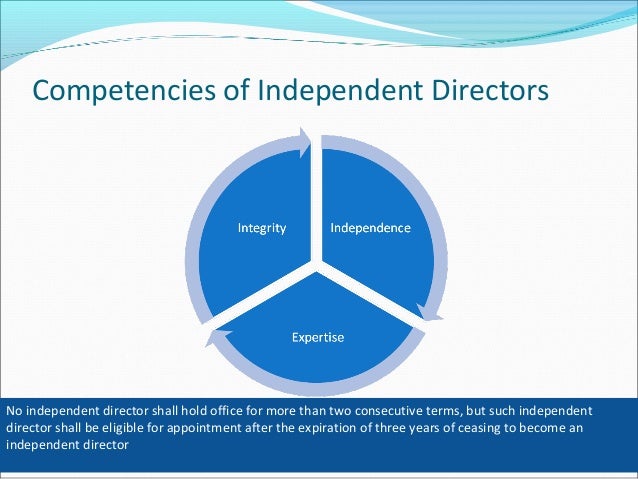
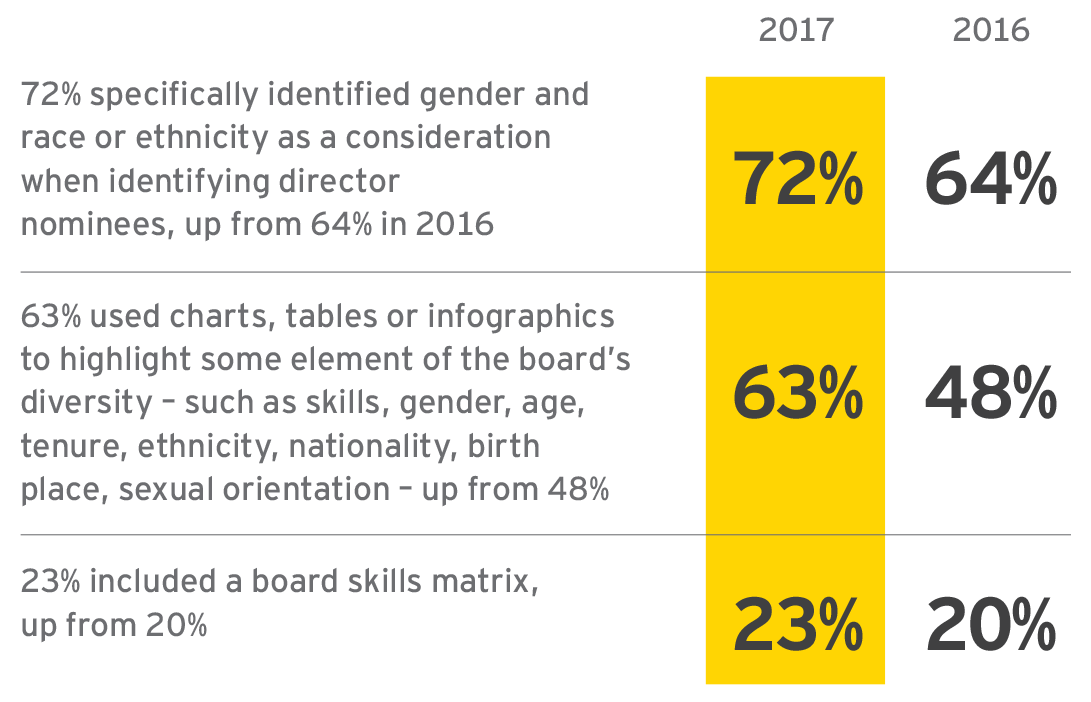
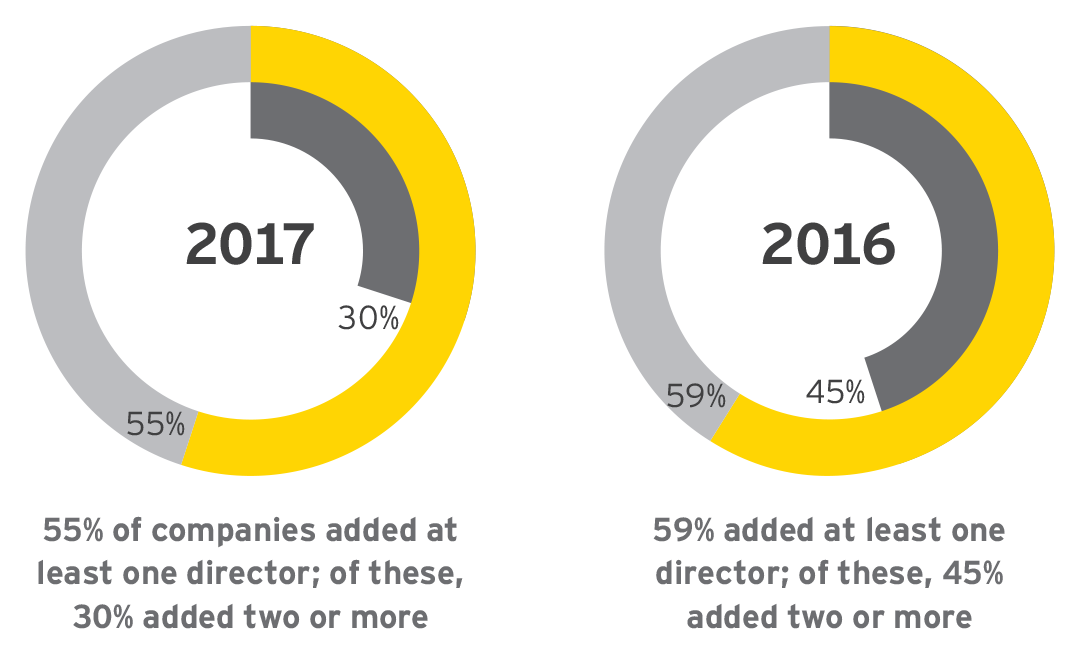
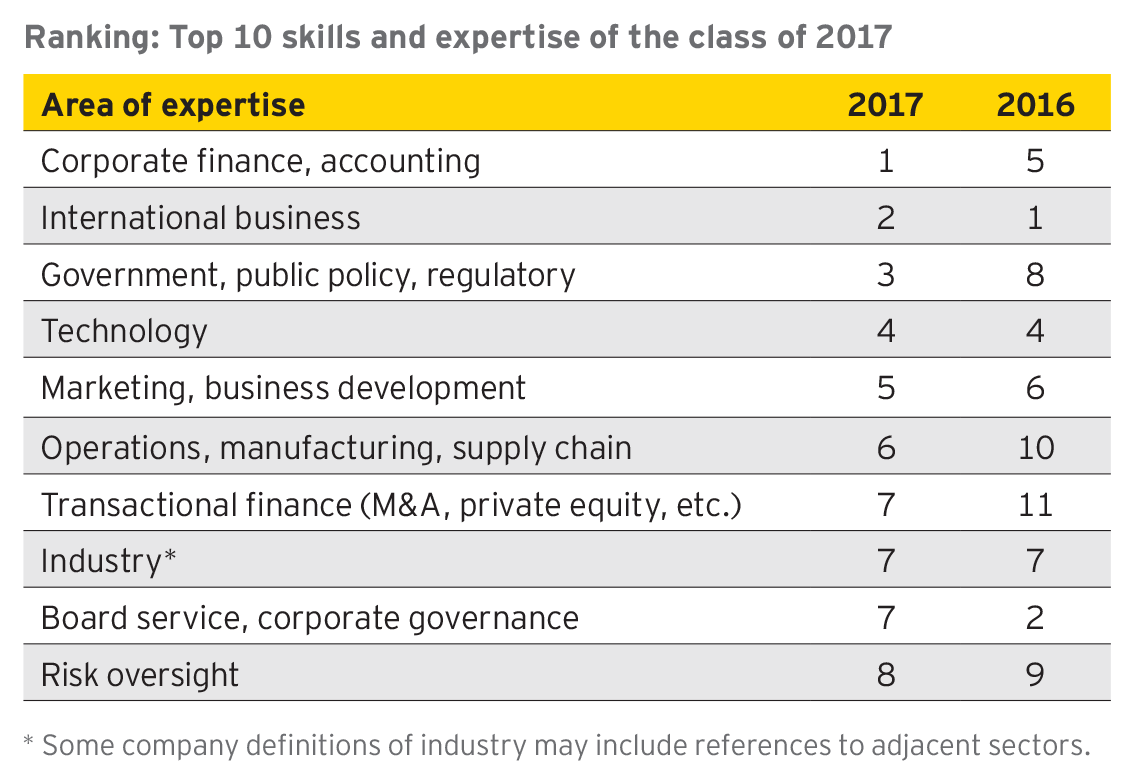
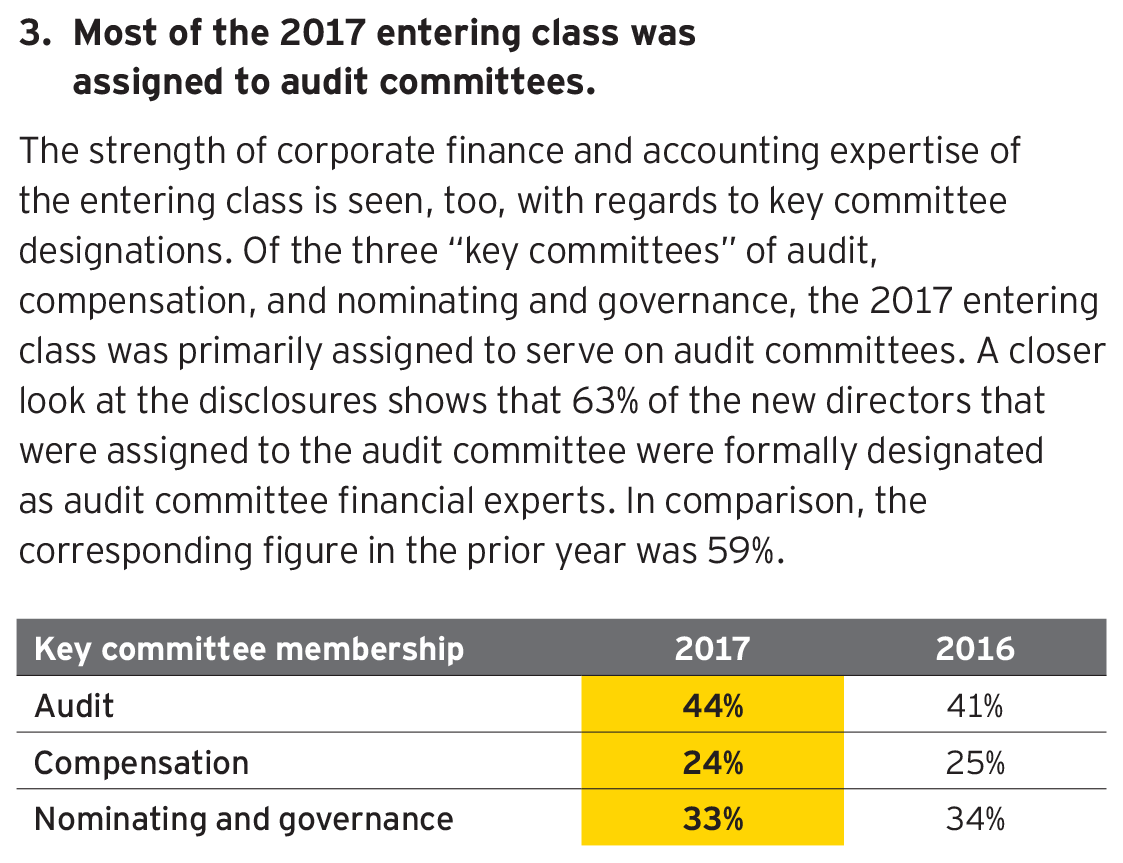
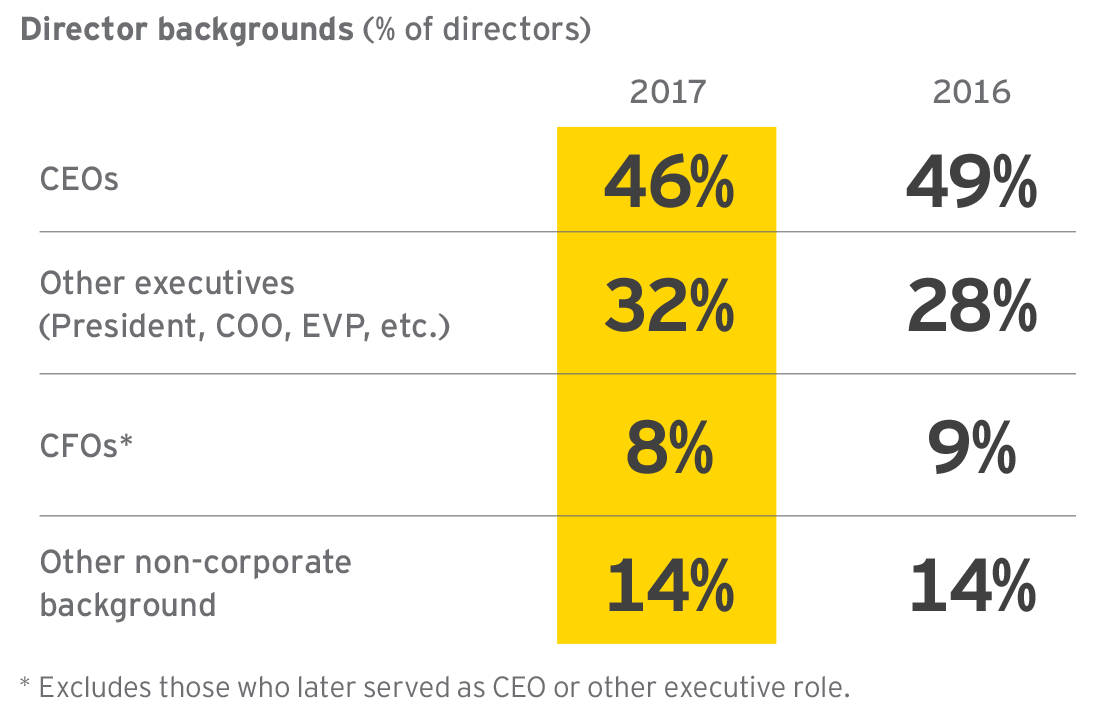
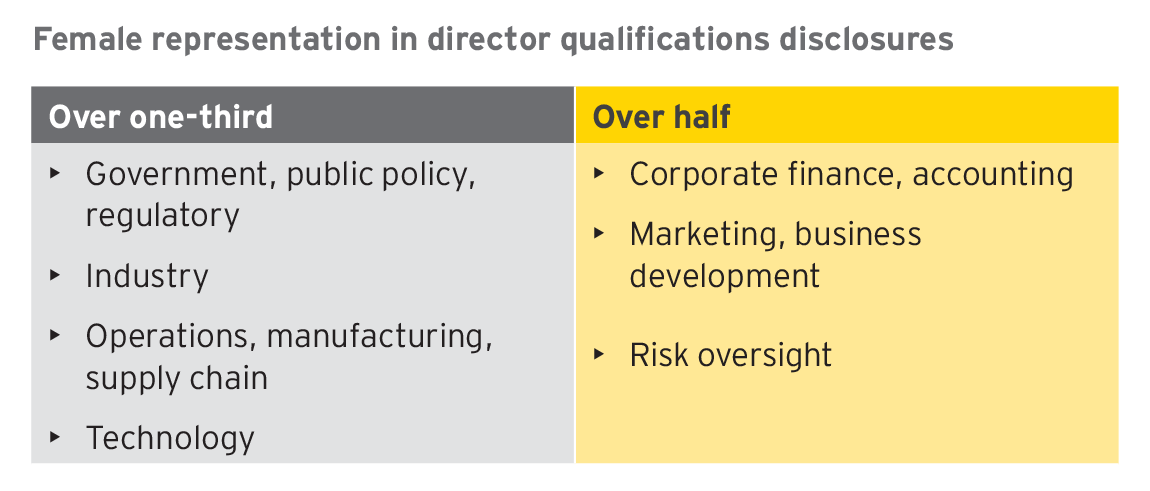
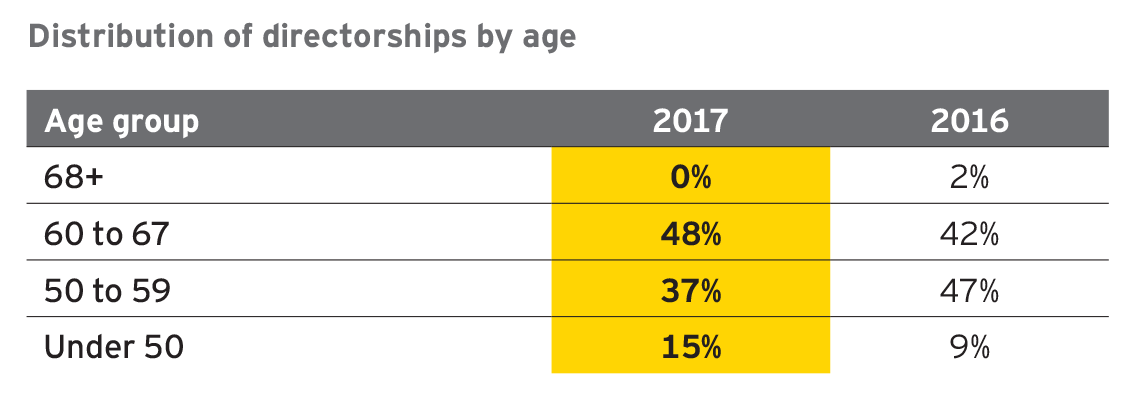








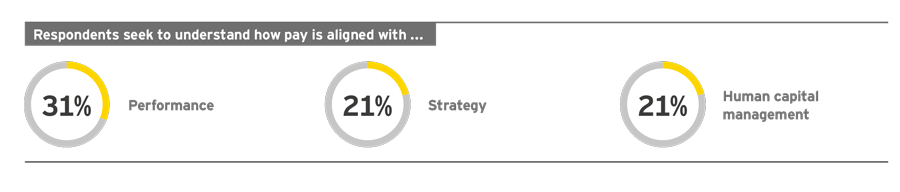
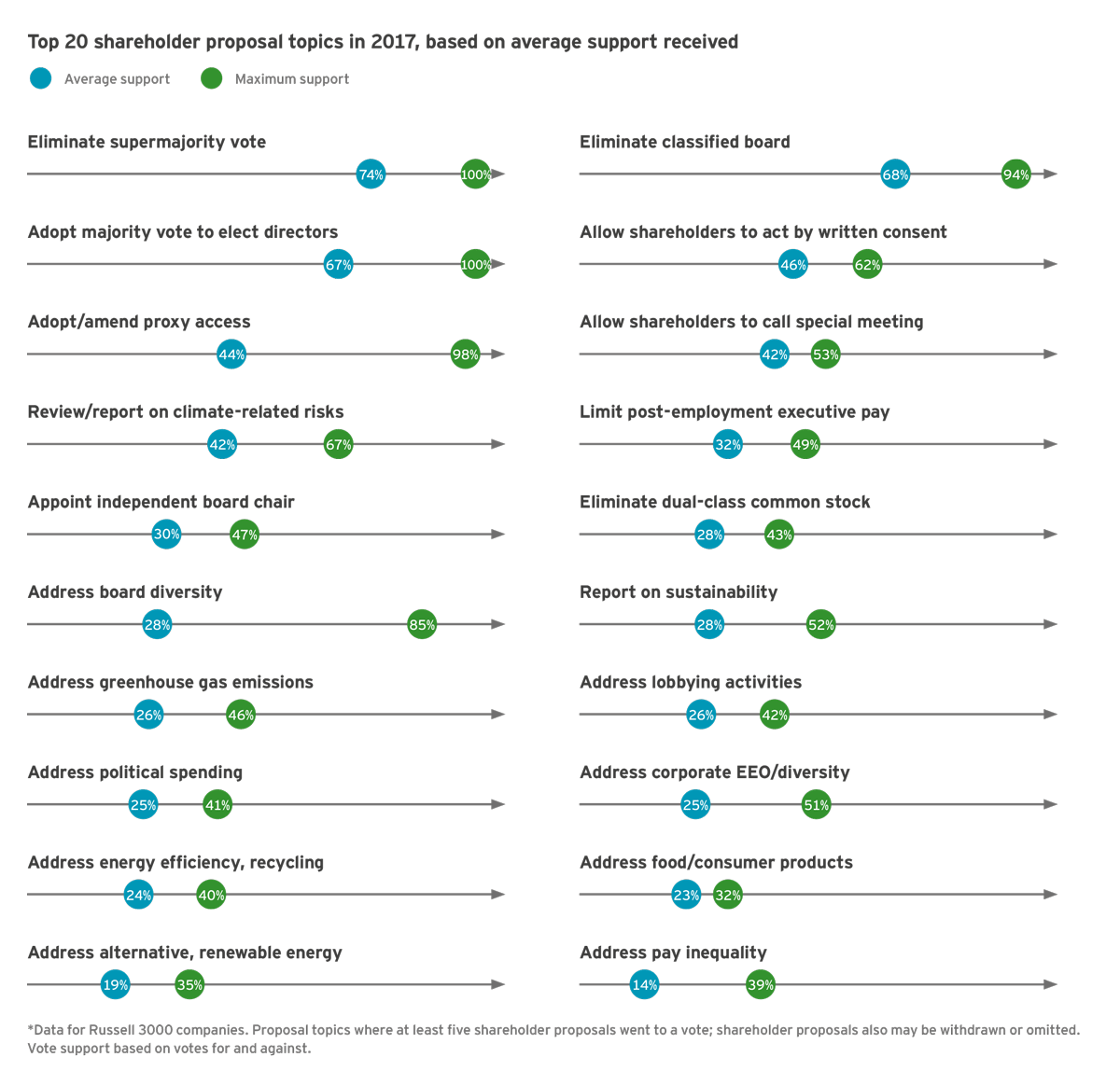




 Gouvernance | Jacques Grisé